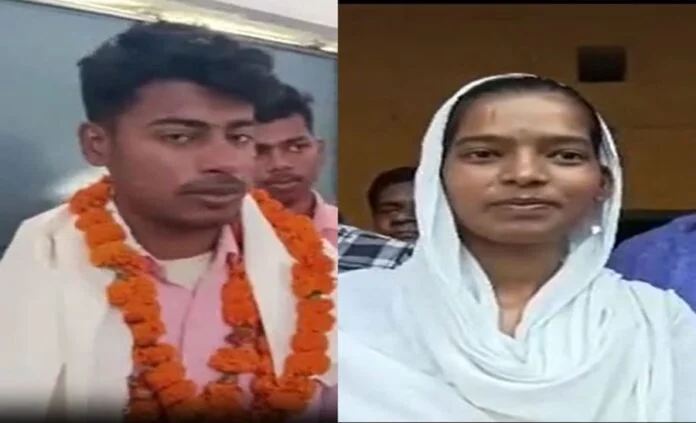
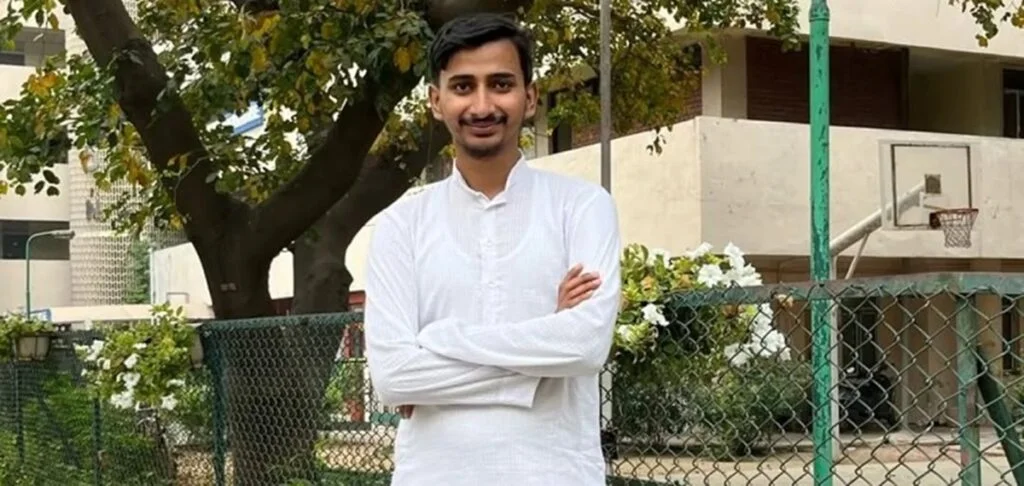
Abdullah, known by only his single name, topped the list of successful candidates from Bihar who appeared for the JEE (Main) 2025, Session 2. The result was announced late at night on Friday. He scored 99.9945499 percentile, but he is not in a celebratory mood. He wishes to top the JEE (Advanced), which ensures admission in the best IIT.
Abdullah hails from Aunsi in Bisfi under Madhubani district. His father, Mohammad Sabir Hussain, is an assistant teacher, while his mother, Tarannum, is a homemaker. Abdullah is the eldest among five siblings.
Abdullah is preparing for the next stage of JEE – JEE (Advanced) at Kota, Rajasthan. He is very keen to study Computer Science. He wants to do better in the upcoming test, while his father says that Abdullah also aims to qualify UPSC.
Abdullah, after getting the result, said that he felt very good for it but it was just beginning and he has miles to go. He said that his routine continues to be the same and he was focusing on completing his daily assignments.
Abdullah completed his matriculation from Madhubani and then moved to Kota for his preparation. He secured 90 percent marks in his I.Sc. examination. Abdullah keeps from smartphone as he considers it a distraction.
source: http://www.radiancenews.com / Radiance News / Home> Education / by Radiance News Bureau / April 20th, 2025
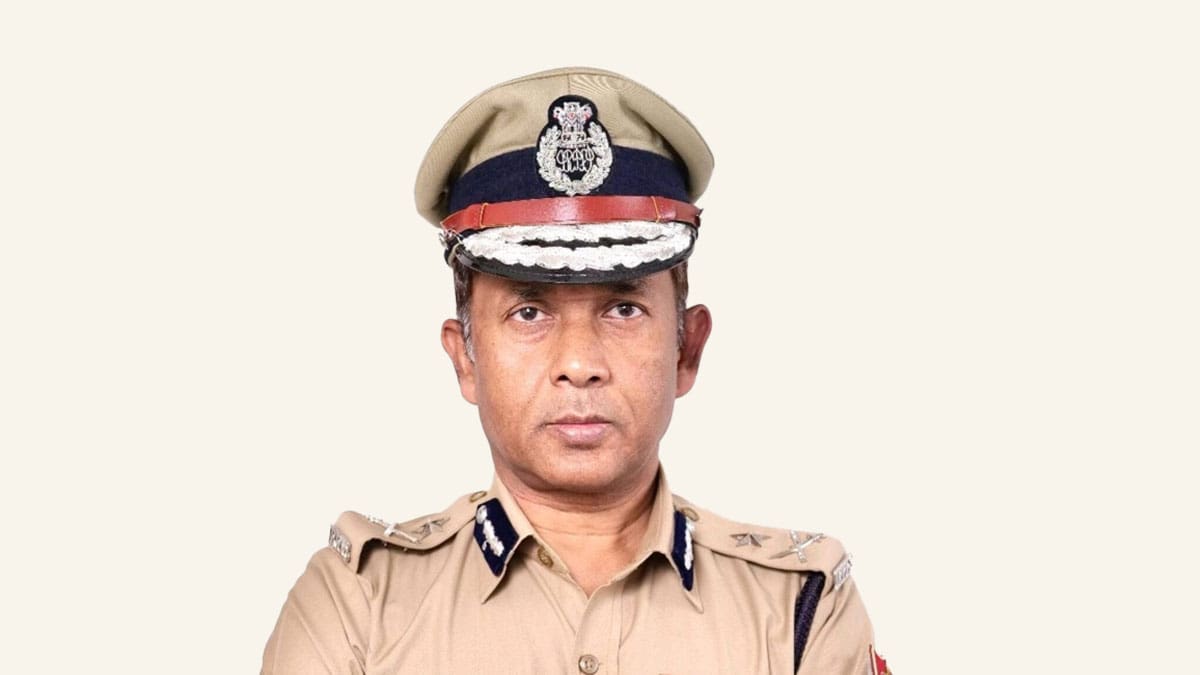
Senior IPS officer Nurul Hoda has resigned from the Indian Police Service in protest against the controversial Waqf law. On Wednesday, he joined the Vikassheel Insaan Party (VIP) led by former minister Mukesh Sahni.
Formerly serving as an Inspector General (IG) in the Railways, Hoda is now set to enter the political battlefield with a mission to represent and lead the Muslim community in Bihar.
Hoda, a 1995 batch officer from Sitamarhi, Bihar, is known for his sharp and dynamic approach.
With 28 years of service in sensitive areas like Dhanbad, Asansol, and Delhi, he has earned awards for his work in railway security, Naxal control, and crime prevention.
He was awarded the Vishisht Seva Medal twice and Director General Chakra.
Hoda’s resignation comes at a time when political tensions in Bihar are escalating as the state approaches its Assembly elections scheduled for October-November 2025, with the Waqf (Amendment) emerging as a central point of contention.
The ruling JD(U) has faced a wave of resignations from its Muslim leaders in April 2025, in a protest against the party’s support for the Waqf (Amendment) Act, 2025.
source: http://www.maktoobmedia.com / Maktoob Media / Home> East India / by Maktoob Staff (headline edited) / April 19th, 2025
Remarkable achievements highlight talent and determination in Bihar’s intermediate results.
New Delhi :
The Bihar School Examination Board (BSEB) on Tuesday revealed the 2025 Class 12 exam results, and this year, two Muslim students from modest backgrounds have made headlines by securing the first and second positions. Shakib Shah from Buxar district and Rukaiya Fatima from Begusarai have not only made their families proud but also demonstrated the power of hard work and ambition in overcoming challenges.
Shakib Shah, a student at Plus Two High School Koransarai in Buxar, achieved an impressive 473 out of 500 marks, securing the top position in the Arts stream. His 94.6% score has ignited celebrations in his village, with locals and teachers praising him as a source of inspiration. “I studied hard every day, and my teachers supported me throughout. My dream is to crack the Bihar Public Service Commission (BPSC) exam and serve as an administrative officer,” Shakib told Zee Media, his determination evident in his words.
Following the announcement of his results, Shakib received a flood of congratulations at his home in Koransarai. Teachers from his school, along with the District Education Officer, visited the school to honour their star student. “Shakib has always been a focused student. His success is a testament to his hard work and the guidance he received here,” said one of his teachers, beaming with pride.
Meanwhile, Rukaiya Fatima, a student at BN High School Teyai in Begusarai’s Teghra subdivision, earned the second position with 471 marks, achieving 94.2% marks. The daughter of Mohammad Abu Salem, a bidi trader from Kolkata, Rukaiya comes from a family of seven sisters, where she is the third child. Despite her father’s modest income and the challenges of supporting a large family, Rukaiya’s resolve to excel never wavered. “I want to become an IAS officer and work for the poor. Education is my way to change my family’s future,” she shared with local reporters.
Rukaiya’s success has brought joy to her community in Begusarai. Her school principal described her as a diligent and bright student who balanced her studies with household responsibilities. “She would often stay back after classes to clear her doubts. Her success shows what girls can achieve with determination,” the principal remarked.
The Bihar Board 12th exams, held between 1 and 15 February 2025, saw over 12.92 lakh students appear across 1,677 centres in the state. This year’s results reflect an overall pass percentage of 86.50%, with the Arts stream recording 82.75%. Shakib and Rukaiya’s stellar performances stand out, not only for their academic brilliance but also for their powerful message of resilience and hope.
For Shakib, topping the state is just the beginning. Growing up in a simple family in Koransarai, he credits his family’s encouragement and his own disciplined routine. “My parents never let me feel any pressure. They just told me to do my best,” he said. His ambition to join the administrative services stems from a desire to uplift his community and tackle local issues like education and employment.
Rukaiya’s journey is equally inspiring. Despite growing up in a family with limited resources, she often studied by candlelight during power cuts. Her father, Mohammad Abu Salem, expressed his pride over the phone from Kolkata: “I always knew Rukaiya was special. She has made us all proud, and I hope she achieves her dream of becoming an IAS officer.” Rukaiya’s six sisters also look up to her, with the youngest saying, “I want to study hard like Rukaiya Apa.”
The success of these two students has also highlighted the untapped potential within Bihar’s Muslim community, which often faces socio-economic challenges. Local leaders and educators have hailed their achievements as a beacon of hope. “Shakib and Rukaiya have shown that talent knows no boundaries. Their success will inspire countless others,” said a senior official from the BSEB during the result announcement press conference in Patna.
However, their triumphs stand in contrast to the broader narrative in Bihar, where tensions between communities have occasionally erupted. Critics have often pointed to the state’s history of communal friction, exacerbated by divisive politics and economic disparities. Some have accused Hindu groups of marginalising minority achievements in educational settings. Yet, Shakib and Rukaiya’s success challenges these narratives, proving that merit and perseverance can overcome prejudice.
To celebrate their achievements, the BSEB has announced cash prizes and scholarships for the toppers, with Shakib set to receive £2 lakh and Rukaiya £1.5 lakh, along with laptops to support their future academic pursuits. These rewards, doubled from last year, reflect the state’s commitment to nurturing talent. “We are proud of all our students, and these two have set an exceptional standard,” said BSEB Chairman Anand Kishore.
As Bihar celebrates its top achievers, the stories of Shakib Shah and Rukaiya Fatima resonate beyond their exam results. Their journeys embody the dreams of millions in a state where opportunities are scarce, and their success serves as a shining example of the transformative power of education. For now, the spotlight remains on these remarkable individuals, whose stories are only beginning to unfold.
source: http://www.clarionindia.net / Clarion India / Home> Editor’s Pick> Indian Muslim / by Mohammad Bin Ismail, Clarion India / March 26th, 2025
Marui Village (Nawada District), BIHAR / Kolkata, WEST BENGAL :
A young Jamal who met Gandhi in 1947 later shaped Kolkata’s hospitality scene and contributed to renowned chains like Arsalan and Mezban.
A scholar of Sanskrit, he is a well-known figure in the city’s literary circles. However, despite his generous donation of 15 katthas of land for a government hospital, the Bihar government has yet to honor the donors, leaving his legacy unacknowledged.
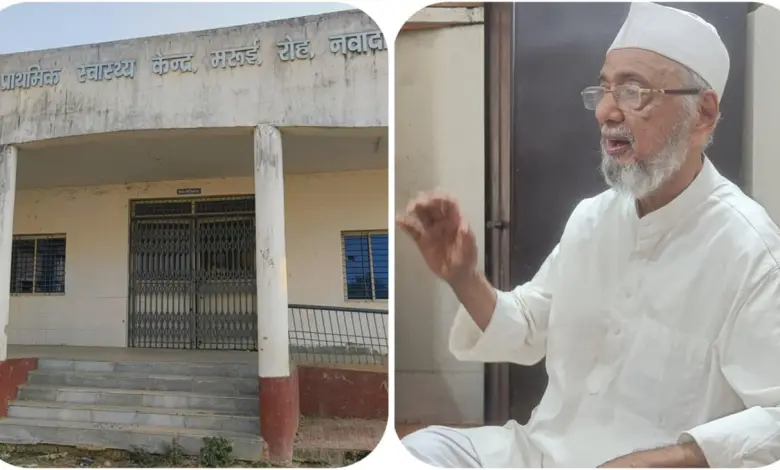
Primary Health Centre in Marui, Nawada and Jamal Ahmed ‘Jamal’
Kolkata:
In the heart of Kolkata’s vibrant Prafulla Sarkar Street, Jamal Ahmed, the 98-year-old hotelier and poet, sits in the backroom of Aliah Hotel, his voice resonating with the same intensity as the lively street outside.
Jamal Ahmed, a nonagenarian, is known in the city as a poet and a concerned citizen. But the 98-year-old is also a philanthropist. He has donated 15 Katthas of land in his native village in Bihar for a government hospital, which last year became operational.
A Philanthropic Legacy: Land Donation for a Government Hospital in Bihar
“The land (in Marui village, Nawada district) was the costliest in the adjoining areas. But my father, who decided to donate it to the government to build a hospital there, did not hesitate,” informed Firdaus Jamal, son of Jamal Ahmed.
The market rate for land in Marui village is at least Rs 20 lakhs per kattha. In Bihar’s Nawada district, one kattha of land is equivalent to 3 decimals.
“I had told my mother that one day there will be a hospital in your name. So I had to do it,” Jamal Ahmed told eNewsroom. The family proposed the name of the hospital as QZJ Government Hospital, incorporating the names of Jamal and his parents. There is a board at the hospital where Jamal Ahmed Jamal’s name as the donor is mentioned. However, the Bihar government has yet to adopt the name suggested by the donors’ family.
The 20-bed primary hospital is now operational.
Poet Jamal Ahmed ‘Jamal’ | eNewsroom
When donating, I did not make any demands, such as asking for government jobs for my family members or insisting that a doctor from my family should practice here,” he said.
“I demand that either the Bihar Chief Minister (Nitish Kumar) or the Health Minister inaugurate the hospital,” the donor added.
Jamal Ahmed, a multifaceted personality, knows five languages and completed his Master’s in Sanskrit from Banaras Hindu University (BHU) and his Bachelor’s in Science (BSc) from Patna University. He frequently uses Sanskrit shlokas in his poetry. Much of his poetry focuses on communal harmony in the country.
A major event in his life was meeting the Father of the Nation, Mahatma Gandhi, on August 13, 1947 in Kolkata.
A Life of Literature and Peace: Jamal Ahmed’s Encounter with Mahatma Gandhi
“I was just 18 years old, but Gandhiji was desperately seeking peace for the country. When I heard that Gandhiji was in Kolkata and my uncle, Kareem Sahab, was going to meet him, I joined my uncle and reached Beleghata,” recalled the nonagenarian, quickly adding that he has no picture with Gandhiji.
“In my brief interaction, I requested Gandhiji for peace in the country and to stop the riots. Gandhiji replied that he came to Kolkata for this very purpose and would be traveling to other parts of the country for the same reason.”
The well-known hotelier has great command over recipes and dishes. “I have helped several hotel outlets in Kolkata and abroad set up their centers. Some of them are now big names, like Arsalan and Mezban.”
Jamal Ahmed’s sons run several hotels in Kolkata, including the famous Arafat Hotel on Rafi Ahmed Kidwai Road, which is managed by Firdaus Jamal.
Aliah Hotel on Prafulla Sarkar Street—where Jamal Ahmed feels he gains the wings to fly.
Preserving Harmony Through Poetry: The ‘Tatkal’ Poet’s Message for Unity
But in Kolkata’s literary circles, ‘Jamal’ is known for his ‘Tatkal’ poetry. A ‘Tatkal’ poet is one who can deliver a poem instantly, depending on the situation.
“I was very young when I met Gandhiji, and still, I recited a poem for him:
Andhi Tawaf Karti Hai, Gandhi Ki, Aye Jamal. Ye To Bhanwar Se Laye Hain Kashti Nikal Ke
(The storm circles around Gandhi, O Jamal. He is the one who has brought the boat out of the whirlpool.)”
The poet ‘Jamal’, an Acharya in Sanskrit often uses the couplet to promote communal harmony.
Yem niza pro weti ganna laguchetshaam udarnaam chatrinantu, washudhew kutumbakam.
A rough translation of this Sanskrit couplet is:
“This is ours, that is yours—those who think this way have small hearts. But for the great ones, the entire world is one.”
He also mentioned that the shloka is written at the entrance of the old Parliament building’s gate. Eleven members of Parliament, including Maulana Azad, had agreed to imprint it there.
source: http://www.enewsroom.in / eNews Room India / Home> Art & Culture> Bengal / by Shahnawaz Akhtar / February 19th, 2025
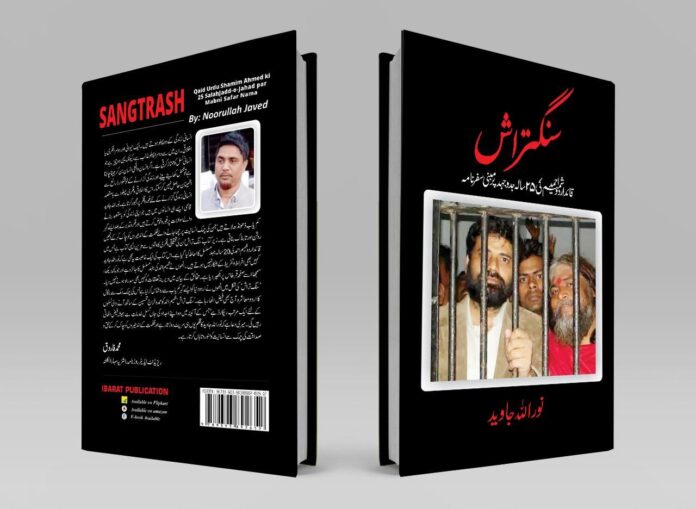
“The Book SangTrash: Shamim Ahmed’s account of the fight for human rights and Urduh” penned by Nurullah Jawaid is an immersive and powerful exploration of the life and activism of Shamim Ahmed, one of India’s most distinguished human rights advocates. As a pioneer of the Urdu movement, Shamim Ahmed’s story is one of unwavering dedication to social justice, human rights, and the preservation of cultural identity in the face of systemic injustice and political turbulence. This book, rich in historical and cultural context, offers an in-depth look at the life of a man who was not only a visionary leader but also a symbol of courage and resilience in the fight for equality and dignity.
The book delves into Shamim Ahmed’s lifelong struggle to address some of the most pressing socio-political issues of his time. Set against the backdrop of India’s dynamic and ever-evolving socio-political landscape, “SangTrash” chronicles Shamim Ahmed’s tireless efforts to combat the deeply ingrained inequalities that plagued the country, particularly the discrimination faced by marginalized communities. These efforts were not limited to his work as a human rights advocate but extended to his role as a cultural leader, educator, and innovator. Through the lens of his activism, the book paints a vivid picture of the complexities of Indian society during times of immense political and social upheaval.
Shamim Ahmed was not merely a passive observer of the struggles faced by the oppressed and underprivileged. He was a relentless force working to bring about tangible change. From his early days as a young idealist, Shamim Ahmed was deeply moved by the plight of the marginalized—those whose voices were suppressed by both society and the political elite. His passion for human rights led him to establish the Human Rights Protection Association (HRPA), an organization dedicated to addressing human rights violations across India. Through this platform, Shamim Ahmed sought to mobilize citizens to stand up for justice, regardless of their background, religion, or ethnicity.
In addition to his advocacy for human rights, Shamim Ahmed is best known for his work with the Urdu Movement. At a time when the Urdu language was facing marginalization and disintegration due to political pressures, Shamim Ahmed took it upon himself to revitalize and protect the language as an integral part of India’s cultural and literary heritage. His campaigns to promote Urdu literacy and its inclusion in educational institutions were not just about language preservation; they were about the empowerment of communities who saw Urdu as an essential part of their identity. Through this movement, Shamim Ahmed demonstrated that language is not merely a means of communication but also a symbol of cultural resistance and resilience.
As the narrative unfolds, “SangTrash” brings into focus the challenges Shamim Ahmed faced along the way. His activism was not without its detractors. Political opposition, societal resistance, and personal sacrifices were all part of the price Shamim Ahmed paid for his unwavering commitment to justice. The book sheds light on the obstacles he encountered, from the government’s attempts to suppress his initiatives to the skepticism and hostility from those who feared change. Yet, despite these challenges, Shamim Ahmed’s resolve remained unshaken. His determination to bring about social change and protect the rights of the disenfranchised never faltered, even when his own safety was threatened.
Shamim Ahmed’s legacy is further immortalized through his initiatives such as the “Food for All” campaign, which aimed to address hunger and poverty in India’s rural and urban areas. The campaign sought to ensure that food was available to every citizen, regardless of their social status, and to promote sustainable agricultural practices that would reduce reliance on outside aid. Through his leadership, the campaign brought together communities, activists, and policymakers, resulting in significant strides towards alleviating food insecurity in many regions.
Nurullah Jawaid’s writing not only brings Shamim Ahmed’s efforts to life but also contextualizes them within the broader historical and cultural milieu of India. By delving into the political, social, and economic landscape of Shamim Ahmed’s era, the book offers readers a nuanced understanding of the obstacles that activists and marginalized groups faced during this turbulent period.
“SangTrash” is a deeply informative and educational work that highlights the interconnectedness of human rights, cultural preservation, and social justice. It challenges readers to reflect on the ways in which systemic inequalities continue to shape society and the moral responsibility that each individual bears in addressing them.
The book also pays tribute to the human rights defenders who, like Shamim Ahmed, dedicate their lives to advocating for justice in an often hostile environment.
In telling Shamim Ahmed’s story, Nurullah Jawaid brings to the forefront the importance of collective action. The struggles faced by Shamim Ahmed were not his alone; they were shared by countless others who, inspired by his work, joined in the fight for a more equitable and just society. This collective action is central to the book’s message—individual activism can spark movements, but only through solidarity and collective efforts can lasting change be achieved.
“SangTrash” is not merely a biography of a prominent figure in Indian history. It is a call to action. By recounting Shamim Ahmed’s life and the impact of his work, the book challenges readers to engage with the pressing social issues of today, particularly those related to human rights, inequality, and cultural identity. The lessons of Shamim Ahmed’s life are timeless, and the values he fought for—equality, dignity, and mutual respect—remain as relevant as ever.
This book is also a reminder that activism is not always glamorous or celebrated in its time. Often, it is the courage of individuals like Shamim Ahmed, whose actions go against the grain of societal norms that change the world for the better. “SangTrash” is, therefore, more than just the story of one man; it is an inspiration for anyone who believes in the power of activism to bring about positive, meaningful change. It challenges readers to question the status quo and to take responsibility for shaping the future in a way that is more inclusive and just for all.
In conclusion, “SangTrash” is a tribute to Shamim Ahmed’s life and legacy. It is a book that encourages readers to consider the ways in which activism, grounded in human rights and social justice, can transform society. By examining the key moments in Shamim Ahmed’s life and the challenges he overcame, the book underscores the enduring importance of standing up for what is right, even in the face of adversity. Through this compelling narrative, “SangTrash” becomes not just a biography but a powerful call for activism in today’s world.
source: http://www.muslimmirror.com / Muslim Mirror / Home> Books> Positive Story / Reviewed by Kulsum Farooque / February 14th, 2025
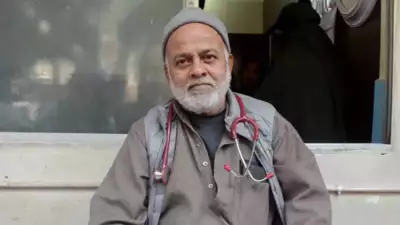
In an era where medical expenses are skyrocketing, a doctor from Patna has been a beacon of hope for the poor and underprivileged.
For an astonishing three decades, Dr. Ejaz Ali has been charging a mere Rs 10 for consultation, earning him the revered title of “messiah” among his patients.
From March 20, 2008, to July 7, 2010, he represented the Janata Dal (United) in the Rajya Sabha from Bihar. He has also served as the National Convenor of the All-India Backward Muslim Morcha, an organization dedicated to campaigning for Dalit Muslims since its founding in 1994.
Since 1984, Dr. Ali has worked as a general surgeon in Bikhna Pahari, Patna. The kind physician took a different approach, while the others around him charged exorbitant fees. By keeping his fees at Rs 10, he made himself available to those in need.
His clinic, which is situated in Bikhna Pahari on Ashiana-Digha Road, draws patients from all across Bihar who are looking for reasonably priced healthcare.
With more than 100 patients every day and multiple surgeries completed, Dr. Ali’s dedication to affordable healthcare is clear. He emphasizes his consistent commitment to aiding people in need. In order to save them money on lodging and other costs, he makes sure that every patient who has travelled to visit him receives a consultation that same day.
In addition to charging minimal fees for consultations, Dr. Ali performs surgeries at a reasonable cost. He permits his patients to pay in installments and even declines to charge them.
The late wife of Dr. Ali was a doctor as well. His three children now work in the same field, truly carrying on their father’s legacy. They asserted that their father has always put patients first.
His daughter, Gynecologist Dr. Suraiya Anjum, says, “He is the type of person who never yells or becomes agitated. Patients frequently regard him like a messiah.
Despite his fame and recognition, Dr. Ali remains humble and dedicated to his work. His clinic continues to attract patients from all over the state.
source: http://www.twocircles.net / Two Circles.net / Home> Articles> Indian Muslim / by TCN News / February 03rd, 2025
The success story of a villager in Bihar reflects the transformative power of education. secured a prestigious position at Google with an impressive annual package of ₹39 lakh
Jalwara, BIHAR :
Zoriz Ahmed, a bright student from Rahmani30 educational movement started in Bihar state’s capital city of Patna, has recently achieved a remarkable milestone. After completing his engineering degree at IIT Delhi, Zoriz secured a prestigious position at Google with an impressive annual package of ₹39 lakh. His journey, marked by perseverance and dedication, has become a beacon of hope for others.
Hailing from Jalwara, a small village in Darbhanga, Zoriz’s path to success was anything but easy. The QT assembly constituency, where his village is located, has historically struggled with low educational attainment. Despite these challenges, Zoriz’s parents, Shakeel Ahmed and his wife, a homemaker, prioritised their son’s education. Shakeel rented a room in Darbhanga to ensure Zoriz had better schooling.
Zoriz’s aptitude for mathematics and problem-solving became apparent early on, and in 2019, he was selected for Rahmani30, the institution focused on preparing underprivileged students for the IIT Joint Entrance Examination (JEE).
At Rahmani30, Zoriz found the environment that would shape his future. “The teachers at Rahmani30 were exceptional, but what truly set it apart was the combination of a disciplined, religious atmosphere and a laser-sharp focus on academic excellence,” Zoriz shared. The institution’s rigorous training, combined with its focus on values, helped Zoriz hone both his technical skills and personal growth, ultimately leading him to IIT Delhi.
Zoriz’s family faced constant financial difficulties. “There were times when we struggled to make ends meet, but my father never let me feel the burden. His sacrifices and unwavering belief in my potential kept me going,” Zoriz recalled. Despite these hardships, he remained committed to his education, believing that challenges foster growth. “The darkest moments of the night come just before the dawn,” he said, quoting a Chinese proverb that mirrors his journey.
Now, Zoriz stands at the threshold of a new chapter with Google, where he will work with an annual package of ₹39 lakh. “It’s not just about succeeding academically,” Zoriz emphasised. “Education shapes us into better individuals and that is the true measure of success.”
His success is not only a reflection of his academic excellence but also of his values, discipline, and hard work. “The teachers, the values, the hard work — it all comes together to shape the person you become,” Zoriz said.
Zoriz’s journey reminds us of the power of education and perseverance. He encourages others, especially those from underprivileged backgrounds, to remain dedicated to their goals. “If I can make it, so can others. The road may be tough, but it’s worth every bit of effort,” he said.
Zoriz’s success highlights the critical role of institutions like Rahmani30 in shaping the futures of talented youth from underserved communities. “Rahmani30 allowed me to realise my potential. Without it, I wouldn’t be where I am today,” he said, emphasising the importance of mentorship and access to quality education.
Zoriz Ahmed’s story is a powerful testament to the transformative power of education and the importance of perseverance. His success is not just his own; it is a symbol of the potential that lies within every young mind, regardless of background.
source: http://www.clarionindia.net / Clarion India / Home> Featured> India> Indian Muslim / by Team Clarion / December 26th, 2024
Mumbai, MAHARASHTRA / Chennai, TAMIL NADU / INDIA :
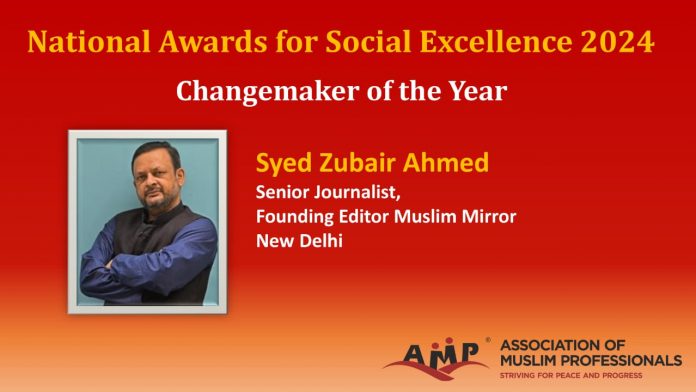
Syed Zubair Ahmad, the founding editor of Muslim Mirror, has added another feather to his cap by being declared one of the prominent Changemakers of 2024 by the Association of Muslim Professionals (AMP). The prestigious recognition was announced during a grand event held at the B.S. Abdur Rahman Crescent Institute of Science & Technology, a deemed university in Chennai, Tamil Nadu. The event was graced by honorable guests and attended by a large gathering of participants from across India.
Ahmad, a distinguished journalist, is known for his powerful advocacy for the rights and representation of marginalized communities, particularly Muslims, in India. Over the course of his career, spanning more than two decades, he has built a reputation for his unwavering commitment to truth, justice, and journalistic integrity.
The Association of Muslim Professionals (AMP) is Mumbai based pan India non-profit organization dedicated to the socio-economic empowerment of the Muslim community in India. Through initiatives in education, employment, and community development, AMP works to foster leadership, skill-building, and social welfare, connecting professionals and organizations nationwide for collective progress.
“In a memorable ceremony, 100 inspiring individuals were honored with Changemaker Awards, and 100 state-level NGOs were recognized in the Best and Jury categories. Additionally, 10 organizations were celebrated in prestigious national categories,” said a press statement issued by AMP.
Notable national NGO awardees include;
ALTNEWS
APCR (Association for Protection of Civil Rights)
IMRC (Indian Muslim Relief & Charities??)
Institute of Objective Studies (IOS),
Allana CSR
Pataka CSR and
Seethakathi Trust
Some of the prominent Changemaker awardees included;
Syed Zubair Ahmad (Muslim Mirror)
Mohammed Wajihuddin (Times of India)
Aslayah Kallakath (Maktoob Media)
Abdur Rahman IPS (Retd.)
Akramul Jabbar IRS (Retd.)
Hammad Rahman
Adil Meraj and
Syeda Ruksheda.
The Lifetime Achievement Award was posthumously bestowed upon the Late Moosa Raza, IAS (Retd.), which was received by his family.
The Omar Khatani Memorial Award was presented to the Tarraqi I Foundation, while BSA Crescent Institute of Science & Technology received the Partner of the Year Award.
Mrs. Mariam Habib, Trustee of B.S. Abdur Rahman Crescent Institute of Science & Technology, served as the Chief Guest and commended AMP’s efforts in education, employment, and empowerment. She emphasized the role of NGOs in bringing about significant societal change in collaboration with policymakers, and she noted that the legacy of the late B.S. Abdur Rahman is being continued with great dedication by the current leadership.
Dr. N. Raja Hussain, Registrar of B.S. Abdur Rahman Crescent Institute of Science & Technology and Guest of Honour, praised AMP’s work in recognizing and motivating various organizations and individuals. He highlighted the ongoing collaboration between the university and AMP in developing students and faculty through guest programs. The event was presided over by University Vice-Chancellor Prof. Dr. T. Murugesan.
Motahar Hosain, Chief Executive and Guest of Honour, congratulated AMP for instituting these much-needed awards to acknowledge the contributions of individuals in the development sector. He remarked that despite the sacrifices made by these individuals in service to others, they seldom receive the appreciation they deserve, making these awards a significant recognition of their efforts.
Mr. Farooq Siddiqui, Head of the AMP National Coordination Team and the driving force behind these awards, stated, “AMP believes in collaboration and has been working alongside multiple organizations since its inception. Through the AMP NGO Connect project, we are connected with over 7,000 social organizations across nearly all districts of India, helping them with capacity building and implementing AMP’s social welfare projects in their regions. These awards are our way of appreciating their efforts and motivating them to continue their impactful work.” He also thanked the AMP Chapter and state teams for mobilizing massive nominations and captivated the audience at the packed Crescent Convention Center Hall with his superb and engaging awards announcement.
Ms. Shereen Sultana, State Head – AMP Tamil Nadu, in her address, shared details about AMP’s initiatives and invited everyone to join hands for the betterment of society and nation-building. She expressed her gratitude to the management and staff of B.S. Abdur Rahman Crescent Institute of Science & Technology for their cooperation in hosting the event and mentioned how she took up the challenge of organizing the awards ceremony in Chennai.
AMP Tamil Nadu State Executive Team member Mr. Yahya Rasheed welcomed the guests and successfully hosted the event with the support of Prof. Ansar.
The awards process for the NASE was multi-layered, with state, central, and a 9-member distinguished jury led by A.R. Khan, IAS (Retd.), President of A.R. Welfare Foundation, Dr. Syed Zafar Mahmood, Founder & President of Zakat Foundation of India, Dr. Farah Usmani, Founder & Chairperson of Rising Beyond The Ceiling, Prof. Zubair Meenai, Professor & Former Head of the Dept. of Social Work, JMI, Prof. Naseem Ahmed Khan, Chairman of the Dept. of Social Work, AMU, Dr. Shazia Manzoor, Head of DSW, University of Kashmir, Sherin Ali, Global Lead – Corporate Social Responsibility, WNS, Sajid Ali, COO of Tech Mahindra Foundation, and Gulzar Hussain, Head of Government Partnerships, UN World Food Program (India).
The success of the 4th edition of the awards was attributed to the collaborative efforts of key AMP team members, including Sajjad Parvez, AMP Zonal Head – South India; Dr. B. Raja Hussain, State Secretary; Syed Faheem, Chennai Chapter Head; and Syed Deen, Chennai Chapter Secretary. Their contributions, along with the support from the back-office teams at the Central Offices in Mumbai and Vaniyambadi, were instrumental in making the event a success.
source: http://www.muslimmirror.com / Muslim Mirror / Home> Indian Muslim> Media> Positive Story / by Muslim Mirror Desk / August 22nd, 2024
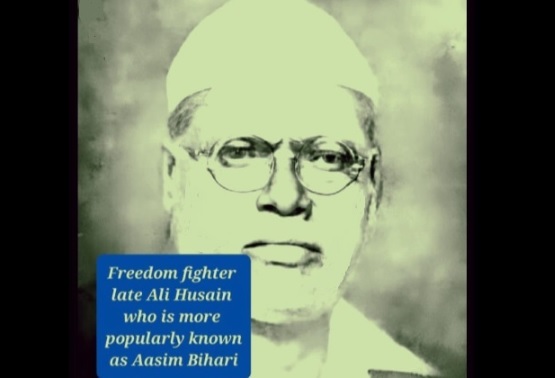
Ali Husain Aasim Bihari who was a freedom fighter, big leader, organised workers in Bihar & Bengal, brought out newspapers, formed multiple organisations.
He, led Momin Ansari community, and all his life fought for workers’ rights. Suffered a lot in process and his family also lived in challenging circumstances.
Hailing from Bihar Sharif, Nalanda, he had to shift to Kolkata to earn a living and it was here that he began involved in freedom movement and started an unprecedented political and social journey despite financial constraints.
Aasim Bihari left a huge legacy but led a tough life. His family bore consequences of his immense passion for awakening the masses, at the cost of his own health and finances. He opposed partition of India and worked for uplift of downtrodden. He passed away in independent India and was buried in Allahabad.
I don’t think it is easy to write about his missionary zeal and his sacrifices without getting tears in eyes. He faced personal tragedies, the death of his brother, the lack of money that caused hardships to his daughter, the suffering of his wife and entire family.
He was ailing and couldn’t be treated. He had declined the post of minister, also refused to take a princely sum, luring offer from a major political party, and his integrity for the cause was unquestionable.
In a life of constant struggle. Aasim Bihari formed organisations, led agitations, ran campaign to release nationalist leaders from jails after Jallianwalabagh massacre by sending letters from people of all parts of country to Queen & Viceroy. Brought out journals, weavers were organised amd turned into a political force.
Born in 1889 [1890*], he passed away in 1953. From Jamiatul Momineen, his lifelong fight for rights, awareness, awakening and education among masses, continued.
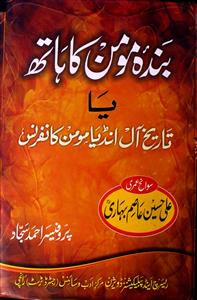
CM recently released book on him and it has been decided to add a chapter on his life in school textbook.
Book ‘Banda e Momin Ka Hath’ by Prof Ahmad Sajjad , pic: rekhta.org
[There is slight variation in references about his year of birth. However, the date of birth is April 15.]
source: http://www.anindianmuslim.com / Indscribe / Home / by Shams ur Rehman Alavi (image of book cover edited – source: rekhta.org) / June 22nd, 2023
Malcolm X rightly said, “Education is the passport to the future, for tomorrow belongs to those who prepare for it today.”
Dr Wasim and Tanweer Ahmad perhaps had the same thoughts in their minds as they came up with the idea of providing an enriching environment to those who cannot afford the luxury of education. They along with their colleagues left their comforts of life and well-established occupation to impart education to the underprivileged children of their home district i.e. Siwan.
Dr Wasim along with Tanweer Ahmad, Sharique Ahmad, and Sana Hussain, were keen to establish an institution that would serve as a ladder to the children who were underprivileged and could not afford basic education due to the paltry amount of resources.
Dr Wasim is a doctor from Aligarh and has completed his education from Aligarh Muslim University (AMU). He worked in a government hospital but gave up his job, to educate the children who are the leaders of tomorrow and who are the faces of our future.
Tanweer Ahmad, who hails from Siwan itself has completed his MBA from Williams college of LONDON and holds the post of the Director and he juggles between the tasks of administration as well as imparting knowledge to the children.
Sana Hussain, who holds the post of the Principal at the school, has achieved her master’s degree from South Korea. She works hard to maintain the smooth functioning of this institution’s administration and imparts education to the blooming buds.
Sharique Ahmad, who is also a pillar of this school, has achieved his double master’s degree in Education and English from Delhi University and AMU respectively. He works as a student counsellor and teachers’ trainer at the school. He aims at not only providing efficient educators but also endeavours to become a patient listener and a solution provider to these curious and creative minds.
They established a school named ‘bloombuds’ in Barharia, Bihar. Bloombuds was an idea born due to the concerns of its founders over rising illiteracy rates in certain parts of Bihar. The school came into existence in January 2016.
“This school has been established with the idea of providing an enriching environment to those who cannot afford the luxury of education”, says Dr Wasim, the chairman of the school.
Sana Hussain says, “We are constantly endeavouring to provide all essential facilities for the children. We aim at providing every facility that we couldn’t get while we were students; we are constantly working to educate the young minds. We are often told that we shouldn’t have left our jobs and compromised on our well-settled future but the contentment we derive out of imparting knowledge to these underprivileged children and providing them with resources that could help them lead a better life is unmatchable.”
These four pillars of bloombuds are in a constant endeavour at providing all essential facilities for the children. They aim at providing every facility that they couldn’t get while they were students; they are constantly working to educate the young minds. They are continuously struggling to impart knowledge to these underprivileged children, so as to provide them with resources that could help them to lead a better life.
This institution has not only provided educational aid but has also stood by its children through all thick and thins.
These mentors took complete responsibility of their students from selecting the students for the entrance exam to allowing them a stay at the hostel and preparing them from beforehand.
Dr Wasim says, “We brought these students to Delhi for their exam and stayed with them until they were back safe. To promote girls’ education, Bloombuds provided 50% discount on the admission fee for girls in the last couple of years. The bloombuds family has set an example of what overall support and aid should be like.”
“Due to the collective support, hard work and indulgence, the Bloombuds family feels very proud of the selection of its six students. These students of bloombuds have cracked the Jamia Millia Islamia School’s class 9th entrance examination. We couldn’t be happier”, he added.
When we inquired about the background of these students, we came to know that all these students belong to families where they believe that education is only for the rich and the upper class. The parents due to insufficient resources are not able to provide their children with adequate facilities, almost all the mothers are homemakers, fathers either work as drivers or in chemist shops or are shopkeepers, some even work as farmers and have little or no educational qualifications. Nevertheless, these students with their hard work and a little encouragement proved that one can achieve anything with the help of committed guidance and supervision. The parents at first were sceptical to send their children to this university, but when they saw the environment, they at once knew that this was the best for their children.
The parents due to insufficient resources are not able to provide their children with adequate facilities, almost all the mothers of these students are homemakers, and one of them is a teacher in a government school. The fathers either work as drivers or in a chemist shop or shopkeepers, some even work as farmers and have little or no educational qualification. But these students with their hard work and a little encouragement proved that one can achieve anything with the help of committed guidance and supervision. They made their parents and teachers proud after cracking the entrance exam. Four out of six students are girls, and all belong to rural areas.
On how important this result was to him, Sharique Ahmed says, “For the people belonging to a small town like Siwan, Jamia and Aligarh are a dream place to study not just for students but also for parents. Siwan is a place which is known for coaching centres and too expensive, but this school made it easy. They used to organize free coaching in summer vacation for the students as well,”
Talking about the obstacles faced in this journey, he adds, “In this blooming, there is only one hurdle and that is a hostel for girls. Parents are ready to send their children to Jamia, but their main concern is the hostel. While interviewing Zeba’s father, Mr Wahabuddin who is working in the Gulf also has only one condition and that is a hostel. So, the movement which has been started by Bloombud is becoming smooth day by day, but accommodation is one obstruction in this metro city.”
(Mehwish Matloob is pursuing MA History from Jamia Millia Islamia.)
source: http://www.beyondheadlines.in / Beyond Headlines / Home> India / by Mehwish Matloob for Beyond Headlines / August 03rd, 2019