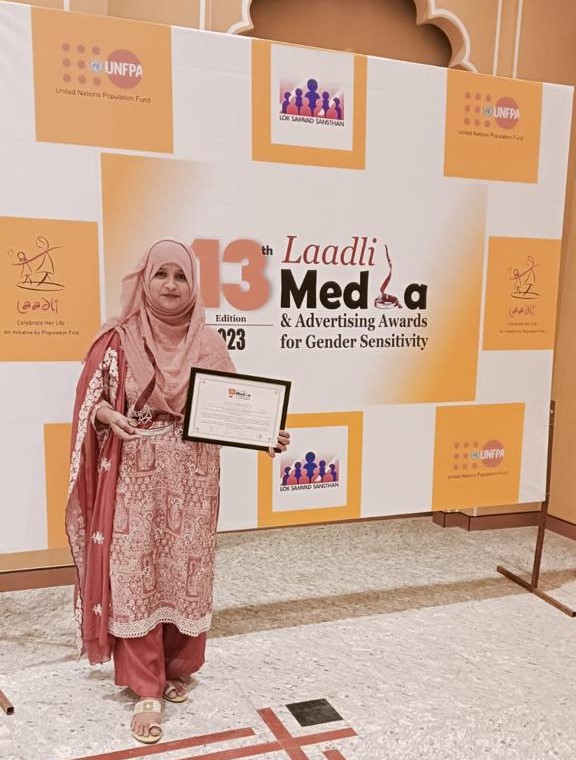
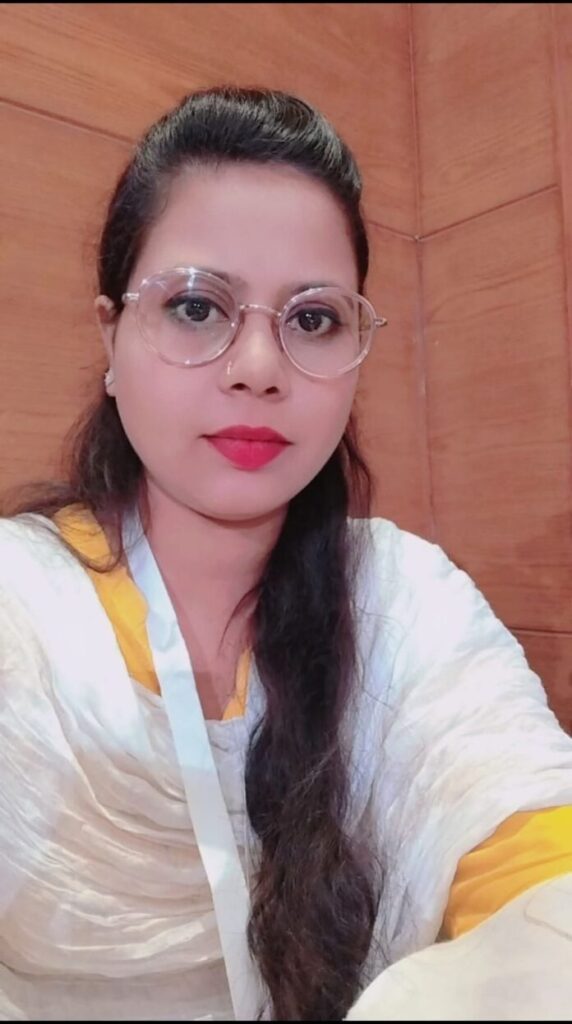
We are happy to announce that TCN’s SEED Fellow Sufi Parween has won the 13th Laadli Media Award for her exceptional contribution to gender-sensitive reporting.
At the age of two and a half years, Swaleha Naaz Khan fell down the stairs while playing and broke her hand. This incident marked the first time she visited a hospital. However, for Khan, a patient of Sickle cell disease, it set off a cycle of sickness, incorrect medications, hospital visits, and unsuccessful treatment. Now at 26, she recently completed her M.Sc (Masters in Science) in Computer Science from a private institute in Chhindwara, Madhya Pradesh and helps people fight suffering from Sickle cell disease in this small town of Madhya Pradesh.
Facing Problems in Identifying the Disease
Growing up, she constantly experienced severe body pain. Due to a limited medical infrastructure in the city at that time, doctors were unable to identify the source of her pain. Her body would frequently stiffen, prompting her father to assume she was possessed by a spirit or djinn. They sought help from hakims and babas in hopes of finding an explanation for her pain but to no avail. Khan and her family went from city to city in order to get her treated. They even travelled to Nagpur in Maharashtra for this purpose.
Dr. Shrivastav, a doctor at the city government hospital, finally diagnosed Khan with sickle cell disease while she was in 10th grade, after she was brought to the hospital the night before her board exams. “It was for the first time that I received correct treatment,” she went on to say.
The Disease Affected Khan’s Education
Previously, whenever Khan’s condition deteriorated, she was given injections to soothe her unbearable pain. “The injections were given every 8 days, causing me so much pain that I could only sleep on one side. I couldn’t sit down properly. My education was also greatly affected. I often had to miss school,” she explained. Due to being admitted a day before exams, she flunked in 10th grade.
Sickle cell disease [SCD] is a hereditary medical condition that persists throughout a person’s life and affects red blood cells, which in turn impacts hemoglobin – the carrier of oxygen in the body.
Unlike the typical disc-shaped red blood cells found in a healthy person, in SCD, these cells take on a crescent or “sickle” shape. The alteration affects their manoeuvrability in blood vessels, leading to a range of complications such as strokes, vision issues, infections, and bouts of intense pain known as pain crises.
According to Gautam Dongre, Secretary of National Alliance of Sickle Cell Organisations (NASCO), sickle cell disease can cause great damage to people’s lives. “Without accurate diagnosis, individuals with this condition may not live more than 4 years. They can be affected by organ damage within 20 years. Their joints may stop functioning properly, potentially leading to disability. In the absence of proper treatment, it can result in premature death. Otherwise, their entire life may be centered around going between the hospital and home,” said Dongre stressing that timely treatment of the disease is extremely critical.
Creating a WhatsApp Group of Sickle Cell Patients To Help Them
Khan was admitted in 2016, along with two other SCD patients, Deepika and Aishwarya. She had previously thought she was the lone patient suffering from the disease. However, she began to meet more people suffering from the disease. “Aishwarya formed a group of all Chhindwara’s sickle cell patients. We discovered that there are numerous patients with SCD in that district. At the time, we were only 15-16 years old,” she explained.
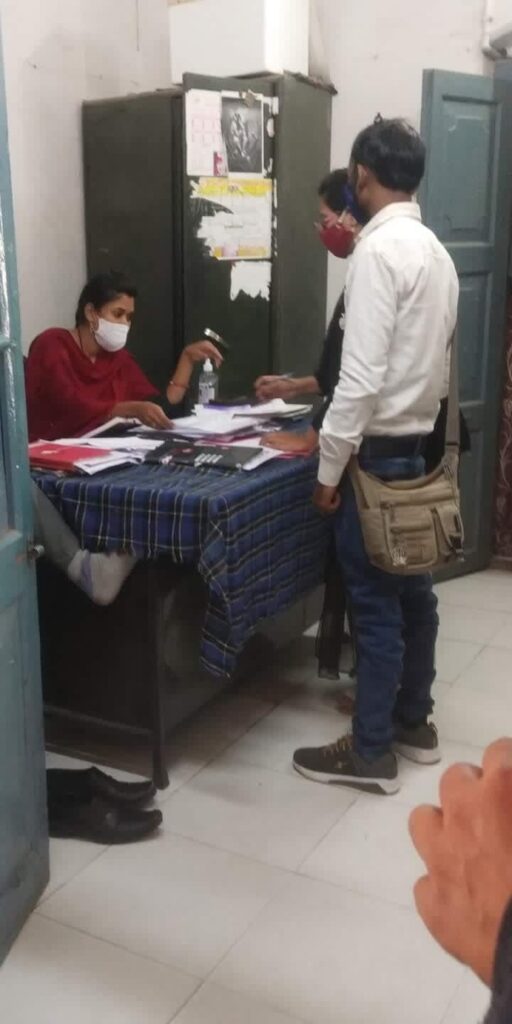
After she discovered more than 500 SCD patients in Chhindwara, Khan decided to visit the District Magistrate’s office in order to demand a separate hospital ward for them. She says that when she used to visit the government hospital, they had to purchase everything from outside. The only thing they provided was a bed, which was free. She observed that patients coming from remote villages faced several difficulties in accessing proper healthcare due to this.
“We demanded for all patients to get access to Dr. Shrivastav. After that, we asked for the availability of medicines. The whole process was really taxing. After going through several offices and facing rejections, medicines were finally made available in the hospital for free. Rarely does anyone need to purchase something from their own pockets,” Khan stated, proudly.
‘Cared for Me as if I Were Her Own Sister’: A Sickle Patient
22-year-old Nazrana Mansuri, a patient suffering from Sickle Cell Disease (SCD) in Chhindwara, recounted her first meeting with Khan at the hospital. Upon learning that Mansuri is an orphan, Khan assumed full responsibility for her operation. “I used to live with my khala (aunt), who worked as a daily wage earner and didn’t have the means to look after me. Swaleha took all my responsibilities. Despite being unwell herself, she stayed with me throughout the night of the operation. She not only brought me food but also cared for me as if I were her own sister. It’s been two years since my operation, and she still feels like family to me,” Mansuri said.
How Extreme Weather Made Khan’s Condition Worse
Khan said that during wintertime, her blood vessels used to thicken causing her extreme pain.
Dr. Gaurav Kharya, the clinical lead at the Centre for Bone Marrow Transplant and Cellular Therapy, Indraprastha Apollo Hospital, New Delhi, explained that under normal circumstances, sickle cell disease may not pose a problem. However, during hot weather when dehydration occurs, and in extremely cold temperatures when small blood vessels constrict, a crisis can occur. During these episodes, the shape of sickle-shaped cells can become further distorted and obstruct various blood vessels, resulting in the typical symptoms of sickle cell disease.
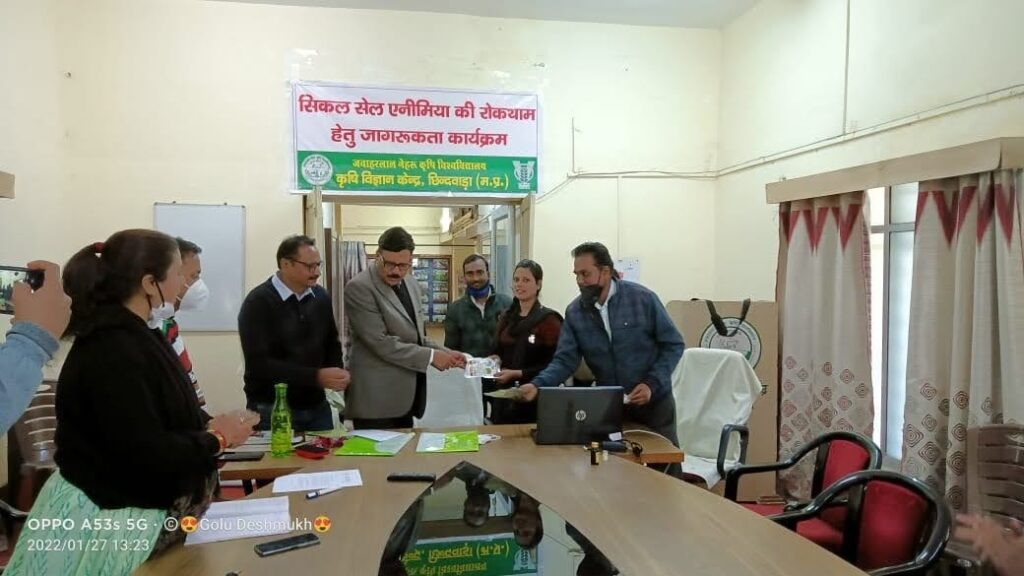
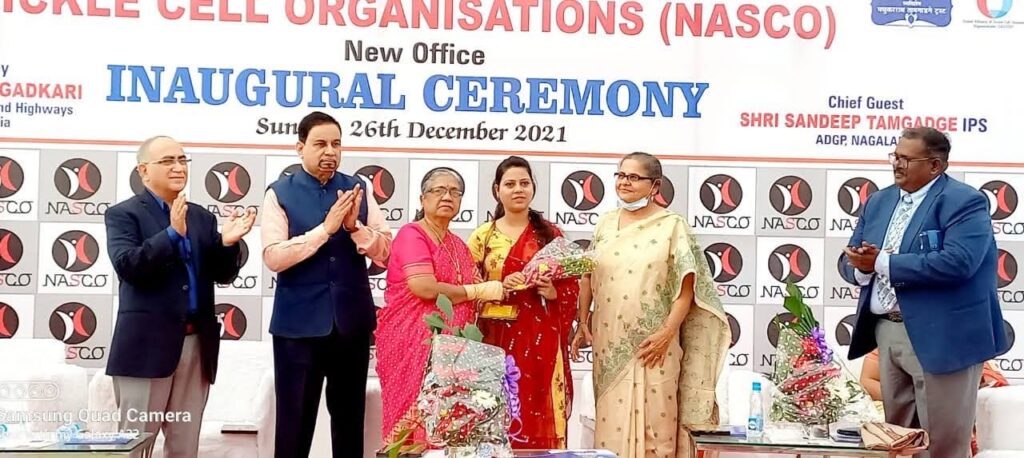
In 2020, Khan joined the National Alliance of Sickle Cell Organisations (NASCO), after meeting Gautam Dongre. Today, she manages all of NASCO’s work in Madhya Pradesh and helps out hundreds of patients of the sickle cell disease with getting them treatment, diagnosis and recovery.
Shaba Manzoor and Nuzhat Khan are independent reporters based in New Delhi, India.
source: http://www.twocircles.net / TwoCircles.net / Home> Indian Muslim> Lead Story> Science-Health> TCN Positive / by Shaba Manzoor & Nuzhat Khan / October 31st, 2023
Even when nothing works out as you planned, don’t lose your trust in yourself, this is what Mr. Shamsudheen has to share with us.
Being the Managing Director of Nellara Groups, Address apparel, and more venture, Mr. Shamsudheen a successful Multipreneur from Kerala, has a story of dreams & hard work to share with us.
Since his teenage years, he started working to earn money to pursue his passion, establishing a business. He kept a keen interest in designing shirts, and from a native tailor, Mr. Shamsudheen acquired skills to stitch them, not knowing it would be a turning point in his life.
As he grew up, his dreams got life, and ‘Nellara food products, ’ a chain that provides premium quality food products, was born.
Still, his passion to design fashion was the same, and the concept of gifting people the best ones at an affordable range gave life to a clothing brand, ‘Address Men’s Apparel’.
With cunning strategies and proper implementation, Address caught global attention, and it is now a brand with 60+ outlets across 12 countries. Team Address focuses on designing desired outfits in premium quality that every man dreams of.
Address, a brand exclusively for men, was a dream of Mr. Shamsudheen, and with years of research and market study, the brand was revealed with an exceptional array of supreme comfort shirts. They have a well-experienced and truly professional team of fashion designers to gift everyone the best outfit.
Offering a wide range of shirts, including Supima, Cargo, and Solid shirts, Address Apparel promises superior quality garments because their team leader, Mr. Shamsudheen, believes in extending everything at the best level without compromising quality.
Mr. Shamsudheen Nellara, One who believes in making changes by marking goodness, carries the title of one of the best entrepreneurs in India with all commitment and future goals.
source: http://www.freepressjournal.in / The Free Press Journal / Home> Business / by FPJ Web Desk / July 04th, 2023
If you’re a history buff, World History Encyclopedia has all the lore from the past—conquests, stories, and maps that take you back to the battleground
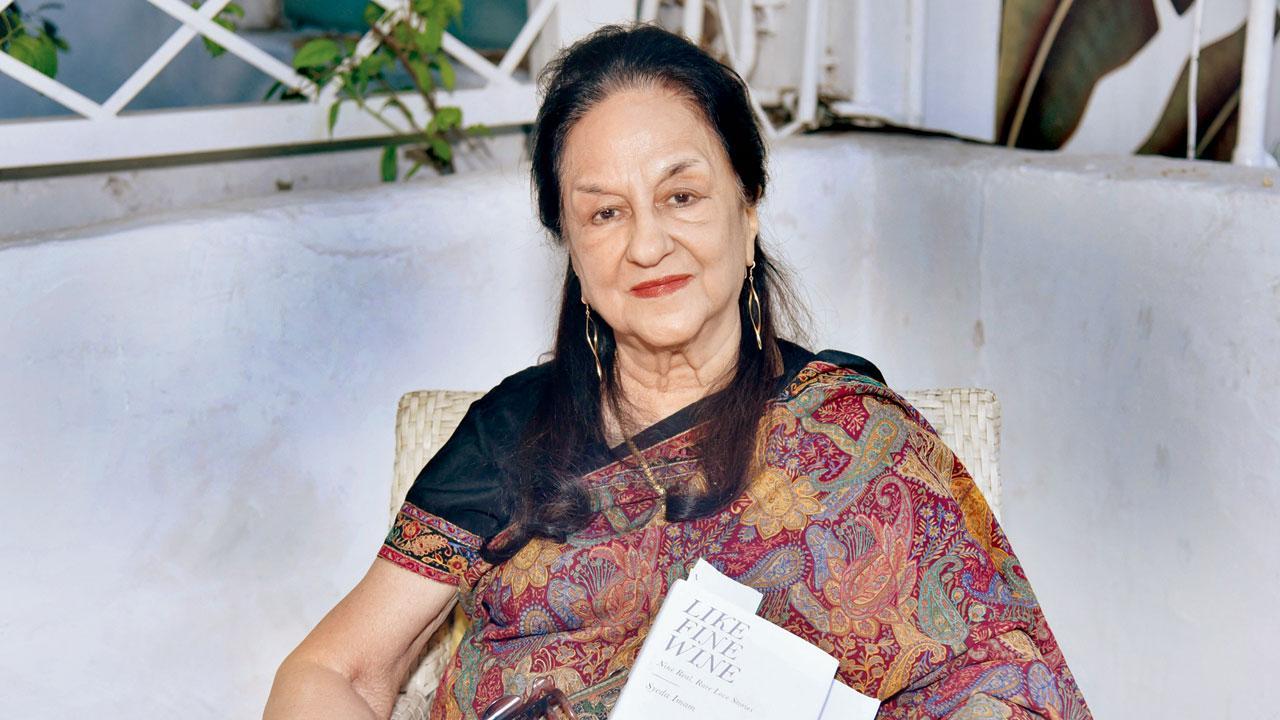
Syeda Bilgrami Imam
Don’t we all enjoy a good love story? Award-winning writer and editor Syeda Bilgrami Imam’s new book Like Fine Wine: Nine Real Love Stories (Roli Books; R695) is that rare keepsake for those who truly believe in matters of the heart, serving as a gentle reminder that love truly wins.
pix: amazon.in
The book, Iman writes in her introduction, was born out of a request from a publisher friend for a monograph on her relatives ,“Sir Syed Ali Imam [former Prime Minister of the state of Hyderabad] and Lady Imam [Anise Karim] and their fateful discovery of each other in the year 1918”.
From one story, it turned into a collection, where she makes sensitive forays into the real love stories of nine unusual couples. From cricketing legend Tiger Pataudi and superstar Sharmila Tagore, to director David Lean and Leila Matkar, chess grandmaster Viswanathan Anand and Aruna, the book takes us through stories that are replete with serendipitous beginnings, chance encounters and love-at-first-sight tropes.
The one story that will remain a personal favourite is that of Sir Ali, a 48-year-old widower, who falls instantly in love with Anise, an 18-year-old high school graduate whose “willowy, erect, curiously collected presence” made him say “without fuss or plea or preamble” if she would marry him.
Available at all leading bookstores
source: http://www.mid-day.com / Mid-Day / Home> Sunday Mid-Day News / by Team SMD (Edited) / Mumbai, May 14th, 2023
The Indian National League (INL), a part of the ruling Left Democratic Front (LDF) coalition government in Kerala, has lauded its leader, Ahammad Devarkovil, who serves as the Minister of Ports in the state cabinet, for initiating a massive international seaport project in Vizhinjam near Thiruvananthapuram.
Marking a historic milestone in the development of Indian port, Kerala Chief Minister Pinarayi Vijayan waved the green flag on Sunday to welcome the first-ever ship at the Rs 7,700 crore deep-water international Vizhinjam port.
He was joined by Minister of State for External Affairs V Muraleedharan, Kerala’s port minister Ahammad Devarkovil, Congress Member of Parliament Shashi Tharoor, various state ministers, and APSEZ CEO Karan Adani.
They waved a green flag, signaling the tugboats to guide the massive Chinese ship, Zhen Hua 15, from the wharf to the docking yard. This under construction seaport is India’s first deep-water container transshipment port with the capacity to host large cargo ships and the world’s largest luxury cruise ships.
Owned by the Government of Kerala, it will be operated by the Adani Group for 40 years, handling 75 percent of India’s container trans-shipment needs and reducing reliance on ports in other neighboring countries upon full commission.
Emphasizing its international importance, the Chief Minister announced that it would be commissioned by May next year. However, the flagging-off ceremony sparked political controversy, with both the ruling LDF and the opposition UDF claiming credit for the project. Congress leaders argued that former Chief Minister Oommen Chandy was the driving force behind the project, but the LDF dismissed the claims.
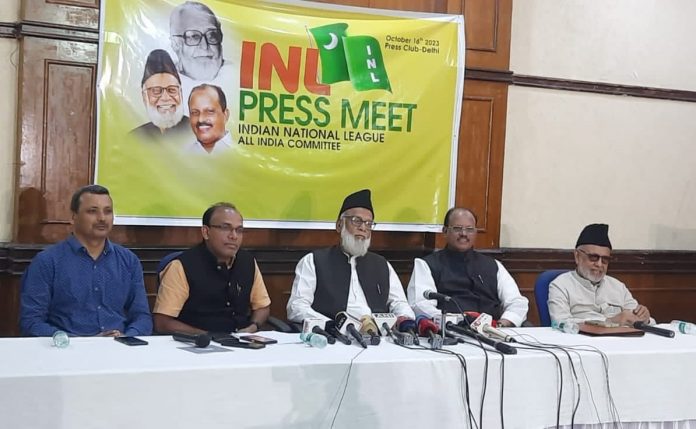
During a press conference at the Press Club of India here on October 16, leaders of the INL spoke on various issues, including the Palestine-Israel conflict, opposition coalition INDIA, the caste census, News Click raids, and the minority character of Aligarh Muslim University.
INL National President Prof. Mohammed Suleiman, Kerala State Chief Ahmed Devarkovil, its All India General Secretary Muzammil Hussain, National Committee Member CP Anwar Sadat, Delhi Head Rafi Ahmed Khan, and General Secretary Qamar Ali addressed the media.
Addressing the press conference, Prof. Suleiman said that India’s support for Israel was tarnishing the country’s international image. He demanded a national-level caste census to ensure the welfare of minority communities and protect their rights. Expressing concerns over the media raids, Prof. Suleiman said that the raids against NewsClick and other journalists were a continuation of the Union government’s attempts to intimidate the media.
The INL, working in 11 states since its establishment in 1994, issued a press release stating its commitment to working nationwide against the Hindutva forces led by Narendra Modi. The statement said, “the party aims to establish a secular and democratic coalition called “INDIA” to eliminate communal and fascist influences from the national political landscape. The INL started its campaign in Kerala as well as other states to make the voters ready to strengthen the anti BJP platform.”
Praising Ahammad Devarkovil, the INL emphasized that in his role as the Minister of Ports, he has showcased his acumen and talent, as evident from Sunday’s ceremony when a large ship from China was anchored at Vizhinham.
Calling on the international community for opening the blockade of Gaza and ensure supply of medicines, food, water and electricity to the suffering people of Gaza, the INL said that the party supported the persecuted Palestinians who were fighting against the illegal occupation of their land by the Zionist regime of Israel. To ensure durable peace an independent, the INL demanded a sovereign Palestine state must be established.
Strongly objecting to what it described as the BJP government’s nefarious designs to abolish the autonomy and minority status of Aligarh Muslim University, the party has called for the reinstatement of the AMU Amendment Act of 1981. Moreover, it demands the prompt commencement of the process to appoint a permanent Vice-Chancellor and the immediate scheduling of elections for the AMU Student Union.
The INL has also announced that Dr. Baseer Ahmed Khan, former Pro Vice-Chancellor of Indira Gandhi Open University and former Chairman of the AMU Students’ Union, has joined the Indian National League.
source: http://www.indiatomorrow.net / India Tomorrow / Home> Development / by Anwarulhaq Baig / October 17th, 2023
Purdadtoor Town (Kadapa District), ANDHRA PRADESH:
Dr Khadar Vali, the Millet man of India
Coarse grains or millets are ancient foods which contain key nutrients like vitamins, zinc, beta-carotene, and magnesium. These foods keep blood sugar under control and reduce obesity. If one eats healthy food one can simply avoid disease and medicines.
This is the message from India’s leading agronomist Dr. Khadar Vali, who is also called the Millet man of India.
Dr. Vali is an independent scientist and food expert. He has brought back five species of millet that had disappeared from the world. Today, at 66 years of age, Vali is one of the leading proponents of millet cultivation in the world. He has made world realize the importance of grains.
Millets are available not only in India but everywhere in the world. These are known by different names in each country. To date, people around the world have eaten 200 different types of whole grains.
It’s important to note that the United Nations Food and Agriculture Organization (FAO) declared 2023 as the International Year of Millets at the insistence of India.
Khadar Vali says that the cultivation of millets can solve problems of soil erosion and irrigation also. The food we eat creates an imbalance in blood glucose levels. It makes people sick. But all this can be avoided if we use coarse grains. If you eat millet, you never need medicine.
He says it’s a misconception that coarse grains are food for animals and birds. He says these are super foods that can prevent disease as these contain fiber that cleanses the body. These grains protect the human race and other species. Millets are food for the whole planet.
Fox millet or Bajra
Dr Khadar Vali hails from Purdadtoor town in the Kadapa district of Andhra Pradesh. He has been working for 20 years to revive Sridhanialu, an Indian concept about food habits that are in sync with the nature and the human body.
Earlier, he worked in a good position in the USA. Dr Vali is a post-graduate from the Regional Institute of Education, Mysore, and did his PhD on Steroids from the Indian Institute of Sciences, Bengaluru.
Vali did his postdoctoral research on a fellowship in Environmental Science from the United States. His research focused on the inactivation of deadly chemicals such as Agent Orange and dioxins. His research came at a time when food was becoming increasingly commercialized.
Around 1986-87, Dr. Khadar Vali raised the issue of food-related consequences in society when he came across a case of a girl who started menstruating at the age of 6. He decided to return to his country.
He returned to India in 1997 and worked hard to revive five different varieties of millets in Mysore that were rapidly disappearing. More than two decades later, India’s ‘Milletman’ Dr. Khadar Vali was awarded the Padma Shri on the occasion of the 74th Republic Day celebrations.
Dr. Khadar Vali says that millet has long been part of the mainstream diet but over the past 75 years, corporations marketing rice and wheat have Institutions subjected them to “systematic destruction”.
He has told the world about the benefits of coarse grains along with the negative effects of other grains from his long research on millet. Some points of his research are as follows. His research on food grains has led him to categorized them as negative, neutral, and positive.
Negative: These Grains cause diseases and include paddy rice and wheat. The fiber content of these grains is below 2 percent.
Neutral: Grains don’t cause new diseases, however, can’t help to cure health disorders and diseases. These are jawar, bajra, finger millet, proso millet, etc which carry fiber content from 3 to 6 percent.
Positive: Grains, which help to cure health diseases and disorders. These are Foxtail millets, Barnyard millets, Browntop millets, Little millets, and Kodo millets; which have fiber content from 8 to 12 percent. He named these millets Siri Dhanyaalu. Siri means wealth, which is indirectly health. .
Based on Dr. Khadar Vali’s research and findings, below are the diseases and disorders cured by the positive millets (Siri Dhanyaalu)
Prime Minister Narendra Modi has given the name Shree Anna to coarse grains.
The year 2023 was declared by the United Nations as the International Year of Coarse Grains, after which the Grammy Award-winning Indian-American singer Fallo prepared a song, saluting the efforts of Prime Minister Modi.
In one of his tweets, Fallow mentioned the Prime Minister’s support in producing the song. This song has been prepared with the aim of promoting coarse grains and helping farmers to cultivate them and encouraging efforts to eradicate hunger from the world.
source: http://www.awazthevoice.in / Awaz, The Voice / Home> Story / by Mansooruddin Faridi / October 07th, 2023
Three years older than Hakim Ajmal Khan, one was reminded of him when Ajmal Khan’s great-granddaughter came for admission to Hamdard University last week, accompanied by her father.
While Ajmal Khan’s name lives on beyond his ancestral haveli, Sharif Manzil in Ballimaran, Hakim Nabina had no fixed abode and believed to have been born in the Walled City too, got most of his fame in South Delhi where he was brought by some dealers in Unani medicine.
Born in the same year as Rabindranath Tagore, he was 105 when Dr. S. A. Ali of Hamdard met him in 1965 to seek medication for a digestive problem. The hakim, who had probably been born blind or had lost his vision in childhood, felt the patient’s pulse and diagnosed that his heart and liver were in good trim but not his digestive system. “Did you by any chance eat arbi (yams)?” he enquired. Dr Ali confessed that he had in fact had a piece of the vegetable though he was not fond of it. The hakim told him to have light food in future and prescribed some medicine which cured his ailment.’
Syed Ausaf Ali, himself an octogenarian now, says Nabina lived at Hazrat Pattey Shah’s dargah, behind Humayun’s Tomb. What he prescribed was dispensed by dealers in Unani drugs. When someone complained that the charges were very high, he advised them not to go to the dispensers but take medicine from him directly.
Pattey Shah or the saint amid tree leaves was actually named Shamsuddin Ataullah and died in AD 1300 during the reign of Alauddin Khilji. He got the nickname because whenever Hazrat Nizamuddin Auliya visited his khanqah or hospice, he would hide behind bushes and tree leaves, saying he was not worthy of coming face-to-face with the Auliya. This is what has been affirmed in Sadia Dehlvi’s book on the Dargahs of Delhi. It is said that the Shah belonged to the Chishti silsila or order of saints. “During the day he would light a fire and cover himself with its ashes, while at night he slept in a grave-like hollow (something emulated by the eccentric Spanish painter Salvador Dali, who spent his nights in a coffin). When he died Hazrat Nizamuddin led the funeral prayers as per the Shah’s last wish. Hakim Nabina seems to have developed a spiritual rapport with Pattey Shah and lived most of his long life at the latter’s shrine. When he died is not known but it was probably during Indira Gandhi’s first prime ministership, which would mean that he was nearly 110 years old at that time.
The hakim is not to be confused with Hafiz Nabina Doliwale, the blind mendicant who lived under a tree near the southern gate of the Jama Masjid. Nobody knew his real name also, except that he was one who could recite the Quran by heart (Hafiz), was blind (Nabina), wore no clothes and loved to travel free in a doli or palanquin. He and Hakim Nabina were both born in the same year (1860), when Bahadur Shah Zafar was passing his last days in Rangoon. But Hafiz Nabina died at the age of 87 much before the hakim sahib. Everybody in the city knew him and he also finds mention in Ahmed Ali’s “Twilight in Delhi” as he often visited the hero of the book, Mir Nihal. He was regarded as a majzoob (a man possessed), lost in himself and supposed to be in contact with the jinns, without much care for hygiene.
However Hakim Nabina, despite his mystical leanings, never gave the impression that he was a majzoob. His direct communion was with Pattey Shah and he passed his life in the service of those who came to him to be healed. That he could tell a patient what his illness was merely by touching him and pointing out, “Thou ailest here and here,” was a sign of his deep knowledge of human nature and anatomy and the Unani system of medication. Like Hafiz Nabina, he was a recluse but of a different sort who did not discard the ways of the world in matters of dress, behaviour and etiquette. Old-timers remember him as a worthy contemporary of Hakim Ajmal Khan, who had acquired the halo of Massiha (messiah) of the ailing populace!
source: http://www.thehindu.com / The Hindu / Home> Features> MetroPlus> /Down Memory Lane / June 22nd, 2014
Callisthenics performer, international karate referee, biker, calligrapher who don the headscarf by choice to share stage at YB Chavan auditorium on World Hijab Day
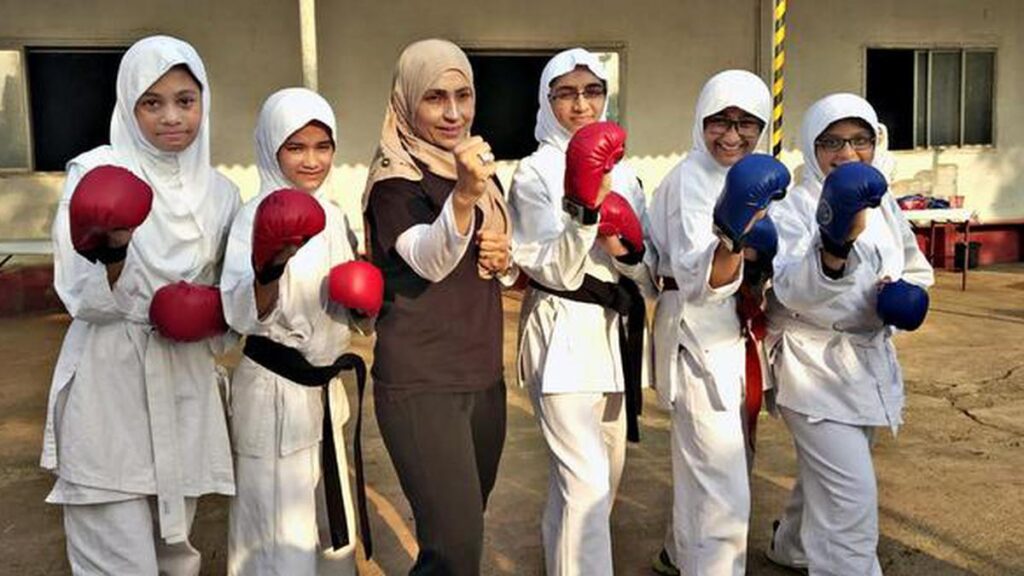
Packing a punch: Shaheen Akhtar, the first female karate referee in south Asia, with her students. (Right)
On Instagram, 19-year-old Haleema Momin calls herself ‘Hijabi Beast’. The athlete from Jogeshwari who performs callisthenics stands out not only for her choice of career but also her attire.
“People who don’t know about Islam assume that hijab is a sign of oppression. For me, the hijab brings a sense of security, strength and dignity. I get a lot of support and attention because of my hijab,” said Ms. Momin, who is trained in powerlifting and martial arts.
Extraordinary feats
The teenager, who works as a personal trainer, is all set to perform a range of moves like the headstand, handstand, superman push-ups and flips at YB Chavan auditorium on February 1, World Hijab Day. She will share stage with an international karate referee, a biker, a calligrapher and other women who wear the hijab by choice and take pride in it.
The first-of-its-kind event has been organised by the non-profit Al Hadi Organisation with the aim of shattering the popular belief that the hijab is an obligation and not a choice. “I started wearing the hijab at the age of 41. It was a sudden consciousness that dawned upon me and I became a hijabi,” said Mazgaon resident Shaheen Akhtar, a World Karate Federation referee and the first female karate referee in south Asia. Ms. Akhtar was lucky that in the same year, 2014, the World Karate Federation introduced the hijab as a part of the attire for referees. Her 26-year-old daughter, who holds an MBA and works with a multinational company, does not wear a hijab. She said, “My mother always told me that our religion calls for it, but never forced me to wear the hijab. I made my own choice and I will let my daughter make her own choice too.”
The event also aims at highlighting the bias against hijabis in schools, colleges and workplaces. “It took so many years for television channels to have hijabi anchors. Why?,” asked 29-year-old Fatema Zaidi Mirza, an anchor with Channel WIN (World Islamic Network) and one of the presenters at the February 1 event. Ms. Mirza will also share her own story of being asked to remove her headscarf while in school, which later resulted in her parents filing a court case. “Even today, there are so many schools that do not allow Muslim girls to wear the hijab and women are asked to remove it at many places,” she said.
Shabana Sadik Husein Pattawala, founder of Al Hadi Organisation, said the event will bring together women from all Muslim sects. She said, “The message we want to spread is that women can do wonders wearing a hijab, and wearing it does not hide their talent. The speakers and performers at the event will bear testimony to this fact.”
source: http://www.thehindu.com / The Hindu / Home> News> Cities> Mumbai / by Jyoti Shelar / January 29th, 2020
KERALA: Afsal clocked 1:48.43s to claim the silver.
Indias Mohammed Afsal Pulikkalakath waves the national flag after finishing second in the Mens 800m Final event at the 19th Asian Games
Hangzhou :
Indian athlete Mohammed Afsal Pulikkalath bagged a silver medal in the men’s 800m final in the Asian Games on Tuesday. Afsal had a shot at the gold and he was inches away from finishing first but Saudi Arabia’s Essa Ali Kzwani went past the Indian runner towards the end.
Afsal clocked 1:48.43s to claim the silver. The Saudi Arabian athlete surpassed him by 0.39s as he finished with a timing of 1:48.05s. The bronze medal was claimed by Oman’s Husain Mohsin Husain who clocked 1:48.51s. Krishan Kumar was the other Indian who participated in the race but got disqualified.
Earlier in the day, Indian runner Parul Chaudhary etched her name in the history book by winning a gold medal in the Women’s 5000m. Returning to the field after bagging a silver medal in the women’s 3000-metre steeplechase on Monday, Parul finished with a timing of 15:14.75 for the gold medal. She became the first Indian to win gold in the women’s 5000m event at the Asian Games.
source: http://www.telanganatoday.com / Telangana Today / Home> India / by PTI / October 03rd, 2023
Mursalin’s act went viral on social media platforms and hundreds turned up at his residence to praise him.
Mursalin with members of his family (Photo | Special arrangement)
Kolkata :
When Class V student Mursalin left his Malda home on Thursday afternoon to fish in a ditch beside the railway tracks, all his concentration was focused on the water. But as he looked around for a few seconds, his attention shifted to a large crater under the railway track, which was caused by heavy rainfall in the north Bengal region in the past few days.
Seeing part of the track having no support beneath it, Mursalin sensed danger. On hearing the whistle of the speeding Silchar-bound Kanchanjungha Express as it was skipping the nearby Bhaluka Road railway station, the 11-year-old boy took off his red T-shirt and started waving it as fast as he could to draw the attention of the train driver.
Spotting the boy on the track waving his red T-shirt, the motorman applied the brakes and the train came to a halt. The driver examined the crater, sent an SOS and railway officials arrived. Repair work was carried out to fill up the crater and the train left.
Mursalin’s act went viral on social media platforms and hundreds turned up at his residence to praise him.
“It was drizzling and I crossed the railway track and came to the ditch for fishing. I was busy catching fish but after a few minutes, when I could not catch a single one, I just looked around. I saw the soil and stones under the railway track were washed away because of rain, I felt it could pose a threat to a train. At the same time, I heard the train’s whistle. I did not spare a moment. I took off my red T-shirt and started waving it standing on the railway track,” said the boy.
Mursalin’s mother Marzina Bibi said her son returned home and narrated what he did. “I feel proud of him. His act saved a train mishap. Railway officers also praised him,” she said.
Railway officers said the crater under the tracks had not been noticed. “After examining the crater, the railway officers from nearby Bhaluka Road station took steps to fill it up as early as possible. We appreciate the boy’s presence of mind and his bravery,” said a railway official.
source: http://www.newindianexpress.com / The New Indian Express / Home> Good News / by Express News Service / September 27th, 2023



_(1).jpg)