Tag Archives: Positive News of Uttar Pradesh Muslims

Mustafa Kamal Sherwani (1952–2025): The Man and His Magnificence — One of the Foursome in the Babri Masjid Conundrum

Etah District / Lucknow, UTTAR PRADESH :

Mustafa Kamal Sherwani

Mustafa Kamal Sherwani, was Doctor in Law (LLD), a senior Law faculty in Shia Post Graduate Degree College, Lucknow, belonged to Lucknow in all its totality. He was the Principal of the institution too. He had in himself all. Ingrained in Muslim historical legacy, feudal ancestry grounded to the masses, Muslimness never brooding to exclusiveness and a diehard human rights campaigner-all to the hilt. He passed away to heavenly abode on March 3, 2025, leaving a void, which would never be filled, in a community otherwise resigned to the fate in this present political squall.

He represented the post-Babri Masjid demolition genre and hit the political windscreen as a flag bearer of All India Muslim Forum in 1993, he assiduously pursued the agenda to sensitize Muslim political consciousness, and definitely succeeded to carve a special niche for Muslim space in Lucknow, the citadel of communal cauldron, during the high days of Kalyan Singh, Ram Prakash Gutpa, Rajnath Singh, all Bhartiya Janta Party Chief Ministers and Prime Minister AB Vajpayee.

His able mentorship made Muslims not recede into a cocoon but instead there was hardly a month, which passed, and Lucknow did not witness AIMF protests, on streets, many times opposite Vidhan Sabha. In fact, MK Sherwani, political credibility, is what made it all, as even when there were no mobile phones, MK Sherwani, could mobilize around 100 AIMF workers and supporters in one hour.

I too had interactions with him on many sundry afternoons. Despite political one-upmanship, when he was betrayed by his friends and colleagues, which also is a hallmark of Muslim polity, he never betrayed a sign of acrimony but instead was always with his trademark infectious smile. Yet, surely, the dent was inside. He never would divulge the name of those who passed AIMF meetings information to local intelligence sleuths and onto the political establishment those days. He however was very skeptical to the politicization of Muslim clergy, and would argue, that Hindu religious leaders perpetuate the Hindu political leadership, but instead, Muslim religious personnel kill their own political voices, of course, in exchange for the worldly charms.

His stint as a former Vice Chancellor of Zanzibar University and Department Head of Law and Shariah at the same university, never dimmed the belonging he had for his first love. AIMF. He would tell me that even before he would have tea there, he would log on to all Hindi/Urdu and English newspapers with dateline Lucknow to keep a tab on events back home, and issue statements on it. He made a stint to Finland, for his landmark 75 lecture series, on India’s cultural heritage and diversity. A great feat unto itself.

He was an old Aligarh Muslim University alumina and was once accused of sedition. He had to pass through a 15 years ordeal, which he would transform in a form of a book Secular Horror which is available on Amazon. I had done its review long back. The torment started after he had published an article ‘Secularism vis-à-vis Hindu chauvinism’ in Radiance Viewsweekly, the mouthpiece of Jamaat-e Islami Hind. His treatise Iblees ( Satan) and the Mullas was his uneasy exhortation as to how Muslim political aspirations have been killed at the altar of Muslim clergy machinations. A leaf he took from Allama Iqbal from whom he was greatly influenced. His ceaseless efforts in the form of I am a Citizen of the World, dedicated to Hindu-Muslim unity, Tribute to Hazrat Imam Husain, are still available on his facebook page.

His legal acumen made him a constant figure at the Lucknow bench of Allahabad High Court. He made into a perfect stature who would hog the courts with petitions to safeguard Muslims rights.

He would unequivocally apprise Muslim masses, through his speeches on streets and seminars, as to how assembly seats in UP with sizeable Muslim presence, have been categorized as reserved for Scheduled Caste/Tribes! In stark violation of the Representation of the People Act, 1950.

He was sharp-as-a-tack, who would always dither into narratives with warmth and wit, much always to the laughter and lighting of the mood during his speeches. Masses would start to chuckle on his disarmingly simple eloquence which made even ordinary look like an art. He made everything relevant. His would allure everyone with comfortable ease to make ordinary become extra ordinary. He was in constant search for a tonal alchemy where there was to be a moral entity, and where, justice would ultimately be served (read to Muslims).

There is no denying the fact that he, along with the likes of Saleem Peerzada and Zafaryab Jilani, Muhammed Azam Khan, was a preserve of a tortured genius with traumatic back stories. Hashimpura, Malina, Bhagalpur, Meerut, Babri Masjid riots etc.

He was always by the side of Zafaryab Jilani, on every Babri Masjid demolition anniversary ( December 6, 1992), emphatically on the probe, that the possibility of order be restored. But, then, last but not the least, he belonged to an era where even the best of minds are ordained ( sic) for cynicism and fatalism! Yet he, as were his friends, did not choose escapism. Zafaryab Jilan was the convener of Babri Masjid Action Committee and Saleem Peerzada had founded of Parcham Party of India.

He was a friend of friends. Today he is no more, so are Zafaryab Jilani and Saleem Peerzada. They made a great camaraderie. A coterie which had thronged the Vidhan Sabha street, against the then BJP supported UP CM Mayawati, when she had refused to issue a fresh notification to Central Bureau of Investigation, to restart the case against LK Advani, the then main accused of Babri Masjid demolition, after he was exonerated by the CBI court in 2003, which of course he is now. It is ironic that today, after 40 years; a grandiose Rama Temple has come on the site of demolished Babri Masjid. But, no one demolished it?

Today three of them are not there. Death may be permanent but certainly not defining. The passage of time is however never irrelevant as strive for justice cannot be dampened. The zest for it always feels possible. The mark of hope can never be condescended. MK Sherwani is survived by his wife, two daughters and two sons, Zafaryab Jilani by his wife, a daughter and two sons, Saleem Peerzada did not marry. Three of them were LLM. Muhammed Azam Khan until his first year, before he was arrested during ‘emergency’. Saleem Peerzada was a civil engineer. All the four were from AMU. MK Sherwani will be remembered long time for his LLD thesis Quran and Modern Jurisprudence and it is here yours truly also played a role. I had taken the copy to the publisher to get it published.

Muhammed Azam Khan is right now undergoing a tortuous survival in jail. When will the discontent end? Their lives of struggle will always be the yardstick to give a whiff of element even in the event of hoping against hope.

****

The writer is a former UP State Information Commissioner.

source: http://www.muslimmirror.com / Muslim Mirror / Home> Obituary / by Haider Abbas / August 29th, 202
Dr. Tarana’s book on forgotten Rampur foods released

Rampur, UTTAR PRADESH :

New Delhi :

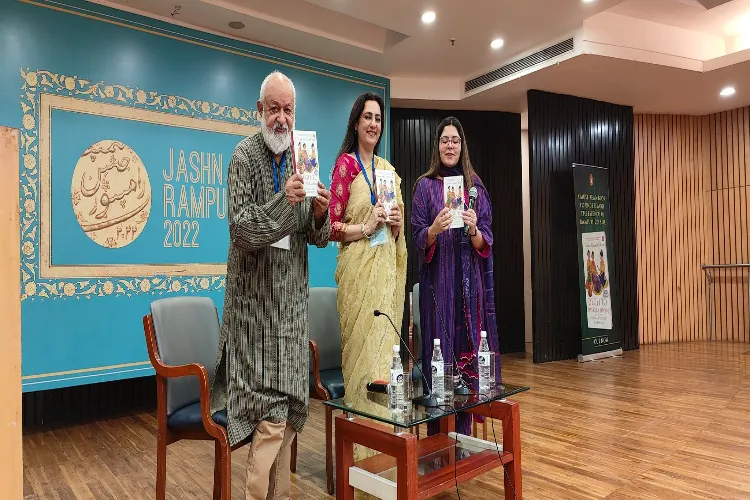
Away from the hustle and bustle of the national capital Delhi, the food lovers gathered in Delhi’s India International Center to discuss the food – delicacies, genres and history – all day. It was for the release of Dr. Tarana Hasan Khan’s book ‘Deg to Dastarkhwan: Stories and Recipes from Rampur.

In this era of pizza, burger, and fast foods, we seems to be forgetting traditions of the Shahi, Mughlai and old delicious food.

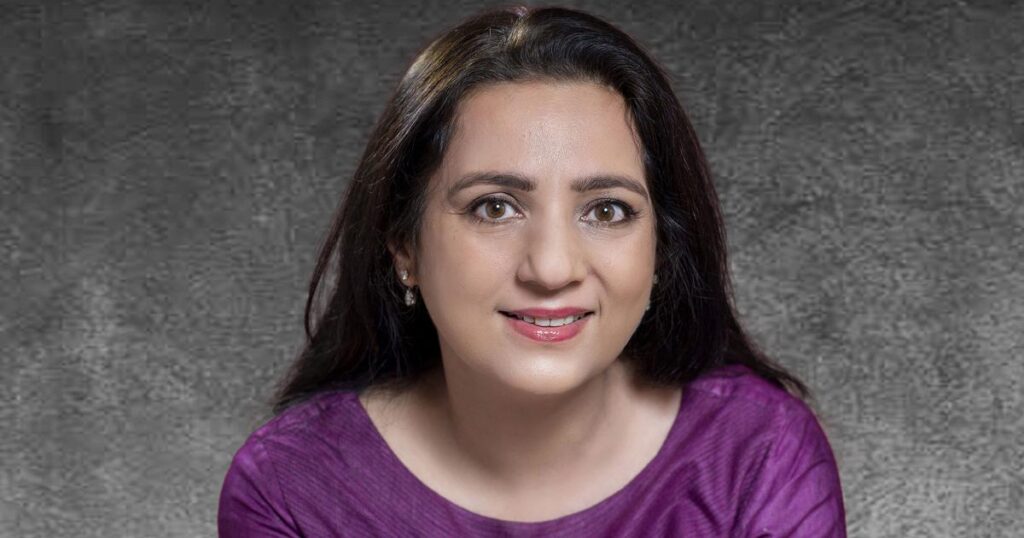
Dr. Tarana Hasan Khan is one of the few to write on Dastarkhwan – the Indian cusine. She is also cultural historian.

Dr. Tarana Hasan Khan and her book

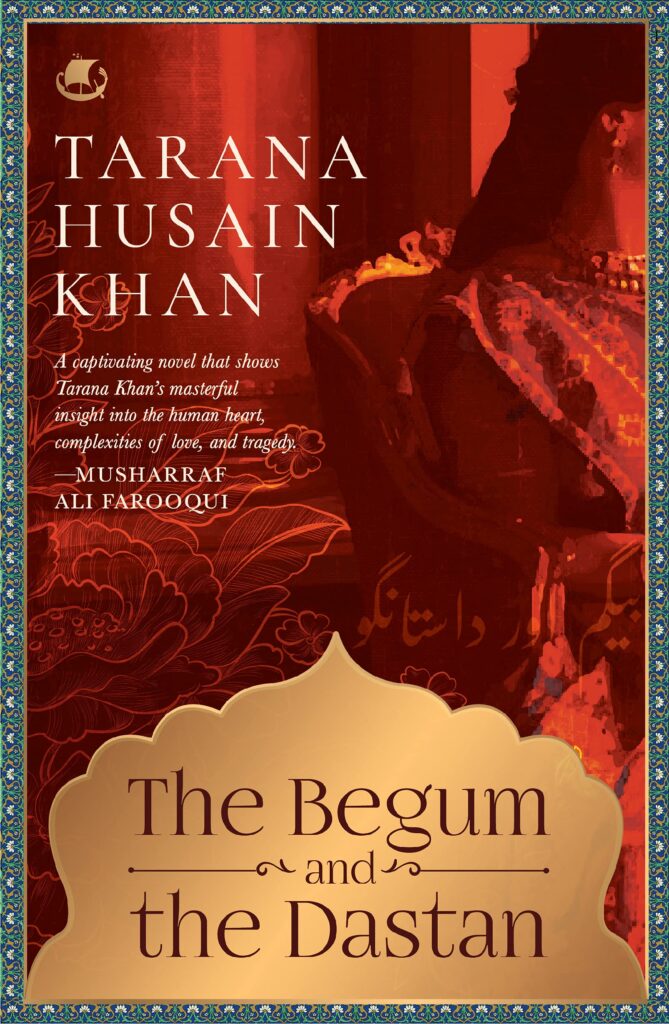
Her other book is: The Begum and the Dastan.

Dr. Tarana says It took her three years to cover the forgotten recipes of Rampur for the book. There is a chapter on rice and spices in this book.

Famous food writer Pushpant Pant also participated in the book launch ceremony. The program started with welcome address by Swati Pal, Principal of Janki Devi Memorial College.

She also discussed the problems faced in writing the book on the ‘forgotten foods of Rampur’ were mentioned. Yusuf Saeed and Naseema Naqvi had a long conversation on this subject. This was followed by a discussion on the history of the foods between Dr. Tarana and Pushpant Pant.

Dr. Tarana specially thanked Pushpesh Pant for attending the program and joining the discussion on delicious food. He has written about Pushpent Pant by posting on Twitter:

This book has been published by Penguin.

source: http://www.awazthevoice.in / Awaz, The Voice / Home / by Aasha Khosa / October 31st, 2022

Athar Siddiqui breaks away from tradition and pens some highly evocative sketches

Sahranpur, UTTAR PRADESH / NEW DELHI :

The evocative recapitulation of eminent personalities provides a quick, candid, exquisite and scrupulous portrayal of those who retain their abiding presence without being physically present in the world.

The unprecedented acceptance of monolingualism has put a big question mark on the existence of numerous languages through which people stitch up a warm social rapport and seek to fulfill their cultural aspirations. India, an awe-inspiring repository of innumerable dialects, languages and different linguistic traditions, finds it nerve-racking to carry through the challenges thrown open by the technology-savvy language-English. The domination of English has taken a heavy toll on regional languages, and Urdu, once considered a significant link language, is no exception. Though Urdu is widely used as a spoken language, and its sensitively rendered poetry gets across the country, its script has been fading away with bewildering speed.

It aches much to realize that the popularity draws its sustenance from its oral rendering, and familiarity with its distinct script has been melting away steadily. Barring some notable exceptions, only faculty members and research scholars associated with various departments of   Urdu of the universities and colleges use Urdu as the medium of trifling academic discourse. At a time when Urdu faces the threat of obsolescence,   the gleam of hope emerges from the citadel of learning, Aligarh, where academicians not belonging to humanities draw on Urdu to initiate a perceptive discourse on a plethora of issues without bringing rhetorical flourish into play.

Professor Saeeduz Zafar Chagatai (Physics), Professor  Faseeh Ahmad Siddiqui (Chemistry), Professor  Athar Siddiqui (Zoology), Professor Shaan Mohammad (Political Science), Professor Iftikhar Alam Khan (Museology), Professor Zilur Rehman (Unani Medicine), Professor Mohammad Sajjad( History ), Professor Zafar Mahfooz Nomani (Law) Dr Asad Faisal Farooqui (Mass Communication) and the like seek to strengthen non-fiction prose in Urdu.

Autobiography, memories, diary, letters, sketches and anecdotal scrolls are much-adored genres of non-fiction prose, but in Urdu, they usually betray a strong sense of gushiness and sickening self-adulation. The preponderating narrative of reminisces does not go well with the celebrated author, Professor Athar Siddiqui, whose evocative recapitulation of eminent personalities appeared.

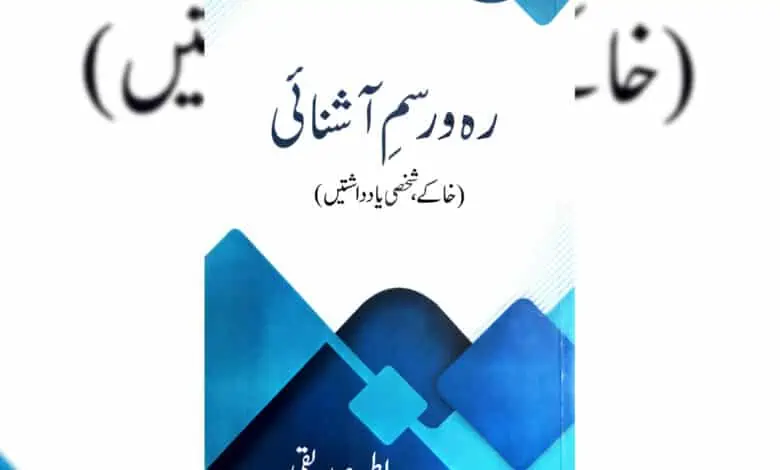
The book Rahe wa Rasm-e-Aashnai (sketches and personal memoirs) provides a quick, candid,   exquisite and scrupulous portrayal of those who retain their abiding presence without being physically present in the world.

Professor Athar Siddiqui, a widely recognized scientist, has produced a captivating narrative of his eventful life, Main Keya Meri Hayat kaya, with disarming humility and jotted down travelogues vividly calling attention to down reaching human experiences that frequent foreign travels produce. Interactive media frequently carry intriguing stories featuring commonplace occurrences. The stories with a strong sense of moral tutoring dished out by the digital world need to be shared with non technology conversant Urdu knowing people.

He left Professor Athar Siddiqui to supplement what had been missing and started translating these pulsating stories into Urdu. It was left to Professor Athar Siddiqui to supplement what had been missing, and he translated these pulsating stories into Urdu.

Tahzibul Aklaqh, a prestigious periodical launched by Sir Syed in 1870, started serializing it with a suggestive title Hairat Sarai Ki Kahaniyan (The stories of wonderland), and two volumes of these laconic and absorbing stories have appeared so far.

He meticulously edited two autobiographies of two illustrious alums of Aligarh Muslim University–Dr. Sheikh Mohammad Abdullah (founder of women’s college, AMU) and Nawab Ahmad Saeed Khan Chattari ( former Governor of Uttar Pradesh). He had astutely done over translating books on Shaheryar and Musa Raza.

Athar Siddiqui’s recently published book, Rah-o-Rasam-e – Aashnai,” creatively maps out the accessible and unchartered terrains of thirty-five personalities in candour-driven idiom, and he hardly holds with the popular notion that put a lock on showing the slightest discourtesy to the deceased. The author asserts, “It is widely mentioned that the sketch writer must not use any indecent or improper word for those resting in the peace. If this sort of exhortation is adhered to, then the sketch, personal article and memories will be read as appreciation and admiration-filled text. If history writing sticks to this principle, then the authentic history of any period could not be produced. I do not buy this argument.”


The subtle wised-up mélange focuses on nine creative writers such as Shahryar, Iqbal Matin, Sajida Zaidi, Qazi Abdus Sattar, Professor Mukhtar Uddin Arzoo, Syed Hamid, Lateefuz Zaman and a couple of close relatives, teachers, friends and former vice-chancellors.

Iqbal Matin, whose awe-inspiring artistic sensibility could not get him the recognition across the country he fully deserved, has come in for a  refined exploration. Athar Siddiqui’s reminiscence is peppered with unusual but fascinating details about the author. The author living in Aligarh tried desperately to contact Iqbal Matin (Hyderabad) when the letter was the preferred communication medium. He realized that his letters were not delivered to the addressee, who was prone to change houses. Iqbal changed thirty-five houses and bore testimony to his nomadic lifestyle.

Much has been written on Jnanpith awardee and prominent poet  Shahryar but a comprehensive and insightful article highlighting his distinctive personal traits and oeuvre is still looked-for. The piece titled  “Shahryar as a man and poet” fills the bill with remarkable ease. Athar saheb cites many instances to prove Shahryar’s unflinching loyalty to his friends but never spitting upon the rivals. The voice of modernism with strong traces of neoclassicism, Shahryar never nurtured animosity and did whatever he could for those who looked up to him in their hours of peril. People, even authors and pushover critics tend to read creative texts in the backdrop of personal details; hence when Shahryar suffering from a terminal illness- cancer–composed a couplet; Aasman ab kuch nahi tere karney ke liye/Ham ne sab taiyaariyan karli hain  marne ke liye (O sky,  now you have nothing to do/I have completed all the preparations for dying) it was considered as the affirmation of impending death. Employing critical acuity, Athar saheb mentioned that the couplet has nothing to do with a nagging sense of personal extinction; the poet laments how we perfected the art of self-destruction reflected in the depletion of Ozone layer manufacturing of weapons of mass destruction.

Athar Siddiqui wrote an immensely readable sketch of Qazi Abdus Sattar, a much overrated and pretentious writer who always took pride in using ornate and florid language in his fiction. His novel Tamam Sultan has been described as magnum opus, but it is hardly more than an oft-repeated titillating story of unrequited love. Athar Saheb and Qazi have had close ties for over fifty years, but Qazi was so intemperate that he pulled ties into pieces as Athar could not attend his facilitation function. It was an act of civility to describe this narcissism as uniqueness of personality.

Prof Zilur Rehman, a widely- respected academician of Unani medicine, is a well-known scholar of Urdu, Persian and Arabic and has more than fifty books to his credit. His books, especially on Ibne Sina, Hakim Ajmal Khan, Sir Ross Masood, Hakim Ehshanullah Khan, and Hakim Abdul Moid, got widespread admiration. In addition to discussing his well-documented and invigorating writings, Athar Siddiqui effortlessly unravels his amenable nature and inimitable passion for books and artefacts. He has a collection of over 70,000 and set up a museum and library, Ibne Sina Academy, which has its website.

Seldom does one attempt to spell out what essentially embodies his wife, going beyond the adulation and berating with a sense of objectivity. This nagging edginess seems to have no bearing on Athar saheb, who painted a stirring wordy portrayal of his wife Zakia Siddiqui, a renowned academician and former principal of Women’s College, Aligarh Muslim University.

One tends to agree with the author when he asserts that during the first ten years wife is treated as the beloved; with the birth of children, she takes over the role of the mother. If harmonious marital life continues, she becomes an inseparable friend who hardly gets perturbed, no matter how annoying one becomes. It is all momentary, and the bond of affinity never weakens.

Athar saheb also evocatively narrated his mother’s life story, and he recollects his memories and anecdotes to document her extraordinary considerate nature. Suhail (son) and Taab (daughter) get pat on the head by the caring and unerring father for their abiding sympathy for others.

The book turns attention to a dozen vice-chancellors and pro-vice-chancellors of AMU, such as Dr Zakir Hussain, Bashir Hussain Zaidi, Badruddin Tyabji, Abdul Aleem, Ali Mohammad Khusro, Syed Hamid, Syed Hashim Ali, Wasiur Rehman, Naseem Farooqui, Mahmoodur Rehman, Hamid Ansari and Abul Hasan Siddiqui.

The author’s appraisal of them looks convincing, but occasionally subjectivity surfaces. The assortment of sketches offers a discerning peep into the life of all who impressed the author. The nuanced and readable prose is used impeccably, and Athar Siddiqui deserves accolades for producing such picturesque vignettes.

Shafey Kidwai is an Indian academic, communication scientist, translator, columnist, and author. He is the chairman of the Department of Mass Communications at Aligarh Muslim University.

source: http://www.siasat.com / The Siasat Daily / Home> Featured News / by Shafey Kidwai / September 26th, 2025

Mujawar Hussain Unveils Harsh Realities of Ghostwriting in Pre-TV Literary World

Allahabad, UTTAR PRADESH :

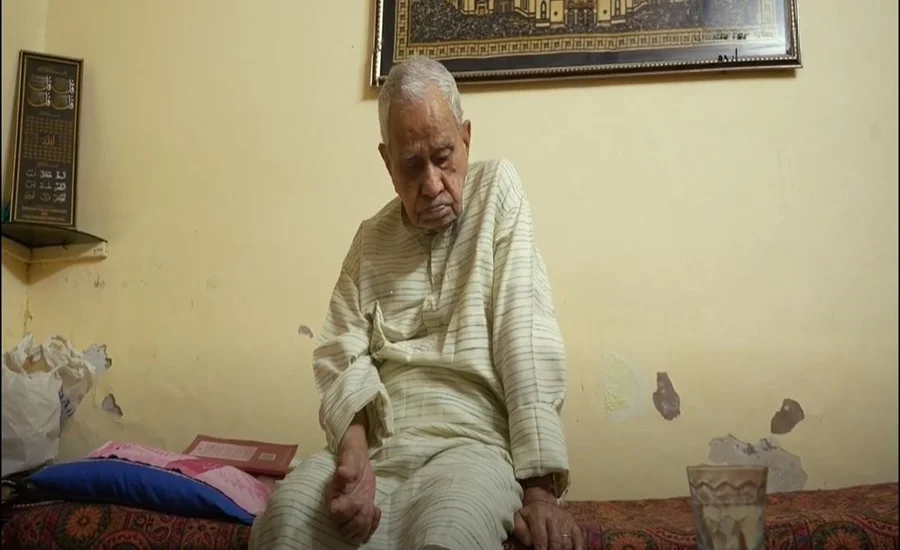
The acclaimed Urdu and Hindi writer from Allahabad exposes how poverty forced him to ghostwrite 1,065 novels.

New Delhi :

In the decades before television became a household staple in India and Pakistan, millions turned to novels filled with mystery, romance, and detective tales for entertainment.

One Muslim writer’s story reveals the untold hardship and exploitation faced by many like him during that time. Mujawar Hussain, a prolific Urdu and Hindi author from Allahabad, has exposed the difficult truth behind the 1,065 novels he ghostwrote for Hindu publishers, many under pseudonyms.

Now in his elderly years but still sharp, Hussain shared his painful journey of writing stories for survival rather than pride. “The number of such books combined is 1,065,” he told Clarion India recently. “But the books I consider a source of pride are my research paper, Elements of National Unity in Urdu Poetry, and a collection of my religious essays,” he said.

Hussain’s writing career began in the 1950s when major publishers churned out fiction in bulk to satisfy growing demand. Muslim writers like him were often paid meagre sums to produce thick novels under pseudonyms for Hindu authors and publishers, including names such as Janardan Prasad Jaiswal, Shambhu Prasad Jain, Ashok BA, and the mysterious “Neqab Posh Bedi.” Hussain estimates he wrote 30 to 32 novels under Bedi’s name alone.

“Some of them were non-Muslims,” Hussain said, naming former students turned authors. “I wrote in their names because I had to. The money kept my family alive.”

His words underline the economic hardship faced by many Indian Muslims, forced to work behind the scenes without recognition while Hindu publishers reaped profits. Hussain recalls the pressure of poverty pushing him to write constantly. “I remember those days when I’d enter the house, and my wife would tell me food and drinks would last until the next evening. I’d sit down with a pen, write, and hand over the manuscript to the publisher. I’d take money — 30 rupees at first, then 60, then 100, and finally up to 2,500 rupees. With that, household expenses were met.”

Hussain’s experience highlights the sidelining of Muslim talent in the Indian literary scene, where Hindu publishers held most of the power. “That forced me,” he said. “The memory of that time is painful, and the work was painful. After that, I put down the pen.”

He also revealed working for Nikhat Publications, famous for publishing the works of legendary Urdu detective novelist Ibne Safi. When Ibne Safi’s manuscripts stopped coming to India due to political tensions between India and Pakistan, Hussain was asked to fill the void by writing novels under his name. “When I realised the institution was going to close, I started writing under his name,” he said. “I wrote very few novels in Urdu under his name — half partridge, half quail, meaning some was his, some I mixed.”

In Hindi, Hussain wrote extensively in Ibne Safi’s style, including the novel The Barrister’s Wife, though he remains uneasy about these works. “Even now, I don’t feel good about them,” he admitted. “I didn’t consider them a source of pride.”

Despite his difficult path, Hussain’s academic achievements stand tall. He earned an MA in Urdu in 1958 with two gold medals, a silver medal, a Victoria Gold Medal, and another prize he cannot recall. “No one has ever scored higher than me,” he said proudly. Yet this success did not shield him from the economic hardship that forced him into ghostwriting.

Dr Ayesha Khan, a literary historian specialising in the pre-television literary world, explains that Hussain’s story reflects a larger pattern of exploitation faced by Muslim writers. “Many Muslim authors like Mujawar Hussain were sidelined, forced to write under pseudonyms or for others to survive,” she said. “Hindu publishers often held the power, dictating terms and profiting from their work.”

Hussain’s reflections carry a sense of regret. Quoting a poem, he said, “Remembering the past is a punishment.” He sees much of his commercial writing as a compromise born of necessity, not passion. “Due to the compulsion of circumstances, I wrote some books that I do not consider a source of pride,” he said. “I was writing incessantly.”

Today, Hussain hopes that sharing his story will reveal the struggles of Muslim writers who toiled behind the scenes while others took credit. “I wrote for survival,” he said quietly. “But I want people to know the real story behind those books.”

source: http://www.clarionindia.net / Clarion India / Home> Editor’s Pick> Featured> India / by Mohammed Bin Ismail / May 26th, 2025

Muslims emerge as homogeneous entity backing INDIA bloc in Uttar Pradesh

INDIA :

The INDIA bloc’s Muslim candidates had a victory rate of 83 per cent in the Lok Sabha polls.

Afzal Ansari of the SP who won from Ghazipur (File photo| PTI)

Lucknow :

Muslim voters, who make up a considerable 19 per cent of the population in Uttar Pradesh and are a deciding factor in around a dozen Lok Sabha seats in the state, emerged as a homogenous entity consolidating in favour of the INDIA bloc in the 2024 polls.

The community stood so solidly behind the SP-Congress candidates that all the 20 Muslim candidates fielded by the Mayawati-led Bahujan Samaj Party (BSP) lost, getting only a miniscule fraction of their votes.

The INDIA bloc’s Muslim candidates had a victory rate of 83 per cent in the Lok Sabha polls. All the four Muslim candidates fielded by the Samajwadi Party won, while one of the two Congress candidates emerged victorious.

Although the BJP leadership including PM Modi exhorted the Muslim community in the recently concluded election to vote keeping in mind the future of their generations, yet the community backed the Congress and SP combo.

In the 2019 Lok Sabha polls, three of the six Muslims MPs who made it to Lok Sabha from UP — Danish Ali (Amroha), Afzal Ansari (Ghazipur) and Fazlur Rehman (Saharanpur) — were from the BSP.

Moreover, the INDIA bloc had fielded Muslim candidate strategically in constituencies with over 40 per cent Muslim electoral population except Ghazipur which has 27 per cent Muslim voters but with an added edge of being the bastion of gangster-turned-politician Mukhtar Ansari. Afzal Ansari sailed through from the constituency as SP candidate this time.

The other Muslim candidates who won in the state are Imran Masood of the Congress from Saharanpur which has approximately 42 per cent Muslim voters, Mohibullah Nadvi of the SP from Rampur which has around 51 per cent Muslim voters (the highest in UP), Iqra Hasan of the SP from Kairana, her family bastion, with 40 per cent Muslim voters and Zia-ur-Rehman of the SP from Sambhal which has around 45 per cent Muslim voters.

source: http://www.newindianexpress.com / The New Indian Express / Home> Nation / by Namita Bajpai / June 12th, 2024

‘The Begum and the Dastan’: A novel that shows how to write history without condoning it

Rampur, UTTAR PRADESH :

Tarana Husain Khan doesn’t write women only as damsels in distress, she writes them as women who challenge.

Tarana Husain Khan.

I don’t remember when my mother first told me, “Boys will be boys.” as an explanation. But I trusted it. The 20-year-old I am now knows it’s an eraser. A cleaning towel that wipes away the grim men produce. Over our words. Over our careers. Over our bodies. It’s an explanation that deletes a lived history with a swift and casual swipe. Tarana Husain Khan’s The Begum and the Dastan resists this erasure.

Khan’s character, Ameera’s grandmother, whom she calls Dadi, tells her the dastan about Feroza Begum, Ameera’s great-grandmother. Feroza Begum attended sawani celebrations at Nawab Shams Ali Khan’s Benazir Palace, defying her family, only to be kidnapped by the Nawab. Although the premise sounds simple, Khan crafts the dastan carefully, preserving the dynamics in Sherpur, a princely state, like one would sour pickle in a jar. Her writing serves as a citation for the overused “Show, don’t tell” technique, arranging the elements of time, location and character through a nuanced understanding of history.

She weaves together the stories of three women, Lalarukh, Feroza and Ameera, with the help of three dastangos, about Kallan Mirza, Ameera’s Dadi, and herself. Each story, within another story, surrenders as a cautionary tale. Sometimes, as a spoiler, that hands you the reins to ride through the rest of the story.

Blame slithers across each story, hissing at every woman who defies and exercises her need for independence. During the forced marriage to the Nawab, women around the bride were “tut-tutting over Feroza’s heartlessness”, believing she aborted her pregnancy from her previous marriage. The blame congeals on Feroza, a victim of forced abortion by the Nawab. In the rumours, the Nawab is a man she loves, not her abuser. The cruelty of these women steps outside the realm of gossip, nipping at Feroza’s right to refuse consent to her nikah.

“‘Feroza Begum, daughter of Altaf Khan urf Miya Jan Khan, your wedding has been arranged to Nawab Shams Ali Khan Bahadur, son of Nawab Murad Ali Khan Bahadur for a sum of two lakh rupees as meher. Do you agree?’

What if she just didn’t say anything?

‘She says “yes”!’ A middle-aged woman dressed in her bridal dress, suddenly shouted towards the curtains. Feroza turned towards the woman. The old lady in charge of her elbowed her ribs.

‘Uh?’ she turned sharply towards the offending lady.

‘I heard it too. She said “yes”!’ said the old lady, then another woman joined in bearing witness to her acquiesce and then another.”

“Why wouldn’t a divorced woman who aborted her child marry the Nawab?” is the rhetoric that these women echo. It’s a form of enabling, but Khan exerts dialogue, channelling prose to amplify Feroza’s reaction, forgotten amidst placeholder approval. She choreographs the myth “she asked for it” by excluding the chorus of the maulvi asking for consent thrice, as is tradition, to exacerbate the rumours that enable, and more terrifyingly, erase. Another dialogue chimes in to note this eager “consent” by Feroza. In these instances, Khan’s narrator, Dadi, is not just a storyteller; but an advocate for forgotten history.

But Khan doesn’t write women only as damsels in distress; she writes them as women who challenge. Feroza wears what she wants, despite the word that the patriarchy will impose on her: nautch. Khan examines how the question of her attire serves as a justification for the harassment. When Bibi, Feroza’s maid, asks her to “let it be”, as she was “wearing that dress”, Feroza doesn’t surrender to the blame. Instead, Feroza asks these questions: what if she was one of the common women? What if she was a nautch?

Khan tackles clothing not only as a form of rebellion but as an identifier of communion and the dismissal of “the other”. When Feroza sights a British woman wearing a “strange gown”, she argues that she should’ve worn “our dress” because she’s in “our country”. Other times, this divide is a form of empowerment.

“Strangely, guys don’t pester scarf-wearing girls with ‘I want to be your friend’ proposals. So us scarfed girls choose to talk to guys we like and make boyfriends on our own. It’s pretty cool that way, though I long to throw away the scarf and open up my hair like I used to at St Mary’s.”

Ameera’s perception of the scarf rewrites the reputation of the vilified veil, untying the folds that make it an oppressive tool while recognising how being “the other” means a kind of protection. A woman’s scarf, her dress, and her jewellery make an argument in this novel. But the expectations that pin a scarf around Ameera’s head, and a nath on Feroza’s nose, encourage a misplaced trust in the men in their lives.

Across the three stories in the novel, protagonists expect men to protect, not because they victimise themselves, but because that’s what’s taught to women: dependence is a desired trait. Khan acknowledges how patriarchy dribbles on the men, drawing out how Lalarukh, Feroza and Ameera feel betrayed by the men in their lives for not protecting them. The cadence of this betrayal morphs across the stories as Khan manipulates language like a glassblower does glass.

“I do believe that in this day and age nobody should bully you into selling your property – these are not the Nawab’s times; but if it was Jugnu’s fees and his exams, Abba would sell off the shops and chuck the case in a heartbeat. We females always depend on our fathers or males to rescue us – our default response to a crisis. Imagine, poor Feroza Begum’s father dumped her in the harem and ran away!”

Khan wields the tone of each story, carefully grafting the premise of a woman wronged in different periods and spaces. She uses the first-person perspective to narrate Ameera’s life, crumbling with her family’s negligence towards her, using a voice akin to a teenager simmering with anger. But for Lalarukh and Feroza, Khan, or rather Dadi and Kallan Mirza, uses the third-person perspective, a voice that is omniscient and viscous, dripping of superiority.

They narrate the violence of Nawab and Tareef Khan, Lalarukh’s kidnapper, without embellishments. The abusers are not kings or sorcerers in the chapters that harrow. They are written as, to no surprise, violators. Khan’s treatment of the dynamic between the Nawab and Feroza contradicts this claim sporadically. But when Feroza reciprocates the Nawab’s ‘love’ for her, he continues to dredge her in the limitations of his harem, remaining free himself, further testifying the degree of his abuse. Feroza is a flawed character, but she is not a flawed victim, and Khan asserts that.

Like Khan, both Dadi and Kallan Mirza are biased narrators, intervening to train their listener(s) to root for the protagonist. They collectively fuel a question: How does tradition, along with law, permit the violation of women? Unfortunately, the stories, or rather the lived experiences that ask this question, are muzzled. But the dastangos, both the real and the fictitious, bite through the labour that accompanies such storytelling. The story prompts the question: How can one write history without condoning it? In The Begum and the Dastan, history is an inspiration, a tool, and an anchor, but it is not a justification.

pix: amazon.in

source: http://www.scroll.in / Scroll.in / Home> Book Review / by Isa Ayidh / (book cover image edited in, amazon.in) /June 27th, 2021

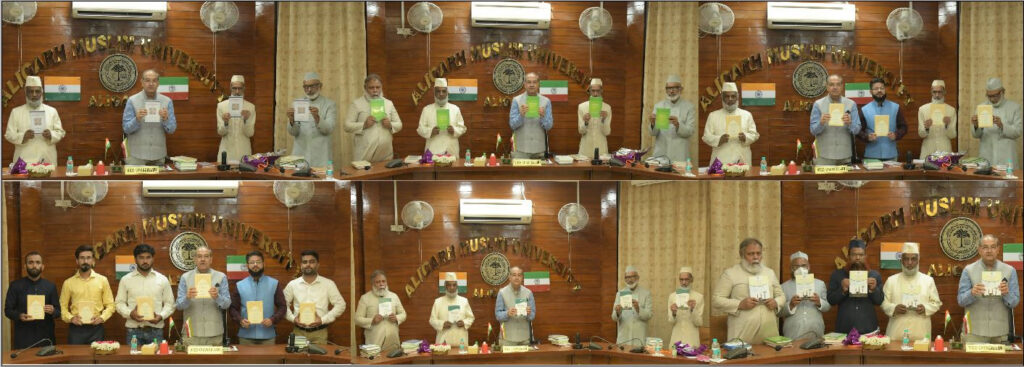
AMU Vice Chancellor releases eight books published by K.A. Nizami Centre

Aligarh, UTTAR PRADESH :

Eight books published by the K A Nizami Centre for Quranic Studies, Aligarh Muslim University (AMU) addressing key themes on the history of South Asian Muslims, diverse responses to the scholarly contributions and rationalist traditions of Islamic scholarship were released today at the Vice Chancellor’s Office.

They are ‘Contemporary Islamic Scholarship in South Asia: An Assessment’, ‘Humanness of Prophets: The Quranic Prophetology’ and ‘Contribution of Dar-ul-Uloom Deoband to Tafasir’ by Dr Abdul Kader Choughley; ‘Dil Jo tha Zulmat Kadah, Ma’ah-e-Munawwar Hogaya’ by Dr Mohammad Haris Mansoor; ‘Qurani Ulum ka Irtiqa Ahd-i-Islami ke Hindustan Mein’ by Prof Zafarul Islam; ‘How to Promote the Study of Quran among Women’, edited by Dr Nazeer Ahmad Ab. Majeed and Dr Arshad Iqbal; ‘Tarjumani Rahmani’ by Prof A R Kidwai and ‘Allah ki Kitab ki Paanch Mangay’ by Prof Fazlur Rahman Gunnouri.          

“These books will answer some of the most frequently asked questions about traditions in Islamic faith, offer a new understanding on the works of Islamic scholars, explore key Islamic events and provide an understanding of important traditions in Islamic philosophy and the intellectual movement that emerged from South Asian Islam”, said AMU Vice Chancellor, Prof Tariq Mansoor while releasing the books. 

Prof A R Kidwai (Honorary Director, K A Nizami Centre for Quranic Studies) pointed out: “The K A Nizami Centre has published over 80 titles on Quran-related scholarship since 2013. Publications of the Centre represent contemporary literature on furthering Quranic understanding and research in Hindi, English and Urdu by authors from various disciplines including translations from various languages”.

source: http://www.amu.ac.in / Aligarh Muslim University / Home / by Public Relations Department / Aligarh, July 13th, 2022