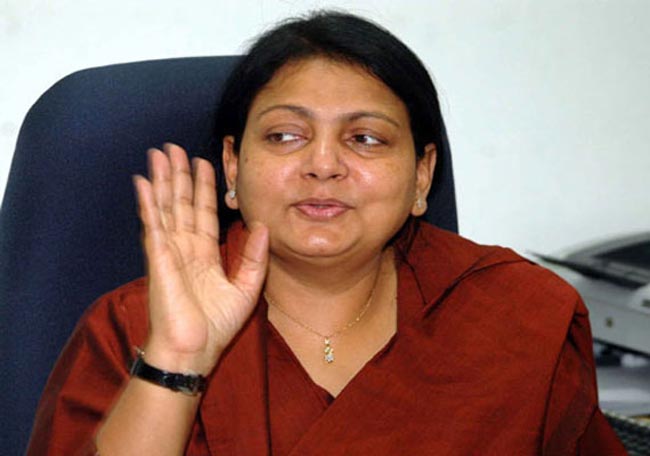
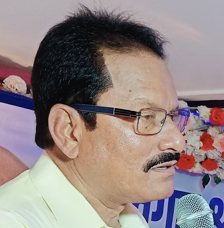
Social activist and Former Bihar Minister Parveen Amanullah passed away today in New Delhi. She was suffering from cancer for some time.
The family had moved from Patna to Delhi for treatment. She also went to America for treatment and recovered from there. Her health had deteriorated for two-three days. she passed away today at seven PM.
Amanullah was the daughter of former Kishanganj MP Syed Shahabuddin and the wife of senior Bihar cadre IAS officer Afzal Amanullah.
Before entering politics she was known for her activism, especially in regard to her use of the Right to Information Act, 2005 to bring out the apathy prevalent in government institutions.
Amanullah was elected as a member of the Bihar Legislative Assembly in 2010 from the Sahebpur Kamal constituency in Begusarai district as a candidate of the Janata Dal (United) after defeating Rashtriya Janata Dal’s Shreenarayan Yadav.
She became the Social Welfare minister of Bihar in Nitish Kumar’s government and held the portfolio until February 2014 when she resigned from JD(U) citing “governance issues” and “lack of work satisfaction”. She joined Arvind Kejriwal’s Aam Aadmi Party two days later.
source: http://www.theindianawaaz.com / The Indian Awaaz / Home> Quami Awaaz / by Indian Awaaz / October 01st, 2023
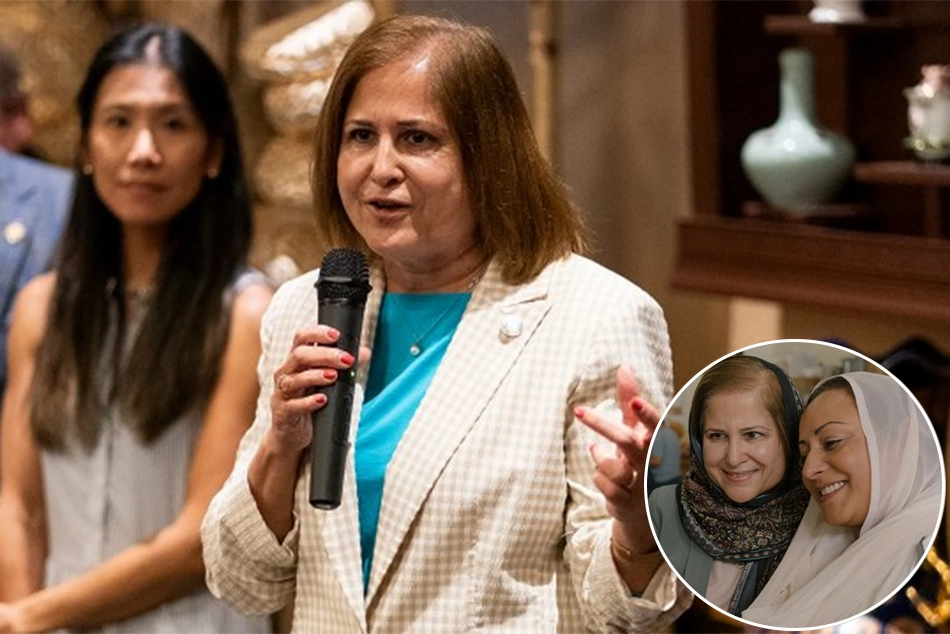
Indian-American Ghazala Hashmi, who is closely linked with the prestigious Aligarh Muslim University (AMU), has won the Virginia Lieutenant Governor 2025 Election result of which was declared on Monday.
Virginia:
Indian-American Ghazala Hashmi, who is closely linked with the prestigious Aligarh Muslim University (AMU), has won the Virginia Lieutenant Governor 2025 Election result of which was declared on Monday.
A Democrat Party candidate, Ghazala Hashmi, defeated Republican candidate and the state’s first gay statewide nominee, John Reid, to become first Muslim and first South Asian American elected as Lieutenant Governor of Virginia, a Republican stronghold.
Ghazala Hashmi polled over 55% votes as against her nearest rival John Reid who got the support of around 44.7% voters. Hashmi had earlier defeated five primary challengers in June, narrowly winning the nomination with 28% of the vote, as per the final result of the Virginia Lieutenant Governor Election 2025.
Ghazala Hashmi was the first Muslim woman to be elected to the Virginia State Senate following her stunning victory over sitting Republican Senator Republican Glen Sturtevant in the 2019 U.S. elections.
Ghazala Hashmi was born in India and emigrated to the US as a child with her family. She is also a former director of the Center for Excellence in Teaching & Learning at Reynolds Community College.
Ghazala Hashmi’s AMU Link
Ghazala Hashmi was born to Zia Hashmi and Tanveer Hashmi in Hyderabad in 1964. She spent her childhood days at her maternal grandparents’ house in Malakpet, Telangana.
She migrated to the United States with her mother and older brother as a 4-year-old child to join her father in Georgia.
Ghazala Hashmi’s mother, Tanveer Hashmi, is an alumna of Osmania University’s Women’s College in Kothi from where she did BA and B.Ed before migrating to the United States.
Ghazala’s father Professor Zia Hashmi is the alumnus of Aligarh Muslim University (AMU) from where he did MA and LLB. He completed his PhD in International Relations from University of South Carolina and soon after began his university teaching career. He retired as the Director of Centre for International Studies which he founded.
Ghazala Hashmi is married to Azhar Rafiq. The couple have two adult daughters – Yasmin and Noor – who both graduated from Chesterfield County Public Schools and the University of Virginia.
According to information available on her official website, Ghazala Hashmi is an experienced educator and an advocate of inclusive values and social justice. Her legislative priorities focus on public education, voting rights and the preservation of democracy, reproductive freedom, gun violence prevention, environmental protection, housing, and affordable healthcare access.
Hashmi spent nearly 30 years as a professor, first teaching at the University of Richmond and then at Reynolds Community College. At Reynolds Community College, Hashmi also served as the Founding Director of the Center for Excellence in Teaching and Learning (CETL).
Former Minister, MLA and BRS leader KT Ramarao has congratulated Ghazala Hashmi on her victory.
“This is massive! From Malakpet to Virginia… Congratulations to Ghazala Hashmi on becoming the first Indian-American Lieutenant Governor of Virginia. There is nothing more beautiful when democracies celebrate diversity of the world”. KTR wrote on X.
source: http://www.ummid.com / Ummid.com / Home> United States / by ummid.com news network / November 05th, 2025
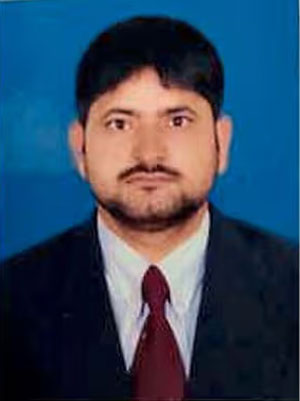
Well-known Mangaluru-based entrepreneur and philanthropist Hashim Khan (45) passed away due to a heart attack in his native village in Uttar Pradesh on Tuesday.
Khan had travelled to his hometown to attend a family function when he reportedly suffered a massive cardiac arrest.
He is survived by his wife, three sons, and a daughter.
Having arrived in Mangaluru at a young age in search of work, Hashim Khan gradually built a successful business and earned wide respect in the city’s business circles. Beyond entrepreneurship, he was equally known for his acts of generosity and social commitment.
During the Covid-19 pandemic, Khan personally distributed food supplies and essential items to needy families, winning the admiration of many.
His untimely demise has left a deep void among the city’s business community and those who benefited from his charitable work.
source: http://www.daijiworld.com / Daijiworld.com / Home> Karnataka / by Daijiworld Media News Network – Mangaluru / November 05th, 2025
There are individuals in smaller cities who have taken upon themselves the task of archiving, preserving, narrating, and circulating historical narratives — all for the love of the place and history. Indore-based Zafar Ansari is one such person who has been painstakingly collecting historical artefacts on Indore since three decades.
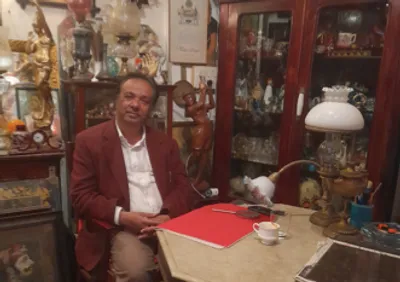
Zafar Ansari in his Museum Office. Photo: C. Yamini Krishna
As I was preparing for my research visit to Indore for a study on the princely state of Indore, all I found online were a few articles from Free Press Journal on the city. It was just a glimpse of how much of the ‘national’ media coverage and public history writing is focussed on the metropolitan cities.
Absence, inaccessibility, decay of archives and historical artefacts are constant challenges faced by history scholars in India. The lack of historical consciousness, poor funding, disinterest, discrimination, and destruction of the archives based on the ideology of the ruling disposition are some of the known reasons why such problems exist. These challenges are acute as one moves beyond the metropolitan cities, into the smaller cities and towns.
History in India, has mostly been studied from the perspective of the nation and to such endeavour small places are often insignificant. Also due to the policy of housing all the state archives in capital cities and the absence of efforts to do neighbourhood or local/regional histories, smaller cities almost feel ‘history less.’
However, inspite of the institutional gap, voices from the smaller cities are not silent. Each time I have ventured into these cities in search of archives, I have always met individuals who have taken upon themselves the task of archiving, preserving, narrating, and circulating historical narratives — all for the love of the place and history.
Indore-based Zafar Ansari is one such person who has been painstakingly collecting historical artefacts on Indore since three decades. “It all started when I received the National Youth Award for my social activities in 1994. The then President Dr Shankar Dayal Sharma said, do something great, and then I decided I will build a museum for Indore,”Ansari says with a sparkle in his eye as he narrated his dream to make a museum for his beloved city Indore.
“This will be one of its kind museum, dedicated to the city, telling the story of the city,” he mentioned. His office in Barwani Plaza in Old Palasia, bustling with artefacts, feels like a portal into another time. As one spends time with these objects, they start speaking through the voice of Ansari.
A miniature maker for industries by profession, Ansari spends more than 60% of his income towards the museum. He never lets any historical object pertaining to Indore pass, without acquiring it, sometimes this means he has had to pay very high price. “It is almost like an addiction,” he says, “It has its flip sides. I have never been able to pay my daughter’s education fee before the last date.”
The history walks, myth-busting artefacts and rare photographs
Ansari is also committed towards sharing his collection. He conducts history walks in the city and curates specific objects from his collection to tell stories of the city. Ansari has recently conducted one such walk for some of the dignitaries who had visited India during the G20 summit. He regularly runs a history column in Dainik Bhaskar where he reintroduces stories of the past to Indore’s citizens.
“I don’t just write about Kings, but also about common people, their lives,” he says, what a historian would call the social history of the place.
Through his consistent effort of writing more than 300 essays on history, Ansari has built a cannon of public history for Indore. Sitting among those objects, he narrated how Indore (state) became a commercial centre due to its close connection with opium trade, “Opium would come from Mansur to Indore and then to Bombay. Many traders and merchants from Rajputana and Gujarat settled here to do opium trade with China. After the ban on opium, the trade was converted to cotton industry.”
Ansari is hopeful that his museum will be a pedagogic intervention. “History is not something to be taught in a classroom, it has to be taught in an archive or a monument or on field using objects and artefacts,” he notes. His work with the artefacts also helps him dispel certain myths and false narratives in circulation.
Ansari’s collection has helped writers like Geraldin Lenain to write books such as The Last Maharaja of Indore by providing access to many rare photographs.
A historian or an antiquarian
After meeting Ansari, I was wondering, if there is a term to describe this love for history, something like a cinephile in case of film.
A historian is often a tag used to describe someone who engages in the work associated with history making, professionally, i.e. as a main vocation. A history buff, focusses more on consumption of history and fails to capture the commitment shown by these keepers of a city’s lore. A collector, is often differentiated from an archivist as someone who is more involved in the process of acquiring artefacts, and is not primarily oriented towards providing access. Someone like Ansari, however, who harbours a hope to build a museum, would fall somewhere in between these two.
Cambridge Dictionary offers a word antiquarian, “a person who studies or collects old and valuable or rare objects.” Antiquarianism historically has often had a negative connotation, as someone in an almost ‘mindless’ pursuit of collecting objects and committed to the minute details of it. Historian, on the other hand, is someone who narrativised the past, with the focus on writing.
Historian Rosemary Sweet notes that history writing could be done for political or polemical purposes while antiquarians prided themselves to be impartial and staying true to the material. Antiquarians are often interested even in objects of everyday life which was not of interest to historians. Interestingly, Sweet points out that the contemporary practice of history, associated with archival study, which relies on the details presented by historical artefacts is very close to antiquarianism.
After searching for these variety of terms, I am still left with no word to capture the affective engagement with history which I experienced in the office of Ansari, where history is not just a vocation or a profession, where there is a lot at stake in telling stories of the past, a significant portion of one’s earnings. This voice of history is not a dispassionate, distant evaluation of the past, but is an expression of belongingness.
Deeply personal work like this has larger social implications, it is about communities taking the ownership of their own history, and inculcating historical consciousness among themselves. Such efforts go a long way in forming the first line of defence against vilification of history and weaponisation of history for political gains, of which we are seeing increasing incidence.
C. Yamini Krishna works on film history, urban history and Deccan history. She is a part of the Khidki collective. She currently teaches at FLAME University.
This work was done as a part of the Foundation Project is implemented by India Foundation for the Arts (IFA) under the Arts Research programme, made possible with support from BNP Paribas India.
source: http://www.m.thewire.in / The Wire / Home> Culture / by C Yamini Krishna / May 16th, 2024
What sets Zeenath Sajida’s creative repertoire apart is its reach, stretching well beyond the domestic concerns and romantic themes one might stereotypically associate with a female writer in mid-twentieth-century Hyderabad.
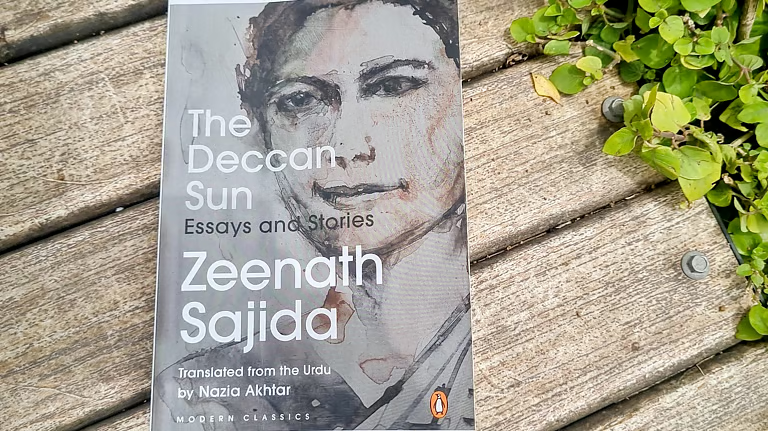
Image of Zeenath Sajida’s book, translated by Nazia Akhtar
Can humorous essays and fictional stories by a single writer paint a holistically authentic portrait of the Deccan? Particularly when filtered through an urban, middle-class, academic lens?
And what happens when that prose is resurrected for an English-reading audience? Translation demands fluency across traditions, sensitivity to historical currents, and an intuitive grasp of possibilities.
The Deccan Sun, a selection of Zeenath Sajida’s Urdu writings, represents exactly this kind of sustained care. Translated and curated by Professor Nazia Akhtar, this collection brings together nine satirical essays and five short stories that offer bundles of pleasure and provocation.
Hyderabad’s Zeenath apa
A prolific Urdu Professor at Osmania University and a literary icon shaped by the leftist wave that turned many youngsters of princely Hyderabad toward rebellion, the mere mention of Zeenath Sajida still evokes a smile among a fading generation of the city’s progressives.
She produced works of considerable intellectual ambition, including A History of Telugu Literature, written in 1960.
But what sets her creative repertoire apart is its reach, stretching well beyond the domestic concerns and romantic themes one might stereotypically associate with a female writer in mid-twentieth-century Hyderabad. Her questions span the practical and the metaphysical: from work-life balance to memory and ageing. This breadth, alongside her engagement with gender, establishes Sajida as a crystallising force within Deccan literature.
Sadly, Sajida’s writings have suffered critical neglect.
Until now, only a single essay of hers had found life in English—thanks to Nazia Akhtar’s earlier offering, Bibi’s Room. The book also contained tantalising glimpses of Sajida’s inimitable biographical sketch of Makhdoom Mohiuddin, the celebrated poet she exalts and irreverently mocks, even branding him a lapoot (scoundrel). Originally delivered at a gathering in Hyderabad’s Urdu Hall, the event was jokingly dubbed Jashn-e-Makhdoom: part tribute, part roast of a comrade. The sketch hinted at the easy cosmopolitanism that once threaded through the city’s cultural circles.
But those were just glimpses.
The Deccan Sun finally delivers, showcasing Sajida’s full creative range. More importantly, the collection corrects reductive narratives that have long confined Hyderabadi women’s stories to tales of exploitation. It provides crucial cultural clues and gives interior lives the breathing space that more documentary modes often flatten or omit altogether.
Ox at an oil press
Sajida’s central tension seems to revolve around competing hungers: the quiet solitude for reading and writing versus the public acknowledgement of her labour. This struggle animates the essay I Got Myself a Job, where she likens the drudgery of a stagnant workplace to “an ox circling in an oilpress”, grimly awaiting holidays that arrive only upon the death of eminent people. This rage at invisibility, whether in households or intellectual circles, surfaces through observations about poets jealous of Makhdoom’s fame. It’s a pain that resonates universally, yet cuts especially deep for women navigating careers within constrictive social structures.
The satirical method at play follows a deceptively simple pattern. First, open with bland, widely held assertions and then excavate them through unflinching personal experience until readers question her true position. Is she earnest or sarcastic? In If I Were a Man, the writer begins by wondering how delightful male privilege might be. Then she chips away at heroic masculinity, and in the process, exposes revolutionaries for what they truly are.
And that is aimless poseurs marching under the banner of self-respect. The game becomes clear: there’s zero intention of being a man. Her worldview remains stubbornly intact and cheerful as ever.
No one is spared in the collection’s funniest piece, From Storeroom to Museum, be it a famous king, his moustache, historians who invent their own history, or doctors “in whose name graveyards thrive”.
Even the qazis and the rigid interpretations of Islamic law they uphold come under fire. Writing as a Muslim woman in post-Razakar Hyderabad, when her community faced suspicion and strain, turning satire inward and choosing stark honesty over protective silence was no small risk.
Naturally, such wit and honesty carry complications well beyond fatwas.
In Building a House, Sajida wryly catches herself making classist remarks—about servants using her soap when she’s away or taking advantage of her generosity. She knows their innocence is something she ought to celebrate. Still, resisting those barbs proves difficult because their exploitation stings!
Though the translator suggests a self-deprecating tone, the humour feels more defiant than apologetic. Comparing stories with essays reveals Sajida’s evolution. The stories, chosen from Jal Tarang (published in 1947 when she was just 24!), infantilise the titular characters’ desires without retribution, while the essays own those same longings with fierce pride. They embrace her job, gender, and sartorial choices, laughing in the face of absurdity.
My Hens embodies this mature confidence with perfect clarity. Against family objections, the narrator acquires chickens and endures subsequent chaos. These birds become emblems of unruly desire, pushing back against blanket resistance.
She recoils in disgust when some are slaughtered. Nonetheless, the ending is satisfying as she’s already anticipating her next trip to the market. Nothing deters her from wanting. The searing rage and humour intertwine to yield a stance that is utterly assured.
Chasing fireflies
The short stories reveal a younger Sajida, one who is still finding her artistic footing. Where the essays crackle with precision, the stories sometimes drown in ornamental excess, mirroring preoccupations of mid-1900s Urdu readers. The translator’s admission about reducing repetitions confirms the original’s verbosity. Even so, young Sajida possessed remarkable instincts for imagery. In The Stranger, memories become “moments flitting like fireflies on a dark night” before melodrama takes over, chasing those fireflies to a dead end.
Formally, Bibi stands apart, approaching the analytical brilliance of Chekhov’s The Darling—both protagonists transform recurring domestic episodes. Here, Sajida demonstrates her architectural sense, building tension through careful structural pacing. Each section shifts the emotional register while maintaining the same configuration. What begins as amorous banter gradually sours into genuine bitterness, yet paradoxically, the acts of care deepen. The story rewards multiple readings, revealing omissions and callbacks that initially escape one’s notice.
Does loneliness lick or feed on us?
Translations inevitably create friction. Most readers prize smooth prose that overlooks the translator’s labour, but Nazia’s occasional bumps through deliberate references (Hatim Tai, Alif Laila) gently remind us that we are entering a world rooted in another language.
The friction becomes sharper when comparing languages head-on. Professor Shagufta Shaheen’s lively Urdu reading of the story What Time Is It? shows how even a thoughtful rendering of a dramatic line—“loneliness feeds on them like termites”—dilutes its original menace: “tanhai unhe deemak ki tarah chaat rahi hai”. Though it lands smoothly, feed can’t quite match the threat of that slow, intimate licking (chaat). Likewise, scoundrel misses the mischievous warmth of the Dakhni lapoot. English’s imperfect lens will always create such distortions. Yet receiving anything from the previously inaccessible feels miraculous.
The translator didn’t just convert Urdu into English; she collated specific pieces from Sajida’s larger corpus, provided context, secured publication, and built literary networks across years, believing in its relevance. Such cultural stewardship enables conversations that couldn’t have existed otherwise.
Nazia amplifies the Deccan sun’s raging flame like oil feeding a lamp, letting us moths finally gather around it in ecstatic circles.
Surya Bulusu, a Researcher and Software Engineer at Avanti Fellows, is working on open-source tech for government school systems. He lives in Mumbai, but has spent several years in Hyderabad. His write-ups can be accessed on his blog.
Views expressed are the author’s own.
source: http://www.thenewsminute.com / The News Minute / Home> Telangana / by Surya Bulusu / July 18th, 2025
Amirbai Karnataki is one of the earliest Kannada singer-actress who made it big in Hindi cinema. She went to Bombay when women artistes were labelled ‘fallen’, but with grit and passion Amirbai became a star and sang 380 songs in 150 Kannada and Hindi films.
Amirbai’s tale is one of inspiration
For someone who didn’t belong to the gramophone generation but the golden period of radio, Lata Mangeshkar, Asha Bhonsle, Mukesh, and Rafi ruled our hearts and constituted our imagination of a film song. The same AIR, during a light music programme, had played “Ninnane Neneyuta Ratriya Kalede”. This, was a carbon copy of Lata’s memorable “Saari Saari Raat Teri Yaad Sataye”, but the voice was starkly different. It had a heavy nasal tone, and the flawless rendition had a simplicity to it. The charming song left an indelible mark and I felt I had to recover her voice from pages that were unknown to me.
Amirbai Karnataki was an unheard voice for the Seventies: she was long gone, and had faded into the archives of black and white era of early films. She was someone who lived on in personal memories of people who had known and heard her.
Amirbai Karnataki (1912-65), who sang 380 songs in 150 films, was an early singer and actress of Hindi cinema. This singer who sang the unforgettable “Main to pavan chali hoon bole papiha” and “Bairan Nindiya Kyon Nahi Aaye”, was born in Bijapur in Karnataka. During the 1930s Amirbai was a prominent name along with stars like Suraiyya, Shamshad Begum, Noor Jahan and Zohrabai Ambalewali.
When Lata Mangeshkar came on to the scene, many of these singers moved into the background and for the later generations they remained unknown.
Born into a family of artistes, Amirbai’s parents Ameenabi and Husensaab worked for a theatre company and even ran one for many years. Growing up years for Amirbai and her five siblings was filled with music and theatre, what with many of her uncles and aunts being top musicians and actors in theatre. She lost her father early and her uncle, Hatel Saheb took care of all the children.
During those years, Bijapur was part of Mumbai Presidency and the sangeet natak tradition in these parts was flourishing. The famous Balagandharva’s company and several other theatre companies camped at Bijapur; Amirbai and her sister Goharbai, trained as they were in classical music, impressed these companies with their singing and they began to not only sing for several of them, but also act.
As Rahmat Tarikere writes in his biography of Amirbai Karnataki, Amirbai moved from Bijapur to Mumbai, from theatre to films. But the exact date and nature of these movements and transitions are hard to tell. The story of Amirbai is a sum total of several happenings in a historical period as there are few definitive documents to lead us to any accurate picture. Painstakingly put together by the biographer, Tarikere says that when Amirbai reached Mumbai (it was perhaps the year of Alam Ara’s release, 1931), women who worked in films, theatre and music were still seen as “fallen”.
Women artistes were often ridiculed as “free women” and among the several women performers, Amirbai and her sister Goharbai too, tried to free women of this stigma. In fact, families not only disowned such women, but there were instances of women being killed for choosing the arts.
In fact, Rahmat Tarikere says that the kind of fight these women put up with the social circumstances of those days is no less significant than the freedom struggle itself. If women artistes, in the later years, earned fame and reputation, it was because of the sacrifices these women made. Ironically, two very popular films “Basant” and “Kismet” in which Amirbai acted deals with the plight of actresses.
Amirbai became a very reputed singer and actress of her times. She was highly paid, and even built a theatre Amir Talkies in Bijapur. She travelled the length and breadth of North Karnataka giving programmes related to theatre and cinema.
A singer who sang some of the finest love songs, had a very unhappy love life though. Tarikere writes how her husband, a Parsi actor who played villain in those days, Himalayavala, abused her physically and emotionally. She had to suffer several assaults from him and even separation became a painful affair. Unable to recover from the trauma, she went into oblivion for several years, and later Badri Kanchawala, with his love and care brought back peace into her life.
At the age of 55, Amirbai passed away; Karnataka had been unified by then and the rest of Karnataka hardly knew of her. Even the newspapers reported her death four days later. It was only later that people have slowly learnt of Amirbai’s greatness and how Gandhiji was immensely fond of her rendition of “Vaishnava Janato”.
source: http://www.thehindu.com / The Hindu / Home> Features> MetroPlus / by Deepa Ganesh / February 27th, 2015
Writer Bolwar Mahamad Kunhi talks about literature and fests.
Karnataka : Bengaluru : 30/10/2017 : Bolwar Mohammed kunhi during The Bengaluru Literature festival in Bengaluru on Sunday. Photo : Sudhakara Jain.
Bolwar Mahamad Kunhi, 66, is the only Indian writer conferred with two Central Sahitya Academy Awards (2010 & 2016) for creative prose in Kannada. He received the Atta Gallata Bangalore Lit Fest 2017 Award for Kannada for his overall contribution on the concluding day of the Lit Fest on Sunday. With 250 short stories and a host of novels, with several directed towards children behind him, Kunhi a recipient of the Karnataka Rajyothsava Award and Karnataka Sahitya Academy’s Lifetime Achievement Award says, “Young writers should regularly read what seniors write and get inspired to find their own words and voice.” Kunhi, who said every recognition is a moment of inspiration to writers, spoke to MetroPlus regarding his life and writing. Excerpts:
Do you think such literary fests are important for the growth of literature?
Yes. Such festivals also add their share to other ingredients required for a healthy literary growth, look at the buzz they create, have you ever seen this kind of an unprecedented crowd? I am not as aware of the present statistics of other languages. This is my uncorroborated research. In recent times Kannada literature has seen a huge number of publications, possibly surpassing that of any other Indian language. The number of literary events or the number of Jnanapeeth awardees we have could surpass those from any other language. This could be another reason some Kannada writers have achieved celebrity status.
Is literature the voice of society?
Literature always augurs well for society and provides wisdom to humanity. All religious books, which I consider part of literature, are works of wisdom which have had a great impact on humankind. Literature also taught civic sense to man who lived like a wild animal. The conversations and dialogues in such events also propagate the same wisdom.
After Chand Ali in ‘Swathantrayada Ota’ who is the next character in your work awaiting attention?
In the last two years I have been busy in understanding two important characters for different reasons. First to write 1000 couplets about Ambedkar and second to write a novel on the Prophet’s beloved wife, Ayesha. The second has gained more traction in the last few months. When I wrote the first ever historic novel on Prophet Muhammad Oidiri two years ago, it was well-received. But most of the characters in Odiri were male. The thoughts, words, actions, and the attitude was male. I always wondered if the women of that time had opinions of their own. Did they ever voice what they felt? Even in solitude? This is the subject of the proposed novel titled Umma (Mother) inspired by the life of Ayesha. I am not sure which one will be completed first.
After Gorur Ramaswamy Iyengar who wrote on Gandhiji, your book on the Mahatma received instant recognition. How important is it for today’s children to read about Gandhiji?
To guide our children in the right way we show them role models. It is a shame we are unable to give them contemporary examples to encourage and mould their personality. The examples that we provide from history or mythology seem too overwhelming for them. Historical characters are kept on a pedestal and are inaccessible. Gandhiji maybe one example which children can relate to since they read and learn about him a lot and he is the most recent of those examples! To these children my book attempts to show that Mahatma Gandhi was not an unachievable superhuman. He was a common, simple boy, who grew up like most of us, as a darling to his parents, went to school, studied prescribed text books and qualified as a lawyer. As a young man he fought for the downtrodden and stood for truth, non-violence and social justice. I tried to depict him as a common man who lived an uncommon life to become a Mahatma.
Do female characters get more importance in your novels?
I don’t think so. Being feminist writer is not an easy way to popularity. Though I was born in a male-dominated community, I was brought up with the love of various women in my early life – my mother, my sisters and my first teacher. They were the ones who tolerated my anger, frustration and ego and loved me unconditionally. That guilt might be the reason women are central to my work. I dedicated my first story collection to ‘Appi Bayi’, the teacher who taught me to write alphabets. The second one was to my mother who I buried with the same hands that I dedicated it to. Another work was to my elder sister and another to my two daughters. My mega novel is dedicated to my beloved. All of this could be due the same guilt. May be my work as an emotional man resonates with like-minded people and thus gets appreciated.
How was your experience writing the screenplay for ‘Munnudi’ and ‘Athithi’?
My writing is like a sculptor’s. It takes shape with time. I don’t believe in inspirations. Cinema, definitely is not my medium. I wrote the screenplay under the persuasion and for the love of my friends P. Sheshadri, who bagged nine National awards in a row and Dattanna, an inimitable character actor. I wrote what I felt for both movies and they incidentally won national awards. I cannot comment on what else I might be able to do in cinema, at least not now.
Can you talk about your initiation to writing considering you have no writers in the family?
I joined Syndicate Bank in Gulbarga after my B.Sc. Much later when I was associated with the Sahitya Academy I discovered that most members had masters degrees. It enthused me into getting an MA in Kannada in the 1980s.
My desire to write was another one of such self-imposed challenges. During a casual conversation while playing carrom with writer Arooru Lakshmana Seth in Gulbarga, I asked him how he was able to visualise and write so much. His said “non-writers like me cannot understand the process.” That comment propelled me into writing a short story and getting published in Navbharat which was the beginning.
source: http://www.thehindu.com / The Hindu / Home> Books> Authors / by Ranjani Govind / October 30th, 2017
Sayyed Tabish Aejaz of Malegaon has cracked the Chartered Accountant Final (CA Final) September 2025 exam the result of which was declared by the Institute of Chartered Accountants of India (ICAI) Monday.
CA Final Result 2025:
Sayyed Tabish Aejaz of Malegaon has cracked the Chartered Accountant Final (CA Final) September 2025 exam the result of which was declared by the Institute of Chartered Accountants of India (ICAI) Monday.
The CA Final Group 1 exam was held from September 03 to 08, 2025 and CA Final Group 2 exam was held from September 10 to 14, 2025.
The ICAI announced the results of CA Final Group 1 and 2 both on Monday.
Among the 11,466 candidates who cracked the CA Final September 2025 Exam and qualified as Chartered Accountants is Sayyed Tabish Aejaz from Malegaon.
District Judge’s Son Becomes CA
Sayyed Tabish Aejaz is son of Sayyed Aejaz who belongs to the Textile City Malegaon but currently serving as District Judge in Nagpur.
Tabish’s uncle Sayyed Shahzad Hussain is also a Chartered Accountant (CA) and is practicing in Malegaon. His grandfather, Sayyed Hussain Ali was a teacher.
Tabish completed his junior college from Jai Hind College in Dhule and graduation (B Com) from Malegaon City College .
“The biggest challenge however was the Class 10 Exam which I completed studying in six different schools in as many cities of Maharashtra because of my father’s postings and transfers as a judge”, Tabish told ummid.com.
Tabish said he prepared for the CA Exams since joining junior college. “And, since my uncle Sayyed Shahzad Hussain is also a Chartered Accountant, it became quite easier for me”, he said.
Tabish Joins Club of Young CAs of Malegaon
Sayyed Tabish cracked the CA Final exams at the age of 22, and joined the coveted club of the bright students of Malegaon who became Chartered Accountant at a very young age.
Besides Tabish, other from Malegaon who cracked the CA Final exam at the young age are:
Siddhant Upendra Mehta (21)
Krishma Singhvi (21)
Gaurav Badera (21)
Rushabh Vikram Mehta (22)
Sayyed Tabish Aejaz Hussain (22)
Responding to the question about his future plans, Tabish said, “To practice as CA is one of potions. But, I am also exploring furthers studies including Chartered Financial Analyst (CFA) and Association of Chartered Certified Accountants (ACCA).”
Among these young CAs in Malegaon, Ghalib Mirza from the nearby town of Kalwan had created a sort of record back in 2012 when he had cracked the CA Final exam at the age of 20 years and six months.
CA Final September 2025 Toppers
Mukund Agiwal from Dhamnod (MP) is the CA Final September 2025 Topper. Tejas Mundada and Bakul Gupta are second and third.
Mukund Agiwal secured the All India Rank 1 (AIR 1) in CA Final September 2025 securing 100% marks.
AIR 2 Tejas Mundada is from Hyderabad and he passed the exam with 82% marks.
CA Final Group–I pass percentage is 24.66 per cent and Group–II pass percentage is 25.26 per cent.
Along with CA Final results, the ICAI has also announced today the result of CA Foundation and CA Intermediate. Both the exams were held in the month of September 2025.
CA Foundation September 2025 Toppers
L Rajalakshmi from Chennai secured the top position in CA Foundation September 2025 with 360 marks (90 per cent). Prem Agarwal (354 marks) came second whereas Neel Rajesh Shah (353 marks) secured the third position.
The overall pass percentage of the CA Foundation September 2025 exam is 14.78 per cent.
A total of 98,827 candidates had appeared in the CA Foundation September 2025 exam. Of them, 14,609 were declared passed.
CA Intermediate September 2025 Toppers
CA Intermediate September 2025 Toppers included Neha Khanwani (505 marks), Kriti Sharma (503 marks) and Akshat Birendra Nautiyal (500 marks).
A total of 93,074 appeared in CA Intermediate September 2025 Group I exam. Of them, 8,780 cleared the exams registering a pass percentage of 9.43%.
On the other hand, a total of 69,768 candidates appeared in CA Intermediate September 2025 Group II exam. Of them, 18,938 passed with a passing rate of 27.14%.
Only 3,663 candidates cleared both the groups with a pass percentage of 10.06%.
[Mohammed Abdullah Faizee is Trainee Writer at ummid.com.]
source: http://www.ummid.com / Ummid.com / Home> Education & Career / by Mohammed Abdullah Faizee / November 04th, 2025
The recipient of Padmashri award for communal harmony had earned the sobriquet of ‘Karnataka’s Kabir’
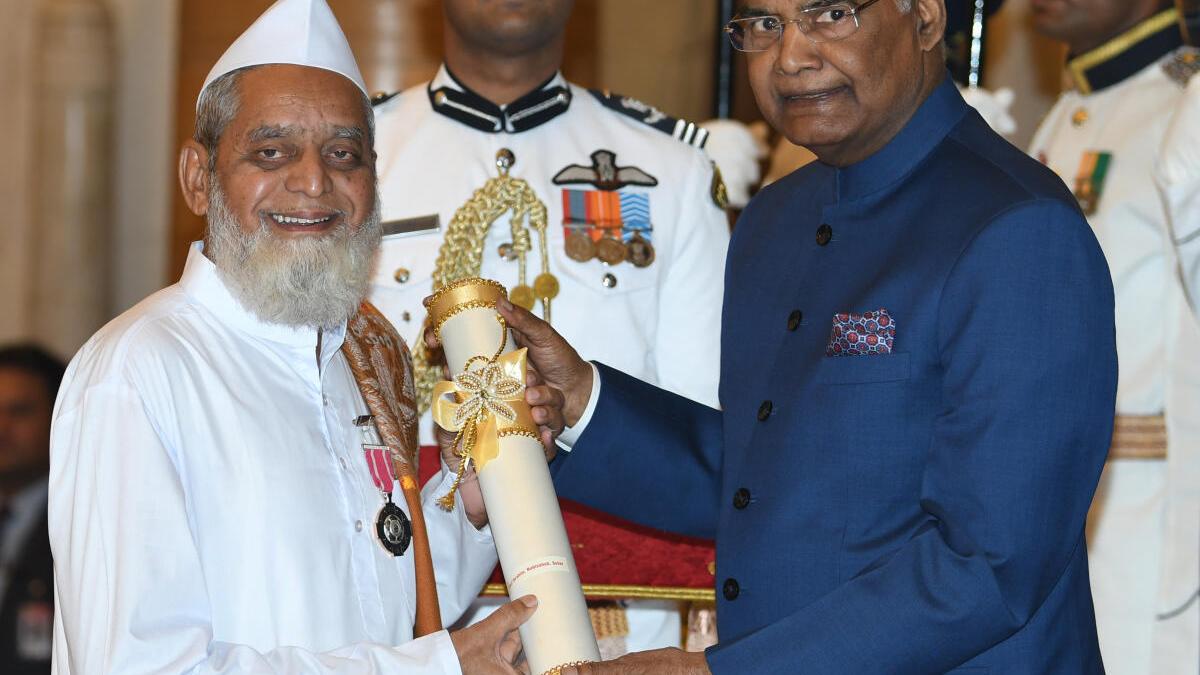
‘Karnataka’s Kabir’ Ibrahim Nabisaheb Sutar is presented the Padmashri award by President Ram Nath Kovind at Rashtrapati Bhawan, in New Delhi on April 2, 2018.
Ibrahim Sutar, polyglot folk singer, who toured India spreading the message of Hindu-Muslim unity, died in Mahalingpur in Bagalkot district on February 5. He suffered a massive heart attack around 6.30 in the morning. He died a few minutes later, family sources said. He was 82. He leaves behind his wife, son and two daughters.
The recipient of Padmashri award for communal harmony had earned the sobriquet of ‘Karnataka’s Kabir’.
The founder of ‘Bhavaikyate Bhajana Mela’ began his career as a Harikathe bhajan singer going around villages and towns. He regaled audiences with stories from Hindu and Islamic scriptures always leaving with a message of harmony, and need for ethics in personal life. He sang songs and gave lectures, quoting from multiple scriptures without the need to read from notes. He was equally well-versed in Kannada and Urdu.
In his later life, he emerged as a public speaker, visiting schools, colleges and Lingayat mutts to speak on vachana and dasa literature. He was honoured with the Karnataka Rajyotsava award in 1995, and the Padmashri in 2018.
Born in a poor weaver family in Mahalingpur, he dropped out of primary school to work as an assistant to a weaver. He developed a spiritual bent of mind early in life. He began attending lectures in the Sri Basavananda Swami mutt and participating in bhajans in Sadhu Maharaj temple. He was a member of the mosque committee that went around villages, asking the faithful to wake up early during the month of Ramzan. He studied Hindu and Islamic scriptures with equal zeal and developed a team of bhajan singers. The ‘Bhavaikyate Bhajana Mela’ performed across Karnataka and Maharashtra.
A routine performance was in the question–answer format interspersed with songs of dasa saints and vachanas . One of the team members came up with a question that sounded very ordinary, but had deep spiritual undertones, like: ‘Who is important in life – god or guru?’ Sutar used anecdotes from the Ramayana and Mahabharata, Islamic scriptures and stories from the life of prophets to give his opinion, that was directed at the audience, rather than the team member who kept asking questions.
source: http://www.thehindu.com / The Hindu / Home> News> India> Karnataka / by Special Correspondent / February 05th, 2022
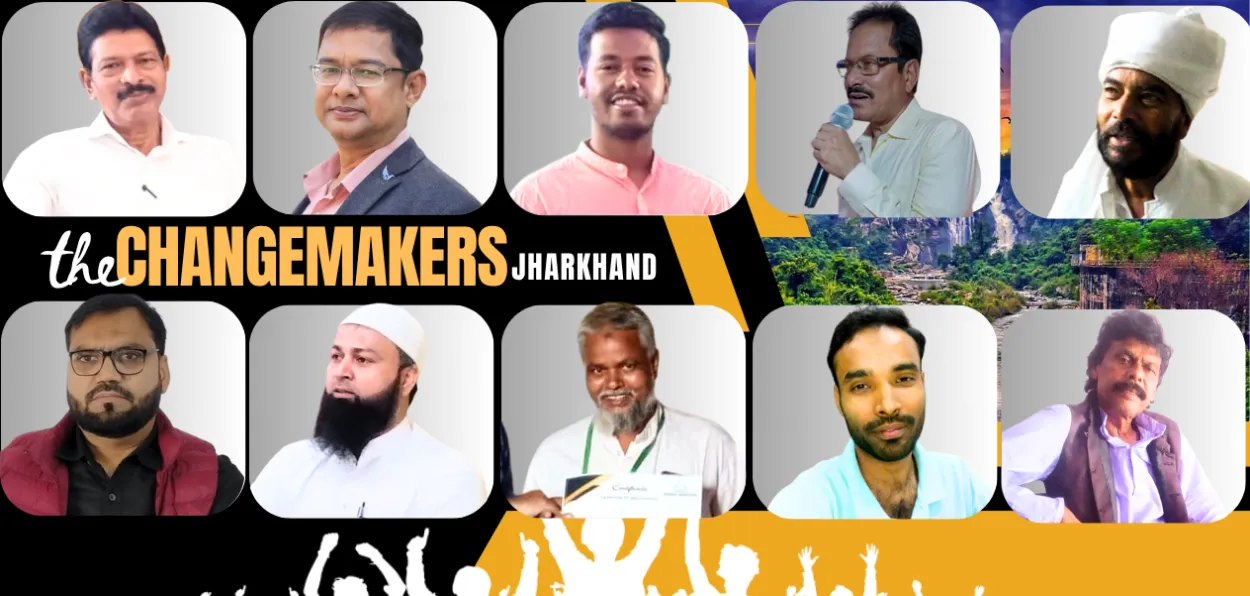
Jharkhand is one of the youngest Indian states, located in eastern India, and is also known as the tribal homeland. Since its inception, it has seen good growth, but the teething problems posed their own challenges. During these exciting times, some individuals have made significant contributions to society.
We, at Awaz-The Voice, bring to you stories of such unsung heroes from the length and breadth of India. Here are stories of ten extraordinary Muslim personalities of Jharkhand, who made a lot of difference to the lives of people and thereby helped state’s growth:
Dr Sajid Hussain
Dr Sajid Hussain left a prestigious research career to build a brighter future for the children of Chitarpur village in Ramgarh. His model, ‘Schoologium’, is redefining education across India.
Sajid explains, “Just as our body needs exercise to stay fit, the brain too needs regular practical workouts to stay active.” At Schoologium, children don’t just study from textbooks — they learn through touch, smell, taste, and experience. It’s learning through interaction and imagination — reminiscent of Rabindranath Tagore’s vision of Shantiniketan.
Sajid worked as a scientist at the National Aerospace Laboratories. But his exposure to premier institutions in India and abroad revealed a painful truth — rural children do not lag because of a lack of intelligence, but because they lack access to quality educational tools.
Determined to bridge this gap, Sajid resigned from his government job in 2012 and returned to his village. That’s where Schoologium was born — the name itself blending “school” and “gymnasium.”
Sattar Khalifa
Sattar Khalifa, better known as Painter Jilani, has brought hope to the people of Palamu, a division in Jharkhand that lags in development and where people face economic deprivation.
In college, Jilani always dreamed of serving people. A painter by profession, Jilani channels his earnings into helping the needy. “Art is my tool, service is my purpose,” he says.
His reputation made sure that even during the peak of Naxal and extremist dominance, Jilani travelled fearlessly between Bishrampur and Daltonganj, through a Naxal-dominated area.
For the poor, Dalits, Mahadalits, and marginalised communities of Palamu and Garhwa, Jilani is a symbol of assurance. From securing ration cards and pensions to arranging drinking water and hospital aid, he is always there.
Mohammad Minhaj
Mohammad Minhaj’s calm countenance hides the fire inside his mind that has driven him to serve society for over four decades. Mihaj has changed many lives in Ranchi’s slums. He ensures the people living in slums get education, health services, and social rights.
His journey began in 1982, when Ranchi was rapidly expanding, but its slums remained shrouded in neglect. Daily wage earners, rickshaw pullers, and working-class families struggled each day just to earn enough for two meals. For them, education was a distant dream. That was when Minhaj decided to step in and make a difference in many lives.
Muzaffar Hussain
Muzaffar Hussain’s dream is simple yet profound — no one in Jharkhand’s Santhal Pargana should sleep hungry. In this remote region, poverty isn’t just a condition — it’s a living reality. The six districts of Pakur, Godda, Sahebganj, Dumka, Jamtara, and Deoghar carry a long and painful history of deprivation, now slowly being rewritten.
A study claims that 82 percent of Santhal people live in extreme poverty, with most owning no land. In the middle of this harsh reality stands Muzaffar Hussain of Pakur, whose battle began even before the Right to Food Act was passed in 2013. Today, while the Act exists on paper, the real task is ensuring food reaches the truly needy — a task Muzaffar has made his life’s purpose. His efforts have borne fruit: around 600–700 families now have ration cards and receive regular supplies of food grains.
Ibrar Ahmad
In Ranchi, the capital of Jharkhand, its lanes, neighbourhoods, and beyond, one name that resonates hope is that of Ibrar Ahmad. Once employed in a bank and associated with the cultural organisation IPTA, Ibrar has been engaged in improving the lives of people around for over three decades. He is known as the person who steps in when a child drops out of school for want of fees, where poor patients wander helplessly for treatment, or where communal tension threatens to tear society apart.
Ibrar Ahmad has consistently reached out to children and youth. As President of Anjuman Islamia Ranchi, he arranged scholarships for poor children, launched talent shows and quiz competitions, ensuring that education went beyond textbooks to build both confidence and skills.
Dr. Shahnawaz Qureshi
The Quraish Academy of Ranchi has produced doctors, engineers, teachers, software developers, and many other bright minds. Located close to Ranchi’s iconic Albert Ekka Chowk is Gudri Qureshi Mohalla, officially declared a slum by the municipal corporation, where the founder of this academy, Dr Shahnawaz Qureshi, was born.
Whether through journalism or social service, Dr Qureshi changed not just the image of his locality but also the mindset of its people.
In 1993, while working with the National Literacy Mission, Dr. Qureshi established a night school in his own neighbourhood. After long days of labour, elderly men and women would gather after evening prayers, notebooks and pens in hand. The sight of wrinkled fingers tracing letters under the dim glow of a kerosene lamp became a symbol of hope and awakening. The classes were free, and the locals provided fuel for the lamps.
Mukhtar Alam Khan
Mukhtar Alam Khan’s efforts have transformed the image of Azad Basti in Jamshedpur, which was once a notorious place. It was once associated with crime, fear, and a negative image—much like Dhanbad’s Wasseypur. Mukhtar is among the few locals who brought about a positive change in this area. Today, Azad Basti’s name is taken with pride.
On any given day, Mukhtar and his team could be seen arranging blood and medicines for patients, feeding the hungry, or supporting children in education and competitive exams.
Tanveer Ahmad
In 2010, when areas like Islam Nagar and Baba Khatal in Ranchi were demolished under encroachment drives, hundreds of families were rendered homeless. The greatest sufferers were children, as some missed their exams, and others dropped out of school permanently.
In this situation, Tanveer Ahmad decided to extend a helping hand to the suffering children.
He thought, if circumstances had taken schools away from them, why not return education to them, as friends. This idea marked the beginning of a journey—from friendship to education.
Tanveer Ahmad says, “Our mission is to reach underprivileged children in Ranchi and Jharkhand who are drifting away from mainstream education. We believe education is the key that can transform their future.”
When one hears the name Ranchi, images of lush greenery, hills, and a rapidly developing city often come to mind. But hidden behind this image lies another reality—a large section of the city’s population lives in slums and makeshift settlements.
Anwarul Haq
Anwarul Haq, a resident of Chadri village in Kanke block, has launched a unique initiative that is changing the lives of children who would otherwise lag due to poverty. By day, he teaches football, and by night, he tutors children. In just three years, his efforts have transformed the lives of many children for whom both education and sports were once a distant luxury.
It all began when Anwarul Haq, a sports teacher at a residential girls’ school in Ranchi, decided to go beyond his job to make a difference. He was disturbed by the condition of children in his and neighbouring villages. Most children were from families surviving on daily wages, skipped school, and some fell into bad company. He had a plan up his sleeve to change their lives by imparting education and sports training to the underprivileged children.
SyedTariq Alam
Syed Tariq Alam has been quietly transforming lives, supporting poor and underprivileged families through education, employment, and social welfare in the Kolhan region of Jamshedpur.
His efforts have been focused on Kapali, a small township just 20 kilometres from Jamshedpur — the industrial hub of eastern India. Jamshedpur draws thousands of laborers from across the country, many of whom settle in Kapali where living costs are lower. While these workers find temporary employment in the steel city, the jobs are often low-paying and unstable.
This insecurity directly affects their children’s education, leading to high dropout rates in Kapali and nearby areas. It was this grim reality that moved Syed Tariq Alam deeply. Determined to bring change, he embarked on a mission that has now become a beacon of hope for thousands.
source: http://www.awazthevoice.in /Awaz, The Voice / Home> The Changemakers / by Aasha Khosa / October 26th, 2025