Anam Rais Khan is the first female and first ever Muslim from Aligarh Muslim University to qualify the prestigious Delhi Judicial Services Examination 2018, securing 71st rank to become a judge in Delhi.
She completed her B.A.LL.B (Hons) from AMU in 2015 and did LLM from National Law University Delhi in 2016. She was the University Gold Medalist and also received Gold Medal in Constitutional Law. Socially active on campus, she organised several legal literacy awareness programs, donation camps and environment campaigns.
She qualified UGC NET and got enrolled with Bar Council of Delhi in 2017. Then she moved to Australia with her husband, who is a software engineer at TCS, and started working at a reputed Immigration consultancy firm in Sydney. But her strong desire for competing judicial services exams was always there and she kept preparing for it for around 1.5 years and then gave it a shot in January 2019 and cleared the most coveted judicial services exam of India at the young age of 26.
Her husband, Adil Khan always stood by her, supported her and encouraged her, come what may. Her father, A.R. Khan, Retired Station Superintendent in Indian Railways always wanted to see her daughter adorn this respectable post, and Rahul Yadav, her mentor at Rahul’s IAS Coaching, guided her throughout the journey.
She also thanks her mother Prof. Samina Khan and sister Alvina Khan and her in-laws for being so supportive always. Anam says she always wanted to be a judge because being a judge gives one the power and also the responsibility to correct so many injustices in society. She says now she will be able to contribute to the evolution of law, serve the nation, and become a better student of law and at the end of the day sleep with a clear conscience by making a difference in the society.
Her advice to the aspiring candidates would be not to become bookworms and try to think out of the box.
source: http://www.radiancenews.com / Radiance News / Home> Latest News > Markers of Excellence / by Radiance News Bureau / October 03rd, 2024
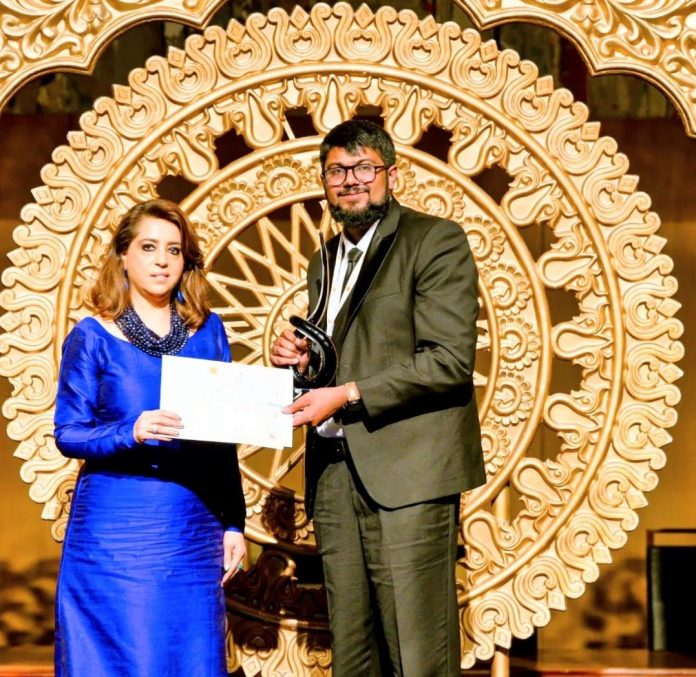
Aamir Qutub, an India-born entrepreneur and CEO of Australian IT multinational Enterprise Monkey, has been awarded the 2024 India Australia Business and Community Alliance (IABCA) Young Professional of the Year Award. The accolade recognizes his exceptional contributions to entrepreneurship and social service in Australia.
Upon receiving the award, Qutub expressed his gratitude in a conversation with Radiance from Australia. “More than a decade ago, when I left my hometown for Australia, I never imagined standing in the grand Parliament Hall, receiving an international award in the presence of the Prime Minister. I am deeply humbled and honored to have received the 2024 IABCA Young Professional of the Year Award.”
Reflecting on his journey, Aamir shared, “This recognition is not just about my individual efforts but highlights the power of community support. From my early days in India to establishing myself in Australia, the backing of people around me has been crucial. This award is for my work as a founder and CEO, where we have created jobs and contributed to the local economy. Our initiative, Angel Next Door, played a key role in helping over 100,000 Australians during the COVID-19 crisis.”
Aamir also offered advice to emerging entrepreneurs in India, encouraging them to pursue their dreams, regardless of their background.
“I come from a middle-class family in a small Tier 3 city, but I dared to dream big. The journey was not easy, but persistence, adaptability, and continuous learning made it possible. Your background does not define your future – your determination does. Every small step you take today contributes to tomorrow’s success,” he said.
Reflecting on his journey, Aamir acknowledged the many people and institutions that played a role in his success.
“From the regional city of Aligarh and the nurturing environment at AMU, where I laid my foundation, to the vibrant city of Geelong, where Deakin University provided me with a platform to grow – this journey has been shaped by countless hands and hearts,” he added.
A proud alumnus of AMU, Aamir has received numerous accolades, including being a finalist for the Australian Young Business Leader Award. He was the youngest General Manager of ICT Geelong and also served as Digital Manager for Australian Sports Tech Network. In the early stages of his career, Aamir worked as a cleaner during the day and a newspaper delivery boy at night to fund his startup. He has also demonstrated his commitment to social causes by spending a night on the streets with other CEOs to experience the life of homelessness, raising awareness for Australians without shelter.
Aamir’s professional journey began with Honda Cars India as a Production Manager before he co-founded the Stand India Foundation, a not-for-profit social venture. He holds an MBA in Information Management from Deakin University and a Bachelor’s in Mechanical Engineering from AMU, where he served as General Secretary of the AMU Students’ Union.
source: http://www.radiancenews.com / Radiance News / Home> Pride of the Nation> Award> Markers of Excellence> Latest News / by Radiance News Bureau / October 07th, 2024
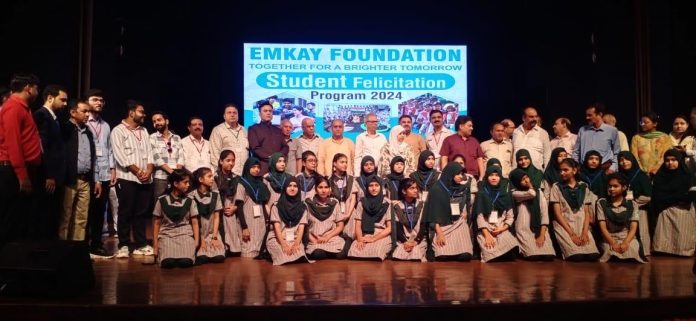
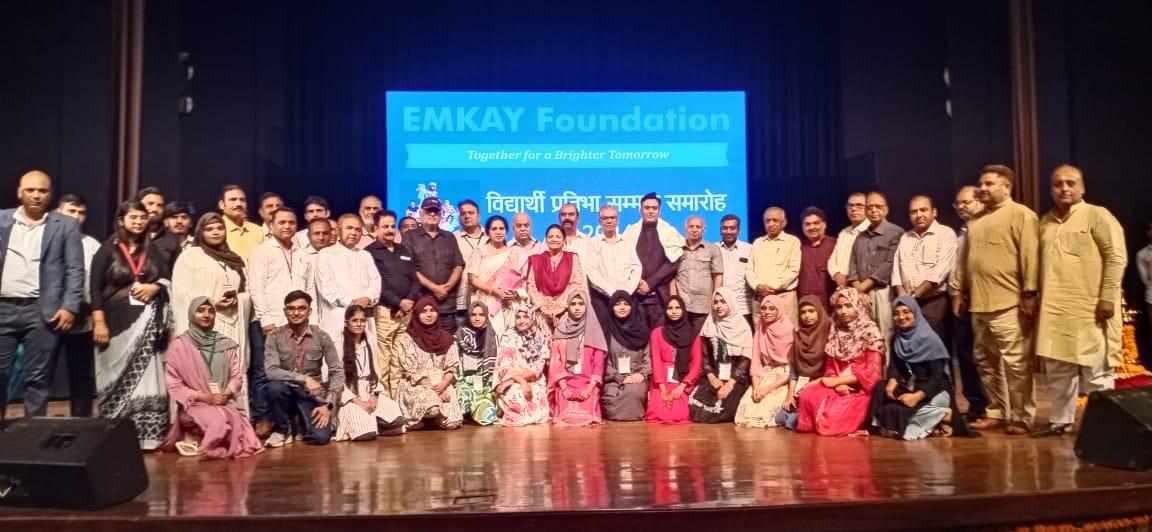
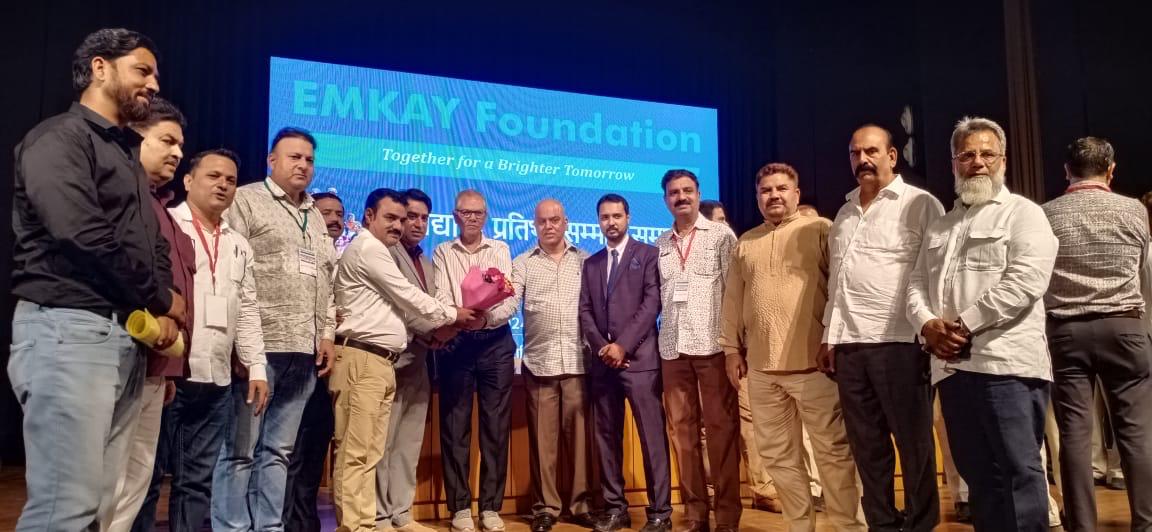
The EMKAY Foundation organized a Minority Student Talent Award Ceremony in Jaipur, with Indresh Kumar, convener of the Rashtriya Muslim Manch, as the chief guest.
Special guests included Jasvir Singh, former chairman of the Minority Commission, SS Agarwal, chairman of AIIMS Jodhpur, and Dr. Aslam Nagra, chairman of EMKAY Foundation.
Dr. Aslam Nagra explained that the ceremony honored advocates, doctors, and students who excelled in their 10th and 12th-grade exams. Out of 1,283 registered candidates, 300 students were selected for recognition.
Dr. Nagra noted that the EMKAY Foundation is the first of its kind, operating without registration, and despite challenges, he managed to fund the program independently. He expressed his commitment to organizing similar events in the future, particularly focused on education, to uplift the minority community. He emphasized that education is crucial for societal and national progress. Additionally, the foundation awarded scholarships of ₹51,000 each to four schools and one college.
Indresh Kumar stressed the need to raise awareness about education within the minority community. Jasvir Singh echoed this sentiment, stating that improving education for children is key to uplifting society.
Media coordinator Ayub Ali Mundori praised Dr. Aslam’s social work, highlighting his free diagnostic services for the needy, alongside his dedication to promoting education. He remarked that Dr. Aslam envisions education as a fundamental necessity, aiming for every child to have access to it and understand its importance.
Ayub Ali Nagra, founder of EMKAY Foundation, expressed his pride in the educational achievements of Muslim children. He noted the significant progress in the community and how Indian doctors and engineers are now recognized globally. He encouraged students to continue advancing in education, making a name for themselves, their families, and their country.
The event was attended by committee members Advocate Shamshul, Advocate Sarwar Alam, Bhupesh Yadav, Advocate Sikandar Ali, and many others.
source: http://www.radiancenews.com / Radiance News / Home> Pride of the Nation> Awards> Education> Latest News / by Raheem Khan, Radiance News Bureau / October 08th, 2024
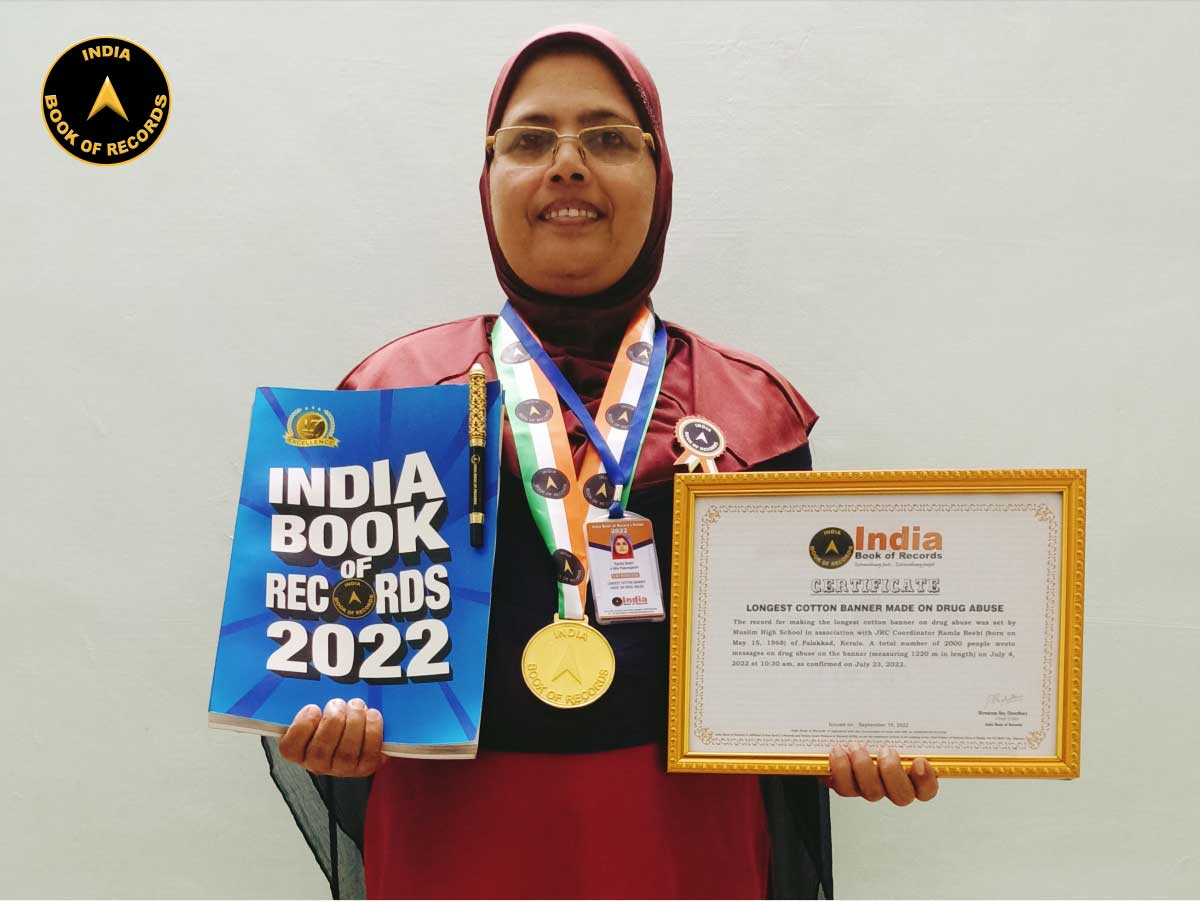
The record for making the longest cotton banner on drug abuse was set by Muslim High School in association with JRC Coordinator Ramla Beebi (born on May 15, 1968) of Palakkad, Kerala.
A total number of 2000 people wrote messages on drug abuse on the banner (measuring 1220 m in length) on July 4, 2022 at 10:30 am, as confirmed on July 23, 2022.
source: http://www.indiabookofrecords.in / India Book of Records – IBR / Home> Culture & Creativity / by ibr editor / November 01st, 2022
This is just not another memoir of a politician happily or unhappily bounds to look back; the author, instead, talks like a grandmother narrating a story of post-independent India somewhat interlinked with the Congress.
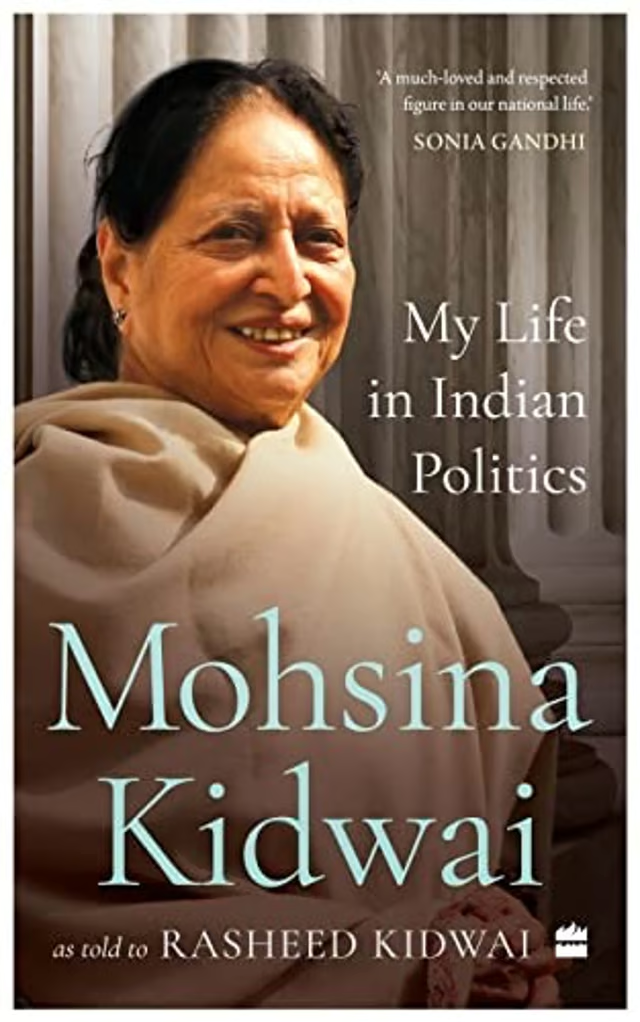
Mohsina Kidwai, author of the book ‘My Life in Indian Politics’
Book Review: Non-fiction (Memoir)/2022; My Life in Indian Politics by Mohsina Kidwai (As told to Rasheed Kidwai); HarperCollins, 300pp (Hardback)
Indian politics is a sort of ‘wonder’ and its unique existential positioning can’t be imagined without people behind its ups and downs. Reading the memoirs, especially of those who served in public life for long, is amongst the rewarding pastimes of a reader. I read Mohsina Kidwai’s memoir as a manuscript, and of course, I reread it even more carefully in its print version. Here is a candid account of a prominent political figure of India who dispels the stereotyped traditional notions that are usually expected to be self-centred and being extra boastful in the first person narrative.
Mohsina Kidwai has been in public life as a member of the Indian National Congress for over six decades. A cabinet minister in several successive central governments and a senior office-holder in the Congress, she has had a ringside view of Indian politics for almost the entire span of independent India’s existence. She has witnessed, and been a participant in, the tenures of prime ministers from Jawaharlal Nehru to Indira Gandhi and Rajiv Gandhi, and was a member of parliament until 2016, one of only twenty Muslim women to have been elected to the Lok Sabha since 1951. She has had a prolific track record that can’t be compared with her fellow women politicians, more so, from the Muslim community.
My Life in Indian Politics by Mohsina Kidwai
The book reflects well on her long and eventful life in politics and covers quite skilfully her contributions to public life, and also succeeds in providing an honest appraisal of the turn in fortunes of the political party she has remained a loyal member of over the decades. The author along with co-author and senior journalist Rasheed Kidwai, endow the readers with rare glimpses to homes, lives and hurly-burly of election campaigns from bygone era when Congress dominated the political landscape at centre and in the states.
One such memorable one was the Azamgarh bypoll in 1978, which Mohsina Kidwai won as Uttar Pradesh Congress Chief, and which signalled a revival of the Congress’s fortune after its spectacular defeat in the post-Emergency general elections of 1977. The book’s cover informs you and inside, the details and rich and beautifully presented.
We get to see little known facts about India’s Prime Ministers Pandit Jawaharlal Nehru, Lal Bahadur Shastri, Indira Gandhi, Rajiv Gandhi and P V Narsimha Rao. Similarly, she is forthright in accepting that her move to join the breakaway Tiwari Congress in 1995 was a mistake.
Here is a quick recap of a few of them:
Mohsina Kidwai talks about an incident which happened when Lal Bahadur Shastri had visited Barabanki sometime in the early 1950s. “A few years after marriage, I saw Shastriji, who had come to meet my father-in-law. Jameel ur Rahman Kidwai Saab had stood for elections and Shastriji was canvassing for him. Shastriji was a simple man. Our domestic help, who did not recognize him, asked him where he was from. Shastriji, by then already a Union minister, replied that he had come in connection with the election and wished to meet Jameel Saab.
“He will return home in the evening,” the domestic help told Shastriji and asked him to wait. Shastriji waited. The servant served him tea.
In the evening, when my father-in-law returned, he saw Shastriji waiting.
A little embarrassed, my father-in-law scolded the servant for not informing him about the guest. After that Shastriji became a member of our extended family.” Some rarest accounts on Indira Gandhi:
“Indiraji was extremely caring and attentive. I can go on talking about many instances. Sometime after the 1977 Lok Sabha polls when Indira ji was in opposition, she planned to visit Badrinath for puja. I and Narayan Dutt Tiwari and I accompanied her. It was an October month. We were told that puja starts at 4 am. Asking us to wait, she went to the temple for Puja. We were to start at 6 am on the return journey to New Delhi. At 5 am, Indiraji returned from the temple and checked whether all the vehicles of our convoy were ready. The pundit of the temple offered us breakfast. When we were having breakfast, the drivers were heating the engines of their respective vehicles. I told Indiraji, we had breakfast but poor drivers must be hungry. They have not even had tea as they were busy heating vehicle engines. I suggested we stop at the first tea shop in return for the drivers to have tea. She agreed.
Indiraji had the habit of carrying some snacks with her in a basket during travel. After a while I saw her taking out some biscuits from the basket kept beneath her seat. She tore the biscuits in four pieces and asked the driver to pick the pieces one by one from her hand while driving. She extended her hand carrying biscuit pieces and the driver did what he was told to do. Indiraji used to enjoy such affection and spontaneous display of it that it often stunned me and used to fill my heart with admiration and pride for my leader.”
“Indiraji could also sense what people around her were feeling. Once we were traveling by an overnight train to Gorakhpur and I suddenly realised I was alone with the Prime Minister in the first-class coupe. She sensed that I was a little uncomfortable and directed me to turn my face towards the wall and go off to sleep,” adds the author.
Undeniably, the book is written with honesty and simplicity, and should be better known as a work to assess an entire era in Indian politics. This is just not another memoir of a politician happily or unhappily bound to look back. She, instead, talks like a grandmother narrating a story of post-independent India somewhat interlinked with the Congress. The book is essential reading for anyone interested in knowing India, its democracy and the foundational stories of a remarkable journey.
(The author is a policy professional, columnist and writer with a special focus on South Asia. Views expressed are personal.)
source: http://www.outlook.com / Outlookindia.com / Home> Culture & Society> Book Review / by Atul K Thakur / January 07th, 2023
The total number of Muslims winning the 2024 Haryana elections is 02 more than their tally in 2019 and 2014
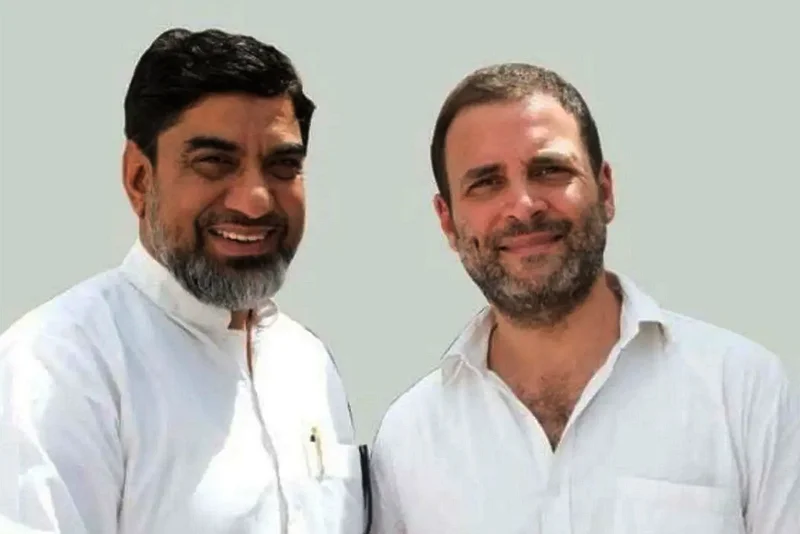
Nuh MLA Aftab Ahmed with LoP Rahul Gandhi in a file photo.
2024 Haryana Assembly Election Results:
A total of 05 Muslims – all from the Congress party, have won the 2024 Haryana Assembly elections results of which were announced on Tuesday October 08, 2024.
The total number of Muslims winning the 2024 Haryana elections is 02 more than their tally in 2019 and 2014.
Haryana has a Muslim population of about 7%, and the state assembly has a total of 90 seats. Based on their population and the number of seats in the state assembly, representation of Muslims should have been higher.
List of Muslims who won the 2024 Haryana Elections
Mannan Khan (Mamman Khan) of Congress (Ferozepur Jhirka)
Aftab Ahmed of Congress (Nuh)
Mohd Ilyas of Congress (Punhana)
Akram Khan of Congress (Jagadhri)
Mohd Israeil of Congress (Hathin)
Aftab Ahmed, sitting MLA, former minister and Vice President of Haryana Congress, has defeated Tahir Hussain of Indian National Lok Dal (INLD) by more than 46,000 votes.
On the other hand, Mamman Khan defeated Naseem Ahmed, a BJP candidate, by 98,441 votes to win the Ferozepur Jhirka seat.
Congress candidates Mohammad Ilyas defeated Rahish Khan (Independent) and Mohd Aizaz Khan of BJP in Punhana.
Mohd Israel defeated his immediate rival Manoj Kumar of BJP in Hathin seat andTayub Hussain urf Nazir Ahmed. Akram Khan won the Jadaghdri assemby seat defeating Kanwar Pal of BJP.
According to the final result announced by the Election Commission, the ruling BJP has won 48 seats, Congress has won 38 seats, Indian National Lok Dal (INLD) has won 02 seats and Independent candidates have won 03 seats.
A party needs the support of at least 45 MLAs to form government in the state. Results, however, indicate that the state will have a hung house.
source: http://www.ummid.com / Ummid.com / Home> Haryana Elections Results 2024 / by Ummid.com News Network / October 08th, 2024
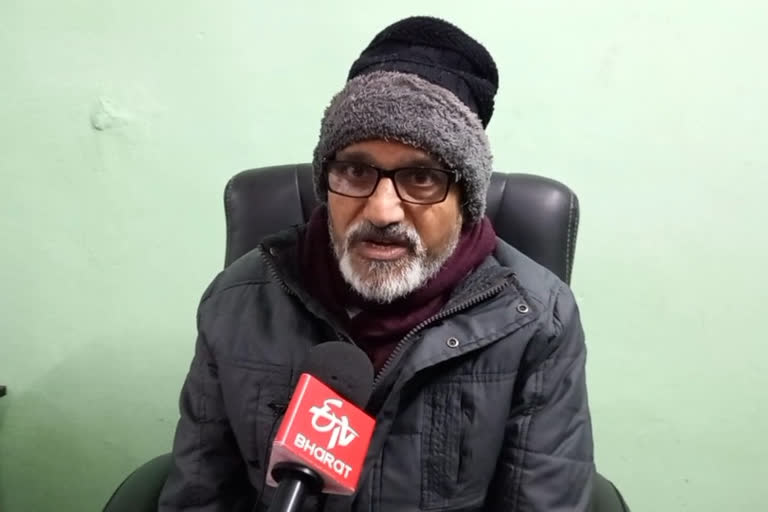
‘Patent Man of India’ Prof Shamshad Ali so far bagged seven patents for his multifarious innovations. The professor of engineering at Aligarh Muslim University’s polytechnic is differently abled and keeps underscoring the need for innovation to achieve progress.
Professor of engineering Shamshad Ali at AMU
Aligarh:
Shamshad Ali, a professor of engineering at the polytechnic college of Aligarh Muslim University (AMU) has become popularly known as Patent Man of India for his multifarious innovations. Prof Shamshad Ali, who after taking classes keeps busy with his inventions, has over seven patents to his credit till now, granted by the Patent Office, Government of India, Delhi.
This differently-abled professor never loses heart and always strives for excellence. Be it teaching students or discovering something new, this physically challenged person’s hard work has become a source of inspiration for other teachers and innovators. Prof Shamshad Ali was granted three patents in 2022 alone.
The professor underscores the need for innovation to achieve progress. In his appeal to students and teaching faculty in the AMU, he said, “Innovation plays an important role in upping the university’s ranking. Discovering new things helps teachers and students. So they should keep on doing new research. I have bagged seven patents so far and two more patents will be granted soon.”
“When someone discovers new things. Then the innovator is supposed to apply and submit application online to Delhi patent office. Thereafter an exam is conducted. If you pass the test, they will grant you patent. If not, then you will have to work on it again. It all depends upon the examiner,” said Prof Shamshad.
source: http://www.etvbharat.in / ETV Bharat / Home> ETV Bharat> Bharat / January 07th, 2023
Yousuf Tekri is a bungalow built by Syed Yousufuddin Mohammed who was a Subedar during Nizam rule. This building was a farm house built during 1850’s which later served as a residence for his progeny.
Tolichowki:
This building is now in the list of heritage structures in Hyderabad and is being restored by the hereditary family Syed Mohammed Aliuddin grandson of Yousufuddin, and his great grandsons Syed Mohammed Najmuddin and Syed Mohammed Mawaheduddin are financing and restoring the building independently.
This building is beautifully constructed uphill, which gives a scenic view of the city which was all farm and isolated landscape, which is now a concrete jungle. Syed Aliuddin said “Yousufuddin was born in the city of Hyderabad and was appointed as an officer in the revenue services working for Asaf Jah VI, Mahbub Ali Khan. Yousufuddin was later entitled as a Subedar for Gulbarga District”.
The bungalow was built by Yousufuddin as a farmhouse as it was away from city back in those days, surrounding the area of about 290 acres. During land acquisition most of it was acquired by Indian Army and colonies were build, Yousuf Tekri colony is where our family lives. Now we are renovating the structure with plaster and cement, because preparation of lime takes much effort and time.
Syed Mohammed Najmuddin said “We are restoring the building independently there as is no financial aid from the government. In spite of being in the list of the heritage structure, government is taking no initiative”.
source: http://www.thehansindia.com / The Hans India / Home> News> Cities> Hyderabad / by Mayank Tiwari / Abhyudaya Ya Karamchetu / March 05th, 2015
Hyderabad, TELANGANA / SAUDI ARABIA / California, U.S.A :
Hyderabad:
Syed Burhan Badshah Quadri alias Salik, a well-known media person in the Kingdom of Saudi Arabia, lost a five-year long and painful battle with cancer in Santa Clara, California, the USA, on Thursday (December 22).
Burhan, as he was known among most of his friends, came from a traditional and elite family of Hyderabad. He was 74 years old.
His father Syed Kaleemullah Qadri was the last Subedar of Hyderabad of the Nizam era. After the Police Action of 1948 he was arrested and released after some time. After he was reinstated he worked as head of several departments before his superannuation.
Burhan is survived by his wife Shahnaz and four children–two daughters and two sons.
Burhan after completing his bachelor’s degree with the Nizam College had joined Nizams Sugar Factor as a management trainee and moved over to the Kingdom of Saudi Arabia somewhere in the mid-seventies.
Within few years of him arriving in the Kingdom, he became one of the topnotch executives from India. He worked with several companies and finally began his own advertising agency Zee Ads which counted many major companies among its clients. He was one of the few Indian executives in the Kingdom at that time who owned a BMW and lived comfortable, if not luxurious, life. The company had to be closed down owing to some managerial issues. From there started the next phase Burhan’s life.
Among a host of his close friends who are deeply bereaving his loss are Mohammad Majid Ali, Nadir Yar Khan, Zahyr Siddiqi and Syed Inamur Rahman Ghayur.
Burhan a photographer by passion took keen interest in the political developments taking place in India and expressed his opinion without any hesitation. His talk which he considered free and frank was painful for many of his friends. Among his favourite personalities was Nawab Mir Osman Ali Khan, the last Nizam of Hyderabad. He would never keep quiet if he heard any negative comment about the Nizam. In his eyes the Nizam was a symbol of tolerance, development and Hindu-Muslim unity.
It is not yet known when and where he would laid to rest.
source: http://www.siasat.com / The Siasat Daily / Home> Obituaries / by Mir Ayoob Ali Khan / December 23rd, 2022
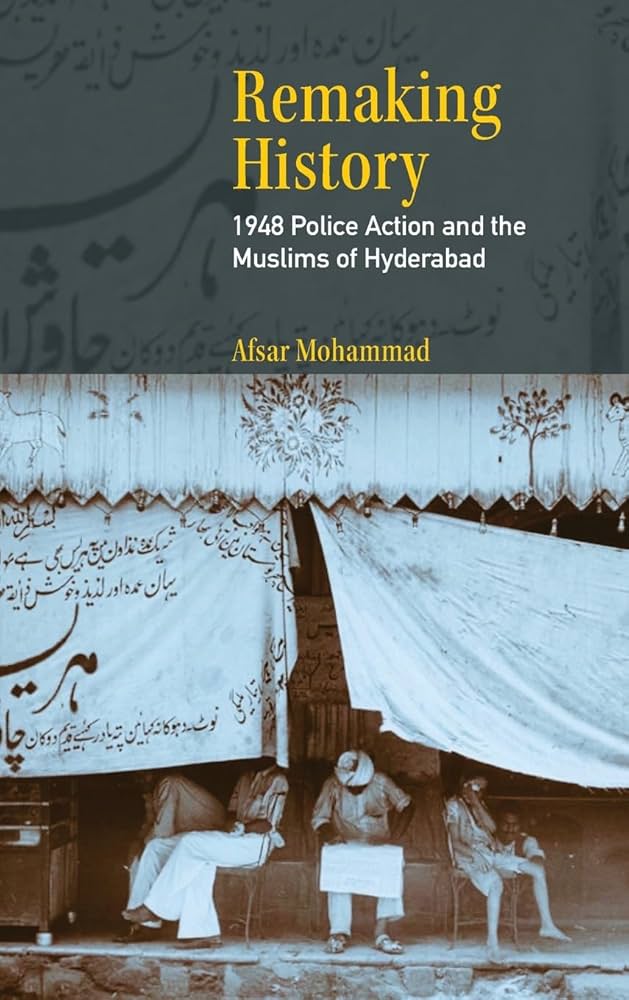
Hyderabad, known for its grandeur and the unique confluence of Hindu-Muslim culture, found itself at a crossroads of political and religious tensions. Afsar Mohammad sheds light on the brutal military campaign, where the ordinary citizens of Hyderabad became casualties in a political power play between the Nizam and the Indian government. The book emphasizes that…
Book: Remaking History: 1948 Police Action and the Muslims of Hyderabad
Author: Afsar Mohammad / Publisher: Cambridge University Press / Published:June 2023 /Hardcover: 320 pages
Afsar Mohammad, a renowned poet, scholar, and expert on South Asian literary cultures, brings forth a deeply researched and compelling narrative in his book Remaking History: 1948 Police Action and the Muslims of Hyderabad. As a professor of South Asian Studies at the University of Pennsylvania, Afsar has extensively studied the intersection of politics, religion, and literature in the Indian subcontinent. His previous works have explored themes of religious identity and cultural expression in the context of Hyderabad. With Remaking History, he delves into one of the most tragic and often overlooked episodes in India’s postcolonial history – the 1948 police action in Hyderabad.
The book addresses the military operation launched by the Indian government from September 14 to 18, 1948, to forcibly integrate the princely state of Hyderabad into the Indian Union. As India was celebrating its newfound independence, the state of Hyderabad was caught in a violent struggle. The operation, commonly referred to as the “police action,” resulted in immense bloodshed, with the Muslim population of Hyderabad suffering disproportionately.
Hyderabad, known for its grandeur and the unique confluence of Hindu-Muslim culture, found itself at a crossroads of political and religious tensions. Afsar Mohammad sheds light on the brutal military campaign, where the ordinary citizens of Hyderabad became casualties in a political power play between the Nizam and the Indian government. The book emphasizes that while the Razakars, a military group loyal to the Nizam, escaped across borders, it was the common Muslims of Hyderabad who bore the brunt of the violence that followed the military intervention. Thousands of lives were lost, and many more were displaced during the five days of turmoil.
One of the pivotal aspects of the book is its reliance on the Sunderlal Committee Report, an investigation commissioned by Prime Minister Jawaharlal Nehru in the immediate aftermath of the operation. This committee traveled across Hyderabad and the Deccan region, gathering firsthand testimonies from survivors. The report revealed shocking truths: thousands of Muslims were massacred during the police action, and the violence forced many others to flee to Pakistan and other countries. However, the report was suppressed for decades under the guise of “national security,” only surfacing in recent years thanks to the persistent efforts of historians. This suppression of critical historical evidence is a central theme of the book, as Afsar Mohammad argues that official narratives have long ignored or downplayed the extent of the violence.
In addition to exposing the atrocities committed, Remaking History explores how this dark period shaped the literary and cultural landscapes of postcolonial Hyderabad. The traumatic events of 1948 found their way into novels, poems, memoirs, and personal narratives written by survivors and their descendants. Afsar Mohammad highlights how literature became a means for the people of Hyderabad to process their grief, remember their dead, and make sense of the immense suffering they endured. The book documents the ways in which Hyderabad’s writers and poets used their work to preserve the memory of the police action, even as the official narrative sought to erase or obscure these painful truths.
Afsar Mohammad also critically examines the political reframing of the police action in later years. In 1998, L.K. Advani, a key figure in India’s Hindutva movement, proclaimed the police action as a “liberation” of Hyderabad, casting it as a moment of triumph rather than tragedy. This reinterpretation of history, the book argues, was part of a larger effort to further a communal agenda, obscuring the fact that the violence was largely directed at Muslims. Afsar Mohammad challenges readers to question whether the police action was truly a moment of liberation, or if it was a tool used to suppress the region’s Muslim population and further political interests.
One of the most striking aspects of Remaking History is the emphasis on the role of personal stories in reconstructing the past. Afsar Mohammad stresses that official documents and reports can only go so far in revealing the full picture. The true history, he argues, is often found in the personal memoirs, oral histories, and forgotten novels of those who lived through these events. Many of the eyewitnesses and survivors of the 1948 police action are no longer alive, their stories lost to time. However, the book insists that these personal accounts are essential to understanding the true scope of the violence and its lasting impact on Hyderabad.
The book also highlights the lasting cultural and social shifts that emerged from the violence. Despite the bloodshed, Hyderabad’s centuries-old legacy of Hindu-Muslim unity endured, and the city’s cultural landscape continued to evolve. In the years following the police action, a wave of literary and artistic movements arose, particularly in the Telangana region, shaping the social and cultural identity of Hyderabad for generations to come.
Afsar Mohammad’s Remaking History is a crucial work that brings much-needed attention to a neglected chapter in India’s postcolonial history. It challenges the sanitized narratives of Indian nationalism and raises important questions about the consequences of political violence. By combining rigorous historical research with a deep understanding of Hyderabad’s literary cultures, Afsar Mohammad presents a nuanced and powerful account of the 1948 police action and its aftermath. The book serves as both a historical investigation and a tribute to the resilience of Hyderabad’s people and culture in the face of adversity.
In conclusion, Remaking History is an essential contribution to the historiography of postcolonial India. It calls on readers to confront the uncomfortable truths of the past and reflects on how history is often manipulated to serve political agendas. Afsar Mohammad’s work is a timely reminder that the trauma of violence and suppression should not be forgotten, but instead, recognized and remembered in its entirety, for the sake of future generations.
source: http://www.radianceweekly.com / Radiance Viewsweekly / Home> Book Review / by Ayesha Sultana / September 24th, 2024