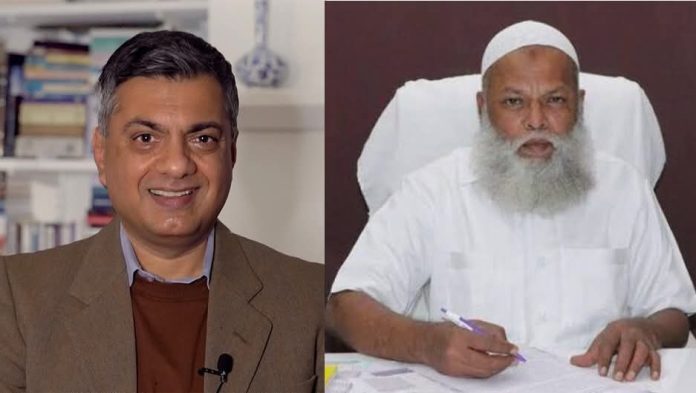
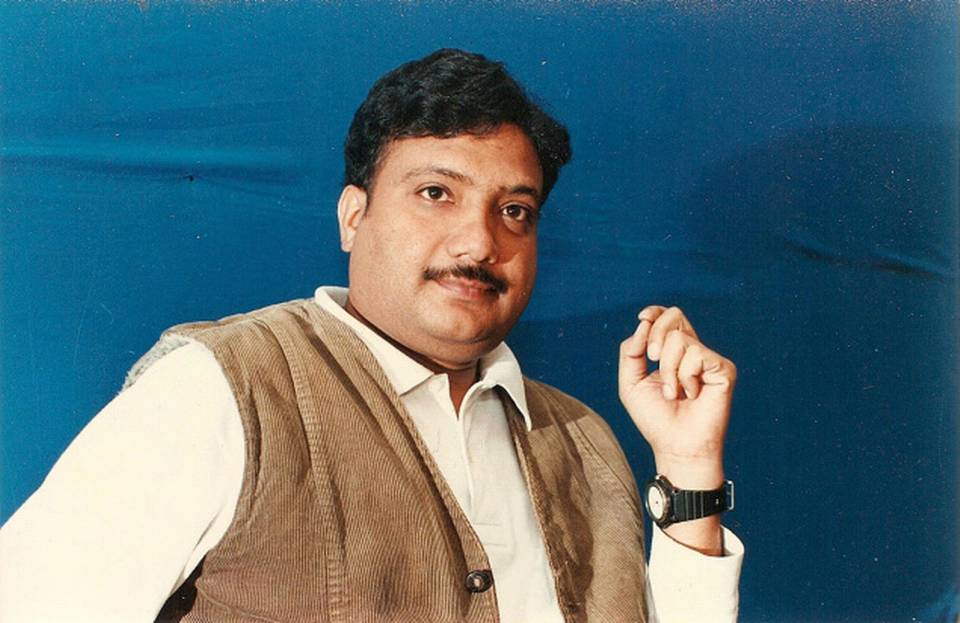
Prof. Faisal Devji (L) and Dr Abdul Qadeer to receive Sir Syed Excellence Awards
Aligarh:
Aligarh Muslim University (AMU) has announced the recipients of the 2025 Sir Syed Excellence Awards, which will be presented during the Sir Syed Day Commemorative Ceremony on October 17, marking the birth anniversary of AMU founder, Sir Syed Ahmad Khan.
Prof. Shafey Kidwai, Director, Sir Syed Academy, and convener of the jury informed that the International Sir Syed Excellence Award will be conferred upon Professor Faisal Devji, Beit Professor of Global and Imperial History, Balliol College, University of Oxford. Widely regarded as a leading scholar of South Asian studies, Islam, globalisation, and ethics, Prof. Devji holds a Ph.D. and M.A. in Intellectual History from the University of Chicago and a B.A. (Double Honours) in History and Anthropology from the University of British Columbia.
Born in Tanzania, Prof. Devji has taught at institutions, including Yale, Cornell, Harvard, and the University of Chicago. His acclaimed works include Waning Crescent: The Rise and Fall of Global Islam, Muslim Zion: Pakistan as a Political Idea, and The Impossible Indian: Gandhi and the Temptation of Violence. His influential essay Apologetic Modernity explores the 19th-century Muslim engagement with modernity, particularly through the lens of Sir Syed Ahmad Khan and the Aligarh Movement.
The National Sir Syed Excellence Award will be presented to Dr. Abdul Qadeer, Chairman of the Shaheen Group of Institutions, for his transformative contributions to education among marginalised communities. Founded in 1989, the group now educates over 20,000 students with a faculty of 500+ across 13 Indian states. It operates schools, PU and degree colleges, and offers coaching for NEET, JEE, UPSC, as well as runs Hifz-ul-Quran Plus and Madrasa Plus programmes.
The awards, carrying cash prizes of ₹2,00,000 (international) and ₹1,00,000 (national), recognise exceptional contributions in Sir Syed Studies, South Asian Studies, Urdu Literature, Medieval History, Social Reform, Communal Harmony, Journalism, Interfaith Dialogue, and related fields.
Awardees were selected by a distinguished jury chaired by Prof. Azarmi Dukht Safavi and comprising Prof. Anisur Rehman, Prof. A.R. Kidwai, Prof. Imtiaz Hasnain, and Prof. Shafey Kidwai, with final approval by AMU Vice Chancellor Prof. Naima Khatoon.
source: http://www.radiancenews.com / Radiance News / Home> Pride of the Nation> Awards> Latest News / by Radiance News Bureau / October 09th, 2025
Indian envoy and AMU vice chancellor grace the occasion
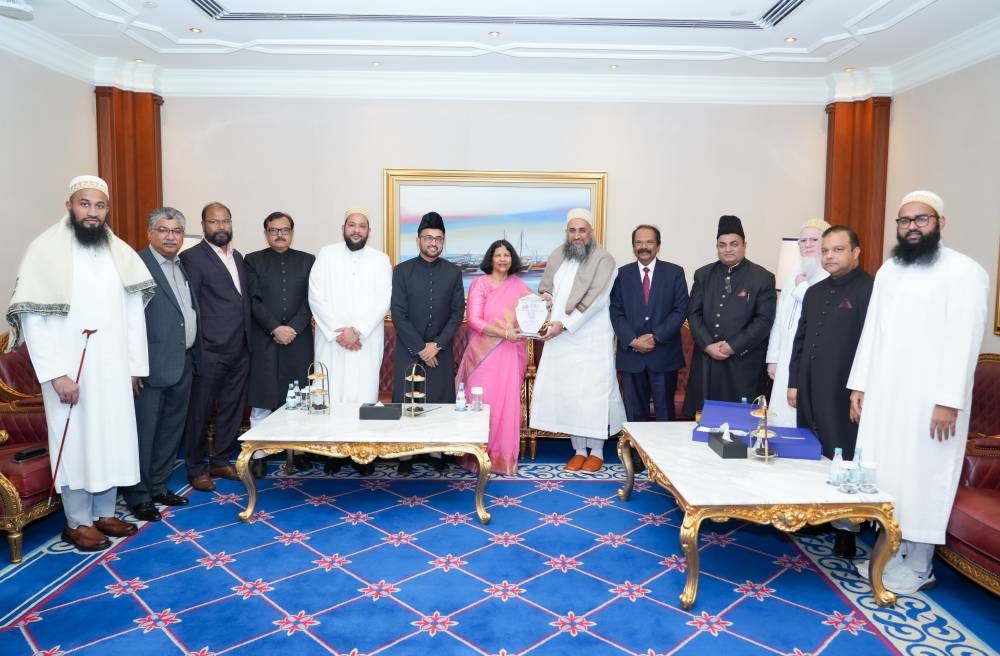
The Aligarh Muslim University (AMU) alumni in Qatar, under the banner of AMUAAQ, celebrated the annual Sir Syed Day on December 27, 2024 at the Sheraton Grand Doha Resort & Convention Hotel.
Prof Naima Khatoon, the first female Vice-Chancellor of AMU, graced the occasion as the chief guest, while the Indian Ambassador to Qatar HE Vipul presided over the gala ceremony.
Other guests of honour included former Vice-Chancellor of AMU Prof Mohammad Gulrez, Moez Wajihuddin and Patron of AMUAAQ Sophia Bukhari. Mustafa M Hariyanawala, Yashir Nainar, Haroon Sataj Khan and Anwar Karim were special guests.
The programme began with the recitation of the Holy Quran, followed by a two-minute silence to mourn the passing of the former prime minister of India Dr Manmohan Singh.
Ghazala Yasmeen welcomed the guests, while Dr Ashna Nusrat and Dr Nayeem Aman conducted the programme as Masters of Ceremony. Dr Ashna Nusrat read a message of appreciation from the former Chancellor of AMU, Syedna Mufaddal Saifuddin, addressed to the members of the AMU Alumni Association Qatar.
President of AMUAAQ Dr Nadeem Zafar Jilani, in his address, paid rich tributes to Sir Syed Ahmed Khan. He recalled how Sir Syed travelled to England to study the British education system and established the MAO College based on the models of Oxford and Cambridge universities.
Prof Naima Khatoon spoke on the selected theme of the event, ‘One Team, One Dream’. She praised the unwavering love of alumni worldwide for their alma mater and its founder, Sir Syed Ahmed Khan.
Former Vice-Chancellor Prof Mohammad Gulrez delivered the keynote address on ‘Jobs and Career Opportunities in the 21st Century’.
HE Vipul congratulated Aligarians on the Founder’s Day celebrations and acknowledged the contribution of great visionary Sir Syed Ahmed Khan in nation building.
Other dignitaries who spoke on the occasion included Sophia Bukhari and Anwar Karim.
As in previous years, AMUAAQ presented five achievement awards to eminent personalities. The first award, for lifetime achievement in the field of education, was presented to Prof Naima Khatoon. The award for outstanding community service was given to Safeerurahman, while Haroon Sartaj Khan, President of the AMU Alumni Association Oman, was named Aligarian of the Year. The Media Personality of the Year award was presented to RJ Aafrin of Radio Mirchi. Additionally, Akhtar Mehdi of the renowned Mehdi Hasan Tailors received a lifetime achievement award for his sartorial excellence in crafting traditional sherwanis, which have attracted many celebrities and former heads of state to his shop in Aligarh.
Er Jawed Ahmad, chairman of AMUAAQ, announced the formation of a pan-GCC Federation of AMU Alumni Associations to unite and bring together all Aligarians residing in the GCC countries—Bahrain, Kuwait, Oman, Qatar, Saudi Arabia and the UAE.
Vice-President of AMUAAQ Faisal Naseem presented a vote of thanks to the sponsors, as well as the executive and advisory committee members of AMUAAQ.
Jawed Ahmad, chairman of AMUAAQ, proposed that the Vice-Chancellor Prof Naima Khatoon become the ex-officio patron of AMU alumni to strengthen AMUAAQ.
Another proposal regarding the establishment of an offshore AMU campus in Doha was also revisited. He further informed the audience that the AMUAAQ will sign MoUs with several companies to provide students with training and job opportunities.
AMU alumni from all walks of life attended the function with their families in large numbers. Many prominent residents of Doha were also present, including literary personalities such as Ateeq Anzer, Aziz Nabeel, Ahmad Ashfaq, Ashfaq Deshmukh, Wasi ul Haq Wasi, and Obaid Tahir, to name a few.
A raffle draw, sponsored by Malabar Gold, was held and won by Farhana, Imran, Kainat and Shoyeb.
An MoU was signed between AMUAAQ and Hind Guru Academy to support and guide NRI students during their stay in India.
In addition to thought-provoking speeches, the programme also featured an interactive ‘Kahoot Quiz’ on AMU and the Aligarh Movement.
Prizes were awarded to the top three winners, with Faisal Abdullah securing first place, Ayan as the first runner-up, and Ashfaque Deshmukh as the second runner-up. The quiz and IT support were expertly managed by Almas Ahmad.
Mementos and certificates were presented on behalf of AMUAAQ to the guests and notable achievers.
source: http://www.qatar-tribune.com / Qatar Tribune / Home> Nation / by Tribune News Network, Doha / January 02nd, 2025
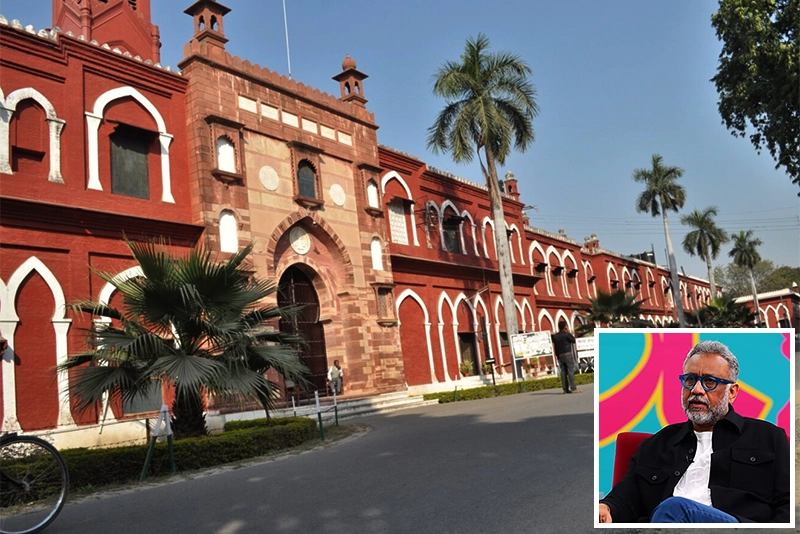
Film Director, Producer and Writer, Anubhav Sinha, who has won numerous awards, has made some interesting remarks about the diversity he saw at Aligarh Muslim University (AMU) and how riots are used to paint Indian Muslims in a particular colour.
Aligarh Muslim University, Anubhav Sinha (Inset)
Film Director, Producer and Writer, Anubhav Sinha, who has won numerous awards, has made some interesting remarks about the diversity he saw at Aligarh Muslim University (AMU) and how riots are used to paint Indian Muslims in a particular colour.
AMU’s Diverse Culture
Speaking to journalist Saurabh Dwivedi for his YouTube show “The Lallantop”, Anubhav Sinha, who hails from Banaras, now Prayagraj, said he was introduced to the rich Indian diversity for the first time at the Aligarh Muslim University.
“I started believing in the Indian diversity only after I went to Aligarh Muslim University. Before that I was not even aware what diversity actually is”, the maker of Shah Rukh Khan starrer “Ra One”, said.
“Not Muslims alone. At AMU, there were friends from different places of the country. Some were from Hyderabad. Some others were Bengalis from Kolkata. Their Hindi accent was different. They had varying food habits and lifestyle.
“All these things were very interesting and helped me in understanding the diversity of our country… Something that I was unfamiliar with while in Banaras where we had encounters only with local people”, Sinha, who graduated from the AMU in 1987, said.
“This is why I am so powerful an advocate of Indian diversity… India is great because of its diversity”, Sinha, known for award winning films Article 15, Thappad, Mulk, Bheed and Tum Bin, said.
Communal Riots
During the conversation with Saurabh Dwivedi, Anubhav Sinha also highlighted how the communal riots were used to demonize the Indian Muslims.
Recalling the atmosphere in his house after he cleared AMU Entrance Test and got admission Anubhav Sinha said everyone was in shock.
“There used to be frequent communal riots in Uttar Pradesh, including in Aligarh. So my family was worried”, Sinha said.
Watch Video
“We have always been made to believe that Hindus would never do any mischief… Muslims would always be the real culprits and perpetrators… This is why everyone was worried of my safety”, he said.
“But at Aligarh Muslim University, I reinvented India and got introduced to its powerful diversity”, he said about the university founded by great reformer Sir Syed Ahmed Khan.
source: http://www.ummid.com / Ummid.com / Home> India / by Web Desk / February 19th, 2025
It is well-timed and relevant to know that Aligarh Muslim University (AMU) has produced many freedom fighters who fought for independence. While we are celebrating the Azadi Ka Amrit Mahotsav, present-day India is going through difficult and trying times, as hate speeches against Indian Muslims are often heard from every corner of India. It is believed that most of them are not patriotic and are supporters of Pakistan.
During the last eight years we have seen some incidents of mob lynchings of Muslims and Dalits and have also heard unfortunate calls for genocide of Muslims. Knowing about the contribution of AMU towards the national struggle of independence is relevant to dispel the myth that the founder of AMU, Sir Syed Ahmed Khan, advocated that Muslims of India constituted a separate nation, qaum, or that the idea of Pakistan took birth among the intellectual class of Aligarh. Moreover, the study of AMU’s contribution to freedom movement will, it is believed, strengthen Hindu-Muslim Unity.
The Mohammado Anglo-Oriental College (MAO College), Aligarh, established in 1875 (which later became AMU in 1920), produced many freedom fighters, prominent among them are Ali brothers (Maulana Shaukat Ali and Mohammad Ali), Abdul Gaffar Khan (Frontier Gandhi), Maulana Hasarat Mohani, Raja Mahinder Pratap (President of 1st Indian Government established in exile at Kabul), S. M. Tonki, Saifuddin Kichloo Kitchlew (recipient of Lenin Peace Prize), Abdul Majeed Khwaja and Qazi Adeel Abbasi, Saith Yaqoob Hasan, Ali Sardar Jafri, Shafiqe-ur-Rehman Kidwai, Rafi Ahmad Kidwai, Raja Gulam Husain, Shoeb Qureshi, Sheikh Mohammad Abdullah, Dr. Datu (Leader of African National Conference), Abdul Matin Chowdhry (Founder Member of Indian Civil Liberty Union), Mazharul Haque, Syed Ali Zaheer, Syed Hossain, Syed Mir Qasim, Syed Rauf Pasha, Tassauq Ahmad Khan Sherwani, Yaseen Noori Z Ahmad, and Zafar Ali Khan.
In the following pages we provide a brief profile of fifteen prominent freedom fighters who are alumni of AMU (Hakeem Ajmal Khan was not an alumni alumnus of AMU but was associated with it as a member of Trustee).
Khan Abdul Ghaffar (1890-1988)
Khan Abdul Ghaffar is one of the most important Muslim freedom fighters of India and he was also known as “Frontier Gandhi “. He started the famous KhudaiKhidmatgar (“Servants of God”) movement in 1929 and it was a very successful freedom movement. The British were so infuriated by the success of the movement that they began a harsh crackdown on its supporters. The atrocities committed on KhudaiKhidmatgar were one of the most severe repressions that the Indian independence Movement ever witnessed. He also opposed the All-India Muslim League’s demand for the partition of India. When the Congress Party did not consult him on partition, he felt very sad and told the Congress “you have thrown us to the wolves”. After the partition, he remained in Pakistan and started fighting for a separate Baloch province. He was jailed many times from 1948 to 1988 and most of the time was under house arrest. When he died in 1988, tens of thousands of mourners attended his funeral. At the same time heavy fighting was going on between Soviet forces and Afghan Rebel forces but both stopped their fight and paid tribute to the great leader.
Zakir Husain (1897-1969)
Dr. Zakir Husain served as 3rd President of India and he was also the first Muslim President of India. He was one of the founders of Jamia Millia Islamia, Delhi. He was deeply influenced by Gandhi’s doctrine of Non-Violence and believed that India’s struggle for freedom would only be successful when Indian Society is educated with value-based education. He acted as the Vice Chancellor of Jamia Millia Islamia for 22 years (1926-48) and made it one of the finest educational institutes in India. He was awarded The Bharat Ratna, India’s highest National Honour.
Saifuddin Kitchlew (1888-1963)
Dr. Saifuddin Kitchlew completed his studies in Europe and then returned to India to practice Law. He was appointed as Municipal Commissioner of Amritsar when the infamous Rowlatt Act was passed by the British Government. He soon left his law practice and took part in the Non-Cooperation Movement. He was arrested with Mahatma Gandhi and Dr. Satyapal for leading a protest in Punjab and to protest the arrest of the trio, a public meeting gathered at the Jallianwala Bagh where Gen. Reginald Dyer and his troops fired mercilessly upon the unarmed civilian crowd. He was also the founding leader of the Indian Youth Congress. Kitchlew spends nearly fourteen years in jail for his revolutionary activities. He strongly opposed the Muslim League’s demand for Pakistan and partition of India. India Post released a special commemorative stamp featuring him on his 100 Birth Anniversary.
Abdul Majeed Khwaja (1885-1962)
Khwaja Sahab, as Abdul Majeed Khwaja was affectionately known as, served – first as Vice Chancellor and then as Chancellor of the Jamia Millia Islamia for the longest duration in its 100 years. Jamia’s history will remain incomplete without his mention.
He was educated at MAO College, Aligarh, after which he went to Cambridge and was called to the Bar. At Cambridge his contemporaries included Jawaharlal Nehru, Saifuddin Kitchlew, Syed Mahmud and T. A. K. Sherwani, all of whom joined India’s freedom movement.
Khwaja Sahab was a committed Congressman who had joined the party in 1915 and, despite ups and downs, remained with it till his last breath. He also remained associated with Jamiat Ulama-i- Hind almost from the beginning and was in the Khilafat delegation that went to England. He was Junior Law Professor at MAO College, had served as its Trustee and was also Secretary of the MAO Old Boys’ Association.
Khwaja Sahab was a distinguished lawyer, and was quite famous in Patna High Court. But, in response to the call for non-cooperation which included boycotting the British Government supported education, he gave up his legal practice, and got himself involved in the formation and building of Jamia.
Abdul Majeed Kwaja held high offices in the Khilafat Congress and was associated with Jamait- Ulamae-e-Hind from its inception. He was a close associate of Jawaharlal Nehru and a great advocate of Hindu-Muslim unity. He took keen interest in the Khilafat movement and went to England as a member of the Khilafat delegation (1920), led by Dr. MA Ansari.
Hakeem Ajmal Khan (1868-1927)
Ajmal Khan was a prominent leader of India’s freedom struggle and was among the founders of Jamia Millia Islamia. He is also the sole person who has had the honour to be elected the President of the Indian National Congress, the Muslim League and the All-India Khilafat Committee. He was a prominent freedom fighter, respected physician and academician of India. After beginning his practice, Khan was elected as the main physician to the Nawab of Rampur from the time period 1892 to 1902. Here, he was introduced to Sir Sayyid who chose him as the trustee of the MAO College.
His life changed its course from medicine towards politics after he started writing for an Urdu weekly ‘Akmal-ul-Akhbar’ that was launched during 1865-70. Khan was also heading the Muslim team, who met the Viceroy of India in Shimla in the year 1906 to give him a memorandum for creation of AMU.
At a time when many Muslim leaders were arrested, Ajmal Khan approached Mahatma Gandhi for help. As such, Gandhiji united with him and other Muslim leaders like Maulana Azad, Maulana Mohammad Ali and Maulana Shaukat Ali in the famous Khilafat movement. Ajmal Khan resigned from AMU as its trustee when the authorities refused to accept the non-cooperation movement waged by Gandhiji and the Congress against the British government. He was elected the president of the Indian National Congress in 1921.
Hasrat Mohani (1877-1951)
Syed Fazl-ul-Hasan, known by his pen-name Hasrat Mohani, co-founder of Communist Party of India, was an Indian political activist (as he was expelled from MAO College in 1903 due to his political activities), freedom fighter in the Indian independence movement and a noted poet of the Urdu language. He coined the notable slogan “InquilabZindabad” (translation of “Long live the revolution!”) in 1921. Together with Swami Kumaranand, he is regarded as the first person to demand complete independence for India in 1921 at the Ahmedabad Session of Congress. Maghfoor Ahmad Ajazi supported the complete independence motion demanded by Hasrat Mohani. The demand of “complete independence” was however not upheld by Mahatma Gandhi then as he believed that “it could not be incorporated in the Congress creed until the Hindu-Muslim unity is completely achieved which also meant that the idea was premature.
Mohani was opposed to the Nehru Committee Report and left Congress to become President of the Muslim League at Ahmedabad in 1921. As a member of the Constituent Assembly, he refused to sign the draft Constitution to protest partition and India’s membership of the Commonwealth.
While he was a devout Muslim, he didn’t find it odd to be inspired by Krishna, the Hindu deity. Makkah, Mathura and Moscow were Hasrat Mohani’s popular symbols. He did not find any conflict between them. A firm believer in religious integration, he repeatedly performed hajj pilgrim as well as attended the Sri-Krishna celebration fair held annually at Mathura.
Raja Mahendra Pratap (1886-1979)
Raja Mahendra Pratap Singh was an Indian freedom fighter, journalist, writer, revolutionary, President in the Provisional Government of India, which served as the Indian Government in exile during World War I from Kabul in 1915, and social reformist in the Republic of India. He also formed the Executive Board of India in Japan in 1940 during the Second World War. He also took part in the Balkan War in the year 1911 along with his fellow students of MAO college. He is popularly known as “Aryan Peshwa”. Government of U.P. established in 2021, Raja Mahendra Pratap Singh State University, at Aligarh, to cherish his memory and legacy. Prime Minister Narendra Modi laid the foundation stone of the University on 13 September 2021.
Maulana Shaukat Ali (1873-1938)
Shaukat Ali was the elder brother of the renowned political leader Mohammad Ali Jouhar. He helped his younger brother Mohammad Ali to publish the Urdu weekly, Hamdard, and the English weekly Comrade. In 1915 he published an article which said Turks were right to fight the British. These two weekly magazines played a key role in shaping the political policy of Muslim India back then. In 1919, while jailed for publishing what the British charged as seditious materials and organizing protests, he was elected as the last president of the Khilafat conference. He was re-arrested and imprisoned from 1921 to 1923 for his support to Mahatma Gandhi and the Indian National Congress during the Non-Cooperation Movement (1919–1922). His fans accorded him and his brother the title of Maulana. In March 1922, he was in Rajkot jail and was later released in 1923.
While still a supporter of Congress and its non-violent ethos, Ali even surpassed some of his colleagues in also providing support to the revolutionary independence movement. To this end, he supplied guns to Sachindranath Sanyal.
He opposed the 1928 Nehru Report. Instead, he demanded separate electorates for Muslims and finally the Khilafat Committee rejected the Nehru Report. Shaukat Ali attended the first and second Round Table Conferences (India) in London in 1930-31. Ali served as a member of the ‘Central Assembly’ in British India from 1934 to 1938. He travelled all over the Middle East, building support for India’s Muslims and the struggle for independence from British rule in India.
Maulana Muhammad Ali Jauhar (1878-1931)
Maulana Muhammad Ali Jauhar studied in MAO College and in Oxford University. He launched non-cooperation and Khilafat movement with Mahatma Gandhi. His regular writings in leading Indian and foreign newspapers like TheTimes,London,TheManchesterGuardian and TheObserver made him look like a visionary that the Indian Muslims and the general public was waiting for decades. Later, in the year 1911 he launched his well-received magazine TheComrade in Calcutta. But Kolkata didn’t suit him much and he shifted base to Delhi, from where he launched an Urdu daily, Hamdard, in 1913. Muhammad Ali was in the forefront in the war against British Raj. He wholeheartedly supported Mahatma Gandhi’s call for a national civil resistance movement, and inspired hundreds of protests and strikes all over India. He was arrested by British authorities and imprisoned for two years for what was termed as a seditious speech at one such meeting. He was one of the founders of Jamia Millia Islamia and was its first Vice Chancellor.
He was elected the President of INC in 1923. The fearless Maulana, despite his ill-health, went to attend the first Round Table Conference in London in 1930. He told the British Government in a very clear tone that he would not return to India alive unless the country was set free. “I would prefer to die in a foreign country so long as it is a free country, and if you do not give us freedom in India, you will have to give me a grave here”, the Maulana said. The true freedom lover, Muhammad Ali died during the same journey in London on 4 January 1931. He was buried in Jerusalem in the proximity of the Dome of Rock. While speaking bluntly in the Round Table Conference, he said, “I have not come to ask for Dominion Status. I do not believe in the attainment of Dominion Status. The one thing to which I am committed is complete independence. In Madras in 1927, we passed a resolution making that our goal.”
AbdulQaiyumAnsari(1905-1973) was a freedom fighter of India. He was known for his commitment to national integration, secularism and communal harmony. He fought against Jinnah’s two nation theory through the All-India Momin Conference of which he was the President. He vehemently opposed the very idea of Pakistan and spoke out openly to the extent of inviting attack by Muslim League supporters. While speaking in Patna during the Bihar Provincial Momin Conference on 21 April 1940, Abdul Qayyum said: “It is blasphemy to say that Islam is in danger here. It is tragedy to place orders for a Pakistan for the segregation of Islam. It is a defeat of Islam to run away from the battle of life in search of a privilege. It is a fantastic wavering of a fevered mind”.
He was impressed by Mahatma Gandhi, Maulana Azad and Ali Brothers who were the leading lights of the freedom movement. His activism in the freedom movement and social causes can be gauged by the fact that he established a national school for the students who had boycotted government schools in response to the call of the Indian National Congress (INC). For this he was arrested and imprisoned at the young age of 16 since it amounted to participation in Non-Cooperation and Khilafat Movements. Abdul Qaiyum Ansari was also a champion of weaker sections of the society. He was among the top leaders of the Momin Conference and used the forum to make every effort to beat Muslim League and its divisive agenda. Besides, he also stood firmly against divisive politics of other organizations. He worked closely with the INC throughout as a youth leader and even took part in the students’ agitation against the Simon Commission during its visit to Calcutta in 1928. He was also an accomplished journalist, writer and a poet.
Ali Sardar Jafri (1913-2000)
Sardar was a rebel, freedom fighter, pacifist, radical activist, story writer, critic and documentary filmmaker at once. But, above all, he was a poet endowed with exquisite imagination, one of the brightest stars on the firmament of 20th century Urdu poetry. Like all great poets he was a prophet engaged in unravelling the mysteries and ambiguity of human drama. The principal theme of his poetry was compassion, love, perseverance and sensitivity surviving amidst the callous inhumanity of our times. In his unique style, he depicted the exemplary survival of the human spirit in face of all- pervasive adversity and defeatism. In so doing he not only carried forward the traditions of Urdu poetry but enriched its treasure with new symbols and powerful imagery. Indeed, his poetry gradually evolved into a genre of its own kind whose influence is difficult to ignore among the present generation of Urdu poets.
Sardar’s early works reflected a restless yearning for India’s independence from the colonial yoke. Equally intense was his yearning for the freedom and dignity of the proletariat. This was because of the strong impact of the Progressive Writers’ Movement inspired by Marxism and the Bolshevik Revolution in Russia in 1917. As early as 1938, he joined the movement at its conference held in Calcutta and soon became one of its leading advocates. The influence of Marxism on his poetry was thus profound and everlasting.
AMU conferred a doctorate (D. Litt.) on him in 1986, fifty years after he was expelled from the university. He was the fourth person to receive this honour, his predecessors being the notable Dr. Allama Iqbal, Mrs. Sarojini Naidu and Jigar Moradabai. His works have been translated into many Indian and foreign languages.
K.M. Ashraf (1903-1962)
Kunwar Mohammad Ashraf was an eminent historian, scholar of Islamic studies, a communist leader and crusader of Hindu-Muslim unity. During the non-cooperation movement, he left MAO College to join recently created Jamia Millia. Later he rejoined AMU in 1923 to pursue M.A. (History) and LL.B. courses. He received a Ph.D. from SOAS, London University. After teaching at AMU for a year, he gave up his academic career due to his commitment to the national movement. Ashraf came under the influence of Professor Mohammad Habib and joined socialist movement. Inspired by the Russian Revolution, he joined the Congress Socialist Party formed in 1934. During 1933-34, he led the Meo peasant struggle against the Maharaja of Alwar’s oppression and the Government had to intervene to introduce reforms. Dr. Ashraf was a trusted associate of Jawaharlal Nehru and was a member of AICC from 1934-45. He headed the Muslim Mass Contacts Campaign Cell of Congress, 1937-39, formed to wean away the Muslims from the influence of Muslim League and propagate Congress’ nationalist programmes. Ashraf exhorted the Indian Muslims to participate in the freedom movement and staunchly opposed M.A, Jinnah’s idea of Pakistan. He served as the Secretary to Jawaharlal Nehru and Maulana Azad when they were Congress Presidents. In 1948 he edited Naya Daur, the daily newspaper that denounced communalism and was distributed by the CPI. He taught at the University of Delhi and joined the Humboldt University, Berlin as a Guest Professor (Medieval Indian History) in 1960. In 1962 he died and was buried in the ‘Cemetery of Socialists’ at Berlin.
Rafi Ahmad Kidwai (1894-1954)
An Indian independence activist and a socialist to the core, Rafi Ahmed Kidwai’s ceaseless efforts in making the country free from British rule have been nothing but praiseworthy. Although a graduate from MAO College, his skills of keen observation and learning from human nature took him beyond bookish knowledge. During the crisis situations that he had to deal with during his service to the nation, he showed distinct man management skills and an innovative approach to resolve human issues. And with Pandit Jawahar Lal Nehru as his mentor, there was no stopping him further. His efforts in bringing out many reforms and fighting against the unjust with utmost conviction will always be remembered. A committed freedom fighter to the very end!
It was by 1920 that Kidwai’s political career officially began after he had become an active force behind the Khilafat Movement and the Non-Cooperation Movement and was even jailed for the same. In 1922, he moved to Allahabad after being released from jail and served as the private secretary to Motilal Nehru. In 1926, Kidwai was elected to the Central Legislative Assembly of British India and from there on it was his political and social insightfulness that made him the Chief Whip of the Congress Legislative Assembly from 1926 to 1929. He also held the secretary position of the United Provinces Congress Committee and organized a no-rent campaign to protect Ashraf came under the influence of Professor Mohammad Habib and joined socialist movement. The farmers of the Rae Bareli district from the ongoing economic depression. For this, he was even sentenced for six months.
The Government of India Act 1935 made him a minister-in-charge of managing the revenues and jail portfolios in Pandit Govind Ballabh Pant’s cabinet in the United Provinces when congress government was set up. He was second to Pant as home minister in the 1946 government and in the same year, he became the home minister of UP. Post-independence, Kidwai became India’s first minister for communication in Jawahar Lal Nehru’s cabinet. Kidwai, along with Abul Kalam Azad, were the two Muslims in Nehru’s central cabinet. The “own your telephone” service that he launched in 1948 still goes by the name of OYT; under which a new telephone may be obtained. In the same year, he also launched night air mail service as a minister for communications.
Saith Yaqoob Hasan (1875-1940)
Saith Yaqoob Hasan (Maulana Yakub Hasan Saith) was an Indian businessman, freedom- fighter and politician who served as a cabinet minister for Public Works in the Madras presidency, under Rajaji (1937-1939). In 1916, Saith was elected to the Madras Legislative Council by the South Indian Chamber of Commerce. He joined the INC and participated in the Khilafat agitations in 1919 and was imprisoned for six months. He was arrested and imprisoned once again in 1921 for his participation in the Non-Cooperation Movement. On his return from jail in 1923, he resigned from the Congress and founded the Madras Province Muslim League. This move was prompted by Saith’s preference for Dominion Status when the Congress declared independence as its primary goal. As a result, no Muslim leader from the Presidency participated in the Civil Disobedience Movement. Saith stood for the elections and was elected to the Assembly.
Before the 1937 elections, Saith, left the Madras Provincial Muslim League and joined the Indian National Congress. Soon, he became one of the top leaders of the provincial Congress. He condemned Mohammad Iqbal’s two-nation theory and supported a united India. However, he still supported most of the other policies of the Muslim League.
Shoeb Qureshi
Qureshi edited Harijan during the detention of Gandhiji.
(Abdulrahim P. Vijapur is currently Emeritus Professor of Political Science at the University of Science and Technology, Meghalaya. Formerly he was Professor of Political Science at Aligarh Muslim University. He retired in 2020 after serving AMU for 37 years. He can be reached at: Email: arvijapur@gmail.com )
This article was first published in countercurrents.org on 26 August 2022
source: http://www.indoislamic.org / Indo Islamic Heritage Centre / Home> Article / by Abdulrahim P Vijapur / October 23rd, 2023
The first Muslim judge of a high court in colonial times, Syed Mahmood’s professional conduct offers a counterpoint to the declining standards in Indian judiciary.
WHEN Justice Abdul Nazeer addressed the 16th national council meeting of the RSS-affiliated Akhil Bharatiya Adhivakta Parishad at Hyderabad last December, he said, “Great lawyers and judges are not born but made by proper education and great legal traditions, as were Manu, Kautilya, Katyayana, Brihaspati, Narada, Parashar, Yajnavalkya, and other legal giants of ancient India.” In the symposium on “Decolonisation of the Indian Legal System”, Justice Nazeer also said the “continued neglect of their great knowledge and adherence to the alien colonial legal system is detrimental to the goals of our Constitution and against our national interests…”.
Perhaps Justice Nazeer should have also recalled 19th-century jurist Justice Syed Mahmood (1850-1903). A pioneer in bold assertions against the colonial judiciary, he produced incisive legal commentaries that reflect an audacious dissenter’s point of view. Writing in an Urdu newspaper, his father, Sir Syed Ahmed Khan, narrates Mahmood’s resignation from the Allahabad High Court in 1893 to “protect the self-respect of Indians against the racism of British judges”.
In that era, conceptions of nationhood were still evolving in India. Indian judges would not muster the courage to contest the racism of the imperial power or fellow European judges. But Mahmood did, in intrepid ways. Khan founded the Mohammedan Anglo-Oriental (MAO) College at Aligarh in 1877 and figures prominently but contentiously, stereotyped as a British loyalist and separatist in debates on contemporary nationalism. Mahmood supported his father’s modern education project, but unfortunately, his contributions are largely ignored by historians and the legal fraternity.
By 1920, MAO College, now Aligarh Muslim University, was the most prominent residential university in the country. Its history department has been a premier centre for advanced studies for a half-century. In 1889, primarily on Syed Mahmood’s initiative and his gifts in terms of books, journals and cash, AMU established a law department. Yet, he was neglected in its research. Only in 1973, seven years after the centenary of the Allahabad High Court, the Aligarh Law Journal brought out Mahmood’s contributions, and legal scholars reflected on his high calibre as a lawyer and judge.
The good news is, in 2004, Alan M. Guenther did his doctoral thesis on Mahmood at McGill University, Canada, which is available online for the public to access. His meticulous and well-researched account touches almost every aspect of Mahmood’s public life. Guenther also published an extended essay in 2011on Mahmood’s views on English education in 19th-century India. (In 1895, Mahmood had written a book on the theme for his speeches at the Educational Conference.)
In 1965, Asaf Ali Asghar Fyzee (1899-1981) complained, “Syed Mahmood’s contributions to the transformation of Muslim law in India have been largely neglected by historians and survive primarily as footnotes in legal texts on Muslim law.” Guenther, too, observes, “…overshadowed by the life and writings of his illustrious father, Ahmad Khan, his legacy has not received the attention it deserves. A large part of his father’s achievements in the reform of education, in fact, would not have been possible without the assistance of Syed Mahmood. But when he reached the age at which his father had made his most significant achievements, [Mahmood] had his life cut short.”
Mahmood had laid out his life plans clearly. S. Khalid Rashid, writing in 1973, reports that Mahmood decided early on that, like his ancestors, he would devote the first third of his life to educating himself, the second to earn a living, and the last to “retired study, authorship and devotion to matters of public utility”. But Guenther writes about how Mahmood’s health had deteriorated through alcohol abuse and disease. He died before he turned 53, broken by forced retirement, estranged from his father (who had died five years previously), stripped of responsibilities at the college he had helped found, separated from wife and son, and in poverty. He was selling personal items to repay debts. “His father’s numerous writings and letters are still republished, but Syed Mahmood’s contributions to Muslim thought are hidden in bound volumes of the Indian Law Reports and brittle files of government correspondence,” Guenther writes.
One aspect of Mahmood’s last years is captured by Prof. Iftikhar Alam Khan’s Urdu books, Sir Syed: Daroon-e-Khana (2006, 2020) and the recent Rufaqa-e-Sir Syed: Rafaqat, Raqabat wa Iqtidar Ki Kashmakash. These accounts expose the smear campaigns of the three companion successors of Sir Syed—Samiullah, Mohsin-ul-Mulk and Viqar-ul-Mulk—against Syed Mahmood as they vied for the secretary’s post at MAO College. Often European members of MAO College conspired with them. Exploiting his weaknesses and eccentricities, they ousted him to get a hold over college affairs, compounding his hurt during his tragic final years.
SYED MAHMOOD’S ROLE IN SIR SYED’S EDUCATIONAL ENTERPRISE
Having returned to India in 1872 after studying in England, Mahmood took time out of his budding legal career to assist his father’s reform work, particularly setting up MAO College. He prepared a detailed plan along the lines of his experiences in Cambridge. His specific aim, explained in February 1872, was to produce future leaders of India through an educational institution whose residential nature would be “as indispensable an education as the course of study itself”. The aim was to create a society of students and teachers quite different from the rest of society.
He travelled with his father to Punjab in 1873 and spoke at a rally to promote the project. In 1889, Sir Syed introduced a motion to nominate Mahmood as joint secretary of the board of trustees of MAO College by highlighting his assistance despite the opposition he faced. In particular, he considered his son’s influence the primary factor that persuaded European professors to come to India and teach there.
European staff members confirmed this around six years later when there was renewed opposition to Mahmood continuing as joint secretary. The principal, Theodore Beck (1859-1899), testified, “Syed Ahmad….acknowledged his reliance on Syed Mahmood for advice in all matters, and his imprint could be noted in the correspondence relating to the school. He declared his firm conviction that Syed Mahmood was the one person who shared his vision for the college, and apart from him, no one would be able to administer the school in keeping with that vision.” However, Samiullah (1834-1908) disagreed with Sir Syed on this count. As a result, a tussle for power began in the college management. The power-play could explain why AMU felt inhibited in bringing out a biography of Mahmood, a research gap that Guenther’s doctoral thesis fills. He has extensively relied on important correspondences of Mahmood preserved in the London India Office (British) Library.
SYED MAHMOOD’S TRYST WITH MUSLIM LAW
Mahmood is a forgotten pioneer of the transformation of Muslim law in modern South Asia. In 1882, at just 32, he became the first Muslim judge of the high courts in British India. He delivered numerous landmark decisions that shaped Muslim law, the law in general, and its administration.
Earlier, he blazed a trail his younger contemporaries followed in their judicial roles in British India. He was one of the first Indian Muslims to study in England and train in the English system of jurisprudence, the first Indian to enrol as a barrister in the High Court of Judicature at Allahabad in 1872, the first appointed as a district judge in the restructured judicial system of Awadh in 1879 and the first Indian assigned as a puisne judge to the High Court at Allahabad. He was the first Muslim in any High Court of India. He cleared a path for Indian Muslims to participate in administering justice in India. But his contribution is not limited to creamy career opportunities for Muslim youngsters. His lasting legacy is how Muslim law is perceived and administered in South Asia today.
CHAMPION OF ACCESSIBLE JUSTICE
An abiding concern of Mahmood was the cost of administration of justice. Court procedures were lengthy and expensive, and the “mass of law” was complicated. Distance from courts was another concern, for which he proposed a network of village courts for “on-the-spot” adjudication. He sought to make justice accessible through unpaid tribunals and honorary munsifs. He prepared a comprehensive draft for this, Guenther informs.
Furthermore, he attacked the [racial] mindset and court fees and stamp duties on legal documents. He ruled in August 1884 and February 1885 that “…if justice costs the same amount [to the] rich and poor, it follows that the rich man will be able to purchase it, whilst the poor man will not.” He declared, more than once, that British judges in India were too quick to find fraud.
In a speech at the Allahabad Bar in April 1885, Mahmood raised the language issue in judicial transactions, saying laws should be in languages intelligible to the masses. He insisted on the vernacular in arguments, pleadings and justice delivery and translated verdicts so that people unfamiliar with English could rest assured that judgments are reasoned. Of course, the issue of judicial language continues to be debated, and for this, acknowledgement is due to Mahmood.
AN INDIAN DISSENTER IN THE HIGH NOON OF BRITISH COLONIALISM
Mahmood is known most for outstanding dissenting judgements. In volume 2 of his 2021 book, Discordant Notes, Justice (retd.) Rohinton F. Nariman writes that Mahmood was known for detailed judgments, some of which stand out for thoroughness and fearless language. Mahmood would refer to the original Sanskrit versions when ruling on Hindu laws and the Arabic texts for Muslim laws, rather than using interpretations of the relevant texts.
From the 1860s to 1880s, during the codification of laws, he sought limits on importing British laws and protested that the local context was getting overlooked. His concern was not just the laws but their efficacy and adaptability within India’s cultural diversity.
Guenther observes, “…throughout his life, he identified himself as a Muslim as well as an Indian and a subject of the British crown, and that he was actively involved in the education and improvement of the Indian Muslim community. At the same time, Mahmood… [made] efforts to promote harmony between people of diverse backgrounds, and…[supported] initiatives that improved the situation of all Indians, regardless of religious affiliation…”
An anecdote from Altaf Hali’s Hayat-e-Javed (1901), cited by Shamsur Rahman Faruqi (2006), is worth sharing. “Contrary to the culture of sycophancy and genuflecting before the English colonial authority….Syed Ahmad Khan and his high-profile and brilliant son Syed Mahmud strived to conduct themselves as if they were equal to the English….Syed Ahmad Khan had stayed away from the [1867 Agra] Durbar because Indians had been given seats inferior to the English. A medal was to be conferred on Syed Ahmad Khan at that Durbar. Williams, the then Commissioner of Meerut, was later deputed to present the award to Syed Ahmad Khan at Aligarh railway station. Willams broke protocol and showed his anger at having to do the task under duress and said that government orders bound him, or he wouldn’t be presenting the medal to Syed Ahmad Khan. Syed Ahmad Khan accepted the medal, saying he wouldn’t have taken the award, except that he too was bound by government orders.”
Indian democracy is an outcome of anti-colonial nationalism, and dissent is its core component: Mahmood’s dissent contributed to nationalism in his time. In 2022, the V-Dem Institute described India as an electoral autocracy where dissent is being criminalised, and the judiciary is failing to contain the majoritarian upsurge. Mahmood’s professional conduct is an encouraging counterpoint to the degeneration in the Indian judiciary.
WHAT DID MAHMOOD THINK OF THE INDIAN NATIONAL CONGRESS?
According to Guenther, though Mahmood never joined the Congress, he was “equally aloof” from the anti-Congress propaganda his father indulged in. “…a rare catholicity characterised his views on most of the controversial questions,” he writes. He adds, “His acceptance among the Hindus [elites] generally was demonstrated by the fact that they tried to send him as their representative to the Imperial Legislative Council, though he never received that appointment.”
Nonetheless, like his father, Mahmood harboured class and regional prejudices. Guenther reveals an article Mahmood wrote in The Pioneer on 4 September 1875, suggesting the government must strive to with the sympathies of the “higher classes of natives”. When challenged to defend his position by “Another Native” in the same newspaper two weeks later, Mahmood responded that people in Punjab and the North-western Provinces [now Uttar Pradesh] were, historically speaking, of “much greater political significance” than those of Lower Bengal. Gunther cites his write-up: “…any educational system that succeeded in ‘attracting the Bengalee and fail(ed) to exercise any influence upon the higher classes of the Rajpoot, the Sikh, and the Mussulman’ must be regarded as a failure.”
Considering the socio-regional composition of top functionaries of AMU, even impartial insiders would testify that it still harbours regional and sub-regional prejudices. The Sir Syed Academy is releasing many publications during the ongoing centenary celebration of AMU. Publishing Guenther’s dissertation may be a fitting tribute to Mahmood, who must be regarded as a prominent co-founder of MAO College.
Mohammad Sajjad teaches modern and contemporary Indian History at Aligarh Muslim University. Md. Zeeshan Ahmad is a lawyer based in Delhi. The views are personal.
First published by Newsclick.
source: http://www.theleaflet.in / The Leaflet / Home> History / by Mohammad Sajjad and Zeeshan Ahmad / April 01st, 2022
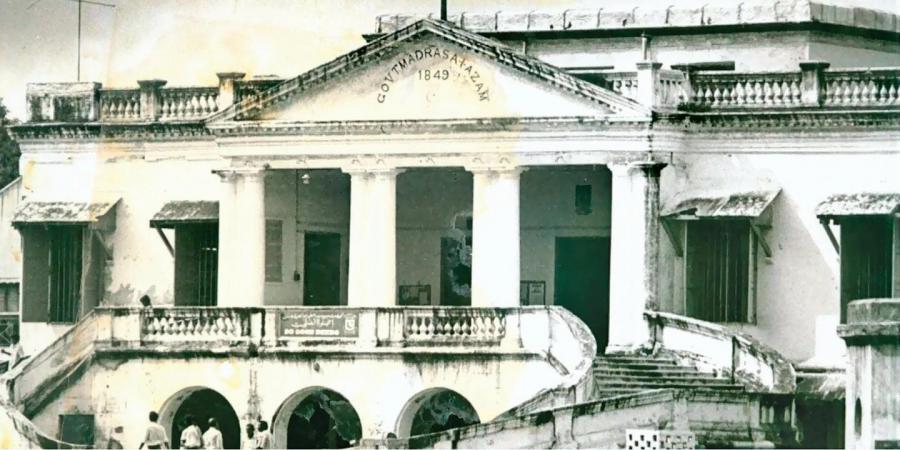
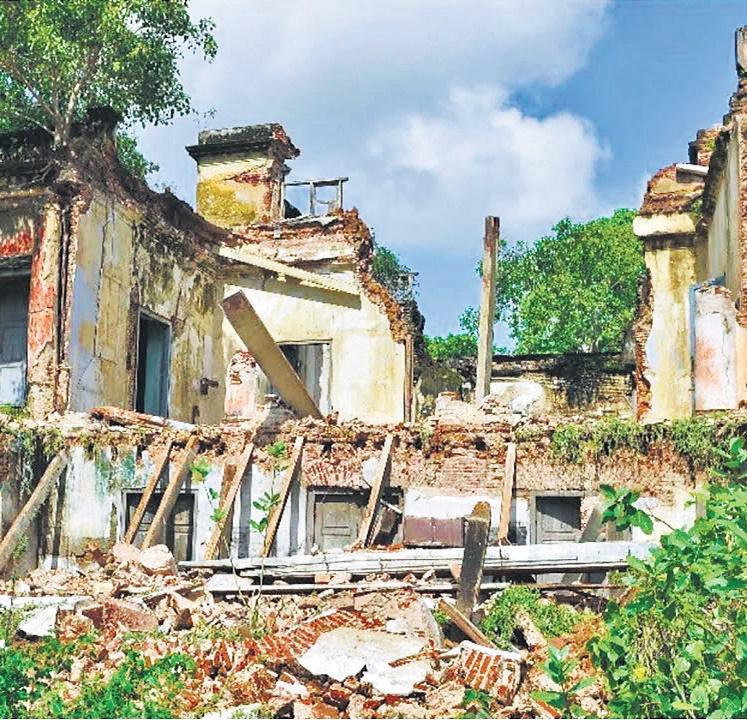
Behind the crumbling facade of the Government Madrasa-e-Azam Higher Secondary School, there is a rich history of academics, and tales of friendship.
The majestic doublewinding staircases that lead to the splendid balcony and upper deck; the steps to the headmaster’s office on the first floor and the huge plaque outside the room, with the history of the structure chiselled on it; the jamun trees in the backyard and the numerous other trees dotting the campus, under which I spent several afternoons — I have fond memories of my school.
Looking at the grandeur of the structure and the greenery, I often used to ponder ‘The seeds for these trees were planted over a century ago…’ It used to feel surreal, it still does. But unfortunately, these very trees are taking over the structure now,” says Sharfu Khan, an alumnus of the Government Madrasa-e-Azam Higher Secondary School, who was also the SSLC topper of the institution in 1992.
The 200-odd-year-old magnificent campus — with a Madras terrace, tiled verandahs, and semicircular arches — spread over 15 acres in the heart of Chennai, used to have over 4,000 students on its rolls. But today, barely 200 schoolboys study at the campus, which was initially owned by Colah Singanna Chetty, a dubash. Since 1816, the building has been acquired by many prominent individuals including Edward Samuel Moorat, an Armenian millionaire; Ghulam Ghouse Khan, the last of the titular Nawabs, after whose death in 1855, the property was passed on to Azim Un Nissa Begum, the nikah wife of the Nawab. According to historian Sriram V, the property, though owned by her, was rented by the principal wife of the Nawab, Khair Un Nissa and became the social epicentre of the Muslim aristocracy in Madras.
“This was where luminaries such as Sir Syed Ahmed Khan, founder of the Aligarh Muslim University, and His Exalted Highness Mir Mahbub Ali Khan Bahadur, the Nizam of Hyderabad, stayed when they visited Madras,” he writes, in When Mercy Seasons Justice, a book on jurist Habibullah Badsha, a prominent alumnus of the school. Today, the historic estate, with corporate offices, heritage buildings like the Taj Connemara and Spencer Plaza, and the buzzing traffic necklacing its perimeter, bears a deserted look, is crumbling under the thick foliage and yet, is resiliently waiting to be restored to its former glory. “Our school used to be the exam centre for schools in and around Triplicane and Mount Road.
Several hockey and sports tournaments used to take place here. It’s been over two decades since I graduated from there, but the memories are still fresh. I very recently became acquainted with an old friend, a batchmate from the Madrasa and we are hoping to pay a visit to the school or at least what’s left of it once the COVID-19 situation eases,” shares Sharfu.
A modern transformation
When the British took control of all the properties of the Nawab, Edward Balfour, an agent of the East India Company in the court of the Nawab of Carnatic, persuaded the Nawab to transform the family’s Madrasa into a modern school. He suggested it could be called the Madrasa-e-Azam, after his father Nawab Azam Jah, who had first favoured a proposal by Balfour. “As early as 1846, the first proposal was sent to the government regarding the starting of a school for the orphaned children of Carnatic territories. The proposal materialised, and the school was soon started.
At that time, there were only three teachers,” says Ashmitha Athreya of Madras Inherited, about the institution, which until 1849 was functioning at Chepauk, before moving to its current premises. Historians Kombai Anwar and Venkatesh Ramakrishnan, while sharing glimpses of the structure’s early glory, also note that much before Muslim institutions in north India took up modern education, this school introduced the study of English, Tamil and Telugu besides Arabic, Persian and Urdu. Abdul Jabbar Suhail, son of Habibullah Badsha recalling the anecdotes shared by his father about his days at the Madrasa, tells us that his father “had an enriching experience at the school.
My father studied at the Madrasa-e-Azam during the 1940s, at the time of World War II. For someone who until then had studied in an Anglo-Indian establishment, the change was stark. But, on the persuasion of his maternal grandfather, he enrolled at the Madrasa. Despite there being issues like inadequate staff members, I remember my father telling me that he had a good time there.
He did very well in school. And as far as sports was concerned, the school was a powerhouse and produced stalwarts including Muneer Sait, Abdul Jabbar, Badiuddin and Mohamed Ghouse. Muneer even went on to represent India in the Olympics in hockey. Father was in touch with most of his friends from school till his final days…he loved the place,” he shares.
Mohammud Karim, Zeeshan Bismil, Basha Shareef and several other alumni, who are now spread across the globe, tell CE that they miss the campus for all that it has given them. “A common thread of sadness has now tied us together. After the 1970s, I never visited the school. I didn’t know of its condition. Recently, I came across a few pictures and I was crushed to look at its current plight. I hope the government takes steps to preserve the building,” shares 67-year-old Karim, who currently lives in the US.
An appeal
In 2017, if the government had had its way, the collapsing building, would have perhaps hosted grand weddings at its age-old premises instead of conducting classes. But thanks to the voice of the city’s heritage enthusiasts and alumni, a division bench of the Madras High Court announced that the building shall not be demolished until further orders. But with growing apathy and neglect, its future remains uncertain. In an appeal to the government, Prince of Arcot, Nawab Mohammed Abdul Ali tells CE, “The Madrasa- e-Azam was founded by my ancestors for the primary purpose of providing education to children from Muslim communities and other minority communities.
After it was handed over to the British, from being an exclusive Urdu medium school, it also included English in its curriculum. Over the decades, the quality of education and the standard has been very minimal. Several parts of the structure have collapsed and as a result, the student strength has also alarmingly dwindled. As the Prince of Arcot, the direct descendent of the founders of the Madrasa, I appeal to the government to hand over the management and administration to us.
I do not ask for the ownership but only the administration wherein, under the Prince of Arcot endowments, we can take care of the structure, and provide quality education. We will not only keep the legacy of our ancestors alive but will also be enabling the conservation of the original vision and mission of the Madrasa — to provide education,” he says.
SLICE OF HISTORY
Balfour, the government agent at Chepauk, and Garstin, his predecessor, framed the rules for the administration of the school. With the establishment of the school, the Nawab also had in mind a secular education that would help the Muslims to secure employment in government service.
The main aim of establishing the school was that it would be a means of encouragement to the students to educate themselves and be fully qualified and competent for getting their livelihood by being employed in public offices, after obtaining certificates of proficiency at a final public exam.
The Diwan Khana of Firuz Hussain Khan Bahadur, principal-agent of the Begum Khair Un Nissa, became the residence of the school principal.
A mosque was built on the campus in 1909. In the same compound, the Government Mohammedan College was set up in 1919.
Source: Madras Inherited and ‘When Mercy Seasons Justice’
source: http://www.newindianexpress.com / The New Indian Express / Home> Cities> Chennai / by Roshne Balasubramanian / Express News Service / August 05th, 2020
These women embodied feminism long before it became a part of the zeitgeist.
The heiress apparent to the throne of Bhopal, Abida Sultan, wore her hair short, played the saxophone, had her own band, sped around in a Daimler, and when her husband announced that he’ll assume custody of their son, threatened to kill him with the pistol she kept in her pocket. All the while, she remained pious and committed to Islam.
Abida Sultan’s autobiography, Memoirs of a Rebel Princess, was unabashed and far from removed from the stereotypical picture of an oppressed Muslim woman. In the book, she wrote frankly about her conjugal life and her inability to be the good, dutiful wife. But could one expect any less from the child of a feminist royal lineage?
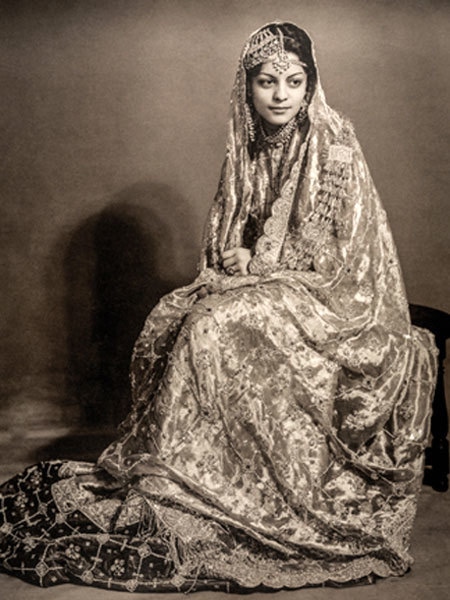
This matrilineal reign, which began in 1819, lasted more than a hundred years, with the lone interruption in 1926, when Sultan Jahan Begum abdicated in favour of Nawab Hamidullah Khan. Hamidullah Khan’s daughter Abida Sultan was to succeed to the throne, but when she chose to leave for Pakistan after the Partition of India, her younger sister Sajida became the Begum of Bhopal.
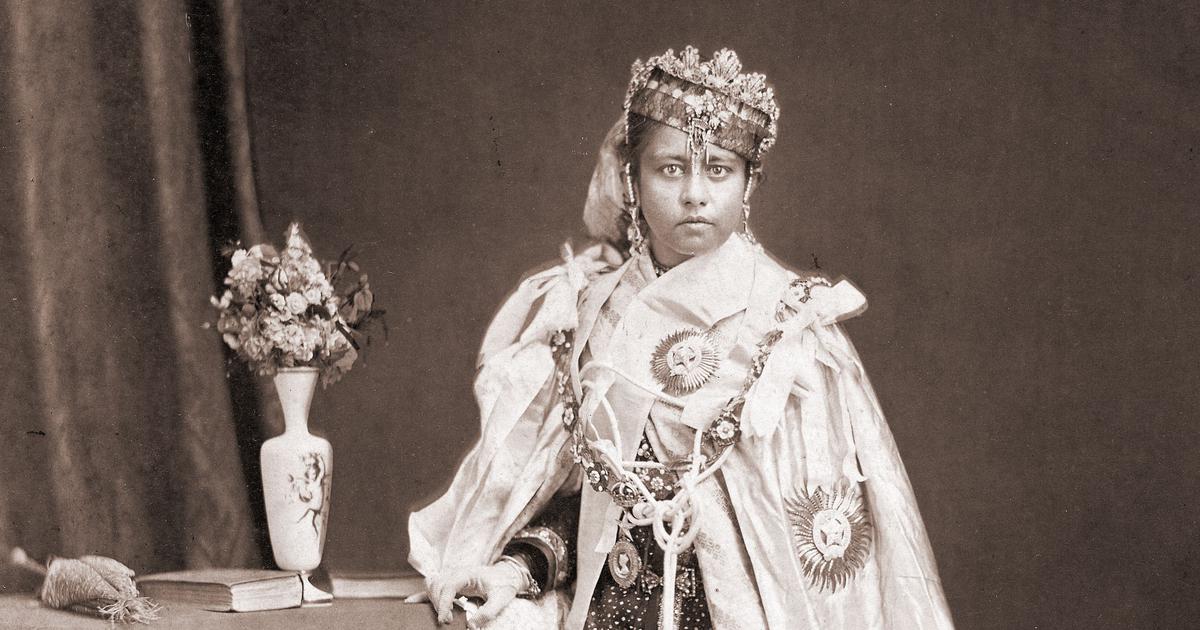
Sajida Sultan. — Unknown/Wikimedia Commons
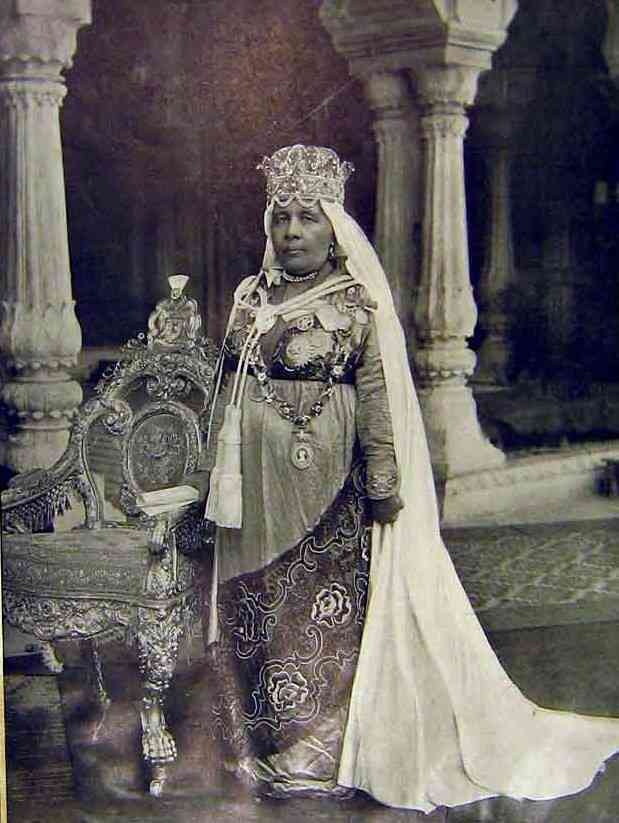
Unlike the Queen-Regent of Travancore, whose brief radical rule ran only till her son came of age, these women ruled for unexpectedly long periods, facilitated by the absence or death of male contenders to the throne, and through sheer grit. A photograph taken in 1872 of Nawab Shah Jahan Begum, Abida Begum’s great-grandmother, shows a booted woman staring straight at the camera, much in the manner of a Vogue cover shoot. The Begums of Bhopal practised feminism much before it gained prominence. They were interesting, headstrong and opinionated, but their wars weren’t fought on the battlefield.
Archival records are filled with the Begums exhibiting their commitment to Islam: donating money to build a mosque in Basra, Iraq, funding the Muslim University at Aligarh, and opening a school for girls in Delhi in the early 1920s. At the time, it was unusual to have a ruler devote time and money to women’s education — even a progressive thinker like Syed Ahmad Khan was focused on Muslim men getting Western education — but to do so outside their state was truly remarkable. So much so that when Lord Edwin Montagu, the British Secretary of State for India, met Begum Sultan Jahan in 1917, he noted in his diary that she was “frightfully keen on education, and jabbered about nothing else”.
Sultan Jahan Begum. — Wikimedia Commons
Fringes of history
Women and their assumption of political power have always been sidelined in Islamic history, though there is reason to believe that Aisha, the Prophet’s wife, had a role to play in the establishment of the first Islamic state. Razia Sultana’s brief reign as the Sultanah of Delhi in the 1200s and her killing demonstrated the near impossibility and legitimacy of a Muslim women ruler.
Nothing changed over the centuries. Though it was a young woman, Queen Victoria, who reigned over the hundreds of Indian monarchs at the start of the Paramountcy, assuring them gently of their territorial sovereignty, this mattered little in India. Indian monarchies have been patrilineal and patriarchal, guarding the male and natural right to ascend the throne.
Against this background, to have four Muslim women successively rule a state is unprecedented in world history. But what makes it all the more remarkable is that these women administered a state dominated by feudal warlords accustomed to male privilege over the throne.
The modern city of Bhopal was founded in the early 18th century by Dost Mohammad Khan, an Orakzai Pathan from Afghanistan, and it soon became the second-most important Muslim princely state after Hyderabad. Its geographical location — in Central India — was vital for the suppression of the 1858 War of Independence.
Dost Mohammad Khan. — Wikimedia Commons
In North India, there were several Muslim princely states — such as Bahawalpur, Mahmudabad, Tonk, Pataudi and Rampur — which were supported by the British under the Paramountcy. Under this policy, while nearly 500 princely states were autonomous and maintained internal sovereignty, their foreign policy and right to wage wars was controlled by the British.
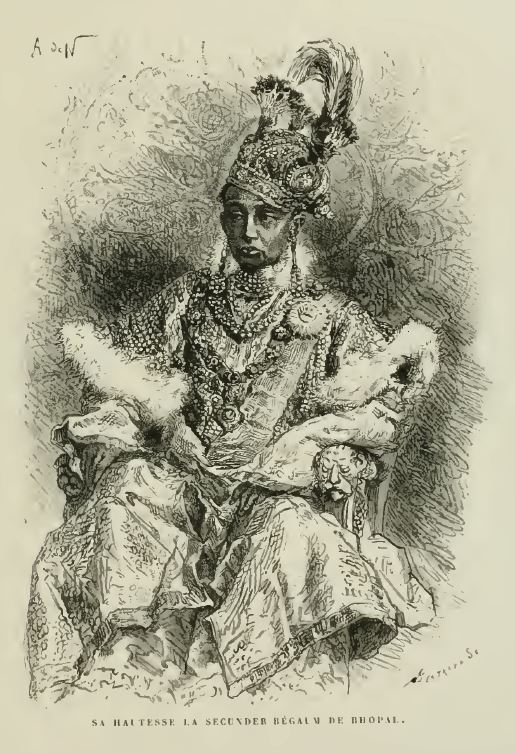
The reign of the Begums began in Bhopal in 1819, when the ruling Nawab, Mohammad Khan, died without an heir and the British decided to crown his young wife Qudsia till her daughter Sikandar came of age. Sikandar Begum’s husband too died in 1844, and she proved to be a competent ruler and a worthy ally to the British, playing a vital role in the First War of Independence in 1857-1858. This compelled the British to make a provision that the Begum was a sovereign in her own right. Three years later, in 1861, she was invested with the Exalted Order of the Star of India, making her, at the time, the only female knight in the British Empire besides Queen Victoria. She was succeeded by her daughter Shah Jahan Begum and then by Sultan Jahan Begum.
Sultan Jahan Begum went on to have a 25-year-long reign, marked by a commitment to progress, education and women’s health reforms. She was the last Begum of Bhopal as the heiress apparent, Abida Sultan, abdicated the throne in 1948.
Sikandar Begum. — Louis Rousselet/Wikimedia Commons
‘Magical island’
The first and foremost among them, Qudsia Begum, set the template of the ideal ruler. Spartan, and shunning jewellery, she refused to take loans and made sure that any money spent would be solely for education and philanthropy. As the British agent Lancelot Wilkinson in Bhopal noted: “She rides and walks about in public, and betrays her determination to maintain herself in power by learning the use of the spear and other manly accomplishments. At times she became quite frantic; and as one of the soldiers observed, more terrible to approach than a tigress.”
This “magical island”, as at least one commentator called it, was as rare as it was difficult to create. Like all figures of power, the Begums too attracted people who wanted to manipulate them — and in their case, this meant both the British and the ruling clan.
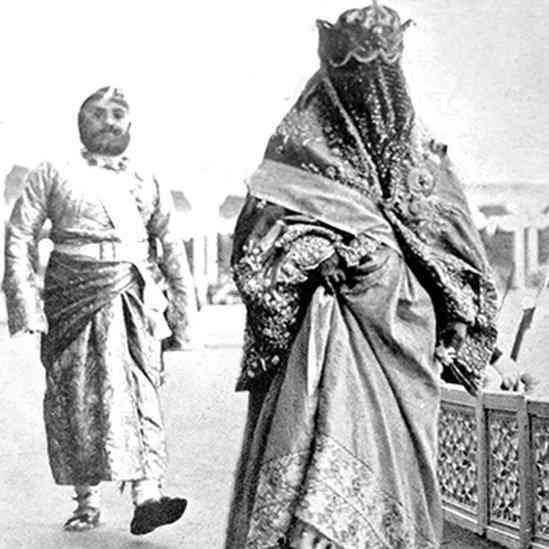
Qudsia Begum and her daughter, early inheritors of an uneasy throne, responded to the tugs and pulls by quickly learning traditional masculine skills like fencing and hunting. Shah Jahan Begum embraced the Purdah, asserting notions of orthodox Islamic femininity. She withdrew from public life into strict seclusion and refused to meet the British Viceroy in 1875. Her daughter would later recount in her autobiography that “even as a young girl, she preferred to meet with other girls of her age to discuss ‘a thousand little points of household duties and of domestic management than to perform outdoor activities’.” None of this though got in the way of being a good ruler, and she proved that a veiled woman could rule as competently as anybody else.
Shah Jahan Begum. — Louis Rousselet/Wikimedia Commons
Balance of power
The Begums carefully navigated the multiple demands of power by ingeniously playing around with tradition and modernity. They would sometimes opt to let go of the burkha and at times wear it to demonstrate a different modernity. In their writings, the Begums constantly acknowledged their mothers and grandmothers, paying obeisance to the strong women who shaped their lives and characters.
Their commitment to austerity and Islam set them apart from the wasted royal lives that were given to overindulgence and dissipation. They constantly drew upon the Quran and respected Islamic scholars, reinforcing the idea that Islam speaks of equity between the sexes. Their spartan lives struck Mahatma Gandhi too, when he visited the state in the late 1920s, on invitation. He was suspicious that the Begum’s cotton clothes and thin mattress had been “put on as a show”, till his travelling companion Sarojini Naidu assured him otherwise.
The Begums of Bhopal, who styled themselves as “Nawab Begums”, were radical and unconventional (the term ‘Nawab Begum’ itself was ingenious as there is no word for queen in the Islamic political imagination). Nonetheless, with consummate ease and success, they proved they were no less. Keeping in line with the Islamic tradition of maintaining a diary, like the founder of their state used to, the Begums invested much energy in maintaining records — of the state and of themselves.
Sultan Jahan Begum. — The Graphic/Wikimedia Commons
Shah Jahan Begum, the third in the line, established a History Office, along with a system for retrieving and maintaining records of important characters in her family. Abida Sultan’s son, Shahryar Khan, a former career diplomat in Pakistan, has carried on this family tradition by writing an authoritative account of the dynasty, The Begums of Bhopal.
Like a host of other wealthy Muslim ashraf women, the Begums travelled to Europe and to West Asia as part of the obligatory hajj. And despite the seriousness of the occasion, they never failed to display flashes of their chutzpah. There are anecdotes of Sikandar Begum not disembarking from the ship to Europe without her bottles of pickle. And upon reaching London, she mistakenly wore a dressing gown to meet King George V and Queen Mary, a realisation made only owing to the headlines in the newspapers the next morning.
Many princesses have ascended to power in democratic India by contesting and winning parliamentary elections. The Begums of Bhopal, however, are remarkable for sustaining a determined succession of women monarchs, despite hostility to their gender ruling — the very first Begum, Qudsia, had declared that her infant daughter would succeed after her. Despite the religious and political odds against them, their reign was marked by benevolence and modernity, a radical openness to change, like women’s education and medicine, while maintaining a steadfast commitment to the tenets of Islam. The Begums are icons for women, Muslim or otherwise.
This piece was originally published on Scroll and has been reproduced with permission.
source: http://www.dawn.com / Dawn / Home> Prism / by Priya Mirza / June 04th, 2019
Mustajab Malik’s short film “Sir Syed Ahmed Khan” is quite relevant at a time when media circles are abuzz about a possible Bharat Ratna for him.
Many times adverse conditions bring out the best in a human being. So was the case with Sir Syed Ahmed Khan, a visionary and educationist, whose single greatest contribution among others to the posterity stands in the form of Aligarh Muslim University (AMU), the renowned centre of learning.
The 30-minute documentary “Sir Syed Ahmed Khan” is a part of the series “Charagh-e-Hind” directed by Mustajab Malik that traces his life highlighting several important aspects of his personality. “The objective of the series is to inspire the Muslim youth and enable them to change their mindset from ‘we have got nothing’ to ‘we must contribute’,” explains Mustajab, a veteran theatre person. Virendra Vashistha essays the role of Sir Syed and the script is written by Dr. Mohammad Aleem. Born on October 17, 1817 in Mughal nobility, Sir Syed after education joined the civil services. The First War of Independence in 1857, when he was munsif in Bijnor, had a profound impact on his life. Despite suffering personally as many of his family members were either killed or missing, he ensured protection to the women and children left by the British for safekeeping.
“Sir Syed was aware that the 1857 events reflected dissent on the part of Indians and that they were not well prepared for it,” comments historian, Prof. S.M. Azizuddin in the film. “An Essay “On The Causes Of The Indian Revolt” in 1859, the English translation of his discourse, was widely debated in the English Parliament leading many members to demand action against him.
Instead mourning the death of his loved ones, the educationist was deeply hurt by the repercussions on his community and nation. He decided to serve and provide hope in the time of despair. “When Muslims were being targeted and their confidence was at the lowest ebb, he stepped in to guide them in tune with the changing international environment,” remarks Dr. Khwaja Ekramuddin, an Urdu scholar, in the documentary. For achieving that Sir Syed identified knowledge and science as the prime tools and promoted Western style scientific education. He founded a modern madarsa in Moradabad and Ghazipur and the Scientific Society of Aligarh to instil scientific temper apart from having several scientific papers translated into Urdu.
Sir Syed’s meeting with Mirza Ghalib to write the foreword of his edition of Abul Fazl’s Ain-e Akbari, proved a turning point for him. The poet asked him to forget the past and concentrate on current developments and take into account the galloping progress in the West thereby turning him towards social reform.
During his stay in England for nearly two years from 1869 he visited several educational establishments and learning centres inspiring him to replicate them in India. This led to setting up Muhammadan Anglo-Oriental College in 1875. “Educating Muslims meant taking India forward,” comments Pradeep Saxsena, a Hindi scholar. In this cause he was helped by several Hindus in cash and kind. Besides seeking funds, Sir Syed also staged plays to espouse the cause. In 1920, 22 years after his death, it became AMU. The institution enrolled a large number of Hindu students and Babu Iswhari Prasad is among the first batch of graduates.
Sir Syed was swayed by all the British did. “He wanted their help and at the same time criticised them as proved by his essay on events of 1857. Besides he also rebutted the allegations made by Sir William Muir in his book “Life of Mahomet” in writing,” says Mustajab adding “he did not take to the streets protesting or led agitations and instead adopted the civilised method.”
The film highlights Sir Syed’s scholarship by informing the viewers of his 1846 book “Athar-al-Sanadid” which documents the Delhi monuments. “It was a first- of-its-kind attempt. In fact this authoritative work which cannot be ignored by anyone studying Delhi monuments,” comments Syed Ali Nadeem Rezavi, a historian shown in the documentary.
source: http://www.thehindu.com / The Hindu / Home> Friday Review / by S. Ravi / January 08th, 2015
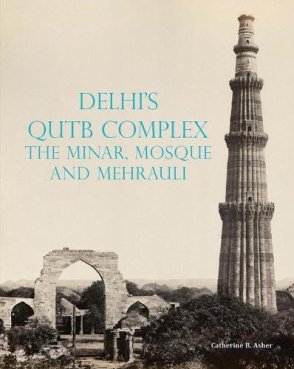
In Delhi’s Qutb Complex, Catherine B. Asher goes beyond Mehrauli and Delhi to look at the afterlife of the iconic tower that is the Qutb Minar.
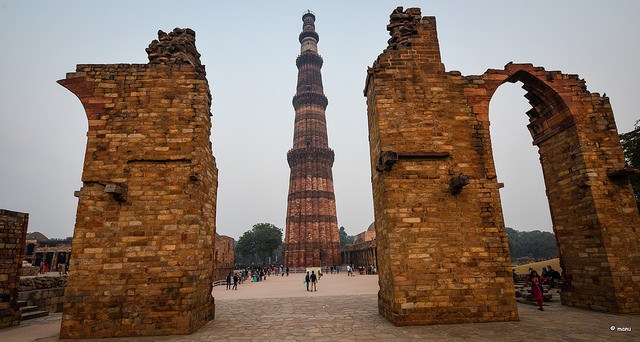
Qutb Minar. Credit: lensnmatter/Flickr (CC BY 2.0)
Mehrauli is truly a magical place. The average visitor skims but the surface, marvelling at the towering Qutb Minar and taking a cursory stroll through the other buildings that lie within the popular UNESCO World Heritage Site known as the Qutb complex. Those who go beyond, into the neighbouring village, may visit the shrine of the Sufi saint Qutbuddin Bakhtiyar Kaki, or a restaurant. There is now, of course, a smaller group of more adventurous explorers who are discovering the treasures of Mehrauli – particularly in the village and the Mehrauli Archaeological Park, mainly through the medium of increasingly popular ‘heritage walks’.
But though one may visit these monuments and learn the stories that lie in this locality’s long and eventful history, there are many layers that lie awaiting a more rigorous and meaningful analysis. A scholarly study by a leading art historian is, therefore, a very valuable addition to what is admittedly the rather sparse literature on the subject.
Catherine B. Asher Delhi’s Qutb Complex: the Minaret, Mosque and Mehrauli Marg Publications, 2017
Catherine B. Asher’s Delhi’s Qutb Complex: The Minar, Mosque and Mehrauli starts by setting the monuments of the Qutb Complex within the physical space and history of Mehrauli, and in the context of its many historic structures. Construction on the oldest congregational mosque of Delhi and its attached monumental tower began in the late 12th century, and was commissioned by a newly-arrived political power, the Turks – under Muizzuddin Muhammad bin Sam, also known as Muhammad Ghori – as part of a capital complex that comprised fortifications, palaces and water works. Many structures had of course already been standing there, the legacy of the earlier regimes – those of the Chauhan and Tomar rulers.
Some of these relics of the earlier period were appropriated and modified, such as the city wall. Others were cleared away and their materials reused. Notable here are a number of temples, destroyed during the conquest, whose stones were used to build the congregational mosque. Asher relies on recent research to analyse the complex nature of this appropriation and reuse, and its cultural ramifications. The systematic way in which the various elements were placed in the newly constructed mosque suggests that they were not treated as random spolia. For instance, the largest and most elaborately carved pillars were used in the western arcade, the part of the mosque closest to Mecca, and therefore the direction in which the congregation faced.
While the tower, the mosque, royal tombs and some waterworks were commissioned by the rulers, significant construction in Mehrauli in that period is attributable to the many other inhabitants of the capital city. Important remnants include mosques, tombs and shrines of Sufi saints, which added a layer of Islamic sacred spaces, in addition to the pre-existing Yogmaya Temple, an ancient site dedicated to a revered goddess, and the 11th century Dadabari Jain temple.
Over the succeeding centuries, as the centre of power shifted and the capital moved to newer sites in Delhi, the character of Mehrauli shifted in favour of its spiritual significance, as the site of important shrines. The book describes many of the religious structures – dargahs, tombs, mosques, temples, a church and a Buddhist centre, that have been constructed here right up to modern times. It also details the many secular structures that were built as Mehrauli became a popular resort for those fleeing the crowded conditions of urban life in the capital city. These structures included mansions, gardens, the 19th-century palace of the last two Mughal emperors, and British ornamental ‘follies’. The overwhelming impression is one of the continuing importance of the site. This importance was reinforced through longstanding traditions, not only of religious observances such as the Urs of the Sufi saint, but of festivals like the Phool Walon ki Sair. The latter was instituted by the later Mughals in the early 19th century, and involved veneration of both the dargah of Qutbuddin Bakhtiar Kaki and the Yogmaya Temple.
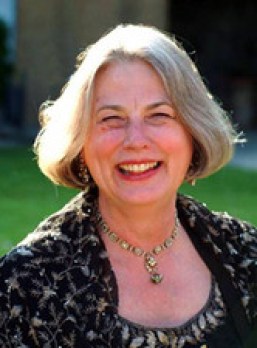
Catherine B. Asher. Credit: University of Minnesota website
Asher has gone beyond Mehrauli and Delhi to look at the afterlife of the iconic tower that is the Qutb Minar. She shows us how strong its impact was on later structures, which mimicked its form in miniature, either as freestanding towers or engaged columns. Examples of such appropriation range from structures as far flung as the Qutbuddin Mubarak Khalji’s mosque in Daultabad, to several in Delhi itself, for instance the 16th century mosque in Lodi Garden.
And yet the meaning of the original tower and its attached mosque is not uncontested. There have been suggestions, expressed first by Sir Syed Ahmad Khan, that the Qutb Minar was built by the Chauhans. While this is an opinion that is not generally espoused, at least by an educated readership, more common is the interpretation of both mosque and tower primarily as signifying the triumphalism of Islam. This is done on the one hand through an emphasis on the temple destruction associated with the site. On the other, it is fostered by the ASI signage and publications calling the mosque Quwwat al-Islam, literally, ‘strength of Islam’. This name, in fact, was not used for the mosque before the 19th century.
Asher questions many of these popular ideas, which often have their roots in colonial scholarship. She follows recent scholars such as Finbarr Flood, whom she refers to several times, in asking for a more nuanced reading of the site and what it signified in the past. Yet she does not break free of some of the more well-entrenched notions. Dichotomous ‘Islamic’ and ‘Indic’ traditions are treated as a given, without going into details of the motifs that are seen on the early Sultanate architecture to analyse their roots. The problem of the discipline of history becomes very apparent in such cases. A scholar of ‘Islamic’ art and architecture is trained to see the Qutub complex as Islamic architecture. The author, while she makes detailed comment on the calligraphy that adorned the early Sultanate structures, has no comment on the use of motifs like the lotus and the kalash, Indian motifs which also feature in the surface decoration. These motifs, in fact, persisted as an integral part of the ornamentation of mosques and tombs in Mehrauli and elsewhere, through the centuries, till the end of the Mughals.
Moreover, while it is important to study the architectural creations of the Ghurids in Afghanistan, as Asher has done, to understand their buildings in Delhi, it may not be enough to trace the roots of Ghurid architecture in Afghanistan merely to the previous ‘Islamic’ dynasty – the Ghaznavids. There were examples of pre-Ghaznavi art and architecture that abounded in the landscape – notably the great Gandhara tradition. It is time that its significance for later developments is also studied.
On the whole, however, the book is a valuable resource and informative read on a very important archaeological site. The inclusion of a large number of contemporary photographs and also archival images, match the scholarship, and live up to the standards set by the Marg series of scholarly volumes.
Swapna Liddle wrote her PhD thesis on the cultural and intellectual history of 19th-century Delhi. She is the author of Delhi: 14 Historic Walks and Chandni Chowk: The Mughal City of Old Delhi.
source: http://www.thewire.in / The Wire / Home> Books / by Swapna Liddle / November 30th, 2017
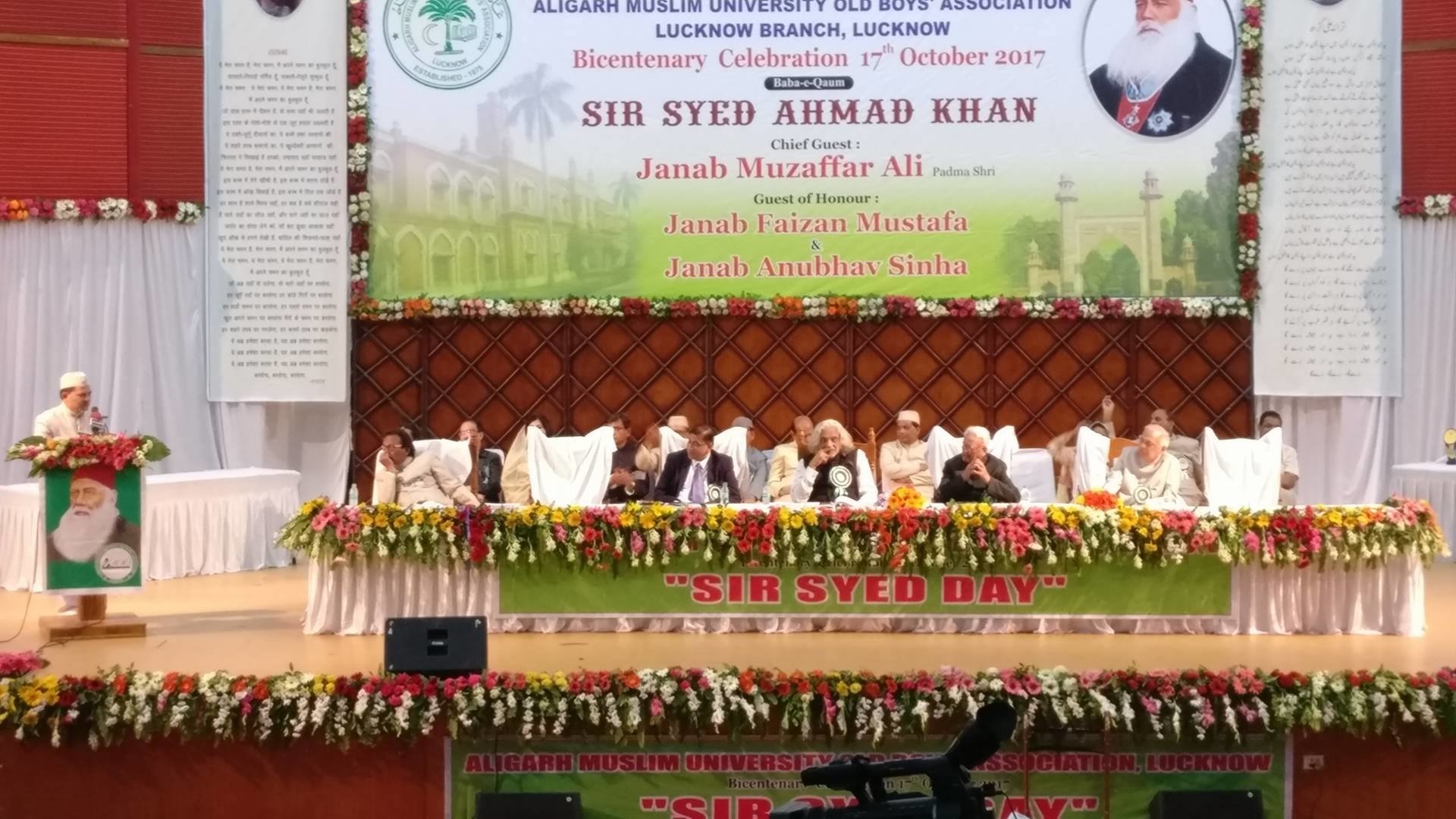
These are times of aggressive nationalism we are living in, said vice chancellor of NALSAR University of Law, Hyderabad, Faizan Mustafa, where we have started to consider Mughals not part of the country. Mustafa speaking at the grand 200th bicentenary birth anniversary celebrations of Sir Syed Ahmad Khan in Lucknow on Tuesday went ahead to say that Mughals were in fact leaders of the first war of independence of 1857 and were considered so by the likes of Tipu Sultan, Tatya Tope and others.
“Mughals were an integral part of India who could not be fragmented from its soul and now we are here in these times of aggressive nationalism where we are having doubts about them. And this nationalism has not only made us target the Mughals, but also recently there were similar talks about Rabindranath Tagore,” said Mustafa who was the guest of honour at the Sir Syed Day organised by Aligarh Muslim University’s (AMU) Old Boys’ Association. Filmmaker Muzaffar Ali was the chief guest on the day, both of whom being former pupils of the university, recounted their time spent at AMU.
Mustafa also cleared that now when criticising the government is equated to being seditious, it was in 1860 after a fatwa (decree) from clerics at Deoband against the British that the law of sedition as a charge was enacted. Mustafa also exhorted his fellow Aligs (as past pupils of AMU are popularly known) that the dream of Sir Syed has not yet been realised with Muslims lagging in both modern education and securing government jobs.
In his brief speech, Mustafa also touched upon the controversy around AMU’s minority status and said, “People say that the minority status was for the college and with AMU a university, it does not stand now. I researched for this when I had to submit in Allahabad high court as AMU’s stand on the case and I found that when Sir Syed laid the foundation of the madrasa it was the university he had in mind and when he gave his first speech in 1877 when the school was raised to the college level, in front of Lord Lytton he said that one day the college would be a university.
Mustafa also said that blaming Sir Syed for the two nation theory was not just wrong but also absurd. “In several of his recorded speeches, he has identified and defined both Hindus and Muslims as not separate identities but one qaum (community) and one nation. Mustafa considered an authority on law also said that reforms in Muslim personal laws were needed and could only be possible through the ideas of Sir Syed Ahmad Khan.
ON the day, the AMU Old Boys’ Association and its members that had gathered in the city from different parts of the state passed the resolution to raise demand of Bharat Ratna for Sir Syed and to generate funds for a Sir Syed House in Lucknow to carry on his Aligarh movement of education.
source: http://www.timesofindia.indiatimes.com / The Times of India / News> City News> Lucknow News / by Yusra Hussain / TNN / October 18th, 2017