Tag Archives: Syedna Mufaddal Saifuddin

Muslim Mirror Releases List of 100 Most Influential Indian Muslims 2025; Young Faces Gain Prominence

INDIA :

Muslim Mirror’s 100 Most Influential Muslims of 2025

New Delhi: 

Muslim Mirror has released its much-anticipated annual list of the “100 Most Influential Indian Muslims of 2025,” spotlighting individuals who have made significant contributions to India’s public life across a wide spectrum of fields including politics, culture, education, business, media, religion, sports, and social service. Now in its second edition, the list aims to document influence not merely as power or popularity, but as sustained impact, leadership, and the ability to shape public discourse.

A defining feature of the 2025 edition is the growing prominence of younger achievers, signalling a visible generational shift within Indian Muslim leadership. Alongside established national figures, the list includes emerging voices who have built influence through grassroots activism, professional excellence, digital platforms, legal advocacy, education, and community engagement. Editors associated with the project said this was a deliberate attempt to recognise new centres of influence beyond traditional hierarchies.

The list reflects the diversity and plural character of Indian Muslim society, cutting across geography, ideology, profession, and language. From seasoned politicians and religious scholars to artists, entrepreneurs, academics, and social reformers, the compilation offers a broad snapshot of leadership trends at a time when issues of representation, constitutional values, and social justice remain central to national debate.

Representation Across Sectors

The 2025 list features several eminent academicians and intellectuals who have shaped higher education, policy discourse, and social research. Among them are Abul Qasim Nomani, Ameerullah Khan, Furqan Qamar, Shahid Jamil, and Ubaid-ur-Rahman, recognised for their contributions to education, public policy, and academic leadership.

In the business and entrepreneurship category, the list includes influential names such as Azad Moopan, Azim Hashim Premji, Farah Malik, Irfan Razack, M. P. Ahammed, Mecca Rafiq Ahmed, Meraj Manal, Syed Mohamed Beary, P. Mohammed Ali, Shahnaz Hussain, Tausif Ahmad Mirza, Yusuff Ali, and Ziaullah Sharif. Their inclusion underlines the growing economic footprint of Indian Muslim entrepreneurs, both domestically and globally, spanning sectors from retail and healthcare to infrastructure and consumer goods.

Community leadership remains a strong pillar of the list, with figures such as Arshad Madani, Mahmood Madani, Malik Motasim Khan, Mehmood Pracha, Syedna Mufaddal Saifuddin, Navaid Hamid, Pirzada Md Abbas Siddiqui, Qasim Rasool Ilyas, Sadatullah Husaini, Umer Ahmed Ilyasi, and Yusuf Mohamed Abrahani recognised for their roles in religious guidance, legal advocacy, social mobilisation, and institutional leadership.

Culture, Media, and Public Discourse

In arts and entertainment, globally recognised names such as A. R. Rahman, Aamir Khan, Mammootty, Munawar Faruqui, and Shah Rukh Khan continue to command immense cultural influence, shaping narratives that extend well beyond cinema and music into social consciousness.

The list also acknowledges the growing importance of media and journalism in shaping opinion and challenging dominant narratives. Journalists and commentators such as Arfa Khanam, Irfan Meraj, and Seema Mustafa are recognised for their consistent engagement with issues of democracy, minority rights, and constitutional values.

Religious and Intellectual Scholarship

A significant section of the list is devoted to Islamic scholars and religious thinkers, reflecting their continued influence on moral leadership and intellectual discourse. Names such as A. P. Aboobacker Musliyar, Qasim Nomani, Prof. Akhtarul Wase, Asghar Ali Imam Mahdi Salafi, Asjad Raza Khan, Ibraheem Khaleel Al-Bukhari, Javed Jamil, Khalid Saifullah Rahmani, Khaleelur Rahman Sajjad Nomani, Qamaruzzaman Azmi, Rashid Shaz, Shakir Ali Noori, Shamail Nadvi, and Yasoob Abbas find place for their scholarly work, writings, and public engagement.

Politics and Governance

The political category features leaders cutting across party lines and regions, including Asaduddin Owaisi, Ghulam Nabi Azad, Hamid Ansari, Mehbooba Mufti, Omar Abdullah, Salman Khurshid, Najeeb Jung, Syed Naseer Hussain, Engineer Rashid, Akhtarul Iman, Iqra Hasan, Zameer Ahmed Khan, Rakibul Hasan, K. Rahman Khan, Kadir Mohideen, Mohibullah Nadvi, Md Shafi, Agha Mahadi, Asim Waqar, and Sadiq Ali Shihab Thangal. Their inclusion reflects influence exercised through electoral politics, governance, diplomacy, and legislative advocacy.

Changemakers and Social Reformers

One of the most dynamic sections of the 2025 list is that of changemakers and social reformers, featuring individuals such as Safeena Husain, Shahabuddin Yaqoob Quraishi, Syeda Hameed, Zameer Uddin Shah, Mahbubul Hoque, Sabahat S. Azim, Mehmood Pracha, Faiz Syed, and Zahir Ishaq Kazi, among others. Many of these figures have earned recognition through long-term grassroots work rather than formal authority.

International Booker Prize 2025 winner Banu Mushtaq for Heart Lamp, along with renowned poet Wasim Barelvi, has been placed in the category of Literary Figures.

In sports, iconic names Sania Mirza and Irfan Pathan continue to inspire younger generations through excellence and public engagement beyond the playing field.

Beyond Rankings

The editors emphasised that the list does not claim to be exhaustive, nor does it measure influence solely through fame, wealth, or official position. Instead, it seeks to capture real-world impact, moral authority, intellectual contribution, and the ability to shape conversations within and outside the community.

The annual list has increasingly become a reference point for understanding evolving leadership patterns among Indian Muslims. By foregrounding both established figures and rising talents, the 2025 edition reflects continuity as well as change, underscoring how Indian Muslims continue to contribute meaningfully to India’s democratic, cultural, and social field.

source: http://www.muslimmirror.com / Muslim Mirror / Home> Indian Muslim / by Muslim Mirror / January 15th, 2026

Bohras in East Africa play football to show human spirit on Syedna’s birthday

EAST AFRICA :

Volleyball match at Malindi to celebrate the birthday of Syedna Mufaddal Saifuddin

New Delhi :

The Dawoodi Bohra community living in Nairobi, Mombasa, Eldoret, Nakuru, Tanga, Morogoro, and Arusha in East Africa celebrated the birthday of their spiritual leader, Syedna Mufaddal Saifuddin, in a unique and inspiring way.

A grand volleyball tournament was held in the coastal city of Malindi to mark the occasion, uniting community members in an atmosphere of enthusiasm, sportsmanship, and unity.

Held in mid-October at the recently inaugurated Kutubi Sports Complex, the two-day tournament featured teams from various cities across East Africa. Hundreds of community members travelled to Malindi to participate. The event was not just a sporting competition, but a celebration of the community’s energy, cooperation, and positivity.

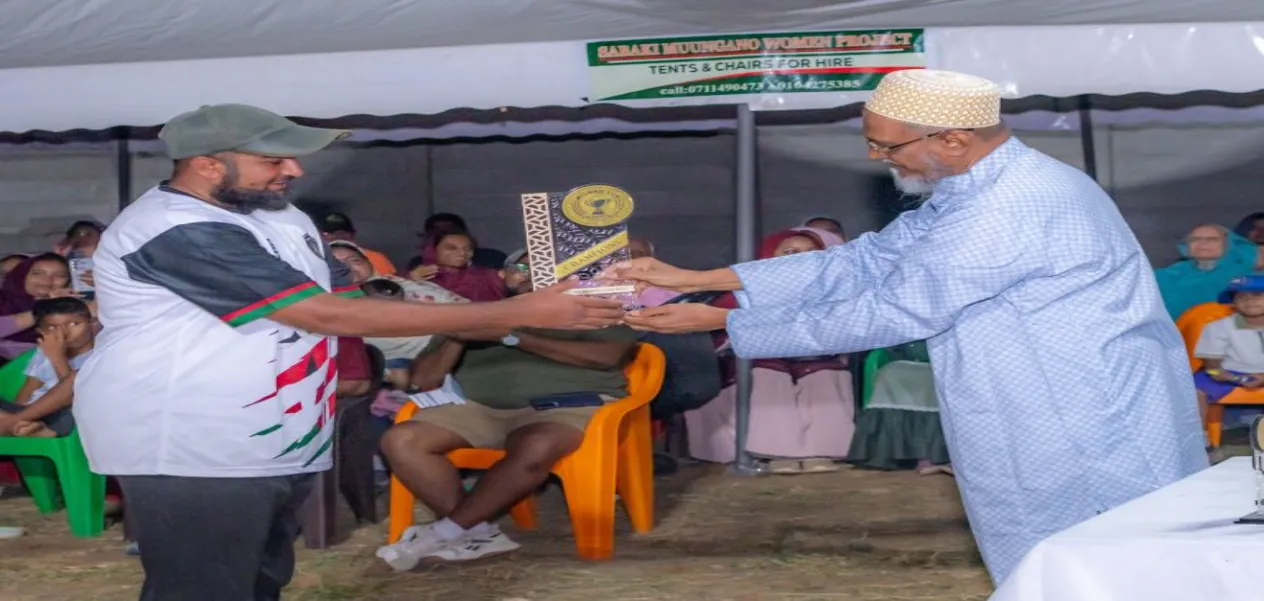
A Bohra leader gives away the trophy to the Captain of the Winning team

“There is no better way to celebate His Holiness Syedna’s birthday than by embracing one of his key teachings, to be physically active, in our lives,” said community member Huzaifa Hunaid.

Although Malindi has a small Dawoodi Bohra community, hosting the tournament filled the locals with pride and confidence. A local member beamed, “It was a proud moment to see our small team successfully organise such a large-scale event. The enthusiasm and positivity on and off the court reflected the true spirit of the event—building new relationships and strengthening old ones.”

The entire community joined in the sports festival. Locals were also present in large numbers in the audience. One spectator said, “We usually come to watch football, but this volleyball tournament brought a new wave of excitement and joy to the city.”

A match of Volleyball to mark the birthday of Bohra Community’s spiritual leader Syedna Mufaddal Saifuddin

The atmosphere at the Qutbi Sports Complex was festive throughout. Community members set up food stalls, serving delicious dishes, and everyone shared in the joy. After the matches, players were seen congratulating each other and exchanging pleasantries—a sight that exemplified brotherhood and affinity.

After the final match, when the winning team’s captain lifted the trophy, the entire arena erupted in applause and chants. Encouraged by the success of this event, the Qutubi Sports Club is now planning to hold a football tournament soon to further this spirit of enthusiasm and unity. The club’s objective is clear: to promote unity, health, and brotherhood through sport among East African communities.

The tournament in Malindi was not only a celebration of Syedna Mufaddal Saifuddin’s birthday but also a reflection of the community’s vibrancy, cooperation, and shared values.

The community feels the event has transformed sport into a bridge of humanity and unity.

source: http://www.awazthevoice.in / Awaz, The Voice / Home> Stories / by Aasha Khosa (edited) / November 06th, 2025

AMU alumni association organises annual Sir Syed Day celebrations

Aligarh, UTTAR PRADESH / Doha, QATAR :

Indian envoy and AMU vice chancellor grace the occasion

The Aligarh Muslim University (AMU) alumni in Qatar, under the banner of AMUAAQ, celebrated the annual Sir Syed Day on December 27, 2024 at the Sheraton Grand Doha Resort & Convention Hotel.

Prof Naima Khatoon, the first female Vice-Chancellor of AMU, graced the occasion as the chief guest, while the Indian Ambassador to Qatar HE Vipul presided over the gala ceremony.

Other guests of honour included former Vice-Chancellor of AMU Prof Mohammad Gulrez, Moez Wajihuddin and Patron of AMUAAQ Sophia Bukhari. Mustafa M Hariyanawala, Yashir Nainar, Haroon Sataj Khan and Anwar Karim were special guests.

The programme began with the recitation of the Holy Quran, followed by a two-minute silence to mourn the passing of the former prime minister of India Dr Manmohan Singh.

Ghazala Yasmeen welcomed the guests, while Dr Ashna Nusrat and Dr Nayeem Aman conducted the programme as Masters of Ceremony. Dr Ashna Nusrat read a message of appreciation from the former Chancellor of AMU, Syedna Mufaddal Saifuddin, addressed to the members of the AMU Alumni Association Qatar.

President of AMUAAQ Dr Nadeem Zafar Jilani, in his address, paid rich tributes to Sir Syed Ahmed Khan. He recalled how Sir Syed travelled to England to study the British education system and established the MAO College based on the models of Oxford and Cambridge universities.

Prof Naima Khatoon spoke on the selected theme of the event, ‘One Team, One Dream’. She praised the unwavering love of alumni worldwide for their alma mater and its founder, Sir Syed Ahmed Khan.

Former Vice-Chancellor Prof Mohammad Gulrez delivered the keynote address on ‘Jobs and Career Opportunities in the 21st Century’.

HE Vipul congratulated Aligarians on the Founder’s Day celebrations and acknowledged the contribution of great visionary Sir Syed Ahmed Khan in nation building.

Other dignitaries who spoke on the occasion included Sophia Bukhari and Anwar Karim.

As in previous years, AMUAAQ presented five achievement awards to eminent personalities. The first award, for lifetime achievement in the field of education, was presented to Prof Naima Khatoon. The award for outstanding community service was given to Safeerurahman, while Haroon Sartaj Khan, President of the AMU Alumni Association Oman, was named Aligarian of the Year. The Media Personality of the Year award was presented to RJ Aafrin of Radio Mirchi. Additionally, Akhtar Mehdi of the renowned Mehdi Hasan Tailors received a lifetime achievement award for his sartorial excellence in crafting traditional sherwanis, which have attracted many celebrities and former heads of state to his shop in Aligarh.

Er Jawed Ahmad, chairman of AMUAAQ, announced the formation of a pan-GCC Federation of AMU Alumni Associations to unite and bring together all Aligarians residing in the GCC countries—Bahrain, Kuwait, Oman, Qatar, Saudi Arabia and the UAE.

Vice-President of AMUAAQ Faisal Naseem presented a vote of thanks to the sponsors, as well as the executive and advisory committee members of AMUAAQ.

Jawed Ahmad, chairman of AMUAAQ, proposed that the Vice-Chancellor Prof Naima Khatoon become the ex-officio patron of AMU alumni to strengthen AMUAAQ.

Another proposal regarding the establishment of an offshore AMU campus in Doha was also revisited. He further informed the audience that the AMUAAQ will sign MoUs with several companies to provide students with training and job opportunities.

AMU alumni from all walks of life attended the function with their families in large numbers. Many prominent residents of Doha were also present, including literary personalities such as Ateeq Anzer, Aziz Nabeel, Ahmad Ashfaq, Ashfaq Deshmukh, Wasi ul Haq Wasi, and Obaid Tahir, to name a few.

A raffle draw, sponsored by Malabar Gold, was held and won by Farhana, Imran, Kainat and Shoyeb.

An MoU was signed between AMUAAQ and Hind Guru Academy to support and guide NRI students during their stay in India.

In addition to thought-provoking speeches, the programme also featured an interactive ‘Kahoot Quiz’ on AMU and the Aligarh Movement.

Prizes were awarded to the top three winners, with Faisal Abdullah securing first place, Ayan as the first runner-up, and Ashfaque Deshmukh as the second runner-up. The quiz and IT support were expertly managed by Almas Ahmad.

Mementos and certificates were presented on behalf of AMUAAQ to the guests and notable achievers.

source: http://www.qatar-tribune.com / Qatar Tribune / Home> Nation / by Tribune News Network, Doha / January 02nd, 2025

Dawoodi Bohra Muslim community leader in Surat, Zampa Bazaar decked up to host annual seminar

Surat, GUJARAT:

On the sidelines of the educational seminars, various stalls and exhibitions on environment, and business have also been set up at the community’s sports ground in Khaimat al-Riyada to provide a holistic learning experience to the attendees.

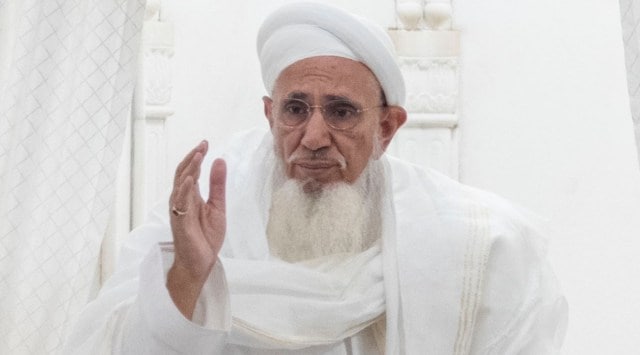
Mufaddal Saifuddin is the spiritual leader of the Dawoodi Bohra community (Express File Photo)

The leader of the global Dawoodi Bohra Muslim community, His Holiness Syedna Mufaddal Saifuddin, the 53rd al-Dai al-Mutlaq, arrived in Surat from Rajkot on Thursday on the occasion of ‘Istifada Ilmiyya’ (education seminar). He will be in the city till first week of November.

Every year, the education seminar — ‘Istifada Ilmiyya’ — is held in Surat that is graced by his presence, said organisers. ‘Istifada Ilmiyya’ comprises a series of learning and skill development sessions that cover a wide variety of topics such as Islamic philosophy, history, and jurisprudence, as well as contemporary topics. The attendees include students, business people, professionals, and teachers as well as members of Syedna’s administration, and graduates of the Aljamea-tus-Saifiyah Arabic Academy.

Thousands of community members annually register their presence at the event. This year, the event kicked off on Friday, and myriad programmes will continue till the first week of November.

Hatim Fakhar, public relations coordinator for the Dawoodi Bohras in Surat, said, “The anticipation and excitement to host thousands of attendees for this annual educational seminar in Surat are palpable, and we hope we will be able to provide them with a memorable experience. This year, the event is even more special as we will mark the 80th birthday of His Holiness Syedna Mufaddal Saifuddin on 3rd November.”

“We are grateful to the local authorities and government agencies for rendering their timely support and assistance as always in hosting thousands of community members in the city,” Fakhar added,

A large number of members of the Dawoodi Bohra community have already arrived in Surat from various parts of India and the world to attend the events in the Zampa Bazaar area on Thursday. With the venue intricately decorated, boasting of colourful lights and freshly painted buildings, hundreds of volunteers are also present to guide visitors.

The Surat unit of the community had been preparing for the event over the last 15 days by hiring open grounds and plots on rent and by erecting tents with various facilities for visitors to stay. Besides hotel rooms, several houses in Zampa Bazar, Sagrampura, Begampura, Salabatpura (walled city areas) have been rented out for visitors. Apart from this, the organisers have also arranged staff to maintain cleanliness on roads and halls. . Apart from this, Burhani Foundation & local organisers have also arranged staff to maintain cleanliness on roads and halls.

The Zampa Bazaar area in Surat is home to a large number of members of the Dawoodi Bohra community in India, where one can find religious places, an Arabic university, and shops run by the community.

On the sidelines of the educational seminars, various stalls and exhibitions on environment, and business have also been set up at the community’s sports ground in Khaimat al-Riyada to provide a holistic learning experience to the attendees.

Ummehani Ismail, a lawyer and a mother of two who travelled from the United States to attend the annual seminar, said, “Every year, I look forward to attending these seminars which have helped me develop new skills and broaden my knowledge base and understanding on various aspects of life. These sessions empower me to be a better person and create a positive impact on society. Throughout the event, we engage in thought-provoking discussions, attend workshops, and benefit from the speakers’ insights.”

source: http://www.indianexpress.com / The Indian Express / Home> News> Surat / by Express News Service, Surat / October 21st, 2023

Dawoodi Bohras launch global program to conserve rainfall water

INDIA:

The rainfall water conservation project

New Delhi :

The Dawoodi Bohra community has launched a global program to conserve water and recharge groundwater through effective rainwater harvesting techniques.

Recognising the global water scarcity issues, the leader of the Dawoodi Bohra community, His Holiness Syedna Mufaddal Saifuddin, in his recent address to community members in Mombasa, Kenya, stressed the importance of preserving and conserving water.

“Following the instructions of Syedna Mufaddal Saifuddin, a team of over 200 community officials were mobilised to visit more than 250 villages, towns and cities in India to study the strain on existing water supplies and provide support for building a more resilient and sustainable water management system”, said Shabbir Najmuddin, Associate Executive Trustee of Burhani Foundation, the community’s 30-year-old environmental body which is leading this initiative in collaboration with other organisations.

The process of water conservation 

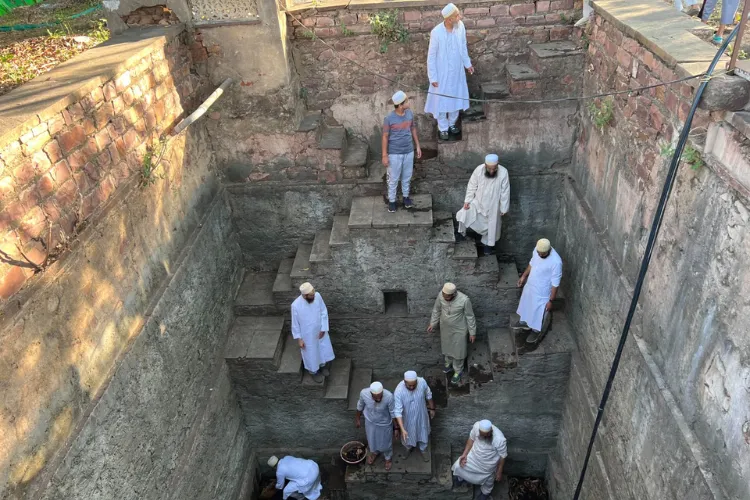
“As part of the first phase of the water conservation program, we targeted water-challenged areas in India by guiding them to harvest rainwater in their backyards, wells, ponds and other local catchment areas,” Najmuddin added, awareness programs were also held at educational institutions and community centres to showcase various methods of rainwater harvesting and their benefits in revitalising depleted groundwater levels.

“Various stakeholders in the water management field and municipalities were also consulted and involved in the survey to gauge the local conditions and take their opinions in adopting methods that best suit the region’s topography,” he added.

For the long-term rollout of the program, Burhani Foundation is identifying project coordinators from each area who will be tagged to experts to troubleshoot issues and facilitate the installation of rainwater harvesting systems in their regions. In the coming days, the Foundation is also going to reach out to community representatives from across the globe to harness the power of rainfall in their regions and share best practices for other areas to adopt. Besides that, the Trust is also rejuvenating defunct wells in the identified areas.

During the survey of rainwater harvesting in households 43-year-old Ismail Raja from Shahada, a town in Nandurbar district of Maharashtra, shared, “We installed a rainwater harvesting system in our backyard two years ago to recharge our borewell. Since then we have never faced water shortage as our borewell provides water not just to our families but also at times to our neighbours.”

Another community member, Jaffer Shabbir (36) from Savda village next to Burhanpur in Madhya Pradesh, is using a simple yet effective solution to recharge the nearby well which had run dry in 2017. He says, “By collecting rainwater from the roof of our hall and parking area which we give on rent for weddings and other functions, we’re harnessing the power of rain to replenish the groundwater in the neighbourhood.”

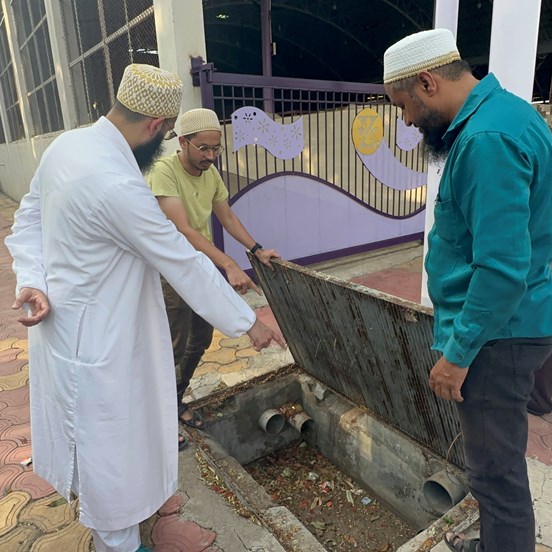
The members checking the progress

Syedna Mufaddal Saifuddin’s unwavering commitment to environmental conservation reflects in his broader vision of leading a harmonious and sustainable life. In his sermons, he continues to counsel the community to protect and preserve nature while inspiring individuals from all walks of life to actively participate in conserving natural resources and embracing practices that promote environmental sustainability.

According to NITI Aayog, nearly 600 million people, which is almost 50% of India’s population, are facing water shortage issues. The country is vulnerable to droughts as well as floods even as climate change is increasing unpredictability in weather patterns and leading to more extreme weather events. Rainwater harvesting, water reservoirs and other methods can help mitigate these extreme events by storing & recharging groundwater and releasing it when needed.

source: http://www.awazthevoice.in / Awaz, The Voice / Home> Story / by Shaista Fatima / July 02nd, 2023

Bohra community leader gets top honours

INDIA :

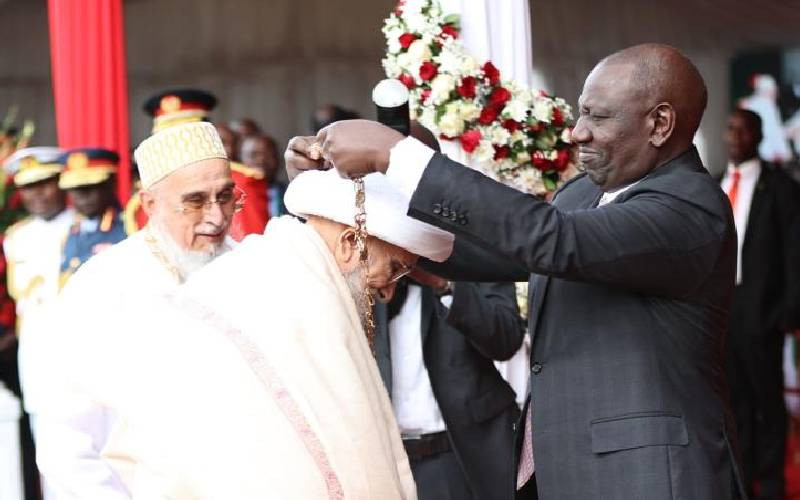
President William Ruto awards the spiritual leader of the Dawoodi Bohra community Syedena Mufaddal Saifuddin on Monday.[PCS]

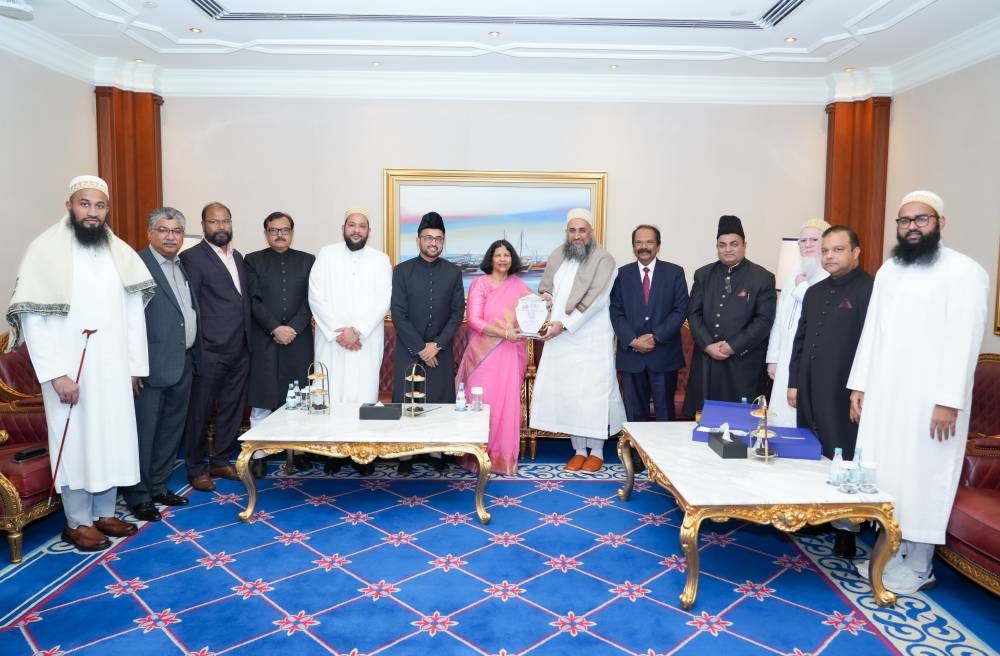
His Holiness Syedna Mufaddal Saifuddin, the leader of the worldwide Dawoodi Bohra community, was among 460 people who were feted by President William Ruto on Jamhuri Day.

Saifuddin received the most prestigious award ​of the Order of the Golden Heart for his philanthropic contributions across the world, including in Kenya.

He was among the leaders invited by President Ruto to this year’s celebrations on Monday.

https://www.youtube.com/watch?v=OxGgOs4EnTE&t=2s

Speaking during the ceremony at the State House, the president thanked Saifuddin for supporting the government’s low-cost housing initiative as well as the ongoing drought relief efforts.

“We are collaborating with the Dawoodi Bohra community to build low-cost houses to address challenges facing low-income earners, especially in the informal settlements,” said Ruto.

Bohra community has established affordable houses in Athi River and Rongai.

The President acknowledged the role of Saifuddin in philanthropy across the world and his leadership role in fostering inter-faith dialogue.

Saifuddin joined the list of eminent personalities who have previously received the highest award in Kenya for their exemplary work.

Others include Uganda President Yoweri Museveni, former President of Liberia Ellen Johnson Sirleaf and the Aga Khan Shah Karim al-Husayni. 

Saifuddin was previously presented with the Chief of the Order of the Golden Heart award during the inauguration of Aljamea-tus-Saifiyah’s Nairobi campus in 2017, the third campus of the Dawoodi Bohra community’s educational institute. 

The award was in recognition of his efforts for the cause of education and literacy. The campus, inaugurated by former President Uhuru Kenyatta, offers higher secondary, undergraduate and postgraduate studies to more than 900 students from 24 countries in various disciplines.

In efforts to restore indigenous tree species, the Bohra community’s spiritual leader donated 76,000 seed balls to Kenya in 2019, which were planted near the Amboseli National Park to mark his 76th birthday.

The East Africa region has more than 10,000 community members and Kenya is home to about 5,500, mostly concentrated in Nairobi and Mombasa and a smaller population in Nakuru, Malindi, Lamu, Kisumu, Eldoret and Kitui. 

Saifuddin is expected to meet the community members and deliver sermons in the course of his visit.

source: http://www.standardmedia.co.ke / The Standard, Kenya / Home> National / by Jacinta Mutura / December 16th, 2022

Last rites and a spiritual journey

Surat, GUJARAT /  Kolkata, WEST BENGAL :

Lives of others

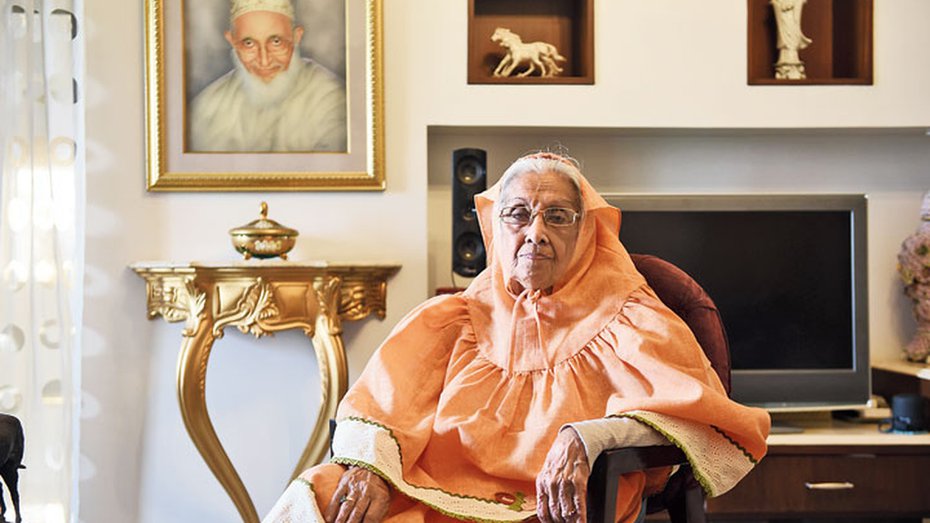
Zainab Saifuddin Bhaimia. / Picture by Subhendu Chaki

Death is a form of knowledge. And the care of the dead is one way of arriving at it.

Zainab Saifuddin Bhaimia was initiated into her life’s work almost by chance. A death had occurred in the Bohra Muslim community of Calcutta, to which Zainab, “Zainy” to everyone who knows her, belongs. A body, according to the practice of the community, has to be cleansed, bathed and embalmed before it is buried. The last rites are performed by a group of about three or four.

Zainab was called to help when the death occurred. That was in the 70s. Since then Zainab, now 86, has been performing the last rites — ghusul — for individuals of her community. The rituals are elaborate, and they take time. The body is cleansed perfectly so that when its owner reaches the other world, he or she should be perfectly clean.

Zainab stopped only recently, about five years ago, when her health began to deteriorate. Treasured by her 4,300-strong close-knit community in Calcutta as someone devoted to its good, she feels blessed that she was given such an opportunity to serve it.

Though frail now, taking the help of a walking stick to move, she remains active. A graceful, smiling woman, she walks gently into the drawing room of the well-appointed Middleton Row flat where she lives with her son’s family. She is wearing a blue traditional Bohra ghagra and dupatta, trimmed with intricate red lace.

When she goes out, she puts on the rida, the women’s headdress. She has just returned two days ago from a visit to her relatives in the US, and jet lag is still troubling her, but she has not allowed it to subdue her. With her is her daughter-in-law Nafisa, who, says Zainab, is like her daughter. Nafisa helps to explain some of the things that Zainab talks about.

For four decades, Zainab has witnessed death from close. She has performed the last rites as a volunteer, always as part of a group. She cannot put a number to the deaths she has attended. But whenever a death would occur, the community knew she would be there.

It was also possible for her to be there because she then lived in Pollock Street, where Saifee Masjid, the century-old masjid of the Bohra community, is located. Now a new masjid, Burhani Masjid, has been built just behind Science City. The last rites are performed in a chamber at the masjid. The ceremony remains completely private; a code of conduct stops anyone from speaking about it.

Zainab would be called at any hour, midnight or later, for death hardly comes announced. She went, because she felt it was her duty to be with someone in the last hour. In the long years of performing ghusul, she has even had to attend to those who had been very close to her.

Women perform the rites when a woman dies; and men perform them for a man.

It obviously takes great courage to be able to carry out one’s work for decades in the presence of death. And wisdom. But Zainab is dismissive about herself. She looks at herself as just a worker. She will only express her gratitude for being able to render this service, especially to Syedna Mohammed Burhanuddin, who was the leader of the Bohra community from the 60s and personally asked her to dedicate herself to community work. Syedna Mufaddal Saifuddin, Syedna Mohammed Burhanuddin’s son, is the current leader of the community.

“Why wouldn’t I do it?” she asks, referring to the first time she was called for ghusul. But she has learnt so much from her work, about life, about mortality, and about immortality.

One is the reality of death, which many of us ignore till we cannot anymore. But the continuous performance of last rites cures one of the last doubts about mortality. “It helps to prepare you for your own death,” she says serenely, without the slightest touch of morbidity. “You should also know what death is like,” she adds.

She also finds in rendering the service a spiritual satisfaction. “The cleansing practice is also like a cleansing for me,” she says.

Has she ever felt scared? “No, why?” she asks, looking almost surprised. Her work has also taught her the importance of good acts. “Don’t do anything bad,” she says. Whatever one does, stays, long after the body has departed.

Not that she has never felt disturbed. She could not sleep on occasions. But then she is only human.

She was motivated into working for her community by Syedna Mohammed Burhanuddin. He personally asked her to work for her community. “His blessings were always with me,” says Zainab.

She is from Surat. The Indian Bohra community, which is now spread everywhere in the country and abroad, originated largely from Gujarat. Zainab came to Calcutta after her marriage in the early 50s. Initially, Syedna Mohammed Burhanuddin’s sister asked her to join Bunayyat Ul Ediz Zahabi, the women’s organisation of the community. Zainab performed her duties faithfully there. She was also involved in the community kitchen, an important institution.

At the beginning, when she took up performing ghusul, there were not many performing it. “Now about 20 women perform the rites.” Zainab has trained a number of them.

Community work took up much of her time. She was also devoted to her family, raising two sons and a daughter.

Her work has been recognised. Very proudly, Zainab asks Nafisa to show me the certificates The Syedna personally honoured her with the certificates. One is signed by Syedna Mohammed Burhanuddin, mentions ‘Wisamo istehsan al khidmat’, a recognition of her service to the community. The other confers the title of “Mafsuhiyat” on Zainab, for the same reason.

A few days after our conversation, Zainab let me know that she would like to thank a few people and institutions again.

Bunayyat Ul Ediz Zahabi, the women’s organisation, was formed by Syedna Taher Saifuddin, she says, and she is very grateful to it for allowing her the opportunity to work. All the work that she has done was possible with the permission of the Aamil, the local head priest. Finally, Hizbe Husaini is a committee in Calcutta which takes part in organising the last rites. It informs the women’s committee when there is a death. Zainab is very grateful to Hizbe Husaini.

source: http://www.telegraphindia.com / The Telegraph, online edition / Home> West Bengal / by Chandrima S. Bhattacharya in Calcutta / January 20th, 2020

Dawoodi Bohras initiate community welfare project

Mumbai, MAHARASHTRA :

dawoodibohrampos02jan2017

Thousands of Dawoodi Bohras are carrying out welfare programmes in more than 200 towns and cities spread across four states as part of a project to improve living condition of the poor members of the community.

The volunteers, drawn from various sections of the religious group and some of them from abroad, have fanned out in Gujarat, Maharashtra, Rajasthan and Madhya Pradesh, where they are helping the underprivileged community members in healthcare, housing and other areas.

They are building, repairing or cleaning homes, running vaccination and medical programmes as part of a five- day long project in the four States. The volunteers are working towards providing sustainable opportunities to families that are in need of help, according to a release issued by the community.

An infrastructure and administrative system to manage the organisation and funding of this fostership project was running for some weeks in preparation of the welfare activities that began on December 29 and will end on Monday.

The drive follows two-year-long travels of the community head, Syedna Mufaddal Saifuddin, who visited areas where members of the religious sect reside, it said.

“Some years back, his predecessor had initiated a programme to end food poverty which has now flourished into a common kitchen concept that provides a freshly cooked hot meal every day to every household of Dawoodi Bohras, rich or poor, wherever in the world they happen to live,” a community spokesperson said.

The community has now resolved to improve living conditions of the poor, he said.

“A team of about 4,140 members, including students, intellectuals, administrators, professionals and businessmen, have joined hands to look into every need of the community – from housing and clothing to childrens education and vaccinations, to help to achieve a minimum standard of living,” he said.

source: http://www.afternoonvoice.com / AfternoonVoice / Home> City News> Mumbai / Afternoon Voice – January 02nd, 2017