Indian origin Sabih Khan, a native of Moradabad in Uttar Pradesh brought laurels to India in general and his hometown in particular on being appointed as the new Chief Operating Officer (COO) at Apple. He replaces Jeff Williams. Currently, Khan serves as Senior Vice President of Operations. Indeed, an honour to Sabih Khan, known for his extraordinary skill and a brilliant strategist besides an architect of Apple’s supply chain.
Bringing glory to his native Moradabad in Uttar Pradesh, Sabih Khan (58) has been honoured with the post of Chief Operating Officer (COO) at Apple, marking a significant step in the company’s ongoing leadership transition. Notably, Khan has been with Apple for three decades and currently serves as Senior Vice President of Operations and will take over from Jeff Williams later this month, the iPhone maker announced in a statement.
Before joining Apple’s procurement group in 1995, he worked as an applications development engineer and key account technical leader at GE Plastics. A quick look into his biodata revealed that he was born in 1966 in Moradabad, Uttar Pradesh and later moved to Singapore during his school years before settling down in the US. Interestingly, he is armed with dual bachelor’s degrees in economics and mechanical engineering from Tufts University, and a master’s in mechanical engineering from Rensselaer Polytechnic Institute (RPI).
Sabih Khan’s father Saeed Ullah Khan was a resident of Rampur who had settled down in Singapore decades ago. Sabih received his primary education there, after which he moved to America and received higher education from there. Apple CEO Tim Cook described him as “a brilliant strategist and one of the central architects of Apple’s supply chain.”
“Sabih leads with heart and values, and I know he will make an exceptional chief operating officer,” Cook added. “He helped ensure that Apple can be nimble in response to global challenges.”
Moreover, Khan has been playing a vital role in shaping the global supply chain that powers Apple’s operations around the world. In 2019, he was promoted to Senior Vice President of Operations, reporting directly to Jeff Williams. In this role, he led key initiatives in advanced manufacturing, expanding Apple’s global footprint, and navigating complex supply chain challenges, especially during turbulent global events.
According to sources, Khan has also been a major force behind Apple’s environmental efforts. Under his leadership, the company has reportedly reduced its carbon footprint by over 60 per cent, thanks to stronger supplier partnerships and green manufacturing practices.
Further, he also oversees Apple’s supplier responsibility programmes, which aim to improve labour conditions, and provide education and training for workers at production facilities globally. In his new role, Khan will be playing a vital role in shaping the global supply chain that powers Apple’s operations around the world. He has also been a major force behind Apple’s environmental efforts. Under his leadership, the company has reportedly reduced its carbon footprint by over 60 per cent, thanks to stronger supplier partnerships and green manufacturing practices.
Jeff Williams, who has been with Apple for 27 years, will continue to report to CEO Tim Cook and oversee Apple’s design team and health initiatives until his planned retirement later this year. His transition also signals a shift in the structure of Apple’s leadership, with the design team set to report directly to Tim Cook after Williams steps down. Sabhih Khan has made not only his native Moradabad but also his home country India proud.
[The author is former Indian Express and Deccan Chronicle chief]
source: http://www.radiancenews.com / Radiance News / Home> Latest News> Pride of the Nation / by M Rafi Ahmed / July 10th, 2025
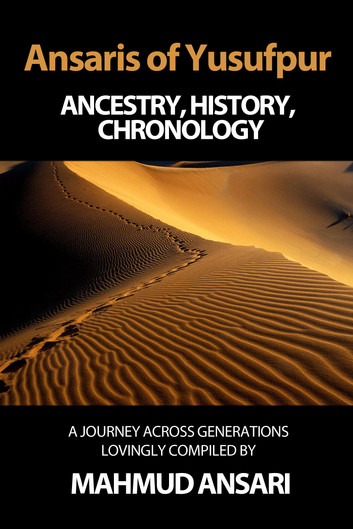
A fascinating history of Ansaris who began their journey in this mortal world a few thousand years ago in the peninsula of Arabia, then called Araba.
As Islam grew and took in its fold various other lands and nations, Ansars, being valiant warriors, became part of just about every major battle that took place from Badr to Constantinople, Qandahar, Herat, and finally to India.
Ansaris were not mere bystanders as history unfolded; they played significant roles and made valuable contributions in the fields of religion, medicine, literature, law, politics and media, no matter which part of the world they chose to settle in.
Since this book is about a branch of Ansaris who arrived in India, i.e. the Ansaris of Yusufpur, they will be covered in depth.
However, as the first book on Ansaris in English language, it would also be of interest to all Ansaris whose ancestors moved from Madinah-e-Munawwara to other countries of the Gulf, Middle East, Iran, Afghanistan, India, Pakistan and other parts of the world.
It is, after all, a common lineage and history that all Ansaris share from the pre-Islamic era and this book provides a ready reference to the origin and history of their ancestors.
This book is a fascinating history of Ansaris who began their journey in this mortal world a few thousand years ago.
As the first book on Ansaris in English language, it would also be of interest to all Ansaris whose ancestors moved from Madinah-e-Munawwara to other countries of the Gulf, Middle East, Iran, Afghanistan, India, Pakistan and other parts of the world.
source: http://www.kobo.com / Rakuten Kobo / Home> Biography & Memoir / by Mahmud Ansari
The acclaimed Urdu and Hindi writer from Allahabad exposes how poverty forced him to ghostwrite 1,065 novels.
New Delhi :
In the decades before television became a household staple in India and Pakistan, millions turned to novels filled with mystery, romance, and detective tales for entertainment.
One Muslim writer’s story reveals the untold hardship and exploitation faced by many like him during that time. Mujawar Hussain, a prolific Urdu and Hindi author from Allahabad, has exposed the difficult truth behind the 1,065 novels he ghostwrote for Hindu publishers, many under pseudonyms.
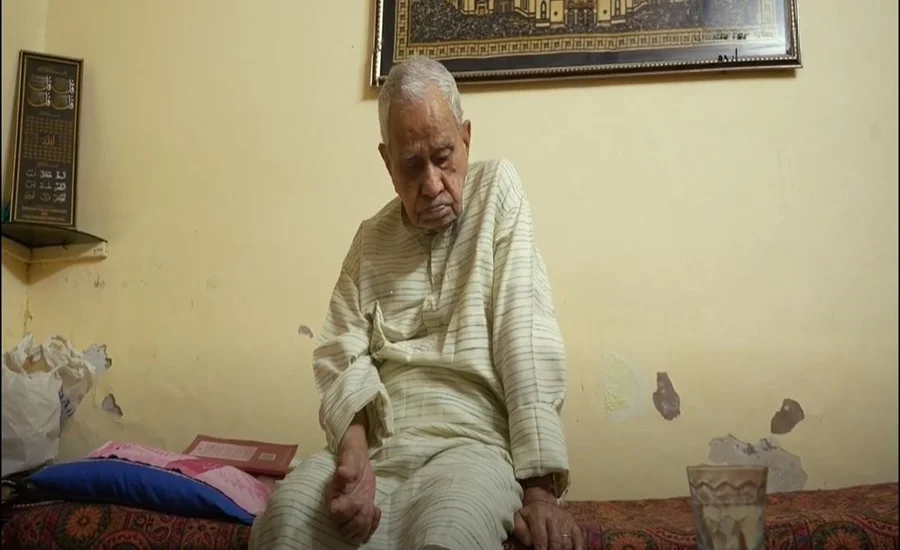
Now in his elderly years but still sharp, Hussain shared his painful journey of writing stories for survival rather than pride. “The number of such books combined is 1,065,” he told Clarion India recently. “But the books I consider a source of pride are my research paper, Elements of National Unity in Urdu Poetry, and a collection of my religious essays,” he said.
Hussain’s writing career began in the 1950s when major publishers churned out fiction in bulk to satisfy growing demand. Muslim writers like him were often paid meagre sums to produce thick novels under pseudonyms for Hindu authors and publishers, including names such as Janardan Prasad Jaiswal, Shambhu Prasad Jain, Ashok BA, and the mysterious “Neqab Posh Bedi.” Hussain estimates he wrote 30 to 32 novels under Bedi’s name alone.
“Some of them were non-Muslims,” Hussain said, naming former students turned authors. “I wrote in their names because I had to. The money kept my family alive.”
His words underline the economic hardship faced by many Indian Muslims, forced to work behind the scenes without recognition while Hindu publishers reaped profits. Hussain recalls the pressure of poverty pushing him to write constantly. “I remember those days when I’d enter the house, and my wife would tell me food and drinks would last until the next evening. I’d sit down with a pen, write, and hand over the manuscript to the publisher. I’d take money — 30 rupees at first, then 60, then 100, and finally up to 2,500 rupees. With that, household expenses were met.”
Hussain’s experience highlights the sidelining of Muslim talent in the Indian literary scene, where Hindu publishers held most of the power. “That forced me,” he said. “The memory of that time is painful, and the work was painful. After that, I put down the pen.”
He also revealed working for Nikhat Publications, famous for publishing the works of legendary Urdu detective novelist Ibne Safi. When Ibne Safi’s manuscripts stopped coming to India due to political tensions between India and Pakistan, Hussain was asked to fill the void by writing novels under his name. “When I realised the institution was going to close, I started writing under his name,” he said. “I wrote very few novels in Urdu under his name — half partridge, half quail, meaning some was his, some I mixed.”
In Hindi, Hussain wrote extensively in Ibne Safi’s style, including the novel The Barrister’s Wife, though he remains uneasy about these works. “Even now, I don’t feel good about them,” he admitted. “I didn’t consider them a source of pride.”
Despite his difficult path, Hussain’s academic achievements stand tall. He earned an MA in Urdu in 1958 with two gold medals, a silver medal, a Victoria Gold Medal, and another prize he cannot recall. “No one has ever scored higher than me,” he said proudly. Yet this success did not shield him from the economic hardship that forced him into ghostwriting.
Dr Ayesha Khan, a literary historian specialising in the pre-television literary world, explains that Hussain’s story reflects a larger pattern of exploitation faced by Muslim writers. “Many Muslim authors like Mujawar Hussain were sidelined, forced to write under pseudonyms or for others to survive,” she said. “Hindu publishers often held the power, dictating terms and profiting from their work.”
Hussain’s reflections carry a sense of regret. Quoting a poem, he said, “Remembering the past is a punishment.” He sees much of his commercial writing as a compromise born of necessity, not passion. “Due to the compulsion of circumstances, I wrote some books that I do not consider a source of pride,” he said. “I was writing incessantly.”
Today, Hussain hopes that sharing his story will reveal the struggles of Muslim writers who toiled behind the scenes while others took credit. “I wrote for survival,” he said quietly. “But I want people to know the real story behind those books.”
source: http://www.clarionindia.net / Clarion India / Home> Editor’s Pick> Featured> India / by Mohammed Bin Ismail / May 26th, 2025
All six Muslim Lok Sabha candidates fielded by mainstream parties in Uttar Pradesh have emerged victorious.
Among the winners is Imran Masood, who contested from Saharanpur on a Congress ticket. “This victory is not just mine, but of every individual who believes in secularism and democracy,” Masood stated emphatically after his win.
Similarly, Maulana Muhibullah Nadvi, representing the Samajwadi Party, also secured a win in Rampur. “The people’s faith in us has been reaffirmed, and we will work tirelessly to honour their trust,” Nadvi said after trouncing Ghanshyam Singh Lodhi of the BJP with a total of 4.81 lakh votes, a margin of 89,370 votes.
Ziaur Rehman Barq, who contested from the Sambhal Lok Sabha seat, is on the path to victory as well. The Congress party’s candidate from Amroha, Kanwar Danish Ali, also achieved victory.
Reflecting on his triumphant journey, Ali said his suspension from the Bahujan Samaj Party was a turning point. “The support from the Congress party and the voters of Amroha has been overwhelming,” he said.
Afzal Ansari, a Samajwadi Party candidate, is leading in Ghazipur. Iqra Hasan, another Samajwadi Party candidate from the Kairana parliamentary seat, has also registered victory.
Before the elections, Imran Masood was affiliated with the Samajwadi Party, and Afzal Ansari was a Bahujan Samaj Party Member of Parliament. Danish Ali, formerly with the Bahujan Samaj Party, was suspended and later nominated by the Congress party, which led to his victory in Amroha.
Despite this success, the Bahujan Samaj Party, which fielded around 22 Muslim candidates, did not secure any seat. This outcome highlights a broader issue of representation, as only 78 Muslim candidates contested across the country under the Congress and other parties’ tickets. The Congress party itself offered tickets to just 19 Muslim candidates nationwide in this election.
With vote counting continuing, early trends indicate that the ruling NDA would form the next government. Nonetheless, the victory of these six candidates marks a noteworthy moment in this Lok Sabha election.
source: http://www.clarionindia.net / Clarion India / Home> India Votes> Indian Muslims> Politics / by Mohammad Alamullah, Clarion India / June 04th, 2024
The first Muslim judge of a high court in colonial times, Syed Mahmood’s professional conduct offers a counterpoint to the declining standards in Indian judiciary.
WHEN Justice Abdul Nazeer addressed the 16th national council meeting of the RSS-affiliated Akhil Bharatiya Adhivakta Parishad at Hyderabad last December, he said, “Great lawyers and judges are not born but made by proper education and great legal traditions, as were Manu, Kautilya, Katyayana, Brihaspati, Narada, Parashar, Yajnavalkya, and other legal giants of ancient India.” In the symposium on “Decolonisation of the Indian Legal System”, Justice Nazeer also said the “continued neglect of their great knowledge and adherence to the alien colonial legal system is detrimental to the goals of our Constitution and against our national interests…”.
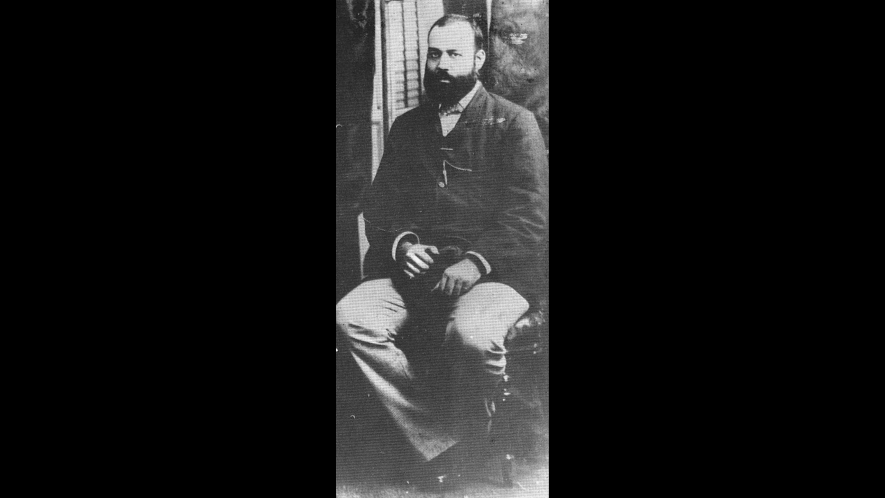
Perhaps Justice Nazeer should have also recalled 19th-century jurist Justice Syed Mahmood (1850-1903). A pioneer in bold assertions against the colonial judiciary, he produced incisive legal commentaries that reflect an audacious dissenter’s point of view. Writing in an Urdu newspaper, his father, Sir Syed Ahmed Khan, narrates Mahmood’s resignation from the Allahabad High Court in 1893 to “protect the self-respect of Indians against the racism of British judges”.
In that era, conceptions of nationhood were still evolving in India. Indian judges would not muster the courage to contest the racism of the imperial power or fellow European judges. But Mahmood did, in intrepid ways. Khan founded the Mohammedan Anglo-Oriental (MAO) College at Aligarh in 1877 and figures prominently but contentiously, stereotyped as a British loyalist and separatist in debates on contemporary nationalism. Mahmood supported his father’s modern education project, but unfortunately, his contributions are largely ignored by historians and the legal fraternity.
By 1920, MAO College, now Aligarh Muslim University, was the most prominent residential university in the country. Its history department has been a premier centre for advanced studies for a half-century. In 1889, primarily on Syed Mahmood’s initiative and his gifts in terms of books, journals and cash, AMU established a law department. Yet, he was neglected in its research. Only in 1973, seven years after the centenary of the Allahabad High Court, the Aligarh Law Journal brought out Mahmood’s contributions, and legal scholars reflected on his high calibre as a lawyer and judge.
The good news is, in 2004, Alan M. Guenther did his doctoral thesis on Mahmood at McGill University, Canada, which is available online for the public to access. His meticulous and well-researched account touches almost every aspect of Mahmood’s public life. Guenther also published an extended essay in 2011on Mahmood’s views on English education in 19th-century India. (In 1895, Mahmood had written a book on the theme for his speeches at the Educational Conference.)
In 1965, Asaf Ali Asghar Fyzee (1899-1981) complained, “Syed Mahmood’s contributions to the transformation of Muslim law in India have been largely neglected by historians and survive primarily as footnotes in legal texts on Muslim law.” Guenther, too, observes, “…overshadowed by the life and writings of his illustrious father, Ahmad Khan, his legacy has not received the attention it deserves. A large part of his father’s achievements in the reform of education, in fact, would not have been possible without the assistance of Syed Mahmood. But when he reached the age at which his father had made his most significant achievements, [Mahmood] had his life cut short.”
Mahmood had laid out his life plans clearly. S. Khalid Rashid, writing in 1973, reports that Mahmood decided early on that, like his ancestors, he would devote the first third of his life to educating himself, the second to earn a living, and the last to “retired study, authorship and devotion to matters of public utility”. But Guenther writes about how Mahmood’s health had deteriorated through alcohol abuse and disease. He died before he turned 53, broken by forced retirement, estranged from his father (who had died five years previously), stripped of responsibilities at the college he had helped found, separated from wife and son, and in poverty. He was selling personal items to repay debts. “His father’s numerous writings and letters are still republished, but Syed Mahmood’s contributions to Muslim thought are hidden in bound volumes of the Indian Law Reports and brittle files of government correspondence,” Guenther writes.
One aspect of Mahmood’s last years is captured by Prof. Iftikhar Alam Khan’s Urdu books, Sir Syed: Daroon-e-Khana (2006, 2020) and the recent Rufaqa-e-Sir Syed: Rafaqat, Raqabat wa Iqtidar Ki Kashmakash. These accounts expose the smear campaigns of the three companion successors of Sir Syed—Samiullah, Mohsin-ul-Mulk and Viqar-ul-Mulk—against Syed Mahmood as they vied for the secretary’s post at MAO College. Often European members of MAO College conspired with them. Exploiting his weaknesses and eccentricities, they ousted him to get a hold over college affairs, compounding his hurt during his tragic final years.
SYED MAHMOOD’S ROLE IN SIR SYED’S EDUCATIONAL ENTERPRISE
Having returned to India in 1872 after studying in England, Mahmood took time out of his budding legal career to assist his father’s reform work, particularly setting up MAO College. He prepared a detailed plan along the lines of his experiences in Cambridge. His specific aim, explained in February 1872, was to produce future leaders of India through an educational institution whose residential nature would be “as indispensable an education as the course of study itself”. The aim was to create a society of students and teachers quite different from the rest of society.
He travelled with his father to Punjab in 1873 and spoke at a rally to promote the project. In 1889, Sir Syed introduced a motion to nominate Mahmood as joint secretary of the board of trustees of MAO College by highlighting his assistance despite the opposition he faced. In particular, he considered his son’s influence the primary factor that persuaded European professors to come to India and teach there.
European staff members confirmed this around six years later when there was renewed opposition to Mahmood continuing as joint secretary. The principal, Theodore Beck (1859-1899), testified, “Syed Ahmad….acknowledged his reliance on Syed Mahmood for advice in all matters, and his imprint could be noted in the correspondence relating to the school. He declared his firm conviction that Syed Mahmood was the one person who shared his vision for the college, and apart from him, no one would be able to administer the school in keeping with that vision.” However, Samiullah (1834-1908) disagreed with Sir Syed on this count. As a result, a tussle for power began in the college management. The power-play could explain why AMU felt inhibited in bringing out a biography of Mahmood, a research gap that Guenther’s doctoral thesis fills. He has extensively relied on important correspondences of Mahmood preserved in the London India Office (British) Library.
SYED MAHMOOD’S TRYST WITH MUSLIM LAW
Mahmood is a forgotten pioneer of the transformation of Muslim law in modern South Asia. In 1882, at just 32, he became the first Muslim judge of the high courts in British India. He delivered numerous landmark decisions that shaped Muslim law, the law in general, and its administration.
Earlier, he blazed a trail his younger contemporaries followed in their judicial roles in British India. He was one of the first Indian Muslims to study in England and train in the English system of jurisprudence, the first Indian to enrol as a barrister in the High Court of Judicature at Allahabad in 1872, the first appointed as a district judge in the restructured judicial system of Awadh in 1879 and the first Indian assigned as a puisne judge to the High Court at Allahabad. He was the first Muslim in any High Court of India. He cleared a path for Indian Muslims to participate in administering justice in India. But his contribution is not limited to creamy career opportunities for Muslim youngsters. His lasting legacy is how Muslim law is perceived and administered in South Asia today.
CHAMPION OF ACCESSIBLE JUSTICE
An abiding concern of Mahmood was the cost of administration of justice. Court procedures were lengthy and expensive, and the “mass of law” was complicated. Distance from courts was another concern, for which he proposed a network of village courts for “on-the-spot” adjudication. He sought to make justice accessible through unpaid tribunals and honorary munsifs. He prepared a comprehensive draft for this, Guenther informs.
Furthermore, he attacked the [racial] mindset and court fees and stamp duties on legal documents. He ruled in August 1884 and February 1885 that “…if justice costs the same amount [to the] rich and poor, it follows that the rich man will be able to purchase it, whilst the poor man will not.” He declared, more than once, that British judges in India were too quick to find fraud.
In a speech at the Allahabad Bar in April 1885, Mahmood raised the language issue in judicial transactions, saying laws should be in languages intelligible to the masses. He insisted on the vernacular in arguments, pleadings and justice delivery and translated verdicts so that people unfamiliar with English could rest assured that judgments are reasoned. Of course, the issue of judicial language continues to be debated, and for this, acknowledgement is due to Mahmood.
AN INDIAN DISSENTER IN THE HIGH NOON OF BRITISH COLONIALISM
Mahmood is known most for outstanding dissenting judgements. In volume 2 of his 2021 book, Discordant Notes, Justice (retd.) Rohinton F. Nariman writes that Mahmood was known for detailed judgments, some of which stand out for thoroughness and fearless language. Mahmood would refer to the original Sanskrit versions when ruling on Hindu laws and the Arabic texts for Muslim laws, rather than using interpretations of the relevant texts.
From the 1860s to 1880s, during the codification of laws, he sought limits on importing British laws and protested that the local context was getting overlooked. His concern was not just the laws but their efficacy and adaptability within India’s cultural diversity.
Guenther observes, “…throughout his life, he identified himself as a Muslim as well as an Indian and a subject of the British crown, and that he was actively involved in the education and improvement of the Indian Muslim community. At the same time, Mahmood… [made] efforts to promote harmony between people of diverse backgrounds, and…[supported] initiatives that improved the situation of all Indians, regardless of religious affiliation…”
An anecdote from Altaf Hali’s Hayat-e-Javed (1901), cited by Shamsur Rahman Faruqi (2006), is worth sharing. “Contrary to the culture of sycophancy and genuflecting before the English colonial authority….Syed Ahmad Khan and his high-profile and brilliant son Syed Mahmud strived to conduct themselves as if they were equal to the English….Syed Ahmad Khan had stayed away from the [1867 Agra] Durbar because Indians had been given seats inferior to the English. A medal was to be conferred on Syed Ahmad Khan at that Durbar. Williams, the then Commissioner of Meerut, was later deputed to present the award to Syed Ahmad Khan at Aligarh railway station. Willams broke protocol and showed his anger at having to do the task under duress and said that government orders bound him, or he wouldn’t be presenting the medal to Syed Ahmad Khan. Syed Ahmad Khan accepted the medal, saying he wouldn’t have taken the award, except that he too was bound by government orders.”
Indian democracy is an outcome of anti-colonial nationalism, and dissent is its core component: Mahmood’s dissent contributed to nationalism in his time. In 2022, the V-Dem Institute described India as an electoral autocracy where dissent is being criminalised, and the judiciary is failing to contain the majoritarian upsurge. Mahmood’s professional conduct is an encouraging counterpoint to the degeneration in the Indian judiciary.
WHAT DID MAHMOOD THINK OF THE INDIAN NATIONAL CONGRESS?
According to Guenther, though Mahmood never joined the Congress, he was “equally aloof” from the anti-Congress propaganda his father indulged in. “…a rare catholicity characterised his views on most of the controversial questions,” he writes. He adds, “His acceptance among the Hindus [elites] generally was demonstrated by the fact that they tried to send him as their representative to the Imperial Legislative Council, though he never received that appointment.”
Nonetheless, like his father, Mahmood harboured class and regional prejudices. Guenther reveals an article Mahmood wrote in The Pioneer on 4 September 1875, suggesting the government must strive to with the sympathies of the “higher classes of natives”. When challenged to defend his position by “Another Native” in the same newspaper two weeks later, Mahmood responded that people in Punjab and the North-western Provinces [now Uttar Pradesh] were, historically speaking, of “much greater political significance” than those of Lower Bengal. Gunther cites his write-up: “…any educational system that succeeded in ‘attracting the Bengalee and fail(ed) to exercise any influence upon the higher classes of the Rajpoot, the Sikh, and the Mussulman’ must be regarded as a failure.”
Considering the socio-regional composition of top functionaries of AMU, even impartial insiders would testify that it still harbours regional and sub-regional prejudices. The Sir Syed Academy is releasing many publications during the ongoing centenary celebration of AMU. Publishing Guenther’s dissertation may be a fitting tribute to Mahmood, who must be regarded as a prominent co-founder of MAO College.
Mohammad Sajjad teaches modern and contemporary Indian History at Aligarh Muslim University. Md. Zeeshan Ahmad is a lawyer based in Delhi. The views are personal.
First published by Newsclick.
source: http://www.theleaflet.in / The Leaflet / Home> History / by Mohammad Sajjad and Zeeshan Ahmad / April 01st, 2022