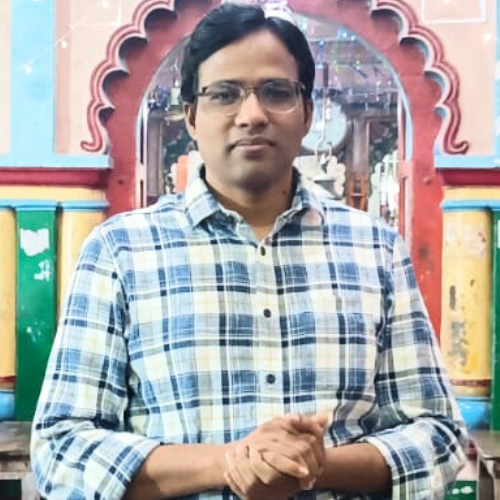
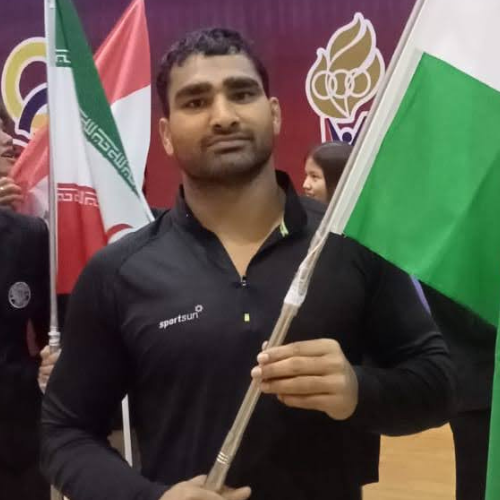
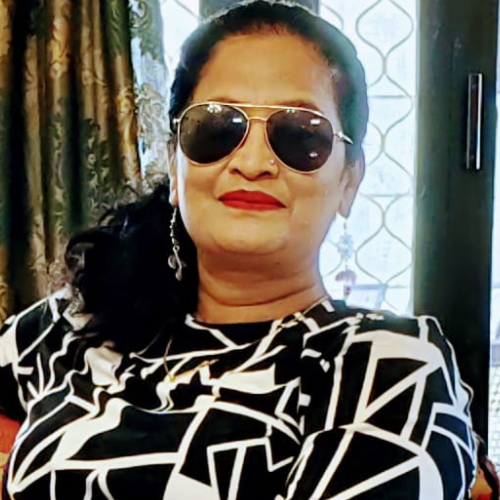
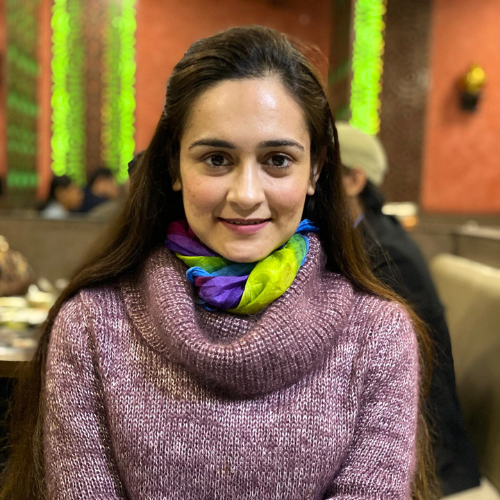
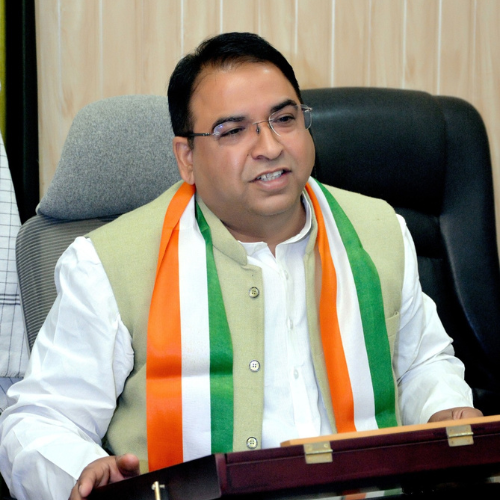
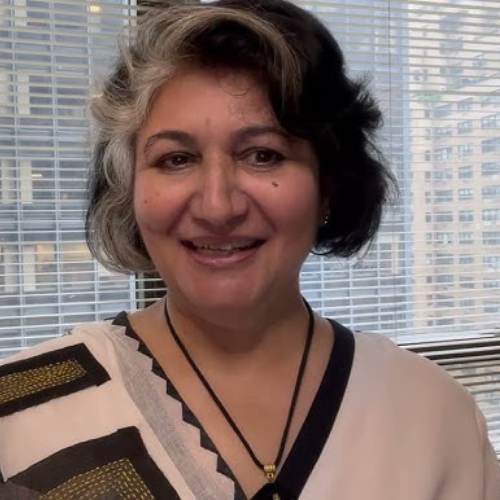
Winner of All India Physiology Quiz 2025 with Prof. Gul Ar Navi Khan at Dept. of Physiology, AMU
Aligarh:
Ms. Faiza Furqan and Mr. Mohd Aryaan Tariq, MBBS students of the Department of Physiology, Jawaharlal Nehru Medical College (JNMC), Aligarh Muslim University (AMU), secured the Second Prize at the prestigious All India Physiology Quiz Competition 2025, organised by the Physiology Society, Department of Physiology, King George’s Medical University (KGMU), Lucknow, bringing laurels to the University.
The quiz witnessed participation from leading medical and dental colleges across India. The event tested participants’ knowledge and application of human physiology in a highly competitive environment.
Prof. Gul Ar Navi Khan, Chairman, Department of Physiology, JNMC, congratulated the winning team and presented them with an appreciation gift in recognition of their outstanding performance.
source: http://www.radiancenews.com / Radiance News / Home> Pride of the Nation> Awards> Latest News / by Radiance News Bureau / August 21st, 2025
P Hiba, the Muslim girl from Manjeri in Malappuram district, who topped the 2015 Kerala Medical Entrance Examination, while dedicating her success to her late father said she wanted to become a doctor with social commitment.
“I want to be a good doctor with social commitment and will use the opportunity to serve the society”, Hiba said while talking to reporters after the results.
“If you are driven by stern decision towards something, you will get for sure,” she added.
As per the state medical entrance exam results declared Wednesday, P. Hiba of Malappuram scored 954.7826 and stood first in the list.
Hiba had not expected the rank. “I was confident that I could make it to a government medical college in the State,” she said, without hiding her surprise at winning the first rank.
Hiba completed her Class 12 last year with 98 per cent marks from the Manjeri GBHSS and worked hard for the entrance examination last year.
She had joined an entrance examination centre at Pala in the beginning but left it owing to home sickness. She then joined Bhabha Institute of Sciences at Manjeri which proved to be a key factor in her success.
Hiba is keen to join MBBS at the Government Medical College, Kozhikode. But she is waiting for the results of the All India Medical Entrance Examination. She would not be in two minds if she gets admission at All India Institute of Medical Sciences (AIIMS), New Delhi.
Hiba was followed by Marium Rafi from Aluva who stood second with 944.3478. The third rank went to Ajeesh Sabu from Kollam, who also scored 944.3478.
Mariam termed her victory as grace of Allah and help and support extended by the parents and sister. She told a local news website that she never expected such an achievement.
Mariam is also preparing for the All India Medical Entrance Examination and will join All India Institute of Medical Science (AIIMS) if she is blessed with a chance.
source: http://www.ummid.com / Ummid.com / Home> India / by ummid.com news network (headline edited) / May 22nd, 2015
Continuing her dream run of academic success, Almas Nazim Syed of Government Medical College Nagpur, crossed yet another milestone by securing the top position in Maharashtra MBBS final exam, bagging 11 gold medals and a scholarship.
Daughter of Dr Syed Nazim, a general practitioner, Almas Nazim Syed, has topped every exam in her career, including the 2009 Maharashtra HSC board exam before the impressive performance in the Maharashtra MBBS final exams.
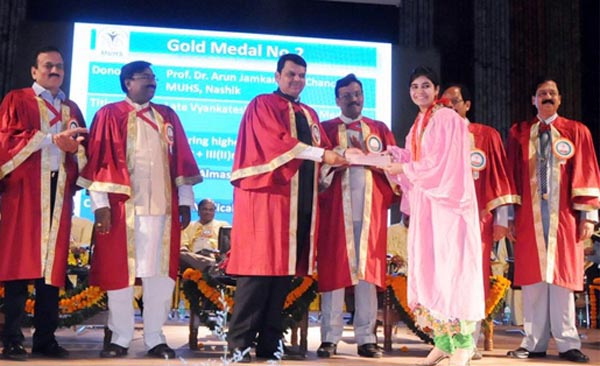
Maharashtra Chief Minister Devenndra Fadnavis in Nashik to address the 14th Convocation of the Maharashtra University Health Sciences (MUHS), felicitated Almas Nazim Syed and also conferred on her citation and gold medals.
Along with Almas Nazim Syed, a total of 7,478 students from different streams of medicine were awarded with the convocation. Of these 71 gold medals were given to the students. Nine students were awarded with Doctor of Philosophy (PhD).
Interestingly, after topping the 2009 HSC exams, Almas Nazim Syed, whose brother was then studying in second year MBBS, had vowed to study medical science with specialisation in gynaecology, and build a hospital for poor people.
“I want to fulfil my mother’s desire that I open a nursing home or a hospital to serve the needy,” she had said.
Almas’ motivation, however, was her grandma Safiya, a writer.
“I wanted to be gynaecologist and open a hospital since I was in class 5. It was prompted by my grandmother telling us one day that she was not able to pursue her dream of opening a nursing home to look after children’s studies,” she said.
A vivid reader of novels, Almas is fully determined to achieve her target.
“Dare to dream. Have passion to fulfill that dream. Be persistent in hard work. Don’t be aimless in life”, were her words after cracking the 2009 HSC exams.
After clearing the MBBS finals and becoming a doctor, it will now be interesting to see how Almas Nazim Syed, married to a politician’s grandson in Akola, fulfils her mother’s desire to open her dream hospital for poor.
source: http://www.ummid.com / Ummid.com / Home> Education & Career / by ummid.com news network / May 27th, 2015
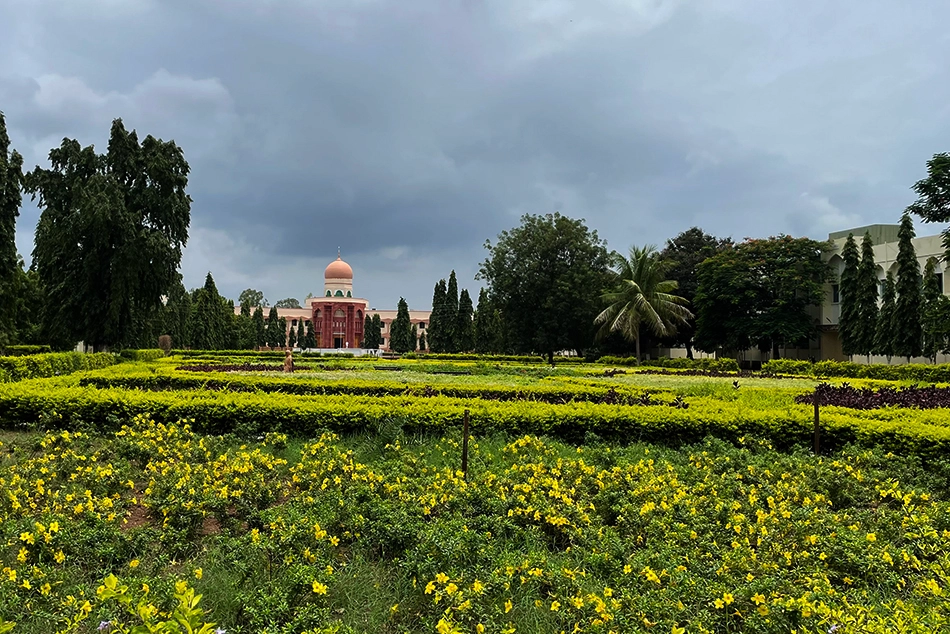
Jamia Mohammadia Mansoora, as this complex is named by its founders, is not only an education hub but also a symbol depicting state-of-the art combination of Islamic and modern Indian culture.
Sultan Manzil (Photo: ummid.com)
Malegaon, despite an appalling history of negligence by successive governments at the centre and state, still has the tag of being a town of literate, erudite and cultured masses firmly intact.
True to this identity, the first thing that greets the people entering the town from the western side on the Mumbai-Agra National Highway and touching the banks of Girna River is the grand educational complex.
Mansoora, as this complex is named by its founders, is not only an education hub but also a symbol depicting state-of-the art combination of Islamic and modern Indian culture.
Lush green lawns, buildings of class architecture, classrooms with modern amenities, model computer rooms – one each for boys and girls, well-equipped laboratories, library with valuable collection of rare books, hostel with suitable lodging, playground – enough not only for cricket but also for games like basketball and football, giant mosque with separate arrangement for women having a capacity exceeding 5000 people and what not. The campus stretched on 56 acres of land has everything that parents would love to have for the education of their children.
Moreover, Mansoora is perhaps the only place in India having a dedicated mosque for girl-students where they not only offer prayers five times a day but also it is they who lead the prayers every day. Above all, they have a unique syllabus for study that not only masters them in Islamic as well as Modern subjects but also train them in meeting the emerging challenges.
The brainchild of Maulana Mukhtar Ahmad Nadvi, who with the help of his friend Saith Mohammad Khaleel of Malegaon initially, and single-handedly later on, turned the Mansoora into a model not only for those working eagerly on Madrasa modernization but also for many schools and educational institutions in India where quality education and desired results have become scarce.
The Beginning
King Abdul Aziz University of Saudi Arabia had organised an International Conference in 1975. The theme of this conference was to deliberate on the possibilities to amend the existing Madrasa syllabus followed at the time by most of the Islamic institutions and bring them in line with the modern requirements. Besides Muslim scholars and Ulema from all across the world, Maulana Mukhtar Ahmad Nadvi and noted Muslim scholar Maulana Abul Hasan Ali Miya Nadvi were also invited to the conference. The deliberations on the all-important issue in the conference kept Maulana Mukhtar Ahmad Nadvi impatient throughout the way back to India. He consulted on the matter with Maulana Ali Miya Nadvi and then tirelessly began searching for options to establish a Model Madrasa in India.
Masjid Aisha of Mansoora is the largest Mosque in Malegaon (Photo: ummid.com)
At this juncture, Maulana Mukhtar Nadvi met his friend Saith Mohammad Khaleel of Malegaon in Mumbai. The two men, though living miles away from each other, had many things in common. While Maulana Mukhtar Ahmad Nadvi had the vision and plan to convert his dream into a reality, Saith Mohammad Khaleel had the required resources in plenty.
Simultaneously, Saith Mohammad Khaleel proved a powerful backer and a great motivator for Maulana Nadvi. The combination worked and what Muslim leaders and Islamic scholars dreamt at King Abdul Aziz University, Saudi Arabia in 1975, became a reality in 1979 thousands of miles away in Malegaon.
Mansoora
A man with a vision, Maulana Mukhtar Ahmad Nadvi was also a master in doing things in novel ways. Hence for his dream Education Institute – running on a unique syllabus based on Islamic as well as Modern Education pattern and stretched on 56 acres of land touching the banks of Girna River along the Mumbai-Agra road in Malegaon – chose Mansoora as its name.
Mansoora, as Maulana Mukhtar Nadvi used to recall, in the 9th century was a historic locality in Baghdad. Iraq’s capital Baghdad during that time was the source of wisdom, knowledge and erudition, and a preferred destination for scholars and academicians. People from all across the globe seeking knowledge and wisdom used to converge at Baghdad. In the heart of the city and centre of all academic activities in Baghdad was Mansoora. A thousand years later, Mansoora took rebirth in Malegaon – a small town in North Maharashtra predominated by Muslim population.
A Model Curriculum
For the Curriculum and Syllabus to be followed at Jamia Mohammadia for boys and Kulliyah Aisha Siddiqua for girls – as he named the first two institutions founded by him in Malegaon – Maulana Mukhtar Ahmad Nadvi worked on two levels.
Realising that the existing Dars-e-Nizami – normally followed by the Mada’ris (plural of Madrasa) in India – is not sufficient to meet the emerging challenges and requirements of even the Islamic studies, he after consulting renowned academicians and scholars of the time, introduced suitable and needful amendments in it.
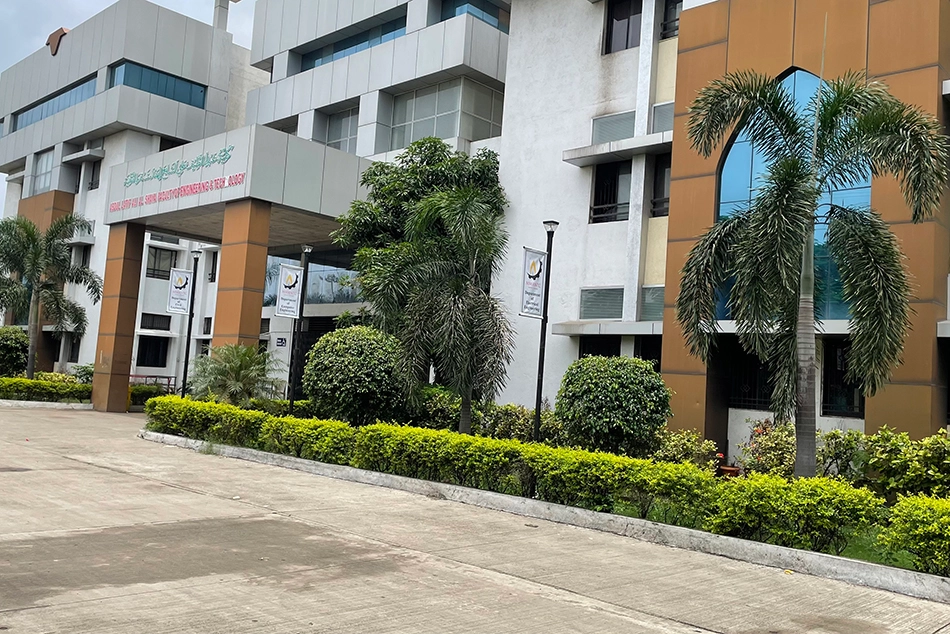
Abdul Latif Ali Al Shaya Faculty of Engineering, Mansoora (Photo: ummid.com)
At the same time, he introduced the modern subjects like Science and Mathematics, and also the languages like English, Hindi and Marathi for students that included boys and girls both. Finally, the curriculum that came into being out of his efforts was a perfect combination of Islamic and Modern Education pattern.
Simultaneously, he meticulously worked for obtaining the all-important affiliation and recognition from the state education board, and also from the Indian and foreign universities. Thanks to the determination, commitment and speed with which he worked, both of his institutes were very soon recognised by the Mahrashtra State Secondary Board and also by Jamiah Islamia, Madinah Munawwarah, Saudi Arabia and Jamia Millia Islamia, New Delhi.
Mansoora: A Force to Reckon With
Due to the hard-work it needed on the part of the students as well as the teachers, the curriculum was really tough when introduced in the beginning. However, once it was on the roll, results started pouring in consistently and with surprising rewards. The Jamia students – both boys and girls, soon found them not only scoring excellently in Islamic studies but also coming with flying colors in state board exams.
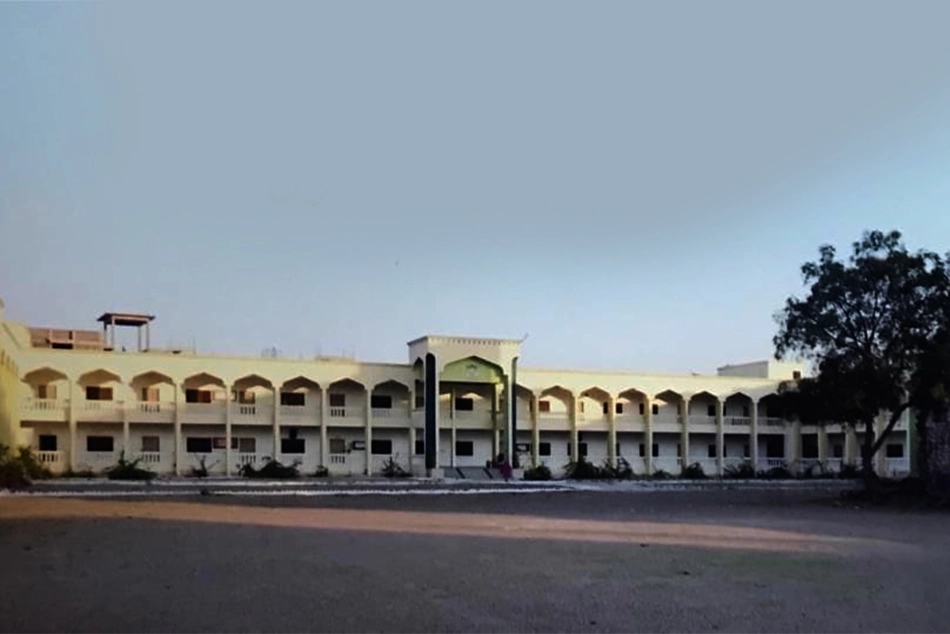
Kulliyah Aisha Siddiqua for girls
However, the brightest moment for Mansoora came in 2008-09 when one of its students Abdur Rehman along with sixteen others created history at Jamia Islamia Madinah Munawwara, Saudi Arabia. While Abdur Rehman topped his faculty and bagged student of the year award, sixteen others from Mansoora cleared the University exams with distinction. The results were so impressive that Jamiah Islamia sent its Head of the Education Department to Mansoora. He specially traveled from Saudi Arabia to Malegaon to have a personal and first-hand account of the way students are taught.
JMES Goes National
After he succeeded in his mission, Maulana Mukhtar Ahmad Nadvi invited people from various places – specially those who were part of the deliberations with him at King Abdul Aziz University in 1975 – to have the first hand experience of what was dreamt in that conference. At the same time, while extending all supports, he urged them to replicate the model in their localities.
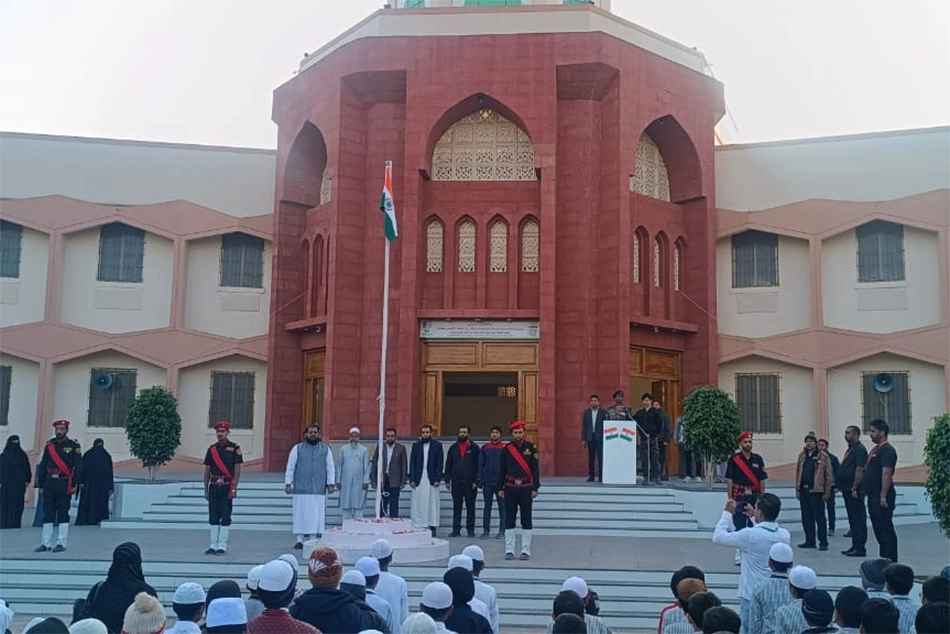
Independence Day Celebrations at Jamia Mohammadiya Mansoora, Malegaon
However, when he found some of them wary and some others hesitant, he took it upon himself to do the job. Soon JMES spread its wings to other parts of the country and established branches at Maunath Bhanjan, Aakot, Dhule, Bangalore, Mahesla and Mewaat – all running on the Mansoora pattern and affiliated to the respective state boards.
Future Ambitions
The Mission was partly accomplished. Maulana Mukhtar Ah Nadvi died September 9, 2007. Behind him he left, besides Mansoora in Malegaon and a chain of education institutes spread all across the country, an able and equally ambitious son Arshad Mukhtar. At the helm of the affairs now, Arshad is smartly following his father’s footsteps. His dream is to convert Mansoora into a big University – capable of offering every subject that exists on the earth.
——————————
[The writer, Aleem Faizee, is Founder Editor of ummid.com. Aleem Faizee has also worked as a Researcher at Tata Institute of Social Sciences (TISS) and with Action Aid for its research work published as “BROKEN PROMISES -A study on the socio-economic status of Indian Muslims: Seven years post Sachar”. His research work “Mollywood: The Rise and Fall of a Subaltern Cinema” is part of the book “Creative Industries in India” published by Routledge India of Taylor and Francis Group, London. A prolific writer, Aleem Faizee has also wrote for The Times of India as a Freelance Journalist for over 10 years. The above article was originally published on January 22, 2010.]
————————–
source: http://www.ummid.com / Ummid.com / Home> Education & Career / by Aleem Faizee, ummid.com news network / August 20th, 2025
Showcasing the brilliance and legacy of the Aligarh Muslim University (AMU) Faculty of Law, Akbar Siddiqui has secured the top position in the Delhi Higher Judicial Services Examination.
Aligarh Muslim University:
Showcasing the brilliance and legacy of the Aligarh Muslim University (AMU) Faculty of Law, Akbar Siddiqui has secured the top position in the Delhi Higher Judicial Services Examination.
The result of the Delhi Higher Judicial Services Examination 2024, along with the merit list, was announced on August 20, 2025.
“A Distinguished Lawyer”
An alumnus of AMU 2007 batch, Akbar Siddiqui, is Advocate-on-Record, Supreme Court of India. He is celebrated for his distinguished practice before the Supreme Court of India.
Siddiqui’s role in the landmark Satender Kumar Antil case, which significantly shaped the jurisprudence on bail, is also noteworthy.
His achievement yet again cements the Faculty of Law, Aligarh Muslim University as a cradle of some of the finest legal minds in the country.
“A Matter of Great Pride”
AMU Vice-Chancellor, Prof. Naima Khatoon, has congratulated Akbar Siddiqui on this remarkable feat.
“Siddiqui’s accomplishment is a matter of great pride for AMU and its Faculty of Law. His journey from Aligarh to the Supreme Court and now to the higher judiciary is an inspiring example of academic rigor, professional excellence, and perseverance. We wish him continued success in serving the cause of justice.”
Akbar Siddiqui has obtained a total of 712 marks out of the total 1,000 marks to secure the first position in the merit list.
Siddiqui’s success adds another illustrious chapter to AMU’s rich tradition of producing leaders in the legal fraternity, inspiring future generations of aspiring jurists.
source: http://www.ummid.com / Ummid.com / Home> Education & Career / by ummid.com news network / August 22nd, 2025
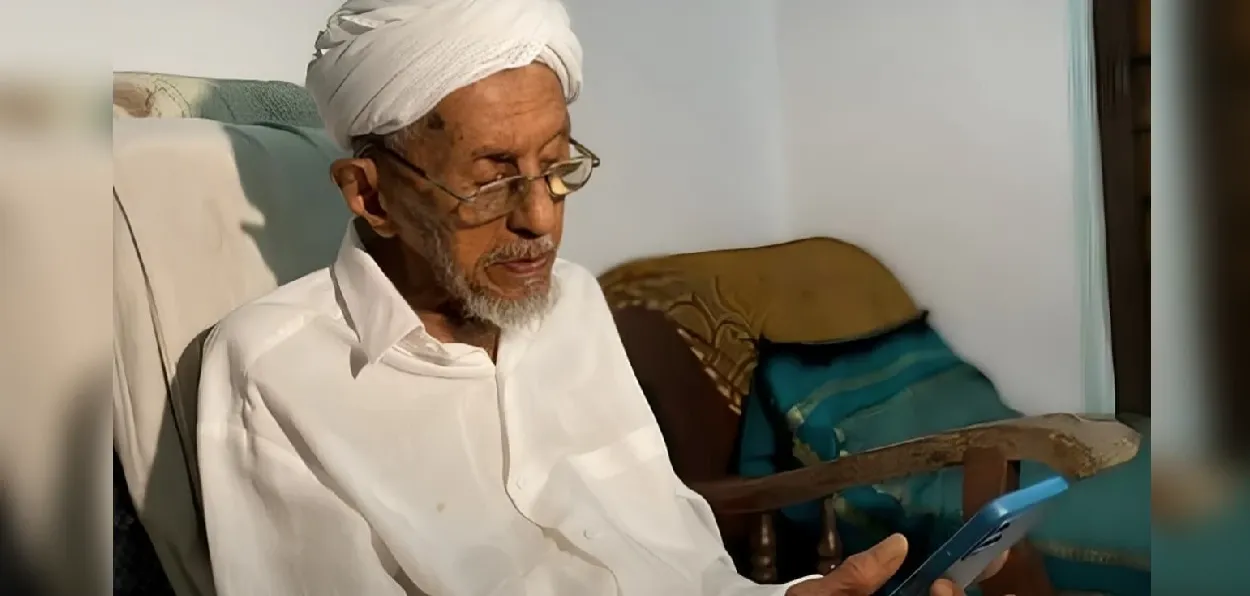
Age is just a number and never a barrier to keep up with the changing times. MA Abdullah Maulavi Kerala has proved as at the age of 105 years, he is as good at using his smartphone as a teen ager.
During the COVID-19-induced lockdown, Abdullah Maulvi did not get newspapers delivered to his home. Being an avid news buff, he picked up a smartphone as an alternative.
Today, he enjoys scrolling through social media for reels and other content, searching news on YouTube, logging on to prayer songs on his son’s smartphone, and making video calls to his grandson abroad.
Abdullah of of Oddakali in Ernakulam district’s Peerambavoor, was one of the 2.2 million people who received digital education under the Kerala government’s ‘Digi Keralam’ scheme. The campaign has changed the way of life for people in the state.
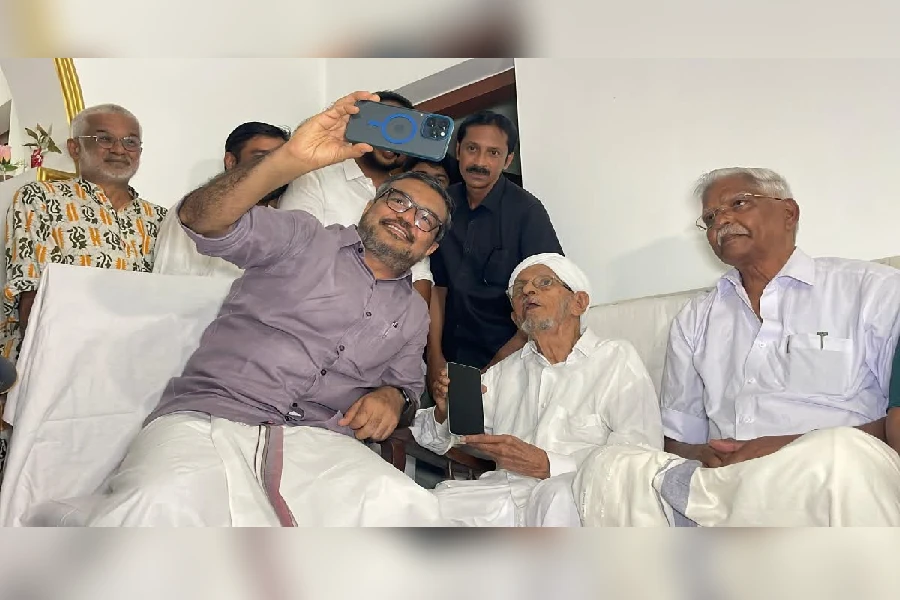
Locals taking a selfie with MA Abdullah Maulavi
“When newspapers stopped coming to my house during the lockdown, my father asked me if it was possible to read the news on the phone,” said Faizal Ali, son of Abdullah Maulvi.
That question was his first step toward digital literacy. He and his children later supported the Patriarch’s wishes. His grandson Shakir was the first to teach him the use of a smartphone.
Faizal said a ‘Digi Keralam’ volunteer from Asmanur Gram Panchayat visited their house during this period and trained his father. This enabled the 105-year-old to become digitally literate and independently use a smartphone. Using voice typing, he now looks up news on YouTube. He makes video calls every day to his grandson Shakir, who now lives abroad and was instrumental in steering him into the digital world.
At first, Abdullah Maulavi relied on his son’s and grandchildren’s smartphones. Kerala Minister MB Rajesh presented the eldest digitally literate Malayalee with a smartphone at his home.
Minister Rajesh asked the cleric what difficulty he faced in his learning. “Everything was easy,” the cleric replied with a smile. He even demonstrated how he uses YouTube and made a video call.
The cleric told the minister that he would also call him on his phone.
There are many success stories of the Digi Kerala campaign.
MA Abdullah Maulvi using his smartphone
A 79-year-old worker, who opposed digital education, has now launched his YouTube channel. Sulchana, 80, now accesses government services through her mobile phone, independently.
According to officials, Kerala would soon be declared the first digitally literate state in the country, with 99.98 percent of students acquiring basic digital skills.
On September 22, 2022, the Local Self-Government Department (LSGD) launched the ambitious campaign. Under this, digitally illiterate persons are identified and trained in the use of smartphones, access to online government services, and the use of digital tools.
LSGD minister, M B Rajesh, said that 21,87,677 digitally illiterate persons identified through a survey were trained to use digital tools effectively. Chief Minister Pinrayi Vijayan will declare Kerala a fully digitally literate state at a function at the Central Stadium in Thiruvananthapuram in August.
He said, “A Digital literacy program is being implemented on the lines of the full literacy movement. We felt the need for total digital literacy when government services, especially the LSGD department services, went online.
A Digi Keralam Vounteer teaching a woman how to use her smartphone
“When we implemented the initiative to put all our department’s services online, the digital literacy initiative was also undertaken simultaneously, to digitally empower people,” the minister explained.
LSGD Principal Director Jeromic George said, Digi Keralam has been launched to enable every citizen to access and benefit from e-governance and digital services.
This is not just a government program, but a people’s movement, connecting generations and communities. More than 15,000 of these digital learners are over the age of 90, including sources of inspiration like Abdullah Maulavi.
“During the pandemic, we used to see long queues in front of the only bank in our village,” said an official who conceptualized and led the digital literacy drive in Pullampara. They were just queuing up to see if the MGNREGA wages had been credited to their accounts. Some even spent ₹200-300 to go to the bank by auto just to check their balance.
“If they were digitally literate, they would be able to check their balances on their mobile phones, and that thought inspired the Panchayat authorities to start planning a digital literacy drive.”
The Kerala Institute of Local Administration developed training modules suitable for the entire state. “Then we started volunteer registration. Master trainers were identified, and trainers were trained through them. They, in turn, imparted training to the volunteers. The training sessions were almost online,” Minister Rajesh said.
source: http://www.awazthevoice.in / Awaz, The Voice / Home> Stories / by Aasha Khosa, ATV / August 24th, 2025
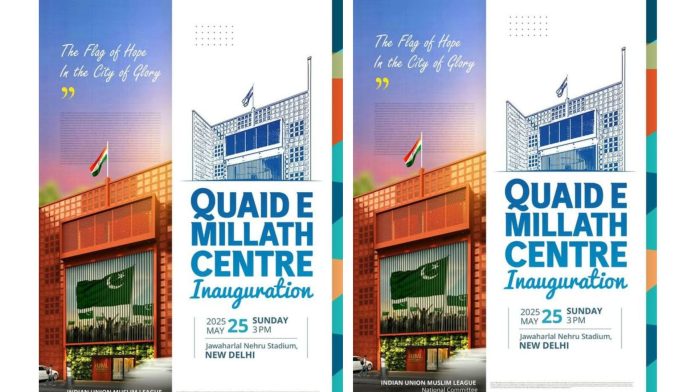
The Indian Union Muslim League (IUML) formally opened its first national headquarters in Daryaganj, marking a major step in expanding its role in Indian politics. The five-storey building, named after party founder Qaid-e-Millat Mohammed Ismail Saheb, was inaugurated by National Affairs Committee Chairman Panakkad Syed Sadik Ali Shihab Thangal in the presence of MPs, MLAs, and leaders from across the country.
The IUML, founded in 1948, has until now confined its activities largely to Kerala and Tamil Nadu. In Kerala, it has played an influential role for decades, partnering with both Congress-led and Left-led coalitions. Its participation in government helped secure significant progress for Muslims in education, business, and social development.
To introduce itself in North India, IUML will hold a public meeting at Jawaharlal Nehru Stadium with senior leaders of the INDIA bloc, including Sonia Gandhi, Priyanka Gandhi, and Akhilesh Yadav. Senior advocate and MP Kapil Sibal will deliver a keynote address on “Election Fraud: Death of Democracy.”
IUML leaders said the party plans to engage OBC, Dalit, and minority communities while tackling the challenge of operating in a more polarized political environment. They stressed that the IUML is open to all communities and already has non-Muslims in leadership roles in Kerala.
Analysts believe the Delhi headquarters signals a long-term strategy to counter the influence of AIMIM and provide an alternative Muslim-led voice within the INDIA alliance framework. The move is expected to amplify IUML’s national presence and influence in the coming years.
source: http://www.radiancenews.com / Radiance News / Home> Latest News> Report / by Radiance News Bureau / August 24th, 2025
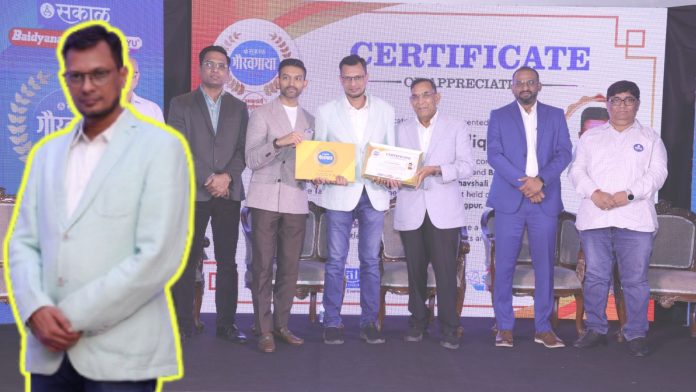
Dr Anwar Siddiqui, head of Panchakarma at Shri KR Pandav Ayurveda College and founder of Kerala Ayurveda & Panchakarma, received the Influential Ayurvedacharya Award from Sakal and Baidyanath. The award recognized his contributions to Ayurvedic medicine and social service.
The event was attended by Union minister Nitin Gadkari, Baidyanath’s managing director Suresh Sharma, and 45 leading Ayurveda doctors from across India. Dr Siddiqui, a BAMS and MD in Panchakarma from Poddar Government Ayurveda College in Mumbai, also holds a Master’s degree in Sanskrit. He has authored the book Ayurvedic Detoxification in Obesity, published in Germany.
With more than two decades of practice, Dr Siddiqui has gained recognition for treating chronic illnesses through Panchakarma therapy. During the Covid-19 pandemic, he helped set up a free hospital in Pachpaoli, strengthening his reputation for service to both healthcare and the community. Dr Siddiqui is a prominent leader associated with Jamaat-e-Islami Hind and a member of its Maharashtra State Advisory Council.
source: http://www.radiancenews.com / Radiance News / Home> Latest News> Report / by Radiance News Bureau / August 24th, 2025
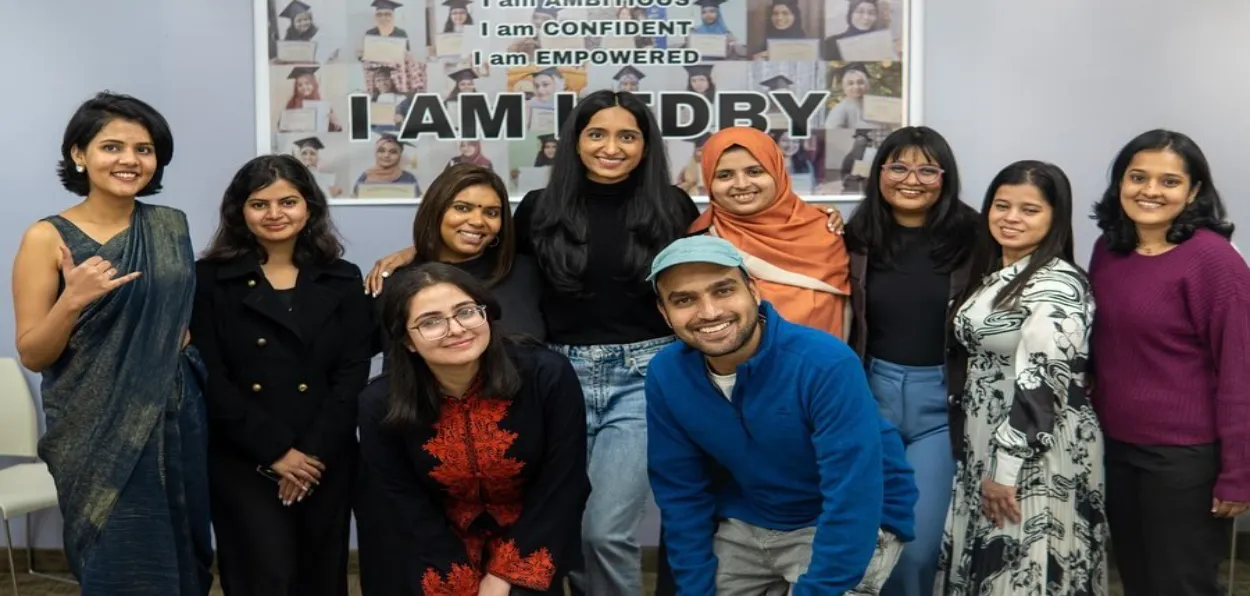
Ruha Shadab in the center (Wearing black top and jeans) with her team
Ruha Shadab acquired a degree in medicine from the Lady Harding Medical College, New Delhi, before joining Harvard University for higher studies. She along with her team at Ledby Foundation are working towards empowering Indian Muslim women to be gainfully employed and become independent. Awaz-The Voice Editor-in-Chief Atir Khan spoke to her about her work. Excerpts:
What was the intent behind starting Ledby Foundation?
There were many reasons why we started Ledby Foundation. The primary reason was that I hardly saw any Muslim women in the offices that I had worked in. Also, the overall socioeconomic indicators of our community made me feel compelled to start this. But the story most close to my heart is that of my mother, who, I think is one of the most intelligent people that I know. Many people like her are there in a community who weren’t able to realize their intellect and develop their professional dreams.
So that was something that influenced me as I started my early career and then went on to do better at Harvard. But I got time to think about what I want to do with my life, and what kind of social impact I needed to create. And I always knew that I wanted to create a social impact for the Muslim community, especially for women. As I spent more time thinking about what I could do for the community I ended up on the idea of professional empowerment of Indian Muslim women and supporting them in the workforce.
Sky was the limit for you at Harvard; you could have chosen to work in any other field. Why did you choose to do what you’re doing?
Even my medical background of becoming a doctor had to do with creating social impact. That was my goal from the beginning. The progression from doing medicine to doing global health to working on policy and helping improve Indian society has just been a natural transition to what I think can have the most impact. And as to why Muslim women, it is one of my core identities, I thought there is a strong need, and if we don’t do it, who else will? I remember when I was 14-year-old I used to tell my mother that I wanted to go to Africa to help people who were suffering from poverty and hunger.
And she said why don’t you first fix your own backyard first? There is so much that needs to be done in India, so much that needs to be done in our community. So, that made me pause and reflect and that’s what brought me here.
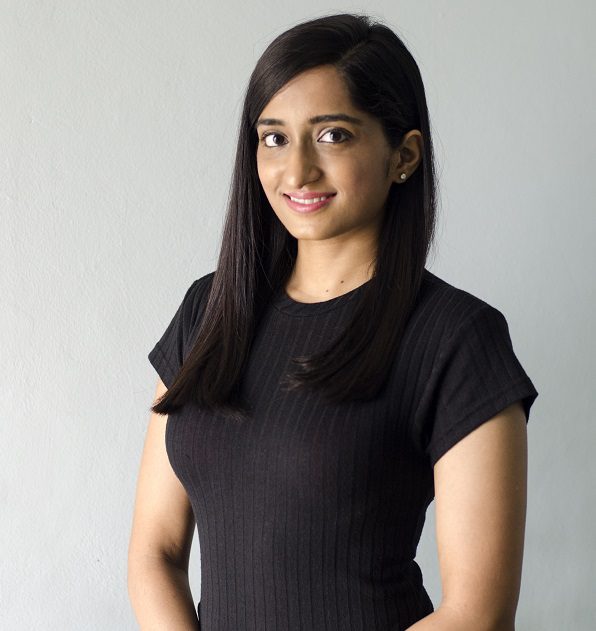
Ruha Shadab
Many people must be asking you why you only choose to work to empower Muslim women. Why not others?
Yes, there have been all combinations of questions. Why Muslim women? Why not Muslim men? Why not Hindu women, and X, Y, Z combination? Right. The truth is that I think of this almost from a doctor’s mindset. So, what is the issue that you’re trying to solve? The issue that we’re trying to solve is underemployment, the lack of job opportunities, and the lack of converting your education into employment.
As a Muslim woman, somebody might say, why don’t you work for the education and employment of women from other communities in India? Why only focus on Muslim women? And that’s true. India has one of the lowest female labor force participation rates in the world. And my answer to that is to think of it as seeing two patients in your clinic.
If both patients show up you can give them paracetamol. But as a doctor, I’m also going to run diagnostic tests on them and try to understand what is the underlying cause, what is the underlying disease that they have and then give them specific treatment.
One might have a bacterial infection; one might have a viral infection. Under different segments, different combinations of communities might be suffering from some of the macro issues we have in India with unemployment and job availability. But the reason is that they are not able to realize those opportunities or those unknown opportunities before us.
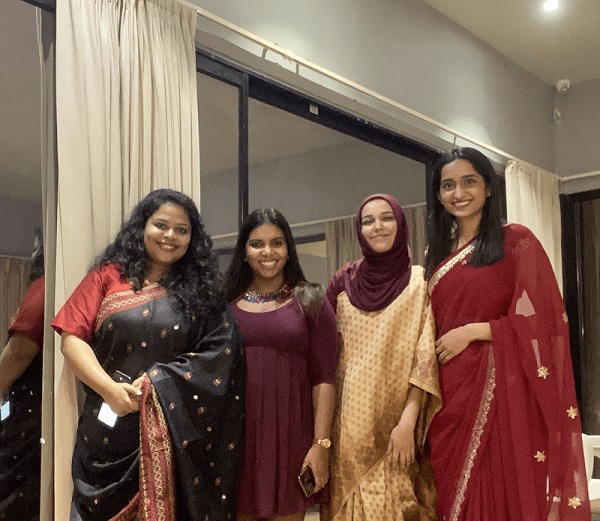
Ruha Shadab (extreme right) with her team members
So, the root causes differ. And then building on this, you don’t have targeted interventions focused on these root causes. You will not be able to meaningfully address them and solve them. You need to have at least focused approaches to solving that unique set of root causes that is hindering them from getting full participation in India’s workforce.
The constitution of your Ledby foundation is quite interesting. Your team members are Hindu and you have people from other faiths for the cause of empowering Muslim women. Isn’t it great? In today’s world where every community is looking inwards and they’re busy thinking about themselves?
It’s very validating. My chief operating officer is not from the Muslim community. 20% of our 120 advisers and residents are non-Muslims. 100 out of 500 of our volunteers are non-Muslims. And that just goes to show that the narrative that we are told about our country and our brethren in the country is not entirely true.
If you put your head, you will be surprised to see how many people are willing to stand up and support you. And I think that is what this shows. It also shows that supporting Indian Muslim women is not just important if you are an Indian Muslim woman, but it is in the interest of every Muslim woman, and every Indian to ensure that this unity can realize its dreams today.
Absolutely. Very important point. You know, it’s the intent and the good leadership, that you have, these are the things that matter the most. And when reach out to people irrespective of their faiths people come and support you. You have to have a good cause; people are always there to support you. Tell us more about your programs at Ledby Foundation.
Sure. So, our programs are completely virtual fellowships that we offer to Muslim women who are either in college or in the early stages of their careers. Think of it as if you are 18 to 20 years old and an Indian Muslim woman, then getting into one of the best professional development programs is probably in your best interest to expedite your professional career. There are several components to it. So, one component is online training programs that help you with, your interpersonal skills, your communication skills, and some of the basics of being able to find jobs, reach out to people, submit an excellent CV, and do interview preps.
Another workshop modules look at improving your negotiation skills. Our negotiation curriculum is developed in conjunction with Harvard professors who interviewed Indian women and developed case studies with Indian Muslim women as protagonists that we use to teach negotiations to our fellows. And then the third part, which is often cited as one of the long-lasting effects of the fellowships is our mentorship program. And our mentorship program is a 360-degree framework so each young Muslim woman who joins gets mentored.
The other aspect of the mentorship program is that each Muslim woman has to then have sessions with people in her class. And I would just say women are from across India. So, we have a very diverse group, even though we say Muslim women, it’s a very diverse Muslim women group and we get to speak to each other. The last part of this mentorship program is coaching at the school level over six months.
Ruha Shadab with the team of Ledby Foundation at a function
That’s amazing. Tell us how you make these students or candidates job-ready.
Our fellowship is very much about teaching people how to fish rather than giving them fish. So, we teach them how to identify the right opportunity, how to network with folks, and how to help them with an interview. And then we also have them practice interviews with us. They have access to facilitators, who help practice as you continue to progress.
So who are your stakeholders? Of course, the students, then you have the policymakers who are others you reach out to?
So, we try to bridge that supply-demand gap. We are creating a supply of highly skilled professional Indian Muslim women. And then we’re also making sure that there is a demand from companies to intentionally recruit and create a diverse workforce within their organizations. We bridge the gap between our fellows and companies that want to promote religious inclusion in India.
What is the kind of feedback you get from, say, policymakers and the corporate world when you approach them with this kind of information?
So, we usually try to approach them from a very fact-based point of view. We also carry out research to identify what are the barriers to entry and retention of Muslim women in India’s workforce. The research we conduct help a lot of companies see through a fresh perspective. So even if you educate Muslim women, that does not necessarily mean they have the same chances at employment. The company officials tell us that they never thought about this, they were never made to confront this reality. So, we meet them just to reflect.
Ruha Shadab with a support group of her Foundation
So what kind of support and responses you’re getting from people that you’re reaching out to?
Well, overall, it’s been positive. People are interested in understanding what we do, supporting us in even exploring the talent pool that we are creating. And we have several stories of women who’ve gotten recruited through our own pipeline to companies.
That’s wonderful. And there must be some very bright candidates you come across. We see there is an awareness among Muslim families even in small towns for pursuing higher education.
That’s true. There is a very strong drive and fire within the women that we meet. And we try to move more away from urban centers.
Right now, we are more focused on urban centers and ensure that we are able to move farther away from that in the future. And yes, we do see that. See, I think in addition to being pleasantly surprised at how many people from outside of the Muslim community are willing to help us, with very positive insights.
I’m sure that you inspired a lot of Muslim girls, you’re a big success story from India, an Indian who’s doing so well. Do you also think that we need to convey more such success stories to these aspiring girls to inspire them?
Absolutely. And I think what helped was having people believe in me, and we’re trying to make more Muslim women feel that they are heard and that somebody believes in their talent.
You’re doing deep thinking and you’re working in this field, what would be your appeal to the government and the corporate sector for improving the employability chances of Indian Muslim women?
My appeal would be to have intentionality behind getting more Muslim women into the workforce. The truth is that we shy away from talking about religious inclusion in India, which is strange. Because so much of our lived reality is a function of our religious identity. There is no distinction between the personal, the political, and the professional and it is incorrect to create these artificial distinctions.
source: http://www.awazthevoice.in / Awaz, The Voice / Home> Stories / by Atir Khan / February 29th, 2024
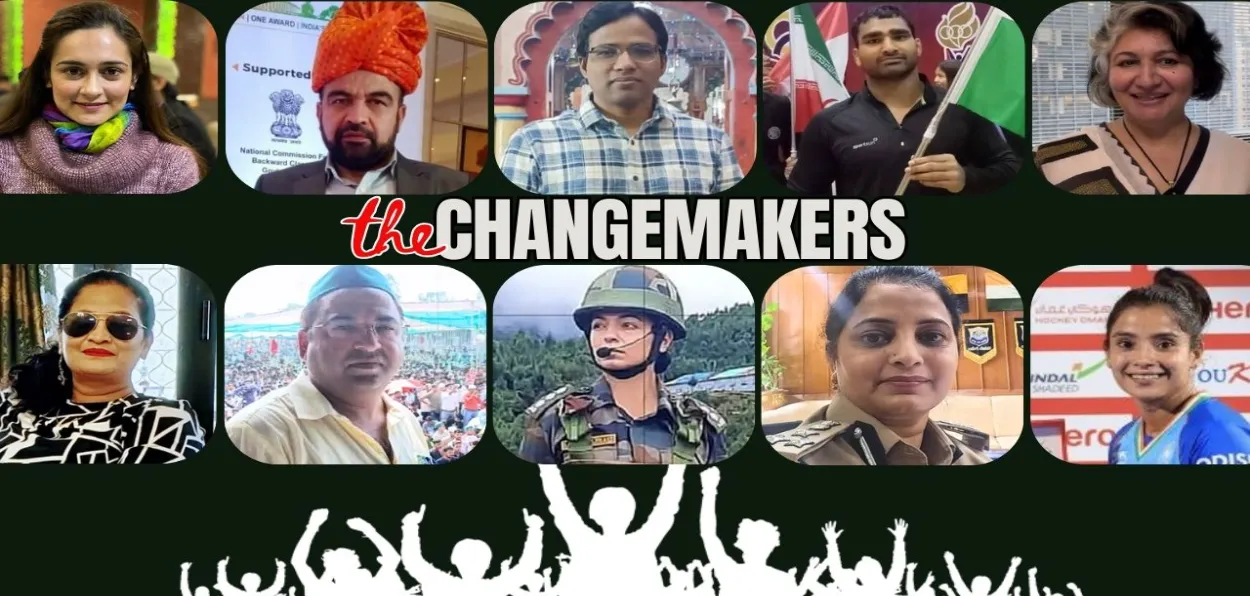
While media spotlight often shines on celebrities and politicians, the real engine of India’s progress runs on the resolve of countless unsung heroes who, away from limelight, quietly transform society.
From national defense to grassroots education, sports, science, and civil service, these individuals from Uttar Pradesh show how courage, compassion, and conviction can drive extraordinary change. Here are 10 such trailblazers whose stories deserve to be heard:
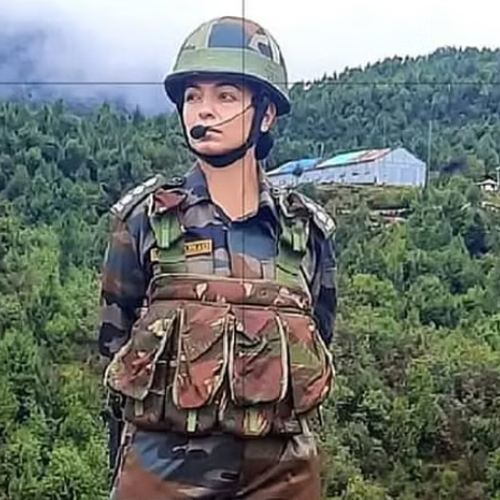
Captain Sariya Abbasi: A Woman in Uniform on the Frontlines
Hailing from a small city of Gorakhpur, Uttar Pradesh, Captain Sayria Abbasi broke every convention to join the Indian Army. A graduate in Genetic Engineering and with plenty of job offers and career opportunities from big companies was not enough for her to pursue in life. The call of service for the motherland was too strong to be sacrificed.
The world noticed her as a soldier deployed at the Line of Actual Control (LAC), India-China temporary border, manning an Air Gun. Today, Sariya leads drone-killer teams and operates L-70 anti-aircraft guns on the border. Her journey from an academic achiever to a defender of the nation’s borders is not just about military precision; it’s about shattering glass ceilings and reshaping how India imagines women in uniform.
Dr. Faiyaz Ahmad Fyzie: Voice for the Voiceless Pasmanda Community
Dr. Faiyaz Ahmad Fyzie, an AYUSH physician, is more than a healer—he is a public intellectual, columnist, translator, and relentless advocate for the Pasmanda (socially backward) Muslim community. Raised in modest conditions, his rise to national recognition is built on fearless writing and tireless grassroots work.
When even the Prime Minister refers to Pasmanda voices, Fyzie’s years of advocacy resonate. His pen continues to empower those whose struggles were long silenced. His work is a call to conscience—and a roadmap for inclusive discourse.
Mohammad Luqman Ali: Wrestling His Way to Glory and Degree
Wrestler Mohammad Luqman Ali, a student of Social Work at Jamia Millia Islamia, is balancing body and brain. Born in Amroha’s tiny village of Mohraka Patti, his father worked on the railways, and his mother gave him religious grounding. Despite limited resources, Luqman’s grit has earned him recognition in India’s wrestling circles.
From the mat to the classroom, his dual commitment shows that excellence doesn’t require compromise. It requires discipline, heart—and a family’s belief in you.
Rubina Rashid Ali: Reviving Mughal-Era Art with a Modern Mission
In a sun-drenched corner of Aligarh, Rubina Rashid Ali has quietly built a movement. Her work in floral appliqué embroidery, a legacy of Mughal art, now supports dozens of women in Aligarh and Rampur. What was once an undervalued craft monopolized by middlemen has been transformed by Rubina into a vehicle for women’s economic empowerment.
Her home resonates not only with the sound of needles and threads but also with the hum of independence. “Real artists were reduced to laborers,” she says. Today, she ensures their hands are not just working — but also earning.
Babban Mian: A Gaushala Keeper Inspired by His Mother’s Love
At Madhu Sudan Gaushalla in Bulandshahr, Babban Mian tends to cows not out of ritual, but reverence — inspired by his late mother Hamidunnisa Begum. “She loved cows like her own children,” he recalls. After she passed away in 2015, Babban vowed to preserve her legacy.
Despite being a Muslim in a Hindu-dominated tradition, he runs a government-recognized shelter rooted in compassion, not controversy. For him, animal welfare is a universal value — not a communal issue. His work quietly redefines what shared culture and interfaith harmony look like.
Khushboo Mirza: From Amroha to the Moon with ISRO
Khushboo Mirza, scientist at ISRO and part of the Chandrayaan-1 and Chandrayaan-2 missions, is a stellar example of perseverance. After her father’s death when she was just seven, her mother raised three children alone, running a petrol pump and defying social norms.
Khushboo earned a Gold Medal in Electronics Engineering from AMU and was the youngest member of the Chandrayaan-1 checkout team. A practicing Muslim and a symbol of India’s scientific aspirations, she turned down corporate offers to reach for the stars—and took a whole generation of girls with her.
Zaheer Farooqui: A People’s Leader with a Vision for Purkazi
In western UP’s Purkazi, Zaheer Farooqui is rewriting what local leadership means. As Nagar Panchayat Chairperson, he donated land worth ₹1.5 crore for the area’s first Intermediate College and modernized local schools into PM Shri-certified institutions.
His initiatives go beyond classrooms. From India’s first double-storey government-run cow shelter to a gym for Muslim women, and one of the most sophisticated rural CCTV networks in the region — Farooqui’s governance is a blend of tradition and tech, equity and empowerment. His Tiranga Yatra revives local history, reminding citizens that patriotism is inclusive and action-oriented.
Dr. Farah Usmani: From AMU to Global Health Leadership
On a cold morning in New York, Dr. Farah Usmani stood outside an apartment, a folder in hand, her eyes bright with resolve. The daughter of Uttar Pradesh, she is today a formidable presence in global health policy.
n M.D. in Obstetrics & Gynecology from AMU, Farah sought impact beyond hospital walls. Armed with a Master’s in Health Policy from LSE and the London School of Hygiene & Tropical Medicine, she’s led transformative health initiatives around the world. Her journey is one of intellect guided by idealism — a doctor who chose not just to heal individuals but to reform systems.
Anjum Ara: Bridging Communities Through Compassionate Policing
Hailing from Azamgarh’s Kamharia village, Anjum Ara, a 2012-batch IPS officer, has redefined the image of policing with a human touch. A computer engineer by training, her journey from Integral University to Senior Superintendent of Police in Shimla has been marked by integrity and reform. Known for her work in cybercrime and her community-focused policing model, Anjum is also a fierce advocate for girls’ education.
Together with her husband, IAS officer Yunus Khan, Anjum adopted the cause of Khushdeep, the daughter of a martyred soldier, pledging to support her upbringing. This act of empathy mirrors her professional ethos, proactive, principled, and deeply people-centered.
Mumtaz Khan: From Vegetable Stall to World Hockey Stage
From the bustling alleys of Lucknow’s Cantt area to the turf fields of South Africa, Mumtaz Khan’s journey is pure grit. Once helping her father at a vegetable stall, a single race at school changed her life when Coach Neelam Siddiqui noticed her speed. That moment set her on a course to become a leading forward in India’s Junior Women’s Hockey Team.
Her standout performance at the 2018 Youth Olympics, where she scored 10 goals, earned her national acclaim. Yet, Mumtaz remains rooted, balancing hope and humility as she eyes the Olympics. She is proof that dreams born in dusty streets can blaze across international arenas.
These ten changemakers hail from Uttar Pradesh, from narrow village lanes to bustling metros, from battlefields to laboratories. But they are united by one thing: quiet, relentless courage. In their lives, we find the India that persists, uplifts, and transforms—not with headlines, but with hard work.