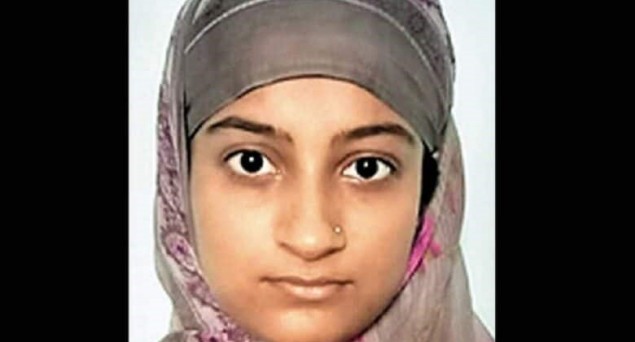
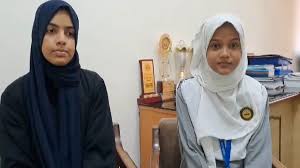
Vision-2026, a project of NGO Human Welfare Foundation (HWF) has announced to bear all the future educational expenses of Muslim girl, who was a victim of Delhi riots but scored excellent marks in her Std XII examinations.
A labourer’s daughter, Nargis Nasim(17), who studied in Std XII in a government school in Northeast Delhi scored 62 per cent marks in two subjects of the Central Board of Secondary Education (CBSE) examination bringing smiles on the faces of her family members and relatives.
HWF’s chief executive officer(CEO) Mohammed Naufal said that the house of the girl that was completely gutted during the riots was reapired by the Jamaat-e-Islami Hind(JIH( at a cost of about Rs. 1.84 lakhs. “Our MNGO will now financie the educational cost of the girl”, said Naufal.
Regarding the score, Nargis is surprised saying that she had thought of merely passing the exam and the first class score had left her wonderstruck. “Initially, I thought that clearing the exams alone would be difficult and during my second thought, I felt that I would only get through the exam,” she said.
Her house located in Khajuri Khas was burnt down the next day of February 24 when riots broke out in the locality. She had stepped out of her house along with her relative to appear for the physical education examination and returned home safely. However, the next day the rioters burnt her house and the entire family was forced to take shelter in a rented room in Chandu Nagar where other riot victims were also provided temporary relief shelters as protection from the mayhem and destruction. All her books were lost in the fire set to her house by the rioters. Her family members through donations managed to provide her news book for study.
Nargis could manage to appear only for two subjects-political science and physical education-as the outbreak of COVID 19 led to suspension of the exams till further notice.
Narrating about her harrowing experience, she said “I was with my relative at the time of appearing for physical education at Gokulpuri government school when I saw violence taking place in the area. We reached home at 4 pm but after a lot of struggle wading through the lanes as public transport had shut down,” she said.
On her impressive score, Nargis explained that an NGO helped her with books and guided her in studies which helped her appear in the exams with confidence. “During normal times, I would have done better than my current performance. The CBSE board has now declared that the students can reappear for the cancelled subjects. It is too late and one does not know how long it would take for the conduct of the exams by the board. Right now, I am preparing myself for the college admission,” she said.
Her uncle Salim, who stood rock-solid behind the family during the crisis, said, “ Her achievement is commendable as despite the odd and difficult situation, Nargis scored 60 percent. Her achievement is very important for the family as we have been running helter-skelter seeking shelter and survival during such dangerous and trying time”, he said.
source: http://www.indiatomorrow.net / India Tomorrow / Home> Cover Story> Society / by India Tomorrow Special Correspondent / July 21st, 2020
A majority, 13 of the 18 came from political families, and no southern state, including Kerala, Tamil Nadu, Karnataka, Andhra Pradesh, or Telangana, has ever elected a Muslim woman to the Lok Sabha.
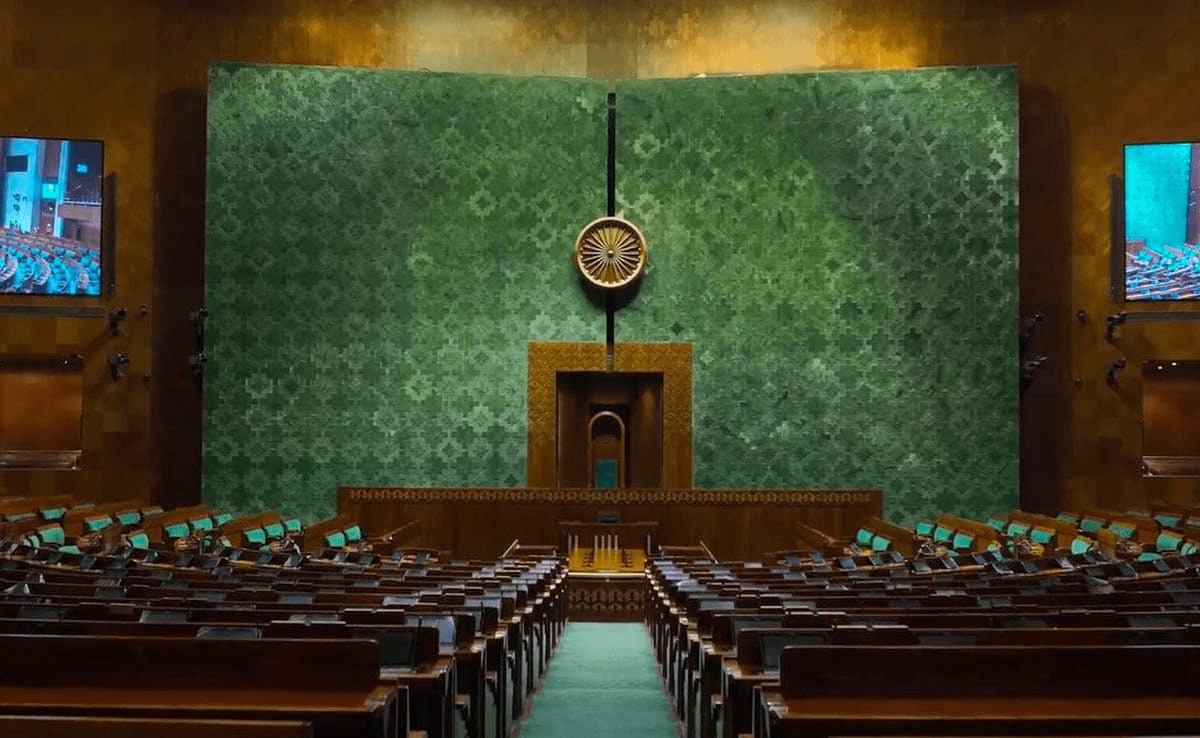
Amid demands for reservation for Muslim and OBC women triggering sharp exchanges in the House, the stark underrepresentation of Muslim women is evident, with only 18 elected to the Lok Sabha since 1947 despite Muslims comprising about 7.1% of the population, and five Lok Sabhas having no Muslim woman MP at all.
A majority, 13 of the 18 came from political families, and no southern state, including Kerala, Tamil Nadu, Karnataka, Andhra Pradesh, or Telangana, has ever elected a Muslim woman to the Lok Sabha.
The issue is documented in the book “Missing from the House, Muslim Women in the Lok Sabha” by Rasheed Kidwai and Ambar Kumar Ghosh, which profiles these 18 leaders.
“It is a shockingly abysmal figure,” Kidwai notes, pointing out that in five of the 18 Lok Sabhas constituted till 2025, there was not a single Muslim woman member.
In the current Lok Sabha, there is only one Muslim woman MP, Iqra Hasan Choudhury of the Samajwadi Party.
The list of Muslim women MPs includes Mofida Ahmed of the Congress (1957), Zohraben Akbarbhai Chavda of the Congress (1962–67), Maimoona Sultan of the Congress (1957–67), Begum Akbar Jehan Abdullah of the National Conference (1977–79; 1984–89), Rashida Haque of the Congress (1977–79), Mohsina Kidwai of the Congress (1977–89), Abida Ahmed of the Congress (1981–89), Noor Bano of the Congress (1996; 1999–2004), Rubaab Sayda of the Samajwadi Party (2004–09), Mehbooba Mufti of the People’s Democratic Party (2004–09; 2014–19), Tabassum Hasan of the Samajwadi Party, Lok Dal and Bahujan Samaj Party (2009–14), Mausam Noor of the Trinamool Congress (2009–19), Kaisar Jahan of the Bahujan Samaj Party (2009–14), Mamtaz Sanghamita of the Trinamool Congress (2014–19), Sajda Ahmed of the Trinamool Congress (2014–24), Ranee Narah of the Congress (1998–2004; 2009–14), Nusrat Jahan Ruhi of the Trinamool Congress (2019–24), and Iqra Hasan Choudhury of the Samajwadi Party (2024–present).
On Thursday, a confrontation began in Lok Sabha when SP MP Dharmendra Yadav demanded that Muslim and OBC women be included within the reservation framework, saying the party would oppose the Bill otherwise and arguing that delinking delimitation from the Census was unconstitutional.
His remarks drew strong objections from the Treasury Benches, with Union Home Minister Amit Shah and Parliamentary Affairs Minister Kiren Rijiju asserting that reservation on religious grounds is unconstitutional. Rijiju said quota cannot be granted on the basis of religion and urged members to “talk about women of the whole country.”
SP president Akhilesh Yadav countered by asking whether Muslim women were not part of the “aadhi aabadi” and questioned whether the government was avoiding a caste census.
source: http://www.maktoobmedia.com / Maktoob Media / Home> India / by Maktoob / April 16th, 2026
At its core, Muslim History Month is about building an archive, one that reflects the richness and diversity of Muslim experiences across time, space and geography. For me, as an Indian Muslim woman, this work is inseparable from the present moment.
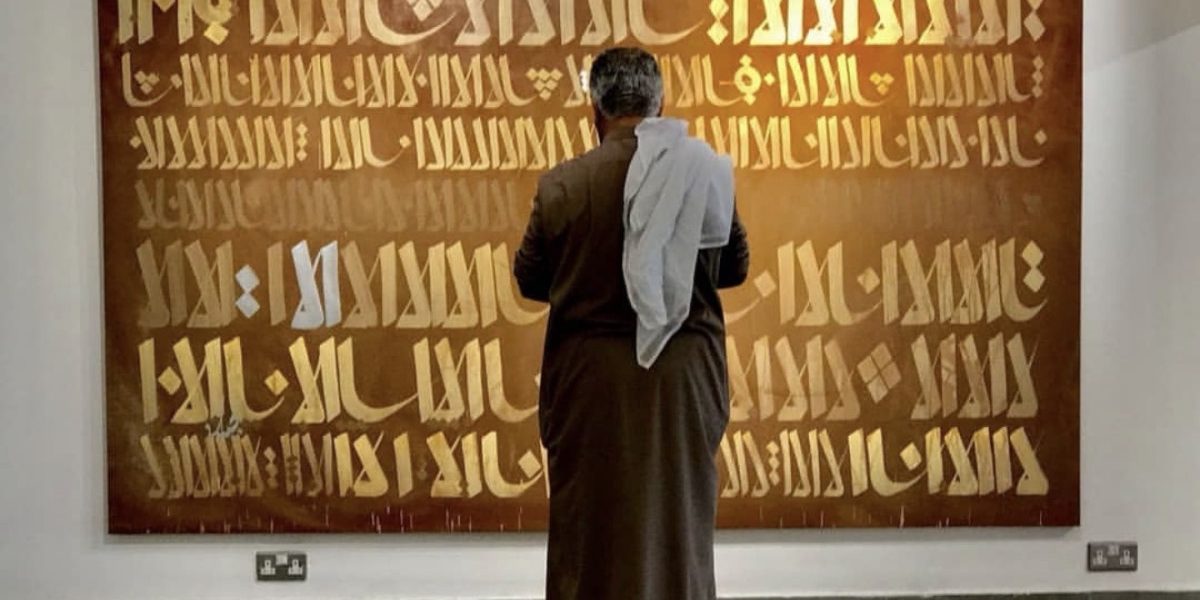
A calligraphic panel installation. Photo courtesy: Karim Jabbar
As an Indian Muslim woman, I had long felt the dissonance of being spoken about rather than being listened to as an equal. In my experience, even in spaces that claimed to centre Muslim issues, Muslim voices, especially those of women, are often sidelined. The authority to narrate our own histories has routinely been denied. This experience is not mine alone.
When I began conversations with my friend and colleague Dr Ashwini K.P., a Dalit woman human rights advocate, and now UN Special Rapporteur on Racism, we quickly recognised the parallels in our experiences. Caste and religion operate differently, but both structure exclusion in similar ways, by determining whose knowledge counts, whose histories are archived, and whose voices are amplified.
Muslim History Month, launched in 2020 by our co-founded organisation, Zariya, emerged from this shared understanding and we celebrate it during the month of Ramadan/Ramzan. It is a community-led initiative that creates space to document, explore, and celebrate the diverse histories, cultures, and contributions of Muslim communities across the world. Through essays, articles and storytelling, it seeks to reclaim narrative authority by centring Muslim voices and highlighting perspectives that are frequently overlooked or misrepresented in mainstream discourse. In recent years, Islamophobia in India has shifted from the margins to the mainstream. It is visible not only in policy debates or organised hate, but also in everyday language, media representation, and cultural production. The repetition of distorted narratives, whether through films like Kerala Story 2 or everyday hate crimes, begin to replace reality. Against this backdrop, the absence of self-represented Muslim narratives becomes more than a gap, it becomes a form of erasure.
Muslim History Month was an attempt to counter this, by shifting the focus from what is said about Muslims to what Muslims say about their own histories, cultures, and lives, globally. The idea of dedicating a month to Muslim histories was inspired by earlier initiatives like Black History Month and Dalit History Month, movements that have long demonstrated the importance of reclaiming histories from erasure and distortion. These efforts remind us that history is not neutral. It is shaped by power, by who gets to record, interpret, and disseminate it. Muslim History Month builds on this legacy by creating a platform where Muslims, alongside allies, reflect on the diversity and complexity of Muslim histories and cultural practices.
One of the most meaningful aspects of this journey has been witnessing how contributors engage with the platform, not just as writers, but as individuals seeking space to reflect. One of our contributors this year, Mai Zarkawi, a Palestinian jewellery designer and visual storyteller, tells me she was inspired to contribute to Muslim History Month because “it creates space to reflect on the depth and diversity of Muslim cultural practices, beyond dominant or simplified narratives.”
The urgency of this work is evident in the dedication of its contributors. Writing from Beirut, Islamic art historian Rima Barakat chose to participate despite being the middle of the ongoing conflict. She reflects that war compels cultural action, noting that, like artists in past world wars, creative expression becomes a way to endure, sustain community, and measure survival through artistic resilience.
Across its three editions, the initiative has evolved in both scope and depth. The first edition brought together reflections on everyday practices and overlooked communities, challenging narrow understandings of what constitutes “history.” Contributions from authors who identified as Pasmanda, Roma, Uyghur and Tsakhur all featured in this edition. The second focused on Muslim women whose contributions have been marginalised or forgotten, seeking to address the gendered erasures that shape historical memory, from Haleema Beevi to Fatima Al-Fihri.
The third edition, which is currently underway, turns to Muslim art and architecture, but in a way that deliberately expands these categories beyond monumental structures or common artistic traditions. Performative arts, art as a means to resistance, light calligraphy, geometry and varied Quranic scripts all form part of this series. Academics, experts and activists in this edition have written about subjects varying from Roghan Art and Islamic Geometry to the importance of Amulets and devotional performative traditions.
The three editions have had contributions from authors from over 15 countries. From Sudan, Egypt and Palestine to India, Nepal, Tunisia and Canada. This global participation is central to the project. Muslims are often treated as a monolithic group in public discourse. Muslim History Month actively resists this by foregrounding differences in language, culture, geography, and lived experience. In the age of AI and tools such as Chat GPT, referencing and footnoting form an important part of these pieces.
This initiative tries to disrupt the idea that history belongs only to grand events or celebrated figures alone. It insists that culture, whether in the form of calligraphy, craft, food, identity, ritual, or storytelling, is central to understanding how communities endure and evolve. For me, this work is inseparable from the present moment. It is shaped by the realities of Islamophobia globally, by the distortions of media and popular culture, and by the urgent need to create alternative spaces of knowledge and expression. But it is also shaped by hope, the belief that by telling our own stories, we can begin to shift how we are seen, understood, and remembered.
As Karim Jabbari, a world renowned Tunisian light and calligraphy artist tells us in his interview, for him, “Calligraphy is the anchor of our history. It is the way our ancestors transmitted knowledge into written form, and it is the link that keeps us grounded. If we understand it, stay faithful to it, and keep our connection with it alive, we are essentially maintaining a living connection with our own history.’
At its core, Muslim History Month is about building an archive, one that reflects the richness and diversity of Muslim experiences across time, space and geography. For me, as an Indian Muslim woman, this work is inseparable from the present moment. It is shaped by the urgency of ensuring that future generations inherit something more than stereotypes about Muslims. We are more than the vengeful, violent, anti national beasts that we are shown to be by the media.
Because beyond the noise of headlines and the weight of propaganda, there exists another set of stories that need to be documented and preserved and this is a humble attempt towards this direction.
Mariya Salim is co-founder of Zariya. She is a human rights activist and an international sexual- and gender-based violence expert based in Delhi.
source: http://www.thewire.in / The Wire / Home> LiveWire / by Mariya Salim / March 19th, 2026
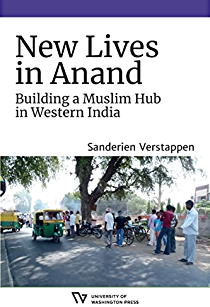
Sanderien Verstappen’s ‘New Lives in Anand’ shows us how new lives and connections are made by communities who have deep ties to a region and a way of life that cannot be reduced to the word ‘Muslim.’
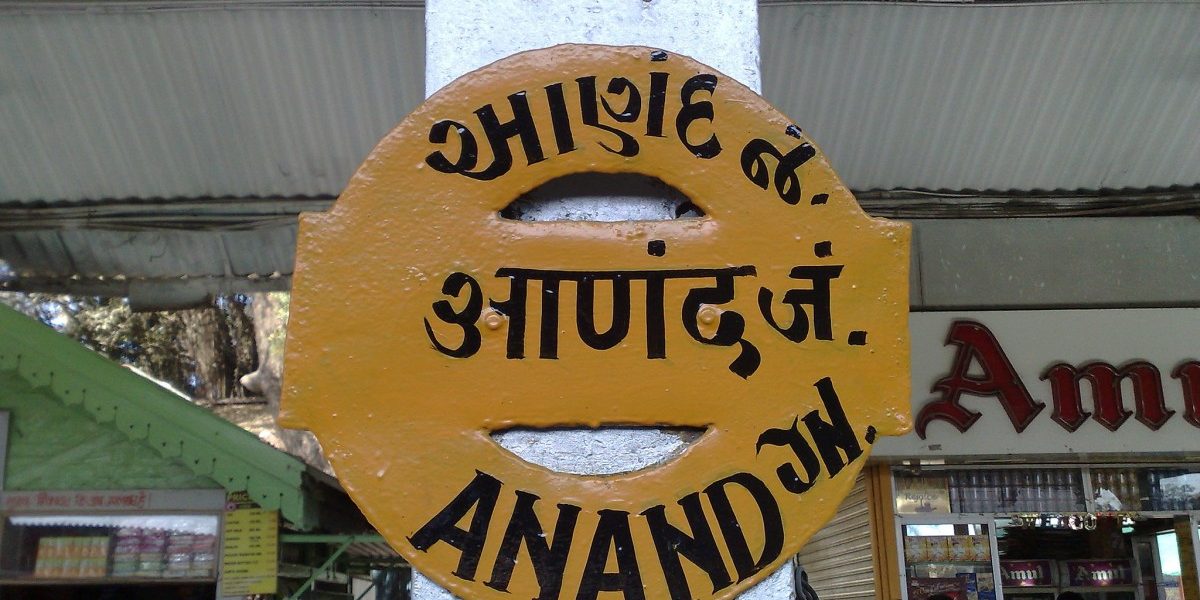
Photo: Superfast1111/CC BY-SA 3.0
In 2005, I was back in Ahmedabad collecting stories of Hindus, Muslims and Dalits living beside each other in the eastern part of the city in a neighbourhood called Vatva. I had worked as a volunteer in the Qutb-e-Alam dargah relief camp in Vatva in the aftermath of the 2002 pogrom. Vatva lacked basic infrastructure – the sewers were overflowing with garbage, the roads were broken, and the air was pungent with chemicals from local industries. The area had a sizeable population of Muslims who often lived beside Hindus and Dalits.
As part of my research, I met a lower-level bureaucrat at the Ahmedabad Municipal Corporation (AMC) to learn more about the history of the neighbourhood. Opening large survey maps of the area, he was puzzled by my interest in Vatva. “It was a bad area,” he said, an expression and attitude that accompanied discussions of Muslim-majority neighbourhoods in Ahmedabad far beyond the corporation offices.
Sandrien Verstappen’s wonderful new book New Lives in Anand tells us that the story of Gujarati Muslims does not end with violence and displacement. Verstappen focuses on the attempts of one Muslim community, the Charotar Sunni Vohras in Anand, to make a new life in the aftermath of state-sanctioned public violence in 2002. Violence that forced many Muslims to flee Hindu-majority villages and seek safety in Anand.
Sanderien Verstappen New Lives in Anand , University of Washington Press, 2022
By focusing on the attempts of the Vohra community to make a meaningful life, secure marriages, do business, and “bring the community together,” we get a glimpse of a world where Muslims are not permanent outsiders in Gujarat but essential to the creation of a region through their embeddedness in Charotar’s fertile agricultural economy. By telling the story of Gujarati Muslims through the prism of a specific region, Verstappen can describe their similarity with local Hindus, like the Patidar community. The lens of region, not religion, allow us to see the flimsiness of the idea of a homogenous Muslim community that is being served all day in contemporary India.
A board member of the Charotar Sunni Vohra community jokingly refers to Anand as a “Mecca of Vohras” and yet the joke is serious because it is a reminder to readers that despite the best efforts of Hindu supremacists in India to portray Muslims as foreigners in Gujarat (and India), Indian Muslims are building spaces that are safe for them; spaces that cannot be reduced to suffering and marginalisation but open new opportunities for middle-class Muslims.
But why Anand? The book begins with the exodus of Muslims from Hindu-majority rural areas to urban centres like Anand after the 2002 pogrom. We learn that the pogrom has left no one untouched. It has instilled a fear even in places where there was no violence. Because, as Verstappen writes, “the fact that that there has not been any large-scale violence in Gujarat since 2002 is not considered an indication that peace has been restored and the violence is over.” However, the Vohra community’s successful attempt at building a hub in Anand through ‘regional belonging’ (the fact that they are from the Charotar region) must be seen in the light of the fact that they are a wealthy and powerful community amongst Muslims in Gujarat.
The book describes how, despite the setback of the Partition, the Vohra community organised itself through history writing, associations (such as Charotar Sunni Vahora Young Men’s Association in Bombay in 1936), and community halls and overseas organisations in the UK, US and Canada. Significantly, the Vohra community narrates it past as emerging from local Hindus who converted to Islam and therefore showing their links with local Hindu groups like the Patidar community in Gujarat.
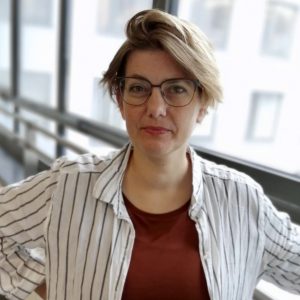
Sandrien Verstappen.
Verstappen’s account of how the Vohras tell their history, manage their lives, and make claims of belonging in Gujarat is a powerful reminder of the importance of local ancestry, village-based marriage circles, and agricultural practices in the making of a community. What joins the Muslim Vohra community with their Hindu neighbours is as important as what separates them. And yet despite the valiant efforts of the Vohra community to build Anand as ‘hub’ for prosperity, the ongoing movement of Muslims from Hindu-majority villages and Hindus from Muslim-majority areas is a deeply troubling phenomenon that is not limited to Anand and should worry us all.
Anti-Muslim violence has created a vicious cycle which justifies segregation and the making of Hindu/Muslim majority neighbourhoods in the name of ‘peace.’ But this is not peace but apartheid. And it has significant effects on the well-being of those who live in Muslim-majority spaces. For instance, a resident of Gamdi in Anand says that “the municipality is only maintaining the roads in places where Hindus live.”
So regardless of communities perceive themselves, religiously segregated neighbourhoods can lead to the situation where certain areas are deliberately neglected by the government simply because they are inhabited by minorities. Segregated areas help politicians to clearly mark spaces that did not vote for them and then punish them. Even though Verstappen is keen to show that Vohras are part of a wider form of urbanisation in India and are not moving to Anand only because of safety but also to rise up the social ladder, I feel that state-sanctioned segregation cannot be understood through only a regional lens. Here the regional lens can be a limitation rather than an aid to understanding minoritisation.
The process of segregating and isolating Muslims in India within specific neighbourhoods is now a national issue and is connected to the second-class status accorded to Muslims beyond Gujarat. Having seen this process unfold in Gujarat over the last two decades, I cannot fail but notice that residential segregation is part of a larger fabric that creates the infrastructure for segregated laws, segregated schools, and segregated life. In some situations, like the current rise of Hindu supremacy in India, it is liable to become the bedrock for the unequal and unfair treatment of minorities.
Verstappen also tracks the transnational links of the Vohras, who like other Gujaratis overseas, send remittances home, invest in real estate, and support charitable organisations. In this way, the community uses the opportunities opened up by the overseas citizenship scheme and contributes to the development of Anand as a ‘hub’. Here, again, I am reminded of the recent violence in Leicester that shows that the domestic politics based on the false and pernicious idea that Hindus and Muslims belong to separate worlds and are forever at war may be spreading to the diaspora, which can have significant effects on the Vohra community in general.
In sum, Verstappen’s book is important because it tried to tell new stories about Indian Muslims, a story that does not begin with violence and end in suffering but shows us how a particular community, in a particular region is transforming displacement and segregation in the aftermath of anti-minority violence into the making of a ‘hub’ – a space for mobility, a space for aspirational middle-class Muslims to access Hindu spaces, a space to forge an identity that is not a prison. A story of the making of an aspirational Muslim middle-class that cannot be reduced to victimhood. In other words, the book shows us how new lives and connections are made by communities who have deep ties to a region and a way of life that cannot be reduced to the word ‘Muslim.’
Moyukh Chatterjee is a Visiting Scholar at the University of Edinburgh and is the author of the forthcoming book, Composing Violence: The Limits of Exposure and the Making of Minorities, Duke University Press (2023).
source: http://www.thewire.in / The Wire / Home> English> Books / by Moyukh Chatterjee / January 27th, 2023
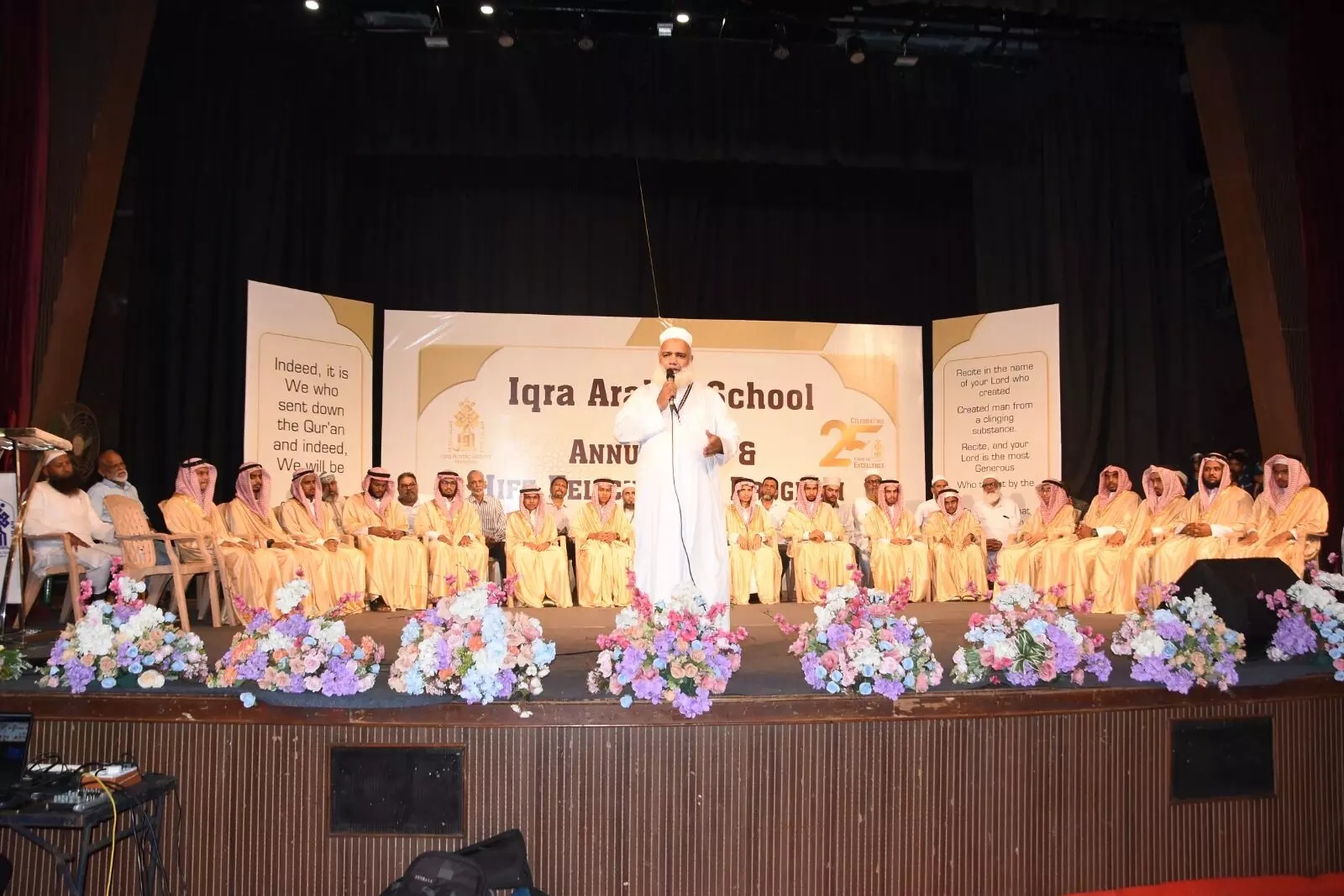
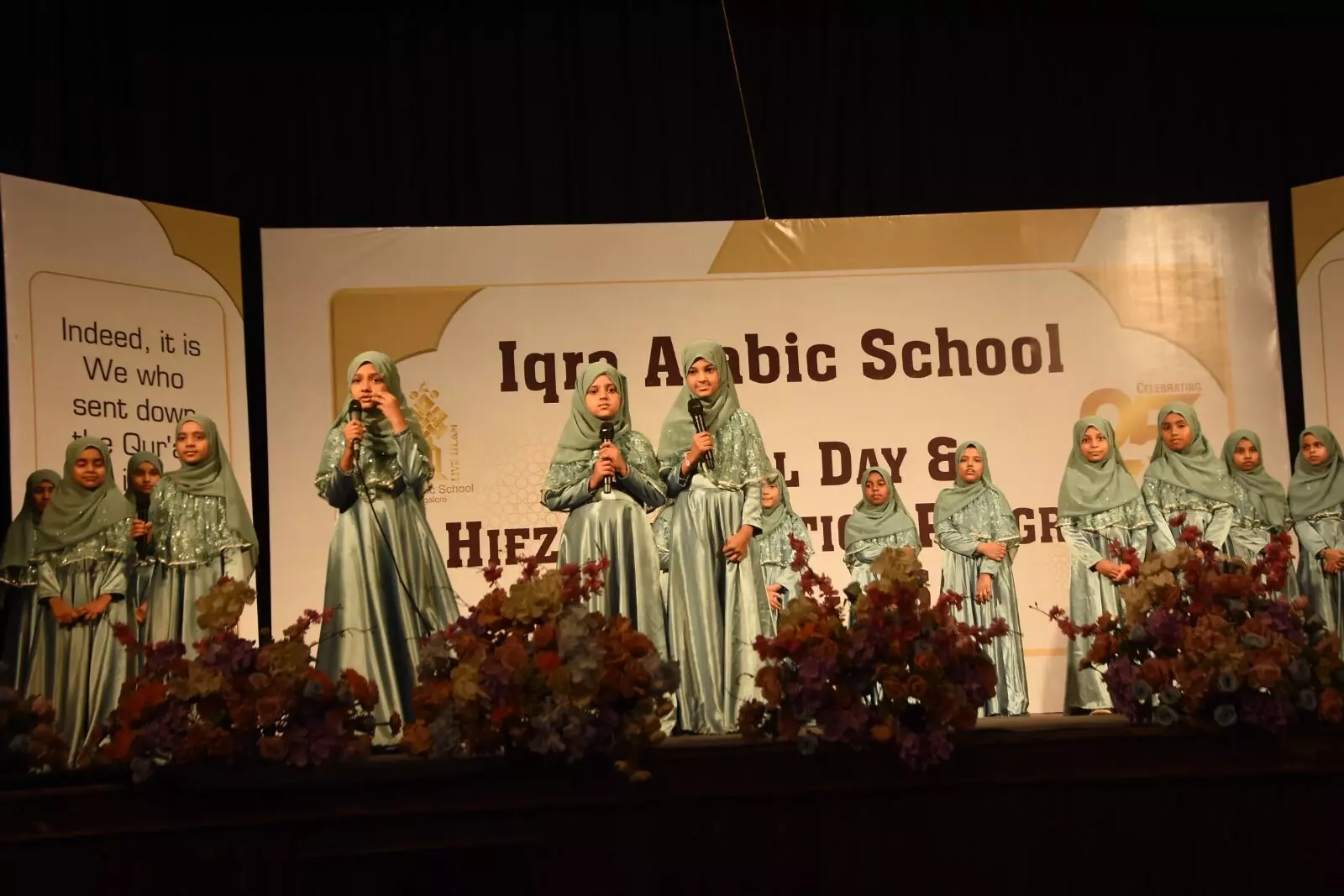
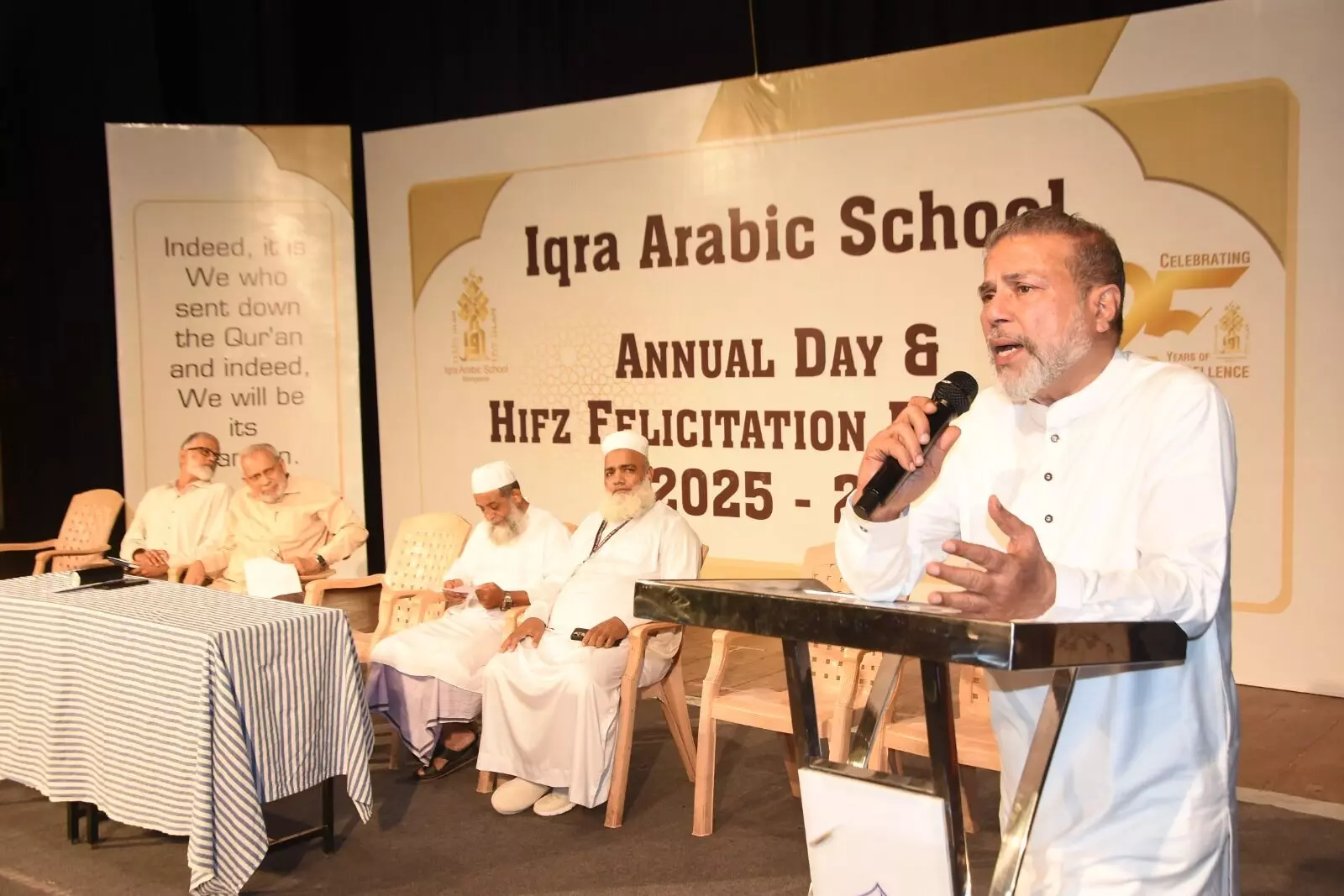
“The aim of Iqra is to create leaders for the community,” said Syed Mohamed Beary while presiding over the Annual Day 2026 and Hifz felicitation programme of Iqra Arabic School, highlighting the institution’s focus on leadership and long-term community development.
Presiding over the event, Syed Mohamed Beary, Chairman of the Moulana Abul Hasan Ali Nadwi Educational and Charitable Trust, Mangaluru, spoke at length about the journey of the institution since its launch in 2000. He recalled the early days of the school and said it was started with a clear vision to serve the community through education rooted in values. He expressed pride in how the institution has grown over the years, both in strength and in its role within the community.
He said Iqra Arabic School was not built only to provide basic education, but to nurture individuals who can take responsibility and guide society. According to him, the institution has consistently worked towards shaping students into capable leaders who can face present-day challenges while staying connected to their roots. He stressed that the focus has always been on building character along with knowledge.
The programme was compered by Moulana Farhan Nadwi, who introduced the vision of the institution and said the school strives to prepare leaders and scholars who can respond to modern challenges faced by the community.
Chief guest Moulana Maqbool Kobatte, Principal, Jamia Islamia Bhatkal, congratulated the students and their parents for completing the memorisation of the Qur’an. He said these Huffaz are part of Allah’s promise of preserving the Qur’an until the Day of Judgement. He described the Qur’an as a guide for life and said while recitation is important, it is equally necessary to practise its teachings. He also noted that in the race for worldly success, people are moving away from values such as humanity, brotherhood and unity.
Taha Mateen, Chairman and Managing Director of ACURA Speciality Hospital, said the community should not forget its Islamic roots and history. He recited lines of poetry by Iqbal: “Kabhi ae nawjawaan Muslim tadabbur bhi kiya tu ne, wo kya gardu tha tu jiska hai ek toota hua taara.” He stressed the need to understand the Qur’an and recognise its importance, and urged students to continue learning across different fields without stopping at any stage. He congratulated the students, parents and the management.
Dr. C P Habeeb Rahman, Chairman and Managing Director of Unity Health Complex, Mangaluru said there is a need for introspection within the Muslim community to understand what has gone wrong and why it has fallen behind despite contributing to global civilisation. He also spoke about the lack of leadership within the community.
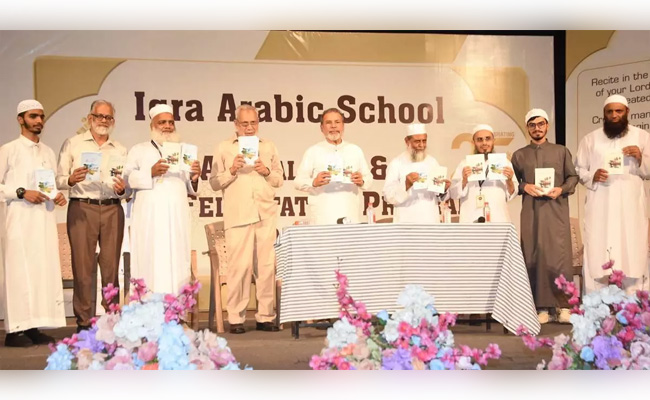
Students presented cultural programmes based on Islamic teachings during the event. Two of the books authored by the students of the institution were also released during the event.
A total of 18 students who completed Hifz this year were felicitated and presented with mementos by the guests. The programme concluded with a vote of thanks by Moulana Salim Khalifa, the principal of the institution.
source: http://www.english.varthabharati.in / Vartha Bharati / Home> Karavali / by Vartha Bharati / April 21st, 2026
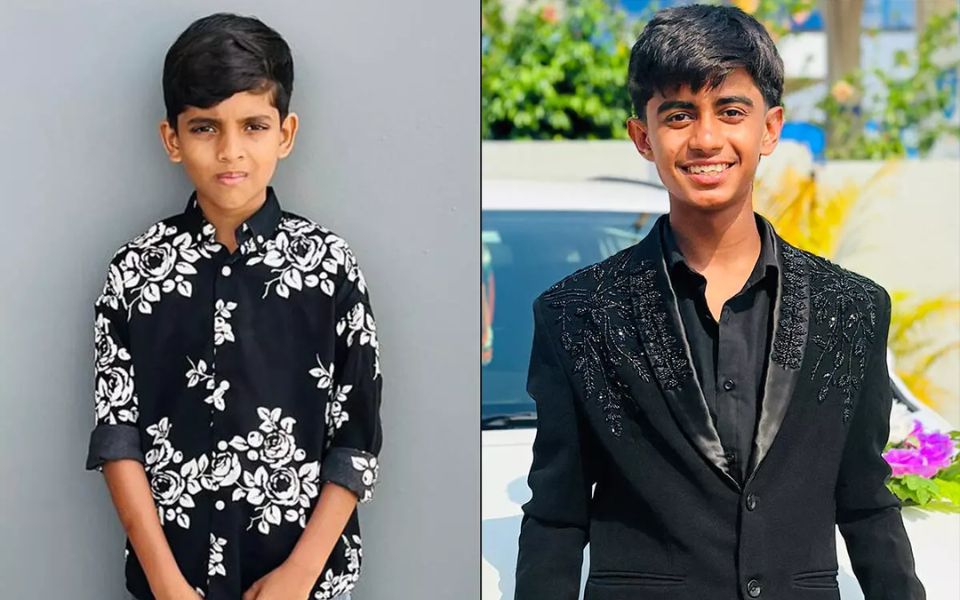
A teenager rescued a 10-year-old boy who was being swept away by strong waves at Someshwara Beach, police said on Sunday.
The incident occurred on Saturday evening.
According to officials, Muhammad Arshaman (10), a resident of Vitla Megginapete, had come to the beach with his family when he was caught in a strong current. Noticing the situation, Muhammad Ismail Faiz (16), son of Ashraf from Mudipu, immediately jumped into the sea to rescue him.
Faiz battled the waves for about 10 minutes before managing to bring the boy to safety.
Following the rescue, Faiz became exhausted and briefly lost consciousness. He was later admitted to a private hospital in the city and is recovering.
Arshaman is also reported to be out of danger, police said.
Faiz recently passed the SSLC examination and secured second place in a state-level karate competition.
Both Arshaman and Faiz are relatives and had visited the beach with their families when the incident occurred.
Local swimmers also assisted in the rescue after being alerted.
Faiz said that he knew how to swim, which gave him the confidence to attempt the rescue.
source: http://www.english.varthabharati.in / Vartha Bharati / Home> Karavali / by Vartha Bharati / April 26th, 2026
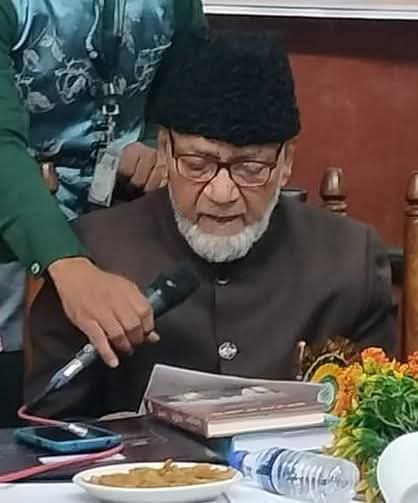
Professor (Dr.) Ahmad Sajjad, a distinguished author, critic, and intellectual who devoted his entire life to the service of knowledge and the Islamic movement, breathed his last at his native place Ranchi, Jharkhand on Sunday, April 26, 2026. He had been unwell for several years. He was 87.
Born in Nalanda, Bihar on12 October 1939, he completed his M.A. in Urdu from Patna University and was teaching at Ranchi College, Ranchi. Later he served as Head of the Department of Urdu, Ranchi University.
Professor Ahmad Sajjad was also a member of Jamaat-e-Islami Hind and served on its Markazi Shura.
He was a great Islamic scholar and Urdu literary figure. His Urdu books include Jadeed Nazriyat ki Khuli Nakami aur Islam ka Roshan Mustaqbil (1990), Hindustan ka Jadeed Taleemi Inquilab aur Muslim Aqliyat (2000), Ekiswin Sadi ka Challenge aur Milli Taleemi Agenda (2014), Tanqeed-o-Tehreek (1979), Tameeri Adabi Tahreek (1994), Tanqeed-o-Tanqeeh (2015), Kya Barre-e-Sagheer ki Urdu Abadi Azab-e-Musalsal ka Shikar Hai (2014), Meer Ghulaam Ali Ishrat Barelvi (1978), and Banda-e-Momin ka Hath ya Tareekh All India Momin Conference (2011).
Besides, he compiled many books, including Bunyadi Masail aur Unka Hal (1973). He was also Editor-in-Chief of Urdu literary magazine, Fankar, published from Hyderabad. All of his works earned recognition in the circles of Urdu literature and Islamic thought. His writings reflect truthfulness, intellectual clarity, and deep movement-oriented insight.
For a long time, he remained at the forefront of community and welfare work in Ranchi and was always among the leading ranks in collective social efforts. In the construction of Idris Hostel and the establishment of Millat Academy, he was in many ways the driving force. For Idris Hostel, he travelled across India with medical students to raise support and mobilise efforts. These two collective projects in Ranchi stand as lasting testimony to his leadership and dedication.
When he was elected President of Idara Adab-e-Islami Hind in 1982, he devoted all his energy, and his heartfelt commitment to the organisation. His tenure remains one of its brightest chapters, especially in terms of organisational tours, literary activities, and mushairas, where he left a remarkable mark. He had also held several discussions with the late Syed Asad Gilani on building an international front for Islamic literature.
Professor Sajjad was a sincere, active, dynamic, compassionate, and visionary personality. One of his greatest qualities was that wherever he lived, he remained fully engaged with his surroundings – constantly striving, questioning, and confronting challenges. Courage, bravery, and speaking the truth were his defining traits. He was straightforward and passionate in expressing his views. His opinions, particularly on the issue of elections, were widely discussed. Whatever work he took part in, he did so wholeheartedly. There was neither hypocrisy nor unnecessary compromise in his character.
His demise is an irreparable loss not only for the Islamic movement but also for Urdu literature and Islamic thought. He was a scholar and man of letters whose writings will continue to serve as a guiding light for future generations.
source: http://www.radiancenews.com / Radiance News / Home> Latest News>Obituary / by Radiance News Bureau / April 23rd, 2026
Parents and educators celebrate as girls achieve top marks, breaking educational barriers.
Aligarh :
Muslim girl students in Uttar Pradesh’s Aligarh have defied traditional challenges, excelling in the Central Board of Secondary Education (CBSE) Class X and XII exams. Their success has ignited joy and optimism in the community, encouraging parents to support higher education for their daughters.
Among the top achievers is Uzma Khan from Iqra Public School, who scored 96.8% in her Class X exams. “The marks met my expectations. I thank my parents and teachers for their support,” Uzma said. She now aims to prepare for the NEET exam.
Motida Nayab, the school’s second topper, secured 96.4%. “My parents are thrilled, and my teachers’ guidance was invaluable,” she said.
Iqra School’s principal, Tarannum Masroor Chowdhry, expressed pride: “Our results are consistently excellent. Our students’ hard work and the support from parents and teachers have been remarkable.”
source: http://www.clarionindia.net / Clarion India / Home> Editor’s Pick> Indian Muslims > Women / by Clarion India / May 18th, 2024
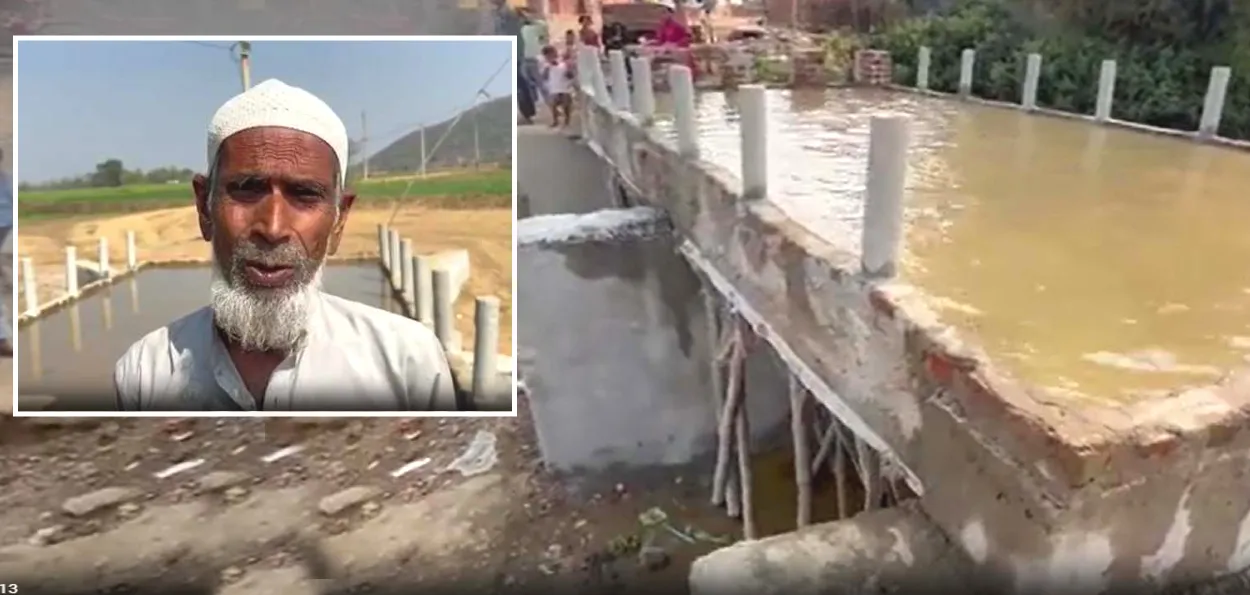
Once, in Bihar Dashrath Manjhi cut through a mountain for the love of his wife. Today, Sarfaraz Ansari has built a bridge over a river for the love of his mother. Neither had money; they had passion to face obstacles and do extraordinary deeds despite being men of small means.
Sarfaraz Ansari, who lives in a small village in Bihar’s Jhajha block (Jamui district), ekks out his livelihood by repairing punctures.
His earnings are just enough for his family, as he is landless and only owns a small shop. Despite his ordinary life, he has accomplished something that people with huge incomes and assets may never think of.
A day in the monsoon season of 2019 changed his life. One day, it was pouring heavily, and the river was overflowing its banks. At that very moment, Sarfaraz’s mother suddenly fell ill. Her condition was critical, and every moment was precious.
He had to cross the river in spate to take his mother to the hospital. Sarfaraz mustered courage and somehow carried his ailing mother in his arms across the dangerous river.
He braved the strong current and the darkness to beat time in saving his mother. However, by the time he reached the hospital, it was too late. His mother passed away the same night.
After his mother’s burial, Sarfaraz Ansari was constantly nagged by the thought that there is no bridge on the river. His mother’s life could have been saved if a bridge had been there.
This thought made him restless; he couldn’t sleep for several nights as he visualised his mother’s face the moment he slept.
Sarfaraz decided to build a bridge over the river.
On knowing this, people remarked, “You’re a puncture repairer, how can you build a bridge? Ask the government.”
Sarfaraz knew that knocking at the government doors would mean endless visits to leaders and officers and years of struggle. In the meantime, more villagers would die like his mother for want of access to medical care.
He didn’t wait for the government. He started saving small amounts of money from his earnings. After months of hard work, when he had saved some money, he shared his dream with the villagers.
The villagers not only praised him but also supported him. Some donated money, some worked as labourers, and others donated construction materials.
One day, the bridge was constructed, and it happened with government assistance; a bridge was built solely through the villagers’ labour and cooperation.
This 25-foot-long, 13-foot-wide, and 8-foot-high bridge, built for Rs 12 lakh, has become a source of hope for nearly 40 villages.
People of these villages had to travel several kilometres to reach the city or risk their lives by wading through the river water.
Today, with the bridge, children have easier access to school, and farmers can transport their crops to market on time. And most importantly, lives are saved as the sick can easily reach the hospital. N
Sarfaraz is happy that nobody has to go through the pain of losing his dear ones and the pain he suffered.
Sarfaraz says, “I’m not a big man, but one should have a big heart. I still feel the pain of losing my mother, but I’m relieved that no one else’s mother will have to endure that pain.”
He adds, “To the world, this is a bridge made of cement and iron rods, but to me, it’s a dream built in my mother’s memory that has come true.”
source: http://www.awazthevoice.in / Awaz, The Voice / Home> Stories / by Amir Iqbal / March 02nd, 2026
In an innovative educational endeavour that takes place in Chennai, Aalimah students gain exposure to the study of comparative religion through a disciplined approach.
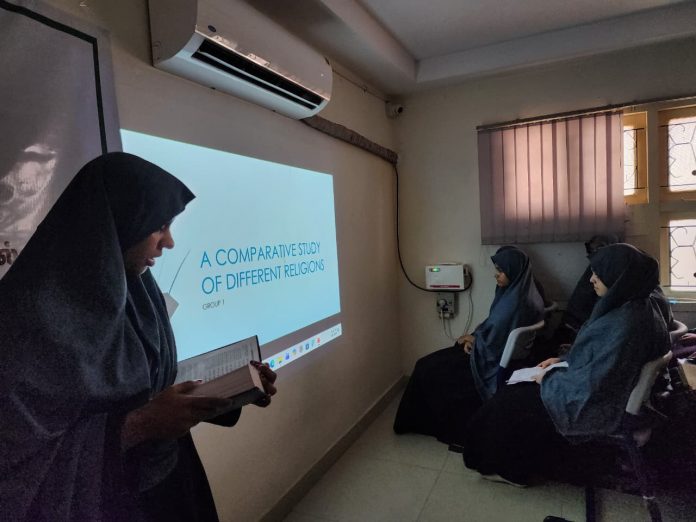
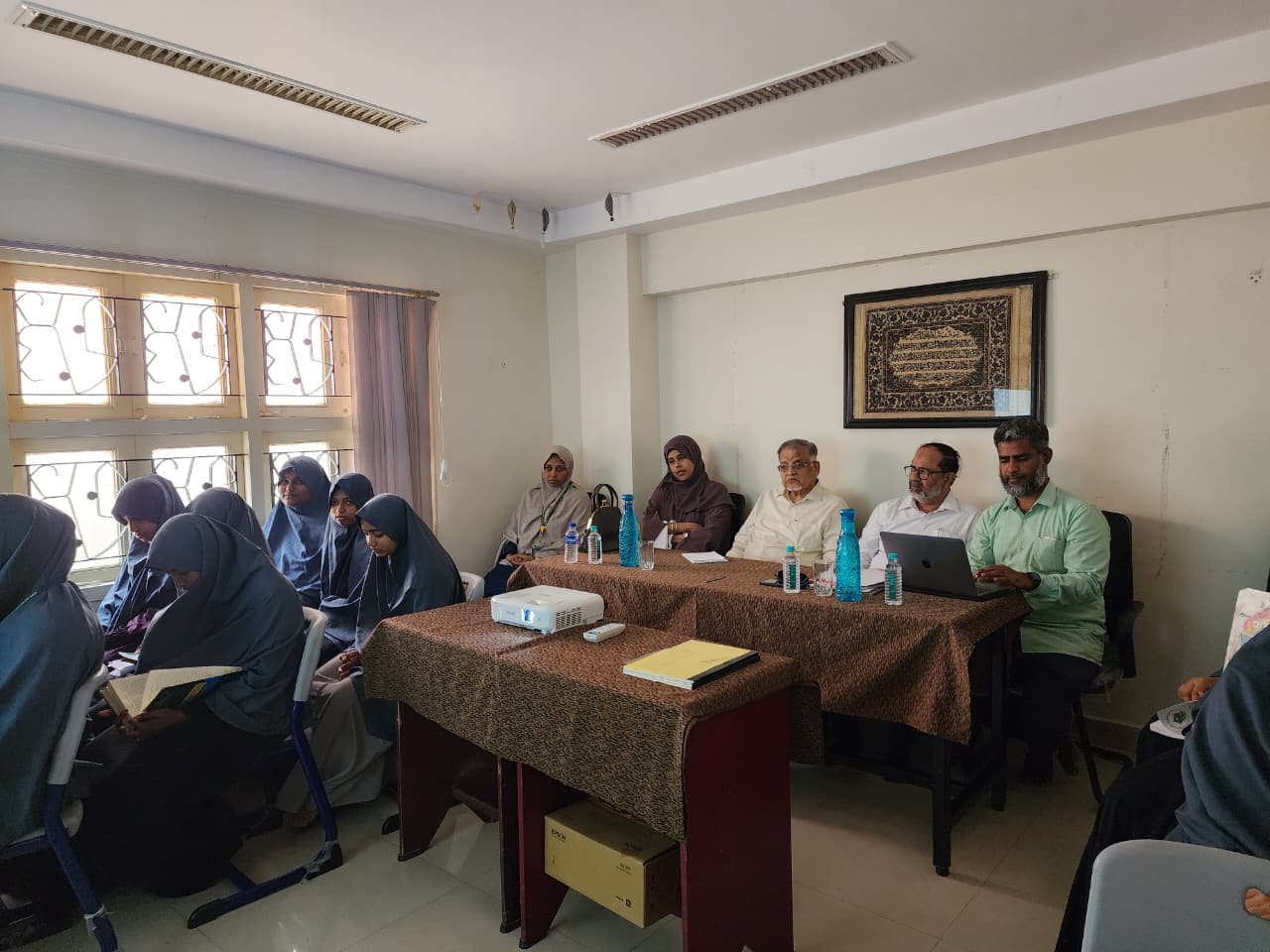
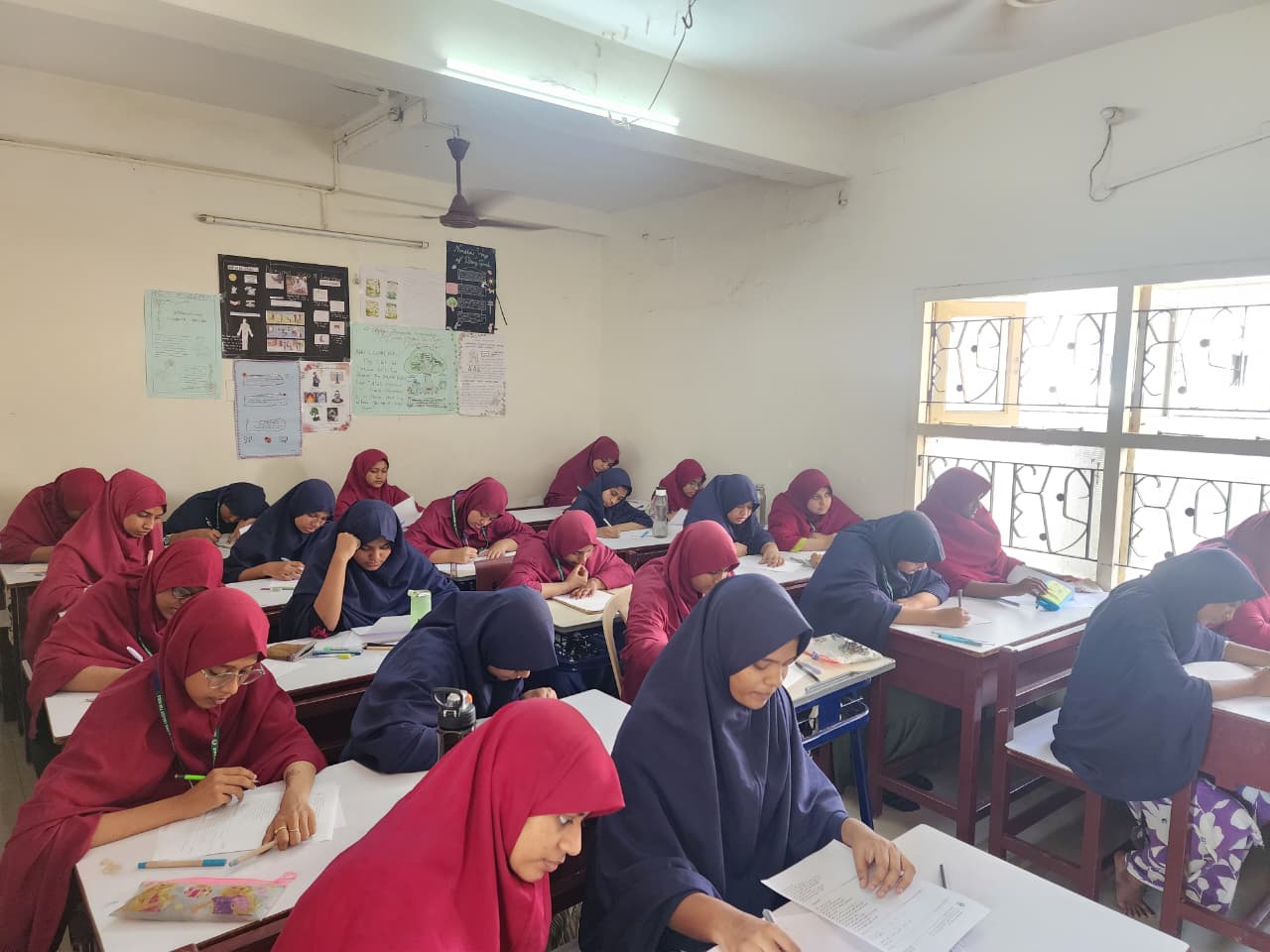
Chennai: A momentous academic occasion took place at Hidhaaya Islamic College for Girls, as third year Aalimah students plunged themselves into researching world religions. As a part of their course curriculum for the fifth semester, the students conducted research about world religions, which culminated in the submission of research papers in the sixth semester.
To begin with, the session started off on a tranquil note with recitation from the Holy Qur’an done by third year Aalimah student Hameera. The session was chaired by Burooj Association President and third year Aalimah student Arshiya. She addressed the participants and Guests with an opening welcome speech.
The presentations were evaluated by distinguished guests including, Dr. K.V.S. Habib Mohammad, eminent scholar of Islam, writer and Shura member of Jamaat-e-Islami Hind (Tamil Nadu) and Mr. Jalaluddin, Correspondent of Good Word Public School and Vice President of JIH Tamil Nadu and chairman Nazeer Ataullah of Hidhaaya Islamic College for girls.
With regard to the study of Sikhism, Judaism, Christianity, Buddhism, and Hinduism, five of the students made a commendable effort to understand the beliefs, holy books, and rituals of each religion. Their understanding showed in their thoughtfully prepared PowerPoint presentations. The analysis was enriched by yet another five students who compared the five religions mentioned above with Islam.
The whole exercise was an exemplar in both research and intellectual engagement. The evaluation panel acknowledged the effort of the students and suggested ways to improve the academic methodology and presentation style.
Pointing out the importance of such exercises, Dr. Habib Mohammad described it as a groundbreaking initiative by Hidhaaya Islamic College for Girls. This is truly a commendable and progressive initiative. Stating the necessity of comparative study of religions, he commented:
“Comparative study of various religions is very important to develop a better understanding. It is just the beginning of a long academic journey which needs to be taken further with sincerity and respect.”
He also recommended that students take up specialisation in one religion for greater knowledge and suggested that they should refer to the primary source of any religion to acquire true knowledge. He exhorted students to adopt an open mind with respect and regard for all religious beliefs.
This project represents a milestone effort towards the creation of enlightened and thoughtful women who have a proper understanding of the complexities of a pluralistic world.
In acknowledging the significance of this endeavour, Dr. Habib Mohammad mentioned how much the participants seemed to know about their disciplines, which was evident from their active involvement with the literary and intellectual aspect of religion. He also commented on how this programme reflects the institution’s academic excellence and hints at the future success of graduates.
Likewise, Mr. Jalaluddin appreciated the high calibre of performances and gave useful advice regarding improvements in terms of language skills and presentation techniques.
The event concluded with a warm vote of thanks offered by student Ashiqua, one of the 3rd Aalimah students.
“When knowledge is guided by understanding and compassion, it becomes a force that not only enlightens minds but also unites humanity.”
[Dr. Rabia Basri is Correspondent and Principal of Hidhaaya Islamic College for Girls, Chennai]
source: http://www.radiancenews.com / Radiance News / Home> Latest News> Report / by Dr Rabia Basri / April 29th, 2026