Inquilab and Mid-Day founder Abdul Hamid Ansari is an inspiration not just for journalists but millions of youngsters … A special report by Siraj Ali Quadri.
Indian journalist and Muslim nationalist Abdul Hamid Ansari founded Inquilab, an Urdu daily in Mumbai in l937. The newspaper soon became a landmark in Urdu journalism which caught the attention of Muhammad Ali Jinnah, the founder of Pakistan. But when Jinnah asked Ansari to come to Karachi to publish the newspaper in the new country, Ansari said that he would prefer to live in India like the many million Muslims who would rather stay in the country than join Jinnah. Those who joined Jinnah undoubtedly left everything behind. Some flourished while others got established. But that’s another story, which has never ended since l947.
Today’s story is about the veteran journalist, publisher and businessman Khalid A.H. Ansari, son of Abdul Hameed. After passing out from St. Xavier’s in Mumbai, Khalid did his master’s at Stanford University in the US.
Khalid returned to Mumbai to establish Sportsweek, a weekly sports magazine, which became a huge success soon after its launch. The magazine’s immediate success can be attributed to the fact that its founder was himself an excellent sportsman and did a great job with the magazine, in addition to his father’s paper Inquilab.
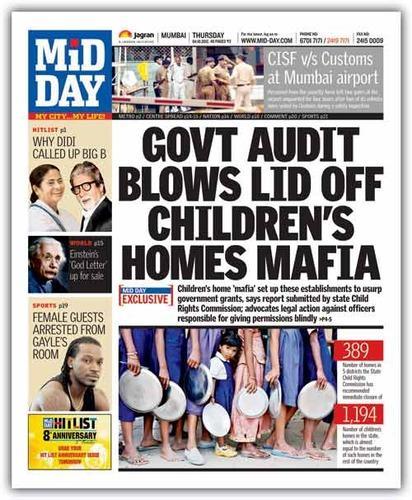
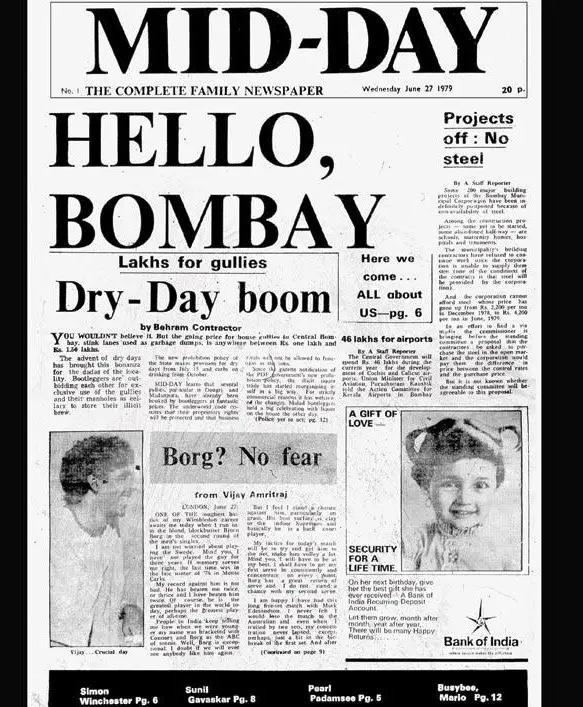
Meanwhile, the idea came to launch India’s first daily tabloid, Mid-Day, which he modelled in many ways after the English tabloids from Fleet Street. During the planning phase of their new venture, he spent hours discussing it with staff and mulled over its format to ensure success, especially since there were already two eveningers in Mumbai, one by The Times of India and the other by the Indian Express. Both suffered from a lack of innovation to attract large numbers of readers. So when Mid-Day appeared with a new face and content, the two old ones just collapsed. Although the ToI eveninger protested the pace of time for a while, it eventually perished as it had already become obsolete.
Mid-Day became a resounding success, with many comparing it to the British Daily Mirror and Daily Mail. However, being an Indian tabloid, it was much quieter and a whole lot more civilized, without the British fondness for nudity and sex, and nonsensical stories of stupidity.
Khalid was helped by his wife, Rukaya. She was very active on the administrative side and contributed to the editorial content and layout, which helped the paper sustain itself in the demanding market of Mumbai. She knew what was going on in the office and in the newspaper that was fast becoming India’s flagship eveninger.
Meanwhile, Khalid accepted an offer to become editor-in-chief of the Dubai-based Khaleej Times, and handed over the paper to his son, Tariq. After a few years in Dubai, Khalid returned to Mumbai and launched Mid-Day in Bangalore and Delhi and a regional Gujarati version for millions of Gujaratis in the country.
He has been involved in various programmes with the Indian government during conferences in Delhi and New York, launching and editing newspapers, and was awarded the Padma Shri in 2001 while continuing to play and write about his old passion, cricket.
Writing about his eveninger, Khalid says, “Mid-Day is a light-hearted, easy-to-read, entertaining, and ‘naughty’ paper that now has a new purpose which is to make work fun. Gives young professionals an entertaining newsbreak. The focus is on young, urban, mobile professionals across India and the company is leaving no stone unturned to engage with them. Today’s workplace’s fast-paced work style and crazy deadlines are full of stress and pressure. Mid-Day as a brand believes in spreading the message of reducing stress and making work fun.”
“What’s on, a host of addictive, fun sections like Hit List Crosswords, Horoscopes, and Fun at Work ensure that the newspaper remains a welcome diversion for young professionals,” he adds.
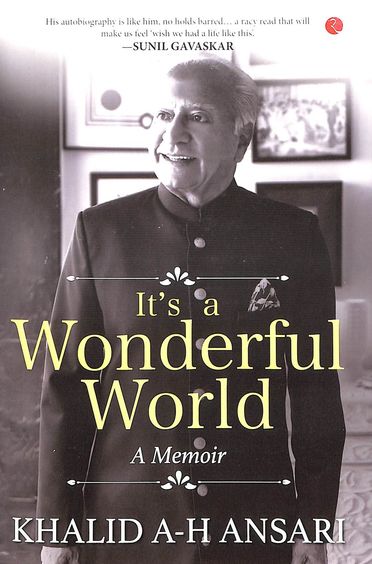
Khalid’s Sportsweek later was shut down with the television boom making it hard to garner advertisements and interest. Khalid has also published his memoir (It’s A Wonderful World) and continues to inspire a stream of journalists apart from various generations to keep the boat afloat and touch new heights.
(The Author is Journalist & associated with Dainik Bhaskar)
source: http://www.asianlite.com / Asian Lite / Home / by Siraj Ali Quadri / October 10th, 2022
Kilakarai (Ramanathapuram District) / Chennai, TAMIL NADU :
Death of Dr. B.S. Abdur Rahman has not only shocked who knew his mission and lifelong works but also those who have benefited by his devotion and those who took inspirations from him. His untimely death has brought a vacuam in Indian educational scenario and it is almost impossible to be filled up in near future.
Indian Muslim Community has legacy of Sir Syed Ahmad Khan, the founder of the Aligarh Muslim University before it, Dr. B.S. Abdur Rahman has achieved almost that place and has become another inspirational figure.
Dr. B.S. Abdur Rahman was born in kilakarai falling under Ramanathapuram district of Tamilnadu state in 1927. Due to his works and philanthropist bent of mind, Dr. Rahman became a well known personality who devoted himself for the upliftment of the economically weaker sections and minorities through their educational empowerment. He did not lagged behind in providing good facilities of health care to the deprived sections of society.
B.S. Abdur Rahman, Vice Chairman of Emirates Trading Agency LLC and Associated Construction and Investments Co. LLC (ETA-ASCON), the Dubai-based $2 billion industrial behemoth, was a multi-faceted personality, much like the diamonds he dealt with when he began in humble business in Sri Lanka, over half a century ago.
Diamond merchant, industrialist, educationist, philanthropist, shipping magnate, generous contributor and enthusiastic participant in many other business and social activities he is a renaissance man whose outlook was Millennial. Meaning, while his values were classical, his thinking was forward looking.
Kilakarai, on the coast of Ramanathapuram district in Tamil Nadu, where Abdur Rahman (fondly known as Sena Aana) was born, is a town made famous in the region by his illustrious ancestor, Vallal Seethakathi.
The forbears of Abdur Rahman migrated to Kilakarai from Arabia in the 12th century. Kilakarai, which means East Coast in Tamil, was a flourishing port to which mearchants from the east and west came. A densely populated area, predominantly by Muslims, it owned its prosperity to them.
From centuries they traded with Sri Lanka (then known as Ceylon), dealing in pealing in pearls, gemstones and conches. Even today, many of them live in Sri Lanka or do business with the island. Abdur Rahman too began his career in Ceylon. Among the pearl traders of Kilakarai was Buhari Aalim. Abdur Rahman was his son.
Aalim was an expert in valuing precious stones and pearls. He would hold a gem between his right thumb and index finger and, looking at it against the sun, study the quality of the watermark within to judge the worth of the precious stone. He would be unfailingly correct.
Watching his father at work, the young Abdur Rahman was soon able to understand the nuances of the trade. This training and experience helped him to become one of the most successful merchants in the diamond trade in due course. When Abdur Rahman first went to Colombo, he was fifteen years old. He had with him just Indian Rupees 149. He worked as an errand boy for diamond merchants, carrying their diamonds and other gems from sellers to buyers and back. He was at the time staying with some traders from Kilakarai and neighbouring villages. They allowed him to stay with them without any payment, but he had, instead, to fetch tea them from a nearby hotel, clean the rooms and perform other menial tasks.
A lesser person perhaps would have thrown in the towel. But Abdur Rahman was made of sterner stuff. Before long, he used his persuasive skills to obtain gemstones from another merchant and began trading in them. In time he became a successful gem trader. The base that Abdur Rahman built in Ceylon was to help him in all his future activities.
He began visiting Belgium, then as now, a centre of the gem trade, the USA, South America and set up business in Penang, Malaysia, Chennai, Kolkata (then Calcutta), and then in Hong Kong. It was in Hong Kong that his business flourished. Incidentally, Abdur Rahman was the first person from Kilakarai to go to Hong Kong.
In Hong Kong he launched the Precious Trading Company in 1954. Later, his very special brainchild, the Amana Group of Hong Kong, was established. It was under its banner that the multinational company ETA-ASCON came into existence.
He was a firm believer in education and took upon himself the task of educationally empower the poor and the deprived. He established a wide network of educational institutions. In 1967, he founded Seethakathi Trust and in 1979, All India Islamic Foundation to achieve his target of serving the community and nation. He founded twelve educational institutions including an Engineering University, a woman’s college, an Arabic College two boys schools, 3 girls schools, a woman Nursing college, a Teacher Training College, B.Ed College for woman and 2 hospitals beside orphanages in rural and urban areas. His biggest achievement was founding a 60 bed Yousuf Zulaikha hospital at Kilakrai and a 150 bed Crescent hospital at Madurai. He did not lagged behind in providing comfort of life to most deprived orphanages and founded Al Momin orphanages for boys and girls at Ottapidram, Tanjore, Kilakarai and Thiruvithancode of Tamilnadu.
Dr. B.S. Abdur Rahman was farsighted man and knew the importance of administration. He was well aware that to uplift community, it is very necessary that Muslim youths join Indian Administrative Services and so he established Crescent IAS and Carriers Guidance Academy in 1994 beside an Islamic Studies & Cultural Centre at Chennai.
His social works span to wide area. Dr. B.S. Abdur Rahman founded B.S. Abdur Rahman Zakat Fund Foundation in 2007 which provides educational grants for students. Through this foundation, B.S. Abdur Rahmand has maintained magniticence of Zakat which may be called a pillar of Islam and which is an instrument for survival of poor Muslims. He 1017 Self Help Group (SHG) which became beneficial to 17093 deprived and helpless women. He also founded and managed various other trusts like Yousuf Zulaikha (1993) Chennai for education, health care and women empowerment. United Economic Forum in 1994 and Seethakathi NGO in 2002.
He also establish new milestones in business field.
He was founder Chairman of Dubai based ETA – Ascon – Star Group and was treated a renowned Indian entrepreneur in UAE. It may be known that the group has a turn over US$ 5.5 billion and employs 50,000 people. With his visionary zeal and entrepreneurial spirit.
B.S. Abdur Rahman has been the guiding force behind many companies in India, among which the most important is the Buhari Group the Indian Multinational. The prominent companies and establishments under Buhari Group include East Coast Construction Ltd. (ECCI) 50 years in the field of construction, Coal & Oil and many other automobile dealership companies.
In recognition of his services he received many awards also.
The Aligarh Muslim University Students Union conferred him life membership while Sathyabama University awarded Honorary Doctorate in recognition of his contribution to Women Education.
In fact Dr. B.S. Abdur Rahman had became an inspirational force to young generation during his own life time. There are very few people who climb the ladder of success and remember the down trodden sections of the society or do anything meaningful for them.
Whatever Dr. B.S. Abdur Rahman has done for the manginalised and deprived sections of society will be always not only remembered but will also be documented in social and educational history of India. The best tribute to Dr. B.S. Abdur Rahman will be to follow the path shown by him not only in business but other fields also.
-Dr. Jasim Mohammad / Author is Editor of The Aligarh Movement monthly
source: http://www.hastakshep.com / Hastakshep.com / Home> Uncategorized / by Dr Jasim Mohammad / March 29th, 2019
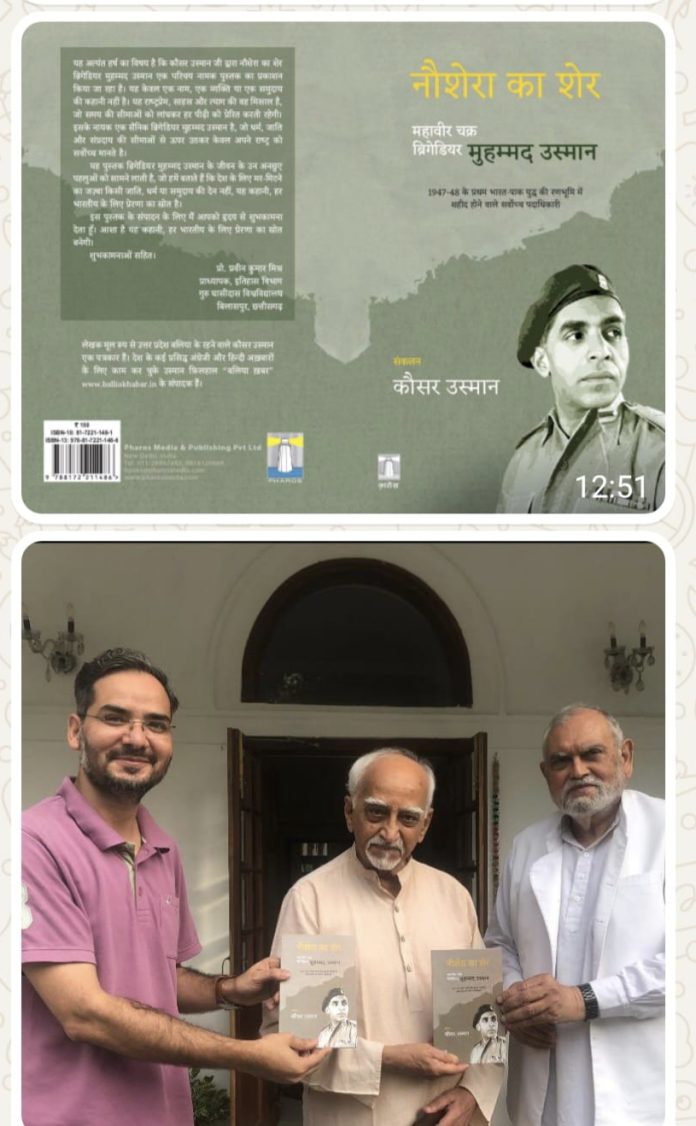
A grand launch event was held in the capital today for the book “Naushera ka Sher — Brigadier Mohammad Usman”, celebrating the life of the 1947–48 war hero. Authored by senior journalist Kauser Usman from Ballia, Uttar Pradesh, the book honours Brigadier Usman, famously known as the “Hero of Heroes.”
The book was officially released by former Vice President of India, Mr. Hamid Ansari, who is also a family member of Brigadier Usman. Speaking at the event, Mr. Ansari said,
“Brigadier Usman was more than a soldier — he symbolised patriotism, courage, and sacrifice. Kauser Usman’s book is a fitting tribute and an inspiration for future generations.”
Brigadier Mohammad Usman was one of the few Indian Army officers who laid down his life during the India-Pakistan war of 1947–48, without retreating. He was posthumously awarded the Maha Vir Chakra, India’s second-highest wartime gallantry honour.
Author Kauser Usman said,
“This book is my humble tribute to a national hero. Brigadier Usman’s life, simplicity, and service to the nation continue to guide us.”
Dr. Zafarul Islam Khan, former Chairman of the Delhi Minorities Commission, also attended the event.
The book is published by Pharos Media Publishing Pvt. Ltd., New Delhi.
source: http://www.radiancenews.com / Radiance News / Home> Art & Culture / by Mohd Naushad Khan / July 11th, 2025
In 2000, Rabiya was diagnosed with cancer, which she later overcame, after which she returned to social work.
In 2022, she was honoured with the Padma Shri for social work. (File Photo)
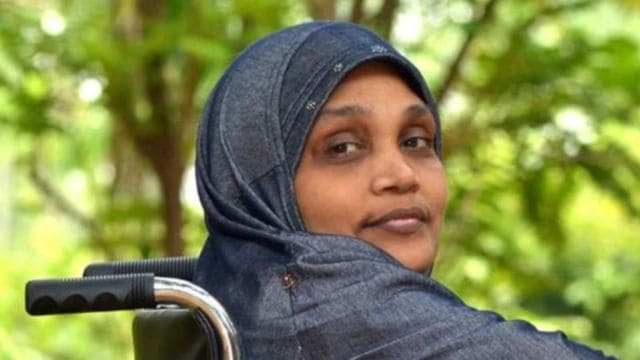
K V Rabiya, known for her prominent role in Kerala’s adult literacy programme, died at her home in Malappuram on Sunday. She was 59.
A native of Vellikakkad in Malappuram district, Rabiya fought against heavy odds and personal tragedies, right from childhood, to work relentlessly for the betterment of the differently abled and inspired thousands of women to enter the world of letters.
In 2022, she was honoured with Padma Shri for social work.
While still a school student, Rabiya contracted polio at the age of 12, which would eventually leave her paraplegic. Despite this, she completed her schooling and joined a college. However, she could not complete the degree course.
Rabiya then turned to books, reading everything from science to literature. Wheelchair-bound by then, Rabiya also started taking tuition classes for local children at a nominal fee.
It was by chance that Rabiya became a part of Kerala’s literacy movement, which began in the late 1980s. A college degree was a must for a literacy instructor. However, an instructor, who could not continue with the programme, sought Rabiya’s help. This marked the birth of a social worker and the beginning of her legacy.
She started teaching literacy classes in June 1990, and local elderly women and housewives were her students. She worked to convince women from orthodox families about the importance of education, and told them inspiring stories of world leaders and social reformers to get them interested in her classes.
When her number of students started swelling, Rabiya became a full-time literacy instructor. Later, she also established a library for women and became instrumental in the development of her locality, which did not have basic facilities such as roads and electricity, telephone, and water connections.
She eventually launched a voluntary organisation named Chalanam (movement), which also spearheaded literary programmes.
Her intervention was not limited to literacy alone. She started six schools for children with special needs and trained and empowered more than 250 women through a small-scale manufacturing unit. She was also at the forefront of the movement to create awareness against dowry and superstition. In later years, she was also actively involved in the e-literacy programme, Akshaya, in Malappuram.
In 2000, Rabiya was diagnosed with cancer, which she later overcame, after which she returned to social work.
In her autobiography, Swapnangalkku Chirakukalundu (Dreams Have Wings), Rabiya told the story of her inspiring life and how she chased her dreams. She also authored four other books, including the memoir, Mouna Nombarangal (Silent Pains). A documentary was also made on her life, titled Rabiya Moves.
She received several honours, including the Kannagi Devi Stree Shakti Puraskar, instituted by the Child Welfare Department of the Union government, in 2000. She also won the Youth Volunteer against Poverty award, jointly instituted by the Union Youth Affairs Ministry and the United Nations Development Programme.
source: http://www.indianexpress.com / The Indian Express / Home> India / by Shaju Philip, Thiruvananthapuram / May 05th, 2025
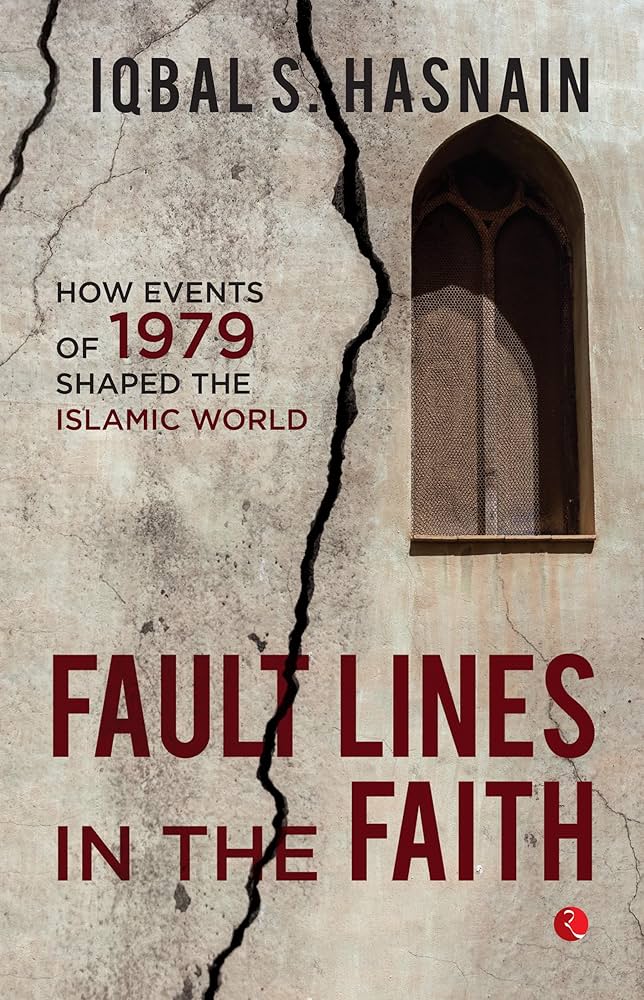
Padma Shri awardee Iqbal Syed Hasnain’s ‘Fault Lines in the Faith: How Events of 1979 Shaped the Islamic World’ was the topic of an animated discussion at Delhi’s IIC earlier this month.
The ‘Fault Lines in the Faith’ book discussion at IIC | Photo: Heena Fatima | thePrint
New Delhi:
A series of three momentous events irrevocably changed the social, religious, and political fabric of the Islamic world. And they all took place in 1979. This is the central argument of Padma Shri awardee Iqbal Syed Hasnain’s book Fault Lines in the Faith, which became the topic of a lively discussion among academics and history buffs at Delhi’s India International Centre on an early February evening.
Presiding over the panel discussion in IIC’s conference room, Hasnain, who is also an eminent glaciologist, elaborated on the three “fault lines” that sent shockwaves far beyond their immediate contexts.
First, the Islamic Revolution in Iran cleaved the Muslim world along sectarian lines with the establishment of the first Shia state. Second, the siege of Mecca ignited the conservative Sahwa (Islamic awakening) movement in Saudi Arabia, blending Muslim Brotherhood and Salafist ideologies. And third, the Soviet invasion of Afghanistan led to the birth of violent extremist groups like al-Qaeda and its offshoots.
“All these three pivotal points led to the surge of fundamentalist or Islamist jihad,” said Hasnain. He added that what began as a “normal struggle between invading forces and local communities” warped from nationalism to a violent ideological shift with devastating repercussions.
Iqbal S Hasnain | Photo: Twitter/@Rupa_Books
Hasnain further elaborated on the global impact of these events by sharing personal anecdotes from his time studying in the UK. He said he encountered strong anti-Western sentiment among students from Middle Eastern countries during his glaciology programme at the University of Manchester in the 1990s.
During Friday prayers in a large hall, he said, student speakers often delivered khutbahs (sermons) against Western culture and American exploitation of their regions, with some even advocating for jihad. As American involvement in the Middle East increased, especially with the invasions of Afghanistan and Iraq in the early 2000s, this hostility intensified.
pix: amazon.in
During the book discussion, audience members raised questions about Hasnain’s narrative. One participant, Sumanjeet Choudhary, a retired corporate executive, inquired why there wasn’t more opposition to jihadist activities despite Islam’s rich history and the presence of prominent leaders.
Hasnain countered this view with the example of Morocco’s King Mohammed VI, who has urged Moroccans worldwide to embrace tolerance and reject Islamist extremism.
“King Mohammed VI came out and he stopped the funding [of madrasas] from Saudi Arabia. He changed the whole narrative in the madrasas,” Hasnain said. He acknowledged, however, that while there is an ongoing debate within Muslim communities and their leadership about how to address extremism, it is “not very visible”.
Ripple effects
Hasnain’s book traces the rise of anti-pluralism, misogyny, and severe intolerance within the Arab world. The 1979 Shia Islamic Revolution in Iran, he said, shook the Sunni Arab world. In response, Saudi Arabia, fearing a Shiite revival, actively promoted puritanical Wahhabi Salafism, a strand of Islam that’s deeply hostile not only to Shias but also to Sunni Sufis. He, however, implicates the West as well. In February 1989, after nearly a decade of occupation, the Soviet army left Afghanistan, leaving behind a fractured nation, where tribal warlords and mujahideen groups engaged in an intense tussle for power. The US, having lost interest, “abandoned” the region, he added, leaving a vacuum for the likes of Osama bin Laden to fill.
Ultimately, Hasnain argues that the events of 1979 triggered a chain reaction, including 9/11, the US invasions of Afghanistan and Iraq, and the rise of al-Qaeda and ISIS. In 2021, in what seems like an eerie echo of the past, the US withdrew its troops from Afghanistan, leaving it with no democratic foundation and back in the grip of the Taliban.
When a participant asked about the impact of the 1979 events on India, Hasnain answered that the after-effects “were not limited to West Asia”, with radicalisation spreading to all corners of the world. “In India, to some extent, it was [mitigated] because India practiced a more moderate form of Islam , Hanafi Sufi Islam, which emphasised trade,” he added.
However, as more Indians went to work in Saudi Arabia, they were influenced by Salafi ideology, Hasnain said. For instance, those who’d grown up celebrating Eid-e-Milad (Prophet Muhammad’s birthday) stopped doing so after stints in Saudi Arabia, where Wahhabis do not observe such festivities.
One of the panel’s members was former Indian ambassador to Qatar KP Fabian. Chiming in, he said that it was important tomonitor developments in Muslim-majority countries, given India’s sizeable Muslim population. There may be political borders but “ideas come without a visa”, he pointed out, and vigilance is essential. He also claimed that Arab countries are keeping an eye on India’s Muslims. “They are watching us,” Fabian said. “They are also discreet.”
(Edited by Asavari Singh)
source: http://www.theprint.in / The Print / Home> Features> Around Town / by Heena Fatima / pix of book edited – source amazon.in / February 29th, 2024
Zillur Rahman, a professor, poet and hakim, has established a museum-cum-library in Aligarh to preserve books and artefacts that tell the story of Delhi of yore.
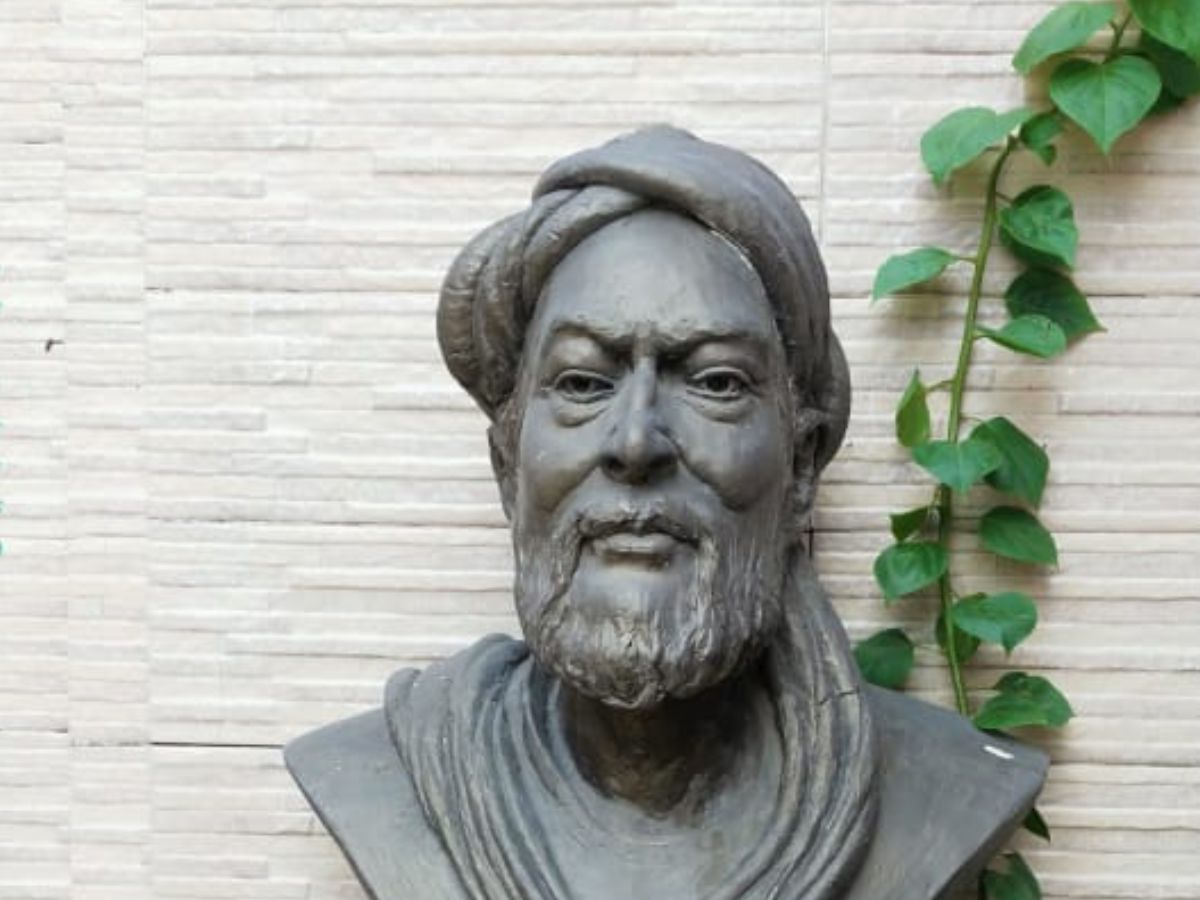
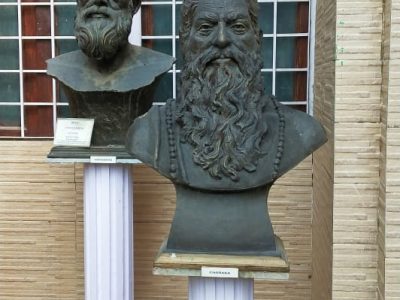
PIONEER: A bust of Ibn Sina, a physician and philosopher, who lived over a thousand years ago, at the Ibn Sina Academy in Aligarh
Nestled in the heart of the city of Aligarh, Uttar Pradesh, is Ibn Sina Academy of Medieval Medicine and Sciences, named after famous scholar of philosophy and medicine Abu Ali Ibn Sina (980 -1037), who lived over a thousand years ago.
Located at Tijara House, the non-profit, non-government and non-political academy was established in the year 2000 by Professor Syed Hakim Zillur Rahman, an academic and a litterateur from Aligarh.
A one of its kind museum and library, it was aimed at encouraging and promoting researches and studies in medieval sciences, especially Ibn-Sina’s, as well as arts, culture, poetry among other subjects.
Notably, Ministry of Ayush, Government of India gave accreditation to the academy in 2004 and promoted it as a Centre of Excellence in 2008. The professor had a mammoth personal library that he had established in 1960s. After Ibn Sina Academy was born, the library became a part of it.
The specialty of this museum lies in its varied collection that includes sofas, crockery, jewels, armours, stamps, mirrors, outfits of princesses, queens and kings as well as turbans worn during battles by historical legends.
The Zillur Rahman Library houses 32,000 rare books and magazines, 1,100 manuscripts apart from paintings, sketches, citations, artefacts and much more.
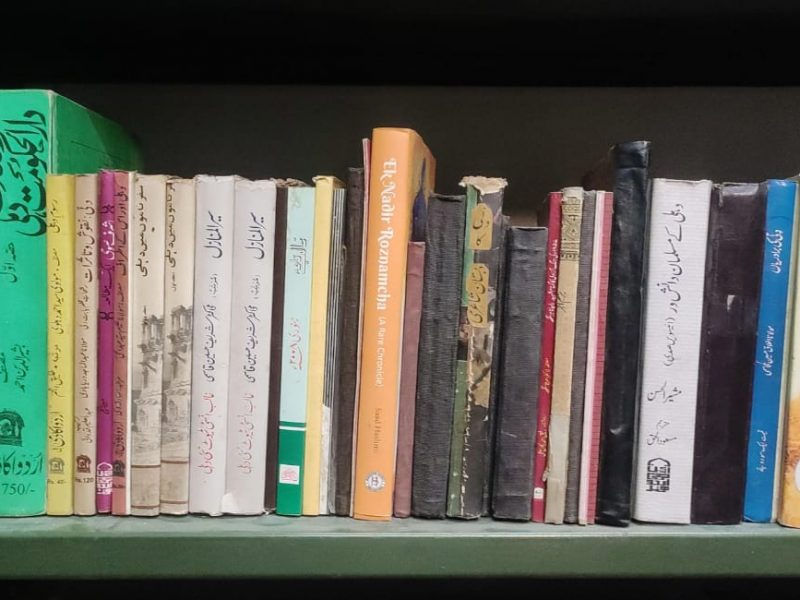
RARE: A collection of books on Delhi
The Delhi connection
There are 7,500 books on Delhi of yore in the library, including on poet Iqbal, dictionaries as old as 150 years, authentic diwaan on Ameer Khusrau, books dating back to 1893, on and by the last Mughal emperor Bahadur Shah Zafar, British Raj–Victorian Era with pictures in lithographs and more.
But considering Delhi is dry without the ‘zikr’ (mention) of the poetic legacy of Asadullah Khan ‘Ghalib’, the library has dedicated a special space for the poet: “Ghalib Study Centre”.
A galaxy in itself, this part has 1,350 rare books in Urdu, Persian, English and Hindi on Ghalib apart from several special issues in different magazines (called risala in Urdu) which are now available only in this museum.
For instance, an important old publication called Sooraj (meaning sun) had special Ghalib edition.
One of the books has illustrations of most of the ghazals he had penned, while in his own Deewan (collection of his authentic shayri) there, Ghalib’s original ghazals had no pictures or illustrations.
MASTERPIECE: The translation of the book written by Hakim Zillur Rahman
One of the most important collections here is a book by renowned author Shakeel ur Rahman called Mirza Ghalib aur Mughaliyaat, which has illustrations from Muraqqa-i-Chughtai, an illustrated selection of Ghalib’s work by AR Chughtai, a renowned artist of early last century. The illustrations are based on an important topic or issue that the poet raised in his couplet (sher).
Rare books with names like Jihad-e-Ghalib, Ghalib Satrung, Soz-e-Ghalib, his letters in Persian and many more ornate the archive.
Additionally, a book called Naqsh-e-Rung from Pakistan which was brought to India by scholar Urdu litterateur and poet professor (late) Shamsur Rehman Farooqui enriches the book shelves.
Tehqeeq-nama Ghalib, Ghalib’s ghazal in Persian called Ghazaliayat-e-Farsi, Ghalib, few rare and special issues of magazines like Shama, Nuqoosh, Hunoon, Taar-e-Nau, film magazines, Al-Ilm, Shayar, Kaarvaan with special edition on Ghalib are the other charms.
A rare pocket-sized edition on Ghalib is a popular one.
Travels to Delhi
Another section on Delhi consists of travels and trips done in Delhi by the authors, travellers and poets of old times. Rare books like Safarnama Dehli and Sair-ul-Manazir provide an inside view of Delhi in the 18th century.
LEGEND: Bust of a renowned Indian physician Charaka at the academy in a section dedicated to physicians and medicinal plants
Also, over 200 rare books on Delhi’s poets (shayars) in Urdu and important personalities form another gallery here. For instance, there is Aslam Parvez’s award-winning book on Bahadur Shah Zafar, and his another one called Meri Dilli. There is also a book on Hamare Zamane Ki Dehli, Charagh-e-Dilli, Dilli Wale by famous author Salauddin, Aalam mein intekhab-e-Delhi among others.
Rare and significant books on personalities include those on Hakim Ajmal Khan, Sir Ross Masood, former India President Zakir Hussain, Sir Syed Ahmad Khan, Raja Mahendra Pratap and many more.
An entire unit is also devoted to all the journals that came out of Delhi during the War for Independence “and those from late 17th century to beginning of 19th century. The Delhi College was established in 1824, with it, all these journals rose to a great height. These form an enticing collection in the museum,” apprises Aftab Najmi, the coordinator and convener at Ibn Sina Academy.
On enquiring why such a large collection in Urdu finds space here, Professor Rahman adds, “Our own language and culture is much better described only in Urdu and Persian. So, it was very important to have a different section on Urdu to give a peep into what Delhi was in olden times.”
However, countless notable oldest books in English and Hindi on Delhi also enrich the collection on the Capital.
A legacy himself
Professor Zillur Rahman has 56 books to his credit. The subjects are related to Tib (Unani medicine) and Urdu literature. His books on medical sciences with oldest references (100 to 200 years old) are immensely popular. He is also a poet and an ardent admirer of Urdu poets of yore. He has also edited Diwan-e-Ghalib and many books on Urdu shayri. So far, 11 books have been written on him by students from different parts of India and globe in Arabic, Urdu and English. There are two academies, in Meerut and Bhopal, named in his honour. A part of the library has books on Zillur Rahman’s own family and their contribution to academics, medicine, poetry and culture.
For the next generation
On why he decided to make such a rare museum and library under one roof, Rahman says, “I was just a teacher at AMU. I had no money like businessmen to construct roads and hospitals so I decided to build this museum and library to help those who want to study but have neither books nor a place for the same. I want the current generation to know that books on all our glorious histories and personalities were penned in Urdu before 1947.
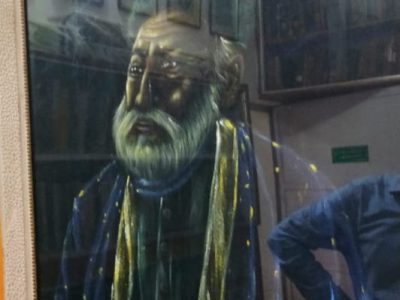
ICONIC: A portrait of Mirza Ghalib at the library, which boasts of rare works on the Delhi-based poet
“So, our generation has to know Urdu to understand their buzurgs (elders) and what charismatic works they had done. Our current generation, which doesn’t know Urdu, is like a blackboard. Anyone can write anything on it and it doesn’t impact them because they are so ignorant of legacies of their own language.”
Professor Rahman has travelled abroad 44 times. He visited Greece, including its capital Athens, Samarkand and Bukhara in Uzbekistan, Spain, Turkey, Germany and other countries.
“I went to Iran 11 times to gather books and study how it has preserved its arts and culture, literature, medicine and environment,” he says adding that children of every country know their mother tongue and can read and write in it.
“India’s children, especially the new Muslim community, is ignorant of its own legacy in Urdu.”
The Ibn Sina Academy has a tremendous collection of Islamic sciences and Islamic medicines. The professor has procured them from across the globe.
“Some are bought, some gifted and some requested and begged for. Hamaare 3,200 hazaar kitaabon mein, Ghalib ka collection jo hamaare paas hai vo duniya mein kisi ke paas nahi hai (No one in the world has the rare collection on Ghalib that we have among our 32,000 books). Even Delhi’s own Ghalib Institute and Ghalib Academy visit us and take photocopies of the rare material they require. We have made our academy work on Delhi’s poets, littérateurs, historical buildings and monuments,” he adds.
Most books, he adds, are from Iran, Samarkand and Bukhara.
“The richest in education, philosophy, medicine and culture is Uzbekistan but it could not present it to the world, the way Iran did.”
Why Delhi in Aligarh?
Why Delhi forms a special section at his library, has its reasons.
“Delhi was always the capital of India, be it during the Mughal, British eras or post-Independence period. So, it has always been not only a melting pot of cultures but also an abode for the best of poets, authors and travellers. The number of academics, authors, sufis, litterateurs, shayars (poets), lovers of arts and music and academic institutions that Delhi had, no other capital in the world has it till date,” he reasons with pride.
To know Delhi better, he suggests books penned by the renowned Dehlvi family.
For instance, there is Dilli jo aik shahar thaa by Shahid Ahmad Dehlvi, who was born in Delhi in 1902.
He wrote extensively on vanishing culture of Delhi which was a symbol of Indo-Muslim culture ruined by violence and blood of the War of Independence. Post Independence, he went to Pakistan and died in 1967.
Waqyaat-e-Darool Hukoomat in three volumes by Bashiruddin Ahmad Dehlvi published from Urdu Academy, Delhi in 1990, and books on 1857 revolution are also there in the academy.
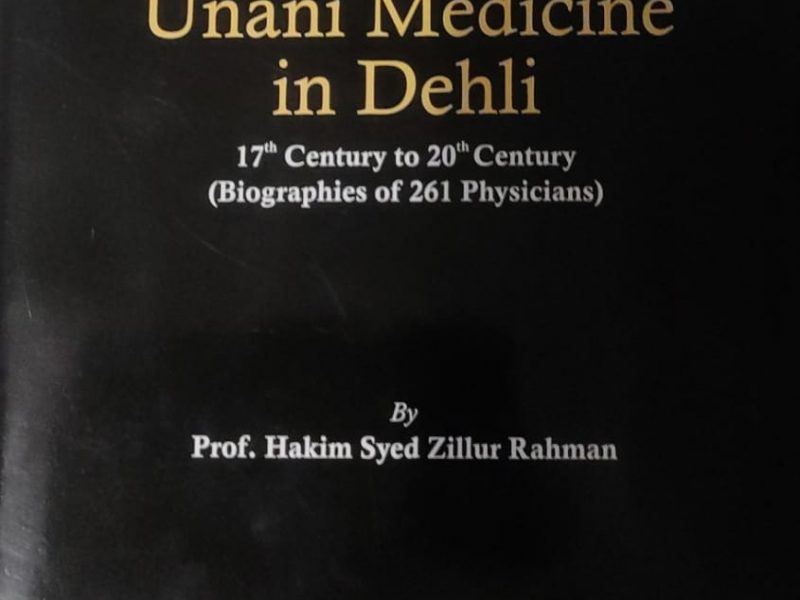
Delhi just got richer by another book by Zillur Rahman — Dilli aur Tibbi Unani which has just come out in Urdu. It is translated in English by Toronto-based Zakaria Virk, titled ‘History of Unani Medicine in Delhi – 17th Century to 20th Century – Biographies of 261 physicians’.
source: http://www.thepatriot.in / The Patriot / Home> Delhi NCR / by Rana Siddiqui Zaman, Delhi NCR / November 15th, 2023
Mir was among 139 Padma awardees announced on Saturday, making him one of only two Padma Shri awardees from Jammu and Kashmir this year
Farooq Ahmad Mir’s 60 years of artistry earn Padma Shri
Srinagar :
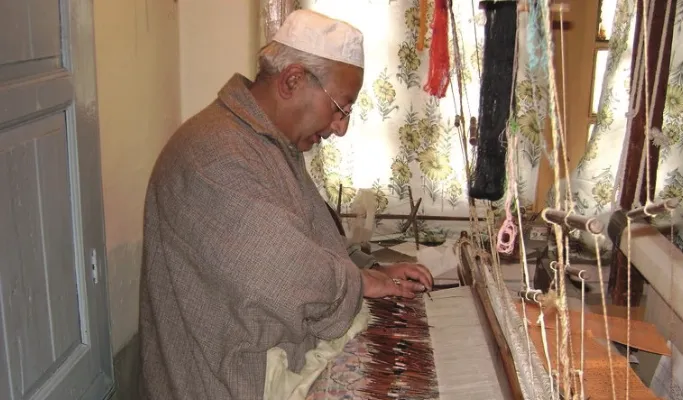
In a heartfelt tribute to the art of craftsmanship, Farooq Ahmad Mir, a master shawl weaver from Srinagar, was conferred the prestigious Padma Shri award on January 25. At 73 years old, Mir embodies the spirit of dedication, having devoted over six decades to a craft that intertwines patience with artistry.
Mir was among 139 Padma awardees announced on Saturday, making him one of only two Padma Shri awardees from Jammu and Kashmir this year.
Starting his journey at the tender age of 10, Mir’s story resonates through generations. “Pashmina artisans require patience, much like education. It teaches us about the intricate nuances of our craft,” he reflects, drawing parallels between learning and weaving. Hailing from a lineage of artisans, Mir has not only preserved but revitalised the Kani shawl tradition, once favored by Mughal, Afghan, Sikh, and Dogra rulers.
Mir’s influence extends beyond his family; he has painstakingly taught the art of Kani shawl weaving to over many individuals in Srinagar’s old city.
“In a world where modern careers are alluring, many aspiring artisans are deterred by societal perceptions and a lack of patience for traditional craft,” he notes. Yet, Mir’s commitment to his heritage has inspired not only his children, skilled weavers in their own right, but countless young men and women in his community.
“Your work should speak for itself,” Mir shares humbly when asked about his relative anonymity in a world that often celebrates flashy accolades over dedication. His contributions, however, haven’t gone unnoticed. He has received multiple national and state awards, including recognition from Prime Minister Narendra Modi himself.
The exquisite Kani shawls, woven using cane needles rather than shuttles, can take between four to eighteen months to create. However, the beauty of this art form is in jeopardy. As younger generations lean towards more modern occupations, the skills required to produce these heirlooms risk fading away. Mir’s tireless efforts aim to ensure this heritage is not lost.
Born into a weaver’s family in Srinagar, Mir’s start was modest. Despite barriers to formal education, he channeled his passion into honing his skills, becoming one of the finest artisans in Kashmir. Alongside his successful weaving career, he managed to educate his siblings and inspire a new wave of artisans dedicated to preserving Kani shawl weaving.
In an age driven by industrialisation, the importance of handmade products is gaining renewed appreciation globally. Mir stands as a pioneer in safeguarding this cultural legacy, instilling pride in his craft and ensuring its continuation across generations. His handcrafted Kani shawls have not only found a place in the hearts of locals but also captured the attention of international clientele, including the Ambani family and major corporations like Tata and Aditya Birla Group.
Farooq Ahmad Mir’s journey exemplifies resilience and dedication. As an unsung hero of the Kani shawl tradition, he reminds us that true artistry thrives in the shadows, waiting for the right moment to emerge into the light.
Director Handicrafts and Handloom, Mussarat Islam in a tweet on social media extended heartfelt congratulations to Farooq Ahmad Mir on being awarded #PadmaShri 2025 for his significant contributions to Kani Shawl weaving and the preservation of Jammu and Kashmir’s rich cultural heritage.
source: http://www.greaterkashmir.com / Greater Kashmir / Home> Business / by Mukeet Akmali (headline edited) / January 26th, 2025
Manikfan, who speaks 14 languages, including French, German, and English, once constructed a ship using indigenous technology from Lakshadweep for Irish voyager Tim Sirven.
Marine researcher and Padma Shri awardee Ali Manikfan. (Photo | A Sanesh, EPS)
Kochi :
Marine researcher and Padma Shri awardee Ali Manikfan emphasised the need to return to nature as the only way to escape the impact of pollution, which has led to rising temperatures and natural disasters due to carbon dioxide released into the air.
Speaking as the chief guest at the National Workshop organised by the National Institute of Oceanography (NIO) in Kochi, Manikfan shared his experiences growing up on Minicoy, the Lakshadweep island, where people used to rely on tubers, coconuts, and fish for their existence. However, the introduction of rice and other products from the mainland in 1956 caused a cultural shift, resulting in people leaving the island and settling on the mainland.
Manikfan, who speaks 14 languages, including French, German, and English, once constructed a ship using indigenous technology from Lakshadweep for Irish voyager Tim Sirven. The 27-metre vessel, named Sohar, was made of timber and coir and was used by Tim for a 9,000 km voyage from the Oman coast to China.
The ship is now kept at the palace of the Sultan of Oman. After dropping out of school after Class VII, Manikfan got a job at the Central Marine Fisheries Research Institute (CMFRI) as a lab boy due to his keen observation of fish species in Lakshadweep lagoons.S Jones, a former director of the CMFRI, helped him in getting the job. He worked with the CMFRI for 20 years and discovered a rare fish that was named Abudefduf Manikfani after him. Manikfan also developed a lunar Hijri calendar, which he claims is the most scientific one to accurately calculate months and years.
(Photo | A Sanesh, EPS)
“The burning of petroleum fuel has caused climate change but the concerns over rising sea levels and submergence of Lakshadweep islands are uncalled for. There is no change in the ecosystem of Lakshadweep. People from the mainland brought diesel generators for power generation in Lakshadweep which has polluted the water and atmosphere.
We should tap renewable energy sources,” said Manikfan. Regarding the intervention of the Lakshadweep administrator in the cultural sphere of the islands, Manikfan is of the view that no one should impose their culture on others.
“He wanted to stop the distribution of meat for mid-day meals in Lakshadweep. The people in the islands have been consuming meat for ages and nobody should interfere with the food culture,” he added.
source: http://www.newindianexpress.com / The New Indian Express / Home> Kerala / by Manoj Vishwanathan / April 07th, 2023
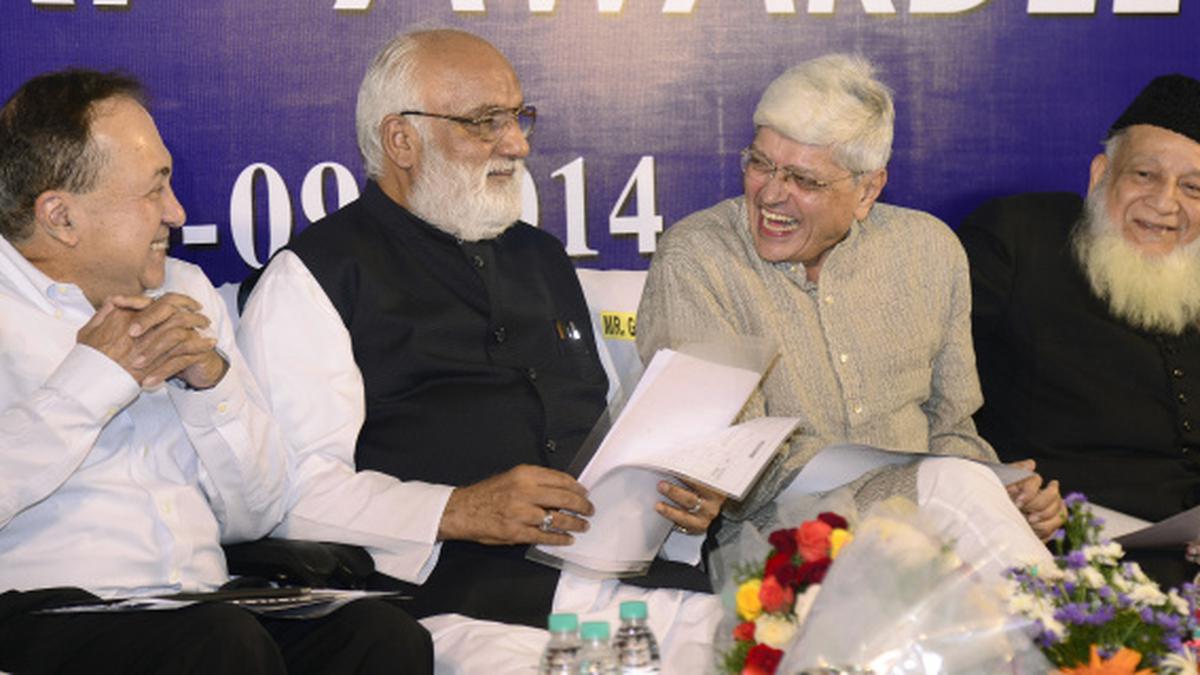
(From left) N. Ram, chairman of Kasturi & Sons, Nawab Mohammed Abdul Ali, Prince of Arcot, Gopalkrishna Gandhi, former Governor of West Bengal, and Padma Shri Hakim Syed Khaleefathullah Sahib — Photo: R. Ravindran
Former Governor of West Bengal, Gopalkrishna Gandhi, on Thursday, urged the Muslim Community to spread the system of Unani throughout the country.
Speaking at a function to felicitate eminent Unani practitioner Hakim Syed Khaleefathullah Sahib, on receiving the Padma Shri, Mr. Gandhi said it was popularly thought that Unani belonged to the Muslim community, and not used by everyone as much as Ayurveda or Yoga.
He said that though modern medicine had its place in healing, Unani and Ayurveda should be used in the treatment of chronic ailments.
Chairman of Kasturi & Sons, N. Ram, said the Hakim was a humble man representing a great tradition of indigenous healing, and he had combined his tradition with modern medicine.
He was an institution builder and wanted his knowledge to be institutionally sustained, enriched and developed. Mr. Ram also released a booklet about the Hakim.
Prince of Arcot, Nawab Mohammed Abdul Ali, who received the first copy of the booklet, said the connection between the House of Arcot and the Hakim’s family dated back to 150 years.
Among those who offered felicitations were T. Rafeeq Ahmed, convenor, Committee of Hosts, S.K. Khadri, U. Mohammad Khaleelullah, P.S.M. Syed Abdul Khadir, and Akhtarul Wasey, commissioner for linguistic minorities in India.
source: http://www.thehindu.com / The Hindu / Home> News> Cities> Chennai / by Special Correspondent / September 05th, 2024
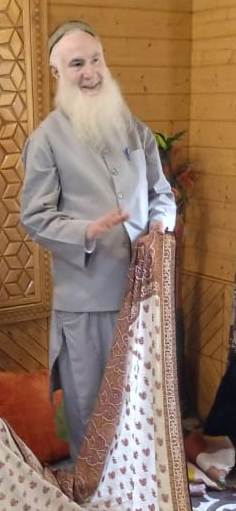
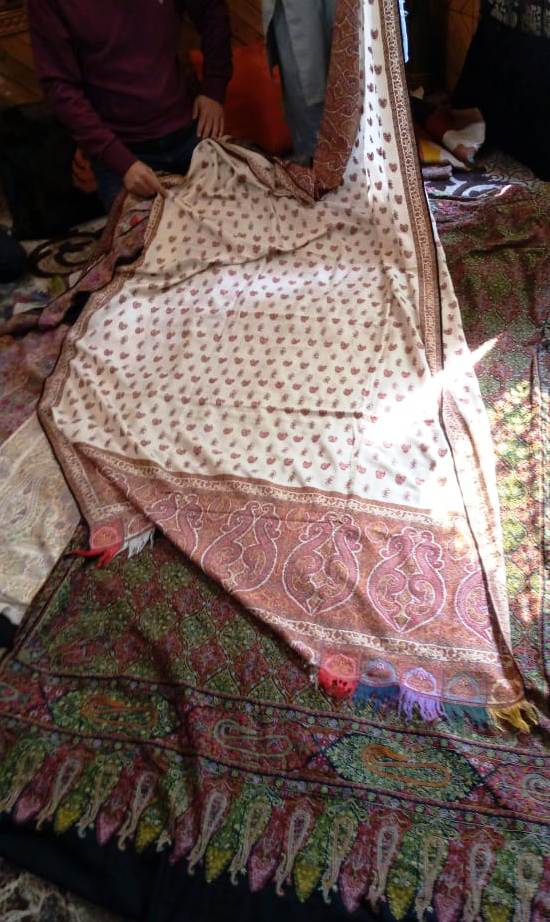
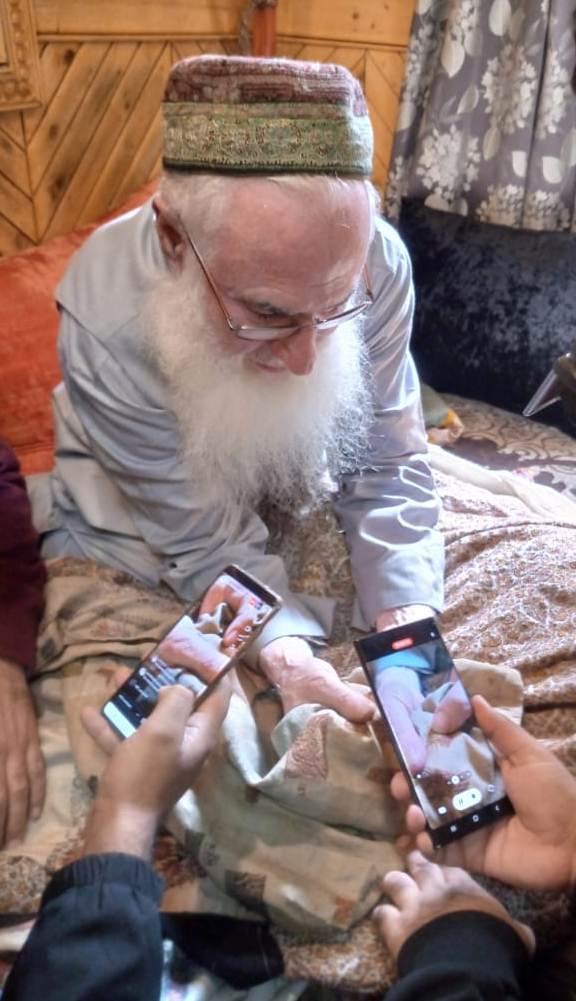
Master-craftsman Ghulam Rasool Khan had once made a shawl using 360 individual pieces of ‘jamawar’. He has produced several other priceless jamawar designs for which he has received several state and national level awards including the prestigious Padmashree (2021).
Though Khan has not lost passion for this work, he regrets that the new generation does not take much interest in the craft and says the machine-made cheap varieties posed a great threat to the sector.
“Now, we have machine-made shawls that sell for Rs. 5000 and are no match for the original jamawar. This is the biggest threat to this craft as there is no match for a hand-made piece. This art requires a lot of hard work and patience but nowadays artisans do not have the patience,” Khan told reporters during a Craft Safari to Amda Kadal area of the old city on Saturday.
The safaris had been started in the wake of Srinagar making it to the coveted list of the United Nations Educational, Scientific & Cultural Organisation (UNESCO) in Crafts and Folk Arts Category for the year 2021.
Khan said they also used to receive orders worth Rs. 100 cr for ‘Arabi Rumal’ annually but due to entry of fakes, they had stopped receiving the same.
“There was a time when there was a great demand for Arabi rumal. The ones we make have different and intricate artwork that is not usually available in the market. There was a time when we used to receive orders to the tune of Rs. 100 cr annually from the elite Arabs. Unfortunately, the same has stopped now,” he said.
An official of the Handicrafts Department said the master craftsman had received several awards in recognition of his hard work.
“Though many artisans have received Padmashree, Ghulam Rasool Khan is the only one who has received it for his jamawar works. He has also received several other awards at the state and national level. His enthusiasm, patience, and knowledge of the colours and designs enabled him to bring out the extraordinary work. He also made a shawl using 360 individual pieces of jamwar to make the pattern,” the official said.
source: http://www.thekashmirmonitor.net / The Kashmir Monitor / Home> Kashmir> Latest News / by M Aamir Khan / October 22nd, 2022