Category Archives: Martyrs of the Nation

Evaluating Indian Kings: Tipu Sultan Stood Against the British with Valour and Courage

Mysuru, KARNATAKA :

The half-baked propaganda of communal forces against the Tiger of Mysore is trying to divide communities
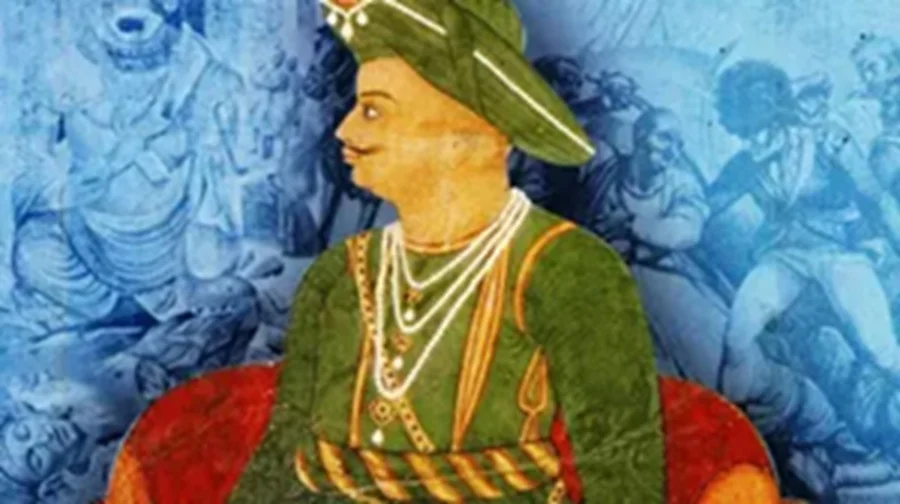
THE Tiger of Mysore (Sher-e-Mysore) Tipu Sultan often finds space in sections of the media, especially in Karnataka. There have been occasions of State-sponsored celebrations of his birth anniversary and the Bharatiya Janata Party (BJP) regularly creates obstacles to these celebrations, resulting in unnecessary ruckus. This time around, Tipu Sultan is in the news from Malegaon in Maharashtra.

The newly elected deputy mayor of Malegaon Shan-e-Hind Nihal Ahmad, put up the portrait of Tipu Sultan in her office, upsetting the Shinde group’s Shiv Sainiks and the BJP. These forces got the portrait removed with the intervention of the authorities. Some protests were also held.

Maharashtra Pradesh Congress Committee President Harshvardhan Sapkal got incensed and defended Tipu Sultan, claiming that the contribution of Tipu Sultan to Mysore is equivalent to that of Chhatrapati Shivaji Maharaj in Maharashtra.

But, Chief Minister Devendra Fadnavis did not like the idea of comparing Tipu Sultan and Shivaji Maharaj, as it was an insult to the latter. Following this absurd comment, the Congress office was pelted with stones by BJP workers and nearly seven people were injured in the ensuing mayhem.

The objection of the BJP to the statement from the Congress leader is that Tipu was a “mass murderer of Hindus” and he tried to convert Hindus to Islam. There are many other charges put against Tipu by Hindutva elements. Most of these try to project Tipu as anti-Hindu and a cruel king. This is far from the truth.

Lots of these myths are part of the communal narrative, accentuated by the British narratives, which are harsher against Tipu in particular. This is because he was one of the few rulers who fought against the British. Tipu had asked Nizam and the Peshwas to oppose the armies of the East India Company. He foresaw the dangers of British power entrenching in India.

Tipu’s administration was a mixed one, with many top officers being Hindus. Purnaiah served him as the Mir Miran (head of a department) and was crucial to his administration. Krishna Rao was his treasurer. Shamaiya Iyengar held a high-ranking ministerial position and Narsimha Iyengar held a position in the postal department. Tipu Sultan reportedly provided grants to the Sringeri Shankaracharya, including for the rebuilding of the temple and the installation of the Hindu goddess Sharada. He granted land and endowments to various temples throughout his kingdom. During his reign, the 10-day Dussehra celebrations were an integral part of the social life of Mysore.

In 1791, Maratha forces led by Raghunath Rao Patwardhan attacked and plundered the historic Sringeri Sharada Peetham, causing the Shankaracharya to flee. Upon learning of this, Tipu Sultan expressed deep anger, stating that those who committed such acts would face consequences, and promptly sent funds, gifts, and letters to restore the temple and reconsecrate the idol. The raid was part of the Third Anglo-Mysore War, during which Maratha forces caused significant destruction to the temple complex, including killing or wounding people and looting property.

Tipu Sultan, who frequently interacted with the Sringeri Jagadguru and addressed him with high respect, immediately ordered the Mysore administration to assist in the restoration, demonstrating his patronage of certain Hindu institutions. Evidence of this restoration is found in several letters in Kannada, preserved in the Sringeri monastery records, where Tipu requested the Jagadguru to pray for the prosperity of his kingdom.

Tipu Sultan was a staunch opponent of the British. There is an accusation against him that he persecuted some Hindu and Christian communities. The reason for this persecution, however, was purely political, not religious. About these persecutions, historian Kate Brittlebank says that “This was not a religious policy but one of chastisement”. The communities targeted by him were seen as disloyal to the State.

The communities Tipu targeted did not belong only to the Hindu stream. He also acted against some Muslim communities, like the Mahdavis. The reason was that these communities were supporting the British and were employed as horsemen in the East India Company’s armies. Another historian, Susan Bayly, says that Tipu Sultan’s attack on Hindus and Christians outside his state is to be seen on political grounds, as at the same time he had developed close relations with these communities within Mysore.

Sarfaraz Shaikh, in his book Sultan-E-Khudad has reproduced the ‘Manifesto of Tipu Sultan’ in which he declares that he would not discriminate on religious grounds and would protect his empire until his last breath. He had a great interest in rocket technology. This finds appreciative mention in Dr APJ Abdul Kalam’s book, Wings of Fire.

It is interesting to note that in the Rashtriya Swayamsevak Sangh’s series for children on Indian history, they had published a book on Tipu in the 1970s. BJP’s Yeddyurappa had adorned Tipu’s headgear to solicit votes in the 2010 elections in Karnataka. Then President, Ramnath Kovind, sent a eulogising message on the occasion of Tipu Jayanti (2017). He has an RSS background. He praised Tipu by saying that “Tipu Sultan died a heroic death fighting the British. He was also a pioneer in the development and use of Mysore rockets in warfare.”  Tipu – along with Rani Laxmi Bai – are also depicted as freedom fighters through drawings in Part XVI (page 144) of the original, hand-written and illustrated copy of the Indian Constitution.

Due to his policies, Tipu was popular among the people of Mysore. There are many folk songs, sung in villages, praising him. It is for this reason that one of our greatest playwrights, Girish Karnad, said that had Tipu been a Hindu, he would have the same status that Shivaji Maharaj has in Maharashtra. This is very close to what Sapkal stated, nothing extra.

This whole incident of opposing the portrait of Tipu in the Deputy Mayors’ office is one more instance of communal forces latching on to divisive politics. Kings should not be seen just by their religion; their policies towards people of different religions and people’s welfare should be the major criterion for evaluating them. Tipu stands very tall in this scale of religious tolerance. The half-baked propaganda of the communal forces is trying to divide communities.

A major tribute to Tipu was paid by Subhash Chandra Bose. He adopted Tipu’s ‘springing tiger’ as the insignia of Azad Hind Fauj, which fought against the British. The major contribution of Tipu was to forewarn the Indian rulers about the advancing threat of the East India Company, the British. It was for this that he bravely fought against the British and laid down his life in the fourth Anglo-Mysore War. The communal forces who are out to demonise Tipu belong to the ideology that did not even lift a little finger against the British rule.

source: http://www.clarionindia.net / Clarion India / Home> Opinion / by Prof Ram Punyani / February 18th, 2026
Remembered in files, erased in life: Jharkhand’s forgotten martyrs of 1857

JHARKHAND :

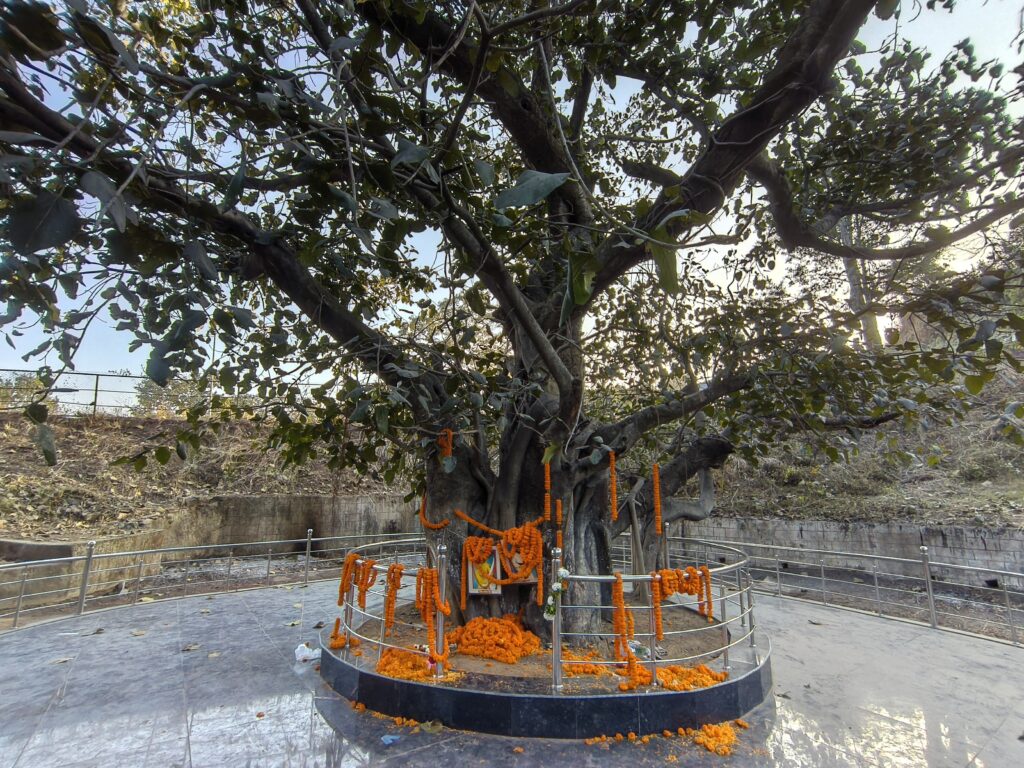
The Banyan tree on which the execution took place. Photo: Ghulam Ahmad Raza

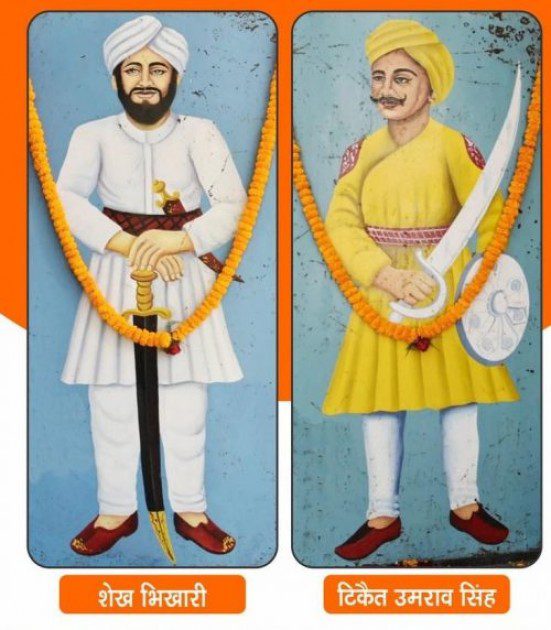
During the 1857 revolt against British rule, Jharkhand too witnessed armed resistance. The rebellion had spread across regions including Ranchi, Hazaribagh, Ramgarh, Palamu and Singhbhum. In the dense forested border areas of Ranchi and Hazaribagh, the rebel forces were led by Shaheed Sheikh Bhikhari Ansari and Tikait Umrao Singh. From the dense jungles of the Chuttu Palu valley, their army fought British troops and prevented Ranchi from falling under colonial control. Both leaders were captured by the British forces on January 6, 1858 and were publicly executed by hanging on January 8, 1858, in the same Chuttu Palu valley.

The banyan tree on which they were hanged still stands today. The Jharkhand government has developed the surrounding area as a martyr memorial with the stated aim of preserving history and keeping alive the legacy of the region’s sites of resistance. Yet even today, many residents of the Chuttu Palu village where the memorial stands remain unaware of who these martyrs were.

Fifty-eight-year-old Nirmal Kumar, who works as a stone breaker near the memorial, often rests inside the premises during breaks. He says he has been coming here since childhood. Despite this, he is unaware of the historical significance of the site and does not recognise the names of Sheikh Bhikhari Ansari or Tikait Umrao Singh.

“I only know that blankets are distributed here every year on January 8,” he said. On the martyrdom anniversary, social workers and officials visit the site to pay tribute and distribute essentials among the poor.

Sanjay Munda, a resident of Chuttu Palu village, said that even today, most villagers do not know about the martyrs or the memorial’s history. “Members of the surrounding Scheduled Tribe (ST)  and Scheduled Caste (SC) communities refer to the site in the local language as Fasiyahi Bar (tree where the hanging took place). Most people do not know about the 1857 revolt or the sacrifice of Sheikh Bhikhari and Tikait Umrao Singh,” he told Maktoob.

Despite the lack of awareness, locals often bow their heads in respect when passing the site.

The memory of these two revolutionaries who laid down their lives fighting British rule is slowly fading. Their history has largely been reduced to government files and digital web pages. On martyrdom days, ministers, officials and locals pay tributes, but beyond symbolic gestures, little is done. While the Jharkhand government has taken some steps to acknowledge them, no substantial initiative has been taken by the central government to formally recognise or honour their contributions.

Dr Muzaffar Hussain, researcher and author of Jharkhand ki Muslim Vibhutiyaan, says Muslim, SC and Adivasi martyrs have not received the recognition they deserve. “Jharkhand has produced many revolutionaries who sacrificed their lives for India’s freedom, but recognition has been limited largely to Birsa Munda only,” he said.

He points out that the 1857 revolt took place nearly 40 years before Birsa Munda’s Ulgulan (revolt). “Names like Nadir Ali, Imam Ali, Jatra Tana Bhagat, Sidhu–Kanhu, Phulo–Jhano, Nilambar–Pitambar, Sohbat Miyan, Chandan Miyan, Jaggu Miyan and Najahat Hussain are a part of Jharkhand’s resistance history during the 1857 revolt, yet they remain largely forgotten.”

Hussain argues that the Jharkhand government must project its revolutionaries on a larger scale for the central government to take meaningful steps. “Even platforms like Google and Wikipedia carry very limited information about them,” he said.

He suggests state-funded research, naming welfare schemes and government buildings after revolutionaries and honouring their descendants are ways to restore their place in public memory.

Ruchi Kujur, an activist working on SC and ST rights and a member of the Jharkhand State Commission for Protection of Child Rights, said every state has its own history, and Jharkhand is rich with stories of courage and resistance. “The list of Adivasi and SC heroes is long,” she said.

“People need to be made aware of their ancestors’ sacrifices. When these revolutionaries are honoured, it inspires the younger generation to work for society and the nation.”

Situated amid a valley rich in natural beauty, the martyr memorial complex (Shaheed Sthal) has been developed with basic amenities. Yet, several factors discourage people from visiting the site, further deepening the lack of public awareness about the martyrs. Surrounded by dense forests and hills, the memorial lies in an isolated location, with no human habitation within a radius of nearly five kilometres. This isolation is a major reason why people hesitate to visit the site, either alone or with their families.

The premise includes resting sheds, benches and toilet facilities. However, due to poor maintenance, thick shrubs have grown across the complex. Lights installed in the area and doors of the toilets have reportedly been stolen. Although the police conduct patrols from time to time, the absence of adequate security continues to deter visitors.

Ghulam Ahmad Raza is a Jharkhand-based freelance journalist with over four years of experienceHe has worked as a City Reporter with Pratah Awaz and as a Sub Editor with Prabhat MantraHis reporting focuses on marginalised communities, forgotten histories and grassroots political narratives.

source: http://www.maktoobmedia.com / Maktoob Media / Home> East India / by Ghulam Ahmad Raza / January 29th, 2026

First documentary on Kayamkhanis will make you feel proud of this Rajashthan community

RAJASTHAN :

Manjit Thakur, Director of the Kayamkhani Bravehearts

New Delhi :

“There is no Kayamkhani who has been hit with bullets in his back,” says a veteran of the Indian Army, who like many others of his community have dedicated his life to uniform, discipline, and service to the nation.

This documentary, Kayamkhani Bravehearts is the saga of the Kayamkhani, a Muslim community from Rajasthan, whose first preference for a career is military or Police and who consider service to the nation as a matter of pride and responsibility. For them, patriotism is not just a slogan, but a tradition passed down through generations. The documentary is documentation of the story of these valiant sons of the soil who defended the country at the border, faced enemy bullets head-on, and who consider martyrdom an honour.

The first glimpse of the documentary, a 33-second teaser, is enough to send shivers down the spines of viewers. The teaser suggests that this film will not merely be a presentation of facts but an experience steeped in emotion, sacrifice, and patriotism. Watching it, viewers will not only be filled with pride but will also be compelled to understand that in defending the nation, only duty matters, not religion.

The history of the Kayamkhani Muslim community of Rajasthan is replete with valour, discipline, and service to the nation. Almost every family in this community has been connected to the armed forces in some way. The dream of the youth here is not to become a big businessman or an officer in a high-ranking government position, but to serve their motherland by joining the Indian Army, paramilitary forces, or the police.

Watch the teaser here:

Manjit Thakur, director and screenwriter of the documentary, states that soldiers from the Kayamkhani community have so far earned four Shaurya Chakras, 18 Sena Medals, and five Vishisht Seva Medals.These figures would be a source of pride for any community, but for the Kayamkhanis, they represent not just honour, but a symbol of responsibility.When it comes to sacrifice, this community has not lagged.

In Danduri village, which is now known as the “village of soldiers,” 18 Kayamkhani Muslims were martyred for the country. Similarly, 10 martyrs each from Jhajhot and Nua villages also laid down their lives for their motherland. These figures are not just numbers, but represent the tears of those mothers, the pride of those families, and the essence of the soil that gave birth to such brave sons.

The documentary presents the stories of these martyrs in a deeply sensitive and impactful manner. The camerawork, editing, and graphics are of a high standard, emotionally connecting the viewers to the narrative. Research, hard work, and authenticity are evident in every frame.

Before making this documentary, the Awaz-The Voice team conducted comprehensive research. Under the leadership of Editor-in-Chief Atir Khan, the team spent a long time researching, delving into history, and understanding the ground realities. The documentary was shot over several days in different villages of Rajasthan. The filming continued late into the night to present the true lifestyle, struggles, and pride of this community to the world.

The documentary also reveals several surprising facts. For example, Kayamkhani Muslims consider cows their most valuable asset and cannot even imagine harming them. This fact shatters the stereotypes that are often formed in society without proper understanding.

Manjit Thakur recounts that when the team arrived in the Kaimkhani villages, they were welcomed with a sense of pride and warmth. The villagers not only welcomed them wholeheartedly but also openly shared their stories, pain, and pride. This trust became the soul of the documentary.

Speaking about the documentary’s objective, Atir Khan sais that in today’s world, negativity has become the unique selling proposition of news. In this environment, Awaz-The Voice is the sole platform which brings forth positive stories of cooperation, and peaceful coexistence from India and around the world.

Awaz team with locals in a Rajasthan Village

He believes that beyond the walls of faith, caste, region, and language, Indians have many shared concerns, challenges, and dreams for the future that have the potential to bring people and communities together. Awaz-The Voice’s content promotes progressive, positive, and nation-building ideas not only in India but also among Muslim communities abroad.

This documentary is an extension of that very idea—an attempt to amplify the voice of true patriotism, a voice often drowned out by the noise of hatred. This film reminds us that the uniform has no religion, and every drop of blood shed for the country is purely Indian.

On release, this documentary will undoubtedly not only move viewers but also make them think, feel proud and energise them to serve the nation. This is not just the story of the Kayamkhani community, but the story of an India where the country comes first.

source: http://www.awazthevoice.in / Awaz, The Voice / Home> Stories / by Manjit Thakur / posted by Aasha Khosa, ATV / January 17th, 2026

Kasargod-born diplomat Nagma Mohamed Malik appointed India’s ambassador to Japan

Kasargod, KERALA / NEW DELHI :

Tokyo :

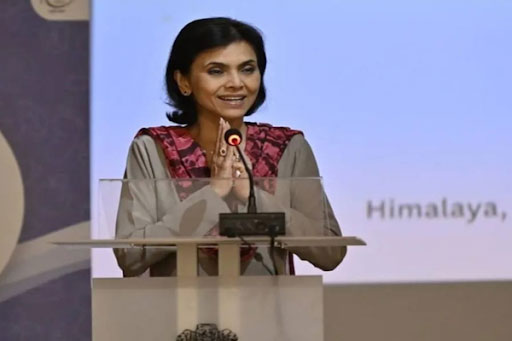
Veteran diplomat and Kasargod native Nagma Mohamed Malik has been appointed as India’s Ambassador to Japan, marking a notable new chapter in her three-decade career in the Indian Foreign Service (IFS).

She currently serves as India’s Ambassador to Poland and will now assume one of the country’s most strategically important diplomatic roles in East Asia.

Though she spent much of her childhood and education in New Delhi, Nagma traces her roots to Fort Road in Kasargod. She often says that “no matter where I go in the world, I always introduce myself as someone from Kasargod. It is my identity, and I wear it with pride.”

She is the daughter of Mohamed Habeebullah and Julubanu, and the daughter-in-law of the noted Kannada author Sara Abubakar, who is credited with pioneering a literary movement through her writings in Kasargod and Dakshina Kannada.

Nagma comes from a distinguished family with a strong tradition of public service and sacrifice. Her uncle, Lieutenant P. Mohamed Hashim, was martyred in the 1965 Indo-Pakistan war at the age of just 23. To honour his sacrifice, a street in Thalangara bears his name, and a memorial pillar known as Pulikkunnil Stupa has been erected. Her grandfather, Ahmad, was among the first Muslim lawyers to practise in the Kasargod Court between 1930 and 1970, leaving behind a lasting legacy of legal excellence in the region.

After joining the Indian Foreign Service in 1991, Nagma earned the distinction of becoming India’s first woman deputy chief of protocol (ceremonial). She began her diplomatic career in Paris, where she worked at the Indian Embassy and at UNESCO. Later, she served with the Prime Minister’s Office under I K Gujral, managing the Western Europe desk.

Over the years, her overseas postings have included roles as first secretary and counsellor in Nepal and Sri Lanka, deputy chief of mission in Thailand (2010–2012), ambassador to Tunisia (2012–2015), high commissioner to Brunei Darussalam (2015–2018), and ambassador to Poland (2021–2024).

Back home in India, she has held several strategic positions within the ministry of external affairs, such as deputy spokesperson; director of the Eurasia division; head of the Policy Planning & Research Division (2019–2020); and additional secretary (Africa), overseeing India’s relations with East and Southern African nations.

Nagma holds a bachelor’s degree in English Literature and a masters in Sociology, and she is fluent in English, French, Hindi, Urdu, and Malayalam — skills that have served her well across her global appointments. Beyond diplomacy, she has a deep interest in Indian classical dance, music, and literature.

On the personal front, she is married to Farid Inam Malik, a lawyer based in New Delhi, and the couple has a son and a daughter.

With her appointment to Tokyo coming at a critical moment for India–Japan relations, Nagma Mohamed Malik is expected to strengthen bilateral ties. Her journey from the lanes of Kasargod to the corridors of global diplomacy is not just a personal triumph but also an inspiration to aspiring diplomats across the nation.

source: http://www.daijiworld.com / Daijiworld.com / Home>Top Stories / by Daijiworld Media Network – Tokyo / October 17th, 2025

Press Club of India remembers Maulvi Mohammed Baqar, the doyen of India’s investigative journalism

DELHI :

Press Club of India remembers Maulvi Mohammed Baqar on his 167th birthday on September 15, 2024.

New Delhi :

The Press Club of India (PCI) that has remained the last bastion to hold the flag of media’s independence high in the country, organised a programme on Sunday to remember the contributions of Maulvi Mohammed Baqar who used the power of his pen to challenge the Britishers who had brought a law to gag the press in India in the middle of 18th century.

Organized on the 167th martyrdom anniversary of Maulvi Baqar, the programme was attended by a host of writers, journalists, historians, academicians and intellectuals.

Shedding light on the contributions of Maulvi Baqar considered to be the founder of “spot” and investigative journalism in India, noted historian Dr. Swapna Liddle, author of The Broken Script, recalled Maulvi Baqar’s bold reporting of the events in Delhi’s 1857 revolt popularly known as India’s First War of Independence. It was when the press did not have facilities as available today, but Maulvi Baqar used to collect news stories from the field and print them in his newspaper published in the Urdu language.

The Britishers felt disturbed by the investigative reporting of Maulvi Baqar that became the reason for his martyrdom. British Army tied Maulvi Baqar to the mouth of a large gun and blew him into pieces.

Liddle emphasized how Moulvi Baqar became the voice of resistance against British rule, making him a significant figure in both the 1857Revolt and in the annals of Indian journalism.

According to Dr. Liddle, Moulvi Baqar’s work offers invaluable lessons for journalists today. His views on British governance, racial discrimination, job inequalities, and the exploitation of India’s wealth laid a foundation that remains relevant. Baqar’s sharp critique of British policies, combined with his unwavering call for unity among the people of Delhi, positioned him as a crucial figure in the anti-colonial struggle.

Presiding over the event, Gautam Lahiri, PCI President, hailed Moulvi Baqar as a pioneer of Indian journalism. Lahiri reflected on the state of modern journalism, pointing out that Baqar’s dedication and principles serve as a stark contrast to the current state of media, as reflected in India’s declining position on the World Media Freedom Index.

“It’s unfortunate that instead of rising to the level of journalism Baqar practiced, we seem to have regressed,” Lahiri noted, calling for introspection within the media industry.

Lahiri also stressed the importance of protecting institutions like the PCI, which he described as a cornerstone of Indian politics and modern history. “This land was given to us by our first prime minister, and it even served as the residence of former Prime Minister Indira Gandhi for a time. We must protect both the building and the institution, while upholding the constitutional values that it stands for.”

Senior journalist AU Asif, former member of PCI management committee, praised Baqar for his trailblazing work in investigative and field reporting. He underscored how Baqar’s journalistic integrity set a lasting example for future generations.

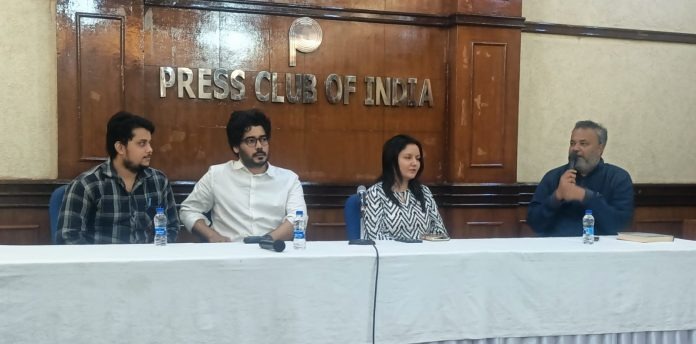
A panel discussion followed, focusing on Baqar’s legacy and the challenges faced by Urdu journalism today. Panelists included independent multimedia journalist Suhail Akhter, News18 Urdu anchor and author Munazah Shah, and Tasleem Raja, reporter for Siyasi Taqdeer and Qauwmi Aawaz. They discussed how Baqir’s newspaper, Delhi Urdu Akhbar, became a vital voice despite having a modest circulation of just 80 copies. The panel emphasized that the publication’s influence stemmed from its powerful content, which resonated with readers during a time of great political upheaval.

The discussion also touched on the difficulties Urdu journalism faces today, including issues of subscription, funding, and content creation. The panel drew parallels between the courage Moulvi Baqar exhibited in standing up to the British and the challenges modern journalists face in dissenting against the ruling establishment. The event was moderated by Mahtab Alam, journalist and PCI Joint Secretary.

source: http://www.indiatomorrow.net / India Tomorrow / Home> News / by Mohammed Naushad Khan / September 16th, 2024

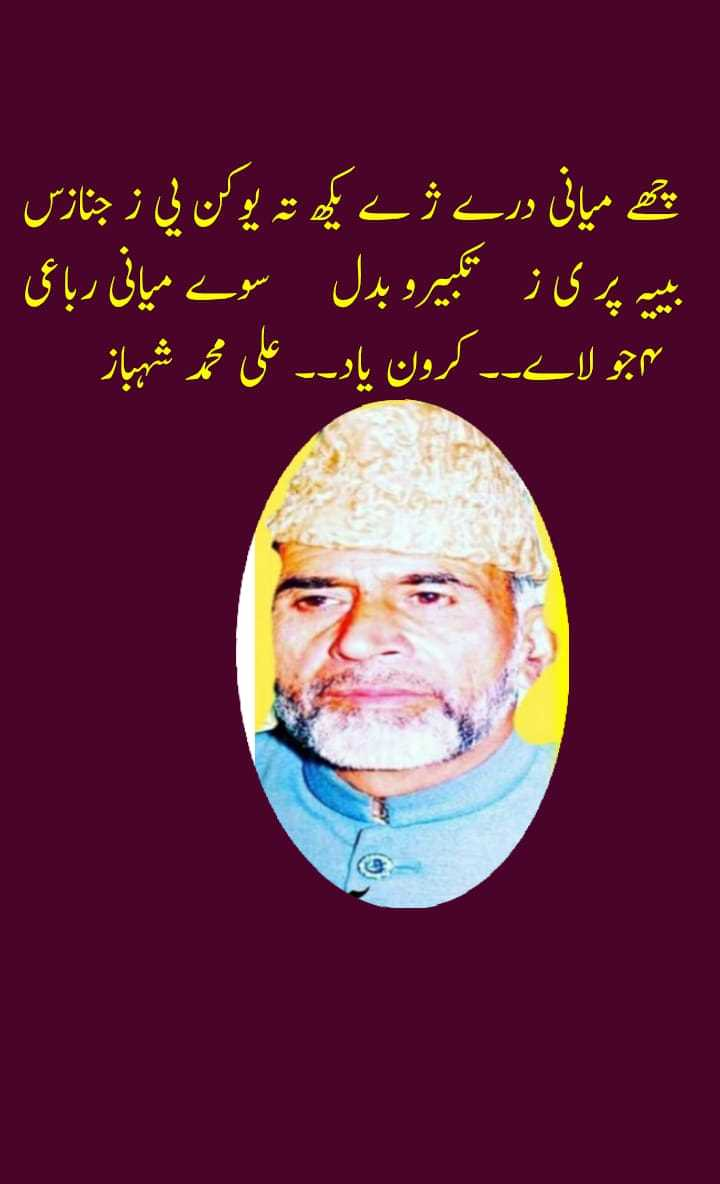
Noted poet, social reformer , guide A M Shahbaz remembered

Shathgund Handwara Village, JAMMU & KASHMIR :

Popular Kashmiri poet and scholar Ali Mohammed Shahbaz was remembered across jammu and Kashmir on his 24th death anniversary. In this connection different functions and events were organized at various places and sites to pay glowing tributes to late literary luminary, who was Martyred  by unidentified gunmen on July 4,1996 at his his native village Shathgund Handwara. 

The major online event was organized by Kashmir Marksz- e -Adab -o -Saqafat chrar-i- Shareef.

The event was presided over by prof Mohd  Zaman  Azurdah. A large number of distinguished scholars, participated in the program and paid rich tributes to him. The speakers highlighted various dimensions of life and contribution of late poet.

The main attraction of the event was first ever Shahbaz memorial award. The award was presented to popular Kashmir folk singer, a house hold name of Kashmir folk singer Manzoor Ahmad Shah.

Dr Aziz Hajini, Convener Northern Regional Board Sahitya Akademi, New Delhi Presented the award to Manzoor Ahmad Shah. Dr Gazanfer Ali, president Kashmir Markaz e adab o Saqafat Chrari Shareef , Gen secretary Anayat Gul and son of late poet, Nazir Qureshi Ibn e Shahbaz were also present on the occasion. 

The prominent poets and writers  paid rich tribute to Late Ali Mohd Shahbaaz which  include Gh Qadir Shaheen, Rahim Rehna, Gh Rasool Josh, Mushtaq Mehram, Producer Radio kashmir, Javed Sofi, Nazim Nazir,  noted journalist and editor of  Brighter Kashmir  Farooq Wani.

Dr Sohan lal Koul, Bashir Bhadarwahi, Prem Nath Prem, Shown at Shafi Masoodi , Javed Rasool 

source: http://www.brighterkashmir.com / Brighter Kashmir / Home / by BK News Service / July 05th, 2020

Ghulam Dastagir, the Unsung Hero of Bhopal Gas Tragedy

Bhopal, MADHYA PRADESH :

FORGOTTEN HERO OF BHOPAL GAS LEAK TRAGEDY: The saviour Ghulam Dastagir, the Deputy Station Superintendent at Bhopal Railway Junction who saved thousands of lives on December 2 and 3 went unrecognised and was buried in the history.

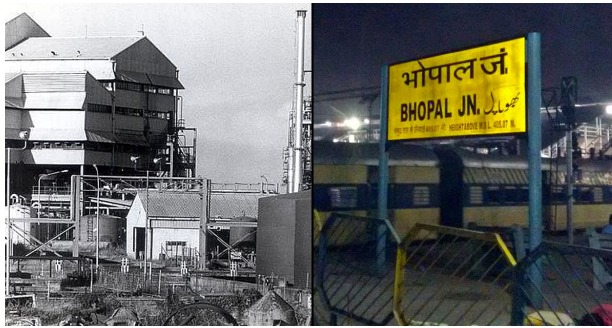
Much has been said and written about the fateful Bhopal Gas Leak Tragedy in 1984 that claimed around 5,479 lives while affecting over six lakh people with serious skin disorders. However, the saviour Ghulam Dastagir, Deputy Station Superintendent at Bhopal Railway Junction, who saved thousands of lives on December 2 and 3,1984 went unrecognised and was buried in history.

Ghulam Dastagir’s case isn’t an isolated one as thousands of Muslim freedom fighters who sacrificed their lives for the cause of Indian freedom struggle were more often than not either concealed or forgotten by the Union Government on one pretext or the other. This scribe flipped through the pages of history to zero in on the world’s deadliest industrial tragedy which sent shockwaves among the people across the globe.

Even after four decades after the Union Carbide Factory gas leak episode, the scars still remain in the hearts of the victim families.  What is irking is the fact that a memorial erected at Bhopal Railway Junction for 23 railway men, who lost their lives while rescuing people, have been inscribed but there is hardly any mention about Ghulam Dastagir who played a pivotal role in the rescue operations on the dreadful day.

Sources from various news portals revealed that a deadly gas leak from the Union Carbide factory engulfed the Bhopal city, killing thousands and injuring many more. Amidst the chaos and panic, one man acted swiftly and bravely to save lives: Gulam Dastagir, Deputy Station Superintendent at Bhopal Railway Junction. Few people know that during the Bhopal gas tragedy, a heroic stationmaster risked his own life to save others. But for him the causalities in the catastrophe would have been much higher.

On the fateful night of December 2, 1984, Ghulam Dastagir found himself in the midst of routine paperwork. Little did he know that this night would forever alter the course of his life. As the Bombay-Gorakhpur Express was due to arrive, Dastagir’s routine took a drastic turn when he sensed something was amiss. His swift action would soon prove to be the difference between life and death for many. Upon stepping out of his office, Dastagir experienced burning eyes and a bitter throat – a tell-tale sign that something was terribly wrong. Shockingly, he discovered the lifeless form of Dhurva, the station superintendent, in his cabin. Acting swiftly, Dastagir communicated with nearby stations to halt incoming trains, potentially saving countless lives. Despite the looming danger, he ordered the immediate departure of the Gorakhpur-bound train, ensuring the safety of its passengers.

As the deadly gas claimed the lives of 23 station staff members, including Dastagir’s own son, he and his team worked tirelessly to manage the crisis. Despite struggling to breathe, Dastagir remained composed, coordinating medical help, and providing a ray of hope in the face of impending doom. The station became a scene of chaos as large crowds desperately sought escape from the poisonous air, and Dastagir’s leadership became a beacon of strength.

While Dastagir’s selfless actions spared countless lives, the tragedy took a heavy toll on him personally. The toxic gas led to health issues, with a lump forming in his throat, and subsequent years were marked by frequent hospital visits. The heavy personal cost included the loss of his son to the gas and another developing a permanent skin infection. Despite the challenges, Dastagir continued to exhibit resilience until his demise in 2003.

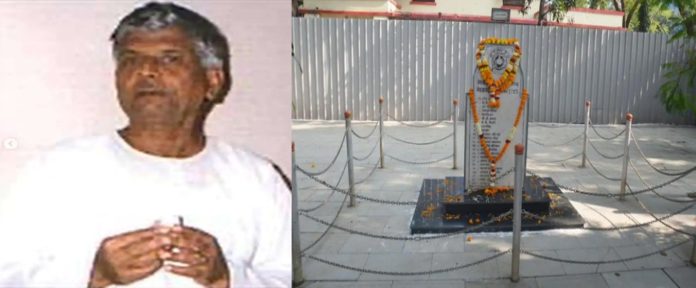
At Bhopal Junction, a memorial stands in honour of 23 railway personnel who lost their lives on that tragic night. Unfortunately, Ghulam Dastagir’s name doesn’t grace the memorial, as his demise occurred nearly two decades later. However, during those critical hours in December 1984, Dastagir exemplified the truth in Gerard Way’s famous quote, proving that heroes emerge from ordinary people who rise to extraordinary challenges.

Meanwhile, Netflix’s series, “The Railway Men” made headlines based on the Bhopal gas tragedy of 1984. Amidst the widespread acclaim for the show, this review reflects on one of the unsung heroes of that tragic night – the deputy station master of Bhopal railway station, Ghulam Dastagir. His extraordinary actions saved lives and offered a glimmer of hope in the face of an unimaginable disaster.

Shadab Dastagir, youngest son of late Dastagir, while speaking to a media in 2023, said that his father’s heroic role in the entire episode on Bhopal Railway Junction on the night intervening December 2 and 3, 1984, has mainly remained unsung.

“Little official acknowledgment and appreciation came his way in these four decades. And now when an OTT series has been made on the episode, it is upsetting that we were never consulted about the actual happenings,” he told The Week.

“I have watched the teaser and the official trailer and I can make out that the character being portrayed by Kay Kay Menon is based upon my father. But then we are highly apprehensive as to how much close to truth the character has been made,” Shadab, who is into the family business of chemicals and fertilisers, said.

He also mentioned that the family had already sold out the copyright of a script on Dastagir’s life and work – based on narration by his father himself during his lifetime – to a production house called Small Box Media. The Mumbai-based production house was planning a full-length movie based on the script when YRF cut in with the miniseries.

A forgotten hero whose sense of duty and commitment saved countless lives, Dastagir’s story deserves to be recognised and remembered by his fellow countrymen.

[The author is former Indian Express and Deccan Chronicle chief]

source: http://www.radiancenews.com / Radiance News / Home> Focus> Social Service / by M Rafi Ahmed / September 02nd, 2025

Martyr Mohd Imteyaj gets Vir Chakra for Op Sindoor

Narayanpur Village (Chhapra), BIHAR :

New Delhi :

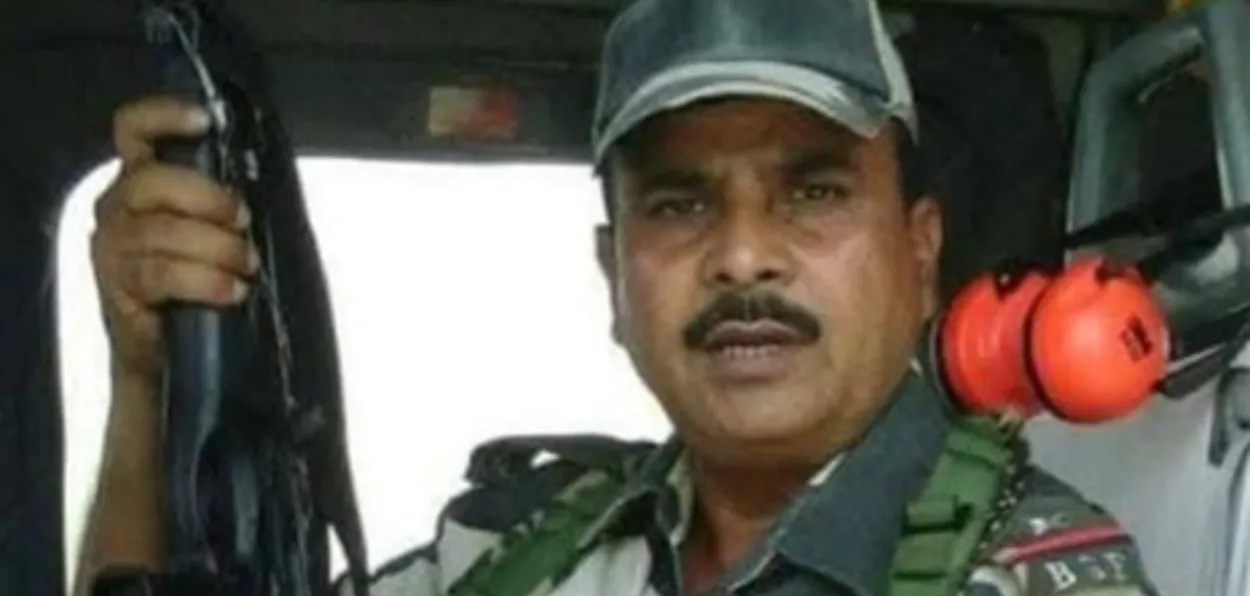
Border Security Force’s Sub-Inspector Mohd Imteyaj and Constable Deepak Chingakham were posthumously awarded Vir Chakra, the third highest war-time gallantry award – in recognition of their exceptional courage and self-less leadership in the face of adverse situation

Sub Inspector Mohammad Imteyaj was martyred on May 10, during cross-border firing along the International Border in RS Pura sector, Jammu and Kashmir.  

Constable  Deepak Chingakham hailed from Manipur. He sustained grave injuries during the exchange of fire with Pakistanis on the international border in RS Pura and laid down his life for the nation,

Imteyaj hailed from Narayanpur in Garkha, in Saran district of Bihar.

BSF posted the list of awardees on X:

He was posted on the international border in Ranbirsinh Pura sector in Jammu. According to a Border Security Force (BSF) official, Sub-Inspector Mohammad Imtiyaz led the front bravely and made the supreme sacrifice. 

He was buried with military honours in the cemetery located in Narayanpur village of Gadkha block of Saran district amid chanting of “Bharat Mata ki Jai” (Hail, mother India!). People showered their floral tributes on Imtiyaz’s body.

Mohammad Imtiyaz is survived by his wife, two sons, and two daughters. BSF said Mohammad Imtiyaz led from the front.

As soon as the news of Mohammad Imtiyaz’s martyrdom reached his home, initially his village and later the entire district went into mourning. A large crowd gathered outside his house; people were trying to show their sympathy to the family and gratitude to the brave son of the soil.

source: http://www.awazthevoice.in / Awaz, The Voice / Home> Stories / by Aasha Khosa, ATV / August 16th, 2025

1965 War: A Tale of War and Three Brothers

Mangrol (Gandhinagar District), GUJARAT :

About 28 years ago, I learnt one of the most fascinating tales of what military rivalry between India and Pakistan has meant for some families.

At a dinner party in New Delhi, an elegant gentleman walked up to me and asked if I was serving in the Indian Army. My haircut perhaps gave this away, as I answered in the affirmative (I was then an instructor at the Indian Military Academy, Dehradun). When I enquired if he had any military connections, he replied ‘yes’; his two elder brothers had both been officers. To this, my natural response was, “What were their regiments?” He then said with a sad smile, “Let me tell you a story.”
 
And this was the story he narrated to me:

Several years earlier, he had run into the Pakistani military attaché, Brigadier Beg, in India at a circuit house (Dak Bungalow) while driving on the Delhi-Ahmedabad highway. Apparently the attaché had upset him earlier in the day with his lack of road manners, and when informed of the same, to make up, the Pakistani Brigadier invited him for a drink. During the course of their conversation, and on learning that his guest (the gentleman who was narrating the incident to me) was an Indian Muslim, the Pakistani Brigadier said to him that it was only in the 1965 war that he learnt that Muslim officers were also serving in the Indian Army.
 
(The Indian Army’s armoured (tank) units had made substantial gains in fierce battles in the Sialkot sector of Pakistan’s Punjab. Many well known armoured regiments were part of India’s 1st Armoured Division’s thrust lines, such as Poona and Hodson’s Horse, 2nd Lancers, 3rd, 16 and 18 Cavalry. Many thought it was only a matter of time that Sialkot would fall to Indian troops, as Pakistan’s Armoured Division, despite its apparently superior tank units, was in retreat. Pakistan’s commanders desperately needed a tactical break to regain some of the momentum of battle.)
 
It was at this stage of the war—around 8 September 1965—that the Pakistani Brigadier, then a young Lieutenant, was summoned by his Brigadier Commander. He was asked plan and undertake a commando raid that would take him into Indian frontline positions around Sialkot. His task was to eliminate one or more Indian tank commander(s). This would leave that Indian unit briefly without a commander and give Pakistan that brief window of opportunity to break through India’s formidable frontline.
 
So this Pakistani officer (then a Lieutenant, now a Brigadier) set about preparing for the raid, to sneak in amongst Indian tanks, during darkness, and kill an Indian tank commander who was giving Pakistani troops a rough battle. So, on 8/9 September before dawn, Lieutenant Beg sneaked into his target area as Indian tanks were preparing for another day’s battle around Sialkot. (In those days, in the absence of night vision devices, tank battles were largely fought during day light). He soon identified a Squadron Commander’s tank, and climbed atop it unnoticed in the loud roar of tank engines as they were warming up for battle.
 
Peering inside the open cupola, he saw a Major in his radio headset who was poring over his maps, planning for another day’s battle. With no time to lose, Lieutenant Beg shot the Indian Major through the head. But before leaving the wounded Indian officer, Lieutenant Beg decided to take along some proof of having accomplished his mission. He quickly unbuttoned the shoulder flaps of  the Indian Major, and pulled out the cloth epaulets of his ranks from his shoulders. On this was also embroidered ‘16 CAV’, the title of his regiment. And in the breast pocket of the Major, he also found a holy pendant that some Muslims carry on them as a good luck charm. His job done, this young Lieutenant with his raid party then quickly crossed back over into the territory that Pakistani troops were still holding onto, before dawn broke.

Lieutenant Beg then immediately went to see his Brigade Commander, who had sent him on the raid. He met him in the early hours of the morning, where he proudly reported that he had accomplished his mission. His Brigade Commander asked him if he had any proof of it. The young Lieutenant pulled out the epaulettes of the rank badges of the Indian Army Major he had shot, and handed it over to his Brigade commander. Then he suddenly saw the Brigadier become tense. Lieutenant Beg said to the Brigadier that he had possibly killed an Indian Muslim officer, as he handed over the holy pendant he had recovered from the dead Major’s pocket. As an afterthought, he added that he was quite surprised that India’s army also had Muslim officers who were fighting with such commitment and valour against Pakistan.

At that point his Brigade Commander’s hands began to shake and he couldn’t control his emotions any more. His voice became heavy and his eyes filled with tears as he slumped into a chair. Lieutenant Beg asked the Brigadier, with due respect, what the problem was. In a voice choked with emotion, he replied: “Young man, I have just realised from the evidence you have provided that I had tasked you to kill my younger brother.” The Commander kept shaking his head and then went on to add, “I hadn’t the foggiest idea that it was the 16 Cavalry that was directly pitted against us, because Major MAR Sheikh, whom you have just killed, was my younger brother and one of its squadron commanders. And he was their only Muslim officer.” Lieutenant Beg could say little else, as he saluted and took his commander’s leave.

And when Lieutenant Beg finished telling this story to the man who had related it to me, this gentleman told the Pakistani officer, “Brigadier, it may surprise you to know that the two brothers you have spoken about were both older to me… I am the youngest of the three brothers.”

And as the Brigadier stared at him in disbelief, the narrator of this tale requested Brigadier Beg to visit his family home—which was only a few hour’s drive from where they were—to meet his aged mother, who had always wanted to meet someone who had fought against her son! When the Pakistani Brigadier met the old begum the next day (who didn’t know that her son had died of wounds inflicted by the Brigadier), she seemed pleased that the enemy thought well of him!

Records show that Major Sheikh died of wounds in his head sustained in battle near Sialkot on 10 September 1965. He was posthumously awarded the gallantry award of a Vir Chakra. His brother, the Brigadier, rose on to become a General in Pakistan.

source: http://www.openthemagazine.com / Open / Home> Web Exclusive / by Maroof Raza / August 27th, 2015

Ghee Bowman (1961-2025): A British historian who unearthed the stories of Indian soldiers at Dunkirk

BRITISH INDIA :

He shone the spotlight on the often-ignored role of the 2.5 million members of the British Indian Army who had served during the Second World War.

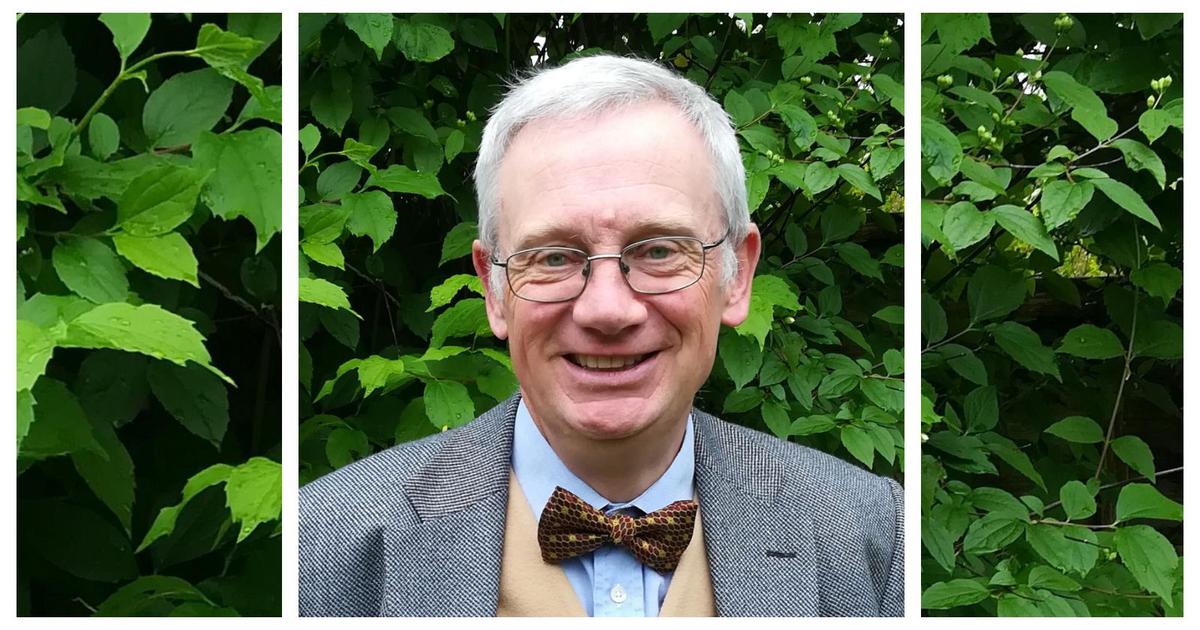
Historian Ghee Bowman. | https://www.forcek6.org.uk/about

One day in 2013, when Ghee Bowman was working on a project on the city of Exeter’s multicultural history, he found a book featuring three photographs of Indian soldiers in the English county of Devon during the Second World War.

It piqued his curiosity.

“I thought I knew about the Second World War, but I’d never imagined that there were Indian soldiers with turbans and mules in Devon,” he wrote.

Though he had a BA in drama, Bowman decided to start an MA in history – and went on to write a PhD dissertation on the 4,227 men of Force K6 contingent who spent most of the war in England.

Through their stories, he shone the spotlight on the often-ignored contribution of the 2.5 million men and women of the British Indian Army who had served during the Second World War.

When Bowman started digging, he found that the British Army arrayed against Nazi Germany in Europe early in the war needed mules to transport artillery and supplies. The men of Force K6 and their mules were shipped in from India, more than 11,000 km away.

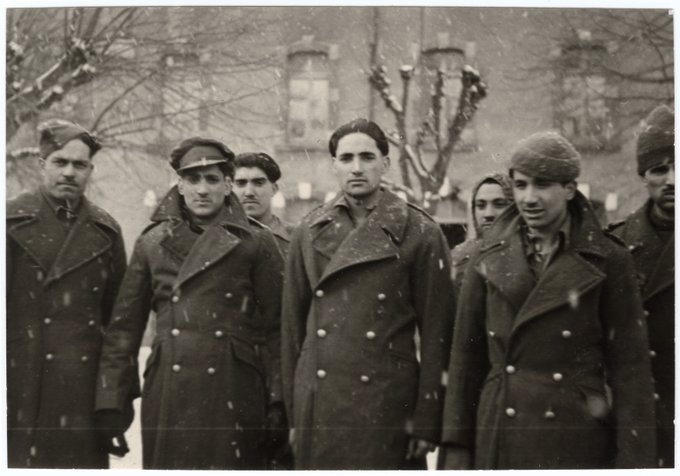
Several had been evacuated from Dunkirk in France in 1940 when the Allied defense collapsed and spent years in England.

source: youtube.com

Before Bowman died on May 10, he had spent the previous 12 years researching the Indian Army in Europe during the Second World War. His two books on the subjects are superbly researched and cracking reads.

pix: google.co.in/books

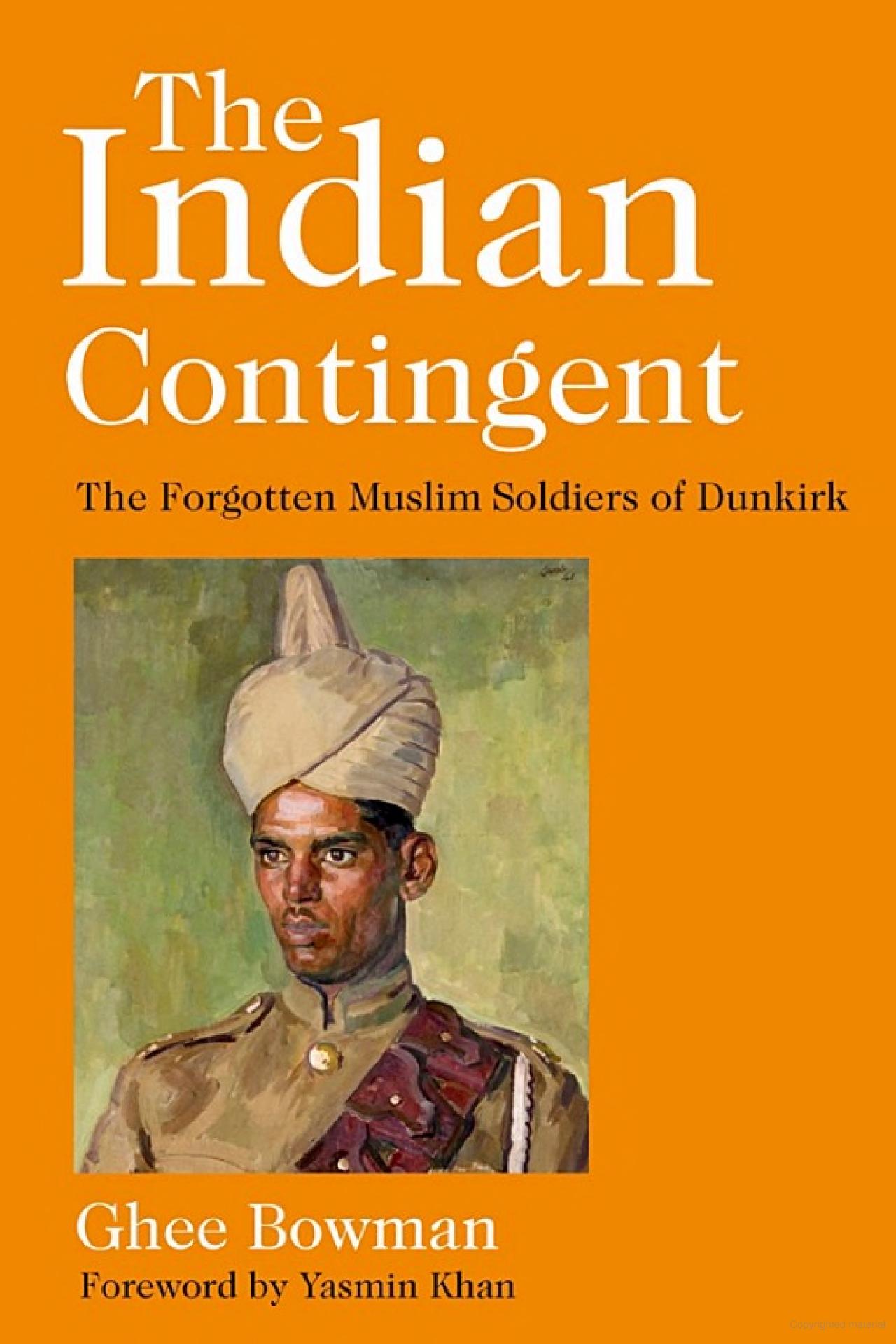
Bowman’s first book was The Indian Contingent – The Forgotten Muslim Soldiers of the Battle of Dunkirk, published in 2020. It is the story of the 299 men of the 25th Animal Transport Company of the Royal Indian Army Service Corps.

Because the British used to group men of the same religion and creed together, these men were mainly Muslim. The role of Indian soldiers fighting in North Africa and Italy during the war had been documented. But little was known about the men who were in France.

The Great Epinal Escape – Indian Prisoners of War in German Hands was published in late 2024. Bowman had been toying with the title The Greatest Escape, a reference to the popular movie about the war, The Great Escape. It was about the escape of 500 Indian prisoners of war from a camp at Epinal in France in 1944.

On May 11, 1944, American planes bombed a camp at Epinal in France housing 3,000 Indian prisoners, breaking some walls. Several hundred escaped, of whom 500 reached Switzerland. It was the largest PoW escape during the Second World War.

Though the Indians were conspicuous in the middle of France, they managed to make their way across the border through their grit and the bravery of civilians who helped them along the way.

______________________________

Ghee Bowman / @GheeBowman

#OTD 11th May 1944; a sunny day in Épinal, a small town on the river Moselle, close to the Vosges mountains and Germany. The scene is set: nobody knows that this quiet French place, untouched by war since 1940, will become the site of the largest POW escape of #WW2

1:21 PM . May 12, 2024· / 18.7K View

________________________

Very little has been written about the experience of individual Indian soldiers in the Second World War. With his micro-histories, Bowman took a step towards filling this gap – and pointed the way for other researchers to do so too. Besides, in a time of rising xenophobia in the UK, Bowman’s work serves as a reminder of the long presence of South Asians – and Muslims – in the country and their contributions to keeping it secure at one of its most vulnerable moments vulnerable moments .

After submitting the manuscript for his second book, Bowman wondered how he could do more to tell the story of Indian soldiers during the Second World War. About six months ago, he decided that he had he hit upon the best and most gratifying way of doing this – not by writing more books or articles and making podcasts but by helping families get to know more about a grandfather or uncle who had fought in the conflict.

This would not result in thousands of social media posts and perhaps only one family would get to know about the work. But to Bowman, helping even one person trace their family history was priceless.

“I’m very happy to share what I already know with families and the wider Indian public,” he wrote. “I’ve got letters, photos, recommendations for medals that I’ve found in archives and newspapers. I would love to be able to restore these to the descendants of these brave men.”

He decided to co-opt the willing and reached out to researchers across the world. He created a page on his website listing useful resources. I was proud to be his man in India and Southeast Asia.

____________________

Ghee Bowman / @GheeBowman

To the good people of #Plymouth. As you think about Muslims in the city this morning, you might like to know about the 4 Muslim graves at Weston Mill Cemetery, 3 miles from where the #plymouthriots happened last night.

@BBCSpotlight / @Plymouth_Live / @SAHM_UK

5:30 PM . Aug 06, 2024 / 3,216 Views

_____________________________________________________________

____________________________________________________________

Ghee Bowman / @GheeBowman

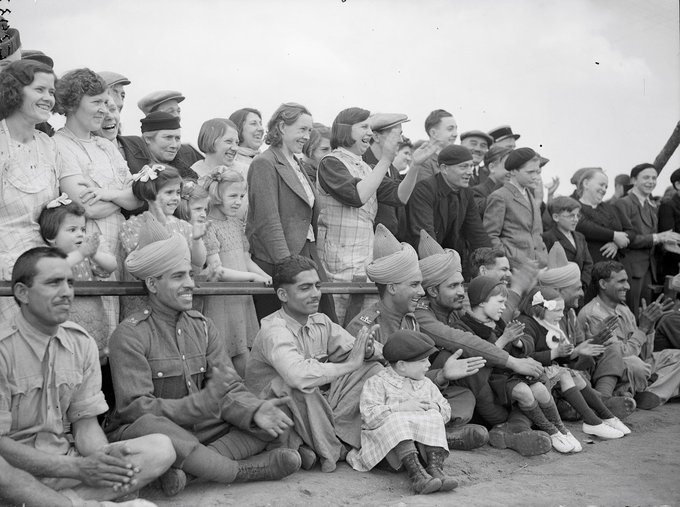
These four men were soldiers of the Indian Army, part of #ForceK6 – Muslim Punjabis sent 7000 miles to help the British in its hour of need. Here are some of their officers inspecting coastal defences in November 1941.

5:30 PM . Aug 06, 2024 / 264 Views

_______________________________________________________

I had the privilege of getting to know Bowman in June 2023, when I reached out to him as I had just begun researching the Indian Army in World War II Singapore. He helped me find sources, to write a book proposal and introduced me to his publishers and others who turned out to be crucial for my own book.

Even as he was trying to help family members trace their relatives, Bowman had been going through a grave personal health crisis. In his regular newsletter in May 2024, he mentioned that he had a fall. His last newsletter was on February 1. He said he had been diagnosed with a brain tumour, was undergoing radiation and chemotherapy and doing well.

He died three months later. Bowman once described himself as “a historian, teacher and story teller…a Quaker and a lifelong learner”. He was all that and much more – he helped others without any gain for himself.

Gautam Hazarika is a Singapore-based author whose book The Forgotten Indian Prisoners of World War II is being published by Penguin India and Pen & Sword UK later this year. He can be contacted at  ghazarika70@yahoo.com.sg

source: http://www.scroll.in / Scroll.in / Home> Tribute / by Gautam Hazarika / May 27th, 2025