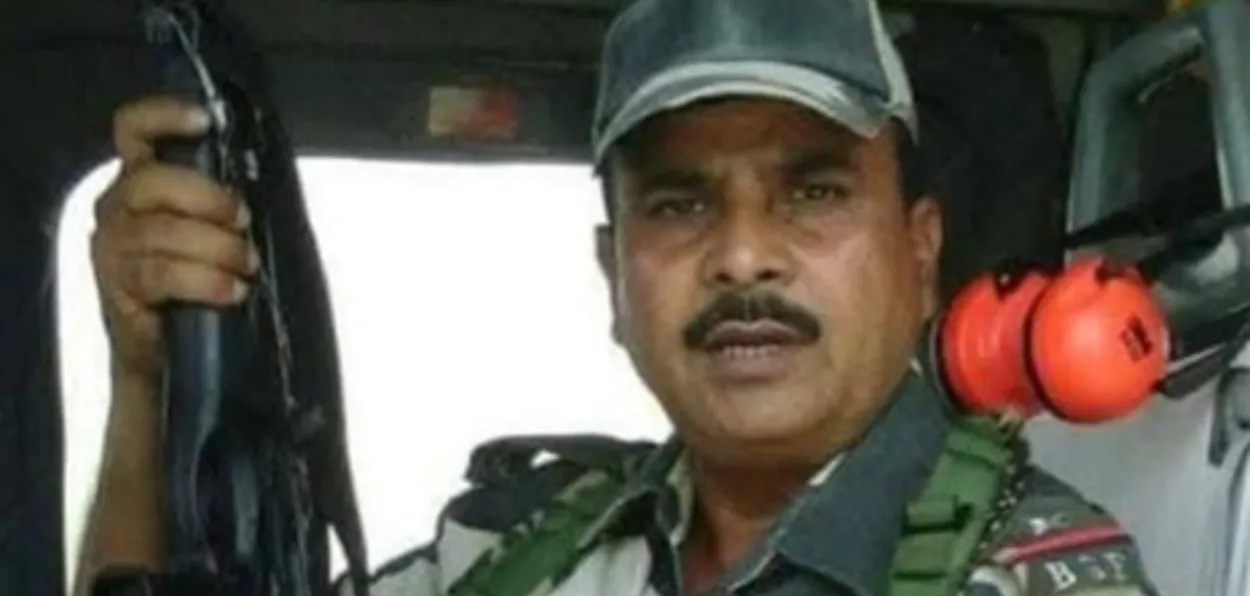
Border Security Force’s Sub-Inspector Mohd Imteyaj and Constable Deepak Chingakham were posthumously awarded Vir Chakra, the third highest war-time gallantry award – in recognition of their exceptional courage and self-less leadership in the face of adverse situation
Sub Inspector Mohammad Imteyaj was martyred on May 10, during cross-border firing along the International Border in RS Pura sector, Jammu and Kashmir.
Constable Deepak Chingakham hailed from Manipur. He sustained grave injuries during the exchange of fire with Pakistanis on the international border in RS Pura and laid down his life for the nation,
Imteyaj hailed from Narayanpur in Garkha, in Saran district of Bihar.
He was posted on the international border in Ranbirsinh Pura sector in Jammu. According to a Border Security Force (BSF) official, Sub-Inspector Mohammad Imtiyaz led the front bravely and made the supreme sacrifice.
He was buried with military honours in the cemetery located in Narayanpur village of Gadkha block of Saran district amid chanting of “Bharat Mata ki Jai” (Hail, mother India!). People showered their floral tributes on Imtiyaz’s body.
Mohammad Imtiyaz is survived by his wife, two sons, and two daughters. BSF said Mohammad Imtiyaz led from the front.
As soon as the news of Mohammad Imtiyaz’s martyrdom reached his home, initially his village and later the entire district went into mourning. A large crowd gathered outside his house; people were trying to show their sympathy to the family and gratitude to the brave son of the soil.
source: http://www.awazthevoice.in / Awaz, The Voice / Home> Stories / by Aasha Khosa, ATV / August 16th, 2025
About 28 years ago, I learnt one of the most fascinating tales of what military rivalry between India and Pakistan has meant for some families.
At a dinner party in New Delhi, an elegant gentleman walked up to me and asked if I was serving in the Indian Army. My haircut perhaps gave this away, as I answered in the affirmative (I was then an instructor at the Indian Military Academy, Dehradun). When I enquired if he had any military connections, he replied ‘yes’; his two elder brothers had both been officers. To this, my natural response was, “What were their regiments?” He then said with a sad smile, “Let me tell you a story.”
And this was the story he narrated to me:
Several years earlier, he had run into the Pakistani military attaché, Brigadier Beg, in India at a circuit house (Dak Bungalow) while driving on the Delhi-Ahmedabad highway. Apparently the attaché had upset him earlier in the day with his lack of road manners, and when informed of the same, to make up, the Pakistani Brigadier invited him for a drink. During the course of their conversation, and on learning that his guest (the gentleman who was narrating the incident to me) was an Indian Muslim, the Pakistani Brigadier said to him that it was only in the 1965 war that he learnt that Muslim officers were also serving in the Indian Army.
(The Indian Army’s armoured (tank) units had made substantial gains in fierce battles in the Sialkot sector of Pakistan’s Punjab. Many well known armoured regiments were part of India’s 1st Armoured Division’s thrust lines, such as Poona and Hodson’s Horse, 2nd Lancers, 3rd, 16 and 18 Cavalry. Many thought it was only a matter of time that Sialkot would fall to Indian troops, as Pakistan’s Armoured Division, despite its apparently superior tank units, was in retreat. Pakistan’s commanders desperately needed a tactical break to regain some of the momentum of battle.)
It was at this stage of the war—around 8 September 1965—that the Pakistani Brigadier, then a young Lieutenant, was summoned by his Brigadier Commander. He was asked plan and undertake a commando raid that would take him into Indian frontline positions around Sialkot. His task was to eliminate one or more Indian tank commander(s). This would leave that Indian unit briefly without a commander and give Pakistan that brief window of opportunity to break through India’s formidable frontline.
So this Pakistani officer (then a Lieutenant, now a Brigadier) set about preparing for the raid, to sneak in amongst Indian tanks, during darkness, and kill an Indian tank commander who was giving Pakistani troops a rough battle. So, on 8/9 September before dawn, Lieutenant Beg sneaked into his target area as Indian tanks were preparing for another day’s battle around Sialkot. (In those days, in the absence of night vision devices, tank battles were largely fought during day light). He soon identified a Squadron Commander’s tank, and climbed atop it unnoticed in the loud roar of tank engines as they were warming up for battle.
Peering inside the open cupola, he saw a Major in his radio headset who was poring over his maps, planning for another day’s battle. With no time to lose, Lieutenant Beg shot the Indian Major through the head. But before leaving the wounded Indian officer, Lieutenant Beg decided to take along some proof of having accomplished his mission. He quickly unbuttoned the shoulder flaps of the Indian Major, and pulled out the cloth epaulets of his ranks from his shoulders. On this was also embroidered ‘16 CAV’, the title of his regiment. And in the breast pocket of the Major, he also found a holy pendant that some Muslims carry on them as a good luck charm. His job done, this young Lieutenant with his raid party then quickly crossed back over into the territory that Pakistani troops were still holding onto, before dawn broke.
Lieutenant Beg then immediately went to see his Brigade Commander, who had sent him on the raid. He met him in the early hours of the morning, where he proudly reported that he had accomplished his mission. His Brigade Commander asked him if he had any proof of it. The young Lieutenant pulled out the epaulettes of the rank badges of the Indian Army Major he had shot, and handed it over to his Brigade commander. Then he suddenly saw the Brigadier become tense. Lieutenant Beg said to the Brigadier that he had possibly killed an Indian Muslim officer, as he handed over the holy pendant he had recovered from the dead Major’s pocket. As an afterthought, he added that he was quite surprised that India’s army also had Muslim officers who were fighting with such commitment and valour against Pakistan.
At that point his Brigade Commander’s hands began to shake and he couldn’t control his emotions any more. His voice became heavy and his eyes filled with tears as he slumped into a chair. Lieutenant Beg asked the Brigadier, with due respect, what the problem was. In a voice choked with emotion, he replied: “Young man, I have just realised from the evidence you have provided that I had tasked you to kill my younger brother.” The Commander kept shaking his head and then went on to add, “I hadn’t the foggiest idea that it was the 16 Cavalry that was directly pitted against us, because Major MAR Sheikh, whom you have just killed, was my younger brother and one of its squadron commanders. And he was their only Muslim officer.” Lieutenant Beg could say little else, as he saluted and took his commander’s leave.
And when Lieutenant Beg finished telling this story to the man who had related it to me, this gentleman told the Pakistani officer, “Brigadier, it may surprise you to know that the two brothers you have spoken about were both older to me… I am the youngest of the three brothers.”
And as the Brigadier stared at him in disbelief, the narrator of this tale requested Brigadier Beg to visit his family home—which was only a few hour’s drive from where they were—to meet his aged mother, who had always wanted to meet someone who had fought against her son! When the Pakistani Brigadier met the old begum the next day (who didn’t know that her son had died of wounds inflicted by the Brigadier), she seemed pleased that the enemy thought well of him!
Records show that Major Sheikh died of wounds in his head sustained in battle near Sialkot on 10 September 1965. He was posthumously awarded the gallantry award of a Vir Chakra. His brother, the Brigadier, rose on to become a General in Pakistan.
source: http://www.openthemagazine.com / Open / Home> Web Exclusive / by Maroof Raza / August 27th, 2015
He shone the spotlight on the often-ignored role of the 2.5 million members of the British Indian Army who had served during the Second World War.
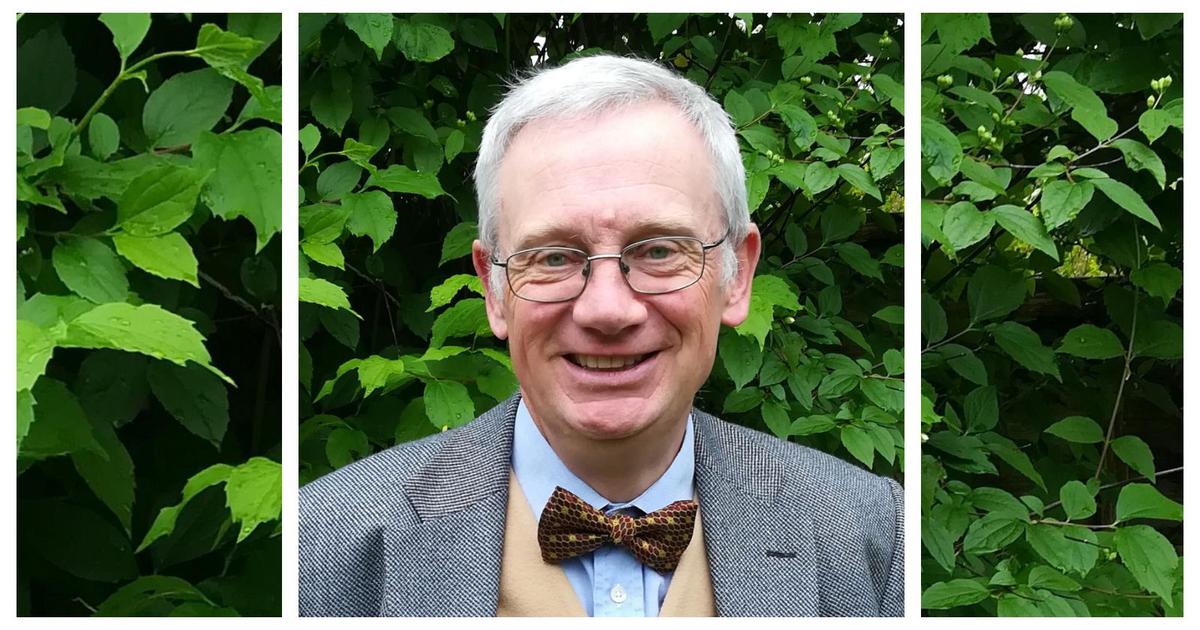
Historian Ghee Bowman. | https://www.forcek6.org.uk/about
One day in 2013, when Ghee Bowman was working on a project on the city of Exeter’s multicultural history, he found a book featuring three photographs of Indian soldiers in the English county of Devon during the Second World War.
It piqued his curiosity.
“I thought I knew about the Second World War, but I’d never imagined that there were Indian soldiers with turbans and mules in Devon,” he wrote.
Though he had a BA in drama, Bowman decided to start an MA in history – and went on to write a PhD dissertation on the 4,227 men of Force K6 contingent who spent most of the war in England.
Through their stories, he shone the spotlight on the often-ignored contribution of the 2.5 million men and women of the British Indian Army who had served during the Second World War.
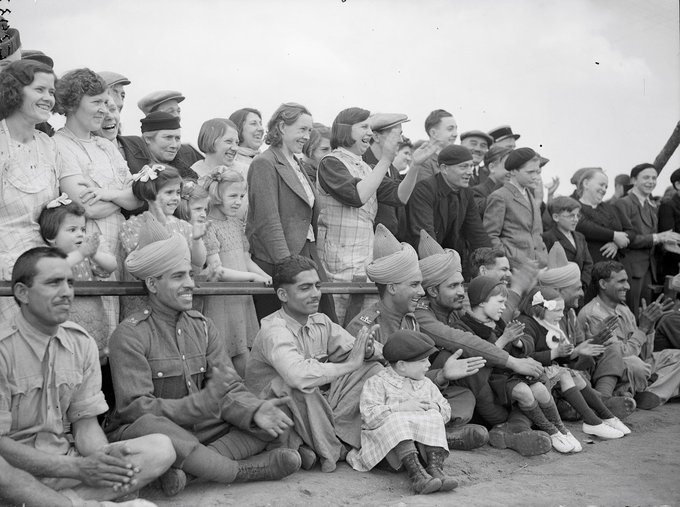
When Bowman started digging, he found that the British Army arrayed against Nazi Germany in Europe early in the war needed mules to transport artillery and supplies. The men of Force K6 and their mules were shipped in from India, more than 11,000 km away.
Several had been evacuated from Dunkirk in France in 1940 when the Allied defense collapsed and spent years in England.
source: youtube.com
Before Bowman died on May 10, he had spent the previous 12 years researching the Indian Army in Europe during the Second World War. His two books on the subjects are superbly researched and cracking reads.
pix: google.co.in/books
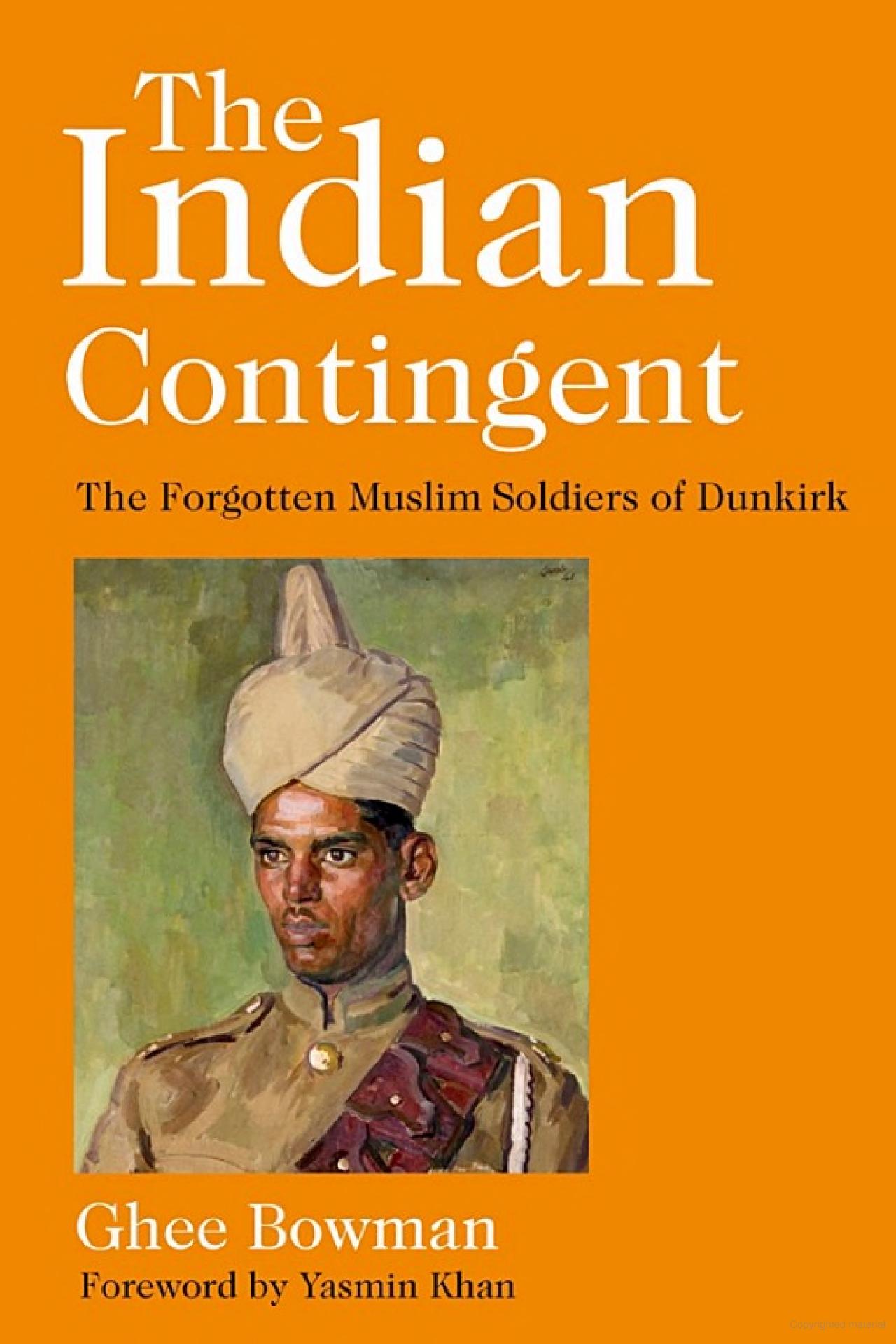
Bowman’s first book was The Indian Contingent – The Forgotten Muslim Soldiers of the Battle of Dunkirk, published in 2020. It is the story of the 299 men of the 25th Animal Transport Company of the Royal Indian Army Service Corps.
Because the British used to group men of the same religion and creed together, these men were mainly Muslim. The role of Indian soldiers fighting in North Africa and Italy during the war had been documented. But little was known about the men who were in France.
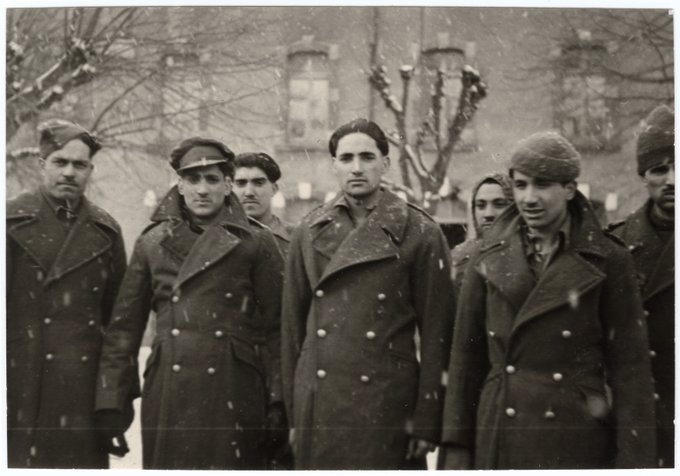
The Great Epinal Escape – Indian Prisoners of War in German Hands was published in late 2024. Bowman had been toying with the title The Greatest Escape, a reference to the popular movie about the war, The Great Escape. It was about the escape of 500 Indian prisoners of war from a camp at Epinal in France in 1944.
On May 11, 1944, American planes bombed a camp at Epinal in France housing 3,000 Indian prisoners, breaking some walls. Several hundred escaped, of whom 500 reached Switzerland. It was the largest PoW escape during the Second World War.
Though the Indians were conspicuous in the middle of France, they managed to make their way across the border through their grit and the bravery of civilians who helped them along the way.
#OTD 11th May 1944; a sunny day in Épinal, a small town on the river Moselle, close to the Vosges mountains and Germany. The scene is set: nobody knows that this quiet French place, untouched by war since 1940, will become the site of the largest POW escape of #WW2
1:21 PM . May 12, 2024· / 18.7K View
________________________
Very little has been written about the experience of individual Indian soldiers in the Second World War. With his micro-histories, Bowman took a step towards filling this gap – and pointed the way for other researchers to do so too. Besides, in a time of rising xenophobia in the UK, Bowman’s work serves as a reminder of the long presence of South Asians – and Muslims – in the country and their contributions to keeping it secure at one of its most vulnerable moments vulnerable moments .
After submitting the manuscript for his second book, Bowman wondered how he could do more to tell the story of Indian soldiers during the Second World War. About six months ago, he decided that he had he hit upon the best and most gratifying way of doing this – not by writing more books or articles and making podcasts but by helping families get to know more about a grandfather or uncle who had fought in the conflict.
This would not result in thousands of social media posts and perhaps only one family would get to know about the work. But to Bowman, helping even one person trace their family history was priceless.
“I’m very happy to share what I already know with families and the wider Indian public,” he wrote. “I’ve got letters, photos, recommendations for medals that I’ve found in archives and newspapers. I would love to be able to restore these to the descendants of these brave men.”
He decided to co-opt the willing and reached out to researchers across the world. He created a page on his website listing useful resources. I was proud to be his man in India and Southeast Asia.
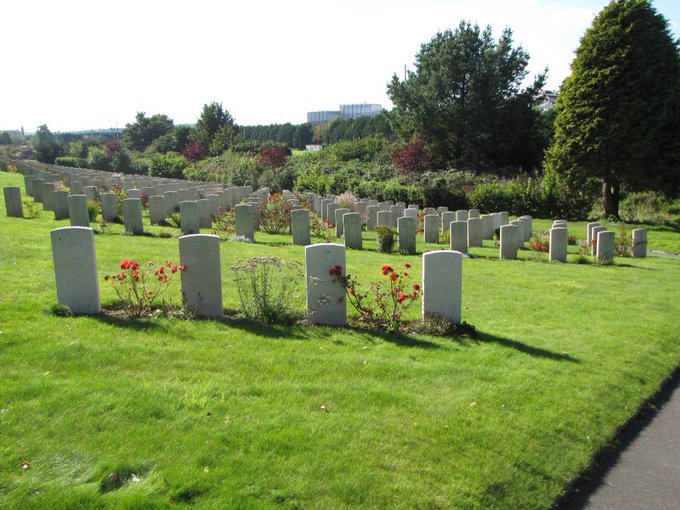
To the good people of #Plymouth. As you think about Muslims in the city this morning, you might like to know about the 4 Muslim graves at Weston Mill Cemetery, 3 miles from where the #plymouthriots happened last night.
These four men were soldiers of the Indian Army, part of #ForceK6 – Muslim Punjabis sent 7000 miles to help the British in its hour of need. Here are some of their officers inspecting coastal defences in November 1941.
I had the privilege of getting to know Bowman in June 2023, when I reached out to him as I had just begun researching the Indian Army in World War II Singapore. He helped me find sources, to write a book proposal and introduced me to his publishers and others who turned out to be crucial for my own book.
Even as he was trying to help family members trace their relatives, Bowman had been going through a grave personal health crisis. In his regular newsletter in May 2024, he mentioned that he had a fall. His last newsletter was on February 1. He said he had been diagnosed with a brain tumour, was undergoing radiation and chemotherapy and doing well.
He died three months later. Bowman once described himself as “a historian, teacher and story teller…a Quaker and a lifelong learner”. He was all that and much more – he helped others without any gain for himself.
Gautam Hazarika is a Singapore-based author whose book The Forgotten Indian Prisoners of World War II is being published by Penguin India and Pen & Sword UK later this year. He can be contacted at ghazarika70@yahoo.com.sg
source: http://www.scroll.in / Scroll.in / Home> Tribute / by Gautam Hazarika / May 27th, 2025
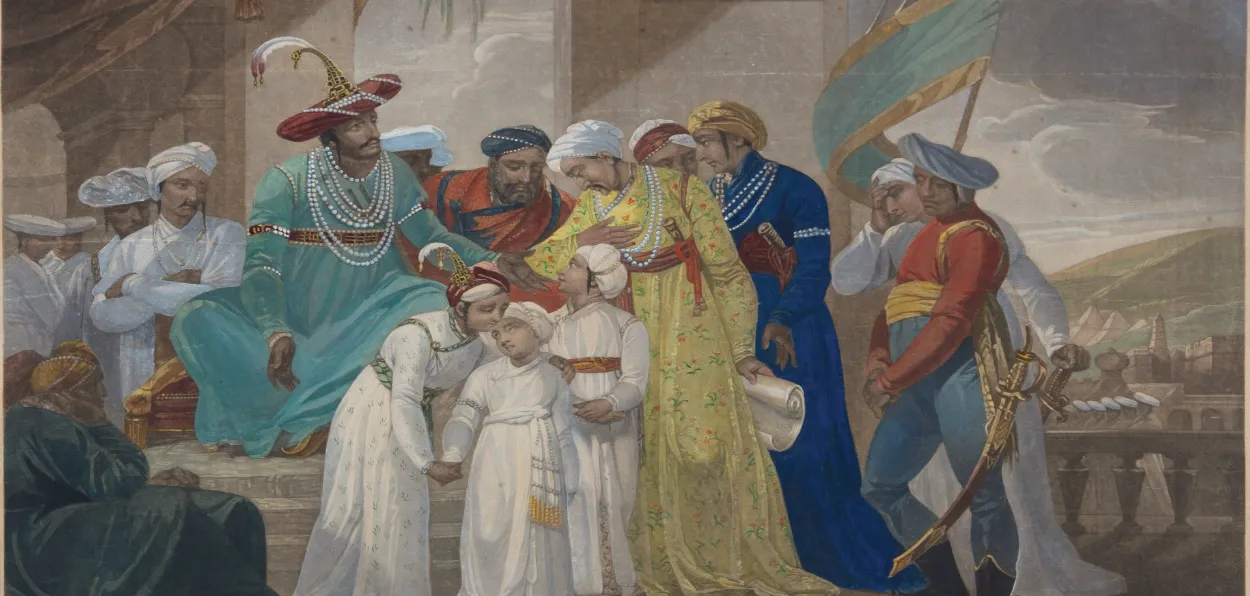
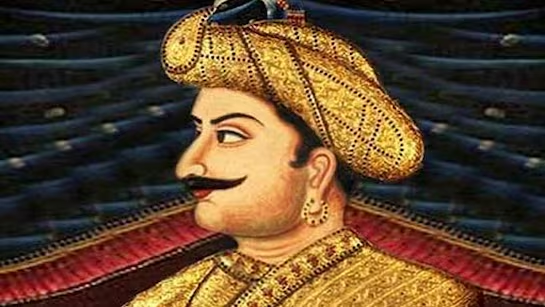
Tippoo Sultaun delivering to Gullum Alli Beg the Vakeel his sons who are taking leave of their brother previous to their departure from Seringapatam (1793) Painting by Henry Singleton
“The Christian drummers were seized, taken to the palace where Tippu’s sons were confined, and made to beat the “general” ; lights flashed in the palace, refreshments were brought out; a mob of sepoys called on the princes to place themselves at their head; Tippu’s own flag, green stripes on a red field, was nailed to the flagstaff. Prince Muizuddin (son of Tipu Sultan) ordered his horse to be saddled, and told off a party of sepoys to go and seize the principal hill fort; when that was captured and the dead body of Colonel Marriott, paymaster of stipends, brought before him, he promised he would mount his horse and ride through the native town proclaiming the restoration of the Mahommedan power.”
A Slice of History
This is the account by Colonel Alfred Keene of the night of 10 July 1806 at Vellore. The rising, popularly known as the Vellore mutiny, was a dress rehearsal of a sort of what would happen in May 1857 at Meerut.
Keene pointed out, “In the mutinies of Vellore and the greater one of 1857, two points of similarity stand out prominently. In each is the unreasoning fear of an attack on the institutions of religion and of caste; for the greased cartridges in the latter mutiny had as much to do with the outbreak as had the new head-dress in 1806, and the presence of the remnants of the Moghul Dynasty at Delhi acted in 1857 precisely as had the presence of Tippu’s family at Vellore in 1806.”
After the fall of Tipu Sultan in 1799, the English East India Company shifted his children to Vellore. In early 1806, the Commander-in-Chief ordered a new headgear and, the removal of beards, tilaks, earrings, or any mark of caste identity.
The Indian sepoys of the 2nd Battalion 4th regiment showed dissatisfaction in May 1806 and disobeyed the orders. These sepoys were tried in army court and 21 of them were found ‘guilty’. Of them, one Hindu leader and other Muslims were discharged from the duty and sentenced to receive 900 lashes each. The other 19 were not discharged but ordered 500 lashes each. The order was passed on 29 June and published to the army on 2 July 1806.
The wife of a serving English officer at Vellore, F. W. Blunt, wrote in a letter to her family in England, “Nine of the ringleaders, as they were called, were brought down to Madras and here passed publicly through the streets in irons, destined to receive the most dreadful military punishment…… The nine men in irons awaiting a most severe punishment was made use of by the sons of Tippoo, who have been kept prisoners in the Palace at Vellore since the taking of Seringapatam and served to ripen a design that had been long formed. A conspiracy was formed by the Sepoys to murder all the Europeans and take possession of that Fort.”
Tipu Sultan
On the night of 10 July 1806, Shaikh Kasim, a sepoy, led the English East India Company sepoys in starting a general massacre of the English troops.
Lt. Col. W. J. Wilson in ‘History of the Madras Army’ wrote, “The sepoys went away shortly afterward, and were heard to call out “Come out, Nawab, come out, Nawab, there is no fear.” This was supposed to be addressed to Futteh Hyder, the eldest of the four Mysore Princes.”
Of the 372 Englishmen present at Vellore, 128 were killed that night by the Indian sepoys. The English flag was replaced with the flag of Tipu Sultan, which was handed over by Moizuddin, the eldest son of Tipu. He was proclaimed the leader of the revolutionaries.
Though the immediate cause was the headgear and other orders, the revolt had been planned for a long time. Charles Macfarlane wrote, “The splendour which the sons of Tippoo were enabled, by the liberality of the Company, to keep up, attracted a continual influx of visitors, including all that came to Vellore from the countries which had once belonged to their father. Among these men were very many who had lost by the change which had taken place in Mysore, who hated the tranquillity which we had introduced into their country, and who longed for the old days of rapine and violence. It is believed that these desperadoes contributed to a regular conspiracy and facilitated the execution of the daring design.
It is said that the confederates intended that all who were brought to join in the insurrection should act upon a preconcerted plan, which had been digested and privately circulated by some of the turbulent Marawa chiefs; and that in connection with these desperadoes were some few Frenchmen, disguised as fakeers or dervishes, who went about the country inveighing everywhere against the English as robbers and tyrants. It is also stated that placards were fixed up within the mosques and Hindu temples, where Europeans never entered, to excite a general spirit of revolt among the whole native population of Madras.”
The English Government set up an enquiry commission headed by Major General Pater which submitted its report on 9 August 1806. The report said, “There are two principal causes which appear to us to have led to the mutiny. The late innovations in the dress and appearance of the sepoys, and the residence of the family of the late Tippoo Sultan at Vellore.”
Sir J. F. Cradock, the Commander-in-Chief, disagreed with these findings and argued in his submission that change in dress was a pretext and the real objective was to restore the rule of Tipu Sultan’s family.
The Court of Directors after the investigation declared that the “immediate cause of the discontent among the sepoys was the introduction of certain innovations in their dress, which were offensive, and, as they held, degrading to them; and that the captive sons of the late Tippoo Sultan, with their adherents and abettors, took occasion, from the dissatisfaction of the sepoys, to instigate them to insurrection and revolt, with the view of effecting their liberation, and the restoration of the Mahomedan power.”
The mutiny was suppressed by noon on 10 July. Colonel Gillispie stationed at Arcot came to rescue the Englishmen at Vellore before 7 am. His forces, which also included Indian sepoys, killed more than 500 Indians in the fort within a few hours.
At least 15 English officers including, Colonel Fancourt, H.M.’s 34th regiment, commanding the garrison, Lieutenant-Colonel McKerras, Captain Willison and Lieutenants Winchip and Jolly of the 23rd, Captain Miller, Lieutenants O’Reilly, Smart, and Tichbourne of the 1st, and Lieutenants Eley and Popham of the 69th, Mr. Mann Deputy Commissary of Stores, Mr. Gill Conductor of Ordnance, Mr. Smith the Military Paymaster and Major Armstrong of the 16th N.I. were killed.
Among the captured sepoys, six were blown away with cannon guns, five were shot by firing squads, eight were hanged, and several others were transported for life. Out of the retainers of Mysore Princes, one was sentenced to death, two to transportation for life, one to imprisonment for life, and one to imprisonment for ten years. The sons of Tipu Sultan were sent to Kolkata with stricter vigilance.
Lord William Bentinck, Governor, and Sir J. F. Cradock, C-in-C, were removed from their respective offices by the Court of Directors.
source: http://www.awazthevoice.in / Awaz, The Voice / Home> Stories / by Saquib Salim / July 10th, 2025
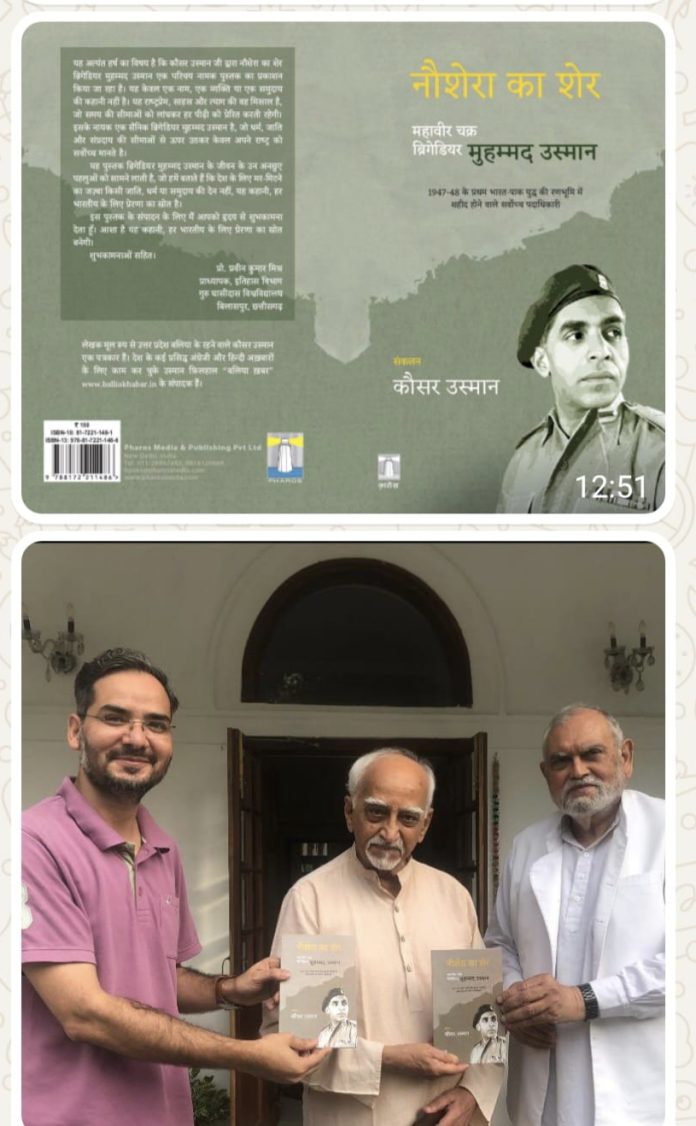
A grand launch event was held in the capital today for the book “Naushera ka Sher — Brigadier Mohammad Usman”, celebrating the life of the 1947–48 war hero. Authored by senior journalist Kauser Usman from Ballia, Uttar Pradesh, the book honours Brigadier Usman, famously known as the “Hero of Heroes.”
The book was officially released by former Vice President of India, Mr. Hamid Ansari, who is also a family member of Brigadier Usman. Speaking at the event, Mr. Ansari said,
“Brigadier Usman was more than a soldier — he symbolised patriotism, courage, and sacrifice. Kauser Usman’s book is a fitting tribute and an inspiration for future generations.”
Brigadier Mohammad Usman was one of the few Indian Army officers who laid down his life during the India-Pakistan war of 1947–48, without retreating. He was posthumously awarded the Maha Vir Chakra, India’s second-highest wartime gallantry honour.
Author Kauser Usman said,
“This book is my humble tribute to a national hero. Brigadier Usman’s life, simplicity, and service to the nation continue to guide us.”
Dr. Zafarul Islam Khan, former Chairman of the Delhi Minorities Commission, also attended the event.
The book is published by Pharos Media Publishing Pvt. Ltd., New Delhi.
source: http://www.radiancenews.com / Radiance News / Home> Art & Culture / by Mohd Naushad Khan / July 11th, 2025
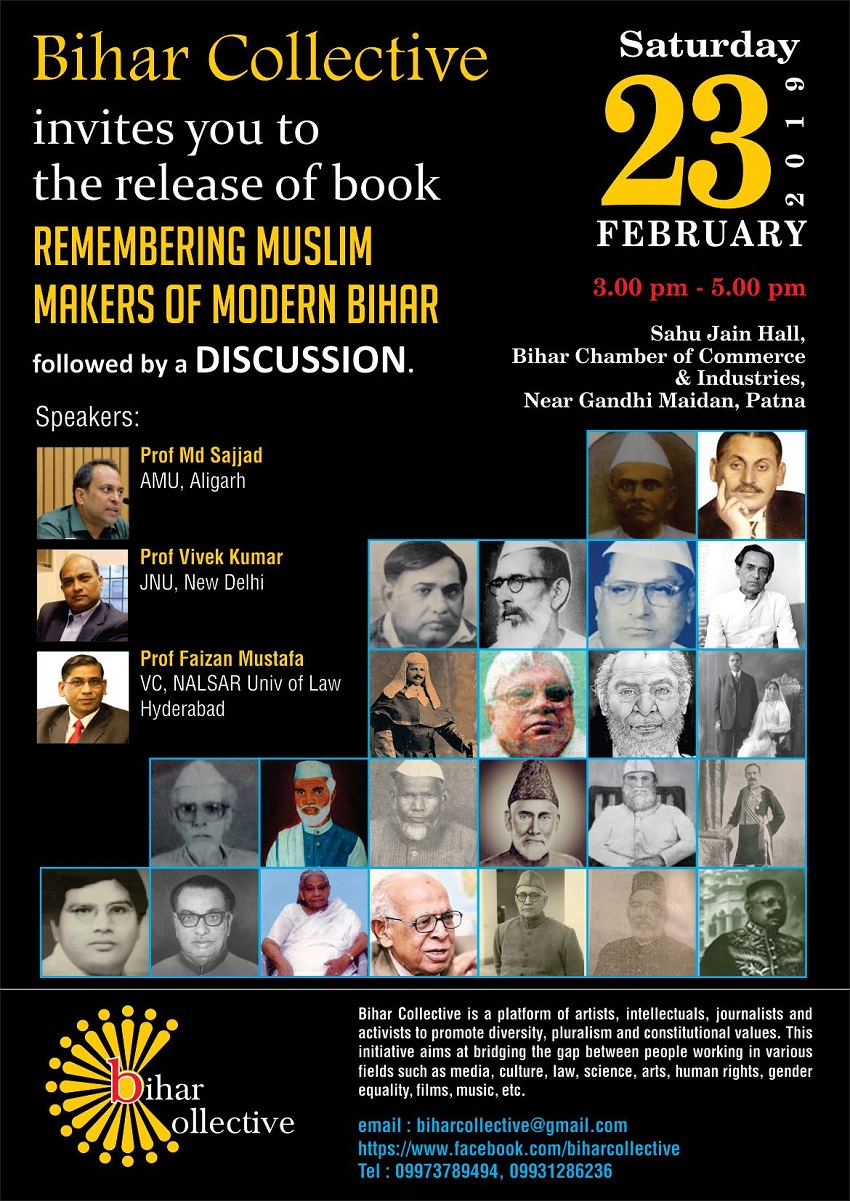
In an era of unprecedented majoritarian ascendance and anti-Muslim hatred, Bihar Collective, a platform of intellectuals and activists, has brought out a booklet highlighting the contribution of eminent Muslims in making the modern Bihar in the last 200 years.
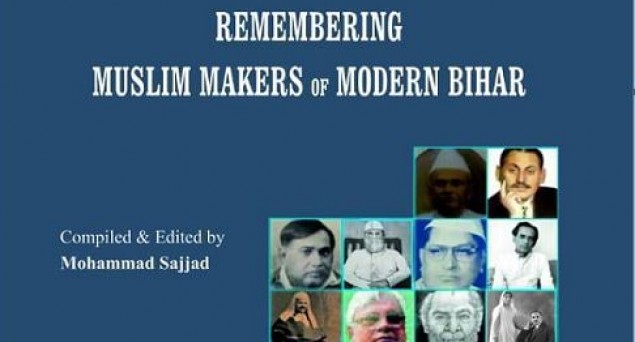
The booklet titled Remembering Muslim Makers of Modern Bihar has been compiled and edited by renowned academician and writer Prof. Mohammad Sajjad on the initiative of Bihar Collective.
The booklet will be released at an event in Patna on Saturday (February 23).
On the occasion, a discussion will also be held with Prof Faizan Mustafa, Vice Chancellor, NALSAR University of Law, Hyderabad; Prof Vivek Kumar, JNU, New Delhi; and Prof Mohammad Sajjad, AMU, Aligarh as panelists.
A Brief about Booklet:
Pre-empting a reasonable question about the title of the booklet, Prof Sajjad, who has compiled and edited it, writes in its preface: “A simple and obvious question that may readily arise is: why only Muslim makers of modern Bihar? Why not others too? This is indeed a valid and pertinent question.”
Responding to the question, he further says: “Candidly put, this is because of an unprecedentedly menacing rise of majoritarianism, bigotry, and anti-Muslim hatred, with open support of the state.
The Muslim identities are ominously threatened. There are also unabated attempts to dilute (or even take away) whatever little accomplishments have been made by the forces of social justice and secularism.
Only the Muslim segment however is threatened by the jingoist, exclusionary, violent nationalists, to be thrown out to another country. As if the other country is a dustbin, owned by these bigots, into which they can throw away everything they dislike! As if only the religious majority constitutes the nation! Notably, these jingoists had aligned with the British and had stayed away from the national movement.”
“Muslim contributions in the nation-making (and in the freedom movement) remain under-acknowledged, forgotten or even omitted. Erasure of their histories and memories seem to have become even more pronounced and vociferous, now, than ever before…The Bihar Collective therefore decided to compile a short profile of these inspiring role models, history-makers…This is small and humble step towards retrieving and restoring the nationalist provincial pantheons bearing Muslim identities,” says Prof Sajjad.
He, however, admits that the list of Muslim heroes of Bihar given in the booklet is not exhaustive as “…many have been left out essentially because of lack of documentations and researches. Not many have left their own accounts/memoirs; the available memoirs/accounts have not written much about all the personalities. In many cases, even otherwise “resourceful” descendants and/or associates of the history-makers have not been able to provide us with adequate (and credible/verifiable) details.”
Prof Sajjad hopes this small exercise may lead to some big academic work on these history-makers. “In short, this kind of venture may be said to be an ongoing exercise. This effort may hope to open up (and obtain) more details about such history-makers and would also get to know about many more of such peoples and processes, we failed to include here in this hastily prepared tiny volume, amidst constraints of resources and time.”
Names of Muslim Makers of Modern Bihar Mentioned in Booklet: 1. Syed Imdad Ali (d.1886] 2. Khuda Bakhsh (1842-1908) 3. Syed Amir Husain (1843-1910) 4. Imdad Imam Asar (1849-1934) 5. Shah Badruddin(1852-??) 6. Syed Ali Bilgrami (1853-1911) 7. Rasheed-un-Nesa (1855-1926) 8. Syed Noorul Huda (1855-1939) 9. Justice Syed Sharfuddin (1856-1921) 10. Shaikh Gulab (1857-1920) 11. Sarfaraz Husain Khan (1860-1931) 12. Maulana Mazharul Haque (1866-1930) 13. Batakh Miyan Ansari (1867-1957) 14. Sir Fakhruddin (1868-1933) 15. Syed Ali Imam (1869-1932) 16. Syed Hasan Imam (1871-1933) 17. Salahuddin Khuda Bakhsh (1875-1931) 18. Shafi Daudi(1875-1949) 19. Khwaja Md. Noor(1875-??) 20. Abdul Wadood (d.1955) 21. Syed Abul Hasan (1878-1960) 22. Sir Sultan Ahmad (1880-1963) 23. Maulana Sajjad (1880-1940) 24. Pir Mohammad Munis (1882-1949) 25. Abdul Bari (1882-1947) 26. Syed Sulaiman Nadvi (1884-1953) 27. Mohammad Yunus (1884-1952) 28. Shah Md. Zubair (1884-1930) 29. Syed Abdul Aziz (1885-1948) 30. Zubaida Begum Daudi (1886-1972) 31. Syed Tafazzul Karim (1886-1964) 32. Mr. Mohammad Shafi (1888-1955) 33. Qazi Ahmad Husain (1889-1961) 34. Dr. Syed Mahmud (1889-1971) 35. Ali Husain Aasim Bihari (1890-1953) 36. Shah Mohammad Umair (1894-1978) 37. Abdul Ahad Mohammad Noor (1894-1975) 38. Hakeem Md. Kabiruddin (1894-1976) 39. Maulana Usman Ghani (1896-1977) 40. Manzoor Ahsan Aijazi (1897-1969) 41. Shah Md Ozair Muni’mi (1899-1961) 42. Maghfur Aijazi (1900-1966) 43. Syed Jafar Imam (1900-1965) 44. Syed Badruddin Ahmad (1901-1983) 45. Mohammad Tahir (1903-???) 46. Syed Jafar Imam (1903-1979) 47. Syed Fida Husain (1904-80) 48. Abdul Qaiyum Ansari (1905-1974) 49. Wajihuddin Minhaji (1907-1984) 50. Syed Md. Aiyub (1910-1964) 51. Abdul Sami Nadvi (1913-????) 52. Abul Hayat Chand (1914-1958) 53. Ahad Fatmi(1915-1980) 54. Zawwar Husain (1916-80) 55. Shafiqullah Ansari (1917-1980) 56. Shah Mushtaq Ahmad (1917-2002) 57. Abdul Ghafoor (1918-2004) 58. Col. Mahboob Ahmad (1920-1992) 59. Taqi Raheem (1920-1999) 60. Zahra Daudi(1923-2003) 61. Shakoor Ahmad (1924-1981) 62. Syed Hasan (1924-2016) 63. Yunus Lohia (1925-2019) 64. Ghulam Sarwar (1926-2004) 65. Syed Shahabuddin (1935-2017)
A Brief about Author:
Prof Mohammad Sajjad teaches late-colonial and post-independent Indian history at the Centre for Advanced Study in History, Aligarh Muslim University. He has written several books including Muslim Politics in Bihar: Changing Contours; and Contesting Colonialism and Separatism: Muslims of Muzaffarpur since 1857.
His articles are published in reputed academic journals from Routledge, Sage, EPW etc. and also in anthologies from the Oxford University Press and Cambridge University Press.
Bihar Collective: It is a platform of artists, intellectuals, journalists and activists to promote diversity, pluralism and constitutional values. It aims at bridging the gap between people working in various fields such as media, culture, law, science, arts, human rights, gender equality, films, music, etc. Email: biharcollective@gmail.com Facebook: https://www.facebook.com/biharcollective
source: http://www.indiatomorrow.net / India Tomorrow / Home> Society / by India Tomorrow / February 21st, 2019
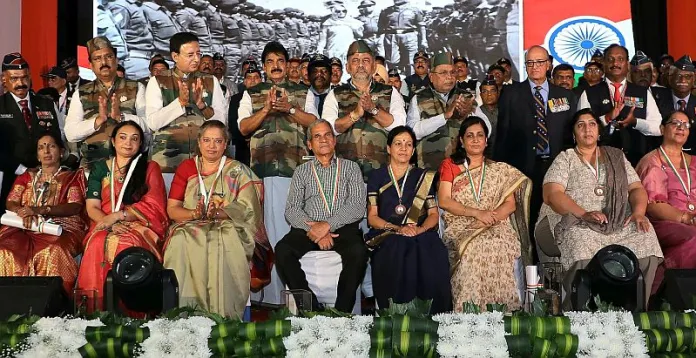
The Karnataka government organised a special event, ‘Jai Hind Sabha’, in honour of the Indian armed forces and facilitated retired military personnel in Bengaluru on Wednesday.
The programme was held at the Town Hall in Bengaluru, and it was given the tagline, ‘Jai Hind Jai Sena’.
During the event, senior officers who served in the Indian Army and ex-servicemen were felicitated. The families of brave soldiers who laid down their lives in service to the nation were also honoured.
Among those felicitated were the family members of late Major Sandeep Unnikrishnan (Ashoka Chakra awardee), Colonel Jojan Thomas (Ashoka Chakra awardee), Major M.C. Muthanna (Shaurya Chakra awardee), Major Ganesh Maddappa (Shaurya Chakra awardee), Captain M.V. Panjal (Shaurya Chakra awardee), Major Mohan Gangadharan (Shaurya Chakra awardee), Major Shafiq Mohammad Khan, and Colonel Ramamurthy (Sena Medal awardee).
More than a thousand senior army officers and ex-servicemen participated in the event. The Karnataka government had issued directions to organise such events across the country to salute the selfless service of Indian soldiers and stand in solidarity with them.
Addressing the “Jai Hind Sabha” programme, Chief Minister Siddaramaiah stated that soldiers, farmers, doctors, and teachers are as revered and memorable as one’s own parents.
He praised the legacy of Indian soldiers. “Soldiers dedicate themselves to national defence with a spirit of sacrifice. The responsibility of protecting the country does not lie with the army alone, but with all 1.4 billion Indians,” he said.
He emphasised that India has never compromised on the principle of protecting the righteous and eliminating evil, and it never will.
“This is the commitment of every Indian,” Siddaramaiah underlined.
The Chief Minister made a significant declaration that no excise duty will be levied on army canteens by the state. He also assured that all necessary steps would be taken for the welfare of retired soldiers.
Speaking after felicitating senior army officers, ex-servicemen, and the families of martyred soldiers, Deputy Chief Minister Shivakumar said, “To support all ex-servicemen in the state, the government is considering the establishment of a separate corporation. This proposal will be discussed in the state cabinet meeting before a decision is made.”=
“We are thinking of forming this corporation based on the suggestion of Mallikarjun, President of the Congress Party’s Sainik Cell. We are committed to the welfare of soldiers who have served our nation,” Shivakumar stated.
“It is a matter of pride to be part of such a significant event. On behalf of the Congress party and the nation, I extend my gratitude to all of you who have served our country with strength and dedication. The Congress party has always stood by the nation and our armed forces. This programme is a testimony to the fact that your sacrifices will always be remembered,” he added.
source: http://www.mangalorean.com / Mangalorean / Home> Mangalorean News> Local News / by IANS / May 28th, 2025
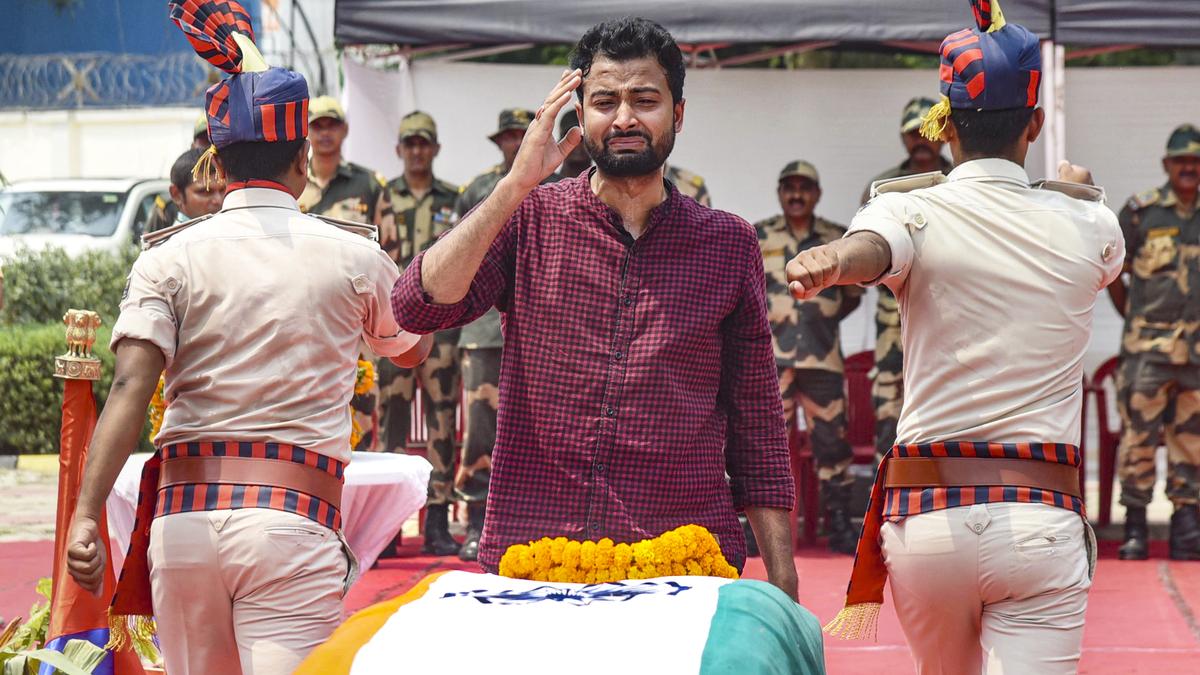
Imtiaz’s last rites were performed in the presence of a large crowd who shouted slogans in solidarity. Tearful, his son Imran Raza says his father sacrificed his life for the country and that he is proud of him.
Imran Raza pays tribute to his father, BSF Sub-Inspector Mohammad Imtiaz, in Patna on May 12, 2025. Imtiaz lost his life in the line of duty in J&K’s Jammu district. | Photo Credit: PTI
Mortal remains of Border Security Force (BSF) Sub-Inspector Mohammad Imtiaz from Chhapra, who was martyred in Operation Sindoor in the R S Pura section of Jammu border, reached Patna on Monday (May 12, 2025).
He was given a guard of honour by the security personnel, and a wreath-laying ceremony was held at Patna airport. Mr. Imtiaz’s son Imran Raza was also present at the airport to receive his body.
Several politicians, including Leader of the Opposition in the Bihar Legislative Assembly Tejashwi Yadav and Shravan Kumar, a Minister in the Cabinet of Chief Minister Nitish Kumar, were present to pay tributes to the martyred Sub-Inspector.
Speaking to the media at the airport, with tears in his eyes, Mr. Raza said, “I am really proud of my father who did not give up till his last breath and sacrificed his life for the country. Last time papa called me at 5:30 a.m. (May 10) saying that terrorists had attacked and his right leg was damaged. I told my father not to lose hope as I was coming to meet him.”
He said, “I boarded the flight for Delhi but when I reached there, I was informed that there was no flight for Jammu. Then I travelled by train. Till 3 p.m., the situation was under control and he was out of danger. I received a call from one assistant commandant at 6 p.m. who informed me that my father was no more. I could not get the chance to even speak to my father in his final moments.”
Mr. Raza broke down while speaking to the media and said that his father last visited the village to celebrate Eid with his family and resumed duty 18 days ago.
‘Army’s befitting reply’1
Mr. Yadav, in his address to the Press, said that the country and Bihar took pride in Mr. Imtiaz’s sacrifice and martyrdom.
“It is because of such brave martyrs that we are all safe today. The nation will always remember their sacrifice. We all should be proud of the Indian army and soldiers the way they gave the befitting reply to Pakistan. This is not for the first time the Indian army has boldly replied to Pakistan, It has happened before as well,” Mr. Yadav said.
Accompanied by RJD Rajya Sabha member Sanjay Yadav, the former Deputy Chief Minister asserted that the Sub-Inspector’s sacrifice also proved that there is unity in diversity in the country.
“Martyr Imtiazji was from Chhapra and we all are proud of him. He has made a big sacrifice as well as given a message that there is unity in diversity in our country. There are different languages, states, religion and caste, but when it comes to the matter of our country, everyone gets united against the enemy, be it Pakistan or terrorists, to win the battle,” Mr. Yadav said.
Minister Shravan said that through Operation Sindoor, the Indian government had ended terrorism and the army had played an important role.
“Mohammad Imtiaz has sacrificed his life while saving the entire nation. Along with Chief Minister Nitish Kumar, the people of the entire country are with his family in this hour of grief,” Mr. Shravan said.
Bharatiya Janata Party (BJP) state president Dilip Jaiswal was also present to pay the floral tributes to the Sub-Inspector.
Later, his body was taken to his native village Narayanpur in Chhapra, where last rites were performed in the presence of a large crowd. People shouted slogans in support while holding the national flag.
source: http://www.thehindu.com / The Hindu / Home> News> India / by Amit Bhelarii, Patna / May 12th, 2025
Syed Adil Hussain Shah, the sole breadwinner for his family, was among the 26 killed on Tuesday
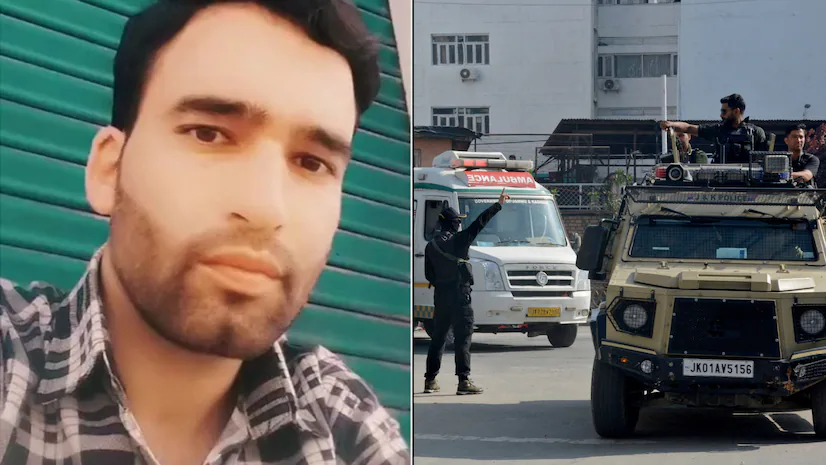
Syed Adil Hussain Shah (Photo: Social media), security tightened in Pahalgam (Photo: Reuters)
Syed Adil Hussain Shah, a pony ride operator in Jammu and Kashmir’s Pahalgam, reportedly lost his life while trying to protect a tourist during Tuesday’s terror attack that left 26 people dead. Shah attempted to wrest a rifle from one of the terrorists as gunfire erupted near the scenic Baisaran meadow.
Shah, who earned a living ferrying tourists on horseback from the car park to the meadow – accessible only on foot – was the only local civilian killed in the attack. According to an ANI report, eyewitnesses said the terrorists, before opening fire, asked victims their religion and made them recite Islamic verses, reportedly selecting targets based on their answers.
His brave act came as tourists scrambled to flee the ambush. Shah had reportedly tried to shield the tourist he had taken up the trail earlier that day.
The 32-year-old was the sole breadwinner for his family, which includes his ageing parents, wife, and children. His family is now shattered by both the emotional loss and the financial uncertainty that lies ahead.
His grieving mother, overwhelmed with sorrow, pleaded for justice, while his father, Syed Haider Shah, recounted the panic and heartbreak upon learning of his son’s fate.
“My son went to Pahalgam yesterday for work. Around 3 pm, we heard of the attack. We tried calling him, but his phone was off. It rang again around 4:40 pm, but no one answered. We rushed to the police station and were told he had been shot,” he told ANI.
Shah later succumbed to his injuries.
source: http://www.business-standard.com / Business Standard / Home> India News / by Vasudha Mukherjee, New Delhi (headline edited) / April 23rd, 2025
More than seven decades after India achieved independence, the role of innumerable martyrs and freedom fighters who gave their blood and offered lives for the motherland, needs to be remembered.
Many of them got harsh punishments, didn’t get proper last rites, remain forgotten and even those whose sacrifices are known, don’t have monuments or memorials built in their memory.
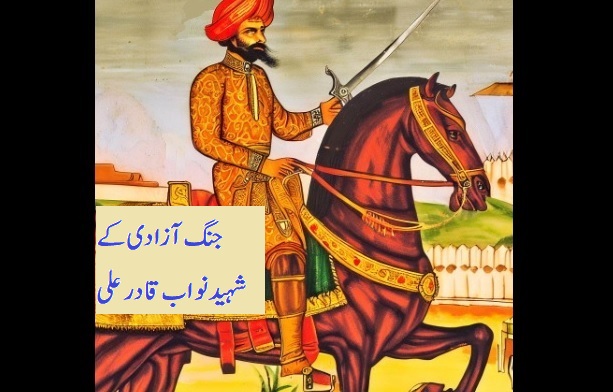
The martyrdom of Nawab Kadar Ali, and his companions, who planned attack on residency and to take on the East India Company forces in Nagpur, also needs to be recalled. They were hanged here for their role in 1857–the first war of independence.
Though there is no monument named after them and no big memorial, they remain heroes in public memory. The fort that had been a base of 118 Infantry Battalion for years, is opened on three days including August 15 and January 26. Thousands of people arrive on these days, and also pay visit to the grave and offer their respects.
The flame for independence was already lit. History books mention that soon after Meerut, the anger was palpable among soldiers and citizens in this region too. On June 13 1857, a large gathering took place near Mission High School. The soldiers too were anxious and ready.
Scared, some of the East India Compnay officials ran towards Kamptee Cantonment, while others went inside the Sitabuldi Fort. It was due to treachery that the attack plans had been leaked and the news reached British officers. More EIC forces were called from other places to control and overpower the rebels.
Rani Baka Bai, wife of late Raghoji II, was supporting the British and issued a warning that anyone abetting or aiding the revolutionaries would be arrested and handed to the East India Company. It’s a long story and how the soldiers and citizens suffered, refused to name the leaders of the movement.
Historical texts say that the signal of a fire balloon was decided. But after the traitors gave information to East India Company officers, Plowden, the commissioner, ordered a regiment to move into the city. The irregular calvary at Tali was dismayed. Major Arrow tried to get information from ring leaders but no one gave names.
Baka Bai summoned all her relations, and dissuaded them with threats. This chilled the spirit of public. However, later when Company officials’ strengthened their hold, the rebels were identified. Arms were collected and after inquiry, Dildar Khan, Inayatullah Khan, Vilayat Khan and Nawab Kadar Ali were tried and executed.
KILLED, HANGED, BURIED IN A COMMON PIT
The Gazetteer briefly mentions that ‘tucked away between the easter walls of the inner fort and the barracks is a large grave known as Nav Gazah Baba…the grave of Nawab Kadar Ali…and his eight associates..who were killed and hanged by the ramparts of the fort due to their role in the war of independence”.
“They were all buried in a common pit, nine yards long. The fort recalls to our mind the memory of the brave soldiers who fought in an attempt to preserve the independence of the mother land”. It was treachery that was responsible for the arrests and the punishment. Those who helped the British, got ‘jagirs’ as rewards.
Ghulam Rasool ‘Ghamgeen’, the poet, wrote these lines in Farsi :
Choo.n Qadar Ali Khan Ameer Kabeer Shud-az-tohmat, ahl-e-balwa aseer
Duaa’e shahaadat ba-raahe Khuda shab w roz mi kard aa.n mahtada … … Khirad guft ee.n misra-e-silk-e-noor Za-daar-e-jafaa shud ba-daar-e-suroor
The last couplet of this long Persian verse, brings out the ‘tarikh’, the year of execution. The complete verse is mentioned in Dr Mohammad Sharfuddin Sahil’s book ‘Tarikh-e-Nagpur’. It shows the impact of the hangings on the people in the region. Nagpur is geographillcally considered to be a part of Central India and is the biggest city in Vidarbha region of Maharashtra.
The fort for a long period remained the base of 118 Infantry Battalion of Territorial Army. Every year, on August 15 and January 26, fort is opened for public so that it can pay respect to the freedom fighters. It’s also opened on May 1 i.e. Maharashtra Day. [Illustration is representive]
source: http://www.newsbits.in / NEWS Bits / Home> Top News / by Shams Ur Rehman Alavi / August 15th, 2021