Category Archives: Martyrs of the Nation

Forgotten role of Saudi Arabia in the Indian Freedom Struggle

SAUDI ARABIA / INDIA:
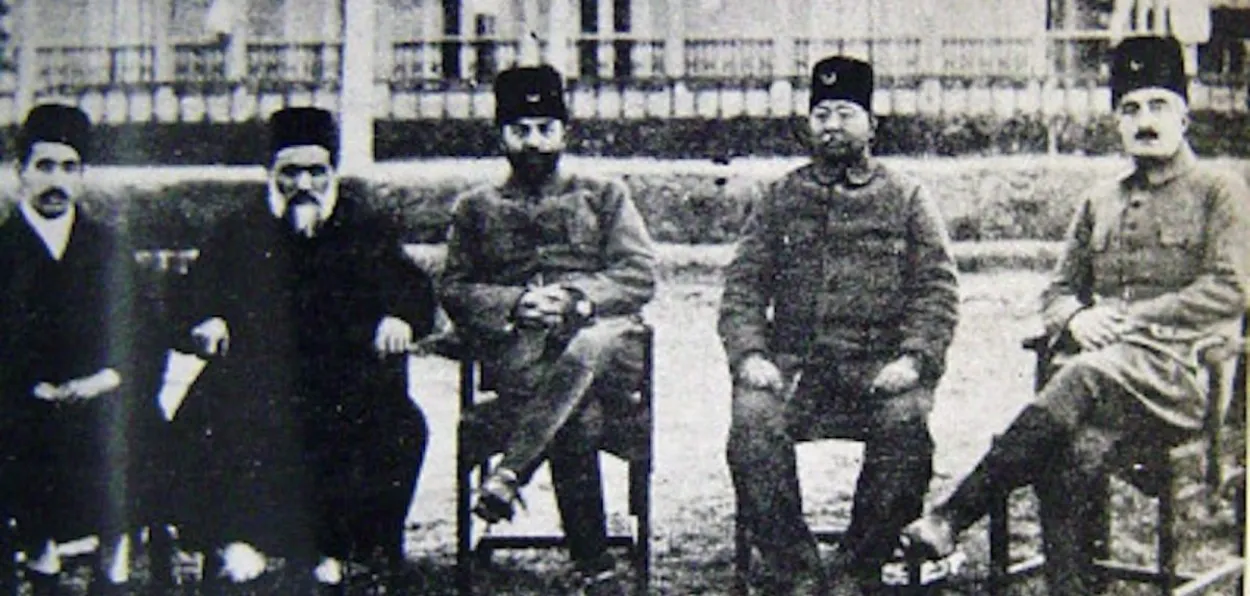
Maulana Obdaiullah Sindhi (Second from left) in Turkey

It’s a little-known fact that Saudi Arabia played an important role in the Indian Freedom Struggle. This country was the only one outside British India to provide support to the Indian revolutionaries during the 150 years of freedom struggle.

At the outset of the Second World War, Netaji Subhas Chandra Bose planned to send his men for Haj, and under that cover, they were to recruit anti-British people in Azad Hind Fauj. At that time Indian revolutionaries were operating from Hejaz (now Saudi Arabia).

Before announcing his fight against the British during World War II, Bose met Maulana Ubaidullah Sindhi in 1939. Sindhi was an Indian revolutionary who had formed a Free India Government in exile with Raja Mahendra Pratap and Barkatullah at Kabul in 1915. After World War I he toured countries like Russia, Germany, Italy, etc to create an alliance for the next war of Indian independence. In the 1930s, Sindhi settled down at Makkah after being granted asylum. However, British intelligence alleged that he was preaching Indian Nationalism among Muslim pilgrims visiting the holy city.

A grand plan was prepared at Makkah. The city provided one of the best communication channels to other parts of the world because of Haj. Sindhi returned to India in 1938. According to a letter written by Maulana Abul Kalam Azad to Maulvi Zahirul Haque, Sindhi had told him that he wanted to send Bose abroad for a final battle against the British. Azad wrote that Bose and Sindhi met in Delhi to talk about the future of the Indian Freedom Struggle. They again met in Calcutta (Kolkata) after a few months. Ubaidullah handed over important letters of reference and documents to be given to the Japanese authorities.

Sindhi wasn’t the first Indian revolutionary to use Saudi as his ground of action. The government he formed in 1915 in Kabul was part of a larger plan known as the Silk Letter Movement. This was a collaboration of Ulema, Ghadarites, Bengali revolutionaries, and others to free India by an armed revolution. The leader of the movement was Maulana Mahmood Hasan. He was arrested in 1916 from Hejaz along with  Maulana Husain Ahmad Madani, Anzer Gul, Wahid Ahmad, Hakim Nasrat Husain, and others.

Hasan and Madani were teaching at Makkah and Medina and also influencing pilgrims. They were sent to Malta as Prisoners of War because the British believed,  “if they were kept in confinement in the Hedjaz for a long period they might become interesting and exciting objects of pilgrimage or schemes for help or rescue to many fanatical Muhammadans in India and Afghanistan”.

Maulana Mahmood Hasan, the head of Darul Uloom, Deoband, was also a member of this group. Deoband considers Haji Imdadullah as its spiritual head; Imdadullah’s disciples founded the Madrasa at Deoband after 1857 to prepare revolutionaries.

Imdadullah went for Haj in 1845, where another Indian Shah Muhammad Ishaq directed him to fight the British. Imdadullah wrote, “The conditions of India are not hidden as India is my motherland” and returned to India in 1846. In the districts of Muzaffarnagar, Saharanpur, and Shamli, he started raising an army with the help of his students like Hafiz Muhammad Zamin, Maulana Qasim Nanautvi, Maulana Rashid Ahmad Gangohi, Maulana Mazahar, Maulana Munir Nanautvi.

This army led by Imdadullah fought the British forces in 1857 and liberated Shamli. A civil government governed the town for a few days before the British recaptured it. Thousands of people were killed, and Imdadullah took refuge in Makkah. He reached Makkah in 1859 and used it as a ground to preach anti-colonial ideas among the pilgrims.

Why did Ishaq, who lived in Makkah, ask Imdadullah to fight for Indian independence? In 1821, Syed Ahmad Shahid undertook a journey to Makkah and Medina. He was an Islamic scholar and soldier in Maratha forces. When Marathas signed a treaty with the British, Syed left their army and left for Makkah with a group of people. On his return from Haj, he attained martyrdom while fighting the British.

In the 1920s, 30s, and 40s, British intelligence raised several alarms with the Saudi authority to check Indian revolutionaries in Makkah, Medina, and Jeddah. Indian revolutionaries in the name of Haj visited Saudi Arabia to meet each other freely. British intelligence kept an eye on them. Memoirs of all these revolutionaries show that the local Arabs fully supported their cause and mission.

source: http://www.awazthevoice.com / Awaz, The Voice / Home> Stories / by Saquib Salim / July 10th, 2023
Mumbai Dock worker’s son among 04 from HCoI Coaching cleared UPSC exams

Mumbai, MAHARASHTRA :

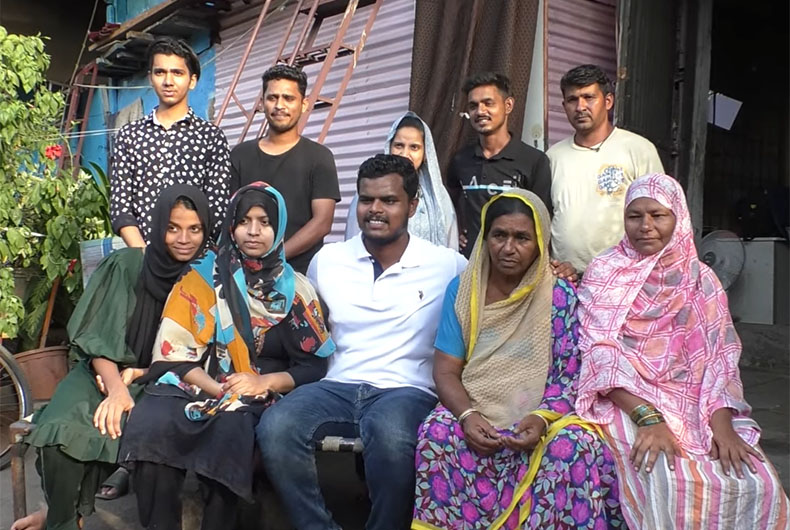
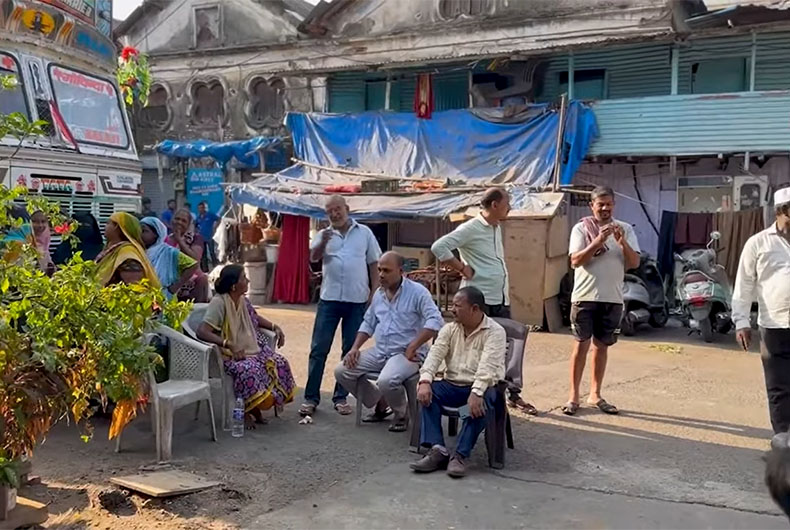
Syed Mohammed Husain lives at the Wadi Bunder slums in Mumbai with his extended family, which includes his maternal grandmother, parents, elder brothers, and their wives and children.

UPSC Civil Services 2022 Toppers: 

A total of 04 students of Haj Committee of India (HCoI) Coaching Centre, including Mumbai Dock worker’s son Sayed Mohammed Husain, have cleared the 2022 UPSC Civil Services Exams the result of which was declared Tuesday.

Syed Mohammed Husain lives at the Wadi Bunder slums in Mumbai with his extended family, which includes his maternal grandmother, parents, elder brothers, and their wives and children.

Hussain’s father started as a labourer loading and unloading goods from trucks at the dockyard and went on to become a supervisor. Tuesday however brought the family the moment they were waiting for since the last five years.

It was when Husain cleared the UPSC 2022 Civil Services exams in his 5th attempt and secured 570th rank.

“The last failure really broke me. I spent a lot of time in a mosque contemplating about my situation and came out resolved to give it another shot,” Hussain said while talking to reporters after his success in the coveted Civil Services exams.

Road to Civil Services

Syed Husain obtained school education till 7th at Khoja Isna Asheri Jamaat School in Dongri, and later took admission in St Joseph High School to clear SSC board exams. After completing graduation in Commerce from Mumbai’s Elphinstone College, he started preparing for the civil services exams.

Besides taking help from various coaching classes in Pune and Delhi, Husain is also a beneficiary of the Haj Committee of India Residential Coaching Centre.

Others from HCoI Civil Services Coaching Classes who cleared this year’s Civil Services exams are Qazi Ayesha Ibrahim (Rank 586), Taskeen Khan (Rank 736) and Md Burhan Zaman (Rank 768).

Ayesha Qazi

In total contrast to Husain, Ayesha Qazi is a daughter of a businessman, and belongs to a well to do family residing in Kalwa, Thane area of Mumbai Suburbs.

Ayesha completed her SSC from JVM New English School and later passed HSC exams from Abdullah Patel Junior College, Mumbra. She started preparing for the Civil Services Exams in 2019 after graduation in Arts from Joshi Bedekar College, Thane.

The UPSC announced the final result of Civil Services Exams Tuesday, and recommended a total of 933 candidates from different parts of India for IAS, IPS, IFS, IRS and other Civil Services Posts.

Among the 933 candidates who cleared this year’s CSE a total of 30 are Muslims.

source: http://www.ummid.com / Ummid.com / Home> India> Education & Career / Zohair M. Safwan, ummid.com / May 24th, 2023

Karnataka: Harihar soldier dies during firing practice in Pokharan

Harihar (Davangere District), KARNATAKA:

A soldier of the Indian Army from Harihar died during a demolition firing in Pokhran in Rajasthan on Monday.

Javed

Bengaluru / Davangere :

A soldier of the Indian Army from Harihar died during a demolition firing in Pokhran in Rajasthan on Monday. The body is expected to reach Bengaluru on Wednesday.

According to defence sources, the soldier is identified as Javed (33), a resident of PB Road area in Harihar in Davangere district. He was attached to an engineer regiment of the Indian Army located at Secunderabad. Javed who had been serving the Army for 14 years is survived by his wife and two children.

Lt Col Manish Ojha, Defence spokesperson, Rajasthan said, “During the demolition firing being conducted in Pokhran by an engineer regiment of the Indian Army  as part of its annual training firing practice, a shaped charge exploded accidentally, resulting in the death of one soldier and injuring four others.” All injured were evacuated by air to Military Hospital in Jodhpur. An inquiry has been ordered to ascertain the exact cause of the accident, he added.

Javed was the second son of Abdul Khader Sab and Fathima Bi. He studied at MRB school at Harihar and did his second PU at SJVP College in Harihar. Soon after completing PU, he joined the Army in 2005 and later completed his BCom through distance education while in service. Javed had married Sartaz Bhanu in 2013 and had two daughters — Ameena Kaiser (3) and Umme Javera Aiyath (18 months), family sources said.

Javed used to talk to his mother over the phone daily and had called her on Monday morning. On Monday afternoon, he had informed his wife that he was going to attend a training at Pokhran, family sources said. The body is expected to arrive from Jodhpur to Bengaluru on Wednesday and reach Harihar late night. Final rites will be performed at Harihar on Thursday, source said.

source: http://www.newindianexpress.com / The New Indian Express / Home> States> Karnataka / by Express News Service / February 14th, 2018

The Freedom Fighter and Labour Leader Abdul Bari Still Beloved in Jamshedpur

Shahbad District / Patna, BIHAR :

This May Day, remembering Abdul Bari.

Abdul Bari.

Abdul Bari is not a name that many Indians remember, but Munawwar, a committee member of the Tata Motor Workers’ Union in Jamshedpur, Jharkhand, holds the name in high esteem.

“I don’t see a leader like Abdul Bari [coming up] in the near future,” he said. “It is because of his efforts that we still get high tea at just six paisa.”

“Once, Bari went to the Tatas and he was offered tea. He asked them to first offer it to the workers, and then made an agreement which is still benefitting us. Upmaaloo chaapsamosa all for six paisa in the company’s canteens.”

Asked how they pay six paisa when currency that small no longer exists, he says, “We get token of Rs 2 or more and keep using it for weeks.”

Munawwar visits Bari’s grave every year on March 28, the death anniversary of the pre-independence labour leader, to offer flowers. This duty, he says, was assigned to him by the Tatas.

Thinking of labour in the days of capital

Despite the large numbers of workers who struggle to earn a square meal a day, major political parties remain hostile towards them. In the 55-page Congress manifesto, the words ‘worker’ or ‘workers’ appear 15 times; in the BJP’s 45-page manifesto, the words appears only five times – four while referring to Asha and anganwadi workers. ‘Labour’ figures 21 times in the Congress manifesto, and only twice in the BJP’s.

The Congress does talk about ending the workers’ exploitation and improving working conditions. The party’s manifesto details new schemes and promises to implement old ones related to organised, unorganised and contractual labour. But it is anyone’s guess how schemes that have been on hold for so long will suddenly spring to life.

Dilip Simeon, a founding member of the Association of Indian Labour Historians and former professor of history at Ramjas College, says that nobody talks about labour now because “in today’s context, the labour movement is influenced by communal sentiments”.

“If labour is with the BMS [Bharatiya Mazdoor Sangh] and Shiv Sena, then this is the weakness of the movement; if the labour movement wants to regain its power, then it has to face this challenge.”

Before independence, Simeon says, regardless of community, “leaders came together to advance the struggle of workers in India. Abdul Bari, Maneck Homi and Hazara Singh were their leaders. A Muslim, a Parsi and a Sikh could all be leaders of a workers’ movement.”

“Abdul Bari was so trusted that workers would start their protest first and then ask –what’s our demand?”

Bari was born in 1882, in Bihar’s Shahabad district. He was a student at Patna University in 1919 and was later appointed as a professor of history there, before he started studying law.

He quit to join the Khilafat movement, and actively participated in Gandhi’s civil disobedience movement and salt satyagraha. Bari did not restrict himself to the cause of one social group; he supported several political parties, including the Socialist Party and Swaraj Party, in parallel with the Congress. In addition, he was the voice of the labour movement in India and president of the Jamshedpur Tata Workers’ Union.

What Gandhi said about Bari

The journalist Afroz Alam Sahil has written a book on Abdul Bari, Professor Abdul Bari: Azaadi ki Ladaai Ka Ek Krantikaari Yodhha (Professor Abdul Bari: A Revolutionary Warrior of the Freedom Struggle). The author reveals several stories which won’t be found Indian history books. One such story is around Bari’s mysterious murder, and Gandhi’s reaction to it.

According to a report published by the Times of India on March 31, 1947, Bari was shot dead in the evening of March 28 while on his way home from Khushrupur, 24 miles from Patna. He was then the president of the Bihar Provincial Congress Committee. Following his death, a complete strike was observed, and Tata closed all its plants except essential ones.

Gandhi, in a speech on March 29, 1947, mentioned that he was struck by Bari’s simplicity and honesty. Gandhi added that he was planning to be more closely associated with Bari, and make an appeal to keep his short temper in check as it was not befitting of the highest office in Bihar. Gandhi referred to Bari in the same speech as “a very brave man with the heart of a fakir”. He declared that Bari’s death was the result of an altercation that had ensued between Bari and one Gurkha member of the anti-smuggling force, who was a former member of the Indian National Army.

The author mentions in this book that Bihar’s first Prime Minister (Premium) Barrister Muhammad Yunus had disclosed in an interview to the Orient Press of India that Bari had threatened to disclose the names of some prominent Congress leaders who were involved in the Bihar carnage – just three days before he was killed.

Yunus also said that Gandhi’s statement was given in haste. In his speech, Gandhi had told the audience that there was no politics of any kind in the death, and that it would be unjustified to associate the whole Indian National Army with Bari’s killing just because of one man’s actions.

In another incident discussed in the book, Gandhi arrives at Fatuaha station near Patna in the early morning of March 5, 1947. He travelled from Calcutta to Patna. Bari, chief minister Srikrishna Sinha and others welcomed him on the platform. As soon as Gandhi saw Bari, he laughed and said, “How is it that you are still alive?”

“This book is an attempt at bringing back his identity not just as a leader of the labour movement but a prominent leader of the freedom struggle of India,” the author says. “Professor Bari was one of the biggest leaders of the labour struggle in India. But limiting his role to even that would be unjust, because he was present in every chapter of the independence movement….The speciality of Abdul Bari is that he questioned his own party Congress when it came to the rights of workers.”

In a speech, Bari said, “We are in Congress to serve the poor of this country not to respect Gandhi, Rajendra Babu and Shri Krishna Babu…Lakhs of Indians who walk with them are not there to make them kings but to achieve freedom for this country.”

According to Sahil, “He criticised Gandhi and Rajendra Prasad many times because he was wholeheartedly committed to this struggle. He wanted to organise an all India conference for workers. He had formed the All India Mazdoor Sevak Sangh. He mentioned this in a letter written by him to Sardar Vallabh Bhai Patel on 22 June 1946.”

Why commemorate leaders like Bari today? Sahil has the answer. “Today when Muslim youth talk about Muslim representation, they must read more about Bari, the symbol of Hindu-Muslim unity, in order to understand their own political history and determine how it influences their future.”

Afshan Khan is a Delhi-based freelance journalist.

source: http://www.thewire.in / The Wire / Home> Analysis> Labour / by Afshan Syed (headline edited) / May 01st, 2019

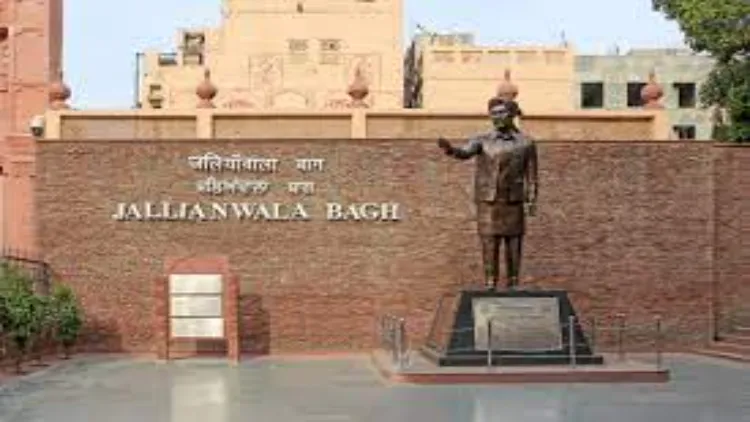
Jallianwala Bagh: A symbol of Muslim, Hindu, Sikh Unity

Jallianwala Bagh, (Amritsar), PUNJAB:

Jalianwala Bagh
Jalianwala Bagh

In popular memory, historical narratives are more often than not laced with silence, neglect, nostalgia and heroism thus blurring the line between history and fiction. Public memory tends to remember the selective events according to ideological or political conveniences while the whole narrative in its context is often forgotten.

The Jallianwala Bagh Massacre is one such event which stands out in public memory as a solitary incident. Popular imagination puts the killing of hundreds of Indians on 13th April, 1919 at Amritsar as an event completely disassociated from time and space. It is needed that the massacre should be read in context with the time and space.

Why did the people gather at Jallianwala Bagh?

Indian leadership in general supported the war efforts of the British during the World War – I (WWI) on a promise that the country would be granted self rule or some kind of political autonomy after the war would be over. The British, after the war, backtracked on the promise. Rather to check the nationalist voices brought a Rowlett Act in force which enabled police to imprison Indians without evidence. Several Indian Muslims were aggrieved at the humiliation of Turkey and the British believed that it was their only challenge. With the Rowlett Act at their disposal these Pro-Khilafat voices could be easily suppressed. They did not foresee the possibility of Hindus joining hands with the Muslims, and vice versa and pose a problem for their colonial rule.

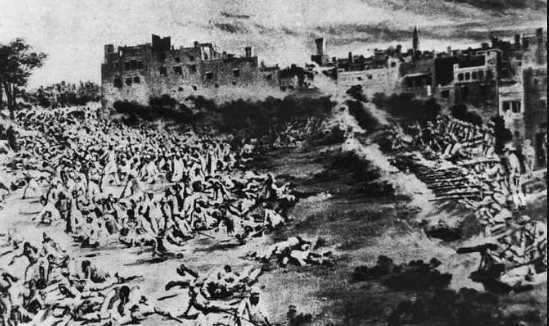
An artist’s depiction of the scene of massacre

On 18th March, 1919, the Rowlett Act was passed. Mahatma Gandhi along with other nationalist leaders termed it a Black Act and called for a protest movement against the same. The day chosen for protests and strikes was the 30th March that was later changed to 6th April. In Delhi a protest was held on 30th, because of lack of communication, and the police did not hesitate from firing upon the unarmed people. More than 50 protestors were killed in Delhi. The British had cleared their intention of using violence against the non-violent protesters.

On 6th April protests and strikes were held across the country, yet Punjab displayed an exemplary zeal of nationalism. What disturbed the British most was the fact that orthodox Hindus of Arya Samaj and orthodox Muslims of different Wahabi and pan-Islamist organizations joined hands against the British. The most popular leaders of Punjab at the time – Dr. Saifuddin Kitchlew and Dr. Satyapal, were prohibited from making public statements but still unity could not be broken. At different places people were fired upon but the nationalist sentiments could not be killed.

On April 9, Muslims came out to celebrate Ram Navami across Punjab. This was becoming too much for the British. In Amritsar Saifuddin and Satyapal oversaw a grand Ram Navami procession where Muslims were as zealous as Hindus were. It led the British to arrest the two leaders and sent them to an unknown location. The people gathered at the Deputy Commissioner’s office to register their protest and they were fired upon. Many were killed. The fear of a Hindu-Muslim unity was so frightening for the British that even after Jallianwala Massacre they arrested and killed Muslims for participating in Ram Navami celebrations.

Ghulam Jilani, who was an Imam of a mosque, was arrested on 16th April with Khair Din for leading the Ram Navmi processions. Police tortured them in the most horrific and inhuman fashion by inserting sticks up in their anus until their excreta and urine would not come out. Khair Din died of the torture while Jilani survived to narrate the ordeal. More than a hundred Muslims were tortured in this manner to celebrate Ram Navmi. 

On the other hand in Lahore, on receiving this news, in an unprecedented manner more than 25,000 Hindus and Muslims gathered in Badshahi Mosque and Hindu leaders, like Rambhaj Datta, addressed the people from the pulpit of the mosque. In Lahore, not only the British used bullets but also brought their loyalists into the picture.

A few sold out Indians like the leaders of Muslims League issued statements that allowing Hindus into the mosque and addressing from pulpit amounted to the sacrilege. Still, most of the Muslims in Punjab were supporting the war cry of the protestors: Hindu-Musalman ki Jai (Victory to Hindu-Muslims).

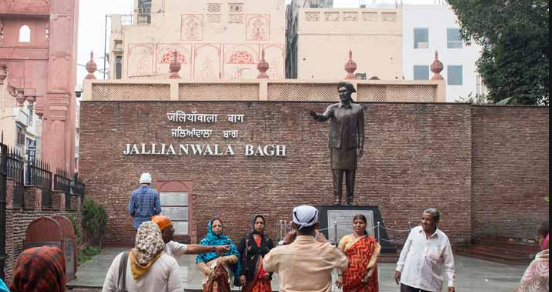
Visitors clicking pictures at Jallianwala Bagh

It was noted in a government report tabled at the British Parliament, “It (Hindu-Muslim) union had only one purpose, a combined attack on the government.”

Meanwhile, on 13 April, the Baisakhi Day, a meeting was scheduled at Jallianwala Bagh, near Golden Temple, to protest the arrests of Saifuddin and Satyapal. Hindus, Muslims and Sikhs gathered at the Bagh. Colonel Dyer with his troops entered the place and fired upon the unarmed protesters. A gory story of blood, death and massacre happened that each and every Indian knows by heart. Hundreds of Indians died. The tale of this massacre became folklore and inspired generations of revolutionary Indians like Bhagat Singh, Ram Mohammad Singh Azad and others. But, what we miss out is that the British did not stop at this. Punjab remained a laboratory of British atrocities.

The next day, April 14, people in Gujranwala woke up to find a beheaded calf at a public place. It did not take a rocket science to decipher a sinister plot to cause enmity between Hindus and Muslims. People gathered and protested such malicious attempts of the government to disturb the peace. Frustrated at their failed attempt and seeing that the unity has strengthened even further, army airplanes were called in to bomb the city. Yes, you are reading it correctly.

Within two decades of the invention of aero planes and less than a decade of its first military use in WWI when the technology was novel even for armies the British used it upon the innocent civilians of Punjab. A fleet of three planes dropped bombs and fired machine guns on the city and adjacent rural areas. Bombs were dropped at schools, hostels, mosques, marriage ceremonies etc. The government report specifically mentioned that the district is dangerous because followers of Arya Samaj and orthodox Muslim Wahabis like Fazal Ilahi and Zafar Ali Khan had joined hands. An armoured train with machine guns mounted in it was also used to kill along the railway tracks in Gujranwala.

The tales of torture, suppression and killings was repeated allover Punjab. While Jallianwala Bagh rightly gets its mention in our books and survived the public memory the causes behind it and a long trail of violence proceeding and succeeding the event have been forgotten. The very fact that the British used their worst form of violence to counter Hindu-Muslim unity itself speaks about the power of this unity. We need to remember the cause for which our forefathers and foremothers had laid down their lives.

(Saquib Salim is a historian-writer)

source: http://www.awazthevoice.in / Awaz, The Voice / Home> Story / by Saquib Salim / 2021

Shaukat of INA liberated Manipur on 14 April, 1944

Moirang (Manipur), ASSAM:

INA memorial at Moirang, Manipur

“The Indian National Army (INA) has now crossed the Indo-Burmese border and in the course of the struggle for the liberation of the people of India from the British Yoke, we have now reached Moirang, the ancient citadel of Manipur. Our commitment is the march to Delhi and the unfurling of the Tricolour Flag then at Lal Quila.

Many had died on our way to reach near Moirang and many would die on our way to Delhi. However, the expulsion of the enemy from the sacred soil of India is a compulsion for us… Freedom of India is very near and near at hand. We shall win it and we shall have progress and prosperity of the people of India after it.” Colonel Shaukat Ali Malik of Azad Hind Fauj addressed these words to a large gathering at Moirang in Manipur on 14 April 1944 after hoisting the National Tricolour. In this way, Moirang became the first liberated territory of India, which came under the administration of Azad Hind Sarkar headed by Netaji Subhas Chandra Bose. 

Col. Malik led INA’s victory march over Moirang, liberated the Indian territory, unfurled the national flag, and established a national government.

In his recently published book, Professor Kapil Kumar wrote, “Col. Malik while commanding the Unit, always led from the front and displayed Great feats of Bravery in difficulties achieving successes at various places. Netaji conferred upon him the great honour of Tamgha-e-Sardar-e-Jang.”

Kumar also lists several Indians from Manipur who joined INA forces. Prominent among them were Mairembam Koireng Singh, who later became CM of Manipur, and Naqi Ahmed Chaudhary, an INA soldier from Manipur who helped Col. Malik with the local language and terrain.  

But, the importance of this operation goes beyond the hoisting of the flag and establishment of civilian government. 

In the official newsletter of Azad Hind Fauj, Dr. M. R. Vyas one of the most trusted men of Netaji explained the importance of the victory of Moirang. He wrote, “When the INA first entered India, it appeared as if they would launch a direct assault on Imphal, the capital of Manipur. The British, in this expectation, concentrated powerful forces, consisting of 3 divisions and 2 motorized brigades at Imphal. However, the INA troops avoided any such frontal attack which would necessarily have meant big losses. Instead, the Indian and the Japanese High Command planned for the rendering impotent of a powerful enemy force by encircling it.” 

So, the capture of Moirang “brought about the virtual encirclement of Imphal, thus rendering an entire British force of 60,000 – 80,000 men impotent of launching a major counter-offensive. This force became dependent on air supplies, which, from their very nature, are limited and insufficient for big operations.” 

The plan was to further annihilate this British force with the onset of Monsoons. For more than two months, INA under Col. Malik remained in total control and kept attacking the British posts from there. The British would have faced a humiliating defeat if US Air Force wouldn’t come to their rescue. 

More than 100 US fighter planes bombed Moirang and Bishnupur in Manipur. Fleets of B-25, P-51, and A-31 started bombing INA positions and civilians on 8 May 1944. Hundreds of these US fighter planes bombed civilian areas, INA positions, bridges connecting Myanmar to Manipur, and any supply line available to the Indians. The scale of US operations in Moirang is a testimony to the importance of this victory. 

source: http://www.awazthevoice.in / Awaz, The Voice / Home> Stories / by Saquib Salim / April 14th, 2023

Moulvi Syed Allavuddin: Hyderabad’s unsung hero of Indian freedom struggle

Hyderabad / British India:

Moulvi Allavuddin was sent to cellular jail in Andaman on June 28, 1859.

Moulvi Syed Allavuddin

Moulvi Syed Allavuddin who was a spiritual leader used to exhort the people of Nizam State, one of the strongest princely states of South India, to rebel against the British hegemony. He stood at the forefront of the direct fight against the British Government.

Moulvi Syed Allavuddin was a native of Hyderabad, the capital of the erstwhile Nizam princely state. He intensified his rebellious activities soon after the First war of Independence of India was started in 1857. 

A  rebellion started in Aurangabad which was part of Nizam State. The rebels who took part in the revolutionary activities in Aurangabad, escaped arrest and came to Hyderabad. They were arrested by the Nizam state police and kept in jail. The people and prominent citizens of Nizam state were angry when  Nizam rejected their plea to release the arrested rebels. They met in Mecca Masjid on July 17, 1857, and decided to attack the British Residency in Hyderabad.

That afternoon at 4 pm about five hundred people led by Moulvi Allavuddin and another revolutionary leader Patan Turrebaz Khan marched ahead from Sultan Bazar with war cries to attack the British Residency, a symbol of British Supremacy. Nizam Nawab, being a friend of the British, informed the English officers of the imminent attack. The armies of the English and the Nizam moved strategically and confronted the attackers with additional forces.

Firing continued between the two sides throughout the night. The rebels retreated as the enemy forces gained an upper hand. The angry armies of the British and the Nizam cracked down on the people of Hyderabad. An award of four thousand rupees was announced on the head of  Moulvi  Syed Allavuddin.

Moulvi went underground. After taking shelter for one and half years from his close friend named Peer Mohammed, he started consultations with freedom fighters and revolutionaries like Syed Bhikkoo, Syed Lal, and Mohammed Ali to put an end to the hegemony of the British on his land and people. At last British forces arrested and sent Moulvi Allavuddin to the cellular jail in Andaman on June 28, 1859. 

After leading a miserable life of  25 years as a prisoner, Moulvi Syed Allavuddin passed away in 1884.

source: http://www.siasat.com / The Siasat Daily / Home> News> India / by Syed Naseer Khan / April 03rd, 2023

Haryana boys led first mutiny of World War I

HARYANA:

Chandigarh :

The first mutiny of World War I was led mostly by young men from villages of Hisar, Rohtak, Meham and Gurgaon districts of Haryana. The Singapore Mutiny, which is known as the first mutiny of WW-I and left an indelible  mark on India’s freedom struggle, started on February 15, 1915. It was led by Muslim soldiers who belonged to British army’s 5th Light Infantry Brigade.

Even as the world observes the centenary of the Great War, the sacrifice of these soldiers has been all but forgotten as most of the soldiers and their descendants migrated to Pakistan after Partition.

The brigade mainly comprised Rajput Muslims and Pathans and had been sent from Madras to replace the Yorkshire Light Infantry in Singapore. They reached there in October 1914 and were to leave for Hong Kong in February. On the day of embarkment, a rumour spread that they were actually being sent to Turkey and would have to fight Muslims there.

Singapore Mutiny shook the foundation of British rule in Asia

A rumoured triggered the Singapore revolt. The sepoys killed British officers and seized ammunition. The mutiny went on for 5 days. Eight hundred Indian sepoys of the British army killed 47 British nationals; 200 sepoys faced court martial;  73 were given a range of punishments.

As many as 41 sepoys were shot by a firing squad in front of 15,000 spectators at Outram Prison in Singapore.

In his book “The Mutiny in Singapore”, author Sho Kuwajima has argued that the mutiny not only caught the British off-guard but also shook the foundation of British rule in Singapore and forced the British to reconsider their strategy in Asia.

“The mutiny had a great impact on India’s freedom struggle. Freedom fighters, including Ghadarites were vindicated when finally in 1946, the British decided to leave following the naval revolt of February 19, 1946 when they felt that their protective shield, the armed forces, had itself turned against them,” said historian Malwinder Jit Singh Waraich, who has penned a number of books on the freedom struggle.

Four of those executed in public were from Jamalpur (Hisar), three from Jatusana (Gurgaon) and two from Balyali (Hisar).  According to Phul Chand Jain’s Swatantarta Sainik Granth Mala, most of these people belonged to Jamalpur, Paten, Balyali, Kirawad and Balliya Ali in Hisar; Jatusana, Karmpur and Kheri Nangal in Gurgaon; Garhi, Kani and Kahnaur in Rohtak. One sepoy each was from Muzaffarnagar in Uttar Pradesh, Karnal and Nabha in Punjab.

“These villages were gripped by violence of Partition, so, there is not much trace of their memories now,” says documentary filmmaker Daljit Ami, who is making a film on the Singapore Mutiny and has visited these villages a number of times. In the course of his research, he came across just one man who had heard about these heroes and their Haryana connection.

According to historians, the Singapore Mutiny was followed by the Russian soldiers’ mutiny in 1917 and a series of mutinies in the French armies.

source: http://www.timesofindia.indiatimes.com / The Times of India / Home> News> India News / by Sarika Sharma / TNN / July 05th, 2014

Battle of Malegaon: The Maratha army’s Muslim Heroes

Malegaon (Nashik District) , MAHARASHTRA:

At the Battle of Malegaon, Muslim soldiers in the Maratha army defied the British army for a full month when they had no hope of victory as the Chhatrapati and Peshwa had already surrendered.


These battles, says Colonel Anil A Athale (retd), are in contrast to the colonial mindset driven narrative of Muslim separatism.


The current politics of both communities ensures that the heroes of Malegaon — or for that matter personalities like Ibrahim Khan, who led the Maratha artillery at the battle of Panipat in 1761 — are forgotten.

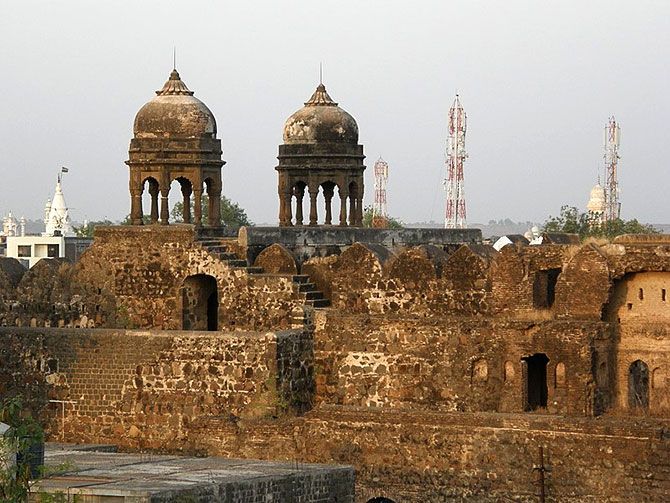
IMAGE: The Malegaon fort. Kind courtesy: Wikipedia

On January 1, 2018, the bicentenary of the defence of Koregaon by a small British force — that had a number of Mahar troops — was observed with great fanfare.

The British — the victors in the third Anglo-Maratha war — erected a pillar to commemorate the event.

During the same war, Muslim troops of the Marathas defied British forces for a full month from May 15, 1818 to June 13, 1818.

Since the Marathas were on the losing side, this saga of bravery was obliterated from history by the British.

As we approach the bicentenary of that event it is time to remember the brave soldiers of the Maratha army who continued to fight even when they had no hope since the Chhatrapati had already been captured by the British and Poona and Satara were under British occupation.

The loyalty to the Maratha flag by its Muslim soldiers even in a hopeless situation deserves to be remembered.

My own research in 1990 began with a question posed by the late Major General D K Palit, a military history scholar of repute.

The question he posed was this: How is it that the Marathas — who spiritedly fought a 22 year-long guerilla war against the mighty Mughal empire — succumbed to the British without a fight?

It is this quest for truth that led me to research the story of the Anglo-Maratha struggles of the 18th and 19th century.

The Battle of Malegaon fought in May-June 1818 was the last major attempt at resistance by the Marathas.

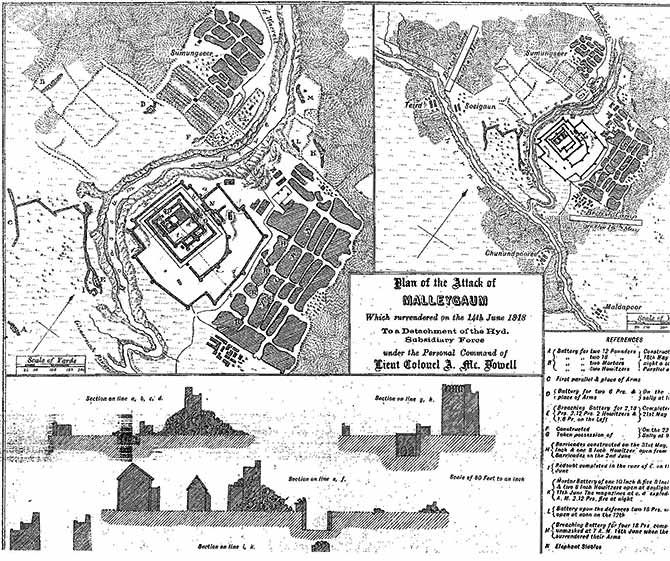
On May 15, 1818, a brigade strength force under Lieutenant Colonel A MacDowell reached the vicinity of Malegaon fort.

The British expected that this show of force would be sufficient to overawe the defenders of the Malegaon fort.

The British were in for a nasty surprise.

In response to summons to surrender, the defenders fired on the British camp leading to panic.

The quadrangular fort of Malegaon is located near the bend in the Musam river so as to cover two side of the fort, Malegaon town being on the other sides.

The fort had two lines of defence built of masonry surrounded by a seven feet wall and a 25 feet deep 16 feet wide ditch.

The outer wall had watch towers built of mud and stone. The inner fort or the citadel was 60 feet high with 16 feet wide ramparts.

On May 16, Colonel MacDowell reached the west bank of the river and began work to erect barriers of breastwork to deploy guns for the final assault.

At 8 am the British began bombardment of the fort with 20 guns, an assortment of 12 pounders (the biggest calibre gun then in India), 8 pounders and mortars.

The defending soldiers sortied out of the fort, destroyed the batteries and killed two British officers and several soldiers.

At the same time 7 guns from the fort opened devastating fire on the British lines on the west bank of the river.

The ding dong battle continued for six days.

On May 22, after particularly heavy shelling from the fort, the British were forced to abandon the breastwork for the guns and retreated.

On May 26, the British — through constant bombardment — succeeded in creating a breach in the inner wall of the fort.

The next day the British launched a three pronged attack after a bombardment lasting nearly two hours.

One column was led by Major Greenhill and consisted of a native battalion of 1,000 soldiers with 100 Europeans to directly go into the fort through the breach.

Another column of 800 sepoys under Lieutenant Colonel Stewart crossed the river downstream to outflank the fort from the west.

The third column consisting of 300 sepoys and 50 Europeans under Major Macbean went towards the river gate.

Each column had pioneers with tools, mines and ladders to tackle the fortification.

But the defenders of the Malegaon fort proved equal to the challenge.

The attacking British were met with a hail of bullets and gunfire. The attempt to scale the inner wall failed. Many of the engineer officers leading the attack suffered injuries.

Both the columns led by Majors Greenhill and Macbean were ordered to withdraw.

Only Lieutenant Colonel; Stewart’s column met with some success and he occupied part of the town.

The stalemate continued till June 4.

On that day another column under Major Watson arrived from Ahmednagar with a battalion of native infantry and a large number of siege guns.

For nine days, till June 13, the fort was subjected to heavy bombardment by the British guns.

On June 13, at 3 pm, the fort garrison accepted surrender and the Union Jack was hoisted in place of the Maratha saffron jari patka flag.

The next morning the garrison of 300 men marched out of the fort and surrendered their arms.

The British strength at Malegaon numbered over 2,000 troops. During the battle the British casualties numbered 11 officers and 220 soldiers (killed or wounded).

Thirty Maratha defenders died while 60 Maratha soldiers were wounded.

The British record states that in the end they used 36 guns, fired over 8,000 shells and used 35,500 pounds of gunpowder.

The British were so impressed with the valour and chivalry of the defenders that they permitted the surrendered soldiers to keep their daggers.

Historian N C Kelkar notes in his Marathi book Marathe ani Ingraj that at one stage the desperate British sent a message to the Muslim soldiers of the Maratha army that since the Chhatrapati had already surrendered, they should do likewise.

The doughty defenders replied that they were indeed aware that their king was in British captivity, but they were yet to receive instructions from him to surrender and therefore would keep fighting.

The devotion to duty and loyalty to their king was of the kind seen later only during World War II when many Japanese soldiers continued to fight even after Japan surrendered.

There is neither any victory pillar nor are the names of these brave soldiers engraved anywhere.

Even two hundred years after the event and the departure of British 70 years ago, the Muslim heroes of battle of Malegaon remain unknown, forgotten and unsung.

Two hundred years ago, the third Anglo-Maratha war fought in 1817 and 1818 ended in the Maratha Chhatrapati and Peshwa (prime minister) surrendering to the English.

After having defeated the Holkars and Shindias in early 1817, the British turned to the conquest of Maharashtra proper.

The full story of the Maratha struggle with the British has for long been swept under the carpet. In its place a modern myth of the British having directly taken over India from the Mughals or accidently acquired an empire has gained currency.

Ignoring the Marathas and their role in ruling most of north and central India was part of the grand colonial project of disinformation that sought to then play up Mughal-Rajput rule.

I recall an interesting news report some years ago, datelined Aligarh, where an Aligarh Muslim university ‘scholar’ had discovered that a major battle between the Marathas and the English had indeed taken place in Aligarh in 1803!

The worthy had, of course, never heard of the second Anglo-Maratha war that took place in 1803-1804 with battles at Delhi, Lassawari near Agra, Aligarh, Shekohabad etc.

The British had sound reasons to whitewash the Maratha period of our history.

Since the Marathas formed a formidable alliance with the Muslims, Jats and Sikhs in resisting the British, they posed a potential threat.

The distortions continued post-Independence as writing and teaching history was hijacked by the left-leaning Delhi elite. But those who ignore the Maratha or Sikh epoch fail to answer a simple question.

The Marathas fought three wars with the British, so did the Sikhs, the Gorkhas and Tipu Sultan in the south. Is there any mention of the Anglo-Mughal wars, even in the doctored historical narrative?

Note: The information about the Battle of Malegaon is based on a British Indian Army General Staff Publication (Simla 1910), Maratha and the Pindari War pages 89-91.

Colonel Anil A Athale (retd) is a military historian. This article is based on extracts from his forthcoming book, The Story of the Mighty Marathas and their Empire.

source: http://www.rediff.com / rediff.com / Home> News / by Colonel Anil A Athale (retd) / April 10th, 2018

The Forgotten Heroes of Malegaon

Malegaon (Nashik District) , MAHARASHTRA:

At most of the places in the country, the names of the martyrs have been put on specially constructed Memorials. But the Memorial in Malegaon is still waiting for the names of the seven martyrs to be written over it.

“I have always wondered how, the Muslims and the Hindus together, had decided to set a Mandir on fire”, said Dr. Iftekhar Ansari recalling the incident when on April 25 in1921, the Malegaonians set the Pophale Mandir on fire where, Bhaskarrao, the PI and Incharge of the only Police Station in Malegaon was hiding. He was ultimately killed by the people. A Muslim Constable was also killed in the same uprising.

He further said, “It demonstrates not only the harmony with which the Malegaonians were living then, but also shows their eagerness for the country’s freedom. For them, the freedom was above everything, even their religion. In fact, Hindus and Muslims, except few from both the communities as was the case everywhere, had demonstrated a rare unanimity during the whole struggle. I believe if it was a Mosque, a Gurdwara or any other place, it must have met with the same fate.”

Agreeing with Dr. Iftekhar, Ramzan Painter 74, who has collected more than hundred-years of the city records added, “A confirmed account of the exact situation during 1921, clearly suggests the harmony with which people were living.” Mentioning the name of Balu Shah, owner of the first newspaper in Malegaon and a prominent figure of that time who was actively involved in the whole movement with the Muslims, he added, “And who can forget the contributions of Advocate Tatya Khare and Gadgil Wakeel, who remained at the forefront in establishing a separate court in Malegaon.”

“I have always wondered how, the Muslims and the Hindus together, had decided to set a Mandir on fire”

But, as it had done at several other places in the country, the British Police registered the whole incident as rioting and hanged the upfront leaders of the uprising in Yeroda jail. However, after the independence in 1947, the State as well as the Central governments, mentioned the historic event of April 1921 as part of the freedom struggle and included the names of the seven martyrs in their gazettes with due respects. Also, when the Parliament passed a resolution for the construction of a Memorial of similar shape everywhere in the country and to put the names of the martyrs on them, a Memorial was also built in Malegaon.

However in Malegaon, unlike other places in the country, the names of the martyrs have not been put on the Memorial till now. Interestingly the civic body, despite passing many resolutions in its general meeting for putting the names of these martyrs on the Memorial, has also not cared for doing so.

And as if it is not enough to dishonor these martyrs, every year on Kranti Diwas when officials gather everywhere near these Memorials for offering their tributes, in Malegaon, no one cares to honor these martyrs.

source: http://www.ummid.com / Ummid.com / Home / by Aleem Faizee (headline edited)