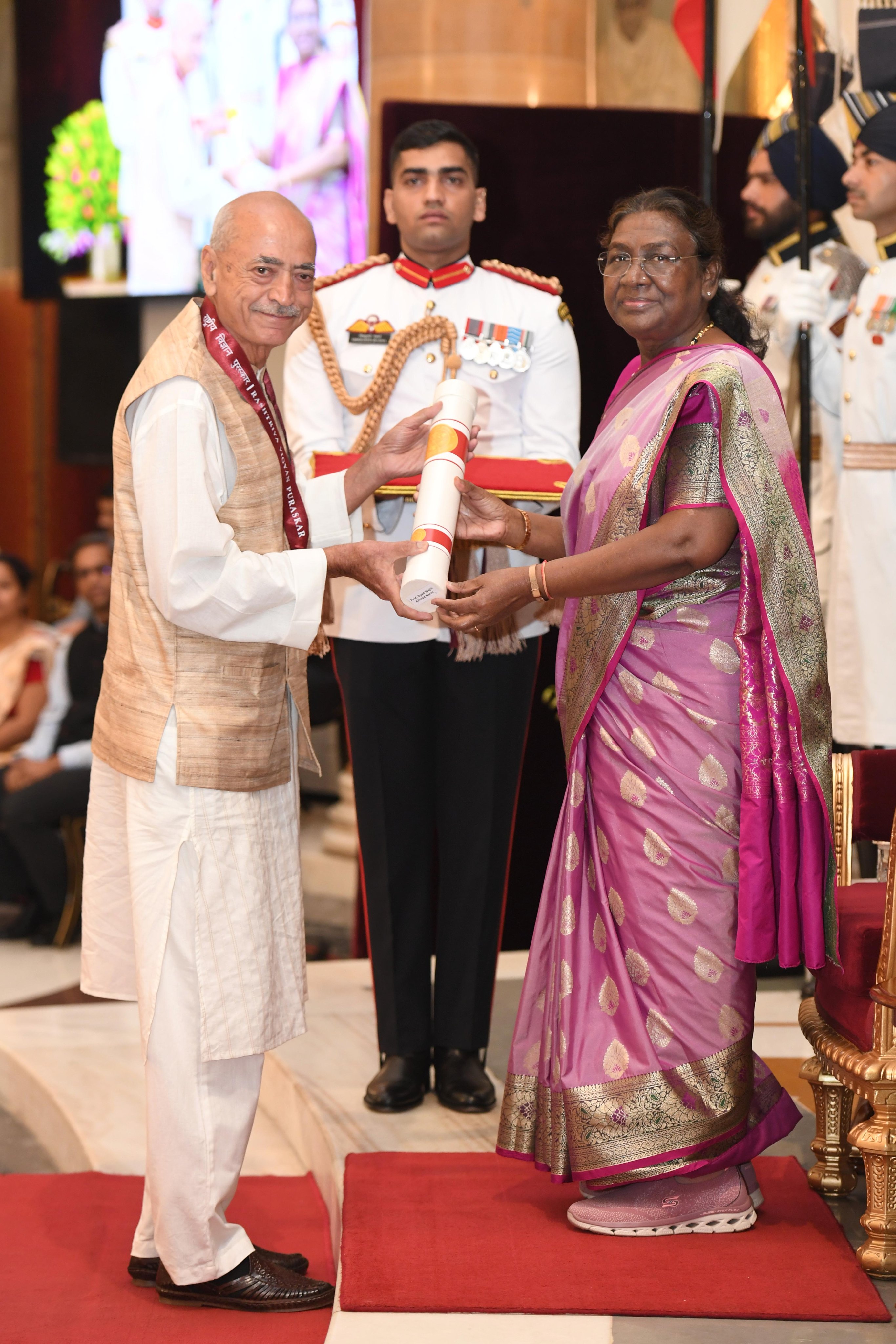
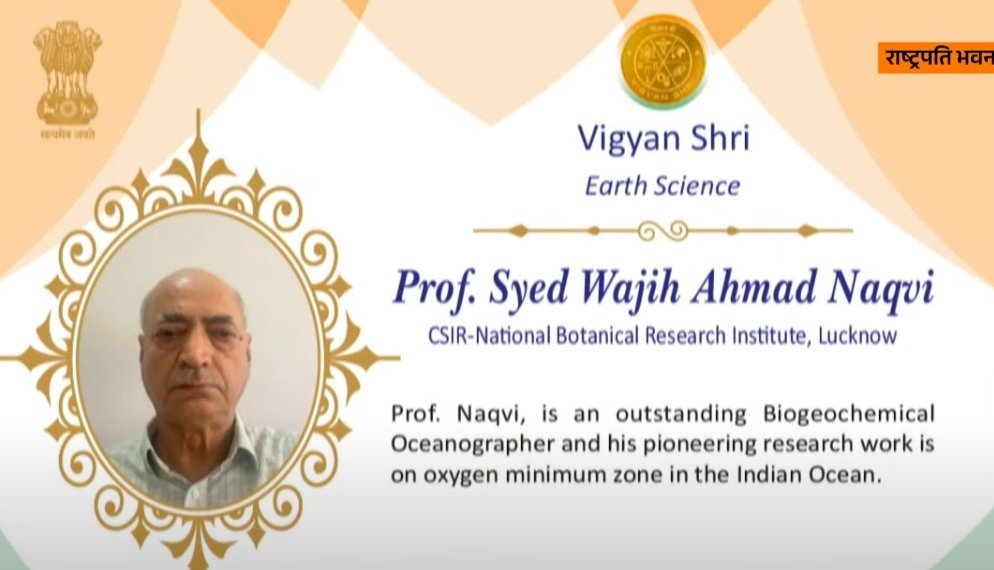
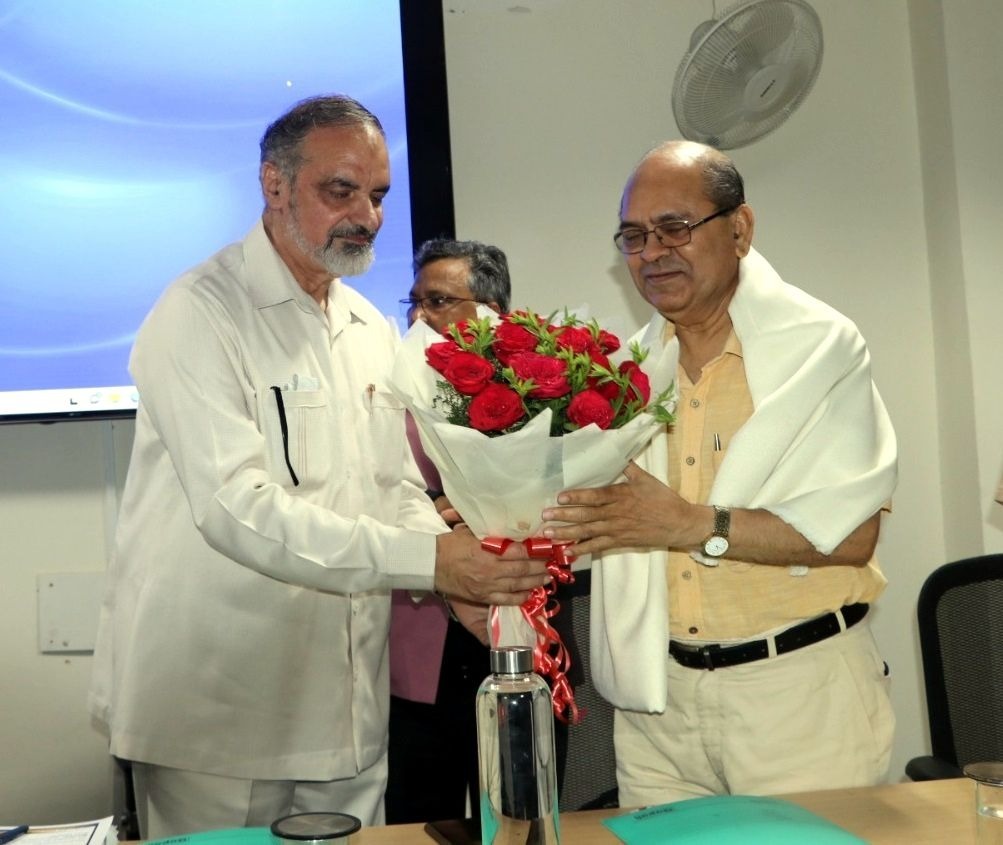
President Droupadi Murmu confers the Vigyan Shri Award on Professor Syed Wajih Ahmad Naqvi in Earth Sciences during the Rashtriya Vigyan Puraskar-2024, at Rashtrapati Bhavan, in New Delhi on Thursday August 22nd, 2024 .
Prof. Syed Wajih Ahmad Naqv from CSIR-National Botanical Research Institute (NBRI), Lucknow receives Vigyan Shri award in Earth Science from President Droupadi Murmu / pix: x.com/DDNewslive
New Delhi :
President Droupadi Murmu confers the Vigyan Shri Award on Professor Syed Wajih Ahmad Naqvi in Earth Sciences during the Rashtriya Vigyan Puraskar-2024, at Rashtrapati Bhavan, in New Delhi on Thursday August 22nd, 2024 .
In a prestigious appointment, Dr Nasr Ahmad Khan has been named the National Vice President of the Technical Wing of All India Unani Tibbi Congress (AIUTC). This decision was announced by Professor Mushtaq Ahmad, National President of the Congress, who recognised Dr Khan’s extensive contributions to the field of Unani medicine and his deep-rooted association with one of the most respected families in the Unani tradition, Hakim Raees Ahmad family.
Dr Nasr Ahmad Khan, who hails from Sambhal, Uttar Pradesh, has long been an advocate of Unani medicine, managing his family’s established clinic and contributing to the pharmaceutical industry through his venture ‘Advia.’ His work in the field has been marked by a commitment to preserving and advancing the traditional practices of Unani medicine while ensuring that they meet modern healthcare standards.
Dr Khan’s journey in Unani medicine began with his education at Rajasthan Unani Medical College, Jaipur, where he completed his Bachelor of Unani Medicine and Surgery (BUMS) in 1991. Since then, he has not only upheld his family’s legacy but also expanded its reach by integrating modern pharmaceutical practices with age-old Unani wisdom. His leadership in the family business has seen the ‘Advia’ brand grow into a trusted name in Unani pharmaceuticals.
The appointment of Dr Khan to such a significant national role is seen as a testament to his skills, knowledge, and dedication to the field. Professor Mushtaq Ahmad, while announcing the appointment, expressed his confidence that Dr Khan’s expertise would bring substantial benefits not only to the Unani Tibbi Congress but also to the broader public, particularly in promoting the use of Unani medicine as a viable and effective healthcare alternative.
The announcement has been met with widespread acclaim within the Unani community. Dr Sabahatullah, the National Secretary of the All India Unani Tibbi Congress, also shared his delight at Dr Khan’s appointment. He emphasised that Dr Khan’s leadership and vision would play a crucial role in furthering the objectives of the Technical Wing and enhancing the role of Unani medicine in the national healthcare landscape.
Dr Nasr Ahmad Khan’s elevation to this esteemed position is expected to invigorate efforts to integrate Unani medicine more deeply into the mainstream healthcare system, ensuring that it continues to provide holistic and natural treatment options for people across the country. His appointment is not just a personal achievement but a recognition of the enduring value of Unani medicine in India.
source: http://www.radiancenews.com / Radiance News / Home> Latest News> Report / by Radiance News Bureau / August 22nd, 2024
Dehradun, UTTARAKHAND / NEW DELHI / Bengaluru, KARNATAKA :
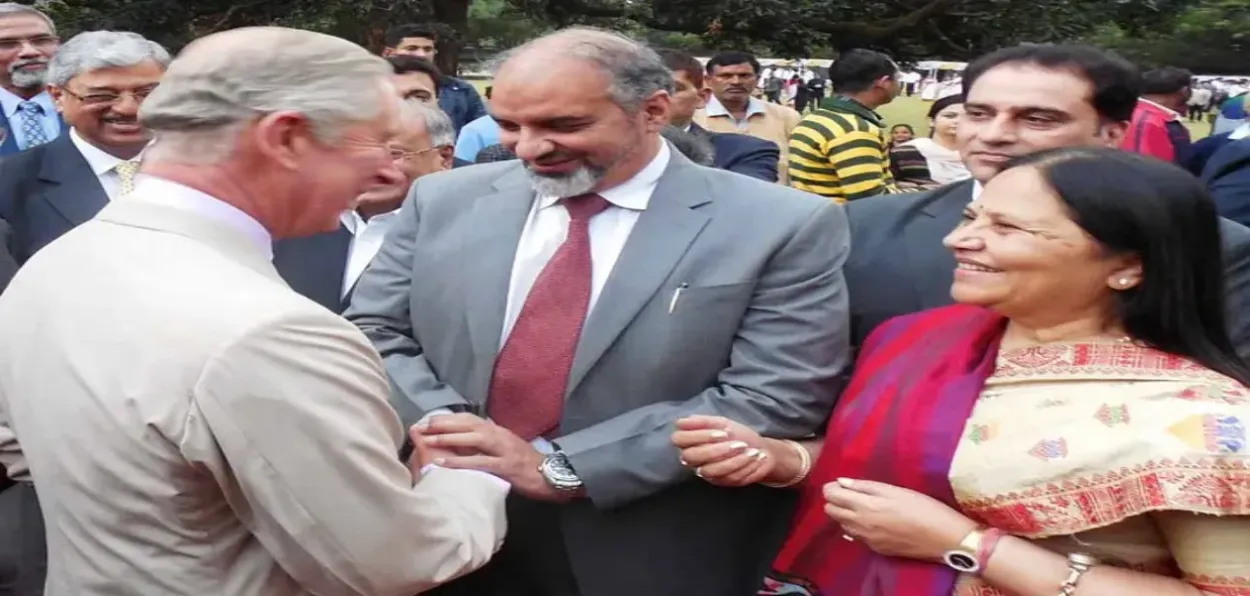
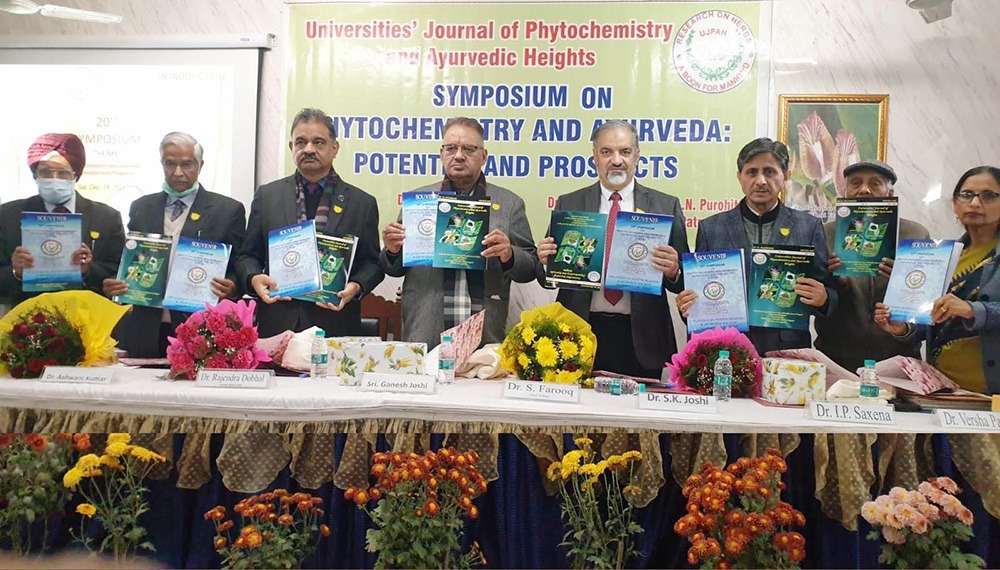
Dr Syed Farooq with King Charles in London
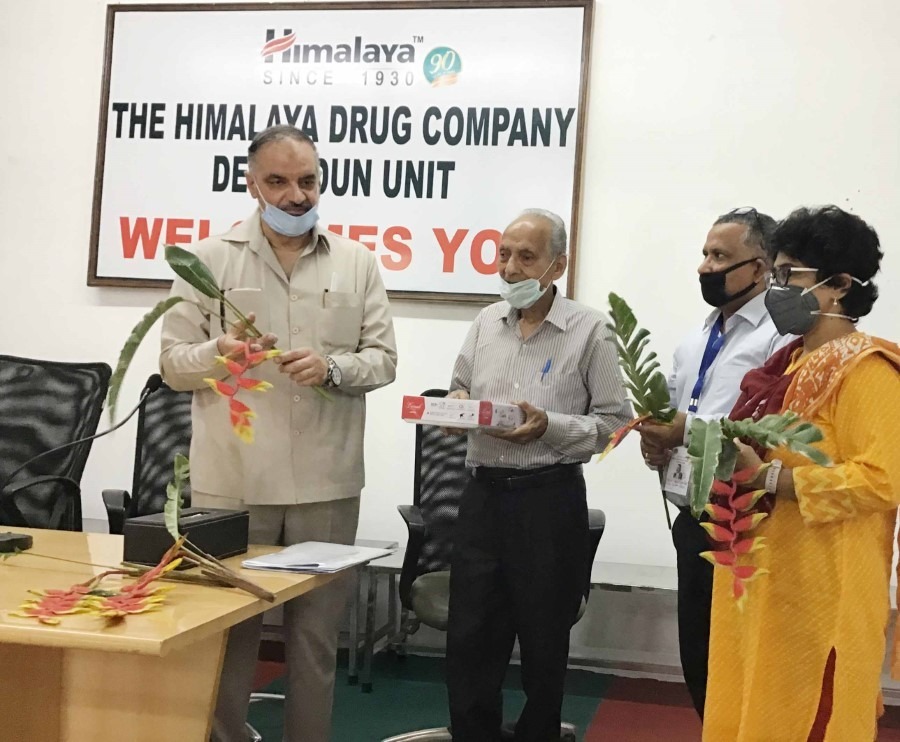
Dr Syed Farooq, the soft-spoken director of the famous Ayurvedic medicine company Himal Drug, gives all credit of his success to his maternal grandmother whom he called ‘Nani Aapa’. He is so influenced by her that even today his childhood memories revolve around her.
In a special; conversation with Awaz-The Voice, he narrated many stories of his childhood and all were linked to his grandmother.
Dr Syed Farooq was born in 1955 in Dehradun in the family of Syed Rashid Ahmed, a renowned Ayurveda researcher.
He completed his M.Sc, Ph.D, D.Sc degrees from Hemvati Nandan Bahuguna Garhwal University. Apart from this, he completed his Post Graduate Diploma in Business Management from AIMA Delhi.
The Delhi-based Dr Syed Farooq is the editor-in-chief of Universities Journal of Phytochemistry and Ayurvedic Medicine. He is also the chairman of Tasmiya All India Education and Social Welfare Society. He was nominated for the Padam Shri Award in the year 2004.
He is the director of Himalaya Drugs and patron of many degree colleges and schools besides being associated with many state and national-level educational institutions.
For the uninitiated, Himalaya Drug Company is an Indian multinational pharmaceutical company based in Bengaluru. It was originally founded in 1930 in Dehradun by Mohammed Manal. It produces healthcare products containing Ayurvedic ingredients under the name Himalaya Herbal Healthcare.
Its operations are spread across India, the United States, the Middle East, Asia, Europe, and Oceania while its products are sold in 106 countries.
Speaking about his days growing up in Dehradun, Dr Syed Farooq says, “My house was in Dehradun and my grandmother’s house was in Muzaffarnagar. We used to go there during summer vacations. In my grandmother’s house, water came from a hand pump that was used by all the neighbours. A portion of the house was made of mud and I liked it very much. It had a pleasant fragrance and remained cool in the summer days.”
He goes on, “I remember that in summers we used to sleep under a Jamun tree and a mosquito net. In the morning, ripe Jamuns would be lying on the mosquito net. The taste of those fruits was so different from what we get today.”
Going down memory lane, Dr. Syed Farooq says, “When I was young, I was fond of hunting and horse riding. I would go far away from home and hunt, there was no restriction. In our orchard, a variety of mangoes grew, and on ripening, we used to enjoy the delicious fruit.”
“When I was studying in a school in Dehradun, I wore a tie as part of my school uniform. Strangers often stopped me and asked me to read a passage or text. Back then children were not afraid of being beaten or abused by elders; people loved children. The line in the poem is that
The elders including unknown people gave blessings to the children while walking on the road. Where are the people who give blessings these days? Now there are neither takers nor givers.
In a philosophical tone, he says people should realise that the colour of hair turns white for a purpose. “Allah changes it to white with age as white symbolises peace.”
Recalling his memories of his Nani Appa, Dr. Syed Farooq said, “My grandmother was a simple lady. Nani Apa was so incredulous that she fell for all the naughty things children did and presented the same differently to her. When the truth was out, she used to complain to our mother and say, “Noor Jahan, my eyes are opened and mind is surprised after seeing your children.”
Nani Apa never sat idle, she always kept doing some work. If there was no work to do, she would sit and talk with the children and listen to stories but she never told them any stories.
Nani Apa loved chaat. If Nani Apa ever felt upset the children offered her a treat of chaat after making her promise that she would not complain to their mothers. “As soon as we got her chaat, Nani Apa would be happy and say, “It’s okay, you are forgiven but never do it again.”
Dr Syed Farooq recalls says he was 10 years old when his grandfather Niaz Ahmed passed away. He was in the police during the British rule. He was a very cheerful and affable person who loved children.
He says his grandfather used interesting phases while narrating stories to the children.
He remembers every moment spent with him; his face while his body lay in the coffin. “I remember that Nana Abba used to sharpen pencils for us with his pocket knife. The pencil tip was sharper than what we get today with a sharpener.”
Dr. Syed Farooq says his great-grandfather Syed Hamid Madani was a businessman. Our great grandfather Syed Mohammad Baranjad Madani lived in Roorkee and was into the carpet business. His great-grandmother hailed from Kashmir.
source: http://www.awazthevoice.in / Awaz, The Voice / Home> Story / by Mohammad Akram, New Delhi / July 21st, 2024
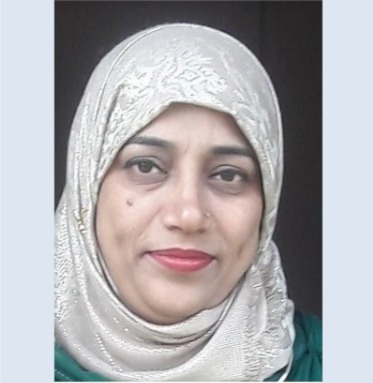
Prof. Rubi Anjum, Department of Tahaffuzi Wa Samaji Tib, Faculty of Unani Medicine, Aligarh Muslim University has been appointed as the Chairperson of the concerned department, for a period of three years, with effect from July 1, 2024.
Prof Anjum, engaged in teaching and research for over the last 16 years, has authored two books and published more than 70 research papers in journals of national and international repute. Besides this, she has attended more than 70 national and international conferences and seminars and presented papers on myriad topics.
She received an Award of Appreciation at a World Health Day event held at Jawahar Lal Nehru Stadium, New Delhi on April 3, 2016, for her role in creating awareness about diabetes.
source: http://www.radiancenews.com / Radiance News / Home> Latest News> Report / by Radiance News Bureau / June 30th, 2024
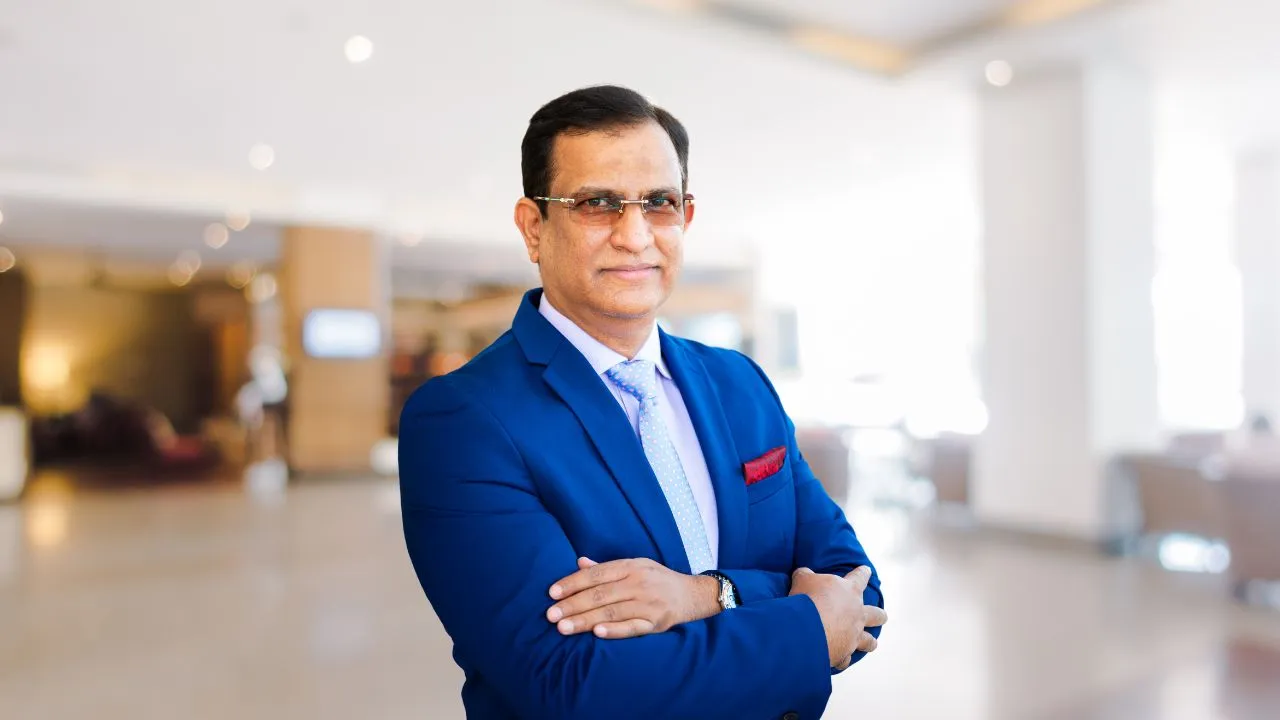
Asad Haque’s commitment to innovation, technological advancements, and dedication to philanthropic initiatives, including date farming, makes him an exemplary figure in both technology and environmental sustainability. An expatriate from Bengaluru, now thriving in Dubai, Asad’s inspiring story illustrates the incredible value of pursuing one’s passion with unwavering enthusiasm and dedication.
Asad’s journey began in Bengaluru, where he earned a Bachelor of Engineering degree in CAD/CAM with a distinction from R.V. College in 1989 and simultaneously completed a CNC, NC machines project at the National Aeronautical Lab (NAL). Asad was also passionate about sports and was awarded the Best All-Rounder award by the KSCA for state schools in 1982. Additionally, he won the Best All-Rounder award again in the Karnataka Junior Colleges Cricket tournament in 1984.
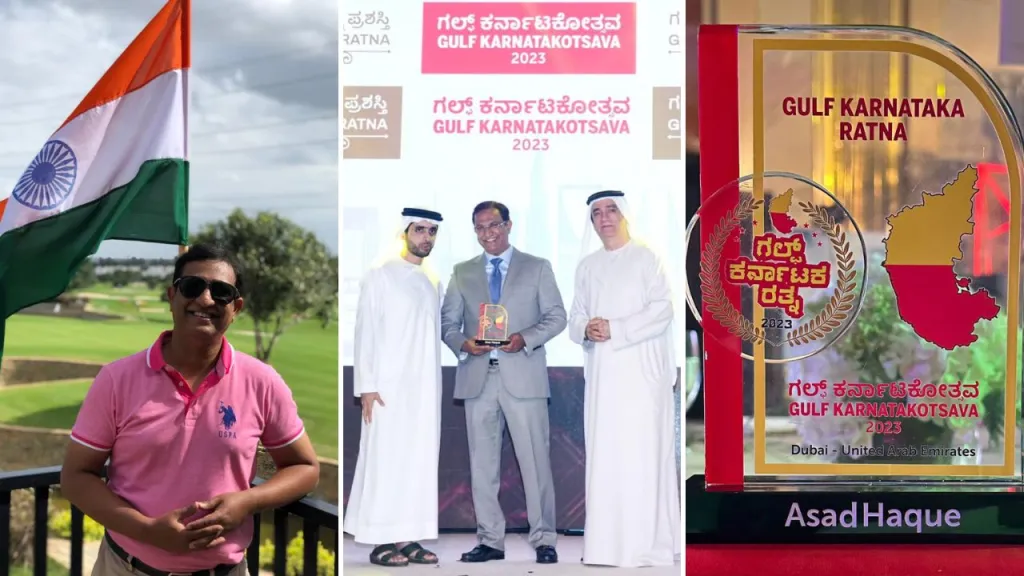
His career took flight at Infosys, leading to senior positions in renowned companies such as Hewlett Packard Distribution (Emitac Group), Samsung, Xerox, and Dubai Internet City. His significant contributions to the ICT, AI, and security industries have not gone unnoticed, earning him prestigious awards including the Award of Appreciation from Dubai Police Headquarters, Government of Dubai, and the Gulf NRI Karnataka RATNA Award by His Highness Sheikh Maktoum Juma Al Maktoum.
Asad Haque honoured with the Gulf NRI Karnataka RATNA Award in 2023 by His Highness Sheikh Maktoum Juma Al Maktoum
As a distinguished alumnus of Bangalore University and an executive founder member of The Alumni Association, Asad Haque has been recognized for his expertise in Artificial Intelligence. Over the past 30 years, he has been a key player in the UAE’s ICT landscape, instrumental in launching the first PC made in the UAE by the brand CUB PC. This success paved the way for other achievements, such as the launch of Samsung’s HDD storage and TFT Monitors, and multi-million dollar XEROX printing and copying solutions for the SME segment.
He also introduced various niche technologies across market segments, including firewalls, antivirus, unified and convergent solutions, IP networking, data and voice encryption and cryptographic solutions, enterprise servers and data-centre solutions, IPTV, and AI-based solutions to major enterprise clients. Additionally, he mentors younger professionals and aspiring university students.
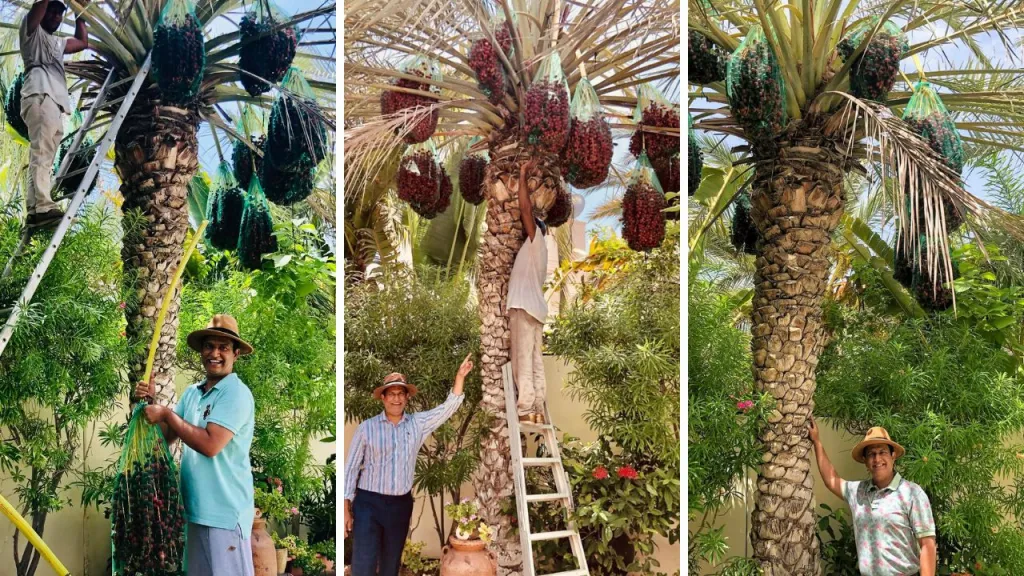
Beyond his professional accomplishments, Asad Haque’s philanthropic spirit is complemented by his passion for date farming. For the past 19 years, he has grown palm trees and generously donated the harvest to charity. Dates, a staple in the UAE, are particularly cherished during the summer months. Asad’s experience in date farming, though challenging, is a testament to his patience and hard work. His palm trees now towering at 25-30 feet, produce large quantities of dates each year, which he distributes to labour camps and other charitable organizations.
“Thanks to a bountiful harvest, Asad Haque generously donates a substantial quantity of dates to charity.”
Asad’s love for nature and gardening dates back to his childhood in Bengaluru, where he tended to plants and flowers. In Dubai, he embraced the challenge of date farming, a pursuit that requires meticulous care and patience. The process of nurturing date palms from pollination to harvest is labour-intensive, involving skilled gardeners who scale the tall trees to pollinate the flowers by hand. Despite the challenges, Asad finds great joy in the spiritual and cultural connection that date farming brings.
“I experience profound joy in the spiritual and cultural connection fostered by date farming, which allows me to forge a deep bond with the Creator and marvel at His creations. I am immensely grateful for the Creator’s magnificent ecosystem, the harmonious cycles of nature, and the intricate tapestry of life,” says Asad.
In addition to his role as CEO of ICT Consultants and his advisory roles in various other companies, Asad recently expanded his professional horizons by assuming a pivotal leadership role as the Representative for the Middle East Region on behalf of KSI Strategic Institute for Asia Pacific and its affiliated entities. He was appointed as a Consultant for the Middle East at Wahed Inc. (“Wahed Invest”), an ethical and values-driven digital investment platform.
His work involves bridging business sectors and fostering collaboration across diverse regions, with a notable emphasis on connecting the Middle East, USA, UK, and ASEAN countries.
Asad Haque’s far-reaching legacy is reflected in numerous accolades, underscoring his exceptional contributions to technological innovation, security advancements, and societal development. As a philanthropist, Asad endeavors to uplift underprivileged children with scholarships and educational support. He also provides access to clean drinking water and assists orphanages. His unwavering commitment to societal improvement cements a legacy of magnanimity, solidifying his position as an esteemed leader in technology and environmental sustainability. Emphasizing the importance of water conservation, Asad Haque states, “No Water, No Life.”
source: http://www.thecognate.com / The Cognate / Home> Business / by Shaik Zakeer Hussain / May 27th, 2024
Dr Anis Ahemad Ansari, Mechanical Engineering Section, Aligarh Muslim University Polytechnic has been granted a patent by the Patent Office, Government of India on his novel work, entitled, “A system for water and energy conservation in a Reverse Osmosis based water purifier”.
Dr Ansari said that a reverse osmosis (RO) based water purifier used in houses and offices generates a heavy amount of non-potable water which is continuously drained unutilized, although this water is clean and free from suspended matter. He said that the wastage of clean water on such a large scale increases the crisis of water manifold.
He stated that his invention provides a system for water and energy conservation in a reverse osmosis-based water purifier by making a provision for the collection of clean non-potable water generated from the reverse osmosis process. The hydraulic pressure is utilized in transferring this water into a tank and a flow control valve controls the discharge of accumulated clean water from the said tank, as and when required.
“Thus, the clean non-potable water generated from the RO process can be utilized for several purposes such as hand washing, utensil washing, floor washing, plantation, room cooler, toilet flushing, construction, vehicle washing, firefighting, etc. Moreover, it would save the electrical energy which is required otherwise to pump additional groundwater for these purposes,” he added.
source: http://www.amu.ac.in / Aligarh Muslim University / by Public Relations Office / June 04th, 2024
Zungalpura Village (Kulgam District, Kashmir), JAMMU & KASHMIR :
Kulgam, South Kashmir :
Muneeb Amin Bhatt, a talented techie from Zungalpora village in Kulgam district, has achieved a remarkable milestone by being inducted into the National Aeronautics and Space Administration (NASA)’s prestigious ‘Hall of Fame.’ This honor recognizes his outstanding contributions to identifying and addressing data breach vulnerabilities, a critical aspect of cybersecurity. Previously recognized by Apple’s ‘Hall of Fame’ in 2023, he reported his findings through NASA’s Vulnerability Disclosure Program.
Muneeb’s achievement not only brings pride to his hometown but also emphasizes the global significance of cybersecurity. In an era where safeguarding sensitive information is paramount, his work highlights the crucial role individuals play in protecting digital landscapes from potential threats.
Currently, Muneeb is pursuing a Bachelor’s in Computer Applications (BCA) through Indira Gandhi National Open University (IGNOU). His dedication to his studies, coupled with his exceptional skills in cybersecurity, has propelled him onto an international platform, showcasing his potential and determination.
Bhatt’s recognition by NASA serves as a powerful inspiration, demonstrating that with passion and commitment, individuals from any background can make significant contributions to global security. His journey from a small village in South Kashmir to receiving acclaim from one of the world’s leading space agencies is a testament to the potential that lies within every individual, regardless of their origins.
This accolade not only celebrates Muneeb’s technical prowess but also puts a spotlight on the importance of nurturing talent and providing growth opportunities, especially in fields as critical as cybersecurity. As the digital world continues to expand, the need for skilled professionals like Muneeb becomes ever more evident, ensuring a safer and more secure future for all.
source: http://www.radiancenews.com / Radiance News / Home> Focus / by Radiance News Bureau / May 27th, 2024
Overcoming adversity to achieve medical excellence and serve society
New Delhi :
The life story of Dr. S.A. Ali is a testament to resilience and determination, illustrating how an individual can surmount varied challenges to achieve success. Born in a poor family in Andhra Pradesh’s Kadapa, Dr. Ali’s transformation from poverty to becoming a revered doctor and professor is truly inspiring.
Dr. Ali is now a prominent figure in the Uttar Pradesh city of Mathura where he runs a clinic. He previously served at the TB Sanatorium in the historic city of Vrindavan.
With an impressive array of qualifications including MBBS, MD, DNB, and MNAMS, as well as diplomas in ultrasound and cardiology, Dr. Ali, an expert in chest-related diseases, has treated over 150,000 patients with a remarkable 99% recovery rate.
Dr. Ali has not forgotten his childhood and the challenges associated with poverty. His encounter with hardships early on has instilled in his character a sense of compassion and magnanimity. And it shows: He does not charge anything from the poor and the needy and at times even provides the necessary medicines to them at no cost.
Reflecting on his childhood, Dr. Ali recounts the struggles his family faced due to his father’s modest income as a tailor. “Getting higher education was a dream,” he says. “I borrowed books and notes from friends, and often walked or borrowed a friend’s bicycle to get around.”
Despite these challenges, Dr. Ali studied tirelessly for over 18 hours a day. Initially aspiring to fulfill his father’s dream of becoming a lawyer, he eventually decided to pursue a career in medicine. “The challenges I faced in my childhood made me feel I should also help people. And now I work with this passion,” he explains.
Dr. Ali’s dedication and hard work earned him a prestigious status from the Indian Medical Association as a professor, a title awarded to only ten doctors for a five-year term, from 2021 to 2026. “The professors and teachers who taught me during my college days were very good. They helped me in every possible way,” he says with gratitude.
His commitment to serving others took him to Vrindavan. “Coming to Vrindavan was all about service,” he states. “Caste or religion had no place in coming here.”
Dr. Ali’s message to the youth is one of perseverance and community involvement. He advises them to “join the society and try to take it to a better state.” He encourages young people to walk or cycle whenever possible, both for health benefits and environmental conservation. “This will strengthen their health and the environment will also be protected by reducing fuel consumption,” he says.
Highlighting the importance of environmental conservation, he urges efforts to enhance water levels in rivers, streams, wells, and ponds. “Meaningful discussions on the environment should continue through political debates, political rallies, and social media,” he asserts.
Dr. Ali also calls on his fellow doctors to engage with the poorer sections of society and government schools to raise awareness about diseases. “They should connect with women groups because after becoming aware, women can give a healthy life to their entire family,” he adds.
In his journey from poverty to becoming a respected doctor, Dr. Ali exemplifies how adversity can be transformed into achievement through hard work, education, and a commitment to helping others.
source: http://www.clarionindia.net / Clarion India / Home> Clarion Special> Editors Pick / by Mohammad Alamullah, Clarion India / June 10th, 2024
Dr. Azra Nalatwad’s forefathers were from a tiny town named Karnul in Andhra pradesh and had migrated to Karnataka. Behind her success of becoming a doctor is an incredible story of hard work and grit that lifted a poor family of weavers to a family of doctors. Dr Azra Nalatwad shared her and her parents’ inspirational story with Awaz-the Voice.
“My parents were extremely hardworking, poor, and struggled to make ends meet, particularly my father, Abdul Khader Karnu used to manually weave traditional saris through wooden looms, as machines had not yet arrived at that time. During his early 20s, after a lot of labour, he would make one saree.”
His family was living hand-to-mouth existence. Though Abdul Khader struggled with poverty, he dreamed big – he was determined to become a doctor. Without any prodding or help, he studied by himself while weaving sarees. Back then, there was no societal help, counselors, or family push to improve his lot. With sheer grit, he started to excel in his studies. He was so brilliant that he was sponsored for his studies in a boarding school. During holidays, he would return home and help with the business of his father and brothers.
“With great tenacity, he finally finished his studies to complete his MBBS and achieved his goal of becoming a doctor, specializing as an ENT physician. He was the first in the family to be so. Our father paved the way to help us all come up as a family.”
Her mother was a schoolteacher when she married Abdul Khader, who persuaded her to complete her MBBS and she became a gynecologist.
Dr. Azra who teaches anatomy at Karnataka Medical College says, “On seeing my parent’s hard work and toil, I resolved to study hard as well. Early in my school days, I wanted to become a doctor. So, I focused on getting admission to MBBS, which I managed to get in the area without going to a hostel to my relief.” Dr. Azra says that her life was made smooth due to the hard work of her parents.
Describing the life around her, she explains, “Around my neighbourhood, most of the girls would do some BST course, and then get married, but my parents spurred me on to do something significant and not hurry to get married. My parents always had a vision that we as a family should not just study and stay at home to be engrossed and wrapped up only in our lives but use our enlightenment to serve the community.”
Dr Azra Nalatwad during her PG course
Azra’s family is a family of doctors. “My eldest sister is a dentist, her husband is a Pathologist (MD) and younger brother Dr. Adil is a neurosurgeon, his wife is a doctor with MBA and MBBS degrees.”
Interestingly, Azra’s husband is the only non-doctor in the family and it was deliberate. She explains: “When it was time for me to get married, my father told me that since there are many doctors in their family, it was better to find my prospective husband in another field. As a family, our conversations revolved around patients and their cases, so my father felt it would be better to get a non-medical groom.”
She married an engineer who working with one of India’s leading software companies.
To follow their father’s advice to his children that they must pay it back to society, Dr. Azra says, The siblings often organize free health checkup camps at Gulbarga.” (Gulbarga is now known as Kalaburagi and has developed to become a city).
She continued, “After writing my entrance test for the post-graduation, my father encouraged me to take the course wherever I get it. He taught me never to throw away opportunities. I was selected for anatomy and it took me to teaching. I did a course to learn ultrasound technology, and in the hospital where my mother was working, I was appointed as a sinologist.”
Dr. Azra Nalatwad’s father died during the COVID surge. “He continued to see patients even during the pandemic; never isolated them and eventually caught the virus and succumbed to it while during his duty in Gulbarga.”
Azra worked at different places like Kadapa in Andhra Pradesh, Ernakulam in Kerala and now she is in Bengaluru. Mother of two growing-up boys, she travels in her car from Bengaluru to Kolar daily for her anatomy teaching classes.
She explains, “I took up the teaching line in anatomy and was interested in ultrasound, so I went towards the clinical side for one and a half years, I also worked in Manipal Hospital as a senior resident doctor. Night duties in the hospital became problematic with my son as my mother-in-law was not there with me, so I quit that job and came back to teaching.”
She however loves her teaching job, “The new generation of doctors do not talk to their patients because of the long queues of people waiting to see them and they want to see as many patients as possible in a day, so impatiently, they quickly write something out for the patients and push them out to directly go for CT scans, ultrasounds without noting the signs and symptoms in the patient. There is no personal touch or caring. Once again, after their illness is diagnosed, they do not convey to the patient properly what was the problem and what steps to take, nor do they serve the patients their options. The doctors need to show them different modalities of treatment which and required them to communication properly.
“Therefore, I encourage my students to develop doctor-patient communication skills with more empathy and compassion, some emotional attachment is necessary. A patient needs to feel trust in a doctor to return to them. In the early days, a patient would only go back to their favourite doctor holding him in great esteem. These days it is sad to see patients changing the doctor midway during the treatment while complaining that the previous one was noncommittal and indifferent or even rude. These days, most of the doctors are cold and detached.
Dr Azra Nalatwad at the hospital (wearing a black Abayya)
She says her students are becoming aware of the bad doctor-patient cases as newspapers report about incidents of people assaulting doctors. “We guide them so that they will not learn through bitter experience but rather as we say, prevention is better than cure, so we teach them that when they are checking female patients, they need to take their consent and explain why they need to touch her body.”
I tell students, “You suddenly cannot ask her to lift her clothes without her consent, even if one is checking the wrist, the patient needs to be informed what the doctor is doing.” Thus, we teach our students to inform the patient before doing even a tiny procedure or even checking the pulse or temperature as a form of respect between the doctor and the patient and leave the lines open for good communication. Just directly touching the patient does not work nowadays. Teaching is a great responsibility where one does not just teach and go but has to inculcate empathy, sensitivity, communication skills, and other qualities in our students.”
Brightening up, she said, “One thing I am looking forward to is I am going to open my clinic very soon working as a family physician, serving my residents, and treating small illnesses, which do not require complicated procedures.”
She continued, “Why I want to start my clinic in Bengaluru is to ease the burden of the poor in a modest area. Nowadays, for simple sicknesses, people are going to big hospitals and get embroiled in unnecessary expenses and procedures. The OPD fees will be more than Rs. 500 or Rs. 750, an outrageous amount not required for small illnesses which is ripping the pockets of the poor. Things like a common upper respiratory tract infection, ear pain, or other little illnesses do not need an OPD visit but rather a small affordable clinic with a small fee such as Rs. 50 or Rs. 100 to make it very light and easy for them.”
She explained, “In big health centers, there is a lot of corruption going on where they hoodwink patients into paying large amounts of money for unnecessary tests, procedures, and treatment. I feel if I can help the poor in a smaller way such as this evading all the bribing that happens in big clinics and enabling health care at their doorsteps, figuratively. I want to ensure that they get immediate help and cure for their illness without running to mega hospitals to give large amounts of money which they cannot afford, to get treated.”
To pay tribute to the man who worked hard and changed his destiny, Dr Azra says she would name her hospital after her father. That she says would take a little time. Right now, besides taking care of her parents-in-law and husband, she has to look after her 12-year-old son and four-and-a-half-year-old daughter.
Rita Farhat Mukand is an independent writer
source: http://www.awazthevoice.in / Awaz, The Voice / Home> Stories / by Rita Farhat Mukund / May 14th, 2024
Prof Asad U Khan, from the Interdisciplinary Biotechnology Unit at Aligarh Muslim University, has achieved a significant milestone in the realm of Microbiology, securing the 39th position globally, according to ScholarGPS, the world’s foremost scholarly analytics platform. This platform utilizes advanced computational techniques such as data mining, artificial intelligence, and statistical analysis to evaluate scholarly impact comprehensively.
Named as an “Inaugural Highly Ranked Scholar,” Prof Khan joins an elite group of scholars, with only three Indian researchers ranking in the top 0.05% globally in Microbiology. His recognition among 67 scholars worldwide underscores his exceptional contributions to the field.
Expressing his elation, Prof Khan shared, “I was truly thrilled to discover my global standing. Being passionate about research and dedicating two decades to antimicrobial studies, this recognition surpasses my expectations.” He expressed gratitude to his family, mentors, and supporters for their encouragement throughout his journey.
Highly Ranked Scholars like Prof Khan are distinguished by both productivity (number of publications) and impact (citations), as well as the quality of their work (h-index). ScholarGPS’s extensive database, comprising over 30 million scholar profiles and 200 million scholarly publications, enables precise identification of scholars within specific specialties, disciplines, and fields.
Prof Khan’s accolades extend beyond this recent recognition, with previous honors from national and international scientific bodies, including the Ministry of Science and Technology, Government of India, acknowledging his outstanding contributions to combating Antimicrobial Resistance.
In summary, Prof Asad U Khan’s global ranking in Microbiology signifies not only his individual achievement but also highlights the excellence of research conducted at Aligarh Muslim University, reaffirming India’s presence on the global scientific stage.
source: http://www.radiancenews.com / Radiance News / Home> Pride of the Nation> Markers of Excellence / by Radiance News Bureau / May 09th, 2024