Continuing her dream run of academic success, Almas Nazim Syed of Government Medical College Nagpur, crossed yet another milestone by securing the top position in Maharashtra MBBS final exam, bagging 11 gold medals and a scholarship.
Daughter of Dr Syed Nazim, a general practitioner, Almas Nazim Syed, has topped every exam in her career, including the 2009 Maharashtra HSC board exam before the impressive performance in the Maharashtra MBBS final exams.
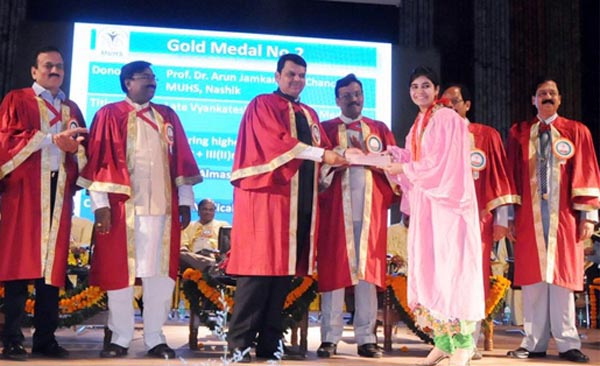
Maharashtra Chief Minister Devenndra Fadnavis in Nashik to address the 14th Convocation of the Maharashtra University Health Sciences (MUHS), felicitated Almas Nazim Syed and also conferred on her citation and gold medals.
Along with Almas Nazim Syed, a total of 7,478 students from different streams of medicine were awarded with the convocation. Of these 71 gold medals were given to the students. Nine students were awarded with Doctor of Philosophy (PhD).
Interestingly, after topping the 2009 HSC exams, Almas Nazim Syed, whose brother was then studying in second year MBBS, had vowed to study medical science with specialisation in gynaecology, and build a hospital for poor people.
“I want to fulfil my mother’s desire that I open a nursing home or a hospital to serve the needy,” she had said.
Almas’ motivation, however, was her grandma Safiya, a writer.
“I wanted to be gynaecologist and open a hospital since I was in class 5. It was prompted by my grandmother telling us one day that she was not able to pursue her dream of opening a nursing home to look after children’s studies,” she said.
A vivid reader of novels, Almas is fully determined to achieve her target.
“Dare to dream. Have passion to fulfill that dream. Be persistent in hard work. Don’t be aimless in life”, were her words after cracking the 2009 HSC exams.
After clearing the MBBS finals and becoming a doctor, it will now be interesting to see how Almas Nazim Syed, married to a politician’s grandson in Akola, fulfils her mother’s desire to open her dream hospital for poor.
source: http://www.ummid.com / Ummid.com / Home> Education & Career / by ummid.com news network / May 27th, 2015
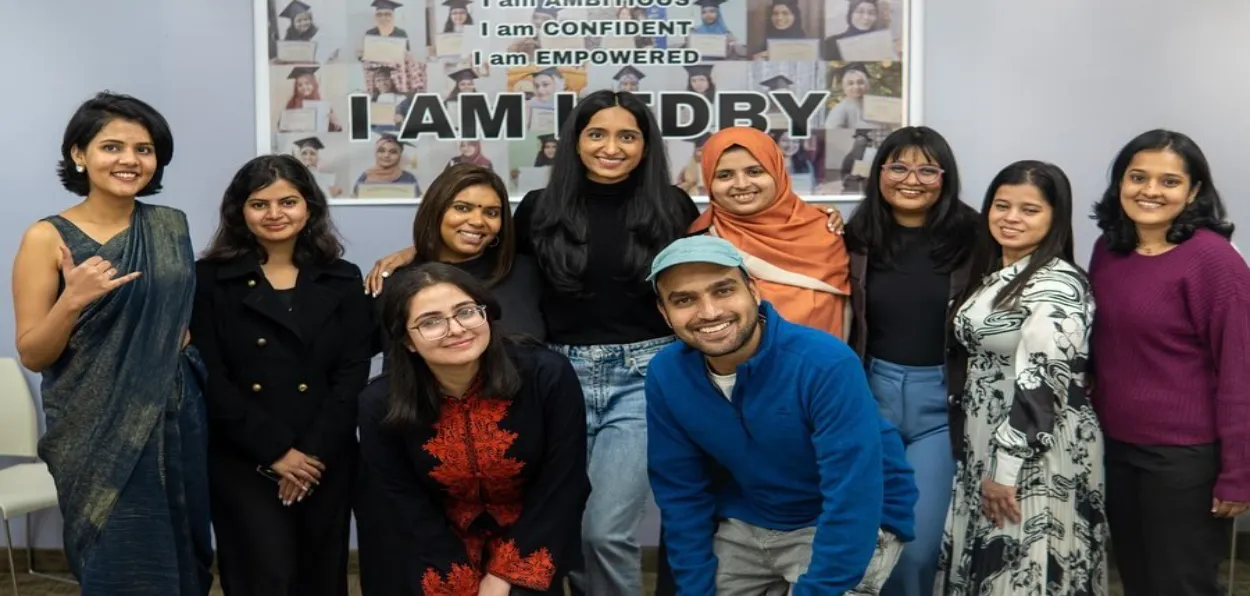
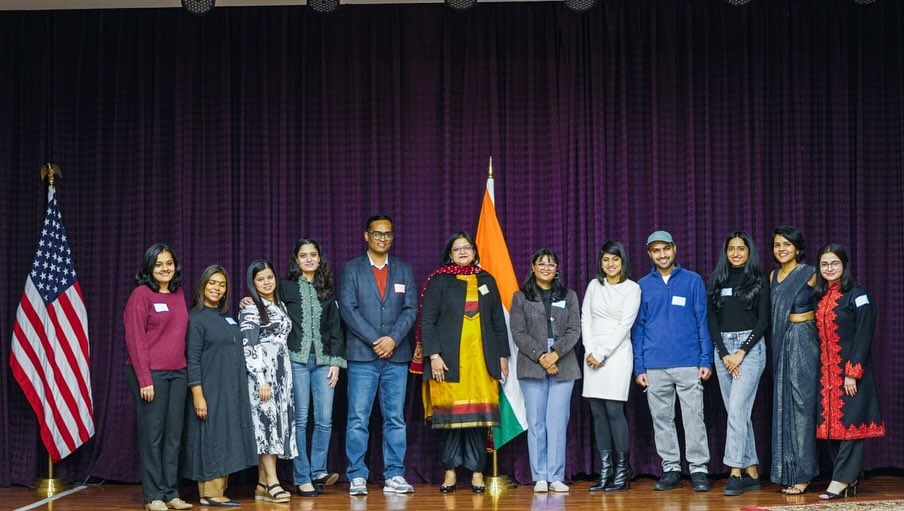
Ruha Shadab in the center (Wearing black top and jeans) with her team
Ruha Shadab acquired a degree in medicine from the Lady Harding Medical College, New Delhi, before joining Harvard University for higher studies. She along with her team at Ledby Foundation are working towards empowering Indian Muslim women to be gainfully employed and become independent. Awaz-The Voice Editor-in-Chief Atir Khan spoke to her about her work. Excerpts:
What was the intent behind starting Ledby Foundation?
There were many reasons why we started Ledby Foundation. The primary reason was that I hardly saw any Muslim women in the offices that I had worked in. Also, the overall socioeconomic indicators of our community made me feel compelled to start this. But the story most close to my heart is that of my mother, who, I think is one of the most intelligent people that I know. Many people like her are there in a community who weren’t able to realize their intellect and develop their professional dreams.
So that was something that influenced me as I started my early career and then went on to do better at Harvard. But I got time to think about what I want to do with my life, and what kind of social impact I needed to create. And I always knew that I wanted to create a social impact for the Muslim community, especially for women. As I spent more time thinking about what I could do for the community I ended up on the idea of professional empowerment of Indian Muslim women and supporting them in the workforce.
Sky was the limit for you at Harvard; you could have chosen to work in any other field. Why did you choose to do what you’re doing?
Even my medical background of becoming a doctor had to do with creating social impact. That was my goal from the beginning. The progression from doing medicine to doing global health to working on policy and helping improve Indian society has just been a natural transition to what I think can have the most impact. And as to why Muslim women, it is one of my core identities, I thought there is a strong need, and if we don’t do it, who else will? I remember when I was 14-year-old I used to tell my mother that I wanted to go to Africa to help people who were suffering from poverty and hunger.
And she said why don’t you first fix your own backyard first? There is so much that needs to be done in India, so much that needs to be done in our community. So, that made me pause and reflect and that’s what brought me here.
Ruha Shadab
Many people must be asking you why you only choose to work to empower Muslim women. Why not others?
Yes, there have been all combinations of questions. Why Muslim women? Why not Muslim men? Why not Hindu women, and X, Y, Z combination? Right. The truth is that I think of this almost from a doctor’s mindset. So, what is the issue that you’re trying to solve? The issue that we’re trying to solve is underemployment, the lack of job opportunities, and the lack of converting your education into employment.
As a Muslim woman, somebody might say, why don’t you work for the education and employment of women from other communities in India? Why only focus on Muslim women? And that’s true. India has one of the lowest female labor force participation rates in the world. And my answer to that is to think of it as seeing two patients in your clinic.
If both patients show up you can give them paracetamol. But as a doctor, I’m also going to run diagnostic tests on them and try to understand what is the underlying cause, what is the underlying disease that they have and then give them specific treatment.
One might have a bacterial infection; one might have a viral infection. Under different segments, different combinations of communities might be suffering from some of the macro issues we have in India with unemployment and job availability. But the reason is that they are not able to realize those opportunities or those unknown opportunities before us.
Ruha Shadab (extreme right) with her team members
So, the root causes differ. And then building on this, you don’t have targeted interventions focused on these root causes. You will not be able to meaningfully address them and solve them. You need to have at least focused approaches to solving that unique set of root causes that is hindering them from getting full participation in India’s workforce.
The constitution of your Ledby foundation is quite interesting. Your team members are Hindu and you have people from other faiths for the cause of empowering Muslim women. Isn’t it great? In today’s world where every community is looking inwards and they’re busy thinking about themselves?
It’s very validating. My chief operating officer is not from the Muslim community. 20% of our 120 advisers and residents are non-Muslims. 100 out of 500 of our volunteers are non-Muslims. And that just goes to show that the narrative that we are told about our country and our brethren in the country is not entirely true.
If you put your head, you will be surprised to see how many people are willing to stand up and support you. And I think that is what this shows. It also shows that supporting Indian Muslim women is not just important if you are an Indian Muslim woman, but it is in the interest of every Muslim woman, and every Indian to ensure that this unity can realize its dreams today.
Absolutely. Very important point. You know, it’s the intent and the good leadership, that you have, these are the things that matter the most. And when reach out to people irrespective of their faiths people come and support you. You have to have a good cause; people are always there to support you. Tell us more about your programs at Ledby Foundation.
Sure. So, our programs are completely virtual fellowships that we offer to Muslim women who are either in college or in the early stages of their careers. Think of it as if you are 18 to 20 years old and an Indian Muslim woman, then getting into one of the best professional development programs is probably in your best interest to expedite your professional career. There are several components to it. So, one component is online training programs that help you with, your interpersonal skills, your communication skills, and some of the basics of being able to find jobs, reach out to people, submit an excellent CV, and do interview preps.
Another workshop modules look at improving your negotiation skills. Our negotiation curriculum is developed in conjunction with Harvard professors who interviewed Indian women and developed case studies with Indian Muslim women as protagonists that we use to teach negotiations to our fellows. And then the third part, which is often cited as one of the long-lasting effects of the fellowships is our mentorship program. And our mentorship program is a 360-degree framework so each young Muslim woman who joins gets mentored.
The other aspect of the mentorship program is that each Muslim woman has to then have sessions with people in her class. And I would just say women are from across India. So, we have a very diverse group, even though we say Muslim women, it’s a very diverse Muslim women group and we get to speak to each other. The last part of this mentorship program is coaching at the school level over six months.
Ruha Shadab with the team of Ledby Foundation at a function
That’s amazing. Tell us how you make these students or candidates job-ready.
Our fellowship is very much about teaching people how to fish rather than giving them fish. So, we teach them how to identify the right opportunity, how to network with folks, and how to help them with an interview. And then we also have them practice interviews with us. They have access to facilitators, who help practice as you continue to progress.
So who are your stakeholders? Of course, the students, then you have the policymakers who are others you reach out to?
So, we try to bridge that supply-demand gap. We are creating a supply of highly skilled professional Indian Muslim women. And then we’re also making sure that there is a demand from companies to intentionally recruit and create a diverse workforce within their organizations. We bridge the gap between our fellows and companies that want to promote religious inclusion in India.
What is the kind of feedback you get from, say, policymakers and the corporate world when you approach them with this kind of information?
So, we usually try to approach them from a very fact-based point of view. We also carry out research to identify what are the barriers to entry and retention of Muslim women in India’s workforce. The research we conduct help a lot of companies see through a fresh perspective. So even if you educate Muslim women, that does not necessarily mean they have the same chances at employment. The company officials tell us that they never thought about this, they were never made to confront this reality. So, we meet them just to reflect.
Ruha Shadab with a support group of her Foundation
So what kind of support and responses you’re getting from people that you’re reaching out to?
Well, overall, it’s been positive. People are interested in understanding what we do, supporting us in even exploring the talent pool that we are creating. And we have several stories of women who’ve gotten recruited through our own pipeline to companies.
That’s wonderful. And there must be some very bright candidates you come across. We see there is an awareness among Muslim families even in small towns for pursuing higher education.
That’s true. There is a very strong drive and fire within the women that we meet. And we try to move more away from urban centers.
Right now, we are more focused on urban centers and ensure that we are able to move farther away from that in the future. And yes, we do see that. See, I think in addition to being pleasantly surprised at how many people from outside of the Muslim community are willing to help us, with very positive insights.
I’m sure that you inspired a lot of Muslim girls, you’re a big success story from India, an Indian who’s doing so well. Do you also think that we need to convey more such success stories to these aspiring girls to inspire them?
Absolutely. And I think what helped was having people believe in me, and we’re trying to make more Muslim women feel that they are heard and that somebody believes in their talent.
You’re doing deep thinking and you’re working in this field, what would be your appeal to the government and the corporate sector for improving the employability chances of Indian Muslim women?
My appeal would be to have intentionality behind getting more Muslim women into the workforce. The truth is that we shy away from talking about religious inclusion in India, which is strange. Because so much of our lived reality is a function of our religious identity. There is no distinction between the personal, the political, and the professional and it is incorrect to create these artificial distinctions.
source: http://www.awazthevoice.in / Awaz, The Voice / Home> Stories / by Atir Khan / February 29th, 2024
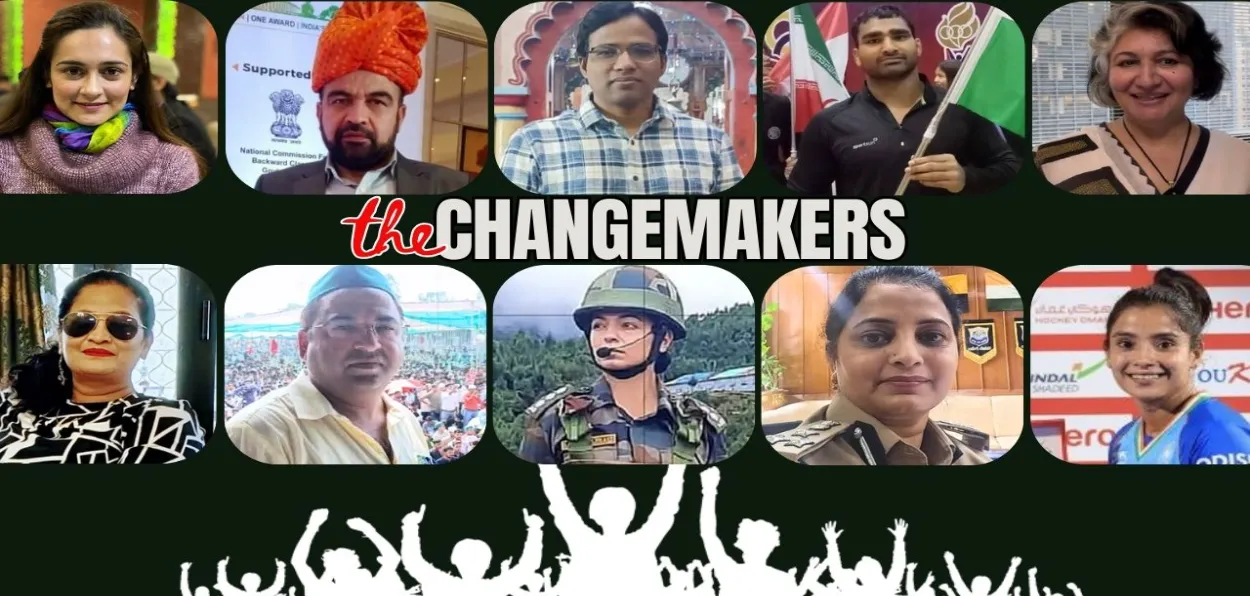
While media spotlight often shines on celebrities and politicians, the real engine of India’s progress runs on the resolve of countless unsung heroes who, away from limelight, quietly transform society.
From national defense to grassroots education, sports, science, and civil service, these individuals from Uttar Pradesh show how courage, compassion, and conviction can drive extraordinary change. Here are 10 such trailblazers whose stories deserve to be heard:
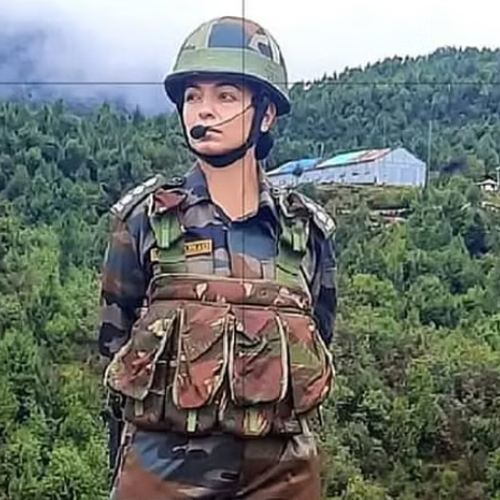
Captain Sariya Abbasi: A Woman in Uniform on the Frontlines
Hailing from a small city of Gorakhpur, Uttar Pradesh, Captain Sayria Abbasi broke every convention to join the Indian Army. A graduate in Genetic Engineering and with plenty of job offers and career opportunities from big companies was not enough for her to pursue in life. The call of service for the motherland was too strong to be sacrificed.
The world noticed her as a soldier deployed at the Line of Actual Control (LAC), India-China temporary border, manning an Air Gun. Today, Sariya leads drone-killer teams and operates L-70 anti-aircraft guns on the border. Her journey from an academic achiever to a defender of the nation’s borders is not just about military precision; it’s about shattering glass ceilings and reshaping how India imagines women in uniform.
Dr. Faiyaz Ahmad Fyzie: Voice for the Voiceless Pasmanda Community
Dr. Faiyaz Ahmad Fyzie, an AYUSH physician, is more than a healer—he is a public intellectual, columnist, translator, and relentless advocate for the Pasmanda (socially backward) Muslim community. Raised in modest conditions, his rise to national recognition is built on fearless writing and tireless grassroots work.
When even the Prime Minister refers to Pasmanda voices, Fyzie’s years of advocacy resonate. His pen continues to empower those whose struggles were long silenced. His work is a call to conscience—and a roadmap for inclusive discourse.
Mohammad Luqman Ali: Wrestling His Way to Glory and Degree
Wrestler Mohammad Luqman Ali, a student of Social Work at Jamia Millia Islamia, is balancing body and brain. Born in Amroha’s tiny village of Mohraka Patti, his father worked on the railways, and his mother gave him religious grounding. Despite limited resources, Luqman’s grit has earned him recognition in India’s wrestling circles.
From the mat to the classroom, his dual commitment shows that excellence doesn’t require compromise. It requires discipline, heart—and a family’s belief in you.
Rubina Rashid Ali: Reviving Mughal-Era Art with a Modern Mission
In a sun-drenched corner of Aligarh, Rubina Rashid Ali has quietly built a movement. Her work in floral appliqué embroidery, a legacy of Mughal art, now supports dozens of women in Aligarh and Rampur. What was once an undervalued craft monopolized by middlemen has been transformed by Rubina into a vehicle for women’s economic empowerment.
Her home resonates not only with the sound of needles and threads but also with the hum of independence. “Real artists were reduced to laborers,” she says. Today, she ensures their hands are not just working — but also earning.
Babban Mian: A Gaushala Keeper Inspired by His Mother’s Love
At Madhu Sudan Gaushalla in Bulandshahr, Babban Mian tends to cows not out of ritual, but reverence — inspired by his late mother Hamidunnisa Begum. “She loved cows like her own children,” he recalls. After she passed away in 2015, Babban vowed to preserve her legacy.
Despite being a Muslim in a Hindu-dominated tradition, he runs a government-recognized shelter rooted in compassion, not controversy. For him, animal welfare is a universal value — not a communal issue. His work quietly redefines what shared culture and interfaith harmony look like.
Khushboo Mirza: From Amroha to the Moon with ISRO
Khushboo Mirza, scientist at ISRO and part of the Chandrayaan-1 and Chandrayaan-2 missions, is a stellar example of perseverance. After her father’s death when she was just seven, her mother raised three children alone, running a petrol pump and defying social norms.
Khushboo earned a Gold Medal in Electronics Engineering from AMU and was the youngest member of the Chandrayaan-1 checkout team. A practicing Muslim and a symbol of India’s scientific aspirations, she turned down corporate offers to reach for the stars—and took a whole generation of girls with her.
Zaheer Farooqui: A People’s Leader with a Vision for Purkazi
In western UP’s Purkazi, Zaheer Farooqui is rewriting what local leadership means. As Nagar Panchayat Chairperson, he donated land worth ₹1.5 crore for the area’s first Intermediate College and modernized local schools into PM Shri-certified institutions.
His initiatives go beyond classrooms. From India’s first double-storey government-run cow shelter to a gym for Muslim women, and one of the most sophisticated rural CCTV networks in the region — Farooqui’s governance is a blend of tradition and tech, equity and empowerment. His Tiranga Yatra revives local history, reminding citizens that patriotism is inclusive and action-oriented.
Dr. Farah Usmani: From AMU to Global Health Leadership
On a cold morning in New York, Dr. Farah Usmani stood outside an apartment, a folder in hand, her eyes bright with resolve. The daughter of Uttar Pradesh, she is today a formidable presence in global health policy.
n M.D. in Obstetrics & Gynecology from AMU, Farah sought impact beyond hospital walls. Armed with a Master’s in Health Policy from LSE and the London School of Hygiene & Tropical Medicine, she’s led transformative health initiatives around the world. Her journey is one of intellect guided by idealism — a doctor who chose not just to heal individuals but to reform systems.
Anjum Ara: Bridging Communities Through Compassionate Policing
Hailing from Azamgarh’s Kamharia village, Anjum Ara, a 2012-batch IPS officer, has redefined the image of policing with a human touch. A computer engineer by training, her journey from Integral University to Senior Superintendent of Police in Shimla has been marked by integrity and reform. Known for her work in cybercrime and her community-focused policing model, Anjum is also a fierce advocate for girls’ education.
Together with her husband, IAS officer Yunus Khan, Anjum adopted the cause of Khushdeep, the daughter of a martyred soldier, pledging to support her upbringing. This act of empathy mirrors her professional ethos, proactive, principled, and deeply people-centered.
Mumtaz Khan: From Vegetable Stall to World Hockey Stage
From the bustling alleys of Lucknow’s Cantt area to the turf fields of South Africa, Mumtaz Khan’s journey is pure grit. Once helping her father at a vegetable stall, a single race at school changed her life when Coach Neelam Siddiqui noticed her speed. That moment set her on a course to become a leading forward in India’s Junior Women’s Hockey Team.
Her standout performance at the 2018 Youth Olympics, where she scored 10 goals, earned her national acclaim. Yet, Mumtaz remains rooted, balancing hope and humility as she eyes the Olympics. She is proof that dreams born in dusty streets can blaze across international arenas.
These ten changemakers hail from Uttar Pradesh, from narrow village lanes to bustling metros, from battlefields to laboratories. But they are united by one thing: quiet, relentless courage. In their lives, we find the India that persists, uplifts, and transforms—not with headlines, but with hard work.
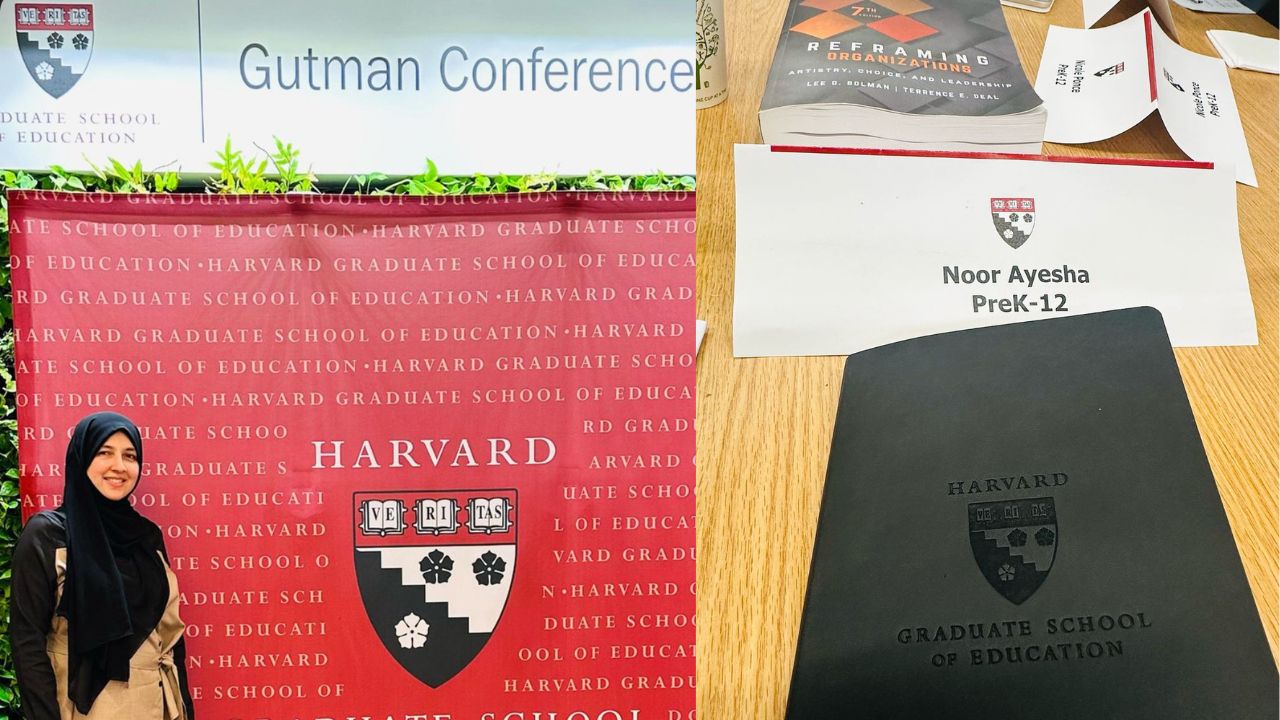
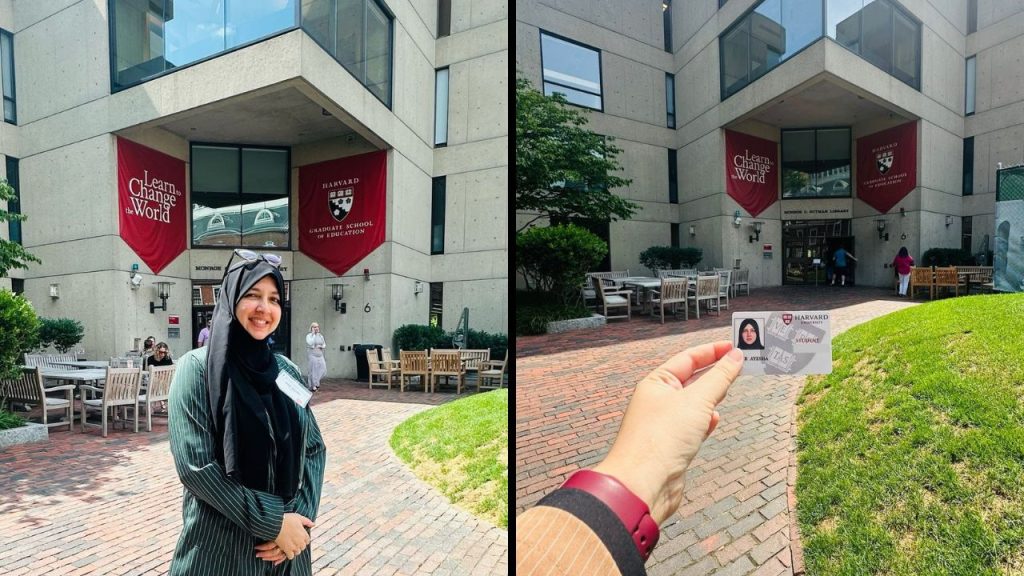
Bangalore’s own Noor Ayesha, an award-winning educator and visionary school leader, has been admitted to Harvard University for advanced postgraduate studies in Education Leadership. She joins the globally renowned Harvard Graduate School of Education to further her lifelong mission of transforming education through value-based learning and holistic child development.
Founder, Vice-Chairperson, and Managing Director of the Iqra Group of Schools in Bangalore, Karnataka, India, which includes Iqra International School, Iqra Juniors, and Iqra British Academy. For over a decade, her schools have redefined education by blending academic excellence with character formation, nurturing young minds to become not only successful learners but also compassionate, ethical citizens.
Her admission to Harvard marks a historic milestone, not just for her but for the entire region, as it highlights the global recognition of her impactful work in education. Noor’s leadership journey continues to inspire educators, parents, and youth, especially young women leaders striving to create change through education.
Quoting the famous line from the Spider-Man movie, Noor often reminds her team: “With great power comes great responsibility,” and she adds her powerful extension: “With great responsibility comes even greater accountability.” She believes educators carry the moral responsibility of shaping future generations and must be held accountable for the world they help create.
“As educators, we hold the power to shape the future,” says Noor. “My goal is to establish value-based schools across the world that nurture responsible, purpose-driven individuals who will lead with integrity and compassion.”
Her selection by Harvard is a proud moment for Bangalore, and a testament to the power of purpose-driven leadership in education.
source: http://www.thecognate.com / The Cognate / Home> Education / by The Cognate News Desk / August 11th, 2025
The certificate Aiyesha Ahmad Khan received from CIPS, University of Delhi
New Delhi:
Aiyesha Ahmad Khan, hailing from Patna and a student of Miranda House (English Hons.) won a prize in the essay writing competition on the topic ‘Unravelling the Partition of India: Multidimensional Perspectives’ which was organised by the Centre for Independence and Partition Studies (CIPS), University of Delhi. It was open to all UG/PG students and Research Scholars of the University of Delhi. There were more than 500 participants in this competition. Aiyesha was declared third in the competition and awarded with a certificate and a cash prize. The prize distribution ceremony was organised on August 14.
The essays were assessed on the parameters of Relevance to the Theme, Originality and Creativity, Depth of Content and Quality of Research, Organization and Clarity of Expression, Language, Grammar and Overall Presentation, each carrying equal weightage (20%). The word limit for the essay was between 2000 to 2500 words. The use of AI-generated content was not allowed and it was considered a disqualification. The essays were invited in both English and Hindi.
The Centre for Independence and Partition Studies (CIPS) at the University was set up in the year 2023 under Ordinance XX of the University Rules. It is perceived to be a distinguished institution dedicated to the comprehensive exploration of the multifaceted narratives surrounding the Partition and Independence of the Indian subcontinent. Its mission is to delve into the intricate complexities of this pivotal period, shedding light on the diverse perspectives, voices, experiences and anecdotes that have shaped the collective consciousness of our nation post 1947.
source: http://www.radiancenews.com / Radiance News / Home> Pride of the Nation> Awards> Latest News / by Radiance News Bureau / August 16th, 2025
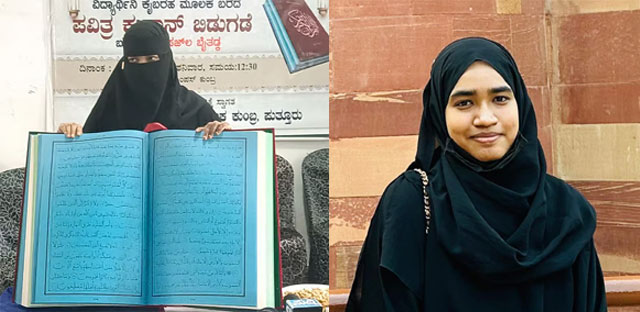
A remarkable achievement by a student from Kumbra’s Markazul Huda Women’s College has drawn attention, as she meticulously handwritten the entire Quran using an ink pen.
The achiever, Fathima Sajla Ismail, a BCom student, hails from Baitadka in Kaniyur village of Kadaba taluk and is the daughter of Ismail and Zahra Jasmine. She dedicated nearly five years to this extraordinary work, beginning in January 2021 and completing it in August 2025.
For the handwritten manuscript, Sajla used white, light blue, and light green papers, along with a black ink pen. The Quran consists of 604 pages, bound with a red and gold-coloured protective cover, and weighs about 14 kg.
“Writing a single page would take me around four hours. On some days, I managed to write two pages in eight hours. In total, I completed the work in 302 days, spending 2,416 hours,” shared Sajla.
The unveiling of the handwritten copy and recognition of her achievement took place at Markazul Huda Women’s College in Kumbra.
The manuscript was officially released by Yaseen Sakhafi Al Azhari, a Mudarris from Markaz Knowledge City, Kerala.
source: http://www.daijiworld.com / Daijiworld.com / Home> Top Stories / by DaijiWorld Media Network – Kadaba (headline and name edited) / August 18th, 2025
The All India Muslim Development Council (AIMDC) has officially unveiled the final list of “40 Under 40 Leaders” — a landmark initiative aimed at identifying, nurturing, and empowering the next generation of Muslim leaders in India. The announcement follows one of the most exhaustive and merit-based selection processes in the nation’s recent history, spanning a year-long journey and involving multiple stages of evaluation.
From 950 Applications to 40 Leaders
The initiative drew an overwhelming response, with approximately 95 applications from across the country. Candidates came from diverse fields — education, politics, corporate leadership, engineering, medicine, activism, journalism, law, research, academia, entrepreneurship, economics, Shariah scholarship, counselling, motivational speaking, Ulemas, students and governance.
The journey began with a meticulous application process, requiring detailed documentation of qualifications, achievements, contributions to society, and personal background. Based on rigorous assessment criteria, 215 applicants were shortlisted for personal interviews.
An expert panel then conducted comprehensive interviews, narrowing the field to 112. Following further scrutiny, 105 exceptional candidates earned a place in the in-person finale for 4 days.
Four Days of Intense Evaluation in Bengaluru
In India’s startup capital, Bengaluru, hosted the four-day in-person selection event.
Candidates participated in group discussions, parliamentary-style debates, and collaborative tasks designed to assess both individual brilliance and teamwork capabilities.
Organizers also closely evaluated their commitment to nation-building, sincerity towards the Community, Human Relations and personal discipline
From this stage, 70 leaders were selected, each awarded a Certificate of Leadership in addition to a Certificate of Participation.
Silent Assessment for the Final 40
On July 1, 2025, the same day as the 70 Leaders’ announcement, AIMDC formed an Adhoc (Consultation) Committee of 40 Under 40 Leader blending self-nominated leaders and organizer nominations.
They were asked to pick two projects of their interest from a curated list of initiatives aligned with Community and nation-building. The objective: evaluate their decision-making capabilities, foster team bonding, spark brainstorming, and plant the foundational seeds of advanced leadership skills.
Unbeknownst to many participants, this period doubled as an “invisible” final evaluation. Organizers monitored sincerity, akhlaaq (good character), ikhlaas (pure intentions), punctuality, and the ability to follow through on commitments. Participation in educational events, organizational skills, and collaborative spirit were also critical factors in determining who would advance.
The Final 40 — India’s Muslim Leaders of Tomorrow
After months of observation, assessment, and engagement, AIMDC has now announced the final 40 Under 40 Leaders — individuals under the age of 40 whose vision, expertise, and dedication position them as catalysts for positive change.
We were truly overwhelmed by the remarkable talent, dedication, and vision demonstrated by all 70 leaders who participated in the process. After a rigorous evaluation, the final 40 leaders selected under the 40 Under 40 Initiative will form the National Executive, serving as the strategic and driving force of the initiative.
Recognizing the immense value and potential of the remaining 30 outstanding leaders, we have proudly welcomed them as members of the National 40u40 Team. They will play a pivotal role in executing projects and events at all levels, ensuring our mission reaches communities across the country and contributes meaningfully to nation-building.
“This initiative is more than a recognition program — it is the foundation of a Change,” said an AIMDC Gen Secretary. – Mohammed Imthiyaz “These leaders represent the intellectual, moral, and strategic strength needed to guide our community and contribute meaningfully to the nation.”
“I came here thinking I would meet other young leaders. I leave knowing I am part of a network, a brotherhood and sisterhood of purpose,” said one of the selected leaders from Maharashtra.
“The process was humbling. It wasn’t just about our CVs — it was about our character, our sincerity, and our ability to work for something bigger than ourselves,” added another finalist from Kerala.
Sidebar: Fields of Expertise Represented in the Final 40
• Education Specialists
• Politicians & Policy Advocates
• Corporate Leaders & Entrepreneurs
• Engineers & Doctors
• Activists & Journalists
• Legal Experts & Researchers
• Shariah Scholars & Counsellors
• Motivational Speakers & Coaches
• Economic Policy Experts
• Ulemas
• Students
Names of the Selected Candidates:
Afza Khan
Imaan Hawwa Hafiz
Amreen Farooq
Juveriya Sarkar
Amrin Ayaz Shaikh
K. HAJIRA SULTHANA
Areefa ali
Ramsa Jaan
B Seeni Rahfu Nisha
Raniya Zulaikha
Fathima Saba
Rikza Pervez
Gulzar Karishma Malik
Shabnam Mohammed Akbar Khan
Hina Fatima Sarfraz Ali Sayed
Zulekha S Rajani
Mufti Yahya Moin Samar
Mohd Imad Ali
Abdul Gani Nadeem Punjabi
Mohd Ovais
Adil kampoo
Mohd Zeeshan
Afsar Rayeen
Mossab Mustafa Khan
Asadullah Waliullah Khan
Muhammed Rafi KE
Asiruddin Shaikh
Mujtaba Muneeb
Dr Bilal Sheth
Nawaz S
Dr Mirza Alamdar Ali Baig
Nouman Alam
Fahad Abdul Basit Hani
Ramiz Abdul Wadood
Khan Abdur Rehman
Reyaz Haider
Md Faizan
Sarfaraz Khan
Md Faizan Ahmad
Sarfraj Nawaj
Md Faizul Bari
Seemab Qayyum
Md Fateen Raza
Shaaz ahmed faruqui
Md Hifzur Rahman
Shaik Shabeer
Md Osama
Sharukh Syed
Md Sadaf Kamran
Sheikh Khurshid Alam
Md Saleh Umar
Suhaim ul islam
Md Yazdani Feroze
Syed Ansar Ali
Meer Faisal
Syed Hamid Ali Moin
Mohamed Maaz
Syed Shoaib Qasim
Mohammad Aamir Ansari
Syed Umar Ahmed
Mohammad Abdul Ahad
Tariq Abdullah Akhon
Mohammed Aftab Ahamed
Umar Farooq Masoodi
Mohammed Feroz
Wafi Shihad
Mohammed Gulam Ahmed Khan
Yusuf Mohamedy
Mohammed Ismail
Zubair Ahmed
About AIMDC’s Vision
The All India Muslim Development Council (AIMDC) is committed to fostering leadership that serves both the Community and the nation with excellence, integrity, and unity. The 40 Under 40 Leaders Initiative is envisioned as an incubator for change-makers, equipping them with networks, mentorship, and the moral compass required to navigate the complex challenges of modern society with Collective Efforts
source: http://www.muslimmirror.com / Muslim Mirror / Home> Indian Muslims> Positive Story / by Muslim Mirror Network / August 16th, 2025
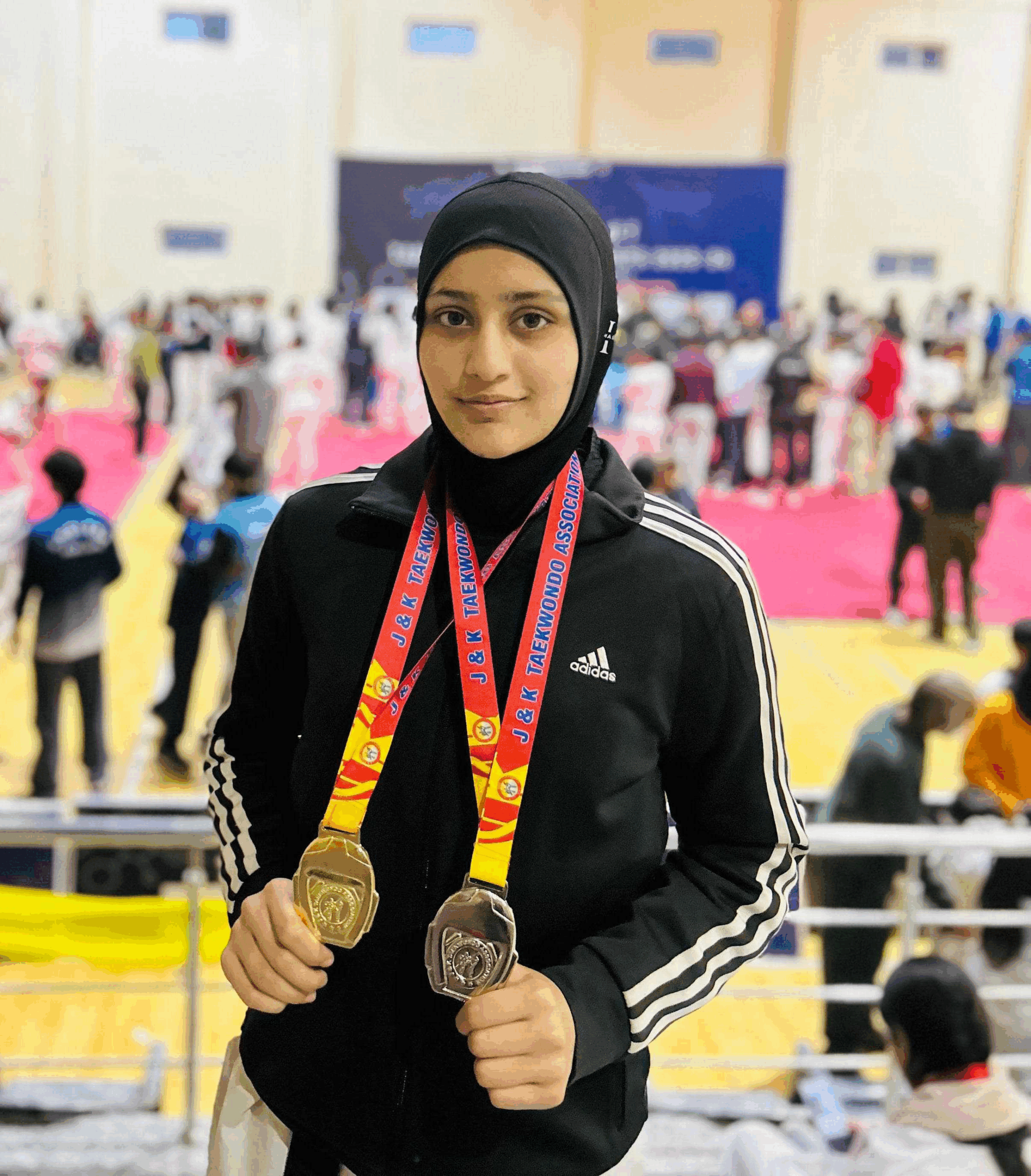
Misbah Fatima, a prominent Taekwondo athlete from district Doda and daughter of Mr. Liaqat Ali Shah, has made her community proud by securing 85% marks in her 11th class examinations.
A resident of Doda, Misbah is not only excelling in academics but also has an impressive track record in Taekwondo.
She is a National and State Taekwondo Medalist and has participated in various esteemed championships, including the Khelo India Women’s Taekwondo League.
The community and her well-wishers extend their heartfelt congratulations to Misbah Fatima for her outstanding academic performance. Her dedication and perseverance in both her studies and sports are truly inspiring. We wish her continued success in all her future endeavors.
source: http://www.brighterkashmir.com / Brighter Kashmir / Home / by Abid Pampori / July 17th, 2024
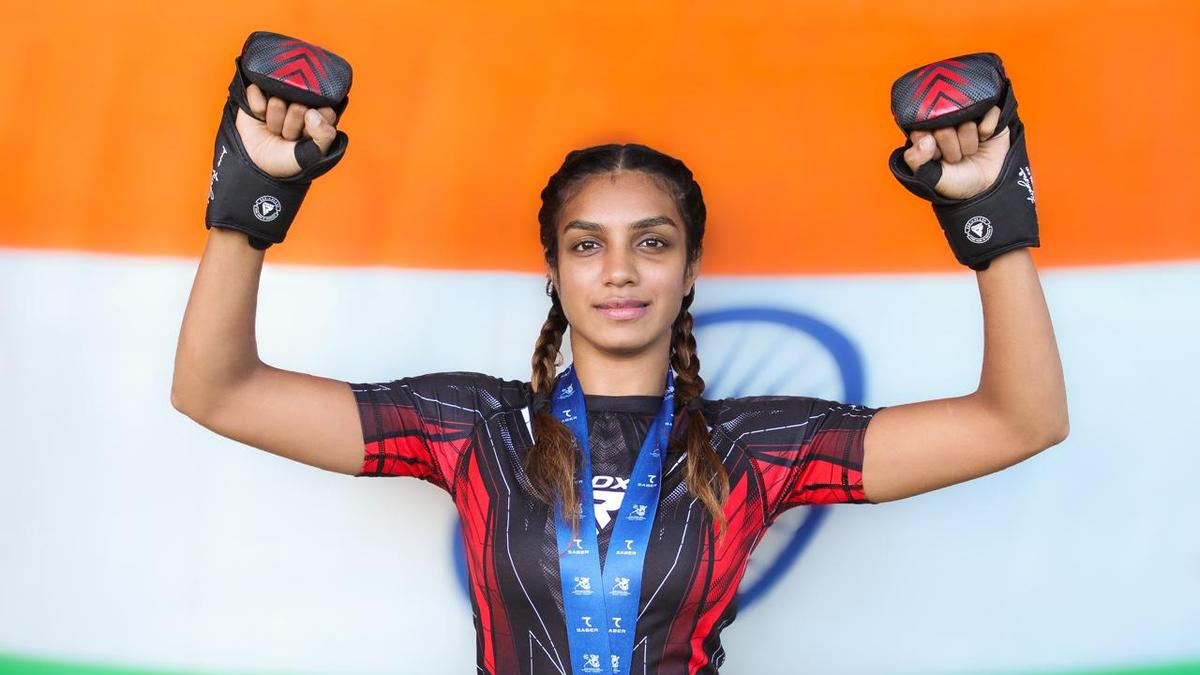
Mixed martial arts were never on the horizon for the 23-year-old from Anna Nagar in Chennai. Even sport wasn’t really part of the picture.
Afshan Fathima defied odds, reaching the final of IMMAF World Championships despite challenges and stereotypes. | Photo Credit: Special Arrangement
Afshan Fathima walked away from her very first bout of the 2024 IMMAF World Championships in Uzbekistan last week not only with a win but also with a prodigious, rapidly darkening contusion under her eye. Although the injury was caused by an accidental headbutt rather than a punch from her opponent, many thought it meant the end of her campaign in the women’s strawweight division (52.2kg) at her debut World Championship.
“Everyone who saw me thought I wasn’t going to be declared medically fit to take part in the next bout. But I did make it. And then after I won that bout, everyone thought my injury was not going to let me compete in the next bout. After every bout I fought, the other fighters thought I wasn’t going to be able to make the next round because of how big the swelling had got. But I kept doing this. There was no way I was going to quit,” she says.
By the time Afshan’s campaign at the IMMAF World Championships ended, she had gone further than any other Indian – reaching the final –at the premier global amateur competition in mixed martial arts. Amongst her wins, was a guillotine choke submission of Ireland’s Lisa Murtagh who trains at the prestigious SB Gym– with the same team as former UFC champion Connor McGregor – and picked up a decision win over reigning World champion Matilda Bachurina of Kazakhstan in the semifinals.
Afshan however couldn’t return from the competition with the gold medal she had hoped for. She ended up losing the final by a narrow points decision to Isabel Calvo of Spain. “Unfortunately, the day of my final coincided with the start of my period. It was pretty bad. I was puking and had really bad cramps. I wasn’t anything close to 100 percent,” she says. Afshan says she returned from the tournament with mixed emotions. “It stings of course to go so far and fall short in the final but at the same time, I’m a little happy that I at least came this far,” she says.
Few might not have predicted Afshan would get anywhere near where she’s gotten. “Even I wouldn’t,” she says.
Mixed martial arts were never on the horizon for the 23-year-old from Anna Nagar in Chennai. Even sport wasn’t really part of the picture. “There’s no one in my family who has chosen sports as a career,” says Afshan, the eldest of three sisters. That was the case for her as well. It wasn’t as if she wasn’t interested in sport. Some of her earliest memories are of watching WWE pro wrestling matches with her father and uncle. At school, she says she was one of the few children to actually make the most of the games period.
“Most of the other kids would be chatting with each other or catching up on their studies. I was the only one who would pester the games teacher to start a basketball match or something. I was also someone who used to roughhouse with my friends. They’d all tell me I was really strong or that I hit really hard. But I didn’t know what I was going to do with that. While I really wanted to play something, my family only really wanted me to study. My grandmother was a teacher and my aunt was a lecturer. I was also fairly good in studies so I had no option but to focus on my books. Perhaps if I was a bit dull, they might have been more open to the idea of putting me in sports,” she says.
It was only after her school when she began studying for a degree in Electrical Engineering at Hindustan Institute of Technology that Afshan says she finally got the chance to pursue her passion.
“I always wanted to do some sort of fitness activity. So, in my third year of college I joined a crossfit gym. The gym where I trained also had a sign for mixed martial arts classes although they didn’t have any instructors. That was the first time I had heard about mixed martial arts. Although they didn’t have classes at the gym. I did a Google search and found out about Combat Kinetics Chennai and coach Ajit Sigamani,” she says.
At that time, Afshan says she told her parents she was just staying back to play basketball in her college since she knew the alternative would be something they would never agree with.
“I’m from an extremely orthodox Muslim family. Back when I was in school and in college I would wear the burkha. I couldn’t even think of leaving the house if I wasn’t wearing the burkha. While my parents were supportive of my education, they would have drawn the line at my getting into a sport like martial arts. So I used to wear the burkha when I left home. Then, when I went into the gym, I would change into my gear and back into the burkha when I was heading back home. It almost felt like I was living two lives. I tried to balance those two lives as much as possible. I knew I would have to tell my family eventually but I was hoping I could ease them into it,” she says.
It was at the Combat Kinetics Gym though where she felt she truly belonged. “Because I had been somewhat sporty in the past, I didn’t really struggle getting physically in shape. I enjoyed doing all the push ups and pull ups. I absolutely loved actual combat training. A lot of our training in MMA is mixed gender and I sometimes would think just how scandalised my family would be if they walked in on one of our grappling sessions. But, I genuinely didn’t think too much about it when I started. I just got on with it. It wasn’t as though I’d stopped becoming religious or stopped praying but I think it’s what’s inside your heart that counts a lot more than what you are wearing on the outside,” she says.
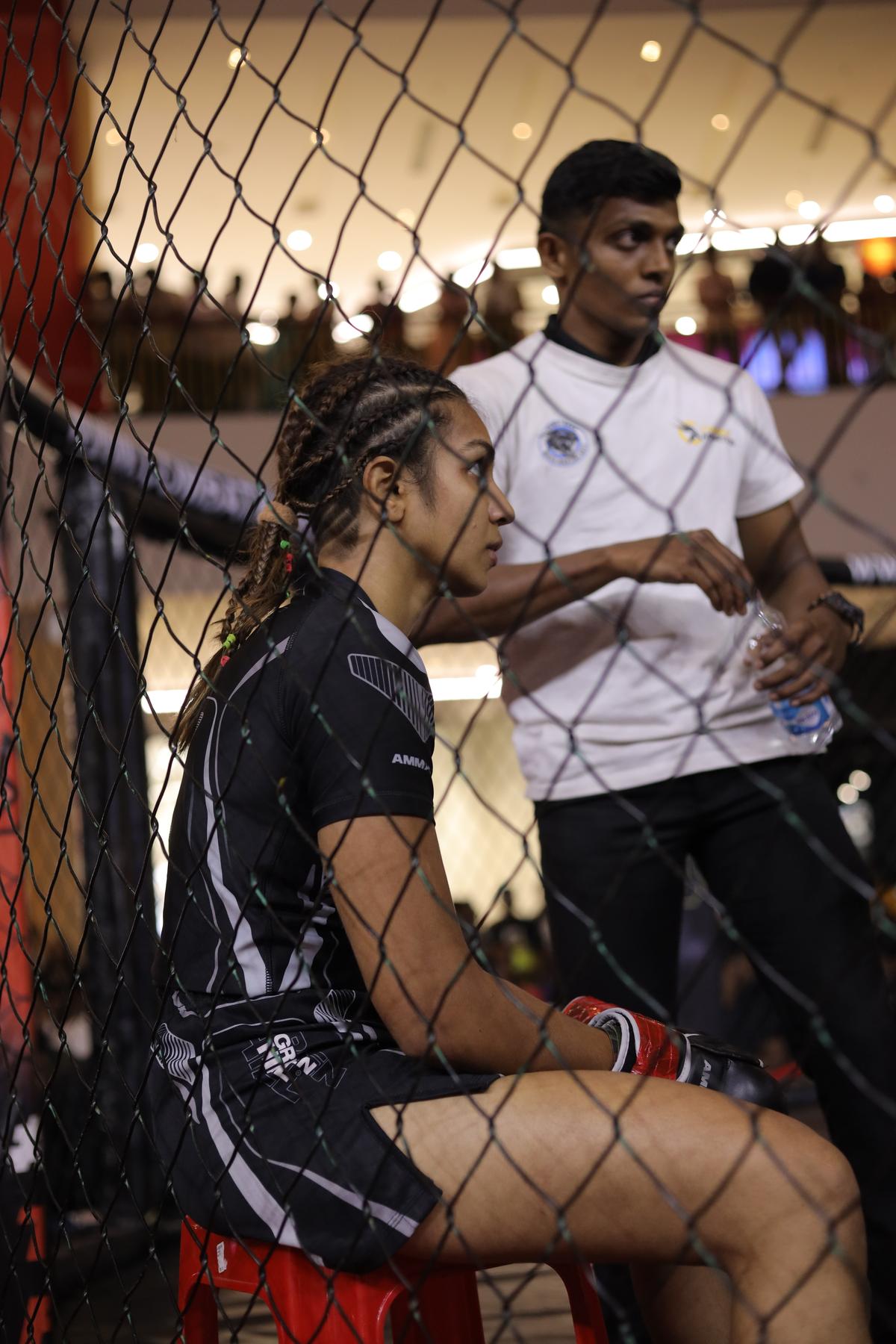
Afshan says she knew she was someone who was meant to be a fighter when she stepped into the fighting cage for her first sparring session. “In contrast to a lot of the other individuals who were starting out, I was also someone who wasn’t scared of sparring. A lot of beginners are scared of being hit. They close their eyes and turn their head. When they get hit on the face for the first time, they decide, this isn’t what they want to do with their life. But fighting just came naturally to me,” she says.
Over time, Afshan’s parents have come to terms with her choices. | Photo Credit: Special Arrangement
Her biggest fight though would come outside the cage when her parents eventually found out that she was training in mixed martial arts. “My dad freaked out. There was a lot of screaming and shouting. They took away my phone and I wasn’t allowed to leave the house for a week. But I kept insisting that I would go and eventually my parents gave in,” she says.
Over time, Afshan’s parents have come to terms with her choices. “I don’t think my father and mother were personally against my taking up MMA. I think they were more concerned about what the society I came from would think about what I did. I think they first thought it was a weird sort of fad that I had picked up. Initially, as a compromise my father would drive me to the classes and bring me back right after. Later though, I learned how to drive a motorcycle and began to go myself. That gave him the confidence that I was really serious about what I was doing,” she says.
Within a few months of training, Afshan says she was sure combat sports was what she wanted to do with her life. “I can say I was a quick learner. As part of our training, we usually compete in boxing, judo and wrestling competitions. Within a few months of training, my coach entered my name in a district level competition in boxing. Although I was nervous since I hadn’t competed before, I ended up winning. Another few months later, I competed at my first national amateur championships in Lucknow that once again I ended up winning,” she says.
While the gold medal she won in Lucknow earned her some level of respect at home, Afshan knew it will always be hard for her parents to completely come to terms with her career. That was her key to becoming as independent as possible. “My parents have already gone far beyond their comfort zone to even accept that I can be an MMA fighter. Sometimes when they see me in shorts, they will grumble and say they gave me too much freedom. I like to live life on my own terms. I’ve never asked my parents for any money to fund my training or competition. My dad used to be in business but he had to shut that down after he made a lot of losses. I also have two younger sisters, who my parents are responsible for. At first, I used to beg my coach to charge me a nominal fee. I promised I’d pay him back when I started earning. After graduation, I worked in sales for Jaguar India but I realised I wasn’t getting the time to train like I wanted. I then started working as a coach in my MMA gym itself. MMA isn’t a sport where as an athlete you get easily sponsored by the government or private organisations. So, if I have to compete in competitions, I have to raise my own funds,” she says.
Afshan says she had to save up for a year in order to pay for her fight camp, nutrition, travel and competition fees for her first IMMAF World Championships this year.
It’s not been an easy journey and Afshan has to keep herself motivated even when it’s not the easiest to. Within her family, Afshan says she is a bit of a polarising figure. “Just because I’m a fighter doesn’t mean everyone’s opinion has changed. My family is still very conservative. A lot of people wonder why I’m still not married. Both my younger sisters wear the hijab and most of my cousins still wear the burkha. My relatives tell them not to hang around with me because I’m seen as a bit of a bad influence. My mother loves me but she will still come up to me and say that I should retire as a fighter and get married. But she doesn’t understand that I’ve only just started,” she says.
Afshan though doesn’t have any regrets. She’s already looking to her next target – turning professional. “The amateur system is mostly a way to get some sort of experience. I think I’m a fairly well-rounded fighter. The next level for a fighter is to turn professional. My coach and I are still weighing our options. We have some offers but I’m still to decide whether I want to compete for one more World Championship and win a gold or take the jump into professional fighting,” she says.
The professional ranks will be yet another giant step for Afshan to climb. She’s looking forward to it. “There’s this quote I always try to live by. It’s that the mountains you carry are the ones you have to climb. There’s no point taking pressure because of everything that I had to get through to get to where I am. When I look back, I think to myself ‘Wow, I’ve broken so many stereotypes not just for women but for Muslim women in particular. Every once in a while, some woman will come up to me and say she lives through me or that she wants her child to become like me. That gives me a lot of motivation. I’ve faced some hard obstacles. I can deal with next to anything,” she says.
source: http://www.sportstar.thehindu.com / Sportstar / Home> More Sports / by Jonathan Selvaraj / November 21st, 2024
Liyana is the holder of 15 Kerala state aquatic championship records and five CBSE national records.
Kochi :
Liyana Fathima Umer Nizar, 17, who made history winning gold in all the five events she competed at the Kerala Games Aquatic Championships, was felicitated by Global Public School chairman P Jacob on Wednesday.
The GPS International Thiruvaniyoor student, currently pursuing her A levels (Grade 12), was adjudged the fastest woman of aquatic championships held at Dr Ambedkar International Aquatic Complex, Thiruvananthapuram from May 6 to 8. She had contested in the 100-metre freestyle, 50-metre freestyle, 50-metre butterfly, 100-metre butterfly and 200-metre butterfly events.
Liyana is the holder of 15 Kerala state aquatic championship records and five CBSE national records.
In 2016, her gold medal in 50-m freestyle at the state meet in Bengaluru finally ended the medal drought for Kerala. The 17-year-old started swimming when she was in Grade 1. Ever since Liyana began training under the watchful eyes of her school coach Santhosh Kumar in 2012, she has been creating waves at the state and national-level.
source: http://www.newindianexpress.com / The New Indian Express / Home> Kochi / by Express News Service / May 12th, 2022