When she joined the Indian Combat Academy (ICSA) on Bannerghatta Road to learn Jujitsu and self-defence, little did Nabila Birjis (29), know that this would be a turning point in her life.
Bengaluru :
When she joined the Indian Combat Academy (ICSA) on Bannerghatta Road to learn Jujitsu and self-defence, little did Nabila Birjis (29), know that this would be a turning point in her life. On April 2, she turned out to be the only girl selected from Karnataka to compete in the South Asia Open Jujitsu Championship 2019, in Chennai.
Born and brought up in Mysuru, she moved to Bengaluru seven years ago to work for an architecture firm. At the age of 25, after undergoing rigorous training under coach Jitesh Banjan, she started competing seriously. So far, she has won six golds at the national-level JAI Jiu Jitsu events under 68kg and 70 kg categories; two silver medals at South Asian Championships; and gold at Body power Expo Open Weight.
She is also the only Indian woman to have secured two silver medals at South Asia Open Jujitsu Championship 2019. “I always wanted to achieve something in sports. My mother Noor Fathima Khan, HOD and professor at Maharanis Science College, Mysuru wanted me to complete my graduation before pursuing sports. I started my sporting career only at 25.”
It was not easy for Birjis in the field. She has quit her job, moved cities, so she could be able to devote more time for training. “I remember when I travelled for three hours just to be able to train for an hour. After struggling for years, I now seem to have struck some sort of balance between being an architect and an athlete,” she added.
Jujitsu is a team sport, and the biggest challenge she finds is to keep up with the energy levels of younger athletes. To stay fighting fit, she follows a strict sports diet. For Birjis, losing teaches more than winning. “My loss at the South Asia Championship has taught me how to move forward. My teammates have always encouraged me to do better. I will learn from my previous experiences,” she added.
source: http://www.newindianexpress.com / The New Indian Express / Home> Bengaluru / by K Rathna / August 20th, 2019
Overcoming a childhood marked by hardship and societal rejection, 20-year-old Bibi Fatima has emerged as a formidable kickboxer, winning multiple accolades at the national and international levels.
Mysuru:
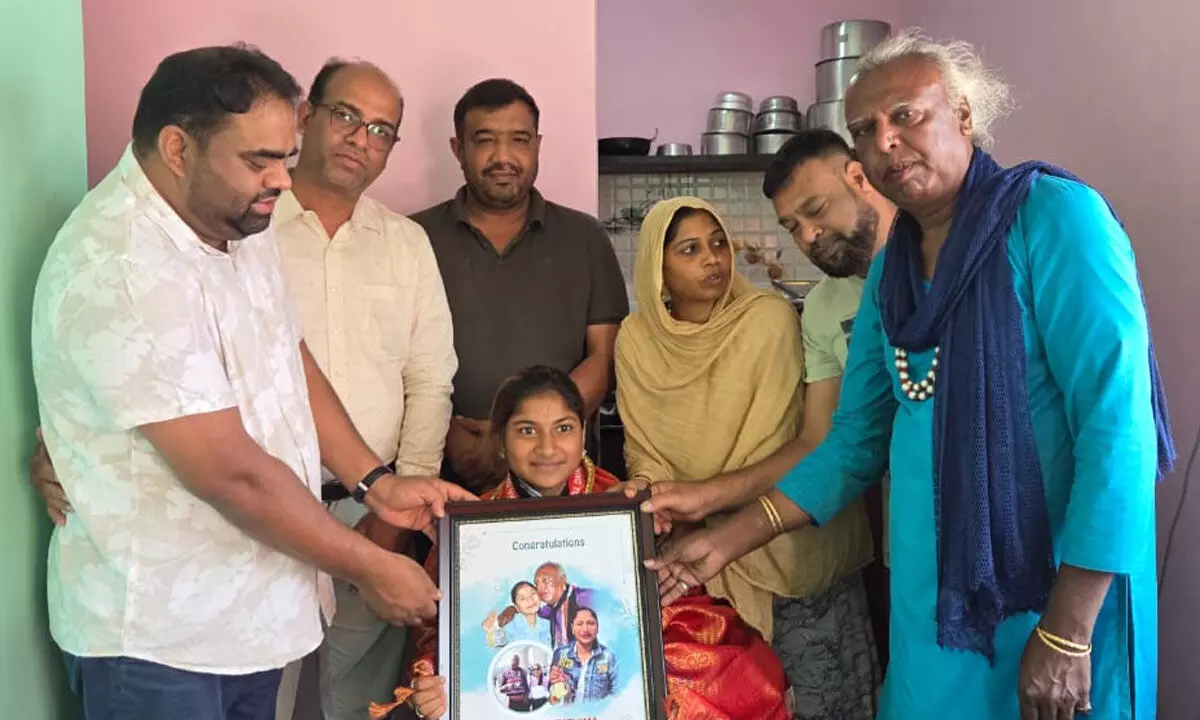
Overcoming a childhood marked by hardship and societal rejection, 20-year-old Bibi Fatima has emerged as a formidable kickboxer, winning multiple accolades at the national and international levels.
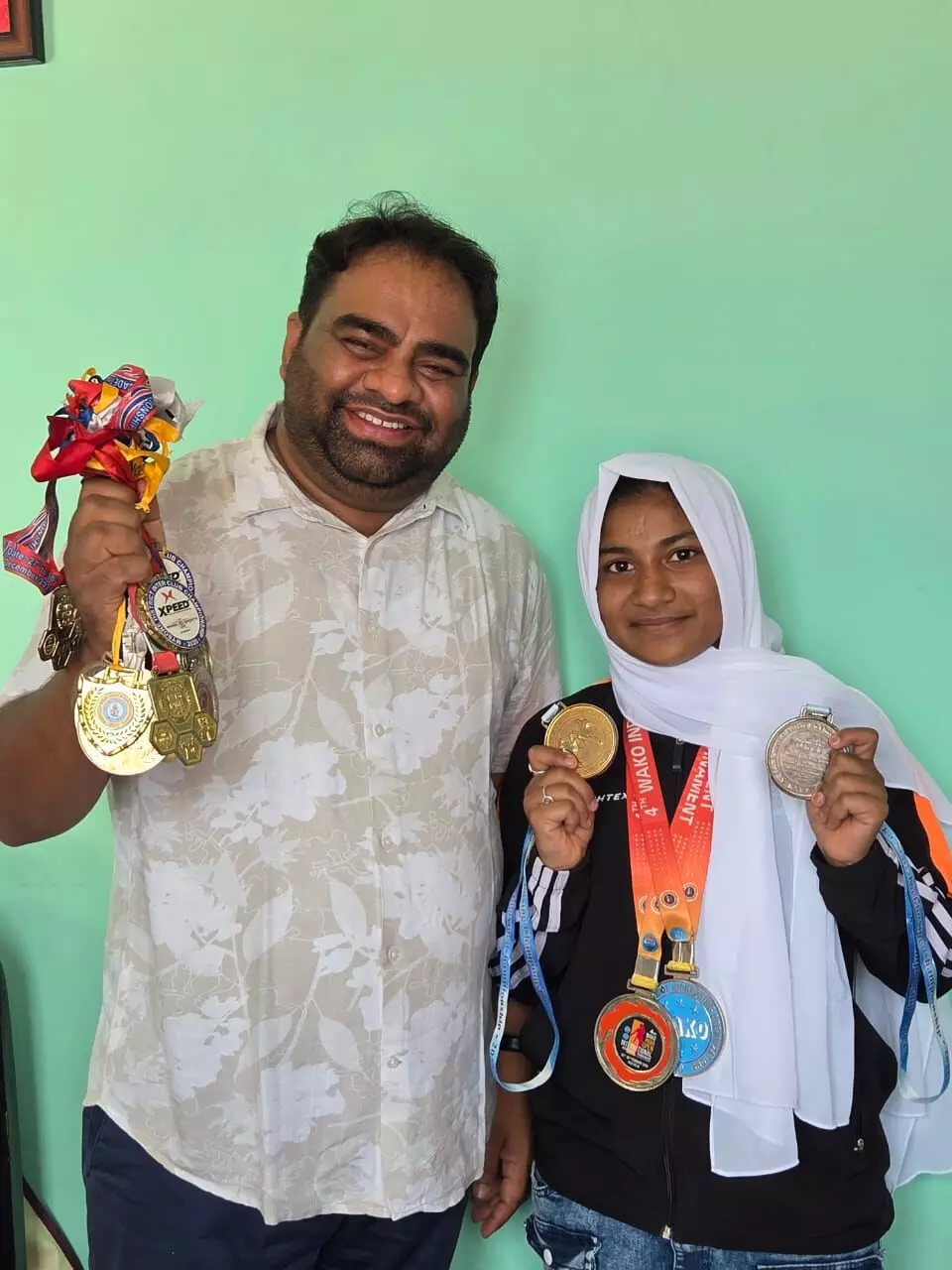
Fatima, who has been training in kickboxing for 12 years, has secured 29 gold medals in district, state, and national championships. Despite a hand injury, she recently won two silver medals in an international tournament held in New Delhi.
Fatima’s journey is a testament to perseverance. Her father abandoned the family two decades ago due to the absence of a male heir. Left destitute, Fatima’s mother attempted to end her life, but the family was taken in by Akram Pasha, a transgender beggar in Mysuru. Pasha adopted Fatima and supported her education and training, earning a living through alms to sustain the family.
Currently pursuing her secondary education, Fatima dreams of representing India in the Olympics. However, financial constraints hinder her aspirations. She hopes to open a kickboxing training centre to support herself and provide for Pasha, who continues to pay rent for both their accommodations.
Recognising her achievements, members of the M. Friends Charitable Trust from Mangaluru, led by Rashid Vitla, visited her home to extend financial assistance and encouragement. Social organisations and sports enthusiasts have been urged to come forward and support Fatima in achieving her dreams.
source: http://www.thehansindia.com / Hans India / Home> News> State> Karnataka> Bengaluru / by Rasheed Vitla / Hans News Service / March 12th, 2025
Among the change makers from Kerala are pioneers and achievers in various fields of life. They have either been trying to bring about changes in society or the fields of business. They have used music, literature, and sometimes love to bring humanity closer, to spread joy and peace.
The list includes social activists, singers, spiritual mentors, lawyers, teachers, and even IAS officers.
Ayisha Abdul Basith
Ayisha sings Naat or Islamic devotional songs, and at the age of 20, she has enthralled listeners in over 80 countries. Born in Kerala, Ayisha has migrated to Abu Dhabi, where she is pursuing spiritual music as a way to universal peace and joy, as she puts it.
Safna Nazruddin
She dreamt of becoming someone who could help the disadvantaged sections of society. Safna Nazruddin thought being an IAS officer would help her achieve that goal.
And she took her dream so seriously that at the age of 23, she became Kerala’s youngest Muslim IAS officer.
PC Musthafa
He wanted to pull his family out of their poverty. Growing up in rural Wayanad, watching his father toil in the fields as a farm labourer, he wanted to change his parents’ lives for the better.
When he completed his studies at IIM, he started small with his cousins in a 500 square feet room, selling 100 packets of idli batter to 30 shops in Bangalore.
Today, he is the king of idli batter supplying in more than 10 countries outside India and reigning over a 4000 crore business.
VP Suhara
VP Suhara has been fighting for changes in the Muslim personal law and is one of the petitioners appealing for equality of gender in the matter of succession rights.
She says she is not very optimistic, but she is not ready to give up her fight.
Kadeeja Mumtaz
Kadeeja is a novelist who won the Sahitya Academy award for her novel. But today she has taken to activism on a full-time basis, and her main preoccupation is with bringing different religious communities together to improve mutual understanding and communication.
Advocate Sukkur
Advocate Sukkur did the unthinkable when he remarried his legally wedded wife just to make a point to all his fellow Muslims.
He wanted to tell them that they can overcome the barriers to succession rights of their daughters by remarrying their spouses under the Special Marriages Act.
Noor Jaleela
Noor means light, and the luminous smile on Noor Jaleela’s face echoes her name. She was born without her four limbs. But her smile does not betray any such disability. She has been a model for courage and creativity in the worst circumstances.
She has been an influencer and also an artist, and a singer.
Padma Shri Mumtaz Ali
Mystic and spiritual mentor Padmashri Mumtaz Ali, or Sri M as his followers call him, hails from Thiruvananthapuram and heads a spiritual group called Satsang Foundation. His spiritual pursuits and his work among the people as a symbol of the oneness of humanity and the divine have made him transcend all man-made boundaries and divisions.
He has become an example of universal oneness and love as his life’s work and teachings appeal to people of different nationalities and religions. He asks them to continue following their religion while practising meditation and other spiritual pursuits to realise themselves.
Hadiya Hakeem
Can a football mean anything other than a game? Well, Hadiya Hakeem has turned a football into a statement for the empowerment of women.
She is a freestyle football performer born in Kozhikode who has overcome all possible barriers of gender, nationality, and religion through her talents and her hard work in excelling in a unique kind of performance.
Onampally Faisy
Progressive scholar and Sanskrit enthusiast Onampally Faisy has tried to transcend boundaries by promoting interfaith education in his madrassa. A well-known scholar from Thrissur in Kerala, he has been working towards building bridges of understanding and communication between Muslims and other communities in Kerala.
Since he believes in becoming the change he wants, he started teaching holy texts of other religions in his madrassas in order to remove the veil of ignorance and bring communities closer.
source: http://www.awazthevoice.in / Awaz, The Voice / Home> The Changemakers / by Sreelatha Manon / August 17th, 2025
It was a moment of joy and ecstasy for 18 years old Arshiya Choudhari of Solapur when she was announced second topper in Maharashtra state conducted Common Entrance Test MHT-CET 2016 for admissions to Medical courses and can now choose college of her choice for MBBS admission.
The Maharashtra Common Entrance Test (MH CET) exam was held on May 5, 2016 for which results were declared on Wednesday.
A student of A D Joshi College, Arshiya scored 199 marks out of 200 and declared second topper. She has also topped HSC exams in the state this year by scoring 97.85% (636 out of 650 marks).
The feat is very special for Arshiya because she herself prepared for the exam by dedicating 6-7 hours daily for study at home after HSC exams. “I did not join any private classes but relied upon self study at home. I am happy that I could score this much and prove people that private coaching is not always required if you have dedication”, Arshiya told TwoCircles.net.
She is now aiming to complete MBBS course and then she will decide about specialization or masters.
“I want to pursue MBBS from KEM College in Mumbai. After completing degree I will decide whether to go for administrative services or masters”, She added.
However, in any case she wants to connect with the people and serve them. “I am very eager to serve people. I see there are very few Muslim woman doctors and therefore I decided to become a doctor”, she told when asked why she chose to become a doctor.
Speaking with TwoCircles.net Yunus Choudhary, father of Arshiya expressed delight and said she is free to take admission into the college of her choice.
Yunus, who is a Jr. Engineer in water supply department in Solapur told, “I was confident that she will clear CET with excellent marks as she is a hard working girl. I will not restrict her from joining any college for MBBS”.
Nusrat, mother of Arshiya is a practicing doctor and wish to see her daughter serving the community by becoming a doctor. “I want Arshiya to become a successful doctor”, she told.
The Maharashtra Common Entrance Test (MH CET) is an entrance examination conducted by the Directorate of Medical Education and Research with an intention to provide admissions into various graduation courses for Engineering and Medicine streams.
The medical entrance examination has been in news since May 4 when a Supreme Court order made it mandatory for medical aspirants to take the National Eligibility-cum-Entrance Test (NEET). However, following several protests from parents and state education ministers, the President passed an ordinance that reversed the Supreme Court verdict partially.
Therefore for Maharashtra, admissions to medical and dental colleges will be done through the MHT-CET scores for this year.
source: http://www.twocircles.net / TwoCircles.net / Home> India News> Indian Muslim> Women> Youth / by A Mirsab, TwoCircles.net / June 04th, 2016
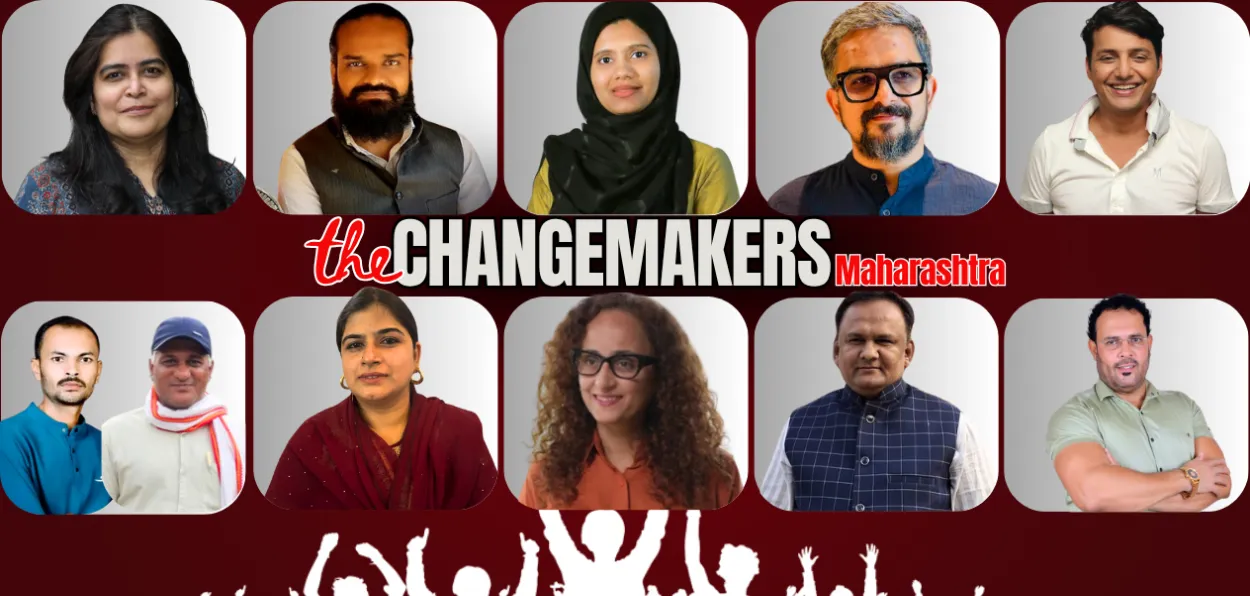
Awaz-The Voice, through its ‘The Changemakers’ series, has introduced readers to inspiring figures from Uttar Pradesh, Assam, and Jammu & Kashmir.
Starting July 6, we will feature ten remarkable changemakers from Maharashtra.
These individuals not only embody the state’s vibrant and progressive legacy but are also shaping a future that is tolerant, equitable, harmonious, and inclusive.
Working quietly away from the limelight, their impactful contributions are being brought to the public through Awaz-The Voice. Here’s a glimpse into their inspiring journeys.
Dr. Farah Anwar Husain Shaikh
Dr. Farah Anwar Husain Shaikh leads the Mis Farah Charitable Foundation in Pune’s Dapodi, delivering health, education, and disaster relief to communities. Her bold advocacy for Muslim women’s right to pray in mosques challenges deep-rooted traditions, earning her a doctorate in social work and women’s empowerment. Her story is that of the struggle for equality, Farah’s tireless efforts are transforming lives and reshaping Pune’s social landscape, making her a beacon of grassroots change.
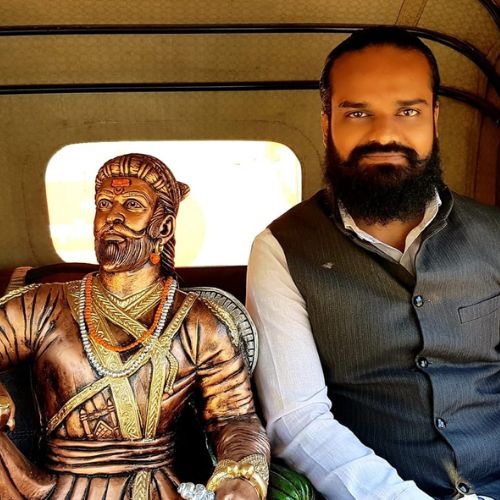
Paigambar Shaikh
Rationalist Paigambar Shaikh is redefining tradition with his “Economic Qurbani” initiative from Pune, transforming the Eid al-Adha sacrifice into a force for community growth. By channeling resources into education, microfinance, and health camps, he blends faith with practicality. He is inspired by the Satyashodhak movement. His innovative approach fosters sustainable development and communal harmony in Maharashtra’s far-flung areas, marking him as a visionary changemaker.
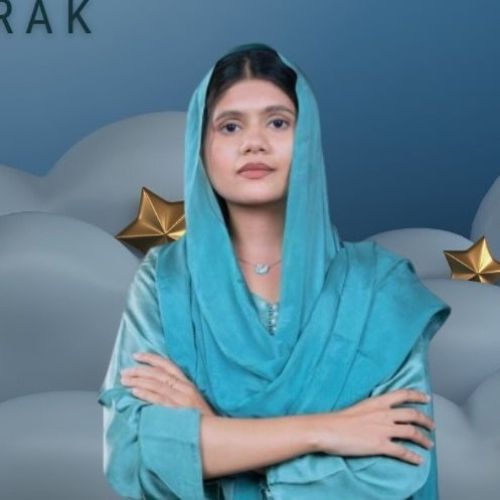
Marziya Shanu Pathan
Marziya Shanu Pathan, 24, is an activist. From leading a march for Malala Yusufzai at age 12 to organizing the vibrant Mumbra-Kausa Children’s Festival, she champions women and youth in her township. Her blend of fiery activism and community initiatives is uplifting Mumbra, proving her dedication to a brighter, more inclusive future.
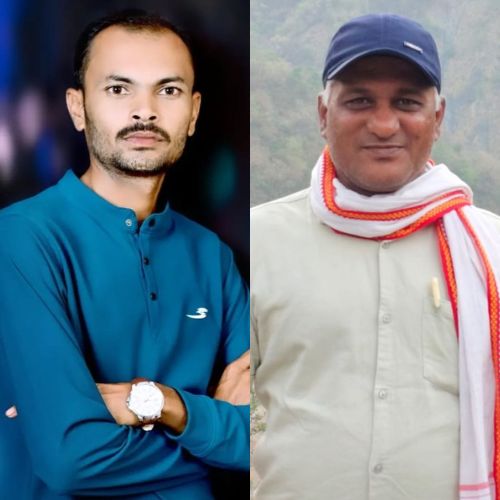
Hazrat Ali Sonikar and Munir Shikalkar
In Sangli’s agricultural heartland, Hazrat Ali Sonikar and Munir Shikalkar are empowering the Muslim community through grassroots activism. Hazrat rallies youth with awareness campaigns and workshops, while Munir bridges gaps with local authorities to secure resources. Their collaborative manifesto, amplifying education and employment, is reshaping the future of the community, showcasing the power of local action.
Sakib Gore
In Badlapur, Maharashtra, Sakib Gore is lighting up lives through his ‘Vision Friend Sakib Gore’ initiative, driven by his grandmother’s struggle with blindness. With a belief that glasses are more than a fashion statement—they’re a lifeline to sight—he’s brought eye exams to 2.6 million people, distributed 1.7 million free spectacles, and facilitated 63,000 free cataract surgeries. His ‘Devabhau’ glasses, priced at just 33 rupees, earned him global acclaim and the ‘System Leader Award’ at a World Summit in Kathmandu. Reinvesting every profit into free glasses for the poor, Sakib’s mission is simple but profound: to lift the visually impaired out of darkness, one pair of eyes at a time.
Sarfaraz Ahamad
Solapur’s Sarfaraz Ahamad, a 41-year-old historian, brings Maharashtra’s Deccan heritage to life through his eight books. His books include the acclaimed Hyder Ali, Tipu Sultan, and The Sultanate-e-Khudadaad. As a founder member of the Ghaziuddin Research Center which promotes objective historical research. His writings in Marathi, Hindi, Urdu, and English captivate readers. Sarfaraz’s work is reviving cultural pride and inspiring a new generation of scholars.
Sabah Khan
Sabah Khan’s NGO Parcham based in Mumbara, empowers girls through football, challenging norms and building confidence among them. Khan, 50, fosters gender equality and religious harmony, securing a dedicated football field and launching the Savitri-Fatima Foundation to support education and economic growth. Sabah’s transformative work offers Mumbra’s youth a vibrant path to self-discovery.
Afroz Shah
Mumbai’s Afroz Shah, a 42-year-old lawyer, turned Versova Beach into the site of the world’s largest clean-up, removing 20 million kilograms of trash. Afroz Shah Foundation now tackles rivers and waste culture, earning him the UN’s ‘Champion of the Earth’ title. From slums to schools, his “dates with the ocean” inspire thousands, proving one man’s grit can spark a movement.
Dr. Sabiha Inamdar
In Nashik, 43-year-old Dr. Sabiha Inamdar, an intimacy and relationship coach, is breaking taboos around sexual wellness. She creates safe spaces for women and couples to discuss intimacy and emotions openly. What makes Dr. Sabiha’s work important is her commitment to normalizing healthy conversations around sex, emotions, and interpersonal connection—especially for women. Her workshops shift mindsets, fostering healthier relationships and emotional well-being across Maharashtra.
Hussain Mansuri
Mumbai’s Hussain Mansuri, a 40-year-old philanthropist with 7.8 million Instagram followers, spreads compassion across the city’s streets. From feeding street kids to caring for stray animals, his quiet acts of kindness, rooted in Islamic values, touch countless lives. Whether delivering meals near Tata Hospital or comforting the grieving,
Hussain’s selfless mission ripples far beyond Mumbai.
source: http://www.awazthevoice.in / Awaz, The Voice / Home> The Changemakers / posted by Aasha Khosa, ATV / July 05th, 2025
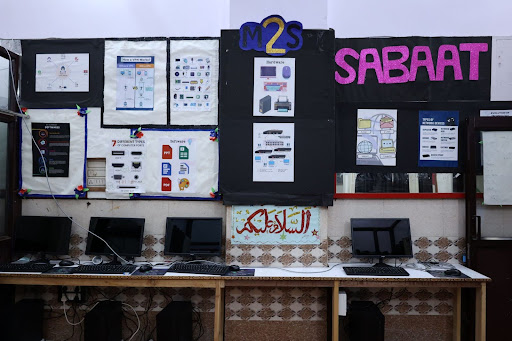
Women at the Sabaat Center share a moment of joy, building community through their shared work
New Delhi:
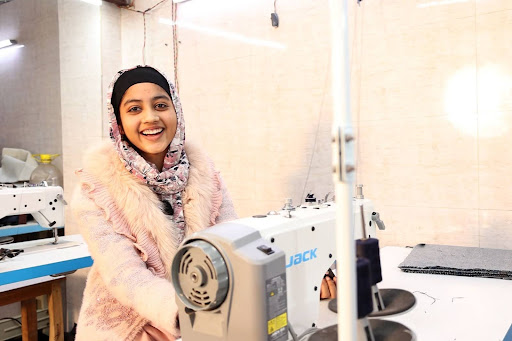
Shiv Vihar carries the silence of broken dreams. The 2020 Delhi riots swept through this northeast Delhi neighbourhood. Homes were burned, shops looted and lives uprooted. Among the soot and rubble, 19-year-old Shumayla and her family lost everything. Their house was reduced to memories.
Today, she sits at a sewing machine in the Sabaat Centre, threading fabrics into full-grown suits. “I began at ground level. Now I can make entire suits. It feels nice to create something on my own,” she said.
For her, the needle of her sewing machine is like a compass guiding her towards hope.
The Sabaat Center at Shiv Vihar
Sewing Stories with Sabaat
An initiative of the Miles2Smiles Foundation, the centre was born from the same flames that destroyed Shumayla’s world. Its founder, Aasif Mujtaba, witnessed firsthand how survivours in Shiv Vihar held together their shattered worlds.
“I saw women in Shiv Vihar holding their worlds together with grace, and I knew they deserved more than just pity,” he said.
From this empathy came Sabaat, a place where women learn to stitch, create and rebuild their identities.
Shabnam, a mother of three, leaves behind her home chores for a few hours to learn something creative at the centre.
“While managing the house along with the work is difficult, I love coming here,” she says.
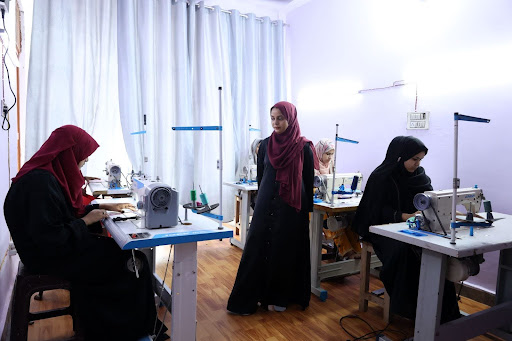
At the center, women thread, stitch and craft, turning cloth into outfits, tote bags, pouches, magnets, mugs and keychains.
Women work at sewing machines in the Sabaat Center, crafting outfits and other merchandise
Aasif calls their work a story: “Every tote bag, keychain, magnet or cup has a story of survival, strength and hope.”
Farheen Ansari, a fashion designer who leads the training, ensures their skills match market demands. The women attend morning sessions from 9 am to 11 am, growing from beginners to masters over six months or more, depending on their pace.
“We get orders from local boutiques,” she told TwoCircles.net.
Their crafts are sold through the Sabaat Store, returning income directly to the women who made them.
Beyond Stitching
But Sabaat’s work is not limited to sewing. Women learn how to handle orders, set prices, brand products and even promote them online. Acquiring these skills are essential to turn trainees into entrepreneurs.
“Whenever a student learns something new, I tell her to implement it at home,” says Farheen, adding that some do just that.
Sabaat empowers women by providing emotional support alongside practical skill training
Women like Sangeeta, Daraqshan, Saiba and Gulafshan have started their own small businesses.
Initiated for survivors of hate violence, widows and women from marginalised and economically vulnerable groups, Sabaat has already trained 70 women.
“Impressively, at least 70% of them have achieved financial independence, whether working within Sabaat or starting their own ventures,” claims Aasif.
Women at the center undergo an extensive training program for manufacturing products
In addition to offering skill-based training, the programme is also bridging trauma and offering dignity, trust and a voice. Most days end in shared smiles. The women’s laughter fills the centre, evidence that even broken neighbourhoods can teach courage.
Amid ongoing struggles for justice and pending compensation, Sabaat brings healing where paperwork lags. Plans are underway to expand, bringing this safe space to more women and more neighbourhoods.
source: http://www.twocircles.net / TwoCircles.net / Home> India News> Indian Politics> Indian Muslim> Lead Story> Women / by Maryam Hassan & Unzila Sheikh, TwoCircles.net / August 10th, 2025
In a momentous first for Aligarh Muslim University (AMU), Afrin Jabeen, a B.P.Ed. student, has scripted history by becoming the first-ever AMU student to successfully swim across the English Channel.
Aligarh Muslim University:
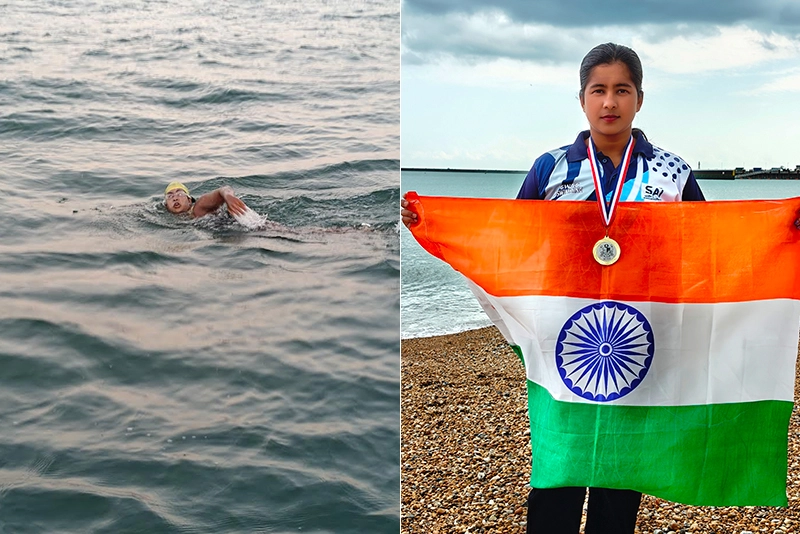
In a momentous first for Aligarh Muslim University (AMU), Afrin Jabeen, a B.P.Ed. student, has scripted history by becoming the first-ever AMU student to successfully swim across the English Channel.
Afrin braved the frigid waters at 11°C and fierce currents on July 29, 2025 to complete the solo one-way swim from Dover (UK) to Cap Gris-Nez (France) at a stretch of 34 kilometers in 13 hours and 13 minutes, beginning at 3:45 AM London time.
This remarkable feat places her in the elite ranks of international endurance swimmers and brings immense pride to AMU, her home state West Bengal, and India at large.
Who is Afrin Jabee?
Rising from a modest background in Paschim Medinipur, Afrin’s journey is a stirring testament to perseverance, discipline, and unyielding ambition. Even before this feat, she had already distinguished herself as a formidable open-water swimmer.
She represented Vidyasagar University three times at the All-India Inter-University Aquatic Championships, competed twice for West Bengal at the national level, and conquered demanding long-distance swims spanning 13 kms, 21 kms, and 24 kms.
Her most remarkable pre-AMU achievement was securing 2nd position among girls in the world’s longest swimming event—an 81 kms marathon in the Ganges.
“Historic Milestone”
As a student of AMU, Afrin’s triumph is not only personal but also a historic milestone for the university.
Flanked by her proud brother, Adil Mohmmad (a PhD student in the Department of Chemistry at AMU) and her sister-in-law, Rizwana Yasmeen (a Gold Medalist in Nanotechnologty at AMU), Afreen, holding the Indian flag, expressed with thrill, “I am happy to have brought joy to my nation, University and family, who always support me in pursuing my dreams.”
AMU Vice Chancellor Prof. Naima Khatoon hailed her achievement as a moment of “collective celebration and pride.”
She said that Afrin’s extraordinary spirit will inspire generations of AMU students. “She has initiated a journey that will be taken up by many more talented students at AMU”, she said.
“Remarkable Achievement”
Prof Ikram Husain, Dean, Faculty of Social Sciences and the Chairperson, Department of Physical Education congratulated Afrin Jabee for her remarkable achievement and expressed hope that her education at AMU will ensure many more such laurels in her life.
Prof Vibha Sharma, Member Incharge, Public Relations Office, said that Afrin and her brother are still in the UK and they will be back to Aligarh soon. She congratulated them on phone and conveyed the best wishes on behalf of the university fraternity.
In Afrin, AMU has found a new icon, a daughter of Aligarh who swam into history, carrying the university’s name across nations and into global acclaim and offers great promises for future in sports.
source: http://www.ummid.com / Ummid.com / Home> Education & Career / by ummid.com news network / August 02nd, 2025
During the peak of the Hijab controversy in Karnataka, fears grew that Muslim girls might abandon their studies.
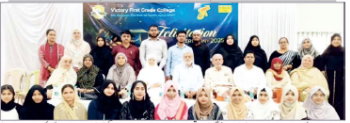
To protect their education, Al Mamoor Women’s Charitable Trust took a bold step and established Victory First Grade College as a safe and inclusive space for students.
At a felicitation ceremony for top achievers, Mysore Educational, Social and Cultural Organisation (MESCO) president Abdul Qader Sait shared the college’s origin, saying the idea arose from the urgent need to ensure Muslim girls could study without disruption. “One could not stand by and watch talented young women lose their academic futures,” he said, recalling the Trust’s vision.
Al Mamoor Trust president Dr. Ulfat Fatima announced excellent exam results, stating that out of 15 BCA students, 13 secured distinction and 2 passed in first class, while in the B.Com stream, 7 achieved distinction and 2 passed in first class. She said the results proved the talent of students, the dedication of faculty, and the supportive environment. Mr. Sait honoured the late Prof. Muzaffar Asadi for guiding the college’s formation, noting that his advice and support were vital in turning the Trust’s vision into reality.
Al Mamoor Trust secretary and Sunpure Company owner Mrs. Salma Subhan urged parents to visit Victory College before admissions, stressing the importance of being satisfied with infrastructure, faculty, and standards. She also appealed to philanthropists to help expand opportunities for young women.
Victory College is now a model of empowerment, and its creation during the Hijab row shows the community’s proactive stand to protect young women’s education. With strong academic results and a growing reputation, the college aims to foster excellence, inclusivity, and empowerment. As applause filled the hall, the message was clear: Victory College’s mission is not only about marks but also about defending the right to education for those at risk of losing it.
source: http://www.radiancenews.com / Radiance News / Home> Latest News / by Mohamed Atherulla Shariff / August 13th, 2025
How a series of breakfast conversations grew into an exhibition and a book.
On some mornings, Diba Siddiqi would sit down at the breakfast table in her parents’ home in Bengaluru, and record her father’s voice.
He would hold forth on everything under the sun – science, history, justice, conflict, photography, politics, poetry, philosophy, the evolution of language and silence. The musings continued well after the meal was over and an Olympus digital voice recorder Diba Siddiqi had placed nearby would capture her father’s thoughts.
The sheer range of topics wasn’t surprising. Obaid Siddiqi was one of India’s most eminent scientists whose pioneering work in the field of molecular biology and neurogenetics are well known.
Siddiqi was keen to have an account of her father’s stories in his own voice so that she could revisit them later. She had tried taking notes, but found the process distracting. She started using the digital recorder so that she could give him his full attention.
But the recordings, which started in 2007, ended in 2013 when the senior Siddiqi was killed in an accident while taking a stroll near his home. He was 81.
Immersed in history
Months later, Diba Siddiqi finally revisited the “breakfast monologues” as she called them.
She immersed herself in the stories her father had shared of growing up in eastern Uttar Pradesh in pre-Partition India and the sadness at how the Siddiqis lost track of family members who moved to Pakistan.
It wasn’t long before Siddiqi began to dig through old family photographs, many of them developed in darkrooms by her father and his siblings.
It didn’t stop at that. Diba Siddiqi’s mother, Asiya, is a distinguished historian, who has spent a large part of her life studying Mumbai’s past. Siddiqi began to delve into her mother’s life too.
The result is Rooh: The Enduring Spirit, an exhibition of old family photographs interspersed with new images Diba Siddiqi has taken of places that played an important part in her parents’ lives. A book of the same name is set to be released shortly.
Dominating figure
It’s obvious that Obaid Siddiqi was an overarching presence for his daughter. “My father was this colossal figure in my life,” said Siddiqi. “No language is adequate to express his continuing presence in my life. I still find myself quietly and unconsciously carrying on conversations with him.”
Born in Basti, Uttar Pradesh, in 1932, Obaid Siddiqi completed an MSc from Aligarh University before obtaining a doctorate from the University of Glasgow in Scotland. His family lived in Benares in two spells between 1932 and 1948 before finally settling down in Aligarh.
Preventive detention
The includes an account of the two years Obaid Siddiqi spent in jail from 1949 under preventive measures at a time when 30,000 communists were detained across country. Recalling his period of detention in the company of 13 Communist leaders, he said:
“So you see jail authorities, they used the criminals, who were called pukkas, to beat us up. They were prisoners who had served ten years, fifteen years, had life imprisonment… They acted like small unofficial wardens to control other prisoners. They were dressed to look like police. They beat up our friend Syed Ali badly, giving him galis, saying, ‘Pakistan se saala Pakistani Communist banta hai!’
However, Obaid Siddiqi could also recognise the benevolent side of the police officer who had beaten up the comrades, realising that human nature can never be categorised as entirely good or bad.
His parents and six siblings managed to send him letters during his imprisonment. His sisters arranged to smuggle letters in and out of jail while delivering home-cooked food to him once a week.
In 2014, Siddiqi visited Benares, where her father spent some time as a child. Waking at the crack of dawn every day, she walked around the ancient city, photographing the people and its streets.
Mumbai chronicler
Siddiqi also took many pictures in Mumbai, a city whose past her mother has written about extensively. One of Asiya Siddiqi’s celebrated works recreates the lives of people who went bankrupt in the 19th century. Roaming the bylanes of Mohammad Ali road and Dongri, in Mumbai, Siddiqui imagined that the ghosts of these people “and their descendants surely dwell in the neighbourhood I roamed in… The descendants of tailors, carpenters, blacksmiths, milk vendors, courtesans, dancing girls and prostitutes may continue to live and work here.”
Though the project is intensely personal, she believes it has broad appeal. She said she hoped viewers would let her work touch their mind and spirit and perhaps remind them of their own histories. “It is an expression of life that I have been a part of,” she said. “It has been about finding a voice in the images and bringing it together in one space.”
Rooh: The Enduring Spirit can be viewed at Bangalore’s 1 Shanthi Road gallery until February 11.
source: http://www.scroll.in / Scroll.in / Home> Photo Feature / by Zinnia Ray Chaudhuri / February 09th, 2016
Obaid Siddiqi, one of the most outstanding scientists of modern India, died in a freak accident in Bangalore on July 26. While he was out on a walk on July 21, a moped being driven by a young person of the neighbourhood rammed into him, and caused severe brain damage from which he could not recover.
He leaves behind his wife, Asiya Siddiqi, who is herself a very distinguished historian, and four gifted children: Yumna, whose area is English literature, Kaleem, who is a scientist, Diba, a promising photographer, and Imran, also a scientist whose work on seed-cloning has the potential to revolutionize agriculture in developing countries and questions the rush to Bt for raising yields.
But I want to talk not about the family that Obaid and Asiya raised but about the family of siblings and their spouses that surrounded Obaid, the larger family, as it were, to which he belonged. It was such a remarkable family, it so captured within itself all that is salutary in the development of modern India, that its individual members are worth recalling.
There were two sons, including Obaid, and five daughters, born to his parents. The youngest daughter, Imrana, married to the well-known social activist, Anubrata (Dunu) Roy, was a paediatrician at the All India Institute of Medical Sciences who turned to academic work in the social sciences and became one of the founders of the Centre for Social Medicine and Community Health at the Jawaharlal Nehru University. This centre, of which Binayak Sen was once a faculty member, remains to this day an unparalleled institution in India.
She was for decades our neighbour on the JNU campus. She was not just a close friend but one who epitomized what friendship should be, and it is through her that I came to know the remarkable Siddiqi family. Being a doctor in residence, in the early years of JNU when the campus had meagre medical facilities, she was the informal physician for every household, cheerfully available day and night; and she saw my family, especially my two children, through numerous medical emergencies. Because of her unbounded generosity, we called her “the Florence Nightingale of the JNU campus”; but that was unfair to her, since she was also a highly skilled medical practitioner, unlike Florence, and combined her expertise with a radical social philosophy.
One of her older sisters, Maimoona, was married to Ali Ashraf, a founder of the communist party in Bihar, and the first to translate the Communist Manifesto into Urdu. (Maulana Azad had earlier translated and published only some extracts in his newspaper.) Maimoona was herself a communist activist, and, together with her husband, worked at the party headquarters in Bombay bringing out its Urdu newspaper, and lived in the famous party commune set up by its general secretary, P.C. Joshi. In later years, she taught Urdu first at the Patna College and subsequently at the Aligarh Muslim University.
Ali Ashraf’s friend, Ziaul Hasan, also a very early member of the communist party in Bihar, married another of the Siddiqi sisters, Tahira, and also lived for long at the Bombay party commune while working for the party’s Urdu newspaper. B.T. Ranadive, then in ‘disgrace’ following the collapse of his 1948 line, was at the same commune and comrades were somewhat circumspect about socializing with him; but the Hasans struck up a deep friendship with him. Ziaul Hasan was then sent to Srinagar to work with Sheikh Abdullah, when the latter sought the help of the communists for carrying out land reforms in the state. Jammu and Kashmir, as is well-known, was the first state in India, even before Kerala and West Bengal, to implement radical land redistribution. He and his family lived with Imrana on the JNU campus for some years when he was working as a journalist on the staff of the Patriot newspaper, and my discussions with him on several evenings, when he would be reminiscing about the commune or berating me for my sectarian understanding, are a treasured memory.
Yet another of the sisters, Sayera, a highly distinguished economist who taught at the Aligarh Muslim University, was the first person, after the nationalist writers of the colonial period, to make an estimate, and a meticulous one at that, of the magnitude of “the drain of surplus” from India to Britain. A life-long communist, she married a fellow student against whom she had once taken disciplinary action as the All India Students Federation leader on the AMU campus. This fellow student, belonging to the AISF, was Irfan Habib, the famous historian and pre-eminent Marxist intellectual of the country.
The last sister, Shaista, was attached to the medical college at AMU and built from scratch its department of obstetrics and gynaecology. The other brother, Aslam, also belonged to the AMU faculty, to the department of engineering. He was asked to set up the university’s computer centre; he did so and served as its director for some time.
Obaid Siddiqi belonged to this family. All the traits that characterized the family, the generosity, the brilliance, the gentleness, the self-effacing commitment to work, the contempt for careerism, and the disdain for fame and status, were concentrated, as it were, in him. And he also shared the family’s social commitment and passion for effecting a revolutionary transformation in the country. Irfan Saheb once remarked to me that Obaid Siddiqi must have been the only Fellow of the Royal Society in its entire history who had spent time in jail for communist activities. That was during the “BTR period”, following the party’s Calcutta congress, when Obaid was an activist of the AISF at the AMU.
His passions included Urdu poetry (he was chancellor of the Urdu University at Hyderabad), Persian, and above all, music. He learned to play the sarod from Annapoorna Devi, and played it beautifully. He was meticulous about doing riyaz everyday, and later took lessons from the Dagar brothers who became his good friends.
I met Obaid Siddiqi occasionally on the JNU campus when he stayed overnight at Imrana’s place, having come for some meeting from Mumbai where he was then located at the Tata Institute of Fundamental Research. But I got to know him better when he came to deliver the Krishna Bharadwaj Memorial Lecture at the Centre for Economic Studies and Planning of JNU. The topic was “Do animals think?” and Obaid Siddiqi gave, in very simple language to a packed and overflowing audience, an account of his internationally acclaimed research into the neurology of the Drosophila fly. His answer to the provocative question of the title of the lecture was that while “thinking” was too ambitious a term to describe what animals did, several very elementary forms of it, suggesting a more developed consciousness beyond mere instinct, appeared to characterize them. The discussion that followed the lecture carried over into dinner and long afterwards into the night.
I met him a little more frequently when we both served on the research council of the National Institute of Science, Technology and Development Studies of the CSIR. But I got a chance for closer interaction at the convocation of the Kalyani University in 2003. By then he had moved to Bangalore where the TIFR was setting up an off-shoot for research on biology; he had been asked to head it and had already gathered around him a brilliant group of young researchers. Kalyani University was conferring an honorary doctorate on him, and on Sunil Gangopadhyay and Ganesh Pyne; and I had been asked to deliver the convocation address. We were lodged together at the same guest house for the event.
His acceptance speech was brief but extraordinarily illuminating. It was based on research work done at the Indian Statistical Institute, Calcutta, and highlighted the fact that the Indian population, barring small numbers inhabiting remote regions, was remarkably racially mixed, and hence far less diverse than commonly supposed. His interest in the area had possibly been stimulated by his radicalism, which approved a scientific finding that undermined any racial segregation of the population; but he referred only to the scientific finding itself.
Obaid Siddiqi was a compelling speaker, without flourishes, but with a solid command over facts and a meticulousness of reasoning that did not allow one’s attention to stray. His using the brief Kalyani speech to present what he thought was interesting rather than his own research is indicative of an attitude that values scientific advance over personal achievement, and sees knowledge as interconnected. He shared this perception of interconnectedness of knowledge with his friend, another great scientist from the subcontinent, Abdus Salam; it lifted him above the normal run of scientists into an outstanding intellectual. His death is a huge loss to the country.
_________________
The author is Professor Emeritus, Centre for Economic Studies, Jawaharlal Nehru University, New Delhi / Prabhat Patnaik The Author Is Professor Emeritus, Centre For Economic Studies, Jawaharlal Nehru University, New Delhi