Remembering Muslim Heroes Of Indian National Army

INDIA :

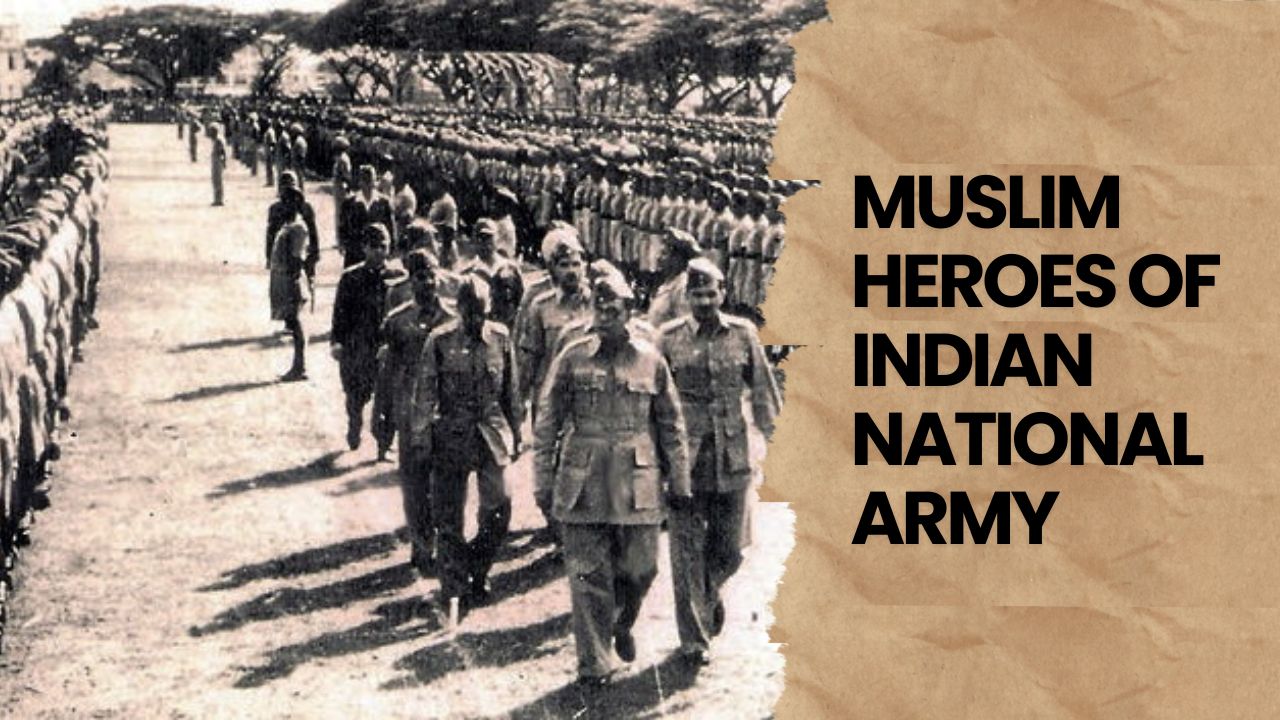
On this day, 80 years ago, in 1942, Rash Behari Bose founded the Indian National Army (INA) also known as the Azad Hind Fauj, which he later handed over to Subhash Chandra Bose. Rash Behari Bose continued to serve as the INA’s supreme advisor under Subhash Chandra Bose.

The Muslims of India, especially those settled in Rangoon and surrounding areas gave their lives and fortunes to the INA for the sake of the freedom of India. The efforts by Muslim soldiers and the business community at times made Subhash Chandra Bose praise them in unprecedented words. It’s a well-documented fact that numerous Muslim troops and officers are said to have received from Netaji the Tamgha-e-Sardar-e-Jang, Tamgha-e-Vir-e-Hind, Tamgha-e-Bahaduri, Tamgha-e-Shatru Nash, Senad-e-Bahaduri, and other decorations.

Following is the list of 12 such people who became legends due to their contribution and struggle in the INA.

Captain Abbas Ali

Freedom Fighter Captain Abbas Ali was born in Bulandshahar district of Uttar Pradesh on January 3, 1920. Abbas fought for the liberation of our country as a captain in the Indian National Army. Capt. Abbas was inspired by the speech of Subhas Chandra Bose in 1943 and decided to commit his life to our country’s freedom. Abbas was detained by the British Army and given a life sentence. But after India became independent, the death penalty was revoked. Captain Abbas Ali breathed his last on 11 October 2014 at Aligarh.

Abdul Habeeb Yusuf Marfani

Memon Abdul Habeeb Yusuf Marfani was a freedom fighter and businessman from the Dhoraji town of Saurashtra, Gujarat. On July 9, 1944, when Subhas Chandra Bose founded INA in Rangoon, Marfani was the first to come forward to contribute financially to the Azad Hind Bank. Soon, the box swelled with contributions from Indian expats in Rangoon and Singapore. Yusuf Marfani was so close to Netaji that he gave Rs 1 crore in cash and Rs 3 lakh in jewellery in 1944, which would be worth almost Rs 800 crore today.

Abid Hasan Safrani

Zain Al-Abdin Hasan was born to an anti-colonist family in Hyderabad on 11th April 1911. He became acquainted with Subhas Chandra Bose when the latter was addressing a meeting of Indian prisoners of war In Germany. Abid became Bose’s close aide and was given the title of a Major in the INA. On the suggestion of Abid, the INA adopted “Jai Hind” as its slogan. After independence, he joined the Civil Service in 1948 and retired as the Ambassador to Denmark in 1969. Aged 73, He passed away in 1984 in his hometown.

M.K.M Ameer Hamza

M.K.M. Ameer Hamza also known as Hamza “Bhai” was born on 22 January 1918 at Ramanathapuram, Tamil Nadu. Ameer Hamza was a member of Subhas Chandra Bose’s Indian National Army and a liberation fighter from Tamil Nadu. As a teenager, he travelled to Burma for trade and there he supported and donated millions of Rupees to INA. The British government detained and questioned him for supporting Netaji’s Army. In his final years, he suffered from poverty and struggled. On January 1, 2016, Ameer Hamza passed away.

General Shah Nawaz Khan

Azad Hind Fauj officer Shah Nawaz Khan was born in Rawalpindi, British India. He joined the INA after the arrival of Subhash Chandra Bose in South-East Asia. Shah Nawaz led the INA troops into North-Eastern India, capturing Kohima and Imphal, which were thereafter held by the INA under Japanese authority. He also created history by being the first Indian to hoist the Tricolor at Red Fort after taking down the flag of the British Empire. Post-independence Shah Nawaz was active in politics, elected four times Lok Sabha from Meerut.

Major General Mohammed Zaman Kiani

Major General Mohammed Zaman Kiani served in the British Indian Army before transferring to the Indian National Army (INA), under the command of Subhas Chandra Bose, where he oversaw the 1st Division. After graduating from the Indian Military Academy with the Sword of Honor, he enlisted in the Punjab regiment. His efforts to the Azad Hind were eventually recognised, and the Indian government posthumously gave him the Netaji Medal. He died on June 4, 1981.

Colonel Nizamuddin

Nizamuddin, whose birth name was Saifuddin, was born in 1901 in the village of Dhakwan (in the current Uttar Pradesh district of Azamgarh. Saifuddin left his house when he was in his early 20s and sailed from Calcutta to the metropolis to join the British army. While he was serving in the colonial army He overheard a British army general urging white soldiers to let the Indian sepoys die but to save the donkeys to carry food for the rest of the force. He shot the officer out of rage at the callousness and injustice of the comments and then fled to Singapore. Nizamuddin was employed as a driver of Subhash Bose, driving the leader everywhere. He also battled alongside Netaji in the forests of Burma between 1943 and 1944 against the British Army (now Myanmar). He was shot three times in 1943 after jumping in front of him (Netaji) and saving his life. He was given the nickname of “colonel” lovingly by Netaji himself.

Colonel Habib ur Rahman

Colonel Habib ur Rahman who co-founded Azad Hind Fauj alongside General Mohan Singh was put in command of the Administration branch at the organization’s headquarters. He oversaw a mission to Burma. Netaji was given the position of Officer in Charge of the Training School after taking over the command of the Azad Hind Fauj. He also took his oath as a minister on October 21, 1943, the day Azad Hind Sarkar was established. Later, he was also named the Deputy Chief of Army Staff, and on August 18, 1945, he accompanied Netaji on his last known trip.

Colonel Inayatullah Hasan

General Mohan Singh named Inayatullah Hasan as the director of Azad Hind Radio. He created well-known nationalistic radio plays that compelled All India Radio to air a competing storyline in India. Later, Netaji named him the head of the training division, where he instructed citizens, including women and children, in the use of weapons.

Colonel Shaukat Ali Malik

The first national flag to fly over free Indian land was flown by Colonel Shaukat Ali Malik. At Moirang in Manipur on April 14, 1944, Malik, the commander of the Bahadur Group of the Azad Hind Fauj, raised the flag. Moirang was the first region in India to be taken over by the INA and the first location on the Indian subcontinent that the Azad Hind Government controlled. Malik received the Sardar-e-Jung for leading his soldiers in this capture. After establishing a civilian administration, intelligence agents were dispatched inside enemy territory. One of the highest military honours of Azad Hind Fauj, the Tamgha-e-Sardar-e-Jang, was bestowed upon him by Netaji.

Colonel Mehaboob Ahmad

The connection between Azad Hind Sarkar and Azad Hind Fauj was Colonel Mehaboob Ahmad. He served as Major General Shahanwaz Khan’s counsellor throughout the campaigns in Arakan and Imphal

Karim Ghani

Before Netaji arrived from Germany, Karim Ghani, a Tamil journalist who resided in Burma, served as the leader of the Indian Independence League. He took an oath to serve as one of the six advisors when Azad Hind Sarkar was established. Karim Ghani served as Dr Ba Maw’s parliamentary secretary in Burma prior to the Second World War. He served as the manager of “The Muslim Publishing House,” the editor of the Malayalam daily Malayan Nanban, and the editor of the Malay edition of Dawn, under the name Sinaran, as president of the All Malaya Muslim Missionary Society (AMMMS) and a representative in a number of other organisations, Ghani was also active in the Muslim League.


Written by Talha Hussain Gulbargavi for Kalam Research Foundation.

source: http://www.thecognate.com / The Cognate / Home> History / by Talha Hussain Gulbargavi / September 02nd, 2022
MANUU to felicitate Stars of Urdu on Teachers Day

Hyderabad, TELANGANA :

Hyderabad: 

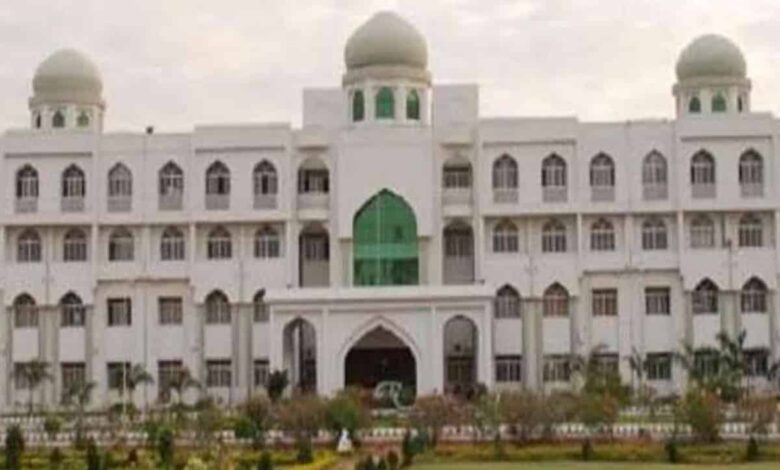
In a first of its kind, Maulana Azad National Urdu University (MANUU) is coming out of its academic cocoon and honouring a few of those whose contribution to the spread of Urdu across the linguistic communities in unmatched. Most of them are the unrecognized greats of the Urdu language, literature and culture.

The University has aptly selected Teachers Day that falls on September 5 (Monday) to honour the greats of the language. They have been named as Sitara-e-Urdu or the Stars of Urdu.

According to sources this will become a permanent feature of the MANUU calendar.

A press note from the PR Department of the university, Prof. Siddiqui Mohd. Mahmood, Dean, School of Education and Training (SET), informed that his former veteran colleague Prof. Amina Kishore has agreed to speak on “Challenges of Being a Teacher in 21st Century” at CPDUMT auditorium at 11.00 am.

Syed Ainul Hasan, Vice-Chancellor will preside over the function.

The felicitation programme has been organized by Centre for Urdu Culture Studies to mark the occasion.

Prof. Shugufta Shaheen, Chairperson of the Felicitation Committee, said that Lakshmi Devi Raj, Syed Jafar Amir Rizvi, Shahid Husain Zuberi, Oudesh Rani Bawa and Mazhar uz Zaman Khan will be honoured for their unique role in promoting Urdu in its various forms.

The lecture and felicitation will be webcast live on IMC-MANUU YouTube channel https://www.youtube.com/imcmanuu.

source: http://www.siasat.com / The Siasat Daily / Home> News / by News Desk / September 02nd, 2022

Five lecturers from Anantapur get Best Teacher awards

ANDHRA PRADESH :

Five professors and lecturers of different universities and colleges in the undivided Anantapur district and three in the undivided Kurnool district have been selected for Best Teacher Award 2022.

Five professors and lecturers of different universities and colleges in the undivided Anantapur district and three in the undivided Kurnool district have been selected by the State government to receive the ‘Best Teacher Award 2022’ out of the 24 Statewide on Teachers’ Day on September 5.

Government Arts College Anantapur Botany lecturer E. Sreedevi, who has been selected by the State government for the Best Teacher Award 2022. | Photo Credit: R.V.S. Prasad

While Government Arts College, Anantapur Botany Department in-charge lecturer E. Sreedevi got selected, others include Sri Krishnadevaraya University Rural Development and Social Sciences professor M. Muninarayanappa, JNTU Anantapur Mechanical Engineering professor M.L.S. Devakumar and V. Venugopal Reddy from the same department and T.S. Syam Prasad, lecturer in Political Science, Government College for Men, Anantapur.

In the Kurnool district, those selected for the award are K.V.R. Government College for Women, Kurnool, Urdu Department lecturer Irfana Begum, Biochemistry lecturer B. Dhanashree from the same college, and A. Vimala Rhode of Silver Jubilee Government Degree College. 

source: http://www.thehindu.com / The Hindu / Home> News> India> Andhra Pradesh / by Ramesh Surla / Anantapur-Kurnool / September 03rd, 2022

Sibga Yusuf gets gold medal (engineering) from Goa University

Valpoi Town (Sattari ),GOA :

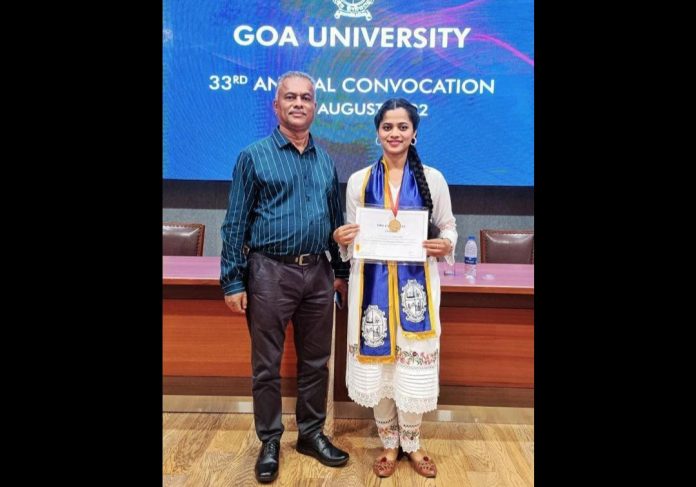
Sibga Yusuf Shaikh, a resident Valpoi town in Goa, has excelled at University by winning the Gold medal in her Bachelor of Engineering (BE) in (Elections & Telecommunication).

Sigba, a student of the Don Bosco college, Maragao, has scored 86.6% and received first rank at the Goa University to bag the Gold medal

She was felicitated on 26 August at the hands of Governor Shridharan Pillai in Goa University campus during the 33rd Annual convocation ceremony.

Speaking with Muslim Mirror Sibga said that it was her father’s dream to see her as a doctor or an engineer.

“I couldn’t get seat in MBBS so I chose to become an engineer and started giving my 100% to studies and Alhamdulillah got excellent results,” she said.

“I used to study 4 to 5 hours daily, going to Margao (about 45 km) to attend college daily was tiresome and time consuming but when we are committed to studies it becomes easier,” she added.

Sibga hails from Valpoi town of Sattari which is located in North Goa district. She is believed to be the first girl from entire Sattari Taluka who received a gold medal at the Goa University in engineering faculty.

Father of Sibga,Yusuf Shaikh, who is transporter felt very proud and said their dream has come true.

Head Master of Unity High school Mr.Ashraf Ali Khan said that he is proud and happy to learn that the ex student of the school has received gold medal for having stood first in B.E. at Goa University.

Ashraf said, “She was indeed a bright student during her school days and performed well in all fields.”

“Sibga was found well disciplined and sincere, established a good rapport with teachers and fellow students. I wish all the very best in her career,” he added.

Sibga was felicitated by SIO recently for her achivement. She is now planning to pursue masters degree abroad.

source: http://www.muslimmirror.com / Muslim Mirror / Home> Positive Story / by Imran Inamdar / September 03rd, 2022

Meet Haji Shariatullah who was source of inspiration for freedom fighters

BRITISH INDIA:

His preachings and Farazi movement not only helped the people in fighting against the anarchy, but also provoked the desire for freedom among them

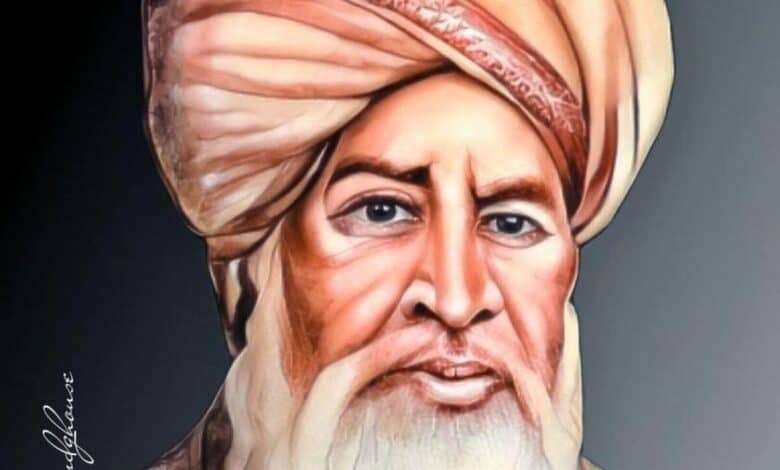
 Haji Shariatullah

Haji Shariatullah, who militantly led Farazi Movement that stood as a source of inspiration for several revolutionaries in the Indian Freedom Struggle, was born in 1780 in Bahadur / Banderlakola village, Faridpur district in Bengal. His father Abdul Zaalib was a weaver.

When Haji Shariatullah was 18 years old, he went on a pilgrimage to Makkah, where he studied spiritual scripts extensively and became a scholar.

In Makkah, Haji Shraiathullah met Syed Ahmed Barelwi, the founder of the Wahabi movement and the warrior Syed Mir Nisar Ali (Titu Mir) who added militancy to the Wahabi movement in India. The trio decided their path of movement before leaving for India. As a result of their decisions, Haji Shariatullah reached Faridpur in 1802.

After returning to the motherland, he settled in Nawabari Village near Dhaka (presently the capital of Bangladesh). While imparting spiritual knowledge, he used to encourage the people towards the movement to emancipate the country from the yoke of British Raj. His movement was known as the ‘Farazi Movement’ and his followers were known as ‘Farazis’ in the history.

When he travelled extensively in Bengal, he saw the woes of peasants and artisans who were being exploited by the officials of the East India Company, Zamindars and the Mahajans. Haji Shariathullh decided to liberate the people from these problems and took to the path of revolution. He garnered support from the farmers, artisans and different classes of people. Haji Shariathulla fought on behalf of the people, against the English rulers, Zamindars and English plantation owners and succeeded several times.

As Shariatullah was very cautious in legal matters, the Courts and the laws could not trouble him. Haji Shariatullah’s preachings and Farazi movement not only helped the people in fighting against the anarchy, but also provoked the desire for freedom among them. Farazi movement was active for about half a century and later it continued to influence the freedom movement for another half a century. Haji Shariatullah, the guiding light of the Farazi movement, passed away in 1839.

Syed Naseer Ahamad is a Telugu writer and journalist who has written several books on the role of Muslims in the struggle for the freedom of India. Many of his books have been translated into other languages. He can be contacted at naseerahamedsyed@gmail.com and cellphone number 91-9440241727.

source: http://www.siasat.com / The Siasat Daily / Home> Opinion / by Syed Naseer Ahamed / posted by Sameer / September 02nd, 2022

Israil Mansuri: From Mukhiya to a Minister

Mathurapur, Patahi (Muzaffarpur District), BIHAR :

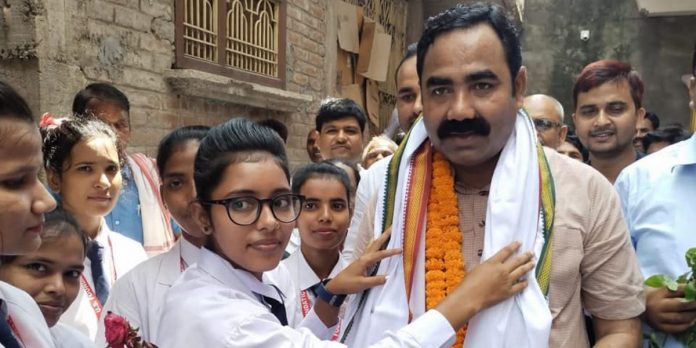
The new information technology minister of Bihar Mohammad Israil Mansuri belongs to a socially backward Dhuniya community.

Mohammad Israil Mansuri. | Photo: Facebook/Israilmansuriofficial

Patna (Bihar) :

Mohammad Israil Mansuri, a Rashtriya Janata Dal (RJD) MLA is the new minister of Information Technology in the government of Bihar. 

Mansuri, 46, belongs to the Dhuniya community and uses Mansuri as a surname. In Bihar, the Mansuris are primarily involved in quilt making. He is considered to be the first in his community to become a minister in the government. 

Mansuri started his political career in 2001 as a Mukhiya (village head). Though he calls himself a “servant of all communities,” in political terms he is a Pasmanda (socially backward). 

Mansuri completed his early education in his village Mathurapur, Patahi in the Muzaffarpur district. He studied up to I.Sc. and later joined politics.

His father Mohammad Usman does not have prior experience in politics and his wife Zubaida Khatoon is a homemaker. His only daughter Neha Tarannu is studying Unani medicine. Mansuri used to work with his father in litchi gardens and at his grocery shops. He is the third among six siblings of four brothers and two sisters. One of his brothers runs a fruit shop while the other is a teacher. He wanted to be a teacher but could not clear the main examination in 1994 while he had also passed the preliminary test for T.C. in Railways after passing his 12th board examination the same year. 

He first joined Nitish Kumar’s party Janata Dal in 1996 and was part of the party till Kumar joined hands with the Bharatiya Janata Party in 2017. He resigned from JD (U) and joined RJD.

Talking to TwoCircles.net, Mansuri thanked the Almighty and his party leaders Lalu Prasad and his son the deputy chief minister of Bihar Tejaswhi Yadav for choosing him to be a minister. “For me being a Mukhiya too was a big dream. Then in 2020, I got a ticket from RJD and got elected as an MLA in my first attempt from the Kanti seat. I was extremely surprised when I got a call to take the oath as a minister. It seems that my struggle in politics has impressed my leaders Lalu and Tejashwi,” he told TwoCircles.net. 

“To struggle and strive for something comes naturally to me. I studied in a school where we had to take our Bora (Jute bag used as a mat) and did not have a pen and notebook but slates to write on. I used to cycle 10 to 15 kilometres to bring the grocery items for our shop while I was in school. As I had an interest in social work, I got a chance to meet people. Though I come from the Mansuri community, my popularity in all communities is equal,” he said. 

Mansuri was caught in controversy soon after he became a minister. He travelled with the chief minister Nitish Kumar to the Hindu holy city of Gaya as he was the in-charge minister of that district. When he entered the Vishnupad temple accompanied by Kumar, a huge controversy erupted as “non-Hindus were not allowed to the sanctum sanctorum of the temple. “I used to visit all places of worship without caring for the religion. I was not made aware of the restriction at that temple. I entered without any intention to breach the rule.”

When asked what his focus would be as a minister of the IT department, he said, “IT is a fast-changing sector. We would try to keep our state updated in this field. We would also see how many jobs we can provide to the youths from our department as this government aims to give ten lakh jobs.” He checks his emails and runs his Facebook page by himself and has his own website.

All India Pasmanda Muslim Mahaz President and former Rajya Sabha member Ali Anwar told TwoCircles.net that as Mansuri belongs to Pasmanda Biradari his election as MLA and now elevation to a minister is a great morale booster for the downtrodden section of the Muslim community. “Lalu and Tejaswhi took the right decision to induct Mansuri as a minister and many more such steps are needed for the society,” he said.  

Former Director of Jagjivan Ram Institute of Parliamentary Studies and Political Research – Srikant sees it as a necessary step to bring upward mobility to the people who belong to the lower strata of society. “Since Mansuri belongs to the most backward section of the society his empowerment in politics is in accordance with the theory of Ram Manohar Lohia and Mahatma Gandhi,” Srikant said. 

Srikant added that it was a time taking process to empower the Pasmanda section but a positive step has been taken. 

www.israilmansuri.in

Sami Ahmad is a journalist based in Patna, Bihar. He tweets at @samipkb

source: http://www.twocircles.net / TwoCircles.net / Home> Careers / by Sami Ahmad, TwoCircles.net / August 30th, 2022

Renowned historian and academician Prof. B Sheikh Ali passes away in Mysuru

Mysuru, KARNATAKA :

pix: facebook.com

Mysuru:

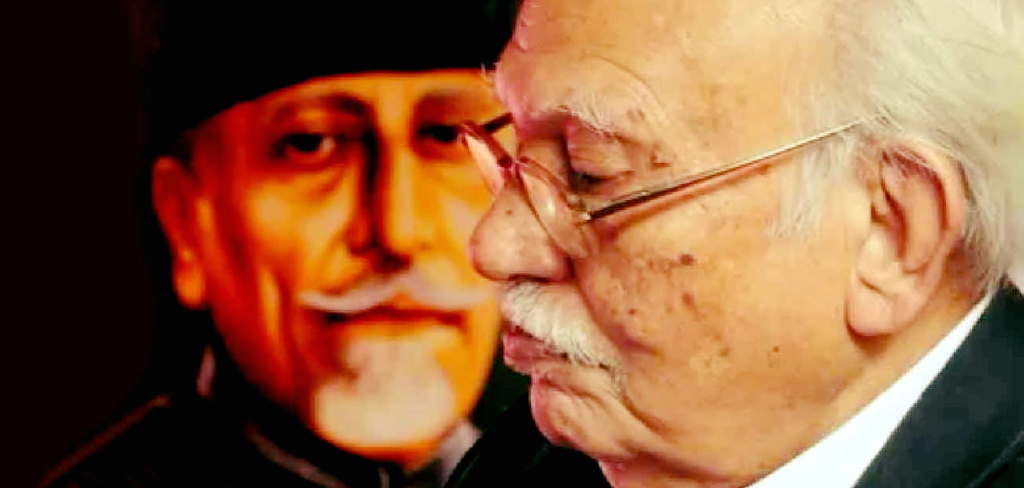
Prof B Sheikh Ali, a veteran historian, academician and former Vice-chancellor of Goa and Mangaluru Univeristiy  has passed  away at a private hospital in the city on Thursday. He was 98.

He was a resident of third Cross, seventh main, Saraswatipuram in the city.

He is survived by his son, daughter and relatives and friends. The mortal remains will be taken to Muslim Hostel, Saraswatipuram, Mysuru for Deedar, followed by burial at main Khabrasthan behind Mysore Jail at Tipu Circle.

Sheikh Ali, B was an eminent historian and his contribution to the theory of history and its application to the ground realities of Karnataka is marvelous.

He was a student of University of Mysore and retired from the same institution as a professor of History.

A brief  profile

Academic Distinctions

1. B.A. (Hons.) of Mysore University, I Rank, Gold Medalist, 1945.
2. MA. II Rank, Mysore University, 1946.
3. Ph.D., Aligarh Muslim University, 1954.
4. Ph.D., London University, 1960.
5. General President, Indian History Congress, 47th session, 1986.
6. President, Indian History Section, XXVIII International Congress of Orientalists, Canberra, Australia, 1971.
7. Founder President of Karnataka History Conference.
8. President, South India History Congress, 1985.
9. Delegate to the International Seminar at Ankara, Turkey, 1982.
10. Delegate to the International Seminar at Sofia, Bulgaria, 1986.
11. Delegate to the International Seminar, Moscow, Soviet Union, 1989.
12. Delegate to the International Seminar at Ras-al-Khairna, UAE, 1990.
13. Invited as Consultant to set up Indian Studies Departments and to teach at the University of Georgia, U.S.A. 1976-7.
14. Author of over 100 papers and 40 books.

Awards Conferred

1. Golden Jubilee Award of Mysore University for research in Humanities and Social Sciences.
2. Rajyotsava award of Karnataka State as Distinguished Educationist.
3. Mythic Society of India Award as Distinguished Historian.
4. Maulana Jauhar Award, 2003.
5. Sir Syed Award by American Federation of Muslims of Indian Origin (AFMI) -2004.
6. Canara Bank Award.
7. D.Litt. (Han. Causu) Kannada University, Hampi, 1998.
8. D.Litt. (Hon. Cause) Karnataka State Open University, Mysore.
9. D.Litt. (Han. Causa) Tumkur University, Tumkur.
10. D.Litt. (Han. Causa) University of Mysore, Mysore.
11. Government of Karnataka Award for Social Service.
12. Al-Ameen All-India Community Leadership Award, 2008.

Membership of Prestigious Bodies

1. Member, South and West Asian Regional Branch of the International Council of Archives, New Delhi.
2. Member of the Review Commission of the Karnataka Universities, Bangalore (1992-1994).
3. Member, Indian Historical Records Commission, New Delhi.
4. Member, All India Educational Movement, New Delhi.
5. President of the Cell to draft a project for a new University for the Muslim, New Delhi.
6. Former Member, Dr. Zakir Hussain Memorial Trust, New Delhi. (Prime Minister of India is its Chairman).
7. Member of the Value-Orientation of Education Committee, Planning Commission, New Delhi.
8. Founder Vice-Chancellor of two new Universities, Mangalore and Goa.

Abroad Tours

Great Britain, France, Germany, Switzerland, Portugal, Soviet Union, United States of America, Canada, Turkey, Egypt, Saudi Arabia, United Arab Emirates, Australia, Malaysia, Brunei and Singapore.

Social and Educational Activities 

As the Founder President of Sultan Shaheed Educational Trust, Mysore he established the following institutions.

a) Deeniyat Madrasa : Ghousianagar, Mysore.
b) Belagodu Abdul Sattar Nursery School: Ghousianagar, Mysore.
c) Sultan Shaheed Lower Primary School: Urdu Medium, Ghousianagar, Mysore
d) Sultan Shaheed Higher Primary School: English Medium, Ghousianagar, Mysore.
e) Sultan Shaheed Women’s Tailoring Centre: Ghousianagar, Mysore.
f) Sultan Shaheed Women’s Craft Centre: Ghousianagar, Mysore.
g) Sultan Shaheed Clinic for Women and Children (Charitable): Ghousianagar, Mysore.
h) Azad National Nursery School: Radhakrishna Nagar, Mysore.
i) Azad National Lower Primary School: (Kannada Medium), Radhakrishna Nagar, Mysore.
j) Maulana Azad Girls High School: (English Medium), Radhakrishna Nagar, Mysore.
k) Maulana Azad B.Ed., College: Radhakrishna Nagar, Mysore.
l) Maulana Azad D.Ed., College: Radhakrishna Nagar, Mysore.
m) Maulana Azad AFMI PUC College: Radhakrishna Nagar, Mysore.
n) Maulana Azad Hostel for Girls: Radhakrishna Nagar, Mysore.
o) School for Challenged Children: Ghousianagar Mysore.

He was president of Mountain View chain of institutions in Chikmangalur, Karnataka, where in a sprawling campus of 35 acres of land classes run from Nursery to Degree level with 2500 children with facilities of Hostel both for boys and girls.

As the President of Muslim Education Society in Mysore, he established a dozen Nursery and Primary Schools which have now been upgraded to First grade College level.

He was also president of Central Muslim Welfare Council, Mysore, and  instituted Micro-Finance Credit Scheme benefiting hundreds of poor Muslim women and their families, together with coaching classes both for High School and PUC classes.

He was Editor-in-Chief of Premier Urdu print media of Karnataka, Daily SALAR and Weekly SALAR.

As the President of the New Muslim Hostel Mysore, he completed the following projects:

a. Utility Block
b. Dormitory Block
c. Prayer Hall
d. Commercial Complex, 1st Main, Saraswathipura, Mysore, facing western side.
e. Another Commercial Complex on the same road facing eastern side.

Publications :

He authored  following books:

1) A Leader Reassessed, Life and work of Sir Syed Ahmed Khan: Mysore, 1999.
2) Abul Kalam Azad, Vision and Action: Hyderabad, 2008.
3) Tipu Sultan, a Study in Diplomacy and Confrontation: Rao and Raghavan, Mysore, 1982.
4) Tipu Sultan: National Book Trust of India, New Delhi, 1972.
5) Tipu Sultan, a Great Martyr: Bangalore University, 1993 (Edited).
6) British Relations with Hyder Ali: Rao and Raghavan, Mysore, 1963.
7) Dr. Zakir Hussain, Life & Times, a Comprehensive Biography: Vikas, New Delhi, 1991.
8) Education and National Development: Translation of Dr. Zakir Hussain’s Talimi-Quthbat: New Delhi, 1993.
9) A Great Teacher: Life & Work of Dr: Zakir Hussain: Prasaranga, Mysore, 1997.
10) Makers of Indian Literature series, Dr. Zakir Hussain: (Co-author with Khursheed Alam Khan), Sahitya Akademi, New Delhi, 1991.
11) History: Its Theory and Method: Macmillan Company of India, 1978.
12) Islam, A study in Cultural Orientation: Macmillan Company of India, New Delhi, 1982.
13) Essence of Islam: Mysore, 2004.
14) Comprehensive History of Karnataka: Vol. IV & V Hampi, 1998.
15) Gangas of Talkad: Volume under History of Karnataka, Prasaranga, University of Mysore, Mysore, 1975.
16) The Hoysala Dynasty (Edited): Prasaranga, University of Mysore.
17) A Short History of World Civilization; Prasaranga, University of Mysore.
18) Essentials of Indian Culture Prasaranga University of Mysore.
19) History of Modern Asia: Mysore, 1976.
20) History of South India: Prasaranga, University of Mysore, 1977.
21) Approaches to Harmony, Mysore University, 1994 (Edited).
22) Goa Wins Freedom: Reflections and Reminiscences: Goa, Daman and Diu Silver Jubilee Celebration Volume, Edited, Goa University Publication Series, Goa University, Bambolim, Goa, 1986.
23) Javeed Nama of Allama Iqbal: (English Translation), Knowledge Society Publications, Mysore, 2008.
24) Moulana Jalaluddin Rumi: Knowledge Society Publications, Mysore, 2008.
25) Imam Ghazali: Knowledge Society Publications, Mysore, 2009.
26) Hafiz-e-Shiraz: Knowledge Society Publications, Mysore, 2009.
27) Shaikh Sa’di: Knowledge Society Publications, Mysore, 2009.
28) Umar Farooq: Knowledge Society Publications, Mysore, 2010.
29) Moulana Altaf Hussain Hali: Knowledge Society Publications, Mysore, 2010.
30) Mirza Asadullah Khan Ghalib: Knowledge Society Publications, Mysore, 2011.
31) History of Bahmani and Bijapuri Rulers: Mysore Book House, 2011.
32) My life, (Autobiography): Knowledge Society Publications, Mysore, 2009.

Urdu Publications

1) Hind ki Maya Naz Hastiyan: Urdu, Development Bureau, New Delhi, 1992.
2) Roshan Nuqoosh : Tamilnadu Urdu Publications, Madras, 1995.
3) Irtikh-e-Kayinath aur Insan: Urdu Development Bureau, New Delhi, 1998.
4) Alam-e-Islam-ke-Jawahar-pare: Urdu Vols. Dar-ul-Umoor, Mysore, 2004.
5) ilm-e-Tarikh kay Mukhtalif Goshe : Dar-ul-Umoor, Mysore, 2008.
6) Armughan-e-Salar : Salar Publications, Bangalore – 2008.
7) Anwar-e-Iqbal: Salar Publications, Bangalore – 2011.
8 Noor-e-Baseerath: (26 Special Numbers) (1997-2008).

source: http://www.muslimmirror.com / Muslim Mirror / Home>Obituary / by Muslim Mirror Staff / September 01st, 2022

Al-Kareem School SSLC Toppers Feted

Mysuru, KARNATAKA :

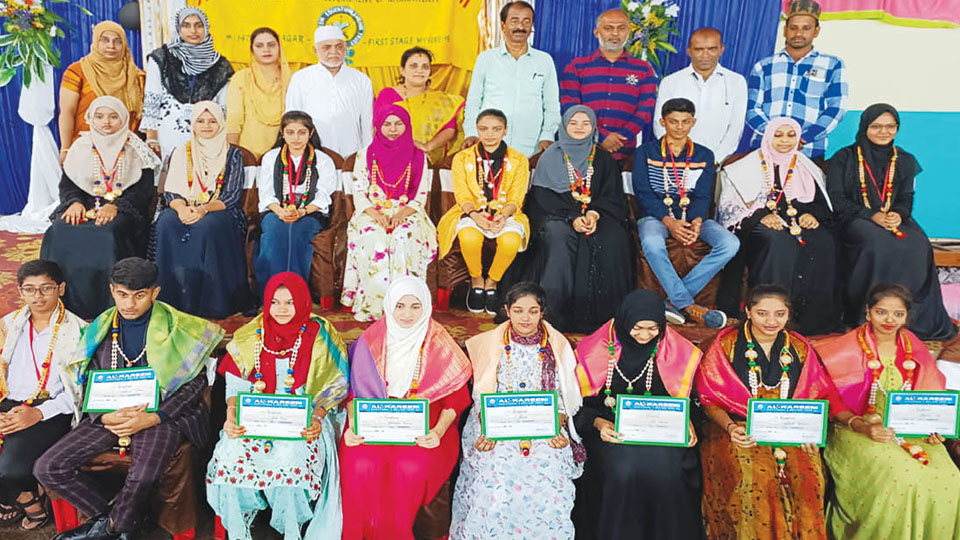
The SSLC students of Al-Kareem School, Rajivnagar, who secured more than 500 marks in board exams, were felicitated by former MLA Vasu and ex-Mayor Pushpalatha Jagannath recently.

Others seen are ex-Corporator Suhail Baig, social worker Tousif Chandan, Founder of Al-Kareem School Alhaj Hussaini Baig, School Chairman Kaleemulla Baig and Head Mistress Yasmeen Sultana.

source: http://www.starofmysore.com / Star of Mysore / Home> PhotoNews / August 30th, 2022

Super Featherweight boxer Md Azahar crowned WBC India champion

NEW DELHI :

pix: asianboxingcouncil.com

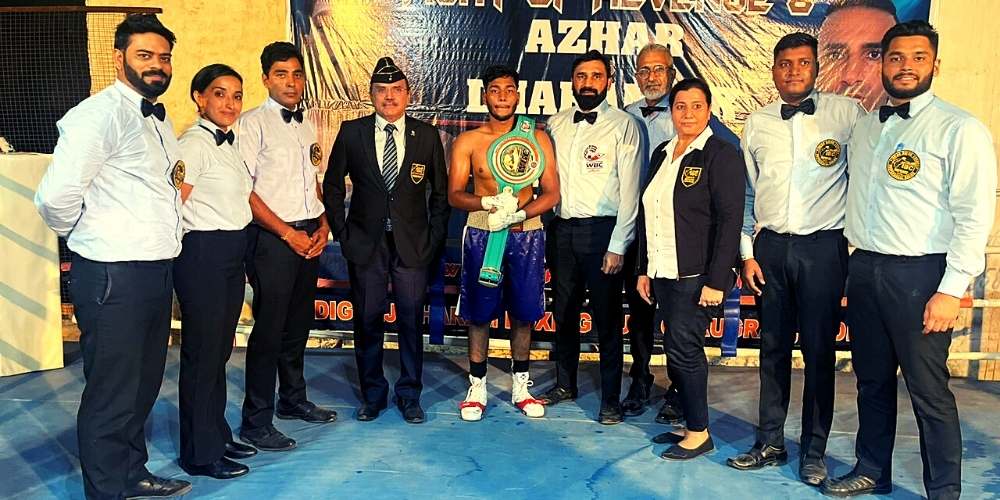
Delhi boxer Md Azahar was crowned the WBC India champion in the super featherweight division after registering a unanimous win over Dharamvir Singh.

The judges scored the fight 79-72, 76-75 and 79-72 in Azahar’s favour after 32 minutes of boxing on Sunday night.

The 25-year-old Azahar lost the first round on all three judges’ cards but went on to win the next seven rounds convincingly.

Azhar, proved to be the better technical fighter before a partisan crowd. He now has a record of five wins and as many losses with four knockouts to his name.

“I was comfortable, just sticking to doing what I do best,” Azahar said.

“The game plan was to hit and not get hit. I fought a good smart fight. He couldn’t hit me with any of his best shots.” Dharamvir, on the other hand, has a record of seven wins and four losses. His previous loss had come over three years ago before the COVID-19 pandemic.

WBC India Champion - Md Azahar
pix: indianboxingcouncil.com

The Indian Boxing Council-sanctioned fight night witnessed seven other fights.

In an exciting four round cruiserweight contest, Jaskaran Singh from Punjab won a points decision over debutante compatriot Harsamardeep Singh.

Middleweight Shiva won a close six round bout against Karanjeet Singh.

Shiva was making a comeback after two years and looked rusty in the early rounds. Karanjeet, despite his record of four losses, looked comfortable and even took the second and third rounds. But Shiva, hung on. The final scores were 58-56, 58-56, 58-56.

source: http://www.sportstar.thehindu.com / SportStar / Home> Boxing / by PTI text) / pix: sources as credited above / August 29th, 2022

Canadian city Markham names street after A.R. Rahman

Chennai, TAMIL NADU :

The celebrated music composer says the honour has made him more committed to working hard.

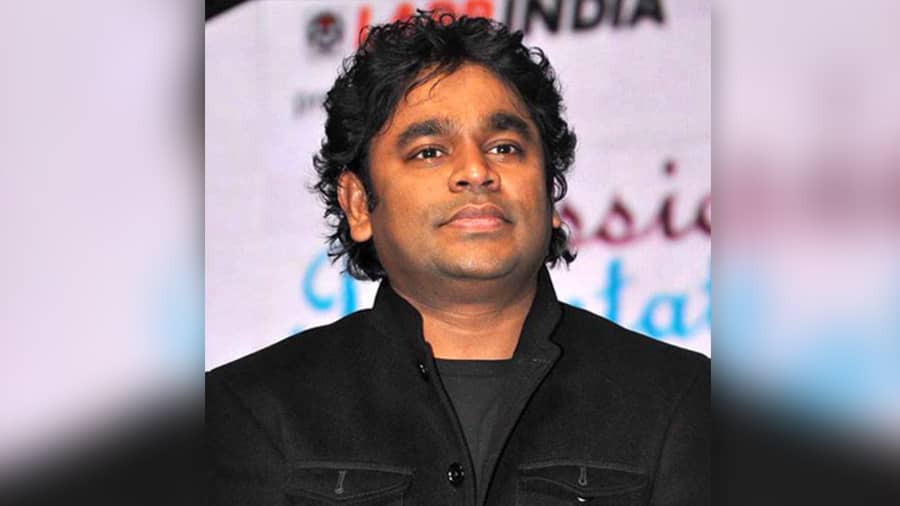
After Markham, a city in Canada, honoured A.R. Rahman by naming a street after him, the celebrated music composer said he now feels more committed to working hard and inspiring people.

Rahman, who completed three decades in the Indian film industry earlier this month, penned a note of gratitude for the authorities of Markham in Ontario, Canada, on Twitter.

“I never imagined this ever in my life. I am very grateful to all of you, the Mayor of Markham, Canada (Frank Scarpitt) and counsellors, Indian Consulate General (Apoorva Srivastava) and the people of Canada…” his tweet reads.

“I feel like this gives me immense responsibility to do much more and be inspiring, not so get tired and not to retire yet. Even if I get tired I’ll remember that I have more things to do, more people to connect, more bridges to cross,” the multiple award-winning musician said.

The 55-year-old, currently in Canada for his musical tour, also shared pictures from the inauguration ceremony on the microblogging site on Sunday. The city of Markham had announced that a street would be named in Rahman’s honour back in November 2013.

“The name AR Rahman is not mine. It means merciful. The merciful is the quality of the common God we all have and one can only be the servant of the merciful. So let that name bring peace, prosperity, happiness and health to all the people living in Canada. God bless you all,” he added.

Rahman also thanked the people of India and his collaborators. “I want to thank my brothers and sisters of India for all the love. All the creative people who worked with me, who gave me the inspiration to rise up and celebrate hundred years of cinema; with all the legends included. I am a very small drop in the ocean,” the composer said.

His upcoming releases include films such as “Cobra” and “Ponniyin Selvan: I”.

source: http://www.telegraphindia.in / The Telegraph Online / Home> Entertainment /by PTI / New York / August 30th, 2022