The recipient of Padmashri award for communal harmony had earned the sobriquet of ‘Karnataka’s Kabir’
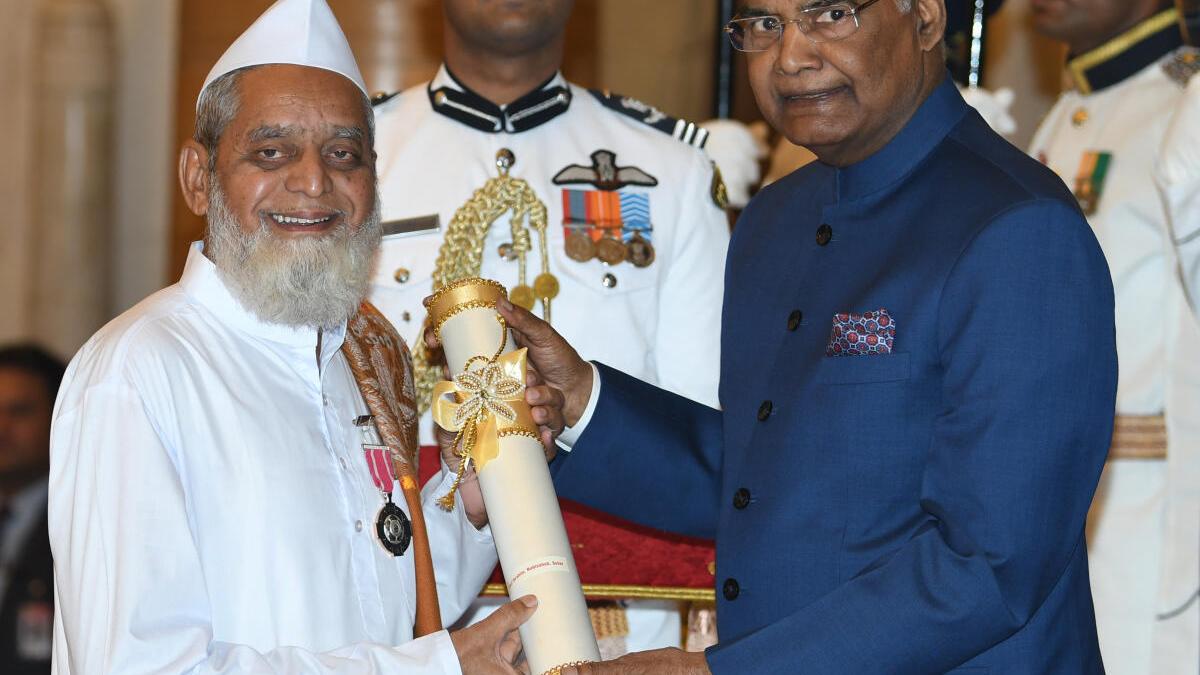
‘Karnataka’s Kabir’ Ibrahim Nabisaheb Sutar is presented the Padmashri award by President Ram Nath Kovind at Rashtrapati Bhawan, in New Delhi on April 2, 2018.
Ibrahim Sutar, polyglot folk singer, who toured India spreading the message of Hindu-Muslim unity, died in Mahalingpur in Bagalkot district on February 5. He suffered a massive heart attack around 6.30 in the morning. He died a few minutes later, family sources said. He was 82. He leaves behind his wife, son and two daughters.
The recipient of Padmashri award for communal harmony had earned the sobriquet of ‘Karnataka’s Kabir’.
The founder of ‘Bhavaikyate Bhajana Mela’ began his career as a Harikathe bhajan singer going around villages and towns. He regaled audiences with stories from Hindu and Islamic scriptures always leaving with a message of harmony, and need for ethics in personal life. He sang songs and gave lectures, quoting from multiple scriptures without the need to read from notes. He was equally well-versed in Kannada and Urdu.
In his later life, he emerged as a public speaker, visiting schools, colleges and Lingayat mutts to speak on vachana and dasa literature. He was honoured with the Karnataka Rajyotsava award in 1995, and the Padmashri in 2018.
Born in a poor weaver family in Mahalingpur, he dropped out of primary school to work as an assistant to a weaver. He developed a spiritual bent of mind early in life. He began attending lectures in the Sri Basavananda Swami mutt and participating in bhajans in Sadhu Maharaj temple. He was a member of the mosque committee that went around villages, asking the faithful to wake up early during the month of Ramzan. He studied Hindu and Islamic scriptures with equal zeal and developed a team of bhajan singers. The ‘Bhavaikyate Bhajana Mela’ performed across Karnataka and Maharashtra.
A routine performance was in the question–answer format interspersed with songs of dasa saints and vachanas . One of the team members came up with a question that sounded very ordinary, but had deep spiritual undertones, like: ‘Who is important in life – god or guru?’ Sutar used anecdotes from the Ramayana and Mahabharata, Islamic scriptures and stories from the life of prophets to give his opinion, that was directed at the audience, rather than the team member who kept asking questions.
source: http://www.thehindu.com / The Hindu / Home> News> India> Karnataka / by Special Correspondent / February 05th, 2022
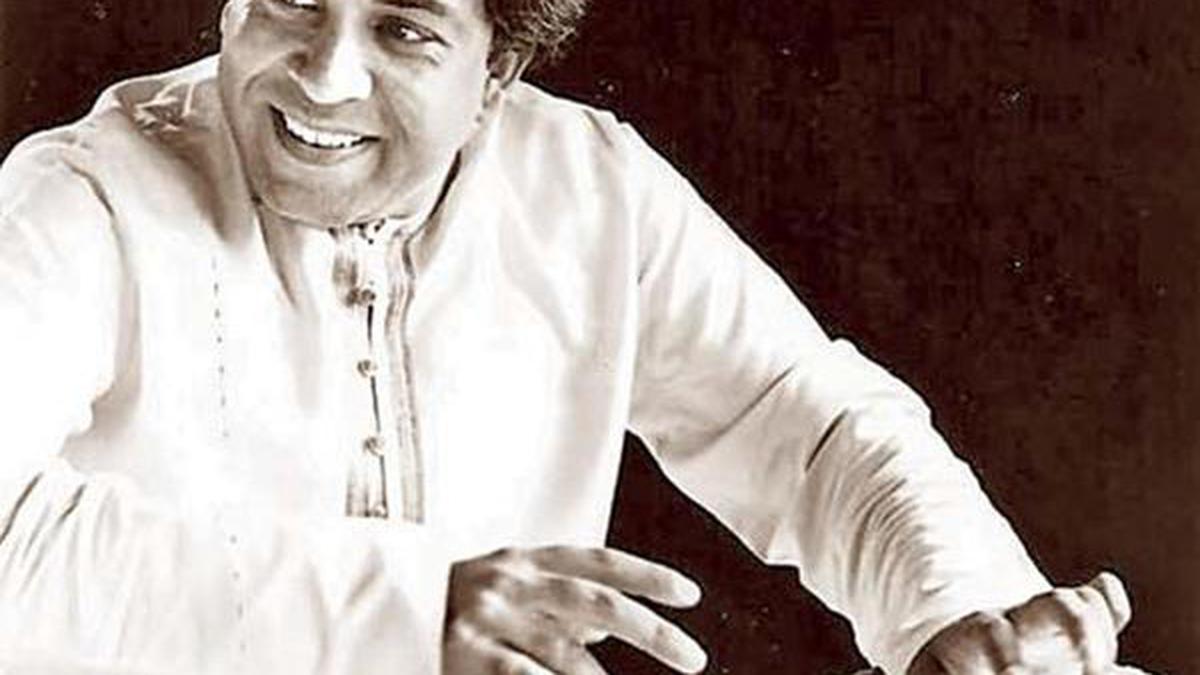
Much before I became an admirer of Ustad Zakir Hussain, I was a devoted fan of Ustad Shafaat Ahmed Khan. The reason was simple. Growing up in New Delhi, I had the chance to see the tabla maestro regularly when I was a teenager, often with luminaries like santoor monarch Pandit Shivkumar Sharma, flautist Pandit Hariprasad Chaurasia and sarod maestro Ustad Amjad Ali Khan.
After moving to Mumbai, I continued to attend Khan’s shows, and interacted with him twice as a music journalist. It came as a huge shock when he passed away on July 24, 2005, at the untimely age of 51, after a bout of hepatitis. Among classical music lovers, memories of Khan’s music remains fresh. Coming Wednesday, on his 14th death anniversary, Pancham Nishad is organising a tribute concert at the Veer Savarkar auditorium, Shivaji Park. It will feature vocalist Sanjeev Chimmalgi and tabla maestro Swapan Choudhuri, whose performance was a highlight of the Ustad Allarakha birth centenary celebrations on April 29.
I first heard Khan perform in 1977 when I was 14, at the Shri Ram Centre, New Delhi. He was accompanying Shivkumar Sharma on Raag Bhoopali. It was the first time I heard the santoor and the experience was magical. I didn’t understand the technicalities, but was totally enraptured. Both Sharma and Khan became my heroes. The same show also featured violinist N. Rajam and vocalists Rajan and Sajan Mishra, with different tabla accompanists. So imagine my joy. I told my parents to take me to more concerts, and very often, Khan would perform.
Senior aficionados often talked about Khan representing the Delhi gharana, and Hussain being associated with the Punjab school. It made no difference to me, until I started writing about them. I also had the good fortune of seeing tabla players like Kishen Maharaj, Anindo Chatterjee and Suresh Talwalkar perform.
My first meeting with Khan took place in the early 2000s, when he was to perform at the Gunidas Sangeet Sammelan at Nehru Centre, Worli. While the interview was formal, he was delighted to see an ardent admirer like me. “People normally try to find fault in my technique. You are different,” he had joked. The second encounter was at Sharma’s birthday celebrations in 2004. It was a select gathering of about 25 people. This was where I discovered what a fantastic mimic Khan actually was.
He narrated hilarious incidents about musicians. One of them was about a senior instrumentalist who was yelled at by an elderly foreign lady at the Amsterdam airport because he was humming the notes of Raag Bageshri a tad loudly.
When Sharma pointed out that he was mimicking those not present at the party, prompt came the reply, “If I mimic you, you won’t let me play at your shows. My career will finish,” stated Khan clearly.
source: http://www.thehindu.com / The Hindu / Home> Entertainment> Music / by Narendra Kusnur / July 18th, 2019
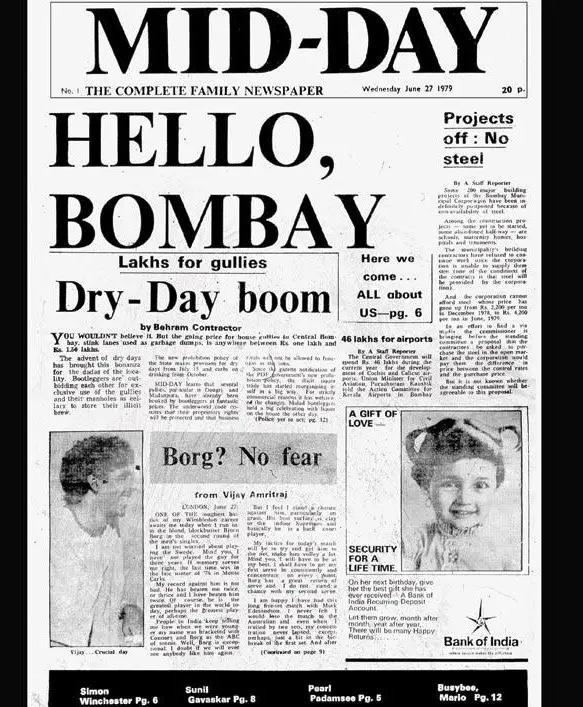
Inquilab and Mid-Day founder Abdul Hamid Ansari is an inspiration not just for journalists but millions of youngsters … A special report by Siraj Ali Quadri.
Indian journalist and Muslim nationalist Abdul Hamid Ansari founded Inquilab, an Urdu daily in Mumbai in l937. The newspaper soon became a landmark in Urdu journalism which caught the attention of Muhammad Ali Jinnah, the founder of Pakistan. But when Jinnah asked Ansari to come to Karachi to publish the newspaper in the new country, Ansari said that he would prefer to live in India like the many million Muslims who would rather stay in the country than join Jinnah. Those who joined Jinnah undoubtedly left everything behind. Some flourished while others got established. But that’s another story, which has never ended since l947.
Today’s story is about the veteran journalist, publisher and businessman Khalid A.H. Ansari, son of Abdul Hameed. After passing out from St. Xavier’s in Mumbai, Khalid did his master’s at Stanford University in the US.
Khalid returned to Mumbai to establish Sportsweek, a weekly sports magazine, which became a huge success soon after its launch. The magazine’s immediate success can be attributed to the fact that its founder was himself an excellent sportsman and did a great job with the magazine, in addition to his father’s paper Inquilab.
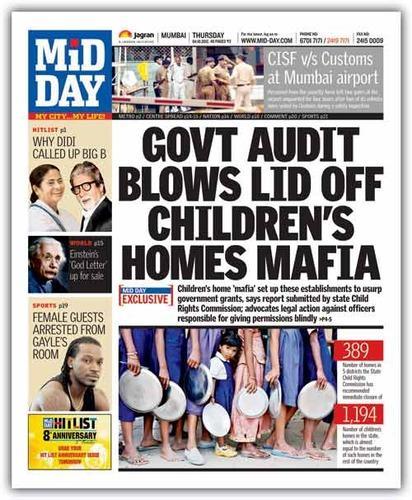
Meanwhile, the idea came to launch India’s first daily tabloid, Mid-Day, which he modelled in many ways after the English tabloids from Fleet Street. During the planning phase of their new venture, he spent hours discussing it with staff and mulled over its format to ensure success, especially since there were already two eveningers in Mumbai, one by The Times of India and the other by the Indian Express. Both suffered from a lack of innovation to attract large numbers of readers. So when Mid-Day appeared with a new face and content, the two old ones just collapsed. Although the ToI eveninger protested the pace of time for a while, it eventually perished as it had already become obsolete.
Mid-Day became a resounding success, with many comparing it to the British Daily Mirror and Daily Mail. However, being an Indian tabloid, it was much quieter and a whole lot more civilized, without the British fondness for nudity and sex, and nonsensical stories of stupidity.
Khalid was helped by his wife, Rukaya. She was very active on the administrative side and contributed to the editorial content and layout, which helped the paper sustain itself in the demanding market of Mumbai. She knew what was going on in the office and in the newspaper that was fast becoming India’s flagship eveninger.
Meanwhile, Khalid accepted an offer to become editor-in-chief of the Dubai-based Khaleej Times, and handed over the paper to his son, Tariq. After a few years in Dubai, Khalid returned to Mumbai and launched Mid-Day in Bangalore and Delhi and a regional Gujarati version for millions of Gujaratis in the country.
He has been involved in various programmes with the Indian government during conferences in Delhi and New York, launching and editing newspapers, and was awarded the Padma Shri in 2001 while continuing to play and write about his old passion, cricket.
Writing about his eveninger, Khalid says, “Mid-Day is a light-hearted, easy-to-read, entertaining, and ‘naughty’ paper that now has a new purpose which is to make work fun. Gives young professionals an entertaining newsbreak. The focus is on young, urban, mobile professionals across India and the company is leaving no stone unturned to engage with them. Today’s workplace’s fast-paced work style and crazy deadlines are full of stress and pressure. Mid-Day as a brand believes in spreading the message of reducing stress and making work fun.”
“What’s on, a host of addictive, fun sections like Hit List Crosswords, Horoscopes, and Fun at Work ensure that the newspaper remains a welcome diversion for young professionals,” he adds.
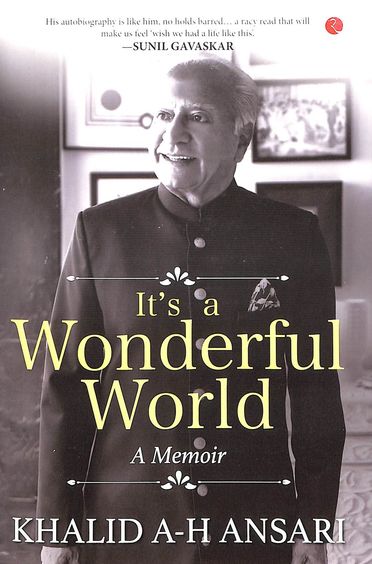
Khalid’s Sportsweek later was shut down with the television boom making it hard to garner advertisements and interest. Khalid has also published his memoir (It’s A Wonderful World) and continues to inspire a stream of journalists apart from various generations to keep the boat afloat and touch new heights.
(The Author is Journalist & associated with Dainik Bhaskar)
source: http://www.asianlite.com / Asian Lite / Home / by Siraj Ali Quadri / October 10th, 2022
Zillur Rahman, a professor, poet and hakim, has established a museum-cum-library in Aligarh to preserve books and artefacts that tell the story of Delhi of yore.
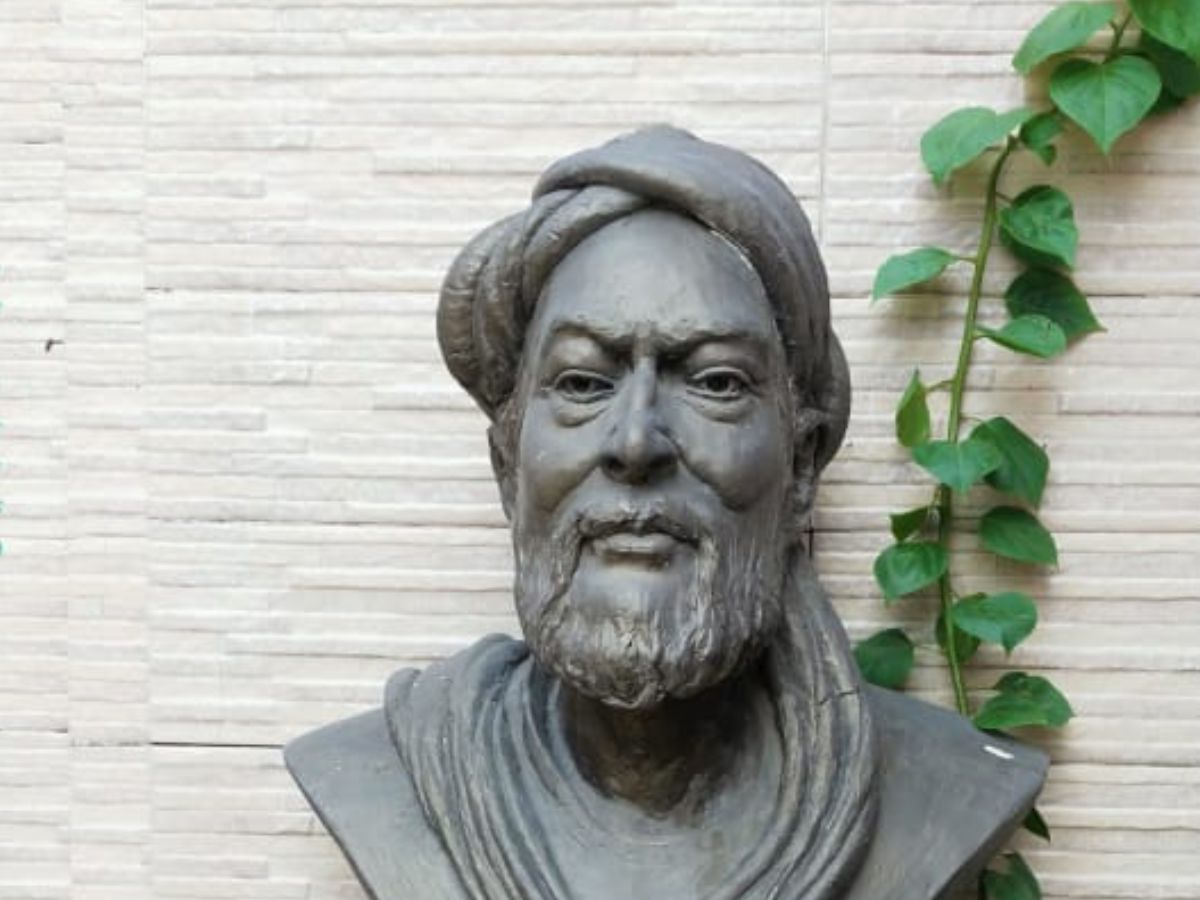
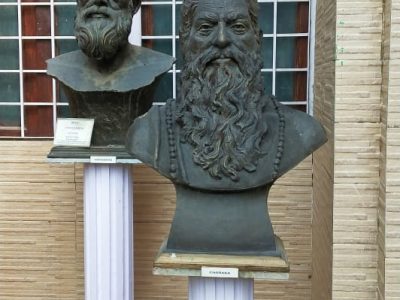
PIONEER: A bust of Ibn Sina, a physician and philosopher, who lived over a thousand years ago, at the Ibn Sina Academy in Aligarh
Nestled in the heart of the city of Aligarh, Uttar Pradesh, is Ibn Sina Academy of Medieval Medicine and Sciences, named after famous scholar of philosophy and medicine Abu Ali Ibn Sina (980 -1037), who lived over a thousand years ago.
Located at Tijara House, the non-profit, non-government and non-political academy was established in the year 2000 by Professor Syed Hakim Zillur Rahman, an academic and a litterateur from Aligarh.
A one of its kind museum and library, it was aimed at encouraging and promoting researches and studies in medieval sciences, especially Ibn-Sina’s, as well as arts, culture, poetry among other subjects.
Notably, Ministry of Ayush, Government of India gave accreditation to the academy in 2004 and promoted it as a Centre of Excellence in 2008. The professor had a mammoth personal library that he had established in 1960s. After Ibn Sina Academy was born, the library became a part of it.
The specialty of this museum lies in its varied collection that includes sofas, crockery, jewels, armours, stamps, mirrors, outfits of princesses, queens and kings as well as turbans worn during battles by historical legends.
The Zillur Rahman Library houses 32,000 rare books and magazines, 1,100 manuscripts apart from paintings, sketches, citations, artefacts and much more.
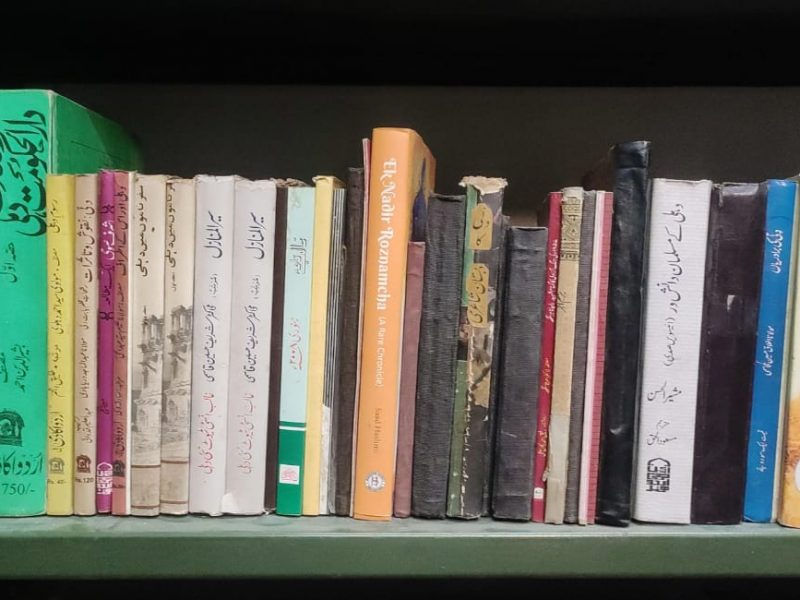
RARE: A collection of books on Delhi
The Delhi connection
There are 7,500 books on Delhi of yore in the library, including on poet Iqbal, dictionaries as old as 150 years, authentic diwaan on Ameer Khusrau, books dating back to 1893, on and by the last Mughal emperor Bahadur Shah Zafar, British Raj–Victorian Era with pictures in lithographs and more.
But considering Delhi is dry without the ‘zikr’ (mention) of the poetic legacy of Asadullah Khan ‘Ghalib’, the library has dedicated a special space for the poet: “Ghalib Study Centre”.
A galaxy in itself, this part has 1,350 rare books in Urdu, Persian, English and Hindi on Ghalib apart from several special issues in different magazines (called risala in Urdu) which are now available only in this museum.
For instance, an important old publication called Sooraj (meaning sun) had special Ghalib edition.
One of the books has illustrations of most of the ghazals he had penned, while in his own Deewan (collection of his authentic shayri) there, Ghalib’s original ghazals had no pictures or illustrations.
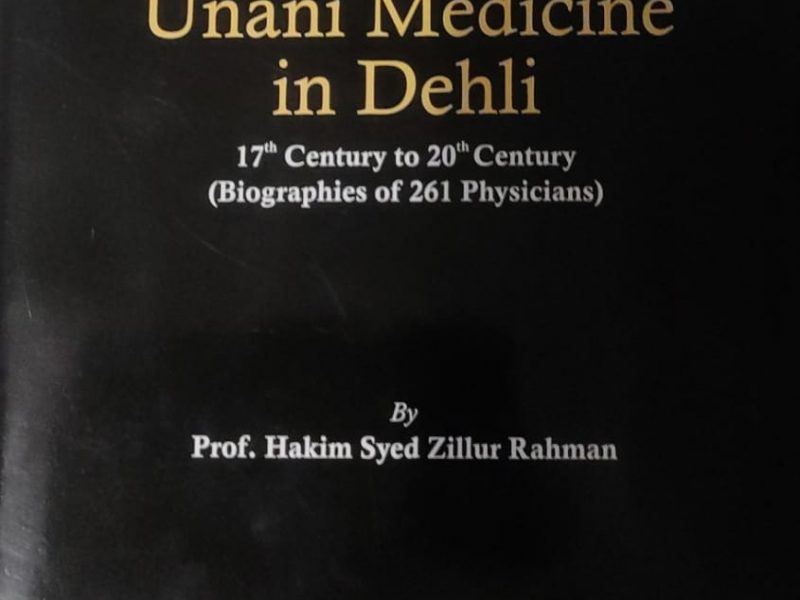
MASTERPIECE: The translation of the book written by Hakim Zillur Rahman
One of the most important collections here is a book by renowned author Shakeel ur Rahman called Mirza Ghalib aur Mughaliyaat, which has illustrations from Muraqqa-i-Chughtai, an illustrated selection of Ghalib’s work by AR Chughtai, a renowned artist of early last century. The illustrations are based on an important topic or issue that the poet raised in his couplet (sher).
Rare books with names like Jihad-e-Ghalib, Ghalib Satrung, Soz-e-Ghalib, his letters in Persian and many more ornate the archive.
Additionally, a book called Naqsh-e-Rung from Pakistan which was brought to India by scholar Urdu litterateur and poet professor (late) Shamsur Rehman Farooqui enriches the book shelves.
Tehqeeq-nama Ghalib, Ghalib’s ghazal in Persian called Ghazaliayat-e-Farsi, Ghalib, few rare and special issues of magazines like Shama, Nuqoosh, Hunoon, Taar-e-Nau, film magazines, Al-Ilm, Shayar, Kaarvaan with special edition on Ghalib are the other charms.
A rare pocket-sized edition on Ghalib is a popular one.
Travels to Delhi
Another section on Delhi consists of travels and trips done in Delhi by the authors, travellers and poets of old times. Rare books like Safarnama Dehli and Sair-ul-Manazir provide an inside view of Delhi in the 18th century.
LEGEND: Bust of a renowned Indian physician Charaka at the academy in a section dedicated to physicians and medicinal plants
Also, over 200 rare books on Delhi’s poets (shayars) in Urdu and important personalities form another gallery here. For instance, there is Aslam Parvez’s award-winning book on Bahadur Shah Zafar, and his another one called Meri Dilli. There is also a book on Hamare Zamane Ki Dehli, Charagh-e-Dilli, Dilli Wale by famous author Salauddin, Aalam mein intekhab-e-Delhi among others.
Rare and significant books on personalities include those on Hakim Ajmal Khan, Sir Ross Masood, former India President Zakir Hussain, Sir Syed Ahmad Khan, Raja Mahendra Pratap and many more.
An entire unit is also devoted to all the journals that came out of Delhi during the War for Independence “and those from late 17th century to beginning of 19th century. The Delhi College was established in 1824, with it, all these journals rose to a great height. These form an enticing collection in the museum,” apprises Aftab Najmi, the coordinator and convener at Ibn Sina Academy.
On enquiring why such a large collection in Urdu finds space here, Professor Rahman adds, “Our own language and culture is much better described only in Urdu and Persian. So, it was very important to have a different section on Urdu to give a peep into what Delhi was in olden times.”
However, countless notable oldest books in English and Hindi on Delhi also enrich the collection on the Capital.
A legacy himself
Professor Zillur Rahman has 56 books to his credit. The subjects are related to Tib (Unani medicine) and Urdu literature. His books on medical sciences with oldest references (100 to 200 years old) are immensely popular. He is also a poet and an ardent admirer of Urdu poets of yore. He has also edited Diwan-e-Ghalib and many books on Urdu shayri. So far, 11 books have been written on him by students from different parts of India and globe in Arabic, Urdu and English. There are two academies, in Meerut and Bhopal, named in his honour. A part of the library has books on Zillur Rahman’s own family and their contribution to academics, medicine, poetry and culture.
For the next generation
On why he decided to make such a rare museum and library under one roof, Rahman says, “I was just a teacher at AMU. I had no money like businessmen to construct roads and hospitals so I decided to build this museum and library to help those who want to study but have neither books nor a place for the same. I want the current generation to know that books on all our glorious histories and personalities were penned in Urdu before 1947.
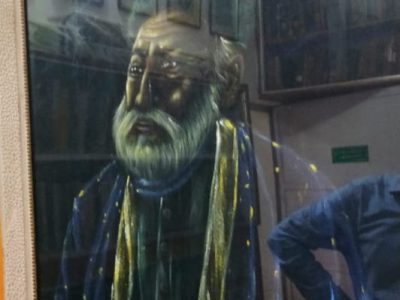
ICONIC: A portrait of Mirza Ghalib at the library, which boasts of rare works on the Delhi-based poet
“So, our generation has to know Urdu to understand their buzurgs (elders) and what charismatic works they had done. Our current generation, which doesn’t know Urdu, is like a blackboard. Anyone can write anything on it and it doesn’t impact them because they are so ignorant of legacies of their own language.”
Professor Rahman has travelled abroad 44 times. He visited Greece, including its capital Athens, Samarkand and Bukhara in Uzbekistan, Spain, Turkey, Germany and other countries.
“I went to Iran 11 times to gather books and study how it has preserved its arts and culture, literature, medicine and environment,” he says adding that children of every country know their mother tongue and can read and write in it.
“India’s children, especially the new Muslim community, is ignorant of its own legacy in Urdu.”
The Ibn Sina Academy has a tremendous collection of Islamic sciences and Islamic medicines. The professor has procured them from across the globe.
“Some are bought, some gifted and some requested and begged for. Hamaare 3,200 hazaar kitaabon mein, Ghalib ka collection jo hamaare paas hai vo duniya mein kisi ke paas nahi hai (No one in the world has the rare collection on Ghalib that we have among our 32,000 books). Even Delhi’s own Ghalib Institute and Ghalib Academy visit us and take photocopies of the rare material they require. We have made our academy work on Delhi’s poets, littérateurs, historical buildings and monuments,” he adds.
Most books, he adds, are from Iran, Samarkand and Bukhara.
“The richest in education, philosophy, medicine and culture is Uzbekistan but it could not present it to the world, the way Iran did.”
Why Delhi in Aligarh?
Why Delhi forms a special section at his library, has its reasons.
“Delhi was always the capital of India, be it during the Mughal, British eras or post-Independence period. So, it has always been not only a melting pot of cultures but also an abode for the best of poets, authors and travellers. The number of academics, authors, sufis, litterateurs, shayars (poets), lovers of arts and music and academic institutions that Delhi had, no other capital in the world has it till date,” he reasons with pride.
To know Delhi better, he suggests books penned by the renowned Dehlvi family.
For instance, there is Dilli jo aik shahar thaa by Shahid Ahmad Dehlvi, who was born in Delhi in 1902.
He wrote extensively on vanishing culture of Delhi which was a symbol of Indo-Muslim culture ruined by violence and blood of the War of Independence. Post Independence, he went to Pakistan and died in 1967.
Waqyaat-e-Darool Hukoomat in three volumes by Bashiruddin Ahmad Dehlvi published from Urdu Academy, Delhi in 1990, and books on 1857 revolution are also there in the academy.
Delhi just got richer by another book by Zillur Rahman — Dilli aur Tibbi Unani which has just come out in Urdu. It is translated in English by Toronto-based Zakaria Virk, titled ‘History of Unani Medicine in Delhi – 17th Century to 20th Century – Biographies of 261 physicians’.
source: http://www.thepatriot.in / The Patriot / Home> Delhi NCR / by Rana Siddiqui Zaman, Delhi NCR / November 15th, 2023
Mir was among 139 Padma awardees announced on Saturday, making him one of only two Padma Shri awardees from Jammu and Kashmir this year
Farooq Ahmad Mir’s 60 years of artistry earn Padma Shri
Srinagar :
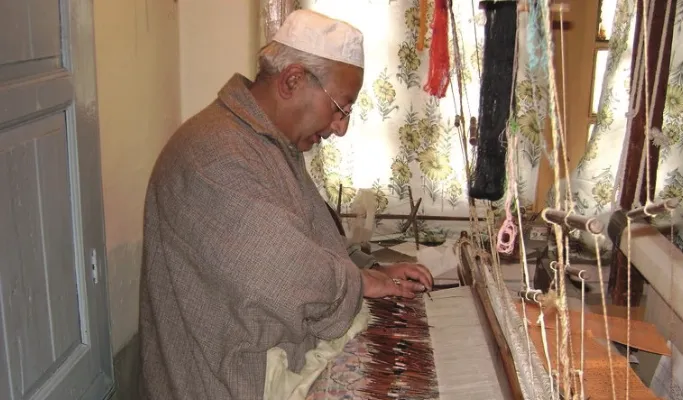
In a heartfelt tribute to the art of craftsmanship, Farooq Ahmad Mir, a master shawl weaver from Srinagar, was conferred the prestigious Padma Shri award on January 25. At 73 years old, Mir embodies the spirit of dedication, having devoted over six decades to a craft that intertwines patience with artistry.
Mir was among 139 Padma awardees announced on Saturday, making him one of only two Padma Shri awardees from Jammu and Kashmir this year.
Starting his journey at the tender age of 10, Mir’s story resonates through generations. “Pashmina artisans require patience, much like education. It teaches us about the intricate nuances of our craft,” he reflects, drawing parallels between learning and weaving. Hailing from a lineage of artisans, Mir has not only preserved but revitalised the Kani shawl tradition, once favored by Mughal, Afghan, Sikh, and Dogra rulers.
Mir’s influence extends beyond his family; he has painstakingly taught the art of Kani shawl weaving to over many individuals in Srinagar’s old city.
“In a world where modern careers are alluring, many aspiring artisans are deterred by societal perceptions and a lack of patience for traditional craft,” he notes. Yet, Mir’s commitment to his heritage has inspired not only his children, skilled weavers in their own right, but countless young men and women in his community.
“Your work should speak for itself,” Mir shares humbly when asked about his relative anonymity in a world that often celebrates flashy accolades over dedication. His contributions, however, haven’t gone unnoticed. He has received multiple national and state awards, including recognition from Prime Minister Narendra Modi himself.
The exquisite Kani shawls, woven using cane needles rather than shuttles, can take between four to eighteen months to create. However, the beauty of this art form is in jeopardy. As younger generations lean towards more modern occupations, the skills required to produce these heirlooms risk fading away. Mir’s tireless efforts aim to ensure this heritage is not lost.
Born into a weaver’s family in Srinagar, Mir’s start was modest. Despite barriers to formal education, he channeled his passion into honing his skills, becoming one of the finest artisans in Kashmir. Alongside his successful weaving career, he managed to educate his siblings and inspire a new wave of artisans dedicated to preserving Kani shawl weaving.
In an age driven by industrialisation, the importance of handmade products is gaining renewed appreciation globally. Mir stands as a pioneer in safeguarding this cultural legacy, instilling pride in his craft and ensuring its continuation across generations. His handcrafted Kani shawls have not only found a place in the hearts of locals but also captured the attention of international clientele, including the Ambani family and major corporations like Tata and Aditya Birla Group.
Farooq Ahmad Mir’s journey exemplifies resilience and dedication. As an unsung hero of the Kani shawl tradition, he reminds us that true artistry thrives in the shadows, waiting for the right moment to emerge into the light.
Director Handicrafts and Handloom, Mussarat Islam in a tweet on social media extended heartfelt congratulations to Farooq Ahmad Mir on being awarded #PadmaShri 2025 for his significant contributions to Kani Shawl weaving and the preservation of Jammu and Kashmir’s rich cultural heritage.
source: http://www.greaterkashmir.com / Greater Kashmir / Home> Business / by Mukeet Akmali (headline edited) / January 26th, 2025
The only Padma Shri Balti writer, Akhone Asghar Ali Basharat from the Kargil district of Ladakh, is struggling to get his anthology of native poetry published.
Akhoon has already published five books and when he was conferred with the Padma Sri by the government of India in 2022, it looked as if his career would take to newer heights. However, a year later, he lacks the resources to get his latest book published.
Speaking to Awaz-the voice from his home in the village Karkit Tchoo, 13 km from Kargil town, Basharat said that he was trying to get the collection of his poetry in Balti language published; he was looking for a means of subsidy. “It is a huge collection of my poems in Balti language; it highlights multiple facets of the language and culture divided by the Line of Control between India and Pakistan.”
The Balti language is spoken in the Gilgit-Baltistan region in the PoK and Kargil.
When the Awaz spoke to him last year, he was working on Aeena-e-Kargil (Reflections on Kargil), unfolding its history, geography, culture, writers and poets, the life of people, their dress, house, common food, following the religion of Islam, religious, social and political organizations.
His book, published this year, dwells upon the plight of the region during the Dogra rule, and also other ‘untouched issues in the post-Independence era’, he said. The 320-page book is a comprehensive account of the life and political issues the Balti-speaking people faced. His efforts in compiling details over more than 15 years have won him appreciation.
People are so impressed by Basharat’s achievements that a local poet Ashraf Ali Sagar, who is also the general secretary of the Association of Baltis in Himalayan Ladakh Territories of India, Kargil, composed a poem praising him. The poem is printed on the back side of the book. One couplet of the poem goes as follows:
“Kis Tarah Pur Soz Hai Tareekh-e-Kargil Kya Khabar
Yeh Basharat Teri Mehannat Ka Samar Honay Ko Hai”
(How vibrant is Kargil’s history, who knew; Basharat this is going to be fruitful for your hard work).
Akhone Asghar Ali Basharat (72), has not been to a school and he has no formal education. He learned Balti, Urdu, Persian, and Arabic languages from his father Sheikh Ghulam Hussain, who had set up a Madrasa in their home in 1972 and taught the children of the village for free.
Inspired by his father, he was attracted to learning, reading, and writing different languages.
His first anthology of Naat (in praise of Prophet Muhammad) and Manqabat (in praise of Allah) was published in the early eighties. His second publication, an anthology of poetry was published in 2002, followed by Waseelai Najaat, based on translations from Persian, which was published in prose form four years later, and, Bazme-Basharat including Naats, Manqabats, and poems on other issues got published in 2011.
Balti language is a Tibetan language spoken in parts of Kargil while it is the second largest language in the Gilgit-Baltistan area across the Line of Control (LoC). It is also spoken in parts of the Nubra Valley of Leh, Ladakh. Some of the Balti-speaking families from Kargil have also settled in the Tral area of Pulwama district in South Kashmir. There are 3.79 lakh Balti speakers in Pakistan, while the total Balti-speaking people in the world are estimated at 4.91 lakh.
The number of Balti speakers in India has shown a decline over the decades; today there are 13,774, Balti speakers in India, as per the 2011 census. It was around 20,053 in the 2001 census and 48,498 in 1981.
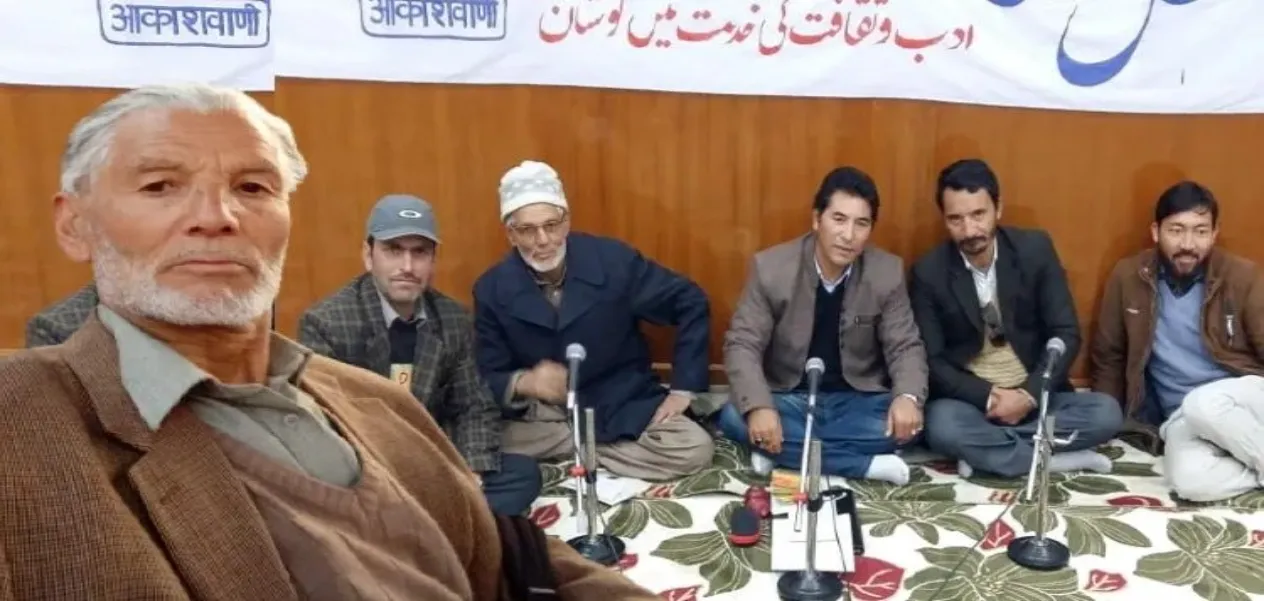
Akhon Asghar Ali Basharat gained popularity when he conducted regular Balti poetry shows on the AIR station of Kargil that took off in 1999. He became a regular participant in the local Urdu Mushairas and other cultural activities.
Basharat told a news portal that his father has been his inspiration. His father was the first published author from Kargil in the decade of 1980s.
“My father is my sole inspiration. He was a well-known social and religious activist. He had a huge collection of religious books. I sometimes feel writing is my inheritance and in my DNA.”
He says AIR Kargil station was of great help to people like him who live in remote areas. “My radio shows made me popular and encouraged me to write more. I am today because of AIR Kargil station.”
He says he fears that the Balti language may become extinct in Kargil. The fear of extinction is more because people across Ladakh tend to speak other languages and not their native ones to sound fashionable.
Bashart says to preserve language and culture, reading and writing books, and holding seminars and cultural programs must be encouraged.
He feels book writing should not be seen as a lucrative profession. “I feel book writing is not a lucrative profession. The author has to spend money to publish his book. Since the reader base is small the youth do not feel encouraged to write in regional languages. He has suggested that government must support writers of smaller languages.
source: http://www.awazthevoice.in / Awaz, The Voice / Home> Story / by Ehsan Fazili, Srinagar / January 07th, 2024
Sahaswan (Budaun) , UTTAR PRADESH / Kolkata, WEST BENGAL :
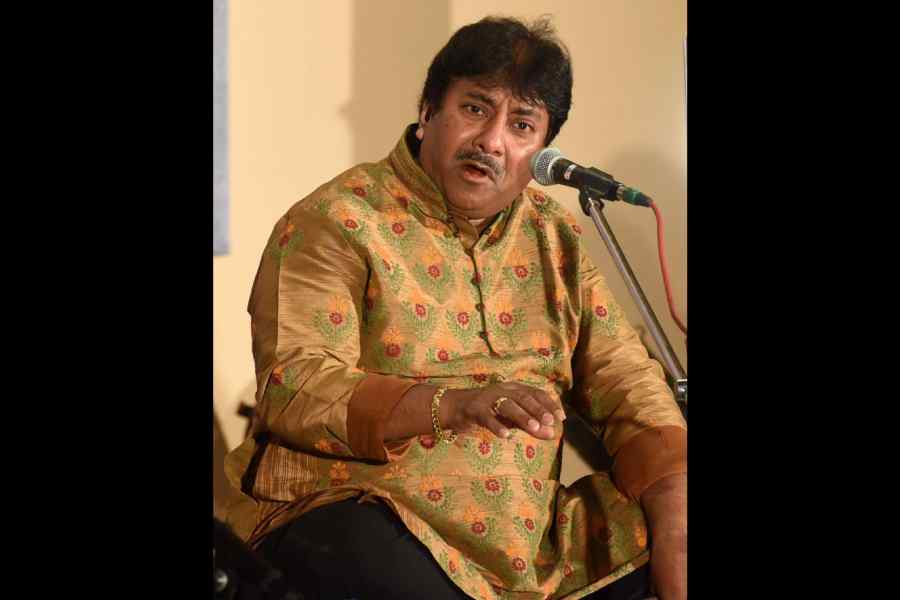
He could captivate the audience and eradicate the thin line between a structured format and the playfulness of a classical composition while his voice moved through the shades of ragas.
Rashid Khan./ Sourced by The Telegraph
The name of Ustad Rashid Khan reminds one of the words of T.S. Eliot: “Music heard so deeply/that is not heard at all, but/you are the music/while the music lasts.’’
A born genius, talented and extraordinary musician… adjectives are too limited to describe the golden voice of Rashid Khan.
The fulfilment of an art form touches immortality when the artist becomes the art, as the poet said. Diehard listeners of Rashid Khan and ardent music lovers know the truth because they have discovered the artiste’s voice in different genres of music and steeped integrated melodies.
The great-grandson of the legendary Ustad Inayat Hussain Khan, the founder of the Rampur Sahaswan Gharana, Rashid was born on July 1, 1968, at Badaun in Uttar Pradesh.
Memory and melancholy created the soul of the artiste, although he was completely unaware he would one day become one of the greats of Indian classical music. He lost his mother and younger brother at a very early age; he found solace in kabaddi and cricket.
Rashid studied in Mumbai for about a year and after coming back to his hometown, his tutelage was started under his illustrious granduncle and guru, Ustad Nissar Hussain Khan. He also carried the lineage of renowned vocalists like Mushtaq Hussain Khan and Ghulam Mustafa Khan. But the rather authoritarian Ustad Nissar Hussain Khan changed the course of his life and made him what he became over the years. He nurtured the latent potential of Rashid through his training, first at his own residence at Badaun and subsequently at the Sangeet Research Academy in Calcutta.
Young Rashid Khan, an assured voice of the future of Indian classical vocal music, certified by none other than Pandit Bhimsen Joshi, was to evolve into a formidable talent, especially with his prowess in taankari and gamak.
His full-throated voice was an exceptional amalgamation of depth and rhythmic generosity. He could captivate the audience and eradicate the thin line between a structured format and the playfulness of a classical composition while his voice moved through the shades of ragas. He was adept at the instrumental stroke-based style which he inherited from his gharana, as well as an expert at infusing emotion into an elaborate musical verse.
Probably this is the reason he was successful in different styles of singing and innovation despite being a rooted classical musician.
For example, when he sang Tagore songs based on various ragas, he focused on the rendition of the quintessential flavour; his command over the notes and tunes brought out the charm of the song with skilful originality.
Rashid had fond memories of the town of Badaun and its surroundings where he spent his early days. The river which flows by the town was a witness to the number of hours Rashid spent by its side singing.
He paid his respects on his visits to his hometown at the cemetery where his parents and young brother were laid to rest.
It may well be the inexplicable pain and loneliness of childhood filtered through his every rendition of ‘Yaad Piya ki Aye’ (composed originally by Ustad Bade Ghulam Ali Khan) — a Rashid reinvention that became very popular. As with the Bollywood hit ‘Aoge Jab tum o saajna’ from Jab We Met.
He skilfully obliterated differences between musical genres and was able to recreate a unique combination of love and exuberance with the full boom of his voice in three octaves, as manifested in each and every song. In numerous playback essays, he successfully broke traditional boundaries with his scintillating voice and evoked sensibilities even when he was out of his core expertise.
In the words of senior organiser of the Dover Lane Music Conference, Bappa Sen: “Rashid contributed an unparallel range to the music fraternity. We have seen him grow as a man as well as an artiste and witnessed his excellence in all spheres of music. He was an integral part of this music festival from a very young age and even performed in the periodicals. Along with his talent, he excelled himself to heights that required enormous hard work and open-mindedness. As a person he was as humble and respectful to all of us as he was from the very first day.”
Sarodiya Amaan Ali Khan thinks: “Unki voice mein to Ishwar hain.” He had countless memories with this senior artiste, fellow musician and co-performer who, Amaan says, was always an inspiration to him. “He was a person as clear as water,” said Amaan.
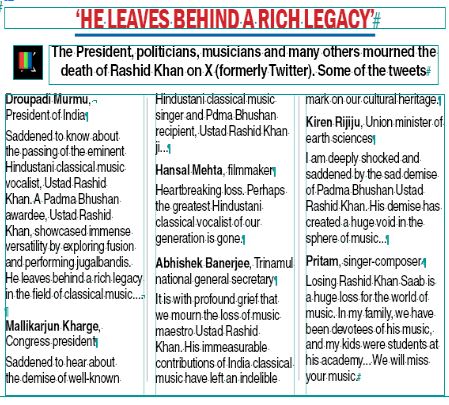
To his close friends and contemporary musicians, Rashid Khan was an irreplaceable voice and human being in every sense. The absence of Rashid’s mortal existence has now created a vacuum in the world of Indian classical music which is now devoid of his rich depth of voice.
Rashid’s son Armaan is carrying the torch of the legacy, his daughters Suha and Shaona are into Sufi music.
Rashid flourished as the breaking dawn with Lalit, Ahir Bhairon, Miyan ki Todi, returned to the root with Puriya Kalyan, Puriya Dhaneshree, Shree, sparkled with Sohini.
He has left behind an unforgettable repertoire of renditions and the gift of his unbridled imagination to lovers of his singular work.
source: http://www.telegraphindia.com / The Telegraph Online / Home> Culture> Music / by The Telegraph / January 10th, 2024
Prof Seyed Ehtesham Hasnain’s scientific research has changed the complicated regimen for the diagnosis of Drug-Resistant Tuberculosis and the Indian Basmati getting its patent and trademark in the UK in the fight against the Pakistani variant. This Bihar-born scientists’ findings have saved patients suffering from Drug-Resistant TB money and time and helped the Indian government and farmers earn through exports of the Basmati.
He told Awaz-the Voice in an interview that the government of India has taken at least two major policy decisions based on his research. “One decision was that previously the testing of tuberculosis (TB) was based upon antibody-antigen reaction. So, the antibody formed was based on the antigen of a bacterial protein, and the sequence (genetic) used was mostly European or American isolates.
“When I did sequencing in India, I found out that the Indian variant is completely different. Therefore, the test could give false positives or negatives…. I published this finding and had a meeting with the DG of ICMR (Indian Council for Medical Research) and recommended that the tests based on foreign kits be banned and that made a big impact.”
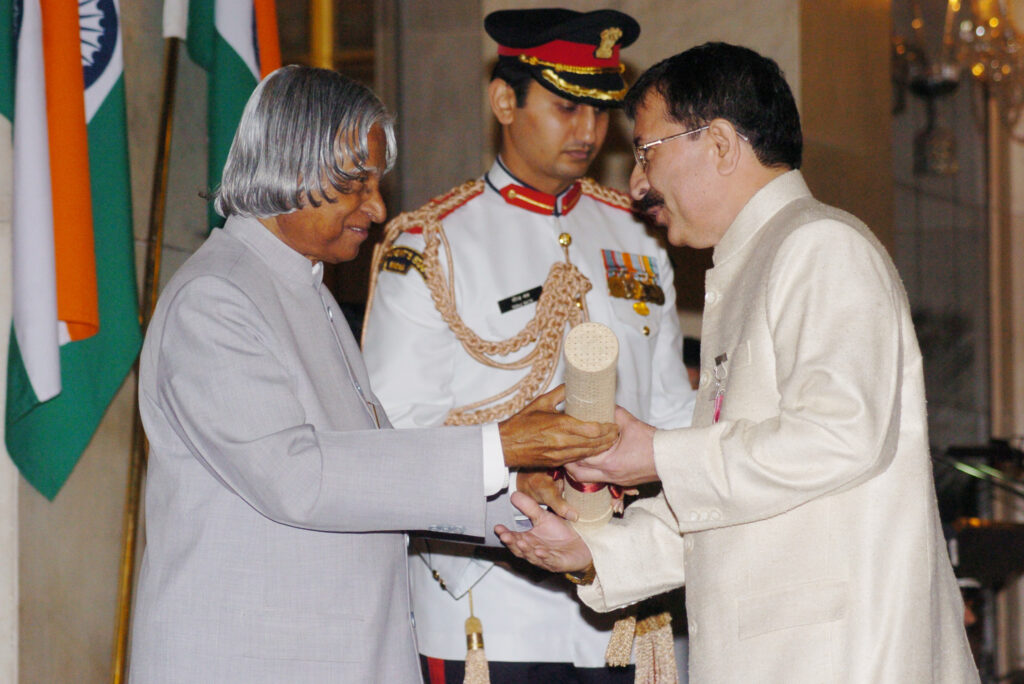
The President, Dr. A.P.J. Abdul Kalam presenting Padma Shri to Prof. Seyed E. Hasnain, renowned biologist, at an Investiture Ceremony at Rashtrapati Bhavan in New Delhi on March 29, 2006.
Padma Shri recipient Seyed Ehtesham Hasnain said. E. Hasnain was awarded the Order of Merit of the Federal Republic of Germany, the highest Civilian decoration of Germany in 2014. Nature, a famous scientific journal, reported on his receiving the award, “With the Order of Merit, he joins the league of outstanding personalities from various fields including Nobel laureate biologist Paul Herman Muller, former German Chancellor Helmut Kohl, former Japanese Prime Minister Yasuhiro Nakasone and music conductor John Crosby.”
In 2006, he received Padma Shri in recognition of his scientific work. Shanti Swarup Bhatnagar Prize (1995) and J. C. Bose Fellowship (2006), two of the most prestigious Indian Awards in the field of science have also come his way apart from numerous other decorations.
Hasnain was born in Gaya, Bihar in 1954. He was born seven years after India had attained independence. At that time Bihar was not the most developed of the Indian states. Hasnain’s father was a college lecturer and he nursed a dream of studying abroad. He studied at the Nazareth Academy, an expensive school in the town. It’s said that almost 20% of his father’s salary would go into children’s school fees.
He did his M.Sc. from the Jawaharlal Nehru University in New Delhi. However, though he was selected for his post-graduation studies by Harvard University, for some reason he could not join.
In 1981, Hasnain moved to Canada as a Post-doctoral Fellow (PDF). He worked in Canada and the USA for the next six years. At this stage, his father asked him to return home to serve his country and people. He was advised by many people that he must try to get his green card before moving back to India.
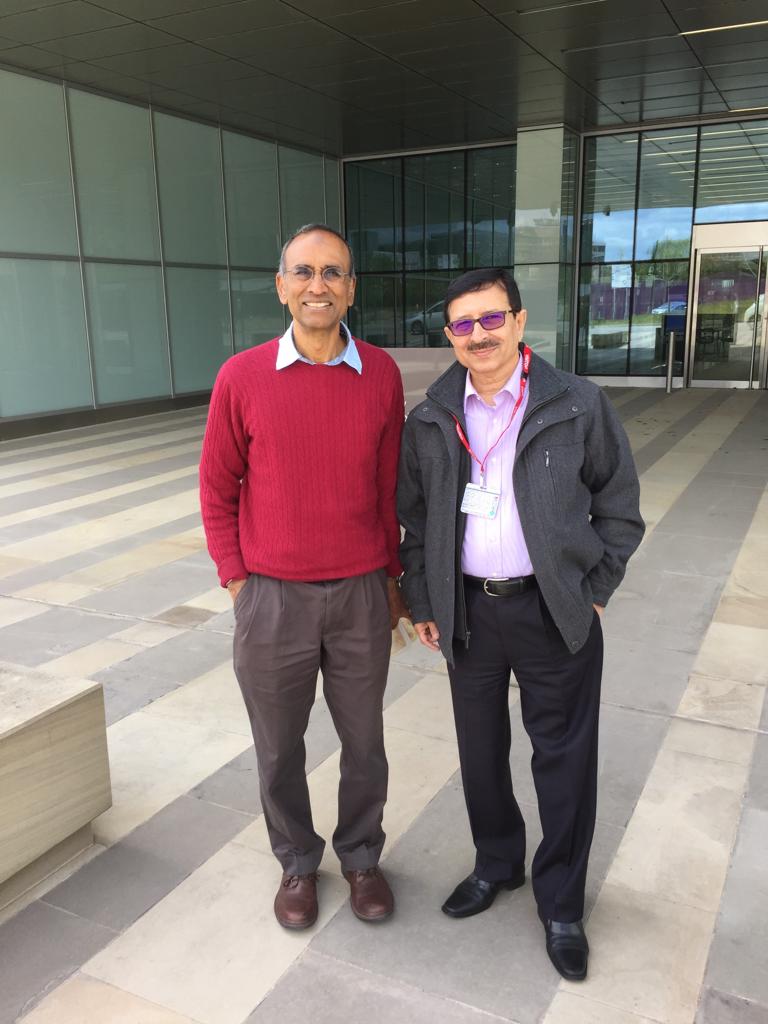
Seyed Ehtesham Hasnain with Dr Venky Ramakrishna, Nobel Prize Winner and President of Royal Society, UK, in Cambridge
In 1987, he joined the National Institute of Immunology (NII) as a scientist. Hasnain says, “I thought that after getting a green card, I would have a fall-back and a plan B. I did not want a plan B. My plan was the only plan A. I will work in India and do something good in India.”
Hasnain broke the convention by not continuing the research he was doing abroad. He started afresh and soon made a name for himself in research of baculoviruses. He established a baculovirus insect cell expression system (BEVS) for the first time in India and used this to express foreign genes and also to ask fundamental questions concerning gene expression in BEVS. The idea was to make India a scientific power.
Hasnain says that when his career was at the peak with research on baculovirus one day, Dr. Sandeep Basu, the then director of NII, asked him, “Seyed, you are publishing in good journals, it is fine, but how does humanity benefit? What is India gaining out of it? How are the common men benefiting from your papers? Doing research is good but do something which will benefit the common man.”
This was the turning point in Hasnain’s life and career. He says “I decided to do something where I can do direct application.” He started his research on tuberculosis.
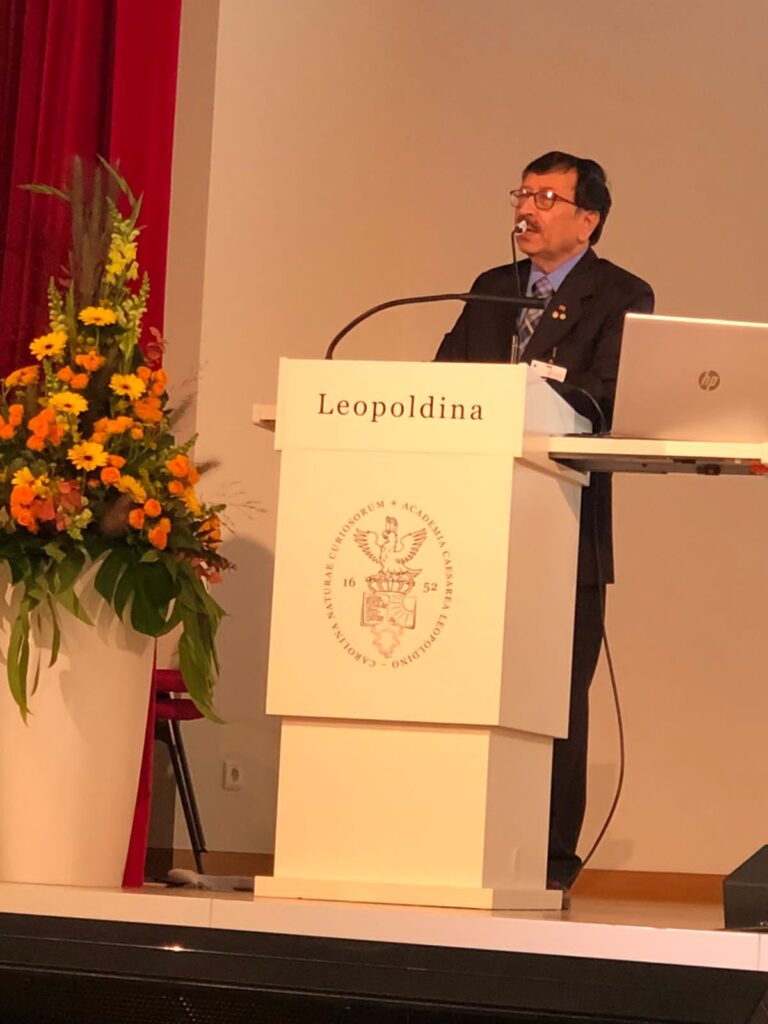
Seyed Ehtesham Hasnain at the Global Health Conference organized by the German National Academy of Sciences, Leopoldina, Halle, Germany
Hasnain initiated studies on molecular epidemiology and genetics of multi-drug resistant (MDR) M. tuberculosis (M.tb). He says, “second important observation that was published, again the first time in the world. We used to test TB for drug resistance. The bacteria was tested against each drug. I showed with my study that if the bacteria are resistant to one drug then it will be resistant to almost all other drugs. I established the correlation and proposed that you don’t need to do multi-drug resistance testing for all the drugs. Just test one drug rifampicin and if it is confirmed then 95%-99% of drugs will be resisted by the bacteria. That has become a standard treatment all over the world. He is still working on developing cheaper methods of diagnosing TB.
In 1999 Hasnain was invited as the first director of the Centre for DNA Fingerprinting and Diagnostics (CDFD), Hyderabad. It was based on his work on Indian Basmati Rice DNA fingerprinting that India won the Patent case against Pakistan enabling the export of the Indian Basmati to the UK. This prevented a major economic loss to India. Subsequently, the Ministry of Commerce established the CDFD-APEDA Basmati DNA Analysis Centre, where all Basmati exports are certified.
Hasnain also served as Vice Chancellor of the University of Hyderabad (2005-11), and Vice Chancellor of Hamdard University and is currently A National Science Chair of SERB, at the Department of Biochemical Engineering and Biotechnology at IIT-Delhi.
Hasnain Mantra is: “Nothing is a substitute for hard work.”
source: http://www.awazthevoice.in / Awaz, The Voice / Home> Story / by Saquib Salim / November 03rd, 2023
Shah Rasheed Ahmed Quadri is engaged in the field of Bidri Ware handicrafts and is known for introducing the Phooljhadi design.
Image: Twitter/@rashtrapatibhvn
New Delhi:
President Droupadi Murmu on Wednesday, presented the Padma Shri award to renowned craftsman Shah Rasheed Ahmed Quadri for Art.
The master craftsman is engaged in the field of Bidri Ware handicrafts and is known for introducing the Phooljhadi design.
Quadri has invented many Bidri Ware articles and has trained hundreds of artists in the field.
” Quadri has repeatedly raised concerns regarding Indian art due to the lack of marketing. He has also requested the government to provide an appropriate market and platform to artists so that they can create and develop their art “
Notably, Quadri is among the eight personalities from Karnataka to receive the prestigious Padma award this year.
Who is Shah Rasheed Ahmed Quadri?
Shah Rasheed Ahmed Quadri started learning this ancient art when he was just 10 years old against the wish of his father Shah Mustafa Quadri who was also a Bidriware craftsman. The 68-year-old artist is a third-generation artisan from his family. Apart from introducing the Phooljhadi design, Rasheed Quadri has also reintroduced sheet-work, which was popular during Bahmani empire.
Before winning the Padma award, Quadri has already won the State Award in 1984, National Award in 1988, District Karnataka Rajyotsava Award in 1996, and The Great Indian Achievers’ Award in the year 2004.
The artisan has also exhibited and demonstrated the ‘Bidri’ craft across many countries, including USA, Netherlands, Spain, Bahrain and Oman.
All you need to know about the Padma Awards
Padma Awards are presented in three categories including Padma Vibhushan, Padma Bhushan, and Padma Shri to honour people for their notable work in different disciplines and fields like art, social work, literature and education, public affairs, etc.
The Padma Shri is the fourth highest civil honour in India. While the Padma Shri is bestowed on those with distinguishing contributions in any field, the Padma Bhushan is granted to those who have had distinguishing contributions of a high order. The Padma Vibhushan is the highest of all and is awarded to those with exceptionally distinguished services.
Bharat Ratna is considered to be the highest civilian award of country. Notably, the award has not been bestowed to any single person since 2019. The last Bharat Ratna was awarded to Nanaji Deshmukh (Posthumous), Bhupen Hazarika (Posthumous) and former President of India Pranab Mukherjee.
source: http://www.republicworld.com / Republic World / Home> English News> India News> General News / by Mahima Joshi / April 06th, 2023
First woman vice-chancellor of Jamia Millia Islamia (JMI), Najma Akhtar has been selected for the Padma Shri award.
Najma Akhtar, Jamia VC at ceremony.
New Delhi :
First woman vice-chancellor of Jamia Millia Islamia (JMI), Najma Akhtar has been selected for the Padma Shri award. Akhtar will be one of the 28 Indians, who will be conferred with the award in the field of literature and education by President Ram Nath Kovind, at a ceremonial function, which is held at Rashtrapati Bhawan every year.
Akhtar (67) who was appointed as Jamia Vice Chancellor (VC) in April 2019, scored a historic double – not only was she the first woman to hold the post, but she was also the first woman to head any central varsity in the national capital.
She has previously served as the VC of University of Kashmir and headed the department of Educational Administration at the National Institute of Educational Planning and Administration (NIEPA) for 15 years. Akhtar said that she is grateful that her work was recognised and thanked both the PM and the President.
“I will accept this award just not for myself, but on behalf of my colleagues. Everyone works hard, but not everyone’s work reaches the recognition they may deserve. I thank the PM and the President for recognising my work, especially, the President, who entrusted me as the first woman VC of the university,” she said.
Besides her, three others from the field of literature and education, from Delhi, have been selected for the award including – Tara Jauhar, J K Bajaj and Dilip Shahani.
source: http://www.newindianexpress.com / The New Indian Express / Home> Cities> Delhi / by Express News Service / January 26th, 2022