Tag Archives: Indian Muslims of Maharashtra

Adiba Anam becomes Maharashtra’s first Muslim woman IAS officer, daughter of an auto-rickshaw driver

Yavatmal Town, MAHARASHTRA :
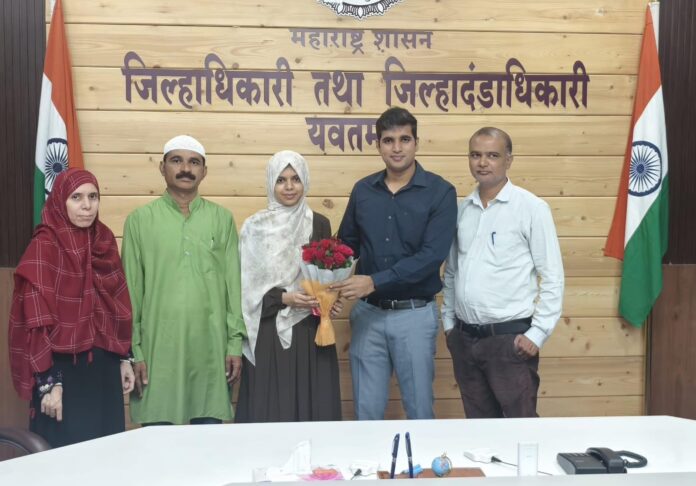
Adiba Aman in the centre.

New Delhi :

 The Union Public Service Commission (UPSC) declared the results of the 2024 Civil Services Examination on April 22, with 1009 candidates clearing one of India’s most competitive exams. Among them, Adiba Anam has made history by becoming the first Muslim woman from Maharashtra to be selected for the Indian Administrative Service (IAS).

Hailing from Kalam Chowk in Yavatmal, a small town in eastern Maharashtra, Anam secured an all-India rank of 142. Her achievement has been widely hailed as a breakthrough for both women and minorities in the state. Her father, Ashfaq Ahmed, earns a living by driving an auto-rickshaw.

Raised in modest circumstances, Anam completed her schooling in Urdu medium from a local Zilla Parishad school. Despite limited resources, she consistently excelled academically—scoring 94% in her Urdu board exams and 92% in 12th grade with a science stream.

Speaking to India Tomorrow, Anam recounted her journey through UPSC. Her first attempt in 2021 ended at the preliminary stage. Undeterred, she progressed to the mains in her second attempt, and finally, in her fourth attempt, clinched success with a rank likely to earn her an IAS cadre.

“My parents never asked me to give up on my education. There were people who suggested I take up a small job to ease our financial burden, but my parents never let those voices affect me,” she said.

Anam noted the social barriers women often face in her community. “Yes, girls do face restrictions. But these challenges only overpower us if we allow ourselves to feel weak. Once we build our mental strength, those obstacles lose their power,” she said. Her message to young women: “Stay mentally strong. Chase your dreams with courage and determination.”

Initially aspiring to become a doctor, Anam couldn’t clear the NEET exam. It was then that her uncle, Nizamuddin Sheikh—a local NGO secretary in Yavatmal—encouraged her to consider civil services as a way to serve the public.

Adiba Anam draws inspiration from the poetry of Allama Iqbal. Two couplets, in particular, fuel her determination:

“Khudi ko kar buland itna ke har taqdeer se pehle, Khuda bande se khud pooche, bata teri raza kya hai, ” meaning, “Elevate your selfhood to such heights that even destiny, before shaping your fate, is compelled to ask you: ‘Tell me, what is it that you desire?’”

This powerful verse emphasizes self-empowerment, urging individuals to strengthen their character and willpower to such an extent that even fate bows before their determination.

“Amal se zindagi banti hai jannat bhi jahannam bhi, Yeh khaaki apni fitrat mein na noori hai na naari hai.” This translates in English as “Through actions, life can become either a paradise or a hell. This being (the human) made of dust is by nature neither angelic nor demonic.”

The couplet underscores the idea that our actions determine the quality and direction of our lives. Human beings are not inherently good (like angels) or evil (like demons); it is their actions (amal) that shape their destiny and define their identity.

Explaining the two couplets, she said, “These lines remind me of the power of action. If you just sit still, nothing will change. But if you act, if you try to change your situation, something will definitely happen,” she said.

Anam’s journey—from a small-town Urdu-medium student to a future IAS officer—stands as a powerful story of resilience, ambition, and the transformative potential of education.

Here is the list of 26 Muslim candidates who cleared the UPSC Civil Services Examination this year, with their ranks written in front of their names.

•             Iram Chaudhary – Rank 40

•             Farkhanda Quraishi – Rank 67

•             Mohammad Muneeb Bhatt – Rank 131

•             Adiba Anam Ashfaq Ahmed – Rank 142

•             Wasim ur Rehman – Rank 281

•             Md. Nayab Anjum – Rank 292

•             Mohammad Haris Mir – Rank 314

•             Mohammad Shaukat Azeem – Rank 345

•             Alifa Khan – Rank 417

•             Nadia Abdul Rashid – Rank 429

•             Najma Salam – Rank 442

•             Shakeel Ahmed – Rank 506

•             Shah Mohammad Imran Mohammad Irfan – Rank 553

•             Mohammad Aftab Alam – Rank 560

•             Mohsina Bano – Rank 585

•             Syed Mohammad Arif Moin – Rank 594

•             Ghulam Haider – Rank 633

•             Hasan Khan – Rank 643

•             Ghanchi Gajala Mohammad Hanif – Rank 660

•             Mohammad Salah T.A. – Rank 711

•             Sadaf Malik – Rank 742

•             Yasir Ahmed Bhatti – Rank 768

•             Javed Mev – Rank 815

•             Nazeer Ahmed Bijran – Rank 847

•             Arshad Aziz Quresh – Rank 993

•             Iqbal Ahmed – Rank 998

source: http://www.indiatomorrow.net / India Tomorrow / Home> Education / by Mohammad Akram / April 2025

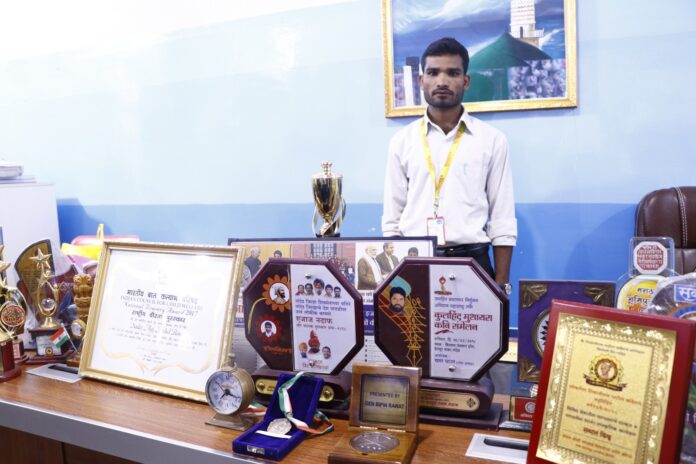
Qayyum Nadvi Honored with “Aamhi Bharti” Award

Aurangabad, MAHARASHTRA :

Aurangabad:

Social and educational activist Mirza Abdul Qayyum Nadvi received the “Aamhi Bharti” award for his contributions to education and literature. The Balwant Rao Varale Memorial Foundation selects three awardees from Maharashtra each year for their efforts in social work, education, and literature.

Nadvi, President of Read and Lead Foundation Aurangabad, runs the Mohalla Bal Pustakalaya Abhiyan, providing books to children of laborers in streets, slums, and huts. Other awardees included social worker Asha Sirsat and Vidya Sagar Dornalikar, recognized for their contributions to education and literature.

At the event, Nadvi emphasized that unity, integrity, and brotherhood are essential for the nation, aligning with the constitutional spirit of “We the people of India.” He expressed gratitude to the foundation for the honor.

The award ceremony featured Dr. Rajendra Gonakar as the special guest and was presided over by Malti Varale. All three awardees shared their thoughts and pledged to continue their work.

The event was moderated by Sudha Varale and Manisha Ghatge, while Varsha Ghoble spoke about Balwant Rao Varale’s contributions. Advocate Indumati Varale introduced the program. Chetan Chopra, Kunal Varale, and Ajay Dehade performed, and Parakshit Varle, Dhamma Wahul, Buddha Bhushan More, Abhishek Suradkar, and Prithvi Magre contributed to the program’s success. Sunita Ghatge delivered the vote of thanks.

source: http://www.radiancenews.com / Radiance News / Home> Pride of the Nation> Awards> Focus / by Radiance News Bureau / February 03rd, 2025

Maharashtra School Textbook Includes Story of Ejaz Nadaf, Recipient of the “National Bravery Award”

Pardi (Taluka Ardhapur), MAHARASHTRA :

Pardi:

In Taluka Ardhapur, the 6th-grade Urdu textbook at Bal Bharti now includes the story of Ejaz Nadaf, a remarkable young individual who was honored with the prestigious “National Bravery Award”. Ejaz Nadaf’s courageous act at the age of 16 is now praised in this textbook.

The inclusion of Ejaz’s story raised questions about who presented the award, when it was received, the district he belongs to, and the village he hails from.

On April 30, 2017, Ejaz saved two girls from drowning in a river, which led to him being awarded the “National Child Bravery” award on January 26, 2018, by Prime Minister and President Ramnath Kovind.

Ejaz Nadaf was the only student in all of Maharashtra to receive this prestigious award in 2018.

Having completed his education from 1st to 12th grade in his village, Ejaz displayed immense bravery during his 10th grade at Rajabai High School.

For the betterment of his studies and future, Ejaz was adopted by the Shaheen Institute in Bidar, Karnataka.

Although Ejaz scored 70%, his family’s poor financial circumstances pushed him to work as a laborer in his village after 10th grade. Despite facing challenges, he managed to pass 12th grade. However, he had little hope for continuing his education. This changed when the Shaheen Institute in Bidar, Karnataka, adopted him to support his future studies and success. Currently, he is pursuing a BA degree while preparing for the UPSC exams at the Shaheen Institution.

Ejaz’s father, Abdul Rauf Nadaf, expressed his happiness and pride in knowing that a lesson in bravery is being taught to his child. He believes that this story serves as an excellent example for other students and will undoubtedly encourage them.

source: http://www.thehindustangazette.com / The Hindustan Gazette / Home> News> Motivational Story / by Shifa / July 17th, 2023

Umar Sobhani supplied yarn from his mill for Gandhi’s swadeshi movement

BOMBAY (Mumbai) / PRE-INDEPENDENT INDIA :

“He (Mahatma Gandhi) said that while he did not think that Umar Sobhani was a revolutionary, he was frank and open by nature and he (Gandhi) thought that if Umar felt convinced that a revolution was the best way to secure the well-being of India, he would not hesitate to adopt such methods. He thought that in such a case Umar Sobhani would plainly tell him (Gandhi) of his intentions…” This is what Mahatma Gandhi was reported to have told to C.I.D on 8 May 1919 during a police interrogation.

Unsung Heroes of Freedom Struggle

Sobhani was a rich businessman from Mumbai who traded in cotton and joined the freedom struggle early in his life.

Those who take an interest in Mahatma Gandhi consider Young India, an English journal edited by Gandhi, and Navajivan, a Gujarati journal, as his voice. Interestingly, these journals were started by Sobhani who later cajoled Gandhi to take charge as the editor.

Rajmohan Gandhi, one of the grandsons of Mahatma Gandhi, notes, “Three of the Sabarmati ‘covenanters’, Umar Sobhani, Shankerlal Banker and Indulal Yagnik, were between them bringing out two journals, Young India, a weekly in English from Bombay, and Navajivan, a monthly in Gujarati from Ahmedabad, and were also associated with the nationalist daily, the Bombay Chronicle. At the end of April, in one of the Raj’s drastic measures, Horniman, the British editor of the Chronicle, was deported, and the paper’s publication had to be suspended.

“In response, Sobhani, Banker, and Yagnik requested Gandhi to take over the editorship of Young India and Navajivan and with their help bring out Young India twice a week and Navajivan every week. Gandhi agreed, and on 7 May 1919 the first number of Young India, New Series, came out. When, soon, the Chronicle resumed publication, Young India reverted to being a weekly but now published, for Gandhi’s convenience, in Ahmedabad, along with Navajivan, which first appeared as a weekly on 7 September.

“Gandhi now possessed what he had hoped for from the moment of his return to India: vehicles to communicate his message.”

Charkha (spinning wheel) is a synonym for Mahatma Gandhi and his movement and Sobhani played an instrumental role in making it a success. Rajmohan writes, “Indian spinning mills wanted to turn all their yarn into mill-made cloth, not sell it to hand-weavers. Gandhi therefore asked associates to search for spinning wheels that could make yarn. At the Godhra conference in November. 1917, a woman called Gangaben Majmudar, who had ‘already got rid of the curse of untouchability and fearlessly moved among and served the suppressed classes’ (A 442), promised him that she would locate a wheel.

“She found not one but hundreds in Vijapur in the princely state of Baroda, all lying in attics as ‘useless lumber’ (A 443). Women who in the past plied the charkhas told Gangaben that they would spin again if someone supplied slivers of cotton and bought their yarn.

Gandhi said he would meet the conditions, his friend Umar Sobhani supplied slivers from his Bombay mill, and the ashram received more hand-spun yarn than it could cope with.”

Sobhani was one of the original 20 signatories of the pledge to oppose the Rowlatt Act. The pledge was prepared by Gandhi at his Sabarmati Ashram in Ahmedabad. Along with Sardar Vallabhbhai Patel, Sobhani was one of the associates of Gandhi who backed him against the old guards in Congress on the question of the non-cooperation movement in 1918.

K. R. Malkani, a former R.S.S stalwart and BJP leader, writes, “Gandhiji’s right-hand man in Bombay in the 1921 movement was Umar Sobhani. The first bonfire of one and a half lakh pieces of choicest silk was ignited by Gandhi in Umar’s mill compound in Parel.

“When Gandhiji decided to collect Rs. 1 crore for Tilak Swaraj Fund, Umar offered to contribute the entire amount, but Gandhiji wanted it collected from a large number of people. But even so, Umar contributed Rs. 3 lacs.

“Umar was a big cotton merchant. When the British came to know of his role in the Freedom Movement, they ran special trainloads of cotton to Bombay by Viceregal order. As a result, cotton prices collapsed in Bombay and Umar suffered a loss of Rs. 3.64 crores. Daan-Vir Sobhani ended his life.

“Earlier the British tried to divide the family. At their instance, Umar’s father, Haji Yusuf Sobhani contested the office of Sheriff of Bombay. Umar worked. against his father and had him defeated. Later the British tried to tempt Yusuf Sobhani with a knighthood, but Umar told his father that he could accept the title only “over my dead body.” Today probably not even people living on Sobhani Road, Cuffe Parade, Bombay, know who the great Sobhani was!”

Sobhani used to lead the marches in Mumbai, arrange the meetings of Gandhi, and raise funds for the political agitations against the English. Gandhi, according to the police reports, used to call him one of the props of the satyagraha in Mumbai. 

source: http://www.awazthevoice.in / Awaz, The Voice / Home> Story / by Saquib Salim / July 31st, 2024

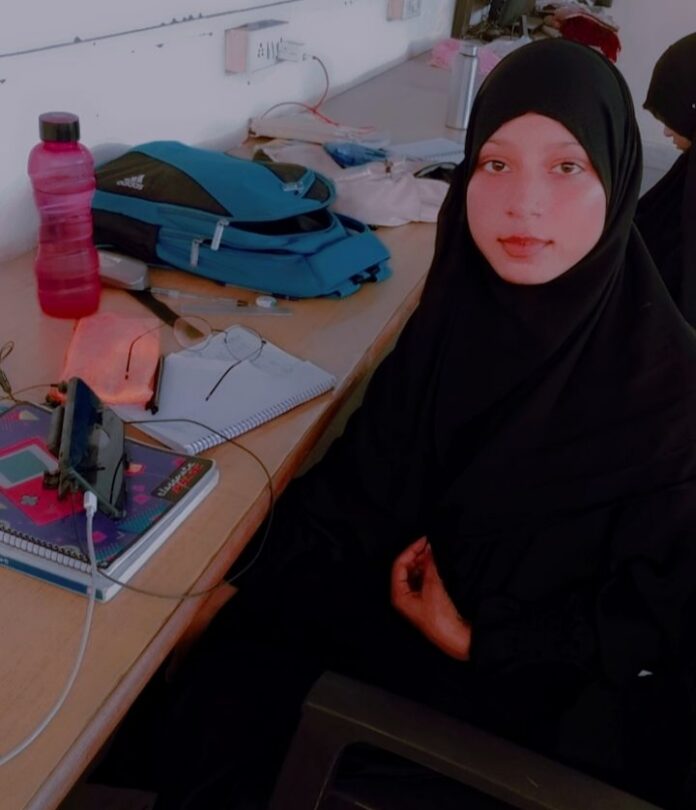
A Hijabi’s Rise: Alfiya Ansari’s Success Story in the Face of ‘Bias’ at Mumbai College

Mumbai, MAHARASHTRA :

Mumbai : 

Hijab-clad Alfiya Ansari allegedly faced discrimination at NG Acharya College, the first educational institution in the city that banned wearing headscarves and veils on the campus. Despite the decision reportedly forcing several Muslim women to drop out or discontinue attending classes, she remained dedicated to her education.

Her perseverance and determination led her to achieve the top rank in her class, serving as a powerful testament to her resilience and a strong rebuke to those who “discriminated” against her.

Alfiya’s achievements highlight her unwavering commitment to her goals, demonstrating that “bias” and “prejudice” cannot diminish true talent and hard work.

A Dream of Becoming a Doctor

Living with her parents and two siblings in Mumbai’s Govandi slum, Alfiya’s story is one of remarkable resilience and determination. Her father, a tailor earning Rs 20,000 per month, worked hard to support his family.

As the eldest sibling, Alfiya took her role seriously. She completed senior secondary school from a local English medium school, scoring an impressive 85% and chose to enroll in an aided college for further studies.

From a young age, she aspired to become a doctor. This ambition led her to choose the science stream in junior college, where she began preparing for the National Eligibility-cum-Entrance Test (Undergraduate) or NEET examination.

However, as she advanced to her second year, she decided to focus primarily on her board exams, dedicating much of her time to studying in the library to achieve her academic goals.

Despite facing health issues from eating outside food while spending long hours in the library, Alfiya’s family, particularly her mother, provided unwavering support. Her mother ensured she had home-cooked meals and timely medication, allowing her to maintain her focus.

Alfiya credits her success to her mother’s support, highlighting the crucial role her family played in her academic achievements.

‘Harassment’ at College

Initially cooperative, the staff at Acharya College allegedly changed their attitude drastically once the hijab issue arose. Teachers purportedly began harassing Muslim girls, making them stand outside during lectures and using various other methods.

Alfiya was mentally disturbed for many days. Fifteen-twenty girls, she alleged, stopped attending college.

However, she could not easily give up on her dream of becoming a doctor. With her parents unable to afford another college, she continued at Acharya, removing her hijab outside but still wearing a dupatta.

“This is how I struggled,” she told TwoCircles.net.

Maintaining Focus Amidst Adversity

Alfiya remained focused on her goals despite the challenges. “Life brings many issues, sometimes in the form of the hijab and sometimes due to narrow-minded views about girls,” she said, adding, “When we are focused, problems do not seem as overwhelming.”

She stayed focused on her aim and plans to continue facing challenges head-on without stepping back from her goals.

A Message to Girls

Alfiya has a powerful message for girls: “If we want to change our current situation, education is the most important part. Achieve it, but always remember the importance of both academic and religious knowledge. Only then can you become a better role model in this society. Your identity should be defined by your character, which for a girl is always defined by her modesty. Be whatever you want to be, but stay within the bounds of modesty.”

Advice for Youth

To the youth, Alfiya advises, “You are your own saviours, and your own adversaries. Keep yourself engaged in productive activities, or else negative influences will keep you busy with useless and immoral activities. Use your mobile phones positively but within a specific time limit. Learn skills to keep pace with the present situation.”

Family’s Joy and Support

After the results, Alfiya’s family was overjoyed. “Before 12th grade, I did not receive much financial support from anyone; but after 12th grade, I received immense support from an elder sister, whom I consider an angel. She has been a great source of motivation for me,” she said, though she could not mention her name due to her sister’s request for anonymity.

source: http://www.twocircles.net / TwoCircles.net / Home> Careers / by K K Ahmed, TwoCircles.net / June 10th, 2024

Malkapur Student Nazifa Namus Wins Top Prize in District Speech Competition

Malkapur (Buldhana District) , MAHARASHTRA :

Malkapur, Buldhana :

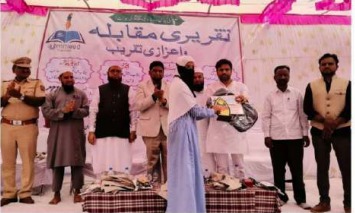
In a district-level speech competition organized by the Umeed Foundation, Malkapur’s Al-Huda Urdu Girls School and Junior College student, Nazifa Namus, emerged victorious, securing the first position.

Daughter of Tariqullah Khan, Namus impressed judges and spectators alike with her eloquence.

She was awarded an honorary certificate and a cash prize of eleven thousand rupees.

The event, held on Sunday, garnered attention from dignitaries such as Abdul Karim Salar, President of the Education Society, and Rajesh Akde, a prominent member of the Provincial Assembly.

Also present were Maulana Ashfaq Qasmi, Haji Rasheed Khan and senior police officials from the city.

source: http://www.radiancenews.com / Radiance News / Home> Education / by Zaina Aman (headline edited) / Radiance News Bureau / March 06th, 2024

Meet India’s richest Muslim woman, who owns property worth crores, runs company worth of 28,773 crore, her business is..

Mumbai, MAHARASHTRA :

She is the daughter of billionaire Rafique Malik, the company’s chairman. Her grandfather, Malik Tejani, founded it in 1955 in Mumbai. Farah has guided Metro Shoes into a new era of modern retail. The company’s brands include Mochi, Metro, and Walkway.

article-main
(Image source: LinkedIn)

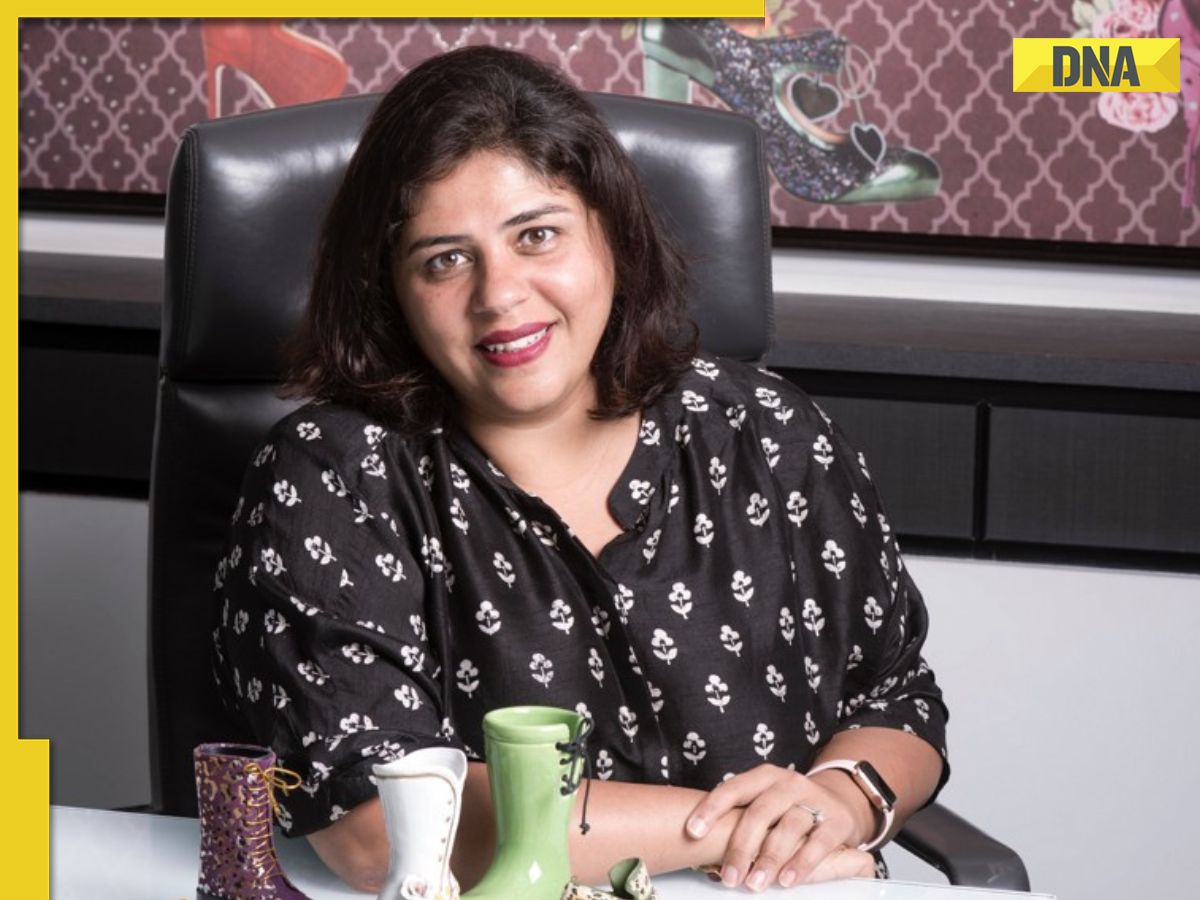
Eid Ul Fitr was celebrated throughout the country. Amid celebrations, you may be left wondering if you are asked about the wealthiest Muslim woman in the country. The name of the country’s richest Muslim woman is Farah Malik Bhanji. She is the managing director of the Metro brand, which sells premium shoes. Her net worth is more than Rs. 26000 crore. Farah Malik plays an important role in giving the Metro brand a new identity.

She is the daughter of billionaire Rafique Malik, the company’s chairman. Her grandfather, Malik Tejani, founded it in 1955 in Mumbai. Farah has guided Metro Shoes into a new era of modern retail. The company’s brands include Mochi, Metro, and Walkway.

As of December 8, the company’s market capitalisation was Rs 35,117 crore. Farah is the second of five daughters. His father, Rafique, has a real-time net worth of Rs 21697 crore as of 12 April.

Farah has more than 20 years of experience in the footwear industry. She has played a key role in reimagining the company for the new era. She began her career in marketing before moving on to revamp Metro Brands Limited’s technology roadmap and supply chain. The company was listed in December 2021. The late billionaire investor Rakesh Jhunjhunwala’s wife, Rekha, owns a minority stake in Metro Brands.

She pays close attention to detail, is well-versed in business, and has a sense of style. The footwear company has experienced growth for both the company and its employees under her leadership. She has played a crucial role in forging connections with international companies like Skechers, Crocs, and Clarks in addition to forging close bonds with more than 250 reliable vendors. She contributed to the network’s growth from 100 stores in 2010 to 598 locations across 136 Indian cities.

At the close of trading on Wednesday, Metro Brands Ltd. saw a rise to Rs. 1058. Rs. 1,440.45 is the stock’s 52-week high level, and Rs. 784.45 is its 52-week low. Metro Brands’ shares opened at Rs 1044 at the start of the trading session on Wednesday. Subsequently, it increased by over 20 rupees, closing at 1058. The company cap is of Rs 28,773 crore. 

source: http://www.dnaindia.com / DNA / Home> Business / by Varnika Srivastava / April 12th, 2024

Malegaon Resident Excels in Waqf Board Recruitment Exam, Secures Top Position Among 9,000 Candidates

Malegaon, MAHARASHTRA:

Malegaon :

In a remarkable feat, Habibur Rahman, a resident of Malegaon, has outshined 9,000 candidates to clinch the top position in the recruitment exam conducted by the Maharashtra State Waqf Board. Rahman’s achievement underscores his exceptional performance and dedication towards his goal.

The recruitment exam, aimed at filling vacancies for district officers and junior clerks within the Waqf Board, witnessed rigorous competition from aspirants across the state. Rahman’s success stands as a testament to his hard work and preparation.

Expressing his gratitude, Rahman attributed his accomplishment to divine blessings and the unwavering support of his teachers, parents, and relatives. He highlighted the role of study material provided by Sheikh Qamaruddin, editor of Urdu House in Malegaon, in his exam preparation.

Having completed his education from Sheikh Abdul Wadood Primary School and Junior College in Malegaon, Rahman pursued higher studies at Loni’s Parvaraz World Engineering College. While working in Mumbai, he diligently prepared for competitive exams, a journey that has now culminated in his success in the Waqf Board recruitment exam.

Rahman’s stellar performance, in the written examination, is a testament to his academic prowess and determination. His achievement has not only brought pride to Malegaon but has also positioned him as a shining example of excellence in competitive exams.

With Rahman’s success, Malegaon celebrates yet another milestone, reinforcing its position as a hub of talent and academic excellence. As Rahman prepares to embark on this new chapter in his career, his success serves as an inspiration for aspiring candidates across the region.

source: http://www.radiancenews.com / Radiance News / Home> Latest News> Markers of Excellence/ by Zaina Aman / Radiance News Bureau / March 06th, 2024

A Maulana’s noble initiative of water distribution in summer to the roadside vendors and beggars

Aurangabad, MAHARASHTRA:

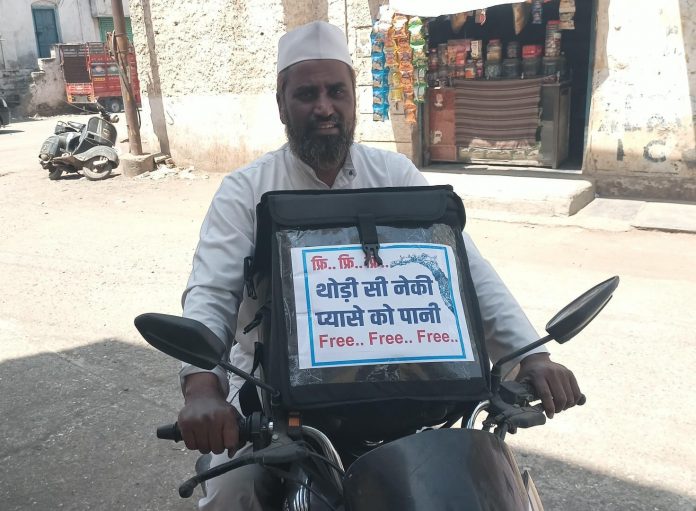
Maulana Abdul Qayyum Nadvi on his mission.

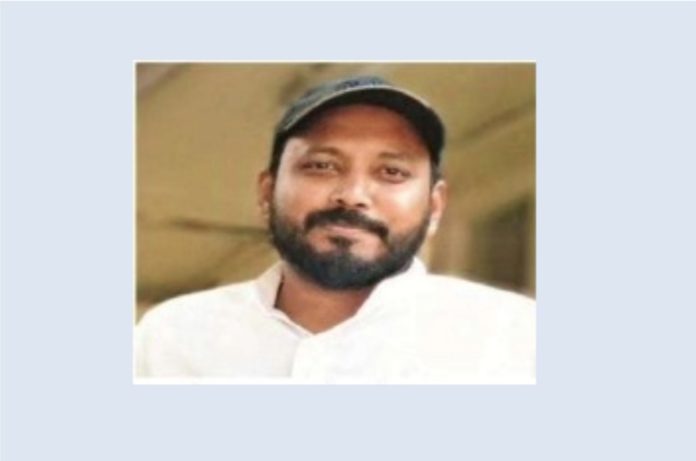
Maulana Abdul Qayyum Nadvi, who has been successfully running his book store ‘Mirza Book world’ in Aurangabad has hit upon another novel plan to quench the thirst of the poor and needy on the roadside.

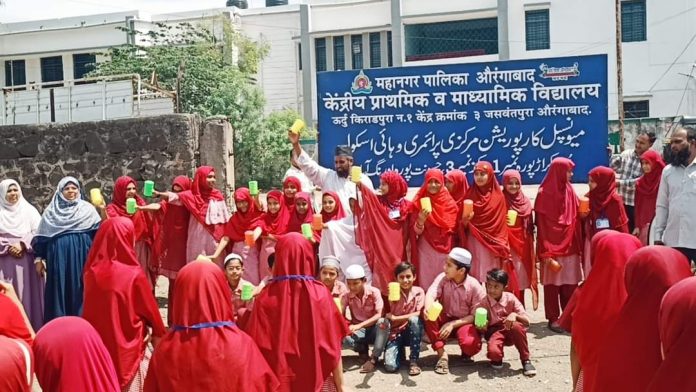
Every day he buys some cartoons of 300 ml water bottles, refrigerates them overnight and in the morning around 10 am on his way to his book store, when the sun is already hot and shining bright, distributes the water bottles to the road side vendors, beggars and whoever asks for it.

He shared that he began this water distribution activity around 5-6 years back on the occasion of World Water Day. “ At that time, I used to collect empty water bottles from functions, events and gatherings, take them home, sterilise them with hot water, then fill them up, keep them in the fridge and distribute them in the morning to people who were thirsty and could not afford to buy a water bottle”.

“Now, I no longer collect water bottles, I buy them. When my friends saw what I was doing they too joined in and together we pool the money and buy the water bottles. It is much easier,” he explained.

Maulana Abdul Qayyum is not new to social work. He also supports the Mohalla libraries with his daughter Maryam Mirza who is running more than 30 small libraries in the slums of Aurangabad. Many of the books in these mohalla libraries have been donated by the Maulana from his book store.

He runs a foundation called Read and Lead Foundation (RLF) which is mostly about promoting the culture of reading, preserving Urdu language and other social-charity activities with some of his like-minded friends.

“Books have always been my passion”, he said. “ And I chose the career of running a book store so I get to spend my time amidst books. I started the book store in 2002 but before that I used to sell the books on my bicycle cycling around the whole city. It was quite a struggle but it paid off when there were patron demanding books to be supplied in the libraries of schools and colleges,” he added sharing his journey.

Apart from that he has also donated almost 50000 kiddy banks to children in schools in 30 English and Urdu medium schools for the children to save money and buy a book of their choice. His sole aim is to revive the dying culture of reading books.

“ I want children to inculcate the habit of reading a book instead of spending their time playing games on mobile phones. Reading is such a rich hobby, it ignites imagination, helps the children to improve their vocabulary and grasping abilities. But today we see children are no longer interested in reading but after this kiddy bank campaign, I have received positive feedback from the school teachers that students are now reading books in their free time.” he explained with a note of satisfaction in his voice.

His initiative of gifting kiddy banks was picked up by other schools who began gifting the same to their children to get them into the habit of saving money to buy books.

The Maulana then takes time in the afternoon when the sun is at its peak to ride around the vicinity with his bags of water bottles and distribute the cold water to the thirsty people irrespective of their caste, religion, gender, he sees on the roadside. His daughter ordered customised bags with the caption: ‘ Choti si neiki, Pyase ku pani’ which can hold at least 50 bottles.

“ Many passersby give coins to these beggars but when I give them a water bottle, they are happy and utter blessings, their happiness clearly visible on their faces. It gives me satisfaction when I see them drinking the cold water”, he shared beaming with happiness.

He also explains that he is not after recognition or awards. He does these activities because he wants his 5 children to look up to him and learn good values. Good morals and principles to lead a righteous life as per Islamic Values is the legacy I want to leave behind.

But awards have also come his way when he has been covered by the media for his earlier work of mohalla libraries, distribution of kiddy banks, promoting Urdu, water distribution program.

Nadvi’s efforts for preserving Urdu through the foundation have not gone unnoticed. He received the ‘Shaan- e- Aurangabad’ award in Jeddah, Saudi Arabia in 2023 by the Aurangabad Jeddah Association. The Maharashtra Urdu Academy and the Telangana Urdu Academy have both awarded him. Many other organisations have felicitated him for his efforts to promote Urdu and reading culture.

source: http://www.muslimmirror.com / Muslim Mirror / Home> Positive Story / by Nikhat Fatima / by Muslim Mirror / April 01st, 2024

Shabnam Shaikh is India’s first doctorate in wrestling studies

Aambijalgaon, Kajrat (Ahmednagar District), MAHARASHTRA:

Dr. Shabnam Shabbir Sheikh

Shabnam Shabbir Shaikh of Aambijalgaon, Maharashtra, trashes stereotypes of Indian women. Having picked wrestling as her field, this 28-year-old woman has broken all the shackles that a girl child faces while growing up in a small village.

Hailing from the village Aambijalgaon, Karjat, of the district Ahmednagar Shabnam was born in Jammu where her father Shabbir Sarabhai Shaikh was posted in the Indian Army. She is the third child of her parents and she grew up seeing her mother Rizwana Begum looking after the house and the family. However, Shabnam’s father always wanted his daughter to be brave, self-reliant, and break social stereotypes.

A great votary of women’s education Shabbir Shaikh encouraged his wife Rizwana Begum to complete her MSc degree after their marriage.Due to her father’s frequent postings across the country, Shabnam did her schooling mostly at the Army schools in Ambala, Udhampur, Srinagar, and Ahmedabad. After her father’s retirement, the family settled in their native village and Shabnam joined the local school.

She joined the 11th class in the Dada Patil College, Karjat, in the science stream. despite an irregular and sluggish bus service to Karjat, she somehow managed to study and also attend coaching for wrestling.

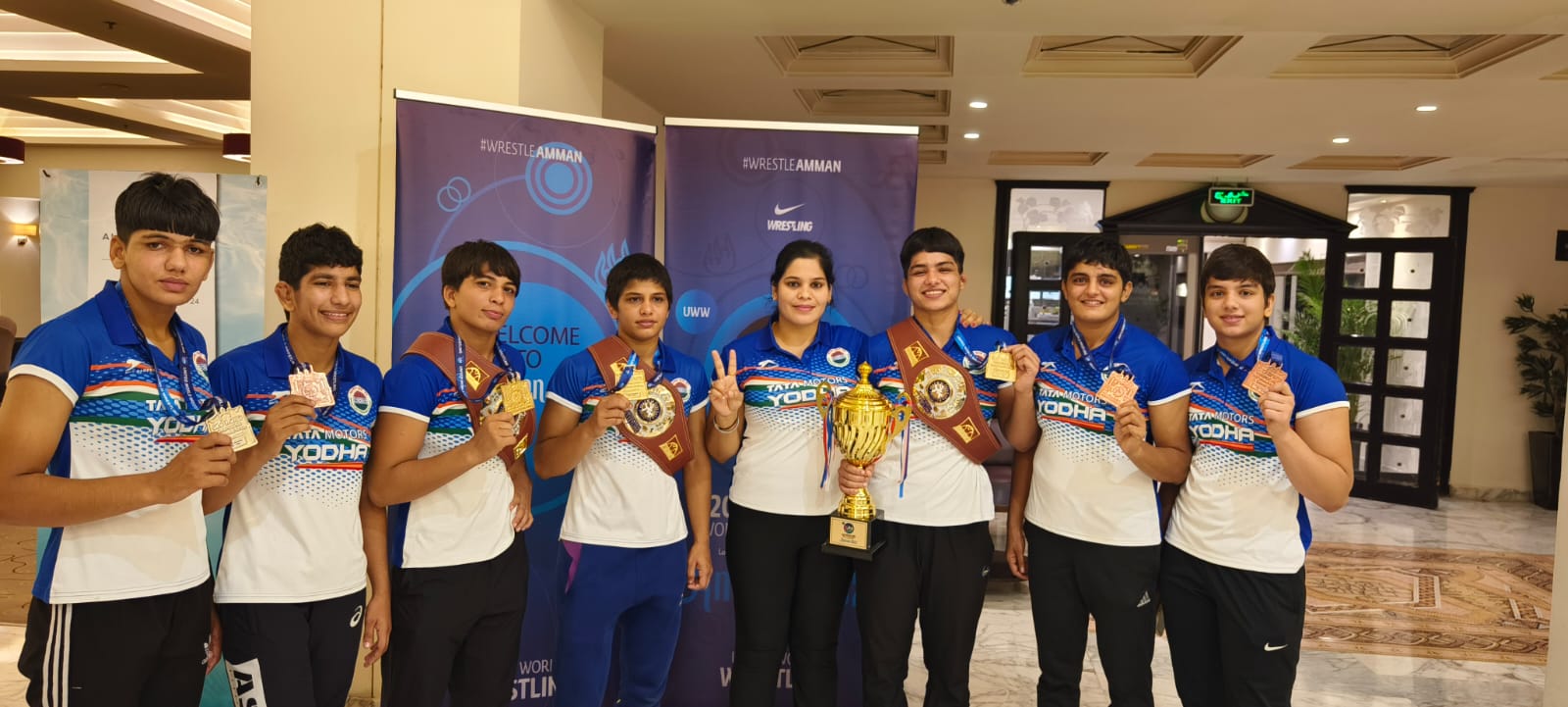
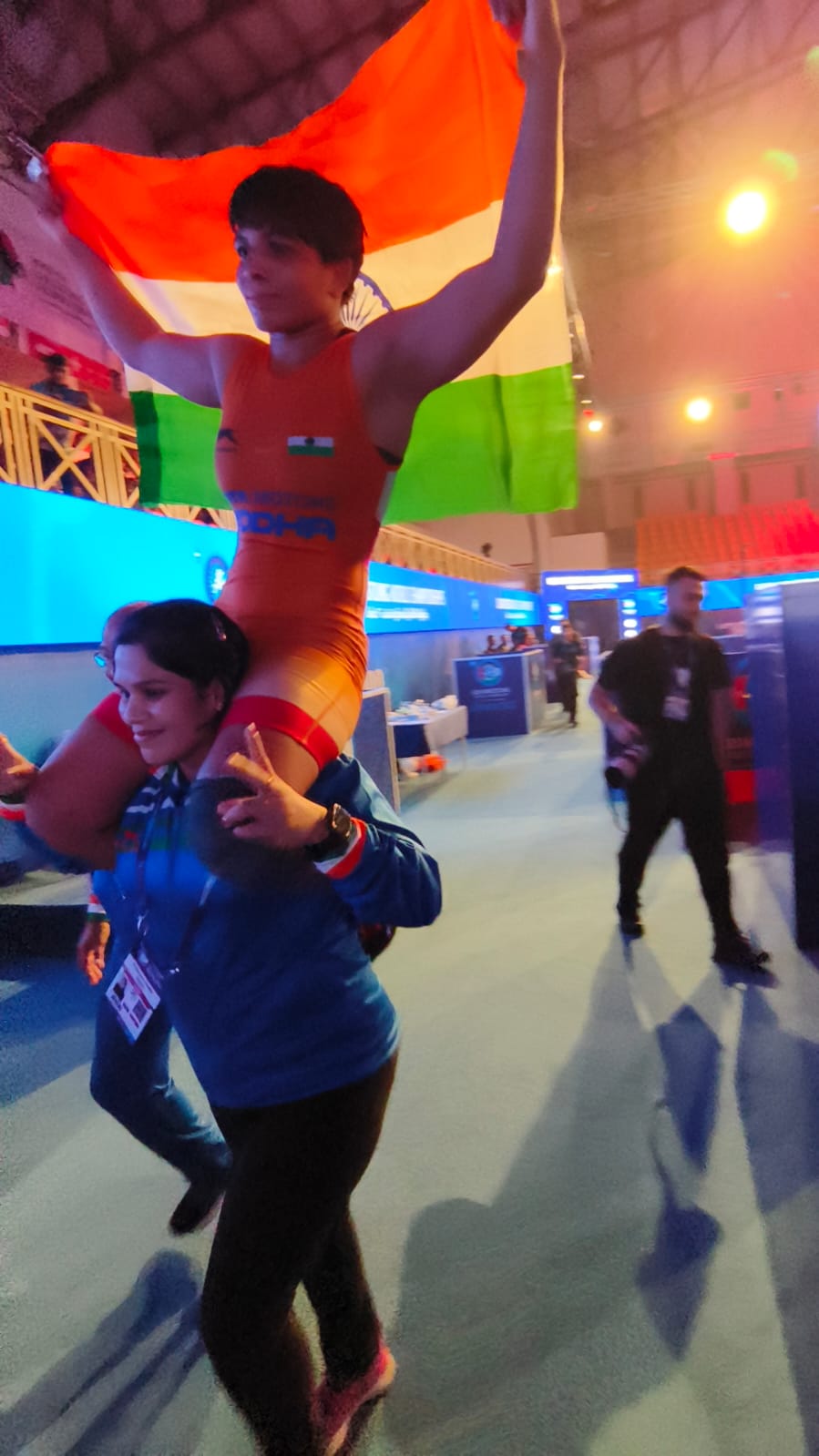
Coach Shabnam with her team

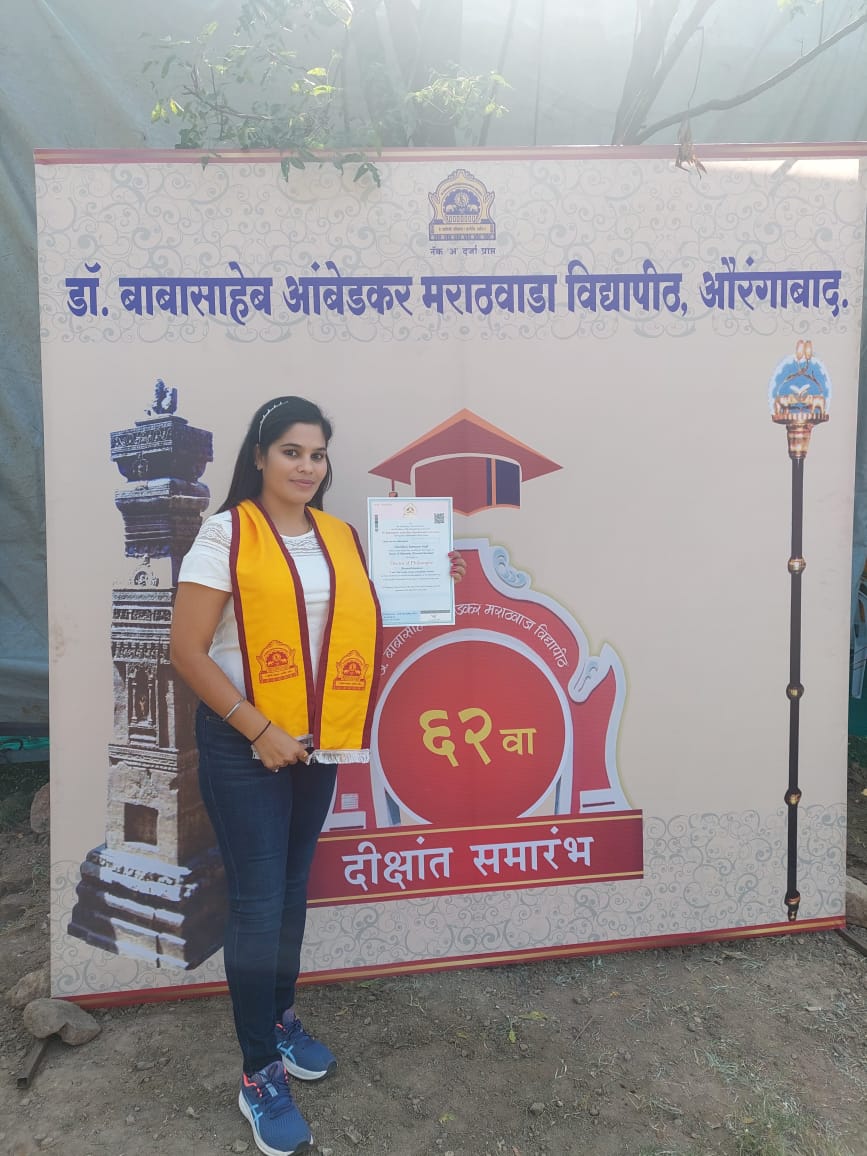
Shabnam completed her Bachelor of Physical Education (BPE) from Aurangabad (Sambhajinagar). She also got a diploma certificate in Coaching from the National Institute of Patiala, Punjab, and later did her Master’s from Babasaheb Ambedkar Marathwada University and then registered for her PhD studies.

Shabnam’s wrestling career began at the age of seven with her father as her coach. Shabnam says, “’My father is my first guru.”

Shabnam came from a family of wrestlers: her grandfather Sadarbhai Shaikh and great-grandfather were well-known wrestlers in the area. Their ancestral house has a wrestling arena where she watched male members of her family and neighbours practice wrestling. 

Shabnam had to face the scorn and disapproval of her extended family and relatives when she started practicing wrestling. People even asked her family why she was allowed to wear shorts.

Shabnam at the convocation of the University

Shabnam started with Kabaddi, a game that requires a lot of alacrity and stamina.

Initially, she did not get to enter the arena where her brothers wrestled, so she took to Kabbadi. “I used to think that if I wrestle and win that will be my victory. Even if I lose, it will also be my failure. Will happen… I expressed my desire to wrestle to my father. He responded positively.”

Shabnam’s father had a precondition for training her. He wanted her to concentrate on training and practice for the first two years. She started receiving training from her father and two elder brothers.

Every morning at 4 o’clock she was sent to pick lemons from their farm located about 10 km away. She learned the nuances of wrestling and participated in her first competition in Ludhiana (Punjab). She bagged a silver medal and there started her winning streak.

Shabnam says, “Once in my village, my father came to know about a competition in Delhi. I was just 10 years old at that time. He gave me a paper with the address written on it and a train ticket and wished me good luck for the journey.”

At that time she wondered why she was going alone, ‘Why don’t my parents come with me? But my father always used to tell me that some battles in life have to be fought alone,” she says going down memory lane.

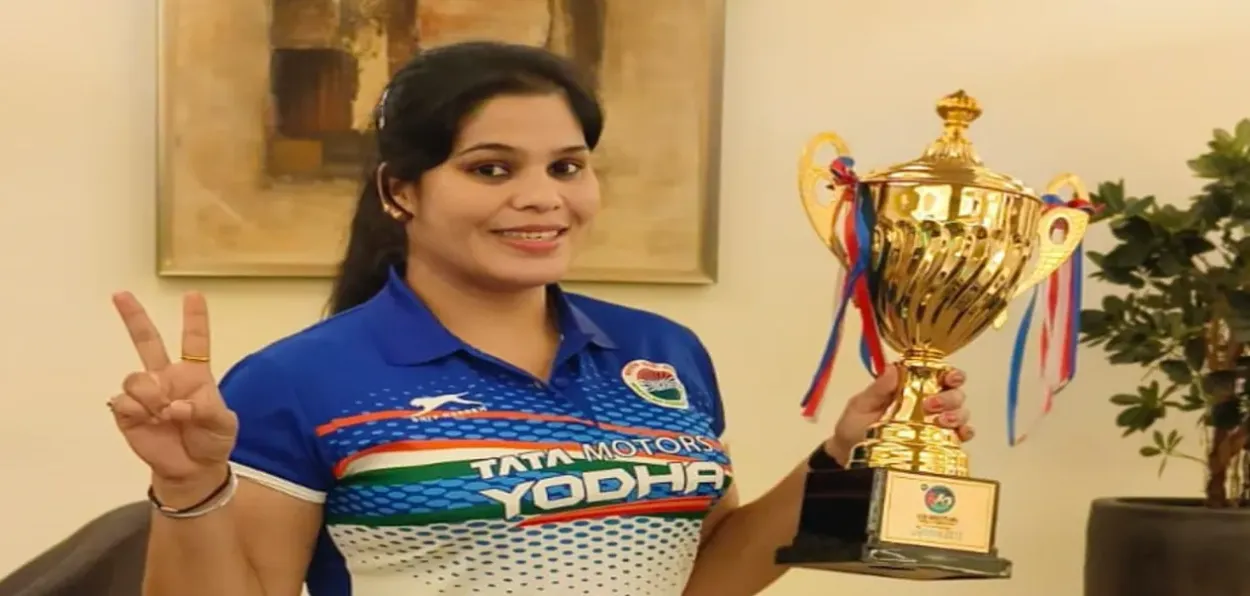
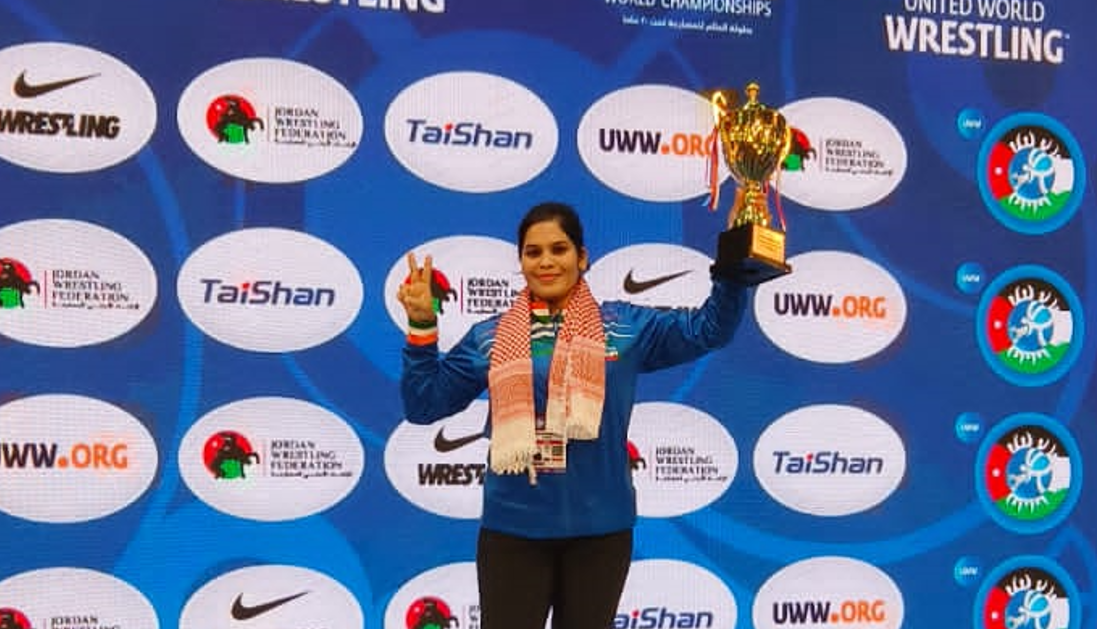
Shabnam Shaikh with her trophy

Shabnam won the title of ‘Women Maharashtra Kesari’ in 2010. She has won the gold medal in ‘Shirdi Kesari’ for three consecutive years since 2009, the gold medal in ‘Latur’ in 2011, gold medal in the ‘Maharashtra State Kustigir Parishad’ competition for six consecutive years.

She has also participated in four inter-university competitions, 10 national competitions, and more than 15 state-level competitions. In the national level ‘Great Bharatkumari Wrestling Competition’, Shabnam is the first winner not only from the Muslim community but also from Maharashtra.

Shabnam says her father taught her that one doesn’t need an outer veil. “Always keep the veil that differentiates between good and bad people in front of your eyes!” he told her.

Shabnam says, “People used to question my parents’ ways. A girl should not play sports like wrestling. Teach her to fast (during Ramazan) and pray. Don’t you want only boys to play wrestling? Hundreds of questions were asked but my parents did not let the pressure of society affect me.

“My father never changed his opinion under the pressure of society. He never let these things affect my game. I always got the support of my parents and my elder brothers.”

Shabnam’s mother Rizwana Begum says, “I have not two, but three ‘sons’! My brothers did not give me a share of our parents’ property. But, I will not let this injustice happen to my daughter. I will give her everything she deserves. Shabnam has brought glory to us. As a mother, I will always be proud of her.”

Shabnam’s thesis for her Ph.D. degree is ‘Comparative study of emotional maturity of rural and urban women wrestlers in Maharashtra’. She toured the entire state for research.

Shabnam is the first woman in India to do a doctorate in sports studies. While doing her Ph.D. in Wrestling, there were often deliberate attempts to embarrass and thwart her effort to earn a doctorate.

In the year 2017, Shabnam was selected as the junior coach of the Wrestling Women’s Association of India; she imparted wrestling training to Anushka Sharma and Salman Khan for the film ‘Sultan‘. Shabnam has represented India in Kazakhstan, and Uzbekistan.

She currently works as a ‘Senior Trainer’ in the ‘Wrestling Women’s Association’ of India. India has never had success in the ‘World Women’s Wrestling Championship’ till now. However, in the ‘Under-20 World Championship’ of 2023 India won seven medals in ‘Women’s Wrestling’. Out of these, three are gold medals.

Shabnam Shaikh after her victory in a foreign location

Dr. Shabnam Shaikh is today known as the ‘International Wrestling Coach.

Shabnam says, “I was selected as the coach of ‘Maharashtra Team’ for the national tournament held in Gujarat last year. Twenty-four hours ago, my name was canceled! I was not given any idea about this.”

“Many times, despite having the right credentials and qualifications, I am not given a chance. Probably, because I live with self-respect! I always think that when someone asks me, “How did you get all this?’ I should proudly tell him, ‘I have earned it through my hard work.’

Shabnam says, “Wrestling gave me identity. Sometimes I wonder, ‘Is wrestling a curse or a blessing for me?’ Initially, relatives and other people of the society hated seeing me wrestle.

“Later, when I started winning competitions, people would post the news of my success on their ‘status’ on various social media platforms and write the caption, ‘Congratulations and best wishes to our sister or relative.’

After reading the news of my winning, I became everyone’s relative at that time! But, they speak against me on behind my back! However, now they hesitate to speak against me openly!”

Shabnam says, “Most of the time I am rejected for marriage. I play wrestling. The suitors who come to see as a potential candidate for marriage, see my trophies and see ‘Doctor’ written next to my name. When they go home their answer is, ‘We don’t want such an educated girl.'”   

Shabnam continues to work hard to ensure that other girls do not face what she has.

Her advice to the youth: “No matter what happens, do not get tired. Do not give up the fight.” Her dream is to build a wrestling center for girls.

source: http://www.awazthevoice.in / Awaz, The Voice / Home> Story / by Chaya Kaveri / February 29th, 2024