Tag Archives: Muslim Women of India

Book Review: An Account Of A Life In Indian Politics

Barabanki District, UTTAR PRADESH :

This is just not another memoir of a politician happily or unhappily bounds to look back; the author, instead, talks like a grandmother narrating a story of post-independent India somewhat interlinked with the Congress.
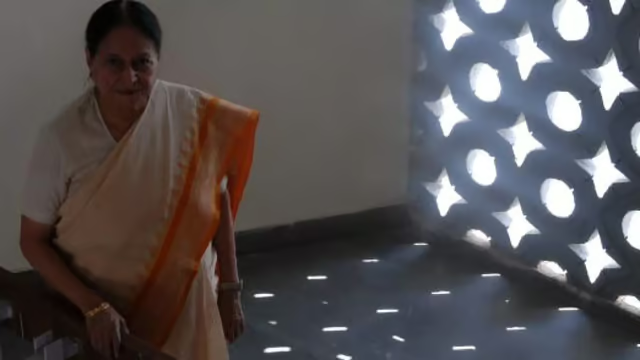
Mohsina Kidwai, author of the book ‘My Life in Indian Politics’

Book Review: Non-fiction (Memoir)/2022; My Life in Indian Politics by Mohsina Kidwai (As told to Rasheed Kidwai); HarperCollins, 300pp (Hardback)
 
Indian politics is a sort of ‘wonder’ and its unique existential positioning can’t be imagined without people behind its ups and downs. Reading the memoirs, especially of those who served in public life for long, is amongst the rewarding pastimes of a reader. I read Mohsina Kidwai’s memoir as a manuscript, and of course, I reread it even more carefully in its print version. Here is a candid account of a prominent political figure of India who dispels the stereotyped traditional notions that are usually expected to be self-centred and being extra boastful in the first person narrative.

Mohsina Kidwai has been in public life as a member of the Indian National Congress for over six decades. A cabinet minister in several successive central governments and a senior office-holder in the Congress, she has had a ringside view of Indian politics for almost the entire span of independent India’s existence. She has witnessed, and been a participant in, the tenures of prime ministers from Jawaharlal Nehru to Indira Gandhi and Rajiv Gandhi, and was a member of parliament until 2016, one of only twenty Muslim women to have been elected to the Lok Sabha since 1951. She has had a prolific track record that can’t be compared with her fellow women politicians, more so, from the Muslim community.
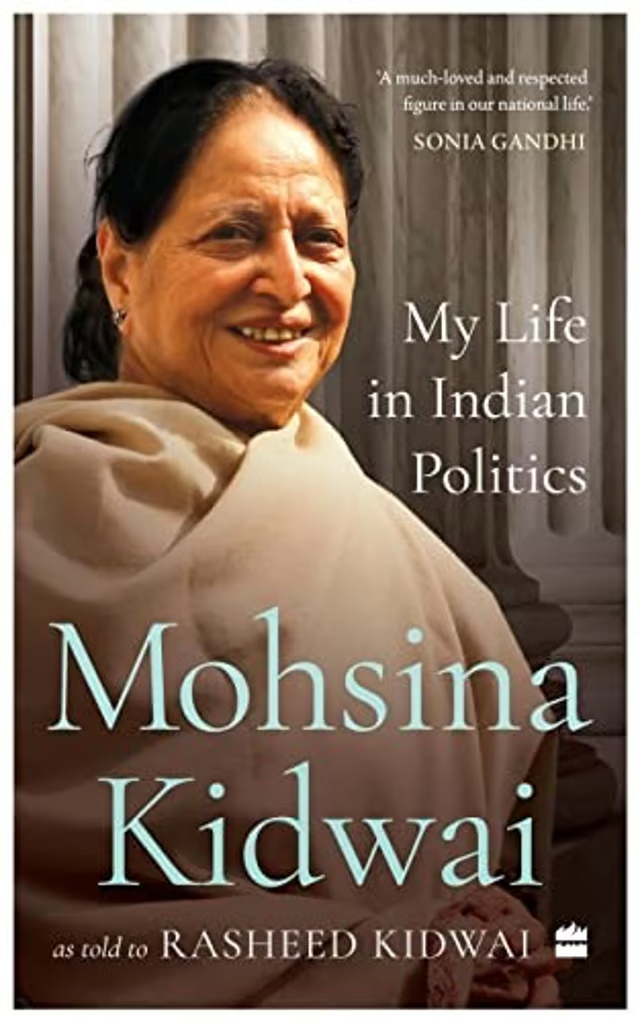
My Life in Indian Politics by Mohsina Kidwai

The book reflects well on her long and eventful life in politics and covers quite skilfully her contributions to public life, and also succeeds in providing an honest appraisal of the turn in fortunes of the political party she has remained a loyal member of over the decades. The author along with co-author and senior journalist Rasheed Kidwai, endow the readers with rare glimpses to homes, lives and hurly-burly of election campaigns from bygone era when Congress dominated the political landscape at centre and in the states.
 
One such memorable one was the Azamgarh bypoll in 1978, which Mohsina Kidwai won as Uttar Pradesh Congress Chief, and which signalled a revival of the Congress’s fortune after its spectacular defeat in the post-Emergency general elections of 1977. The book’s cover informs you and inside, the details and rich and beautifully presented. 
 
We get to see little known facts about India’s Prime Ministers Pandit Jawaharlal Nehru, Lal Bahadur Shastri, Indira Gandhi, Rajiv Gandhi and P V Narsimha Rao. Similarly, she is forthright in accepting that her move to join the breakaway Tiwari Congress in 1995 was a mistake.
 
Here is a quick recap of a few of them:
 
Mohsina Kidwai talks about an incident which happened when Lal Bahadur Shastri had visited Barabanki sometime in the early 1950s. “A few years after marriage, I saw Shastriji, who had come to meet my father-in-law. Jameel ur Rahman Kidwai Saab had stood for elections and Shastriji was canvassing for him. Shastriji was a simple man. Our domestic help, who did not recognize him, asked him where he was from. Shastriji, by then already a Union minister, replied that he had come in connection with the election and wished to meet Jameel Saab.
 
“He will return home in the evening,” the domestic help told Shastriji and asked him to wait. Shastriji waited. The servant served him tea.
  
In the evening, when my father-in-law returned, he saw Shastriji waiting.
 
A little embarrassed, my father-in-law scolded the servant for not informing him about the guest. After that Shastriji became a member of our extended family.” 
Some rarest accounts on Indira Gandhi: 
 
“Indiraji was extremely caring and attentive. I can go on talking about many instances. Sometime after the 1977 Lok Sabha polls when Indira ji was in opposition, she planned to visit Badrinath for puja. I and Narayan Dutt Tiwari and I accompanied her. It was an October month. We were told that puja starts at 4 am. Asking us to wait, she went to the temple for Puja. We were to start at 6 am on the return journey to New Delhi. At 5 am, Indiraji returned from the temple and checked whether all the vehicles of our convoy were ready. The pundit of the temple offered us breakfast. When we were having breakfast, the drivers were heating the engines of their respective vehicles. I told Indiraji, we had breakfast but poor drivers must be hungry. They have not even had tea as they were busy heating vehicle engines. I suggested we stop at the first tea shop in return for the drivers to have tea. She agreed.
 
Indiraji had the habit of carrying some snacks with her in a basket during travel. After a while I saw her taking out some biscuits from the basket kept beneath her seat. She tore the biscuits in four pieces and asked the driver to pick the pieces one by one from her hand while driving. She extended her hand carrying biscuit pieces and the driver did what he was told to do. Indiraji used to enjoy such affection and spontaneous display of it that it often stunned me and used to fill my heart with admiration and pride for my leader.”
 
“Indiraji could also sense what people around her were feeling. Once we were traveling by an overnight train to Gorakhpur and I suddenly realised I was alone with the Prime Minister in the first-class coupe. She sensed that I was a little uncomfortable and directed me to turn my face towards the wall and go off to sleep,” adds the author.

Undeniably, the book is written with honesty and simplicity, and should be better known as a work to assess an entire era in Indian politics. This is just not another memoir of a politician happily or unhappily bound to look back. She, instead, talks like a grandmother narrating a story of post-independent India somewhat interlinked with the Congress. The book is essential reading for anyone interested in knowing India, its democracy and the foundational stories of a remarkable journey.
 
(The author is a policy professional, columnist and writer with a special focus on South Asia. Views expressed are personal.)

source: http://www.outlook.com / Outlookindia.com / Home> Culture & Society> Book Review / by Atul K Thakur / January 07th, 2023
A Compelling Narrative of 1948 Police Action in Hyderabad

Hyderabad, TELANGANA :

Hyderabad, known for its grandeur and the unique confluence of Hindu-Muslim culture, found itself at a crossroads of political and religious tensions. Afsar Mohammad sheds light on the brutal military campaign, where the ordinary citizens of Hyderabad became casualties in a political power play between the Nizam and the Indian government. The book emphasizes that…

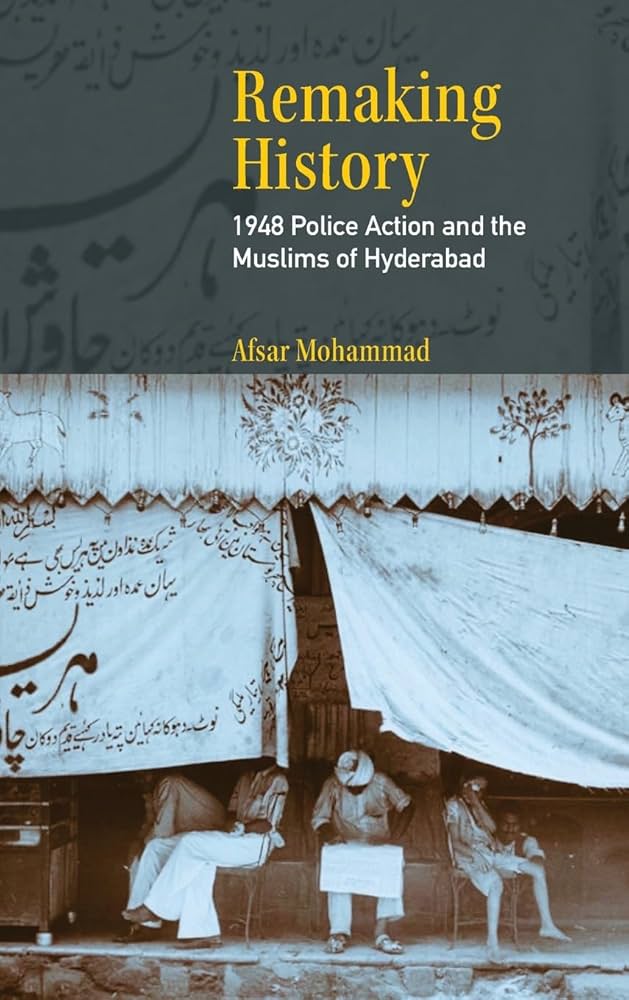
Book: Remaking History: 1948 Police Action and the Muslims of Hyderabad

Author: Afsar Mohammad / Publisher: Cambridge University Press / Published:June 2023 /Hardcover‏:‎ 320 pages

Afsar Mohammad, a renowned poet, scholar, and expert on South Asian literary cultures, brings forth a deeply researched and compelling narrative in his book Remaking History: 1948 Police Action and the Muslims of Hyderabad. As a professor of South Asian Studies at the University of Pennsylvania, Afsar has extensively studied the intersection of politics, religion, and literature in the Indian subcontinent. His previous works have explored themes of religious identity and cultural expression in the context of Hyderabad. With Remaking History, he delves into one of the most tragic and often overlooked episodes in India’s postcolonial history – the 1948 police action in Hyderabad.

The book addresses the military operation launched by the Indian government from September 14 to 18, 1948, to forcibly integrate the princely state of Hyderabad into the Indian Union. As India was celebrating its newfound independence, the state of Hyderabad was caught in a violent struggle. The operation, commonly referred to as the “police action,” resulted in immense bloodshed, with the Muslim population of Hyderabad suffering disproportionately.

Hyderabad, known for its grandeur and the unique confluence of Hindu-Muslim culture, found itself at a crossroads of political and religious tensions. Afsar Mohammad sheds light on the brutal military campaign, where the ordinary citizens of Hyderabad became casualties in a political power play between the Nizam and the Indian government. The book emphasizes that while the Razakars, a military group loyal to the Nizam, escaped across borders, it was the common Muslims of Hyderabad who bore the brunt of the violence that followed the military intervention. Thousands of lives were lost, and many more were displaced during the five days of turmoil.

One of the pivotal aspects of the book is its reliance on the Sunderlal Committee Report, an investigation commissioned by Prime Minister Jawaharlal Nehru in the immediate aftermath of the operation. This committee traveled across Hyderabad and the Deccan region, gathering firsthand testimonies from survivors. The report revealed shocking truths: thousands of Muslims were massacred during the police action, and the violence forced many others to flee to Pakistan and other countries. However, the report was suppressed for decades under the guise of “national security,” only surfacing in recent years thanks to the persistent efforts of historians. This suppression of critical historical evidence is a central theme of the book, as Afsar Mohammad argues that official narratives have long ignored or downplayed the extent of the violence.

In addition to exposing the atrocities committed, Remaking History explores how this dark period shaped the literary and cultural landscapes of postcolonial Hyderabad. The traumatic events of 1948 found their way into novels, poems, memoirs, and personal narratives written by survivors and their descendants. Afsar Mohammad highlights how literature became a means for the people of Hyderabad to process their grief, remember their dead, and make sense of the immense suffering they endured. The book documents the ways in which Hyderabad’s writers and poets used their work to preserve the memory of the police action, even as the official narrative sought to erase or obscure these painful truths.

Afsar Mohammad also critically examines the political reframing of the police action in later years. In 1998, L.K. Advani, a key figure in India’s Hindutva movement, proclaimed the police action as a “liberation” of Hyderabad, casting it as a moment of triumph rather than tragedy. This reinterpretation of history, the book argues, was part of a larger effort to further a communal agenda, obscuring the fact that the violence was largely directed at Muslims. Afsar Mohammad challenges readers to question whether the police action was truly a moment of liberation, or if it was a tool used to suppress the region’s Muslim population and further political interests.

One of the most striking aspects of Remaking History is the emphasis on the role of personal stories in reconstructing the past. Afsar Mohammad stresses that official documents and reports can only go so far in revealing the full picture. The true history, he argues, is often found in the personal memoirs, oral histories, and forgotten novels of those who lived through these events. Many of the eyewitnesses and survivors of the 1948 police action are no longer alive, their stories lost to time. However, the book insists that these personal accounts are essential to understanding the true scope of the violence and its lasting impact on Hyderabad.

The book also highlights the lasting cultural and social shifts that emerged from the violence. Despite the bloodshed, Hyderabad’s centuries-old legacy of Hindu-Muslim unity endured, and the city’s cultural landscape continued to evolve. In the years following the police action, a wave of literary and artistic movements arose, particularly in the Telangana region, shaping the social and cultural identity of Hyderabad for generations to come.

Afsar Mohammad’s Remaking History is a crucial work that brings much-needed attention to a neglected chapter in India’s postcolonial history. It challenges the sanitized narratives of Indian nationalism and raises important questions about the consequences of political violence. By combining rigorous historical research with a deep understanding of Hyderabad’s literary cultures, Afsar Mohammad presents a nuanced and powerful account of the 1948 police action and its aftermath. The book serves as both a historical investigation and a tribute to the resilience of Hyderabad’s people and culture in the face of adversity.

In conclusion, Remaking History is an essential contribution to the historiography of postcolonial India. It calls on readers to confront the uncomfortable truths of the past and reflects on how history is often manipulated to serve political agendas. Afsar Mohammad’s work is a timely reminder that the trauma of violence and suppression should not be forgotten, but instead, recognized and remembered in its entirety, for the sake of future generations.

source: http://www.radianceweekly.com / Radiance Viewsweekly / Home> Book Review / by Ayesha Sultana / September 24th, 2024

Doctors on board save passenger’s life mid-flight from Bengaluru to Kolkata

Bengaluru, KARNATAKA / Siliguri, WEST BENGAL :

The flight had three doctors on board and they managed to stabilise him and take him safely up to the Kolkata airport.

Doctor couple Dr MM Samim and his wife, Dr Naznin Parvin

Bengaluru :

High drama unfolded on an IndiGo flight that had taken off from Bengaluru to Kolkata on Saturday when a flyer in his 40s with preexisting health issues developed an emergency. The flight had three doctors on board and they managed to stabilise him and take him safely up to the Kolkata airport.

Dr MM Samim, who was conferred a gold medal just a day earlier during NIMHANS convocation, and his wife Dr Naznin Parvin, a paediatrician, along with a surgeon from MS Ramaiah Hospital saved the flyer’s life.

Man suffered from chronic liver issue

Their timely action also saved a potential diversion of the flight to Bhubaneswar airport and a disruption of weekend travel plans of 200-plus passengers.

The Flight No 6E 503 took off from Terminal 1 of Kempegowda International Airport at 10.42 am, which was late by 20 minutes. It was an hour later that the flyer, who is from West Bengal and works as a labourer in Kerala, developed breathlessness and threw up. He was travelling with his son to get himself admitted to a government hospital in Kolkata for his chronic liver condition.

Harilakshmi Ratan, a retired chartered accountant seated on 1B, told TNSE, “A flyer seated in the middle (Row no. 16) started vomiting blood. One of the cabin staff made an announcement appealing for doctors on board to assist the patient. Three of them stepped forward and saved his life.”  

Dr Parvin, who works at a private hospital in Siliguri, said they rushed to the patient. “He was struggling to breathe and was vomiting blood. His BP was low. We gave him oxygen from the cylinder and also administered drips with normal saline, all of which were available on the flight. The vomiting was brought under control immediately. Soon, the oximeter too showed a stable oxygen level (95),” Dr Parvin said.

Dr Samim, who is the recipient of Best Outgoing Resident in Doctor in Medicine (DM) (Neurology) and who also works at a private hospital in Siliguri, said, “Since the patient was not in a good financial position, I decided it would be better if he reaches his hometown. We had stabilised him too.”

source: http://www.newindianexpress.com / The New Indian Express / Home> Karnataka / by S Lalitha / October 06th, 2024

Social worker Farooq Siddiqui urges youth to apply for PM Internship Scheme, seeks support from NGOs and civil society

NEW DELHI :

New Delhi : 

Renowned social worker Farooq Siddiqui has launched a public awareness campaign urging students and eligible youth to register for the recently announced Prime Minister’s Internship Scheme. The initiative, aimed at providing valuable internship opportunities to one crore young Indians over five years in 500 top companies, has already gained momentum. Companies like Mahindra & Mahindra, Alembic Pharmaceuticals, and Max Life Insurance have listed over 1,000 internship positions as part of the scheme’s pilot phase on the first day of the portal’s launch.

Under the pilot, 111 companies have signed up, offering 1,077 internship positions across key sectors such as automotive, pharmaceuticals, and agriculture. The internship portal has been live for companies to list positions since October 3, and from October 12, eligible candidates can start registering for internships through the government portal http://www.pminternship.mca.gov.in

Siddiqui highlighted the scheme’s potential to empower unemployed youth by providing them with hands-on experience in top companies. “This initiative is a game-changer for our young people. I strongly urge NGOs and civil society organizations to help spread the word and encourage eligible candidates to register. This is a unique opportunity for skill-building and career development,” Siddiqui said.

The internship scheme targets youth between the ages of 21 and 24 who are not currently employed or enrolled in full-time studies. Eligible candidates must have completed high school, higher secondary school, or hold a diploma from an ITI, Polytechnic, or a degree in fields like BA, BSc, B.Com, BCA, BBA, or B.Pharma. The program, however, excludes those with higher qualifications such as CA, MBA, and graduates from IITs, IIMs, and other premier institutions.

Interns selected through this scheme will receive a stipend of Rs 4,500 per month via Direct Benefit Transfer (DBT). They will also be covered by the government’s insurance programs—PM Jeevan Jyoti Bima Yojana and PM Suraksha Bima Yojana—at no cost. Additionally, companies will contribute Rs 500 per month, and a one-time annual payment of Rs 6,000 will be made to the interns, bringing the total annual benefit to Rs 66,000.

Siddiqui noted that the first pilot phase, which involves a government investment of Rs 800 crore, aims to place 1.25 lakh youth in internships by December. He further emphasized the importance of reserving opportunities for marginalized groups, such as SCs, STs, OBCs, and the disabled, in line with government policies.

To ensure a smooth process, nodal officers will be appointed by participating companies to address any concerns raised by the interns. The government has also established a negative list of ineligible candidates, including those from families earning more than Rs 8 lakh annually or having a regular government employee in the family.

As the registration date for candidates approaches, Siddiqui stressed the importance of collaboration from all sections of society, urging more companies, banks, and financial institutions to join the scheme and offer internships. “This is not just about internships. It’s about building futures and enabling our youth to contribute to the nation’s economy,” he concluded.

Siddiqui’s call to action has resonated widely, and it is hoped that the collective efforts of the government, companies, NGOs, and civil society will ensure maximum participation in this impactful program.

source: http://www.indiatomorrow.net / India Tomorrow / Home> Education / by India Tomorrow Admin / October 04th, 2024

150 Educators honoured with AMP National Award for Excellence in Education in Bhopal

Bhopal, MADHYA PRADESH :

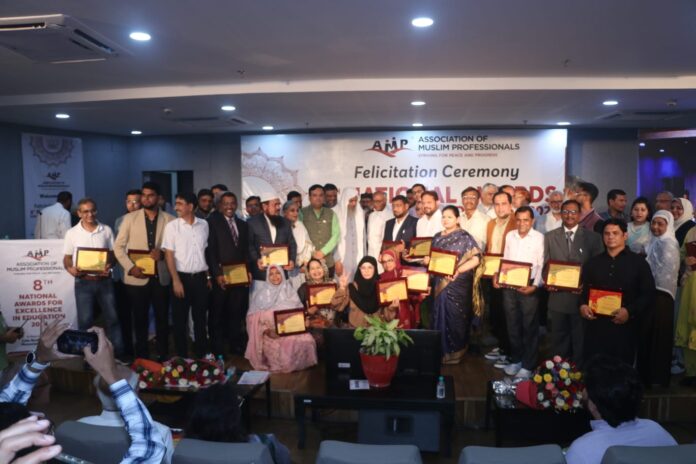
AMP awardees with guests on the stage.

Bhopal : 

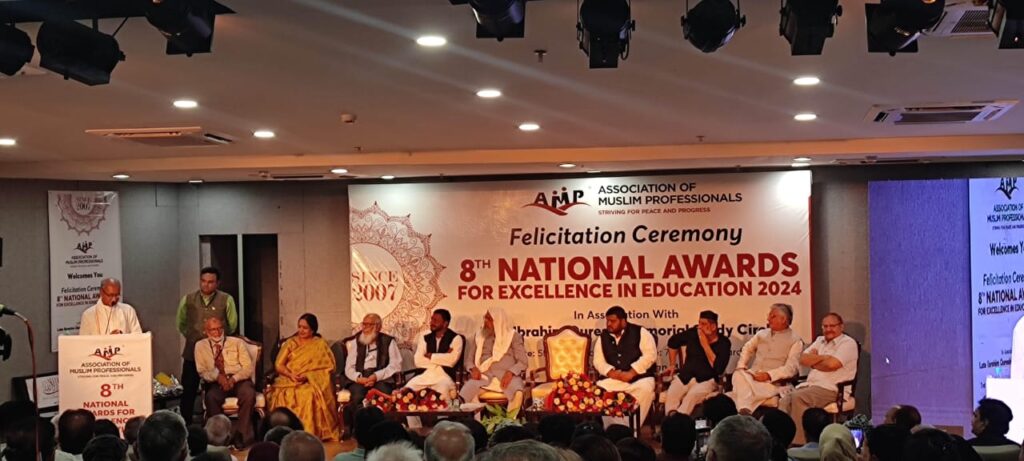
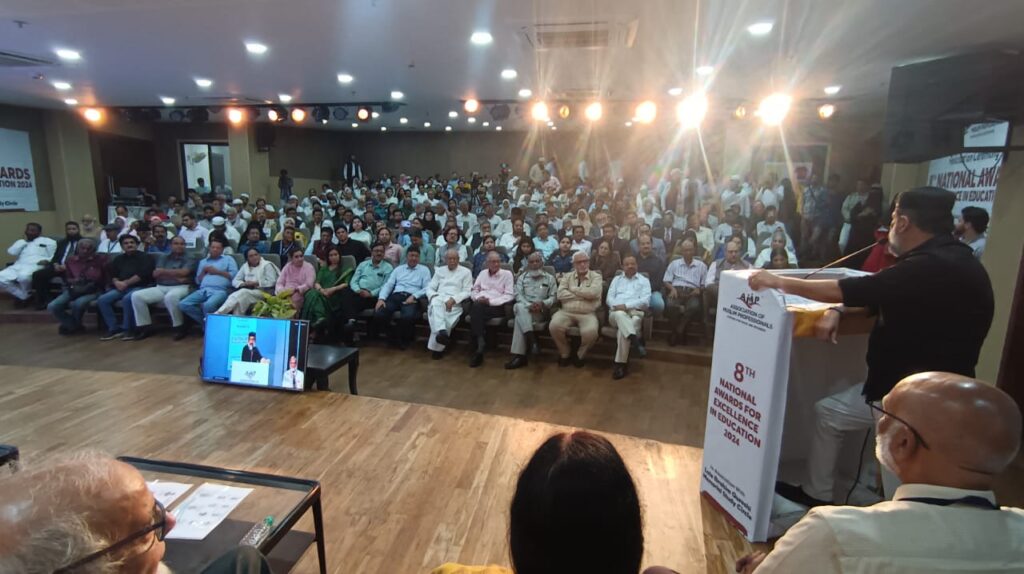
On Teachers’ Day, over 150 educators from around the world were celebrated with the 8th AMP National Award for Excellence in Education 2024 at a distinguished ceremony held at Ravindra Bhawan in Bhopal.

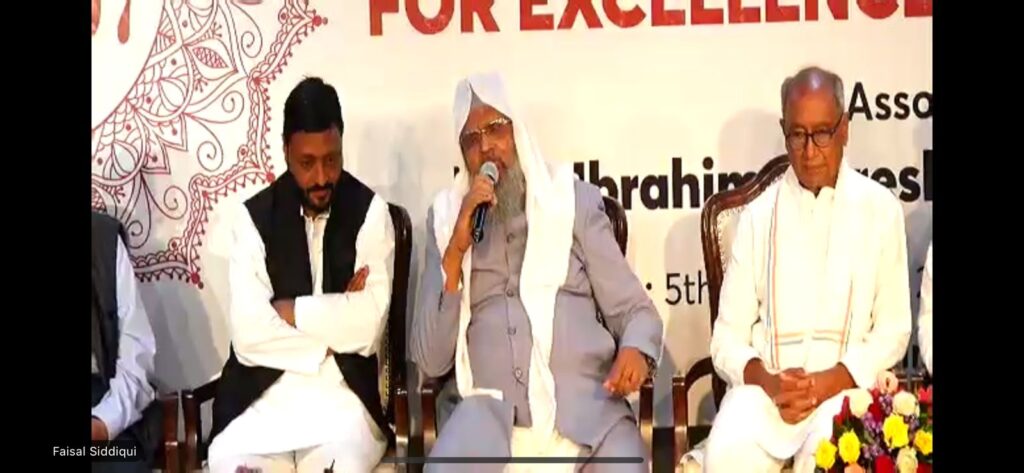
The event was presided over by Bhopal Shahar Qazi Maulana Syed Mushtaq Ali Nadvi, with former Madhya Pradesh Chief Minister and current Rajya Sabha Member Digvijay Singh serving as the Chief Guest.

The ceremony drew attendees from various educational backgrounds, including award recipients who were present in person, special guests, AMP members and volunteers, and members of the academic community. Many other winners participated virtually, and the event was widely followed on social media.

In his address, Bhopal Shahar Qazi Maulana Syed Mushtaq Ali emphasized the profound role of teachers, citing a saying of Prophet Muhammad (PBUH): “I have been sent only as a teacher to you.” He highlighted the Prophet’s impact through education and quoted Allama Iqbal, who praised the fertile soil of Hindustan for nurturing good deeds. The Qazi reminded attendees of the honor and responsibility of being a teacher, suggesting that a dedicated educator can approach the level of Prophets.

Bhopal Shahar Qazi Syed Mushtaq Ali speaking on the occasion, with senior Congress leader and former chief minister of Madhya Pradesh Digvijay Singh on his right.

Digvijay Singh commended the AMP initiative for uniting Muslim professionals to contribute positively to society. He stressed the importance of prioritizing education and healthcare for national progress. Singh noted the underrepresentation of Muslims in government jobs compared to SC/ST categories and highlighted the need for increased professional education within the Muslim community.

Senior Congress leader and former chief minister of Madhya Pradesh Digvijay Singh speaking on the occasion.

Singh also criticized the state of the education system, pointing to corruption and the prevalence of contract-based teaching positions, which he argued undermine the quality of education. He lamented the shortage of permanent teaching positions and the poor condition of many government schools.

A view of the audience

Prof. Furqan Qamar, former Vice Chancellor of the University of Rajasthan and Central University of Himachal Pradesh, delivered a keynote address advocating for increased participation in higher education and greater public investment to make education more accessible, particularly for rural populations, women, and landless laborers.

Dr. Usha Khare, a National Teacher Awardee and recently retired Principal of Jahangirabad Girls Government School in Bhopal, shared her inspiring journey of advocating for girls’ education in impoverished neighborhoods. She revealed that she donated her prize money from the Kaun Banega Crorepati show to her school and left significant assets upon her retirement.

The awards were presented in seven categories: Primary and Secondary Teachers, College and University Teachers, Principals/Heads of Institutions, Islamic Education (Arabic/Fiqh/Islamic Studies), Educational Institutions, Lifetime Achievement Awards, and the Late Ibrahim Qureshi Memorial Award. Prof. Furqan Qamar was honored with the Ibrahim Qureshi Memorial Award for his exceptional contributions to education.

Lifetime Achievement Awards were given to:

Hazrat Maulana Sayyed Muhammad Aqil, Shaikh-ul-Hadith, Mazahir-ul-Uloom, Saharanpur, UP

Jamaluddin Ahmad Khan, Former Lecturer, Halim Musim Inter College, Kanpur, UP

Sharifa A. Azeez, Correspondent, Crescent Matriculation H.Sec. School, Chennai, TN

Sheila Lawrence, Former Headmistress, Lucknow Christian College, Lucknow, UP

Additionally, 78 educators received Special Jury Awards in various categories, and 50 “My Favourite Teacher” Awards were presented based on votes from students and parents nationwide.

In Bhopal, local awardees included:

*Bushra Parveen, Oakwoods School (Primary & Secondary)

*Dr. Shazia Ali, Campion School (Primary & Secondary)

*Dr. Mohammad Athar, Institute of Excellence (Higher Education)

*Dr. M. M. Malik, MANIT (Higher Education)

*Dr. Sana Khan, Azim Premji University (Higher Education)

*Dr. Siraj Ahmed, MANIT (Higher Education)

*Prof. Dr. Ghayur Alam, National Law University (Higher Education)

*Prof. Asma Rizwan, People’s University (Higher Education)

*Dr. Abid Husain Saify, All Saints’ College of Technology (Higher Education)

*Dr. Faiqa Saulat, Trailblazer International School (Principal/Head)

*Ms. Nikhat Ara, A.U. School (Principal/Head)

The ceremony was also graced by Guests of Honour including MLAs Arif Masood and Atif Arif Aqueel, and Mohammad Wazir Ansari IPS (R), Former DGP – Chhattisgarh. They praised AMP’s significant achievements in education and employment over the past 17 years and commended the thorough selection process and professional execution of the event.

Farooq Siddiqui, Head of the AMP National Coordination Team, hosted the event, reflecting on AMP’s growth from modest beginnings to its present reach across over 200 cities and many countries worldwide.

Kalim Akhtar, Zonal Head – Central India, AMP NGO Connect, presented an English translation of the Holy Qur’an to Digvijay Singh, who accepted it with reverence.

Sajid Qureshi, Acting President of the Ibrahim Qureshi Memorial Study Circle, thanked AMP for their support in organizing the event, and Rafat Iqbal Farooqi, State Head – AMP Madhya Pradesh, offered the vote of thanks to all attendees and the Bhopal Chapter team for their hard work in making the event a success.

source: http://www.indiatomorrow.net / India Tomorrow / Home> Education / by Pervez Bari / September 09th, 2024

Welfare Yuva Karnataka Inaugurated Successfully in Kalaburgi

Kalaburagi (Gulbarga), KARNATAKA :

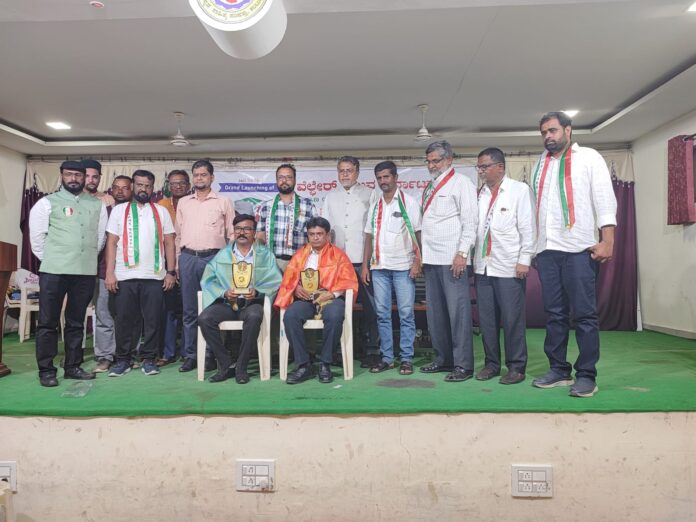
Yuva Welfare Karnataka unit of Kalaburgi.

Kalaburgi(Gulbarga): 

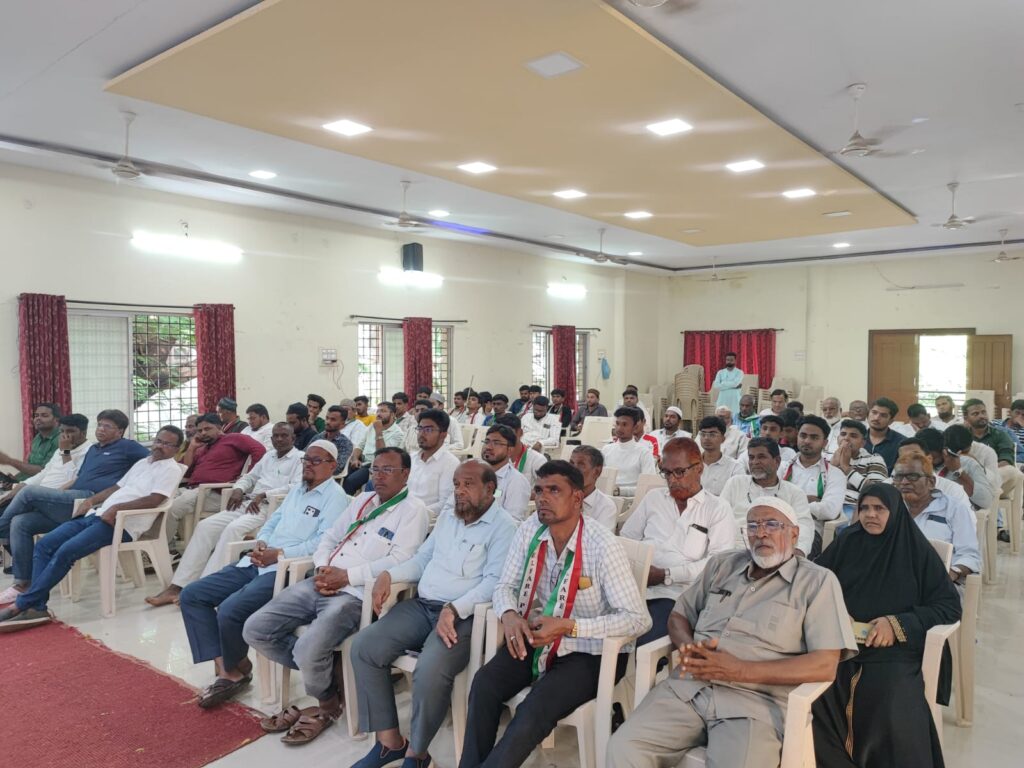
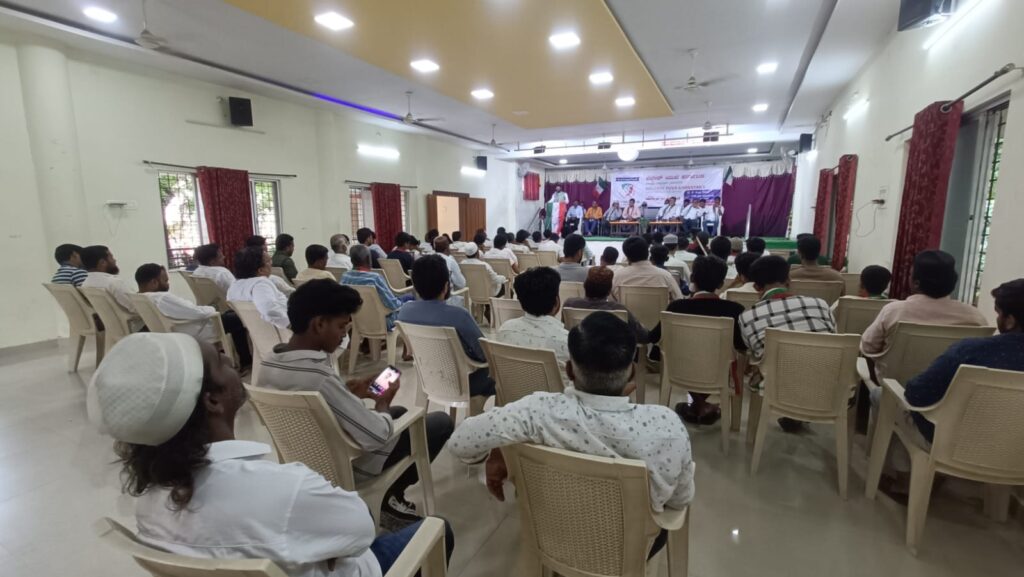
On August 8, 2024, Kalaburgi city witnessed the successful launch of “Welfare Yuva Karnataka,” the youth wing of the Welfare Party of India for the Karnataka State. The event drew enthusiastic participation from youths across various districts of North Karnataka.

The day began with a vibrant rally leading to the conference hall, where participants energetically chanted slogans. Advocate Taher Hussain, the state president of the Welfare Party, officially inaugurated the event. The flag of Welfare Yuva Karnataka was then ceremoniously handed over to Mr. Muhammad Rafiq, the state general secretary of the youth wing.

The assembly saw the participation of hundreds of youths from North Karnataka. The inaugural address was delivered by Mujahid Pasha Khureshi, the state vice president of the party. During the event, two notable achievers from Kalaburgi were honored with the Welfare Yuva Award.

Key addresses were made by Muhammad Rafiq, General Secretary of Welfare Yuva Karnataka, along with state secretaries Riaz Ahmed, Talat Yasmin, Mubeen Ahmed, Asif Bilikudri, and C.H. Salaam. The program concluded with a closing speech by Habibullah Khan, the state vice president. The event was skillfully hosted by Afzal Hussain Humnabad, the district vice president of Bagalkote.

source: http://www.indiatomorrow.net / India Tomorrow / Home> News> Society / by India Tomorrow Admin / September 09th, 2024

Ahamed beats mentor Jagan in a photo-finish; Dave twins hog limelight

Malappuram, KERALA / Chennai / Mumbai / Pune :

Sarah Khan wins maiden race in Apache RTR 200 class.

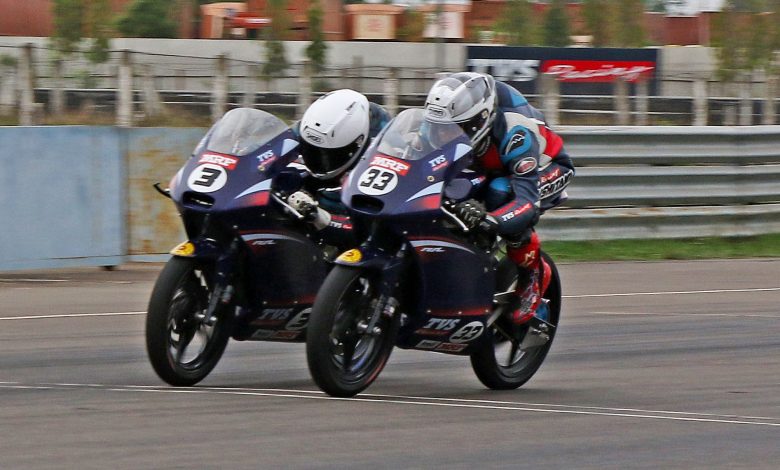
KY Ahamed (33) edging out Jagan Kumar to win the Pro-Stock 165cc Open race on 15 June 2024. Photo by Anand Philar

Chennai :

Two sets of siblings from Chennai hogged the limelight by winning four of the nine races on Saturday at the Madras International Circuit to light up the first round of the MRF MMSC fmsci Indian National Motorcycle Racing Championship 2024.

The 15-year-old Dave twins, Rakshith and Rakshitha took the honours in the Idemitsu Honda India Talent Cup (NSF 250R) and the National Championship Girls (Stock 165cc) races. It was a maiden win for both of them, in their respective categories.

Two other siblings, 28-year-old KY Ahamed (Pro-Stock 165cc Open) and his 17-year-old brother Abdul Basim (Novice 165cc), also won a race apiece to set off celebrations in both families.

Elsewhere, Sarthak Chavan, the 17-year-old from Pune, led a 1-2 finish for TVS Racing along with Bengaluru’s Chiranth Vishwanath, also 17, in the premier Pro-Stock 301-400cc category. The race was cut to four laps from scheduled six after a red flag stoppage following a Turn-3 crash (riders ok) and Sarthak, starting from pole, virtually destroyed the field on restart. Chiranth came in second, ahead of Hyderabad’s Sairahil Pillarisetty (Gusto Racing).

Sarthak, however, had a disastrous outing in the Pro-Stock 165cc Open race as he crashed when in the lead. On his exit, Sathak’s two TVS Racing team-mates, KY Ahamed and multiple National champion Jagan Kumar, were involved in a tight finish. Ahamed pipped his mentor Jagan in a photo-finish with another TVS Racing ace, Deepak Ravikumar, who had started the race from the pit lane, completing the podium. Chiranth, who was running second, also crashed, but resumed to finish fourth.

Also finishing on top step of the podium was Chennai’s Kaushik Subbiah Ganesan (RACR Castrol Power1 Ultimate) who won as he pleased in the Novice 301-400cc class that gained National championship status from this season.

Earlier, pole-sitter Abdul Basim, held off a strong challenge from Mysuru’s Tasmai Cariappa (Motul Sparks Racing) who led briefly in the penultimate lap but conceded the advantage. Basim went on to win with Tasmai and Coimbatore’s Abhinav G (Chandra LGE Racing) finishing second and third, respectively.

Rakshitha Dave, starting from P2, moved in front by Turn-2, deftly avoiding any jostling that was happening behind her, and enjoyed a trouble-free run for a commanding win. Another Chennai rider, Jagathishee Kumaresan (One Racing) and Ryhana Bee (Motul Sparks Racing) settled for second and third spots, respectively, while pole-sitter Ann Jennifer (Alpha Racing) came in a disappointing fourth.

“I am very happy to score my first-ever win in the National championship. I had a good start today and a trouble-free run after going into the lead early in the first lap. The bike too performed very well,” said a delighted Rakshitha.

Idemitsu Honda India Talent Cup: Rakshith Dave reigned supreme in the NSF 250R race after initial battle with the more experienced Mohsin Paramban (Mallapuram) with Bengaluru’s AS James finishing third. It was Rakshith’s first-ever win in this class. Incidentally, Rakshith’s twin sister, Rakshitha made her debut in this class and finished 13th.

TVS One-Make Championship: Coimbatore’s Senthilkumar C took the honours in the truncated Open (Apache RR 310) race that was reduced to three laps from six due to a red flag stoppage following an on-track incident. Jayanth Pratipathi (Chennai) came in second, ahead of Nagercoil’s Ajai Xavier M.

Harshith V Bogar from Bengaluru notched a dominating win in the Rookie category with second-placed Saranjith KM (Thrissur) finishing some 10 seconds behind. Vijayawada’s Akarsh Jangam was a distant third.

Mumbai’s Sarah Khan won the Girls (RTR 200) race untroubled from Pune’s Saimah Ajaz Baig and Aisvarya V (Coimbatore).

The results (Provisional, all 6 laps unless mentioned):

National Championship – Pro-Stock 301-400cc Open (Race-1, 4 laps): 1. Sarthak Chavan (Pune, TVS Racing) (7mins, 36.007secs); 2. Chiranth Vishwanath (Bengaluru, TVS Racing) (07:39.254); 3. Sairahil Pillarisetty (Hyderabad, Gusto Racing India) (07:41.470).

Pro-Stock 165cc Open (Race-1): 1. Ahamed KY (Chennai, TVS Racing) (12:04.178); 2. Jagan Kumar (Chennai, TVS Racing) (12:04.192); 3. Deepak Ravikumar (Chennai, TVS Racing) (12:14.569).

Novice (Stock 165cc) Race-1: 1. Abdul Basim RS (Chennai, Rockers Racing) (12:55.808); 2. Tasmai Cariappa (Mysuru, Motul Sparks Racing) (12:56.136); 3. Abhinav G (Coimbatore, Chandra LGE Racing team) (13:04.554).

Girls (Stock 165cc) Race-1 (5 laps): 1. Rakshitha Dave (Chennai, RACR Castrol Power1 Ultimate) (10:58.183); 2. Jagathishree Kumaresan (Chennai, One Racing) (11:03.012); 3. Ryhana Bee (Chennai, Motul Sparks Racing) (11:03.150).

Novice (Stock 301-400cc) Race-1: 1. Kaushik Subbiah Ganesan (Chennai, RACR Castrol Power 1 Ultimate) (12:17.257); 2. Lokesh V (Bengaluru, Pvt.) (12:23.458); 3. Varun Nanjundegowda (Mysuru, Gusto Racing India) (12:27.927).

Idemitsu Honda India Cup (NSF 250R) Race-1: 1. Rakshith S Dave (Chennai) (11:12.157); 2. Mohsin Paramban (Malappuram) (11:16.226); 3. AS James (Bengaluru) (11:16.669)

TVS One-Make Championship – Open (Apache RR 310) Race-1 (3 laps): 1. Senthilkumar C (Coimbatore) (05:56.457); 2. Jayanth Pratipathi (Chennai) (05:59.277); 3. Ajai Xavier (Nagercoil) (06:02.953).

Rookie (Apache RTR 200) Race-1: 1. Harshith V Bogar (Bengaluru) (13:43.666); 2. Saranjith KM (Thrissur) (13:53.770); 3. Akarsh Jangam (Vijayawada) (14:07.100).

Girls (Apache RTR 200) Race-1 (5 laps): 1. Sarah Khan (Mumbai) (11:19.075); 2. Saimah Ajaz Baig (Pune) (11:21.156); 3. Aisvariya V (Coimbatore) (11:23.221).

source: http://www.indiainf1.com / INDIA in F1 / Home> Non-F1> Domestic / by David Bodapati / June 16th, 2024

Atiqa Mir only Asian shortlisted for Iron Dames Young Talents programme

JAMMU & KASHMIR :

Winners will benefit from tailored development programmes and mentoring from experienced motorsport professionals at Iron Dames.

Mir will compete in the Iron Dames Young Talents selection round in Italy on July 29-30

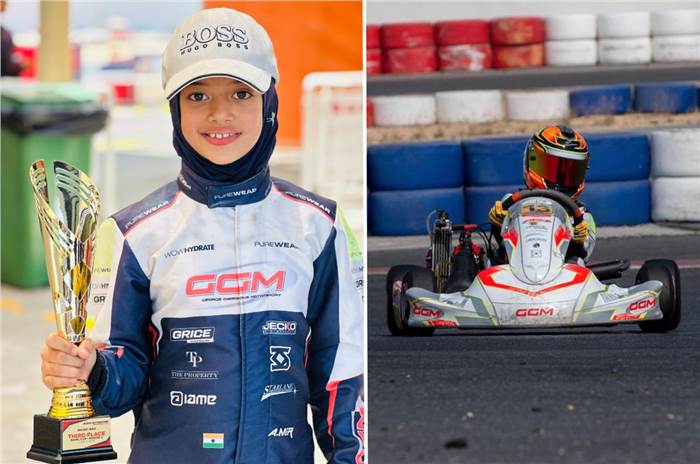
Nine-year-old Atiqa Mir, from Kashmir, has been shortlisted for the Iron Dames Young Talents programme. The new initiative has been launched by the same squad that made history last year as the first all-female team to win a race in the World Endurance Championship (at the 2023 8 Hours of Bahrain).

Mir is the only racer from Asia to be shortlisted for the first selection round that will be held at Italy’s Franciacorta karting track on July 29-30.

  1. First selection round in Italy on July 29-30
  2. Mir has top three results in the DAMC and UAE IAME Series

Iron Dames Young Talents programme

Iron Dames says the main goal of its new Young Talents initiative is to “identify and develop young kart racers between the ages of eight and 13”. A total of 20 young female racers have qualified for the selection round at Franciacorta, where they’ll compete in a series of scouting events.

Junior racing giant Prema Racing will help assess the candidates based on their driving skills, work ethic and “ability to embody the spirit and attitude of the Iron Dames”. Those who impress will earn the chance to join the Iron Dames stable and benefit from tailored development programmes, mentoring from experienced motorsport professionals and access to world-class training facilities.

Besides being the only Asian, Mir is also the youngest racer shortlisted in the Mini Category. “I’m truly honoured to be shortlisted for the Iron Dames Young Talent selection process. It motivates me further to perform and improve my skills as a driver. I will work hard and prepare myself better than ever to come out on top in the selections and make India proud,” she said.

Atiqa Mir: Climbing up the karting ladder

Mir has already built an impressive racing resume with outings in India, the UAE and Europe. She started karting at the age of six and made her competitive debut in 2021. Since then, she’s gone on to finish third overall in the 2023-24 DAMC (Dubai Autodrome Motorsports Club) Cup and second overall in the 2023-24 UAE IAME Series Rookie Championship.

Of course, racing runs in Mir’s blood. Her father, Asif Nazir Mir, was India’s first National Karting Champion and also raced in Formula Asia. “[My motorsport journey] started when I was three-four years old, watching my dad race at the Dubai Kartdrome,” Mir told Autocar India. “He gives me a lot of tips on the track, and we practice everything on our home simulator, which I drive on every day.”

Mir had competed in the Indian National Karting Championship in 2022. And she’s back this year, competing in all five rounds in the Micro Max category this time, racing for team MSport. And she’s already made a podium appearance, having finished third in Round 1.

This year, she also had her first taste of racing in Europe as part of the CEK (Campeonato de España de Karting) series. “The drivers are really competitive there,” she shared. “But the tracks there are like my style. That’s why I’m getting better and progressing.”

We’ve seen growing female participation in motorsport recently, further propelled by the new F1 Academy and even the success of Iron Dames. But there’s still a long way to go. “There are only three-four girls [competing in Europe with me], so not many, but they’re more than in Dubai. But that motivates me a lot,” added Mir.

She already has her sights on F1 and highlights Max Verstappen as a racer she looks up to. “I want to race in F1 because it’s the top 20 best drivers of the world, so it’s really rare to compete with them. I want to be the first girl driving in F1, and I want to do what’s never been  done before.”

source: http://www.autocarsindia.com / Autocar / Home> Motorsports News / July 09th, 2024

How NSS volunteers in Gujarat fought COVID crisis at the frontline

GUJARAT :

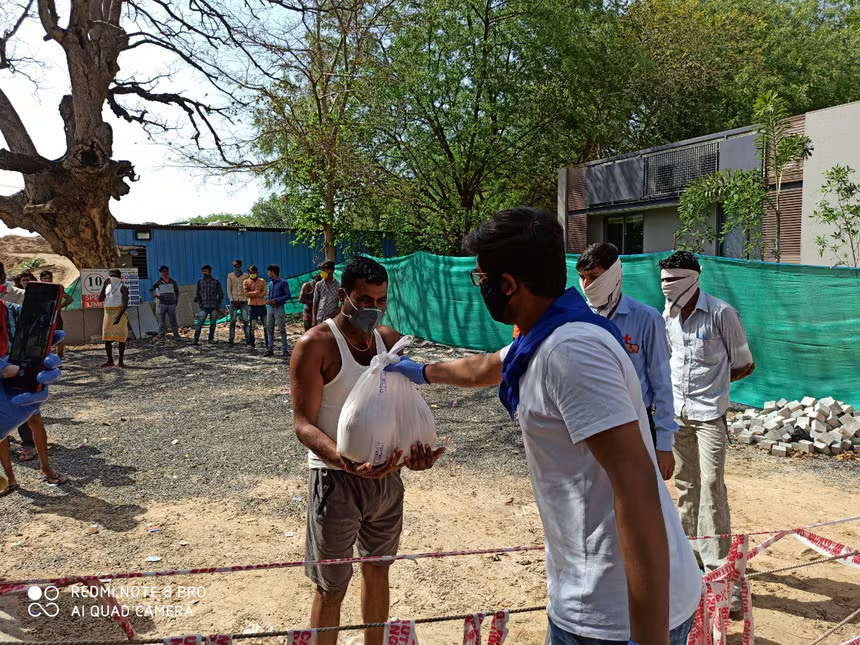
During the months of lockdown last year, NSS units in colleges across Gujarat mobilized resources for food, masks, sanitation.

More than 5,000 student volunteers associated with NSS units in universities carried out COVID relief projects during the initial phase of lockdown

New Delhi :

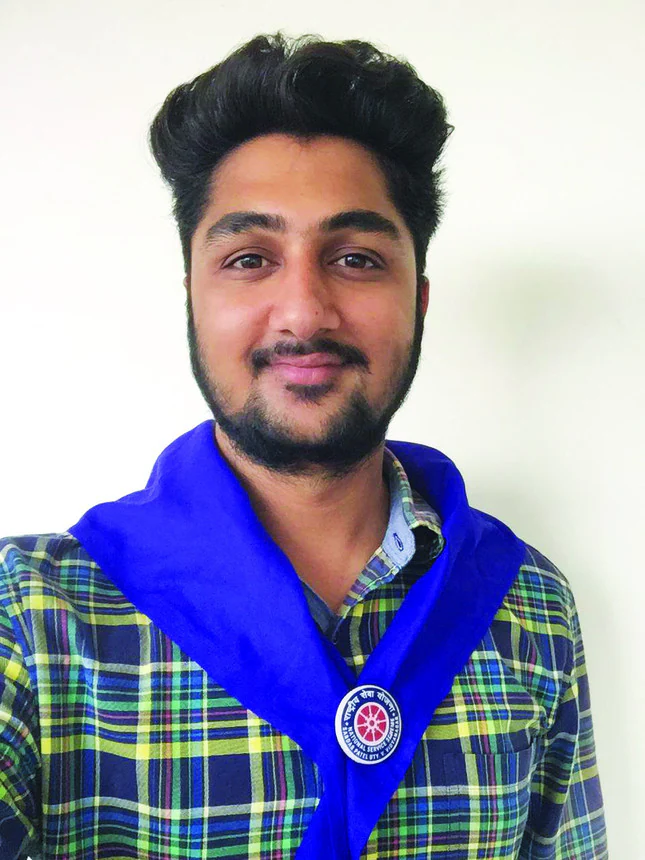
The risk of contracting a life-threatening virus and the lockdown did not discourage Shaikh Afzal, a final year student of LD Engineering College, Ahmedabad from stepping out to collect food grain for the people in need.

A volunteer with the government-led National Service Scheme, in his case the NSS unit of Gujarat Technological University, Afzal felt the need to be on the ground despite the inhibitions of his family members. While the country was under a nation-wide lockdown in March last year, volunteers like Afzal risked their lives to help migrant workers stranded for days without supplies.

“I have faced a shortage of food for days at home during the lockdown and I understood their situation. They have extremely limited means. I decided to help them despite the risks,” said Afzal who resides with his 70-year-old grandmother and five other family members. He spent two months distributing food kits in various parts of Ahmedabad.

Soon after the central government announced the countrywide shutdown to control the spread of the coronavirus, a wide range of problems emerged, especially for the working class. The lockdown was extended for nearly four more months. Having lost their jobs, thousands of migrant workers attempted to leave major cities for home. In the absence of food reserves, many were pushed into starvation and others struggled to make ends meet.

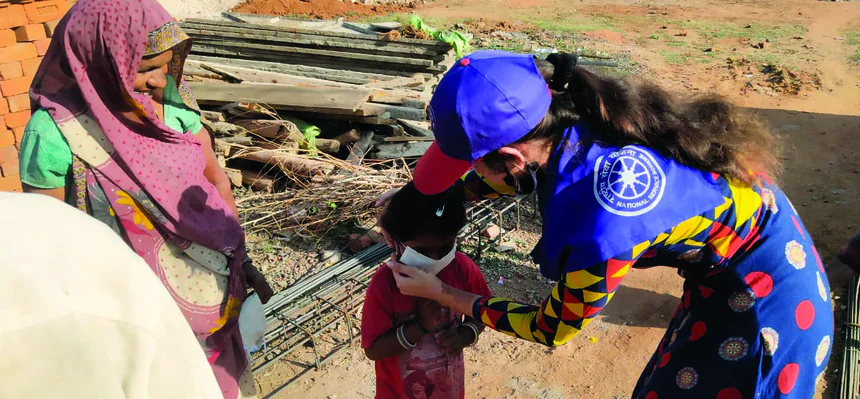
Like Afzal, more than 5,000 student volunteers associated with NSS units in universities across Gujarat carried out COVID relief projects during the initial phase of lockdown. From providing masks, hand sanitizers and dry ration kits, to managing large crowds along with the police, students participated in several measures.

Prompt relief in Ahmedabad

Ahmedabad, one of the major cities employing daily wage workers and construction workers from bordering states, experienced food shortages amid the extended lockdown. NSS units in various colleges kicked into action to provide ground relief.

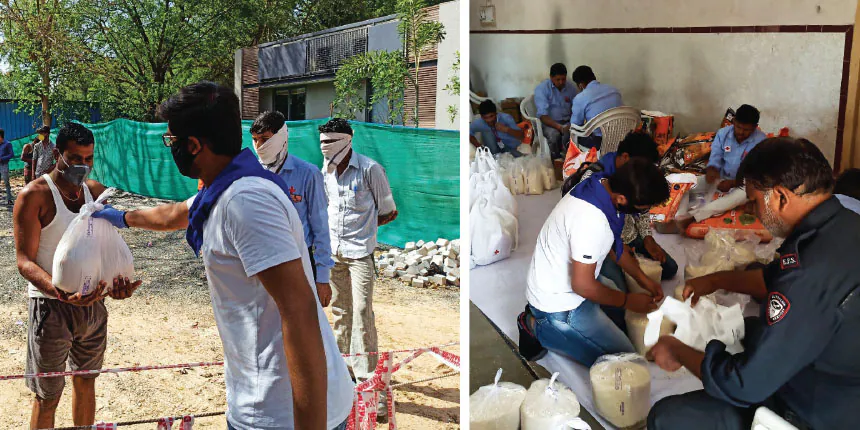
Along with Afzal, a team of 15 NSS and National Cadet Corps (NCC) volunteers in coordination with Ahmedabad’s district magistrate’s office conducted an extensive COVID relief drive. The team under the leadership of Chaitanya Sanghvi, the college’s NSS program officer, raised Rs. 3.69 lakh in donations from teachers and students’ parents to arrange for food kits. The volunteers distributed more than 12,500 kits in two months.

“A lot of parents were concerned about their [students’] health but my personal assurance that COVID safety measures will be taken while helping others made them feel confident,” said Sanghvi. “The students were given training by the GIDM [Gujarat Institute of Disaster Management] on how to respond to various challenges on the field,” he added.

Student of LD Engineering College, Ahmedabad distributing ration kits

Each day, for nearly two months, the team distributed 500 kits that sustained families of four for at least 10 days. On several occasions, the team members recalled being overwhelmed by the gravity of the situation on the ground. “Every day we would find a new challenge before us. We had to be cautious about our own safety while maintaining safe distance among those who came to collect the kits. The chaos escalated at times and we had to call the local police to maintain order,” said Deval Naika, a final-year mechanical engineering student.

The relief work began with 16 volunteers but the group expanded into a large team of 100 students after the initial phase of the project ended in success. The students were asked to work on the field in rotation. The effort, according to Sanghvi, helped families that were severely starved amid the lockdown. “I remember providing a food kit to a migrant worker’s family of 12 members. They told me that they were going to eat solid food after 12 days of starvation. There were small kids delighted at the sight of food. I will never forget that day,” recalled Sanghvi.

The team, in a tie-up with the Indian Red Cross Society, also conducted a blood donation drive for thalassemia major patients who were facing a shortage of blood supply during the lockdown. To allay the fear of blood donors, the team remotely reached out to the willing donors on mobile donation vans in various parts of Ahmedabad.

Porda village, Anand

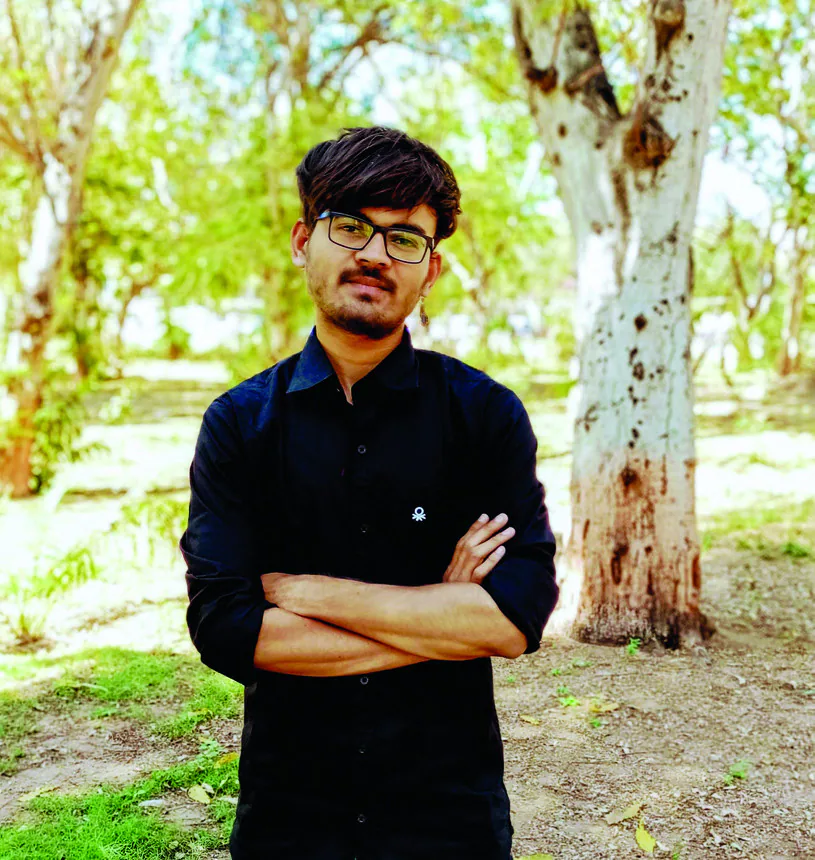
Another NSS volunteer, Kishan Nileshkumar Dave, studying in Natubhai V. Patel College of Pure and Applied Sciences, Vallabh Vidyanagar, managed to provide relief to 100 families in his village, Porda, in Anand district. The volunteers carried out a multifaceted relief drive which included the distribution of food, masks, sanitizing common gathering areas and distribution of Ayurvedic immunity boosters.

Dave and his group of 10 volunteers started a fundraiser to provide relief to the families struggling without any financial help in the period of lockdown. With the help of the village sarpanch and some of its well-heeled families, Dave managed to collect enough funds to feed the hungry for more than a month.

“The money was utilized to cook food and deliver to each villager in need. We also maintained meticulous records of people who require urgent help and avoided missing out on anyone who needed attention,” said Dave. This group also served food to the policemen and health-workers on
COVID-19 duty.

The team also engaged local tailors to sew 2,100 masks to be distributed in the community. In this way, they supplied masks to 920 families of the village and surrounding areas.

The volunteers also prepared herbal tonic under the supervision of the Ayurvedic Aushadhi Kendra of a nearby village, Aradi, and distributed it in Porda and the surrounding areas. Around 1,500 villagers received the immunity booster.

In addition, Dave also conducted a sanitization drive for 20 days. “Providing food and masks was not enough, we also used a sprayer machine and fogging machine provided by the Gram Panchayat and sanitized all the streets, milk collection centres, banks, and other areas of the village,” said Dave. Close to 900 houses of the village were sanitized. The volunteers also raised awareness among the villagers about the significance of personal hygiene, wearing the mask, washing hands frequently, and maintaining social distance.

As the lockdown caused huge losses for the farmers, this group brought vegetables from the village farmers and sold them at fair price to the villagers and residents of slum areas of the village like Indira Nagari. While some group members sold the vegetables, others helped maintain social distancing among the buyers.

Food delivery on national highway

With education institutions shut for months, many students had left the college campuses. They planned to contribute from home. Several NSS volunteers of Vishwakarma Engineering College, Ahmedabad, stepped up to help the migrant workers heading home along the National Highway eight. “Our NSS volunteers living close to the NH provided home-cooked food whenever possible to several families traveling on foot. Since the lockdown was sudden, it was difficult to provide funds. Therefore, each student utilised their own resources,” said Shiza Sheikh, a second-year student of electronics and communication.

At the beginning of COVID-19 lockdown, to meet the sudden rise in demand of masks, the students also distributed 1,500 hand-stitched masks from unused cloth they found at home and distributed it in various parts of Gujarat. “Even though students were scattered throughout the state, the NSS volunteers of our college were determined to help people who were in need. The students learned how to make masks through YouTube videos or by learning stitching from their parents,” Sheikh added.

source: http://www.news.careers360.com / News Careers360 / Home / by R Radhika / April 24th, 2021

City Muslim girl Sarah Rizvi takes Urdu route to IAS

Mumbai, MAHARASHTRA :

Mumbai:

Sarah Rizvi has done her bit to issue a blow to the stereotype of the Muslim woman, moderately educated and socially subjugated, ensconced in hijab. She has cleared the IAS exam, ranking 86th among 734 successful candidates. More remarkably perhaps, she has achieved the feat with Urdu literature as one of her optional subjects.
 

“Urdu is my mothertongue. I learnt Urdu and Persian from my late grandfather, Khalid Hussain Khan, who was a lawyer in Uttar Pradesh. I have read Urdu poems and novels since childhood. My Urdu writing speed was bad but I wrote a page a day and that improved my pace of writing,’’ Sarah said. Mohammed Iqbal was, for her, the most difficult poet to understand. “But his shayeri is fabulous,’’ she said of the Kashmiri poet who wrote Sare Jahan se achchha, Hindustan hamara.
 

After finishing BCom from MMK College in 2003, Sarah attended a lecture on competitive exams by K M Arif, educationist and chairman of Alliance Foundation. That inspired her to go for the IAS. “I tried twice but could not clear even the preliminary stage. This was my third attempt and, masha Allah, I passed,’’ the 25-year-old said, adding that her success was the outcome of 10-12 hours of study a day.
 

While doing her BCom, Sarah also completed her foundation course in chartered accountancy. “I wanted to become a CA but Dr Arif suggested I study for the IAS exam instead. I was clueless about the exam procedure and the requisite study material but my family supported me,’’ she said. Sarah was also awarded a scholarship by MESCO, an NGO.
 

Sarah is now posted as section officer in the Haryana Accountant-General’s office.
 

Sarah’s father, Afzal Ahmed, a science graduate, and mother Nigar, an arts graduate from Aligarh Muslim University, run a small garments business.

Her elder brother, Wasif, a civil engineer, is working for a company in Dubai and Sarah’s twin sister, Sameera, a graduate in computer applications, from National College, is married and lives in Bahrain. “I feel more Mulims, especially women, should go for the competitive exams. Many women don’t even know what these exams are about but awareness is spreading,’’ Sarah said.
 

“This subject gives us an inside knowledge of government administration. And the topics are similar to the business administration course matter I read in college,” Sarah said, explaining why she chose public administration over accountancy as one of the optionals.
 

Sarah did her schooling from Canossa Convent School and St. Louis Convent High School in Andheri. She later joined CWC College for Commerce and Economics and eventually graduated from MMK College with 75.7 per cent marks.

(Courtesy Times of India)

source: http://www.ummid.com / Ummid.com / Home / by Mateen Hafeez, TNN (headline edited)