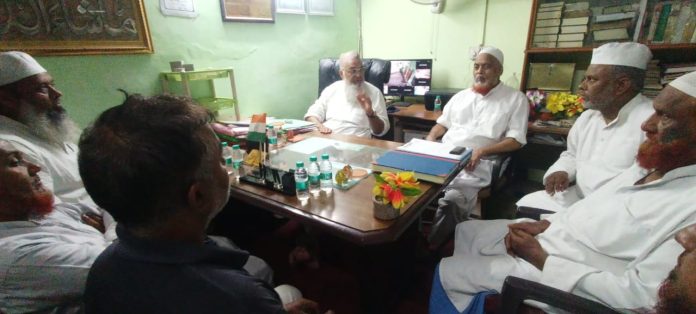
The annual meeting of the Executive Council of Rahmaniya Education Society was held at Darul Uloom Rahmaniya (a branch of Nadwatul Ulama, Lucknow), located in Sangam Vihar, New Delhi, under the chairmanship of Maulana Muhammad Khalid Nadwi Ghazipuri. In this meeting, renowned social figure and medical expert Dr. Syed Ahmad Khan was unanimously elected as the new President.
On this occasion, after presenting the Secretary’s report, Maulana Muhammad Khalid Nadwi Ghazipuri congratulated Dr. Syed Ahmad Khan on his new responsibilities and extended best wishes to him. The meeting conducted a thorough review of the educational and training activities of the madrasa and deliberated on its infrastructural needs. Additionally, the proposal for the annual increment in the salaries of the madrasa’s teachers and staff was approved.
The meeting also considered the inclusion of certain necessary contemporary subjects in the madrasa’s curriculum. In light of this need, a structured plan of action was prepared and a proposal was made to implement it.
Special participants in the meeting included Maulana Shamsul Haq, Dr. Obaidur Rahman, Haji Syed Zahid Ali, Abdul Ahad, Muhammad Ishaq Khan, Muhammad Sabir, and Me’raj Khan Nadwi, all of whom shared their thoughts and emphasised the importance of expanding educational and training programmes at Darul Uloom Rahmaniya.
The meeting concluded with an emotional prayer led by Maulana Muhammad Khalid Nadwi Ghazipuri, and a vote of thanks was delivered by Maulana Me’raj Ahmad Nadwi.
source: http://www.radiancenews.com / Radiance News / Home> Latest News / by Radiance News Bureau / July 07th, 2025
Urdu periodicals, with their dwindling readership, often showcase uninspiring articles, predictable poetry, and pedestrian fiction.
Amidst mediocrity all around, there exists a pressing need for thoroughly researched and academically rigorous articles that challenge erroneous, yet widely accepted notions about the world around us.
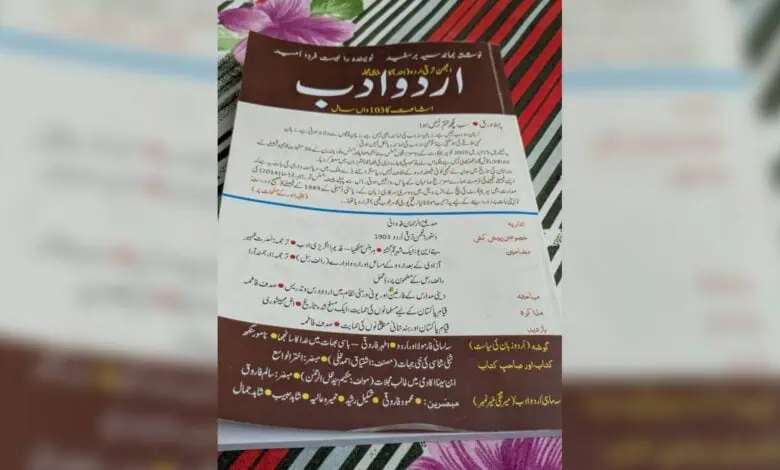
Some literary journals, including Bunyad (Lahore), Urdu Adab (Delhi), Isbaat (Mumbai), and Istefsaar (Jaipur), go beyond what common sense dictates. The latest issue of Urdu Adab, a quarterly publication of Anjuman Tarraqi Hind, bears testimony to this, as its content stimulates the intellect of its readers with a sense of exuberance.
The astutely edited journal by Ather Farooqui features three equally incisive and thoroughly researched articles on the much-maligned role of North Indian Muslims during the Partition, Madrassa students and understanding literature, and Namwar Singh’s tirade against Urdu. Unlike other run-of-the-mill literary journals in Urdu, the journal focuses on the dynamics and politics of language, which refers to the social and political implications of language use and the power dynamics inherent in cultural discourse. Also, it explores consequential questions related to culture and social consciousness. The influence of language on identity and the power dynamics inherent in cultural discourse also come under scrutiny in enriching academic discourse.
The overwhelming support of Muslims in the United Province for the Muslim League in the 1946 assembly elections, which was a sort of referendum on the partition issue, is often regarded as a truism; however, it does not sit well with veteran journalist and author Anil Maheshwari. Urdu Adab presents an article by him, “Support of Muslims for the Formation of Pakistan: A Distorted History: in light of the results of the decisive assembly elections in UP in 1946. Anil’s article, based on archival research, challenges the commonly held belief that the 1946 elections were a clear mandate for the Muslim League. He marshals many pieces of credible evidence that deflates the myth and suggests a more valid interpretation of the results.
Joining Ayesha Jallal (1994) and Christopher Jafferlot (2015), as well as a plethora of celebrated historians, Anil points out that Muslims in the United Province Assembly elections of 1946 did not vote overwhelmingly for the Muslim League. Voters comprising only 5% of the Muslim population cast their votes for the Muslim League, according to the official report of the 1946 elections. Placing the 1946 elections in the context of the universal adult franchise, he points out that only 3% of Indians could vote for the central assembly, while in the provincial assemblies, only 13% were allowed to vote. The article appeared in a reputed periodical, Economic and Political Weekly, laced with incisive interpretation, cogently concludes, “Had the partition of 1947 not occurred, Muslims would have constituted approximately one third of the population of an undivided Indian subcontinent. This demographic would have secured a majority in three to four states, providing them with a substantial and equitable stake in the political framework.”
A promising historian, Muhammad Sajjad, in his perceptive book on Muslim politics in Bihar, also connotes the same conclusion.
With an occasional rhetorical flourish, Anil inveighs against left historians for perpetuating this sort of falsehood.
Irfan Habib, Mazharul Hasan, and Bipan Chandra, too, did not place the onus entirely on Muslims, and HM Serwai’s book, Partition of India: Legend and Reality, provides an alternative understanding.
The article is supplemented with a stimulating critique by Sadaf Fatima, who holds the view that our reputed historians have glossed over the facts, thereby fostering anti-Muslim discourse. One tends to agree with the opinion that Indian Muslims got closely associated with Pakistan. The author seems too harsh when she accuses left historians of holding Jinnah mainly responsible for the partition, as they took Nehru’s side for personal interests.
It is a rare occurrence in Urdu periodicals for an article to spark such a polemical debate as Sadaf Fatima’s piece on madrassa graduates and the teaching of Urdu at universities. There is no denying the fact that most of the Urdu faculty at various universities are the product of oriental syllabi, who lack even rudimentary literary and aesthetic indoctrination. Curiously, the Madrassa’s students get admitted to a postgraduate course in Urdu literature. Sadaf Fatima makes this point pertinently and asserts, “It is incontestable that students are well short of foundational awareness about literature who join university as a postgraduate student of Urdu or opt for Urdu as an optional subject at the graduate level after graduating from a madrasa. Urdu literature does not appear in the syllabi of the madrassas. Urdu literature draws its sustenance from a literary culture that is composed of several local cultures and linguistic practices, reflecting centuries of shared heritage.
A student joining a madrassa at the age of 7 or so has no inkling of the cultural ethos of Urdu, which exists in his milieu.” Her cognate observation sparked controversy, and a smear campaign was launched against her and the editor, Ather Farooqui. Some well-meaning authors and journalists, including Ashar Najmi, Shakeel Rasheed, and Masoom Moradabadi, saw reason in her arguments. It is perplexing to see many vituperative postings on social media.
The author, while expressing deep concern for madrassa-educated students occupying positions in Urdu departments, made it clear that the solution does not lie in prohibiting their direct admission to courses in Urdu literature. There is an urgent need to equip students with literary and aesthetic sensibilities when they join the courses.
An exclusive section is devoted to the politics of the Urdu language, featuring two articles: “Three Language Formula” by Ahter Farooqui and a translation of “Basi Bhaat mein Kuda ka Sanjaha” by the prominent Hindi critic Namwar Singh. An avant-garde Hindi journal, Hans, published Namwar’s highly unreasoned and zealous article in 1987, and Athar Farooqui produced its Hindi text with the translation. In the introductory note, the editor points out that it unfailingly lays bare deep-seated venom against Urdu. Despite being committed to a shared linguistic and cultural legacy, Namwar Singh was bent upon declaring modern Hindi a separate language and restricting Urdu to Muslims only. It is the first instance when a cardholder Marxist critic launched a tirade against Urdu. The editor picked up many holes in the article; this aside, it has the traces of Namwar Singh’s speculative intelligence.
Ather Farooqui spelt out the contours of the three-language formula without taking recourse to official jargon and statutory regulations. An accomplished translator, Arjumand Ara produced an excellent translation of Ralph Russel’s insightful and detailed article on the Problems of Urdu and Urdu Organisations after the partition. Feedback on Russell’s article is also included.
Ather Farroqui deserves accolades for bringing out such an intellectually stimulating function.
source: http://www.siasat.com / The Siasat Daily / Home> Opinion / by Shafey Kidwai / June 21st, 2025
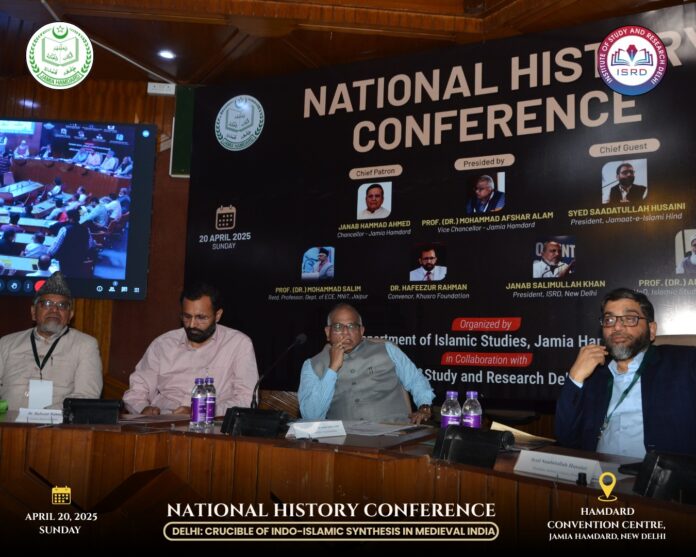
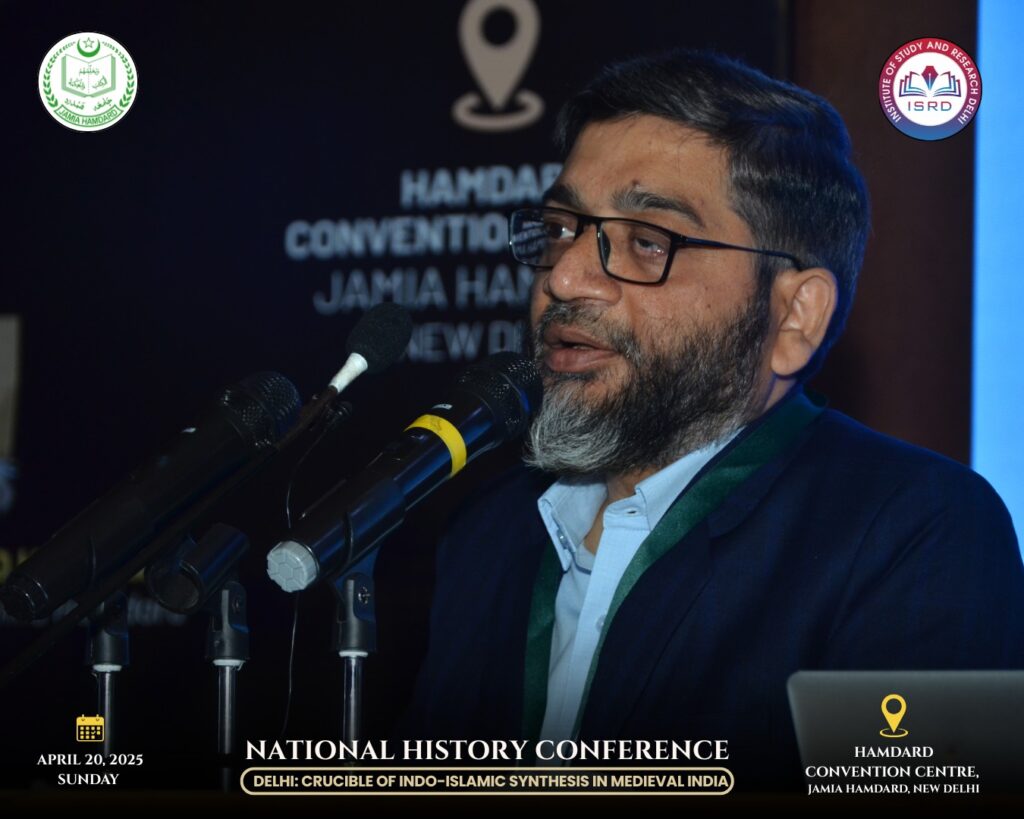
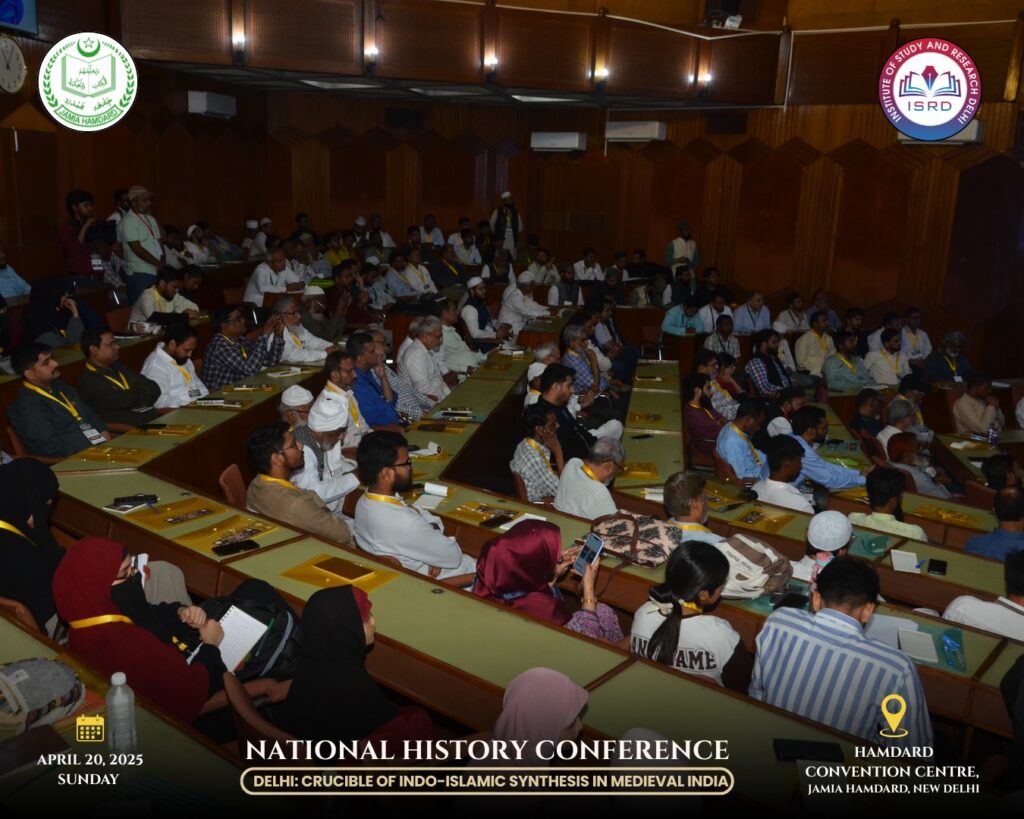
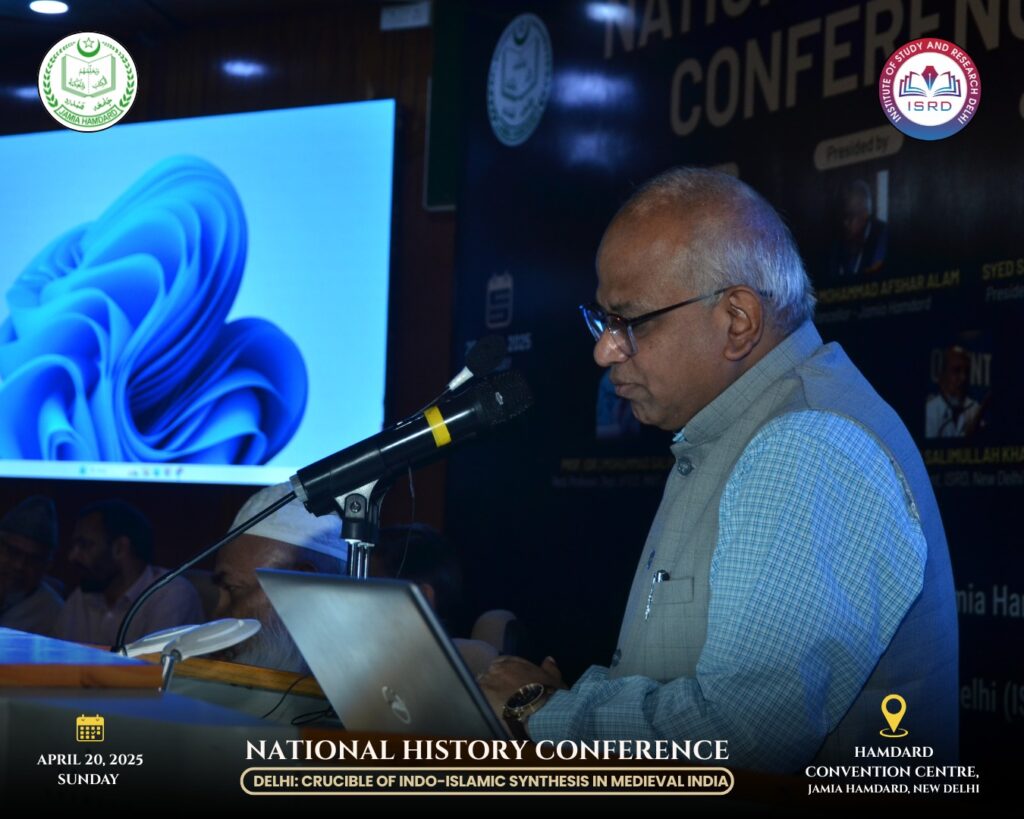
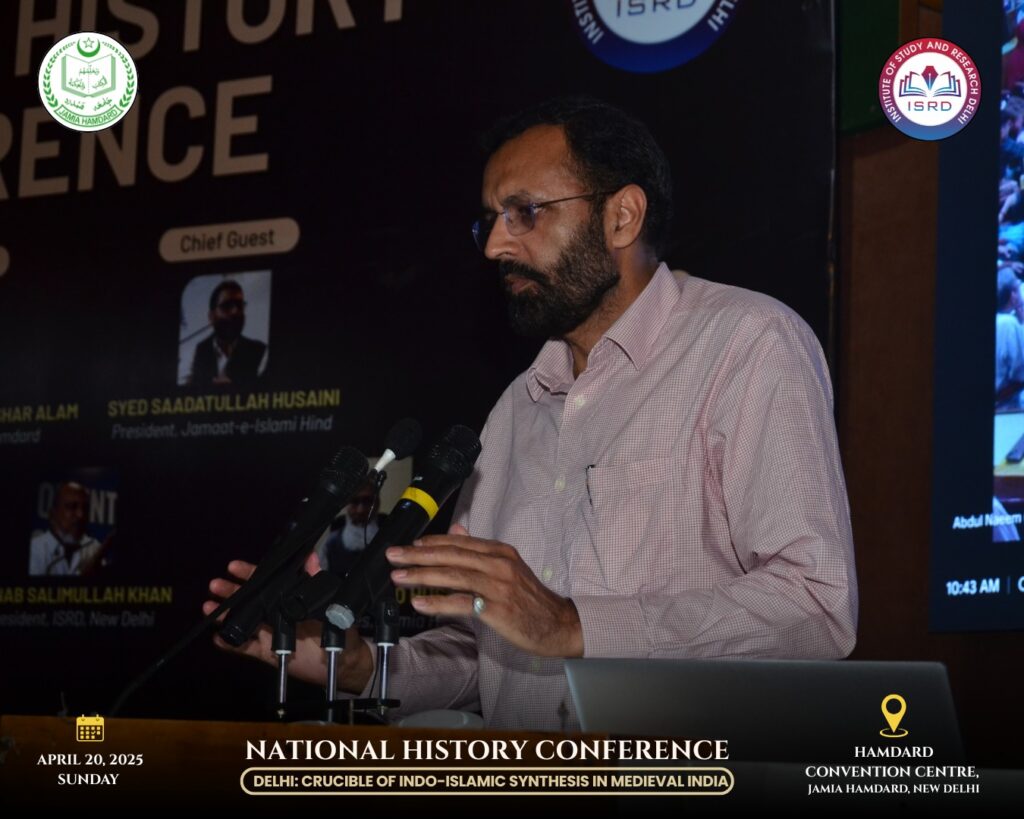
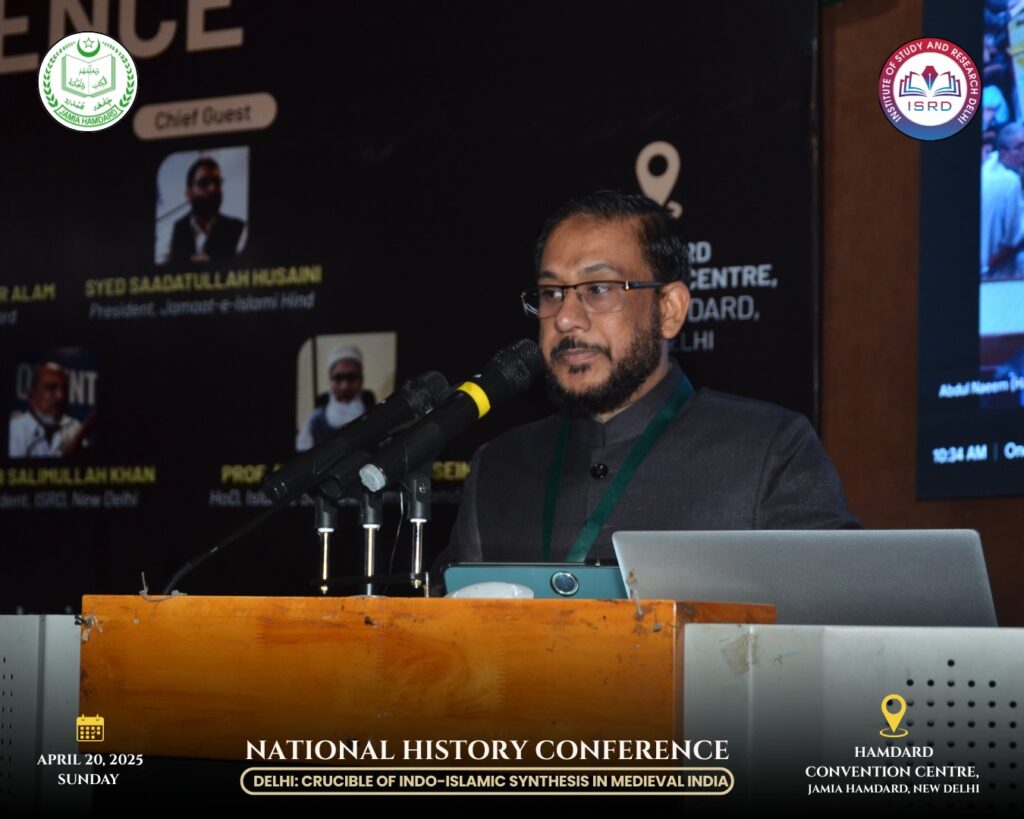
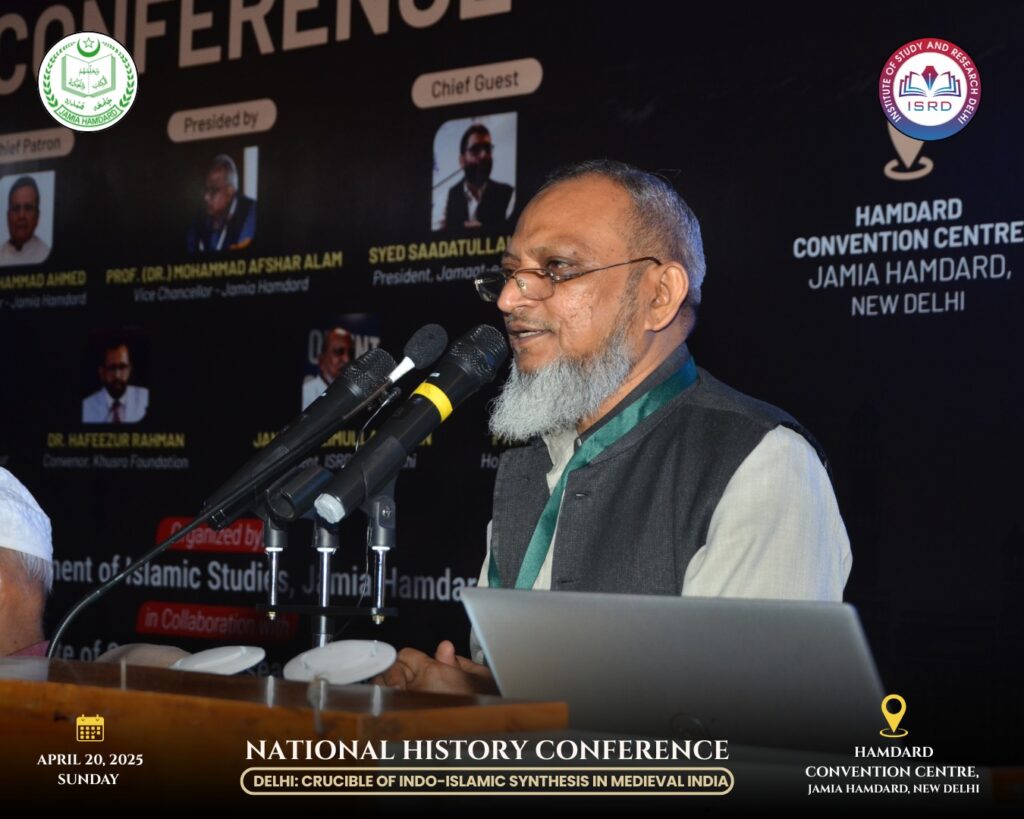
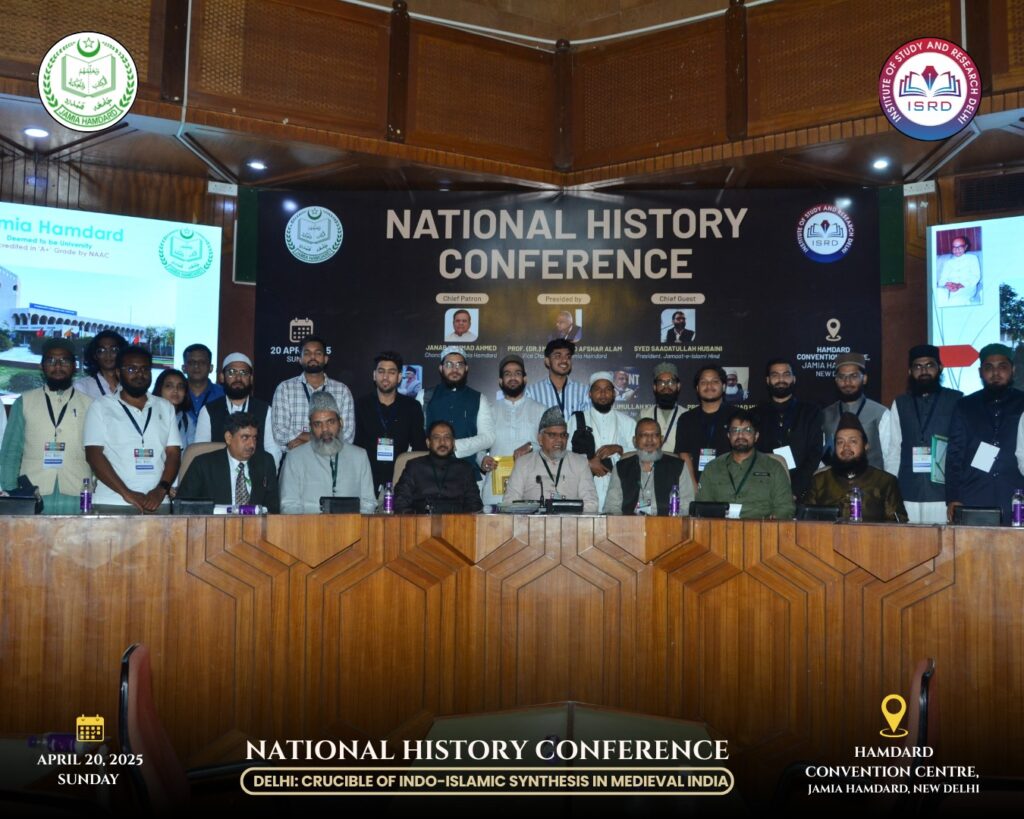
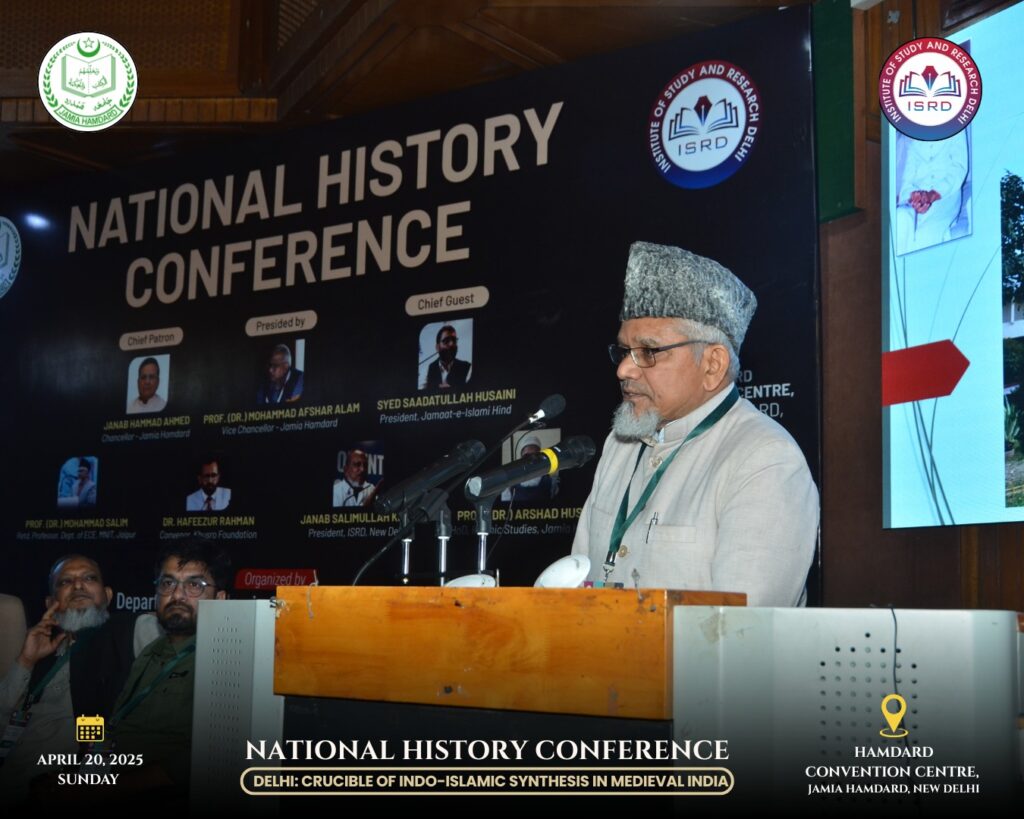
At a landmark one-day national history conference, prominent scholars, professors, and historians Sunday gathered to commemorate the unparalleled contributions of Muslims to India’s cultural and civilizational fabric. Titled “Delhi: Crucible of Indo-Islamic Synthesis in Medieval India,” the conference was hosted by the Department of Islamic Studies, Jamia Hamdard University, in collaboration with the Institute of Study and Research Delhi (ISRD), New Delhi.
Held at the Hamdard Convention Centre, Jamia Hamdard, the conference aimed to explore the profound impact of Islamic heritage on shaping medieval Indian culture, society, and governance, with a special emphasis on Delhi as the epicenter of this cultural convergence.
A wide array of research papers was presented under several sub-themes aligned with the central topic, including the Advent of Islam in North India , Educational Institutions and Knowledge Production, Indo-Islamic Architecture, Sufi Traditions and Sacred Spaces, Language and Literature, Music and Performing Arts Role in the Freedom Struggle, Calligraphy and Decorative Arts, Culinary Heritage and the Culture of Cuisine, Women’s Contributions, Science and Technology, Mughal Gardens and Economic and Administrative Innovations.
As a chief guest, Jamaat-e-Islami Hind Syed Sadatullah Husaini emphasised that the Quran repeatedly encourages the study of history and historical events to extract lessons and guidance. “If lessons are taken from history, it becomes an asset,” he asserted, adding that history serves as a mirror of society.
Refuting the prevailing negative narratives surrounding Muslims in India, Husaini remarked, “Muslims are not outsiders or foreign invaders. They are developers, not destroyers; builders, not colonizers; inheritors, not intruders.” He highlighted how the Delhi Sultanate acted as a conduit, connecting India with the thriving global centers of knowledge in the Muslim world.
He cited the example of Sanskrit scholars and experts in numerics being recognized and honored in the court of the Abbasid Caliphate. The Arabs, he noted, never appropriated the intellectual achievements of Indian scholars but instead gave them due credit. “Muslim Sultanates helped disseminate India’s hidden treasures of knowledge across the globe,” he stated.
Husaini also praised the architectural marvels of the Delhi Sultanate, such as the Qutub Minar, calling them a testament to the era’s artistic grandeur. He emphasized that the most valuable contribution of Muslim rulers was the promotion of unity and human equality, bringing together people across religions, castes, and classes under a shared identity of humankind—a concept Allama Iqbal referred to as “Wahdat-e-Khaas Quwwat” (special power of unity).
Referencing Maulana Abul Kalam Azad, he recalled Azad’s fervent appeals to Muslims at the time of Partition to remain in India, invoking their emotional and civilizational connection to iconic Islamic monuments such as the Taj Mahal, Red Fort, and Qutub Minar.
Dr. Afshar Alam, Vice Chancellor of Jamia Hamdard University, presided over the inaugural session. He provided a historical overview of Islamic rule in India, tracing it from Mohammad Ghori’s arrival in the 12th century to the British colonial era, covering the Slave, Khilji, Tughlaq, Sayyid, Lodhi, and Mughal dynasties.
He emphasized how Delhi became the nucleus of Indo-Islamic cultural fusion, with Central Asian and Persian architectural styles merging with indigenous Indian designs. This, he said, resulted in a unique Indo-Islamic architectural identity, visible in the city’s rich heritage.
Alam also elaborated on the contributions of the Islamic period in education, science, music, literature, governance, and social reform, asserting that this synthesis laid the foundation of what is now referred to as South Asian culture. “This fusion didn’t just shape Indian civilization—it gave it depth, diversity, and resilience,” he concluded.
Dr. Hafeezur Rahman, convenor of the Khusro Foundation and an expert in Urdu and Persian, delivered speech as a special guest. He reflected on historiography, distinguishing between pro-establishment and anti-establishment narratives, and praised Islam’s contribution to historical objectivity through the tradition of “Asma al-Rijal” (biographical evaluation of narrators).
He noted, “It is often said that the Mughals gifted India three unparalleled treasures: the Taj Mahal, Mirza Ghalib, and the Urdu language.” Rahman particularly celebrated the role of Sufi saints, especially Hazrat Nizamuddin Auliya and his disciple Ameer Khusrau, a 13th-century polymath and the founding father of the Urdu language. Khusrau, he said, was also a distinguished scholar in astrology, astronomy, and music.
Quoting Khusrau’s oft-repeated teaching from his spiritual mentor—”Agar duniya aap ke raste mein kaante bichhaye, to tum phool bichhao” (If the world throws thorns in your path, you lay down flowers)—he emphasized the Sufi message of love and resilience.
Dr. Hafeezur Rahman further illustrated how cultural synthesis led to creations like biryani and sherwani, both products of Indo-Islamic fusion. He expressed hope that the academic papers presented at the conference would become historical documents in their own right.
Dr. Fazlur Rahman, Assistant Professor in the Department of Islamic Studies, anchored the conference and gave a brief introduction to its aims.
ISRD Secretary and Organizer Asif Iqbal outlined five core objectives and sub-themes of the event. Asif Iqbal emphasized that civilizational interactions—such as those between Islam and Indian culture—often result in positive transformations. He stated that Muslims, while introducing new cultural and civilizational values to the subcontinent, also embraced indigenous practices. “This mutual exchange reshaped the cultural and intellectual landscape of the region,” he said.
ISRD President Saleemullah Khan offered reflections on the ethical teachings of Prophet Muhammad, citing his instruction to Hazrat Ali to return belongings even to those who plotted to kill him during the Hijrah (migration to Madinah). He also quoted Urdu writer Rashidul Khairi, who praised the skills, cooperation, and intelligence of Delhi’s women during the medieval era.
Professor Arshad Hussain, Head of the Department of Islamic Studies at Jamia Hamdard, delivered the welcome address and warmly greeted all dignitaries and guests.
The day featured parallel academic sessions, with 50 research papers presented by scholars and students from institutions including Jamia Millia Islamia (JMI), Aligarh Muslim University (AMU), Jawaharlal Nehru University (JNU), Maulana Azad National Urdu University (MANUU), National Institute of Technology (NIT), Delhi University, and Jamia Hamdard.
Sessions were chaired by eminent professors such as Prof. Obaidullah Fahad (AMU), Dr. Faizan Ahmed (National Archives of India), Dr. Mohiuddin Ghazi (former Dean, Al Jamia Al Islamia, Kerala), Prof. Azizuddin Husain, and Prof. Parvez Nazir. Guest speakers received mementoes, and research scholars were presented with certificates.
In the valedictory session, Prof. Mohammad Salim Engineer, retired professor from MNIT Jaipur, addressed emerging researchers, emphasizing key research ethics—many of which, he noted, align with Islamic principles. These include academic honesty, objectivity, peer review, and depth over volume. “There’s no shortcut to excellence,” he advised. “Hard work can even surpass intelligence.”
In light of the current communal atmosphere, he urged the Muslim community to take charge of creating history, not just recalling it.
Abdul Kalam, co-convenor of the event, delivered closing thanks, while Dr. Shadab Musa, Assistant Secretary of Jamaat-e-Islami Hind, offered a speech reflecting on the present socio-political environment.
source: http://www.indiatomorrow.net / India Tomorrow / Home> Breaking News> Education> National Interest / by Anwarulhaq Baig / April 21st, 2025
The National President of Urdu Development Organisation (UDO), Dr. Syed Ahmed Khan, has welcomed the Supreme Court’s April 15, 2025, decision in favour of Urdu regarding the Maharashtra Municipal Council, calling it historic, encouraging, and promising for the Urdu-speaking public.
It is noteworthy that the Supreme Court, while ruling on the signboard of the Municipal Council Building (Akola), stated that names can be written in Urdu along with Marathi on the signboards. The Supreme Court also clarified that language is not associated with any particular religion, but rather with the people, the community, and the region.
UDO’s National General Secretary Dr. Parwaz Uloom and Dr. Lal Bahadur jointly stated that the Supreme Court’s earlier decision on September 4, 2014, in favour of UDO against the Hindi Sahitya Sammelan, was also historic. However, unfortunately, due to the negligence of the Urdu-speaking public, the governments of the seven states – including Delhi and Uttar Pradesh – where Urdu has the status of a second official language, have neither implemented this status nor initiated any movement in light of the Supreme Court’s ruling.
Now, it is the responsibility of the Urdu-speaking community to benefit from such historic decisions.
source: http://www.radiancenews.com / Radiance News / Home> Latest News / by Radiance News Bureau / April 16th, 2025
Mohammad Hashim, a porter at the New Delhi Railway Station railway station and an eyewitness to the horrific tragedy of stampede in which 18 persons died, tuned into a savior of a four-year old child.
He gets emotional as he recounts how a 4-year-old girl was resuscitated.
“…We were working like any other day when we suddenly heard screams. All of us, all porters, rushed there. We saw children on the floor, women & men running helter-skelter.
#WATCH | Stampede at New Delhi railway station | Mohammad Hashim, a porter (coolie) at the railway station and an eyewitness narrates the scenes he saw yesterday; gets emotional as he recounts how a 4-year-old girl, who he saved, was resuscitated.
“People were screaming. We pulled up a lot of children and brought them out. A few people had died and some others had fallen unconscious. We brought them to the ambulance.
“I rescued out 8-10 children…A woman was crying that her 4-year-old daughter died. I rescued the child and brought her out. Two minutes later, the child started breathing again, and she broke down.
“Her mother burst into tears of joy…We can call ourselves either brave or fools that we too jumped in, risking our lives…We saved several lives…”
He said he and other porters had never seen such scenes in their lives.
“Entire staff, GRP, RPF and porters were working on it…The crowd was for several trains. It happens every day, not just yesterday. But only God knows what happened…But porters helped a lot, there are 1478 porters here…”
source: http://www.awazthevoice.in / Awaz, The Voice / Home> Stories / posted by Aasha Khosa / February 19th, 2025
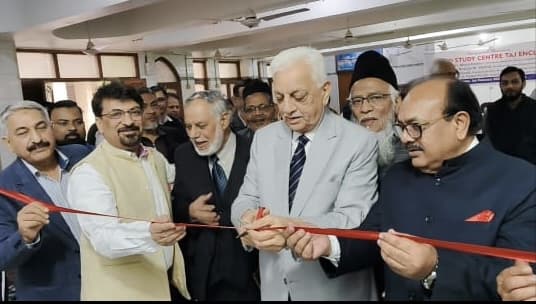
A Mosque Study Center was inaugurated in Taj Enclave, Northeast Delhi, with the support of the Shaheen Group. The center aims to provide both religious education and academic coaching for medical, engineering, and competitive exams.
During the event, Faisal Falahi, Director of Shaheen Academy Delhi, introduced the Shaheen Group, highlighting that approximately 35,000 students are currently enrolled in its institutions, where they receive not only general education but also specialized coaching for NEET and engineering entrance exams. He emphasized that the new study center aligns with this vision.
Advocate Feroz Ahmed, President of All India Muslim Majlis-e-Mushawarat, underscored the importance of education, citing former President Dr. APJ Abdul Kalam as an inspiration for students from underprivileged backgrounds. He stressed the need for initiatives like those led by Dr. Abdul Qadeer in the current educational landscape.
Mufti Adil Jamal Nadvi emphasized the necessity of combining religious and worldly education, while former Secretary of the Maulana Azad Foundation, Rizwan-ur-Rahman, highlighted the importance of counseling to help school dropouts return to education.
Dr. Khwaja Shahid, President of the All India Educational Movement (AIEM), shared his long-standing association with Shaheen Group and its founder, Dr. Qadeer. He referred to such study centers as “academic ICUs” for students struggling with education. The center was jointly inaugurated by Dr. Shahid and Advocate Feroz Ahmed.
Before the inauguration, AIEM General Secretary and former President of the Taj Society, Abdul Rashid, expressed gratitude to Shaheen Group and Dr. Qadeer for their support in establishing the center. The event was presided over by Faisal Faridi, President of Taj Society, and conducted by Nasir Aziz. The vote of thanks was delivered by the society’s secretary, Javed Hasan Khan.
The ceremony witnessed the presence of several distinguished guests, including Supreme Court Advocate-on-Record Aslam Ahmed, former DSP Mohammad Akhtar, Ilyas Saifi, Dr. Idris Qureshi (President, Mushawarat Delhi), and a large number of attendees.
source: http://www.radiancenews.com / Radiance News / Home> Focus> Latest News / by Radiance News Bureau / February 03rd, 2025
The air is thick with political tension in the bustling lanes of Delhi’s Okhla constituency as the assembly elections in the city draw near. A determined and vocal leader, Nooreen Fatima rallies the crowd with the chant, “Bolega Okhla, Jeetega Insaf (Okhla will speak, justice will win).”Fatima is campaigning for her husband, Shifa Ur Rehman, an outspoken anti-Citizenship Amendment Act (CAA) activist, who has been behind bars since April 2020. Accused of being involved in a conspiracy to incite riots in Northeast Delhi, he faces serious charges, but his supporters believe the allegations are baseless.
Steadfast in her mission, Fatima tells the voters, “We could not get justice in the courts, but we trust you to deliver it at the ballot box.” Her voice reverberates through the streets and seemingly resonates with the people of Okhla who still seek justice for what they perceive as wrongful incarcerations.Talking to TwoCircles.net, Fatima explained why her husband decided to contest the elections despite his lack of political experience and imprisonment for five years. “We are a part of this society. Politics is part of our life,” she said. “Although Shifa-ur-Rahman has no political background, he has always had an interest in politics. We are not gullible people. It is not that Shifa does not understand the political landscape. In the past, he was very much involved.”
Nooren Fatima campaigning
She continued, “Owaisi Sahab took a risk by giving us a ticket, something no big party would do. They want big faces, not freshers. But Owaisi took that risk, and now people are learning about Shifa. This is a platform for us, and for that, we are grateful.”
Often seen leading the charge, Fatima passionately addresses the core issues that have plagued the community. “The education system in Okhla has failed us. The healthcare system is a mess. The government promises a lot but delivers little. People need better schools, better hospitals and better opportunities. We will fight for these rights.”
She argues that the local government’s “neglect” has only exacerbated the community’s problems, with basic infrastructure such as roads and drainage systems still in disrepair.
She has a conviction in fighting for her husband. “We cannot just sit back and watch as our future is decided by others,” she said. “It is time for people to rise and take charge. Our fight is not just for Shifa; it is for all of us who have been wronged.”
Rehman’s candidacy, endorsed by All India Majlis-e-Ittehadul Muslimeen (AIMIM) chief Asaduddin Owaisi, has apparently stirred the community.
Once a stronghold for the Congress, the Okhla constituency has shifted to the Aam Aadmi Party (AAP) in recent years, thanks to the party’s emphasis on local issues like education and healthcare. Many now believe AAP is the best hope for keeping the Bhartiya Janata Party (BJP) from gaining ground in the area.
Reflecting on the bigger picture of the elections, Fatima emphasises the need for unity and focus. “This is not just about our family, it is about the future of the community. We need leaders who will fight for justice, for education, for healthcare, for our rights,” she says. “I appeal to the people of Okhla to consider who is genuinely fighting for them and who is merely playing political games. We have had enough of broken promises. Now is the time for real change.”
Always direct, Fatima also critiques the state of politics in the region. “I want to appeal to the people to vote wisely. Take into consideration how the candidate addresses your issues. Making emotional speeches and issuing hollow statements will not resolve the various issues. They will be resolved if your issues are genuinely taken into account. Think about Shifa’s sacrifices, his nature, and the difficulties he has faced.”
Meanwhile, in Mustafabad, another Muslim-majority constituency in North East Delhi, the mood is similarly charged. The area still feels the scars of the 2020 riots, where 53 lives were lost, 38 of them Muslims, and the subsequent arrests of students and activists.
Tahir Hussain, a former AAP councillor, remains behind bars. He is accused of murder and riot-incitement. His wife, Shama Anjum, has stepped up to carry his political torch, campaigning fiercely for his innocence. “The allegations against him are baseless,” she asserts, drawing from her personal pain and conviction. “He is not a rioter. He is a victim.”
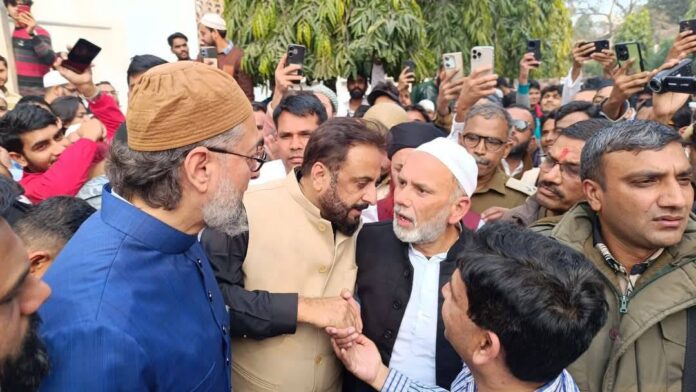
Out on a six-day custody parole granted by the Supreme Court, Hussain is campaigning in his constituency, where he is contesting as an AIMIM candidate. “I had announced six months ago that I will contest from Mustafabad. All the parties knew this… they all announced their candidates just a few days ago. None of them reached out to me. The AAP and the Congress could have, but they were scared that the BJP will make this a poll issue,” he tells TwoCircles.net.
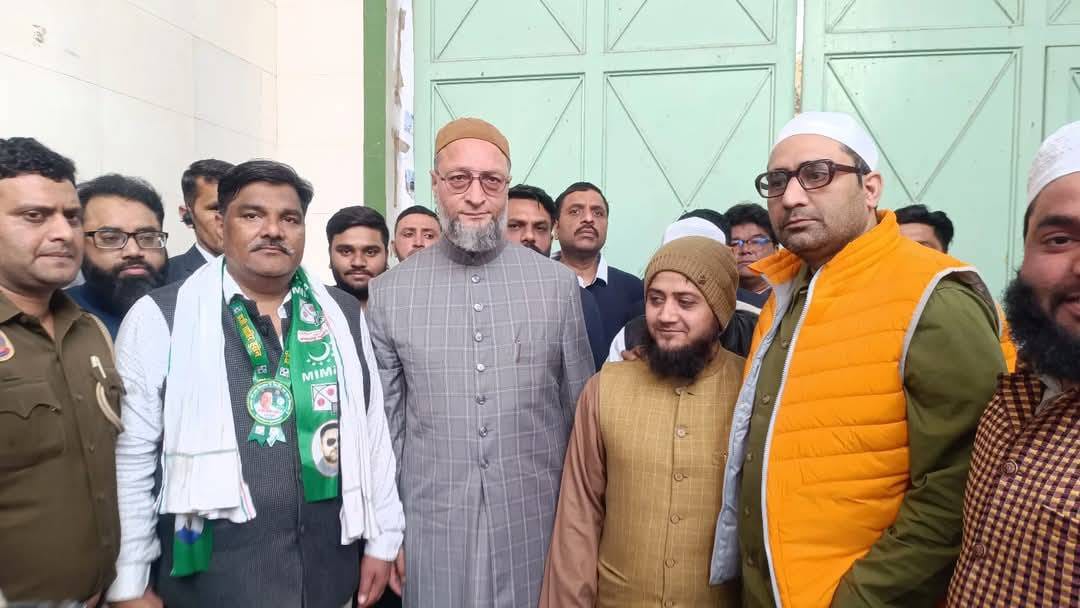
Tahir Hussain with Owaisi and others from AIMIM
Hussain expresses gratitude towards the AIMIM, saying, “I am grateful to Owaisi that he gave me a chance. He is a seasoned politician… Parties that I spent time with, I shared meals with and campaigned for, abandoned me. But an unknown person showed faith in me. He hugged me and fielded me on party symbol.”
While Hussain faces political isolation from his former allies, his personal connections with Mustafabad are deep-rooted. “I have grown up here, got married and had children in Mustafabad. I love my people and rule their hearts,” he says. Despite the challenges, he remains confident in his campaign and asserts that he is “banking on 30 years of hard work”.
Further criticising the AAP, he says, “For the last 10 years, Kejriwal has not even shown his face to us. The people will not fall for their trap this time. There is so much work to be done here.”
As posters demanding justice for Hussain adorn the walls of Mustafabad, the political landscape becomes more complex. The AAP has fielded Adil Ahmad Khan, promising a more developed and educated constituency, but criticism lingers over the party’s alleged failure to adequately address post-riot rehabilitation. Attempting a comeback with Ali Mehdi, another local leader, the Congress is challenging the AAP’s grip on the area, while the BJP’s candidate, Mohan Singh Bisht, aims to consolidate Hindu votes by focusing on “justice” for riot survivors within the Hindu community.
The AIMIM’s decision to field Rehman and Hussain, both tied to the 2020 riots, has ignited intense emotional support among Muslim voters, but it also raises concerns about vote fragmentation.
The stakes have never been higher for Okhla, Mustafabad, and the broader political landscape in Delhi. The February 5 elections will not only be a contest of power but a struggle for justice, dignity and the future direction of the city’s diverse communities.
source: http://www.twocircles.net / TwoCircles.net / Home> India News> Indian Muslims / by TwoCircles.net Staff Reporter / February 01st, 2025
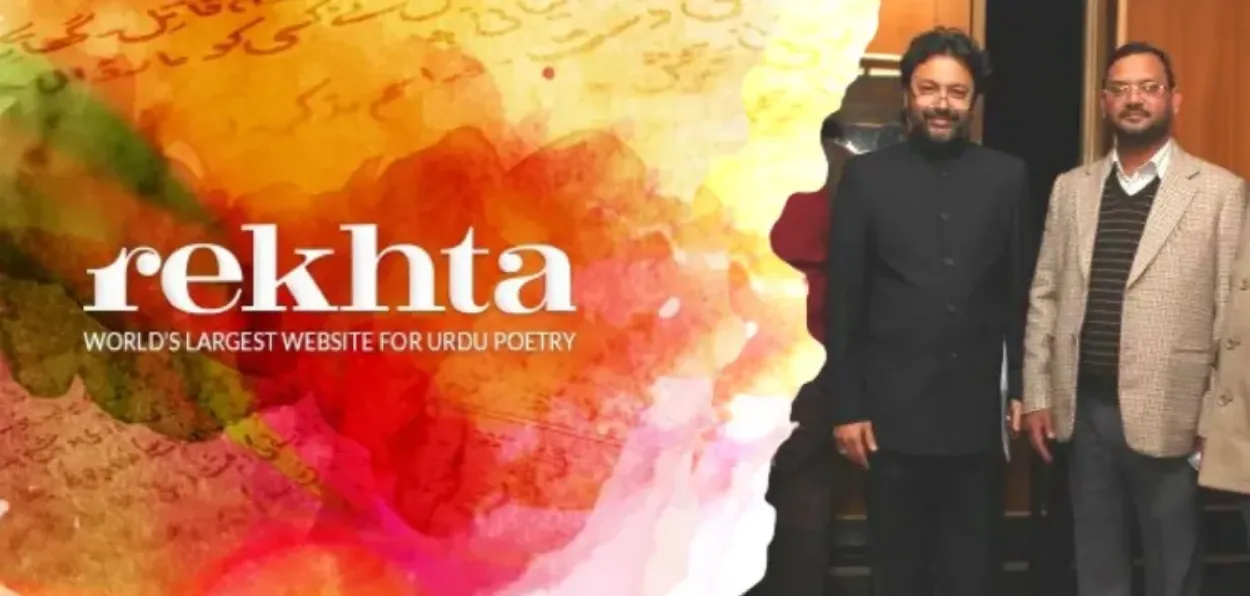
Founder of the Rekhta Foundation Sanjeev Saraf (left) with Dr Umair Manzar
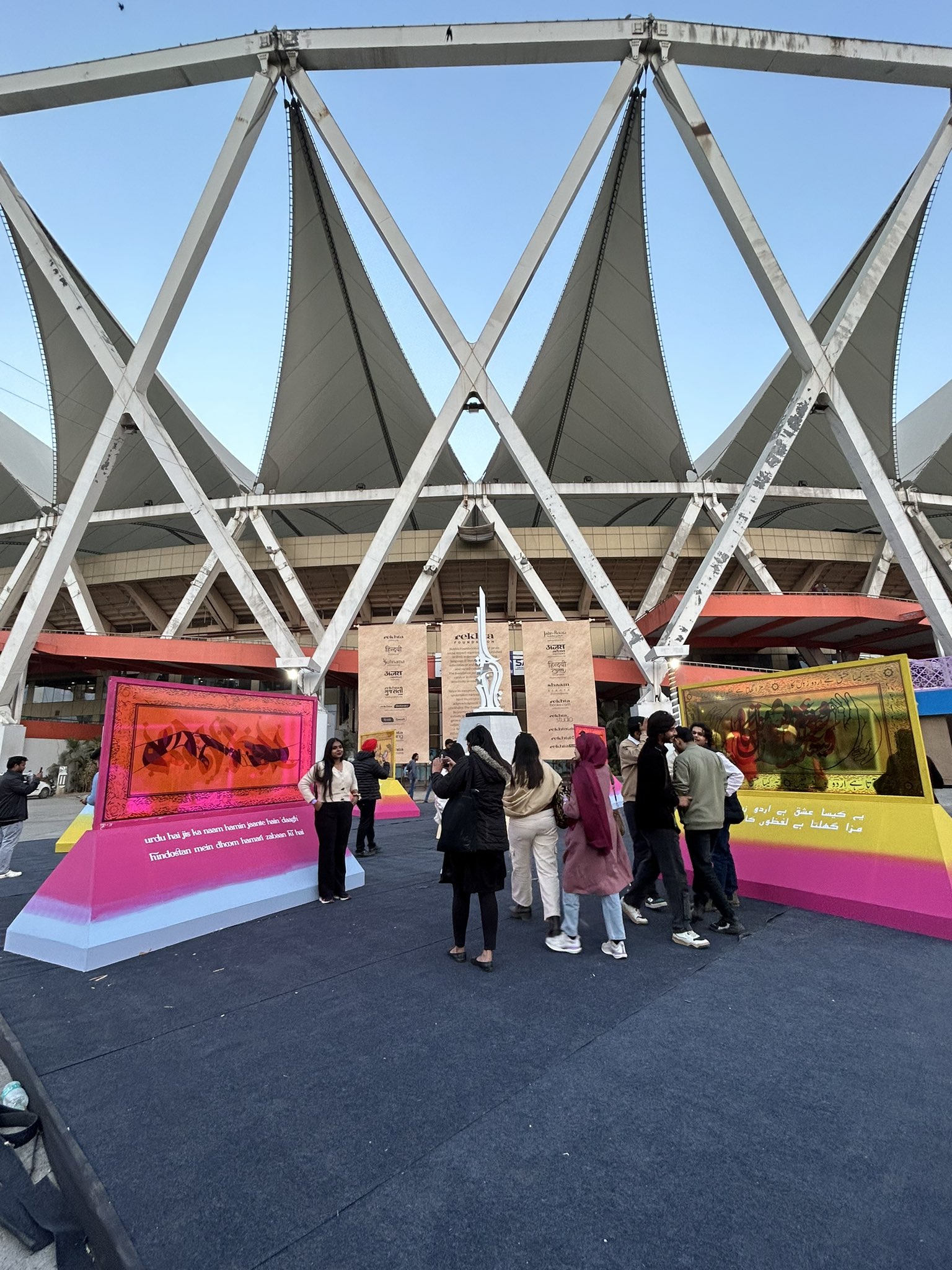
“Umair Manzar was the first to join me in my journey of Rekhta,” said Sanjeev Saraf, the founder of the Rekhta Foundation. He said this before a smaller audience at the launch of the first Jashn-e-Rekhta, the festival of literature and performing arts in 2012.
The festival has become a major annual cultural event in Delhi, and the Rekhta Foundation portal is a key resource for Urdu language and literature and a peg for the online and offline community of Urdu literature lovers.
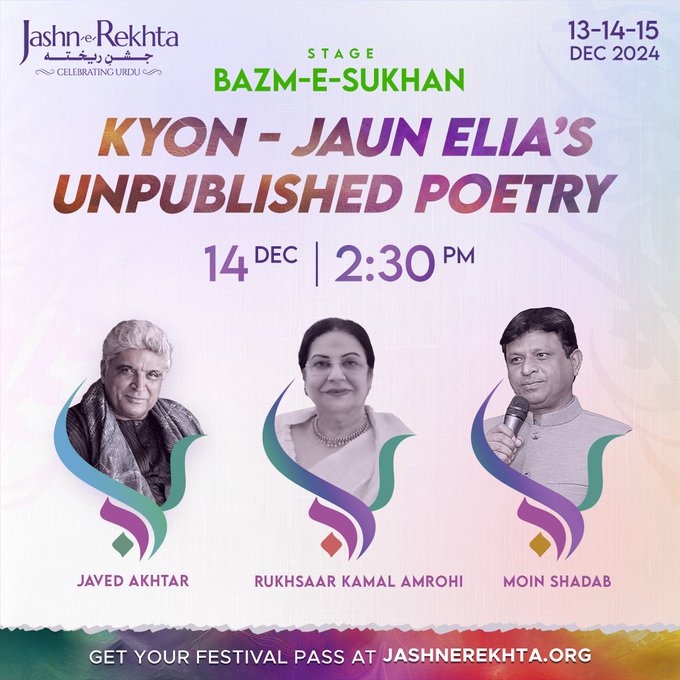
This year the three-day Jashn-e-Rekhta is being held in Delhi from December 13.
Saraf said Umair was his first Urdu teacher. He was the one who proposed the name Rekhta for the website and became the first member of the online community of Urdu aficionados on Rekhta Foundation.
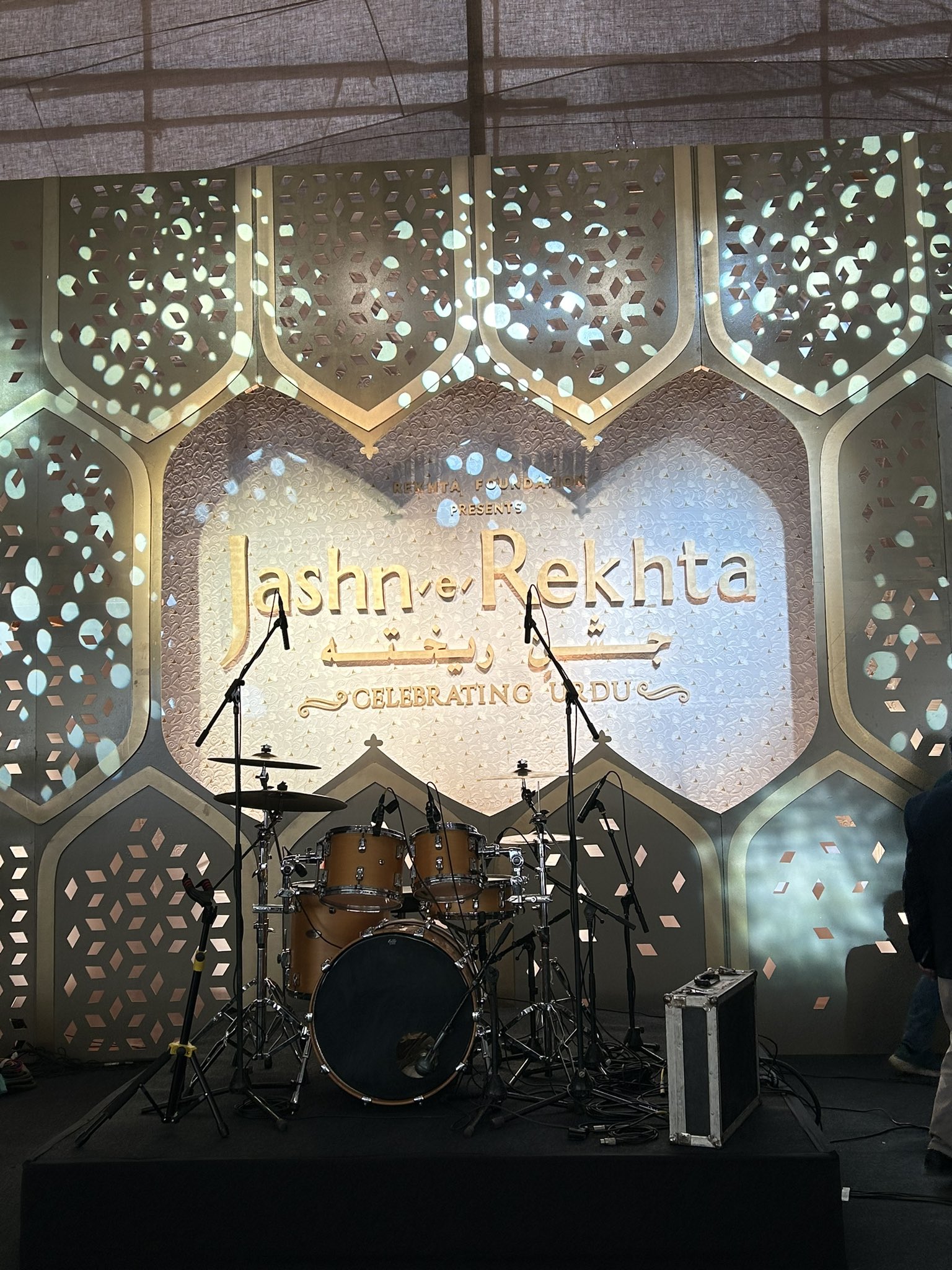
Stage for artists to perform in Jashn-e-Rekhta
Today, Dr. Umair Manzar is an Assistant Professor in the Urdu Department of Maulana Azad National Urdu University, Lucknow Campus When Awaz-the Voice contacted him, he was surprised at his name being mentioned by Safar.
Awaz-The Voice contacted Umair Mazhar on the phone. He came across as a simple and humble person not too keen to take credit for his key role in setting up Rekhta.
After initial reluctance, Umair Manzar agreed to share his interaction with Sanjeev Saraf.
Manzar’s version of the initial days of Rekhta threw up many more characters in this journey. He says many other people also played their part in helping Sanjeev Saraf concretize what was his passion for the language.
Umair Manzar said that he met Saraf during the 2010 spring.”Summer had not started.”
One day Vice Chancellor Jamia Millia Islamia Najeeb Jung called Urdu’s Head of Department Professor Khalid Mahmood and asked him to send a tutor to a particular person to teach Urdu. At that time, Umair was teaching at the university. His HOD gave him a piece of paper with a name and a telephone number scribbled on it and asked him to contact him.
“The name was Sanjeev Saraf. I called that number, we fixed a time for the tuition class.”
Jashn-e-Rekhta festival
“The first time I met him at his home. I had no idea who he was. Yet I found him a serious person; there was a certain calm in his way of speaking.”
“I liked him instantly as he spoke candidly. After a few meetings, he told me that he was very fond of Urdu and wanted to learn it.
“He especially wanted to understand poetry. In a few meetings, I realized that apart from learning the language, he was also interested in creating an Urdu website. He has nursed a dream of starting an Urdu website for many years,” Manzar said
Sanjeev Saraf seemed to be learning the language out of love for it. He also thought Urdu could become a bridge among diverse people of India who loved the language.
He thought the website of this idea could increase their love for Urdu. Thousands of people want to learn the language because of its poetry. However, there is no one to help them. Sanjeev Saraf had faced this problem and therefore empathized with others. He had the resources, including time to learn Urdu. However, everyone could not do it.
Manzar told Awaz that he soon realized Sanjeev Saraf wanted to do something beyond learning Urdu.
After a few days, he said, “Every person needs a teacher; my website can fulfill the needs of all such people.”
Manzar said, “This got me thinking seriously about this issue. By now I was visiting the Noida office of Mr Saraf. One day he said that we can start Urdu work in a part of that office.”
Umair Manzar also did not realize that he had become a part of the initiative to establish a website that would help Urdu lovers all over the world and bind them in a community.”
He also realized that he was dealing with a passionate lover of Urdu and not a mere learner.
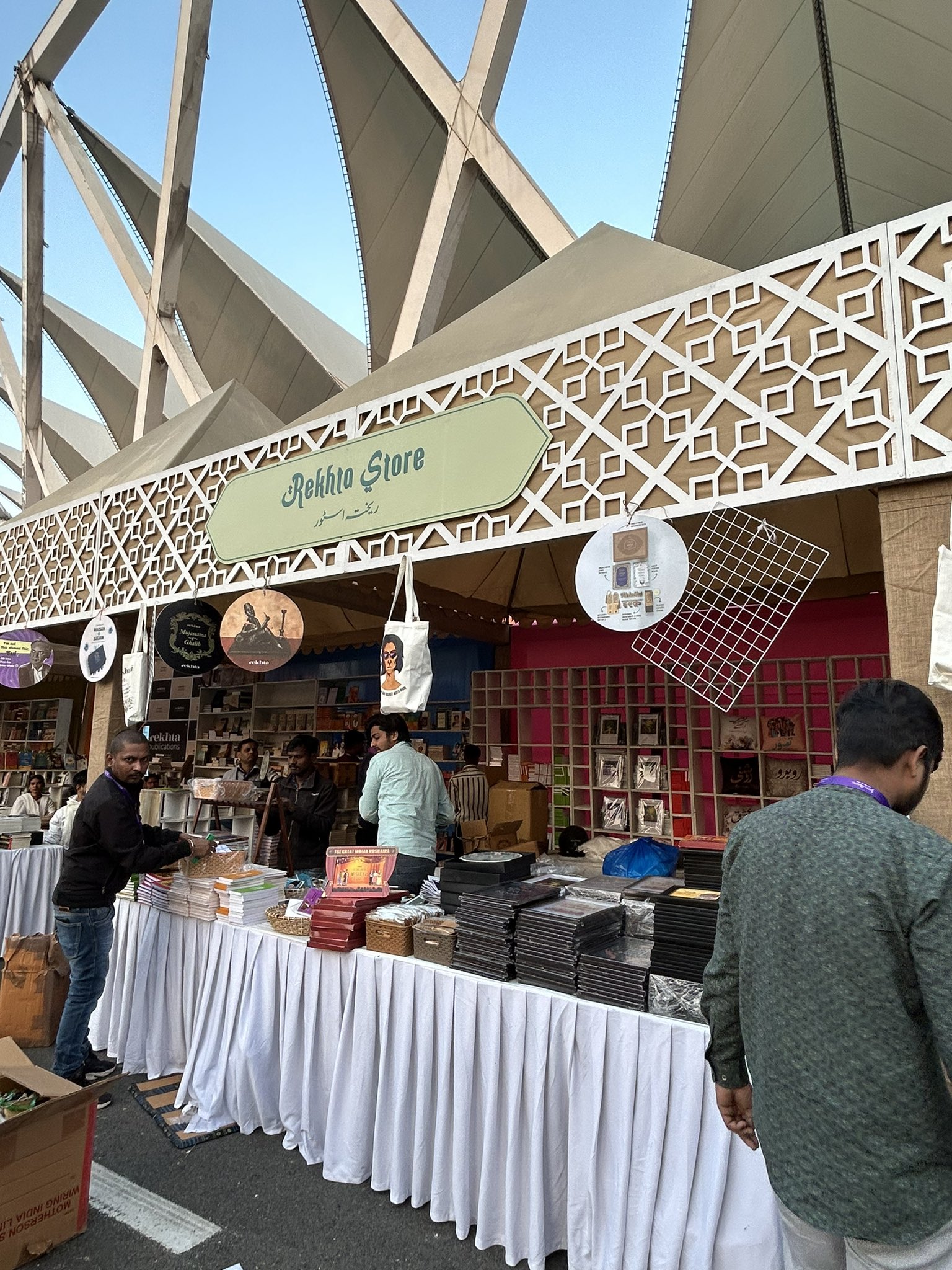
A bookshop in Jashn-e-rekhta
One day Safar spoke formally to him. We decided to discuss it in detail.
And finally one day Sanjeev Saraf asked him to start work on the website,
The first name for the website he suggested was Kavita. This was already bought by someone. The same was the case with many other titles. “I also felt if we had to buy the already registered name for the website, the prices were ridiculously high.”
He suggested ‘Rekhta’ to Sanjeev Saraf. ”He asked me its meaning. When I explained it to him he was happy. Soon we registered rekhta.org as the domain name. I remember he liked the harmony of the words. He was sitting with us during the entire process of registration online.”
Thereafter the work on the website started and many targets were achieved before the scheduled time. This was the journey of paper preparation for the Rekhta Foundation.”
Umair Manzar says he had met Sanjeev Saraf with the sole purpose of teaching him the language but he got involved in his mission.
When asked about the preparations after naming, Umair Manzar said, “After the name was decided, work on the website started. In the summer of 2011, I officially launched the website. The first step was to choose poems of classical poets and the unanimous choice was Mirza Ghalib.”
The selection of contemporary poets started from Jamia Millia Islamia and other libraries. Their compositions were recorded. Saraf hired composers and they worked out of the Noida office. It started slowly and then it gained momentum.”
Umair Manzar said, he also contacted Professor Ahmed Mahfooz and Professor Abdul Rashid for their suggestions and advice.”I also arranged a meeting of both gentlemen with Sanjeev Saraf and this meeting lasted for several hours.”
Saraf expressed his intentions and ambitions; the professors also gave their input and suggestions. “Sanjeev Saraf noted every suggestion and tip the two learned professors offered.”
Prof. Rashid suggested that the way to preserve old books was to scan them and upload them on the website.
Umair Manzar says,” One day when I went to the office, Sanjeev Saraf announced the (scanning) machine had arrived. “Now you people bring the books. The scanning process will begin.”
This was a challenge to all of us. Initially, we tried to upload only selected and important books on the website. Later this also opened a new possibility.
A poster of Jashn-e-Rekhta
Umair Manzar says that initially, people like Rehman Farooqi, Prof. Shamim Hanafi, and Prof. Walwasa ignored the website as another wannabe.
Probably the first column about Rekhta was written by Professor Vasa, Vice President of the Urdu Academy. He also gave Rekhta an award for the promotion of Urdu.
Umair Manzar joined Maulana Abul Kalam Azad Urdu University as an assistant in the early days of Rekhta.
Initially, the Rekhta Foundation was recruited only on the recommendation of a group of like-minded people like Professor Ahmed Mahfooz, Professor Abdul Rashid, and Umair Manzar.
Abdul Rashid, who is from Delhi, had done his research on dictionaries. This year the Ghalib Institute is giving him its prestigious literary and research award. Professor Ahmed Mahfooz is the HOD Urdu Department of Jamia Milia Islamia. He is an expert on poetry.
Professor Abdul Rashid and Dr. Amir Manzar are among the people who have been actively associated with the Rekhta Foundation since its inception.
Dr. Umair Manzar and Prof. Abdul Rashid were included in this team to scan books from Raja Mahmoodabad library and make them part of e-books.
Similarly, access to some private libraries and some important books was very active. Along with them, Professor Abdul Rashid and Dr. Umair Manzar have played a role.
source: http://www.awazthevoice.in / Awaz, The Voice / Home> Stories / by Mansooruddin Faridi, New Delhi / December 12th, 2024
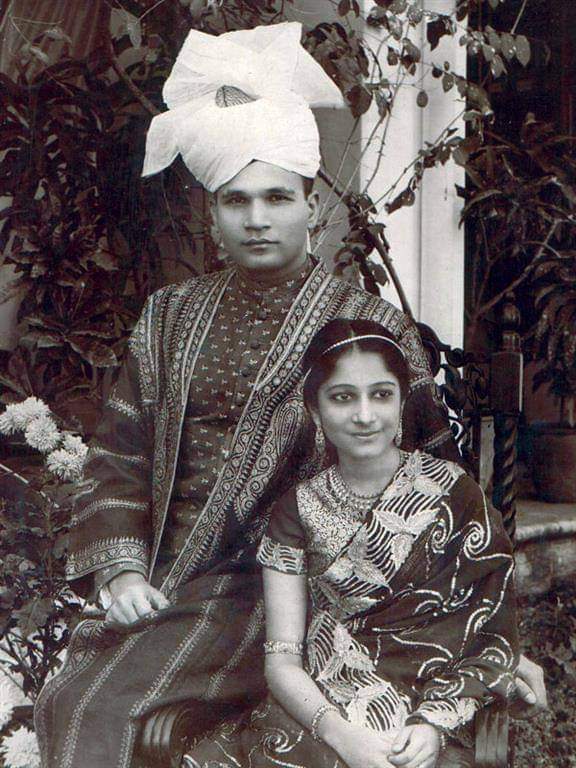
Badruddin Tyabji, the grandson of freedom fighter and third Congress President by the same name, was entrusted with arrangements for the inaugural Republic Day celebrations in 1950.
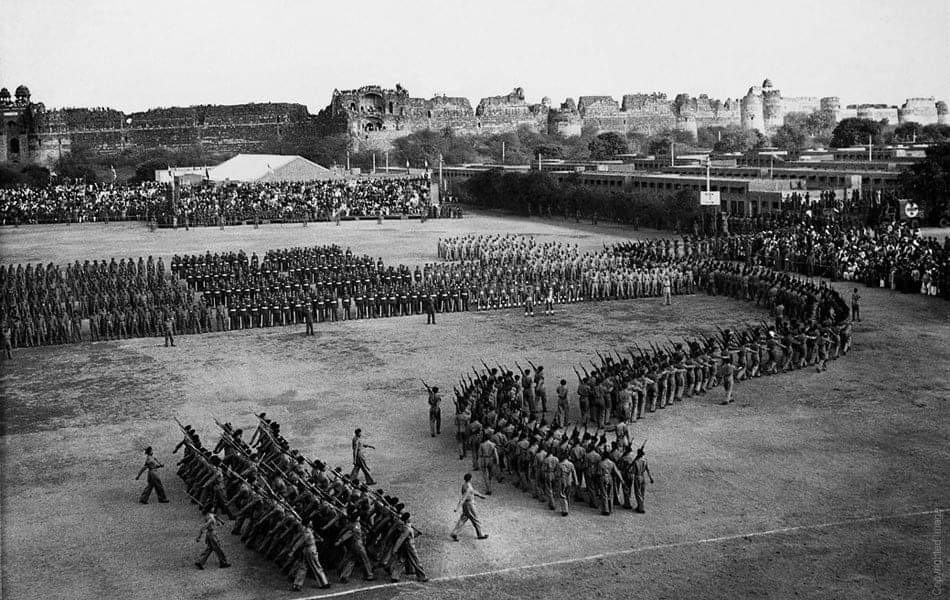
HISTORIC: National Stadium during the first Republic Day Parade. Old Fort is also visible
Every year on January 26, the Tyabji family sit together in their posh West End Colony house (near Vasant Vihar) to watch the Republic Day Parade which holds special significance for them.
Their late patriarch Badruddin Tyabji, a 1936 batch Punjab cadre Indian Civil Service officer, was responsible for looking after the arrangements of January 26, 1950 functions: first at the President House and later at Irwin Stadium (now Major Dhyan Chand National Stadium).
Tyabji’s painter wife Surayya Tyabji made the prototype of the Tri-colour on paper based on which the flag of cloth for Republic Day was made in Connaught Place.
“Just a couple of weeks before the first Republic Day, Prime Minister Pandit Jawaharlal Nehru entrusted me to look after the arrangements of the January 26 functions,” Tyabji told this writer in his south Delhi house in 1994.
He was also member secretary of the Constituent Assembly.
“I was called by Pt. Nehru and he gave me the huge responsibility for the historic day. I used to live at Sujan Singh Park during those days.”
From that day onwards, the tall and gracious Tyabji moved from the President House (now Rashtrapati Bhavan) to Irwin Stadium several times a day to finalise the arrangements as time was running out for the big day.
HAPPY FAMILY: The Tyabji clan including Laila Tyabji (centre, front row), who is a social worker, designer, writer and crafts activist
The big day for which Tyabji had worked so hard was also hectic for Rajendra Prasad, the soon-to-be first President of independent India. He marked the momentous occasion with a visit to Raj Ghat to pay homage to Gandhiji. He remained there for around 15 minutes.
But before the would-be President of India could get to the President House, C Rajagopalachari, the Governor General of India, had already reached there. The latter used to live in the double-storeyed bungalow at the then 10, Hastings Road, which was later renamed after him as Rajaji Marg. Edwin Lutyens, the chief architect of New Delhi, also lived in the bungalow, and so did Pranab Kumar Mukherjee, who also lived in that house after demitting his office of President of India.
“Dr Rajendra Prasad was sworn in as the country’s first President at around 9 am by the Governor General of India, C. Rajagopalachari. Rajvanshi Devi, his wife, and other family members were also there. The swearing-in ceremony was attended by over 500 guests, who had assembled inside the Durbar Hall. President Sukarno of Indonesia and several members of the Diplomatic Corps, members of the Constituent Assembly and prominent citizens had graced the occasion. The President was dressed in black achkan, white churidar and a white Gandhi cap. Pandit Nehru and his other Cabinet colleagues were sworn in soon after Rajendra Prasad,” recalled Tyabji, who was named after his grandfather, the third President of Indian National Congress.
Immediately after returning from Raj Ghat, Rajendra Prasad was sworn in. The Chief Justice of India, Sir Hiralal Kania, read the oath of office in Hindi. President Prasad repeated it sentence by sentence.
“The outgoing Governor General, C. Rajagopalachari; our first Prime Minister, Pandit Jawaharlal Nehru, beaming with pride and joy; the Deputy Prime Minister, Sardar Patel; cabinet ministers, judges of the Supreme Court and the Auditor-General of India, were present in the hall to witness the historic moment of India’s history. Pandit Nehru and his other cabinet colleagues were sworn in soon after.”
The national emblem of Ashoka Pillar with three lions was placed in the Durbar Hall for the first time near the throne where the British Viceroys used to sit.
A smiling statue of Lord Buddha was also placed behind the throne for the first time. Rajendra Prasad, the President, who greeted the large gathering smilingly with folded hands, made a short speech in Hindi and English, stating that it was a memorable day in our annals.
“Let us begin by offering our thanks to the Almighty Power who has enabled us to see this day; to the Father of the Nation who showed us and to the world at large his infallible method of Satyagraha, and led us on along it to freedom and to the numberless men and women, whose suffering and sacrifice have rendered the attainment of independence and establishment of this sovereign democratic Republic possible.”
The birth of the Republic was celebrated by the masses in the Capital through Prabhat Pheries (early morning movement of people singing patriotic songs). Outside the Durbar Hall, there were unforgettable scenes of jubilation. Large crowd of men, women and children had assembled in the forecourt of President House.
People raised slogans of Gandhiji-ki-jai and Vande Mataram.
After a dignified ceremony was held at the President House, the scene shifted to Irwin Stadium. The new President travelled to the stadium in a horse-drawn carriage and Delhi’s roads were lined up with enthusiastic crowd standing along the five-mile route with the Tri-colour in their hands. A huge crowd greeted the President’s entourage when it reached the vicinity of Connaught Place. And when the first President of India reached the stadium, he was welcomed with a booming 31-gun salute.
According to Tyabji, “Rajendra Prasad made a brief speech at the stadium. Later, students from various schools of the Capital presented cultural programmes.”
Old timers still recall that there were very few policemen guarding the VIPs inside the stadium. After the programme, the leaders mingled with the people. Nehru was mobbed by his admirers. He spent a good 20 minutes with them.
Tyabji, who could not sleep for several days ahead of the big occasion, was there managing the affairs carefully with his colleagues. Following very cold weather days in Delhi, brilliant sunshine greeted the Capital on January 26, 1950.
It was India’s defining moment, the day India truly freed itself from the shackles of colonialism to become a Republic. A truly sovereign state.
The talk of the first Republic Day cannot be complete without discussing the role of Tyabji’s wife, Surayya, in the making of the first Tri-colour.
According to Tyabji, “Once the Constituent Assembly finalised our Tri-colour with Ashok Dharma Chakra inside the flag, I was asked to furnish the model of Tri-colour on both paper and cloth.”
Without wasting any time, Badruddin Tyabji went straight to his Sujan Singh Park residence and asked his wife Surayya to make the Tri-colour on paper. She did not disappoint her husband. Once she made it on paper, Tyabji carried the design to the now defunct SC Tailors at Regal building of Connaught Place and asked them to make the Tri-colour in cloth. The rest, as they say, is history.
After retirement from government service, Tyabji also served as the Vice-Chancellor of Aligarh Muslim University in the 1960s.
He finally settled in Delhi and passed away in 1999. His wife, Suraiya, had died before him.
During one of our meetings, Tyabji had told me that when he came to Delhi from Hyderabad to appear for ICS examination, he was staying in Daryaganj.
He used to take a tonga to reach Metcalfe House in Civil Lines to appear for his examinations.
“Delhi was a very small city then. Except for old Delhi and villages, there was not much here. New Delhi was coming up,” he had said.
When India was divided on the basis of religion in 1947, he was perhaps one of the only two Muslim ICS officers who opted to stay in India instead of accepting Islamic Pakistan.
OFFICER RANK: Badruddin Tyabji was a 1936-batch ICS officer of Punjab cadre. His wife, Surayya was a painter
Tyabji’s first son, Hindal Ahmad, was an IAS officer. He passed away last year.
Tyabji’s daughter, Laila Tyabji is a noted social worker, designer, writer and crafts activist. She is one of the founders of Dastkar, a Delhi-based non-governmental organisation working for the revival of traditional crafts in India.
Like in the past, the Tyabji family would watch the annual parade this year too. After all, they are the true and proud first family of India’s Republic Day. Yet, they are so self-effacing.
source: http://www.thepatriot.in / The Patriot / Home> Cover Story / by Vivek Shukla / January 26th, 2024
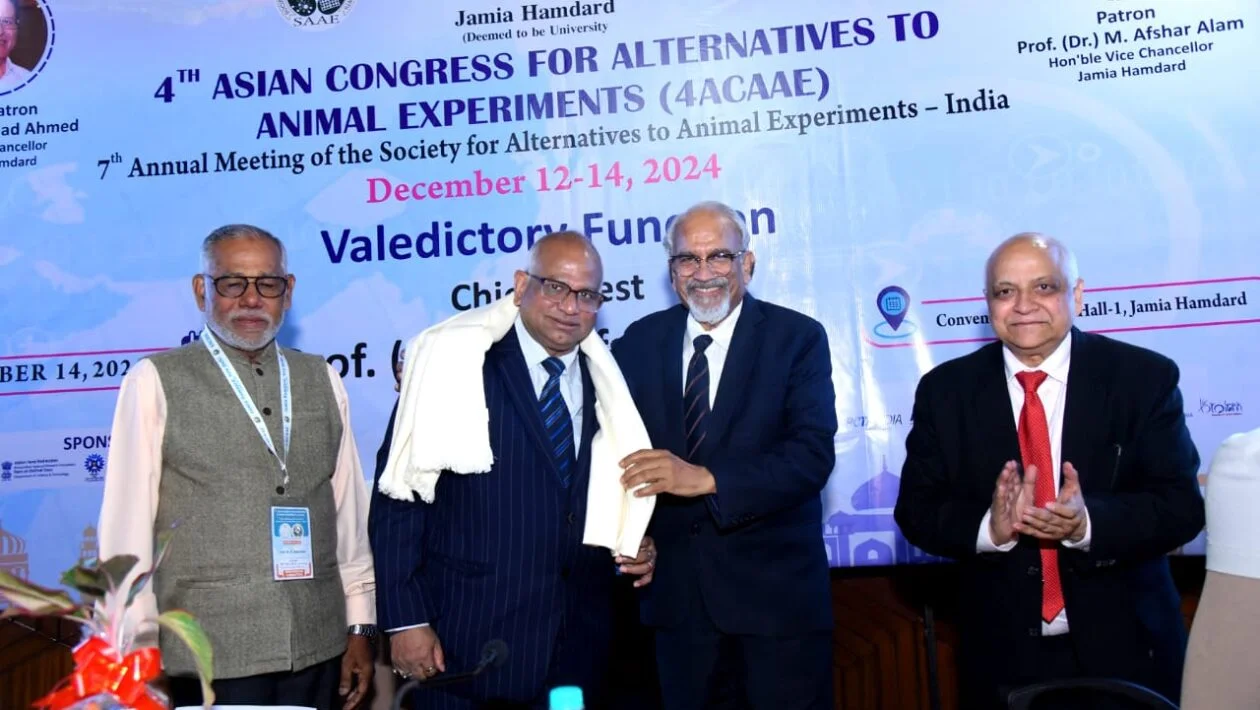
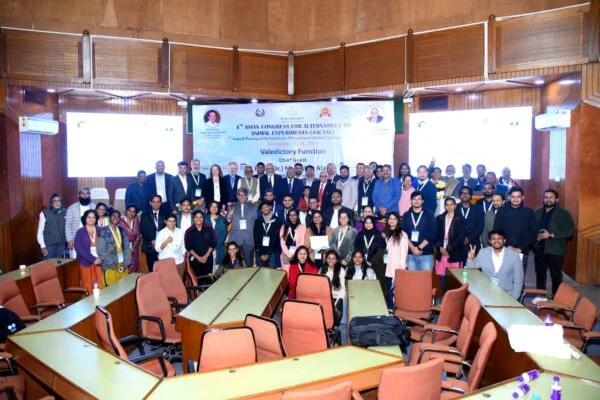
The valedictory function of the 4th Asian Congress for Alternatives to Animal Experiments held at Jamia Hamdard Convention Centre where Prof. (Dr.) M. Afshar Alam, Vice-Chancellor, Jamia Hamdard was the Chief Guest of the programme.
Organizing secretary Prof. S. Raisuddin informed that this congress is being held for the first time in India. During this congress the founding members of the society and representatives from India, China, Japan, and South Korea signed a joint declaration to establish the Asian Federation of Societies for Alternatives to Animal Experiments (AFSAAE).
Well-wishers from societies working for alternatives from America, Europe, and Sri Lanka also wished good link to the foundation. All the representatives were felicitated by the Organizing Secretary. Prof. Y.K. Gupta and Dr. M. A. Akbarsha graced the occasion as Guest of Honour.
Prof. Y. K. Gupta urged the scientists to understand the pain of Animals while using them for scientific experiments.
Dr. Akbarsha announced the next meeting to be held at Hyderabad. Prof. Raisuddin presented a detailed report of 3 days deliberations during the conference. He also announced various awards for best presentations by young scientists. Dr. Christian Pellevoisin, Scientific Director, MatTek & CEO Urbilateria France sponsored best poster presentation awards and cash prizes to the budding scientists. Dr. Kristie Sullivan, Vice President, Education and Outreach, Institute for In Vitro Sciences, USA and Prof Winfried Neuhaus, member of the Austrian Commission for Animal Experimentation also appreciated the successful organization of the Congress.
Prof. (Dr.) M. Afshar Alam, Vice Chancellor congratulated the Organising committee members for the successful organisation of the conference. He appreciated the patronage of Janab Hammad Ahmed, Chancellor, Jamia Hamdard and financial support of Hamdard National Foundation along with other funding agencies for enabling Jamia Hamdard to develop alternative models of animal experiments.
Programme ended with vote of thanks by the Organising Secretary and National Anthem.
source: http://www.taasir.com / Taasir.com / Home> Education / by Taasir News Network / December 15th, 2024