Mohammad Hashim, a porter at the New Delhi Railway Station railway station and an eyewitness to the horrific tragedy of stampede in which 18 persons died, tuned into a savior of a four-year old child.
He gets emotional as he recounts how a 4-year-old girl was resuscitated.
“…We were working like any other day when we suddenly heard screams. All of us, all porters, rushed there. We saw children on the floor, women & men running helter-skelter.
#WATCH | Stampede at New Delhi railway station | Mohammad Hashim, a porter (coolie) at the railway station and an eyewitness narrates the scenes he saw yesterday; gets emotional as he recounts how a 4-year-old girl, who he saved, was resuscitated.
“People were screaming. We pulled up a lot of children and brought them out. A few people had died and some others had fallen unconscious. We brought them to the ambulance.
“I rescued out 8-10 children…A woman was crying that her 4-year-old daughter died. I rescued the child and brought her out. Two minutes later, the child started breathing again, and she broke down.
“Her mother burst into tears of joy…We can call ourselves either brave or fools that we too jumped in, risking our lives…We saved several lives…”
He said he and other porters had never seen such scenes in their lives.
“Entire staff, GRP, RPF and porters were working on it…The crowd was for several trains. It happens every day, not just yesterday. But only God knows what happened…But porters helped a lot, there are 1478 porters here…”
source: http://www.awazthevoice.in / Awaz, The Voice / Home> Stories / posted by Aasha Khosa / February 19th, 2025
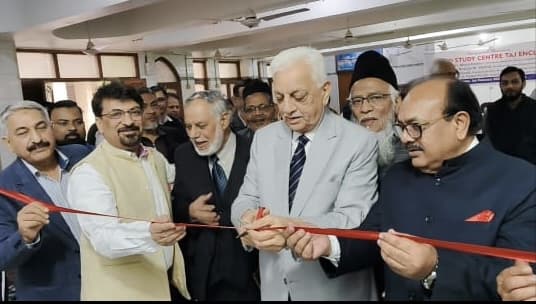
A Mosque Study Center was inaugurated in Taj Enclave, Northeast Delhi, with the support of the Shaheen Group. The center aims to provide both religious education and academic coaching for medical, engineering, and competitive exams.
During the event, Faisal Falahi, Director of Shaheen Academy Delhi, introduced the Shaheen Group, highlighting that approximately 35,000 students are currently enrolled in its institutions, where they receive not only general education but also specialized coaching for NEET and engineering entrance exams. He emphasized that the new study center aligns with this vision.
Advocate Feroz Ahmed, President of All India Muslim Majlis-e-Mushawarat, underscored the importance of education, citing former President Dr. APJ Abdul Kalam as an inspiration for students from underprivileged backgrounds. He stressed the need for initiatives like those led by Dr. Abdul Qadeer in the current educational landscape.
Mufti Adil Jamal Nadvi emphasized the necessity of combining religious and worldly education, while former Secretary of the Maulana Azad Foundation, Rizwan-ur-Rahman, highlighted the importance of counseling to help school dropouts return to education.
Dr. Khwaja Shahid, President of the All India Educational Movement (AIEM), shared his long-standing association with Shaheen Group and its founder, Dr. Qadeer. He referred to such study centers as “academic ICUs” for students struggling with education. The center was jointly inaugurated by Dr. Shahid and Advocate Feroz Ahmed.
Before the inauguration, AIEM General Secretary and former President of the Taj Society, Abdul Rashid, expressed gratitude to Shaheen Group and Dr. Qadeer for their support in establishing the center. The event was presided over by Faisal Faridi, President of Taj Society, and conducted by Nasir Aziz. The vote of thanks was delivered by the society’s secretary, Javed Hasan Khan.
The ceremony witnessed the presence of several distinguished guests, including Supreme Court Advocate-on-Record Aslam Ahmed, former DSP Mohammad Akhtar, Ilyas Saifi, Dr. Idris Qureshi (President, Mushawarat Delhi), and a large number of attendees.
source: http://www.radiancenews.com / Radiance News / Home> Focus> Latest News / by Radiance News Bureau / February 03rd, 2025
The air is thick with political tension in the bustling lanes of Delhi’s Okhla constituency as the assembly elections in the city draw near. A determined and vocal leader, Nooreen Fatima rallies the crowd with the chant, “Bolega Okhla, Jeetega Insaf (Okhla will speak, justice will win).”Fatima is campaigning for her husband, Shifa Ur Rehman, an outspoken anti-Citizenship Amendment Act (CAA) activist, who has been behind bars since April 2020. Accused of being involved in a conspiracy to incite riots in Northeast Delhi, he faces serious charges, but his supporters believe the allegations are baseless.
Steadfast in her mission, Fatima tells the voters, “We could not get justice in the courts, but we trust you to deliver it at the ballot box.” Her voice reverberates through the streets and seemingly resonates with the people of Okhla who still seek justice for what they perceive as wrongful incarcerations.Talking to TwoCircles.net, Fatima explained why her husband decided to contest the elections despite his lack of political experience and imprisonment for five years. “We are a part of this society. Politics is part of our life,” she said. “Although Shifa-ur-Rahman has no political background, he has always had an interest in politics. We are not gullible people. It is not that Shifa does not understand the political landscape. In the past, he was very much involved.”
Nooren Fatima campaigning
She continued, “Owaisi Sahab took a risk by giving us a ticket, something no big party would do. They want big faces, not freshers. But Owaisi took that risk, and now people are learning about Shifa. This is a platform for us, and for that, we are grateful.”
Often seen leading the charge, Fatima passionately addresses the core issues that have plagued the community. “The education system in Okhla has failed us. The healthcare system is a mess. The government promises a lot but delivers little. People need better schools, better hospitals and better opportunities. We will fight for these rights.”
She argues that the local government’s “neglect” has only exacerbated the community’s problems, with basic infrastructure such as roads and drainage systems still in disrepair.
She has a conviction in fighting for her husband. “We cannot just sit back and watch as our future is decided by others,” she said. “It is time for people to rise and take charge. Our fight is not just for Shifa; it is for all of us who have been wronged.”
Rehman’s candidacy, endorsed by All India Majlis-e-Ittehadul Muslimeen (AIMIM) chief Asaduddin Owaisi, has apparently stirred the community.
Once a stronghold for the Congress, the Okhla constituency has shifted to the Aam Aadmi Party (AAP) in recent years, thanks to the party’s emphasis on local issues like education and healthcare. Many now believe AAP is the best hope for keeping the Bhartiya Janata Party (BJP) from gaining ground in the area.
Reflecting on the bigger picture of the elections, Fatima emphasises the need for unity and focus. “This is not just about our family, it is about the future of the community. We need leaders who will fight for justice, for education, for healthcare, for our rights,” she says. “I appeal to the people of Okhla to consider who is genuinely fighting for them and who is merely playing political games. We have had enough of broken promises. Now is the time for real change.”
Always direct, Fatima also critiques the state of politics in the region. “I want to appeal to the people to vote wisely. Take into consideration how the candidate addresses your issues. Making emotional speeches and issuing hollow statements will not resolve the various issues. They will be resolved if your issues are genuinely taken into account. Think about Shifa’s sacrifices, his nature, and the difficulties he has faced.”
Meanwhile, in Mustafabad, another Muslim-majority constituency in North East Delhi, the mood is similarly charged. The area still feels the scars of the 2020 riots, where 53 lives were lost, 38 of them Muslims, and the subsequent arrests of students and activists.
Tahir Hussain, a former AAP councillor, remains behind bars. He is accused of murder and riot-incitement. His wife, Shama Anjum, has stepped up to carry his political torch, campaigning fiercely for his innocence. “The allegations against him are baseless,” she asserts, drawing from her personal pain and conviction. “He is not a rioter. He is a victim.”
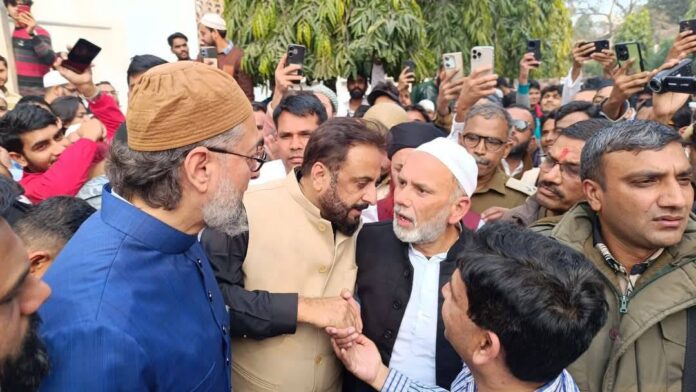
Out on a six-day custody parole granted by the Supreme Court, Hussain is campaigning in his constituency, where he is contesting as an AIMIM candidate. “I had announced six months ago that I will contest from Mustafabad. All the parties knew this… they all announced their candidates just a few days ago. None of them reached out to me. The AAP and the Congress could have, but they were scared that the BJP will make this a poll issue,” he tells TwoCircles.net.
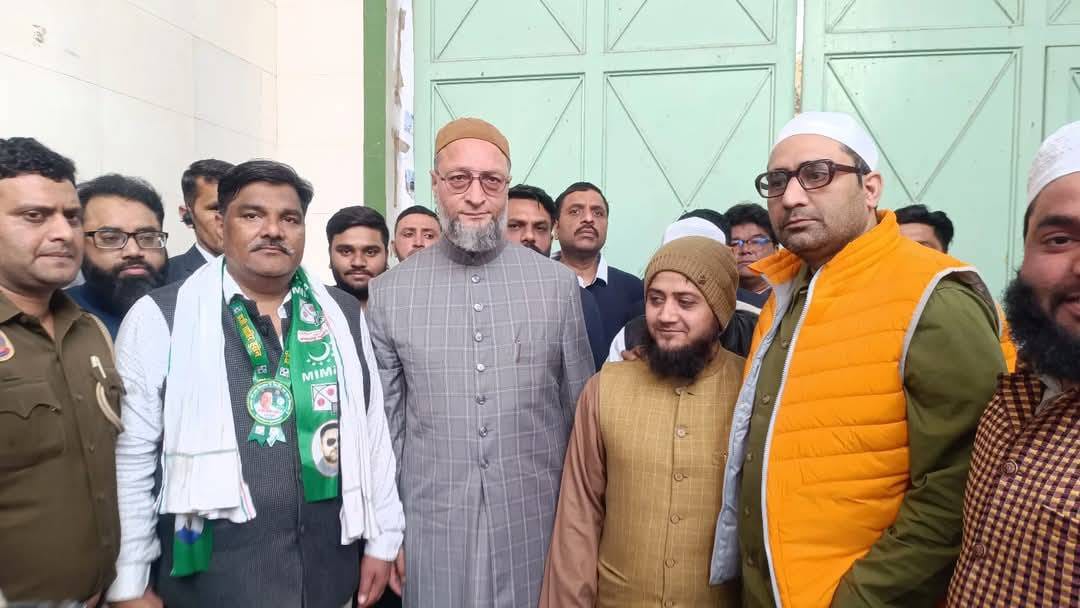
Tahir Hussain with Owaisi and others from AIMIM
Hussain expresses gratitude towards the AIMIM, saying, “I am grateful to Owaisi that he gave me a chance. He is a seasoned politician… Parties that I spent time with, I shared meals with and campaigned for, abandoned me. But an unknown person showed faith in me. He hugged me and fielded me on party symbol.”
While Hussain faces political isolation from his former allies, his personal connections with Mustafabad are deep-rooted. “I have grown up here, got married and had children in Mustafabad. I love my people and rule their hearts,” he says. Despite the challenges, he remains confident in his campaign and asserts that he is “banking on 30 years of hard work”.
Further criticising the AAP, he says, “For the last 10 years, Kejriwal has not even shown his face to us. The people will not fall for their trap this time. There is so much work to be done here.”
As posters demanding justice for Hussain adorn the walls of Mustafabad, the political landscape becomes more complex. The AAP has fielded Adil Ahmad Khan, promising a more developed and educated constituency, but criticism lingers over the party’s alleged failure to adequately address post-riot rehabilitation. Attempting a comeback with Ali Mehdi, another local leader, the Congress is challenging the AAP’s grip on the area, while the BJP’s candidate, Mohan Singh Bisht, aims to consolidate Hindu votes by focusing on “justice” for riot survivors within the Hindu community.
The AIMIM’s decision to field Rehman and Hussain, both tied to the 2020 riots, has ignited intense emotional support among Muslim voters, but it also raises concerns about vote fragmentation.
The stakes have never been higher for Okhla, Mustafabad, and the broader political landscape in Delhi. The February 5 elections will not only be a contest of power but a struggle for justice, dignity and the future direction of the city’s diverse communities.
source: http://www.twocircles.net / TwoCircles.net / Home> India News> Indian Muslims / by TwoCircles.net Staff Reporter / February 01st, 2025
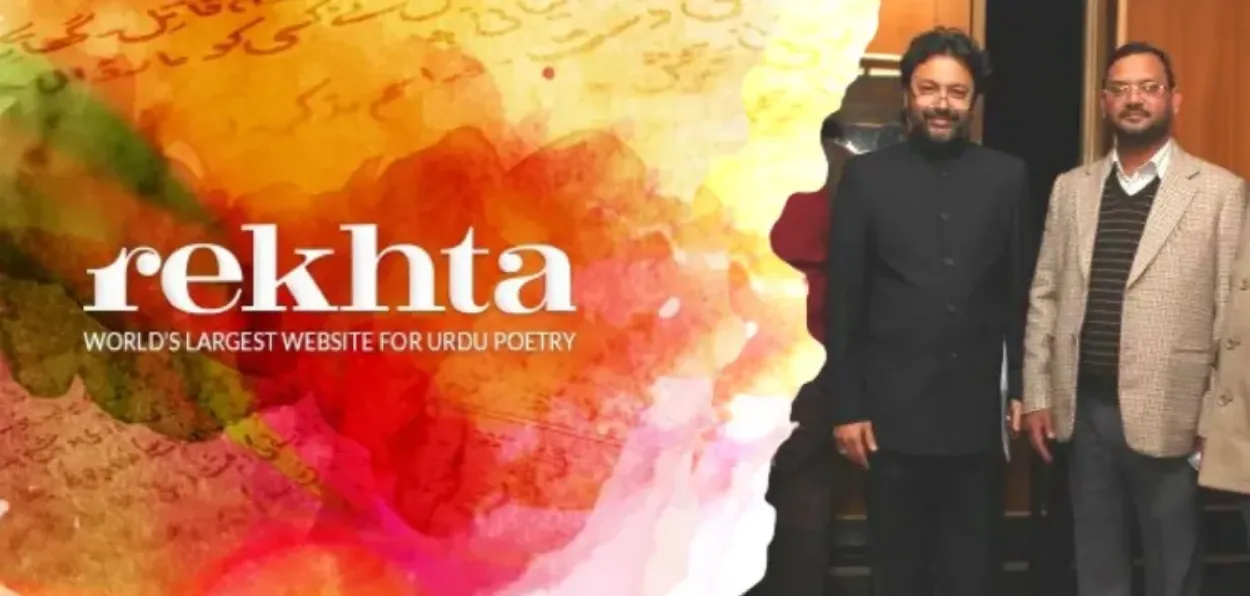
Founder of the Rekhta Foundation Sanjeev Saraf (left) with Dr Umair Manzar
“Umair Manzar was the first to join me in my journey of Rekhta,” said Sanjeev Saraf, the founder of the Rekhta Foundation. He said this before a smaller audience at the launch of the first Jashn-e-Rekhta, the festival of literature and performing arts in 2012.
The festival has become a major annual cultural event in Delhi, and the Rekhta Foundation portal is a key resource for Urdu language and literature and a peg for the online and offline community of Urdu literature lovers.
This year the three-day Jashn-e-Rekhta is being held in Delhi from December 13.
Saraf said Umair was his first Urdu teacher. He was the one who proposed the name Rekhta for the website and became the first member of the online community of Urdu aficionados on Rekhta Foundation.
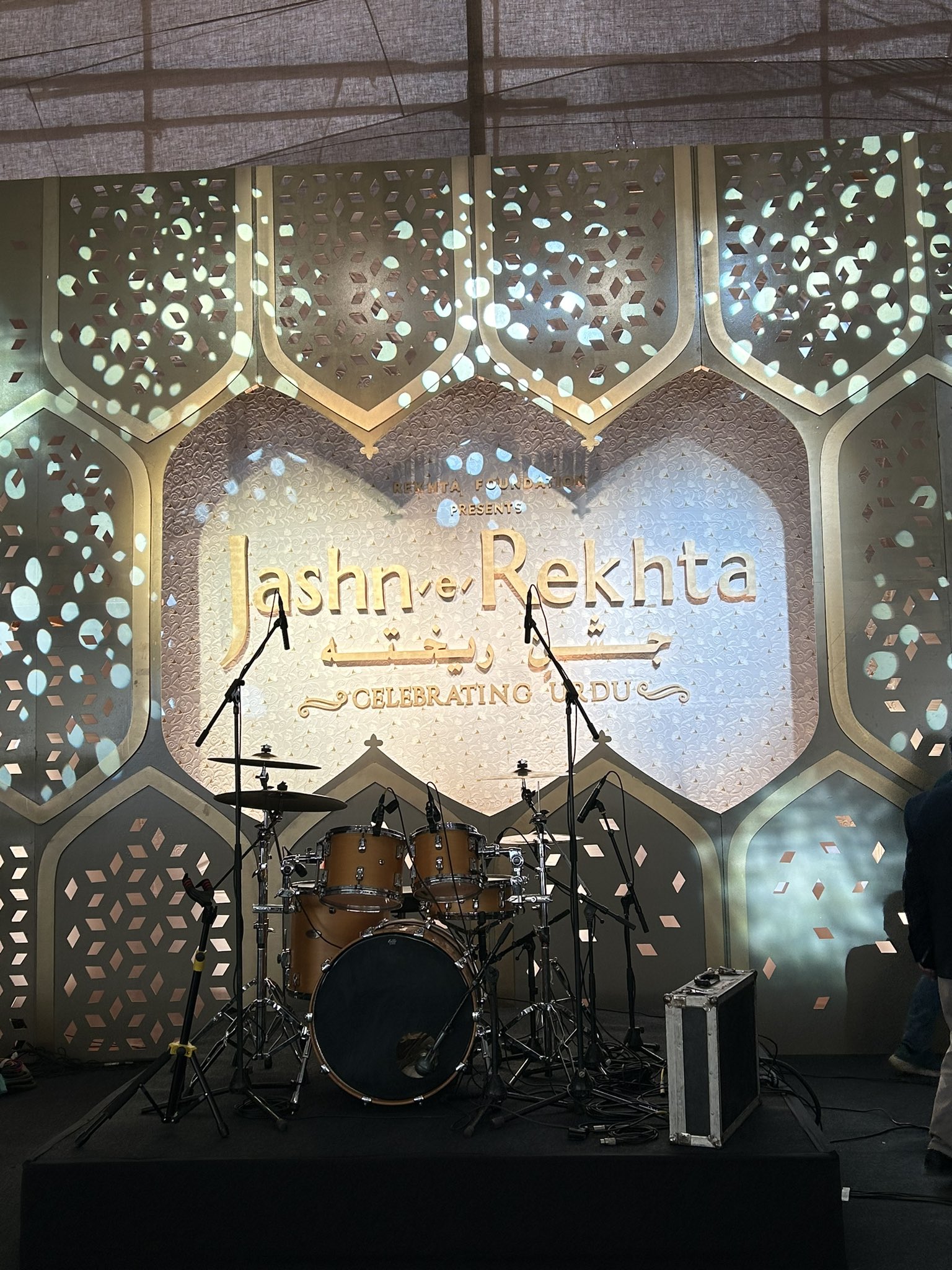
Stage for artists to perform in Jashn-e-Rekhta
Today, Dr. Umair Manzar is an Assistant Professor in the Urdu Department of Maulana Azad National Urdu University, Lucknow Campus When Awaz-the Voice contacted him, he was surprised at his name being mentioned by Safar.
Awaz-The Voice contacted Umair Mazhar on the phone. He came across as a simple and humble person not too keen to take credit for his key role in setting up Rekhta.
After initial reluctance, Umair Manzar agreed to share his interaction with Sanjeev Saraf.
Manzar’s version of the initial days of Rekhta threw up many more characters in this journey. He says many other people also played their part in helping Sanjeev Saraf concretize what was his passion for the language.
Umair Manzar said that he met Saraf during the 2010 spring.”Summer had not started.”
One day Vice Chancellor Jamia Millia Islamia Najeeb Jung called Urdu’s Head of Department Professor Khalid Mahmood and asked him to send a tutor to a particular person to teach Urdu. At that time, Umair was teaching at the university. His HOD gave him a piece of paper with a name and a telephone number scribbled on it and asked him to contact him.
“The name was Sanjeev Saraf. I called that number, we fixed a time for the tuition class.”
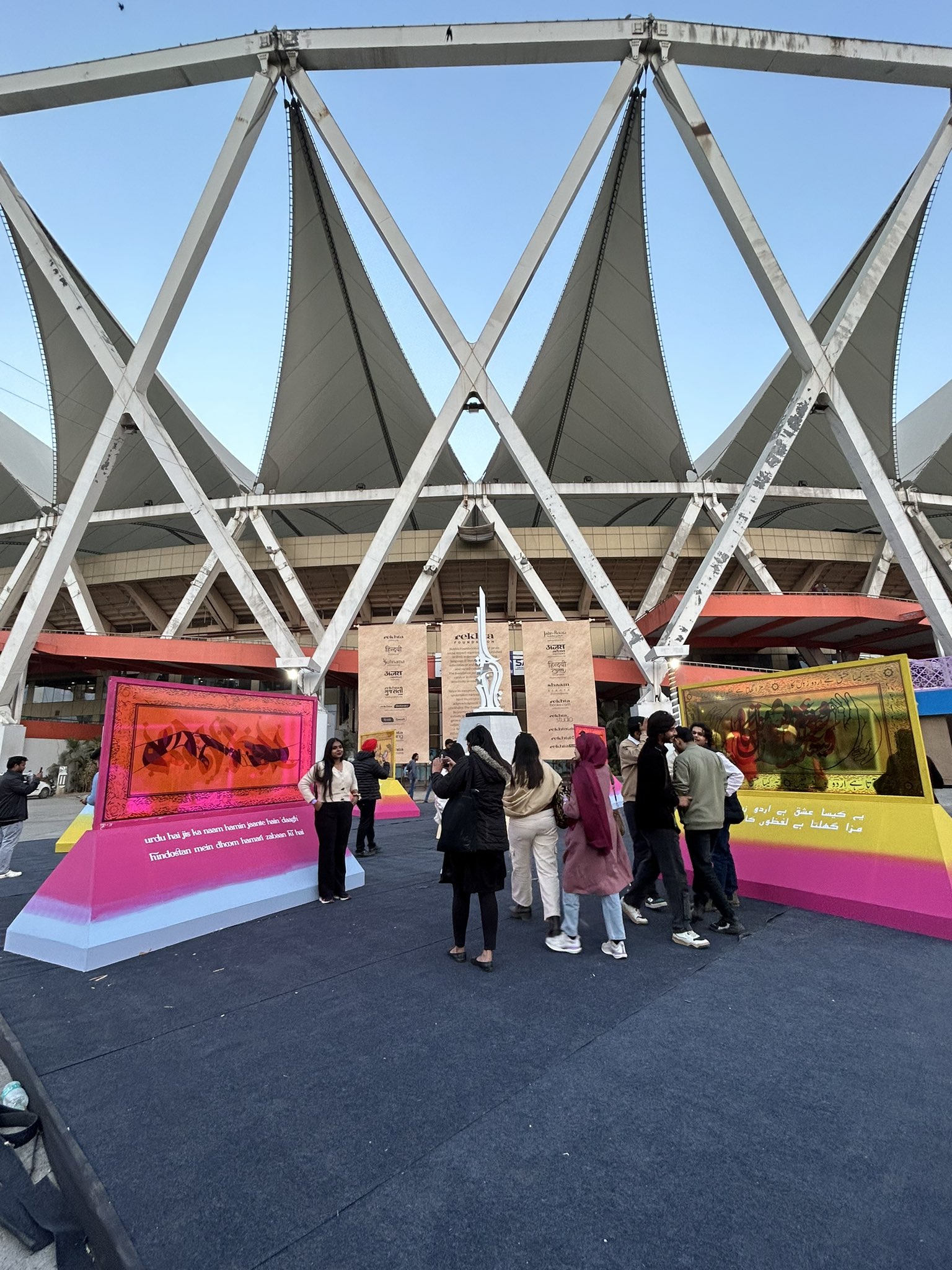
Jashn-e-Rekhta festival
“The first time I met him at his home. I had no idea who he was. Yet I found him a serious person; there was a certain calm in his way of speaking.”
“I liked him instantly as he spoke candidly. After a few meetings, he told me that he was very fond of Urdu and wanted to learn it.
“He especially wanted to understand poetry. In a few meetings, I realized that apart from learning the language, he was also interested in creating an Urdu website. He has nursed a dream of starting an Urdu website for many years,” Manzar said
Sanjeev Saraf seemed to be learning the language out of love for it. He also thought Urdu could become a bridge among diverse people of India who loved the language.
He thought the website of this idea could increase their love for Urdu. Thousands of people want to learn the language because of its poetry. However, there is no one to help them. Sanjeev Saraf had faced this problem and therefore empathized with others. He had the resources, including time to learn Urdu. However, everyone could not do it.
Manzar told Awaz that he soon realized Sanjeev Saraf wanted to do something beyond learning Urdu.
After a few days, he said, “Every person needs a teacher; my website can fulfill the needs of all such people.”
Manzar said, “This got me thinking seriously about this issue. By now I was visiting the Noida office of Mr Saraf. One day he said that we can start Urdu work in a part of that office.”
Umair Manzar also did not realize that he had become a part of the initiative to establish a website that would help Urdu lovers all over the world and bind them in a community.”
He also realized that he was dealing with a passionate lover of Urdu and not a mere learner.
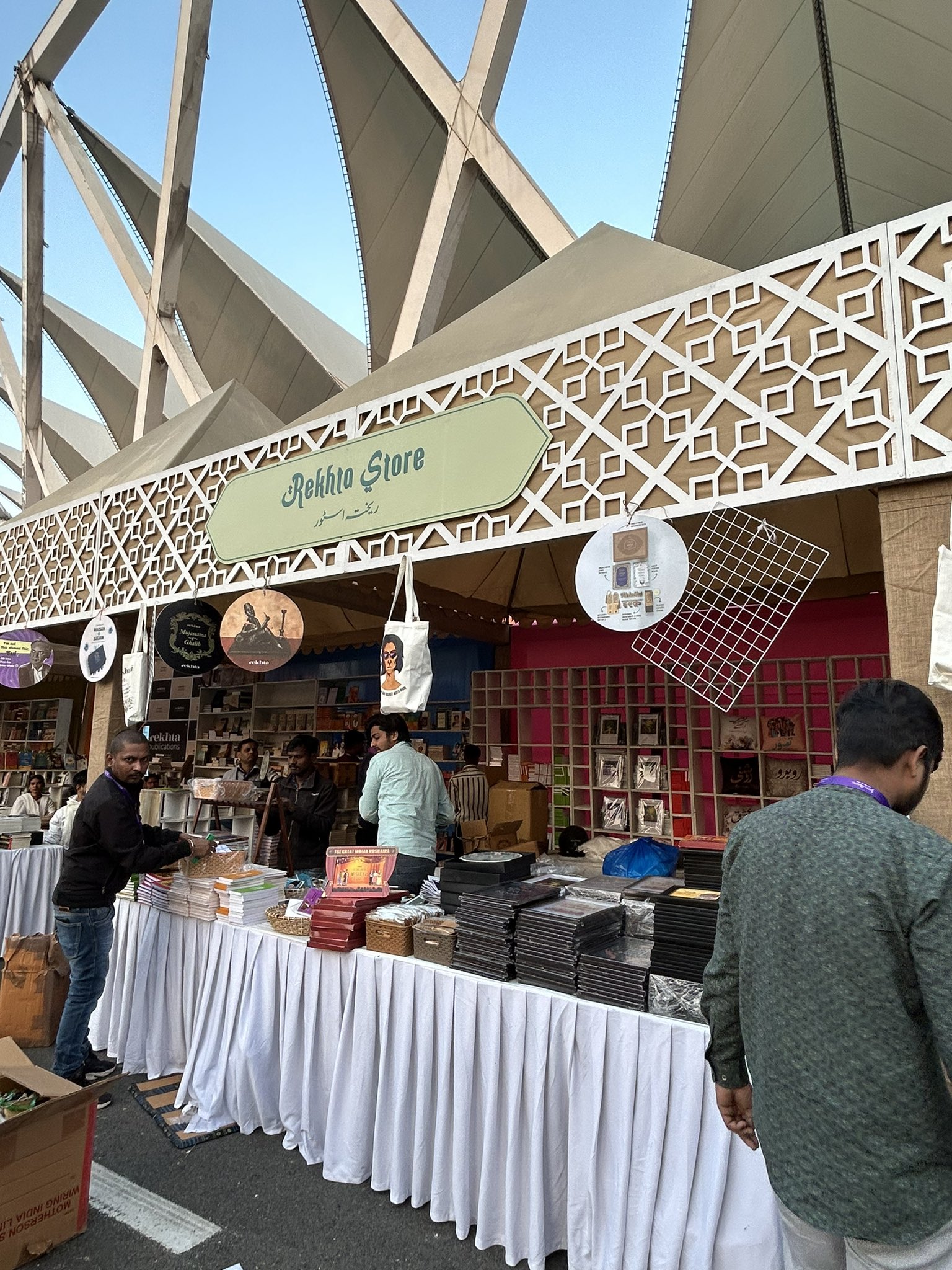
A bookshop in Jashn-e-rekhta
One day Safar spoke formally to him. We decided to discuss it in detail.
And finally one day Sanjeev Saraf asked him to start work on the website,
The first name for the website he suggested was Kavita. This was already bought by someone. The same was the case with many other titles. “I also felt if we had to buy the already registered name for the website, the prices were ridiculously high.”
He suggested ‘Rekhta’ to Sanjeev Saraf. ”He asked me its meaning. When I explained it to him he was happy. Soon we registered rekhta.org as the domain name. I remember he liked the harmony of the words. He was sitting with us during the entire process of registration online.”
Thereafter the work on the website started and many targets were achieved before the scheduled time. This was the journey of paper preparation for the Rekhta Foundation.”
Umair Manzar says he had met Sanjeev Saraf with the sole purpose of teaching him the language but he got involved in his mission.
When asked about the preparations after naming, Umair Manzar said, “After the name was decided, work on the website started. In the summer of 2011, I officially launched the website. The first step was to choose poems of classical poets and the unanimous choice was Mirza Ghalib.”
The selection of contemporary poets started from Jamia Millia Islamia and other libraries. Their compositions were recorded. Saraf hired composers and they worked out of the Noida office. It started slowly and then it gained momentum.”
Umair Manzar said, he also contacted Professor Ahmed Mahfooz and Professor Abdul Rashid for their suggestions and advice.”I also arranged a meeting of both gentlemen with Sanjeev Saraf and this meeting lasted for several hours.”
Saraf expressed his intentions and ambitions; the professors also gave their input and suggestions. “Sanjeev Saraf noted every suggestion and tip the two learned professors offered.”
Prof. Rashid suggested that the way to preserve old books was to scan them and upload them on the website.
Umair Manzar says,” One day when I went to the office, Sanjeev Saraf announced the (scanning) machine had arrived. “Now you people bring the books. The scanning process will begin.”
This was a challenge to all of us. Initially, we tried to upload only selected and important books on the website. Later this also opened a new possibility.
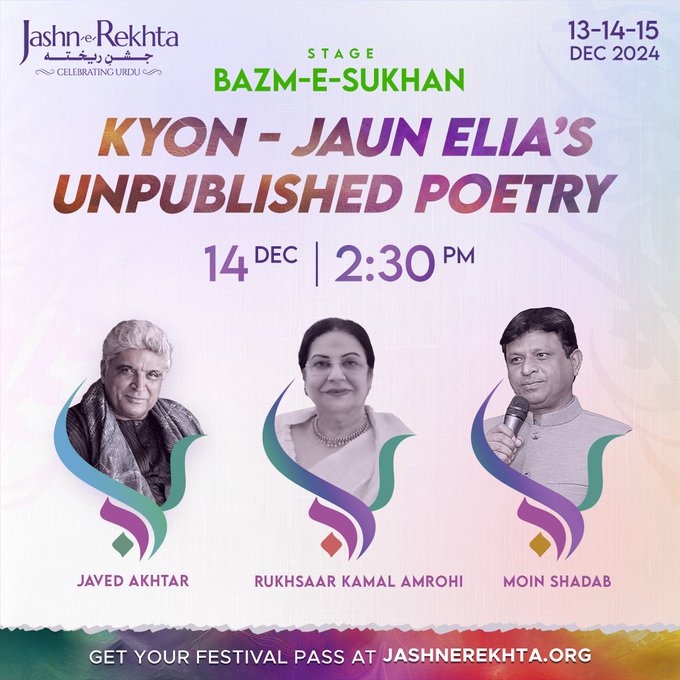
A poster of Jashn-e-Rekhta
Umair Manzar says that initially, people like Rehman Farooqi, Prof. Shamim Hanafi, and Prof. Walwasa ignored the website as another wannabe.
Probably the first column about Rekhta was written by Professor Vasa, Vice President of the Urdu Academy. He also gave Rekhta an award for the promotion of Urdu.
Umair Manzar joined Maulana Abul Kalam Azad Urdu University as an assistant in the early days of Rekhta.
Initially, the Rekhta Foundation was recruited only on the recommendation of a group of like-minded people like Professor Ahmed Mahfooz, Professor Abdul Rashid, and Umair Manzar.
Abdul Rashid, who is from Delhi, had done his research on dictionaries. This year the Ghalib Institute is giving him its prestigious literary and research award. Professor Ahmed Mahfooz is the HOD Urdu Department of Jamia Milia Islamia. He is an expert on poetry.
Professor Abdul Rashid and Dr. Amir Manzar are among the people who have been actively associated with the Rekhta Foundation since its inception.
Dr. Umair Manzar and Prof. Abdul Rashid were included in this team to scan books from Raja Mahmoodabad library and make them part of e-books.
Similarly, access to some private libraries and some important books was very active. Along with them, Professor Abdul Rashid and Dr. Umair Manzar have played a role.
source: http://www.awazthevoice.in / Awaz, The Voice / Home> Stories / by Mansooruddin Faridi, New Delhi / December 12th, 2024
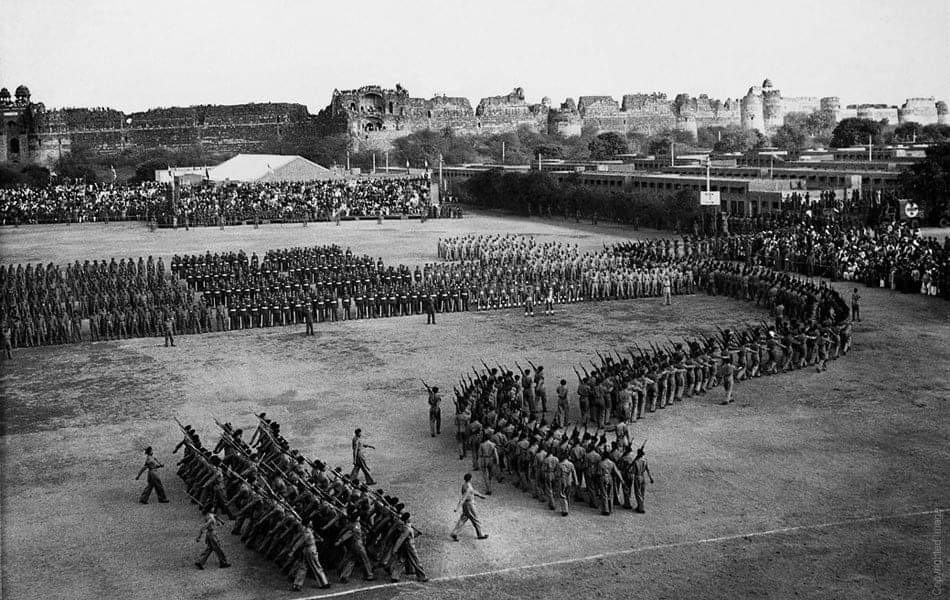
Badruddin Tyabji, the grandson of freedom fighter and third Congress President by the same name, was entrusted with arrangements for the inaugural Republic Day celebrations in 1950.
HISTORIC: National Stadium during the first Republic Day Parade. Old Fort is also visible
Every year on January 26, the Tyabji family sit together in their posh West End Colony house (near Vasant Vihar) to watch the Republic Day Parade which holds special significance for them.
Their late patriarch Badruddin Tyabji, a 1936 batch Punjab cadre Indian Civil Service officer, was responsible for looking after the arrangements of January 26, 1950 functions: first at the President House and later at Irwin Stadium (now Major Dhyan Chand National Stadium).
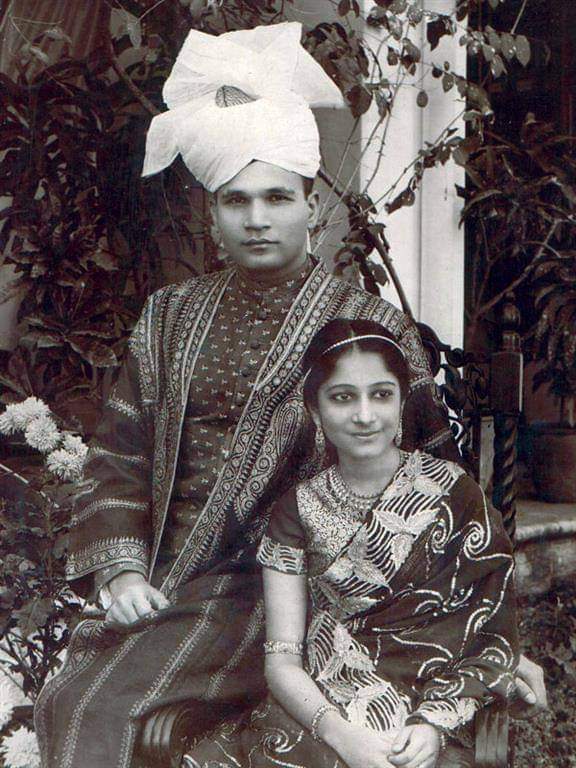
Tyabji’s painter wife Surayya Tyabji made the prototype of the Tri-colour on paper based on which the flag of cloth for Republic Day was made in Connaught Place.
“Just a couple of weeks before the first Republic Day, Prime Minister Pandit Jawaharlal Nehru entrusted me to look after the arrangements of the January 26 functions,” Tyabji told this writer in his south Delhi house in 1994.
He was also member secretary of the Constituent Assembly.
“I was called by Pt. Nehru and he gave me the huge responsibility for the historic day. I used to live at Sujan Singh Park during those days.”
From that day onwards, the tall and gracious Tyabji moved from the President House (now Rashtrapati Bhavan) to Irwin Stadium several times a day to finalise the arrangements as time was running out for the big day.
HAPPY FAMILY: The Tyabji clan including Laila Tyabji (centre, front row), who is a social worker, designer, writer and crafts activist
The big day for which Tyabji had worked so hard was also hectic for Rajendra Prasad, the soon-to-be first President of independent India. He marked the momentous occasion with a visit to Raj Ghat to pay homage to Gandhiji. He remained there for around 15 minutes.
But before the would-be President of India could get to the President House, C Rajagopalachari, the Governor General of India, had already reached there. The latter used to live in the double-storeyed bungalow at the then 10, Hastings Road, which was later renamed after him as Rajaji Marg. Edwin Lutyens, the chief architect of New Delhi, also lived in the bungalow, and so did Pranab Kumar Mukherjee, who also lived in that house after demitting his office of President of India.
“Dr Rajendra Prasad was sworn in as the country’s first President at around 9 am by the Governor General of India, C. Rajagopalachari. Rajvanshi Devi, his wife, and other family members were also there. The swearing-in ceremony was attended by over 500 guests, who had assembled inside the Durbar Hall. President Sukarno of Indonesia and several members of the Diplomatic Corps, members of the Constituent Assembly and prominent citizens had graced the occasion. The President was dressed in black achkan, white churidar and a white Gandhi cap. Pandit Nehru and his other Cabinet colleagues were sworn in soon after Rajendra Prasad,” recalled Tyabji, who was named after his grandfather, the third President of Indian National Congress.
Immediately after returning from Raj Ghat, Rajendra Prasad was sworn in. The Chief Justice of India, Sir Hiralal Kania, read the oath of office in Hindi. President Prasad repeated it sentence by sentence.
“The outgoing Governor General, C. Rajagopalachari; our first Prime Minister, Pandit Jawaharlal Nehru, beaming with pride and joy; the Deputy Prime Minister, Sardar Patel; cabinet ministers, judges of the Supreme Court and the Auditor-General of India, were present in the hall to witness the historic moment of India’s history. Pandit Nehru and his other cabinet colleagues were sworn in soon after.”
The national emblem of Ashoka Pillar with three lions was placed in the Durbar Hall for the first time near the throne where the British Viceroys used to sit.
A smiling statue of Lord Buddha was also placed behind the throne for the first time. Rajendra Prasad, the President, who greeted the large gathering smilingly with folded hands, made a short speech in Hindi and English, stating that it was a memorable day in our annals.
“Let us begin by offering our thanks to the Almighty Power who has enabled us to see this day; to the Father of the Nation who showed us and to the world at large his infallible method of Satyagraha, and led us on along it to freedom and to the numberless men and women, whose suffering and sacrifice have rendered the attainment of independence and establishment of this sovereign democratic Republic possible.”
The birth of the Republic was celebrated by the masses in the Capital through Prabhat Pheries (early morning movement of people singing patriotic songs). Outside the Durbar Hall, there were unforgettable scenes of jubilation. Large crowd of men, women and children had assembled in the forecourt of President House.
People raised slogans of Gandhiji-ki-jai and Vande Mataram.
After a dignified ceremony was held at the President House, the scene shifted to Irwin Stadium. The new President travelled to the stadium in a horse-drawn carriage and Delhi’s roads were lined up with enthusiastic crowd standing along the five-mile route with the Tri-colour in their hands. A huge crowd greeted the President’s entourage when it reached the vicinity of Connaught Place. And when the first President of India reached the stadium, he was welcomed with a booming 31-gun salute.
According to Tyabji, “Rajendra Prasad made a brief speech at the stadium. Later, students from various schools of the Capital presented cultural programmes.”
Old timers still recall that there were very few policemen guarding the VIPs inside the stadium. After the programme, the leaders mingled with the people. Nehru was mobbed by his admirers. He spent a good 20 minutes with them.
Tyabji, who could not sleep for several days ahead of the big occasion, was there managing the affairs carefully with his colleagues. Following very cold weather days in Delhi, brilliant sunshine greeted the Capital on January 26, 1950.
It was India’s defining moment, the day India truly freed itself from the shackles of colonialism to become a Republic. A truly sovereign state.
The talk of the first Republic Day cannot be complete without discussing the role of Tyabji’s wife, Surayya, in the making of the first Tri-colour.
According to Tyabji, “Once the Constituent Assembly finalised our Tri-colour with Ashok Dharma Chakra inside the flag, I was asked to furnish the model of Tri-colour on both paper and cloth.”
Without wasting any time, Badruddin Tyabji went straight to his Sujan Singh Park residence and asked his wife Surayya to make the Tri-colour on paper. She did not disappoint her husband. Once she made it on paper, Tyabji carried the design to the now defunct SC Tailors at Regal building of Connaught Place and asked them to make the Tri-colour in cloth. The rest, as they say, is history.
After retirement from government service, Tyabji also served as the Vice-Chancellor of Aligarh Muslim University in the 1960s.
He finally settled in Delhi and passed away in 1999. His wife, Suraiya, had died before him.
During one of our meetings, Tyabji had told me that when he came to Delhi from Hyderabad to appear for ICS examination, he was staying in Daryaganj.
He used to take a tonga to reach Metcalfe House in Civil Lines to appear for his examinations.
“Delhi was a very small city then. Except for old Delhi and villages, there was not much here. New Delhi was coming up,” he had said.
When India was divided on the basis of religion in 1947, he was perhaps one of the only two Muslim ICS officers who opted to stay in India instead of accepting Islamic Pakistan.
OFFICER RANK: Badruddin Tyabji was a 1936-batch ICS officer of Punjab cadre. His wife, Surayya was a painter
Tyabji’s first son, Hindal Ahmad, was an IAS officer. He passed away last year.
Tyabji’s daughter, Laila Tyabji is a noted social worker, designer, writer and crafts activist. She is one of the founders of Dastkar, a Delhi-based non-governmental organisation working for the revival of traditional crafts in India.
Like in the past, the Tyabji family would watch the annual parade this year too. After all, they are the true and proud first family of India’s Republic Day. Yet, they are so self-effacing.
source: http://www.thepatriot.in / The Patriot / Home> Cover Story / by Vivek Shukla / January 26th, 2024
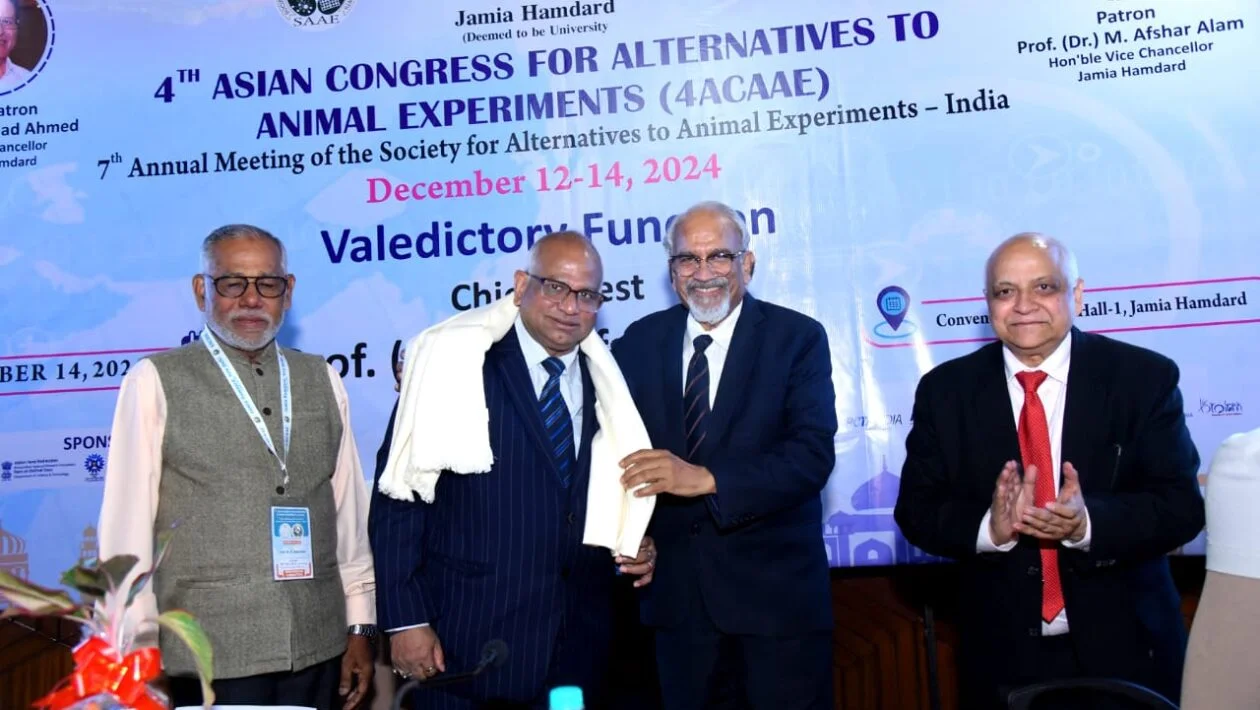
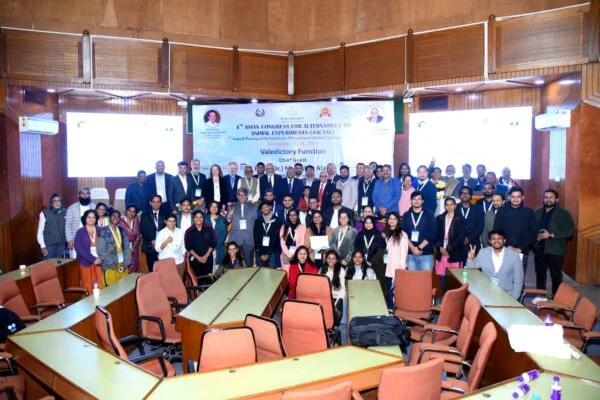
The valedictory function of the 4th Asian Congress for Alternatives to Animal Experiments held at Jamia Hamdard Convention Centre where Prof. (Dr.) M. Afshar Alam, Vice-Chancellor, Jamia Hamdard was the Chief Guest of the programme.
Organizing secretary Prof. S. Raisuddin informed that this congress is being held for the first time in India. During this congress the founding members of the society and representatives from India, China, Japan, and South Korea signed a joint declaration to establish the Asian Federation of Societies for Alternatives to Animal Experiments (AFSAAE).
Well-wishers from societies working for alternatives from America, Europe, and Sri Lanka also wished good link to the foundation. All the representatives were felicitated by the Organizing Secretary. Prof. Y.K. Gupta and Dr. M. A. Akbarsha graced the occasion as Guest of Honour.
Prof. Y. K. Gupta urged the scientists to understand the pain of Animals while using them for scientific experiments.
Dr. Akbarsha announced the next meeting to be held at Hyderabad. Prof. Raisuddin presented a detailed report of 3 days deliberations during the conference. He also announced various awards for best presentations by young scientists. Dr. Christian Pellevoisin, Scientific Director, MatTek & CEO Urbilateria France sponsored best poster presentation awards and cash prizes to the budding scientists. Dr. Kristie Sullivan, Vice President, Education and Outreach, Institute for In Vitro Sciences, USA and Prof Winfried Neuhaus, member of the Austrian Commission for Animal Experimentation also appreciated the successful organization of the Congress.
Prof. (Dr.) M. Afshar Alam, Vice Chancellor congratulated the Organising committee members for the successful organisation of the conference. He appreciated the patronage of Janab Hammad Ahmed, Chancellor, Jamia Hamdard and financial support of Hamdard National Foundation along with other funding agencies for enabling Jamia Hamdard to develop alternative models of animal experiments.
Programme ended with vote of thanks by the Organising Secretary and National Anthem.
source: http://www.taasir.com / Taasir.com / Home> Education / by Taasir News Network / December 15th, 2024
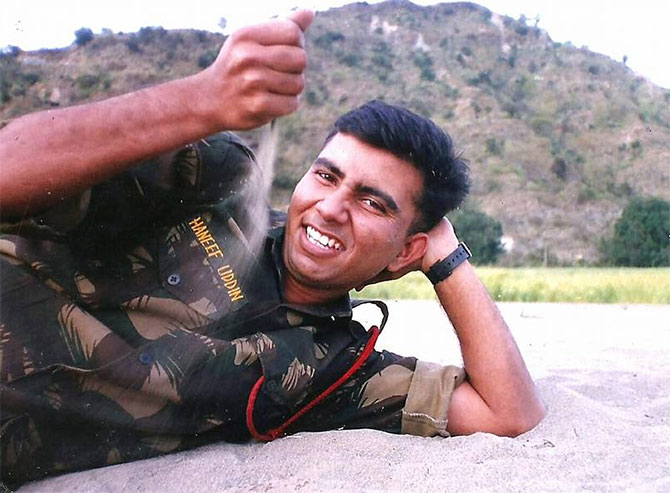
Pakistan’s misadventure in Kargil will be remembered not only for the convincing win of the brave Indian army but also for some of the heroes who sacrificed their lives for our dear motherland. Prominent among those heroes was a 25-year young Captain Haneefuddin of 11 Rajputana Rifles who led from the front and made the ultimate sacrifice. Martyr Vir Chakra Captain Haneefuddin had to be from the Dilwalon ki Dilli! Truly, he had a large heart for he volunteered to command an operation to capture a post which would give a vantage position to observe the enemy’s movements.
It was quite early days of Kargil war when there was hardly any information available about the enemy troops. A company of 11 Rajputana Rifles was deployed in Operation Thunderbolt on June 6th, 1999 led by Captain Haneefuddin. It was at an altitude of 18,000 feet in the Turtuk region. The Mission: To capture a position in the region which would facilitate the Indian army to monitor the movements of the enemy troops better. The capture of this position would give the troops a strategic advantage in those early stages of the war. Captain Haneef volunteered for this Operation Thunderbolt as it was his ingrained in his nature to lead from the front. He set off for the vital operation with one junior commissioned officer and three other ranks. They made significant strides on the nights of 4th and 5th June 1999. They captured nearby positions. They captured the adjacent position and set out their advance on 6th June 1999 to capture the position they desired. They were undaunted by an altitude of 18,500 feet and extremely cold temperatures. They were however spotted by the enemy and fired upon. A firefight followed, against an enemy equipped with heavy artillery.
Captain Haneefuddin was concerned about the safety of his team more than himself. He took up a position and fearlessly showered bullets on the enemy. In the exchange of bullets, he was severely injured. But he kept engaging the cunning enemy, until his boys were safe from the enemy fire. Unfortunately, he ran out of ammunition and he was shot from all directions. He succumbed to his injuries, just 200 meters from the position they valiantly set out to capture. He displayed extraordinary valor in the face of the enemy and cared more about his team’s safety than his own. Captain Haneefuddin attained martyrdom at the young age of 25. It was exactly two years after he was commissioned in the army. But his body could not be retrieved due to heavy firing till a brave Colonel Bhatia and his illustrious team set out to retrieve the body. It was on 18th July, 43 days after Haneef’s martyrdom, Captain S K Dhiman, Major Sanjay Vishwas Rao, Lieutenant Ashish Bhalla, Havaldar Surinder and Rifleman Dharam Vir volunteered for the task.
Col. Bhatia and his team carefully negotiated the deadly precipices. The team managed to locate the brave heroes Haneef and Parvesh. They extricated the frozen bodies. Dragging them behind the boulders, the team carried the fallen heroes on their backs. They walk quietly through the night, reaching Zangpal by early morning. A helicopter carried the bodies away as the brave Colonel Bhatia watched the body bags with moist eyes for one last time.
Vir Chakra Captain Haneefuddin’s mother Hema Aziz had paid tribute to her martyr son thus: “As a soldier, Capt Haneef served his country with pride and dedication. “There cannot be a greater statement on his valor than his death which came while fighting the enemy.” Later, a subsector in the battle zone was named as Subsector Captain Haneefuddin.
It is interesting to note that Captain Haneefuddin had gone to fight for 11 Rajputana Rifles whose war cry is ‘Raja Ram Chandra ki Jai’. Twenty years later, in February 2020, in Captain Haneefuddin’s hometown – Delhi, a similar war cry — Jai Sri Ram was used by the rioters who looted, raped, killed innocents, destroyed 11 mosques and burnt down the copies of the Holy Quran, according to the just released report of the Delhi Minorities Commission. Those who carried out this pogram do not have guts to go to the borders and fight the enemies Pakistan and China. Instead, they choose our own citizens!
Where have the Dilwallas disappeared from Dilli? Lest we forget Kargil War Hero Vir Chakra Captain Haneefuddin and other heroes!
source: http://www.beyondheadlines.in / Beyond Headlines / Home> Lead / by Dr Ahmed Mohiuddin Siddiqui / July 27th, 2024
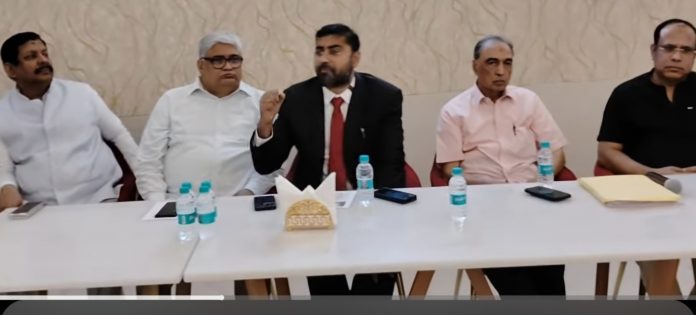
Dr. Majid Ahmed Talikoti, a renowned oncosurgeon, announced his candidacy for the presidency of the India Islamic Cultural Centre (IICC) during a press conference at Hotel Riverview in Jamia Nagar, New Delhi.
Dr. Talikoti highlighted his diverse interactions with people from various walks of life as a key factor in his decision to engage with IICC. “As a surgeon, I interacted with people from different walks of life, and I know how to deal and serve people. That’s why I decided to engage myself with IICC,” he stated.
Dr. Talikoti, who is well-regarded in the medical community, aims to showcase IICC as a beacon of Islamic heritage and culture. He emphasized the peaceful nature of Islam and the importance of promoting this message through IICC. “Given a chance, I will try to showcase IICC as a prominent center of Islamic heritage and culture. Islam is a religion of peace, and I would try my best to send the message of peace through this Centre. We are supposed to welcome our non-Muslim brothers on Eid and join them on Diwali,” Dr. Talikoti said.
Dr. Talikoti outlined his vision for IICC, focusing on maintaining a non-political, brotherly atmosphere during the election and beyond. He stressed the importance of adhering to IICC’s aims and objectives, which include fostering youth empowerment and initiating interfaith dialogues to bridge community gaps. “We will not fight this election as a political battle, but in a brotherly manner in a very congenial atmosphere and try to keep the center away from politics, following the aims and objectives of IICC. We will develop IICC as a center of empowerment for youths and start interfaith dialogues to bridge the gap between communities,” he asserted.
With the support of former IICC president Sirajuddin Quraishi, Dr. Talikoti’s campaign has garnered significant attention. He is also the convener of the Muslim Rashtriya Manch (MRM), an RSS-affiliated organization formed in 2002 to facilitate dialogue with the Muslim community.
Established in 1981, IICC is a premier institution in New Delhi dedicated to promoting and preserving Islamic culture and heritage. It aims to foster cultural exchange, interfaith dialogue, and communal harmony through various educational, social, and cultural programs.
The election campaign for the governing body of IICC has officially commenced, with candidates contesting for posts of president, vice president, and members of the Board of Trustees (BoT) and Executive Committee (EC) promising significant shifts in the center’s functioning. The election is scheduled for August 13th.
Among the other presidential candidates are ex-cabinet minister Salman Khurshid, retired IRS officer Abrar Ahmad, former bureaucrat Afzal Amanullah, businessman and philanthropist Waseem Ghazi, businessman M. Asif Habib, and BJP activist Suhail Hindustani. Each candidate brings unique perspectives and visions, making this election a pivotal moment for IICC’s future.
Interestingly, Dr. Majid Talikoti’s panel includes Kaleemul Hafeez, who is contesting for the post of vice president. Until recently Hafeez has been a sharp critic of Serajuddin Quraishi, the former IICC president, who is also running for membership on the Board of Trustees (BoT)
Md Irshad Ahmad Advocate, Supreme Court of India & Former President, AMUOBA-DELHI is also contesting for BoT from this panel.
source: http://www.muslimmirror.com / Muslim Mirror / Home> Indian Muslim / by Special Correspondent / June 25th, 2024
Mohibbullah Nadvi’s nomination by the SP and his road to victory in the general elections were peppered with confusion and drama. He was not the party’s first choice candidate and filed his papers at the last hour on the final day of nomination on March 27.
Mohibbullah ‘Nadvi’. Photo: Omar Rashid
New Delhi:
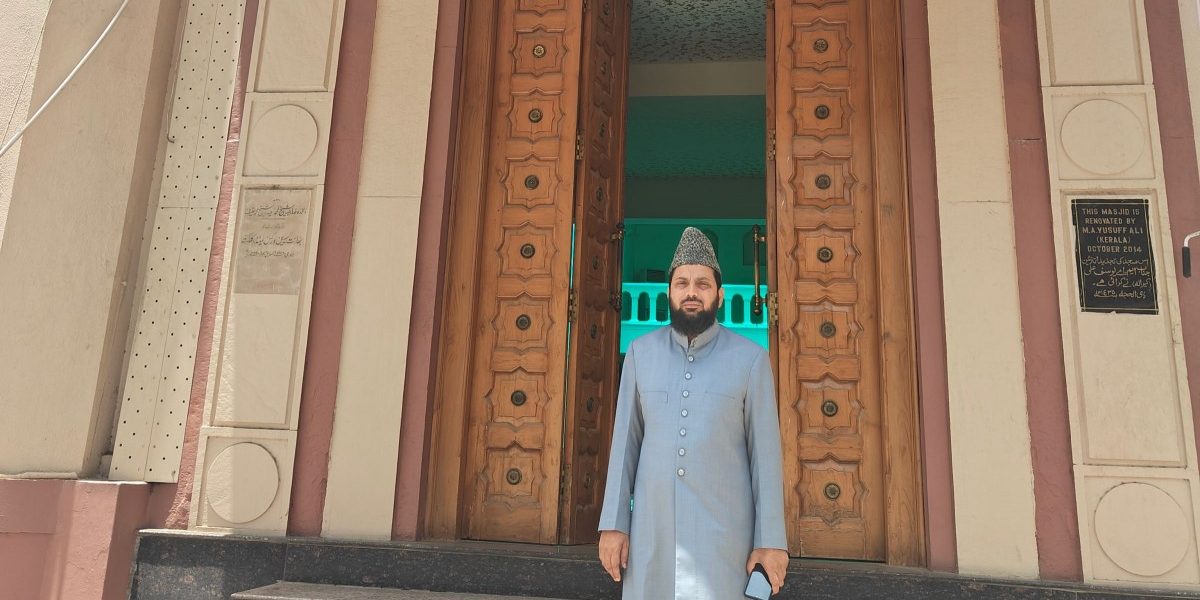
Mohibbullah ‘Nadvi’ took 19 years – and a detour through his home town, Rampur in Uttar Pradesh – to traverse the roughly 25-30-metre-wide tarmac separating Indian parliament from the mosque where he leads prayers as an imam. Surprising everyone, the Samajwadi Party nominated the 48 year old as its Lok Sabha candidate in Rampur; and, battling several odds, Nadvi came through, defeating the Bharatiya Janata Party by over 87,000 votes.
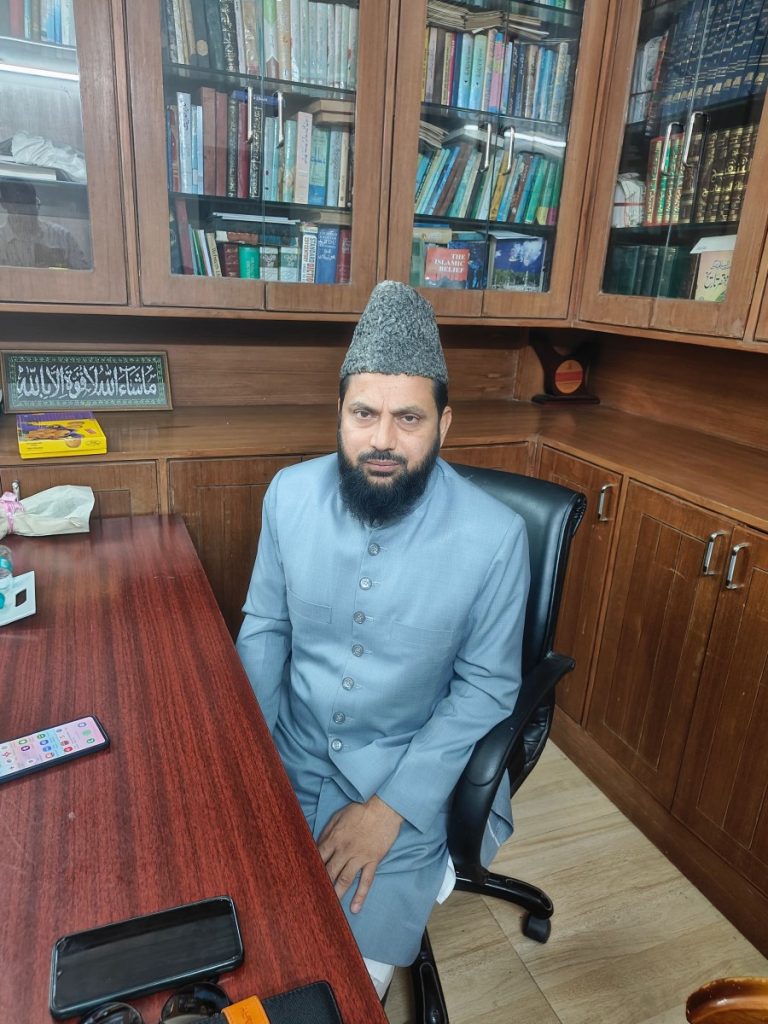
It is a little past noon and the sun is blazing down on Parliament Street, where the Jama Masjid is located in the capital. Nadvi has been its imam since 2005. With a small group of associates, he is seated in his office, still receiving congratulatory phone calls.
Nadvi was one of the five Muslims who were elected as MPs from UP this time. Six had contested. Nadvi hoped that now that the Opposition had performed better, taking the BJP head-on on issues of livelihood, the question of the worryingly low Muslim representation may be addressed better. But it should not be seen solely through the lens of numbers, he said.
“Our political representation should not be seen in terms of quantity but quality…even if there is one person, who is good, 100% faithful to the community, understands Islamic things and sentiments of Muslims, and raises their questions correctly,” Nadvi told The Wire. Muslims in India were not asking the government for anything beyond the rights the Constitution promises all citizens, he added.
Nadvi’s nomination by the SP and his road to victory in the general elections were peppered with confusion and drama. He was not the party’s first choice candidate and filed his papers at the last hour on the final day of nomination on March 27. Nadvi’s nomination also caught several party leaders by surprise as he did not have a political background. Fielding a Delhi-based maulana from a communally-sensitive constituency marred by internal divisions in the SP did not seem like a clever decision to many.
Though he had met SP president Akhilesh Yadav once when the latter was chief minister in 2012, the breakthrough came when they spoke in Lucknow in January this year. According to a source, Nadvi, who harboured electoral ambitions, had gone to Lucknow to invite Yadav to an event of Muslim leaders in Delhi. In Lucknow, Nadvi came in touch with Uday Pratap Singh, former MP and a close associate of Akhilesh’s and his late father Mulayam Singh Yadav’s, and also met Shafiqur Rehman Barq, former MP, with whom he already shared a good connection. Barq, a Turki Muslim like Nadvi, pitched for the maulana. That would be Barq’s last visit to the SP office as he died a month later, aged 93.
Mohibbullah ‘Nadvi’. Photo: Omar Rashid
Akhilesh did not promise Nadvi the ticket right away, but kept him on stand-by as an alternative, if needed. As nomination day approached, the SP was caught in a mini-crisis as it failed to zero down on candidates in two important and winnable seats, Rampur and Moradabad, both with a record of electing Muslims. Much of this had to do with the stubbornness of senior leader Azam Khan in having his say in candidate selection in his bastion.
On March 22, Akhilesh visited the Sitapur jail to meet Khan, who is incarcerated there, to discuss the candidates in Rampur and adjoining seats. Khan, who has faced the endless wrath of the Yogi Adityanath government, apparently proposed that either Akhilesh contest himself from Rampur or nominate one of his family members. This did not sound feasible to the party.
According to sources, the party asked several leaders to contest from Rampur but Saleem Shervani (ex-MP from Budaun), Kamal Akhtar (former minister) and S.T. Hasan (elected Moradabad MP in 2019) all rejected the proposal. Nobody wanted to encroach on Khan’s territory.
The SP’s top leadership wondered if it would be feasible to field Tez Pratap Singh Yadav, Akhilesh’s nephew and former MP, from Rampur but apparently the idea was turned down by Akhilesh’s uncle Ramgopal Yadav, the party’s national general secretary.
Only a day was left for the nomination and the SP was without an official candidate. A disaster was on the cards.
A similar situation prevailed in neighbouring Moradabad, where two candidates of the SP, sitting MP Hasan and former MLA Ruchi Veera, a close associate of Khan’s, both filed nominations, confusing the rank and file of the party. To Hasan’s dismay, Veera even received the party’s authorisation letter as its official candidate. He was obviously not happy.
In Rampur, too, the matter got out of hand after Asim Raja, an aide of Khan’s, filed his nomination while claiming to be the SP’s candidate. Raja, who had lost the Rampur seat in a by-poll in 2022, even led the Khan camp to declare a boycott of the 2024 election as Akhilesh had not paid heed to their request of contesting himself.
It was around 5 pm on March 26 that Nadvi received a call from the SP informing him that he would be the official candidate in Rampur. Along with his aides, he left for Rampur overnight. With the clock ticking, SP state president (and now MP) Naresh Uttam Patel along with a trusted lawyer boarded a chartered flight to deliver the Form AB to Nadvi, and in a change of tack, nominate the disgruntled Hasan as the official candidate in Moradabad by handing him the party’s authorisation letter. The flight landed on an airstrip in Mundha Pande, midway between Rampur and Moradabad, at around 11 am, sources said. Nadvi managed to file his nomination on time but Hasan could not receive the authorisation letter within the stipulated period. Their first priority was Rampur.
“It was a difficult time. We didn’t even have a back-up candidate. Time was running out,” Nadvi told The Wire, recalling the tense moments before his first-ever nomination. Later, Hasan in an interview to PTI alleged that some leaders had “conspired” to ensure that the party’s authorisation letter did not reach him on time.
After his nomination, Nadvi battled the ‘outsider’ tag, the internal opposition of the Khan camp, BJP’s communally-driven campaign and hostility from the administration. He brushed aside the outsider tag, underlining that he was born in a village, Razanagar, in Suar tehsil of Rampur. His uncle was a former pradhan. Nadvi, who owns 7.44 acres of inherited land in his village, completed his Quranic education or Hifz from Rampur city before spending time in a madrasa in Sambhal.
Following that, he went to Lucknow to pursue his higher education in Islamic studies from the renowned seminary Darul Uloom Nadwatul Ulama, from where he got his title. Nadvi then went to Aligarh for further education but as he did not appreciate the heated political climate on campus, he instead enrolled in Jamia Millia Islamia University in Delhi and graduated from there in Arabic Honours. He went on to complete his MA in Islamic Studies and got a BEd from Al-Falah University. In 2005, he was appointed as an imam at the Parliament Street Mosque after clearing an interview. “I didn’t have much inclination towards politics earlier. But I did develop some interest as the people who offered namaz behind me included some very important political people,” said Nadvi, on being asked why he suddenly jumped from the pulpit to politics.
Given the mosque’s location, top Muslim politicians and officials come there to pray. Even the likes of Liaquat Ali Khan, Maulana Azad and Zakir Hussain, former president of India, prayed at the mosque or used to visit it, said Nadvi. Jawaharlal Nehru and Indira Gandhi too have visited the mosque, whose compound houses an elegant white tomb of former president Fakhruddin Ali Ahmed. Nadvi, who took over prayers at the mosque at 29 years of age, was delighted to share that even former President A.P.J. Abdul Kalam had prayed behind him.
The maulana feels that Akhilesh took a “strong decision” by nominating him in Rampur, where he initially faced opposition from a section of party workers loyal to Khan.
“I faced some problems from our party friends who were unhappy. But I managed to tackle them beautifully. Credit to them, they also did not hype it so much, maybe due to public pressure or my acceptance in public,” said Nadvi. He feels his identity as an Islamic scholar and imam may have helped him win acceptance in his native land. “I have roots in Rampur. I want to take everyone forward and work on education and health,” he said.
While his nomination process was controversial, following his victory, too, Nadvi has garnered the headlines. He was trolled by supporters of Khan after he met the divisional commissioner of Moradabad, Aunjaneya Kumar Singh, who while serving as the district magistrate of Rampur had initiated a wave of action against Khan and his family members. Nadvi downplays the meeting. “I am a mazhabi alim. I don’t have negativity towards anyone,” he said, adding that he had met the official to discuss plans for the betterment of his constituency.
He also landed in a soup for his comments on the jailed Khan. When asked by reporters if he would visit the leader in jail, Nadvi said, “People are sent to jail for correction. Jail is a correctional facility and I can only pray for Azam Khan.”
Azam’s wife and former MP Tazeen Fatima lashed out at Nadvi for the comments. “He said that jail is a correction home. It seems like he had a deep experience of going to jail and he has been to jail,” she said.
Nadvi said his comments were misrepresented and exaggerated by the media. “I said that the jail is not heaven, that we would like to go there. We have our empathy for Azam sahab. What else can we do for him? The media gave it unnecessary hype,” said Nadvi. When I asked him if his relationship with Khan was fine, he took a long pause and before he could answer, an aide of his cried from the other end of the small room, “Abhi tak toh theek hai (So far, it’s fine)!”
Ruchi Veera, the newly elected Moradabad MP, visited Khan’s family following her win. She criticised Nadvi for his comments on Khan. “He should not forget that he won because of the party and Azam Khan sahab has made a lot of sacrifices for the party,” Veera said. She called him out for his “political immaturity”. “He’s not a political person. I don’t know how he got the ticket for the election and won.”
In Rampur, Nadvi not only saw off the challenge from the BJP but also ensured that the Muslim candidate of the Bahujan Samaj Party did not spoil his chances. The BSP candidate received 79,000-odd votes while he beat the BJP by over 87,000 votes. Had the election been conducted in a “fairer” manner, the margin would have been over one lakh to 1.5 lakh, said Nadvi, alleging that voting had been disturbed on 12 to 15 booths where the SP had a strong voter base.
Despite the BJP’s shrill anti-Muslim campaign, Nadvi says even Hindus voted for him, as he went to people with a “positive message”. “I spoke about education, health and employment. Who would the people choose? Someone who is abusing others or one who is asking them about their needs?” he asked. In an election where the BJP lost the election in the land of the Ram Mandir, a maulana scripted a successful political debut in a district bearing the name of the Hindu deity.
source: http://www.thewire.in / The Wire / Home> Reportage> Politics / by Omar Rashid / June 15th, 2024
In a significant development aimed at revitalizing the activities of a prominent Muslim organization, the All India Muslim Majlis-e-Mushawarat (Registered) convened a General Body Meeting on June 9, 2024, at New Horizon School in the Hazrat Nizamuddin area. The primary agenda was to elect a new president and establish a new administrative framework.
The meeting was chaired by the former president, Dr. Zafrul Islam Khan, and attended by 33 members from across India, alongside three additional invitees. Five members participated online via Zoom. The assembly unanimously elected Dr. Zafrul Islam Khan as the president for a two-year term.
In his inaugural address, Dr. Khan underscored the organization’s goal to rejuvenate the All India Muslim Majlis-e-Mushawarat (AIMMM) and reaffirm its role as a premier forum for Muslim organizations and institutions. He addressed the challenges that arose from previous leadership under Mr. Navaid Hamid, which led to internal discord and inactivity.
Dr. Khan recalled the resignation of the late Syed Shahabuddin from the executive committee due to the organization’s adverse direction under the new leadership. He criticized the expulsion of 70 key members and unconstitutional amendments to the organization’s constitution, which marginalized significant voices within the Majlis-e-Mushawarat.
He also mentioned that efforts to merge the Majlis-e-Mushawarat (registered) with the Navaid Hamid group would continue.
Resolutions Passed
Election Satisfaction: The assembly expressed satisfaction with recent general election results, noting a majority of secular votes and urging secular parties to unite for national progress.
Condemnation of Hate Politics: The organization condemned the rise in hate politics over the past decade and advocated for unity and resilience among Muslims against divisive tactics.
Condemnation of Gaza Attacks: The Majlis-e-Mushawarat condemned the ongoing Israeli attacks on Gaza since October 7, 2023, calling for global condemnation and support for Palestinian autonomy.
Addressing Muslim Marginalization: The body highlighted increased efforts to marginalize Muslims since 2014, urging the community to focus on education, trade, and legal recourse against injustices.
Notable attendees included Ms. Uzma Naheed from Mumbai, Muhammad Wazir Ansari (Rtd. IPS), Khawaja Muhammad Shahid (Rtd. IAS), and many other distinguished members and former officials from various parts of India. Some members participated online, including Munir Ahmad Khan from Indore and Dr. Obaid Iqbal Asim.
The meeting signifies a renewed effort to strengthen the organization’s influence and address key issues affecting the Muslim community in India.
source: http://www.radiancenews.com / Radiance News / Home> Latest News / by Radiance News Bureau / June 15th, 2024