Tag Archives: Muslims of India – Positive News

Shibli Nomani’s Educational Legacy: A Special Tribute on His Birthday

Bindwal (Azamgarh District), UTTAR PRADESH :
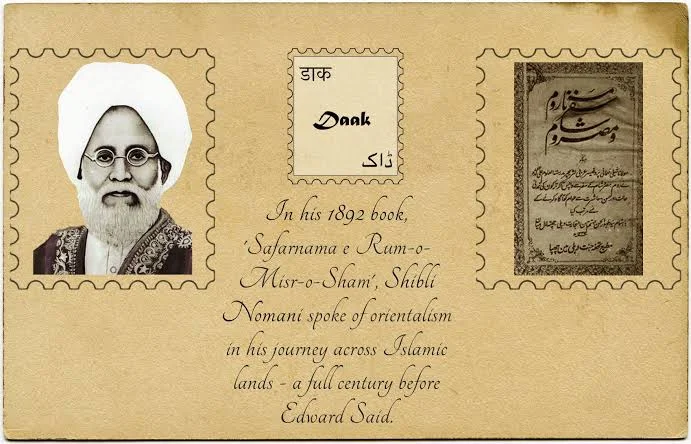
Allama Shibli Nomani was born in Bindol Azamgarh village on June 4, 1857, and passed away on November 18, 1914. He possessed a multifaceted personality and held an esteemed position in various fields. Considering his contributions to knowledge and literature from different perspectives, it is hard to believe that it was the work of a single individual. Besides his contributions to poetry and literature, Allama Shibli Nomani put his indelible mark on history and biography, research and criticism, and education and preaching.

The main focus of Shibli’s academic endeavours was education and religion showing a deep interest in education and educational philosophies. His life was dedicated to the educational activities of his time. From Aligarh Muslim University to Nadwatul Ulama, his sacrifices in the field of education were immense. His vision extended beyond India, encompassing the educational activities and needs of the Islamic world as well.

While he valued traditional education, he was also a proponent of modern sciences. At Nadwatul Ulama, when he was entrusted with educational responsibilities, he included “Al-Durus al-Awliyyah fi al-Falsafah al-Tabi’ah” in the curriculum. This book, written by Christian scholar Allen Jackson and published in Beirut in 1882, was an illustrated text on the basic sciences of its time, covering practical topics such as matter, motion, gravity, liquids, optics, heat, and electricity. Shibli appointed Allama Muhammad Hameed-ud-Deen Farahi and Mirza Muhammad Hadi Ruswa to teach it. This information is derived from Shibli’s letters.

Additionally, in 1901, Shibli hired an English teacher at Nadwatul Ulama with a monthly salary of 15 rupees. This decision led Maulana Abdul Bari Nadvi to translate several modern books on philosophy. The inclusion of English and modern philosophy in the curriculum was a revolutionary step by Shibli. However, after Shibli stepped down in 1913, these subjects were dropped from the curriculum.

Shibli spent his entire life cultivating knowledge and literature. He wrote books, encouraged others to study, and was devoted to the national spirit. Not only did he inspire the youth of the nation towards education, but also guided them in their educational pursuits. The openness of Shibli’s educational ideas is evident from his belief in higher education for women and his support for a curriculum that was equal for both boys and girls. In a letter to Atiya Faizi, he expressed his wish for her to become a speaker and lecturer like other famous women.

In a letter to Maulana Habib-ur-Rehman Khan Sharvani, he wrote about the impressive patterns of women’s education he observed in Bombay. Similarly, during his visits to Italy, Egypt, and Syria, he admired the women’s education and training system in Turkey, spontaneously writing words of praise for the Turks. Shibli tirelessly worked for the education and social awareness of Muslim women.

In 1908, when Nawab Bahawalpur’s grandmother donated 50,000 rupees for the construction of Nadwa, Allama Shibli wrote an enthusiastic article in Al-Nadwa. He referred to her as a “Living Zubaida Khatun,” comparing her generosity to that of Zubaida Khatun, Baramakka, and Taimoor. He wrote:

“The generosity of this lady has not only strengthened the foundation of Darul Uloom Nadwatul Ulama but has also paved the way for its future advancements.”

Extraordinary Passion

“O Subah Allahabad, O Oudh, you are a vast and distinguished region, but the truth is that now you must admit that it is not Punjab, but a part of it, that has earned your enduring respect through one of its revered women. You may have produced Burhan-ul-Mulk and Asif-ud-Daulah, but you cannot claim a Zubeda among your ranks.” (Maqalate Shibli, Vol. 8, p. 80)

Shibli’s travelogue “Safarnama-e-Room-o-Misr-o-Sham [Travelogue of Rome and Egypt, Syria] is essentially an educational report. Shibli’s writings reflect the deep passion he had for education and the kind of education he envisioned. His interest was not confined to India; he also kept a keen eye on the educational landscape of the Islamic world. The core of Shibli’s educational mission was the openness and spread of thought. While he respected ancient academic traditions, he was not averse to embracing new knowledge and wisdom. This excerpt from his travelogue is a significant reflection on the integration of modern and ancient educational ideas:

“Education among the Turks began with the Empire, which is what we now remember as ancient education… But the current state of education has declined so much that, in comparison, our education in India seems deteriorated. The realisation of this in the travelogue shattered all my joy and satisfaction — the fallacy of this ancient teaching… The grief and sorrow expressed by the newly educated in our country over the old education is not genuine sorrow, but rather arrogance and disdain. Although I appreciate new education, I am a strong advocate of old education. I believe that old education is necessary and very important for the survival of Muslim nationality.” (Safarnama-e-Room-o-Misr-o-Sham p. 56)

Due to his constant stress on education, Shibli concluded that it would be beneficial to reduce the gap between ancient and modern education and educational institutions, fostering a mutual exchange of benefits. Shibli believed that English education alone cannot address our current challenges, nor can the old style of education fully support us in the present era. In his opinion:

“We have said this again and again, and now we say it once more: it is not enough for us Muslims to only have English madrasas or ancient Arabic madrasas. The remedy for our pain is a combination of Eastern and Western education.” (Maqalate Shibli, Vol. III, P 57)

In his reference to Constantinople, Shibli emphasises that freedom of thought cannot thrive under government control. He also mentions educational institutes in Europe, where the people, rather than the government, play a significant role. He writes:

“What’s even more regrettable is that all the colleges and darul ulooms in Constantinople that I have mentioned are run by the government. The nation has not paid any attention to this yet. That is, there is not a single national college in such a big capital. No government, no matter how powerful and wealthy, can support the educational needs of the entire country. Even if it could, it wouldn’t be useful. The mental and spiritual powers of a nation whose needs are fulfilled by the government become dead and useless.” (P 40)

Shibli writes in his report on the School of Harbiya in Constantinople, after mentioning the happiness of the students, the ethics of the teachers, and the many branches of education:

“In fact, there is no better college in all of Constantinople in terms of building, supply of equipment, knowledge, education, and good management. However, it is regrettable that most of the people studying in its classes are Christians and the number of Muslims is very small.” (P 59)

Shibli’s analysis needs no further comment after mentioning the academic condition of Turkey, its authors, libraries, newspapers, magazines, and the writings of the masters of various arts:

“The fact is that the method of education in the Islamic world has become so degraded that people are not interested in any kind of modern information except for a few textbooks. As a result, the spirit of innovation and invention is lost to the nation, and there is no hope for it as long as this situation remains.” (P 69)

Shibli writes about the ethics of the students of Al-Azhar University:

“Throughout my journey, I was not as disheartened by the plight of Muslims as I was by the conditions at Al-Azhar University… But sadly, it has destroyed millions of Muslims instead of benefiting them… The condition of the students is such that when they buy goods in the market, they swear by ‘Bras Sayyidina al-Husayn,’ meaning they swear by the price of Imam Hussain’s head. Can such trained people be expected to enhance the glory of Islam?” (P 70)

Regarding the curriculum, Shibli writes:

“There is a continuous and basic teaching of fiqh and syntax, each for eight years. Logic, philosophy, mathematics, astronomy, and other sciences are not included in the teachings. The principles of fiqh, tafsir, hadith, literature, semantics, and narration are taught, but it is done at such a low level that such a large Darul Uloom does not hold any honour in any way.” (P 85)

About the teachers, he writes:

“Sheikh Taban has recently passed away. One of his works has been considered so significant that its annotations and commentaries are included in the curriculum. It is considered a great achievement to understand and memorize this entire series. I asked the students if Sheikh Azhar, who is regarded as a teacher, had done any original work. They proudly said yes, the annotations on Saban’s work are written by him.” (90)

Shibli was constantly active in the educational development of Muslims and did whatever was necessary to achieve this goal. The year 1913 was particularly challenging for him. After Aligarh, Nadwatul Ulama was the only centre of his aspirations, but he had to resign from there. He then dedicated himself to writing biographies. Meanwhile, in the April 15, 1913 issue of the Daily Zamindar Lahore, a proposal by Allama Shibli Nomani regarding the establishment of an Islamic university in Makkah was published. This proposal received many reactions, but Maulana Abul Kalam Azad and some other scholars supported it. Allama Shibli wrote:

“For me, the most important proposal is to establish a university of Islam in Makkah with a high level of education in all religious and worldly sciences (including modern sciences). It is obvious that today all kinds of power are based on knowledge, and in fact, knowledge is the real power. Therefore, nowadays the survival of every nation depends on being proficient in the sciences and arts.” (Ma’arif: November 2013, P 384)

Shibli provided several reasons for the establishment of a university in Makkah. The holy city is a centre of Muslims worldwide, and every Muslim could study there with enthusiasm. He also argued that no other place has as much financial resources as Makkah. If the pilgrims who visit every year were to contribute ten rupees individually to this university, the total amount could reach millions. Shibli also mentioned the presence of a very good library in Makkah. Additionally, he highlighted its pleasant weather conditions; favorable for both teachers and students. Moreover, he pointed out that all the tribes of Arabia, who have been “ignorant for thousands of years,” would benefit from education, with branches of the university being established in their major regions. They would be drawn to knowledge through consistent effort. Shibli concluded by expressing his conviction:

“All I can do is travel all over India for this and then migrate to Makkah and serve this blessed university.” (Zamindar/ April 15, 1913)

Allama Shibli holds a prominent position as a great writer and scholar, with a well-established reputation in this regard. However, less attention has been given to his educational efforts. The reality is that Shibli led a highly active life dedicated to education and educational activities. From his journey from Aligarh to Nadwa, he endured numerous challenges solely for the cause of education. He also faced adverse life circumstances in pursuit of education. If his curriculum reforms had been accepted at that time, the educational landscape today would be completely different. If Nadwatul Ulama had embraced his curriculum a hundred years ago, the madrasas in India today would have a distinct history and glory.

— Dr. Omair Manzar is an Assistant Professor in the Department of Urdu at Maulana Azad National Urdu University.

This article has been translated from Urdu to English by Mohammad Alamullah with the author’s permission.

source: http://www.clarionindia.net / Clarion India / Home> Clarion Special / by Dr Omair Manzar / translated by Mohammad Alamullah / June 05th, 2024
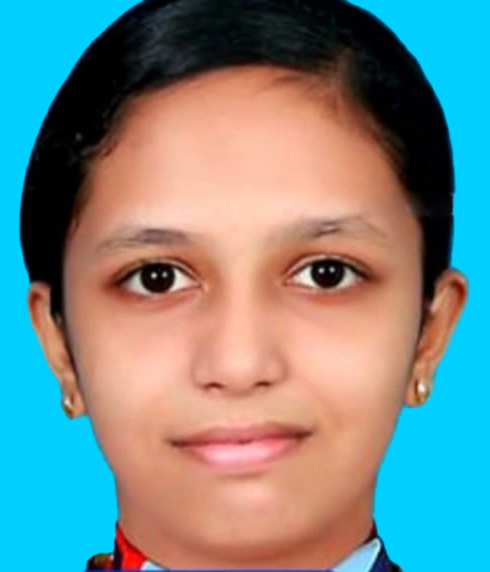
Eighth-Grader Tamanna Suman Selected for Thal Sainik Camp 2024

Vazhakad (Malappuram District), KERALA :

Vazhakad, Malappuram

Tamanna Suman, an eighth-grade student from Government High School Vazhakad, has achieved a remarkable feat by being selected for the firing selection at the prestigious Thal Sainik Camp (TSC) 2024 in Delhi. Her selection comes through the National Cadet Corps (NCC) battalion at Calicut University.

Tamanna distinguished herself by securing the first position in the initial selection round held at her school. Demonstrating exceptional skill and dedication, she surpassed over a hundred students from various parts of the state to earn her place at the TSC. This achievement highlights her excellence not only in marksmanship but also in academics and extracurricular activities.

Tamanna is the daughter of T.K. Hameed, a mentor at Al Jamia Shantapuram, and Shahira, residents of Orkadavu in the Malappuram district. Her family’s support has been instrumental in her success, contributing to her balanced approach to both academic and extracurricular pursuits.

The selection of Tamanna Suman for the TSC 2024 has brought immense pride to GHS Vazhakad and its NCC unit. Her accomplishment serves as an inspiration to her peers and underscores the quality of training provided by the NCC battalion at Calicut University. The school community extends its best wishes to Tamanna as she prepares to represent her state and institution at the national level.

source: http://www.radiancenews.com / Radiance News / Home> Latest News> Markers of Excellence / by Radiance News Bureau / May 23rd, 2024

Kashmiri Techie Muneeb Amin Bhat Honored in NASA’s ‘Hall of Fame’ for Cybersecurity Contributions

Zungalpura Village (Kulgam District, Kashmir), JAMMU & KASHMIR :

Kulgam, South Kashmir :

Muneeb Amin Bhatt, a talented techie from Zungalpora village in Kulgam district, has achieved a remarkable milestone by being inducted into the National Aeronautics and Space Administration (NASA)’s prestigious ‘Hall of Fame.’ This honor recognizes his outstanding contributions to identifying and addressing data breach vulnerabilities, a critical aspect of cybersecurity. Previously recognized by Apple’s ‘Hall of Fame’ in 2023, he reported his findings through NASA’s Vulnerability Disclosure Program.

Muneeb’s achievement not only brings pride to his hometown but also emphasizes the global significance of cybersecurity. In an era where safeguarding sensitive information is paramount, his work highlights the crucial role individuals play in protecting digital landscapes from potential threats.

Currently, Muneeb is pursuing a Bachelor’s in Computer Applications (BCA) through Indira Gandhi National Open University (IGNOU). His dedication to his studies, coupled with his exceptional skills in cybersecurity, has propelled him onto an international platform, showcasing his potential and determination.

Bhatt’s recognition by NASA serves as a powerful inspiration, demonstrating that with passion and commitment, individuals from any background can make significant contributions to global security. His journey from a small village in South Kashmir to receiving acclaim from one of the world’s leading space agencies is a testament to the potential that lies within every individual, regardless of their origins.

This accolade not only celebrates Muneeb’s technical prowess but also puts a spotlight on the importance of nurturing talent and providing growth opportunities, especially in fields as critical as cybersecurity. As the digital world continues to expand, the need for skilled professionals like Muneeb becomes ever more evident, ensuring a safer and more secure future for all.

source: http://www.radiancenews.com / Radiance News / Home> Focus / by Radiance News Bureau / May 27th, 2024

TGMREIS Students Excel in LAWCET-2024

Hyderabad, TELANGANA :

Hyderabad :

Students of Telangana Minorities Residential Educational Institutions Society (TGMREIS) have excelled in the TGLAWCET-2024 exam.

Telangana Law Common Entrance Test-2024 (TGLAWCET-2024) was conducted for admission into LLB course in the Colleges of Law in Telangana.

The test was conducted by Convenor, TGLAWCET/TGPGLCET-2024 Osmania University on behalf of the Telangana State Council of Higher Education.

According to TGMREIS Secretary Aisha Masarath Khanam, out of 57 TGMREIS students who appeared in the exam, 40 have qualified. They include 28 girls and 12 boys.

Amatul Waheed of Telangana Minority Residential Junior College (TGMRJC) Secunderabad Girls has secured state ninth rank. She has made TGMREIS proud, said Ayesha Khanam.

Out of 38 students from TGMRJC Secunderabad Girls, 28 have qualified. Seven students from TGMRJC Balapur Boys have qualified. A total of 13 students from this Junior College had written the exam. Out of six students of TGMRJC Barkas Boys who appeared in the exam, five have qualified.

Shahnawaz Qasim, Secretary to Chief Minister, Tafseer Iqbal, Special Secretary, Minorities Welfare Department and Aisha Khanam have congratulated students and teachers on their achievement.

Meanwhile, Mohammed Faheemuddin Qureshi, Vice-Chairman and President, TGMREIS has conducted a meeting with all the Principals of TGMR Schools and Junior Colleges and district minority welfare officers.

The meeting reviewed admission status for the academic year 2024-2025 and results of SSC and Intermediate Board Examinations, 2024. Instructions were given to the Principals to take necessary action for reopening of Schools and also emphasized the retention of newly admitted students.

Faheemuddin Qureshi congratulated the Principals for achieving good results in public examinations and felicitated 10 Principals for achievement of 100% results in SSC, IPE Board Examination results, 2024.

Faheemuddin Qureshi said that the Government of Telangana is fully committed to provide facilities to minorities specially TGMR Schools. He asked the Principals to inculcate discipline among the students and ensure that TGMR Schools should be top in all respects. He instructed the Principals to provide good hygienic food to the students. He informed the Principals that he will be visiting the schools shortly and take the feedback from the stakeholders and give the reward to the good institutions and will not tolerate any adverse remarks noticed.

Shahnawaz Qasim, Faheemuddin Qureshi, and Aisha Khanam congratulated the students, teachers and principals on their achievement.

source: http://www.radiancenews.com / Radiance News / Home> Education / by Radiance News Bureau / June 15th, 2024

Muslims emerge as homogeneous entity backing INDIA bloc in Uttar Pradesh

INDIA :

The INDIA bloc’s Muslim candidates had a victory rate of 83 per cent in the Lok Sabha polls.

Afzal Ansari of the SP who won from Ghazipur (File photo| PTI)

Lucknow :

Muslim voters, who make up a considerable 19 per cent of the population in Uttar Pradesh and are a deciding factor in around a dozen Lok Sabha seats in the state, emerged as a homogenous entity consolidating in favour of the INDIA bloc in the 2024 polls.

The community stood so solidly behind the SP-Congress candidates that all the 20 Muslim candidates fielded by the Mayawati-led Bahujan Samaj Party (BSP) lost, getting only a miniscule fraction of their votes.

The INDIA bloc’s Muslim candidates had a victory rate of 83 per cent in the Lok Sabha polls. All the four Muslim candidates fielded by the Samajwadi Party won, while one of the two Congress candidates emerged victorious.

Although the BJP leadership including PM Modi exhorted the Muslim community in the recently concluded election to vote keeping in mind the future of their generations, yet the community backed the Congress and SP combo.

In the 2019 Lok Sabha polls, three of the six Muslims MPs who made it to Lok Sabha from UP — Danish Ali (Amroha), Afzal Ansari (Ghazipur) and Fazlur Rehman (Saharanpur) — were from the BSP.

Moreover, the INDIA bloc had fielded Muslim candidate strategically in constituencies with over 40 per cent Muslim electoral population except Ghazipur which has 27 per cent Muslim voters but with an added edge of being the bastion of gangster-turned-politician Mukhtar Ansari. Afzal Ansari sailed through from the constituency as SP candidate this time.

The other Muslim candidates who won in the state are Imran Masood of the Congress from Saharanpur which has approximately 42 per cent Muslim voters, Mohibullah Nadvi of the SP from Rampur which has around 51 per cent Muslim voters (the highest in UP), Iqra Hasan of the SP from Kairana, her family bastion, with 40 per cent Muslim voters and Zia-ur-Rehman of the SP from Sambhal which has around 45 per cent Muslim voters.

source: http://www.newindianexpress.com / The New Indian Express / Home> Nation / by Namita Bajpai / June 12th, 2024

New chairperson of Beary Sahitya Academy Umar UH takes charge

Mangaluru, KARNATAKA :

Mangaluru :

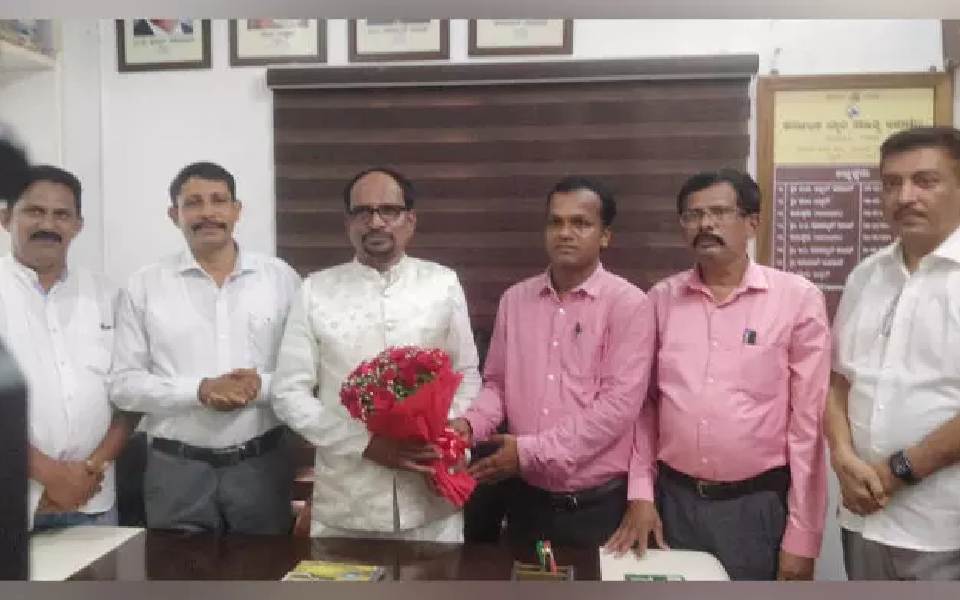
Social activist and convener Umar UH, who had been recently appointed as the chairperson of the Karnataka Beary Sahitya Academy, took charge at the Academy office situated in the Mangaluru Taluk Panchayat building on Thursday.

Academy Registrar Rajesh G handed over the charge of the body to Umar and heartily congratulated him on his appointment as the new chairperson of the Academy.

Speaking on the occasion, Umar said that his dream of many years, to see a ‘Beary Bhavan’, could now be fulfilled as the Academy had a site as well as funds of Rs 6 crore to support the construction of a hall for the Beary Academy. He added that there were plans of providing the Beary Academy a full-fledged museum and a library similar to those of the Konkani and Tulu academies. The decision would be taken after holding discussions with the Academy members, said the chairperson.

Umar laid stress on working in harmony with the literary bodies of other languages and supporting the cultural co-existence in the coastal belt, adding that the Academy hoped to focus on research rather than cultural programs.

Former chairperson of the Academy Rahim Ucchil, Mohammed Hanif, Tulu Academy Chairperson Taranath Gatti and Konkani Academy Chairperson Stany Alvares were present on the occasion.

source: http://www.english.varthabharati.in / Vartha Bharati / Home> Karavali / by Vartha Bharati / June 13th, 2024

The Brigade That Builds Brands: Maryam Hasan Ahmad’s take on crafting an Artsy Army life on the move

HARYANA / INDIA :

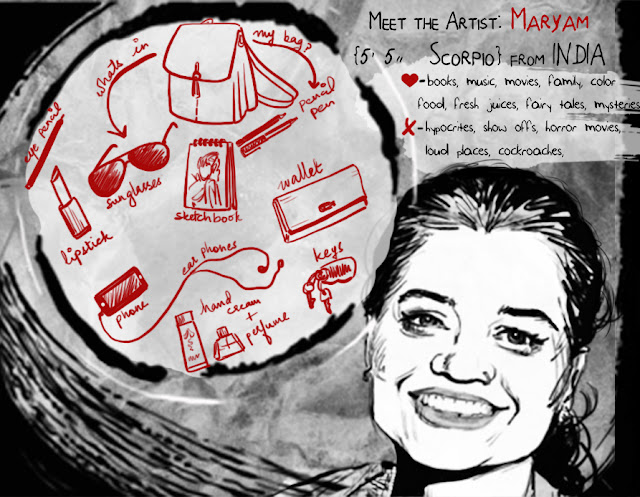
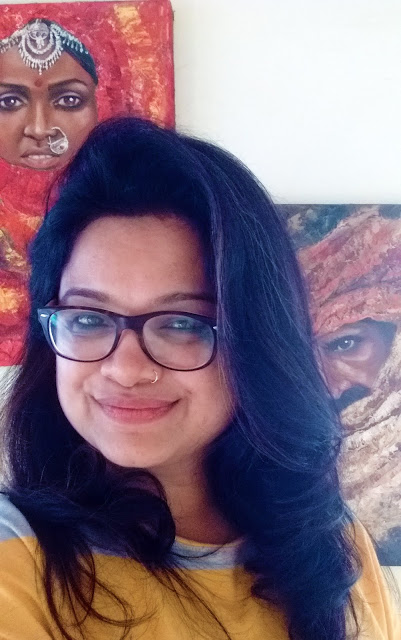
We’re back with another interview from the ‘The Brigade That Builds Brands‘ series. It’s all about fauji wives / military spouses, who make work work for them through multiple postings, back-to-back social commitments, spotty internet connections, long stints of single parenting, community mindset regarding how military spouses should or should not work and a lot more. Today, I’m talking to Maryam Hasan Ahmad about how she juggles her life as a brush-wielding artist and as a wife of a man in boots ‘n’ beret – an Army officer. 

A talented illustrator and artist, she didn’t give up her work to fit into the fauji life, but instead, carved out a freelance career that she could pack and take along to the multiple postings across the country and world. I hope that this interview will get you revved up to create a freelance career around your passions too.

C. Please tell us something about yourself – what do you do, where are you based and how long have you been a fauji wife.

M. I am a freelance illustrator of children’s books, fashion and portraits/caricatures. I am, as of now, based out of Haryana and have been wedded to the Olive Green for 15 years.

C. What has been your business or creative journey been like: how & when did you start your venture?

M. I am an Applied Arts Graduate and have been freelancing in illustrations since college, and then did a 2 year stint in Chennai as an animator in a French Animation studio. Those two years were a big learning curve. But all that came to a standstill after getting married and being sent to obscure places where there were absolutely no job avenues. Internet was a blessing that got me hooked onto online freelancing while following my husband around the world. Now I could work from any corner and have clients from all over the world!! This opened up a whole new world for me and my dreams. Our 2 year tenure in New York was another time of personal and professional growth. I started my blog https://homespunaround.blogspot.in/ there, attended a lot of arty lectures and seminars… learnt studio pottery. Participated in a couple of pop up fairs and started selling my handmade products online.

C. Fauji wives make their home in an assortment of obscure places across the country. Our lives are about living in the moment and doing what we can, when we can. Can you share how you stayed creative or found work that satisfied you while moving across the country?

M. Fauj teaches you a lot of things (especially if you are creatively inclined and willing to learn). There are so many courses being conducted all over the stations which at least tell you the basics of art, craft, painting, decoupage etc etc. and now with the smart phones and internet at your fingertips, trying out something new is not rocket science. There are so many websites that cater to freelancers, whether you are a writer or an artist or a software professional or even if you want to sell your hand-made wares… Staying creative, finding you mojo is not difficult these days as long as you have a decent internet connection and the passion.

C. How do you juggle that load of social commitments & welfare activities that are an integral part of the fauji community, while nurturing your passions and meeting work deadlines?

M. Time management. If you let it, Fauji commitments can take over your life and as your husband moves up in the ranks and gets busy… you get busier. And there are so many commitments and obligations that you just can’t say no to. Here time management comes in handy. If you have a pending assignment, or a client getting jumpy for not getting work on time- you have to learn to prioritize. 

You can leave the cleaning of the cupboard for tomorrow, send the client that work now. Tell people that this and this is the time that you need to work, and would appreciate being left alone then. (It’s a little hard for people to get it, but insist). Decide what time works for you, put it your maximum then, with no distractions of Facebook scrolling, checking emails then.

C. As a creative/entrepreneur + fauji wife, is there something that you cherish very much about being part of this community? And is there something you feel must/can change for the better?

M. See each world has its pros and cons. I love being a fauji wife. I love the clean environment, the fantastic and SAFE cantonment life that we expose our kids too.  The quality of life when you compare with our civilian counterparts is way better. (I know a lot might disagree) but tell me where can your kids go out every evening without a care in the world, cycle, play basketball, squash, tennis, golf, swimming and come back when its dark…. And you are NOT worried. You are not the one ferrying them from one sports coaching to another. I have friends whose kids stay at home and play videogames because there is not playground in their vicinity and if its is, you cannot let them go alone! It’s not safe. So either you tag along, or you let them stay in.

We all have a fantastic social life as faujis; we work hard, but we party harder! We learn to get along with everyone (esp. relevant in unit life)… we grow as individuals, posting to posting, place to place. I think I have made lifelong friends at every station that I have been posted to.

Things to change? Hmmmm…. When I compare what was prevalent in my mother in law’s time to what is now happening in my time… fauj has changed. And evolved with time. But it needs to evolve more. It needs to understand the requirements of the extremely well educated, articulate young brides coming in with professional backgrounds. Their requirements, expectations are way different and our organization needs to listen to them.

C. What challenges have you faced in balancing work and fauji life?

M. You know there are times and places/stations that are more busy than others. During my husband’s command, my freelance work took a backseat. My pottery was forgotten (in fact still is) and my life as a CO’s wife took over. I didn’t resent that, because the station/ tenure was such and I needed to do that for my husband/unit. After command, I started freelancing again, but after a year I have got posted to another really busy station where my work has taken a backseat again. Lot of good projects were lost because I could not deliver. So yes, it does get frustrating and one has to come to terms with it, deal with it. Take out your frustration on the ever-willing husband and then make the most of what you can get and carry on regardless.

C. What tips would you give to fauji wives out there who’d like to pursue their dreams while living at small and busy bases (many still believe or led to believe that you can either be a fauji wife or a professional, and that’s not true)?

M. The world is your oyster. You are qualified and ambitious, don’t let your ambitions die out, just modify them a bit to the life that you have now. You might not work at the dream job that you planned on while you were studying, but on hindsight you will realize that you got a better deal. Try out other avenues and see what works. It’s not always necessary that as an Army wife you can only become a teacher. With the internet seeping into even the remotest of corners of the country, see what can work for you online. 

Don’t get disheartened, instead think of it as an opportunity to try out something different… something you might not have thought of before. Network with fellow army wives, forge partnerships and alliances and you never know just what might work.

C. A parting quote or philosophy that helps you stay calm and do what you do?

M . Don’t let go of your dreams. Hold on to them tight…. Plan, dream and dream some more. And work towards your dreams. Slowly and steadily you will get there.

Here’s where you can see more of Maryam’s work:

Maryam’s Art Facebook Page:

https://www.facebook.com/Maryams-Art-Studio-184891738239097

Instagram feed:

https://www.instagram.com/maryams_art_studio

Looking for inspiration to work-from-home or set up your own venture as a fauji wife? Check out our interviews of fauji wife entrepreneurs and articles on working-from-home.

Subscribe to our blog posts to stay tuned (bonus: you’ll also receive a free book on Everyday Sari Style). / If you’re on Facebook, Like us at chandana banerjee – online notebook / On Twitter? Follow me @chandanawriter / And if living green and well is on your to-do list, hop over to Gorgeous Girls Go Green (our sister site).

source: http://www.chandanabanerjee.com / Chandana Banerjee / Home / 12th June, 2018

Wildlife photographer from Udupi Haarish Mohammed wins international photography award

Udupi, KARNATAKA :

Haarish during one of his jungle visits with his camera

Udupi: 

Haarish Mohammed, a wildlife photographer from Udupi, now residing in Saudi Arabia, has won the international photography competition organized by 35 Awards in the Black and White category. This contest saw a remarkable participation of 465,000 photographs submitted by 111,253 photographers from 174 countries.

Reflecting on his journey, Haarish shared, “I’ve been fascinated with nature and forests since childhood. During my college years, trekking through the Western Ghats became a regular activity. In 2011, I moved to Saudi Arabia for a job, realizing that my connection to the forest could only be maintained through a career in the Forest Department, becoming a naturalist, or pursuing wildlife photography. I dedicated 1.5 years to learning the theory of photography before purchasing my first camera in 2013.

“The period from 2013 to 2017 was all about learning, and in 2017, I met a group of talented photographers in Saudi Arabia called Photomates, which I joined. With their support, I honed my skills. However, my job in Saudi Arabia limited my opportunities to explore the forests of Karnataka. After the first wave of COVID-19 in 2020, I decided to resign and return to India to start my own business. Since then, I’ve had many of my works featured and published on various platforms. I visited national parks like Nagarhole, Kabini, and Bhadra, photographing beautiful animals such as tigers, leopards, elephants, and many colorful birds.”

Haarish elaborated on the story behind his winning image: “It was taken during an evening safari in the lush forests of Kabini, Karnataka. We were waiting for a herd of elephants to cross our path to reach a water body. To our surprise, a single tusker emerged from the dark forest.”

Haarish’s photo that bagged first place in international photography competition organized by 35 Awards

Haarish’s achievements include being featured in BBC Earth, the international online magazine PawsTrails, and Nature In Focus.

He secured third place in the 2020, 2021, and 2023 photography competitions held by Pilikula Biological Park in Mangalore. His work was also accepted for the International Wildlife Photo Exhibition held by Alvas Virasat in 2023.

Additionally, he won a certificate of merit in the National Level Photography Contest conducted by the Karnataka Forest Department in 2023. His most recent accolade is the first place in the 2023 international photography competition conducted by 35 Awards in the Black and White category.

“Wildlife photography is like a window into the world of animals. It helps us understand and appreciate them better by capturing their beauty and diversity. Moreover, wildlife photography raises awareness about the importance of protecting wildlife and their habitats. By showcasing the wonders of nature, it encourages us to take care of it. When we see how amazing animals are, we’re more likely to want to save them,” Haarish added.

source: http://www.englishvarthabharati.in / Vartha Bharati / Home> Karavali> Karnataka / 13th, June 2024

JIH Jamshedpur Honors Kahkasha Parveen for Perfect NEET-2024 Score

Jamshedpur, JHARKHAND :

Jamshedpur :

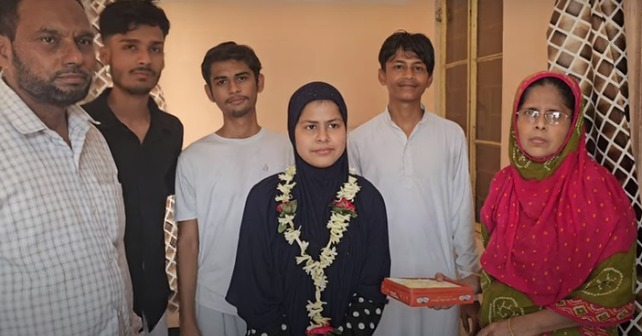
Kahkasha Parveen, a resident of Baganshahi Road No. 7 under Azadnagar Police Station in Mango, has been felicitated for achieving a perfect score of 720 out of 720 in the NEET examination. The accolades poured in at a prestigious ceremony organized by Jamaat-e-Islami Hind Jamshedpur in Azadnagar’s conference hall.

The event, graced by Dr. Arifa Khursheed, a distinguished specialist in women’s health, saw Kahkasha Parveen lauded for her remarkable dedication and perseverance in pursuing a career in medicine. Dr. Khursheed emphasized the challenges Kahkasha overcame, noting that her achievement reflects both her academic excellence and personal resilience.

Kahkasha, a source of immense pride for her community in Baganshahi, was joined by others including Tasneem, Kulsum Anwar, Mahrukh Parveen, and Rimsha Ara, who were also recognized for their contributions to society.

Prof. Anjum Ara, representing the Women’s Wing of Jamaat-e-Islami Hind Jharkhand, highlighted the solidarity and support extended to Kahkasha during her academic journey, underscoring the community’s unwavering unity in difficult times.

The ceremony, overseen by Amaan Sadiq, included expressions of gratitude by Shahnavaz Qamar on behalf of the gathering.

Notable figures such as Master Ashfaq Anwar, Tanveer Akhtar Romani, and Khursheed Akram Ansari extended their heartfelt congratulations to Kahkasha and her family.

Kahkasha Parveen, with aspirations to serve as a doctor, has pledged to provide free medical care to the underprivileged, underscoring her commitment to community service and welfare.

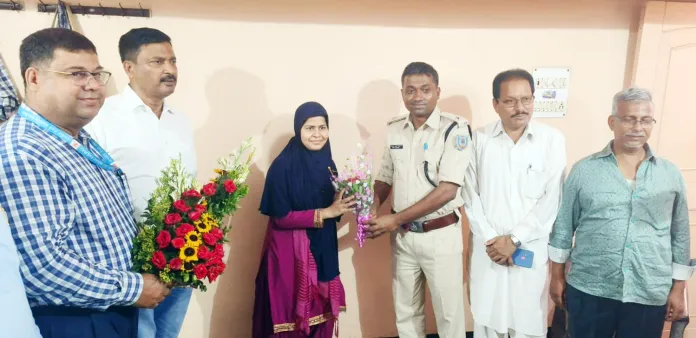
In another gesture of felicitation, various community leaders and well-wishers visited Kahkasha’s residence. They included Azadnagar Police Station in-charge Rakesh Kumar Singh, Sidhgora Police Station in-charge Ghulam Rabbani Khan, Syed Naushad of Tatanagar Railway Station, and Azadnagar Police Station Peace Committee Secretary Mukhtar Alam Khan. Haji Mohammad Ilyas, Rizwanuj Jama, Syed Asif Akhtar of Al Kabir Polytechnic College, Syed Saifuddin Asdak, Imam of Hussaini Masjid and Founder Chairman of Paigam-e-Islam, Master of Dawat-e-Islami Jamil Ansari all presented bouquets, shared sweets, and conveyed their immense pride and congratulations to Kahkasha Parveen and her family.

Kahkasha’s father, Mohammad Abbas, a fruit seller, and her mother were specifically acknowledged for their unwavering support that played a pivotal role in their daughter’s grand success.

source: http://www.radiancenews.com / Radiance News / Home> Education / by Radiance News Bureau / June 13th, 2024

LS Polls 2024: Six Muslims Secure Victory in Uttar Pradesh

UTTAR PRADESH :

New Delhi :

All six Muslim Lok Sabha candidates fielded by mainstream parties in Uttar Pradesh have emerged victorious.

Among the winners is Imran Masood, who contested from Saharanpur on a Congress ticket. “This victory is not just mine, but of every individual who believes in secularism and democracy,” Masood stated emphatically after his win.

Similarly, Maulana Muhibullah Nadvi, representing the Samajwadi Party, also secured a win in Rampur. “The people’s faith in us has been reaffirmed, and we will work tirelessly to honour their trust,” Nadvi said after trouncing Ghanshyam Singh Lodhi of the BJP with a total of 4.81 lakh votes, a margin of 89,370 votes.

Ziaur Rehman Barq, who contested from the Sambhal Lok Sabha seat, is on the path to victory as well. The Congress party’s candidate from Amroha, Kanwar Danish Ali, also achieved victory.

Reflecting on his triumphant journey, Ali said his suspension from the Bahujan Samaj Party was a turning point. “The support from the Congress party and the voters of Amroha has been overwhelming,” he said.

Afzal Ansari, a Samajwadi Party candidate, is leading in Ghazipur. Iqra Hasan, another Samajwadi Party candidate from the Kairana parliamentary seat, has also registered victory.

Before the elections, Imran Masood was affiliated with the Samajwadi Party, and Afzal Ansari was a Bahujan Samaj Party Member of Parliament. Danish Ali, formerly with the Bahujan Samaj Party, was suspended and later nominated by the Congress party, which led to his victory in Amroha.

Despite this success, the Bahujan Samaj Party, which fielded around 22 Muslim candidates, did not secure any seat. This outcome highlights a broader issue of representation, as only 78 Muslim candidates contested across the country under the Congress and other parties’ tickets. The Congress party itself offered tickets to just 19 Muslim candidates nationwide in this election.

With vote counting continuing, early trends indicate that the ruling NDA would form the next government. Nonetheless, the victory of these six candidates marks a noteworthy moment in this Lok Sabha election.

source: http://www.clarionindia.net / Clarion India / Home> India Votes> Indian Muslims> Politics / by Mohammad Alamullah, Clarion India / June 04th, 2024