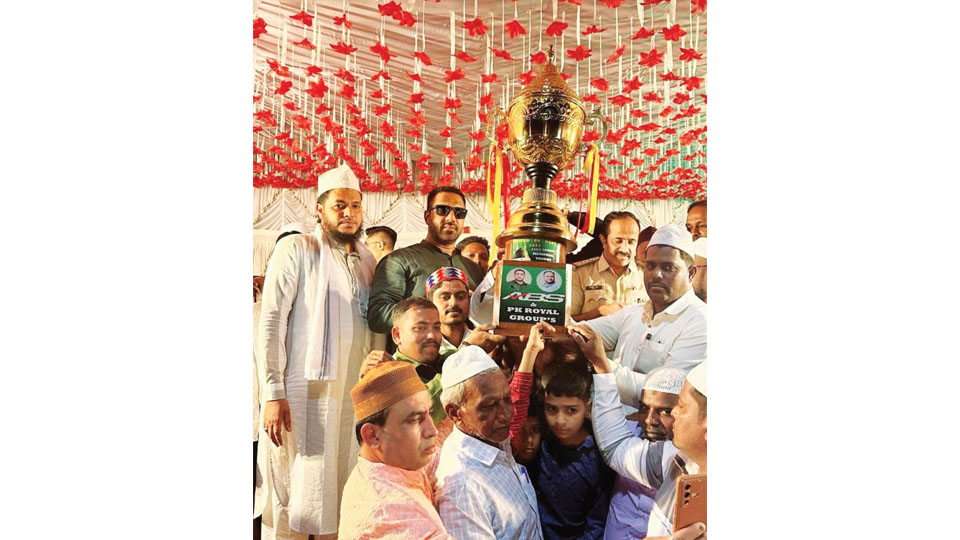
The tableau designed by Masjid-e-Aqsa Meelad Committee, which was taken in a procession along with other tableaux during Eid Meelad celebration in city on Sept. 28, has bagged the first prize.
ABS Abbas, Syed Umar, Zubair Ahmed, Corporator Basheer Ahmed, Zakir, V.V. Puram Inspector Arun Kumar, Moulana Abdul Salam, Khateeb of Masjid-e-Aqsa and others were present at the prize distribution ceremony.
source: http://www.starofmysore.com / Star of Mysore / Home> Photo News / October 05th, 2023
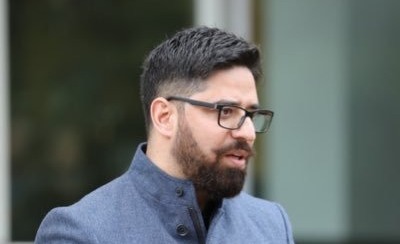
In a remarkable act of generosity, Danish Manzoor Bhat, named Media Person of the Year, has unveiled a groundbreaking plan to secure the future of two orphan girls, hailing from Kashmir and Jammu respectively.
Danish, showcasing profound empathy for the challenges faced by orphans, commits to matching his award money with a personal donation, amounting to ₹51,000 for each girl, totaling ₹1 Lakh 2 Thousand. These funds will be prudently placed in fixed deposit accounts, ensuring steady growth over time.
The visionary behind this benevolent act, Danish Manzoor, expressed his perspective, stating, “By securing a financial foundation for these young girls, we are not just providing them with monetary security; we are investing in their dreams, their education, and their future independence.”
The initiative signifies a beacon of hope, promising a better tomorrow for the recipients. Danish Manzoor’s dedication to societal responsibilities shines through, emphasizing the role of media professionals in contributing positively to society. This act sets a precedent for compassion and social responsibility, encouraging others to make a tangible difference in the lives of those in need.
“Deeply humbled at receiving the outstanding mediaperson of the year award, 2023 instituted by the government of Jammu and Kashmir. It means a lot, more over other recognitions especially because it comes from my birthplace. I pledge to donate the award money of ₹51,000 and match it totalling ₹1,02,000/ for two select orphan girl children one each from Srinagar and Jammu,” Danish posted on X.
source: http://www.dailygoodmorningkashmir.com / Good Morning Kashmir / Home> Latest / by GMK Staff / January 25th, 2024
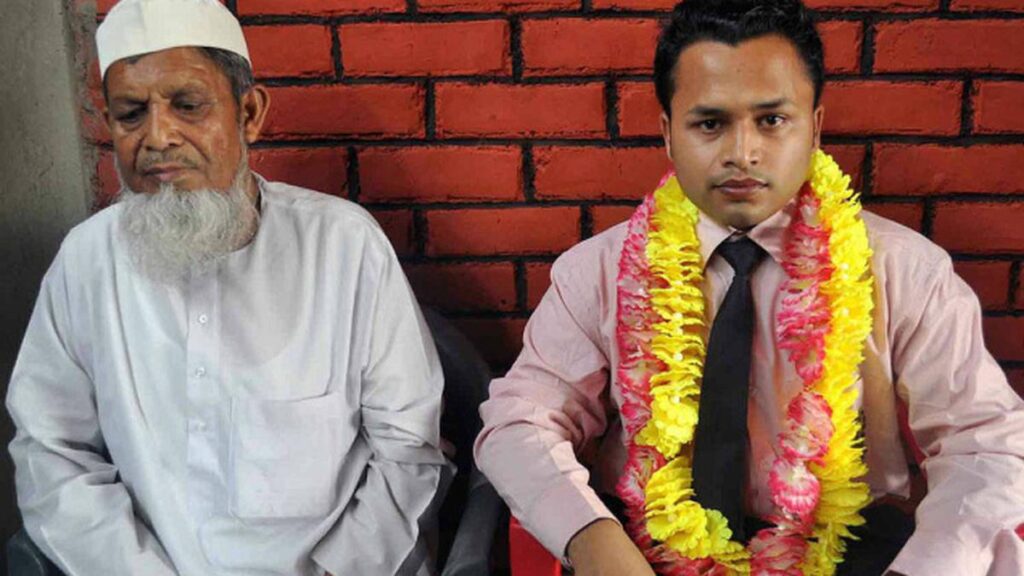
Manipuri boy Mohammad Ismat along with his father who scored the highest mark in the All -India Senior Secondary Certificate Examination.
Mohammad Ismat, the Manipuri boy who has topped the all-India CBSE Class XII Board examinations in the science stream, is nurturing a dream to top the Civil Services Examinations, too.
By way of preparation, he plans to join St. Stephen’s College, Delhi, to do B. Sc. (Honours).
Ismat hails from Lilong Haoreibi in Thoubal district, 15 km from Imphal. The village has very poor electricity supply and no internet connection.
“I also want to become a topper in the Civil Services Examinations conducted by the UPSC. I want to serve my country for peace and communal harmony. For now, I want to take admission to St. Stephen’s College to do B.Sc. (Honours) in Physics,” he told The Hindu .
He brought laurels to his school, Zenith Academy in Imphal, where he joined after completing Class X at Sainik School, also in Imphal. “I studied Class IX and X in Sainik School and passed the Class X board examinations with 92.4 per cent. I left Sainik School because of financial constraints,” he said.
Ismat’s mother died when he was only 18 months. His father, Maulana Bashirur Rahman, is a teacher in a primary school. He is the seventh child and only son of the family; six elder sisters are all graduates.
After school hours, Ismat had to study mostly in candlelight, as electricity is available for hardly three-four hours a day in the village. Ismat scored 495 out of 500 marks, securing centum in mathematics, chemistry, fine arts and home science and 98 in English and 97 in physics.
source: http://www.thehindu.com / The Hindu / Home> News> India> Other States / by Sushanta Talukdar / May 30th, 2012
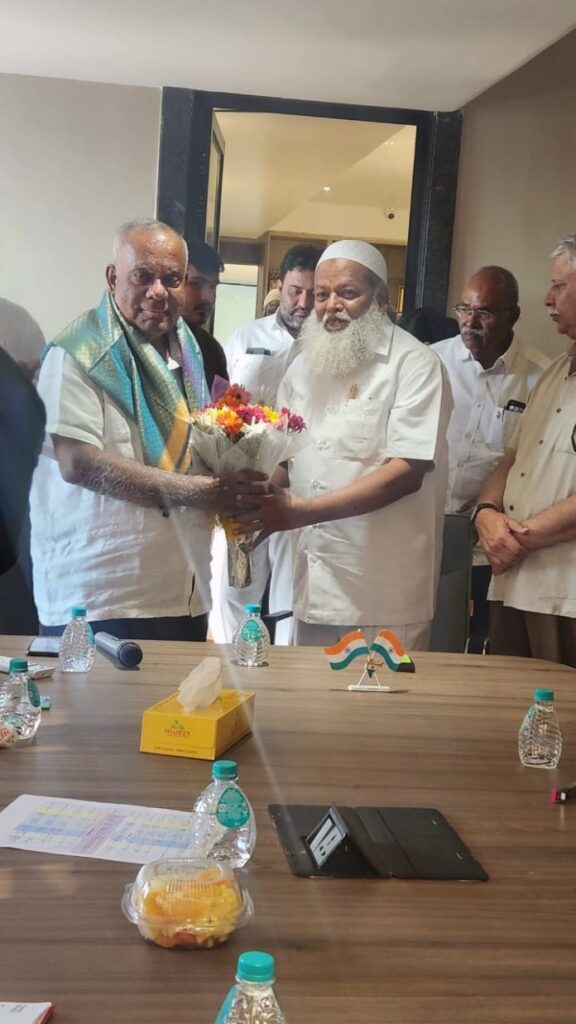
The Bharat Scouts and Guides are set to host the First Kalyana Karnataka Jamborette at Shaheen College premises in Bidar. Scheduled from February 8 to 12, the Jamborette will witness the participation of over 3,000 Scouts, Guides, Rovers, Rangers, and Heads from across the region.
Dr. Abdul Qadeer, founder of Shaheen Group of Institutions and District Vice President of Scouts and Guides, Bidar, has been nominated as the Chief of the event by PGR Sindhia, the state Chief Commissioner of Bharat Scouts and Guides. Dr. Guramma Siddareddy is appointed as the Additional Chief of Jamborette.
From 6:30 am to 8 pm daily, attendees can engage in a diverse array of activities encompassing adventure, cultural pursuits, yoga, meditation, district fair scenario displays, and more.
Dr. Abdul Qadeer emphasizes that these activities aim to foster discipline, physical fitness, mental agility, social skills, moral values, and spiritual development among the youth.
Shaheen College, well-equipped to handle the influx of participants, has made arrangements for accommodation, food, transportation, and other essential facilities. The preparations are in full swing, ensuring a seamless experience for all attendees.
The Jamborette will be inaugurated by Cabinet Minister Ishwara Khandre, Union Minister Bhagavanth Khuba, Urban Administration and Haj Minister Raheem Khan, and Former Lokayukta Justice Santhosh Hegde, Science and Technology Minister N. S. Bhosaraju, Educationist Basavaraj Patil Sedam, KKRDB President Ajay Singh and other leaders will participate.
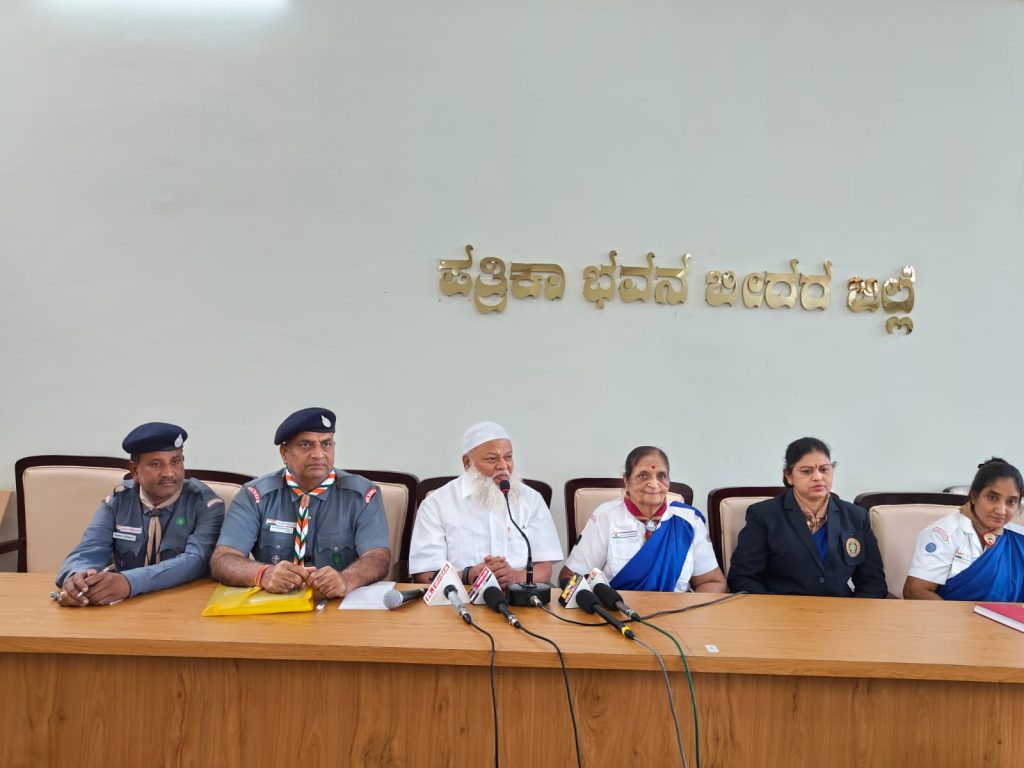
At a recent press conference, Jamborette Chief Dr. Abdul Qadeer, along with Additional Chief Dr. Guramma Sidda Reddy, Jamborette Secretary Dr. H.B. Bharshetty, Coordinator Malleshwari Jujare, Co-coordinator Rachaiyyah Nasi, Camp Leaders Ramesh Tibshetty and Jaisheela Sudarshan and District Organizer Nagaratna Patil, shared insights into the upcoming event.
The press conference featured discussions on the wide array of activities, ranging from Mehndi and Rangoli to Quiz Competitions and Sustainable Development Training.
source: http://www.thehindustangazette.com / The Hindustan Gazette / Home> Education / by The Hindustan Gazette / January 28th, 2024
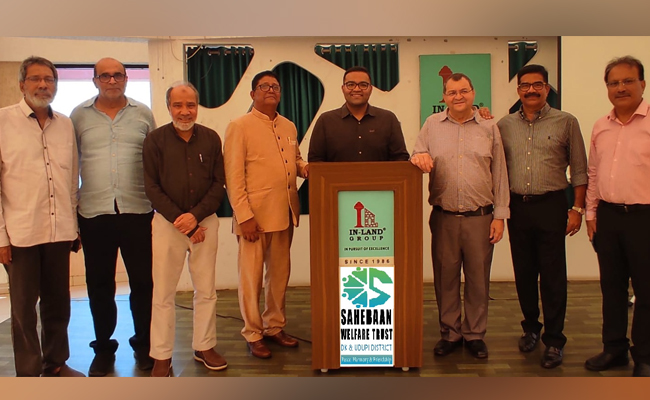
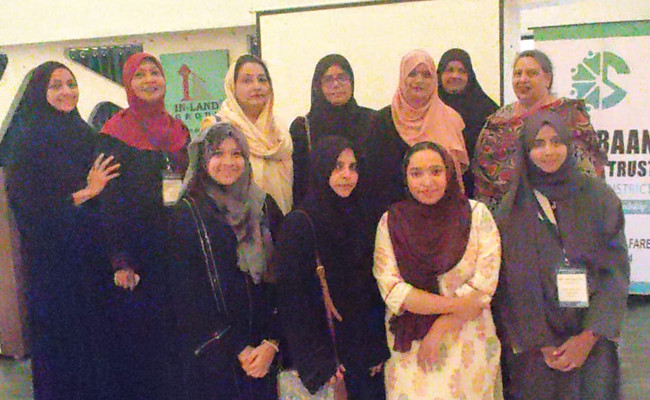
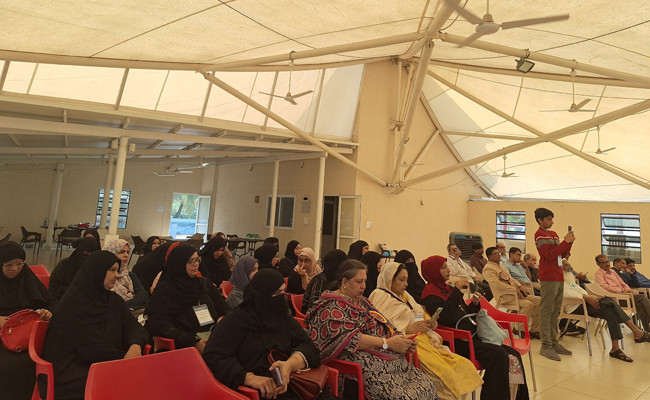
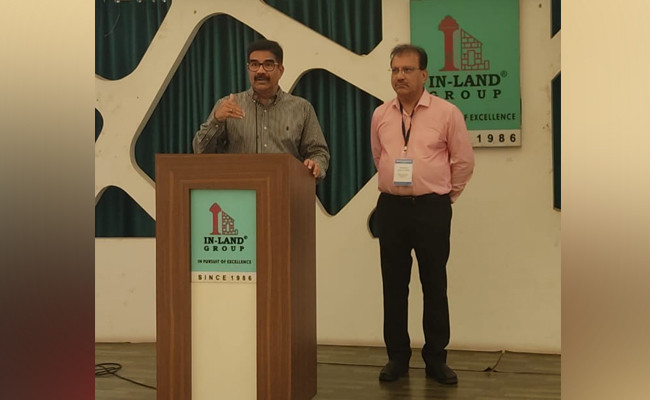
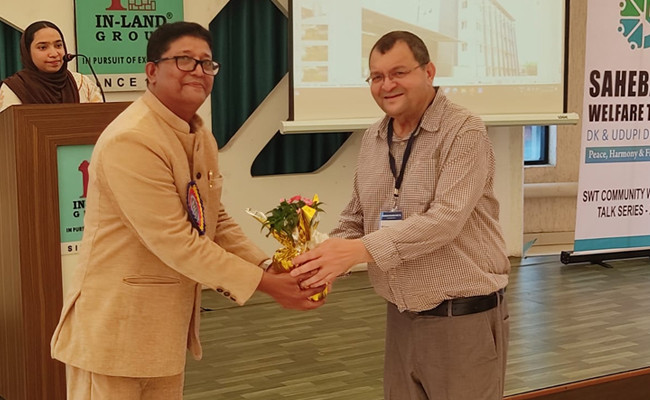
The ladies’ wing of Sahebaan Welfare Trust (SWT) hosted the inaugural session of the ‘Community Welfare Talks Series 2024’ at Senate Hall, Inland Ornate Complex, in the city on January 21, with Siraj Ahmed, Managing Director, Inland Infrastructure Pvt Ltd, inaugurating the event.
Ahmed, in his inaugural address, lauded the efforts of SWT at initiating the talk series for the benefit of the community members as well as the society at large.
Meraj Yousef, Executive Director, Inland Buiders, who spoke on the occasion, pledged his support towards community welfare activities of SWT.
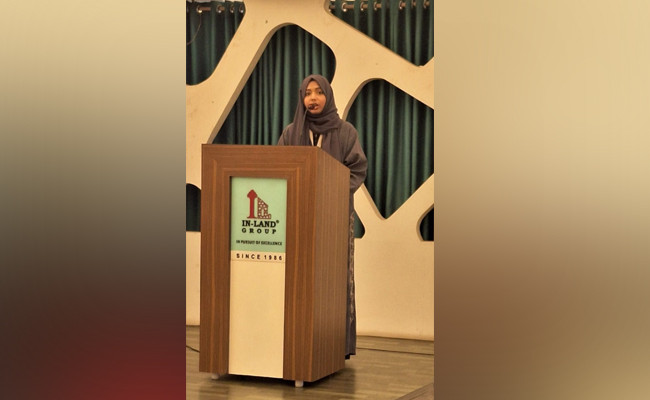
Educationist and Motivational Speaker Obeida Shoukath, who was one of the speakers of the day, spoke on the challenges faced by students on campus and the remedial measures while the second speaker Dr. Mohammed Noorulla, Senior Unani Consultant at the District Wenlock Hospital, Mangaluru, explained on the occasion the history and benefits of AYUSH, the Indian Alternative Medicine system, and the services available at the Ayush Hospital in the city.
Syed Siraj Ahmed, Secretary of SWT, welcomed the gathering on behalf of the President, Afroze Assadi Saheb. The program was ably compered by Zaiba Khatib.
The Qirat was read by Fariha Fathima and Ayesha Shahnaz.
The event was conducted by the Ladies’ Youth Wing of the SWT under the leadership of Amreen Khatib, who was ably assisted by Aliya Imtiaz and Rifaa Sheikh, with the support extended by Ayaan Sheikh and Luqman Tonse.
Umme Kulsum proposed the Vote of Thanks.
Senior Sahebaan Community members and SWT trustees Althaf Khatib, Rafik Assadi and Imtiaz Khatib were present on the occasion.
source: http://www.english.varthabharati.in / Vartha Bharati / Home> Karavali / by Vartha Bharati / January 26th, 2024
The only Padma Shri Balti writer, Akhone Asghar Ali Basharat from the Kargil district of Ladakh, is struggling to get his anthology of native poetry published.
Akhoon has already published five books and when he was conferred with the Padma Sri by the government of India in 2022, it looked as if his career would take to newer heights. However, a year later, he lacks the resources to get his latest book published.
Speaking to Awaz-the voice from his home in the village Karkit Tchoo, 13 km from Kargil town, Basharat said that he was trying to get the collection of his poetry in Balti language published; he was looking for a means of subsidy. “It is a huge collection of my poems in Balti language; it highlights multiple facets of the language and culture divided by the Line of Control between India and Pakistan.”
The Balti language is spoken in the Gilgit-Baltistan region in the PoK and Kargil.
When the Awaz spoke to him last year, he was working on Aeena-e-Kargil (Reflections on Kargil), unfolding its history, geography, culture, writers and poets, the life of people, their dress, house, common food, following the religion of Islam, religious, social and political organizations.
His book, published this year, dwells upon the plight of the region during the Dogra rule, and also other ‘untouched issues in the post-Independence era’, he said. The 320-page book is a comprehensive account of the life and political issues the Balti-speaking people faced. His efforts in compiling details over more than 15 years have won him appreciation.
People are so impressed by Basharat’s achievements that a local poet Ashraf Ali Sagar, who is also the general secretary of the Association of Baltis in Himalayan Ladakh Territories of India, Kargil, composed a poem praising him. The poem is printed on the back side of the book. One couplet of the poem goes as follows:
“Kis Tarah Pur Soz Hai Tareekh-e-Kargil Kya Khabar
Yeh Basharat Teri Mehannat Ka Samar Honay Ko Hai”
(How vibrant is Kargil’s history, who knew; Basharat this is going to be fruitful for your hard work).
Akhone Asghar Ali Basharat (72), has not been to a school and he has no formal education. He learned Balti, Urdu, Persian, and Arabic languages from his father Sheikh Ghulam Hussain, who had set up a Madrasa in their home in 1972 and taught the children of the village for free.
Inspired by his father, he was attracted to learning, reading, and writing different languages.
His first anthology of Naat (in praise of Prophet Muhammad) and Manqabat (in praise of Allah) was published in the early eighties. His second publication, an anthology of poetry was published in 2002, followed by Waseelai Najaat, based on translations from Persian, which was published in prose form four years later, and, Bazme-Basharat including Naats, Manqabats, and poems on other issues got published in 2011.
Balti language is a Tibetan language spoken in parts of Kargil while it is the second largest language in the Gilgit-Baltistan area across the Line of Control (LoC). It is also spoken in parts of the Nubra Valley of Leh, Ladakh. Some of the Balti-speaking families from Kargil have also settled in the Tral area of Pulwama district in South Kashmir. There are 3.79 lakh Balti speakers in Pakistan, while the total Balti-speaking people in the world are estimated at 4.91 lakh.
The number of Balti speakers in India has shown a decline over the decades; today there are 13,774, Balti speakers in India, as per the 2011 census. It was around 20,053 in the 2001 census and 48,498 in 1981.
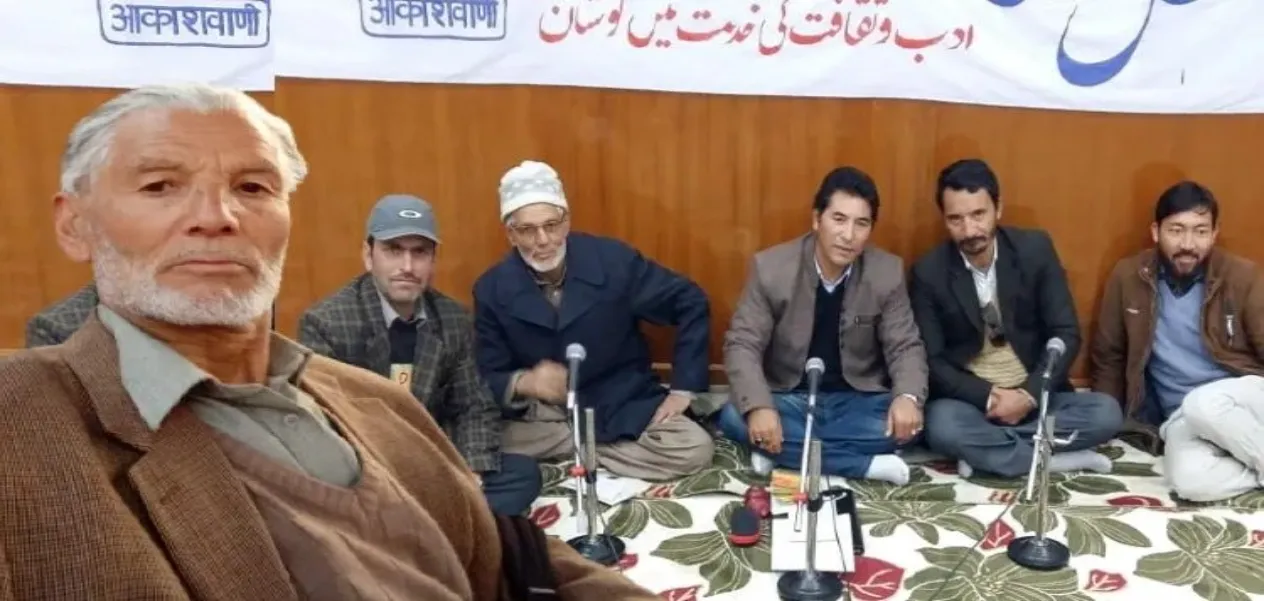
Akhon Asghar Ali Basharat gained popularity when he conducted regular Balti poetry shows on the AIR station of Kargil that took off in 1999. He became a regular participant in the local Urdu Mushairas and other cultural activities.
Basharat told a news portal that his father has been his inspiration. His father was the first published author from Kargil in the decade of 1980s.
“My father is my sole inspiration. He was a well-known social and religious activist. He had a huge collection of religious books. I sometimes feel writing is my inheritance and in my DNA.”
He says AIR Kargil station was of great help to people like him who live in remote areas. “My radio shows made me popular and encouraged me to write more. I am today because of AIR Kargil station.”
He says he fears that the Balti language may become extinct in Kargil. The fear of extinction is more because people across Ladakh tend to speak other languages and not their native ones to sound fashionable.
Bashart says to preserve language and culture, reading and writing books, and holding seminars and cultural programs must be encouraged.
He feels book writing should not be seen as a lucrative profession. “I feel book writing is not a lucrative profession. The author has to spend money to publish his book. Since the reader base is small the youth do not feel encouraged to write in regional languages. He has suggested that government must support writers of smaller languages.
source: http://www.awazthevoice.in / Awaz, The Voice / Home> Story / by Ehsan Fazili, Srinagar / January 07th, 2024
Pratinav Anil argues that policies of the Congress and the Muslim elite ended up hurting Indian Muslims the most.
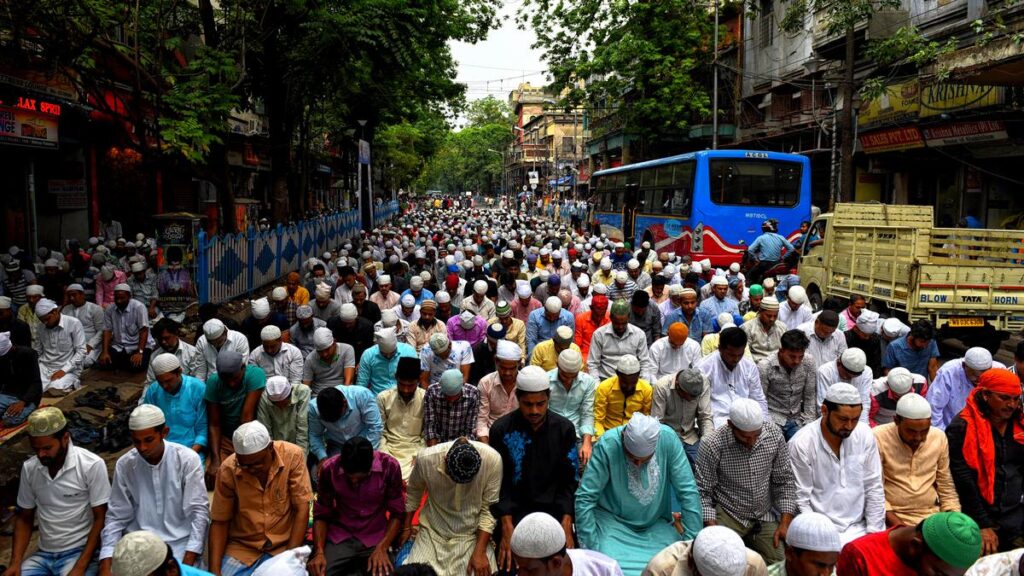
Muslim devotees praying on the street of Kolkata during the holy month of Ramadan. | Photo Credit: Getty Images/ istock
Unobjective commentators have, in the last decade, perfected the art of highlighting the tribulations of being a Muslim in “Hindu India” without contrasting them with the difficulties the same Muslim faced in “secular India” that supposedly existed before 2014.
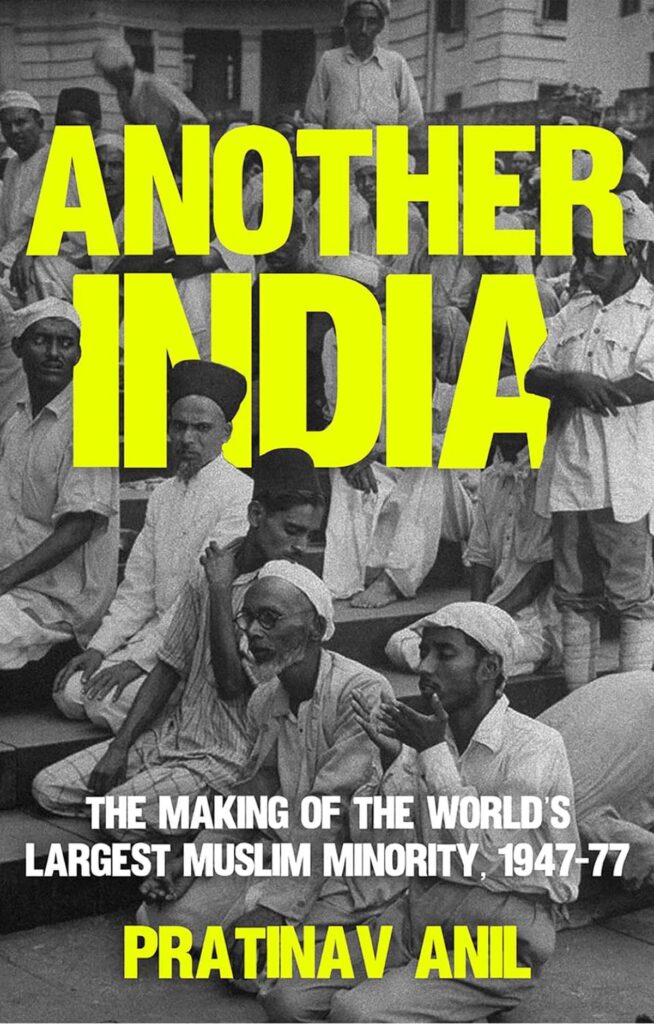
Pratinav Anil is perhaps the only modern historian who has gone against this trend to put right the wilful muting of Indian Muslim history. His new book Another India: The Making of the World’s Largest Muslim Minority, 1947–77 is an in-depth analysis of anti-Muslim violence since Independence that exposes the Islamophobic facet of the country the Congress established in August 1947.
In simple terms, the question that Another India seeks to answer is: Was the Congress’s idea of India genuinely secular and based on communal equality? From the facts it lines up, the answer is ‘no’.
Riots and taunts
Not many know that the “most violent Hindu-Muslim conflagration of postcolonial India” was unleashed in 1964 in which a staggering 800,000 Muslims from Bengal were pushed into East Pakistan.
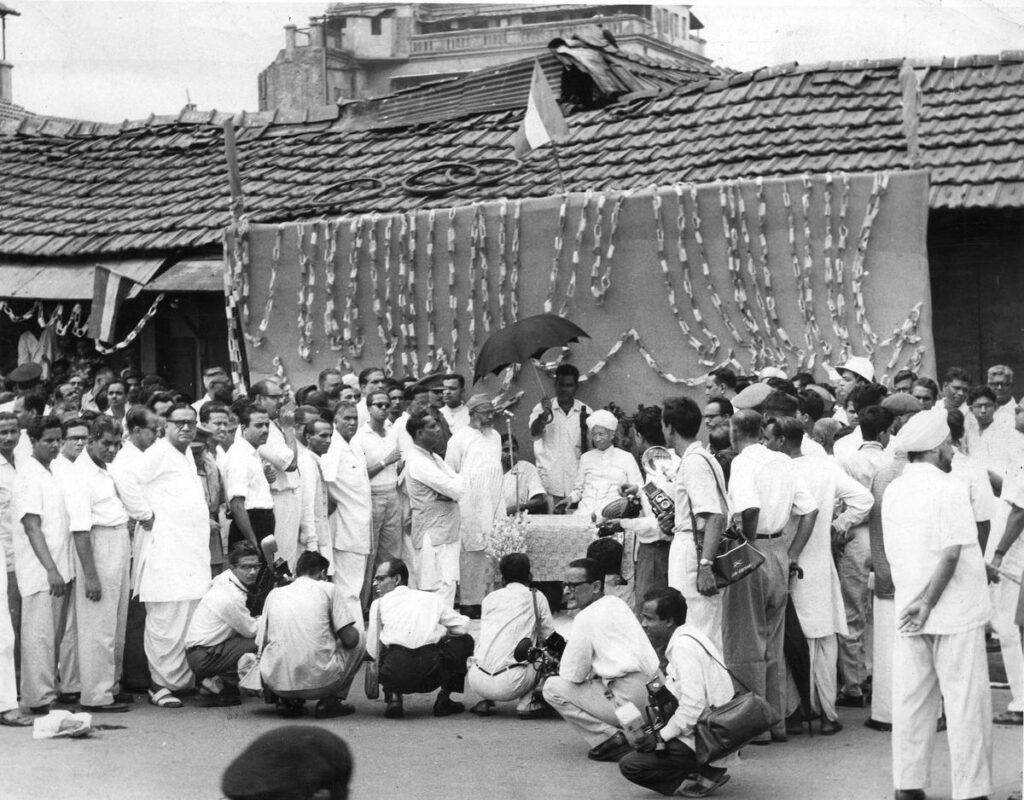
President S. Radhakrishnan visiting Central Calcutta, a predominantly Muslim locality, affected by the January riots. He is seen with the Muslims of the locality (Kalabagan area) on June 30, 1964. | Photo Credit: The Hindu archives
Indeed, it was under the Congress that the derisive “go to Pakistan” taunt was actualised when nearly 2% of the Indian Muslims were sent to Pakistan after being branded infiltrators who had sneaked in to convert Hindus to Islam. Before being expelled, they were dumped in makeshift camps on the border “like herds of cattle”, and forced to “sign papers declaring falsely that they were Pakistanis” when many of them were genuine Indians.
A large number of those who couldn’t be “sent to Pakistan” became the victims of the “riots galore” that dotted Nehru’s rule. The “institutionalised riot system” was so one-sided that Muslims made up 82% of the fatalities and 59% of the injured.
Prepossessed hostility towards Muslims was also the cause of the 1948 police action in Hyderabad which, for Anil, was “a mass pogrom” because it had resulted in the massacre of 40,000 Muslims, the rape of women, loot, arson, desecration of mosques, forcible conversions, and seizure of houses and lands. Nehru hastily suppressed the Sunderlal Report that brought out these facts.
Anil concludes that Nehruvian India was often “an Islamophobic agency” that wore secularism as “a fig leaf” to hide its pro-Hindu bias.
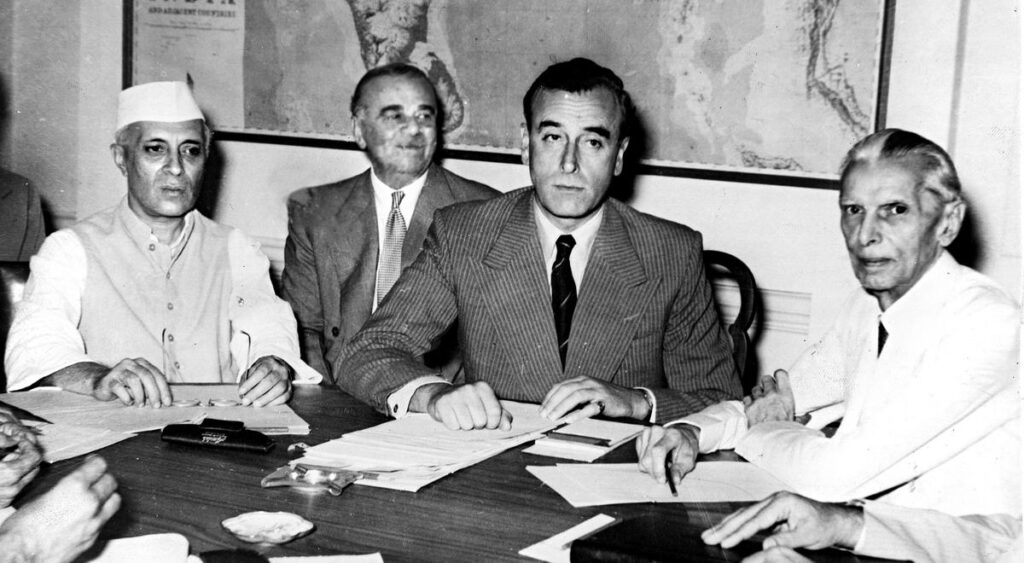
At the historic conference in New Delhi on June 7, 1947, when Lord Mountbatten disclosed Britain’s “partition” plan for India. (left to right) Jawaharlal Nehru, Lord Ismay, Adviser to the Viceroy, Lord Mountbatten, and M.A. Jinnah, President of the All-India Muslim League. | Photo Credit: The Hindu photo archives
The Ashraf betrayal
But how did the Congress get away with its brazen marginalisation of Muslims? With the help of “nationalist Muslims” and “notables”, says Anil.
The former were mostly Muslim Congressmen who harmed their community by conflating India’s progress with that of the Congress; shielding Congress from criticism by blaming Muslim communalists for Partition, and placing the constitutional protection of the shariah above the community’s political rights.
The “notables” comprised upper-class Muslims (the ashraf) such as mutawallis (custodians of waqf properties), waseeqadars (princely pensioners) and waaqifs (dedicators of properties for waqf) all of whom used their aristocratic agency to feather their nests in the guise of working for the community’s economic development.
A major preoccupation of these patricians was “the preservation of distinctive elements of Muslim culture in a non-Muslim environment.” Backing them to the hilt were the ulama, especially those belonging to the Jamiat Ulama-i-Hind which Anil calls a branch of the Congress in all but name.
The “ashrafised” Islam that the ashraf-clergy nexus promoted secured the class interests of the ashrafs and almost totally ignored the plight of common Muslims.
In a scathing attack on the Muslim elite’s obsession with the shariah-based Personal Law, Anil says that it furnished the patriarchs with “a private fiefdom to do as they pleased” without mitigating the community’s “despondent public existence in an Islamophobic society.”
No space for scrutiny
As a consequence, Muslim politics had no room for “trade unions, mass protests, anti-discrimination legislation, and subaltern solidarity” while it had plenty for “high cultural totemic symbols such as the AMU, auqaf, Urdu, and the sharia.” This suited the ruling “Hindu Congress” because a politically empowered non-Hindu group was not in its interest.
Even today the ashraf-clergy alliance prioritises religion and religious symbolism over social cohesion and political participation. If, for instance, ashraf-backed madrasas are fixated on anachronistic medievalism, many clergy-endorsed secular English medium schools controlled by wealthy Muslims promote religious identitarianism by making the skull cap (for boys) and the hijab (for girls) a mandatory part of the uniform.
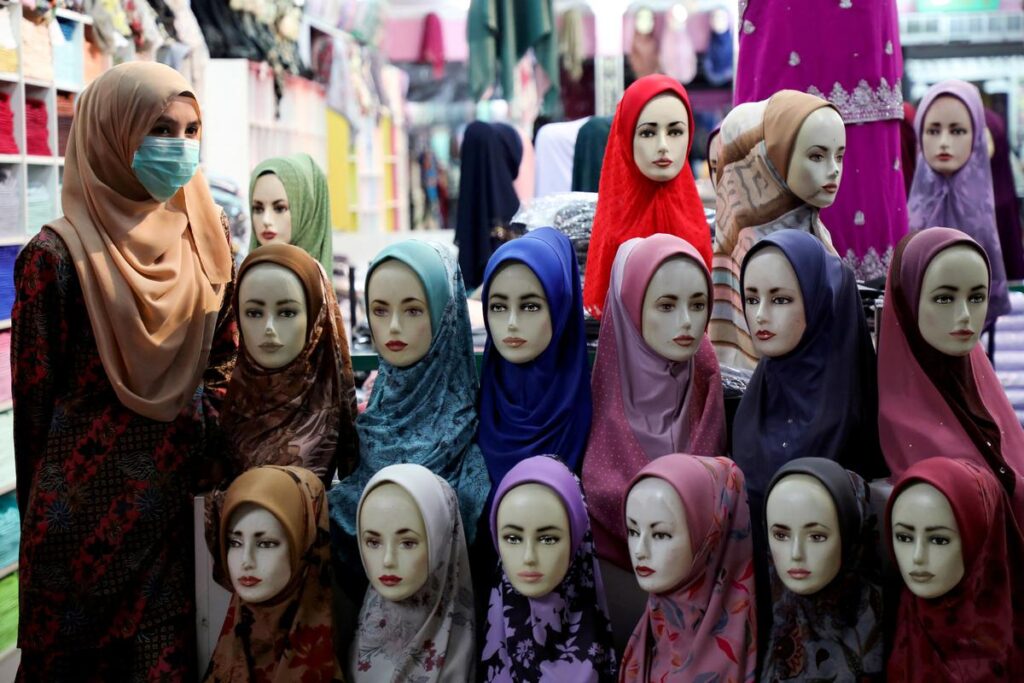
At a hijab shop. | Photo Credit: Reuters
This self-ghettoisation, which is nothing short of an attempt to discourage the enrolment of non-Muslims in Muslim schools, sustains itself on the fear of the other and has the potential to render Muslim students incapable of living in multi-religious and multi-cultural societies after graduation.
Given this sad state of affairs, Another India couldn’t have come at a better time. Its neoteric narrative is not just a searing exposé of Congress’ betrayal of trustful Muslims who stayed back in India after rejecting Pakistan; it is also an invitation to Indian Muslims to acquire a sense of critical thinking and break free from the serpentine stranglehold of the ashraf-clergy alliance that is hell-bent on denying them the heaven-ordained right to intellectual liberation.
Another India: The Making of the World’s Largest Muslim Minority, 1947-77; Pratinav Anil, Penguin/ Viking, ₹999.
The reviewer is Secretary-General of the Islamic Forum for the Promotion of Moderate Thought.
source: http://www.thehindu.com / The Hindu / Home> Books> Reviews / by A Faizur Rahman / February 04th, 2024
Dr Hussain was the kind of man, that if he himself were to read (or edit) this obituary, he would flinch at the mention of his generosity as a doctor or friend. Good deeds were to be done, he believed, not to be remembered or recounted.
Dr. Farasat Hussain (1952-2023)
This Sunday (August 6) when a group of people assemble to remember Dr Farasat Hussain, in ‘Renaissance’, an aptly named Cultural Centre in Gaya, set up by his lifelong friend, noted litterateur Sanjay Sahay and his wife Durba Sahay, the inter-faith gathering will be much more than a tribute to him. They will of course meet to talk about the good doctor who died on July 28 at the age of 71 in Delhi. But the meeting will embody the very essence of Dr Hussain’s life which was dedicated to bridging divides and building relationships. Be it religious, caste and class, there was not one single divide he had not jumped across.
The meeting will be very personal, no doubt, but it will also be a tribute to the India he inhabited for most of his life, where he was proud to serve as a doctor, live his life as a Magadh ka baashinda, a Bihari, an Indian, and all in all, a lively human being. But it will also be a necessary reminder in these vicious and polarised times of people who with their singular focus on humanitarian work are the secret sauce of what keeps or certainly kept India going.
Born in Bihar’s Chhapra district in 1952, Dr Hussain made Gaya his home soon after he completed his post-graduation in Orthopaedic Surgery at Government Medical College, Ranchi in 1983.
As a young doctor, he would kick-start his Rajdoot motorcycle and ride off to remote villages across Bihar to attend to emergencies. A pioneer in polio corrective surgeries in Bihar, he conducted scores of special camps where he performed more than 3,000 polio surgeries for poor children when he started his work here decades ago. He even conducted Caesarean sections when a gynaecologist wasn’t available.
In a state where public health was never really a thing, doctors like Farasat Hussain were the system. He was anyway an exceptional surgeon who had multiple opportunities and offers to make a career in the lucrative corporate medical sector, but he didn’t even consider it. He stayed in Gaya where he mixed his practice as a doctor with large-scale social work, community building and helped initiate a multi-faith effort to ensure communal harmony across the Magadh region.
But for people there, he wasn’t just a skilful surgeon and an efficient clinician, he was also a psychologist. His unique sense of humour, they suspected, was part of his treatment plan for a patient. Dr Hussain didn’t merely look at the disease of his patients, he treated the person. In a place where health infrastructure had crumbled in the decades of the 80s and 90s, he was an address for the sick where they knew they would surely get help.
He was also closely associated with the upliftment of the disabled population, who remember him as a mentor and benefactor for helping them with their livelihood. Several disabled people travelled from across the region, despite difficulties, and joined his funeral.
In 2010, the government of Bihar honoured Dr Hussain for his work. At that time, he was national president of the Association of Sports Medicine of India. He was honoured for his contribution to promote sports among disabled people, especially polio patients.
Dr Hussain was closely associated with Arpan, an organisation of disabled people in Gaya, where he was instrumental in motivating disabled youngsters to participate in sports and other activities to turn their physical challenges into opportunities that helped them move away from a life merely at the fringes of society.
Dr Hussain mentored Krishna Murari, who subsequently represented India at the sitting volleyball competition in the US.
Several other disabledyoungsters from the Magadh region also attended national sports events in cricket, volleyball and cycling. His focus on encouraging disabled youngsters to take up sports was to help in their inclusion in the social fabric, not as dependents, but as equal partners.
Dr Hussain was an integral part of the inter-faith dialogue, peace and harmony initiatives in the Magadh region.
This is why those who attended his burial say that it aptly exhibited the fruits of his lifelong work to build bridges between communities. Buddhist monks came to pay their respects to him. Hindus and Muslims came and prayed for him. Several disabled men came for the first time into a graveyard, only to express their love for the departed. There were madrassa children, who were helped by him when their institution was in extreme financial distress. A befitting farewell to a man of all persons.
Dr Hussain had been closely involved with one of Bihar’s oldest minority educational institutions – Mirza Ghalib College, where he consistently promoted progressive and secular values. Mirza Ghalib would be proud of all that he upheld there. He was also involved with a number of charity organisations, such as an orphanage at Cherki for more than two decades. This home for poor, underprivileged orphans is one of the biggest in India.
Dr Hussain was an exceptional man, who stood out because he was so restless and always busy, working, helping; a doctor in the truest sense of the word.
I happened to meet him several times, and saw an adoring grandfather to a precocious and thoughtful Farris. His quiet charm, polished demeanour and contagious smile did not mean that he ever held back on his views. A man capable of sharp candour and an openness of the heart, he could surprise you with his diagnosis of the social situation.
Dr Hussain was the kind of man, that if he himself were to read (or edit) this obituary, would frown and take serious umbrage at even a mention of his generosity as a doctor, friend, and human being. Good deeds were to be done, he believed firmly, and not to be remembered or recounted.
He is at eternal rest now. But his life needs to be celebrated for how he lived it and how he wanted the world around him to be. There is a need to nourish his legacy, intangible as it may seem. This is true today more than ever before, as we seem to have a hard time even imagining living a harmonious life as a collective.
He knew very well that there was no magic pill to fix the social fabric, no ready rafoo. But the good doc he was, he knew what it took to keep trying to get there and the importance of keeping all kinds of fevers down.
RIP, Dr Hussain.
source: http://www.thewire.in / The Wire / Home> English> Health> Rights / by Seema Chishti / August 05th, 2023
Bangalore, Mangalore, KARNATAKA / New York, U.S.A :
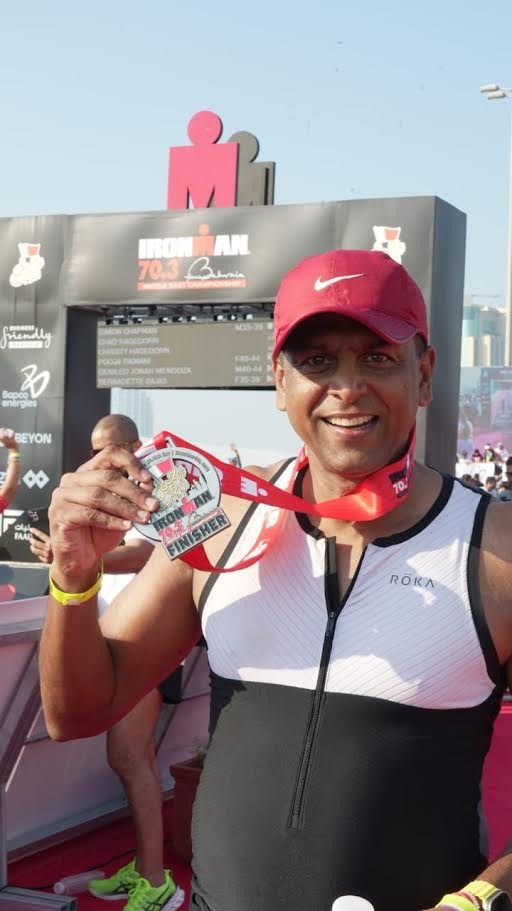
Sameer Shariff, the CEO of Impelsys, a prominent IT company with global offices, including one in Mangalore, successfully completed the IRONMAN 70.3 Bahrain triathlon on December 8, 2023. The challenging event, held at Reef Island, witnessed the participation of over 1500 individuals, with more than 1000 successfully completing it.
By accomplishing the IRONMAN 70.3 course, which comprises a 1.9 KM swim, 90 KM cycling, and a 21.1 KM run, Sameer Shariff joined an exclusive club of global business leaders who have conquered this grueling challenge. Beyond personal achievement, Shariff aims to inspire others to adopt a healthy and active lifestyle. He expressed, “Completing the IRONMAN triathlon pushed my endurance limits, and I believe it sets an example for others. We are making strides with the CEO Fitness Challenge for associates at Impelsys.”
Shariff’s achievement has motivated many colleagues at Impelsys to pursue their fitness goals. Sripad, heading cloud services, shared, “Sameer’s dedication motivated me to run a half marathon in 2023.” Prachi, a project manager, added, “After seeing Sameer’s preparations, I decided to participate in a half marathon. I completed my first half marathon on November 5, 2023, in Mangalore.”
These accomplishments mark the beginning of a broader wellness initiative envisioned by Sameer Shariff. In 2024, Impelsys aims to encourage more participants, extend the challenge to partner organizations and customers, and promote overall well-being. The ‘CEO Fitness Challenge’ is a voluntary program that has seen over a hundred associates engaging in specific health and fitness activities, collectively achieving impressive milestones.
source: http://www.english.varthabharati.in / Vartha Bharati / Home> Gulf / by Vartha Bharati / January 12th, 2024
Bibi Tabassum and Suraiya Quraishi who embroidered the Quran.
Bengaluru :
This is a miracle. An awe-inspiring phenomenon took place in this city a few days back, as two sisters- Bibi Tabassum and Suraiya Quraishi- embroidered the sacred Quran onto 604 pages of plush velvet cloth.
Showing excellent craftsmanship, they used needles and threads to meticulously prepare an embroidered holy Quran. This embroidered Quran, prepared under the watchful guidance of an Alim-e-deen (religious scholar), is not only easily legible but also heavenly captivating.
Bibi Tabassum, the younger of the two sisters, holds a great fondness for doing embroidery ever since she was a child. In the beginning, she used to embroider only small verses of the Quran, but one day, an idea graced Bibi Tabassum’s mind – to intricately embroider the entire holy Quran. This took her on a laborious journey, one fueled by love and devotion.
Expressing extreme gratitude to Allah for giving them the opportunity to prepare this embroidered Quran, Bibi Tabassum says that she aspires to gift this embroidered holy Quran to a library in the holy city of Madina.
Venturing on this embroidery voyage of the Quranic verses along with her elder sister Suraiya Quraishi, Bibi Tabassum started with the first inaugural Surah of the Quran i.e. Surah Al-Fatiha, and continued diligently. The last surah- Surah An-Nas marked the culmination of their hard labour.
This embroidered holy Quran is divided into five volumes, and each volume consisting of six chapters. It went through a meticulous binding process by the skilled hands of its creators.
Initially, in the detailed process of embroidery, Bibi Tabassum used to inscribe the verses of the Quran with a pencil on the velvet cloth, followed by both the sisters intricately weaving threads along those sacred lines.
Carrying on the demands of daily life, both sisters, driven by unwavering dedication, used to finish their household chores and then engage in the embroidery work of the holy Quran.
To ensure the utmost accuracy of the embroidered work, a learned religious scholar closely scrutinized each verse upon the completion of a page. Bibi Tabassum says, ‘After completing every page of the embroidered holy Quran, we would show that to our scholar and do any correction if required.”
In the aftermath of this big achievement, family members are thoroughly elated for the two sisters. They say that the two sisters have utilized their time for a very noble endeavour. Extending heartfelt gratitude, they thank Allah for the manifestation of this lovely artwork, which stands as a testament to the beautiful blending of devotion and artistry.
source: http://www.indiatomorrow.net / India Tomorrow / Home> News> Society / by India Tomorrow (headline edited) / February 05th, 2024