Tag Archives: Muslims of India

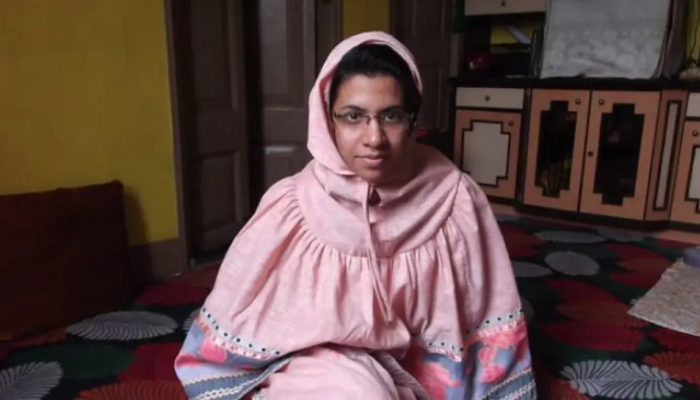
Shabnam Shaikh is India’s first doctorate in wrestling studies

Aambijalgaon, Kajrat (Ahmednagar District), MAHARASHTRA:
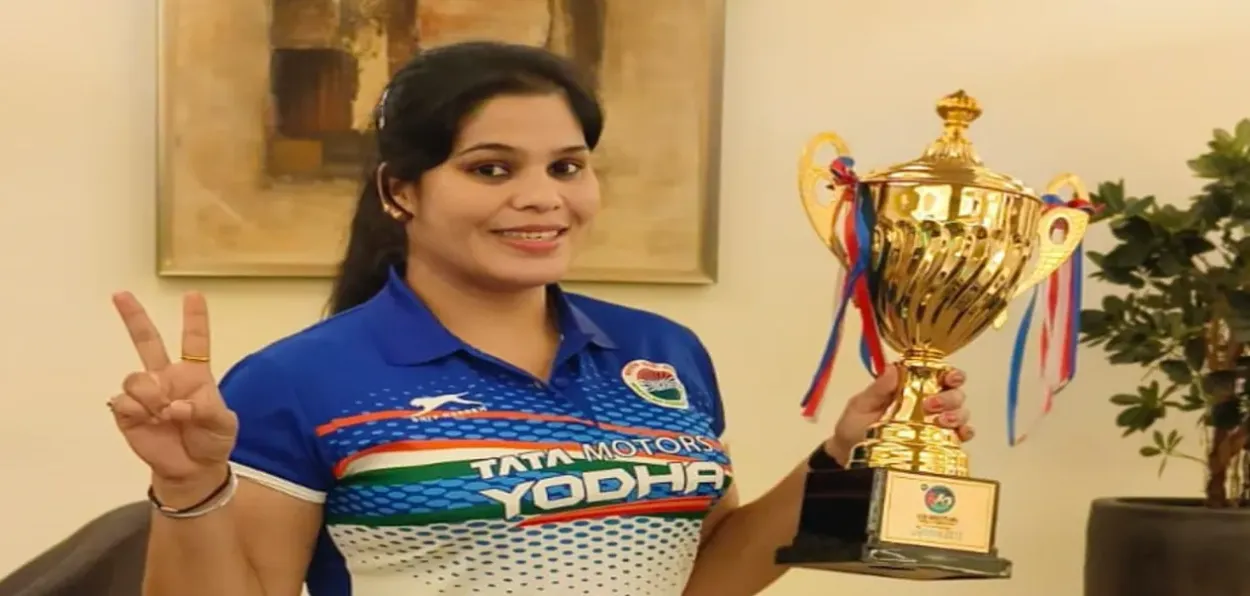
Dr. Shabnam Shabbir Sheikh

Shabnam Shabbir Shaikh of Aambijalgaon, Maharashtra, trashes stereotypes of Indian women. Having picked wrestling as her field, this 28-year-old woman has broken all the shackles that a girl child faces while growing up in a small village.

Hailing from the village Aambijalgaon, Karjat, of the district Ahmednagar Shabnam was born in Jammu where her father Shabbir Sarabhai Shaikh was posted in the Indian Army. She is the third child of her parents and she grew up seeing her mother Rizwana Begum looking after the house and the family. However, Shabnam’s father always wanted his daughter to be brave, self-reliant, and break social stereotypes.

A great votary of women’s education Shabbir Shaikh encouraged his wife Rizwana Begum to complete her MSc degree after their marriage.Due to her father’s frequent postings across the country, Shabnam did her schooling mostly at the Army schools in Ambala, Udhampur, Srinagar, and Ahmedabad. After her father’s retirement, the family settled in their native village and Shabnam joined the local school.

She joined the 11th class in the Dada Patil College, Karjat, in the science stream. despite an irregular and sluggish bus service to Karjat, she somehow managed to study and also attend coaching for wrestling.
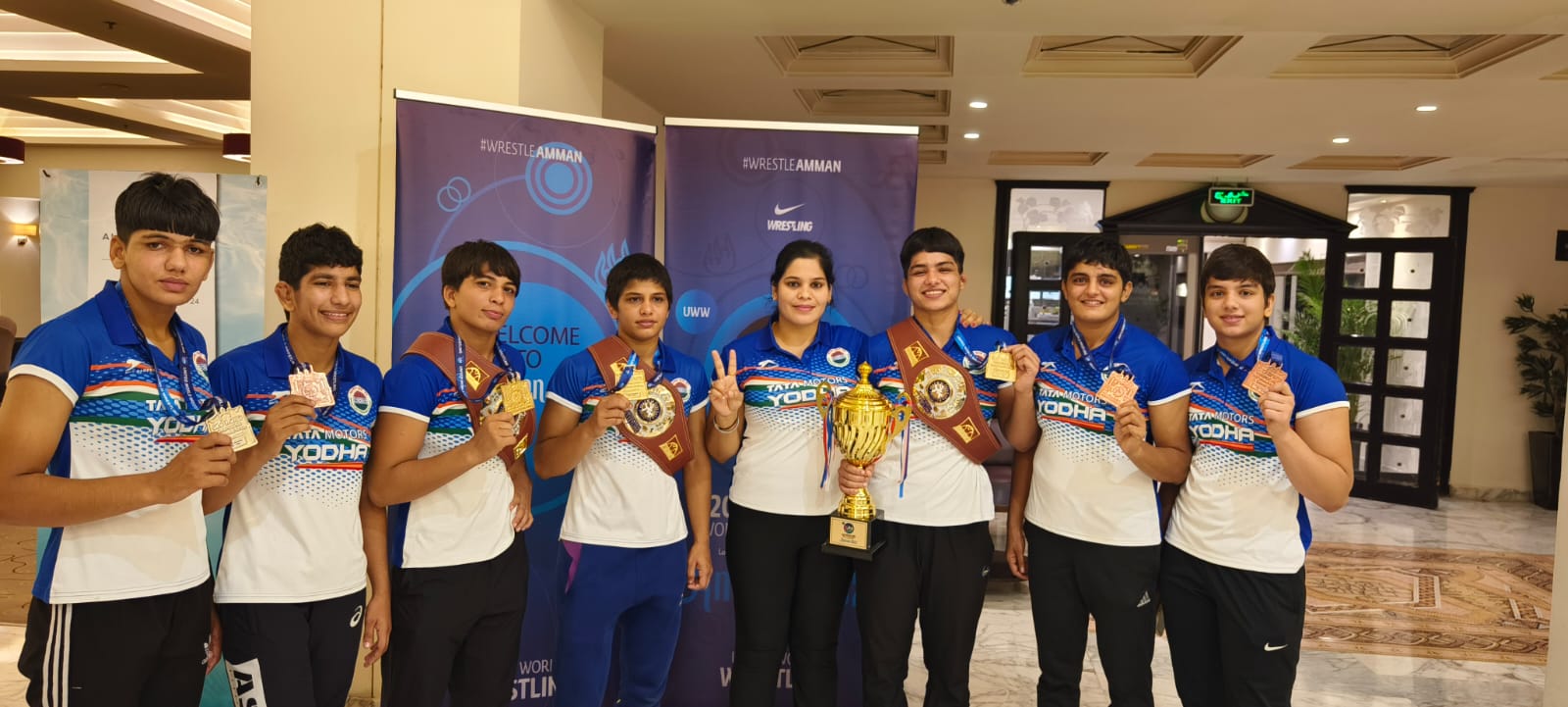
Coach Shabnam with her team

Shabnam completed her Bachelor of Physical Education (BPE) from Aurangabad (Sambhajinagar). She also got a diploma certificate in Coaching from the National Institute of Patiala, Punjab, and later did her Master’s from Babasaheb Ambedkar Marathwada University and then registered for her PhD studies.

Shabnam’s wrestling career began at the age of seven with her father as her coach. Shabnam says, “’My father is my first guru.”

Shabnam came from a family of wrestlers: her grandfather Sadarbhai Shaikh and great-grandfather were well-known wrestlers in the area. Their ancestral house has a wrestling arena where she watched male members of her family and neighbours practice wrestling. 

Shabnam had to face the scorn and disapproval of her extended family and relatives when she started practicing wrestling. People even asked her family why she was allowed to wear shorts.
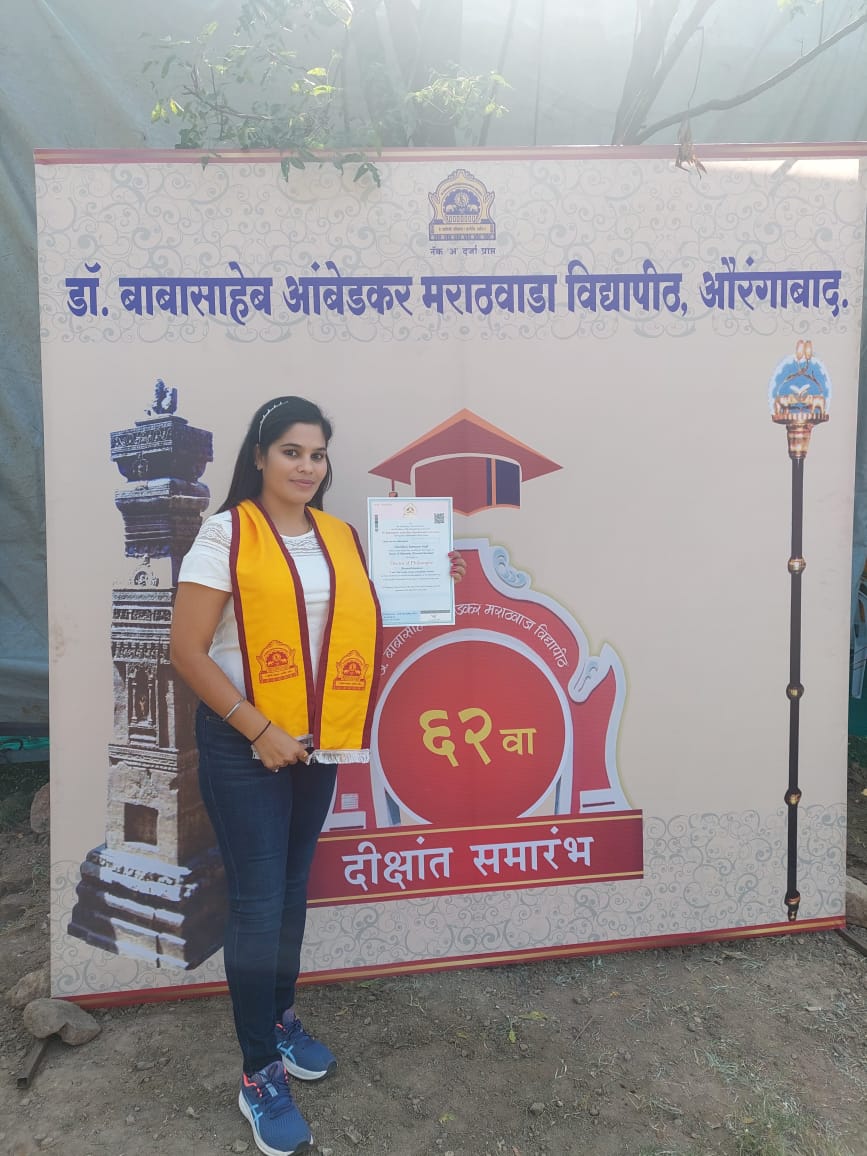
Shabnam at the convocation of the University

Shabnam started with Kabaddi, a game that requires a lot of alacrity and stamina.

Initially, she did not get to enter the arena where her brothers wrestled, so she took to Kabbadi. “I used to think that if I wrestle and win that will be my victory. Even if I lose, it will also be my failure. Will happen… I expressed my desire to wrestle to my father. He responded positively.”

Shabnam’s father had a precondition for training her. He wanted her to concentrate on training and practice for the first two years. She started receiving training from her father and two elder brothers.

Every morning at 4 o’clock she was sent to pick lemons from their farm located about 10 km away. She learned the nuances of wrestling and participated in her first competition in Ludhiana (Punjab). She bagged a silver medal and there started her winning streak.

Shabnam says, “Once in my village, my father came to know about a competition in Delhi. I was just 10 years old at that time. He gave me a paper with the address written on it and a train ticket and wished me good luck for the journey.”

At that time she wondered why she was going alone, ‘Why don’t my parents come with me? But my father always used to tell me that some battles in life have to be fought alone,” she says going down memory lane.
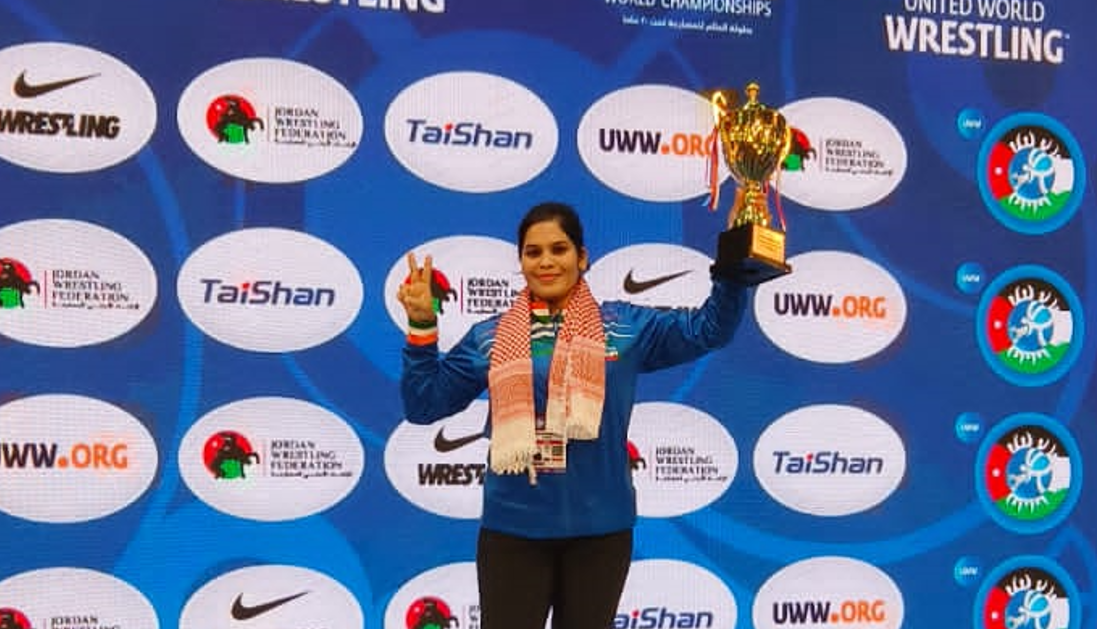
Shabnam Shaikh with her trophy

Shabnam won the title of ‘Women Maharashtra Kesari’ in 2010. She has won the gold medal in ‘Shirdi Kesari’ for three consecutive years since 2009, the gold medal in ‘Latur’ in 2011, gold medal in the ‘Maharashtra State Kustigir Parishad’ competition for six consecutive years.

She has also participated in four inter-university competitions, 10 national competitions, and more than 15 state-level competitions. In the national level ‘Great Bharatkumari Wrestling Competition’, Shabnam is the first winner not only from the Muslim community but also from Maharashtra.

Shabnam says her father taught her that one doesn’t need an outer veil. “Always keep the veil that differentiates between good and bad people in front of your eyes!” he told her.

Shabnam says, “People used to question my parents’ ways. A girl should not play sports like wrestling. Teach her to fast (during Ramazan) and pray. Don’t you want only boys to play wrestling? Hundreds of questions were asked but my parents did not let the pressure of society affect me.

“My father never changed his opinion under the pressure of society. He never let these things affect my game. I always got the support of my parents and my elder brothers.”

Shabnam’s mother Rizwana Begum says, “I have not two, but three ‘sons’! My brothers did not give me a share of our parents’ property. But, I will not let this injustice happen to my daughter. I will give her everything she deserves. Shabnam has brought glory to us. As a mother, I will always be proud of her.”

Shabnam’s thesis for her Ph.D. degree is ‘Comparative study of emotional maturity of rural and urban women wrestlers in Maharashtra’. She toured the entire state for research.

Shabnam is the first woman in India to do a doctorate in sports studies. While doing her Ph.D. in Wrestling, there were often deliberate attempts to embarrass and thwart her effort to earn a doctorate.

In the year 2017, Shabnam was selected as the junior coach of the Wrestling Women’s Association of India; she imparted wrestling training to Anushka Sharma and Salman Khan for the film ‘Sultan‘. Shabnam has represented India in Kazakhstan, and Uzbekistan.

She currently works as a ‘Senior Trainer’ in the ‘Wrestling Women’s Association’ of India. India has never had success in the ‘World Women’s Wrestling Championship’ till now. However, in the ‘Under-20 World Championship’ of 2023 India won seven medals in ‘Women’s Wrestling’. Out of these, three are gold medals.
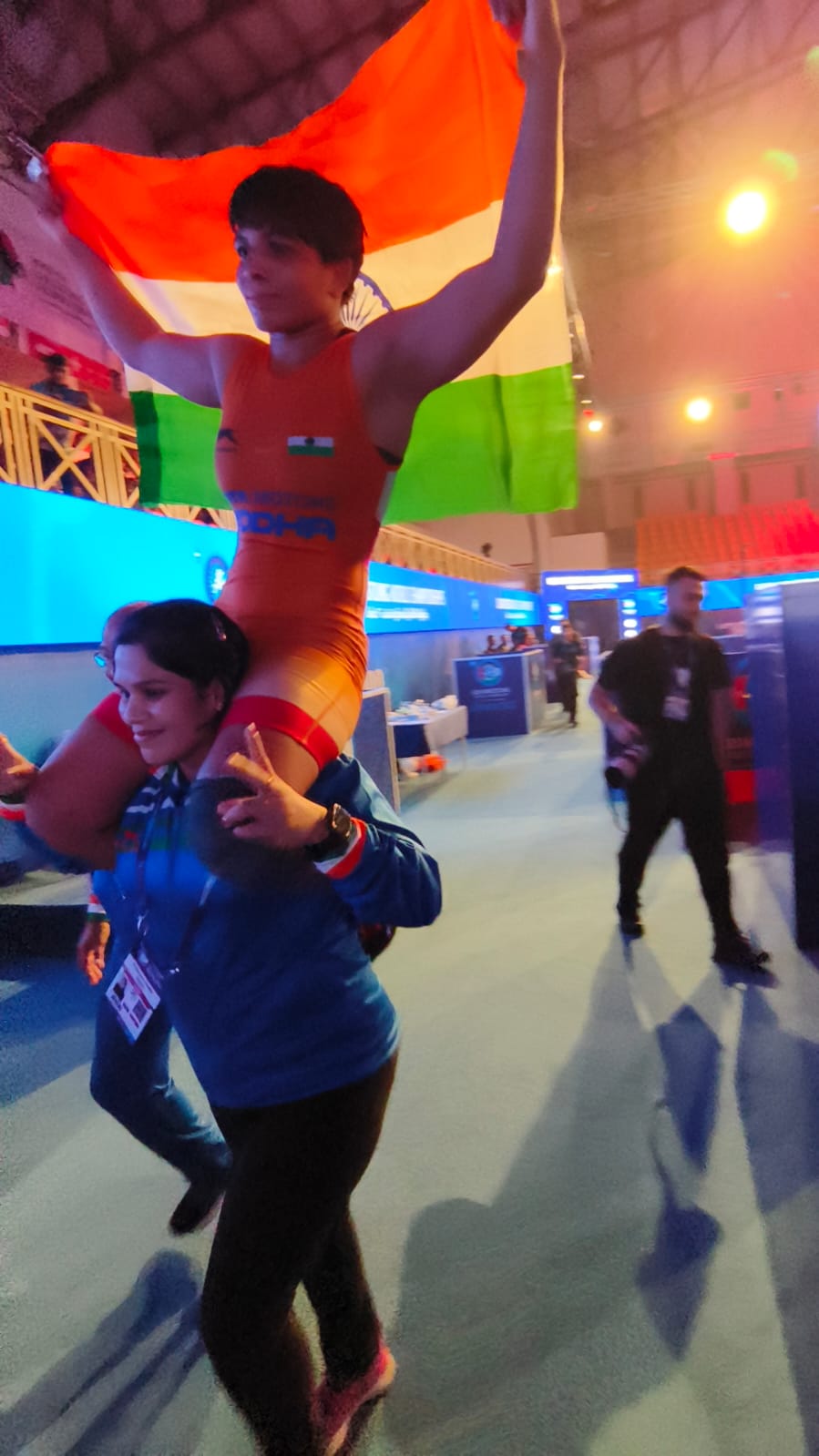
Shabnam Shaikh after her victory in a foreign location

Dr. Shabnam Shaikh is today known as the ‘International Wrestling Coach.

Shabnam says, “I was selected as the coach of ‘Maharashtra Team’ for the national tournament held in Gujarat last year. Twenty-four hours ago, my name was canceled! I was not given any idea about this.”

“Many times, despite having the right credentials and qualifications, I am not given a chance. Probably, because I live with self-respect! I always think that when someone asks me, “How did you get all this?’ I should proudly tell him, ‘I have earned it through my hard work.’

Shabnam says, “Wrestling gave me identity. Sometimes I wonder, ‘Is wrestling a curse or a blessing for me?’ Initially, relatives and other people of the society hated seeing me wrestle.

“Later, when I started winning competitions, people would post the news of my success on their ‘status’ on various social media platforms and write the caption, ‘Congratulations and best wishes to our sister or relative.’

After reading the news of my winning, I became everyone’s relative at that time! But, they speak against me on behind my back! However, now they hesitate to speak against me openly!”

Shabnam says, “Most of the time I am rejected for marriage. I play wrestling. The suitors who come to see as a potential candidate for marriage, see my trophies and see ‘Doctor’ written next to my name. When they go home their answer is, ‘We don’t want such an educated girl.'”   

Shabnam continues to work hard to ensure that other girls do not face what she has.

Her advice to the youth: “No matter what happens, do not get tired. Do not give up the fight.” Her dream is to build a wrestling center for girls.

source: http://www.awazthevoice.in / Awaz, The Voice / Home> Story / by Chaya Kaveri / February 29th, 2024
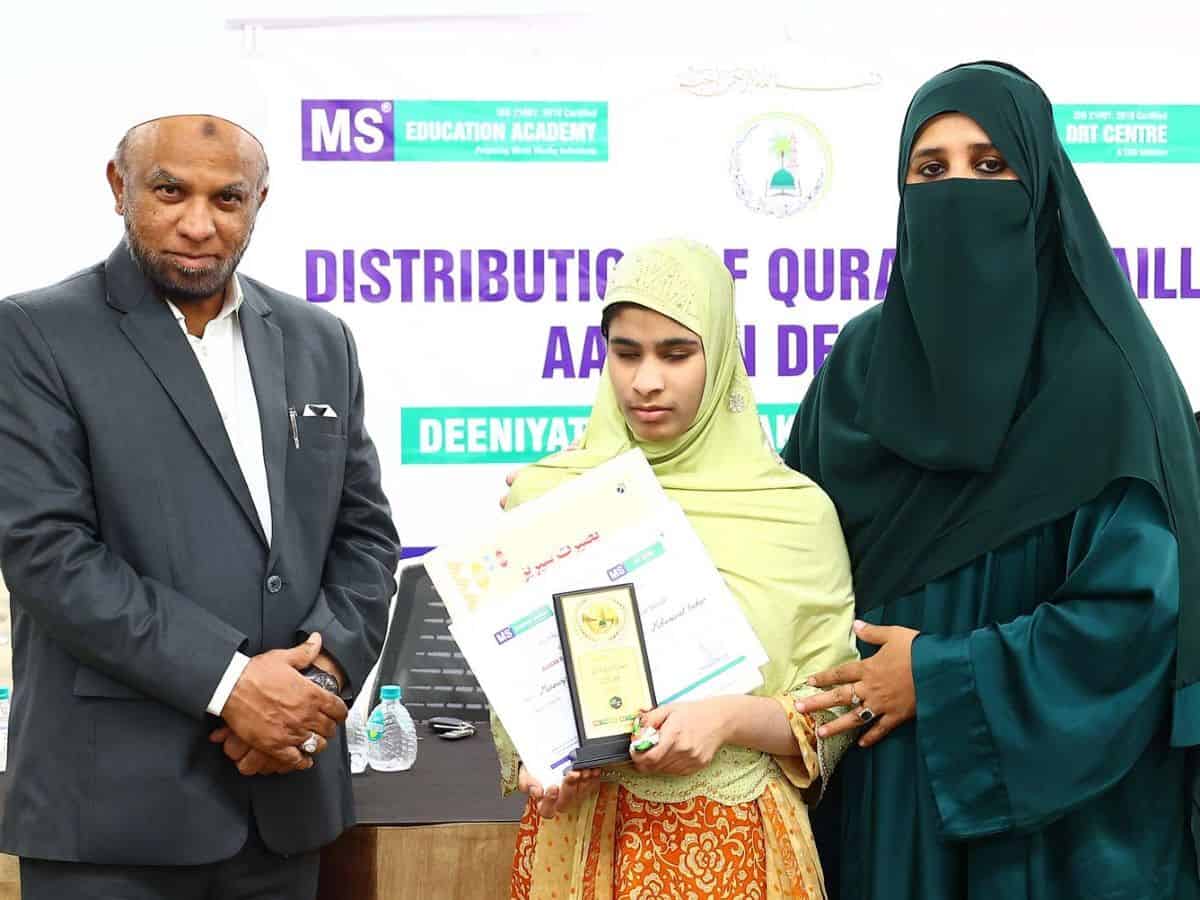
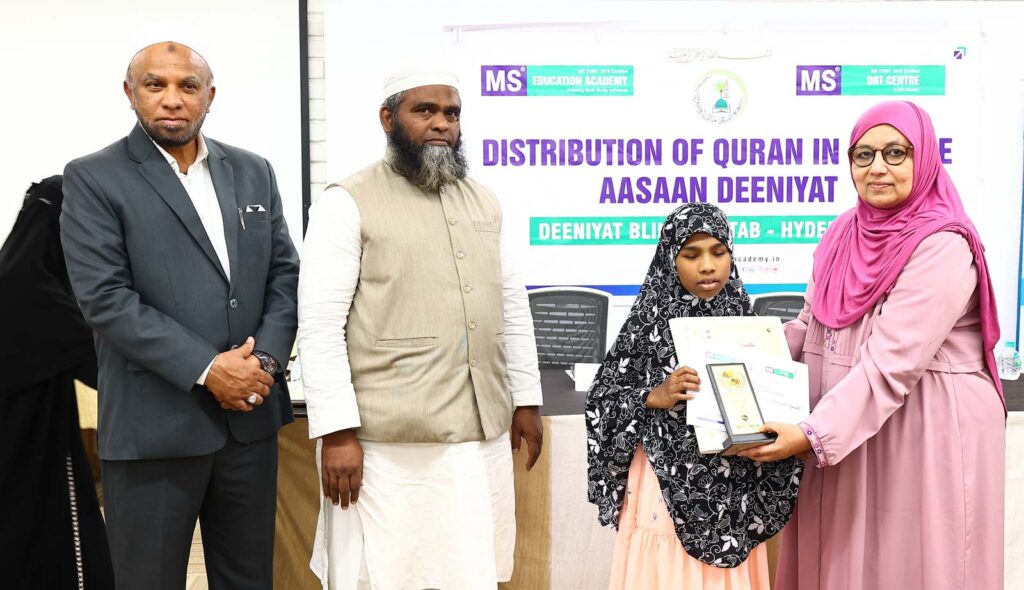
MS Academy empowers visually impaired students with braille Islamic course

TELANGANA:

Since 2014, MS Education Academy has been dedicated to assisting visually impaired students.

Hyderabad: 

In a remarkable initiative aimed at empowering visually impaired Muslim students, MS Education Academy has launched a pioneering project to provide comprehensive Islamic education in Braille format.

Since 2014, MS Education Academy has been dedicated to assisting visually impaired students, initially by distributing Braille versions of the Quran.

Recognizing the growing need for Islamic literature in Braille, the academy embarked on a mission to develop a tailored curriculum accessible to visually impaired students.

Over the years, MS Education Academy has meticulously developed Islamic literature in Braille, tailored to the spoken Urdu language prevalent among Muslims in Telangana.

Comprehensive Deeniyat course

A team of experts was assembled to compile a comprehensive Deeniyat course specifically designed for the visually impaired. This initiative has resulted in the creation of a series of Braille books titled “Asaan Deeniyat”

The first instalment of this groundbreaking endeavour, “Asaan Deeniyat Part 1,” has been successfully implemented with the organization of offline classes in Old city of Hyderabad in 2019.

To further extend their reach and cater to students beyond Hyderabad, MS Education Academy launched an online course titled ‘Deeniyat Visually Impaired Maktab.’ This online platform provides flexibility for students residing outside of Hyderabad or those preferring to learn from the comfort of their homes.

Impact of online initiative

The impact of this initiative has been profound, with 250 visually impaired students having already enrolled in the course and demonstrated remarkable progress in grasping the material. Remarkably, students have been able to complete Part 1 of the course in just six months, underscoring the efficacy of the Braille curriculum developed by MS Education Academy.

In recognition of their achievements, MS Education Academy organized a special event at its corporate Office to celebrate the completion of Part 1 of the course.

Certificates of completion were awarded to students, marking a significant milestone in their educational journey. Additionally, students were provided with copies of “Asaan Deeniyat Part 2” alongside Braille copies of the Quran, further enriching their educational resources.

MS Education Academy’s commitment to inclusive education and empowerment continues to inspire, serving as a beacon of hope for visually impaired Muslim students seeking access to quality Islamic education. Through their innovative approach, MS Education Academy is not only breaking barriers but also fostering a more inclusive and equitable society for all.

source: http://www.siasat.com / The Siasat Daily / Home / by Sameer Khan / February 23rd, 2024

Mansur Ali Ahmed elected as Ameer in Annual meeting of Jamiatul Falah National Regional Coordination

KARNATAKA / SAUDI ARABIA:

Mansur Ali Ahmed

Dammam:

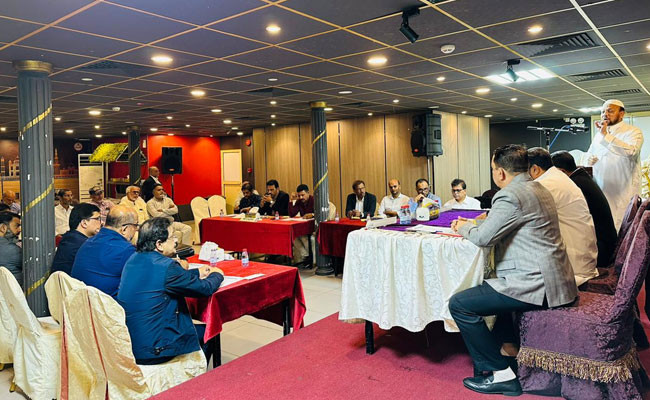
The annual meeting of the Jamiatul Falah National Regional Coordination Committee, Saudi Arabia, was held at the Red Pot Restaurant in the city on Friday, February 23.

Dakshina Kannada and Udupi District delegates of Jamiatul Falah as well as delegates from Jeddah, Riyadh, Dammam and Jubail attended the annual meeting.

Dammam Unit President JF Shareef Karkala, JFCC President Shahul Hameed KK and Ameer Mansoor were present in the meeting.

The delegates unanimously elected Mansur Ali Ahmed as the “Ameer” for the year 2024-25.

The meeting, which was moderated by Siraj, concluded with a vote of thanks, followed by lunch.

source: http://www.english.varthabharati.in / Vartha Bharati / Home> Gulf / by Vartha Bharati / February 24th, 2024

Rukhshi Kadiri Elias weaves Taajira as network of women who empower each other

Kolkata, WEST BENGAL :

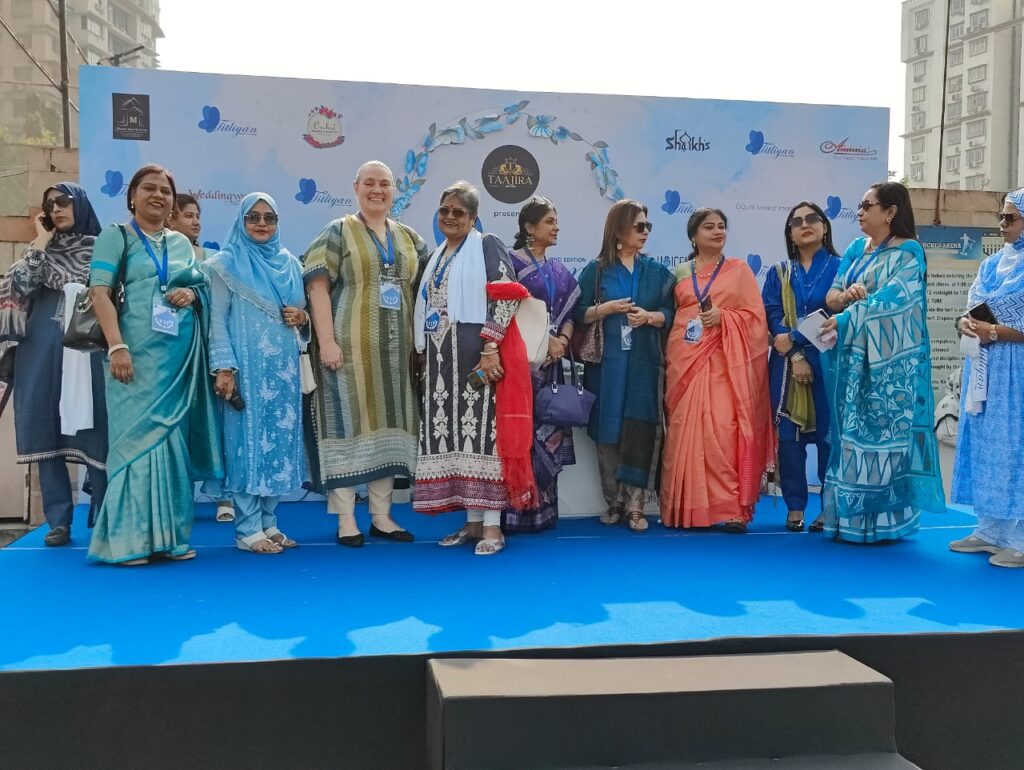
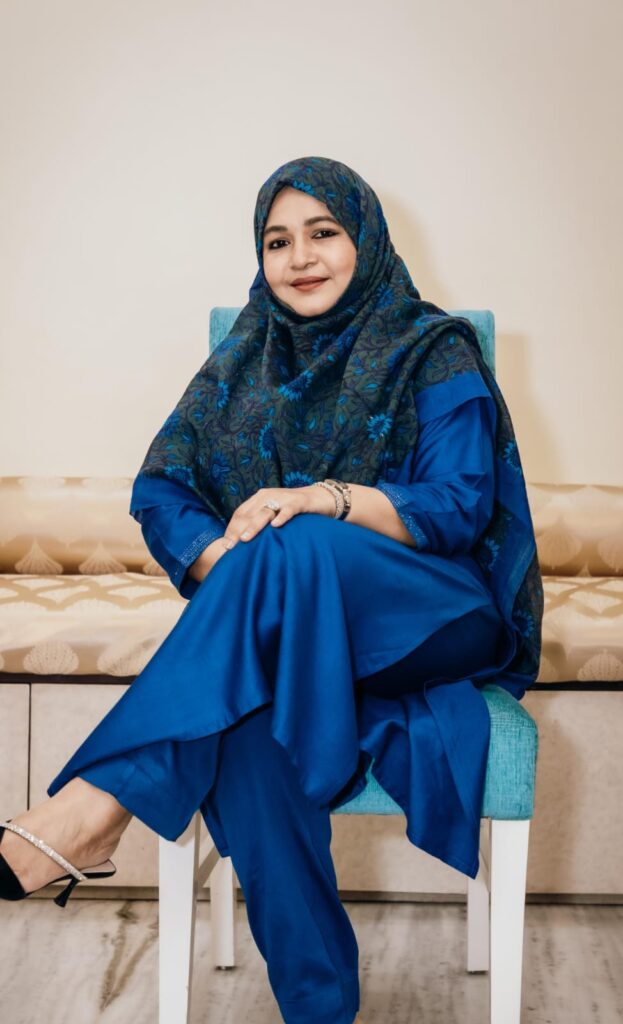
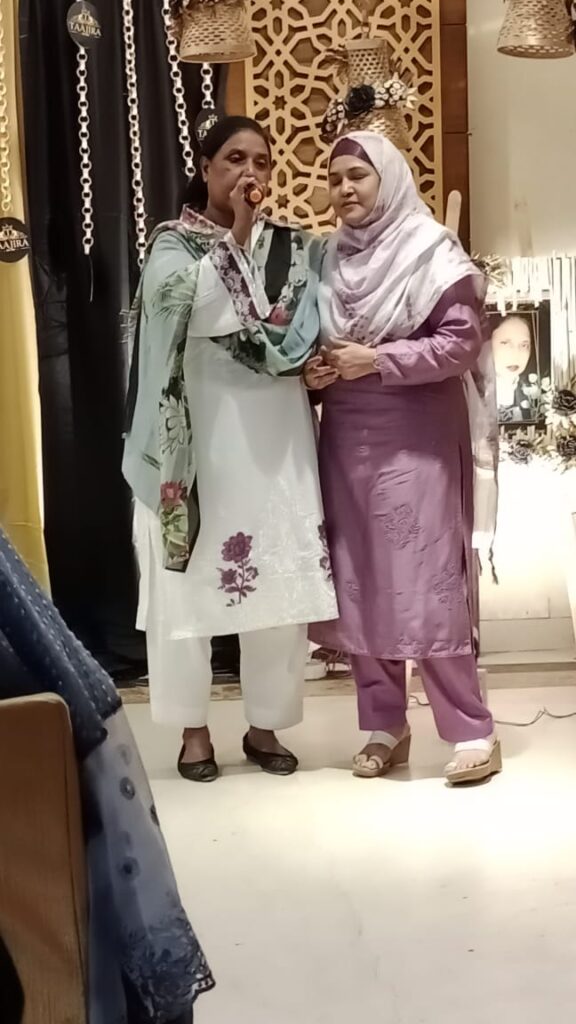
Rukhshi Kadiri Elias (Third from left) with her team of Taajira

“Empower the men to empower the economically empowered women,” jokes Rukhshi Kadiri Elias, an articulate lady with her mellow voice igniting the conversation. She is the founder of Taajira – (The Businesswoman), a massive network of entrepreneurial women creating a revolution, not only in Kolkata but in other places bringing two different kinds of women together, to work together and empower each other.

Warm eyes, glowing skin with her royal demeanour, and her energy kindles hearts, which is probably why she was able to garner a massive community of thousands of women that all started in 2019.

Born and brought up in a caring home, Rukhshi helped her father with his business, looked after his office in his absence attended to his phone calls, and set up his appointments. At that time she was in the college. During her school and college days, she always stood up for friends. 

Good at maintaining humans relationships, she remains in touch with her schoolmates at the Loreto School in Bowbazar and today 35 of her childhood friends are joined in by a WhatsApp Group.

Since 1974, the friends have encouraged each other, and met each other’s emotional needs, and financial difficulties, where some were going through midlife crises. Rukhshi made a special effort to initiate these get-togethers. 

At the Taajira exhibition Titliyaan

Speaking to Awaz-The Voice, she recounts one of Taajira’s inspiring stories, “One incident shook me. One day, a girl reached out to us on Facebook. She was a victim of domestic violence and in a state of shambles. As I shared this with some of the administrators in our group “Taajira-The Businesswoman”, having now reached over 32,000 members, I was hesitant to approve her post publically. Some of the legal advocates said she needed immediate legal help. While that was right, I said that she presently needed strong emotional support, because she would have to pay a lawyer if she went the legal way.

“We decided to reach out to her and we reached her home and counseling made the husband realize his mistake. I finally approved her Facebook post and I was stunned to find a rush of support for this girl from hundreds of other women with similar stories. This was a big eye-opener to me that domestic violence is a huge unspoken issue in many homes. Most of the women do not know their legal rights and continue to live in abusive situations for years, incapacitating their ability to even work.

“After this incident, Anuradha Kapoor who founded Swayam, a feminist organisation dedicated to advancing women’s rights did an online talk on Taajira’s Facebook group which was a great success. The happy end of this girl’s story is through Taajira, she got into a flourishing resin art business and her husband changed realizing his failings, and supports her now, and she is a transformed woman – what a miracle!”

I asked her who her greatest inspiration to start Taajira was, she replied, “Way back then in my college days, Noor Jahan Shakil, President, of All Bengal Muslim Women’s Association used to take me along with her on her outreaches to the slums of Kolkata which jolted me out of my comfort zone. I suddenly realized there was a big world out there where millions were still suffering and living in deplorable unhygienic conditions. She had two centers – one for vocational training, tailoring, and fashion designing, actively involved with Muslim women, bringing them out of the four walls of their homes into the world, and teaching them about hygiene and health. I still connect with them helping them to create events.

“Noor Jahan Shakil is an amazing lady, now way beyond 90 years, still very agile and interested in what we are doing, coming forth with suggestions and it was her life that inspired me to think beyond the limitations of my home.”

Rukhshi Kadiri Elias

The story of the inception of Taajira was set in 2019 when Rukhshi Kadiri Elias found herself being added to many WhatsApp groups all seeking some sort of sense of identity apart from their homes. It was at that point that Rukhshi said, “Instead of adding me to different WhatsApp groups, let us get together on one platform, let’s set up a Facebook group.” The group aimed to help women set up businesses that networked together because the seller is also the consumer, so in some way, they all needed each other. The biggest challenge of this group was getting women, who were not tech-savvy to learn to use social media and basic skills.

Their first meetings started in Rukhshi’s home, later, went on to be hosted in their newly formed restaurant, and later, also others offered their halls.

There was a conglomeration of all kinds of women from different strata of society with different needs, from restaurant owners to maids.

There are two groups in Taajira, one group is an elite group who made brand names for themselves through Taajira, and the other group is the economically deprived.

The Elite group helps the economically weaker women with startups, not with money but with goods to the other group to help launch their businesses and out of the profits of the retail rates, they pay back the elite group only at the wholesale rates so that they make a large marginal profit.

There are also intense training programs at the Tajara Elite Club where makeup artists, teams, stylists, bridal packages, ladies who make their organic herbal products, sari drapers, henna designers, masseurs, seamstresses, and even taught driving, grooming, polishing, and other crafts.

At their monthly meet, they pair up, and here the weaker women are imparted skills. During the pandemic, garments were sold online, but they now have their showrooms and stores, so the elite group needed salesgirls, managers, accountants, chefs, and other staff.

She said,”50% of our staff from our restaurant Shaikh’s is from Taajira. While we started as a group to financially empower women, even men were getting jobs. Husbands, sons, and brothers as chauffeurs, chefs, cooks, and other such help so the entire family gets help.”

She said, “We have a legal panel with lawyers and advocates, another panel for counselling for those who need emotional help, doctors who help women with their illnesses, lady police officers who help women with their paperwork, food licenses, and advice.

We have a marvelous doctor who runs The Soul Clinic, Dr. Shabtab Elahi who unlocks the healing power of yoga, with her set of yoga trainers, and focuses on weight loss.

Rukhshi Kadiri Elias with Taajira members

Taajira members from the Wellness Center hold nutritious tea parties with healthy snacks. The focus on hygiene, health, mental well-being, and financial stability is a big boost to Taajira’s growth because we are not just a workforce but a caring community and like a large family with a very personal touch.” 

Mysteriously, as Taajira was established in 2019, it seemed a divinely appointed timing as they helped hundreds of families during COVID-panic-driven days in 2020 and beyond to tide through this rough season and come across safely. She says that Taajira was the only online portal open those days for help to the public. Food was the biggest need during COVID-19, and home-cooked food was delivered directly to homes. Since there was no bread in the markets, the ladies in Taajira started baking bread, making thalis (meals) supplying the ones trapped at home and without food.

In one instance, a member of Taajira from the UAE send an SOS message to Taajira to reach out to her septuagenarian parents stranded without food. The Taajira chef delivered food for free until a maid could look after them. Incredibly, the Taajira team delivered not only food, but also medicines, and other assistance to families, and college students were given money and food. In this great season of caring, Taajira grew to be a more community-focused and family-hearted organization.

Taajira’s recent big venture was Titliyan, an annual big exhibition, held once a year, with 111 stalls in the year 2022 and 175 stalls in 2023 and close to 10,000 people visited it.

Rukhshi said with a note of pride that many exhibition curators are now getting their ideas drawn from Taajira members getting 90% of their income through their wares in these exhibitions. She said, “I am, after this appointment on my way to an exhibition in Khidirpur.” 

Rukhshi’s journey to create Taajira also required her supportive family, husband, and two sons, who incidentally are great sportsmen, swimmers, footballers, and hockey players, and her wonderful daughter-in-law. She proudly shares the addition of her grandson to the home, now six months old whom she is very involved in taking care of while her daughter-in-law, who is a counsellor in Loreto, goes to school.

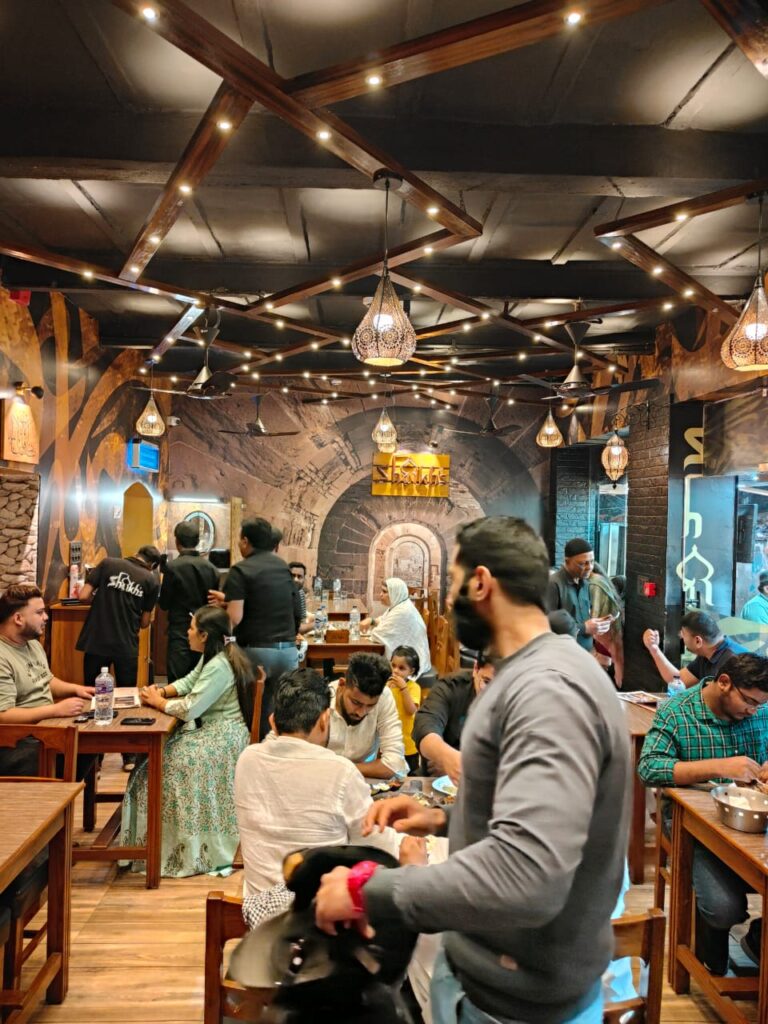
All family members proudly pat each other’s backs for their accomplishments. Their recent achievement was their famous restaurant, Shaikh’s, a 42-seater lavish but affordable restaurant launched three years back by her sons, with its cutting-edge culinary excellence seated in the Park Circus area in Beckbagan, near Quest Mall, famed for its aromatic rich Indian, Middle Eastern flavors drawing flocks of people.

As a graduate of Fine Arts and a diploma holder in fashion design, she honed her skills to help the processing of Taajira smoothly. Rukhshi says that the journey to making Taajira a reality has only been possible with the assistance and dedication of her panel of moderators, such as Zainab Saigal, Shumaila Khalid, Ifra Nadeem, Sujata Latif, and Sumaiya Munir applauding the strength of networking together. She said, “We have a strength of 33000 women, now, so we need at least six women to herd them!”

An encouraging moment arrived when the globally connected Calcutta University asked Taajira to suggest a few names of their women to train guide and support them technically. These ladies were picked up and it was a good venture of collaboration to bring profit to both. 

Shaikh’s restaurant

On another occasion, a lady who makes chocolates got a huge order from the American Consulate to supply them with 500 boxes of chocolates during Christmas, another lady got a massive order for jute bags and a lady who makes momos and other delicious nutritious snacks now gets regular orders from The American Consulate, business avenues that transformed their incomes and lives.

Recounting one amusing incident, Rukhshi said, “One day, I received a call from a lady announcing that she wanted to work on an online business, but she was not tech savvy. The lady also mentioned that due to her arthritis and other problems, she was unable to work outdoors but needed the money to maintain herself and pay for her medicines. After giving her some ideas, I asked her, “Ma’am, how old are you?” and she replied brightly, “I’m only 73!” I visited her and got her in touch with an Anglo-Indian seamstress who used to stitch nighties, so the lady was able to get into an online trading business and sell nighties to meet her financial needs.”

While membership to Tajeera is free, there is a fee to join the talk shows. She mentioned that there are women who broke away from Tajeera and started their businesses for their reasons, but this was never the aim of Taajira whose power lay in massive networking to support thousands to lakhs together. She said, “Everything is changing fast. Eating habits changed where people now are more into fast foods, apparels changed from saris to most women now in jeans and kurtis, society is transforming quickly.”

She said, “In a strange twist of fates, the men who once mocked the efforts of Tajeera exclaiming it was a taboo for their women to work outside the home are now accepting women working outdoors, and even standing alongside and helping them, and some are even staying at home and looking after the children while their wives are out selling their wares at grand exhibitions,, isn’t it incredible! Things have changed so much in just a few years. Each day, we are moving towards a brighter light and now society is changing so much that when women don’t work, people ask, “How come you’re not working?”

She said emphatically, “Taajira has two ideologies – to help the poor and to economically empower women and we are starting to network a revolution!”

The day is too short for her and she said, “I still have not arrived, we are still on the way, one target is related to another and then it opens another dimension.” 

Rita Farhat Mukand is an independent writer.

source: http://www.awazthevoice.in / Awaz, The Voice / Home> Story / by Rita Farhat Mukund / February 24th, 2024

UP Government confers Yash Bharti award to 46 people, list includes nine Muslims

UTTAR PRADESH:

Lucknow:

Uttar Pradesh’s highest honour Yash Bharti award was given to 46 personalities on Monday. Among them, nine Muslims were conferred the award by Chief Minister Akhilesh Yadav in presence of Mulayam Singh Yadav. The award is given annually by Culture Department of UP government.

Yash Bharti comes with a cash prize of Rs 11 lakh, citation and a shawl. The awardees are also eligible for a monthly pension of Rs 50,000 for their life.

Yash Bharti award were constituted in 1994 by the then CM Mulayam Singh Yadav but were discontinued between 2007 and 2012 by Mayawati. It has since been revived by CM Akhilesh Yadav.

1. Ustad Ghulam Mustafa Khan
Classical singing
Born- 3 march 1931, Badaun

Belong to Rampur Sahaswa Gharana in classical singing. Conferred honorary citizenship of Baltimore and Maryland in 1986. Padamshri in 1991, Sangeet Natak Academy Award in 2003, Padam Bhushan in 2006 and Rashtriya Tansen Award in 2008.

2. Professor Irfan Habib
Historian
Born-12, August 1931 in Baroda.
D.Phil from Oxford

Chairman, Indian Council of Historical Research 1987-93, 1993-96. Jawaharlal Nehru Fellowship in 1968-70, D.Lit from BHU (2008), Vishwa Bharti (2008), Kalyani Vishwavidyalaya (2009), North Bengal University (1990) and Ravindra Bharti University (1989). Padam Shree in 2005.

3. Dr Nahid Abedi
Sanskrit literature and philoshophy
Born—12 February 1961, Mirzapur
D. Lit from Lucknow University in 2009. Padam Shree awardee.
Several books and papers published in Sanskrit.

4. Iqbal Ahmed Siddiqui
Ghazal singer
Born—November 9, Allahabad

Performed at All India Radio and Doordarshan. Released 17 cassettes. Sang one song in film Rama O Rama.

5. Anwar Jalalpuri
Urdu poetry and writing
Born—6 July 1947

Several awards on Urdu poetry like UP Gaurav Samman, Mati Ratan Samman, Iftikhar-e-Meer Samman etc.

6. Dr Nawaz Deobandi
Poet and educationist
Born—16 July 1956, Saharanpur

Chairman, UP State Urdu Academy. Established Rafiqul Mulk Mulayam Singh Yadav Urdu IAS Study Center in Lucknow. Several awards like Kaifi Azmi award, Dushyant award, Rotary award etc.

7. Aleemullah Siddiqui
Artist
Born—10 June 1953, Lucknow

Artist using stem of wheat plant, painting on cloth etc. Acted in play Dilli Ka Akhirir Mushaira and Main Urdu Hoon.

8. Imran Khan alias Imran Pratapgarhi
Literature
Born—6 August 1987 Pratapgarh.

Internationally acclaimed poet and attended Mushairas in Oman, Bahrain, Dubai, Sharjah etc. Received Urdu Academy award in Saudi Arab, Red Cross Society Orissa’s Vishist Vidyarthi award and Sadbhavna award by Maharashtra Municipal Corporation.

9. Wazeer Ahmed Khan
Chess
Born—4 February 1947, Rampur

Participated in Chess National B competition in 1972, 1980, 1995, 1999, 2004 and 2008. UP Champion in 2004-2005. First prize in Asian Senior competition in Iran in 2015.

source: http://www.twocircles.net / TwoCircles.net / Home> Arts-Culture / by TCN Staff Reporter / March 22nd, 2016

Dr. Muhammad Abdul Hakeem Azhary receives Imam Gazzali Award

Kozhikode, KERALA :

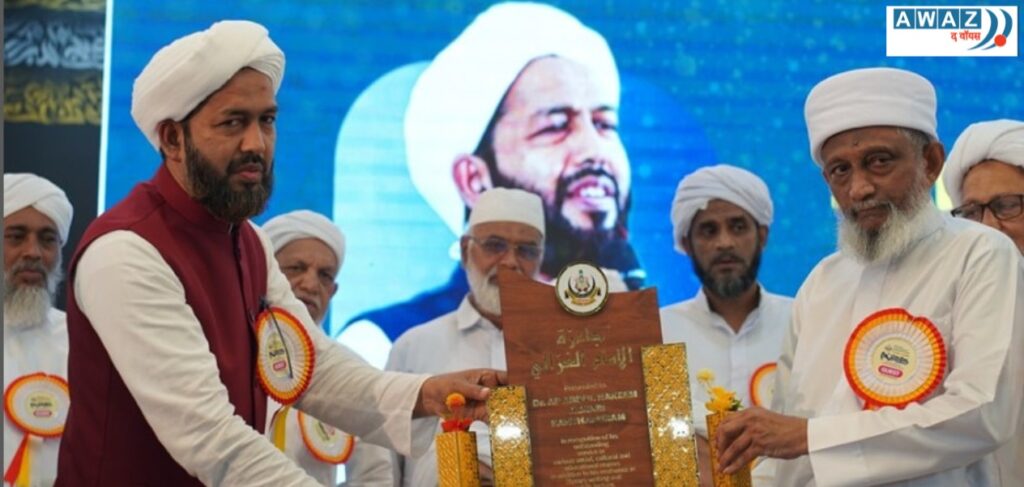
Dr. Muhammad Abdul Hakeem Azhary receiving the prestigious Imam Gazzali Award

New Delhi :

For his tireless endeavors to propel Islamic jurisprudence forward while spearheading transformative social initiatives, Dr. Muhammad Abdul Hakeem Azhary, the Managing Director of Markaz Knowledge City, has been bestowed with the Hujjathul Islam Imam Gazzali Award for the year 2023.

This prestigious honor is presented by the Darul Maarif Islamic Center under the esteemed leadership of Kodambuzha Bava Musliar. Award committee lauds Dr. Azhari’s innovative ideas that have significantly contributed to the resurgence of Ahle-Sunnah principles and played a pivotal role in societal reforms.

Dr. Azhary distinguishes himself as a dynamic force committed to more than replicating established norms, actively identifying and addressing gaps in social reforms, particularly in rural areas across the expanse of India. His visionary leadership has not only garnered global attention but has been instrumental in implementing impactful initiatives to bridge these social divides strategically.

Drawing from his extensive global experiences, Dr. Azhari has tailored his developmental approach for economically challenged communities in pan India. His initiatives transcend geographical boundaries, leaving a lasting imprint on diverse societal sectors, from the tribal regions of Wayanad in the south to Uthrakand in the north.

Under Dr. Azhary’s guidance, Markaz Garden, and its off-campuses scattered across India, alongside the monumental Markaz Knowledge City, have risen as bastions of knowledge and inclusivity. These institutions, underpinned by Islamic teachings, attract individuals from all walks of life, breaking down barriers of caste, sectarianism, and creed, truly embodying the essence of Islam.

Dr. Azhari’s organizational prowess, evident from a relatively young age, is underscored by his appointment as the General Secretary of the SYS. His leadership acumen shone particularly bright when faced with the challenge of Sheik Aboobaker Ahmed’s illness, where he seamlessly steered Markaz towards its mission, exemplifying unwavering commitment

In essence, the conferment of the Imam Hujjathul Islam Gazzali Award upon Dr. Abdul Hakeem Azhary is a testament to his steadfast dedication to the rejuvenation of Islamic religious sciences and his profound impact on societal development. His visionary approach and global perspective breathe new life into the traditional landscape, rendering him a truly deserving recipient of this esteemed accolade.

source: http://www.awazthevoice.in / Awaz, The Voice / Home> Story / by ATV / January 10th, 2024

UPSC Success Story: Meet IAS Officer Who Secured The Highest Marks In Interview Round

Kolkata, WEST BENGAL :

Her hard work paid off and she eventually clinched success on her third attempt. She cleared both her Prelims and Mains and went on to top the interview round as well.

UPSC Success Story: Meet IAS Officer Who Secured The Highest Marks In Interview Round
IAS Zainab Sayeed

New Delhi: 

Do you happen to know who holds the prestigious title for achieving the highest marks in the interview round of the UPSC exam over the last decade? If you’re guessing it’s Tina Dabi, Srushti Deshmukh, Kanishka Kataria, or Shruti Sharma, you might be surprised.

It’s none other than Zainab Sayeed who stands as the record-holder for securing the highest marks in the UPSC interview round. This remarkable individual from Kolkata attained an outstanding score of 220 out of 275 marks in the interview segment. Her remarkable achievement took place in 2014 when she successfully navigated the UPSC Civil Services Exam, amassing 731 marks in the main examination.

Zainab clinched the All-India Rank (AIR-107) and to this day remains unparalleled in terms of interview performance. However, Zainab’s journey with UPSC wasn’t without its challenges. She encountered setbacks in her initial two attempts, failing to clear even the Prelims in her first endeavours.

Despite these early setbacks, Zainab refused to be deterred and remained steadfast in her belief in herself. Her relentless dedication and perseverance eventually paid dividends, culminating in her triumphant success on her third attempt. She not only cleared both her Prelims and Mains but also emerged as the top performer in the interview round.

According to Zainab’s account, the interview lasted for approximately 25 minutes and revolved around a diverse array of topics, including current affairs, international affairs, foreign direct investments, and discussions on the European Union.

It’s noteworthy that Zainab hails from Kolkata and completed her graduation in English literature from St. Xavier’s College. Subsequently, she pursued her MA in mass communication at Jamia University, Delhi, graduating in 2011.

Following her post-graduate studies, Zainab made the decision to embark on the rigorous journey of UPSC exam preparation. Despite facing disappointments in 2012 and 2013, she persisted and ultimately tasted success in 2014.

source: http://www.zeenews.india.com / Zee News / Home> India> UPSC Success Story / by Zee Media Bureau, edited by Mahi Mishra / February 13th, 2024

A historian who shed light on colonial-era opium trade in the city

Lucknow, UTTAR PRADESH / Mumbai, MAHARASHTRA, Bengaluru, KARNATAKA :

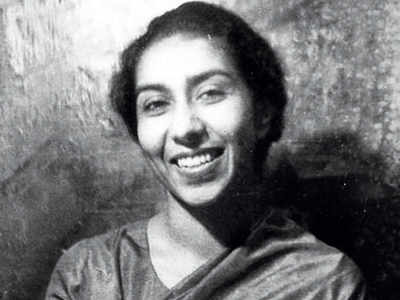
Asiya Siddiqi (1928-2019) (Pic Courtesy: Obaid Siddiqi)

Siddiqi also broke new ground by studying 20,000 HC insolvency records to recreate the lives of an array of 19th-century city inhabitants.

In an age that sometimes overrates quantity and is beguiled by grandiloquence, economic historian Asiya Siddiqi, who passed away on Monday morning, went against the grain.

A chronicler of 19th century India, she wrote just two books. But each was a culmination of decades of painstaking original research, presented in prose that many might describe as being quietly elegant. In between working on the two books, she edited a volume on trade and finance in colonial India.

She broke new ground in both her books by closely reading new or underutilised primary sources. In the second book, Bombay’s People, 1860-1898: Insolvents in the City, published in 2017 by the Oxford University Press, she not only tapped a voluminous new source, namely about 20,000 insolvency records in the high court, but also incorporated the innovative conceptual approach of microhistory to illuminate the past.

She admired the work of one of microhistory’s founding scholars, Italian historian Carlo Ginzburg, especially his book ‘The Cheese and the Worms: The Cosmos of a 16th Century Miller’. Microhistory focuses on small units of research, such as a village, a single event or an individual, instead of large ones such as nations, kingdoms and cities. Siddiqi’s chapter, ‘Ayesha’s World’, the story of an unlettered butcher’s wife, is a gem of this genre.

“She was a first-rate historian, approaching her work with a craftlike precision,” said Mariam Dossal, a friend of hers who is an urban and maritime historian of 18th and 19th -century Mumbai and a former professor at the University of Mumbai, where Siddiqi worked for everal years. “In Bombay’s People, her view was so rich and broad that it covered every kind of person who inhabited the city, from the wealthy Jamshetji Jejeebhoy all the way to Ayesha. One marvelled at her beautiful use of language, through which she recreated the worlds of these inhabitants. For Asiya, everybody deserved a history.”

Her early work on the 19th-century opium and cotton trade based in Mumbai was also influential, in particular her article ‘The Business World of Jamshetji Jejeebhoy’, which appeared in the Indian Economic and Social History Review in 1982. She worked for years on the private papers of the merchant who was a central figure in those two trades to offer a finely-etched view of the entrepreneurial climate of that period, while also shedding light on the ways in which Mumbai supported the growth of the British economy.

A large portion of these papers consisted of letters in which Jejeebhoy had recorded both his business dealings and social life in great detail. Because the papers were disintegrating in the heat and humidity of Mumbai, she got them laminated with help from her uncle Saiyid Nurul Hasan, who was then the union minister of state for education, Dossal recalled.

Asiya Siddiqi’s first book, Agrarian Change in a Northern Indian State: Uttar Pradesh, 1819 to 1833, published in 1973 by Oxford Clarendon Press, grew out of the thesis she did for her DPhil at Oxford University. In what became a classic of South Asian economic history, she analysed the relevant records with characteristic rigor, becoming one of of the earliest to show how colonial trade policies contributed to a severe agricultural depression in the region.

She grew up in Lucknow, and from 1962 worked in and on Mumbai for four decades. She moved in the late 1990s to Bangalore, where her daughter said she passed away peacefully in her sleep. Her husband was the eminent biologist Obaid Siddiqi, who founded the biology department at the Tata Institute of Fundamental Research in Colaba and the National Centre for Biological Sciences in Bangalore. He passed away in 2013.

Asiya Siddiqi balanced her research with bringing up four accomplished children: the eldest Imran, a leading plant biologist based in Hyderabad; Yumna, a professor of English in the US; and fraternal twins, Diba, a visual artist and high school social science teacher in Bangalore, and Kaleem, a computer scientist in Canada.

Siddiqi seemed happiest working by herself in the archives, as an independent researcher, although she had two productive teaching stints: one at Aligarh Muslim University, where she met her husband just after getting a bachelor’s degree at Oxford University, and the other at Mumbai University.

She quit teaching when, at one point she found it difficult to commute from her home in south Mumbai to the university campus in Kalina while also keeping up with her research and and raising four children.

Disclaimer: The views expressed here are the author’s own. The opinions and facts expressed here do not reflect the views of Mirror and Mirror does not assume any responsibility or or liability for the same.

source: http://www.mumbaimirror.indiatimes.com / Mumbai Mirror / Opinion > Columnist / by Sumana Ramanan / October 11th, 2019

Muslims witness positive surge in Padma Awards

INDIA:

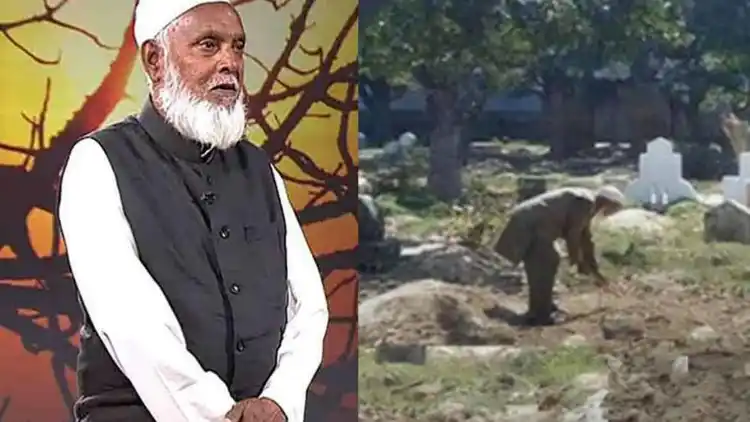
Shareef Chacha who receivedPadma Shri award from President
Shareef Chacha who received Padma Shri award from President

A few days ago, when President Ram Nath Kovind presented Padma Awards, the Social Media went abuzz with claims that the Narendra Modi-led Bharatiya Janata Party (BJP) government has transformed an earlier elite award into a people’s award. Awardees like Tulsi Gowda, Mohammad Sharif, Bhuri Bai, and others represent those who had worked at the grass-root level. Earlier the award was mostly given to a select band of people who had access to corridors of power in Lutyen’s Delhi; many deserving Indians were ignored.

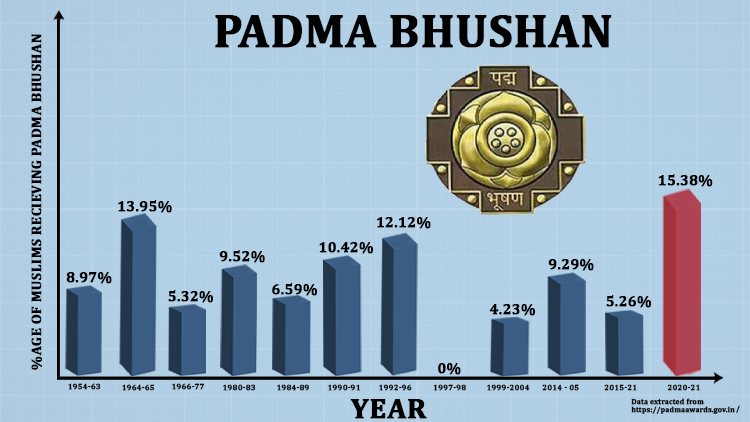
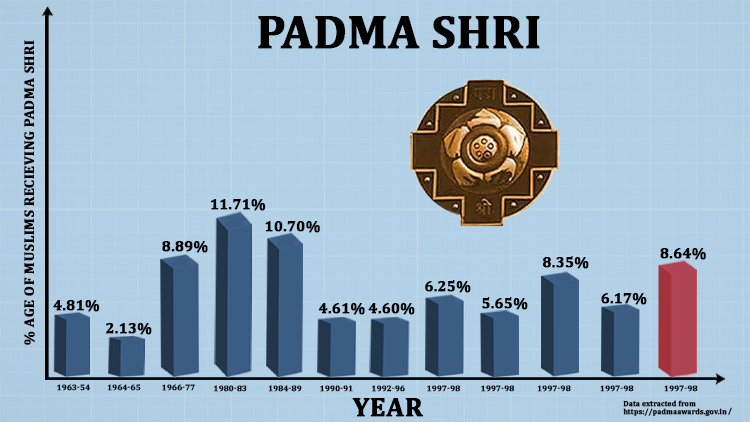
The optics of Padma awards and the chatter around it made me look into the veracity of these claims. As an Indian Muslim, my primary interest was to understand that how Muslims are represented at the Padma Awards over the year and if there was a change in the attitude of the givers of the awards. The first Padma Awards were presented in 1954. So far, 4,827 persons have been conferred the awards. Muslims are under-represented in these awards. With a population share of around 14%, only 7.5% of the awardees were Muslims, including some foreigners. However, the list of awardees for the years 2020 and 2021 that were conferred on recently, Muslims had all the time higher share. The two lists had 24 of the 260 Padma Awardees who are Muslims, 9.23%.

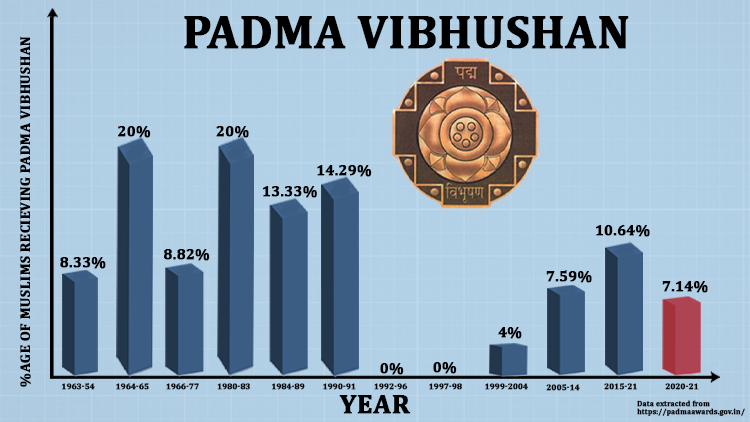
Padma Vibhushan

Coming to Padma Awards, the second-highest civilian honour after Bharat Ratna, that and is awarded for exceptional and distinguished services, I worked with figures of Muslims over the years since 1954. So far 321 people have been bestowed upon Padma Vibhushan. If we look at different regimes, it’s interesting to note that Muslims fared worse during the PV Narasimha Rao-led Congress government and Janata Dal governments of 1997 – 98. During these six years, out of a total of 14 Padma Vibhushan, no Muslim name figured in the list of the prestigious awardees. Interestingly, only 2 Muslims receive the award in 9 years of Jawaharlal Nehru’s premiership. One of them was Zakir Husain, who was later awarded a Bharat Ratna as well. Indira Gandhi oversaw 14 Padma award ceremonies during her two spells as Prime Minister and in this period, 7 Muslims were among a total of 73 honoured. Ten years of Manmohan Singh-led UPA government witnessed 6 Muslims receiving the award, while 5 Muslims received it in seven years of the Narendra Modi-led BJP government. Considering a category of PMs who completed a full term, 13.33% of Padma Vibhushan were awarded to Muslims during the Rajiv Gandhi era followed by Narendra Modi, in whose times 10.64% of the awards went to Muslims. 

Padma Bhushan

Padma Bhushan is awarded for distinguished service of higher order. To date, 1281, including 95 Muslims, people have received this award. This is at 7.42%, not commiserating with their population. Like Padma Vidhushan, no Muslim was awarded Padma Bhushan in 1997 and 1998. During Nehru’s time (1954-63) 14 Muslims of the total 156 received the award. The Muslim show was very dismal in the first five years of the present regime with one award for the community. However, in the last two editions, we saw 4 Muslims being awarded Padma Bhushan. Of 26 awardees in the two years, 15.38% were Muslims.

Padma Shri

Padma Shri, awarded for distinguished service has since been conferred on 3,225 Persons. In the first 9 editions, only 9 Muslims were among 187 recipients. A period from 1966 to 1983, saw increased representation when 62 (out of 775), awardees were Muslims (9.29%). In the next five years, 23 more Muslims were awarded and it rose to 10.70%. In the 90s, Muslims representation dipped below 5% as fewer Muslims received Padma Shri. In the last two editions, 8.64% of the recipients were Muslims, a very positive surge that creates optimism.

The figures represent only a larger picture. A closer look reveals that a changed nomination policy for Padma Awards is at work. In 2017, the government opened the nominations for the common Indians as against the system of ministers and members of the government forwarding the names and a committee headed by the PM finalising the list of awardees. The government’s social media campaigns encouraged the people to nominate genuinely deserving and unsung heroes. Earlier, the system encouraged the well-connected people with links to the corridors of power to be nominated and get awarded.

In the new policy, people working at the grassroots are being nominated by the common man. As a result, we see people like Ali Manikfan, Abdul Ghafur Khatri, Mohammad Sharif, and Shahabuddin Rathod receiving the Padma awards. Apart from the fact that there is a positive surge in Muslim representation in these awards, the awards have grown to be more inclusive. Muslims from lower castes, backward regions, and non-elite backgrounds are being honoured. Larger participation of communities and people living at the margins, on social media has ensured that people working among them, and from them, are recognized. 

(Saquib Salim is a Writer and a Historian)

source: http://www.awazthevoice.in / Awaz, The Voice / Home> Stories / by Saquib Salim / February 2022

Ibn Sina Academy of Medieval Medicines and Sciences is a legacy in four walls

Aligarh, UTTAR PRADESH:

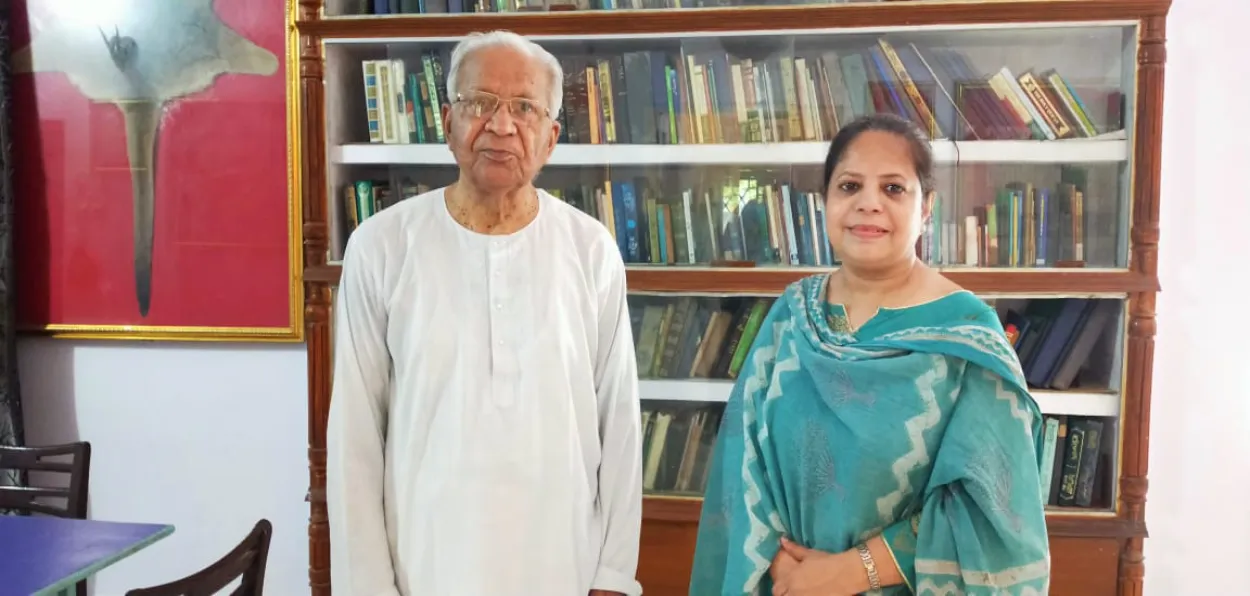
Professor Syed Zillur Rahman, founder,Ibn Sina Academy of Medieval Medicines and Sciences with the author

Known for its locks, Aligarh, a city in Uttar Pradesh, has also locked a legacy in its reserve – for generations to benefit from it. It houses a rare academy and museum called Ibn Sina Academy of Medieval Medicines and Sciences. 

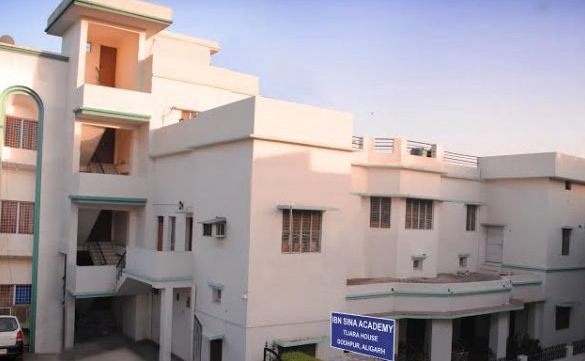
Located at Tijara House, amid a vibrant market place and residential area, Ibn Sina is hailed as the rarest house of legacies in arts and sciences combined under one roof. Named after the legendary scholar of philosophy and medicine Abu Ali Ibn Sina (980 -1037), this academy was accredited to the Ministry of Ayush in 2004 and promoted to Centre of Excellence in 2008.

The institution was established for encouraging and promoting research and studies in medieval sciences, especially Ibn-Sina’s as well as arts, culture, poetry, and other sciences. 

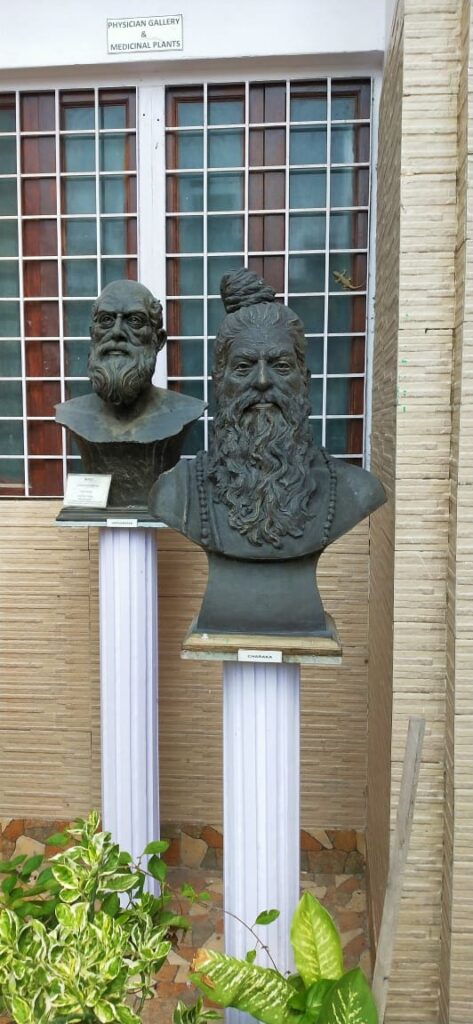
The bust of Ibn Sina with Charak inside the museum

Of Ibn Sina’s four stories, a major attraction is on its second floor which houses the Fazlur Rahman Museum of Orientalism, Art, and Culture. 

It has four main galleries; the crockery gallery has a large collection of oriental and British Indian utensils, hammami plates, bowls, tea sets that belong to prominent personalities such as Hakim Ajmal Khan, Nawab Sultan Jahan, Nawab Shahjahan Begum of Bhopal, Nawab Yusuf Ali Khan of Rampur and many others.

The textile gallery is ornate with attires, garments with gold and silver calicos studded with precious stones, one of which has entire Quranic surah Yaseen embroiled in gold zardozi on it, turbans worn in battles, among many other oriental attires. The picture gallery has prominent personalities of AMU’s pictures, drawings, photography, prints, etc.

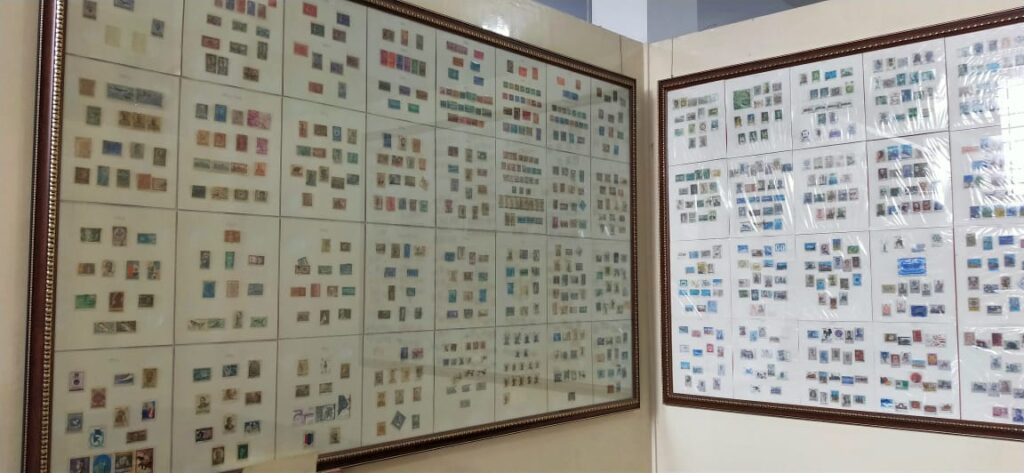
Its miscellaneous gallery has coins, postage stamps, clocks, busts, pens, memes, and relics of prominent personalities. 

“We have over 2 Lakh stamps beginning from ever since the stamps started, from all countries and India. People who were pioneers in the world of arts and culture, education, and freedom fighters on whose names, and stamps were released, we have a collection of the same. shares Dr. Aftab who is a convenor at Ibn Sina.

In addition medical manuscripts, medical philately, medical souvenirs memories of physicians especially those of Nobel laureates are well preserved here.

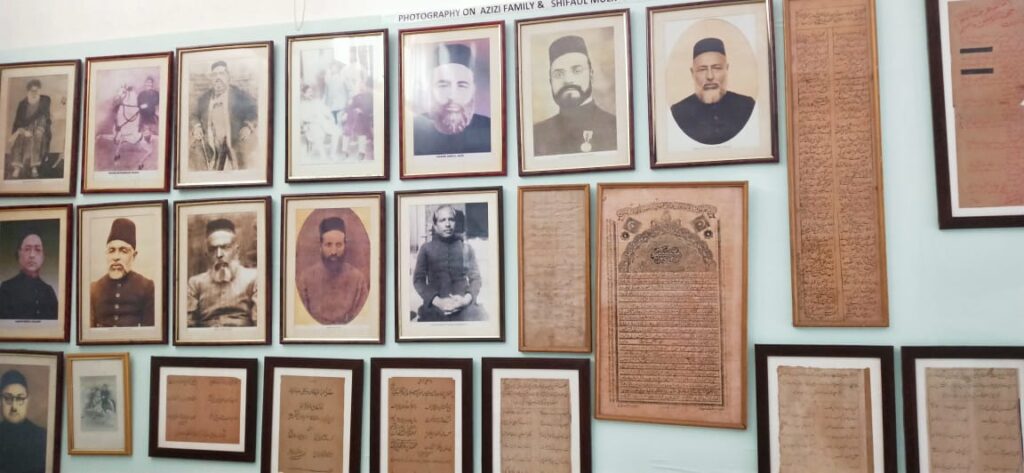
The wall of fame (Pictorial history of some important Muslim families)

The connecting rooms of the galleries welcome you with a sofa of Raja Jai Kishan, a mirror of the times when they were made of iron sheets. The iron sheets called ‘aaina’ were rubbed so many times that they would become sparkling clear and shining to become a mirror. That’s how the mirror got its name ‘aaina’ Later it got a new name –sheesha – with the change of the material..

The academy is rare for numerous reasons. For avid readers of medicine, science, Urdu, Persian, Arabic, literature, poetry, oriental studies, researchers, students preparing for competitions, and scholars IbnSina is a heaven. It boasts of a rare collection of 32000 books, 17000 magazines, 1100 manuscripts, (makhtootaat), 21 rare Qurans including one pocket size in gold, and much more is in store.

Built by professor Syed Zillur Rahman, a medical academic and passionate Urdu litterateur from Aligarh, Ibn Sina was an extension of his colossal library that he had established in 1960 which soon extended into the world’s rare academy and museum of its kind in the year 2000. 

Collection of stamps 

“Hamare yahn Aurangzeb ke hath ka likha, aur uske bete ke hath ka, likha hua Quran hai,” gleams the professor, sharing the information.

Apart from a separate collection of Muslim women achievers, Ibn Sina boasts of the world’s best collection of Islamic sciences, Islamic medicines, and Islamic philosophy being published across countries such as Iran, Central Asia, Syria, Iraq Turkey, etc. Scholars from across the globe come here to refer to books in this section.

For Ghalib devotees, the academy has a separate section called Ghalib Study Centre. It “Ghalibka collection joh mare paas hai vo duniya mein kisike paas nahi hai,” claims the professor.

Delhi finds a special place here boasting of 7500 books, some as old as 1893, dictionaries as old as 150 years, authentic diwaan on Ameer Khusrau, books on and by the last Mughal Bahadur Shah Zafar, British period –Victorian Era with pictures in Lithographs and much more.

Children using the library

The academy has a library for students especially those preparing for competitive exams. The 100-seater library has the best of books from literature, agriculture, science, math, medicine, etc.

“There is no fee to sit in this library. It opens every day from 10 to 10. This section has over 28000 books including 56 of Professor Rehman on Tibbi and Unnani medicines. there are separate sections for Unani medicine and Sir Syed Movement, biographies,” Dr Aftab Alam, the coordinator of Ghalib Study Centre informed.

There is a reason why the library has most books in Urdu and Persian on Indian history, culture, language, society, education, politics, medicine, etc. “Not much work in English has been done on Muslims. Most work has been done in Urdu and Persian. So this is our helplessness. Our focus is on India – the Hindustan. Indian scholars have done immense work in any domain, philosophy, travelogues, and medicines, especially in Islamic history, the Quran, and hadith that is comparable to anyone in the world, especially the Arabic and Persian world. The problem is we don’t read because we don’t read Urdu,” rues the professor. 

Why Ibn Sina was built has an interesting story. As a young man, Professor Rahman used to watch a bird who had made a nest and would bring food for her newborn, just as the routine was with a cat who had given birth to kittens – at his home. After some months, the birds flew, and the kittens grew and went away with their mothers.

“I thought to myself, ‘Is this the life God has created mankind for? Just be born, eat, sleep, and die like animals? God has created a man to not only take care of his family but also society, language, culture, community, and world.”

Ibn Sina Academy of Medieval Medicines and Sciences

So, he decided to create a legacy that he says would be useful for a generation after 80 years! “We are away from civilization by 80 years. A standard time to develop any civilization is 150 years. So, now people are not able to understand the legacy I have created but the students who read it 80 years later will know what it is. By then we would be a civilization.”

People get worried that the graph of Muslim development is going down. But the Professor feels it is nothing to be worried about. “Every civilization has to go through it. Our graph has risen. We were 10 crores in 1947. After Partition, 7 crore left for Pakistan had 3 crore stayed in India. We were nothing in 1947 but our buzurgs worked very hard to study and became scholars. Now we are making educational institutions, universities, hospitals, media houses, and so on. Most important is that girls are getting higher education and they will change the face of the nation,” he says, satisfied while emphasizing reading Urdu to know a legacy called India and the contribution of Muslims to it.

Rana Siddiqui Zaman is a Delhi-based senior columnist and art reviewer

source: http://www.awazthevoice.in / Awaz, The Voice / Home> Stories / by Rana Siddiqui Zaman / January 10th, 2024