Tag Archives: Muslims of Patna

Fasihuddin Balkhi: the forgotten historian of Bihar

Patna, BIHAR :

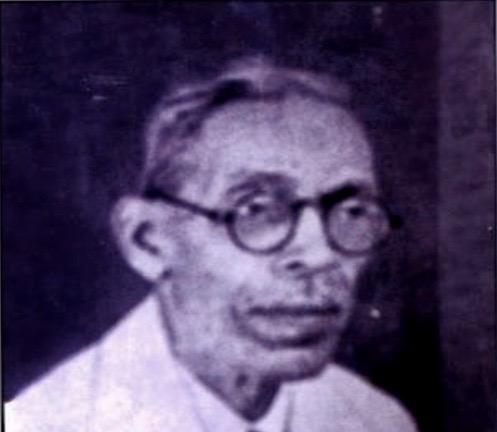
Fasihuddin Balkhi was born in 1885 in Bakshi Mohalla of Patna city. | Picture: Rekhta

Born in Patna, Bihar during the British era, Fasihuddin Balkhi made a tremendous contribution to history-writing in Urdu. Despite this feat, he remains largely unknown to this day. 

Many historians have written about the history of Bihar. After taking a cursory overview of the works written by different scholars, one finds that history writing on Bihar, especially in the Urdu language has not yet received due attention in academic circles. Among many others who have written on Bihar and its history, the notable ones include Fasihuddin Balkhi (1885-1962); Taqi Rahim (1921-99); and Shad Azimabadi (1901-1978).

This piece is an attempt to highlight the life and works of Fasihuddin Balkhi. His work has received scant attention from those working in the Bihar region. His contribution remains largely under-acknowledged and under-explored in the existing literature of the Bihar province.   

Balkhi was born in 1885, the same year that the Indian National Congress (INC) was founded, in Bakshi Mohalla of Patna city. After receiving his early education at home, he went to Calcutta where he completed his higher education. He became a teacher and initially taught at Poona Military School and later in Calcutta Fort William. Later on, he passed the law examination and was employed in the Bihar government. In 1914, he opted for military service which enabled him to visit different parts of the world like Palestine, Egypt, Iraq and Lebanon. 

As India’s independence movement was drawing more followers, Balkhi too joined the movement. In 1921, he became part of the non-cooperation movement. After refusing to accept the post of deputy in Jaunpur, he had to face many hardships. Between 1926-27 he worked as the revenue officer and magistrate in Sarai Kela state.

After retirement, he left his ancestral home and lived the rest of his life till 1962 in his new house in Guzri Bazar Patna city (just behind the present Mohammedan Anglo Arabic school). In the last two years of his life, he worked at Patna University in the department of manuscripts. His hardworking and organizational abilities infused a new spirit in the department. 

Although Balkhi was known as a good teacher and a successful officer, he was primarily a historian and researcher, as he stepped into some areas of research that were hitherto almost invisible. Even the noted Bihar-based historian, Syed Hasan Askari (1901-1990) has acknowledged Balkhi’s scholarly and literary abilities. Unfortunately, most of the works of Balkhi could not reach their desired audience. Some of his works remain unpublished even now.  

Balkhi’s first book Tarikh-e-Magadh was published by Anjuman-e-Taraqqi-Urdu-Hind (Delhi) in 1944. The second book, Tazkira, was published as Tazkira-e-Niswane Hind (1956).

According to one source, he wrote his first work at the age of 25 in 1910 in Urdu on astrology, a rare case in Urdu, titled as Ilmi-e-Najoom. This work is not easily available or accessible to the readers. A pamphlet on the poetry of Shad Azimabadi titled as Inshad-e-Shad (Qaumi Press Bankipore, Patna, 1939) is his signature piece. The pamphlet demonstrates his power of critique. 

Balkhi’s work only gained wider attention after his death. Well-known Urdu publisher Nadeem Bhatti published one of Balkhi’s works Tazkira-e-Hindu Shora-e-Bihar (Poets in Bihar/Urdu) in 1962. Some of Balkhi’s unpublished works such as Dastur-e-Sukhan, a collection of his works on historical places of Bihar province, Aasar-e-Balkhiya, are collected in the book. Several of his scholarly, literary and historical articles are also available in different magazines and journals. A well-researched article on Balkhi’s personality and research guidance was written by Qayyum Khazar for ‘All India Radio Patna.’ Khazar states that “Fasihuddin Balkhi was a great historian and researcher as well as a good poet.”  

Balkhi’s work as historian
Tarikh-e-Magadh is the first book that earned Balkhi fame as a historian. This seminal work in Urdu was published in 1944 by Anjuman Taraqqi Urdu (Delhi), which was then under the supervision of Maulvi Abdul Haq (Baab-e-Urdu). The book chronicles the history of Bihar province from the earliest times (642 BC) up to the second World War in 1943. The book contains as many as twenty chapters. The book is considered one of the most reliable accounts of the history of Bihar in the Urdu language. The work was constructed from authentic historical sources. 

Patna-based historian Imtiaz Ahmad, commenting on the significance of Tarikh-e-Magadh, has said, “It is written authentically and professionally, with proper references from sources (Persian texts).” 

Balkhi also wrote another significant work entitled Wahabi Movement, posthumously published in 1983. This book along with Qeyamuddin Ahmad’s seminal work The Wahhabi Movement in India (1966, reprinted 1994) are the most cited works on the history and role of the Wahhabi movement in India.

Balki’s slim book, despite being confined to the Bihar region, is distinctive in many new ways. The sources he cited are primary and useful, such as letters of Syed Ahmad Shah, Calcutta Review, Indian Muslim by Wilson Hunter, Tazkira-e Sadiqa and biographies of Syed Ismail and Syed Ahmad, the founding fathers of the movement in India.

Emphasizing the legacy left behind by the Wahhabi movement, Balkhi writes, “It is highly interesting to note that the use of three great weapons, namely, non-cooperation, passive resistance and establishing of parallel Govt. which the Congress leaders adopted in their fight against the bureaucracy, was originally advocated and preached by the Wahhabis in 1854.” (p. 16).

Apart from these historical accounts, Balkhi wrote another path-breaking book Tazkirah Niswan-e-Hind (1956) in which he documents the short biographical accounts of the notable women of India. He starts his book with Raziya Sultan of the early 13th century and covers the women from various fields across India such as Askari Begum ‘Hijab’ (Lucknow), Chander Mukhi Bose (Bengal), Lal Ded (Kashmir), Raziya Sajjad Zahir (Rajasthan/Bombay), Bibi ‘Tahira’ (Bihar), etc. This book serves as an important source of information on Indian women and their role in different times of history. 

Balkhi has also written about the lesser-known aspects of Bihar. This can be gauged from his book Patna Ke Katbe in Urdu, published by Khuda Bakhsh Library, Patna in 1993. This book is a unique study of inscriptions found on graves, mosques, and tombs located in Patna. 

Balkhi has made a tremendous contribution to writing the history of Bihar in Urdu. His work serves as a guiding light on the lesser known and under-explored aspects of Bihar. His work needs to be revisited and re-assessed to throw light on many ignored dimensions of Bihar history.

Mohd Hussain Ganie is a PhD student at Aligarh Muslim University (AMU). He tweets at  @GanaiHussain1

source: http://www.twocircles.net / TwoCircles.net / Home> Art-Culture / by Mohd Hussain Ganie, TwoCircles.net / August 12th, 2022
Bihar Collective to Release Booklet “Remembering Muslim Makers of Modern Bihar” in Patna on Feb 23

Patna, BIHAR :

Patna :

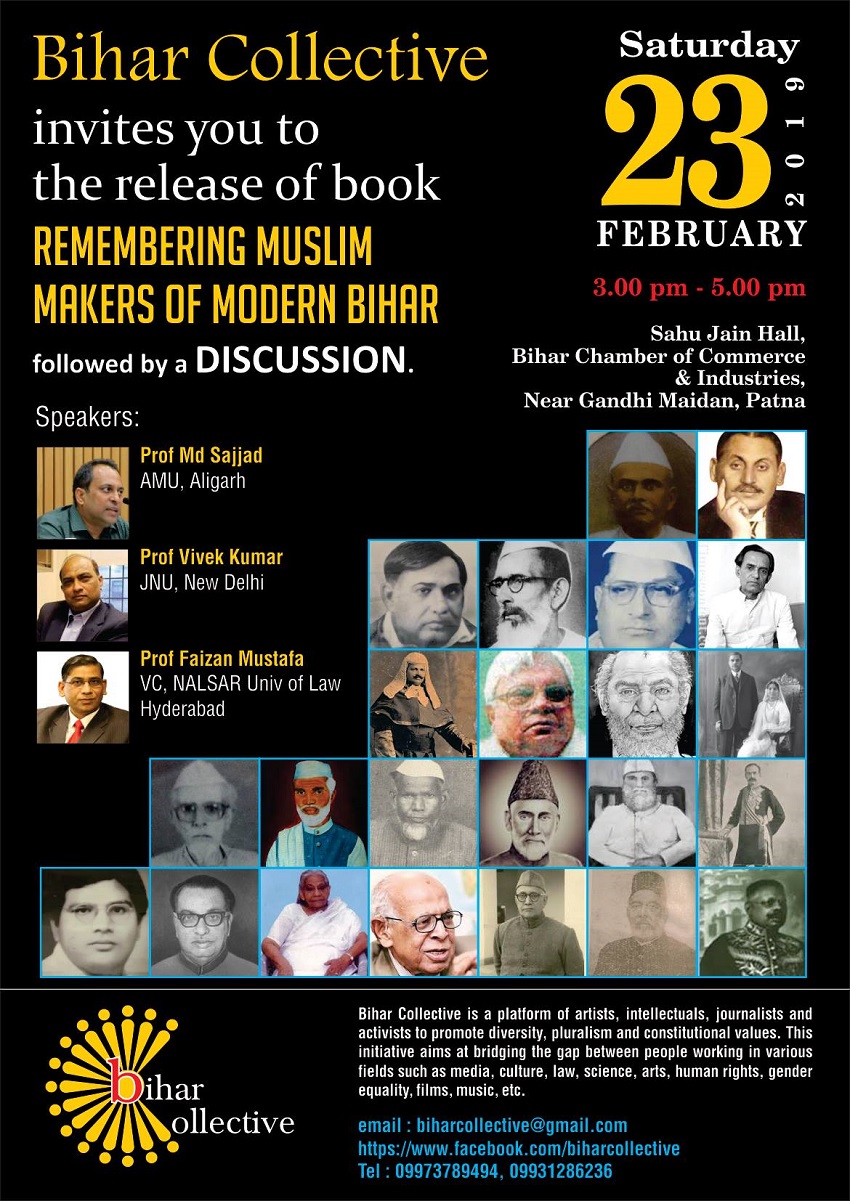
In an era of unprecedented majoritarian ascendance and anti-Muslim hatred, Bihar Collective, a platform of intellectuals and activists, has brought out a booklet highlighting the contribution of eminent Muslims in making the modern Bihar in the last 200 years.

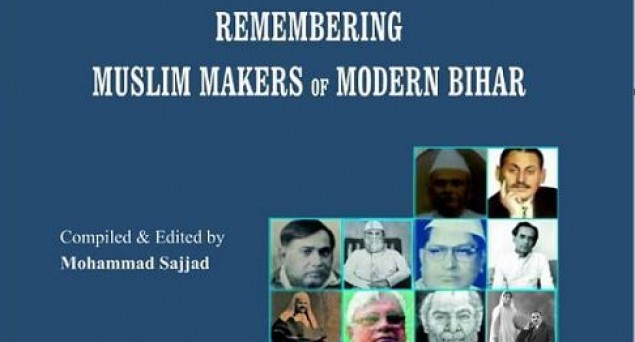
The booklet titled Remembering Muslim Makers of Modern Bihar has been compiled and edited by renowned academician and writer Prof. Mohammad Sajjad on the initiative of Bihar Collective.

The booklet will be released at an event in Patna on Saturday (February 23).

On the occasion, a discussion will also be held with Prof Faizan Mustafa, Vice Chancellor, NALSAR University of Law, Hyderabad; Prof Vivek Kumar, JNU, New Delhi; and Prof Mohammad Sajjad, AMU, Aligarh as panelists.

A Brief about Booklet:


Pre-empting a reasonable question about the title of the booklet, Prof Sajjad, who has compiled and edited it, writes in its preface: “A simple and obvious question that may readily arise is: why only Muslim makers of modern Bihar? Why not others too? This is indeed a valid and pertinent question.”

Responding to the question, he further says: “Candidly put, this is because of an unprecedentedly menacing rise of majoritarianism, bigotry, and anti-Muslim hatred, with open support of the state.

The Muslim identities are ominously threatened. There are also unabated attempts to dilute (or even take away) whatever little accomplishments have been made by the forces of social justice and secularism.

Only the Muslim segment however is threatened by the jingoist, exclusionary, violent nationalists, to be thrown out to another country. As if the other country is a dustbin, owned by these bigots, into which they can throw away everything they dislike! As if only the religious majority constitutes the nation! Notably, these jingoists had aligned with the British and had stayed away from the national movement.”

“Muslim contributions in the nation-making (and in the freedom movement) remain under-acknowledged, forgotten or even omitted. Erasure of their histories and memories seem to have become even more pronounced and vociferous, now, than ever before…The Bihar Collective therefore decided to compile a short profile of these inspiring role models, history-makers…This is small and humble step towards retrieving and restoring the nationalist provincial pantheons bearing Muslim identities,” says Prof Sajjad.

He, however, admits that the list of Muslim heroes of Bihar given in the booklet is not exhaustive as “…many have been left out essentially because of lack of documentations and researches. Not many have left their own accounts/memoirs; the available memoirs/accounts have not written much about all the personalities. In many cases, even otherwise “resourceful” descendants and/or associates of the history-makers have not been able to provide us with adequate (and credible/verifiable) details.”

Prof Sajjad hopes this small exercise may lead to some big academic work on these history-makers. “In short, this kind of venture may be said to be an ongoing exercise. This effort may hope to open up (and obtain) more details about such history-makers and would also get to know about many more of such peoples and processes, we failed to include here in this hastily prepared tiny volume, amidst constraints of resources and time.”

Names of Muslim Makers of Modern Bihar Mentioned in Booklet:
1. Syed Imdad Ali (d.1886]
2. Khuda Bakhsh (1842-1908)
3. Syed Amir Husain (1843-1910)
4. Imdad Imam Asar (1849-1934)
5. Shah Badruddin(1852-??)
6. Syed Ali Bilgrami (1853-1911)
7. Rasheed-un-Nesa (1855-1926)
8. Syed Noorul Huda (1855-1939)
9. Justice Syed Sharfuddin (1856-1921)
10. Shaikh Gulab (1857-1920)
11. Sarfaraz Husain Khan (1860-1931)
12. Maulana Mazharul Haque (1866-1930)
13. Batakh Miyan Ansari (1867-1957)
14. Sir Fakhruddin (1868-1933)
15. Syed Ali Imam (1869-1932)
16. Syed Hasan Imam (1871-1933)
17. Salahuddin Khuda Bakhsh (1875-1931)
18. Shafi Daudi(1875-1949)
19. Khwaja Md. Noor(1875-??)
20. Abdul Wadood (d.1955)
21. Syed Abul Hasan (1878-1960)
22. Sir Sultan Ahmad (1880-1963)
23. Maulana Sajjad (1880-1940)
24. Pir Mohammad Munis (1882-1949)
25. Abdul Bari (1882-1947)
26. Syed Sulaiman Nadvi (1884-1953)
27. Mohammad Yunus (1884-1952)
28. Shah Md. Zubair (1884-1930)
29. Syed Abdul Aziz (1885-1948)
30. Zubaida Begum Daudi (1886-1972)
31. Syed Tafazzul Karim (1886-1964)
32. Mr. Mohammad Shafi (1888-1955)
33. Qazi Ahmad Husain (1889-1961)
34. Dr. Syed Mahmud (1889-1971)
35. Ali Husain Aasim Bihari (1890-1953)
36. Shah Mohammad Umair (1894-1978)
37. Abdul Ahad Mohammad Noor (1894-1975)
38. Hakeem Md. Kabiruddin (1894-1976)
39. Maulana Usman Ghani (1896-1977)
40. Manzoor Ahsan Aijazi (1897-1969)
41. Shah Md Ozair Muni’mi (1899-1961)
42. Maghfur Aijazi (1900-1966)
43. Syed Jafar Imam (1900-1965)
44. Syed Badruddin Ahmad (1901-1983)
45. Mohammad Tahir (1903-???)
46. Syed Jafar Imam (1903-1979)
47. Syed Fida Husain (1904-80)
48. Abdul Qaiyum Ansari (1905-1974)
49. Wajihuddin Minhaji (1907-1984)
50. Syed Md. Aiyub (1910-1964)
51. Abdul Sami Nadvi (1913-????)
52. Abul Hayat Chand (1914-1958)
53. Ahad Fatmi(1915-1980)
54. Zawwar Husain (1916-80)
55. Shafiqullah Ansari (1917-1980)
56. Shah Mushtaq Ahmad (1917-2002)
57. Abdul Ghafoor (1918-2004)
58. Col. Mahboob Ahmad (1920-1992)
59. Taqi Raheem (1920-1999)
60. Zahra Daudi(1923-2003)
61. Shakoor Ahmad (1924-1981)
62. Syed Hasan (1924-2016)
63. Yunus Lohia (1925-2019)
64. Ghulam Sarwar (1926-2004)
65. Syed Shahabuddin (1935-2017)

A Brief about Author:


Prof Mohammad Sajjad teaches late-colonial and post-independent Indian history at the Centre for Advanced Study in History, Aligarh Muslim University. He has written several books including Muslim Politics in Bihar: Changing Contours; and Contesting Colonialism and Separatism: Muslims of Muzaffarpur since 1857.

His articles are published in reputed academic journals from Routledge, Sage, EPW etc. and also in anthologies from the Oxford University Press and Cambridge University Press.

Bihar Collective:
It is a platform of artists, intellectuals, journalists and activists to promote diversity, pluralism and constitutional values. It aims at bridging the gap between people working in various fields such as media, culture, law, science, arts, human rights, gender equality, films, music, etc.
Email: biharcollective@gmail.com
Facebook: https://www.facebook.com/biharcollective

source: http://www.indiatomorrow.net / India Tomorrow / Home> Society / by India Tomorrow / February 21st, 2019

Outstanding Students Honoured with Medals for Academic Excellence in Patna

Patna, BIHAR :

Patna :

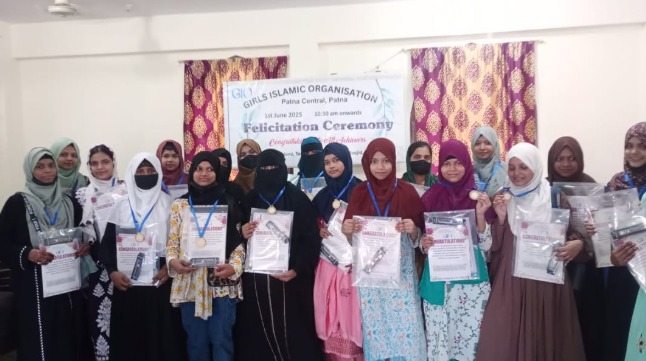
Girls Islamic Organisation (GIO), Sultan Ganj Unit, Patna, organised a felicitation ceremony on Sunday at Markaz-e-Islami, Tekari Road, to honour over 100 meritorious students who secured excellent marks in Class 10 and 12 examinations. The achievers were awarded medals and congratulatory cards in recognition of their academic accomplishments. The event also included guidance sessions to support their future educational journeys.

The chief guest, Mohammad Shehzad from Allied IAS, delivered a comprehensive guidance talk under the theme Care and Guidance, sharing professional and academic opportunities from an Islamic perspective along with practical insights.

Motivational speaker Shazia Ahsan emphasised the value of hard work, self-confidence, and positive thinking in her inspiring speech aimed at empowering the students.

Dr. Zubiesh Firdous, Secretary Women’s Wing Jamaat-e-Islami Hind Bihar, delivered a thought-provoking address on the topic Balancing Deen and Dunya (religion and worldly life). She stressed the need for a harmonious blend of religious and secular education.

Umme Kulsoom, President of GIO Sultan Ganj Unit, introduced the organisation and highlighted its mission of empowering girls and women through education and awareness.

The event was attended by teachers, students, and parents who appreciated the efforts taken by the organisation.

The program began with a spiritual reminder from the Qur’an by Anjum Mukhtar. A soul-stirring na’at (poem in praise of the Prophet ﷺ) was beautifully rendered by Musheerah Fatima, filling the atmosphere with a spiritual essence. Saima Parveen presented an emotionally resonant poem, which was well received by the audience.

The event concluded with closing remarks and a vote of thanks delivered by Shagufta Bano, City Secretary of Patna .

source: http://www.radiancenews.com / Radiance News / Home> Education> Report / by Radiance News Bureau / June 01st, 2025

Dr. Ejaz Ali: The Patna Doctor Who’s Been Charging Rs 10 for 30 Years

Patna, BIHAR :

Patna : 

In an era where medical expenses are skyrocketing, a doctor from Patna has been a beacon of hope for the poor and underprivileged.

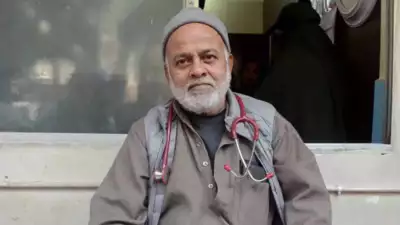
For an astonishing three decades, Dr. Ejaz Ali has been charging a mere Rs 10 for consultation, earning him the revered title of “messiah” among his patients.

From March 20, 2008, to July 7, 2010, he represented the Janata Dal (United) in the Rajya Sabha from Bihar. He has also served as the National Convenor of the All-India Backward Muslim Morcha, an organization dedicated to campaigning for Dalit Muslims since its founding in 1994.

Since 1984, Dr. Ali has worked as a general surgeon in Bikhna Pahari, Patna. The kind physician took a different approach, while the others around him charged exorbitant fees. By keeping his fees at Rs 10, he made himself available to those in need.

His clinic, which is situated in Bikhna Pahari on Ashiana-Digha Road, draws patients from all across Bihar who are looking for reasonably priced healthcare.

With more than 100 patients every day and multiple surgeries completed, Dr. Ali’s dedication to affordable healthcare is clear. He emphasizes his consistent commitment to aiding people in need. In order to save them money on lodging and other costs, he makes sure that every patient who has travelled to visit him receives a consultation that same day.

In addition to charging minimal fees for consultations, Dr. Ali performs surgeries at a reasonable cost. He permits his patients to pay in installments and even declines to charge them.

The late wife of Dr. Ali was a doctor as well. His three children now work in the same field, truly carrying on their father’s legacy. They asserted that their father has always put patients first.

His daughter, Gynecologist Dr. Suraiya Anjum, says, “He is the type of person who never yells or becomes agitated. Patients frequently regard him like a messiah.

Despite his fame and recognition, Dr. Ali remains humble and dedicated to his work. His clinic continues to attract patients from all over the state.

source: http://www.twocircles.net / Two Circles.net / Home> Articles> Indian Muslim / by TCN News / February 03rd, 2025

Muslim Mirror’s founding editor among the Prominent Changemakers of 2024

Mumbai, MAHARASHTRA / Chennai, TAMIL NADU / INDIA :

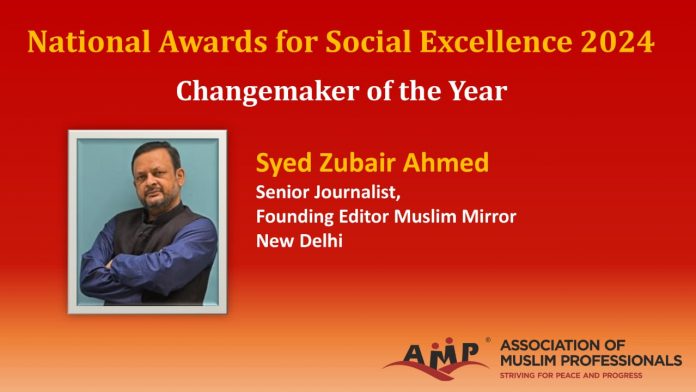
Syed Zubair Ahmad, the founding editor of Muslim Mirror, has added another feather to his cap by being declared one of the prominent Changemakers of 2024 by the Association of Muslim Professionals (AMP). The prestigious recognition was announced during a grand event held at the B.S. Abdur Rahman Crescent Institute of Science & Technology, a deemed university in Chennai, Tamil Nadu. The event was graced by honorable guests and attended by a large gathering of participants from across India.

Ahmad, a distinguished journalist, is known for his powerful advocacy for the rights and representation of marginalized communities, particularly Muslims, in India. Over the course of his career, spanning more than two decades, he has built a reputation for his unwavering commitment to truth, justice, and journalistic integrity.

The Association of Muslim Professionals (AMP) is Mumbai based pan India  non-profit organization dedicated to the socio-economic empowerment of the Muslim community in India. Through initiatives in education, employment, and community development, AMP works to foster leadership, skill-building, and social welfare, connecting professionals and organizations nationwide for collective progress.

“In a memorable ceremony, 100 inspiring individuals were honored with Changemaker Awards, and 100 state-level NGOs were recognized in the Best and Jury categories. Additionally, 10 organizations were celebrated in prestigious national categories,” said a press statement issued by AMP.

Notable national NGO awardees include;

  • ALTNEWS
  • APCR (Association for Protection of Civil Rights)
  • IMRC (Indian Muslim Relief & Charities??)
  • Institute of Objective Studies (IOS),
  • Allana CSR
  • Pataka CSR and
  • Seethakathi Trust

Some of the prominent Changemaker awardees included;

  • Syed Zubair Ahmad (Muslim Mirror)
  • Mohammed Wajihuddin (Times of India)
  • Aslayah Kallakath (Maktoob Media)
  • Abdur Rahman IPS (Retd.)
  • Akramul Jabbar IRS (Retd.)
  • Hammad Rahman
  • Adil Meraj and
  • Syeda Ruksheda.

The Lifetime Achievement Award was posthumously bestowed upon the Late Moosa Raza, IAS (Retd.), which was received by his family.

The Omar Khatani Memorial Award was presented to the Tarraqi I Foundation, while BSA Crescent Institute of Science & Technology received the Partner of the Year Award.

Mrs. Mariam Habib, Trustee of B.S. Abdur Rahman Crescent Institute of Science & Technology, served as the Chief Guest and commended AMP’s efforts in education, employment, and empowerment. She emphasized the role of NGOs in bringing about significant societal change in collaboration with policymakers, and she noted that the legacy of the late B.S. Abdur Rahman is being continued with great dedication by the current leadership.

Dr. N. Raja Hussain, Registrar of B.S. Abdur Rahman Crescent Institute of Science & Technology and Guest of Honour, praised AMP’s work in recognizing and motivating various organizations and individuals. He highlighted the ongoing collaboration between the university and AMP in developing students and faculty through guest programs. The event was presided over by University Vice-Chancellor Prof. Dr. T. Murugesan.

Motahar Hosain, Chief Executive and Guest of Honour, congratulated AMP for instituting these much-needed awards to acknowledge the contributions of individuals in the development sector. He remarked that despite the sacrifices made by these individuals in service to others, they seldom receive the appreciation they deserve, making these awards a significant recognition of their efforts.

 Mr. Farooq Siddiqui, Head of the AMP National Coordination Team and the driving force behind these awards, stated, “AMP believes in collaboration and has been working alongside multiple organizations since its inception. Through the AMP NGO Connect project, we are connected with over 7,000 social organizations across nearly all districts of India, helping them with capacity building and implementing AMP’s social welfare projects in their regions. These awards are our way of appreciating their efforts and motivating them to continue their impactful work.” He also thanked the AMP Chapter and state teams for mobilizing massive nominations and captivated the audience at the packed Crescent Convention Center Hall with his superb and engaging awards announcement.

 Ms. Shereen Sultana, State Head – AMP Tamil Nadu, in her address, shared details about AMP’s initiatives and invited everyone to join hands for the betterment of society and nation-building. She expressed her gratitude to the management and staff of B.S. Abdur Rahman Crescent Institute of Science & Technology for their cooperation in hosting the event and mentioned how she took up the challenge of organizing the awards ceremony in Chennai.

AMP Tamil Nadu State Executive Team member Mr. Yahya Rasheed welcomed the guests and successfully hosted the event with the support of Prof. Ansar.

The awards process for the NASE was multi-layered, with state, central, and a 9-member distinguished jury led by A.R. Khan, IAS (Retd.), President of A.R. Welfare Foundation, Dr. Syed Zafar Mahmood, Founder & President of Zakat Foundation of India, Dr. Farah Usmani, Founder & Chairperson of Rising Beyond The Ceiling, Prof. Zubair Meenai, Professor & Former Head of the Dept. of Social Work, JMI, Prof. Naseem Ahmed Khan, Chairman of the Dept. of Social Work, AMU, Dr. Shazia Manzoor, Head of DSW, University of Kashmir, Sherin Ali, Global Lead – Corporate Social Responsibility, WNS, Sajid Ali, COO of Tech Mahindra Foundation, and Gulzar Hussain, Head of Government Partnerships, UN World Food Program (India).

The success of the 4th edition of the awards was attributed to the collaborative efforts of key AMP team members, including Sajjad Parvez, AMP Zonal Head – South India; Dr. B. Raja Hussain, State Secretary; Syed Faheem, Chennai Chapter Head; and Syed Deen, Chennai Chapter Secretary. Their contributions, along with the support from the back-office teams at the Central Offices in Mumbai and Vaniyambadi, were instrumental in making the event a success.

source: http://www.muslimmirror.com / Muslim Mirror / Home> Indian Muslim> Media> Positive Story / by Muslim Mirror Desk / August 22nd, 2024

Mohammed- The Maulana Football Coach

Patna, BIHAR / DELHI:

In a small suburb in the Islam-dominated Jamia in Delhi, Mohammed Ameen manages to live a life which breaks norms and is still happy. . .

Football, as a game, has broken a lot of barrier in terms of religion and war. It is a well-documented fact that the Nigerian Civil War was stopped to watch Pele and his team play in the 1960s. If the game could stop a war, one can imagine its power over the other earthly, trivial matters.

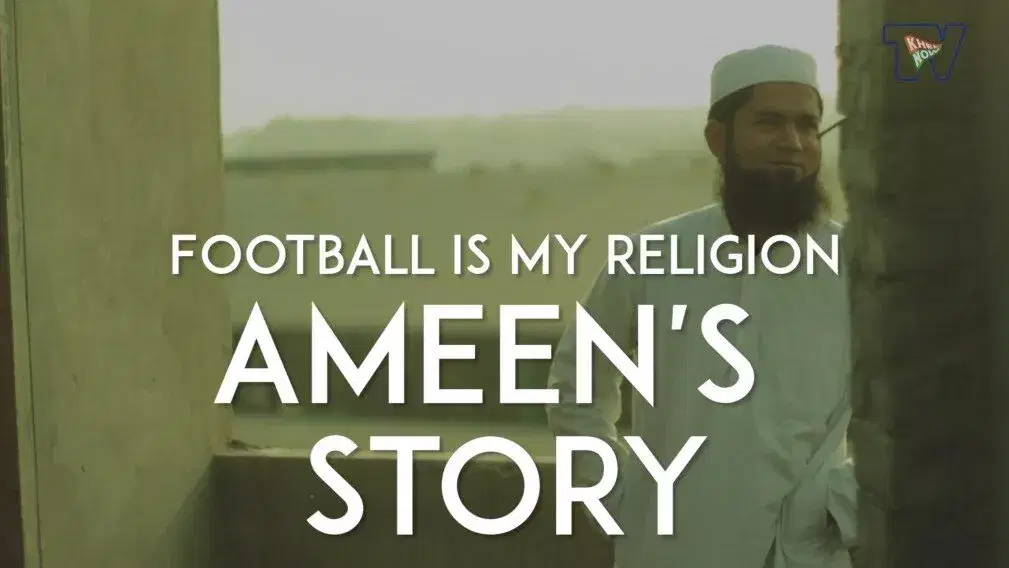
Khel Now Football caught up with Mohammed Ameen, who originates from Patna but is currently staying in Delhi. Ameen is a Maulana, a person associated with formal qualification following study at a madrassa or darul uloom. Ameen comes across as a noble Muslim, who would go about his work and would lead a sedentary life in a city job.

Astonishingly, Ameen breaks the cliché. The middle-aged man is a sports coordinator for CEQUIN, an NGO which works on a variety of issues affecting women and girls such as violence, leadership, economic empowerment and other social benefits. You must be wondering that why are we writing these stories; but there’s a common link: FOOTBALL.

Football Is My Religion I Jamia I Mohammed-The Maulana Coach 

Ameen trains girls in and around his area and said, “I train both the junior and senior girls equally hard. I want to see the senior girls mature in a way that they can train the next line of girls in the years to come,” says Ameen, who earns meagerly.

“Football is a team game, and the girls forget their stress while playing,” adds the gaffer. “There energy on the pitch brings a change in the community and shows a new door to the girls in the area. I’m working in the Jamia area and there are various challenges in the work I’m trying to do.”

One of them, he says, is the fact that he’s a Maulana. “People in general and parents in particular usually say that I’m a Maulana and I teach girls to play football, which adds a poor connotation to the notion. I usually stay silent, and they get my answer.”

Talking on our special segment called ‘Football is my Religion’, Ameen concludes with a brilliant message. “Football is played all around the world by white, black, men and women equally. There is no religious division in the game, and it should be that way forever. It connects people like nothing else.”

source: http:www.khelnow.com / Khel Now / Home / by Punit Tripathi / April 17th, 2017

Israil Mansuri: From Mukhiya to a Minister

Mathurapur, Patahi (Muzaffarpur District), BIHAR :

The new information technology minister of Bihar Mohammad Israil Mansuri belongs to a socially backward Dhuniya community.

Mohammad Israil Mansuri. | Photo: Facebook/Israilmansuriofficial

Patna (Bihar) :

Mohammad Israil Mansuri, a Rashtriya Janata Dal (RJD) MLA is the new minister of Information Technology in the government of Bihar. 

Mansuri, 46, belongs to the Dhuniya community and uses Mansuri as a surname. In Bihar, the Mansuris are primarily involved in quilt making. He is considered to be the first in his community to become a minister in the government. 

Mansuri started his political career in 2001 as a Mukhiya (village head). Though he calls himself a “servant of all communities,” in political terms he is a Pasmanda (socially backward). 

Mansuri completed his early education in his village Mathurapur, Patahi in the Muzaffarpur district. He studied up to I.Sc. and later joined politics.

His father Mohammad Usman does not have prior experience in politics and his wife Zubaida Khatoon is a homemaker. His only daughter Neha Tarannu is studying Unani medicine. Mansuri used to work with his father in litchi gardens and at his grocery shops. He is the third among six siblings of four brothers and two sisters. One of his brothers runs a fruit shop while the other is a teacher. He wanted to be a teacher but could not clear the main examination in 1994 while he had also passed the preliminary test for T.C. in Railways after passing his 12th board examination the same year. 

He first joined Nitish Kumar’s party Janata Dal in 1996 and was part of the party till Kumar joined hands with the Bharatiya Janata Party in 2017. He resigned from JD (U) and joined RJD.

Talking to TwoCircles.net, Mansuri thanked the Almighty and his party leaders Lalu Prasad and his son the deputy chief minister of Bihar Tejaswhi Yadav for choosing him to be a minister. “For me being a Mukhiya too was a big dream. Then in 2020, I got a ticket from RJD and got elected as an MLA in my first attempt from the Kanti seat. I was extremely surprised when I got a call to take the oath as a minister. It seems that my struggle in politics has impressed my leaders Lalu and Tejashwi,” he told TwoCircles.net. 

“To struggle and strive for something comes naturally to me. I studied in a school where we had to take our Bora (Jute bag used as a mat) and did not have a pen and notebook but slates to write on. I used to cycle 10 to 15 kilometres to bring the grocery items for our shop while I was in school. As I had an interest in social work, I got a chance to meet people. Though I come from the Mansuri community, my popularity in all communities is equal,” he said. 

Mansuri was caught in controversy soon after he became a minister. He travelled with the chief minister Nitish Kumar to the Hindu holy city of Gaya as he was the in-charge minister of that district. When he entered the Vishnupad temple accompanied by Kumar, a huge controversy erupted as “non-Hindus were not allowed to the sanctum sanctorum of the temple. “I used to visit all places of worship without caring for the religion. I was not made aware of the restriction at that temple. I entered without any intention to breach the rule.”

When asked what his focus would be as a minister of the IT department, he said, “IT is a fast-changing sector. We would try to keep our state updated in this field. We would also see how many jobs we can provide to the youths from our department as this government aims to give ten lakh jobs.” He checks his emails and runs his Facebook page by himself and has his own website.

All India Pasmanda Muslim Mahaz President and former Rajya Sabha member Ali Anwar told TwoCircles.net that as Mansuri belongs to Pasmanda Biradari his election as MLA and now elevation to a minister is a great morale booster for the downtrodden section of the Muslim community. “Lalu and Tejaswhi took the right decision to induct Mansuri as a minister and many more such steps are needed for the society,” he said.  

Former Director of Jagjivan Ram Institute of Parliamentary Studies and Political Research – Srikant sees it as a necessary step to bring upward mobility to the people who belong to the lower strata of society. “Since Mansuri belongs to the most backward section of the society his empowerment in politics is in accordance with the theory of Ram Manohar Lohia and Mahatma Gandhi,” Srikant said. 

Srikant added that it was a time taking process to empower the Pasmanda section but a positive step has been taken. 

www.israilmansuri.in

Sami Ahmad is a journalist based in Patna, Bihar. He tweets at @samipkb

source: http://www.twocircles.net / TwoCircles.net / Home> Careers / by Sami Ahmad, TwoCircles.net / August 30th, 2022