Taldi Village (South 24 Parganas District), WEST BENGAL :
Photo Credit: enewsroom
Kolkata:
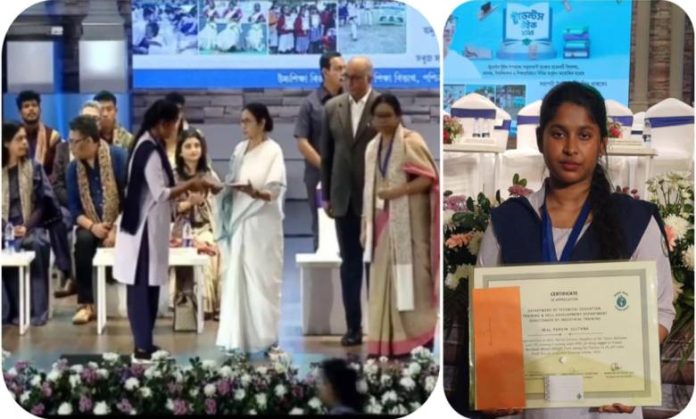
Parvin Sultana, a young woman from West Bengal, has secured the top position in the All India Industrial Training Institute (ITI) examination 2024 in the Mechanic Diesel Trade, scoring an impressive 599 out of 600 marks.
Despite financial struggles, she achieved this remarkable feat without private coaching. Recognizing her exceptional performance, Chief Minister Mamata Banerjee felicitated her, and she also received official recognition from Delhi.
Hailing from Taldi village in South 24 Parganas district, Parvin ranked first among female candidates nationwide. However, her academic success contrasts with her family’s financial difficulties. Her father, Taziur Rahman Sardar, works as a daily wage laborer in a fish market, striving to support their seven-member household.
Parvin’s educational journey has been one of determination. She completed her schooling at Taldi Surabala Sikshayatan for Girls’ School, securing 42% in her Madhyamik exams in 2017 and 76% in her Higher Secondary exams in 2019. In 2023, she earned a Political Science degree with 66% marks.
Despite financial hardships, Parvin remained focused on her studies, preparing for the ITI exam with the guidance of her college teachers instead of opting for private tutoring. “I couldn’t afford a tutor, but my teachers supported me. I want to prove that girls can excel in every field,” she said.
Lokman Mollah, a social worker in Canning, praised her perseverance, stating, “Many talented students in the Sundarbans go unnoticed due to financial constraints. Parvin’s success is proof that determination can overcome any obstacle.”
Parvin was honored at a public reception in Canning, organized by the Trinamool Congress (TMC) and led by MLA Paresh Ram Das. Canning Panchayat Samiti President Uttam Das also recognized her achievements, while her mother, Rijia Bibi, voiced concerns about financial constraints. “She wants to study further, but we lack the resources,” she said.
Assuring assistance, MLA Paresh Ram Das stated, “Just as Chief Minister Mamata Banerjee supports meritorious students, we, too, stand by them.”
While excelling in the ITI exam, Parvin’s ultimate goal is to serve society through the civil services. Inspired by her recent success, she has decided to prepare for competitive exams. “Initially, I wasn’t sure what to study for a secure job, but after my ITI results, many suggested civil services. Now, I am enrolling in a coaching center in Kolkata to prepare,” she said.
Parvin’s journey from a small village to national recognition serves as an inspiration, proving that resilience and hard work can overcome financial hardships.
source: http://www.radiancenews.com / Radiance News / Home> Pride of the Nation> Markers of Excellence / by Radiance News Bureau / February 13th, 2025
The award-winning Bengali author talks about his books, development of minority communities, Kolkata Book Fair, social media, and more.
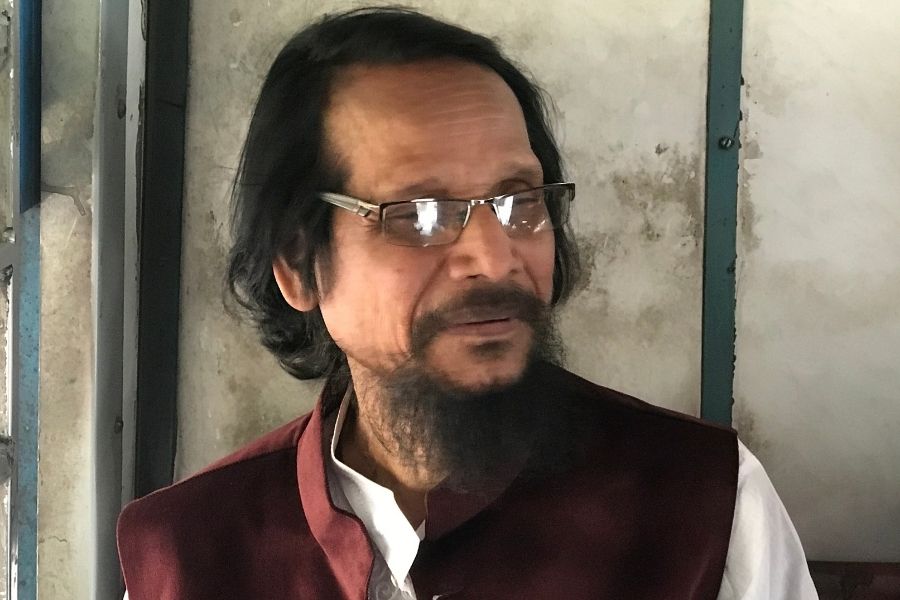
Abul Bashar — the author of ‘Agnibalaka’ and several other popular titles — is one of the prominent voices documenting the lives of minority communities in Bengal / Wikimedia Commons
Born in Murshidabad at a time when the zilla’s literacy rate was 12.9 per cent, it was an uphill battle for Abul Bashar to not just educate himself but also to live his dream of becoming an author.
With 40 books to his name, including popular titles such as Agnibalaka, Marusvarga, Jol, Mati, Aguner Upakkhayan, and Dharmer Grahon, Bashar has documented the lives and issues of minority communities and socio-religious matters through his works. A recipient of top honours such as the Ananda Puraskar and Banga Bhushan, he was awarded the Guild Lifetime Literary Award in 2025 at the 48th International Kolkata Book Fair.
My Kolkata met Bashar at the boi mela for a conversation, discussing India’s evolution, the status of the Bengali Muslims, his career as an author, and more. Edited excerpts follow.
My Kolkata: India celebrated its 76th Republic Day this year. You were born in 1951. As an author who has been documenting the growth of society in his works, how do you see India’s evolution?
Abul Bashar: One thing that has been catching my attention is that the culture that comprises both Hindus and Muslims is in a state of dialectics and adjustment with the ‘Indian culture’. We have imbibed the virtues of Indian society, but there are a few aspects of Bengali society that do not marry well with the Indian society. This concerns me, because this is not how it was earlier. The incidents around the Babri Masjid and the Ram Mandir have changed the political diaspora of India.
It is now a global situation and not just confined to India. It is prevalent in the subcontinent that religious minorities are under attack. Civilisation is under threat, but this is not how it is supposed to be. The Indian Constitution speaks about equality towards minority communities, their representation in the power structure of the society, and a homogeneity of culture. These were the ideals of Rabindranath Tagore and Mahatma Gandhi. The lack of homogeneity in the culture is worrying me. Of course, the extent varies from place to place, but there are a few incidents that happen that make me feel imperiled.
In this country, the constitutional rights and duties of people from all walks of life are directly and intrinsically involved with the idea of democracy. India is a pluralist country where diverse religious identities and cultures cohabit in an interesting milieu, but this fabric is facing a push back.
You have written extensively on Bengali Muslims. What do you think of their current socio-religious status?
More than the religious identity, the Muslim community continues to be backward in terms of financial independence, and I give more importance to financial independence. One of the primary tenets of India is the growth of any backward community — be it among Hindus, Muslims, or any other community. The Constitution aims towards that.
The financial backwardness of the Muslim community has affected the education of modernism. It is difficult for a financially backward community to become modern. The State, thus, has to fulfill its responsibility towards removing this roadblock so that a symbiosis between community and modernism takes place.
I have not only written about the Muslim community, but also about the Hindu community. My novel, Maruswarga, can be termed — ekjon Bangali lekhoker Ihudi upanyash (a Bengali writer’s Jewish novel). My work is extensively based on various mythologies and the folk culture of Bengal, focusing on the baul-fakirs. There is a unique amalgamation of Buddhism and Islam in the bauls, which was evident through the life of Lalon Shah. My thoughts revolve around these aspects, and I want comprehensive development of the Muslim society through cultural amalgamation.
Through my books, I have addressed the religious superstitions and other roadblocks that can cause hindrance to the development of society.
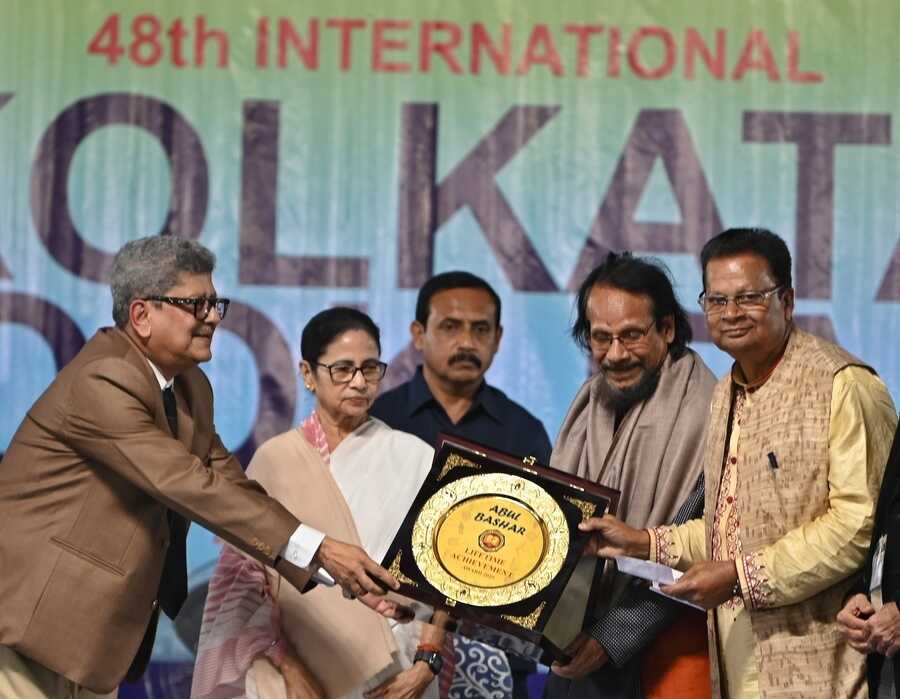
Abul Bashar was conferred the Guild Lifetime Achievement Award by chief minister of West Bengal, Mamata Banerjee, on January 28 at the inauguration of the 48th International Kolkata Book Fair / My Kolkata
Do you think awards and accolades you have received have made it easier for your voice to reach society?
No, absolutely not. In my initial days as an author, I found that the readerbase of my genre of writing in West Bengal was very constricted because I belonged from a backward society. I have had a readerbase in Bangladesh since the inception of my career. Here [in West Bengal], it has taken time, but a community of people who read my kind of writings have developed. My thought process, and my novels that are based on mythology have found an academic discourse, and a doctoral candidate from Murshidabad, did his PhD on my work at Jadavpur University.
What surprised me was that a member of the society that created barriers for me and refused to accept my words did a doctoral thesis on the mythical treatment in my literature as an academic discourse. Society has evolved, and the environment of the present times is removing roadblocks, making way for an educated middle-income strata that is progressive and free thinking.
From Agnibalaka to Bhor Poati Tara — how do you see your evolution as an author?
It is a journey that I made, I would say. I have been influenced by several thoughts at different points in my life. I was an activist of Leftist politics that was different from today’s times. Leftist politics was known as the politics of sacrifice. Agnibalaka’s protagonists, if you notice, are characters who do not conform to societal norms. They are free thinkers and are characters who have imbibed Marxism in order to elevate their lives. They are the voices of dissent against stigmas and stereotypes of society.
Agnibalaka is a political novel in which dialectical materialism among various stratas of the society as well as the dialectics in interpersonal relationships between two political parties is shown. The conflict between the social strata during the 19-month long Emergency period in India, and how Marxism could be brought into praxis — Agnibalaka is an experimentation on that.
However, I do not share the same thoughts today, and by this I mean that it has been removed from my life in some ways. I have not removed it from my life, but the ideology is gradually vanishing on a global scale. It is possible that my experiments or observations are incorrect, but in today’s time, this is how I see it.
When the world starts facing a situation like today in reference to Marxism, existentialism takes its course, and becomes a replacement and anti thesis for Marxism. Everyone is in a state of endangerment, and the very thought that society that was created for its residents, is now in oblivion. Social norms were made for the development of people, but development is not entirely dependent on norms. An excessive emphasis on following social norms has given rise to conflict between man and society. This was the reason behind the two World Wars. This has also given birth to existentialist literature, as well as poets like Jibanananda Das and Michael Madhusudan Dutta.
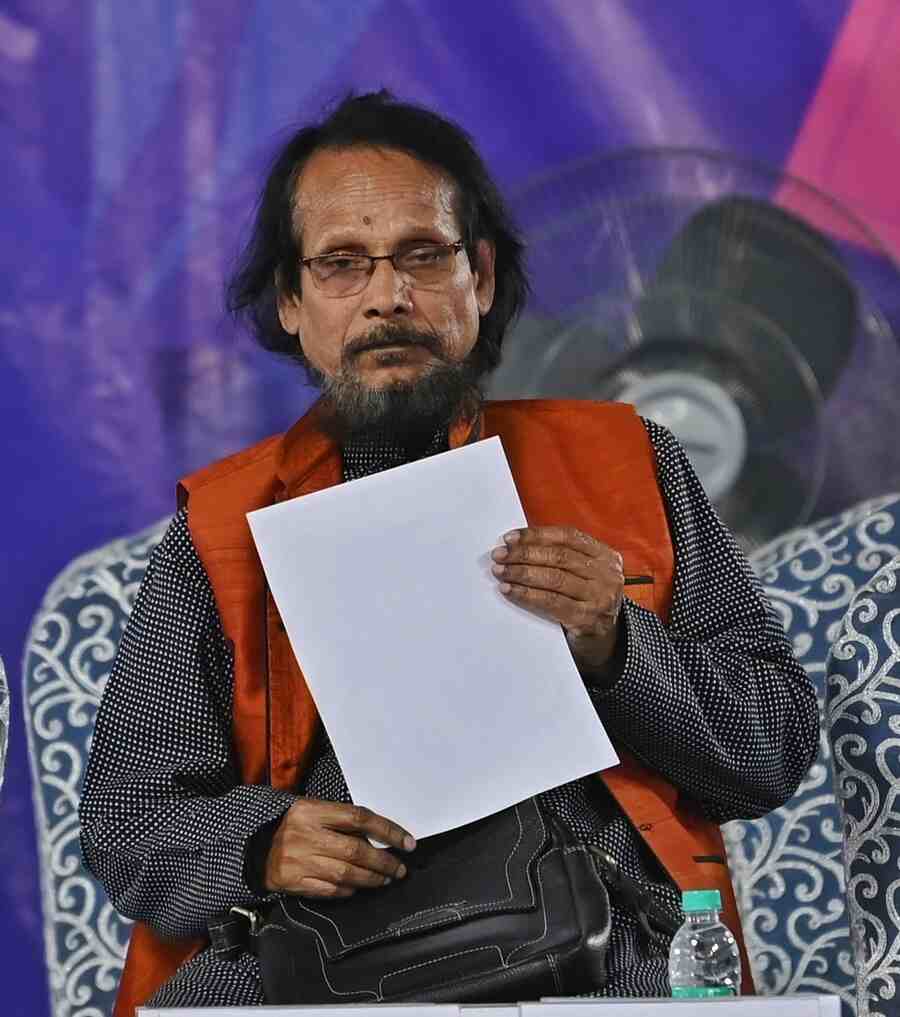
Abul Bashar at the Kolkata Book Fair, 2025 / My Kolkata
The Kolkata International Book Fair is one of the largest book fairs in the world. In a day and age when social media has diminished attention spans, how do you see the importance of book fairs?
Social media is not a replacement for books. There is no conflict between gadgets that we use on a regular basis versus books. Gadgets like phones are essential to attain information and gain knowledge, but literature is not just information. When we speak of literature, we usually refer to the written. But what about oral literature, which is a significant part of Bengali literature? The works of Lalon Shah, for instance, are originally songs and are kabya sahitya (poetry). Another example is Rabindrasangeet — a youngster, who is engrossed in his or her phone, is also a listener of Rabindranath Tagore’s music.
There is a trough and crest when it comes to readership, but eradicating books from our lives will never be possible — just like classical music, songs like Kaa Karu Sajni, or verses of Kabir. We have to increase our habit of reading because that will increase our creativity and strengthen our culture as well as inter-personal relationships. There is evolution in the publishing industry with the digitisation of books, which has increased the readerbase. And because of book fairs, there is a boost in the number of bibliophiles.
What is your next work?
I intend to go back to my zilla (Murshidabad) to work on a piece that would complete an unfinished novel.
source: http://www.telegraphindia.com / The Telegraph Online / Home> My Kolkata / by Pooja Mitra / February 02nd, 2025
Laal suffered cardiac arrest on Saturday night and was rushed to Mira Primary Health Center in Plassey, where doctors declared him dead.
Trinamool MLA from Kaliganj in Nadia, Nasiruddin Ahmed aka Laal, passed away at 71.
He suffered a cardiac arrest on Saturday night and was rushed to Mira Primary Health Center in Plassey, where doctors declared him dead.
Nasiruddin, fondly known as ‘Laal’ in political circles, was the chairman of the Trinamool Congress’ Krishnanagar organisational district.
By profession, he was a lawyer. He is survived by a son and two daughters.
Expressing her deep condolences, chief minister Mamata Banerjee in a post on X stated: “Saddened by the sudden demise of my colleague Nasiruddin Ahmed (Laal), MLA from Kaliganj, Nadia. A veteran public worker and political representative, he was our trustworthy asset. He was a lawyer and a very good social worker, and I truly valued him. My condolences to his family, friends and followers”.
Leader of Opposition in Bengal Assembly, Suvendu Adhikari, in a similar post on X, expressed his condolences.
Adhikari wrote: “It’s disheartening to learn about the sad and untimely demise of Kaliganj MLA; Janab Nasiruddin Ahmed (Lal). I express my condolences to his family members, friends & political associates. May his soul rest in peace”.
Nasiruddin’s political journey began in 2011 when he was elected as a Trinamool Congress MLA from Kaliganj. In 2016, he lost the seat to Congress-CPM alliance candidate Sheikh Hasanuzzaman.
However, Hasanuzzaman later joined Trinamool. Nasiruddin also reclaimed the Kaliganj seat in the 2021 Assembly polls.
Nasiruddin’s unexpected death has left the Trinamool leadership in Kaliganj without a key figure.
Nakashipara Trinamool MLA Kallol Khan expressed his sorrow, saying: “It is very shocking for me. I spoke to Laal on Saturday afternoon and he seemed to be fine. I will no longer have him by my side in our political journey.”
With Nasiruddin’s demise, the Kaliganj Assembly seat has fallen vacant.
A by-election will be announced. However, given that the state Assembly elections are scheduled for next year, a new MLA will likely be elected for a brief tenure of around six months.
source: http://www.telegraphindia.com / Telegraph India / Home> West Bengal / by Subhasish Chaudhuri / February 02nd, 2025
Human trafficking is the illegal process of moving or luring a person from one place to another using deception, threats, pressure, duress, or other abusive means for financial gain. Most of them trafficking children are pushed into the sex trade.
Fifteen years before, she was a victim of human trafficking. Today, leaving her past behind, Naseema Gain, 28, has rescued more than 4,000 women from the flesh trade and is helping them lead a normal life, reports Awaz The Voice.
“It was 2009. I remember there was a Puja function at my school on that day. I was happy. I have known him since childhood, as his uncle lived in our village. I and my friend happily sat in his car when he offered to drop us at our place. Little did I know this incident was going to change my life. When I regained consciousness, we found ourselves at an unfamiliar place. I had no idea where I was.” The 13-year-old Naseema Gain had no idea that she had landed in the net of human traffickers.
Born in Maslandpur, West Bengal, Naseema Gain had a happy childhood till an acquaintance kidnapped her on the pretext of offering her a ride to school.
Fortunately, she was released after 10 months. However, she faced a bigger tragedy on her return home when she found people looked at her and treated her differently. Due to prejudices, people didn’t treat her as a victim.
Naseema didn’t give up. Today she is helping hundreds of girls who are victims of human trafficking by rescuing and rehabilitating them.
Narrating the incident of her kidnapping, Naseema says, “He asked me and one of my friends if we would like to go home in his car. There was also another person in the car. Not knowing his intentions, we happily sat in the car. He took us to a deserted place and dropped us saying that he would return after some time.
“After a while, a person came in another car and said that he would drop us home. It was dark, so we accepted his offer least knowing that this lift would turn was going to change our lives.”
They sold Naseema and her friend in Bihar. On her life in a brothel, Naseema says, “They taught us to dance and sing. If anyone did not obey them, they were beaten, tortured, and made to starve. We had lost all hope of returning home.”
She says violence, torture, and starvation were routine punishments for the inmates of a brothel. One day Naseema and her friend were sold as maids. This gave them a chance to escape.
Naseema worked as a house help for a professor. “Slowly I started following their language. One day I told him about my story of being kidnapped and sold and asked him to help me return to my home. I somehow managed to gather the courage to tell this to him.”
She also told the professor that if he didn’t help them and sent them back to the agency, the girls would face torture and be resold.
The professor asked her to provide him contact number of her home. Naseema didn’t remember hers but her friend had memorised her telephone number. The kind-hearted professor called the number and both the girls were rescued with the help of the police.
However, before the police and the parents could reach Naseema and the other girl, the trafficker came to know about this. He called the Professor who shifted them to different secret locations for safety. After tracking them for several weeks, Naseema and her friend were finally freed after 10 months.
Naseema says, “It still feels surreal to be rescued and taken home. I had lost all hope, but our and the police’s efforts would be successful. I am very grateful to those professors.”
Her family was happy at her rescue and return home but the villagers were not ready to accept her.
“This is the sad truth of our society. I was a victim of circumstances, and yet had to face ostracism.” She adds, “Parents would tell their children not to speak with us,” she says.
She said, “We were not allowed to go to school because the school refused to admit us.”
“Ten months of torture and then this kind of treatment from society alienated me. I didn’t leave my house for the next five years,” she says, “Even after coming out of the quagmire of human trafficking, I was saddened by the ostracism by society.”
Naseema’s parents contacted an NGO which was into counselling of human trafficking survivors. Naseema says that counselling gave her a lot of strength. She was convinced that she could only counsel those who had survived this inhuman quagmire. She contacted girls and women who had been rescued from human traffickers and brothels and helped them.
Naseema says, “I have tried to build a life with whatever I have. Call it courage, hope, or luck. That is why I dare to help others. To help more girls like me, I started working with ‘Utthan Collective’, an organisation that provides training, counselling, and support to girls and victims.
She says victims like her are treated like criminals even after their rescue. She wants to create a new identity for all such victims.
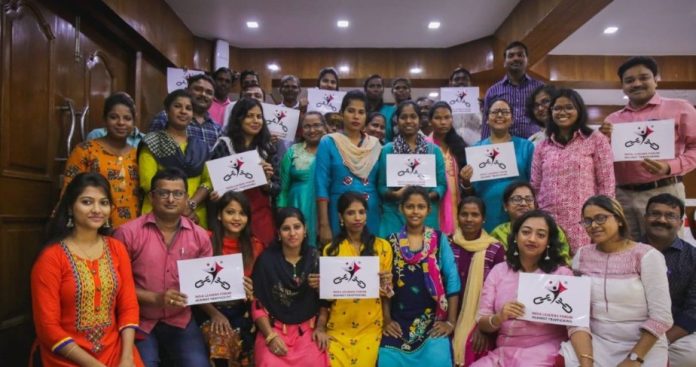
In 2019, Naseema co-founded the Indian Leadership Forum Against Trafficking (ILFAT) with similar anti-trafficking groups across the country. The organisation’s work spans across nine states and has given a new direction to the lives of more than 4500 victims.
She adds, “A person who has gone through such a situation needs a lot of care, love, and respect. In the process of trafficking, they have lost all their self-esteem. Often, society rejects them; in many cases, even their families disown them. We provide them with the necessary help and shelter.”
The organisation trains victims in various skill-based jobs and helps them earn a livelihood. “We reach out to victims and provide them with mental health support and counselling. Through outreach programmes, their trauma and grief connect. So, they don’t feel any loss there. This helps them move forward,” Naseema says.
About her work, Naseema says, “Many times different NGOs approach me and learn how ILFAT and Utthan work. This is a huge inspiration and victory for me.” She adds, “With the organisation, I want to create a safe environment for the victims, ensure that the culprits get proper punishment and all the surviving girls are rehabilitated.”
Naseema, along with her colleagues, helps improve the mental health of the girls who have been rescued from the quagmire of human trafficking, provides compensation, makes the girls aware of their skills, and nurtures them by giving them necessary training.
source: http://www.radiancenews.com / Radiance News / Home> Education> Latest News / by Mohammed Atherulla Shariff, Radiance News Bureau / January 28th, 2025
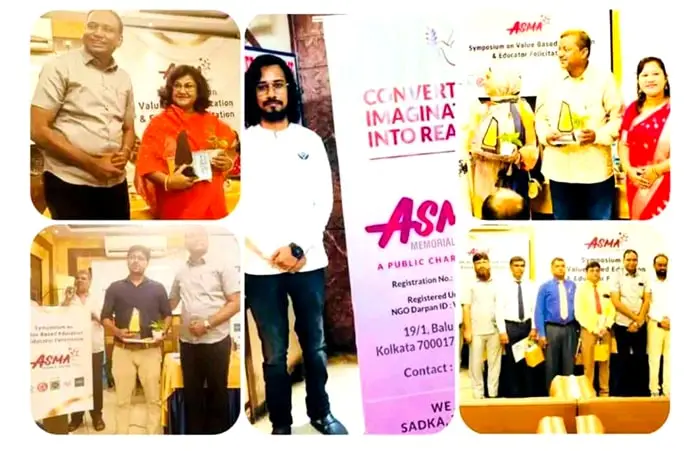
Asma Memorial Trust felicitates 80 educators including retired ones and specially-abled who served without recognition.
(Clockwise) Noor alam with Afaf Jameel, Junaid Kamal, Sangita Gurang (red sari) and the felicitated ones
Kolkata:
When the name of Junaid Kamal was announced, a 32-year-old man, with the help of two crutches, tried to stand up from his seat and began moving towards the stage to be felicitated at Asma Memorial Trust’s function. Soon, the fine art teacher was assisted in walking to receive a memento, a plant, and a set of notebooks and pens.
It was the first time in his 13-year teaching career that the art teacher, who is associated with four different organizations in Kolkata and serves the community, was recognized as a specially-abled person (left leg and right paralysed).
“I am thankful for the felicitation. For someone like me, it is not only difficult to study, but getting a respectable job is another challenge. Even when you succeed, it is rare that people appreciate it in this fast-paced life,” the Academy of Fine Arts graduate told eNewsroom.
Junaid was not alone; at least 15 retired educators, from both government and private schools, were also felicitated at the event.
Dr Umar Khyyam (70) of Maulana Azad College, Mobark Ali Mobarak (65) from Bankura district Urdu School, Nurul Hoda (62) of Kankinara Himayatul Ghurba High School (underprivileged), and Ashraf Ahmad Jafri (65) of Karaya School, Kolkata, were among them.
There were also current teachers, such as Afaf Jameel of Frank Anthony Public School, Sangita Gurung of Assembly of God Church School, Michael A Panja of GD Goenka Public School, Dr Khalid Hossain of Monu Memorial Institution (Kolkata), Debashish from Well and Gold, Md. Shahnawaz of Noble Mission School, Mubashshreen Shakil of KS Consultancy & Academy, Shaguta Adnan, who teaches French, and Manwar Sultana of Sir Syed English Medium School, among the total 80 teachers who were felicitated.
The felicitated and the felicitetors together after Asma Memorial Trust’s event
Teachers from South Point, East West, Goenka, Albani Hall, Islamia, Mohammed Jan, Flair International, and Izma International schools were also honored.
Noor Alam, the founder of NEET Basket, who also established the Asma Trust in memory of his wife to promote value-based education and encourage those involved in it, told eNewsroom, “We used to celebrate Education Day on the birthday of India’s first education minister, Maulana Abul Kalam Azad. But this year, we started the celebration earlier and began by felicitating educators who have served society but have not received any recognition for it.”
Alam, the Rashtriya Shiksha Ratan Award winner also pointed out that during the felicitation, a plant was given to each honoree to symbolize how educators nurture children. Just as trees benefit society in many ways, a well-nurtured child can positively impact the community.
The chief guest, Indian Revenue Service (IRS) officer Shamsher Ahmad, who took voluntary retirement and started Crescent School in one of Kolkata’s ghettos—Topsia—shared his journey as an educator. “When I started the school in Topsia (in 2002), I decorated the building very well. People asked me why I was doing so. I told them that to build confidence in the Topsia students, they must study in a place that is not inferior to other major schools in the city.”
“In later years, to boost their confidence to appear for the Union Public Service Examinations, I used my contacts and made my school a center for the UPSC exam, which produces IAS and IPS officers. As a result, today our school produces doctors and students who pursue higher education after graduating from Crescent,” Ahmad said to the gathering.
Sangita Gurung of Assembly of God said a one liner for the teachers, “Teach what your preach and preach what you teach, is the motto remained in my career and it should be with every teacher.”
Dr Sarfaraz Adil, founder of Izma International School , reminded attendees of the importance of education in Islam and how it has been emphasized. “Getting an education is one of the fundamentals of Islam. It not only includes religious education but also opens doors to physics, astronomy, and chemistry. Before Islam, there was no scientific temperament in religion. Only the rich could study, but Islam made education accessible to everyone. Prophet Muhammad announced that any slave who learned and became educated would be freed. Later, a slave named Hazrat Barira became educated and declared that she should be freed, according to the Prophet’s word. And she was freed. Although it was difficult because she was married to an uneducated slave, she wanted her freedom and to be separated from her husband, so she was granted it.”
Dr Adil also had a message for today’s teachers: “Information is easily shared among students. So, what is important for teachers is to teach students skills and show them
source: http://www.enewsroom.in / E Newsroom India / Home> Bengal> Education / by Shahnawaz Akhtar / September 16th, 2024
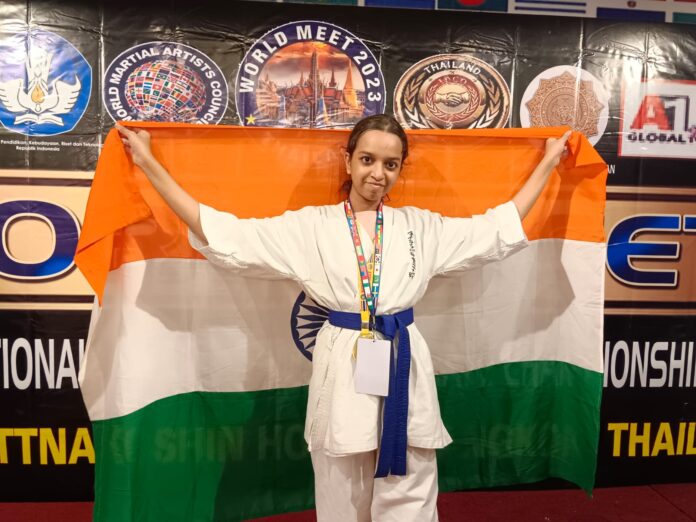
Humairah Shami, a young Karate champion from Kolkata, has recently earned the honour of representing India at the 7th World Meet, scheduled to take place on May 8, 2025, in Bangkok, Thailand, at the Royal Rattanakosin Hotel. This prestigious event is organised by the World Martial Arts Council. Although she is thrilled about this incredible opportunity, Humairah faces a challenge – the limited financial resources that may prevent her from attending.
Her father, Shami Ahmed, repairs footwear for a living. But due to poor health, he cannot work regularly. Her mother, too, has been battling a serious illness for the past three years. Despite these challenges, Humairah, along with her siblings, who are in grades 7 and 10, continues to pursue her education with the support of relatives.
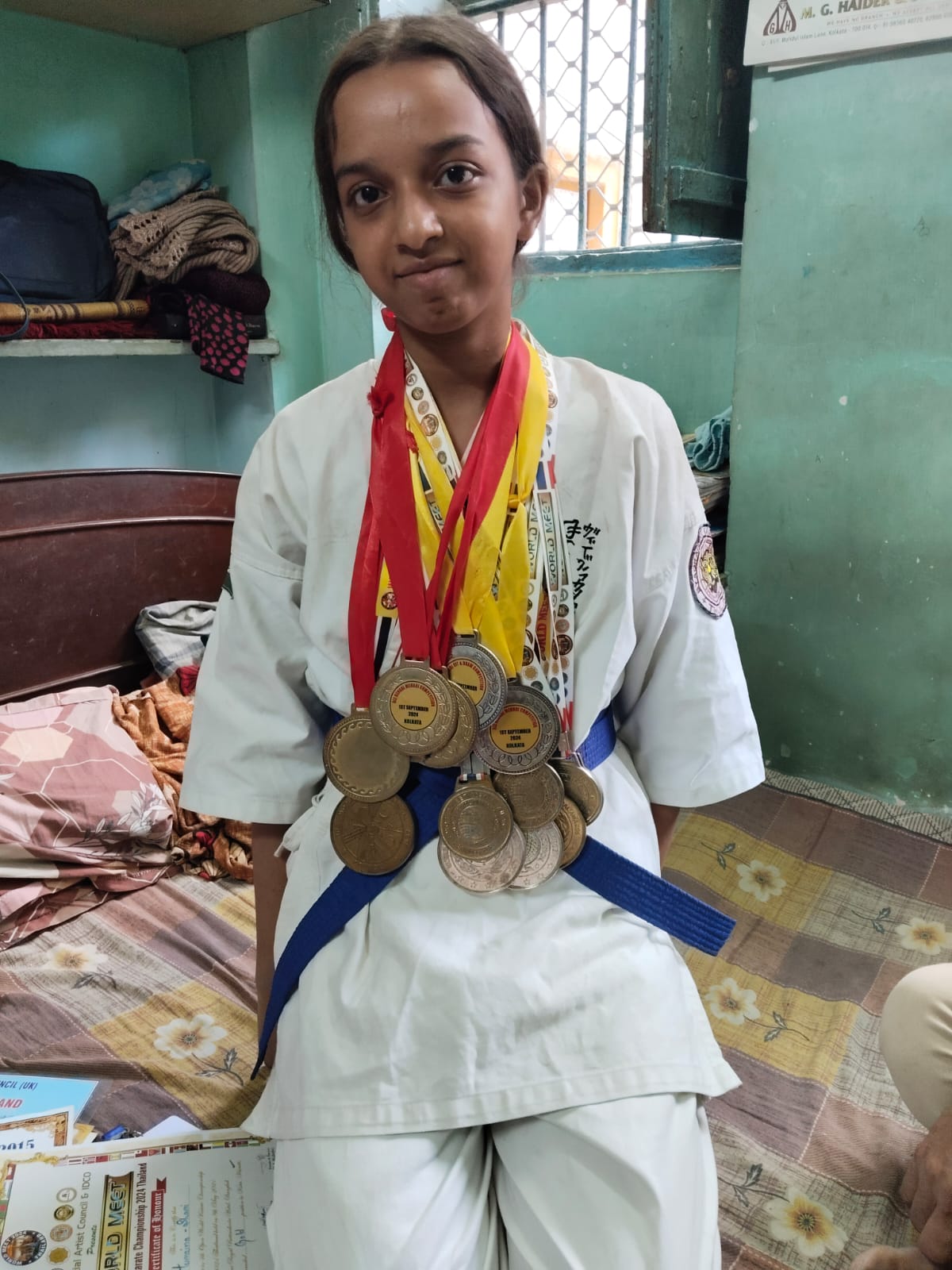
However, these obstacles have not dampened her spirit. Humairah’s determination to follow her dreams led her to enrol in a self-defence course at the Indian Karate Association. Encouraged by the academy’s founder, M.A. Ali, who seems to have recognised her potential and took her under his wing, she was trained free of charges. Humairah’s agility and passion for the sport enabled her to quickly master the karate techniques. It led her to qualify in the 45 kg weight category. She triumphed in every competition she entered.
In 2023-24, Humairah earned a gold medal in Thailand. Her journey to Thailand was made possible thanks to the support of her schoolteachers and well-wishers who contributed to her travel expenses. She was also honoured with the International Sports Award by King Sany Wijaya Nata Kusuma of the Padjadran Kingdom of Indonesia.
His Majesty the King Sany Wijaya Natakusuma of Padjadaran Kingdom Indonesia honouring Humairah with International sports award 2024 in Bangkok Thailand
Humairah has once again proven herself by qualifying to participate in the 2025 World Meet. Though she is still a blue belt and has a long way to go before earning the coveted black belt, her commitment remains unwavering. “I took up Karate for self-defence, and I will continue to persevere until I achieve my black belt,” she says.
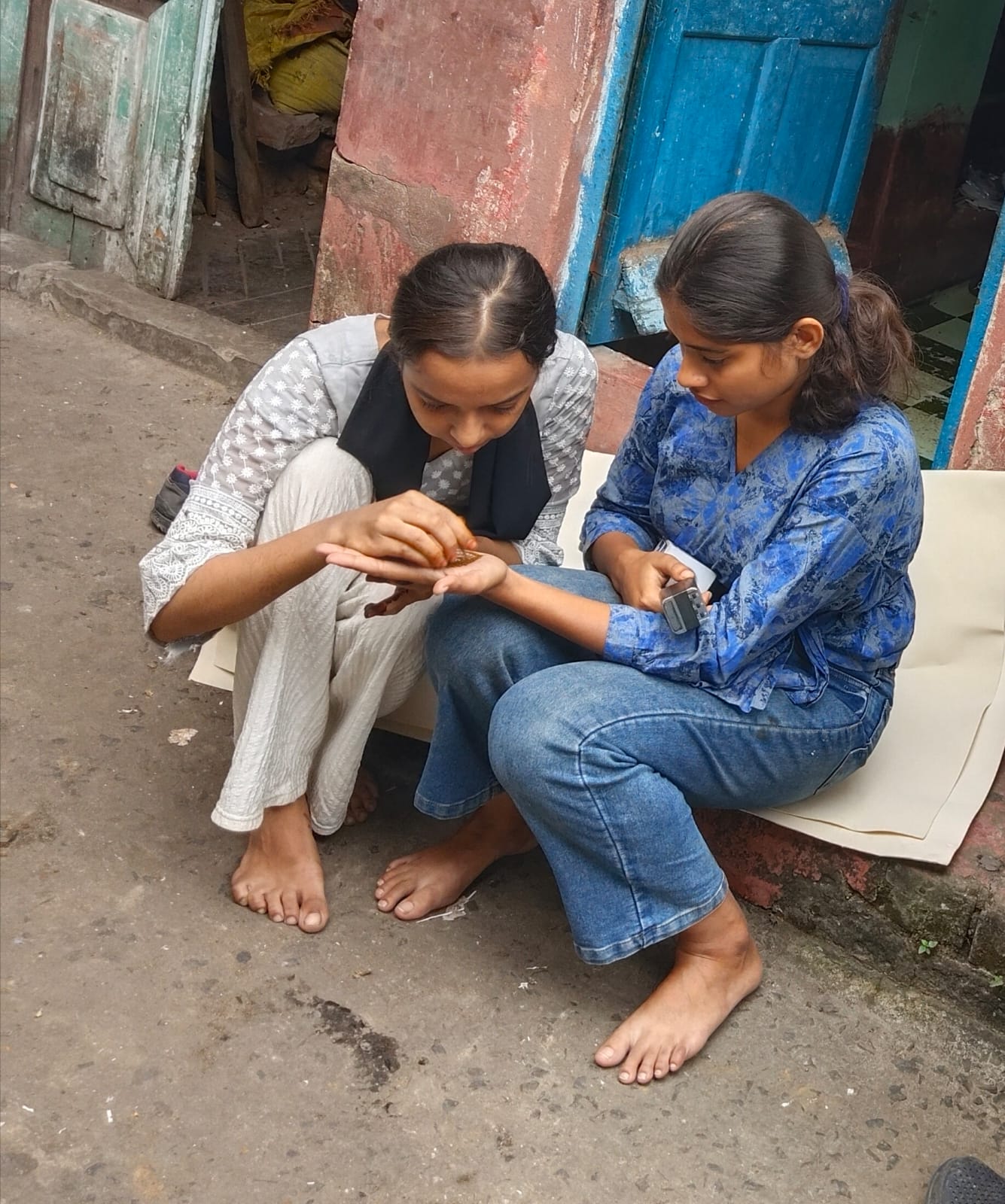
Humairah’s talents extend beyond Karate. During her holidays, she completed a crash course in Mehendi (henna) designing, and now, in her spare time after school and studies, she applies Mehdi to fulfil orders and earn some money.
A grade 11 student at Anjuman Girls High School, Humairah lives in the vibrant, bustling lanes of Mufidul Islam Lane in Kolkata. Her siblings look up to her, and her teachers hold high expectations for her future.
Deeply religious, Humairah dreams of becoming a doctor. She believes that her faith in God will help her overcome any challenge that comes her way. “Being able to go to Thailand last year was an impossible dream that came true. So, I am confident that the hurdles ahead will also be overcome, as I have utmost faith in Allah,” she says with a hopeful smile.
At present, Humairah is striving to raise the funds necessary to attend the 7th World Meet. In a remarkable show of resilience, she is using her mehdi art to raise money for her dream. Each intricate design is a testament to her determination to break through financial barriers and make her country proud.
“Despite coming from a financially disadvantaged family, Humairah has excelled in every field she has touched. Her dedication and perseverance have earned her a place in the prestigious 7th World Meet, where she will represent India on the global stage. This is a golden opportunity for her,” says her coach and mentor, M.A. Ali.
He further appeals to all philanthropists, sponsors, and kind-hearted individuals to help Humairah overcome her financial challenges: “Humairah’s story is a call to action for those who wish to invest in a bright young talent. Sponsoring Humairah isn’t just an act of charity—it’s an investment in a future filled with hope, ambition, and success. Let us unite as a community to ensure that financial constraints do not dim the light of this rising star.”
Those who wish to help Humairah in her journey can contribute to the following bank account:
Account Holder Name: Humairah Shami Bank Name: Punjab National Bank (PNB) Branch Name: Entally Account Number: 0088010367851 IFSC Code: PUNB0008820 Mobile Number: 7439884641
With the help of the community, Humairah can realise her dreams and take another step towards making India proud on the world stage.
source: http://www.twocircles.net / TwoCircles.net / Home> India News / by Nikhat Fatima, TwoCirlces.net / December 31st, 2024
A labourer’s son in West Bengal defies all odds to achieve his dream of becoming a doctor
New Delhi :
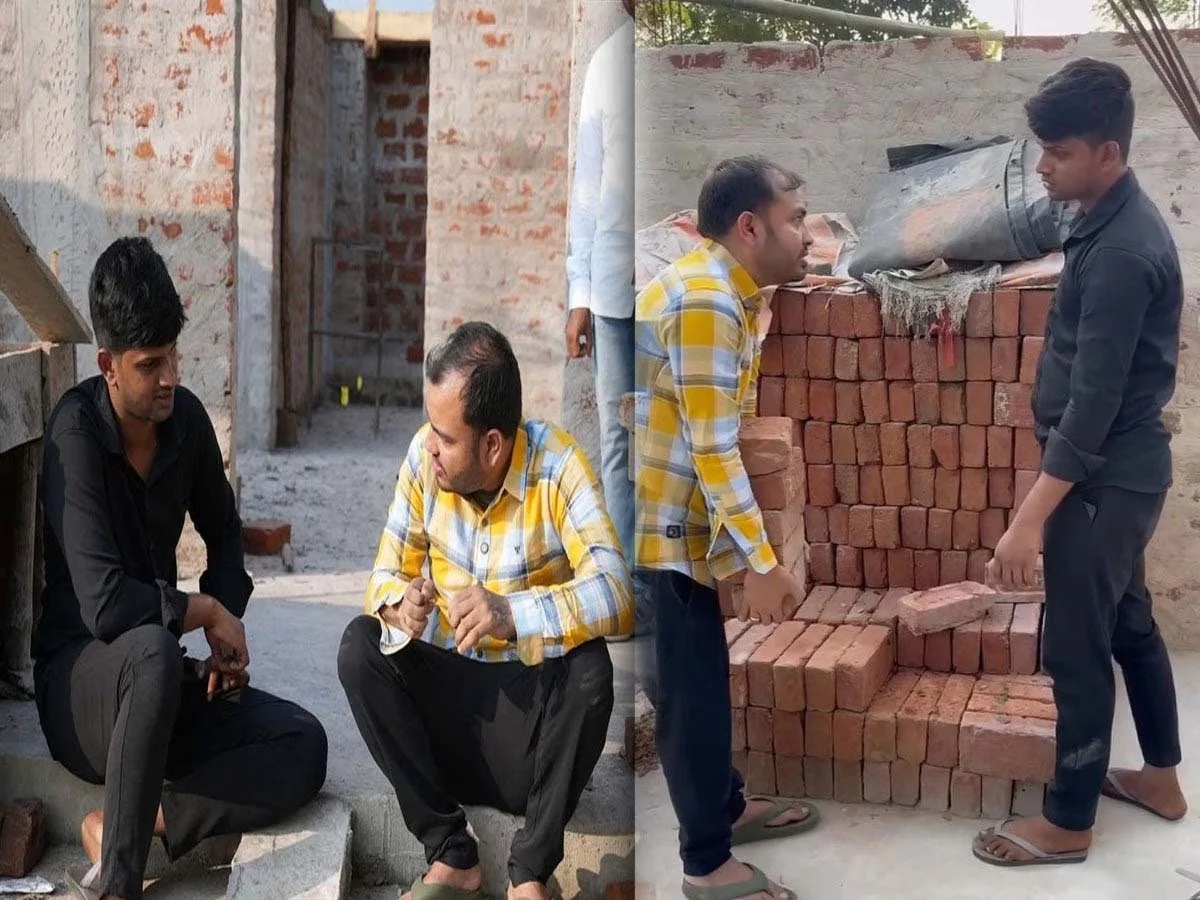
In an era where mobile phones are often criticised for their harmful impact on society, the story of 21-year-old Sarfaraz from East Medinipur, West Bengal, shines as a beacon of hope. Once a labourer carrying bricks under the scorching sun, Sarfaraz’s remarkable journey to gaining admission into the prestigious Nil Ratan Sarkar Medical College for an MBBS degree showcases grit, determination, and the transformative power of education.
Born into a family with limited financial resources, Sarfaraz’s childhood was marked by hardships. His father, also a labourer, earned a meagre daily wage, barely enough to feed the family of six. Despite these challenges, Sarfaraz excelled in his studies, harbouring the dream of joining the National Defence Academy (NDA).
An unfortunate accident dashed his NDA aspirations, but Sarfaraz did not let despair consume him. “Life was never easy, but giving up was never an option,” he said.
The COVID-19 pandemic brought a glimmer of hope in Sarfaraz’s life. With financial assistance from the government, his family bought a smartphone. This device became Sarfaraz’s lifeline, as he used free YouTube tutorials and online ed-tech platforms to prepare for the NEET, India’s highly competitive medical entrance exam.
“I studied through free YouTube videos initially and then enrolled in an online course with a concession in fees. It changed everything for me,” Sarfaraz said.
For three years, Sarfaraz juggled gruelling physical labour and relentless academic preparation. His daily routine involved carrying 400 bricks under the blazing sun for a wage of Rs 300, followed by seven hours of uninterrupted study.
“My father and I would work from morning until afternoon. After that, I would come home and dive into my books. It was difficult, but I never lost sight of my dream,” Sarfaraz explained.
In 2023, Sarfaraz’s NEET score qualified him for a dental college, but the prohibitive costs forced him to forgo the opportunity. Undeterred, he decided to make a final attempt at NEET in 2024.
“I thought, I’ve worked so hard — let’s try one more time. This was my last chance. If I hadn’t succeeded, I would have given up,” he said.
Sarfaraz scored an impressive 677 out of 720 in NEET 2024, securing his place in Nil Ratan Sarkar Medical College.
Behind Sarfaraz’s unwavering determination was his mother’s dream of seeing her son become a doctor. Her sacrifices inspired him to push through every obstacle.
“My mother always wanted me to be a doctor. I promised myself that I would make her dream come true,” Sarfaraz said, his voice filled with emotion.
Now donning a white coat and stethoscope, Sarfaraz is a source of pride not only for his family but also for his entire village.
Sarfaraz’s success has brought hope to his village, where many children often abandon their studies due to financial difficulties. Determined to give back, he has started mentoring young students.
“When I become a doctor, I want to work among the poor. My village folks have supported me throughout this journey, and now it’s my turn to support them,” he said.
Sarfaraz’s story has inspired countless people. His former teacher, who guided him in his early years, remarked, “Sarfaraz always had a spark. Despite his circumstances, he was determined to learn and grow. His success is a testament to his perseverance.”
A fellow villager, moved by his journey, said, “He has proven that no obstacle is insurmountable. He is the pride of our village.”
Sarfaraz’s journey from a labourer at a brick kiln to a medical student serves as a reminder of the potential within every individual, regardless of the circumstances. His story resonates deeply, offering hope to those who dream big despite the odds stacked against them.
“Dreams do come true if you work hard enough,” Sarfaraz said with a smile.
As Sarfaraz begins his medical education, his journey is not just a personal victory but a source of inspiration for countless others. It proves that with determination, resilience, and the right opportunities, even the toughest challenges can be overcome.
source: http://www.clarionindia.com / Clarion India / Home> Editors Pick> Indian Muslim / by Mohammad Alamullah, Clarion India / November 26th, 2024
City author Salil Gewali received Dr. APJ Abdul Kamal award recently during the release of Urdu edition of his book — ‘Great Minds on INDIA’.
The book was released by the Governor of Assam Gulab Chand Kataria at Raj Bhavan, Guwahati.
The function was attended by scholars and guests from Assam, Kolkata, Meghalaya and Manipur.
During the programme, Gewali was awarded “Dr. APJ Abdul Kalam Rashtra Gaurav Samman” by a Muslim organisation, Dr. APJ Abdul Kalam Foundation of Howrah, West Bengal for Gewali’s contribution to the nation.
The governor formally presented the award to the author and lauded him for his contribution to the country through his research-based book highlighting the profound impact of ancient Indian literature on Western luminaries.
Great Minds on India” was translated into Urdu by Dr. Syed Hussain of Hyderabad and edited by Abdul Khalique of Kolkata.
The book published by Dr. APJ Abdul Kalam Foundation, Howrah, has so far been translated into thirteen languages, including German.
The secretary of the organisation Abdul Khalique has also promised to distribute the Urdu edition to a minimum of sixty countries worldwide, ensuring its global reach and impact.
Gewali extended his appreciation to each member of the organisation for their support in translating and publishing his book in Urdu. He acknowledged the organisation’s dedication and commitment to its cause.
Gewali was honoured with multiple Ananda Sammelan Puraskars and Bhanu awards. In 2011, his contribution was further acknowledged with the prestigious Thomas Jones Award from the United Christian Writers’ Association.
Also having been prescribed as a study textbook in several academic institutes in India and Virginia in the USA, ‘Great Minds on INDIA’ stands as a testament to the rich cultural heritage and intellectual contributions of India to the world. It is an inspiring read that bridges the ancient wisdom of India with modern scientific and philosophical discourse, Gewali said.
“Know Your India” is Gewali’s another patriotic book, released by the Chief Minister of Sikkim in 2022. This title has recently been approved for higher classes in one of the prestigious schools in Kolkata. Gewali is also credited with a series of school textbooks prescribed by the Meghalaya Board of School Education (MBOSE).
source: http://www.meghalayamonitor.com / Meghalaya / Home> State / by Reporter (headline spell corrected) / June 25th, 2023
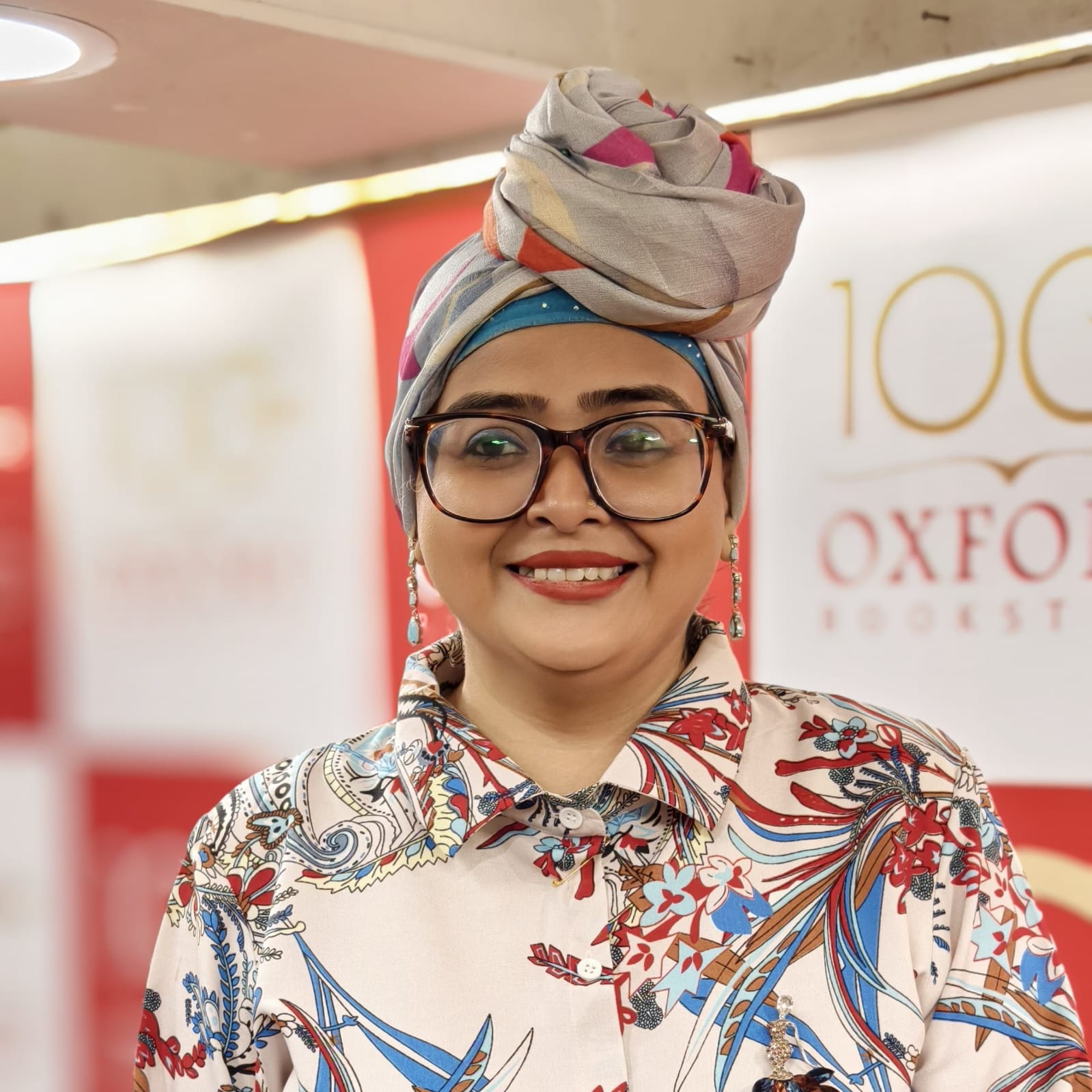
Shagufta Hanaphie’s story is incredible, starting from a child as a shy girl who could barely speak, chronically ill with many complications to the point she would fall unconscious. Yet, at one point in her life, a “magic wand” touched and transformed her. She rose to become an Event Curator, Storyteller, Digital Creator, Author, Womenprenuer, Award Curator, and Philantropist.
She is also the co-founder of Best Friendz Society along with her friend Rajiv, and founder of SHE – Shagufta Hanaphie Events – which is a PR and event boutique, and many other organizations.
A turnaround came during COVID 19 – pandemic when Shagufta along with a team provided food for a village of 400 people in Ernakulam, Kerala.
Post Cyclone Amphan that hit Bengal, she and her team also traveled to places in Sundarbans where they provided food, dry rations, and clothes to the needey persons.
Again, during the Covid-19 pandemic, Best Friendz Society reached Sundarbans.
She started a campaign with her team called Hunger Free Bengal. She coaches people who are emerging with startups and does personal counseling for the lonely, and divorcees, and on occasions, has even match-fixed singles. She works with suicidal people and conducts counseling sessions with young girls and boys.
Titled with many monikers such as Event Organizer, Author, founder and Director, CEO at Teacher’s Excellence Award, Founder Director, Owner of SHE Founder, Director, CEO at Inspiring Women Achievers Awards – IWAA, she tells Awaz-the Voice, “I am not a brand but I want to honour, felicitate people for their outstanding work. While I may not be able to give a formal award, I want to prize people for the recognition for their incredible work and dedication which otherwise gets overshadowed by other giants.”
Shagufta Hanaphie
Shagufta lived with her parents and three sisters in a joint family of 17 members in the 100-year-old bungalow-style British-styled house in Kidderpore, South Kolkata.
Her uncle and aunt adopted her. As a little girl, Shagufta was emotional and shy, she hid behind her mother; and never spoke to people outside the family circle. She struggled with illnesses, and due to this could not study well.
“We say bhagwan ka ishara alag hota hain, maybe if a person does not do well in early life, perhaps later in life he will do something different or great.I was a very sick child right from the beginning making me heavily pampered and if I didn’t want to study, they would say don’t put pressure on her. My mom was very strict but others were soft on me. We lived in an extended family, Baarey Papa, Baari Ma used to lavish love on me, to the point that I became lethargic. I had a ligament injury in class 6 which affected the left side of my body. I sometimes even became unconscious.
“When I was 9, I underwent surgical removal of gall bladder; it had 72 stones.This story was reported by newspapers. When I was in class 8, I did not take my exams so I lagged one year. At that time, an angel in the form of my Dad’s friend, Uncle Junaid took the imitative to help me to study saying, “Let us bring back her motivation to study and let me teach her.
“Bedridden, with traction around my neck, my body aching, lying down, he taught me Maths and I started to like the subject. After being bedridden for three months, I returned to school in a robotic dress. My principal called my father and asked him to take me home saying, “You don’t understand, she is going through a mental trauma right now.
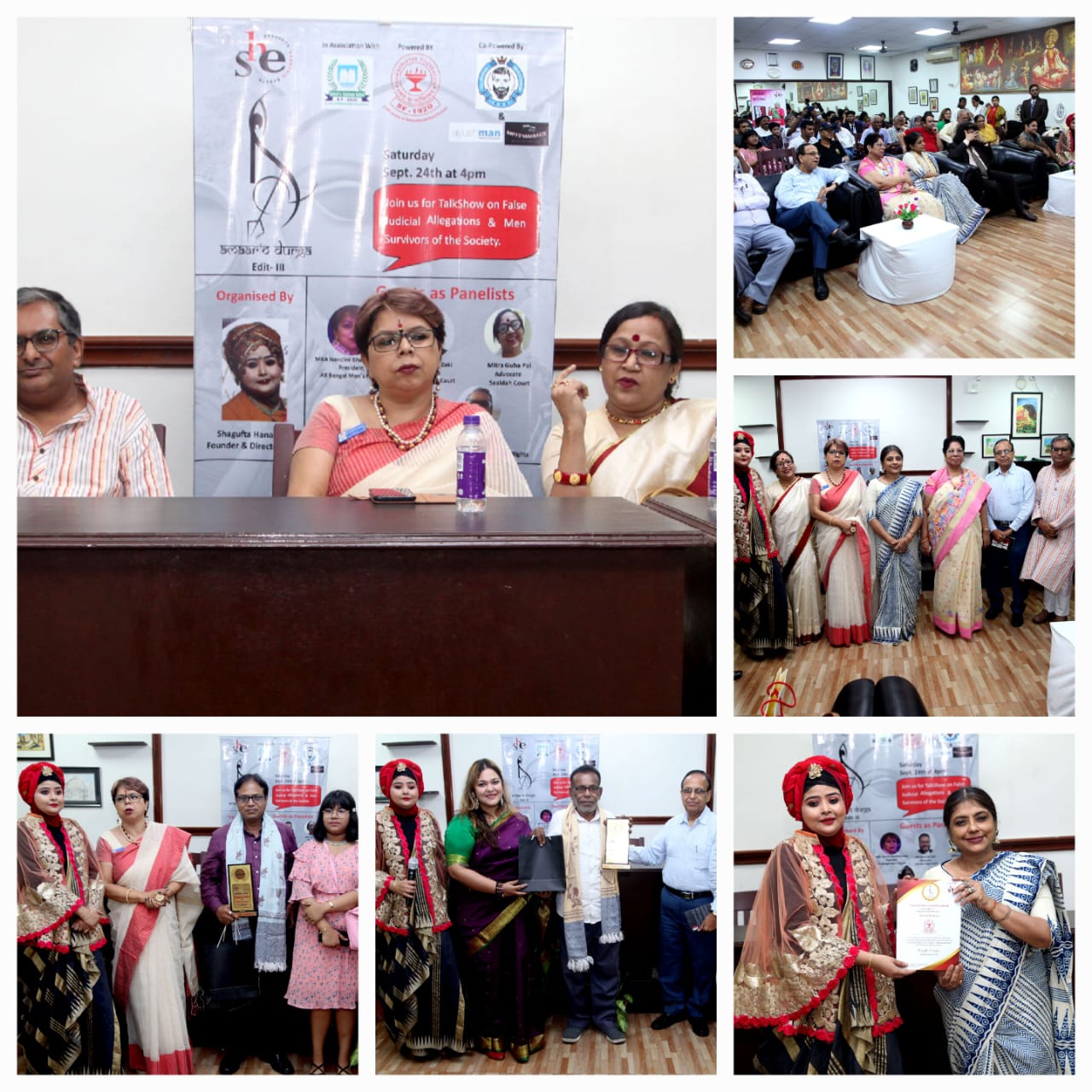
Glimpses of events organised by Shagufta’s NGOs
“I repeated classes, and with mocking classmates around, I changed the school and got an A. I could not believe it and thought the mark sheet got mixed with someone else!
“The talk of marriage exasperated me and decided to go to Ranchi and stay at my Aunt’s home to do college.
“After Baari Ma had a fall, I returned in 2002 and refused to go back to Ranchi. Dropping out of college, one day I attended a workshop where Ruby Bhatia and Michele Pinto came to Kolkata. That was a defining moment in my life because I never knew what the other world was.
“This workshop was a beautiful learning experience where I met these amazing people who told me, “Since you don’t want to study higher, help us, since your English is good.” With them, I learned oratory skills. Earlier, I never spoke to anyone outside, but presently, not only am I doing public speaking but now everyone meets me and I am well known.
“My first salary was Rs. 3200 and I spent more money going by taxi to reach my workplace. My Baari Papa used to say, “Let her travel so at least she will learn to talk and mix with people.” All these were life-learning lessons. It falls into place later on in life.
“After this, Rajiv, a good friend and I launched a new brand called Launchers. I have worked with Rajiv for 17 years as a PR Director in a partnership firm.
“My parents got hold of a very handsome boy, who is my husband now. My husband works the whole day; he is very supportive, most of my photographs are clicked by him, travels with me to all the places, and my parents stand right behind me.
“My life changed in October 2018 when my Baarey Papa was diagnosed with cancer. We spent long hours talking till he passed away in 2019. I was shattered.I felt uprooted and disconnected and took a break from work. It was a break tha my Baari Papa used to encourage me to take.
“In 2020 I did my first event and soon went on to do 5 events. On March 22, 2020, lockdown closed everything. People say lockdown was bad, for me lockdown was a boon. Our NGO called Best Friendz Society was helping people.
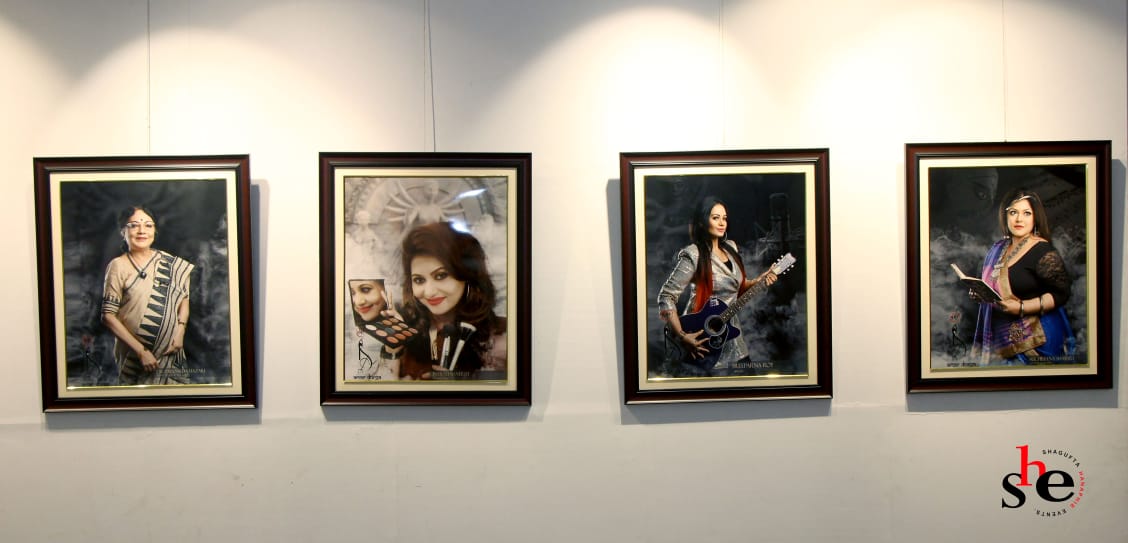
A wall celebrating women from dfference backgrounds in Shagufta’s office
“One day, one of my friends Nisha, a fashion designer, asked me to help people in an area in Kerala during the COVID 19 Pandemic. I was into PR and media. First I wondered how could I reach out to people in Kerala. I told myself: Okay, we will find a way to them even though we are not into this.
“At first, we heard there were four people, turned out to be 40, and finally they turned out to be 400 people stuck in Bengali Para in Ernakulam. While the BSF was providing food in the general area they were not reaching out to the red done. We had to locate the exact place and then Nisha and I arranged for food for 400 people for a month. I felt new energy and joy rising in me. I started gathering people, and communicating with them.
“While people speak up for daily wagers, I started to have a burden for a class of people that are largely ignored such as models who barely get Rs. 2,000 for an assignment which may be all they have for that month, photographers, and even school teachers. I started to post about and for them and personally WhatsApp them telling them if they need help, let me know. I assured them help will reach theirplace, they don’t have to let anyone know about it.
“I got a huge response from many photographers and models.I learned that many people were on the verge of suicide, and sitting at home. I started helping them and listening to their woes. Under the umbrella of Best Friendz Society, we started a campaign called Phone a Friend.
“I am blessed to have amazing clients. I would message PR clients who were on Facebook and tell them, “Sir, I am going to this area to help so-and-so, if you can help me out, it will be a big support to this person. They were responsive and kind, some sent sacs of rice, dal, and many other goods. They told me that they wanted to help but had no idea what to do. Here, many NGOs are misusing funds and are running corruption rings. They told me that they knew could trust me and that I would use their money honestly. They stood behind me while I ran around with their help. This is how our connection happened.
“I organize a philanthropic club, which is a virtual club and I tell our helpers that they don’t have to go around; just help us with money or goods. Those days, I used to get out of the house at 4 a.m. and visit Sundarbans, and other areas during COVID-19 almost 18 times in 2020, and attend to everyone. Sanjay Mondal, a photographer and boat owner told me point blank that he doesn’t want money, only cash for the diesel tu run his boat. He travelled with us. He had three boats. We went to the village where we found their homes submerged under water. We helped the boat owner families.
“We returned from Sundarbans at 11:30 night, reached home by 12:30 night and my mother woke me up at 3:30 a.m. to tell me to catch the vehicle going for another trip for the COVID team. She said, “They are waiting for you. Since you promised, you have to go, whether it is raining or whatever it is, even if you are sick, you have to go.”
“You need parents like that. While we went out so much during COVID, by the blessings of Allah we never got COVID, but people in 5-Star Hotels got COVID. Believe in yourself, believe in your God who has that specific blessing on you, keep doing good to others, and good will return to you and you don’t have to look back, all blessings are there, and people’s prayers are on your life. Just keep doing your work. When the government is doing 98 percent, I am doing my 2 percent.”
On the difficulties they face, she said, “Bengal is a politically disturbed area so to meet the right person is very difficult. In the last five years since 2020, I have opened small centers in every place I have worked with around 20 people or more in each center. We have adopted 23 orphans, senior citizens, teachers, and daily wagers who sum up to over 70 people and every month we send them food and other goods to help them run their daily lives. Nothing is fixed on what we send, but it is enough to ensure them good nourishing food and other commodities so that they can sleep peacefully without going to bed hungry.
A Poster of the event of Shagufta’s NGO
“In October 2020, the Phone a Friend campaign opened our lives to many people. Each night, we got calls from senior citizens- 65 or 70 years old – or young girls or men, and I listened to and counselled them over the phone. One woman did not even have time to have a cup of coffee and was always serving others suffering mental and physical abuse. Due to this, I launched my new campaign called Abuse Durga, which became Amar Durga, Amar O Durga, with a question mark. I asked the public a lot of questions, such as, “If this is my Durga, who are you to ask me a question whether I should celebrate or not?” Being a Muslim, people found it unusual.
“I felicitated people who had running cases against them for 15-20 years who were not guilty and celebrated 11 people. Last year, we held an exhibition to give table space to NGOs which cannot invest; awarded the LGBT community and single mothers. We will be holding another event for the LGBT community soon.
“My NGO is my charity partner. I did this because I was feeling bad to keep asking people to fund my NGO, so I decided to promote my events, and whatever money I got would go to my NGO so I could help the maximum people with the blessings of the Almighty. I do not want to work to mint money, want to work to make my stand.
“My breakthrough came when an old client called and invited me to his office. He is Rajendra Khandelwal, MD, Dhanwantary. During my meeting, he kept saying, “Very nice, very nice,” I asked him, “Who are you speaking about and he answered, “The event you held, the Teachers Excellence Award, I am going to support you,” and to my amazement, he handed over a cheque. At that moment, I knew I was doing the right thing. He asked me, “Why did you choose this topic, I replied, I am alive because of my teachers. Uncle Junaid who taught me how to hold a pencil and I want to do something in his memory. Without teachers’ investment, I would not be where I am today.”
“I do not work with an experienced group of people because there are a lot of young people looking for work, always take new people and give them scope, If they say, we cannot speak, I tell them you will learn to speak, If they are graphic designers, content writers, etc, I take them on board.
‘While we are a modern family, where I used to wear sleeveless and backless clothes, and my father even took us to Trincas to get us on the dance floor, I got to wearing hijab permanently unexpectedly. On my birthday in 2013 or 2014, my Baari Maa gifted me a hijab. I wore it to my office that day and since then, I have been wearing it. I changed as a person totally after that. While earlier, I was highly strung and emotional, I started to calm down after wearing the hijab believing it was my symbol of strength. My family was cool about my hijab.
“My dream is to meet 10,000 people with their inspiring stories and lift them on all my platforms. I highlight lives through events or writing about them. During the lockdown, I started to write in 2020. While my target is global, I also want to cover the map of West Bengal. I believe everyone can do anything but they just need a spark inside with a belief they can conquer the world, and they end up doing great things. Sometimes, to create that spark, that road is blocked so I just need to push these people and bring that change within them.”
Rita Farhat Mukand is an independent writer and author
source: http://www.awazthevoice.in / Awaz, The Voice / Home> Story / by Rita Farhat Mukund / August 24th, 2024
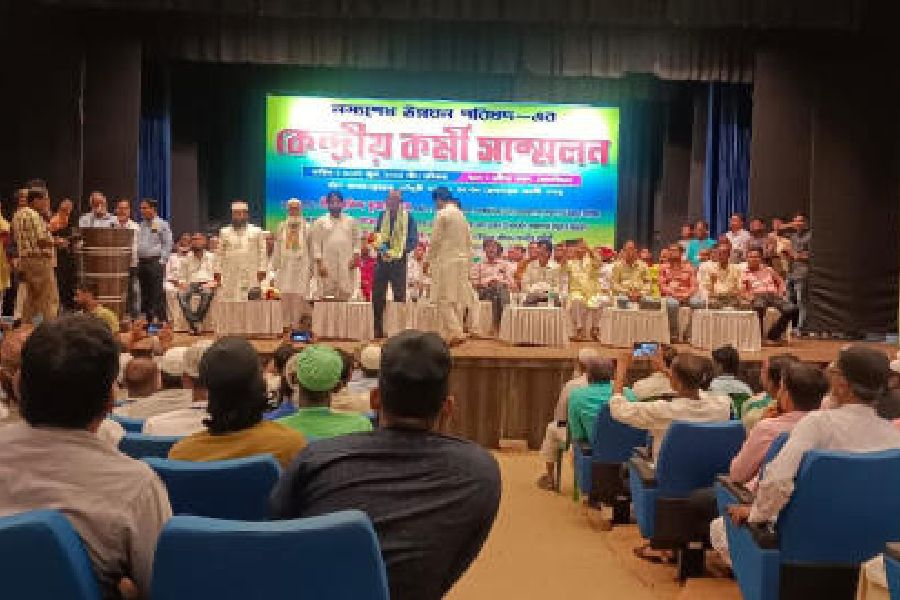
On Sunday, around 2,000 of them assembled at a meeting convened by the Nasya Sheikh Unnayan Parishad, an association of the community, at Rabindra Bhavan in Cooch Behar.
The meeting of the Nasya Sheikh Unnayan Parishad at Rabindra Bhavan in Cooch Behar on Sunday Picture by Main Uddin Chisti
Members of the Nasya Sheikh (Rajbanshi Muslims) community in north Bengal have raised a slew of demands for their socio-economic development and the effective functioning of a development board that the state government constituted for them.
On Sunday, around 2,000 of them assembled at a meeting convened by the Nasya Sheikh Unnayan Parishad, an association of the community, at Rabindra Bhavan in Cooch Behar.
Aminal Haque, secretary of the central committee of the Parishad, said in 2021, the state had announced the creation of the Nasya Sheikh Development Board.
“However, the board has not been constituted in a full-fledged manner and is not working effectively for our development, unlike other development boards which the state has formed in north Bengal. The district magistrate of Cooch Behar has been the chairman of the board and none from our community has been put in the post,” he said.
At the meeting, Haque and other speakers also underscored that most of them are migrant workers and belong to weaker economic sections of society.
“There are school dropouts in our community and yet, funds allocated for the development of minorities are not being spent. We want the board to take appropriate initiatives and will wait for a month. If our demands are not met, we will launch protests from August,” added Haque.
Shaukat Ali, the South Dinajpur district secretary of the Parishad, said around 60 lakh Nasya Sheikhs live in north Bengal. “Being minorities, we belong to the OBC category and want the state to announce that women of our community will get monthly assistance of ₹1,200 under the Lakshmir Bhandar scheme like SCs and STs. As of now, they get ₹1,000,” said Ali.
Farid Akhtar Gazi, the Jalpaiguri district secretary of the forum, said the state should announce that they are the “sons of the soil” in north Bengal.
source: http://www.telegraphindia.com / The Telegraph Online / Home> West Bengal / by Telegraph India / July 01st, 2024