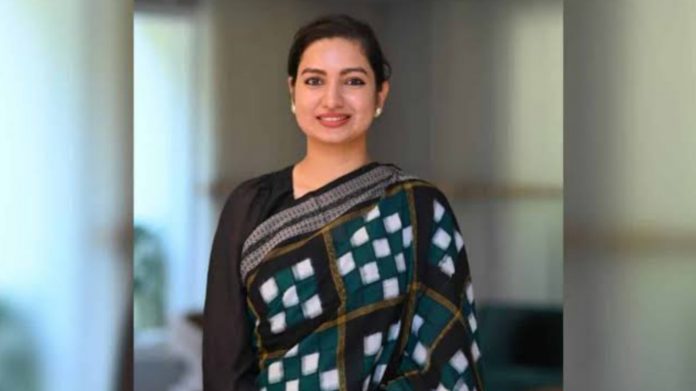
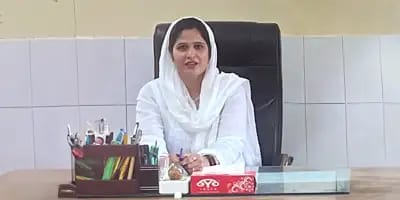
Prof Saima Yunus Khan, Chairperson, Department of Pediatric and Preventive Dentistry, Dr. Z.A. Dental College, Aligarh Muslim University has been awarded the Copyright by the Government of India for her original innovative work on an evidence based Indian Caries Risk Assessment tool for the children up to 6 years of age.
She started to work on the project in 2021, on receiving the John Clarkson Fellowship from the Prestigious International Association for Dental Research.
Being the first Indian to receive this fellowship, she worked in collaboration with Dr. Gerald Niznick, College of Dentistry, Rady Faculty of Health Sciences University of Manitoba, Canada.
According to Dr. Saima, the CRA tool would be beneficial to the Indian children as it addresses the risk factors of early childhood caries of Indian preschoolers. It’s a small compact tool form which can be used with ease by the masses in hospital or field settings.
The Dean, Faculty of Medicine and the Principal, J.N. Medical College, Prof Veena Maheshwari, and the Principal, Dr. Z. A. Dental College & Hospital, Prof R.K. Tewari congratulated Prof. Saima on her exemplary achievement.
source: http://www.amu.ac.in / AMU, Aligarh Muslim University / Home> Public Relations Office (headline edited & additional pix edited) / April 02nd, 2024
Our Prime Minister Narendra Modi fondly refers to girls as Bharat ki Beti. One such Bharat ki Beti Uzma Fatima, 26, an assistant engineer at the Srisailam Power Plant in the Telangana State left a blazing trail of bravery as she saved 4 of her colleagues from the fire reportedly caused due to short circuit a few days ago.
Modi also says: Beti Bachao, Beti Padhao (Save girl child, educate girl child). Young Hyderabadi Uzma’s bravery can make us say: Beti Padhao, Beti Bachaati (Educate girl child, she will save you)!
Thousands of girls have been raped and burnt to death. Many others have been burnt to death for dowry. But when girls get a chance, they save the families and the nation. Uzma Fatima was a notch higher in the sense that she saved those 4 colleagues, who were not even her own family. She put humanity first!
Uzma Fatima’s father Mohammed Zubair runs a footwear business at Chappal Bazar in Hyderabad. He has three daughters and a son. The elder daughter is married. Uzma Fatima was his second daughter and was unmarried. His youngest daughter is in the eighth standard.
Mohammed Zubair’s son Mohammed Minhaj who is a degree college student told that his family is in a state of shock due to the sudden tragedy. According to him, Uzma Fatima was working in Srisailam Power Station as an Assistant Engineer for the past four years. The CCTV footage of the fire accident shows that Uzma had come out of the fire engulfed place. According to the survivors, she saved 4 (four) of her colleagues. She went back to bring out the other assistant engineers trapped there. She could not come of the tunnel along with eight other colleagues. The brave engineers perished in the fire.
It may be recalled that women were finally given combat roles in the Indian Army after a long struggle. Uzma’s sacrifice proves that women are second to none in bravery. Women are our best bet to save our country within and on our borders. Rani Laxmi Bai of Jhansi proved her bravery in the battlefield against the British. Every girl in our country is a potential Rani Laxmi Bai. They prove it when they get chances. Our Prime Minister Narendra Modi may certainly be feeling proud about the sacrifice of Bharat ki Beti Uzma Fatima.
A fitting tribute to Uzma’s memory would be institute a gallantry award her name and also rechristen Srisailam Power Plant as Uzma Fatima Power Plant. It will not only generate electricity but it will also generate bravery for our future generations of girls to emulate.
The Telangana Chief Minister K. Chandrasekhar Rao (KCR) should pay tribute to Telangana’s daughter Uzma Fatima by naming a major road in Hyderabad after her. The Malakpet Railway Station near her residence can be named as Uzma Fatima Railway Station. Are Modi ji and KCR Garu listening?
source: http://www.beyondheadlines.in / Beyond Headlines / Home> Real Heroes / by Dr. Ahmed Moinuddin Siddiqui / August 25th, 2020
City resident Dr Sharief Deshmukh, a professor in Mathematics at the King Saud University, Riyadh, in Saudi Arabia, has featured in the list of the top 2% of mathematicians in the world.
Dr Sharief Deshmukh
Chhatrapati Sambhajinagar :
City resident Dr Sharief Deshmukh, a professor in Mathematics at the King Saud University, Riyadh, in Saudi Arabia, has featured in the list of the top 2% of mathematicians in the world.
Each year, depending on paper publications, citations, as well as contributions to the field of research, Stanford University identifies research and recognises them under its prestigious list.
Deshmukh, who specializes in ‘differential geometry and its applications’ is the first from the district to bag this prestigious recognition in 2021 and 2022.
Deshmukh intends to give back to society by guiding and helping students in Mathematics.
“Our country has a lot of exceptionally good talent, but it needs proper guidance to perform, compete and excel on the global platform,” Deshmukh told TOI.
As a research scientist, he has 190 publications to his credit. Deshmukh’s work has also been published in the world’s leading international journals and about 2,000 indexed publications.
Deshmukh completed high school and studied BSc Honors in Mathematics from Deogiri College under Marathwada University (Now BAMU) in 1972. He was among the toppers in his master’s degree in 1974.
source:http://www.timesofindia.indiatimes.com / The Times of India / Home> News> City News> Aurangabad News / by Mohammed Akhef, TNN / July 20th, 2023
In a remarkable feat, Habibur Rahman, a resident of Malegaon, has outshined 9,000 candidates to clinch the top position in the recruitment exam conducted by the Maharashtra State Waqf Board. Rahman’s achievement underscores his exceptional performance and dedication towards his goal.
The recruitment exam, aimed at filling vacancies for district officers and junior clerks within the Waqf Board, witnessed rigorous competition from aspirants across the state. Rahman’s success stands as a testament to his hard work and preparation.
Expressing his gratitude, Rahman attributed his accomplishment to divine blessings and the unwavering support of his teachers, parents, and relatives. He highlighted the role of study material provided by Sheikh Qamaruddin, editor of Urdu House in Malegaon, in his exam preparation.
Having completed his education from Sheikh Abdul Wadood Primary School and Junior College in Malegaon, Rahman pursued higher studies at Loni’s Parvaraz World Engineering College. While working in Mumbai, he diligently prepared for competitive exams, a journey that has now culminated in his success in the Waqf Board recruitment exam.
Rahman’s stellar performance, in the written examination, is a testament to his academic prowess and determination. His achievement has not only brought pride to Malegaon but has also positioned him as a shining example of excellence in competitive exams.
With Rahman’s success, Malegaon celebrates yet another milestone, reinforcing its position as a hub of talent and academic excellence. As Rahman prepares to embark on this new chapter in his career, his success serves as an inspiration for aspiring candidates across the region.
source: http://www.radiancenews.com / Radiance News / Home> Latest News> Markers of Excellence/ by Zaina Aman / Radiance News Bureau / March 06th, 2024
Following the Islamic principle that ‘if your neighbors sleep hungry while you are there, then you are not a true Muslim,’ neighbours in Pune Kondhwa in Maharashtra have replicated the initiatives of “Roti Bank” (bread bank) across many Indian cities and soup kitchens run by religious organization in the West, to address the hunger in the IT hub.
“Ark Charitable Trust’ was launched in August 2019 when many people in the city had lost jobs or livelihoods due to the COVID and hunger was rampant.
The trust was set up by a Kondhwah couple Aliya Shaikh and Nasir Shaikh from their house. The trust has been running a “Roti Bank” to and feeding widows and destitute women who are forced to wander around in search of food of alms to buy it.
Gradually, the Shaikhs realized that feeding people was a temporary solution to the problem of poverty and they started focusing on its root – lack of education. The trust got involved in educating children wandering on streets picking trash and leftover food and enrolled them in various schools
The trust has also provided job works to many widows whom they came in contact with while distributing food.
The Trust distributes food among people of all castes and religions.
Aliya Shaikh says she completed her 12th from Abeda Inamdar College in Lashkar area of Pune.
“I wanted to study, but I got married early, so I could not and then I realized what if I did not study? I can teach the girls living around me. My children today are doing well; studying in schools but what about those who do not have money? That is why I am trying to ensure that no one’s education stops due to financial constrains.”
Nasir also completed his schooling from Moledina High School in Lashkar area. Though he joined class eleventh he had to drop out due to financial problems at home. He started working as a commercial painter.
Nasir says, “Food satisfies the hunger of the stomach, while education satisfies the hunger of the mind. That is why both are considered basic needs.”
After seeing the work of Nasir and Aliya, a neighbor Ayesha Shaikh also joined them.
Ayesha, 65 has retired from a good position in a multinational company. Aliya, 30, works as a beautician and Nasir, 40, is a building contractor. All three work for ‘Ark’ while handling their business and family responsibilities.
In many weddings a lot of food is left over. To ensure this food doesn’t end in trash bins of the city, the Trust has displayed boards in key points in the city with this statement printed on these: ‘If you have leftover food, contact us… We will deliver this food to the hungry stomachs.’
‘Ark’ also gets financial support from various people and institutions on their auspicious occasions.
The three started this work from their homes without any funds. For the first eight days, Aliya used to cook food while Nasir distributed it. For the next eight days, Nasir took to cooking and Aliya to distribution. They would alternate their responsibilities ensuring that no single person has to take workload.
Aliya says, “We kept reaching out to the needy. As the work progressed, other people came forward to help us. Some started helping us financially, other by donating rations like oil, grains, etc.”
Soon many others more people had joined Ark.
Nasir empathises more with poor and says they are very sensitive. Instead of doling out food, the trio started a ‘Roti Bank’ to give dignity to those needing food.
Nasir says, “The work of ‘Roti Bank’ is not a one-day job. We cannot do one program in one month and then do the next program the next month. It has to be continuous work.
“It’s a challenge to feed their children and send them to school. But it’s also satisfying to see that someone’s life is changing because of you.”
“We have seen people cooking using paper as the only fuel. We have seen them struggling to satisfy their hunger,” says Ayesha. Food is provided to 50 families every day through ‘Ark’. Children’s education fees are paid.”
Aliya, Ayesha and Nasir deliver food to the people of Kondhwa, Bhagyodayanagar area. But the needy people of Hadapsar and Katraj area are not able to reach them every day, nor is it possible for Aliya, Ayesha and Nasir to take food boxes there every day.
So all three of them go to that area and distribute enough ration for at least two months on the basis of the given identity card. They also offer ‘Sehri’ and ‘Iftari’ facilities during Ramzan. A satisfied Ayesha says,
“It is a pleasure to be able to reach out and help the needy. Because of the work of Aliya and Nasir, I am associated with a good organization.”
source: http://www.awazthevoice.in / Awaz, The Voice / Home> Stories / by Chhaya Kavire, Pune / April 04th, 2024
Mohammad Affan Khan of Bhopal, Madhya Pradesh, has helped over 200 Imams, who are in charge of mosques and not paid well, to start their small businesses to supplement their incomes and live with dignity.
Speaking with Awaz-the Voice Mohammad Affan said to begin with he contacted the Imams of Bhopal and nearby areas to understand their conditions. His friends also came forward to join this mission.
They contacted the Imams of different mosques to gather information about their financial status and to their shock found out that most of them lived in poverty and some young people were even contemplating contemplating leaving their job that otherwise is socially prestigious.
“We heard them and realized why many young Imams were leaving their jobs. After that, we complied the statistics.”
He discussed it with his group of friends and everyone agreed that the Imams should run shops in neighbourhoods so that they can make money by selling stuff.
“We started by giving Rs.10,000 to each Imam. In the first instance, five Imams were assisted to start general stores in their localities. “We asked the Imams to experiment by starting their business and leave everything to Allah.”
Affan Khan sent a message of his intent to his relatives and friends and requested them to help with Zakat as the financially weak imams were eligible to receive it.
“I wrote to them that if everyone helps the mission could be extended and the lives of many could change. This will also solve the problem of imparting religious education to the children, who feared their Imam would run away leaving them in the lurch.
“As we traveled further down the road, we realized that not every Imam can run a grocery store as many areas have already such stores. This is the reason that other Imams were taught skills for starting a source of livelihood.”
Some of the Imams were helped to open tailoring shops, some opened four mills. Some of them started selling clothes, while some started making metal pots.
Affan Khan said he and his team didn’t expect this mission to be so successful.
In a year, the group has helped some 200 Imam start and run their businesses.
Later the Association of Muslim Professionals joined in this mission enabling Affan and his friends to help more Imams. The AMP joined in the campaign in a big way as it counseled the Imams to upscale their businesses.
It is worth noting that these stores gradually increased the volumes of their business as locals wanted to buy from their Imam and asked them to stock everything.
This made them do brisk business and today they have helped Imams in opening 222 shops.
source: http://www.awazthevoice.in / Awaz, The Voice / Home> Stories / April 13th, 2024
Uzma Shaikh’s decision to join the police force was inspired by a senior Police Inspector who visited her college as a guest when she was preparing for the 12th board exam.
Ashti (Beed):
Azm mohkam ho to hoti hai balaayen paspa, Kitne toofan palat deta hai sahil tanha. This Urdu couplet which loosely translates as ‘If the determination is strong then the evil calls are pushed back, How many storms does the shore turn away alone’ best describes the journey of Uzma Shaikh who will soon don the hat of a Police Sub-Inspector in Maharashtra.
Uzma Shaikh was 3 months old when her father passed away. Acute poverty forced her mother to leave her in-laws home in Ashti – a city in Beed district of Maharashtra, and shift to her parent’s home.
Uzma’s maternal grandfather was not too well off to take care of his widowed daughter. A small bhangar shop was the only source of income of her Nana – maternal grandfather. Then he also had two other daughters to feed and look after.
Realizing the hardship of her father, Uzma’s mother started working first as a help and later as a cook for a school to prepare Mid-Day Meal for students.
“Despite facing hardship economically, my grandfather will never agree for his daughters to work anywhere. My mother however continued to work albeit without the knowledge of my grandfather”, Uzma recalled.
A few months later, Uzma’s mother got a temporary job at the Forest Department on someone’s recommendation to plant soil in a nursery. Uzma’s grandfather expressed displeasure but was helpless by the situation.
Unfortunately, Uzma’s Nana and Nani too passed away after a few months.
“Now, besides raising me, my mother had the responsibility of other members of the family”, Uzma recalled adding, “Ammi started working even harder.”
Uzma was lucky that she continued with her studies except for two years when she was forced to drop out because of the financial burden. Nonetheless, Uzma passed the Class 10 SSC exams from Zila Parishad Kanya Parshala Marathi Medium School in Ashti and 12th board from B.D. Humbarde Mahavidyalaya, Ashti.
In two years when Uzma dropped out, she learned Mehndi art and went one marriage to another to apply Mehndi on brides and newly-wed, and also to women and girls during festival season.
“This helped me raise some money and start my education afresh”, she recalled.
Uzma’s Journey to becoming Police Sub-Inspector
Uzma’s decision to join the police force was inspired by a senior Police Inspector who visited her college as a guest when she was preparing for the 12th board exam.
“I was immensely impressed by the greatness and dignity of the police uniform. An aspiration arose in me, I asked, how to become a Police Sub Inspector. He explained the details”, Uzma recalled.
After 12th, Uzma took admission in the same college to pursue the BCA (Bachelor in Computer Application) degree course. It was during her second year in the degree course that Uzma started seriously thinking to fulfil her dream of becoming a police officer. One of her college lecturers guided her further. Uzma needed to crack the Maharashtra Public Service Commission (MPSC) exam to become an officer which required an extensive training.
For Uzma, the time then came for the toughest – to take permission from her mother.
“I shared with my mother my desire to become a Police Inspector and asked her permission to go to Pune”, Uzma said.
She was reluctant for the obvious reason.
“From where the additional expenses would be managed?” she asked.
Uzma was able to convince her mother somehow. Other family members from Uzma’s parental as well as maternal sides, too were taken on board. They promised moral and financial supports.
In Pune, Uzma searched for the cheapest available hostel and mess. It was 2019 and Covid 19 Pandemic had just started to spread. Unfortunately, Uzma became the early victim of the Pandemic and she was forced to leave Pune and return to her home in Ashti.
Not to let Covid-19 spoil her ambitions to crack the MPSC exams, Uzma enrolled herself in a local library and continued with her studies. But, in an unfortunate turn of event, someone complaint to the Librarian about her Covid infection who cancelled her registration.
“The only option now I had was to study at my home half of which was destroyed by the PWD as part of its road widening project”, she said.
“A small corner of my home was now the area of my all academic activities. The money I raised by applying Mehndi during marriage and festival season was used to buy books and study materials”, she recalled.
Her hard work paid and she cleared the MPSC Prelims in her first attempt. She returned to Pune in 2020 when the Covid-19 Pandemic subsided to prepare for Mains.
“The MPSC Main was deferred because of the Pandemic. The delay provided me additional time to prepare for the coveted exams, and Alhamdulillah, like the Prelim exams, I cleared the MPSC Mains in my first attempt”, she recalled.
Police job requires Physical Test. Uzma cleared it too with an impressive 90 per cent score.
So far so good, Uzma however had a nervous breakdown in the Interview phase of the exam. When the final result was announced, Uzma did not find her name in the Merit List.
“Due to nervous breakdown, I couldn’t do well in the interview and got out of the final cut-off list though by only one mark”, she said.
Uzma still had a chance as her name was on the 3rd position in the waiting list. Uzma was in low income category and an EWS Certificate could have definitely come to her rescue. But, due to lack of the necessary documents she could not get one.
Against this backdrop, Uzma pinned her hope on someone to opt out and allow her to move from the waiting list to the main list. At the same time, Uzma decided to re-appear for the MPSC exams.
Then there was a miracle. Uzma’s earlier waiting list was confirmed and she finally made her way to the final selection list.
“After 11 months of the training period, I am set to become a Police Sub-Inspector”, a beaming Uzma said.
Her dream of becoming a Police Officer coming true, Uzma has a message for other girls.
“If an orphan poor child of a remote place can do it, why not you? You have everything. I would especially like to tell girls to be attracted towards government jobs where there are countless opportunities waiting for them”, she said.
[A version of this article is published by Roznama Inquilab, Mumbai on April 10, 2024. The writer Akhlaque Shaik is Career Counsellor and Columnist at daily Inquilab.]
source: http://www.ummid.com / Ummid.com / Home> Life & Style / by Akhlaque Shaikh / April 11th, 2024
For ex-health commissioner of London Khurshid Alam, education is the only solution for all the problems currently gripping the Muslim community. Saira Aslam talks to Mr Alam for muslimmirror.com about his life struggles, a tragic childhood and his growing up braving it all.
He has several feathers to his cap – from being the health commissioner of London, serving the Indian Army, setting up a vocational training institute in the UK to adopting a school in Nuh near Gurgaon, but Alam feels it is important to continue to learn.
Having lost his mother when he was just three years’ old and then later losing his father at six years’ old meant the end of the world for him. And if this wasn’t enough, he also witnessed the 1964 riots in Jamshedpur in which hundreds of people were killed. But, he says what kept him going and helped him immensely later in life was his education, which he managed to complete despite all the challenges that one could think of.
For over 20 years, Alam has been involved extensively in a variety of roles ranging from being an advisor to leading a wide range of charities and public services in health, education and social care. He has developed and implemented several policies and strategic plans of improving public services and access; and promoting good healthcare and education for community, including working with and giving advice to government bodies and other organisations internationally.
Currently based in London, he has adopted a school in Nuh district, about 45 kilometres (28 mi) from Gurgaon. He has also worked out collaboration between the institution and a school in London, and wants to see his school grow to be the region’s leading school in the next three years. Within six months of its adoption, the school has won two prestigious awards, giving him hopes that the future for the institution looks bright. He points out that the people of the district, who are mostly Muslims, are a marginalised lot and the literacy rate is extremely low.
“Muslims are today lagging so much behind than other communities, not only in India but across the world. And unfortunately, this gap is rising rapidly. Hence, a multi-pronged approach should be undertaken backed by innovative projects on the grass-root level by authorities as well as non-government organisations in coordination and support of each other,” he told MuslimMirror.com during his recent visit to India.
Alam, a Commissioner of the Healthcare Commission who currently holds two other ministerial appointments – Member of Employment Tribunal and Member of Mental Health Review Tribunal, has been running training courses on healthcare and business entrepreneurship skills development programme in the UK and UAE for the past few years but feels “most satisfied” by adopting the school in Nuh, which he describes as “a very deprived area”.
He has set up the AOC International and Academy for Advanced Studies & Training International, an institution specialising in education and training in the UK. He added that he has successfully launched skill development programmes in rural areas as well as initiated women empowerment drives focusing on health, adult education, equality and anti-dowry. He says all such community efforts should focus on the youth, women and other weaker groups.
“My one word answer to all misery of Muslims in India and the world is real and meaningful education. At the same time, the community should strive to become economically and scientifically strong,” he says, adding that all efforts should revolve around the unshaken belief in the Almighty. As part of his long-term plan, he remains passionate about bringing about quality education and value added training courses in different countries.
When asked about the skill development areas Muslims should focus on, Alam says innovative and unique skills that are industry-focused and those that will provide early employment or sources of earnings to themselves and the dependents are important. For example, handicraft, stitching and sewing would be helpful for women, and so will be the basic level training for healthcare nursing assistants, primary teachers, nannies, cleaners, cooks and others.
It is also important for the youth (men) to focus on the skills required for plumbing, plastering, tiling, crane operation, taxi or auto driving, guarding, refrigeration, mechanical work, electronics repair. A society with trained primary teachers, healthcare assistants, chefs, etc is extremely important, he points out, adding that entrepreneurship should be encouraged.
Small NGO groups should reach out to more remote areas under schemes like anganwadi with result-oriented programmes. The divisions and prejudices either based on caste or class systems have proved to be huge obstacles and barriers for a progressive society. Islamic learning or other forms of learning and awareness programmes must be undertaken, particularly in rural areas, says Alam.
Teaching the basic tenets of Islam on equality should be encouraged through awareness camps alongside tackling and working with the religious institutions, bringing all stakeholders under one umbrella tactfully and avoiding differences. However, this work must be undertaken with the sole purpose of helping the Muslim community progress on all fronts, he adds.
He says the positive thing is that “awareness is increasing and we must work relentlessly to make use of every window of opportunity presented to us but remaining focused to our goals through teamwork and equality”. “In fact, in my view it is more important for women to seek complete education and acquire necessary skills,” says Alam the father of two successful daughters (one is law graduate from LSE and another doing MBBS) in his parting reply.
source: http://www.muslimmirror.com / Muslim Mirror / Home> Indian Muslim> Interviews / by Saira Aslam / January 14th, 2018
Shakhapur Village, KARNATAKA / NEW DELHI / Bokharo, JHARKHAND:
Dr. Majid Ahmed Talikoti
Dr. Majid Ahmed Talikoti is not just a distinguished oncosurgeon but a trailblazer whose dedication to combating cancer through surgical intervention has left an indelible mark in the field of oncology. His exceptional expertise and unwavering commitment have led him to successfully perform surgeries on over 16,000 cancer patients, a feat that speaks volumes about his impact and contributions to the medical community.
The Early Years and Determination
Dr. Majid’s journey from the small village of Shakhapur in Karnataka to becoming one of Asia’s renowned oncosurgeons is a testament to his resilience and determination. Growing up in a backward area, he faced numerous challenges but was fortunate to have parents who believed in the transformative power of education. His father’s unwavering support and belief that education could bring about positive change became the driving force behind Dr. Majid’s journey.
Educational Pursuits and Professional Growth
Driven by a strong work ethic and a thirst for knowledge, Dr. Majid pursued his education with determination. He completed his schooling in Belgaum and went on to secure admission to Al Ameen Medical College for MBBS.
His journey took a significant leap when he got admission to AIIMS and later became a senior resident in the Department of Surgical Oncology. Seeking further expertise, he pursued advanced training in Japan, honing his skills and expanding his knowledge base.
Upon his return, Dr. Majid’s dedication and skills were put to the test in the private healthcare sector. Despite initial challenges and being initially overlooked, his commitment to excellence shone through. Offering to work for free initially to showcase his capabilities in a private hospital where he got 40k in the first month as stipend, but he soon garnered recognition and remuneration for his outstanding surgical prowess. Over the past 15 years, he has performed an astounding number of surgeries, averaging about three surgeries per day—an achievement that reflects his passion for serving patients and combating cancer.
Dr. Majid’s role extends beyond individual surgeries. As the Director of Surgical Oncology at Moolchand Healthcare and a consultant at Batra Hospital & Medical Research Center, Delhi, he has not only provided exemplary patient care but also contributed significantly to advancing surgical techniques.
He is credited with starting oncosurgery at Majeedia Hospital (Hamdard University) and the Faculty of Medical Sciences of KBN University (Gulbarga), among others.
His contributions extend to training the next generation of oncosurgeons, having mentored over 200 professionals in the field.
Additionally, Dr. Majid has been proactive in raising awareness about cancer through organizing over 500 cancer awareness camps, furthering the cause of early detection and prevention. Through these initiatives, Dr. Majid has left a lasting impact on the field of oncology, not only through his surgical expertise but also through his efforts in education and advocacy.
Inspiration and Humanitarian Values
Dr. Majid found inspiration from a surgeon who regularly visited Gulbarga on Sundays to attend to patients, drawing large crowds outside his clinic. Witnessing this dedication to serving the community ignited Dr. Majid’s desire to pursue a career in medicine. However, his determination faced a test during a cricket match when he was injured, and a friend sarcastically remarked, “Look at this guy, he wants to become a doctor.” Rather than discouraging him, this comment fueled Dr. Majid’s resolve, turning what could have been a setback into a catalyst for his journey towards becoming a doctor.
Dr. Majid’s commitment to serving the nation is evident in his practice, where he performs surgeries on 100 patients every month, with almost 40 of these surgeries offered free of cost.
Dr. Majid undeniably possesses a heart of gold. He firmly believes that no one should lose their life due to financial constraints. For him, saving a life is paramount, and financial barriers should never stand in the way of providing essential medical care.
This compassionate approach is evident in his advocacy for hospital owners and management to admit poor patients if there are available beds, ensuring that those in need receive the care they deserve, regardless of their financial situation.
Vision for Universal Healthcare and Preventive Medicine
After getting overs 15 years of invaluable experience in surgical oncology, Dr. Majid made a significant decision—to establish Medicant Hospital & Research Centre – a 600-beds hospital in the steel city of Bokaro in Jharkhand. Set to commence operations next month, this hospital represents Dr. Majid’s commitment to giving back to society.
Dr. Majid enlisted the expertise of Mr. Khurshid Alam , an esteemed health and educational consultant based in London, for this mega project.
When asked about his choice of location, he explained that his patients had given him a great deal, inspiring him to return the favour by serving the community. Despite acknowledging Delhi as a lucrative place for earning, Dr. Majid prioritized providing the beat medical facilities to the most backward area like Jharkhand, where proper medical infrastructure is lacking. His decision reflects his dedication to improving healthcare access in disadvantaged regions and ensuring that quality medical care is accessible to all, regardless of their background or location.
Medicant Hospital & Research Centre in Bokaro, Jharkhand.
Dr. Majid firmly advocates for a universal health plan and security, stressing the importance of including healthcare as a fundamental right in India. He emphasizes that everyone should have access to essential health services without discrimination.
Dr. Majid’s belief extends to the core understanding that good schools and hospitals are foundational elements that should take precedence in societal priorities. His resolute stance reflects a vision for a more equitable and accessible healthcare system, where quality education and healthcare are fundamental rights accessible to all individuals, regardless of their socio-economic status.
Dr. Majid advocates for mandatory health checkups, especially for individuals aged 40 and above, as he believes they are crucial for early detection and prevention of diseases. He emphasizes the necessity of regular health screenings for women, citing the fact that diseases like cancer are highly curable when diagnosed in the initial stages. Dr. Majid’s advice underscores the critical role of health education for all individuals, as it empowers people to prioritize their health and seek timely medical interventions, ultimately contributing to better health outcomes and quality of life.
Dr.Majid Ahmed Talikoti‘s journey from a small village to a renowned oncosurgeon is not just a personal triumph but a testament to his unwavering dedication, exceptional skills, and humanitarian values. His contributions to oncology and healthcare advocacy stand as a beacon of hope for a healthier and more equitable society.
source: http://www.muslimmirror.com / Muslim Mirror / Home> Health> Positive Story / by Syed Zubair Ahmed / April 07th, 2024
Irshad, with 11 years experience at Govt Model School, Pegadapally, was chosen as one of two TG educators for 2024 FTEA
Irshad receives a certificate
Hyderabad :
After seven years of perseverance, it’s a moment of celebration for 40-year old Syed Irshad Ali, a post graduate teacher from Model School and Government Junior College in Pegadapally village of Jagtial district, to have attended the Fulbright Teaching Excellence and Achievement (FTEA) programme at the University of Massachusetts, Lowell, US.
Headed by the Bureau of Educational and Cultural Affairs, US Department of State, the six-week FTEA programme opens doors for secondary school educators to partake in developmental initiatives at prestigious US universities.
Irshad was one of only two teachers chosen from Telangana and one of the seven teachers handpicked from across the country for the 2024 programme. Irshad was selected after attending national-level interviews and attempting the TOEFL (Test of English as a Foreign Language), scoring 61.
Irshad was aspiring and attempting to be a part of the programme for the past seven years and his efforts finally paid off when he was selected to attend the programme, where teachers from 19 other countries were also a part of the cohort.
Speaking to TNIE, Irshad said, “The six-week programme has been a one-of-its-kind experience which gave me an exposure to different cultures and people from various parts of the world. Besides exchanging teaching techniques and knowledge-sharing, the programme expanded my approach and gave me exposure to challenges faced by teachers in different countries, some of which were similar to what we face here in India, while others were extremes, which helped me understand the progress made by India in infrastructure, as well as the areas where we need to improve”.
Syed Irshad Ali speaks at Massachusetts University during the Fulbright Teaching Excellence & Achievement programme
Irshad further said that discussions on gender rights, English pedagogy and visit to the Harvard University, which were a part of the programme were a significant value addition to his learning experience.
Irshad has 14 years of experience in teaching and has been working in the Model School for the past 11 years, where he teaches English language to students from classes 9 to 12.
He has also been a state resource person and has contributed in designing various training programmes for English teachers in the state and was also awarded the district-level best teacher award for 2022, for excellence in English teaching during the Covid-19 period.
Irshad, who is a father to a son and a daughter, stressed on the significance of empowering and fostering girl students, especially in the rural areas, where girls face several challenges, hampering their education and said that this achievement came as an added responsibility for him in creating awareness amongst teachers for improving the quality of education in the government schools.
source: http://www.newindianexpress.com / The New Indian Express / Home> Telangana> GoodNews / by Aarti Kashyap / April 07th, 2024