The Malegaon Secular Front of ISLAM Party and the Samajwadi Party, secured the mayor and deputy mayor posts in the civic body, while AIMIM and BJP stayed away from voting
Malegaon :
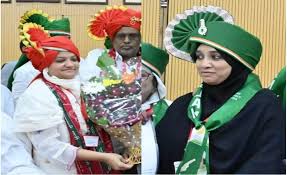
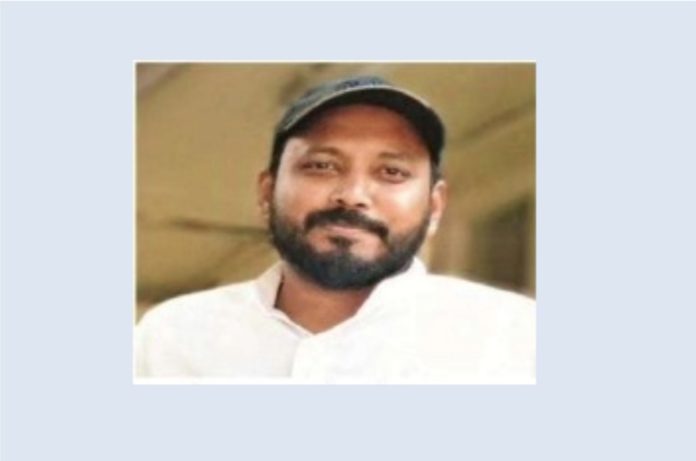
Malegaon in Maharashtra has entered a new phase in local politics after the mayor and deputy mayor elections brought a clear win for the ISLAM Party–Samajwadi Party alliance, known as the Malegaon Secular Front. Sheikh Nasreen Khalid was elected mayor, while Shan-e-Hind Nihal Ahmed was chosen as deputy mayor on Saturday.
The election took place in the 84-member Malegaon Municipal Corporation, where 43 votes were needed to secure a majority. With the backing of the Congress, the Malegaon Secular Front reached the required number and took control of the civic body.
Sheikh Nasreen Khalid received 43 votes in the mayoral election. These included 35 councillors from the ISLAM Party, five from the Samajwadi Party, and three from the Congress. Her nearest rival, Shiv Sena candidate Lata Ghodke from the Eknath Shinde group, managed to secure only 18 votes.
All India Majlis Ittehad-ul Muslimeen’s (AIMIM) 21 councillors and the BJP’s two councillors stayed away from the voting process. The BJP, which is part of the ruling alliance at the Centre and in Maharashtra, did not vote in support of the Shiv Sena candidate, dealing a setback to the Shinde faction in Malegaon.
Speaking after her election, Mayor Sheikh Nasreen Khalid said, “This victory belongs to the people of Malegaon. We will work for justice, development, and equal respect for every section of society.”
In the deputy mayor election, Samajwadi Party councillor Shan-e-Hind Nihal Ahmed defeated Shiv Sena’s Advocate Nilesh Kakade by the same margin. Nihal Ahmed secured 43 votes, while Kakade received 18. AIMIM again stayed away, and the BJP did not take part in the vote.
After her win, Deputy Mayor Nihal Ahmed said, “Malegaon has shown faith in secular values. Our duty is to serve the city honestly and listen to the voice of the common people.”
The municipal elections were held on 15 January. Results showed the ISLAM Party emerging as the single largest party with 35 seats. AIMIM won 21 seats, Shiv Sena secured 18, the Samajwadi Party five, Congress three, and the BJP two.
The ISLAM Party was founded by former Congress MLA Sheikh Asif Sheikh Rashid on 20 October 2024. In its first civic election, the party succeeded in winning the mayor’s post, marking a strong start in local politics.
District Collector Ayush Prasad conducted the election as the presiding officer. He said, “The mayor and deputy mayor elections were completed in a peaceful and orderly manner.”
For many residents, the result reflects the political strength and unity of Malegaon’s Muslim-majority population and reinforces their role in shaping the city’s democratic future through the ballot box.
source: http://www.clarionindia.net / Clarion India / Home> Editor’s Pick> India> Indian Muslims / by Team Clarion / February 08th, 2026
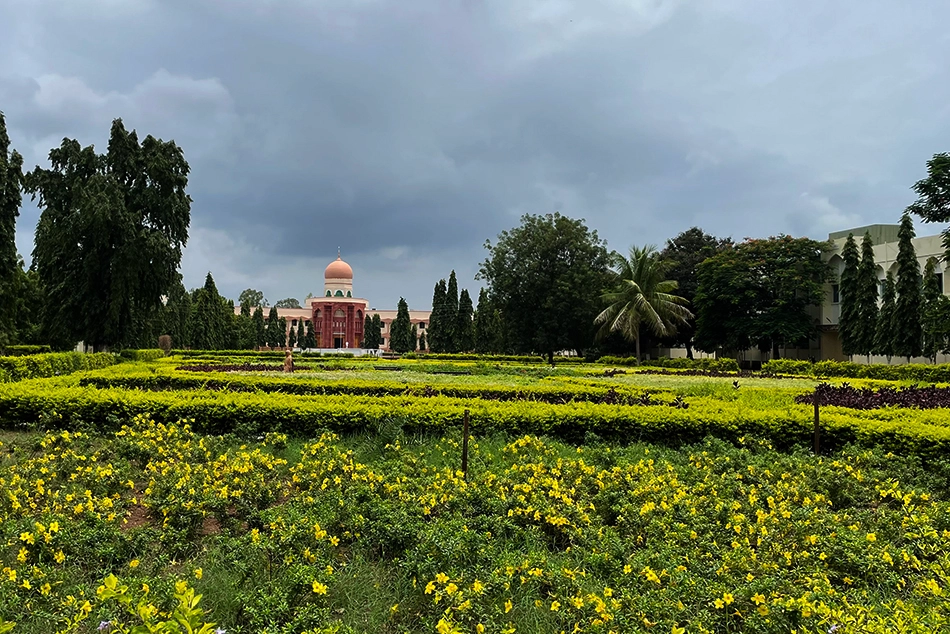
Jamia Mohammadia Mansoora, as this complex is named by its founders, is not only an education hub but also a symbol depicting state-of-the art combination of Islamic and modern Indian culture.
Sultan Manzil (Photo: ummid.com)
Malegaon, despite an appalling history of negligence by successive governments at the centre and state, still has the tag of being a town of literate, erudite and cultured masses firmly intact.
True to this identity, the first thing that greets the people entering the town from the western side on the Mumbai-Agra National Highway and touching the banks of Girna River is the grand educational complex.
Mansoora, as this complex is named by its founders, is not only an education hub but also a symbol depicting state-of-the art combination of Islamic and modern Indian culture.
Lush green lawns, buildings of class architecture, classrooms with modern amenities, model computer rooms – one each for boys and girls, well-equipped laboratories, library with valuable collection of rare books, hostel with suitable lodging, playground – enough not only for cricket but also for games like basketball and football, giant mosque with separate arrangement for women having a capacity exceeding 5000 people and what not. The campus stretched on 56 acres of land has everything that parents would love to have for the education of their children.
Moreover, Mansoora is perhaps the only place in India having a dedicated mosque for girl-students where they not only offer prayers five times a day but also it is they who lead the prayers every day. Above all, they have a unique syllabus for study that not only masters them in Islamic as well as Modern subjects but also train them in meeting the emerging challenges.
The brainchild of Maulana Mukhtar Ahmad Nadvi, who with the help of his friend Saith Mohammad Khaleel of Malegaon initially, and single-handedly later on, turned the Mansoora into a model not only for those working eagerly on Madrasa modernization but also for many schools and educational institutions in India where quality education and desired results have become scarce.
The Beginning
King Abdul Aziz University of Saudi Arabia had organised an International Conference in 1975. The theme of this conference was to deliberate on the possibilities to amend the existing Madrasa syllabus followed at the time by most of the Islamic institutions and bring them in line with the modern requirements. Besides Muslim scholars and Ulema from all across the world, Maulana Mukhtar Ahmad Nadvi and noted Muslim scholar Maulana Abul Hasan Ali Miya Nadvi were also invited to the conference. The deliberations on the all-important issue in the conference kept Maulana Mukhtar Ahmad Nadvi impatient throughout the way back to India. He consulted on the matter with Maulana Ali Miya Nadvi and then tirelessly began searching for options to establish a Model Madrasa in India.
Masjid Aisha of Mansoora is the largest Mosque in Malegaon (Photo: ummid.com)
At this juncture, Maulana Mukhtar Nadvi met his friend Saith Mohammad Khaleel of Malegaon in Mumbai. The two men, though living miles away from each other, had many things in common. While Maulana Mukhtar Ahmad Nadvi had the vision and plan to convert his dream into a reality, Saith Mohammad Khaleel had the required resources in plenty.
Simultaneously, Saith Mohammad Khaleel proved a powerful backer and a great motivator for Maulana Nadvi. The combination worked and what Muslim leaders and Islamic scholars dreamt at King Abdul Aziz University, Saudi Arabia in 1975, became a reality in 1979 thousands of miles away in Malegaon.
Mansoora
A man with a vision, Maulana Mukhtar Ahmad Nadvi was also a master in doing things in novel ways. Hence for his dream Education Institute – running on a unique syllabus based on Islamic as well as Modern Education pattern and stretched on 56 acres of land touching the banks of Girna River along the Mumbai-Agra road in Malegaon – chose Mansoora as its name.
Mansoora, as Maulana Mukhtar Nadvi used to recall, in the 9th century was a historic locality in Baghdad. Iraq’s capital Baghdad during that time was the source of wisdom, knowledge and erudition, and a preferred destination for scholars and academicians. People from all across the globe seeking knowledge and wisdom used to converge at Baghdad. In the heart of the city and centre of all academic activities in Baghdad was Mansoora. A thousand years later, Mansoora took rebirth in Malegaon – a small town in North Maharashtra predominated by Muslim population.
A Model Curriculum
For the Curriculum and Syllabus to be followed at Jamia Mohammadia for boys and Kulliyah Aisha Siddiqua for girls – as he named the first two institutions founded by him in Malegaon – Maulana Mukhtar Ahmad Nadvi worked on two levels.
Realising that the existing Dars-e-Nizami – normally followed by the Mada’ris (plural of Madrasa) in India – is not sufficient to meet the emerging challenges and requirements of even the Islamic studies, he after consulting renowned academicians and scholars of the time, introduced suitable and needful amendments in it.
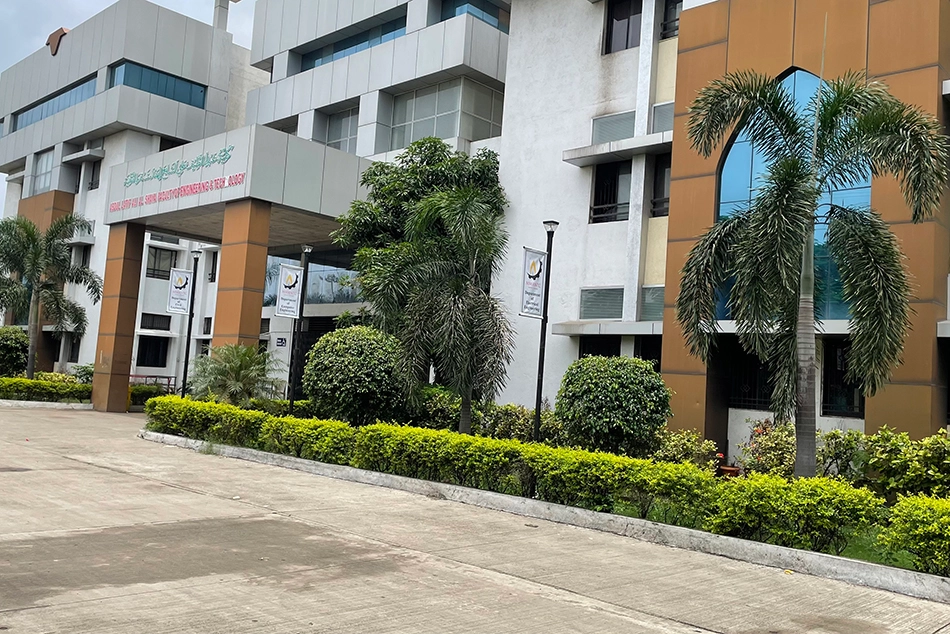
Abdul Latif Ali Al Shaya Faculty of Engineering, Mansoora (Photo: ummid.com)
At the same time, he introduced the modern subjects like Science and Mathematics, and also the languages like English, Hindi and Marathi for students that included boys and girls both. Finally, the curriculum that came into being out of his efforts was a perfect combination of Islamic and Modern Education pattern.
Simultaneously, he meticulously worked for obtaining the all-important affiliation and recognition from the state education board, and also from the Indian and foreign universities. Thanks to the determination, commitment and speed with which he worked, both of his institutes were very soon recognised by the Mahrashtra State Secondary Board and also by Jamiah Islamia, Madinah Munawwarah, Saudi Arabia and Jamia Millia Islamia, New Delhi.
Mansoora: A Force to Reckon With
Due to the hard-work it needed on the part of the students as well as the teachers, the curriculum was really tough when introduced in the beginning. However, once it was on the roll, results started pouring in consistently and with surprising rewards. The Jamia students – both boys and girls, soon found them not only scoring excellently in Islamic studies but also coming with flying colors in state board exams.
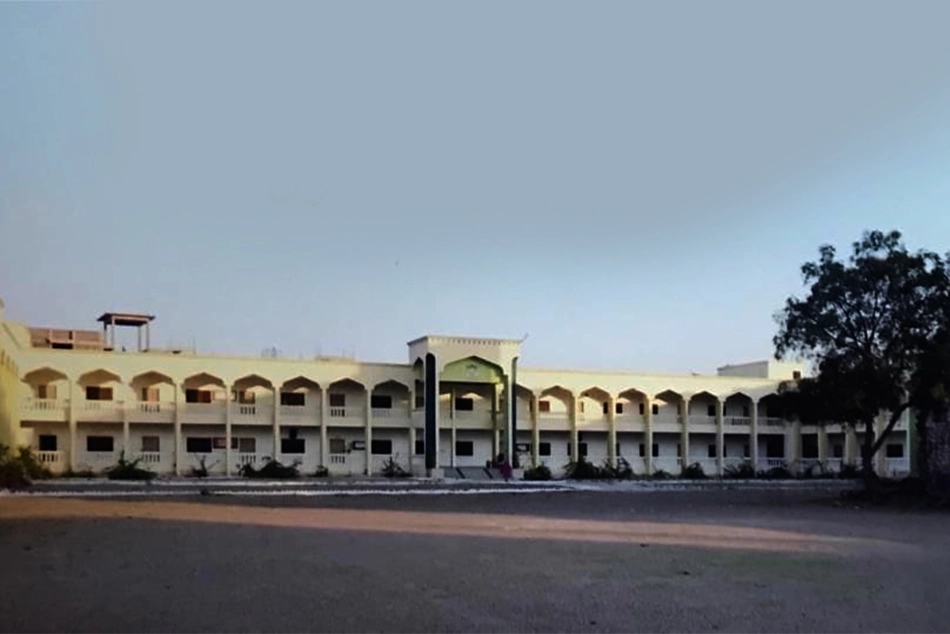
Kulliyah Aisha Siddiqua for girls
However, the brightest moment for Mansoora came in 2008-09 when one of its students Abdur Rehman along with sixteen others created history at Jamia Islamia Madinah Munawwara, Saudi Arabia. While Abdur Rehman topped his faculty and bagged student of the year award, sixteen others from Mansoora cleared the University exams with distinction. The results were so impressive that Jamiah Islamia sent its Head of the Education Department to Mansoora. He specially traveled from Saudi Arabia to Malegaon to have a personal and first-hand account of the way students are taught.
JMES Goes National
After he succeeded in his mission, Maulana Mukhtar Ahmad Nadvi invited people from various places – specially those who were part of the deliberations with him at King Abdul Aziz University in 1975 – to have the first hand experience of what was dreamt in that conference. At the same time, while extending all supports, he urged them to replicate the model in their localities.
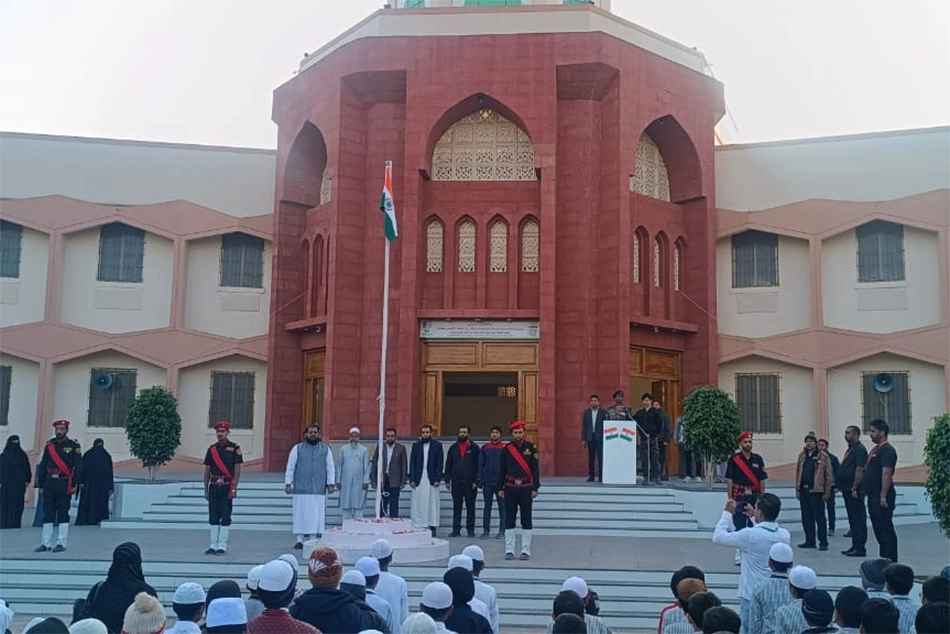
Independence Day Celebrations at Jamia Mohammadiya Mansoora, Malegaon
However, when he found some of them wary and some others hesitant, he took it upon himself to do the job. Soon JMES spread its wings to other parts of the country and established branches at Maunath Bhanjan, Aakot, Dhule, Bangalore, Mahesla and Mewaat – all running on the Mansoora pattern and affiliated to the respective state boards.
Future Ambitions
The Mission was partly accomplished. Maulana Mukhtar Ah Nadvi died September 9, 2007. Behind him he left, besides Mansoora in Malegaon and a chain of education institutes spread all across the country, an able and equally ambitious son Arshad Mukhtar. At the helm of the affairs now, Arshad is smartly following his father’s footsteps. His dream is to convert Mansoora into a big University – capable of offering every subject that exists on the earth.
——————————
[The writer, Aleem Faizee, is Founder Editor of ummid.com. Aleem Faizee has also worked as a Researcher at Tata Institute of Social Sciences (TISS) and with Action Aid for its research work published as “BROKEN PROMISES -A study on the socio-economic status of Indian Muslims: Seven years post Sachar”. His research work “Mollywood: The Rise and Fall of a Subaltern Cinema” is part of the book “Creative Industries in India” published by Routledge India of Taylor and Francis Group, London. A prolific writer, Aleem Faizee has also wrote for The Times of India as a Freelance Journalist for over 10 years. The above article was originally published on January 22, 2010.]
————————–
source: http://www.ummid.com / Ummid.com / Home> Education & Career / by Aleem Faizee, ummid.com news network / August 20th, 2025
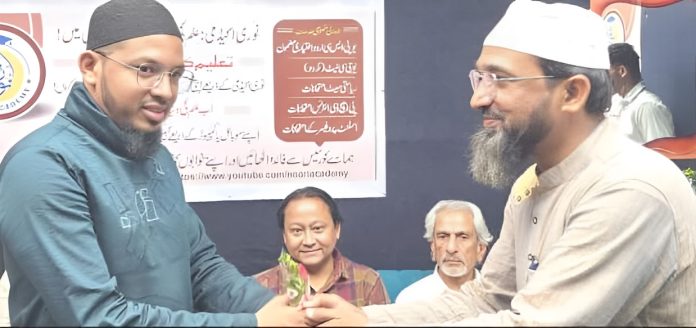
Inauguration of the New Batch at Noori Academy, Malegaon
Malegaon:
Noori Academy, a beacon of knowledge, continues its academic journey under the leadership of Dr. Ataur Rahman Noori. On January 28, 2025, after Maghrib prayers, the inaugural session of the UGC NET June 2025 batch was held at the academy’s headquarters with great enthusiasm. The event witnessed the participation of distinguished educationists, researchers, and scholars, while thousands of students from across India watched it live.
Noori Academy is not just an educational institution but a stronghold for the promotion of Urdu language and literature. Over the years, it has helped more than 500 students clear UGC NET, State SET, PhD entrance, and assistant professor exams, significantly contributing to Urdu research and teaching.
The session began with Quranic recitation, followed by speeches from eminent scholars. Mufti Mujeeb Sir highlighted the academy’s exceptional results, urging students to seize this opportunity. Linguist Saleem Shehzad spoke on modern and postmodern literary discourse, while Dr. Muhammad Husain Mushahid Rizvi called Noori Academy a guiding light for Urdu education.
Dr. Ataur Rahman Noori emphasized the academy’s mission, showcasing its success in both traditional and digital platforms. With 8 million+ YouTube views and a thriving mobile app, Noori Academy continues to shape the future of Urdu education.
source: http://www.radiancenews.com / Radiance News / Home> Education> Focus / by Radiance News Bureau / February 05th, 2025
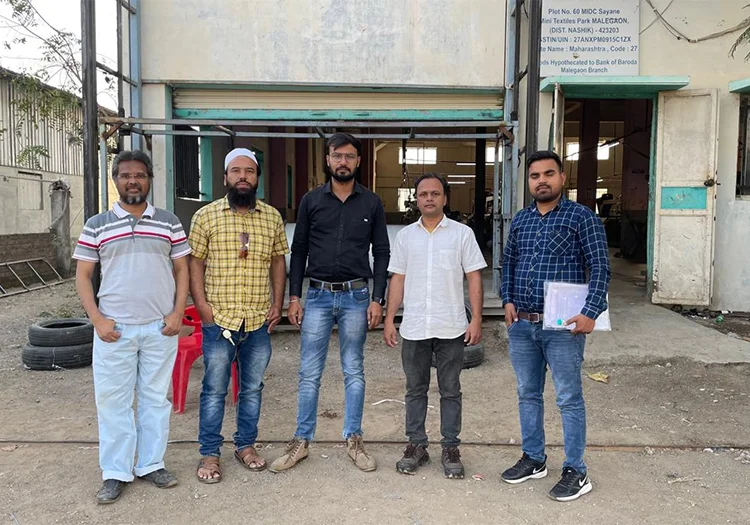
Three textile manufacturers operating in Malegaon Textile Park Wednesday January 29, 2025 became the first from the City to apply for the Zed Certification.
Tarique Faizee and Zahid Faizee of Dilip Industries with MD Geete Infosis Ashwin Geete and President MIMA Aleem Faizee after taking oath of Zed Peldge Wednesday January 29, 2025. (Photo: ummid.com)
Malegaon :
Three textile manufacturers operating in Malegaon Textile Park Wednesday January 29, 2025 became the first from the City to apply for the Zed Certification.
The MSME Sustainable (ZED) Certification is an extensive drive by the Ministry of Micro, Small & Medium Enterprises (MSME) to create awareness amongst the MSMEs about Zero Defect Zero Effect (ZED) practices, and motivate and incentivise them for ZED Certification.
Zed Workshop
Malegaon Industries & Manufacturers Association (MIMA) and Geete Infosis India had joined hands to spearhead the Zero Defect Zero Effect (ZED) Certification Scheme in Malegaon and the neighboring districts.
Malegaon Industries & Manufacturers Association (MIMA) has been instrumental in the establishment of the Textile Park in Malegaon and modernisation of the textile industry in the City whereas Geete Infosis is one of the leading Accredited Assessment Agencies working for the Zed Certification Scheme in different states of India including Uttar Pradesh, Madhya Pradesh and Maharashtra.
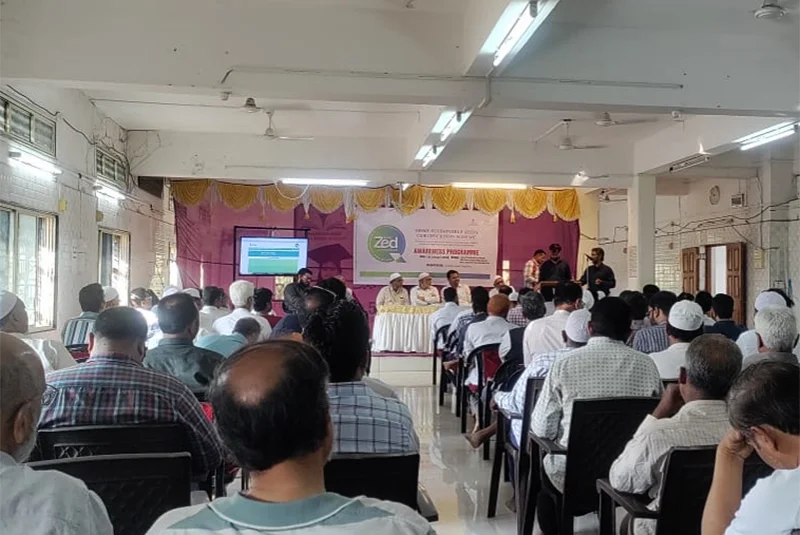
To create awareness about the Zed Certification Scheme, Malegaon Industries & Manufacturers Association (MIMA) and Geete Infosis had with the support from the All India Momin Conference Malegaon and other organisations working for powerloom, plastic, and soap manufacturing sectors organized a workshop in the Textile City on January 28, 2025. The workshop was attended by all the leading industrialists and manufacturers of the City.
MIMA, Geete Infosis joint workshop on Zed Certification held in Malegaon on January 28, 2025. (Photo: ummid.com)
Zed Certification of three industries
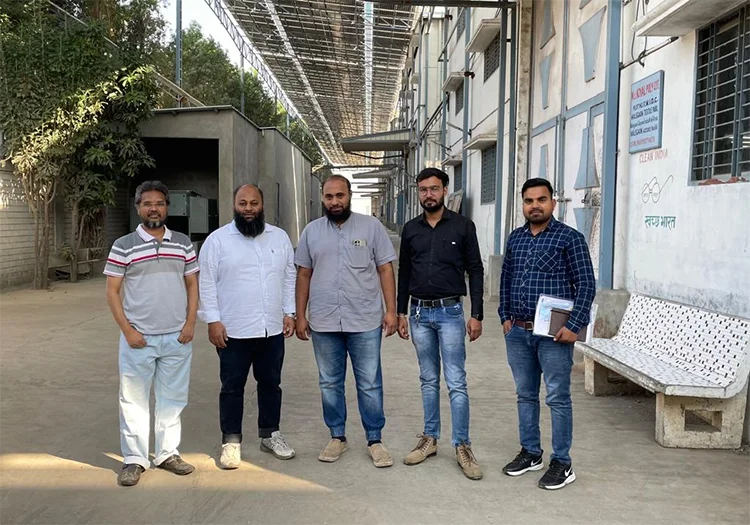
Following the launch of the Zed Certification Scheme in Malegaon Tuesday, Ashwin Geete, Founder and Managing Director of Geete Infosis, led his team to formally start the necessary inspection of factories and manufacturing units running at Malegaon Textile Park in Sayane MIDC Area of the City.
“We conducted the necessary inspection of three textile industries as per the Ministry of MSME and Quality Council of India guidelines on Wednesday and registered them for Zed Certification”, he told ummid.com.
“They are Dilip Industries, Gold Coin Fabrics and Awaz Creation. These industries have registered for Zed Certificate Bronze – the basic and first level of the scheme”, he said.
Sajid Ghulam Jaffer of Gold Coin Fabrics and Aleem Faizee of Awaz Creation with MD Geete Infosis Ashwin Geete after taking oath of Zed Peldge Wednesday January 29, 2025. (Photo: ummid.com)
All the three are members of Malegaon Industries & Manufacturers Association (MIMA) and operating at Malegaon Textile Park in Sayane MIDC area since 2014.
He further said that a team of 12 Zed Facilitators and Field Officers will start working in Malegaon from February 01, 2025 in order to bring more industries and manufacturers under the Zed Certification Scheme.
Zed Pledge
As a first step to enroll for the Zed Certification, the three industrialists of Malegaon Textile Park were administered the oath of “Zed Pledge” as the Ministry of MSME and Quality Council of India guidelines for the guidelines. The Zed Pledge said:
“We undertake to conform to the values of Zero Defect Zero Effect in our enterprise and ensure that our processes shall be environmentally sound and socially responsible with safe and high quality products.
“We will give back, in every way we can, to our people, our community and to our planet”, the Zed Pledge reads.
Envisioned by Prime Minister Modi, the Zed Certification Scheme was launched in 2022. So far thousands of industries, including over 525,000 in Gujarat alone, have received the Zed Certificates.
source: http://www.ummid.com / Ummid.com / Home> Business & Economy / by ummid.com staff reporter / January 30th, 2025
Ab Razzaque, a numismatist based in Malegaon, died due to brain hemorrhage Saturday September 7, 2024
Malegaon:
Ab Razzaque, a numismatist based in Malegaon, died due to brain hemorrhage Saturday September 7, 2024, family sources said.
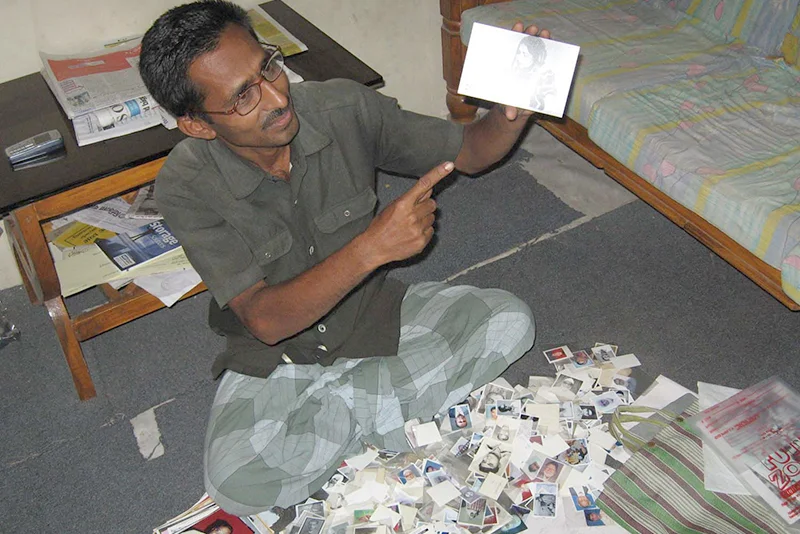
Ab Razzaque was a ‘hobby numismatist’ fond of collecting old currency notes, coins and postal stamps.
However, Ab Razzque had another distinction of collecting photographs, wedding cards and other such things of local residents, especially renowned personalities and historical figures, of Malegaon.
Another distinguishing feature of Ab Razzaque, was the background and historical accounts of the photographs of the people he had collected.
Abdul Razzaque was the only son of Dr Ramzan, founder of Maulana Azad School Malegaon.
He is survived by mother, and daughter Sana. Sana is a teacher at Rehnuma School in Malegaon.
Following is an article written by Editor ummid.com Aleem Faizee that was published in The Times of India Nashik on March 29, 2008.
A Frail Persona with a Strong Desire
Collecting the historical accounts for the future generation has always been a daunting task. Read on as Aleem Faizee interacts with a man who has not only collected rare photographs but has also memorized the history associated with them.
“Look. This is Ayesha Hakim, the former MLA of Malegaon sitting with then Chief Minister of the State Yashwantrao Chavan. This is Siddique Haji, the first child of the town who went for Hajj in his childhood. And look this is Sumayya, the first Muslim lady Bus-Conductor from Malegaon”, narrates Ab. Razzaque simultaneously picking up the photographs one by one from his huge collection.
Abdur Razzaq has collected hundreds of photographs of the Malegaonians who have contributed in any sort to the town in making what it is today.
Apart from having photographs depicting few of the historical events associated with the town, he also has under his possession some snaps of the people the world just doesn’t know they belong to the town.
More influencing than the unique collection is the way the young chap describes the historical accounts behind every photograph he collected after years of hard work and the quickness with which he recognizes them.
Ask him about any photograph and he immediately starts as if he is reading from a book. Displaying a photograph in which a musician is playing on a fluid, Razzak says:
“This is Zawwar Husain of Malegaon who played on the flute for Mohe Panghat Pe …, the famous song from Mughal-e-Azam.”
He picks up another photograph and goes on.
“This is yet another rare photograph showing Shahnawaz Bhutto, the grandfather of slain Former Premier of Pakistan Benazir Bhutto, sitting in the lawns of Malegaon Municipal Council with then Councilors.”
And then he rummages around into his collection for a while before ending with two photographs. Displaying the first, he says:
“This is the original snapshot showing the gravity of the flood that had stormed Malegaon in 1969.”
This is not the end. His commentary goes on.
“This was taken at 03:30 in the afternoon from the stairs of Sardar Talkies, which has recently been converted into a shopping complex.”
As soon as he ends with this annotation, he picks up the other snaps and continues:
“This is a pre-1863 photograph of Malegaon Municipal Council against the backdrop of the historic fort which was then carrying its activities in a small shack.”
Physically very frail and a stammer who stumbles while speaking, Razzaque is financially also like his physical self. But the desire for this unique habit keeps him going.
“My father was sitting with his friends. With some newspapers in front of them, they were discussing the importance of collecting the historical accounts for the future generation”, Razzaque who is planning to publish a book recalls.
“This prompted me to collecting these photographs and the stories behind them”, he said.
source: http://www.ummid.com / Ummid.com / Home> Life & Style> by Ummid.com Staff Reporter / September 07th, 2024
In a remarkable feat, Habibur Rahman, a resident of Malegaon, has outshined 9,000 candidates to clinch the top position in the recruitment exam conducted by the Maharashtra State Waqf Board. Rahman’s achievement underscores his exceptional performance and dedication towards his goal.
The recruitment exam, aimed at filling vacancies for district officers and junior clerks within the Waqf Board, witnessed rigorous competition from aspirants across the state. Rahman’s success stands as a testament to his hard work and preparation.
Expressing his gratitude, Rahman attributed his accomplishment to divine blessings and the unwavering support of his teachers, parents, and relatives. He highlighted the role of study material provided by Sheikh Qamaruddin, editor of Urdu House in Malegaon, in his exam preparation.
Having completed his education from Sheikh Abdul Wadood Primary School and Junior College in Malegaon, Rahman pursued higher studies at Loni’s Parvaraz World Engineering College. While working in Mumbai, he diligently prepared for competitive exams, a journey that has now culminated in his success in the Waqf Board recruitment exam.
Rahman’s stellar performance, in the written examination, is a testament to his academic prowess and determination. His achievement has not only brought pride to Malegaon but has also positioned him as a shining example of excellence in competitive exams.
With Rahman’s success, Malegaon celebrates yet another milestone, reinforcing its position as a hub of talent and academic excellence. As Rahman prepares to embark on this new chapter in his career, his success serves as an inspiration for aspiring candidates across the region.
source: http://www.radiancenews.com / Radiance News / Home> Latest News> Markers of Excellence/ by Zaina Aman / Radiance News Bureau / March 06th, 2024
Dr Razi was speaking at the two-day International Conference on Scientific Exploration and Understanding of Tibb e Nabvi organised by Mohammadia Tibbia College and Assayer Hospital at Mansoora in Malegaon Monday December 11, 2023.
Mansoora (Malegaon):
Tibb e Nabawi is not a complete medical system though Prophet Muhammed (Peace be upon him) through his teachings laid the foundation for the later stage research in the healthcare system, experts said while addressing an International Conference titled “Scientific Exploration and Understanding of Tibb e Nabavi” in Malegaon Monday December 11, 2023.
“The notion that Tibb e Nabawi is a complete medical system which is sufficient to cure every disease is wrong. But, it is true that Prophet Muhammad (peace be upon him) through his teachings highlighted the importance of a healthy society that laid the foundation of future research in healthcare”, Dr Razi ul Islam Nadvi said.
“The Philosophy of Tibb e Nabawi”
Dr Mohammad Raziul Islam Nadvi – a postgraduate in Unani Medicines, is Islamic Scholar, Writer, Translator and an active member of Jamat-e-Islami Hind.
“The Prophet’s idea of healthcare and medical practice were akin to the art that require perfectness and mastery. There are umpteen number of examples when the Prophet (pbuh) during his lifetime encouraged his companions to opt for a skilful tabeeb (doctor) and better medical treatment”, he said.
“The famous Hadith of the Prophet which goes “there is cure for every disease” if not taken at its face value but properly understood encourages A’tibba (pleural of tabeeb meaning doctors) and medical practitioners to continue their research till they succeed”, he said.
Dr Razi was speaking at the two-day International Conference on Scientific Exploration and Understanding of Tibb e Nabvi organised by Mohammadia Tibbia College and Assayer Hospital at Mansoora in Malegaon Monday December 11, 2023.
The first of its kind Tibbe Nabawi conference is attended by doctors, health experts and scholars from India and abroad.
“Contribution of Muslim women in healthcare”
Dr Razi said the Prophet’s message was not limited to male companions but also for the females.
“Hadhrat Rufayda al-Aslamia was used to maintain a hospital during the Prophet’s lifetime. She trained a number of female companions in nursing who used to assist those who are sick or injured in the battlefields”, Dr Razi said.
Rufayda Al-Aslamia (also transliterated Rufaida Al-Aslamiya or Rufaydah bint Sa`ad), believed to be the first female surgeon in Islam, was among the first in Madinah al Munawwarah to embrace Islam. With her clinical skills, she trained other women, including the wife of the Prophet (pbuh) Ayesha, to be nurses and to work in the area of health care.
“This also shows the contribution of Muslim women in the field of medicine and healthcare”, he said.
Dr Razi ul Islam said it was because of the teachings of the Prophet (pbuh) that laid the foundation of healthcare research, Muslims translated the ancient Unani or Greek books on medicines.
“Not only did the Muslims translate these books into Arabic but they also compiled them maintaining unbelievable professionalism”, he said.
“Characteristics of Tibbe Nabawi”
The concept of Tahaarat – purity and cleanliness and hygiene, is one of the key characteristics of Tibb e Nabvi, and the Prophet (pbuh) introduced it at a time when people were unaware of such things.
“By highlighting the importance of a hygienic society, the Prophet’s message clearly was ‘prevention is better than cure’”, Dr Razi said.
“Quarantine was the word which recently became famous during the Covid-19 Pandemic. But it was in practice during the lifetime of Prophet Muhammad (pbuh) and afterwards”, he said.
The other characteristic of Tibb e Nabavi is ethics in medical practice and healthcare system that the Prophet (pbuh) asked his companions to strictly follow.
“Various clauses of the Hippocratic Oath – the oath of ethics historically taken by physicians, can easily be found in the teachings of the Prophet (pbuh)”, Dr Razi ul Islam said.
“Need of Research on Tibb e Nabawi Based on Scientific Parameters”
Dr Razi further said there is a need of research on the subject based on scientific parameters to make Tibb e Nabawi beneficial for people across the board.
“A tremendous amount of work on Tibb e Nabwi has been done and is still underway around the world especially in the Arab world. However, the focus of these research works is more on Aqeedat and done out of the love and affection to Prophet Muhammed (PBUH)”, Dr Razi said.
“If we want to make Tibbe Nabavi acceptable for people across the board then we have to scientifically prove and establish its effectiveness”, he said.
“There should be a team of doctors who do research and study on Tibb e Nabawi and come with data based on scientific parameters”, he said.
source: http://www.ummid.com / Ummid.com / Home> Health / by ummid.com news network / December 11th, 2023
Discussions and debates, critiques and readings, held at haunts of Urdu books and writing around the country have been interrupted rudely.
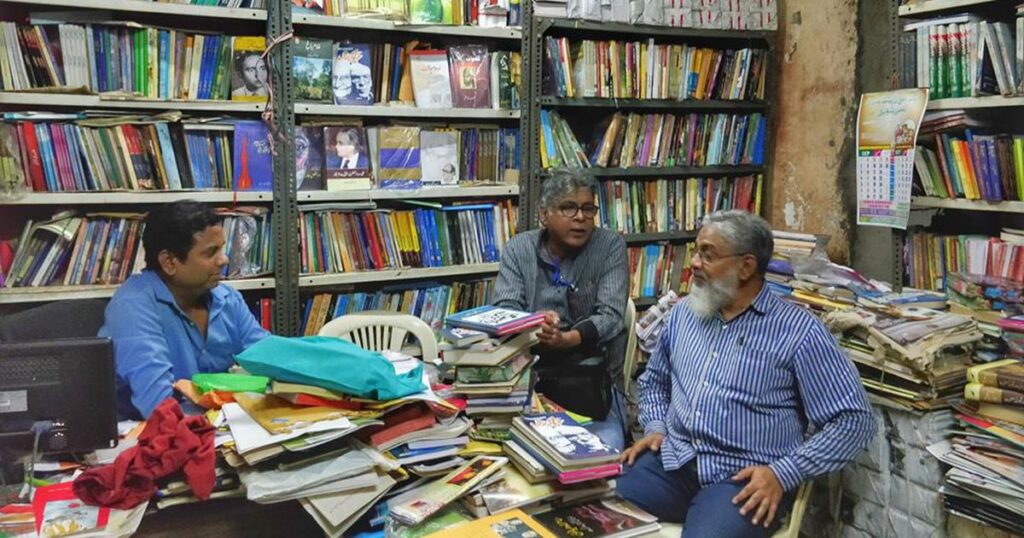
(From left) Shadab Rashid, Urdu drama writer Aslam Parvez, and Shakeel Rasheed at Kitabdaar | Mahtab Alam
In Malegaon
On the first Saturday of every month, the textile city of Malegaon in northern Maharashtra used to become home for lovers of Urdu literature, who meet to discuss, debate and critique new writings in the language, mostly by local writers. Organised under the aegis of Anjuman Muhibban e Adab (Association of Literature Lovers), the gathering began at around 9 pm, and went on till midnight.
Between 30 and 50 people – both writers and readers – would come together, a number that would at times go up to as many as 100 or even 150. Asif Iqbal Mirza, the secretary of the Anjuman, said the practice began 25 years ago on the suggestion of local journalist and editor Samiullah Ansari, who published new Urdu fiction in his weekly, Hashmi Awaz.
Over the years, the publication had emerged as a popular local magazine for young and budding writers to publish their works. The weekly, now in its 35th year of publication, had a considerable fan following and readership at the time. Ansari then suggested that admirers of the magazine form a group comprising readers as well as writers.
The group was initially named Anjuman Muhibban e Hashmi Awaz (Association of Admirers of Hashmi Awaz), but within a few years, its following grew to encompass more than just the readers of the magazine, and in 1998 it was rechristened Anjuman Muhibban e Adab, Malegaon. “Ansari sahib formed the Anjuman so that writers could get their new works critiqued by readers before getting them published in the weekly,” Mirza ssid.
Back then, Mirza himself wrote for a local children’s newspaper called Khair Andesh. But his association with the Anjuman helped him grow into a prolific Afsana Nigar, a short story writer. He was 17 when the group was formed; in the past 25 years, he has written and published more than 200 short stories in different publications.
Apart from Anjuman Muhibban e Adab, there are two more literary groups in Malegaon that held regular meetings until the lockdown was declared in March. No such meetings have been held since then. “Unlike earlier, we now have enough time to read and write. But the irony is we don’t have the opportunity to discuss and publish them,” said Mirza, who also runs a printing business. Several local publications had to halt their issues, including Hashmi Awaz, owing to the lockdown.
According to Mirza, although social media outlets such as WhatsApp and Facebook have, to some extent, helped to keep in touch with fellow writers and readers, the literary life of Malegaon has come to a standstill, since a large number of local writers and readers came from the working class and worked in local looms. “The year 2020 is the silver jubilee of my literary career. I had plans to publish a collection of my short stories, but thanks to the pandemic, that will not happen this year,” Mirza said with a great sense of despair.
In Mumbai
Both readers and writers have felt a deep loss during the pandemic. His love of books took Shakeel Rasheed, editor of the Urdu daily Mumbai Urdu News, to various bookshops in and around the Mohammad Ali Road area of Bombay. “Visiting bookshops was a part and parcel of my life. I feel a deep loss when I don’t visit them,” he said. For him, bookstores are not just spaces to buy books, but they also served as addas for readers and writers. As soon as some relaxations were in place, he rushed to the stores. “Par ab pahle wali baat nahi rahi,” said Rasheed. “Things are not as they were before.” The pandemic has made it more difficult to meet new people.
Shadab Rashid’s Kitabdaar publications and bookstore in Temkar Street of Nagpada was one such adda for Urdu writers in Mumbai, as was Maktaba Jamia on Sandhurst Road West. Today, Kitabdaar and a few other bookshops have opened their stores for a few hours every few days, while Maktaba Jamia remains closed. “Due to lack of public transport and fear of the pandemic, people cannot come to Kitabdaar,” Shadab said. He also edits the quarterly literary magazine Naya Waraq, founded by his late father and noted journalist and writer Sajid Rasheed.
Shadab Rashid said the lockdown brought significant hardships and losses to Urdu publishers and distributors. “It is not that people don’t want to read Urdu books anymore – the problem is they cannot buy them,” he said. “I have received lots of online orders, but I cannot fulfill them because I rely on postal services as they are the cheapest means of delivery, but the services are not fully functional yet.” His online Urdu bookshop kitabdaar.com is one of the few digital distribution platforms for Urdu books exclusively in India. Another such platform, urdubazaar.in, was recently launched from Delhi.
Owing to the discontinuation of physical interactions between readers and writers, people have lost touch with each other, since not all Urdu writers are active on social media, Shakeel Rasheed told me. “We have lost many good writers during this period and found out about their demise several days later,” he added. “Moreover, we could not participate in their last journeys.”
In Hyderabad
Another writer recounted similar thoughts after the death of noted Urdu satirist Mujtaba Hussain in Hyderabad on May 27. Hussain was awarded the Padma Shri in 2007 for his contributions to Urdu literature, but in December 2019, he announced he was returning the award to protest the enactment of the contentious Citizenship Amendment Act. “[T]he democracy for which I fought is under attack now and the government is doing that,” he had said, “that’s why I don’t want to associate the government with me.”
In Hyderabad, another centre of Urdu writing, literary activities have come to a similar halt due to the pandemic. Publications like Shagoofa, a monthly magazine of satirical writing, have been temporarily discontinued since the lockdown.
In Delhi
In Delhi, too, the pandemic has left an adverse impact on Urdu writing. Khan Rizwan, a poet and a known “addebaaz” from Delhi, loved participating in and organizing adabi addas (literary gatherings). He misses visiting the Nai Kitab book store, located in one of the many bylanes of Jamia Nagar, which is one of the famous addas for Urdu lovers in the city. Run by veteran writer and publisher Shahid Ali Khan, Nai Kitab is a haven for young and old writers alike, Rizwan said, as Shahid sahib treated them alike. “It is not just a bookshop but an institution where one got to meet noted writers and lovers of Urdu literature,” he said.
Rizwan would visit the shop at least twice a week, and meet a new literature enthusiast or writer, or find out about a new book or risala /parcha (journal/magazine). “I miss the black tea and chips that Shahid sahib served us with love and affection,” he recalled. “He is a storehouse of information, and several veteran writers were his friends, so he would tell us stories all the time.”
I couldn’t agree more with Rizwan. I have been visiting Nai Kitab once every few months for more than a decade now, and on each of my visits, after asking khabar-khairyat, Shahid sahib would say, “Achcha aap bahut dino baad aayen hain, ye nayi kitaabein aayi hai dekh lein (Since you’ve come after a long time, here are some new books).” Last year, when I visited the bookshop around this time, he directed me towards dozens of books written by noted Urdu satirist Fikr Taunsvi and Shaukat Thanvi. I immediately bought all of them, as they were usually out of print and seldom available.
As the person in charge of the Maktaba Jamia, the publication division of Jamia Millia Islamia in Bombay, Shahid Sahib befriended writers and poets like Jan Nisar Akhtar, Meena Kumari, Sahir Ludhianvi and Jagan Nath Azad. Some of them were regular visitors to the Maktaba Jamia. Though he moved to Delhi after serving the Maktaba for several decades, he did not stop hosting literature lovers. He then founded Nai Kitab publishers and a quarterly journal by the same name.
It was in 2007 at his bookshop that I first chanced upon Shamsur Rahman Faruqi’s celebrated novel Kai Chand The Sare Aasman, later translated into English as The Mirror of Beauty by the author himself. The novel went on to become a major critical and commercial success.
Faruqi was also associated with the Nai Kitab journal as chairperson of its advisory council and would visit the shop once in a while. The journal eventually stopped publication owing to Shahid sahib’s failing health, but he continued with the bookstore as it was like “oxygen for him”, he had once told me.
Waiting for freedom
Some writers have managed to turn the lockdown into a creatively productive period. “Personally, the pandemic has proved as a blessing in disguise as I read books I wanted to for years and finish other important work, such as recording videos of Urdu literature lectures,” says Khalid Mubashir, a poet and assistant professor of Urdu literature at Jamia. He quickly added, however, this was not common, as most writers and poets were stuck at home, either because of their age or in fear of the pandemic. “Moreover, not all writers have access to technology and books like I do. I am fortunate enough to have friends who helped me with technology to do something substantial during this period.”
Mubashir’s videos, as many as 60 of them, are each about 30 minutes long, and cover the history, evolution and development of Urdu and its literature in the subcontinent. Though the lectures are prepared keeping in mind the need and syllabus of Urdu literature students, ordinary Urdu lovers can also benefit from them. All lectures are available on the YouTube channel Safeer e Adab.
Similarly, although younger poets like Mohammed Anas Faizi from old Delhi have been trying to keep Urdu literature gatherings going by using social media, online addas do not have the feel and impact of offline and in-person gatherings. “Technology and social media can only help to a certain extent. Online gatherings, mushairas and addas cannot substitute for the real ones, no matter how well they are done,” he said.
With apologies to Faiz Ahmad Faiz, what the Urdu writers, poets and addebaaz seem to be telling the pandemic is:
Gulon Mein Rang Bhare Baad e Nau Bahar Chale Chale Bhi Jao Ki Gulshan Ka Karobar Chale
Mahtab Alam is a multilingual journalist and until recently was the executive editor of The Wire Urdu. His Twitter handle is @MahtabNama.
This series of articles on the impact of the coronavirus pandemic on publishing is curated by Kanishka Gupta.
source: http://www.scroll.in / Scroll.in / Home> Publishing and the Pandemic / by Mahtab Alam / July 14th, 2020