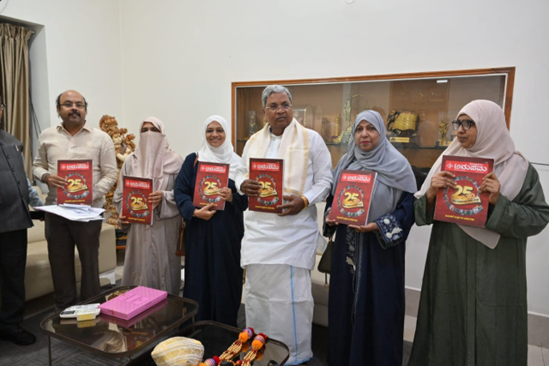
Anupama, the state’s only women’s monthly Kannada magazine run entirely by Muslim women, has completed 25 years. To mark this milestone, Chief Minister Siddaramaiah released a special silver jubilee issue, reflecting on its 25-year journey of success, in Bengaluru on Thursday.
Speaking at the event, the Chief Minister congratulated the team, saying, “There are only a handful of Muslim women in journalism. In such a scenario, it is highly commendable that the Anupama Women’s Monthly, run by women from the Muslim community and has successfully completed 25 years.”
Shahnaz M., the editor of Anupama, also spoke at the occasion. “The implementation of the ‘Guarantee’ schemes for women in the state has brought about significant changes in their lives. On behalf of the Anupama team and all women, I extend my gratitude to the government led by CM Siddaramaiah for their commitment to women’s development,” she stated.
The event was attended by Naseer Ahmed (Political Secretary to the CM), MLA Dr. Yathindra Siddaramaiah, BMTC Vice-Chairman Niket Raj Maurya, and Anupama’s sub-editors Samina Uppinangady, Sajida Momin, and Kulsum Abubakkar. Other notable attendees included S.M. Muthalib, Faisal Ismail, and Saleem Bolangadi.
source: http://www.radiancenews.com / Radiance News / Home> Latest News> Report/ by Radiance News Bureau / January 10th, 2026
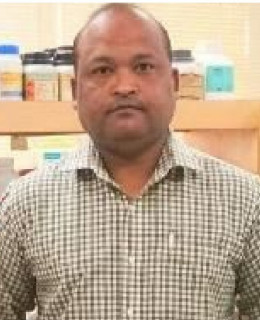
The Council of Science and Technology, Uttar Pradesh honoured Dr. Riaz Ahmad, Lecturer at Department of Zoology, Aligarh Muslim University (AMU), with ‘Young Scientist Award’ yesterday. The award has been given to Dr. Ahmad in recognition of his contributions in the area of Biochemical and Molecular Genetics. Besides cash prize of Rs. 25,000/, award carries a certificate, memento and a shawl.
The award was presented to Dr. Riaz Ahmad by Mr. Abdul Mannan, the State Minister for Science and Technology at the Vigyan Samaroh at Sir C.V. Raman Auditorium in Lucknow.
Dr. Ahmad is also a recipient of prestigious Dr. D. S. Kothari Post Doctoral Fellowship from UGC, Young Scientist Project of DST and Scientist of the Year Award-2009 given by the National Environmental Science Academy.
He has a number of research papers to his name published in various scientific journals of national and international repute.
source: http://www.twocircles.net / TwoCircles.net / Home> Indian Muslim / by TCN News / March 30th, 2010
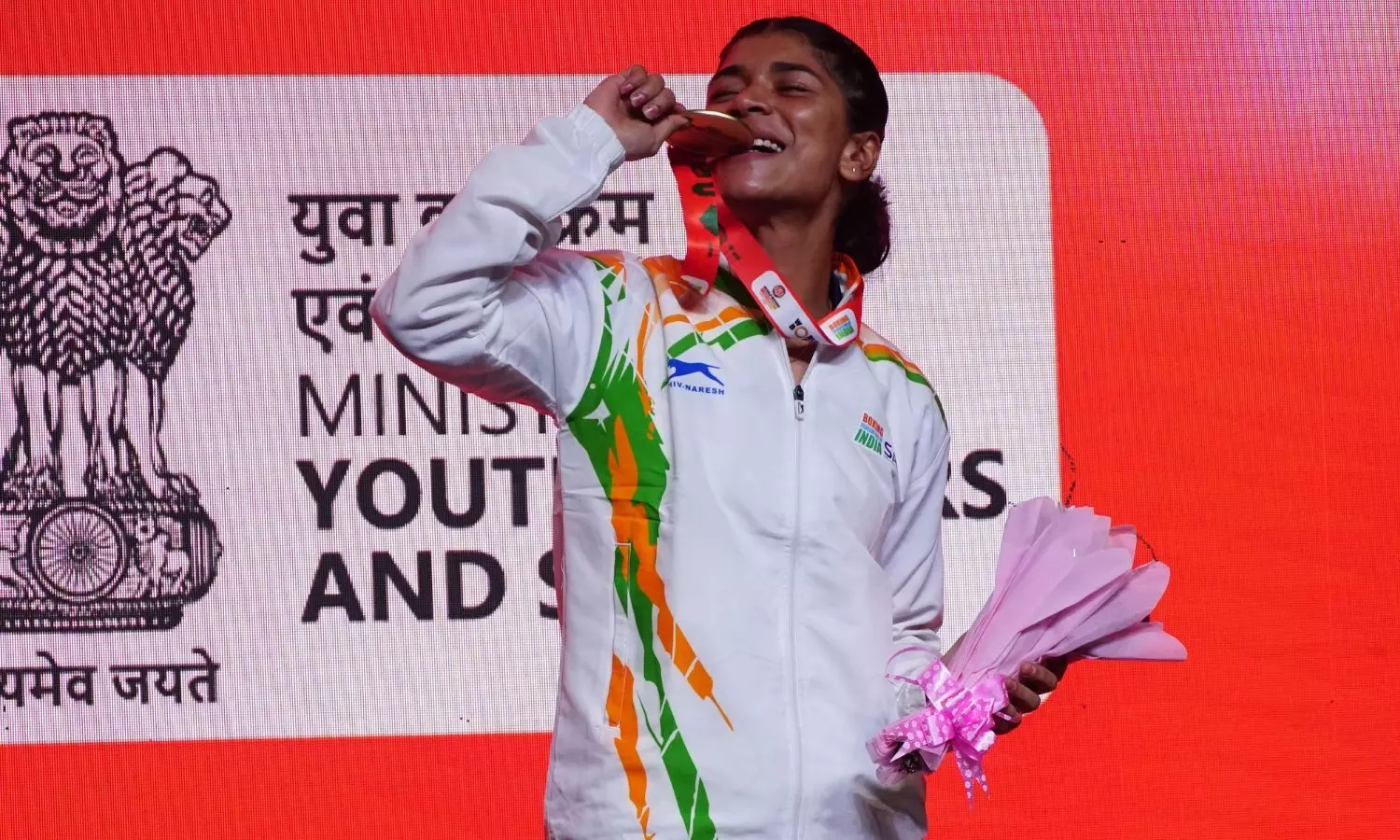
Nikhat clinched the women’s 51 kg gold medal at the 2025 World Boxing Cup Finals in Greater Noida.
Nikhat Zareen clinched the 51 Kg gold medal at the World Boxing Cup Finals 2025. (Photo Credits: The Bridge)
Greater Noida:
Star Indian boxer Nikhat Zareen has once again captured headlines after winning the gold medal at the 2025 World Boxing Cup Finals on Thursday.
The two-time World Champion delivered a commanding 5–0 victory over Guo Yi-xuan of Chinese Taipei in the women’s 51 kg final, returning to the top of the podium after 32 months.
Her last gold also came on home soil in 2023, when she clinched her second world title at the New Delhi World Championships.
“I always believe in manifestation, so I manifested that this time also, in India, I would repeat that. It’s always a pleasure to play in front of a home crowd, and today I did it,” Nikhat Zareen told the media after her win.
Bouncing back from two consecutive setbacks
Nikhat endured a difficult run in her last two major tournaments, the Paris Olympics and the World Boxing Championships, returning empty-handed from both.
At the Paris Games, competing as the reigning World Champion, she exited in the Round of 16 against eventual champion Wu Yu of China.
Later, at the 2025 World Championships in Liverpool, her first international event of the year, she fell in the quarterfinals to Turkiye’s Buse Naz Cakıroğlu.
Now, she has turned back the clock, returning to winning ways in front of her home crowd and putting behind her the disappointment of missing out on key medals.
“This medal is a big boost for my confidence. After a long time, I reached the final and won the gold. I’m very happy that I can once again compete as a gold medal contender,” Nikhat said, relieved to end her medal drought.
Nikhat also mentioned that she had very little time after the World Championships to prepare for this event. Within days, she shifted to Patiala to join the training camp.
“I spent a few days with my family, but then moved to Patiala for training since the Finals were in India and I didn’t want to disappoint fans. In Patiala, I sparred with boxers across weight categories, from 48 kg to 54 kg and even 57 kg, which helped me a lot,” she added.
Nikhat’s Road to the title
The World Cup Finals, expected to be a top-tier competition with the world’s best eight players in each weight category, did not fully live up to expectations as several major nations skipped the event.
In the women’s 51 kg category, only five boxers participated, which meant Nikhat received a bye in the quarterfinals and secured a medal without stepping into the ring.
Her campaign began in the semifinals against Uzbekistan’s Gulsevar Ganieva, where she won by unanimous decision to enter the final.
However, it wasn’t her most convincing bout, marked by frequent clinches and several clumsy falls near the ropes.
“The first bout was not as good as everyone expected, but I’m happy that I at least won and reached the final after so long,” Nikhat said after the semifinal.
In the final against Guo Yi-xuan, Nikhat looked much more composed, displaying sharper footwork and cleaner punches to seal the title at home.
“Today, I played against a boxer who moves a lot and is a counter-puncher. So I also opted for counter boxing instead of going all-out, which could have disadvantaged me,” Nikhat explained.
Future Plans
Nikhat shared that she often has to travel for training because there is no proper boxing academy near her home, something she now hopes to build herself for upcoming talent from Telangana.
“I mostly have to travel to Pune or IIS for training and don’t have a fixed location. So if the Telangana government allocates land, I will build my own academy where I can train and support rising boxers from the region,” she said.
This win may not carry immense competitive weight due to the limited field, but it has undoubtedly reignited her confidence after a challenging year.
With a packed 2026 season ahead, including major events like the Commonwealth Games and Asian Games, Nikhat will aim to use this momentum to elevate her performance further.
Her parting words, “This is just the start, and a lot more has to be done,” reflect the grit and hunger she will need as she prepares to face stronger opponents on the global stage.
source: http://www.thebridge.in / The Bridge / Home> Boxing / by Deepanshu Jain / November 21st, 2025
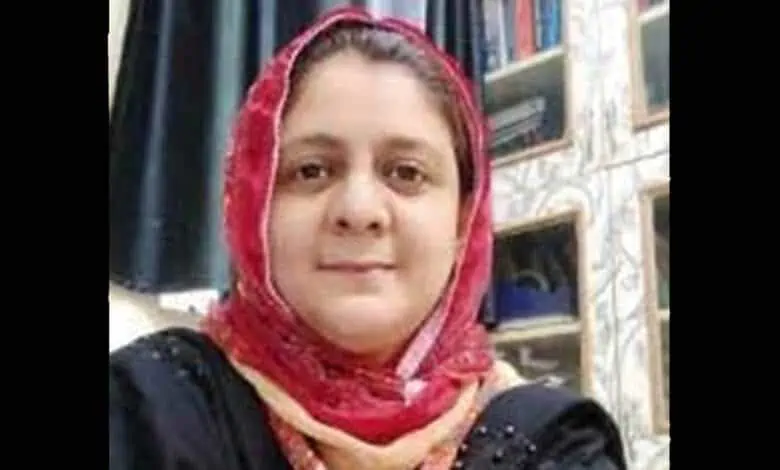
Jamia Millia Islamia Assistant Professor at Department of Chemistry, Dr. Ufana Riaz has been awarded “Sir CV Raman Young Scientist Award 2021” along with cash money of Rs 25,000 in recognition of her outstanding contribution in the field of Materials Chemistry by the St. Peters Institute of Higher Education and Research, Avadi Chennai. The award and citation were presented to her at the 12th convocation of the Institute.
Dr. Ufana Riaz has published more than 140 research papers in the field of conducting polymers, co-authored 3 books and 25 book chapters. Her research work has been published in renowned and highly reputed international journals.
Dr Riaz holds membership of the prestigious National Academy of Science (NASI) Allahabad, International Union of Pure and Applied Chemistry (IUPAC) and Royal Society of Chemistry (RSC).
Dr. Ufana Riaz has been the recipient of the International Research Excellence Award in Green Chemistry by Center for Professional Advancement and Continuing Education (CPACE), Senior Scientist Award by Environment & Social Development Association (ESDA), Green Technology Innovation Award by National Environmental Science Academy (NESA), National Education Excellence Award in Materials Chemistry by International Multidisciplinary Research Foundation (IMRF), and Outstanding Performance Award by Novel Research foundation.
source: http://www.siasat.com / The Siasat Daily / Home> News> India / by Mohammed Hussain Ahmed / February 05th, 2022
The Council of Science and Technology, Uttar Pradesh honored Dr. Tamanna Jahangir, from Jamia Hamdard, currently working as Assistant Professor at Jazan University, Kingdom of Saudi Arabia with ‘Young Scientist Award’ on Jan. 29th 2011.
The award has been given to Dr. Tamanna Jahangir in recognition of her contributions in the area of Cancer Chemoprevention Toxicology. Besides cash prize of Rs. 25,000/ award carries a certificate, memento and a shawl.
The award was received by her Father Mr. Mohd. Jahangir presented by Mr. Abdul Mannan, the State Cabinet Minister for Science and Technology at the Vigyan Samaroh at Sir C.V. Raman Auditorium in Lucknow.
Dr. Tamanna Jahangir is also a recipient of prestigious DST fast track Young Scientist Award and Young Scientist Award at TOXCON 2010 given by the Slovak Toxicological Society (SETOX), Slovakia.
She has a number of research papers to her name published in various scientific journals of national and international repute.
source: http://www.twocircles.net / TwoCircles.net / Home> Indian Muslim / by TCN Staff Reporter, TwoCircles.net / February 01st, 2011
Joygram Village (North 24 Parganas District), WEST BENGAL :
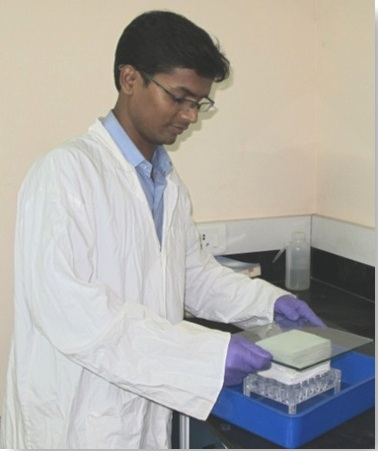
Kutubuddin Ali Molla in research lab
Kolkata:
A young researcher from West Bengal beat poverty to bag the Young Scientist Award 2013-14 of India. The Young Botanist Kutubuddin Ali Molla, who hails from a very poor family in North 24 Parganas district received the honour for his research on “Development of Transgenic Rice Plants for Sheath Blight Resistance”.
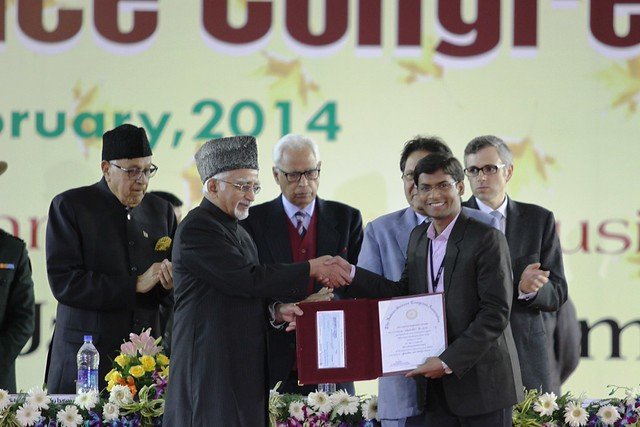
The young scientist was felicitated on February 7, 2014 at Jammu University by Vice President of India Hamid Ansari with a cheque of Rs 25000 and an Award Certificate in the field of Agriculture and Forestry Sciences.
Chief Minister of Jammu & Kashmir Omar Abdullah and Governor of Jammu Kashmir N N Vhora, Former CM of J&K Dr. Farooq Abdullah were also present in this award ceremony.
Kutubuddin is currently posted as a scientist trainee at National Academy of Agricultural Research Management in Hyderabad.
Originally from a remote village of Joygram in North 24 Parganas, Kutubuddin Ali Molla, his father Illias Molla is a farmer and Grandfather Nasim Molla was a Maulana and social worker.
With only three Bighaa of agricultural land in a joint family, Illias Molla was not able to fulfill all the needs of the family; his eldest brother Yusuf Molla, however, financially supported his bright nephew in times of economic-crunch.
Kutubuddin Ali Molla taking award from VP Hamid Ansari at Jammu University.
As a young boy, he Kutubuddin also helped his father in the agricultural fields and learnt several things about paddy cultivation that developed his interest for becoming an agricultural scientist. Stricken by poverty, his father told him, he will not stop him from studying, but he is not in a condition to financially support him and hence he would need to manage the expenses from somewhere.
After completing his senior secondary from Joygram JN High School, Kutub took admission at City College in Kolkata in B.Sc (Honours) in Botany. As the college was about 60 KM from his village, he shifted to a hostel near the college on a nominal fees of Rs 50.
Kutub is very grateful to his Professor in college Dr Argha Hait, who helped in several ways. After graduating with first class, he took admission for post-graduation in Calcutta University, which he completed with first class and ranked third.
All these while, he gave private tuitions to support the expenses of his study and staying in Kolkata. Meanwhile, he also cleared the Junior Research Fellowship (JRF) of the Council of Scientific and Industrial Research (CSIR), GATE, ICAR (NET) and ARS tests.
Kutubuddin Ali Molla
He took admission in Phd under the Dr Karabi Dutta in 2009 in Plant Molecular Biology and Plant Biotechnology. He did his PhD research (PhD award still awaited) on transgenic rice and published a research article in a Research Journal of the British Society on `Molecular Plant Pathology’ in 2013 that attracted the attention of the agricultural scientists in the country.
He then participated in All India Young Scientist Award Competition and was selected for the Best Young Scientist Award of India in the field of agriculture for 2013-14.
Speaking to TCN over phone from Hyderabad, Kutubuddin thanked the Almighty Allah for the honour and hoped that his research in agricultural yields good result in paddy cultivation.
source: http://www.twocircles.net / TwoCircles.net / Home> Indian Muslim / by Zaidul Haque, TwoCircles.net / March 19th, 2014
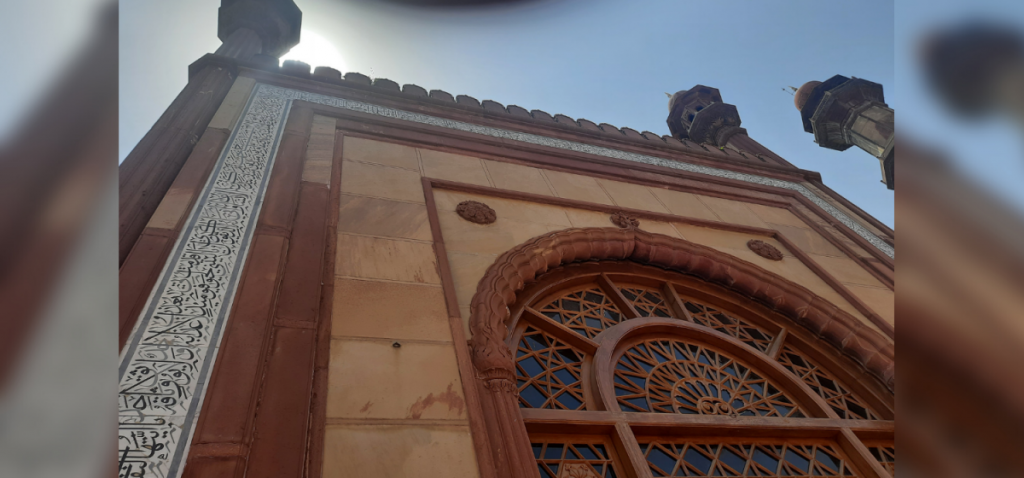
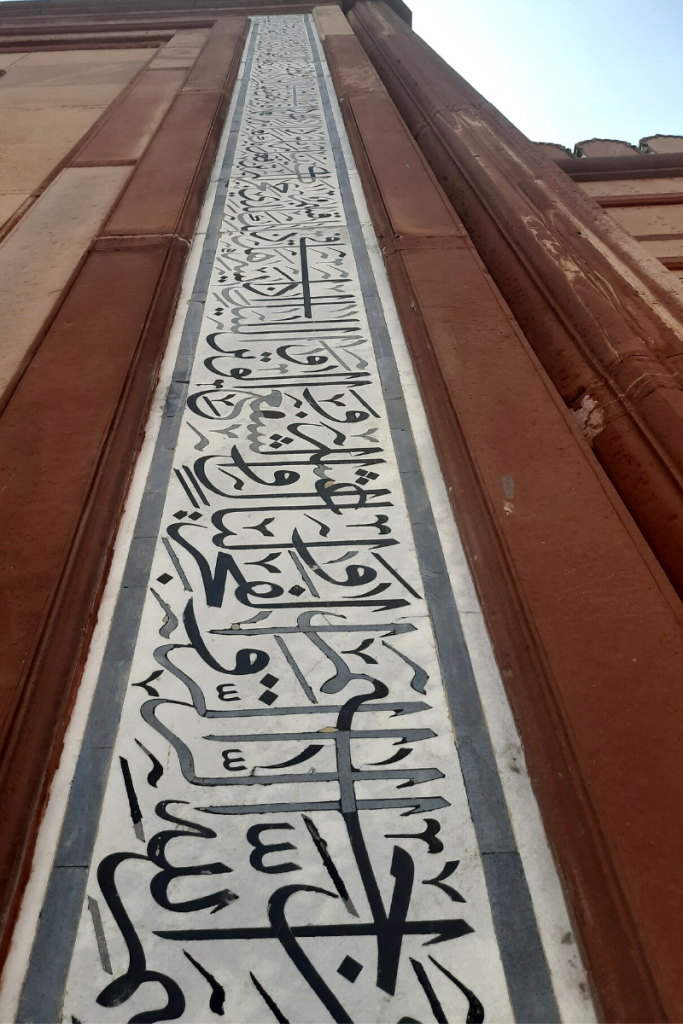
The imposing walls of both the Taj Mahal and Aligarh Muslim University’s Jama Masjid have Quranic verses crafted onto white marbles in black paint.
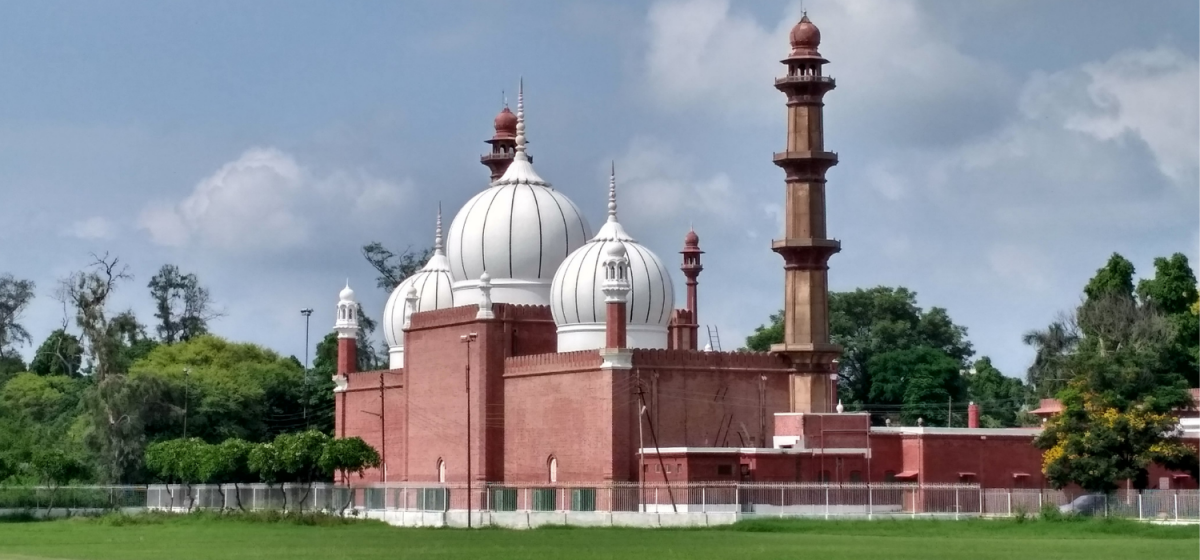
Jama Masjid on Aligarh Muslim University campus. Photo: Author provided.
Constructed nearly 250 years apart, the Taj Mahal in Agra and Jama Masjid at the Aligarh Muslim University (AMU) have an interesting connection.
The construction of the Taj Mahal began in 1632 and was completed in 1653, while the construction of Jama Masjid at AMU began in 1879 and was completed in 1915.
While the Taj Mahal, which is the tomb of Mughal emperor Shahjahan and his wife Mumtaz Mahal, attracts millions of visitors every year, AMU’s Jama Masjid is the main mosque of the university. AMU’s Jama Masjid is, perhaps, the last enduring symbol of the Mughals, constructed when the Mughals lost their kingdom during British rule.
A surprising connection
As one enters the Taj Mahal, beautiful calligraphy adorns all four corners. Several verses from the Holy Quran crafted in black calligraphy on white marble can be seen. This is a unique form of calligraphy, and expert artisans from Persia were involved in creating it. Similar calligraphy can be seem inscribed at the tomb of Mughal King Akbar at Sikandra, Agra, and also at the AMU Jama Masjid.
A closer look at the white marble with Quranic verses in black colour adorning the walls of Jama Masjid in Aligarh Muslim University. Photo: Special arrangement.
In fact, it is believed that the artisan responsible for the calligraphy at the Taj Mahal also brought his expertise to AMU’s Jama Masjid.
Since there is a difference of nearly 250 years between the construction of both architectural wonders, it is interesting to study how this was possible.
During Shah Jahan’s regime, several buildings were constructed, including the Taj Mahal and Delhi’s historic Jama Masjid. The calligraphist used was the same.
Professor Nadeem Ali Rezavi of the Centre of Advanced Studies, Department of History, Aligarh Muslim University, says that the master calligraphist in most of the buildings constructed during Shah Jahan’s regime is the same person.
“His name was Abdul Haq, and later due to his craftsmanship, his rank was elevated. He was given the title of Amanat Khan. In fact, he even signed the bands on this calligraphy with dates,” says Rezavi.
Still, there is a gap of over two centuries between these two buildings, Taj Mahal and AMU’s Jama Masjid.
The connection between the two monuments becomes clear with the involvement of Akbarabadi, one of Shah Jahan’s queens. Her original name was Aiza-un-Nisa. She, in 1650, commissioned the construction of a mosque situated in Daryaganj, Delhi, during the same period. In that mosque, Quranic calligraphy was done by the same artisan in black paint on white marble. This was around the same time as when the Taj Mahal was built.
After nearly two centuries, the Daryaganj mosque was demolished by the Britishers following the 1857 revolt. This was when Britishers gained control over the Red Fort, and the last Mughal emperor Bahadur Shah Zafar was sent in exile to Rangoon. They destroyed many buildings which were supposed to have harboured the rebels. At the site of the destroyed Akbarabadi Mosque, a park was developed and came to be known as Edward Park in 1911, which is now called Subhash Park.
During the same period, Sir Syed Ahmed Khan, the founder of the Mohammadan Anglo Oriental College (which later became AMU) felt the oppression against Muslims after the revolt. He nurtured the idea of setting up an educational institution to try and uplift the community.
A visionary man, Sir Syed had the taste for collecting things, particularly artefacts which had archaeological and historical importance. He was aware of the demolition of the Akbarabadi Mosque in Delhi.
As per the AMU Gazette, the scraps generated at the demolished Akbarabadi mosque were sold to a dealer and later purchased by Sahabzada Suleman Jah Bahadur. These remains were thus sold after over 200 years. These were presented to Sir Syed Ahmed Khan, who planned to use them in the Jama Masjid of the educational institution.
A closer look at the white marble with Quranic verses in black colour adorning the walls of Jama Masjid in Aligarh Muslim University. Photo: Special arrangement.
The white marbles with black calligraphy now present in the Jama Masjid of AMU depict Surah Fajr from the Holy Quran. Thus centuries apart, the two buildings carry the work of the same artisan.
“Even if you compare, it is the same thing and the only difference is in the scale. The artisans are the same who have shown their skills in the construction of the Taj Mahal,” says Prof. Rezavi.
Thus AMU’s Jama Masjid is, perhaps, the last enduring symbol of the Mughals, constructed when the Mughals lost their kingdom during the British rule. On the other hand, the domes of AMU’s Jama Masjid employed techniques of the Mughal era: they are “true domes” as they were built using lime mortar and vousseurs (wedge cornered stones/bricks).
“It is a brick structure, guava-shaped, carrying white marble with black stripes. This is the last true dome. After this, the particular technology faded out, and the buildings constructed after them have concrete domes,” said Rezavi.
Later, in 2016, AMU authorities began the conservation of the Jama Masjid. Now revived at the cost of Rs 90 lakh, the Jama Masjid has a Hauz in the courtyard, three domes, seven arches and two lofty minarets cornered by a Cricket Pavilion at its rear end. Sir Syed, the founder of the institution, was also buried in the same compound.
Faisal Fareed is a senior Lucknow-based journalist.
This article went live on June fifth, two thousand twenty one, at zero minutes past seven in the morning.
source: http://www.thewire.in / The Wire / Home> History / by Faisal Fareed / June 05th, 2021
From Mughal ports to Dutch wars to Bombay’s merchant dynasties, Gujarati Muslims once shaped the Indian Ocean world — long before one of their descendants took New York.
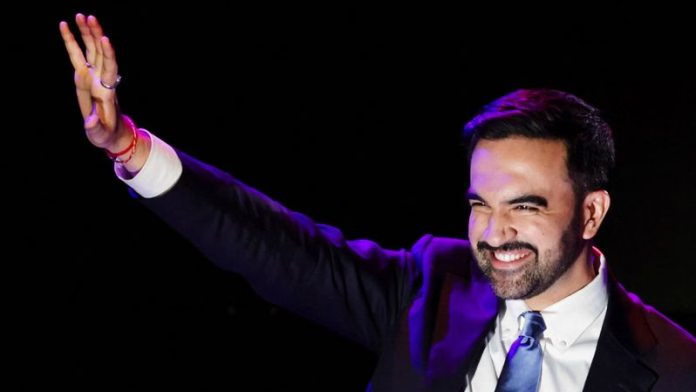
File photo of Zohran Mamdani | Reuters 2025
_______________________________________________
What You Need to Know
Zohran Mamdani’s election highlights a forgotten Indian Muslim cosmopolitanism. Historically, Gujarati Muslim communities dominated Indian Ocean trade, challenging European powers and fostering diverse business relationships. Later, groups like the Khojas adapted through “corporate Islam” (jamaats), becoming powerful economic forces globally. This rich, diverse history is increasingly overshadowed by modern religious nationalism.
*AI-generated summary. Check context in original text.
________________________________________________
Having delivered speeches in Gujarati, Bengali, Arabic, Hindi, Luganda, and Spanish, Mamdani is a reflection of a long-forgotten Indian Muslim cosmopolitanism. The Gujarati Muslim communities he descends from once challenged the Dutch for hegemony in Indonesia; poured money into schools, hospitals, and printing presses from Japan to Arabia; and helped the British Empire consolidate its grip over Africa. To this day, that Indian Muslim history still echoes — in high-end London auction houses as much as in the working-class boroughs of New York.
The election of Zohran Mamdani as Mayor of New York last week has struck a surprising chord in the world’s media — especially considering he is technically the head of just one American city’s administration. But the buzz around this young Indian-origin Muslim, an avowed democratic socialist, is a ripple in a much older ocean.
Gujaratis in the Indian Ocean
This column began with a rather innocuous tweet pointing out that Mamdani’s multilingualism would have made him a fortune in the early modern Southeast Asian spice trade. As of writing, it has racked up over one million views and 54,000 likes — and it’s a pretty accurate reflection of what propelled Gujarati Muslims to international trade superstardom in the first place.
In her paper ‘Gujarat’s Trade with South East Asia (16th and 17th centuries)’, historian Ruby Maloni describes the great port of Khambhat in Gujarat as having “stretched out two arms — one towards Aden, the other towards Malacca.” While Banias were especially prominent in East Africa and the Persian Gulf at the time, Gujarati Muslim merchants dominated the Malacca trade, conveying relatively cheap block-print textiles from manufactories in Ahmedabad deep into Southeast Asia to trade for spices.
The most prominent among these merchants effectively formed ‘dynasties’ closely linked to the Mughal court, among others. But there was also a strong aspect of caste-based collective organisation, paralleling that of Hindu and Jain Gujaratis.
Nowhere was this more evident than in Surat, perhaps the most impressive port on India’s west coast. Its multilingual babble included Gujarati, Arabic, Persian, Urdu, Dutch, English, and Portuguese. Certainly, there were clear distinctions between caste and religious groups, and within their communities Gujarati merchants — Hindu and Muslim alike — could be quite rigid. At the same time, in interpersonal and business relationships, their shared Gujarati heritage encouraged cosmopolitan attitudes.
Historian Jawaid Akhtar offers several examples in his paper ‘The Culture of Mercantile Communities in Mughal Times.’ In Surat, Armenian merchants were in business with Parsis and Muslims; Vaishnavite Bhatias, despite a taboo against crossing the ocean, jointly owned cargo and ships with Muslims. Akhtar cites documentary evidence of Bania men adopting Muslim practices such as offering dowers to their wives. Muslim and Hindu merchants also collectively represented their grievances to Mughal authorities.
On one occasion in 1669, when the Qazi of Surat compelled a Vaishnavite Bania to convert to Islam, nearly 8,000 merchants — apparently of all religions — emigrated to Bharuch in protest against this infringement of their privileges.
Gujarati Muslims quickly identified Europeans as a threat to their trade dominance in Southeast Asia. Maloni notes that Dutch East India Company records mention their difficulties with these merchants, who took them on through price wars and by installing their own candidates as port authorities. It seemed that there was nothing the Dutch could do to prevent Gujarati Muslims from trading. The Sultanate of Johor welcomed ships belonging to the merchant Haji Zahid Beg, who bought tin in flagrant defiance of Dutch embargoes. Other merchants, Maloni writes, hired cargo space on English ships; the spectacularly wealthy merchant Abdul Ghafur of Surat even flew Dutch flags on his own ships. It was only when the Dutch forcibly colonised much of Indonesia that Gujarati Muslims finally lost their grip on Malacca. But by then, new opportunities were already emerging on the horizon.
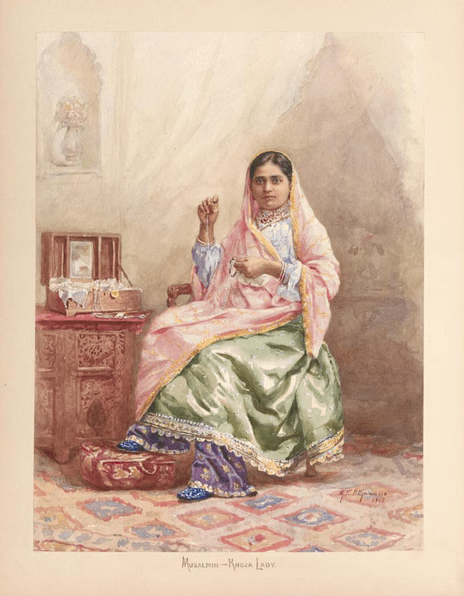
Khoja Lady | From the album presented to the Princess of Wales by the women of Bombay, featuring 13 full-page watercolours of Indian women by artist Manchershaw Fakirjee Pithawalla (1872-1937) | Wikimedia Commons
The rise of ‘Corporate Islam’
As the Mughal juggernaut began to shake and unravel in the 18th century, the old order of great merchant princes and dynasties started to fall apart. Surat, repeatedly raided by the Maratha king Shivaji, faced growing competition from the East India Company’s new port at Bombay.
Three Gujarati Muslim communities — the Bohras, Memons, and Khojas — who had hitherto been relatively small-time traders, found themselves ideally placed to benefit from the changing political landscape. Zohran Mamdani descends from the last of these.
In his seminal book No Birds of Passage: A History of Gujarati Muslim Business Communities, 1800–1975, historian Michael O’Sullivan notes that these three groups had spread “as far east as Ujjain, as far west as Karachi, as far south as Poona, and as far north as Udaipur… They thus inhabited a territory that was, by the reckoning of an Indian lexicographer in the 1840s, larger than Great Britain and Ireland, with their shared mother tongues [Gujarati] serving as the principal language of business in Central and Western India.”
The Bohras, Memons and Khojas had all converted to Islam around the 15th century, but their social and cultural practices varied drastically. Subgroups were affiliated with various Sunni and Shia sects; some were Ismaili and revered the Aga Khans, while others traced descent by region and worshipped Sufi saints.
What these groups shared, though, was the jamaat —an institution that O’Sullivan describes as a form of “corporate Islam”. Essentially, members of each jamaat shared some resources in common — schools, hospitals, that sort of thing. Particularly wealthy members, who often held senior religious positions, also maintained private family trusts and companies.
What the jamaat ensured, O’Sullivan writes, was a mechanism for organisation, exclusivity, and interpretation, allowing these communities to adapt the changing contours of Islamic practice to an era of globalisation. Jamaats could mobilise capital, human resources, and theological flexibility at a rate few other Indian institutions could match.
Collectively, these Gujarati Muslim jamaats emerged as some of the most powerful Indian economic forces of the late 19th and early 20th centuries. Though now outshone in the popular imagination by Parsi and Bania entrepreneurs, Gujarati Muslims similarly negotiated with the Marathas and the British, benefited from the Opium Wars, and switched soon after to manufacturing all sorts of commercial goods, especially in Bombay.
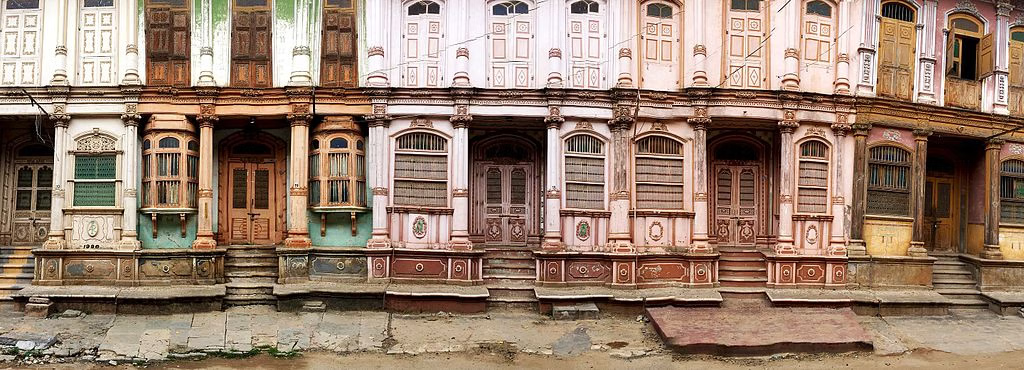
In the 1840s, Gujarati Muslims commissioned pioneering printed texts — in Gujarati — including travelogues and cultural primers for new markets like China. Their growing wealth also funded spectacular mansions, such as those in Sidhpur, now eerily abandoned. It was Gujaratis, perhaps more than any other Indian group, who built the financial infrastructure of the British Raj in East Africa — a migration line from which Zohran Mamdani himself descends.
All of this amounted to a decisive shift in the centre of gravity of Indian Ocean Islam. It was for this reason that the Aga Khan, revered by Ismaili Khojas, moved his seat from Iran to Bombay before Partition.
Sidhpur city in Gujarat | Wikimedia Commons
A cosmopolitanism forgotten
The versions of Islam promoted by Gujarati Muslims absorbed the modernist vocabulary of capital accumulation and inheritance, frequently splintering into new jamaats as they expanded into ever-new markets and cultures.
At the same time, as researcher Danish Khan notes, Gujarati Muslims attained positions of leadership and influence in Bombay well before they had even set foot in the United States of America. “The first Muslim baronet in colonial India,” he writes, “was a Khoja and the first Muslim ICS officer was a Sulaimani Bohra. Badruddin Tyabji and Rahimtoola Sayani were the first two Muslim Presidents of Congress party. Sir Adamjee Peerbhoy presided over the first session of the Muslim League in Karachi.”
But with the rise of pan-Islamic and Hindu nationalism in the early 20th century, the scales swung once again, and mercantile, oceanic histories were overridden by grievances inspired by long-dead inland kings.
Where does the history of Gujarati Muslims fit now? Mamdani’s election is ironic on many levels. In Bombay, once the historic home of the community, a BJP politician declared, in response to Mamdani’s victory in New York, that “We won’t allow any Khan to become mayor.”
The fact is that before and since, the history of Gujarati Muslims has, for all intents and purposes, disappeared into the ever–widening gap between radical Hindutva and radical Islam. Every news cycle, it seems, tears India’s many intertwined histories further apart.
Anirudh Kanisetti is a public historian. He is the author of ‘Lords of Earth and Sea: A History of the Chola Empire’ and the award-winning ‘Lords of the Deccan’. He hosts the Echoes of India and Yuddha podcasts. He tweets @AKanisetti and is on Instagram @anirbuddha.
This article is a part of the ‘Thinking Medieval’ series that takes a deep dive into India’s medieval culture, politics, and history.
(Edited by Prashant Dixit)
source: http://www.theprint.in / The Print / Home> Opinion> The Fine Print / by Anirudh Kanisetti / November 13th, 2025
Prof Saira Mehnaz with other participants during the AI-Based Medical Education Research at International Conference
Aligarh:
Prof Saira Mehnaz, Department of Community Medicine, Jawaharlal Nehru Medical College (JNMC), Aligarh Muslim University (AMU), presented an innovative research paper at the International Conference on Advancements in Data, Information, and Systems (ICADIS) 2025, hosted by Noida International University.
Dr. Mehnaz’s paper, titled “AI-Augmented Assessment of a Medical Foundation Course: A Mixed-Method Study,” attracted widespread attention for its pioneering application of AI in medical education. The study evaluated a week-long foundation course for 150 first-year MBBS students at JNMC, aimed at strengthening communication, teamwork, ethics, and academic preparedness among new medical learners.
Using a mixed-method approach, the research combined quantitative student feedback with qualitative reflections, analysed through Rolfe’s reflective model and NVivo software. The integration of AI tools enabled adaptive feedback, more precise evaluation of learning outcomes, and data-driven improvements in curriculum design.
The presentation stimulated engaging discussions among international delegates about the growing role of AI in competency-based and reflective medical education.
source: http://www.radiancenews.com / Radiance News / Home> Latest News> Report / by Radiance News Bureau / October 27th, 2025
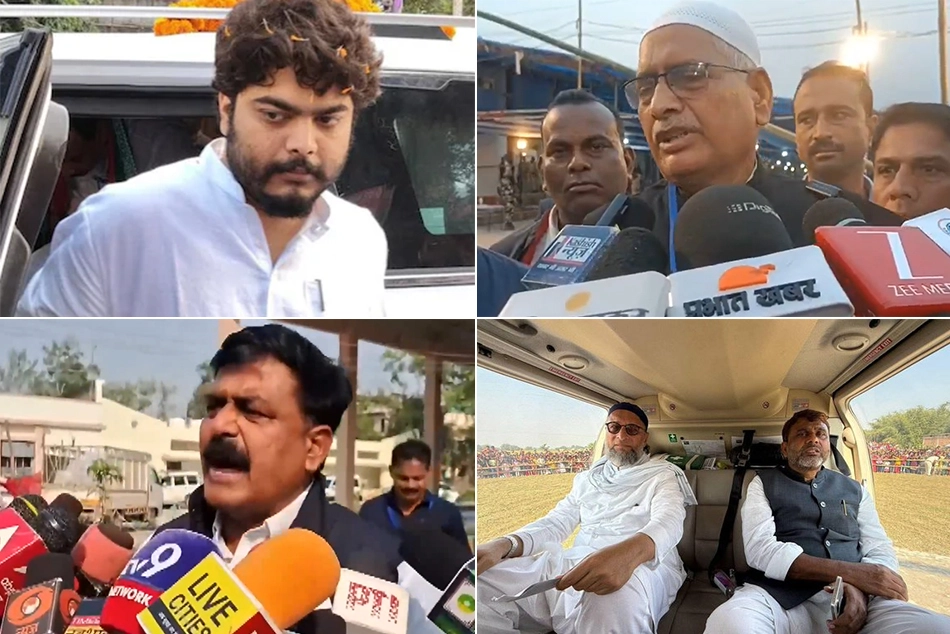
The newly elected assembly in Bihar will have 11 Muslim MLAs, down by 8 as compared to their tally in the last assembly, the final results of the 2025 state elections announced Friday showed.
(Clockwise from left) Osama Shahab (RJD), Qamrul Hoda (Congress), Akhatrul Iman (Seen with AIMIM Chief Asaduddin Owaisi) and Zama Khan (Janata Dal United)
List of Muslim MLAs in Bihar 2025:
The newly elected assembly in Bihar will have 11 Muslim MLAs, down by 8 as compared to their tally in the last assembly, the final results of the 2025 state elections announced Friday showed.
A total of 24 Muslims belonging to different political parties were elected in the 2015 election whereas 19 Muslims were elected to the Bihar Assembly Elections in 2020.
The representation of Muslims went further down after the 2025 Bihar Assembly Elections the results of which were announced after counting of votes held on Friday November 14, 2025.
How Many Muslims Contested Bihar Vidhan Sabha Elections 2025?
The All India Majlis e Ittehadul Muslimeen (AIMIM) of Asaduddin Owaisi had fielded a maximum 23 Muslim candidates from as many constituencies of Bihar in the 2025 state assembly polls. Of them 05 Muslims have won.
On the other hand, Rashtriya Janata Dal (RJD) had fielded 18 Muslim candidates, Congress had given the party tickets to 10 Muslims, Janata Dal (United) had nominated 04 Muslims, and 02 Muslims contested as CPI (M) candidates.
Of these candidates 03 from RJD, 02 from Congress and just 01 from Janata Dal (U) won the 2025 Bihar elections.
Kumari Mayawati’s Bahujan Samaj Party (BSP), Prashant Kishor’s Jan Suraaj Party (JSP) and Lok JanShakti Party (Ram Vilas Paswan) had also given their party tickets to some Muslims. No Muslim fielded by these parties could win the 2025 Bihar elections.
The Bhartiya Janata Party (BJP) has not given the party symbol to any Muslim.
7. Mohammad Murshid Aalam (Jokihat) 8. Md Tauseef Alam (Bahadurganj) 9. Md. Sarwar Alam (Kochadhaman) 10. Akhtarul Iman (Amour) 11. Ghulam Sarwar (Baisi)
The most shocking defeat of a Muslim candidate was in Balrampur where AIMIM candidate Advocate Adil Hasan lost the seat to the BJP by just 389 votes.
2025 Bihar Election Final Results
Assembly or Vidhan Sabha elections in Bihar were held in two phases. Polling for the first phase was held on November 06, 2025 which ended with a voter turnout of 65.08%.
On the other hand, Polling for the second phase was held on November 11, 2025 which saw the voter turnout of 68.76%.
The overall poll percent, as per the Election Commission of India, was 66.91% – highest since 1951 when the first assembly election was held.
The counting of votes was held today, and as per the final result announced by the Poll Panel, the NDA alliance has won 202 seats whereas the RJD-Cong INDIA bloc could win just 35 seats.
The Election Commission final results show, the BJP has won 89 seats and emerged as the single largest party in Bihar for the first time in the state’s history.
The JD (U) has won 85 seats. Lok Janshakti Party Ram Vilas Paswan candidates won 19 seats.
On ther hand, the RJD candidates could win just 25 assembly seats and Congress 06. Owaisi’s AIMIM won 05 seats.
source: http://www.ummid.com / Ummid.com / Home / by ummid.com news network / November 14th, 2025