A labourer’s son in West Bengal defies all odds to achieve his dream of becoming a doctor
New Delhi :
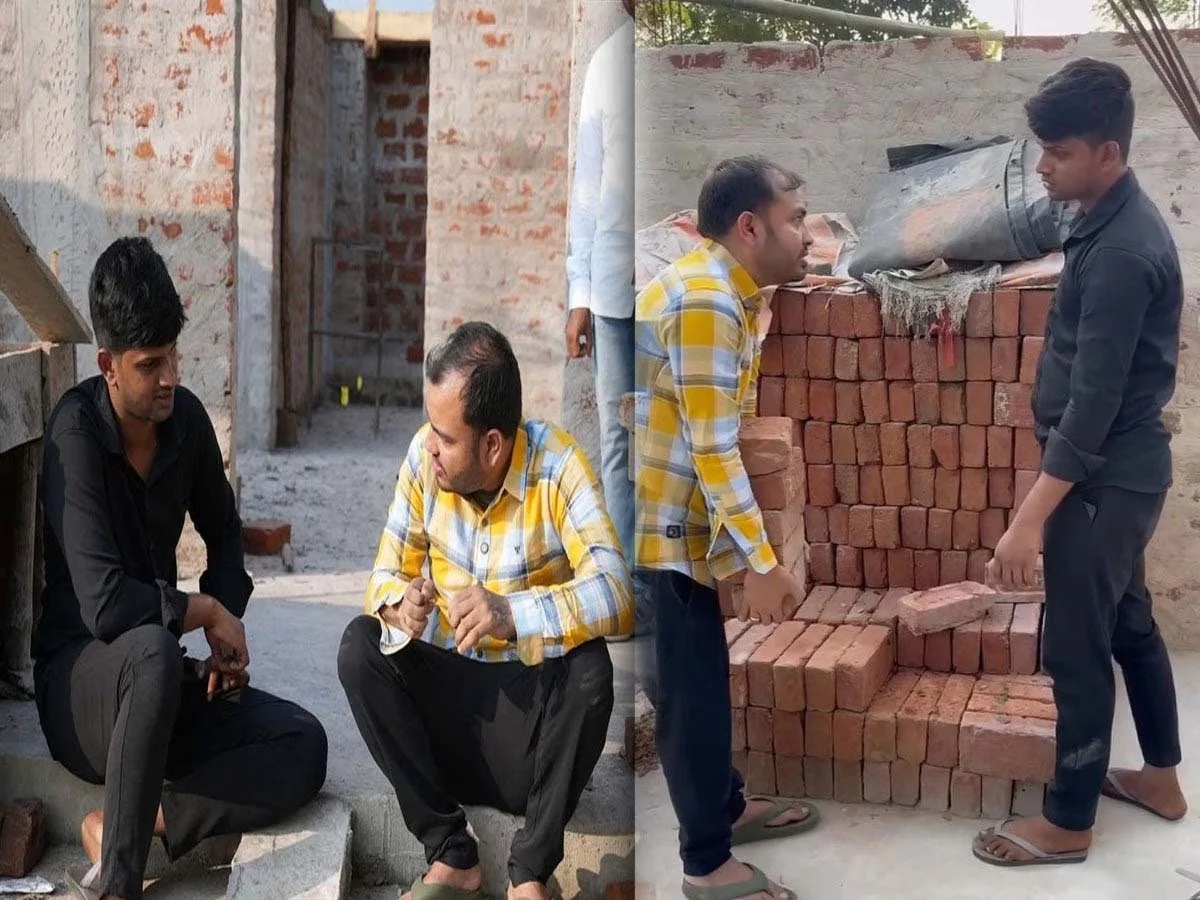
In an era where mobile phones are often criticised for their harmful impact on society, the story of 21-year-old Sarfaraz from East Medinipur, West Bengal, shines as a beacon of hope. Once a labourer carrying bricks under the scorching sun, Sarfaraz’s remarkable journey to gaining admission into the prestigious Nil Ratan Sarkar Medical College for an MBBS degree showcases grit, determination, and the transformative power of education.
Born into a family with limited financial resources, Sarfaraz’s childhood was marked by hardships. His father, also a labourer, earned a meagre daily wage, barely enough to feed the family of six. Despite these challenges, Sarfaraz excelled in his studies, harbouring the dream of joining the National Defence Academy (NDA).
An unfortunate accident dashed his NDA aspirations, but Sarfaraz did not let despair consume him. “Life was never easy, but giving up was never an option,” he said.
The COVID-19 pandemic brought a glimmer of hope in Sarfaraz’s life. With financial assistance from the government, his family bought a smartphone. This device became Sarfaraz’s lifeline, as he used free YouTube tutorials and online ed-tech platforms to prepare for the NEET, India’s highly competitive medical entrance exam.
“I studied through free YouTube videos initially and then enrolled in an online course with a concession in fees. It changed everything for me,” Sarfaraz said.
For three years, Sarfaraz juggled gruelling physical labour and relentless academic preparation. His daily routine involved carrying 400 bricks under the blazing sun for a wage of Rs 300, followed by seven hours of uninterrupted study.
“My father and I would work from morning until afternoon. After that, I would come home and dive into my books. It was difficult, but I never lost sight of my dream,” Sarfaraz explained.
In 2023, Sarfaraz’s NEET score qualified him for a dental college, but the prohibitive costs forced him to forgo the opportunity. Undeterred, he decided to make a final attempt at NEET in 2024.
“I thought, I’ve worked so hard — let’s try one more time. This was my last chance. If I hadn’t succeeded, I would have given up,” he said.
Sarfaraz scored an impressive 677 out of 720 in NEET 2024, securing his place in Nil Ratan Sarkar Medical College.
Behind Sarfaraz’s unwavering determination was his mother’s dream of seeing her son become a doctor. Her sacrifices inspired him to push through every obstacle.
“My mother always wanted me to be a doctor. I promised myself that I would make her dream come true,” Sarfaraz said, his voice filled with emotion.
Now donning a white coat and stethoscope, Sarfaraz is a source of pride not only for his family but also for his entire village.
Sarfaraz’s success has brought hope to his village, where many children often abandon their studies due to financial difficulties. Determined to give back, he has started mentoring young students.
“When I become a doctor, I want to work among the poor. My village folks have supported me throughout this journey, and now it’s my turn to support them,” he said.
Sarfaraz’s story has inspired countless people. His former teacher, who guided him in his early years, remarked, “Sarfaraz always had a spark. Despite his circumstances, he was determined to learn and grow. His success is a testament to his perseverance.”
A fellow villager, moved by his journey, said, “He has proven that no obstacle is insurmountable. He is the pride of our village.”
Sarfaraz’s journey from a labourer at a brick kiln to a medical student serves as a reminder of the potential within every individual, regardless of the circumstances. His story resonates deeply, offering hope to those who dream big despite the odds stacked against them.
“Dreams do come true if you work hard enough,” Sarfaraz said with a smile.
As Sarfaraz begins his medical education, his journey is not just a personal victory but a source of inspiration for countless others. It proves that with determination, resilience, and the right opportunities, even the toughest challenges can be overcome.
source: http://www.clarionindia.com / Clarion India / Home> Editors Pick> Indian Muslim / by Mohammad Alamullah, Clarion India / November 26th, 2024
Proddatur prodigy excels in sports while balancing academic commitments, with eyes set on the Olympics
New Delhi :
In a time when youth are often told to prioritise studies over sports, Mohammad Ubaid, a 15-year-old from Proddatur in Andhra Pradesh, is proving that both can be pursued successfully. Over the past three years, Ubaid has won nine gold medals in rifle shooting at state and national competitions, all while maintaining a strong academic record. His remarkable achievements are bound to inspire young athletes across India.
Ubaid’s journey in shooting began in 2021, when he attended a summer camp at the George Club in Proddatur. There, under the guidance of his coach Raghavendra, he discovered a passion for the sport. Despite being only in the seventh grade, Ubaid committed himself to hours of daily training, quickly rising through the ranks and gaining recognition for his skills.
“Balancing academics and sports isn’t easy, but I stay disciplined. When I’m not studying, I’m practicing,” Ubaid says, sharing the secret to his success.
His hard work paid off early, with Ubaid winning two gold medals in the open sight category at the Andhra Pradesh State Level Championships in 2022. That same year, he took home another gold in the under-19 category at the SGFI State Level Competition in Rajahmundry, earning a spot at the national competition. He went on to represent his state at the national level in Delhi.
Ubaid’s winning streak continued into 2024. At the Andhra Pradesh State Level Championships, he won four gold medals across multiple categories, including sub-youth, youth, junior men, and men’s divisions. He also claimed a gold in the under-17 open sight category at the SGFI State Level Competition in Rajahmundry, qualifying for the national competition in Indore later this year.
Despite his impressive achievements in shooting, Ubaid remains committed to his education. He trains for four hours every day but temporarily reduced his practice schedule to focus on preparing for his Class 10 board exams. He plans to continue his studies at Vishwa Shanti Junior College in Vijayawada, where he will pursue both his academic and sporting goals.
“I want to compete on the international stage for India at least once in my lifetime. My ultimate goal is to participate in the Olympics, and that drives me every day,” says Ubaid.
With his determination and impressive track record, Ubaid is quickly becoming an inspiration to aspiring athletes across the country. As he prepares for the Under-17 national competition in Indore this December, all eyes will be on this young shooting star who continues to defy expectations.
source: http://www.clarionindia.com / Clarion India / Home> Editors Pick> Indian Muslim / by Mohammad Alamullah, Clarion India / November 29th, 2024
Diwali melas, Ramzan fasts and Christmas feasts went together at Hyderabad’s Nasr School. With her passing on August 16, a quixotic idea seems to have died too.
Courtesy Nasr School/Facebook
Once a week around midday, Maulvi Sah’b would come in through the gates of our school in Hyderabad and class would divide briskly into two and troop off to different parts of the building. Those who were Muslim would be at religious instruction classes with him for the next half hour while the others trudged through moral science lessons. Something similar happened during language classes. We would hear a singsong chorus of “A-salaam-aleikum, Aunty”, from the Urdu classroom as we sat at our Sanskrit or Telugu lessons.
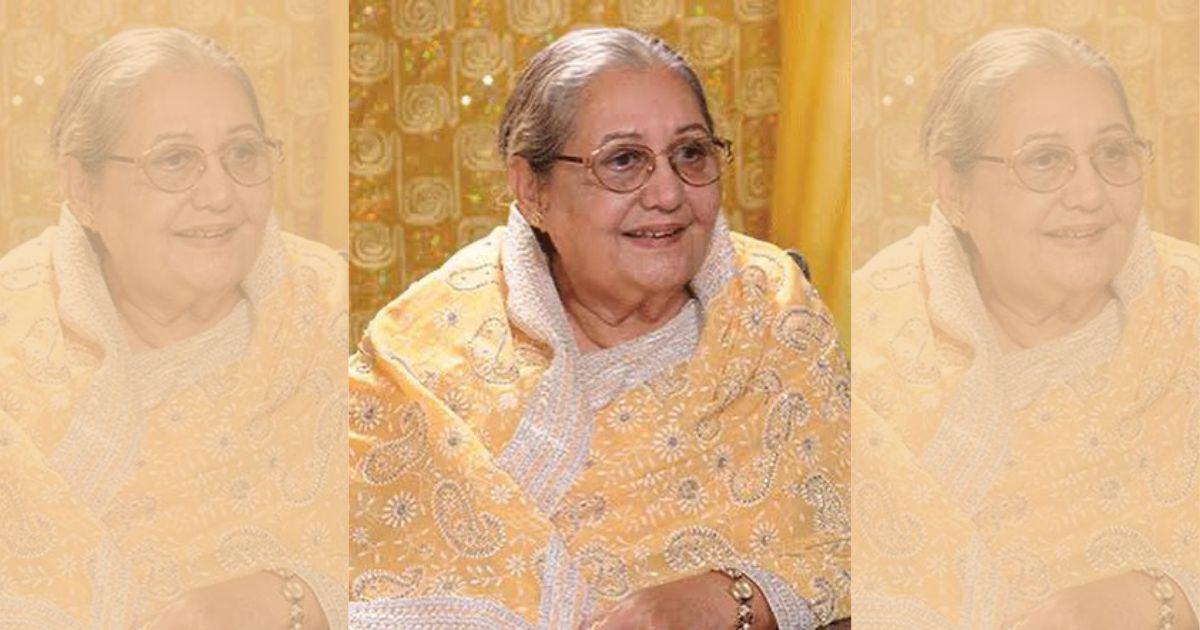
Through my nomadic childhood, I’ve been at many schools. None exemplified the idea of secular India as intensely as this Muslim school in Hyderabad. Begum Anees Khan, who made it so, died in Hyderabad on August 16. Her passing feels symbolic, as if it signifies the death of a quixotic idea.
Anees Khan was not given to seeking the limelight or making speeches. She never spelled out her secularism. It was instinctive: instead of words, there was action. Students of different faiths did their namaz or prayers separately, everything else together. Religion was not denied, but it was shown its rightful place.
When we were at Nasr School, we took all of it for granted, never suspecting goals or visions or manifestoes. It seemed natural for us that school should have both namaz and Diwali melas, that our classmates would fast during Ramzan and feast at Christmas. Maybe this is the reason for my rage and incomprehension when people around me casually describe neighbourhoods and towns as having “too many Muslims” in the way people might say “too many mosquitoes”.
It was not an easy act to pull off in the Hyderabad of the 1980s. Communal riots began on the flimsiest of pretexts and fear would ripple through the school. I remember panic-stricken phone calls to car-owning parents, who arrived and carried away groups of girls to drop them home before the riot came too close. The next day, we would return to school as if nothing had happened.
The school was identifiably Muslim: there was a signboard over the main gate with the name of the school, which means “Victory” in Arabic, inscribed below with a line in Arabic from the Koran, that means, “With God’s help victory is near.” Though murderous vigilantes didn’t roam the streets then, as they do now in certain parts of India, it was still a city divided down religious lines. Creating a school like Nasr was an act of wild courage and imagination.
Begum Anees Khan was born into the Muslim aristocracy of Hyderabad, and was an outlier who broke away from the feudal indolence that, according to an insider, characterised this world. Running a business was unheard of, the genteel lived off inheritances. It was in this milieu that Anees Khan began Nasr in 1965 as a small school in her garden. It became a family enterprise where gradually her sister, her husband, her two daughters and her son became involved. (There are now four branches, including a charitable school.)
Courtesy Nasr School/Facebook
My classmate Saira Ali Khan, whose older sister Fauzia was in that first lot of students along with Anees Khan’s youngest daughter, says there were few other English-medium options for girls then. Most schools were convents where Muslims didn’t want to send their children. Because Anees Khan was one of their own, conservative Muslims felt safe enough to send their daughters to Nasr School even though it was not a religious institution, nor was it exclusively for Muslims. In an act of daring, Anees Khan made it co-educational, but perhaps this was the one dream she had to sacrifice. By my time it was all-girls, though some of the teachers were men.
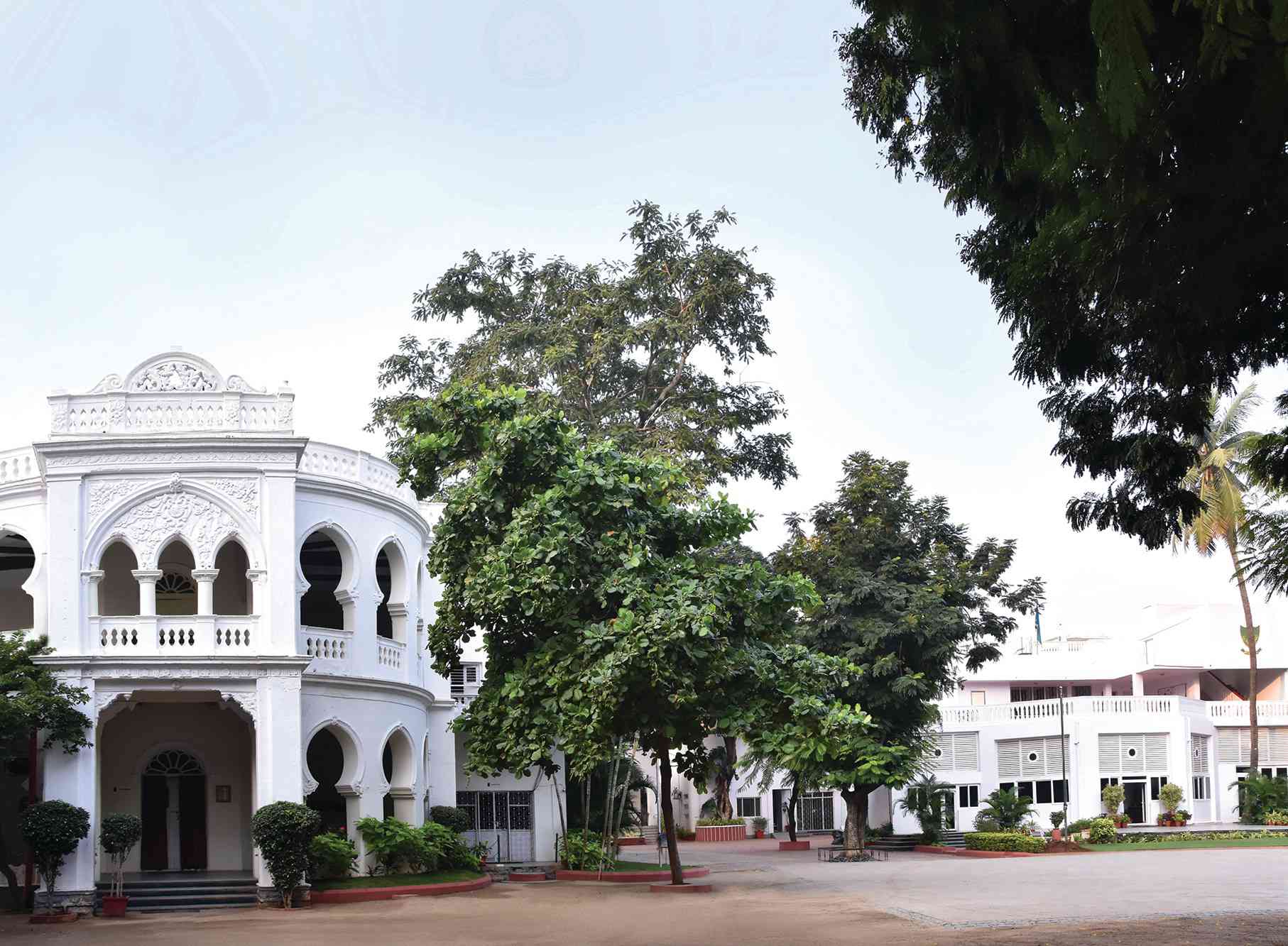
When I joined it in the 1980s, Anees Khan’s own home stood to the right of the school building. This was an old white mansion with an inner courtyard behind the raised entrance, and a playground in front of it. Lines of casuarina trees stood like sentries along the playground, and at the gate was a shack for us to buy deliciacies such as churan and sweets.
Mrs Khan presided over this little empire with the elegance and style that the British queen with her dumpy handbag and hat could only have aspired to. Elahé Hiptoola, a classmate of mine (producer of films such as Hyderabad Blues, Dhanak and Modern Love Hyderabad), has a vivid memory of Mrs Khan’s chiffon saris, her perfume, the remarkable way she exuded authority without ever raising her voice. I remember her telling us to give time and thought to our written signature – it had to make a statement, it was not merely the writing of your name. I wonder now if these were ways in which she had to assert her own identity, with calm firmness, within her deeply conservative world.
Reconciling differences in the school must have taken a great deal of effort for Anees Khan. A few of my classmates arrived in burqas, which they swiftly shed to reveal our standard-issue olive-green tunics or the white sports uniform. There were great disparities in income levels – many students were from landed, feudal families, while others came from humbler backgrounds. There was much swapping at lunch between tiffin-boxes containing venison, dry fruits, and salan, and those with parathas or idlis.
To make sure everyone could afford the school, fees were kept absurdly low, exercise books and stationery were free. Textbooks were handed down from one class to the next until they fell apart from doodles and grease. Even those who could afford new books had to have used ones. Each of us had a desk with a lock and key and we had to leave our books at school, carrying home only the ones we needed.
I now marvel at the imaginative ways by which Mrs Khan taught us to be spirited and daring, to look after our possessions, start small businesses, care for animals, and most of all, enjoy life. During the cool months, classes were cut in half and you could do what you pleased – provided you actually did something, such as painting or gardening or acting.
She made us start a plant nursery, look after animals such as rabbits and geese, collect money and cook food to sell during the Diwali melas. The teachers were given a free hand and some, like Chandra Dorai, our brilliant English teacher, spent whole afternoons making us write stories instead of attending to our grammar books or set texts.
Long before words like creativity and can-do became common currency, Anees Khan had made them a way of being. “It was a girls’ school,” said Elahé Hiptoola, “but she did not keep us secluded or confined. We were sent off to dance at the Asian Games. There was a school trip to Kashmir. She emphasised creativity and originality. She was far ahead of her time.” Very little discipline was enforced, though Hiptoola remembers being summoned to the principal’s room on occasion, and standing outside the thick green curtain at the door of her office, heart thumping, wondering what she had done.
My own memory of this ordeal has crept into my novel, The Earthspinner, which has a character based on Anees Khan. In the book she is called Tasneem Khan, and she has summoned a young student to her room. After their conversation, “she dismissed me with a wearily elegant motion which was both a wave and a gesture towards the door… Her green-blue eyes, usually watchful and impersonal, seemed amused, and maybe she was even smiling a little as she returned her gaze to the open file in front of her.”
What mattered to Begum Anees Khan was humanity, not religion. The school she created was in miniature the secular country that was dreamed up in 1947. With her death, she no longer has to suffer witnessing the destruction of that ideal.
With inputs from Elahé Hiptoola and Saira Ali Khan.
Anuradha Roy is a writer.
source: http://www.scroll.in / Scroll.in / Home> Idea of India / by Anuradha Roy / August 20th, 2023
Prof. (Dr.) Mohammad Rihan, a senior faculty member of AMU, has been appointed Chairperson of BIS Solar Energy Panel
Aligarh:
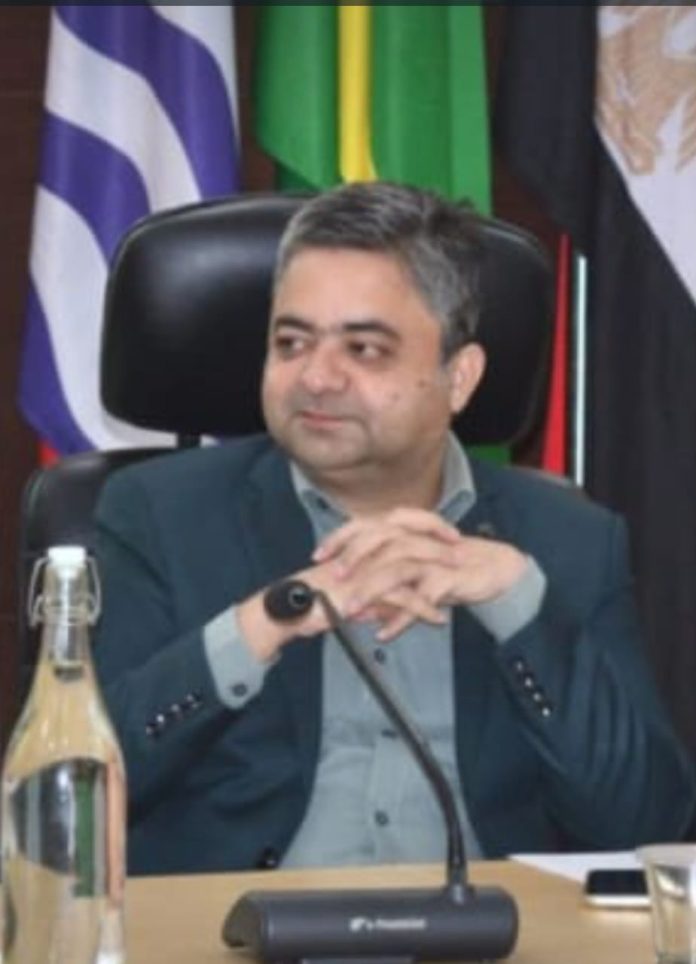
In a significant development for India’s renewable energy sector, Prof. (Dr.) Mohammad Rihan, a senior faculty member of Aligarh Muslim University (AMU), has been appointed as the Chairperson of the Solar Photovoltaic Energy Systems Sectional Committee (ETD 28) under the Bureau of Indian Standards (BIS).
Prof. Rihan, who previously served as the Member In-charge of Electricity at AMU, is currently on deputation as the Director General of the National Institute of Solar Energy (NISE), an autonomous body under the Ministry of New and Renewable Energy. His appointment is expected to bolster India’s efforts in standardising and advancing solar energy technologies.
The ETD 28 Committee, operating under the Electrotechnical Division Council of BIS, is tasked with developing national standards for photovoltaic systems, encompassing everything from solar energy conversion to electrical system integration. Prof. Rihan’s leadership is anticipated to play a pivotal role in ensuring the reliability, efficiency, and sustainability of India’s solar energy initiatives.
Prof. Rihan’s distinguished career includes roles as Vice Chairperson of the ExCom IEEE UP Section and the IET Delhi Local Network. He has also contributed as a Visiting Scientist at NISE. With his expertise, Prof. Rihan is expected to drive innovation and accelerate India’s transition towards a renewable energy future.
This appointment highlights the growing recognition of academic contributions to India’s renewable energy mission and reinforces AMU’s reputation as a hub of academic excellence in science and technology.
source: http://www.radiancenews.com / Radiance News / Home> Education> Focus> Science & Technology / by Radiance News Bureau / December 07th, 2024
She was elected in 2020 GHMC corporator elections. Shaheen Begum was suffering from health issues and was hospitalized
Hyderabad:
All India Majlis-e-Ittehadul Muslimeen (AIMIM) corporator from the Erragadda Division Shaheen Begum passed away due to a prolonged illness on Tuesday.
She was elected in 2020 in the Greater Hyderabad Municipal Corporation (GHMC) elections. Shaheen Begum was suffering from health issues and was hospitalized, said local media reports.
source: http://www.siasat.com / The Siasat Daily / Home> News / by Tamreen Sultana / June 04th, 2024
Advocate Shahul Hamid Rehman has been appointed as the Additional Advocate General of Karnataka.
The appointment was made on the orders of Karnataka Governor Thawar Chand Gehlot, as communicated by Adinarayana, Under Secretary of the Law, Justice, and Human Rights Department.
Advocate Shahul Hamid Rehman, a senior legal professional, is the son of the late K. Abdul Rahman and Nebisa.
He completed his law degree at SDM Law College Mangaluru, and gained experience practicing under former Advocate General B.V. Acharya.
source: http://www.english.varthabharati.in / Vartha Bharati / Home> Karavali / by Vartha Bharati / December 02nd, 2024
Human life is a journey filled with challenges and triumphs, and through optimism, hard work, and determination, individuals can achieve remarkable success while inspiring others. Sharmin Banu, a student at Bearys B.Ed College in Kodi, Kundapur, has this spirit of achievement and serves as an inspiration to many.
A proud ranger of Udupi district, Sharmin is actively involved with the Bharat Scouts and Guides (BSG). With a background in commerce and education, she serves as an advocate for the World Association of Girl Guides and Girl Scouts (WAGGS) and she advocated for WAGGS first ever Global consultation on Climate Change & Gender.
Sharmin’s commitment to sustainability, a plastic-free world, and gender equality within the framework of the Sustainable Development Goals (SDGs) is evident through her impactful work. Her project, “The Wings of Peace Nature Based Solutions,” earned the prestigious Olave International Award at the World Conference in 2023.
In November 2024, Sharmin was the representative from the Asia-Pacific region selected to represent 10 million Girl Scouts and Guides at the World Conference on Climate Change, held in collaboration with UNICEF in Baku, Azerbaijan. During this event, she was honored as a “Girl Lead Action on Climate Change Advocacy Champion.”
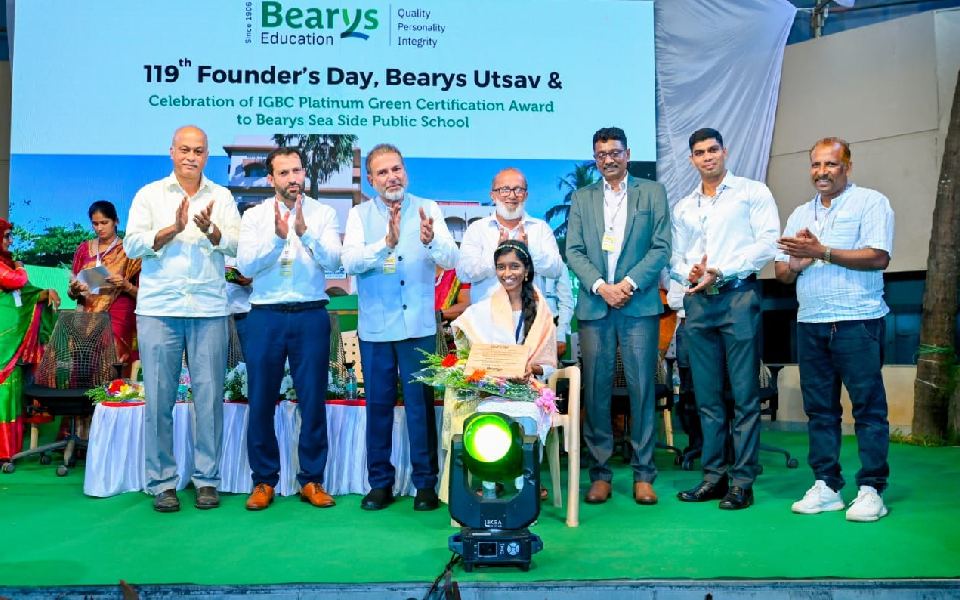
In recognition of her outstanding achievements, Sharmin was recently honored at the Bearys Utsav 2024 by Syed Mohamed Beary, an entrepreneur, environmentalist and educational thinker, as well as the convener of Bearys Group of Institutions. As a further testament to her dedication, Sharmin has been appointed as the brand ambassador for the ongoing ‘Clean Beach – Green Kodi’ campaign, reflecting her unwavering commitment to environmental sustainability.
In the meantime, Syed Mohamed Beary in acknowledging her achievements, expressed his heartfelt prayers: “May her tribe increase, and may she stay blessed always.”
source: http://www.english.varthabharati.in / Vartha Bharati / Home> Karavali / by Vartha Bharati / December 07th, 2024
It was aimed at equipping students with the Islamic knowledge to live and succeed in the globalized world.
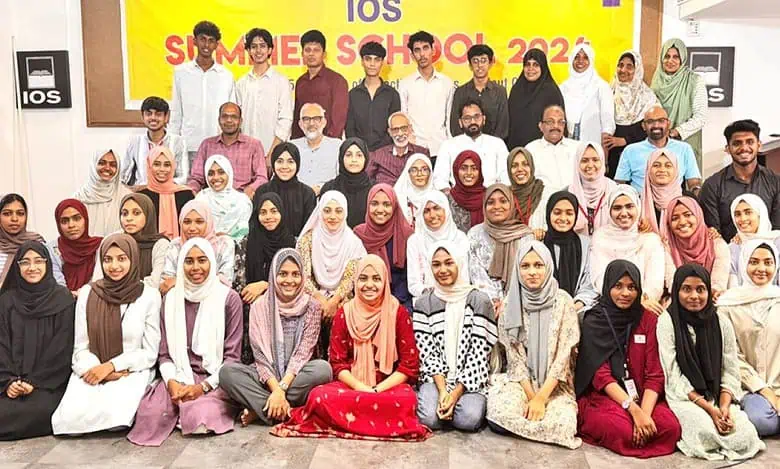
Participants of Summer School-2024 organized by IOS Center for Gender Studies, Kerala Chapter.
Bhopal:
The Institute of Objective Studies, (IOS), Centre for Gender Studies, Kerala Chapter, organized a Summer School- 2024 from May 11 to 15, 2024, at its seminar hall at Kozhikode, Kerala.
The five-day camp was aimed to enhance the awareness and foresight of young participants on contemporary issues through a series of educational and cultural activities.
According to a Press Release issued by IOS imparting basic but deep knowledge to the university students pursuing professional disciplines like Graduation and Masters in business studies, science, computer science, engineering and medicine etc.
“It was also an outreach programme in that we want to introduce the IOS, to a new and larger audience, particularly the students who are future leaders in medical science, technology and business studies. These students are a very bright section of the young generation with the potentials to become leaders and decision-makers in their respective fields. It is, therefore, very necessary to acquaint them with the fundamental teachings of Islam as well as the great role that Islam played in the making of global human civilization, the release said.
Objectives of Summer School programme
The objectives of the Summer School programme were as follows:
-To equip the target students with basic and deep knowledge about Islam as faith and source of global Islamic civilization;
-To educate about the Islamic worldview and how Islamic Sciences, Quran, Hadith and Fiqh developed;
-To enable students understand and analyze the Muslim contribution to world human civilization and how Islamic intellectual renaissance is possible
– To prepare students how to cope with the challenges of modernity and westernization from an Islamic perspective.
Besides, it was aimed at equipping students with the Islamic knowledge to live and succeed in the globalized world as follower and torch-bearer of Islam.
The Summer School was inaugurated by Jamal Kochangadi, a respected senior media personality and writer. His inspiring address set the tone for a week of intense learning and personal development.
Daily Activities and Sessions
Each day of the Summer School was structured to provide a rich blend of academic sessions, cultural programs, and personal development activities.
The feedbacks were written down and discussed daily, ensuring continuous improvement and participant satisfaction.
The curriculum covered a wide range of topics, including:
– Stress Management; Communication Skills;
-Quran: Contemporary Issues and Challenges;
-Design Thinking; Mappila Songs and Aesthetic Pursuits;
-Interpersonal Skills; Sufi Aesthetics and Islam;
-Quran: Introduction to Chapters, Text, Context and Message;
-Media Democracy and Contemporary Challenges;
-Art and Literature in Islam;
-The Art of Compassion; -Campus Life;
-Islamophobia: The Menace and the Matrix;
-Gender Discourses and Islam;
-The Value of Knowledge;
-Feminine Identity and Islam;
-History, Historiography, and Resistance & Religion in the Age of Contemporary Challenges.
Senior journalists and scholars who delivered their lectures and conducted the sessions included: C. Dawood, NP Chekutty, Nishad Rauthar, Dr. PK Poker, Baburaj Bhagwati, PT Kunhali, AK Abdul Majeed, Dr. AI Vilayatullah, Khalid Musa Nad V, Dr. Ashraf Kalpetta, Dr. Jameel Ahmad, Dr. Anas, Shihabuddin Ibn Hamza, Shifa M, Zuhair Ali etc.
Cultural Programs and Break Activities
Each day had vibrant cultural programmes that highlighted the rich cultural heritage and artistic expressions within the Islamic context. The Hazrat Ayesha Research Library provided beautifully prepared books, making the break times both enjoyable and educational.
A notable feature of the Summer School was the emphasis on personal development.
Participants were encouraged to engage in reel-making projects based on various topics, fostering creativity and practical application of the knowledge gained.
The Summer School culminated with the award and closing ceremony and celebrating the achievements and participation of the students.
The camp succeeded in its objective to provide comprehensive exposure to Islamic, social, and cultural topics, significantly contributing to the personal and intellectual growth of the students.
Feedback and Outcomes
Most students expressed full satisfaction with the camp, particularly appreciating the exposure to unfamiliar topics and the holistic approach to learning. The camp’s success underscores the importance of such initiatives in developing well-rounded, aware, and foresighted individuals.
The IOS Centre for Gender Studies, Kerala Chapter’s Summer School 2024 was a resounding success, providing invaluable insights and experiences to its participants. By integrating academic rigour with cultural enrichment and personal development, the camp significantly contributed to the participants’ growth and understanding of contemporary issues within an Islamic framework.
source: http://www.siasat.com / The Siasat Daily / Home> News> India / by Parvez Bari / July 05th, 2024
It was the late evening of October 25, 2023. I was fresh to the city of Riyadh, only having arrived two days prior, and had just secured a job in the construction industry. Out of the blue, I received a message from someone I’d come to admire even before meeting him—a humble and kind-hearted gentleman whose companionship would soon become an immense learning experience. He invited me to his office, and, understanding my unfamiliarity with the city, graciously arranged for someone to pick me up.
When I entered his office, I was greeted by a sense of calm and warmth, as though this was a place where great ideas took shape. It was here, in this serene setting, that I first met Mr. Wayez – Syed Wayez Ahmed, Founder and CEO of Innovwayz Technologies Company, KSA. Though we’d only spoken over the phone before, his welcoming embrace and the genuine warmth with which he received me made me feel as if I’d found a brother in this unfamiliar city.
I handed him a box of sweets I’d brought from Hyderabad, a gift from Brother Akram Muhammad, who had introduced us. With a modest smile, Mr. Wayez shared a bit about his journey, explaining that he had been running Innovwayz for over a decade but had visions of doing much more, particularly in empowering communities back in India.
Just then, a man entered the room with a charming smile. It was Mr. Mohammad Zaki, the Vice President of Innovwayz. Turning to him, Mr. Wayez instructed, “Mr. Zaki, take Azhar’s interview. Find out his interests and strengths, and see where he might best fit in our team.” I was taken aback. I had come expecting only a casual meeting but was now being offered an impromptu job interview. Although I had just secured another job, I didn’t hesitate and agreed to the interview.
What followed wasn’t an interview in the traditional sense – it was more of an introduction, a conversation where I shared my background, my education, and my experiences back in India. Mr. Zaki listened attentively, and by the end, I felt less like a candidate and more like a member of the Innovwayz family.
Returning to Mr. Wayez’s office, I was introduced to another remarkable individual: Mr. Abdul Khaliq. With a warm demeanour and a quick smile, he welcomed me with kindness. A close friend of Mr. Wayez, Abdul Khaliq wasn’t merely an employee at Innovwayz; he was its backbone. Over time, I would come to see his tireless dedication, his unwavering calm even during the busiest days. In that moment, though, we only exchanged a few words, but his commitment and humility left an impression that would deepen with every encounter.
As the night grew late, and the conversation grew warmer, Mr. Wayez extended an offer for me to join Innovwayz. When I hesitated, explaining that I’d already accepted another position, he simply looked at me with a calm resolve and said, “Chotey motey jagah kya kaam karte, yaha aye. Hum ko bhut kaam karna hai” (“Why work for smaller places when there’s so much we can achieve here?”).
I left his office that night feeling a sense of purpose and excitement, sharing the experience with friends and family. After performing Istikhara – a prayer for guidance when facing a significant decision – I decided to join Innovwayz. On October 29, I stepped into my new role as Business Development Associate, eager to contribute to a company that felt more like a mission than a job.
Spark of Collaboration: Founding the Business Friends Forum On my very first day at Innovwayz, I mentioned to Mr. Wayez that I knew a few businessmen in Riyadh, Saudi Arabia, and suggested a casual meet-up to connect and explore potential collaborations. Without a moment’s hesitation, he agreed. “Invite them over,” he said warmly. “We can meet after Maghrib.”
That evening, our office buzzed with the energy of a gathering that would become the first of many.
Eight of us came together – Anees Mohammad, Director of Seahath Canning Company from Goa; Abdul Jabbar, the Country Manager for Seahath in KSA; Hamza Ali, Co-Founder of Standard Touch from Karnataka, alongside his brother and Country Manager, Abul Ala; Imranuddin, Founder of DB Systems; Abdul Khaliq, Innovwayz’s dedicated Business Development Manager; and, of course, Mr. Wayez and myself.
The conversation flowed naturally as we shared ideas, challenges, and aspirations over the next couple of hours. Toward the end, inspired by the potential in the room, I suggested the formation of a Business Friends Forum – a network to bring together Indian entrepreneurs in KSA. Everyone was enthusiastic, and the idea took root.
That humble gathering sparked something incredible. Within a year, over 70 entrepreneurs and aspiring businesspeople joined our community, each contributing their unique experiences and dreams. And so, the journey of the Business Friends Forum began, growing with every meeting, with every new connection.
Mr. Wayez Ahmed grew up in Karimnagar, Telangana, and after completing his MBA, he set off for Hyderabad in search of a job. There, he poured his energy into supporting his friends’ business ventures, but the early attempts didn’t pan out as he’d hoped. When opportunity didn’t knock, Wayez looked outward, eventually relocating to Saudi Arabia, where he had relatives who had already established themselves. He joined SAB as a developer and, over the next decade, gained invaluable experience while quietly nurturing his own ambitions.
Building Innovwayz Technologies
Through those years, his passion for business was unwavering. He worked tirelessly on various projects, from school initiatives to community functions – constantly experimenting, always learning, and never discouraged by setbacks. Finally, with his uncle’s support, Wayez founded an IT consulting firm a decade ago, inviting his closest friends to join him in the venture. The result of this relentless dedication and teamwork was Innovwayz Technologies, now a thriving business in Riyadh.
To build a company in Saudi Arabia is no small feat, especially for an expatriate from a modest Indian town. Unlike India, where the unorganised sector allows room for experimentation, Saudi Arabia’s highly regulated environment adds layers of complexity. For expatriates, starting a business meant partnering with a Saudi national. But recent changes to KSA’s business laws through the Ministry of Investment (MISA) allowed foreign entrepreneurs to operate independently, provided they maintain a parent organisation in their home country.
Today, Innovwayz stands tall – a company rooted in India, operating mainly in Saudi Arabia, and now expanding into the UAE. Mr. Wayez’s journey from a small town in India to the bustling business scene of Riyadh is a testament to resilience, vision, and the unwavering belief that he could succeed against the odds.
Venturing Beyond IT: Subhan Bakery & Alipapa Distribution A few days into my new role, I sat down with Mr. Wayez Ahmed for a meeting where he shared details of a few ambitious projects his team was working on. Among them were plans to introduce Subhan Bakery, a celebrated bakery brand from Hyderabad, to Riyadh, and a food distribution company named Alipapa, a project with groundwork that had been laid for over a year.
Before we concluded our discussion, curiosity got the better of me, and I asked, “With our IT business running successfully, what made you venture into other fields?”
His answer was nothing short of inspiring. “What good is the money we’re saving if it doesn’t create opportunities? By investing in new ventures, I can provide employment to deserving young people,” he said, with a conviction that made me admire his vision even more.
After over a year of hard work, Subhan Bakery finally launched in Riyadh during Ramadan 2024, complete with a fully operational production unit and an outlet. To my surprise, Mr. Wayez asked me to take the lead on the project. I hesitated, admitting I had no prior experience managing such a venture. He responded with the same encouraging wisdom he had shown before: “I’m just as new to this as you are. Let’s learn as we go, and if we make mistakes, we’ll grow from them. Don’t worry; just give it your best.”
His words gave me the confidence to dive into the project wholeheartedly, embracing the learning curve and tackling each challenge as it came.
Meanwhile, he was also dedicating his time to overseeing the progress of Alipapa, which was officially registered in India and on track to launch in Saudi Arabia. With every step, he encouraged the team working on this food distribution company, confident that soon it would be yet another successful venture in his growing portfolio.
Bridging Borders: Shaheen’s Journey to Riyadh One fine afternoon, I found myself in an insightful conversation with Dr. Thouseef Ahmed, the CEO of Shaheen Group of Institutions. During our discussion, he mentioned that Dr. Abdul Qadeer, the Chairman of Shaheen, was planning a visit to Saudi Arabia in September 2024. Without a second thought, I immediately messaged Mr. Wayez about the upcoming visit. True to his proactive nature, he replied right away, saying, “Okay, arrange the meeting and coordinate with the team,” even though he was vacationing in India at the time.
Together, we prepared everything meticulously. When Dr. Qadeer arrived, we held a productive meeting with the Shaheen team, followed by a social gathering and interactions with other community stakeholders in Riyadh. Inspired by this, we planned a visit to Shaheen School in Bidar the following week. After a series of discussions, an MoU was signed in Hyderabad between Dr. Abdul Qadeer and Mr. Wayez, marking the beginning of a new chapter: the establishment of Shaheen School in Riyadh, set to open in the upcoming academic year (around March 2025).
Through this experience, I observed remarkable leadership qualities in Mr. Wayez – his ability to delegate, his knack for identifying potential in others, and his unwavering commitment to uplift friends, family, and those in need.
The Visionary Journey from Hyderabad to Hara: Mr. Wayez Ahmed’s Path of Purpose
His entrepreneurial journey from Hyderabad to Hara wasn’t easy; it was filled with challenges, learning from setbacks, and continuously engaging and inspiring people around him. To those reading this, he may now appear as a business tycoon, but at heart, he remains simple, humble, compassionate, and deeply kind.
In a nutshell, his journey so far is marked by the following ventures:
Startup 1: Innovwayz Technologies Company (IT Services) – Brought together childhood friends to build a team.
Startup 2: Subhan Bakery, KSA (Food Production) – Partnered with an experienced businessman to launch a new team.
Startup 3: Alipapa Global Merchandise (Food Distribution) – Engaged his cousins to form a dynamic team.
Startup 4: Shaheen Group Middle East (Educational Services) – Brought friends and relatives together to expand into the education sector.
One thing is clear about Mr. Wayez: he is driven by purpose, not greed. His aim is to grow across multiple sectors, providing a platform for aspiring entrepreneurs to thrive alongside him. He embodies collaboration over competition, fostering a shared vision of collective success.
source: http://www.radiancenews.com / Radiance News / Home> Features> Focus / by Syed Azharuddin, Radiance News Bureau / November 05th, 2024
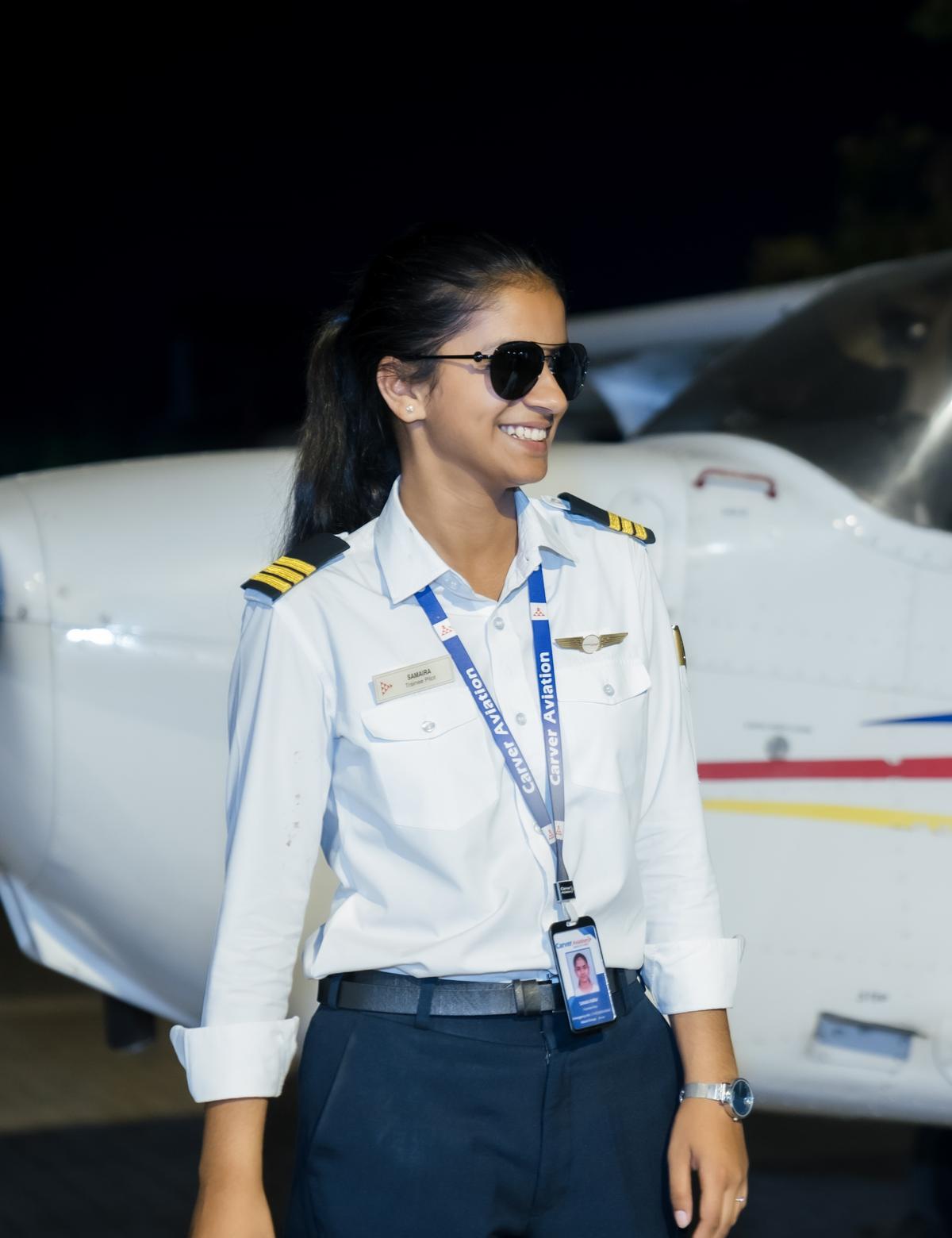
Samaira cleared six examinations and gathered over 200 hours of flying experience in around one-and-a-half years..
An inspiration: Samaira Hullur from Vijayapura who has obtained commercial pilot licence at the age of 18. | Photo Credit: SPECIAL ARRANGEMENT
Samaira Hullur from Vijayapura has obtained a commercial pilot licence at the age of 18.
Her father Ameen Hullur, an interior designer, has said that she is the youngest in India to clear all tests and get the licence.
Ms. Hullur was trained at the Vinod Yadav Aviation Academy (VYAA) in New Delhi and later, she joined the Carver Aviation Academy in Baramati of Maharashtra.
She cleared six examinations and gathered over 200 hours of flying experience in around one-and-a-half years.
She credits Captain Tapesh Kumar and Vinod Yadav for training and mentoring support. Her initial training was with VYAA after which she faced several examinations and cleared them. She went to Baramati after obtaining her licence. She has about 200 hours flying experience.
Ms. Hullur said that she was inspired by Captain Kumar who got his licence when he was 25. “I always dreamt of being a pilot. My parents supported me in my pursuit,” she said.
Her father Ameen Hullur recalls that it was a joy ride in a helicopter that made her decide on a career in the skies.
A few years ago, the Vijayapura district administration arranged helicopter rides over the city during the Bijapur Utsav.
“We bought tickets and were seated next to the pilot. Samaira was attracted by the pilot’s attire and style and began asking him several questions. He patiently answered them. That was the day she decided she wanted to be a pilot. We supported her by saving money and looking for good quality aviation academies,” Mr. Hullur said.
A bright student all through, she completed her SSLC at 15 and 12th standard at 17. She has been a student of Sainik schools, Shishu Niketan and Shanti Niketan. She has joined the Kendriya Vidyalaya for her 12th standard science course.
“She cleared five of the six examinations conducted by the Directorate-General of Civil Aviation before she turned 18. She was not allowed to appear for the radio transmission technology paper as eligibility was 18 years. She cleared it later. The examinations are apparently tough but she passed all in her first attempt,” Mr. Hullur said.
She obtained over 200 hours of flying experience in night flying and various airplanes, including multi engine aircraft, in around eight months of flying in Baramati, he said.
Mr. Hullur and his wife, a fashion designer and teacher, were pleasantly surprised when her academy declared that she is the youngest in the country to get the licence.
“She is an inspiration for several other girls from backward North Karnataka, where the education levels of girl students is less than the State average,” Omkar Kakade, who is a professor and head of the Department of Journalism in Karnataka Akka Mahadevi Women’s University, said.
“Samaira Hullur’s success will definitely inspire more girls to make courageous and non-traditional career choices. We are proud of her and thankful to her parents for supporting her decision,” Dr. Kakade said.
source: http://www.thehindu.com / The Hindu / Home> News> India> Karnataka / by The Hindu Bureau / December 03rd, 2024