Tag Archives: Positive Stories of Muslims of India

First documentary on Kayamkhanis will make you feel proud of this Rajashthan community

RAJASTHAN :

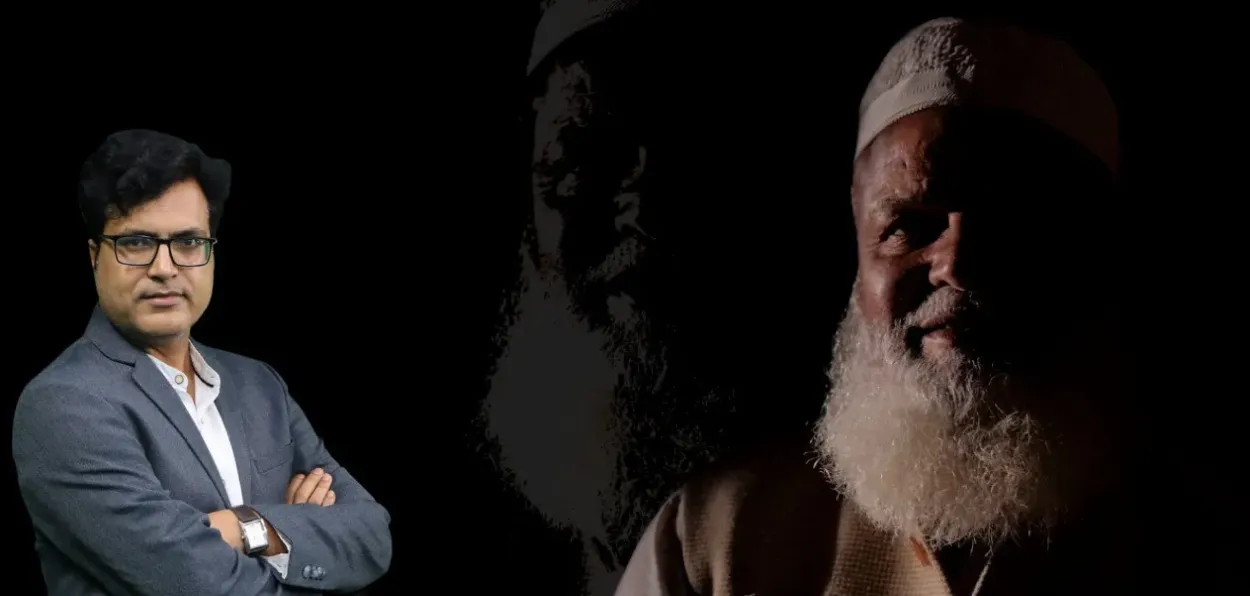
Manjit Thakur, Director of the Kayamkhani Bravehearts

New Delhi :

“There is no Kayamkhani who has been hit with bullets in his back,” says a veteran of the Indian Army, who like many others of his community have dedicated his life to uniform, discipline, and service to the nation.

This documentary, Kayamkhani Bravehearts is the saga of the Kayamkhani, a Muslim community from Rajasthan, whose first preference for a career is military or Police and who consider service to the nation as a matter of pride and responsibility. For them, patriotism is not just a slogan, but a tradition passed down through generations. The documentary is documentation of the story of these valiant sons of the soil who defended the country at the border, faced enemy bullets head-on, and who consider martyrdom an honour.

The first glimpse of the documentary, a 33-second teaser, is enough to send shivers down the spines of viewers. The teaser suggests that this film will not merely be a presentation of facts but an experience steeped in emotion, sacrifice, and patriotism. Watching it, viewers will not only be filled with pride but will also be compelled to understand that in defending the nation, only duty matters, not religion.

The history of the Kayamkhani Muslim community of Rajasthan is replete with valour, discipline, and service to the nation. Almost every family in this community has been connected to the armed forces in some way. The dream of the youth here is not to become a big businessman or an officer in a high-ranking government position, but to serve their motherland by joining the Indian Army, paramilitary forces, or the police.

Watch the teaser here:

Manjit Thakur, director and screenwriter of the documentary, states that soldiers from the Kayamkhani community have so far earned four Shaurya Chakras, 18 Sena Medals, and five Vishisht Seva Medals.These figures would be a source of pride for any community, but for the Kayamkhanis, they represent not just honour, but a symbol of responsibility.When it comes to sacrifice, this community has not lagged.

In Danduri village, which is now known as the “village of soldiers,” 18 Kayamkhani Muslims were martyred for the country. Similarly, 10 martyrs each from Jhajhot and Nua villages also laid down their lives for their motherland. These figures are not just numbers, but represent the tears of those mothers, the pride of those families, and the essence of the soil that gave birth to such brave sons.

The documentary presents the stories of these martyrs in a deeply sensitive and impactful manner. The camerawork, editing, and graphics are of a high standard, emotionally connecting the viewers to the narrative. Research, hard work, and authenticity are evident in every frame.

Before making this documentary, the Awaz-The Voice team conducted comprehensive research. Under the leadership of Editor-in-Chief Atir Khan, the team spent a long time researching, delving into history, and understanding the ground realities. The documentary was shot over several days in different villages of Rajasthan. The filming continued late into the night to present the true lifestyle, struggles, and pride of this community to the world.

The documentary also reveals several surprising facts. For example, Kayamkhani Muslims consider cows their most valuable asset and cannot even imagine harming them. This fact shatters the stereotypes that are often formed in society without proper understanding.

Manjit Thakur recounts that when the team arrived in the Kaimkhani villages, they were welcomed with a sense of pride and warmth. The villagers not only welcomed them wholeheartedly but also openly shared their stories, pain, and pride. This trust became the soul of the documentary.

Speaking about the documentary’s objective, Atir Khan sais that in today’s world, negativity has become the unique selling proposition of news. In this environment, Awaz-The Voice is the sole platform which brings forth positive stories of cooperation, and peaceful coexistence from India and around the world.
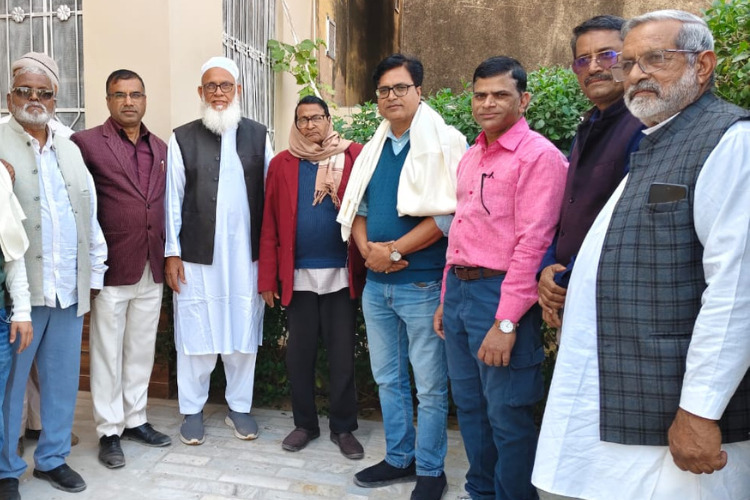
Awaz team with locals in a Rajasthan Village

He believes that beyond the walls of faith, caste, region, and language, Indians have many shared concerns, challenges, and dreams for the future that have the potential to bring people and communities together. Awaz-The Voice’s content promotes progressive, positive, and nation-building ideas not only in India but also among Muslim communities abroad.

This documentary is an extension of that very idea—an attempt to amplify the voice of true patriotism, a voice often drowned out by the noise of hatred. This film reminds us that the uniform has no religion, and every drop of blood shed for the country is purely Indian.

On release, this documentary will undoubtedly not only move viewers but also make them think, feel proud and energise them to serve the nation. This is not just the story of the Kayamkhani community, but the story of an India where the country comes first.

source: http://www.awazthevoice.in / Awaz, The Voice / Home> Stories / by Manjit Thakur / posted by Aasha Khosa, ATV / January 17th, 2026

Muslim Mirror Releases List of 100 Most Influential Indian Muslims 2025; Young Faces Gain Prominence

INDIA :

Muslim Mirror’s 100 Most Influential Muslims of 2025

New Delhi: 

Muslim Mirror has released its much-anticipated annual list of the “100 Most Influential Indian Muslims of 2025,” spotlighting individuals who have made significant contributions to India’s public life across a wide spectrum of fields including politics, culture, education, business, media, religion, sports, and social service. Now in its second edition, the list aims to document influence not merely as power or popularity, but as sustained impact, leadership, and the ability to shape public discourse.

A defining feature of the 2025 edition is the growing prominence of younger achievers, signalling a visible generational shift within Indian Muslim leadership. Alongside established national figures, the list includes emerging voices who have built influence through grassroots activism, professional excellence, digital platforms, legal advocacy, education, and community engagement. Editors associated with the project said this was a deliberate attempt to recognise new centres of influence beyond traditional hierarchies.

The list reflects the diversity and plural character of Indian Muslim society, cutting across geography, ideology, profession, and language. From seasoned politicians and religious scholars to artists, entrepreneurs, academics, and social reformers, the compilation offers a broad snapshot of leadership trends at a time when issues of representation, constitutional values, and social justice remain central to national debate.

Representation Across Sectors

The 2025 list features several eminent academicians and intellectuals who have shaped higher education, policy discourse, and social research. Among them are Abul Qasim Nomani, Ameerullah Khan, Furqan Qamar, Shahid Jamil, and Ubaid-ur-Rahman, recognised for their contributions to education, public policy, and academic leadership.

In the business and entrepreneurship category, the list includes influential names such as Azad Moopan, Azim Hashim Premji, Farah Malik, Irfan Razack, M. P. Ahammed, Mecca Rafiq Ahmed, Meraj Manal, Syed Mohamed Beary, P. Mohammed Ali, Shahnaz Hussain, Tausif Ahmad Mirza, Yusuff Ali, and Ziaullah Sharif. Their inclusion underlines the growing economic footprint of Indian Muslim entrepreneurs, both domestically and globally, spanning sectors from retail and healthcare to infrastructure and consumer goods.

Community leadership remains a strong pillar of the list, with figures such as Arshad Madani, Mahmood Madani, Malik Motasim Khan, Mehmood Pracha, Syedna Mufaddal Saifuddin, Navaid Hamid, Pirzada Md Abbas Siddiqui, Qasim Rasool Ilyas, Sadatullah Husaini, Umer Ahmed Ilyasi, and Yusuf Mohamed Abrahani recognised for their roles in religious guidance, legal advocacy, social mobilisation, and institutional leadership.

Culture, Media, and Public Discourse

In arts and entertainment, globally recognised names such as A. R. Rahman, Aamir Khan, Mammootty, Munawar Faruqui, and Shah Rukh Khan continue to command immense cultural influence, shaping narratives that extend well beyond cinema and music into social consciousness.

The list also acknowledges the growing importance of media and journalism in shaping opinion and challenging dominant narratives. Journalists and commentators such as Arfa Khanam, Irfan Meraj, and Seema Mustafa are recognised for their consistent engagement with issues of democracy, minority rights, and constitutional values.

Religious and Intellectual Scholarship

A significant section of the list is devoted to Islamic scholars and religious thinkers, reflecting their continued influence on moral leadership and intellectual discourse. Names such as A. P. Aboobacker Musliyar, Qasim Nomani, Prof. Akhtarul Wase, Asghar Ali Imam Mahdi Salafi, Asjad Raza Khan, Ibraheem Khaleel Al-Bukhari, Javed Jamil, Khalid Saifullah Rahmani, Khaleelur Rahman Sajjad Nomani, Qamaruzzaman Azmi, Rashid Shaz, Shakir Ali Noori, Shamail Nadvi, and Yasoob Abbas find place for their scholarly work, writings, and public engagement.

Politics and Governance

The political category features leaders cutting across party lines and regions, including Asaduddin Owaisi, Ghulam Nabi Azad, Hamid Ansari, Mehbooba Mufti, Omar Abdullah, Salman Khurshid, Najeeb Jung, Syed Naseer Hussain, Engineer Rashid, Akhtarul Iman, Iqra Hasan, Zameer Ahmed Khan, Rakibul Hasan, K. Rahman Khan, Kadir Mohideen, Mohibullah Nadvi, Md Shafi, Agha Mahadi, Asim Waqar, and Sadiq Ali Shihab Thangal. Their inclusion reflects influence exercised through electoral politics, governance, diplomacy, and legislative advocacy.

Changemakers and Social Reformers

One of the most dynamic sections of the 2025 list is that of changemakers and social reformers, featuring individuals such as Safeena Husain, Shahabuddin Yaqoob Quraishi, Syeda Hameed, Zameer Uddin Shah, Mahbubul Hoque, Sabahat S. Azim, Mehmood Pracha, Faiz Syed, and Zahir Ishaq Kazi, among others. Many of these figures have earned recognition through long-term grassroots work rather than formal authority.

International Booker Prize 2025 winner Banu Mushtaq for Heart Lamp, along with renowned poet Wasim Barelvi, has been placed in the category of Literary Figures.

In sports, iconic names Sania Mirza and Irfan Pathan continue to inspire younger generations through excellence and public engagement beyond the playing field.

Beyond Rankings

The editors emphasised that the list does not claim to be exhaustive, nor does it measure influence solely through fame, wealth, or official position. Instead, it seeks to capture real-world impact, moral authority, intellectual contribution, and the ability to shape conversations within and outside the community.

The annual list has increasingly become a reference point for understanding evolving leadership patterns among Indian Muslims. By foregrounding both established figures and rising talents, the 2025 edition reflects continuity as well as change, underscoring how Indian Muslims continue to contribute meaningfully to India’s democratic, cultural, and social field.

source: http://www.muslimmirror.com / Muslim Mirror / Home> Indian Muslim / by Muslim Mirror / January 15th, 2026

The Architect of Bridges: How Mohammad Mujahid is Rewriting the Narrative of Harmony

Sathupally (Khammam District), TELANGANA :

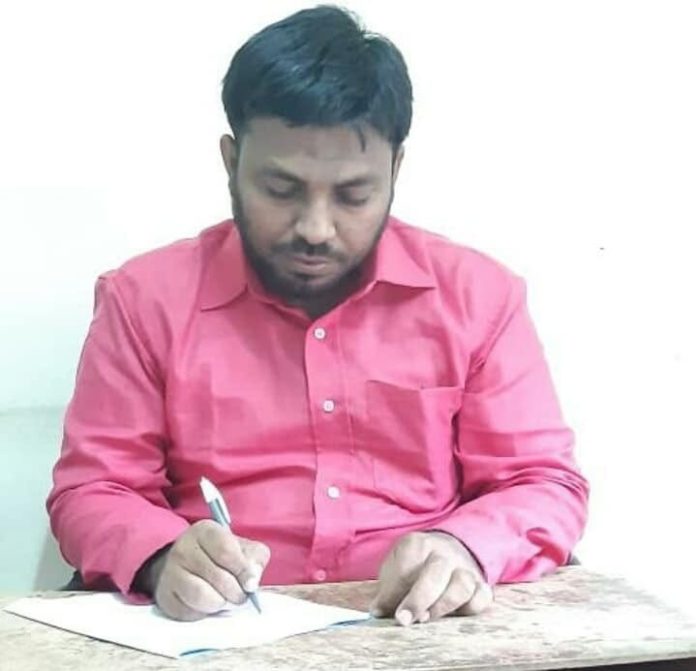
From a small-town reporter in Sathupally to a voice of conscience in the city, Mohammad Mujahid’s journey is a lyrical testament to the power of the written word in an age of discord.

Hyderabad:

In a world increasingly divided by invisible walls, Mohammad Mujahid is a man busy building bridges. His tools aren’t mortar and stone, but the elegant curves of the Telugu script and an unwavering belief in the human spirit.

What began two decades ago as a young man’s quest for truth in the dusty lanes of Khammam district has today blossomed into a significant literary movement – one that seeks to replace prejudice with poetry and fear with understanding.

The Genesis of a Vision

The spark for Mujahid’s odyssey was a profound spiritual mandate. Inspired by the Prophet Muhammad’s ﷺ exhortation – “Convey from me, even if it is a single word” – Mujahid didn’t just find a career; he found a calling.

Starting in 2000 as a contributor for the Eenadu daily, he realised early on that the greatest distance between two communities is often a lack of shared language. He chose to bridge this gap by bringing the essence of Islamic thought to the Telugu masses, stripping away the dense layers of Urdu and Arabic to reveal universal truths in a tongue that felt like home to millions.

Mujahid’s writing is characterised by a rare “soul-to-soul” connection. He doesn’t just inform; he heals.

The Myth-Buster: Through seminal works like ‘Islam Velugu’ (The Light of Islam) and ‘Islam Jeevana Tarangalu’ (The Rhythms of Islamic Life), he has acted as a literary surgeon, delicately removing the tumours of misconception and Islamophobia that often plague social discourse.

The Gardener of Souls: His work ‘Balavanam’ (The Children’s Garden) is perhaps his most tender contribution. It is an investment in the future, teaching children that values like kindness, honesty, and empathy are the true universal languages.

The Social Poet: When the journalist in him meets the poet, the result is a stinging yet hopeful commentary on contemporary issues. His verses don’t just rhyme; they reason.

A Chorus of Approval

It is rare for a writer to find equal resonance among religious scholars and secular literary icons. Mujahid has achieved exactly that.

The legendary Jnanpith Awardee C. Narayana Reddy (CiNaRe) once found his style captivating, while the eminent Qur’an translator Sheikh Hamidullah Sharif saw in him a powerful ally for truth. From historians like Syed Naseer Ahamed to veteran editors like Ejaz Aslam, the consensus is clear: Mujahid’s pen is a social necessity.

For Mujahid, the journey is far from over. He remains a man on a mission, driven by the philosophy that silence in the face of social decay is complicity.

“The message of peace isn’t the property of a religion; it is the inheritance of humanity,” he often says. In his modest workspace, the scratching of his pen continues to be a defiant sound against the noise of hate.

At a time when the fabric of society feels frayed, Mohammad Mujahid reminds us that a single individual, armed with an honest pen and a heart full of harmony, can still rewrite the story of a nation. His life is not just a biography; it is a blueprint for coexistence.

source: http://www.radiancenews.com / Radiance News / Home> Features> Focus / by Saad Mohsin / January 14th, 2026

How KA Abbas gave Amitabh Bachchan his big break in ‘Saat Hindustani’

Panipat (Undivided India), HARYANA / Mumbai, MAHARASHTRA :

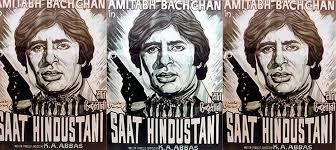
Multi-hyphenate talent Khwaja Ahmed Abbas worked in Urdu, Hindi and English and across writing mediums. Abbas, who died in 1987 at the age of 71, wrote social realist screenplays for Raj Kapoor and V Shantaram, directed films, published short stories and plays,and contributed a long-running weekly newspaper column. Among the best-known films he directed are Neecha Nagar, Sheharaur Sapna and Saat Hindustani. Set in Goa and tracing the efforts of seven revolutionaries to free the state from Portuguese rule, Saat Hindustani marks the debut of Amitabh Bachchan. An essay from the anthology Bread Beauty Revolution, edited by Iffat Fatima and Syeda Hameed, relates Abbas’s encounters with the “tall young man” and future screen icon. Bread Beauty Revolution includes writings from Abbas’s memoir I Am Not An Island: An Experiment in Autobiography as well as essays, stories,poems, photographs and columns.

The story of Saat Hindustani came out of the Goa struggle reminiscences of my assistant, Madhukar, who would often regale us with the adventures he had while trekking up with the non-violent commandos to hoist the tricolour on every police station they came across…

I was so excited when I finished the screenplay that I telephoned all my friends and informed all my assistants, including Madhukar, to come and hear it in my fourth floor office on the very next day. That was a ritual which they never missed and I would get their suggestions for casting the film.

I wanted to prove by my casting that there was no particular Hindu or Muslim, Tamilian, Maharashtrian or Bengali ethnic type. To begin with, I would transform the smart and sophisticated and versatile Jalal Agha into the Maharashtrian powada singer. Even Jalal was shocked to hear this. But I reassured him that, with the proper make-up and get-up, nobody would recognize him except as a rural Maharashtrian folk singer. Madhukar, who hails from Meerut, would be a Tamilian; Sharma (Brahmin by caste) would also undergo a similar transformation; and Utpal Dutt, the cigar-chewing admiral,would be the tractor-driving Punjabi farmer. So far the casting was clear in mymind. On one of my visits to Kerala I had met Madhu, the handsome hero of the Malayalam screen, and he had approached me and expressed his desire to work in a Hindi film with me. I would make him the sensitive Bengali; I wouldn’t have to work much on his Bengali accent for he had lived with a Bengali family. Now only the Hindi and Urdu fanatics were left. Jalal one day brought with him his friend Anwar Ali (brother of the comedian Mehmood), in whose eyes I saw the Jana Sanghi fanaticism. So I decided to make him the Swayam Sevak who hates Urdu and speaks jaw-breaking Hindi. That left one Indian, the Muslim Urdufanatic. Since I wanted these boys to be of different ages and different heights, the one vacancy left was for a tall and handsome man. He had to be thin, also corresponding to the thin image of my friend, the late Asrarul Haque “Majaz”.

One day someone brought a snapshot of a tall young man and I thought that the boy was in Bombay. I said, “Let me see him in person.” “He will be here day after tomorrow evening.” Again, presuming he was in Bombay, I thought he must be working somewhere and wouldn’t be free till the evening. On the third day, punctually at 6 pm, a tall young man arrived who looked taller because of the churidar pajama and Jawahar jacket that he was wearing. This young man would one day be known as Amitabh Bachchan, the heart-throb of millions. But I did not know his name. Roughly, the following dialogue took place between us:

“Sit down, please. Your name.”

“Amitabh.” (Not Bachchan.)

It was an unusual name — so I asked, “What does it mean?”

“The sun. It’s also one of the synonyms for the Gautama Buddha.”

“Education?”

“B.A. from Delhi University.”

“Have you worked in films before?”

“No one has taken me so far.”

“Who were they?”

He mentioned very prominent names.

“What did they find wrong with you?” The boy spoke with frankness. “They all said I was too tall for their heroines.”

“Well, we have no such trouble. In a way we have no heroine in our film. Even if we had, that wouldn’t prevent me from taking you.”

“Taking me? Are you really going to take me? Without even a test?”

“That depends. First I must tell you the story. Then I must tell you your role and see if you will be enthusiastic about playing it. Then I shall tell you what we can afford to pay you. Only then, if you agree, shall we sign the contract.”

I read him out the complete story and saw his face become alive with interest. I asked him which role he would like to play. He told me the two which particularly impressed him. The role of the Punjabi, and the role of the Muslim. I told him he was perhaps a Punjabi, and that made him unfit to play that role. He asked me why. I gave him the reason, the reason for having a scrambled cast. The idea appealed to him greatly. He said, “I think, I know what you mean. Then I would like to play the Muslim role, specially because he is under a cloud of suspicion. And only at the end the suspicions are removed and he is proved a patriot.” Then I told him we could pay him no more than five thousand rupees,which was the standard figure for all the roles.

He seemed a little hesitant, and I asked him, “Are you earning more than that?”

“I was,” he said.

I asked him what he meant.

He said that he was getting about sixteen hundred a month in a firm in Calcutta.

“I resigned the job and came over.”

I was astonished. “You mean to say that you resigned a job of sixteen hundred rupees a month, just on the chance of getting this role! Suppose we can’t give the role to you?”

He said, “One has to take such chances” with such conviction that I said, “The role is yours.”

Then I called my secretary, Abdul Rehman, to dictate the contract. I asked the tall young man for his name and address.

“Amitabh—” after some hesitation, “Amitabh Bachchan, son of Dr H.R. Bachchan.”

“Stop,” I said. “This contract cannot be signed until I telegraph and get your father’s consent. He is a colleague of mine on the Sovietland Nehru Award Committee. I wouldn’t like to have a misunderstanding with him. I am afraid you will have to wait for two days more.”

“You can ask my Dad, but frankly, do I look like a runaway?”

I told him that runaways don’t have any particular look. So I dictated, instead of the agreement, a telegram to Dr Bachchan in New Delhi and asked him if he was willing to let his son become an actor. Two days later a telegram came reading “No objection where you are concerned.” This is the whole story about how Amitabh Bachchan came into films.

Excerpted with permission from Bread Beauty Revolution, edited by Iffat Fatima and Syeda Saiyidain Hameed, Khwaja Ahmed Abbas Memorial Trust and Tulika Books.

source: http://www.scroll.in / Scroll.in / Home> Book Excerpt / by Khwaja Ahmed Abbas / November 14th, 2015

Anupama Women’s Monthly Completes 25 Years: CM Siddaramaiah Releases Special Issue

KARNATAKA :

Bengaluru:

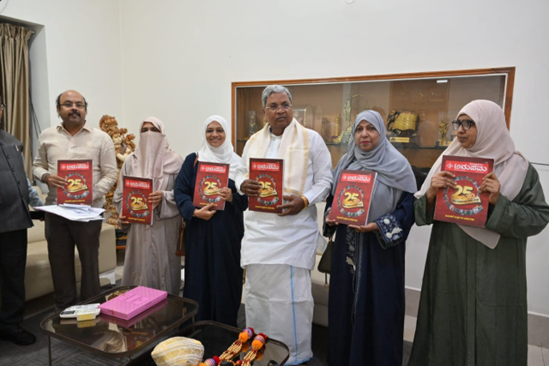
Anupama, the state’s only women’s monthly Kannada magazine run entirely by Muslim women, has completed 25 years. To mark this milestone, Chief Minister Siddaramaiah released a special silver jubilee issue, reflecting on its 25-year journey of success, in Bengaluru on Thursday.

​Speaking at the event, the Chief Minister congratulated the team, saying, “There are only a handful of Muslim women in journalism. In such a scenario, it is highly commendable that the Anupama Women’s Monthly, run by women from the Muslim community and has successfully completed 25 years.”

​Shahnaz M., the editor of Anupama, also spoke at the occasion. “The implementation of the ‘Guarantee’ schemes for women in the state has brought about significant changes in their lives. On behalf of the Anupama team and all women, I extend my gratitude to the government led by CM Siddaramaiah for their commitment to women’s development,” she stated.

​The event was attended by Naseer Ahmed (Political Secretary to the CM), MLA Dr. Yathindra Siddaramaiah, BMTC Vice-Chairman Niket Raj Maurya, and Anupama’s sub-editors Samina Uppinangady, Sajida Momin, and Kulsum Abubakkar. Other notable attendees included S.M. Muthalib, Faisal Ismail, and Saleem Bolangadi.

source: http://www.radiancenews.com / Radiance News / Home> Latest News> Report/ by Radiance News Bureau / January 10th, 2026

Dr. Riaz Ahmad of AMU gets Young Scientist Award

Aligarh, UTTAR PRADESH :

pix source: amu.ac.in

Aligarh:

The Council of Science and Technology, Uttar Pradesh honoured Dr. Riaz Ahmad, Lecturer at Department of Zoology, Aligarh Muslim University (AMU), with ‘Young Scientist Award’ yesterday. The award has been given to Dr. Ahmad in recognition of his contributions in the area of Biochemical and Molecular Genetics. Besides cash prize of Rs. 25,000/, award carries a certificate, memento and a shawl.

The award was presented to Dr. Riaz Ahmad by Mr. Abdul Mannan, the State Minister for Science and Technology at the Vigyan Samaroh at Sir C.V. Raman Auditorium in Lucknow.

Dr. Ahmad is also a recipient of prestigious Dr. D. S. Kothari Post Doctoral Fellowship from UGC, Young Scientist Project of DST and Scientist of the Year Award-2009 given by the National Environmental Science Academy.

He has a number of research papers to his name published in various scientific journals of national and international repute.

source: http://www.twocircles.net / TwoCircles.net / Home> Indian Muslim / by TCN News / March 30th, 2010

After Paris heartbreak, Nikhat Zareen roars back with World Boxing Cup Finals gold

Hyderabad, TELANGANA :

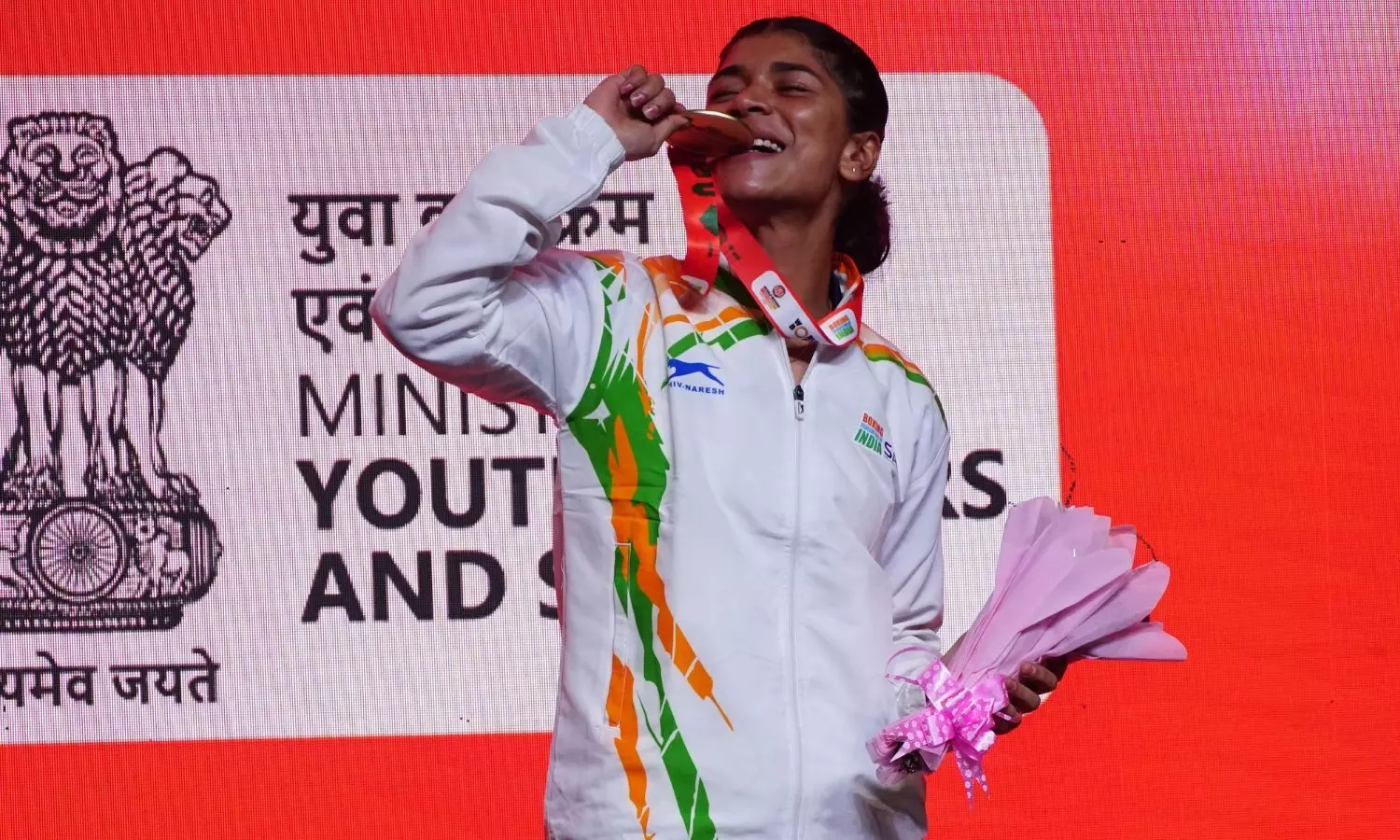
Nikhat clinched the women’s 51 kg gold medal at the 2025 World Boxing Cup Finals in Greater Noida.

Nikhat Zareen clinched the 51 Kg gold medal at the World Boxing Cup Finals 2025. (Photo Credits: The Bridge)

Greater Noida:

Star Indian boxer Nikhat Zareen has once again captured headlines after winning the gold medal at the 2025 World Boxing Cup Finals on Thursday.

The two-time World Champion delivered a commanding 5–0 victory over Guo Yi-xuan of Chinese Taipei in the women’s 51 kg final, returning to the top of the podium after 32 months.

Her last gold also came on home soil in 2023, when she clinched her second world title at the New Delhi World Championships.

“I always believe in manifestation, so I manifested that this time also, in India, I would repeat that. It’s always a pleasure to play in front of a home crowd, and today I did it,” Nikhat Zareen told the media after her win.

Bouncing back from two consecutive setbacks

Nikhat endured a difficult run in her last two major tournaments, the Paris Olympics and the World Boxing Championships, returning empty-handed from both.

At the Paris Games, competing as the reigning World Champion, she exited in the Round of 16 against eventual champion Wu Yu of China.

Later, at the 2025 World Championships in Liverpool, her first international event of the year, she fell in the quarterfinals to Turkiye’s Buse Naz Cakıroğlu.

Now, she has turned back the clock, returning to winning ways in front of her home crowd and putting behind her the disappointment of missing out on key medals.

“This medal is a big boost for my confidence. After a long time, I reached the final and won the gold. I’m very happy that I can once again compete as a gold medal contender,” Nikhat said, relieved to end her medal drought.

Nikhat also mentioned that she had very little time after the World Championships to prepare for this event. Within days, she shifted to Patiala to join the training camp.

“I spent a few days with my family, but then moved to Patiala for training since the Finals were in India and I didn’t want to disappoint fans. In Patiala, I sparred with boxers across weight categories, from 48 kg to 54 kg and even 57 kg, which helped me a lot,” she added.

Nikhat’s Road to the title

The World Cup Finals, expected to be a top-tier competition with the world’s best eight players in each weight category, did not fully live up to expectations as several major nations skipped the event.

In the women’s 51 kg category, only five boxers participated, which meant Nikhat received a bye in the quarterfinals and secured a medal without stepping into the ring.

Her campaign began in the semifinals against Uzbekistan’s Gulsevar Ganieva, where she won by unanimous decision to enter the final.

However, it wasn’t her most convincing bout, marked by frequent clinches and several clumsy falls near the ropes.

“The first bout was not as good as everyone expected, but I’m happy that I at least won and reached the final after so long,” Nikhat said after the semifinal.

In the final against Guo Yi-xuan, Nikhat looked much more composed, displaying sharper footwork and cleaner punches to seal the title at home.

“Today, I played against a boxer who moves a lot and is a counter-puncher. So I also opted for counter boxing instead of going all-out, which could have disadvantaged me,” Nikhat explained.

Future Plans

Nikhat shared that she often has to travel for training because there is no proper boxing academy near her home, something she now hopes to build herself for upcoming talent from Telangana.

“I mostly have to travel to Pune or IIS for training and don’t have a fixed location. So if the Telangana government allocates land, I will build my own academy where I can train and support rising boxers from the region,” she said.

This win may not carry immense competitive weight due to the limited field, but it has undoubtedly reignited her confidence after a challenging year.

With a packed 2026 season ahead, including major events like the Commonwealth Games and Asian Games, Nikhat will aim to use this momentum to elevate her performance further.

Her parting words, “This is just the start, and a lot more has to be done,” reflect the grit and hunger she will need as she prepares to face stronger opponents on the global stage.

source: http://www.thebridge.in / The Bridge / Home> Boxing / by Deepanshu Jain / November 21st, 2025

Dr Ufana Riaz of JMI bags young scientist award

DELHI :

Hyderabad:

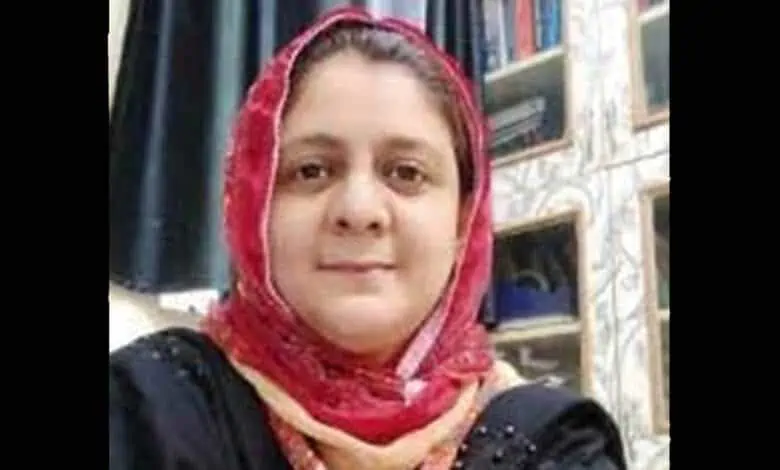
Jamia Millia Islamia Assistant Professor at Department of Chemistry, Dr. Ufana Riaz has been awarded “Sir CV Raman Young Scientist Award 2021” along with cash money of Rs 25,000 in recognition of her outstanding contribution in the field of Materials Chemistry by the St. Peters Institute of Higher Education and Research, Avadi Chennai. The award and citation were presented to her at the 12th convocation of the Institute.

Dr. Ufana Riaz has published more than 140 research papers in the field of conducting polymers, co-authored 3 books and 25 book chapters. Her research work has been published in renowned and highly reputed international journals.

Dr Riaz holds membership of the prestigious National Academy of Science (NASI) Allahabad, International Union of Pure and Applied Chemistry (IUPAC) and Royal Society of Chemistry (RSC). 

Dr. Ufana Riaz has been the recipient of the International Research Excellence Award in Green Chemistry by Center for Professional Advancement and Continuing Education (CPACE), Senior Scientist Award by Environment & Social Development Association (ESDA), Green Technology Innovation Award by National Environmental Science Academy (NESA), National Education Excellence Award in Materials Chemistry by International Multidisciplinary Research Foundation (IMRF), and Outstanding Performance Award by Novel Research foundation.

source: http://www.siasat.com / The Siasat Daily / Home> News> India / by Mohammed Hussain Ahmed / February 05th, 2022

Dr. Tamanna Jahangir gets Young Scientist Award

Lucknow, UTTAR PRADESH :

Lucknow:

The Council of Science and Technology, Uttar Pradesh honored Dr. Tamanna Jahangir, from Jamia Hamdard, currently working as Assistant Professor at Jazan University, Kingdom of Saudi Arabia with ‘Young Scientist Award’ on Jan. 29th 2011.

The award has been given to Dr. Tamanna Jahangir in recognition of her contributions in the area of Cancer Chemoprevention Toxicology. Besides cash prize of Rs. 25,000/ award carries a certificate, memento and a shawl.

The award was received by her Father Mr. Mohd. Jahangir presented by Mr. Abdul Mannan, the State Cabinet Minister for Science and Technology at the Vigyan Samaroh at Sir C.V. Raman Auditorium in Lucknow.

Dr. Tamanna Jahangir is also a recipient of prestigious DST fast track Young Scientist Award and Young Scientist Award at TOXCON 2010 given by the Slovak Toxicological Society (SETOX), Slovakia.

She has a number of research papers to her name published in various scientific journals of national and international repute.

source: http://www.twocircles.net / TwoCircles.net / Home> Indian Muslim / by TCN Staff Reporter, TwoCircles.net / February 01st, 2011

Young Botanist from Bengal beats poverty to bag young scientist award

Joygram Village (North 24 Parganas District), WEST BENGAL :

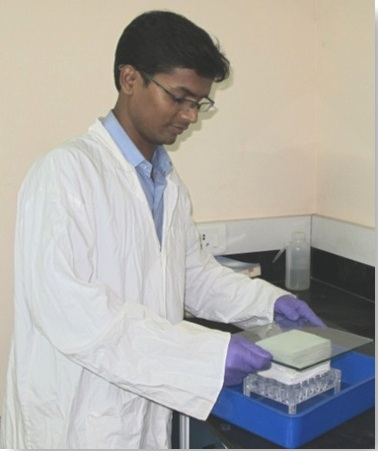
Kutubuddin Ali Molla in research lab

Kolkata:

A young researcher from West Bengal beat poverty to bag the Young Scientist Award 2013-14 of India. The Young Botanist Kutubuddin Ali Molla, who hails from a very poor family in North 24 Parganas district received the honour for his research on “Development of Transgenic Rice Plants for Sheath Blight Resistance”.

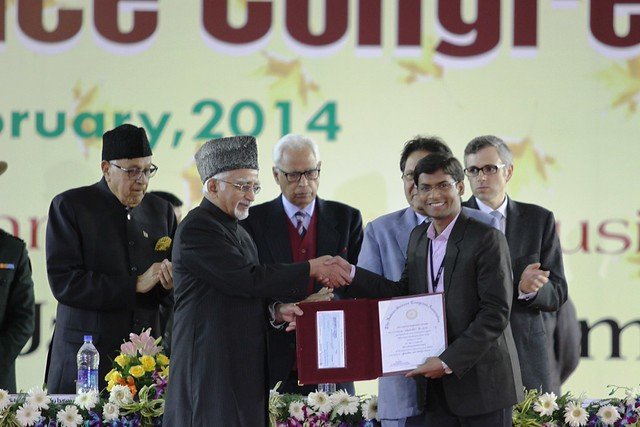
The young scientist was felicitated on February 7, 2014 at Jammu University by Vice President of India Hamid Ansari with a cheque of Rs 25000 and an Award Certificate in the field of Agriculture and Forestry Sciences.

Chief Minister of Jammu & Kashmir Omar Abdullah and Governor of Jammu Kashmir N N Vhora, Former CM of J&K Dr. Farooq Abdullah were also present in this award ceremony.

Kutubuddin is currently posted as a scientist trainee at National Academy of Agricultural Research Management in Hyderabad.

Originally from a remote village of Joygram in North 24 Parganas, Kutubuddin Ali Molla, his father Illias Molla is a farmer and Grandfather Nasim Molla was a Maulana and social worker.

With only three Bighaa of agricultural land in a joint family, Illias Molla was not able to fulfill all the needs of the family; his eldest brother Yusuf Molla, however, financially supported his bright nephew in times of economic-crunch.

Kutubuddin Ali Molla taking award from VP Hamid Ansari at Jammu University.

As a young boy, he Kutubuddin also helped his father in the agricultural fields and learnt several things about paddy cultivation that developed his interest for becoming an agricultural scientist. Stricken by poverty, his father told him, he will not stop him from studying, but he is not in a condition to financially support him and hence he would need to manage the expenses from somewhere.

After completing his senior secondary from Joygram JN High School, Kutub took admission at City College in Kolkata in B.Sc (Honours) in Botany. As the college was about 60 KM from his village, he shifted to a hostel near the college on a nominal fees of Rs 50.

Kutub is very grateful to his Professor in college Dr Argha Hait, who helped in several ways. After graduating with first class, he took admission for post-graduation in Calcutta University, which he completed with first class and ranked third.

All these while, he gave private tuitions to support the expenses of his study and staying in Kolkata. Meanwhile, he also cleared the Junior Research Fellowship (JRF) of the Council of Scientific and Industrial Research (CSIR), GATE, ICAR (NET) and ARS tests.

Kutubuddin Ali Molla

He took admission in Phd under the Dr Karabi Dutta in 2009 in Plant Molecular Biology and Plant Biotechnology. He did his PhD research (PhD award still awaited) on transgenic rice and published a research article in a Research Journal of the British Society on `Molecular Plant Pathology’ in 2013 that attracted the attention of the agricultural scientists in the country.

He then participated in All India Young Scientist Award Competition and was selected for the Best Young Scientist Award of India in the field of agriculture for 2013-14.

Speaking to TCN over phone from Hyderabad, Kutubuddin thanked the Almighty Allah for the honour and hoped that his research in agricultural yields good result in paddy cultivation.

source: http://www.twocircles.net / TwoCircles.net / Home> Indian Muslim / by Zaidul Haque, TwoCircles.net / March 19th, 2014