From A Dreamer’s World | Photo Credit: Special Arrangement
A brilliant blue fish glides in a patch of orange pumpkins, another lies still among lilac orchids hoping his camouflage allows him to blend in. These are a few finned beauties artist Shoeb Dastagir has depicted in his solo show A Dreamer’s World.
“I find fish quite calming and I can spend hours looking at them; that is why I began capturing them in my paintings,” says Shoeb, adding he spends a lot of time at the aquarium in Mysore Zoo. “I enjoy watching videos of aquatic life on my phone, too.”
He reels off their names — bumblebee goby, oscars and arowanas, tiger fish, a Brunei beauty and a shark — and how they are all a part of this show. “I am a Piscean, so no matter how hard life gets, fish are a calming refuge for me,” says the artist. “Fish are always calm, going about their lives despite the confines of their surroundings.”
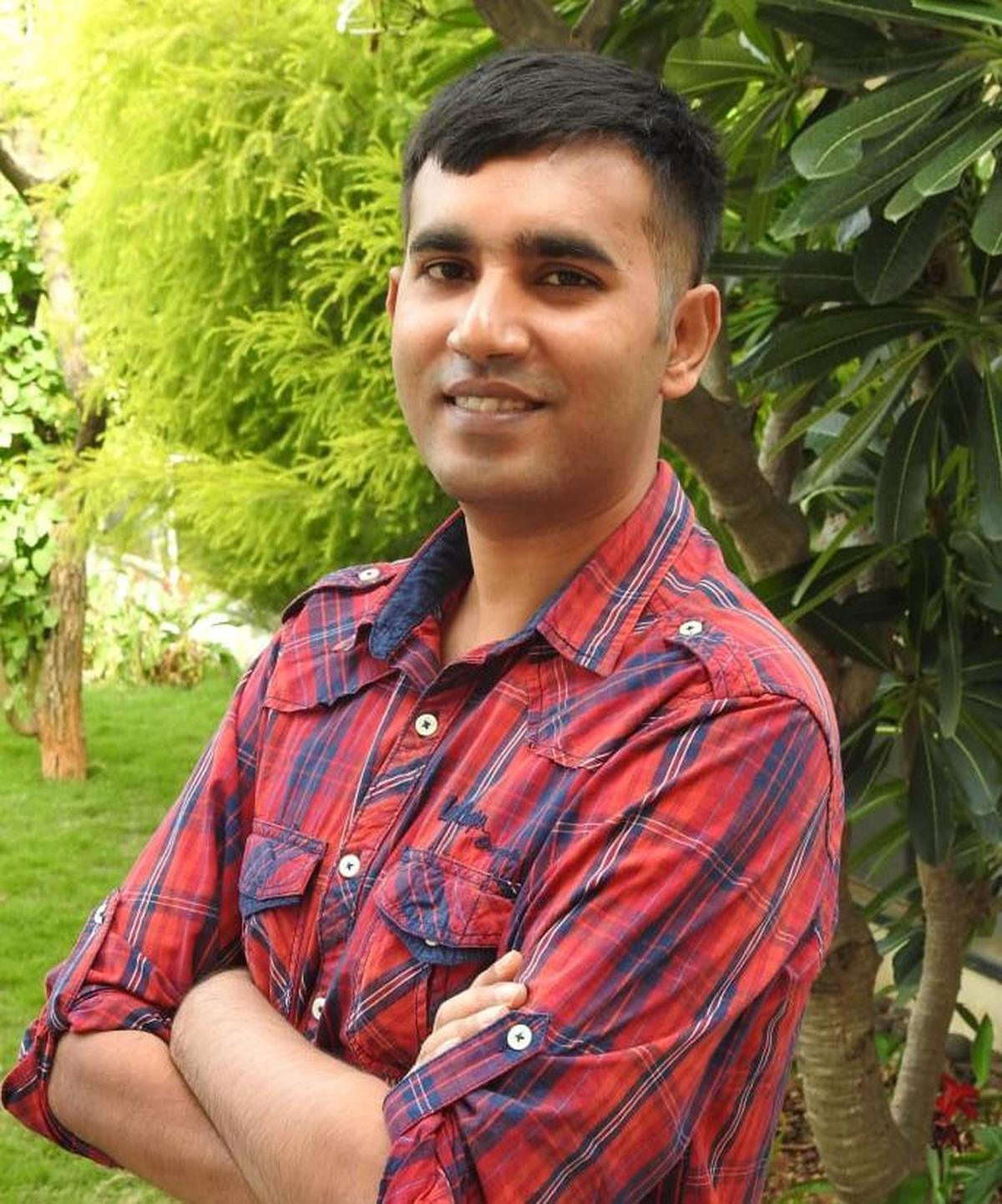
Shoeb Dastagir | Photo Credit: Special Arrangement
He talks about his love for “sunny colours such as tangerine orange, avocado green, icy blue and buttery yellows”. All these hues and more are to be found in his works that exude a touch of whimsy and play out in a fantastical land where an astronaut steps around teacups, fish nestle between blue pea and pearls, and an old-model television sits atop a bouquet of yellow roses.
Though Shoeb draws his inspiration from the natural world, a lot of his art is birthed in his vivid imagination that fuel his compositions of poetry, prose and songs as well. According to his mother Ayesha Dastagir, all these creative interests lead Shoeb to produce bigger and detailed paintings. “One can see a lot of mystical characters apart from the animals and fish, of course. I believe it is his subconscious, sensitivity and imaginary fantasy world that combine to produce something new and different.”
Most of the works in A Dreamer’s World have been executed using pastels and watercolours on paper over the the greater part of a year. Though Shoeb used to paint with oils and canvas, this change in medium came about when he moved from Bengaluru to Mysore, and working on paper seemed a more viable option as space was a constraint at the new place.
From A Dreamer’s World | Photo Credit: Special Arrangement
The artist, who signs his works as Schoeb, his official name which is often misspelt, is currently working on a series of portraits.
The upcoming / current exhibition comprises 24 pieces on display apart from a few others which are a part of the series and are available for sale at the gallery.
A Dreamer’s world by Shoeb Dastagir will be on display at MKF Museum of Art, Bengaluru from November 8-19. Entry free, Mondays closed.
source: http://www.thehindu.com / The Hindu / Home> Entertainment> Art / by Ruth Dhanraj / November 06th, 2025
Tushar Goel’s film, ‘The Taj Story’, has reignited controversy over the Taj Mahal’s origins, claiming it is a Hindu temple rather than a mausoleum built by Mughal emperor Shah Jahan. The film’s debut highlights debates about the interplay of history and ideology in contemporary India.
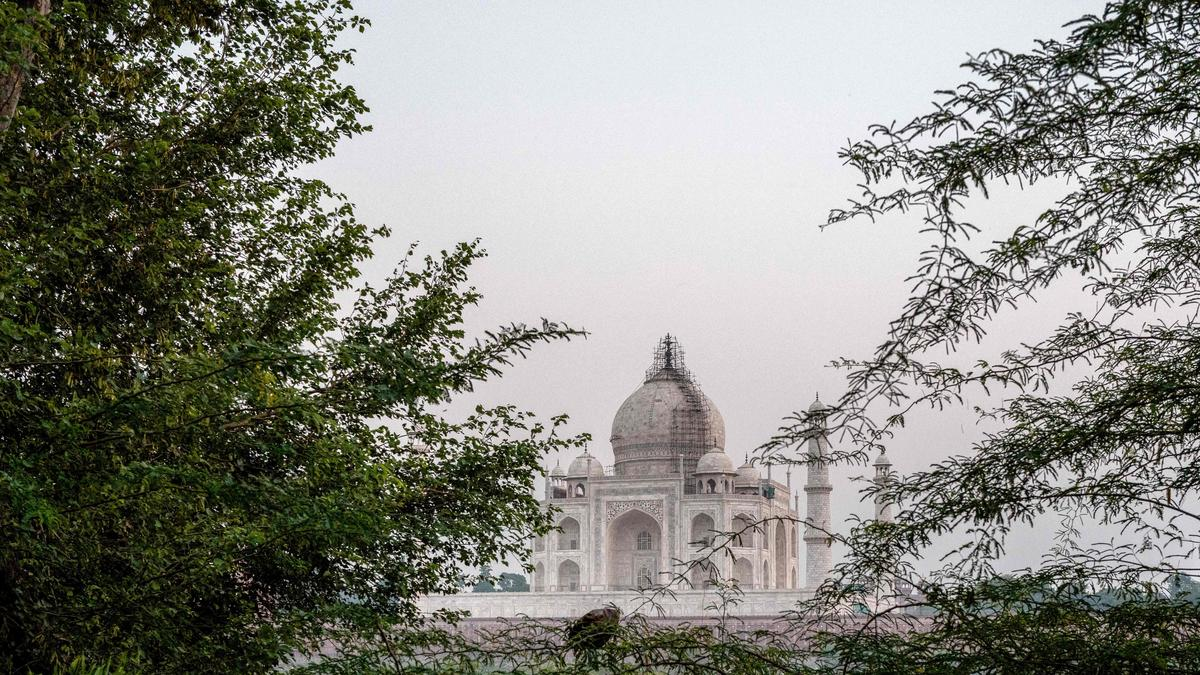
Scaffoldings are pictured as restoration work goes on at the dome of the Taj Mahal in Agra on October 17. | Photo Credit: AFP
A little over 60 years ago, Purushottam Nagesh Oak slept and dreamt. He woke up and claimed that the Taj Mahal in Agra was actually a Hindu palace going back all the way to 4th century. Friends of Mr. Oak, an English teacher-turned-lawyer-turned-journalist but never a historian, told him that the Taj Mahal couldn’t have been a fourth century structure as the technology employed in building the Taj in the 17th century didn’t exist back then. The fantasist turned a pragmatist, and Oak brought his argument forward by a few centuries. The Taj was now claimed to be a Hindu temple. This was in 1989. He wrote articles and a book too, but found no support from historians. Even the Supreme Court dismissed his claims as “a bee in his bonnet” in 2000.
But post-2014, history is like a revolving door, you enter and exit at your ease and pleasure. You pick and choose, you circumvent and invent. Dress it up as a movie and claim you are looking at history anew. That is how we get a movie like Tushar Amrish Goel’s The Taj Story, starring former BJP MP Paresh Rawal; just like we had The Kashmir Files and The Bengal Files, starring Anupam Kher and Mithun Chakraborty, all ideological partners of the Bharatiya Janata Party (BJP).
With The Taj Story, Goel goes where no historian has gone. Proof, evidence and knowledge amount for nothing as the director makes a case for the Mughal monument being actually a Hindu temple, much like the BJP leader Sangeet Som who called it alternately a Shiva temple and a monument built by a man who incarcerated his father. Mr. Som obviously couldn’t make out a Shah Jahan from an Aurangzeb and hence got mixed up. Much like Oak, oops, Goel, who sees no difference between history and mythology, facts and fantasy.
Recorded history
Talking of facts, the Taj Mahal was built by the Mughal emperor Shah Jahan after his favourite wife Arjumand Bano Begum breathed her last after bearing the last of their 14 children. Its chief architect was Ustad Ahmed Lahori. The land for her last resting place was procured from Mirza Raja Jai Singh of Amber who had inherited it from Raja Man Singh, a celebrated general of Akbar, who was Shah Jahan’s grandfather. Shah Jahan compensated Jai Singh with four havelis from the royal property for the massive haveli in which rests Mumtaz Mahal. His firman to Jai Singh, the latter’s agreement and the Mughal emperor’s subsequent letter of granting him four havelis in lieu of one, are all part of history; unlike the claim of The Taj Story which talks in terms of a massacre and genocide of the locals for fulfilling the wishes of an emperor and his consort!
The work on the tomb started in 1632 with the finest craftsmen from across the country and West Asia. The chief mason was Mohammed Hanif from Baghdad who earned ₹1000 a month for his efforts. The pinnacle was built by Qayam Khan of Lahore and its Quranic inscriptions were done by Amanat Khan Shirazi. The mosaic work was done by local Hindu workers. Above all, some 20,000 workmen toiled for 22 years to build the monument to love. Its white marble came from Jaipur, lapis lazuli from Sri Lanka, crystal from China and coral from Arabia. The monument uses the double dome technique, previously seen only in the Humayun’s tomb in Delhi, and never seen in the country before the arrivals of the Turks.
Not the first time
Over the years, many have tried to appropriate credit for its beauty and majesty. In the 17th century, it was claimed by many in the West that the architect of the Taj was Venetian Geronimo Veroneo, a jeweller by profession. Then came the claim by Mughal Beg in Tarikh-e-Taj Mahal that it was designed by Muhammad Effendi, an architect supposedly sent by the Sultan of Turkey. Effendi though was as much an architect as Oak was a historian. In the mid 19th century it was claimed that the monument was the result of the genius of Frenchman Austin de Bordeaux, a jeweller. However, Austin died in 1632, the year the work on the Taj began. With his death all claims of Austin being the Taj’s architect were buried. And facts began to be raised.
As for fantasy, well there is Goel’s film, never mind its claim of presenting the “untold history of the Taj Mahal”. The film, replete with stereotypes of kohl-lined, skullcap-donning Muslims aims at building a nation’s memory on unreasoned mythology, far removed from the well argued debates of history. Much like Oak’s view that Christianity was nothing but Krishan-Niti. Not game for any ridiculous claims in an insipid film which opened with a mere 14% attendance in the first show? Watch M. Sadiq’s 1963-saga Taj Mahal. Sure, you would remember its song, ‘Jo wada kiya woh nibhana padega’, penned by Sahir Ludhianvi and sung with much love by Mohammad Rafi and Lata Mangeshkar. Sadiq’s film with Pradip Kumar and Bina Rai in the lead cast, made no effort at replacing history with mythology.
source: http://www.thehindu.com / The Hindu / Home> Entertainment> Movies> In the limelight / by Zia Us Salam / November 07th, 2025
There are individuals in smaller cities who have taken upon themselves the task of archiving, preserving, narrating, and circulating historical narratives — all for the love of the place and history. Indore-based Zafar Ansari is one such person who has been painstakingly collecting historical artefacts on Indore since three decades.
Zafar Ansari in his Museum Office. Photo: C. Yamini Krishna
As I was preparing for my research visit to Indore for a study on the princely state of Indore, all I found online were a few articles from Free Press Journal on the city. It was just a glimpse of how much of the ‘national’ media coverage and public history writing is focussed on the metropolitan cities.
Absence, inaccessibility, decay of archives and historical artefacts are constant challenges faced by history scholars in India. The lack of historical consciousness, poor funding, disinterest, discrimination, and destruction of the archives based on the ideology of the ruling disposition are some of the known reasons why such problems exist. These challenges are acute as one moves beyond the metropolitan cities, into the smaller cities and towns.
History in India, has mostly been studied from the perspective of the nation and to such endeavour small places are often insignificant. Also due to the policy of housing all the state archives in capital cities and the absence of efforts to do neighbourhood or local/regional histories, smaller cities almost feel ‘history less.’
However, inspite of the institutional gap, voices from the smaller cities are not silent. Each time I have ventured into these cities in search of archives, I have always met individuals who have taken upon themselves the task of archiving, preserving, narrating, and circulating historical narratives — all for the love of the place and history.
Indore-based Zafar Ansari is one such person who has been painstakingly collecting historical artefacts on Indore since three decades. “It all started when I received the National Youth Award for my social activities in 1994. The then President Dr Shankar Dayal Sharma said, do something great, and then I decided I will build a museum for Indore,”Ansari says with a sparkle in his eye as he narrated his dream to make a museum for his beloved city Indore.
“This will be one of its kind museum, dedicated to the city, telling the story of the city,” he mentioned. His office in Barwani Plaza in Old Palasia, bustling with artefacts, feels like a portal into another time. As one spends time with these objects, they start speaking through the voice of Ansari.
A miniature maker for industries by profession, Ansari spends more than 60% of his income towards the museum. He never lets any historical object pertaining to Indore pass, without acquiring it, sometimes this means he has had to pay very high price. “It is almost like an addiction,” he says, “It has its flip sides. I have never been able to pay my daughter’s education fee before the last date.”
The history walks, myth-busting artefacts and rare photographs
Ansari is also committed towards sharing his collection. He conducts history walks in the city and curates specific objects from his collection to tell stories of the city. Ansari has recently conducted one such walk for some of the dignitaries who had visited India during the G20 summit. He regularly runs a history column in Dainik Bhaskar where he reintroduces stories of the past to Indore’s citizens.
“I don’t just write about Kings, but also about common people, their lives,” he says, what a historian would call the social history of the place.
Through his consistent effort of writing more than 300 essays on history, Ansari has built a cannon of public history for Indore. Sitting among those objects, he narrated how Indore (state) became a commercial centre due to its close connection with opium trade, “Opium would come from Mansur to Indore and then to Bombay. Many traders and merchants from Rajputana and Gujarat settled here to do opium trade with China. After the ban on opium, the trade was converted to cotton industry.”
Ansari is hopeful that his museum will be a pedagogic intervention. “History is not something to be taught in a classroom, it has to be taught in an archive or a monument or on field using objects and artefacts,” he notes. His work with the artefacts also helps him dispel certain myths and false narratives in circulation.
Ansari’s collection has helped writers like Geraldin Lenain to write books such as The Last Maharaja of Indore by providing access to many rare photographs.
A historian or an antiquarian
After meeting Ansari, I was wondering, if there is a term to describe this love for history, something like a cinephile in case of film.
A historian is often a tag used to describe someone who engages in the work associated with history making, professionally, i.e. as a main vocation. A history buff, focusses more on consumption of history and fails to capture the commitment shown by these keepers of a city’s lore. A collector, is often differentiated from an archivist as someone who is more involved in the process of acquiring artefacts, and is not primarily oriented towards providing access. Someone like Ansari, however, who harbours a hope to build a museum, would fall somewhere in between these two.
Cambridge Dictionary offers a word antiquarian, “a person who studies or collects old and valuable or rare objects.” Antiquarianism historically has often had a negative connotation, as someone in an almost ‘mindless’ pursuit of collecting objects and committed to the minute details of it. Historian, on the other hand, is someone who narrativised the past, with the focus on writing.
Historian Rosemary Sweet notes that history writing could be done for political or polemical purposes while antiquarians prided themselves to be impartial and staying true to the material. Antiquarians are often interested even in objects of everyday life which was not of interest to historians. Interestingly, Sweet points out that the contemporary practice of history, associated with archival study, which relies on the details presented by historical artefacts is very close to antiquarianism.
After searching for these variety of terms, I am still left with no word to capture the affective engagement with history which I experienced in the office of Ansari, where history is not just a vocation or a profession, where there is a lot at stake in telling stories of the past, a significant portion of one’s earnings. This voice of history is not a dispassionate, distant evaluation of the past, but is an expression of belongingness.
Deeply personal work like this has larger social implications, it is about communities taking the ownership of their own history, and inculcating historical consciousness among themselves. Such efforts go a long way in forming the first line of defence against vilification of history and weaponisation of history for political gains, of which we are seeing increasing incidence.
C. Yamini Krishna works on film history, urban history and Deccan history. She is a part of the Khidki collective. She currently teaches at FLAME University.
This work was done as a part of the Foundation Project is implemented by India Foundation for the Arts (IFA) under the Arts Research programme, made possible with support from BNP Paribas India.
source: http://www.m.thewire.in / The Wire / Home> Culture / by C Yamini Krishna / May 16th, 2024
Amirbai Karnataki is one of the earliest Kannada singer-actress who made it big in Hindi cinema. She went to Bombay when women artistes were labelled ‘fallen’, but with grit and passion Amirbai became a star and sang 380 songs in 150 Kannada and Hindi films.
Amirbai’s tale is one of inspiration
For someone who didn’t belong to the gramophone generation but the golden period of radio, Lata Mangeshkar, Asha Bhonsle, Mukesh, and Rafi ruled our hearts and constituted our imagination of a film song. The same AIR, during a light music programme, had played “Ninnane Neneyuta Ratriya Kalede”. This, was a carbon copy of Lata’s memorable “Saari Saari Raat Teri Yaad Sataye”, but the voice was starkly different. It had a heavy nasal tone, and the flawless rendition had a simplicity to it. The charming song left an indelible mark and I felt I had to recover her voice from pages that were unknown to me.
Amirbai Karnataki was an unheard voice for the Seventies: she was long gone, and had faded into the archives of black and white era of early films. She was someone who lived on in personal memories of people who had known and heard her.
Amirbai Karnataki (1912-65), who sang 380 songs in 150 films, was an early singer and actress of Hindi cinema. This singer who sang the unforgettable “Main to pavan chali hoon bole papiha” and “Bairan Nindiya Kyon Nahi Aaye”, was born in Bijapur in Karnataka. During the 1930s Amirbai was a prominent name along with stars like Suraiyya, Shamshad Begum, Noor Jahan and Zohrabai Ambalewali.
When Lata Mangeshkar came on to the scene, many of these singers moved into the background and for the later generations they remained unknown.
Born into a family of artistes, Amirbai’s parents Ameenabi and Husensaab worked for a theatre company and even ran one for many years. Growing up years for Amirbai and her five siblings was filled with music and theatre, what with many of her uncles and aunts being top musicians and actors in theatre. She lost her father early and her uncle, Hatel Saheb took care of all the children.
During those years, Bijapur was part of Mumbai Presidency and the sangeet natak tradition in these parts was flourishing. The famous Balagandharva’s company and several other theatre companies camped at Bijapur; Amirbai and her sister Goharbai, trained as they were in classical music, impressed these companies with their singing and they began to not only sing for several of them, but also act.
As Rahmat Tarikere writes in his biography of Amirbai Karnataki, Amirbai moved from Bijapur to Mumbai, from theatre to films. But the exact date and nature of these movements and transitions are hard to tell. The story of Amirbai is a sum total of several happenings in a historical period as there are few definitive documents to lead us to any accurate picture. Painstakingly put together by the biographer, Tarikere says that when Amirbai reached Mumbai (it was perhaps the year of Alam Ara’s release, 1931), women who worked in films, theatre and music were still seen as “fallen”.
Women artistes were often ridiculed as “free women” and among the several women performers, Amirbai and her sister Goharbai too, tried to free women of this stigma. In fact, families not only disowned such women, but there were instances of women being killed for choosing the arts.
In fact, Rahmat Tarikere says that the kind of fight these women put up with the social circumstances of those days is no less significant than the freedom struggle itself. If women artistes, in the later years, earned fame and reputation, it was because of the sacrifices these women made. Ironically, two very popular films “Basant” and “Kismet” in which Amirbai acted deals with the plight of actresses.
Amirbai became a very reputed singer and actress of her times. She was highly paid, and even built a theatre Amir Talkies in Bijapur. She travelled the length and breadth of North Karnataka giving programmes related to theatre and cinema.
A singer who sang some of the finest love songs, had a very unhappy love life though. Tarikere writes how her husband, a Parsi actor who played villain in those days, Himalayavala, abused her physically and emotionally. She had to suffer several assaults from him and even separation became a painful affair. Unable to recover from the trauma, she went into oblivion for several years, and later Badri Kanchawala, with his love and care brought back peace into her life.
At the age of 55, Amirbai passed away; Karnataka had been unified by then and the rest of Karnataka hardly knew of her. Even the newspapers reported her death four days later. It was only later that people have slowly learnt of Amirbai’s greatness and how Gandhiji was immensely fond of her rendition of “Vaishnava Janato”.
source: http://www.thehindu.com / The Hindu / Home> Features> MetroPlus / by Deepa Ganesh / February 27th, 2015
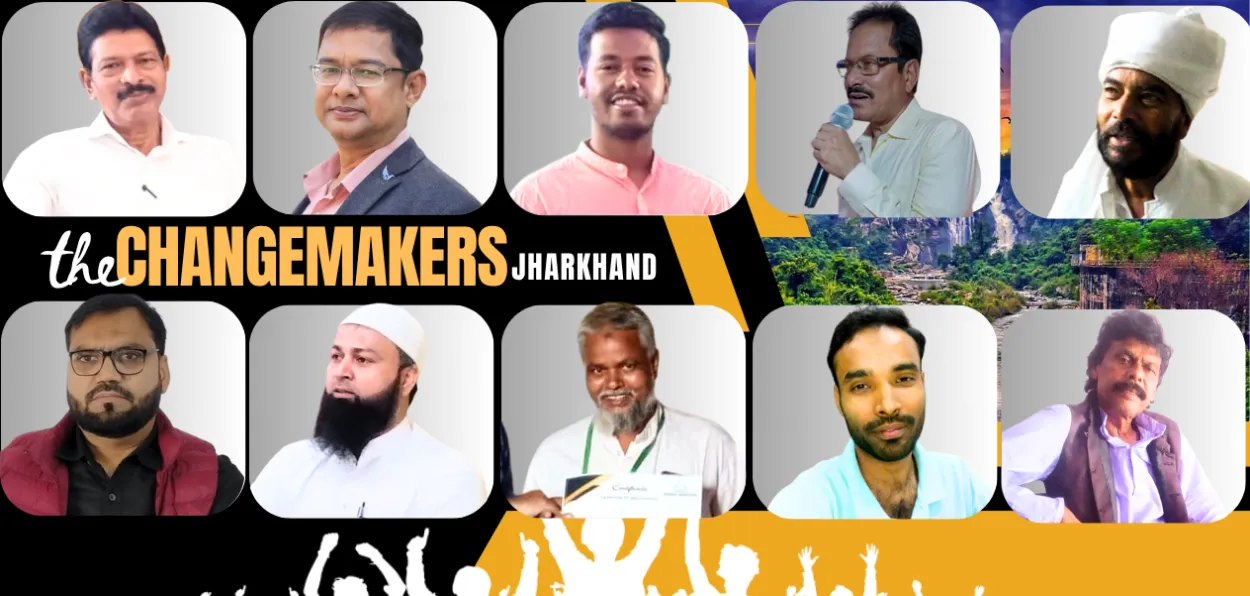
Jharkhand is one of the youngest Indian states, located in eastern India, and is also known as the tribal homeland. Since its inception, it has seen good growth, but the teething problems posed their own challenges. During these exciting times, some individuals have made significant contributions to society.
We, at Awaz-The Voice, bring to you stories of such unsung heroes from the length and breadth of India. Here are stories of ten extraordinary Muslim personalities of Jharkhand, who made a lot of difference to the lives of people and thereby helped state’s growth:
Dr Sajid Hussain
Dr Sajid Hussain left a prestigious research career to build a brighter future for the children of Chitarpur village in Ramgarh. His model, ‘Schoologium’, is redefining education across India.
Sajid explains, “Just as our body needs exercise to stay fit, the brain too needs regular practical workouts to stay active.” At Schoologium, children don’t just study from textbooks — they learn through touch, smell, taste, and experience. It’s learning through interaction and imagination — reminiscent of Rabindranath Tagore’s vision of Shantiniketan.
Sajid worked as a scientist at the National Aerospace Laboratories. But his exposure to premier institutions in India and abroad revealed a painful truth — rural children do not lag because of a lack of intelligence, but because they lack access to quality educational tools.
Determined to bridge this gap, Sajid resigned from his government job in 2012 and returned to his village. That’s where Schoologium was born — the name itself blending “school” and “gymnasium.”
Sattar Khalifa
Sattar Khalifa, better known as Painter Jilani, has brought hope to the people of Palamu, a division in Jharkhand that lags in development and where people face economic deprivation.
In college, Jilani always dreamed of serving people. A painter by profession, Jilani channels his earnings into helping the needy. “Art is my tool, service is my purpose,” he says.
His reputation made sure that even during the peak of Naxal and extremist dominance, Jilani travelled fearlessly between Bishrampur and Daltonganj, through a Naxal-dominated area.
For the poor, Dalits, Mahadalits, and marginalised communities of Palamu and Garhwa, Jilani is a symbol of assurance. From securing ration cards and pensions to arranging drinking water and hospital aid, he is always there.
Mohammad Minhaj
Mohammad Minhaj’s calm countenance hides the fire inside his mind that has driven him to serve society for over four decades. Mihaj has changed many lives in Ranchi’s slums. He ensures the people living in slums get education, health services, and social rights.
His journey began in 1982, when Ranchi was rapidly expanding, but its slums remained shrouded in neglect. Daily wage earners, rickshaw pullers, and working-class families struggled each day just to earn enough for two meals. For them, education was a distant dream. That was when Minhaj decided to step in and make a difference in many lives.
Muzaffar Hussain
Muzaffar Hussain’s dream is simple yet profound — no one in Jharkhand’s Santhal Pargana should sleep hungry. In this remote region, poverty isn’t just a condition — it’s a living reality. The six districts of Pakur, Godda, Sahebganj, Dumka, Jamtara, and Deoghar carry a long and painful history of deprivation, now slowly being rewritten.
A study claims that 82 percent of Santhal people live in extreme poverty, with most owning no land. In the middle of this harsh reality stands Muzaffar Hussain of Pakur, whose battle began even before the Right to Food Act was passed in 2013. Today, while the Act exists on paper, the real task is ensuring food reaches the truly needy — a task Muzaffar has made his life’s purpose. His efforts have borne fruit: around 600–700 families now have ration cards and receive regular supplies of food grains.
Ibrar Ahmad
In Ranchi, the capital of Jharkhand, its lanes, neighbourhoods, and beyond, one name that resonates hope is that of Ibrar Ahmad. Once employed in a bank and associated with the cultural organisation IPTA, Ibrar has been engaged in improving the lives of people around for over three decades. He is known as the person who steps in when a child drops out of school for want of fees, where poor patients wander helplessly for treatment, or where communal tension threatens to tear society apart.
Ibrar Ahmad has consistently reached out to children and youth. As President of Anjuman Islamia Ranchi, he arranged scholarships for poor children, launched talent shows and quiz competitions, ensuring that education went beyond textbooks to build both confidence and skills.
Dr. Shahnawaz Qureshi
The Quraish Academy of Ranchi has produced doctors, engineers, teachers, software developers, and many other bright minds. Located close to Ranchi’s iconic Albert Ekka Chowk is Gudri Qureshi Mohalla, officially declared a slum by the municipal corporation, where the founder of this academy, Dr Shahnawaz Qureshi, was born.
Whether through journalism or social service, Dr Qureshi changed not just the image of his locality but also the mindset of its people.
In 1993, while working with the National Literacy Mission, Dr. Qureshi established a night school in his own neighbourhood. After long days of labour, elderly men and women would gather after evening prayers, notebooks and pens in hand. The sight of wrinkled fingers tracing letters under the dim glow of a kerosene lamp became a symbol of hope and awakening. The classes were free, and the locals provided fuel for the lamps.
Mukhtar Alam Khan
Mukhtar Alam Khan’s efforts have transformed the image of Azad Basti in Jamshedpur, which was once a notorious place. It was once associated with crime, fear, and a negative image—much like Dhanbad’s Wasseypur. Mukhtar is among the few locals who brought about a positive change in this area. Today, Azad Basti’s name is taken with pride.
On any given day, Mukhtar and his team could be seen arranging blood and medicines for patients, feeding the hungry, or supporting children in education and competitive exams.
Tanveer Ahmad
In 2010, when areas like Islam Nagar and Baba Khatal in Ranchi were demolished under encroachment drives, hundreds of families were rendered homeless. The greatest sufferers were children, as some missed their exams, and others dropped out of school permanently.
In this situation, Tanveer Ahmad decided to extend a helping hand to the suffering children.
He thought, if circumstances had taken schools away from them, why not return education to them, as friends. This idea marked the beginning of a journey—from friendship to education.
Tanveer Ahmad says, “Our mission is to reach underprivileged children in Ranchi and Jharkhand who are drifting away from mainstream education. We believe education is the key that can transform their future.”
When one hears the name Ranchi, images of lush greenery, hills, and a rapidly developing city often come to mind. But hidden behind this image lies another reality—a large section of the city’s population lives in slums and makeshift settlements.
Anwarul Haq
Anwarul Haq, a resident of Chadri village in Kanke block, has launched a unique initiative that is changing the lives of children who would otherwise lag due to poverty. By day, he teaches football, and by night, he tutors children. In just three years, his efforts have transformed the lives of many children for whom both education and sports were once a distant luxury.
It all began when Anwarul Haq, a sports teacher at a residential girls’ school in Ranchi, decided to go beyond his job to make a difference. He was disturbed by the condition of children in his and neighbouring villages. Most children were from families surviving on daily wages, skipped school, and some fell into bad company. He had a plan up his sleeve to change their lives by imparting education and sports training to the underprivileged children.
SyedTariq Alam
Syed Tariq Alam has been quietly transforming lives, supporting poor and underprivileged families through education, employment, and social welfare in the Kolhan region of Jamshedpur.
His efforts have been focused on Kapali, a small township just 20 kilometres from Jamshedpur — the industrial hub of eastern India. Jamshedpur draws thousands of laborers from across the country, many of whom settle in Kapali where living costs are lower. While these workers find temporary employment in the steel city, the jobs are often low-paying and unstable.
This insecurity directly affects their children’s education, leading to high dropout rates in Kapali and nearby areas. It was this grim reality that moved Syed Tariq Alam deeply. Determined to bring change, he embarked on a mission that has now become a beacon of hope for thousands.
source: http://www.awazthevoice.in /Awaz, The Voice / Home> The Changemakers / by Aasha Khosa / October 26th, 2025
From humble beginnings in Moradabad to restoring historic monuments, manuscripts, and paintings, Maimunah Nargis blends traditional techniques with eco-friendly materials
New Delhi :
Art conservation is a field that not only preserves history but also connects generations to their cultural roots. Among the pioneers in this domain is Maimunah Nargis, India’s first Muslim woman art conservator. Her journey is a testament to passion, determination, and resilience, transforming scattered fragments of history into living heritage.
From childhood, Maimunah nurtured an interest in fine arts, which later became both her profession and life’s calling. After completing her schooling, she enrolled in Fine Arts at Aligarh Muslim University (AMU), but facing challenges in gaining admission to the MFA programme, she opted for a one-year diploma in Museology, a decision that became a turning point in her life. This course took her to New Delhi’s National Museum, where a three-month internship allowed her to experience history beyond books, touching and restoring priceless artefacts firsthand.
In 2002, Maimunah began her career as a curator at Jaigarh Fort in Jaipur, gradually establishing herself in the field of art conservation despite societal and professional hurdles. Wearing a hijab, she often faced doubts from clients, who would sometimes withdraw projects even after they had been approved. Reflecting on these challenges, she said, “This was a lesson for me, not a loss.”
Despite taunts when she left AMU for Delhi, her parents’ unwavering support gave her the courage to pursue her dreams, and her mother even accompanied her to the exam centre, demonstrating faith in her daughter’s ambitions.
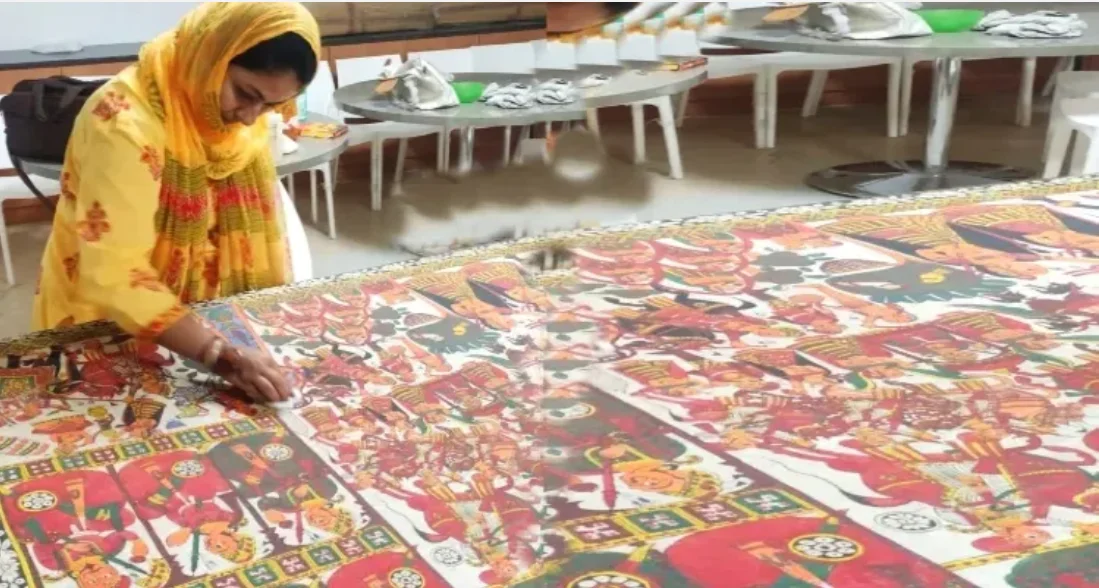
Over the years, Maimunah has undertaken numerous landmark projects. She rebuilt the 400-year-old wooden chariot of the Lodwar Jain temple in Jaisalmer, which had been destroyed by termites, using traditional materials without the help of a carpenter. She reassembled broken statues from the 6th to 13th centuries in Akbar’s Fort, Ajmer, ensuring the joints remained invisible. She restored a 400-year-old Sanskrit manuscript in gold and ink at Kota Museum, and meticulously conserved the painted ceilings of 11 rooms in Garh Palace, Jhalawar, preserving three of them without removing a single piece or causing any damage.
Her work has also reached modern spaces such as Jaipur and Mumbai airports, where she restored a 5,000-square-foot canvas painting on Maratha history, and at Rashtrapati Bhavan, she preserved historic pictures on wooden doors. At the National Museum, she safeguarded historical books including Baburnama, Akbarnama, Shahjahanama, and Jahangirnama, and brought decayed artworks and royal garments back to life.
Maimunah’s approach to conservation goes hand in hand with her respect for the environment. She has often highlighted that cement lasts only 30 years, whereas traditional Indian plaster made of red clay and lime, being both eco-friendly and cost-effective, could endure for thousands of years. She applied these methods while constructing a building in Dehradun on the site of a 400-year-old mansion and a modern farmhouse in Gurgaon.
Her dedication has earned her three national and 28 state awards, as well as recognition from institutions such as Kurukshetra and Jammu University. Her dreams include building a heritage resort in Madhya Pradesh using traditional materials and restoring a 500-year-old temple in Mathura, aiming to help India rediscover its cultural roots and architectural heritage.
Hailing from Bhajoi in Moradabad, Uttar Pradesh, Maimunah grew up in a simple household but with ambitious dreams. Her father, a UP Police officer, always encouraged her, fostering the confidence to pursue an unconventional career path. Today, she resides in Jaipur, remaining hands-on in her work, kneading lime and plastering walls herself. She proudly states, “I am the only Shia Muslim woman art conservator in the country, and this is my identity.” Maimunah Nargis’s life story demonstrates that with passion, courage, and perseverance, a woman can overcome societal barriers, make history, and inspire generations. She has become more than a name; she is a symbol of culture, dedication, and empowerment.
source: http://www.clarionindia.net / Clarion India / Home> Editor’s Pick> Indian Muslim / by Clarion India / September 21st, 2025
Zoya talks about life with artist Riyas Komu, secretary of the Kochi Biennale Foundation
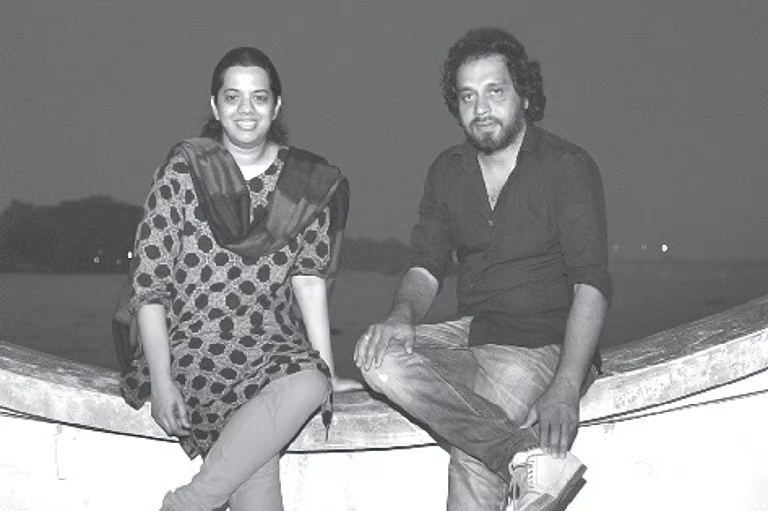
Zoya met Riyas Komu when they were both in the same class at the Sir JJ School of Art in Mumbai in the 1990s. “What I noticed immediately was that he had a zest and an infectious energy,” says Zoya. “Since he was from Kerala, there was an element of rawness – a kind of innocence – about him, unlike most of my other classmates.”
They were drawn to each other, because of their mutual interest in world cinema. “We attended a lot of film festivals together, and admired the films of Mohsen Makhmalbaf and Andrei Tarkovsky,” she says.
And they gradually fell in love even though they belonged to different backgrounds. Zoya’s parents are from Uttar Pradesh, but they have been settled in Mumbai for a long time, while Riyas is the son of politician M M Komu in Thrissur.
The fact that Zoya did not know Malayalam was not a hindrance for Riyas. Whenever he would come across an interesting article in a Malayalam magazine, he would translate it so that Zoya could also enjoy it. “Thanks to Riyas, I have read [Vaikom Mohammed] Basheer in an English translation,” says Zoya. “He is one of my favourite authors. I loved ‘Poovan Banana (Poovanpazham)’.”
The couple got married on April 7, 2001. And for their honeymoon, they came to visit Riya’s large family, of seven brothers and two sisters. “I am an only child, so it was an interesting experience to become part of a large family,” she says. “The language and culture were so different. You are into and still not into the family. Sometimes, it was difficult to comprehend things, but at the same time, it was quite engaging.”
What ensured Zoya’s assimilation was because she loved Riyas intensely. “He is not obsessed about art only,” she says. “Riyas has an open mind and is interested in all subjects, be it football, theatre, films, literature, and about people and happenings in his village and the world.”
And unusually, for a Malayali, Riyas gives Zoya the mental and physical space to be herself. “Riyas wants me to have my own views and feel free,” she says. “That is the case with the people who work with him. As a result, everybody feels at ease with Riyas.”
In Mumbai, on an ordinary day, Riyas gets up at 8 a m. Following breakfast, he goes to his studio: it could be the one where his sculpting works are done, or his painting studio, both of which are in the suburb of Dahisar. “If he starts work on a painting, he will spend hours on it, and continues labouring on it through the night,” says Zoya. “That is how he likes to work.”
Of course, an artist leads a different life, as compared to a banker or a businessman. “Every day is fluid,” says Zoya. “You have discipline, but you don’t have rigidity. The advantage is that you can do whatever you like, but there are different responsibilities, as compared to a person working in an office. You have to manage your own life.”
In effect, Riyas is the star of his own show. “But the only time he feels pressure is when there is a show coming up, and the works are not ready,” says Zoya.
Not surprisingly, Zoya has a few favourites, among Riyas’ works. One of them, which was displayed at the 2007 Venice Biennale, is a set of paintings called, ‘Petro Angel’. This was inspired by the plight of Iranian women, as shown in the film, ‘The Circle’ (2000). “He has been able to portray the different emotions of women very well,” says Zoya.
Riyas, himself, has gone through an emotional roller-coaster because he, along with Bose Krishnamchari, struggled to set up the landmark art event, the Kochi-Muziris Biennale. “He was asked to take the responsibility, and did so,” says Zoya. “Riyas knew that it was important not only for him or Kerala, but for establishing an art culture in India.”
Incidentally, because of Riyas’s preoccupation with the Biennale, Zoya has moved to Kochi with their four-year-old daughter Mariyam. “I am happy to be here and am proud of what Riyas has achieved,” she says.
source: http://www.newindianexpress.com / The New Indian Express / Home> Kochi / by Shevlin Sebastian / December 24th, 2012
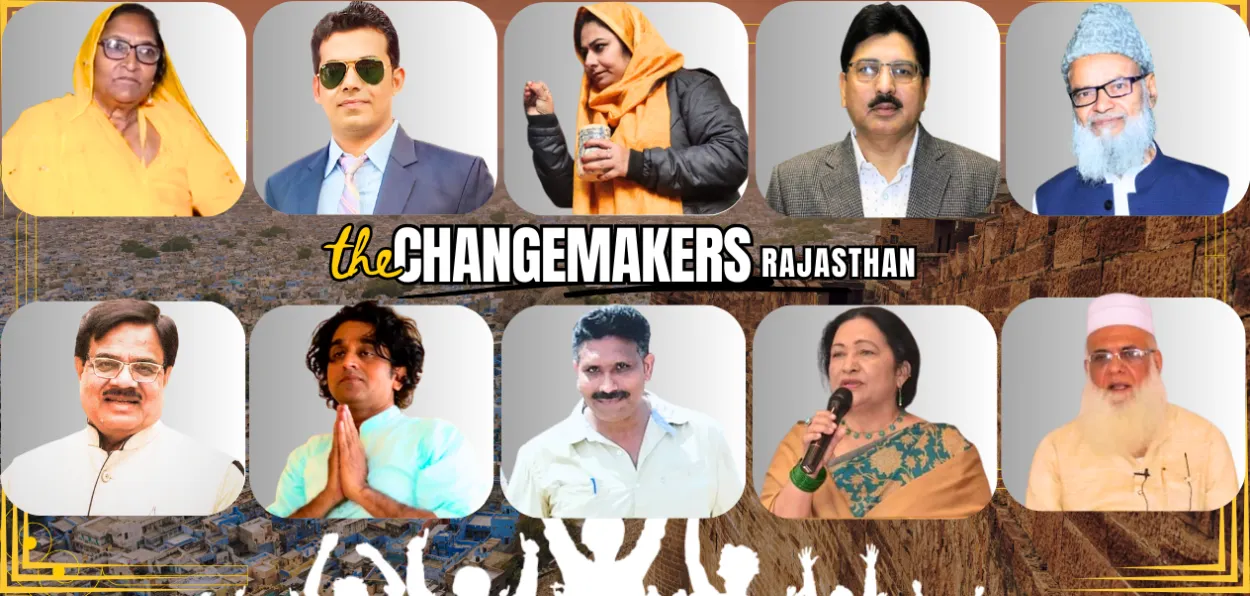
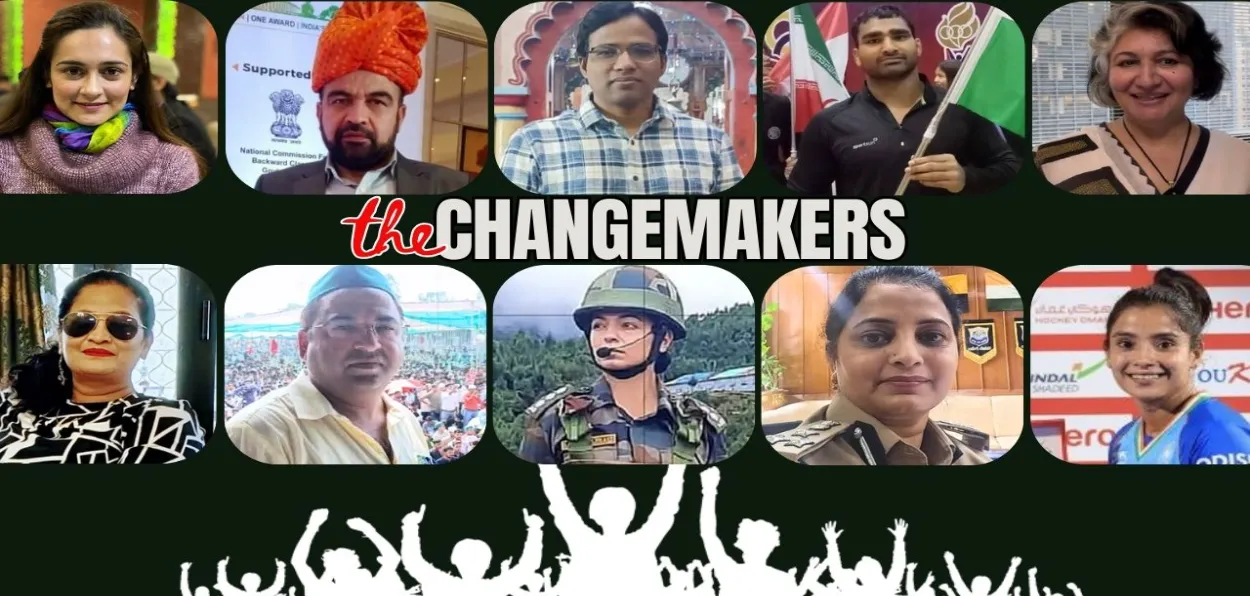
Rajasthan is known for its sandy deserts, historical monuments, especially forts, vibrant culture, and above all, its brave people, some of whom are inspiring others and changing society for the better. Under our series ‘The Changemakers’, Awaz-The Voice, brings you ten such personalities of Rajasthan, who have done extraordinary and pioneering work. Batool Begum: A living legacy of musical heritage.
Batool Begum: Woman who took traditional music to the world
One name that resonates in the streets of Jaipur is that of Batool Begum. Born in Kerap village of Nagaur district, Rajasthan, this extraordinary singer is a living legacy of Indian classical music. Batool developed a deep passion for music in her childhood. Despite facing social and economic challenges, she continued her singing.
Her melodious voice and her passion for music not only earned her recognition as an artist but also proved that talent can break all barriers. Her art is a source of inspiration for her community and the entire Rajasthan.
Abdul Salam Johar: A lac bangle maker who received global recognition
The vibrant spirit of India’s Pink City, Jaipur, doesn’t only emanate from its colours and people but also from the traditional handicrafts that are made and sold here. Bangles worth lakhs are made in these streets, which are a symbol of the traditional beauty and hard work of thousands of its people.
Abdul Salam Johar is one such artist who not only preserved the traditional art of the State but also brought about a social change in a major way. Coming from the Manihar community, Johar was born in a family with little means, but his dreams were extraordinary. Seeing the struggles of his grandfather Hafiz Mohammad Ismail and parents Haji Abdul Aziz and Hajjan Qamar Jahan, he made hard work, dedication, and social service the main mantra of his life.
He began his journey from his ancestral shop ‘Indian Kangan and Colour Store’ located in Tripolia Bazaar of Jaipur, and today his wares are being sold under brands ‘Johar Design’, ‘Johar King’ and ‘Indian Crafts’ in the global markets. He is not only a successful entrepreneur, but also a social reformer who took his community and traditional art to new heights.
Abdul Latif ‘Arco’: A confluence of business and social service
Abdul Latif, who lives in Chini ki Burj in the capital Jaipur, and is known as ‘Arko’ in Rajasthan, is one such special personality. Born in a small village of Chomu in 1946, Abdul Latif’s father, Rahmatullah, and mother, Hafijan, taught him hard work, honesty, and the passion to help people, which became the basis of his life.
His company, Abdul Razzaq & Company (ARCO), is today a big name for social service along with electric motors, fans, and coolers. Apart from this, his hotel, ARCO Palace, is a symbol of his hard work and foresight. Abdul Latif’s story is not just of a businessman, but of a person who chose to work as a changemaker by combining his business and social responsibilities.
Qazi Nishat Hussain: A new voice breaking stereotypes
The voice rising from a small office located in the narrow streets of Johri Bazaar in Jaipur, the capital of Rajasthan, is today inspiring society to change. This voice is of Nishat Hussain, Rajasthan’s first Muslim female Qazi, social worker, and a strong advocate of the rights of Muslim women.
Her life journey is an example of courage, struggle, and change, which not only made thousands of women aware but also gave them a new direction to live.
Born in Sitabari Mohalla of Karauli district, Nishat’s childhood was spent in an environment of communal harmony. His family was the only Muslim family in the neighbourhood. There were three temples in front of her house. She says, “We did not know who was a Hindu and who was a Muslim.” In a backward area like Karauli, where girls’ education was not given importance, Nishat created history. She became the first Muslim girl in the district to pass the tenth standard, that too as the only Muslim student among 1200 girls. Today, she has become a torchbearer of the rights of Muslim women.
Captain Mirza Mohtasim Baig and Ruby Khan: An Inspiring couple in social service
An inspirational couple, Captain Mirza Mohtasim Baig and his wife Ruby Khan, hail from Jaipur. Captain Mirza is the first Muslim pilot of Rajasthan and has been operating national and international flights for the last 25 years. At the same time, his wife Ruby is an active social worker and politician.
Both believe that if one wants to bring change in society, then he has to take the initiative. Together, they had organised medical camps, documentation camps, free ration distribution, and offered financial help to families in the marriage of their daughters. The couple is an epitome of change brought about by spirited people.
Dr. Arif Khan: The village scientist who created history
Thirty-four years ago, a child was born in the small village of Masani in the Hanumangarh district of Rajasthan. Today, he is Dr. Arif Khan, a scientist who has brought laurels to India. In his village, most of the people toiled in the fields. His father, Advocate Farid Khan, wanted his son to become a doctor. His mother and grandfather also had the same dream. But there were few schools in Masani, and the path to making dreams come true was difficult. Still, Arif had a passion to do something extraordinary in his life.
With his hard work and dedication, he became a bio-scientist and brought glory to his family and village. His research on milk and food products brought a wave of change. His story proves that if the intentions are strong, then even a boy from a small village can become a scientist and make the country feel proud.
Mainuna Nargis: First Shia Muslim woman in art conservation
In a vast country like India, art conservation is important since it not only preserves history but also connects future generations to our heritage. Mainuna Nargis, the country’s first and so far the only Shia Muslim woman art conservator, does the same work. Born in Bahjoi, a small town in Moradabad district of Uttar Pradesh, Maimuna’s childhood was ordinary, but her dreams were extraordinary. Rajasthan has now become Mainuna’s second home.
Her father, a Policeman in UP, always encouraged her. After studying Fine Arts from Aligarh Muslim University (AMU), she did a diploma in Museology, which became the most decisive turning point in her life. Maimuna’s story is not just of professional success, but a story of passion, struggle, and self-confidence, which revived the broken pieces of history.
Yoga Guru Naeem Khan: Global journey from music to yoga
The life journey of Yoga Guru Naeem Khan, who rose from the streets of Jodhpur, the cultural capital of Rajasthan, to spread his spiritual aura on international platforms, is a unique example. He rose from a common man to a global yoga guru and presented yoga as a universal energy beyond religion, culture, and boundaries.
Naeem Khan was born in a family where music was in every breath. His grandfather, Ustad Umardin Khan, was the court musician of the Jodhpur royal family, while his maternal uncle was Padma Bhushan-awarded Sarod player Ustad Sultan Khan. However, with changing times, that traditional flame of music started to fade. Naeem and his brother got involved in business, but yoga gave Naeem a new direction, and he took it to a global platform.
Syed Anwar Shah: A man who introduced girls to education
Thirty years ago, a dream was born in a small room in Jaipur, which has today become the light of education for thousands of girls. This is the story of Syed Anwar Shah, whom people fondly call Master Anwar Shah. He not only dreamt of his daughter’s education, but also made it a means of progress for the daughters of society.
Today his educational institution, Al-Jamia-tul Alia, is spreading the message of knowledge and Islamic ethics not only in Jaipur, but also in the whole of India and abroad. After completing his M.A. in Public Administration from Rajasthan University in 1980, he dedicated his entire life to the welfare of society and the service of education. In 1995, when his daughter Alia was born, he decided to set up an institution for the education of girls, which would impart both worldly and divine teachings.
Today, his effort has become a boon for thousands of families.
Padma Shri Shakir Ali: Patron of Miniature Painting
It’s no exaggeration to say that Jaipur is the art capital of Rajasthan. And in the field of miniature painting, the name of Syed Shakir Ali comes to the fore spontaneously. This genre of painting is an identity of the state of Rajasthan.
Padma Shri awardee Syed Shakir Ali is not only a great practitioner of this art, but he is also the guardian of that heritage, which is an integral part of the cultural identity of Rajasthan. Born in 1956 in Jalesar village of Uttar Pradesh, Shakir Ali’s family soon settled in Jaipur, where his art got a new direction.
Today, he has given recognition to this traditional art of Rajasthan not only in India but also on international platforms.
source: http://www.awazthevoice.in / Awaz, The Voice / Home> The Changemakers / by Aasha Khosa, ATV / September 14th, 2025
While media spotlight often shines on celebrities and politicians, the real engine of India’s progress runs on the resolve of countless unsung heroes who, away from limelight, quietly transform society.
From national defense to grassroots education, sports, science, and civil service, these individuals from Uttar Pradesh show how courage, compassion, and conviction can drive extraordinary change. Here are 10 such trailblazers whose stories deserve to be heard:
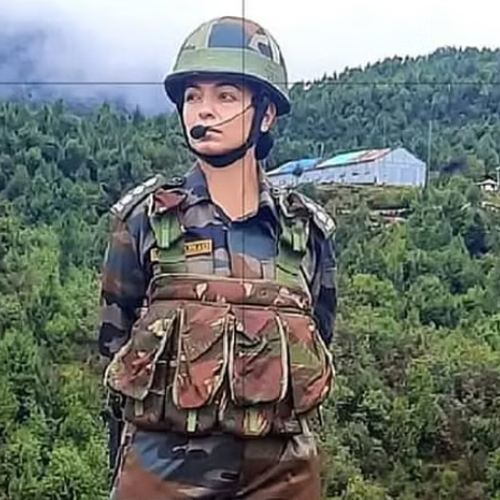
Captain Sariya Abbasi: A Woman in Uniform on the Frontlines
Hailing from a small city of Gorakhpur, Uttar Pradesh, Captain Sayria Abbasi broke every convention to join the Indian Army. A graduate in Genetic Engineering and with plenty of job offers and career opportunities from big companies was not enough for her to pursue in life. The call of service for the motherland was too strong to be sacrificed.
The world noticed her as a soldier deployed at the Line of Actual Control (LAC), India-China temporary border, manning an Air Gun. Today, Sariya leads drone-killer teams and operates L-70 anti-aircraft guns on the border. Her journey from an academic achiever to a defender of the nation’s borders is not just about military precision; it’s about shattering glass ceilings and reshaping how India imagines women in uniform.
Dr. Faiyaz Ahmad Fyzie: Voice for the Voiceless Pasmanda Community
Dr. Faiyaz Ahmad Fyzie, an AYUSH physician, is more than a healer—he is a public intellectual, columnist, translator, and relentless advocate for the Pasmanda (socially backward) Muslim community. Raised in modest conditions, his rise to national recognition is built on fearless writing and tireless grassroots work.
When even the Prime Minister refers to Pasmanda voices, Fyzie’s years of advocacy resonate. His pen continues to empower those whose struggles were long silenced. His work is a call to conscience—and a roadmap for inclusive discourse.
Mohammad Luqman Ali: Wrestling His Way to Glory and Degree
Wrestler Mohammad Luqman Ali, a student of Social Work at Jamia Millia Islamia, is balancing body and brain. Born in Amroha’s tiny village of Mohraka Patti, his father worked on the railways, and his mother gave him religious grounding. Despite limited resources, Luqman’s grit has earned him recognition in India’s wrestling circles.
From the mat to the classroom, his dual commitment shows that excellence doesn’t require compromise. It requires discipline, heart—and a family’s belief in you.
Rubina Rashid Ali: Reviving Mughal-Era Art with a Modern Mission
In a sun-drenched corner of Aligarh, Rubina Rashid Ali has quietly built a movement. Her work in floral appliqué embroidery, a legacy of Mughal art, now supports dozens of women in Aligarh and Rampur. What was once an undervalued craft monopolized by middlemen has been transformed by Rubina into a vehicle for women’s economic empowerment.
Her home resonates not only with the sound of needles and threads but also with the hum of independence. “Real artists were reduced to laborers,” she says. Today, she ensures their hands are not just working — but also earning.
Babban Mian: A Gaushala Keeper Inspired by His Mother’s Love
At Madhu Sudan Gaushalla in Bulandshahr, Babban Mian tends to cows not out of ritual, but reverence — inspired by his late mother Hamidunnisa Begum. “She loved cows like her own children,” he recalls. After she passed away in 2015, Babban vowed to preserve her legacy.
Despite being a Muslim in a Hindu-dominated tradition, he runs a government-recognized shelter rooted in compassion, not controversy. For him, animal welfare is a universal value — not a communal issue. His work quietly redefines what shared culture and interfaith harmony look like.
Khushboo Mirza: From Amroha to the Moon with ISRO
Khushboo Mirza, scientist at ISRO and part of the Chandrayaan-1 and Chandrayaan-2 missions, is a stellar example of perseverance. After her father’s death when she was just seven, her mother raised three children alone, running a petrol pump and defying social norms.
Khushboo earned a Gold Medal in Electronics Engineering from AMU and was the youngest member of the Chandrayaan-1 checkout team. A practicing Muslim and a symbol of India’s scientific aspirations, she turned down corporate offers to reach for the stars—and took a whole generation of girls with her.
Zaheer Farooqui: A People’s Leader with a Vision for Purkazi
In western UP’s Purkazi, Zaheer Farooqui is rewriting what local leadership means. As Nagar Panchayat Chairperson, he donated land worth ₹1.5 crore for the area’s first Intermediate College and modernized local schools into PM Shri-certified institutions.
His initiatives go beyond classrooms. From India’s first double-storey government-run cow shelter to a gym for Muslim women, and one of the most sophisticated rural CCTV networks in the region — Farooqui’s governance is a blend of tradition and tech, equity and empowerment. His Tiranga Yatra revives local history, reminding citizens that patriotism is inclusive and action-oriented.
Dr. Farah Usmani: From AMU to Global Health Leadership
On a cold morning in New York, Dr. Farah Usmani stood outside an apartment, a folder in hand, her eyes bright with resolve. The daughter of Uttar Pradesh, she is today a formidable presence in global health policy.
n M.D. in Obstetrics & Gynecology from AMU, Farah sought impact beyond hospital walls. Armed with a Master’s in Health Policy from LSE and the London School of Hygiene & Tropical Medicine, she’s led transformative health initiatives around the world. Her journey is one of intellect guided by idealism — a doctor who chose not just to heal individuals but to reform systems.
Anjum Ara: Bridging Communities Through Compassionate Policing
Hailing from Azamgarh’s Kamharia village, Anjum Ara, a 2012-batch IPS officer, has redefined the image of policing with a human touch. A computer engineer by training, her journey from Integral University to Senior Superintendent of Police in Shimla has been marked by integrity and reform. Known for her work in cybercrime and her community-focused policing model, Anjum is also a fierce advocate for girls’ education.
Together with her husband, IAS officer Yunus Khan, Anjum adopted the cause of Khushdeep, the daughter of a martyred soldier, pledging to support her upbringing. This act of empathy mirrors her professional ethos, proactive, principled, and deeply people-centered.
Mumtaz Khan: From Vegetable Stall to World Hockey Stage
From the bustling alleys of Lucknow’s Cantt area to the turf fields of South Africa, Mumtaz Khan’s journey is pure grit. Once helping her father at a vegetable stall, a single race at school changed her life when Coach Neelam Siddiqui noticed her speed. That moment set her on a course to become a leading forward in India’s Junior Women’s Hockey Team.
Her standout performance at the 2018 Youth Olympics, where she scored 10 goals, earned her national acclaim. Yet, Mumtaz remains rooted, balancing hope and humility as she eyes the Olympics. She is proof that dreams born in dusty streets can blaze across international arenas.
These ten changemakers hail from Uttar Pradesh, from narrow village lanes to bustling metros, from battlefields to laboratories. But they are united by one thing: quiet, relentless courage. In their lives, we find the India that persists, uplifts, and transforms—not with headlines, but with hard work.
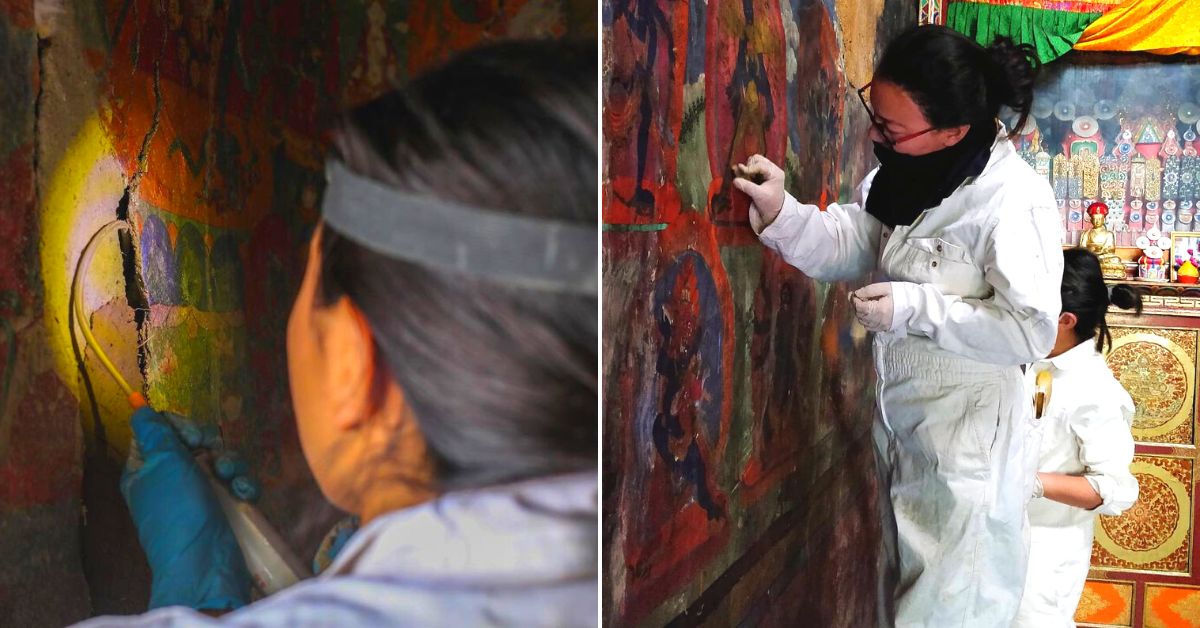
Noor Jahan and her cousin Wajeeda Tabassum co-founded Shesrig Ladakh, an art conservation practice that restores and conserves ancient wall paintings, religious manuscripts, thangka (Buddhist scroll) paintings and metal works.
How do you protect and preserve culture? It’s a question Noor Jahan – a 32-year-old expert in art conservation and heritage management from Leh – has grappled with for a decade.
Through Shesrig (meaning ‘heritage’) Ladakh, an art conservation practice she founded with her cousin Wajeeda Tabassum, Noor performs critical restoration and conservation work on ancient wall paintings, religious manuscripts, thangka (Buddhist scroll) paintings and metal works.
“My real interest lies in working on ancient wall paintings and thangka paintings,” says Noor Jahan in a lengthy conversation with The Better India.
Backed by a Master’s degree from the Delhi Institute of Heritage Research and Management (DIHRM) and a PhD from the National Museum Institute, she has worked on wall paintings dating back to the late 8th century and Buddhist thangkas from the 19th century. Also, since 2019, she has run Shesrig on her own following Wajeeda’s departure for foreign shores.
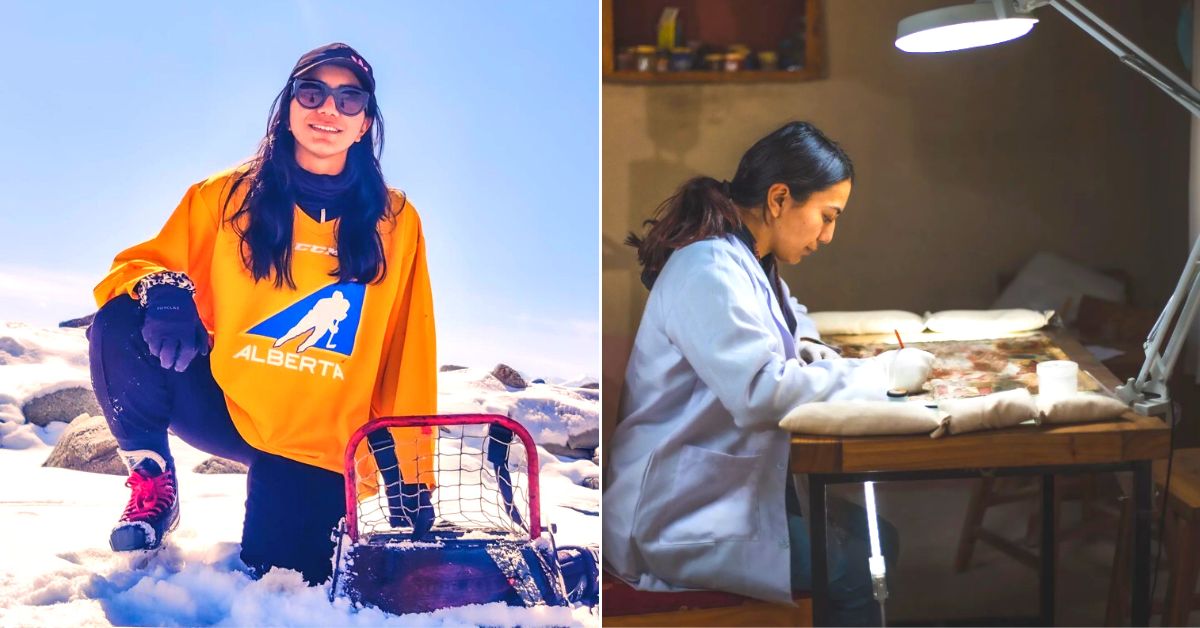
What’s more, Noor is also the goalkeeper for the Indian women’ ice hockey team. Earlier this year, she helped India finish second in the Union Women’s Ice Hockey Tournament in Dubai. Noor reckons that she has a few more years left before she “officially retires” from the sport.
By all accounts, it’s an extraordinary way of life, and this is her story.
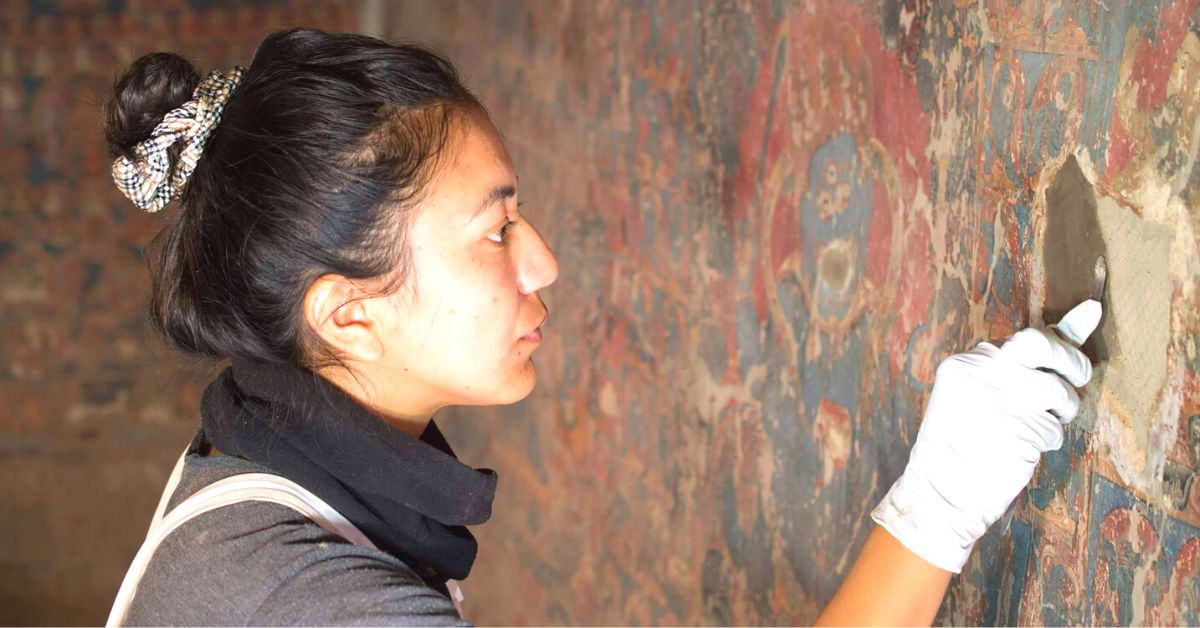
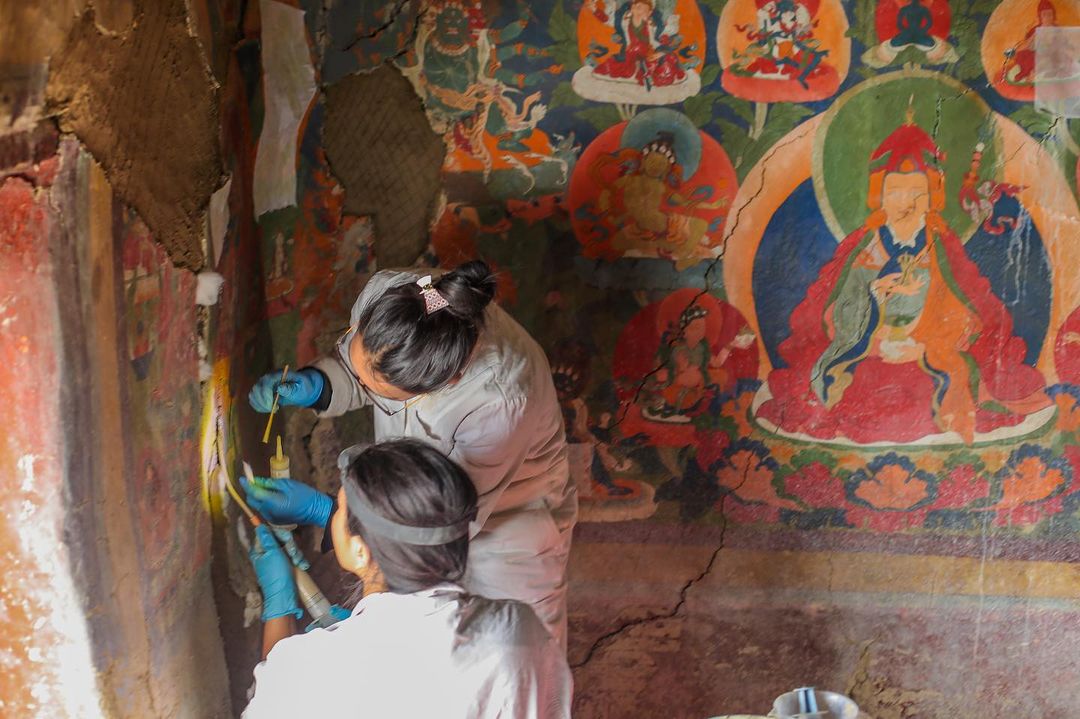
Noor Jahan working on old wall painting in Saspol caves, Ladakh
A serendipitous journey
There was a void in Noor’s life after earning her bachelor’s degree in commerce from Delhi University. Going through the motions, she had no passion for what she was learning. To reflect on what was next and enjoy a short holiday, she left for Leh after graduation in 2011.
It was during a walk through Leh’s crowded old town, when she met a few foreign conservators from the Tibet Heritage Fund working on an old Buddhist temple. Intrigued by what they were doing, Noor engaged in a short chat with them which would change her life.
After returning to Delhi, she began reading up on art conservation and learnt that she could pursue higher studies in this field.
What also sealed the decision to get into this field for Noor were memories from her childhood.
“My mother is from Hunder village in Nubra. Every holiday, we would always visit Nubra to meet my maternal grandparents. The bus would stop at this location called Chamba on the main road from where you had to walk inside the village. This particular route holds great importance in my life now because there are many stupas along the way. Every time I would look up at these pathway stupas, I would see these old paintings. But each passing year, some part of these paintings would disappear. When I applied for this course at DIHRM, the first thing I thought about were these paintings and the conservation work I could do someday,” she recalls.
Allied with a strong desire to come back home, starting this course brought passion back into her life. “Everything I was studying there found a purpose in Ladakh,” she says.
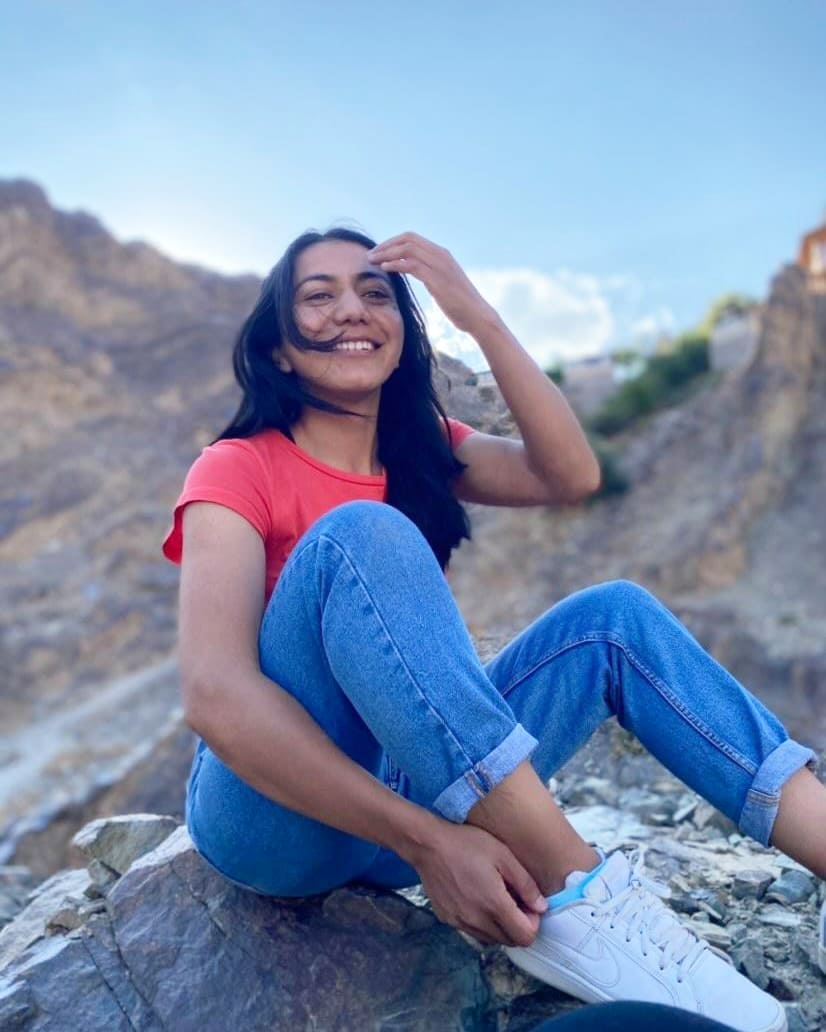
Noor Jahan found purpose in preserving Ladakh’s heritage
Finding Shesrig
Following the first year of her Master’s programme in 2012, Noor and Wajeeda opted to do their internship with the Himalayan Cultural Heritage Foundation (HCHF), a Leh-based non-profit. Helping them find projects to work on was Dr Sonam Wangchok, founder secretary of HCHF.
During this internship, the first major project Noor got involved in was a wall painting at Diskit Gompa, a 14th-century Buddhist monastery in Nubra Valley.
She recalls in an Instagram post, “The internship entailed working on the restoration of wall paintings from the 17th century under the supervision of art conservators from [the] Czech Republic. This was my first hands-on experience where I had the opportunity to conserve sacred Buddhist art and the opportunity to stay at the monastery itself. I think that internship changed my life forever as I not only got to work on the most beautiful wall paintings but gave me the opportunity to meet and interact with the monks at the monastery who took me and Wajeeda in as their own.”
Conserving ancient wall paintings is a delicate process
After completing her Master’s programme in 2013, Noor came back to Leh to work with other organisations like Art Conservation Solutions and Achi Association, amongst others, as a freelancer. In 2014, she worked on her first project outside Ladakh at the Golden Temple in Amritsar with Heritage Preservation Atelier, and also commenced her PhD at the National Museum Institute. Despite these landmark moments, she knew this sort of freelance work wasn’t sustainable.
“Working in these organisations was a great learning experience and helped me to capture some of the finer nuances of conservation. Even today with Shesrig, I collaborate with most of them. But this kind of work wasn’t sustainable, i.e. it was limited to summer months,” she says.
“In the summer, I would work on many projects. But the moment winters came, all these organisations would stop their work in Ladakh. I really wanted to start something of my own in Leh, while working sustainably and throughout the year,” she adds.
Thus, in 2017, Noor and Wajeeda founded Shesrig Ladakh and rented out a historic structure called Choskor House as their base in Leh’s old town, which they had to first restore.
This three-storied structure is located right behind the Jama Masjid (mosque) in the centre of Leh along the hillslope. It belongs to a renowned family of traders, who along with other important families, once led important trade missions to Lhasa from Ladakh.
“Even though Choskor House was really old, we decided to rent it. To restore it, we had initially consulted some architects, but there came a point when it became difficult because of costs and time constraints. That’s when we reached out to Achi Association India, a sister organisation of Achi Association (a Swiss-based organisation), which took over the project of restoring this structure backed by funding from the German Embassy. They helped with establishing the studio in which we currently operate. We started working inside our studio only this year,” says Noor.
“It’s important to see your heritage as an inheritance that has great value,” says Noor Jahan
Conserving ancient wall paintings is a delicate process
Conserving wall paintings
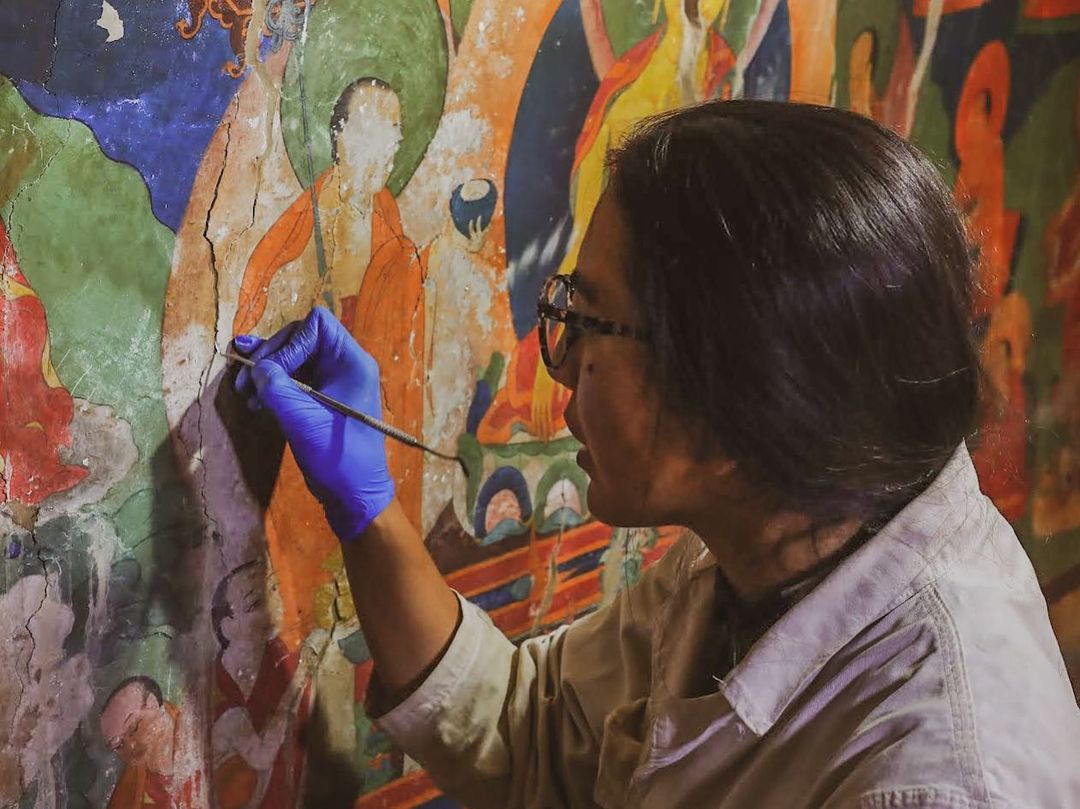
Conservation and restoration are different acts. Noor explains, “In conservation, people do not recreate anything new. So, if there are losses in a given wall painting, there is no recreation but only stabilisation. Restoration, meanwhile, seeks to recreate some of those losses.”
Some of the fundamental challenges in conserving or restoring old artworks include physical access to remote sites and obtaining the necessary materials that they largely import.
Noor gives us an example of a project they worked on in collaboration with the Himalayan Cultural Heritage Foundation in June 2020 to illustrate her point. The site was Chomo Phu, a small one-room Buddhist shrine near Diskit Monastery, Nubra.
“It’s quite a steep hike up from Diskit Monastery, and there is a gorge inside the valley where this shrine is located. There was no place for accommodation. Instead, we pitched tents next to the shrine and had to improvise basic facilities. We camped in that valley for about 25 days since it was not practical or possible for us to hike from there to the monastery or the village every day,” she recalls.
Before, during and after the project, Noor and her team do extensive documentation work. During this phase, they closely examine the kind of deterioration the wall painting has undergone.
In this particular case, there were a lot of over-filling and historical fills done in the past. These fills were done in such a way that it was obscuring a lot of the original painting and sometimes even overlapping it. They had to carefully remove those historic fills.
“Another issue with wall paintings is that there are a lot of detachments. In the event of any structural movement or water seepage, the plaster gets detached from the support, thus creating these hollow areas inside the painting. You can discover these hollow areas through a percussion test (a method for the structural inspection of wall paintings). We then perform grouting, i.e. fill the gaps between the painting and the support structure,” she notes.
Apart from these, there are cases where the paint layer gets delaminated. To address this, they use a consolidant and then stick the paint layer back to the surface.
“Of course, there is cleaning work which is done. The paintings are largely glue-bound tempera (also called secco, which are paintings on dry surfaces). In this kind of technique, the pigment is usually mixed with the binder and then applied to the walls. With water infiltration, the binder becomes weak causing delamination of the paint layer,” explains Noor.
“This damage primarily occurs because of water. We make sure not to perform any wet cleaning, i.e. don’t use any solvents to clean the wall painting. We only employ dry cleaning. There are various types of conservation-grade sponges which we work with and soft brushes to remove the dust or any mud infestations,” she adds.
A major point of contention with wall paintings is retouching work (reworking small areas of a painting to cover damage or to mask unwanted features).
Without getting too deep into the subject, when it comes to wall painting conservation work, Noor and her team largely stick to what she calls “conservation or stabilisation work”.
“It’s important to see your heritage as an inheritance that has great value,” says Noor Jahan
Restoring old thangkas
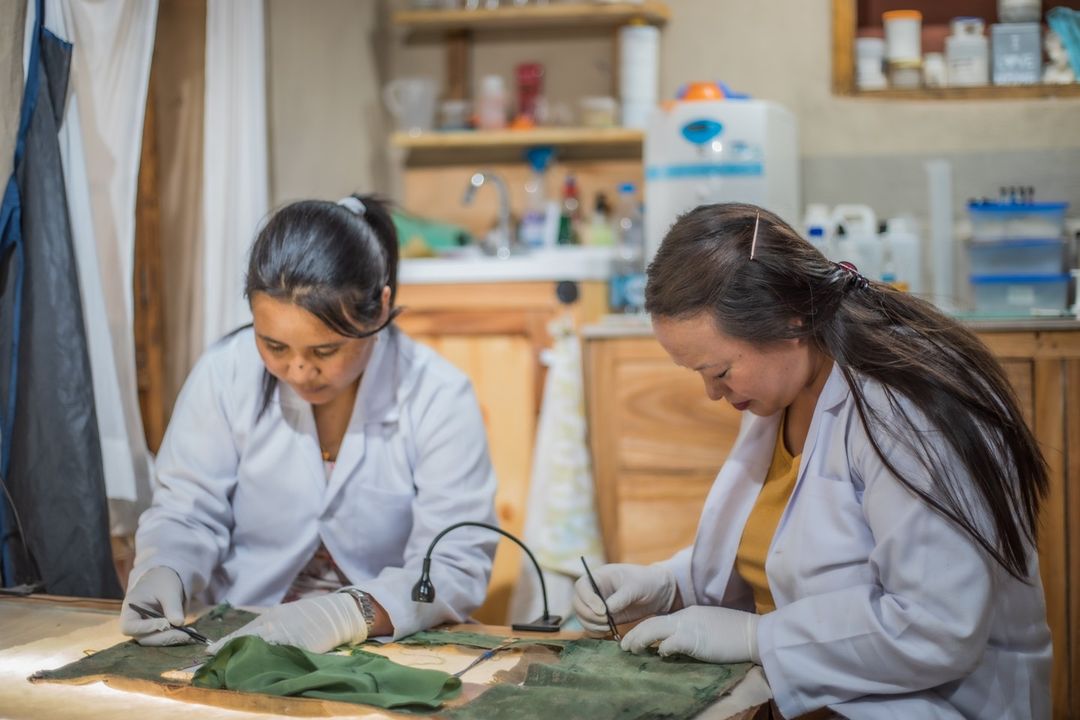
This year most of the thangkas that were brought in for restoration at Shesrig’s studio came from private households. Each thangka arrives in a different condition.
In thangka paintings, you have a textile-based canvas made of cotton fabric or any other material used by the artist in the centre. These thangkas also usually have either silk or brocade borders. Most thangkas they got into their studio this year had silk borders.
Step 1: “Since the thangka has come directly from the chod-khang (prayer room) to our studio, we first take it to a nearby monastery, where a de-consecration ceremony is done,” she says.
Step 2: The next step is to bring the thangka back to the studio, perform extensive documentation work including photographic documentation and understand what kind of problems are visible. Accordingly, they prepare a treatment plan.
Step 3: Usually the centrepiece of the thangka is stitched with a textile border. They separate both elements because the fabric at the border is completely different from the canvas in the centre. Following separation, they work on the border and centre piece canvas separately.
Step 4: Once the separation is done, the first step is cleaning the soot. “In thangkas, there are times (only when required), when we go for mild solvent cleaning but once again dry cleaning methods are preferred. Also, solvents can sometimes be harsh. We have started preparing gels which are much milder and do not adhere to the surface for the cleaning process,” she says.
Step 5: What if there are big losses or tears on the thangka painting? “We make a similar kind of ras-jee (the local term used for the textile canvas of a Thangka painting) in the studio. We use pieces of that ras-jeeto mend the tears. Otherwise, in thangkas, we also see a lot of cracks. To fill the cracks, we use the markalak (local clay mixed with mild adhesive) to fill those cracks because that’s part of the original technique of preparing a thangka. We follow the same methods while restoring it as well,” she explains.
Step 6: Once this is done, if there is any consolidation work required or a paint layer is coming off, they fix those problems. Sometimes, they mend the tears fibre by fibre, which requires very delicate hands. Also, if there are any small losses or paint losses, they do subtle retouching work using natural colours or the colours originally used on the thangka.
Conservation of Thangsham (the local term used for the textile border of a Thangka painting)
Step 7: Meanwhile, there is another team which is working on the textile border known as thangsham locally. There is a particular method of washing the textile using conservation-grade detergents.
“We don’t dip it straight into the water. Instead, we use wet sponges to clean it very meticulously. Sometimes these borders are also torn or otherwise in a bad condition, for which we mend them using patchwork with silk, brocade or whatever material was originally used. We have a stock of raw silk, which is white. We dye it as per the thangka’s requirements. If the thangsham, for example, is blue, we will dye the silk blue and do the patchwork from the inside. We perform the process of dyeing ourselves at the studio,” she explains.
Step 8: Once both elements are ready, they stitch the centrepiece canvas and the border back together, following which a consecration ceremony is done and then returned to the client.
Once again, depending on the state in which the thangka is sent, it takes anywhere between a fortnight to two months or more to restore a thangka. It also depends on manpower.
“Most of the time, we work in groups of two or three women on one thangka, and depending on the scale of the task, it takes about a month or two if the damage is extensive,” she says.
Given that most of the conservation work she does with Shesrig Ladakh relates to Buddhist heritage, questions have emanated from either side of the religious divide.
But is her faith an obstacle in this line of work?
“Most of the time, they don’t see my Muslim faith as an obstacle to the work that I do. For the most part, I’m not treated as an outsider or not from the community. In fact, it has been the opposite, where I am given more respect and love, especially in monasteries,” she says.
However, recently she heard someone say, ‘What is this Muslim girl doing here?’ “Look, this is how the world around us is moving. As Muslims in India, we know what’s going on. But I do not take these comments personally because I have to do what I know how to do,” she says.
Noor Jahan: “I have to do what I know how to do”
But such ad-hominem comments don’t necessarily come from the Buddhist community. She even notes how members of her religious community pass judgement on her line of work.
“Sometimes, people from the community approach my family to complain about my work, but fortunately they have been very understanding,” she notes.
Another struggle Noor deals with is the significant lack of awareness in Ladakh about art and heritage conservation as a field. “Even though they support me, my parents and some friends still don’t understand the kind of work I do. They still think this is a ‘hobby’ to me and don’t take me seriously. Even though the conversation in Ladakh about restoration and conservation has progressed a little, there are still people who think that this work can be done for free. This is something, I hope, changes with time as the conversation around this subject grows,” she says.