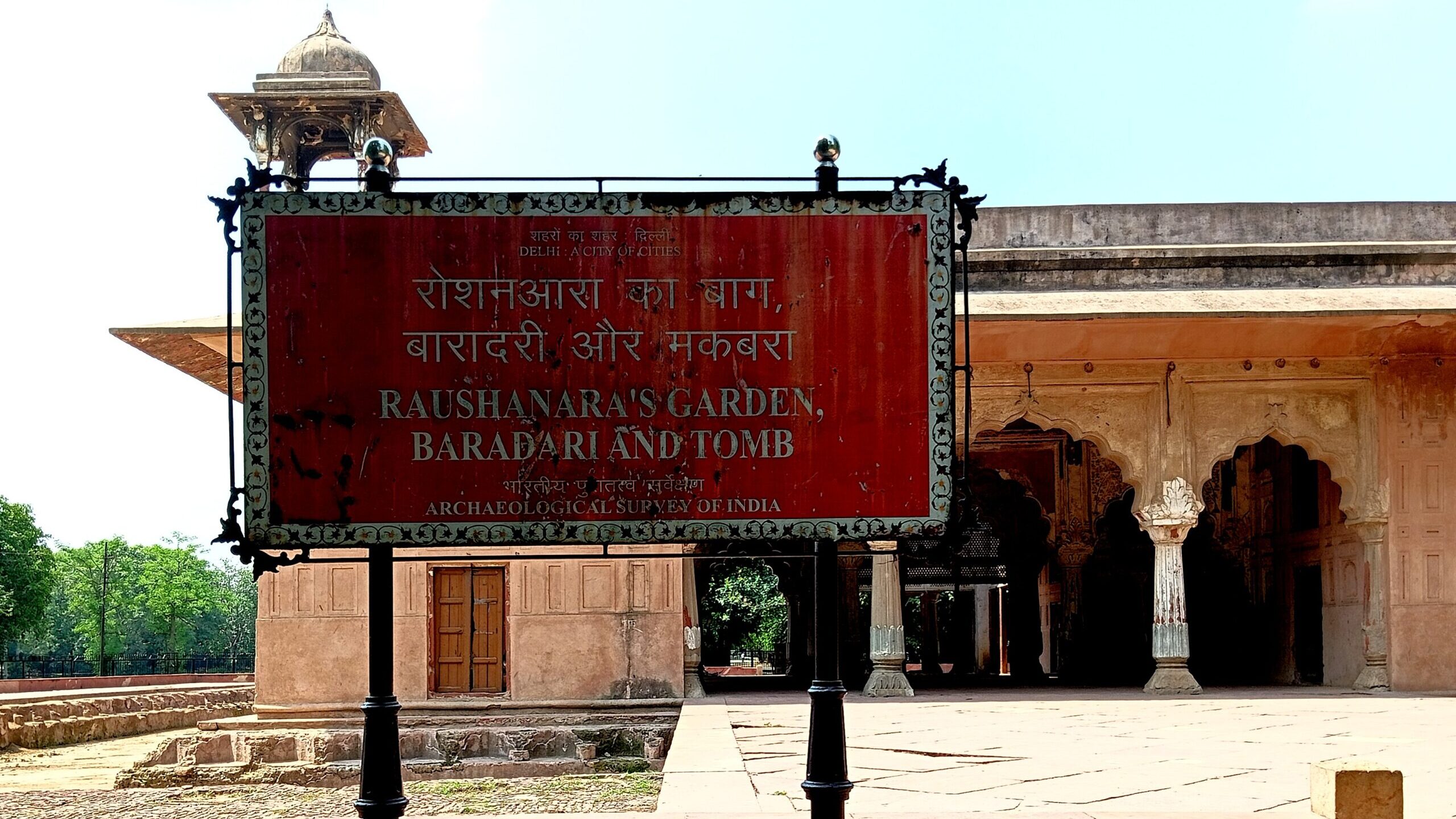
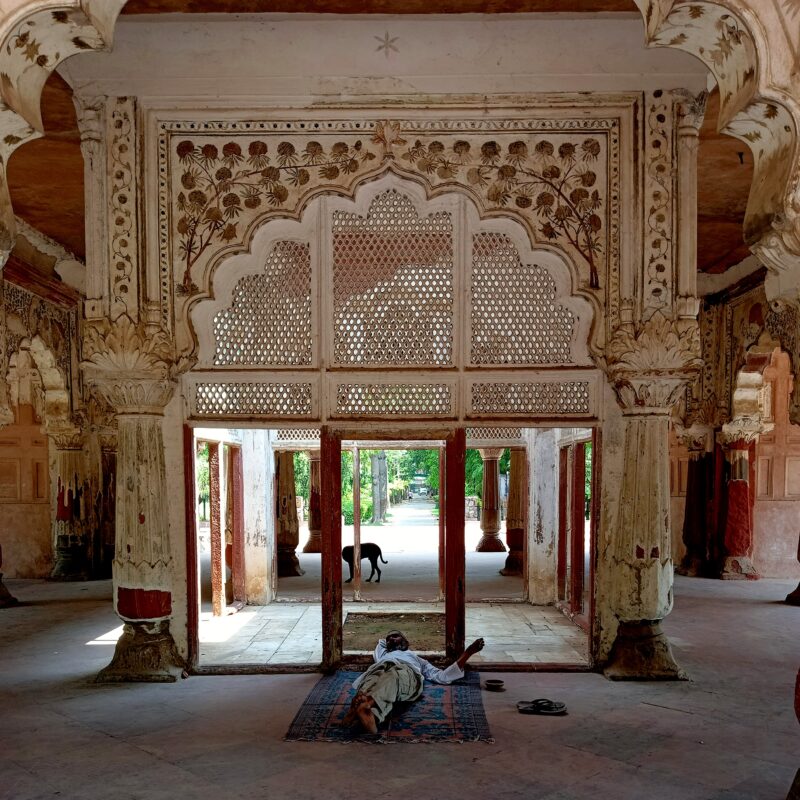
Being a heritage site and a monumental garden, Roshanara Park is one of the many gardens Delhi boasts of. With the unmarked tomb of princess Roshan Ara Begum, her elegant palace, and a dense garden, the park narrates a beautiful tale of lost history
All photos: Ali Fraz Rezvi
Within a few kilometres from the Pul Bangash Metro Station, and quite near to Delhi University’s north campus, stands Roshan Ara Bagh – a Mughal monument dating back to the 17th century AD.
Named after Emperor Shah Jahan’s daughter Princess Roshan Ara Begum, the heritage site was once a palace and then turned into the princess’ tomb. It now serves as a garden under the Municipal Corporation of Delhi (MCD).
The heritage site spans over a large area of 8.5 acres. It houses an open gym, a playground, a garden and an ignored mausoleum, which is yet to be revamped as a world-class nursery by October 2022.
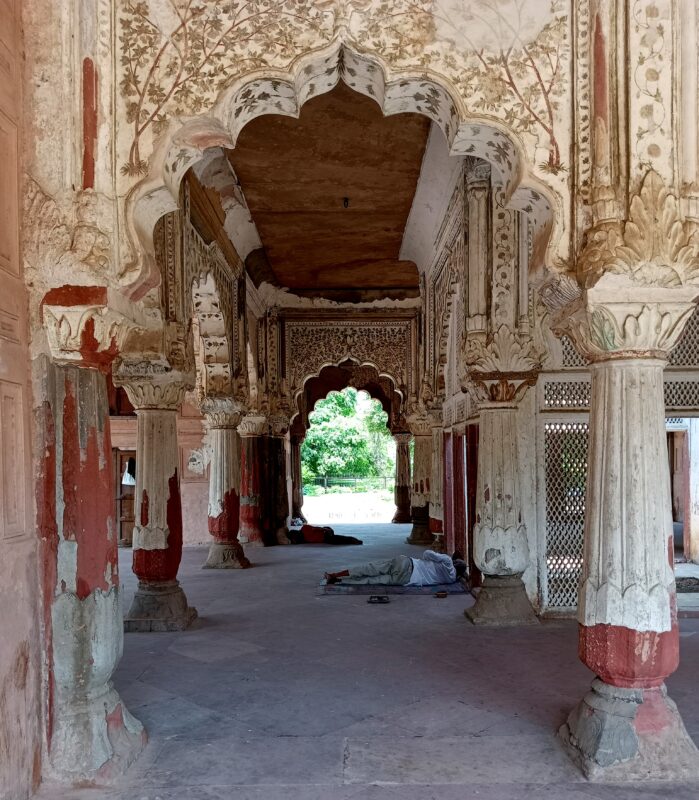
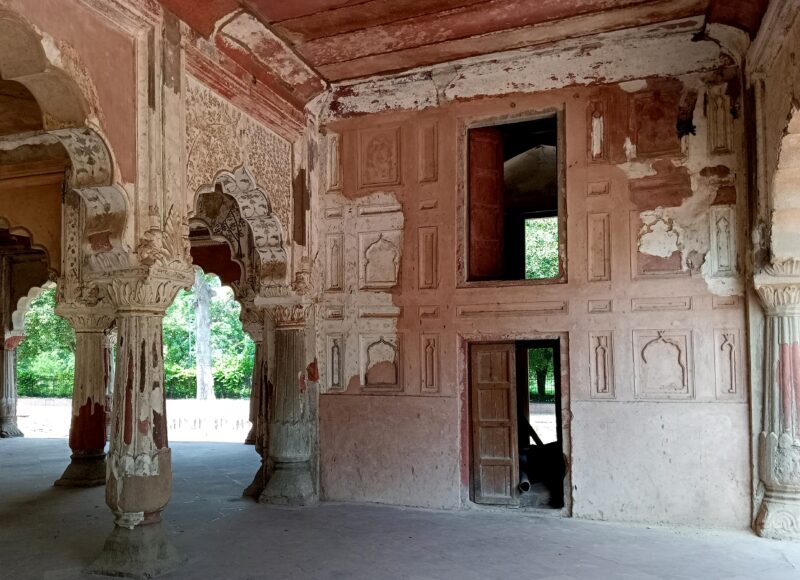
The last surviving memoirs, one being an unmarked grave, lies at the centre of the palace’s garden area. The architecture here is beseeching, with dilapidated walls and pillars, wooden doors and windows.
The tomb, where exists the unmarked grave of Roshan Ara Begum, has suffered the most with its marble jaalis crumbling from three sides and broken at the fourth. The marks of repairs by the ASI on the pillars and walls are nothing more than a cemented patch.
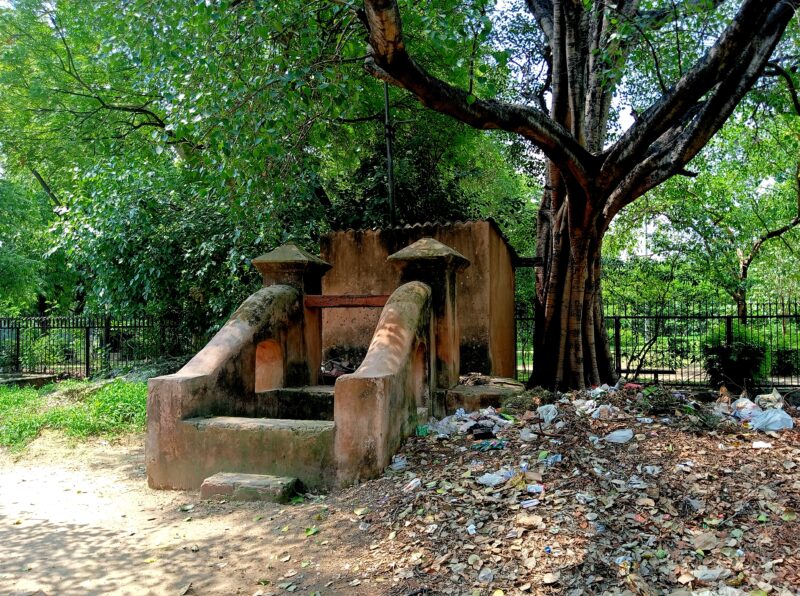
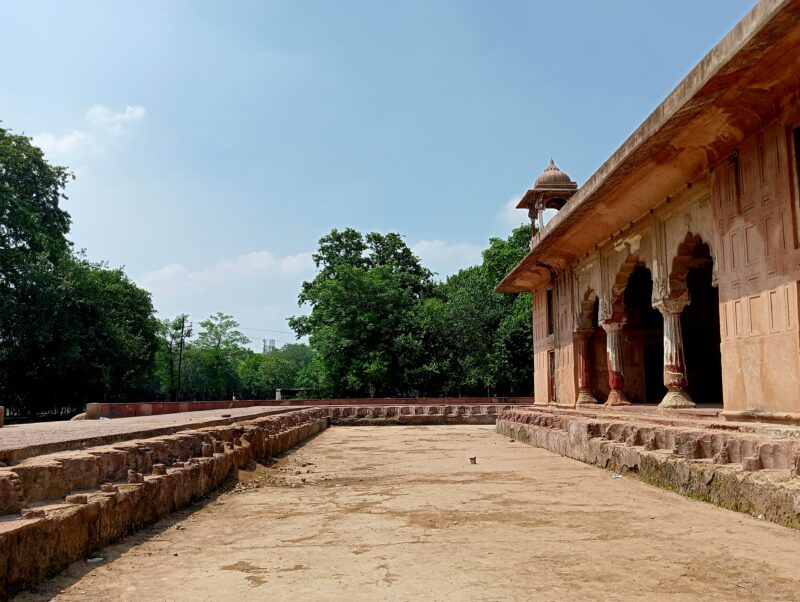
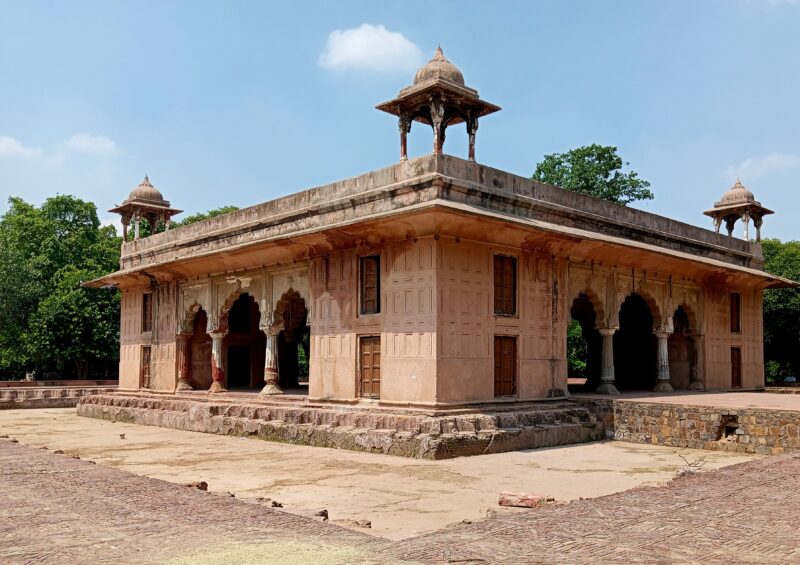
Along with the surviving parts of the palace which includes a bara-dari (a structure with twelve gates) and a well, there exists the last remains of a lake which covers around four acres inside the garden. The lake, enclosing the tomb, was initially a part of the palace of Roshan Ara Begum. But it has now dried up and turned into a garbage dump.
The 372-year-old structure with a garden of Mughal grandeur and architecture was commissioned by Padshah Begum – the First lady of the Mughal Empire in 1650 AD. It is used by the residents and the visitors till date.
Despite being in a distorted condition, the site is still magnificent and stands as a reminder of an ignored past.
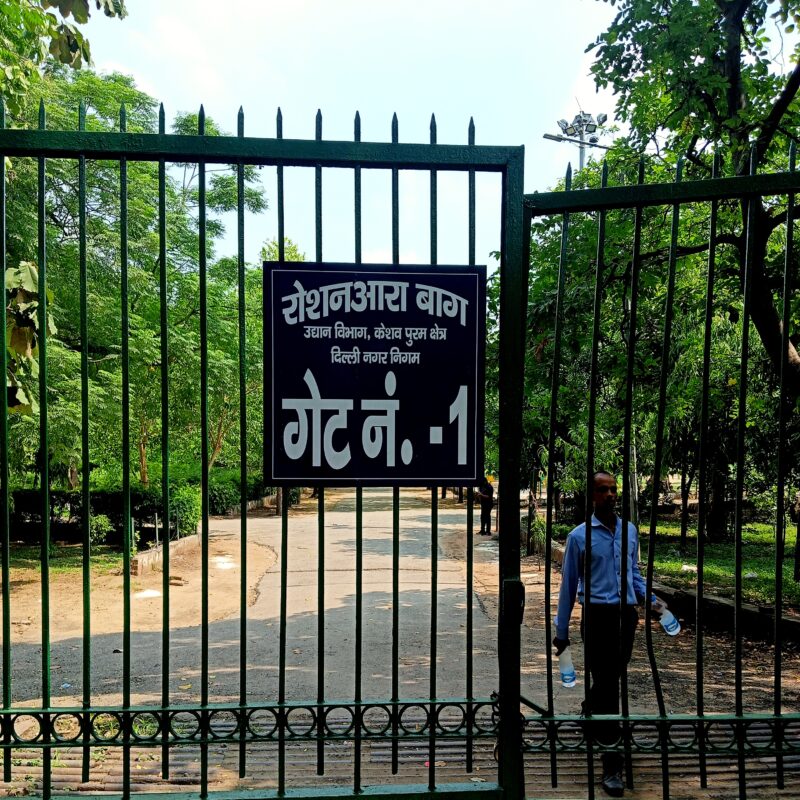
The main entrance to the Roshan Ara Garden.
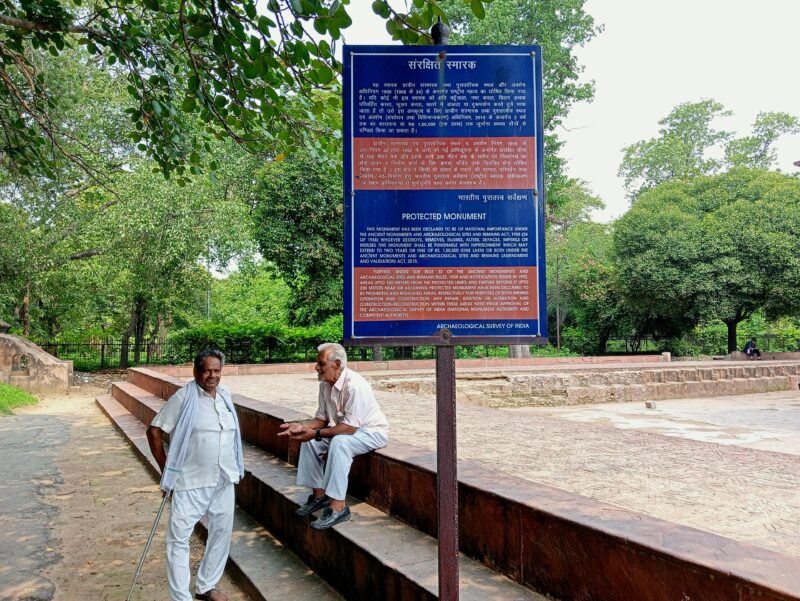
People chit-chatting after a long morning walk
The open gym in the park area.
A well from the past.
The bara-dari around the tomb often serves as a resting place for visitors in the daytime.
Remnants of the lake.
Structure that survives.
The last breaths of a breath-taking monument.
A man and a dog, on the two sides of the princess’ grave.
source: thepatriot.in / The Patriot / Home / by Ali Fraz Rezvi / All photos: Ali Fraz Rezvi / August 22nd, 2022
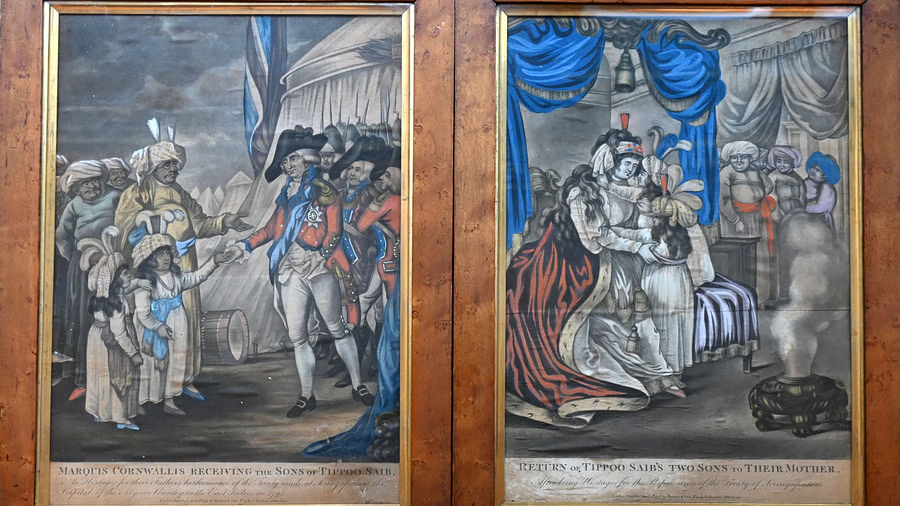
One print depicts Tipu’s two sons being taken hostage by Lord Charles Cornwallis, after the third Anglo-Mysore war in February 1792, and the other is a portrayal of their return to their mother.
The prints were made in 1796 by publisher Haines. / Credit: DH Photo/ B K Janardhan
A city-based art collector, Sunil Baboo, has recently acquired two rare prints of paintings from Tipu Sultan’s era. They capture significant moments in the history of the erstwhile Kingdom of Mysore.
One print depicts Tipu’s two sons being taken hostage by Lord Charles Cornwallis, after the third Anglo-Mysore war in February 1792, and the other is a portrayal of their return to their mother.
History has it that Cornwallis laid out severe conditions Tipu had to adhere to in the Treaty of Seringapatam. He demanded that Tipu hand over his sons to British custody, until the king carried out all the demands he had agreed upon.
“While there are multiple artworks depicting the moment of surrender, it is rare to come across one capturing the sons being returned to Tipu’s wife,” says 65-year-old Baboo, who has been collecting historic books, maps, aquatints and documents since 1982.
The creator of the paintings is unknown, but they were turned into prints in 1796 by publisher Haines. This was even before the defeat and death of Tipu during the fourth Anglo-Mysore war in 1799. “Many of these artists never set foot in India. They created these images based on what was described to them. While there was an artistic bent to them, it was more a way for them to document important events,” Baboo explains. Many of these prints were originally etchings and engravings that were coloured by hand, adds the Gangenahalli resident.
He learnt of the prints a few months ago, and was able to edge out some of the biggest auction houses like Bonhams, UK. “They were planning to auction them in June 2024, but I was able to procure them through my contacts,” he explains. Over the years, Baboo has built a wide network of collectors and auction houses that tip him off on new discoveries. Most of this category of prints are found in family collections of descendants of French and British soldiers of the colonial period.
The prints, once discovered, are restored and framed. Baboo’s 16×14-inch prints came with a lot of archival tape and paper at the back of the frame. “Presumably to reinforce them. They can be kept in this condition for a long time,” he says.
source: http://www.deccanherald.com / Deccan Herald / Home> India> Karnataka> Bengaluru / by Rashmi Rajagopal / January 24th, 2025
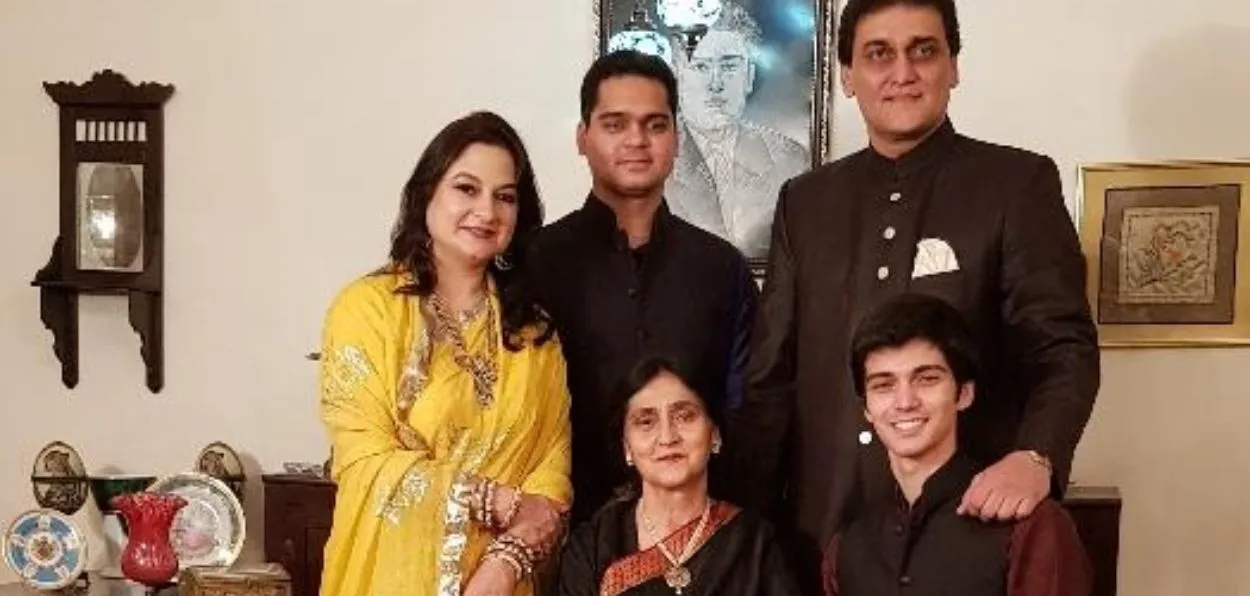
Paigah decendent Faiz Khan with mother Begum Tahira Sirajuddin Khan, wife Nida Fatima Khan, sons Dr. Mohammed Faraaz Khan and Mohammed Kamil Khan
A visit to the scion of the Paigah family and the great-great-grandson of H.E. Nawab Sir Vicar- Ul-Umara Bahadur, Amir-e-Paigah and former Prime Minister of erstwhile Hyderabad state M A Faiz Khan grew up seeing their family as ardent patrons of homegrown textiles, superior garments, and spectacular gems even as history is witness to the global influence of Indian Prince and Princesses.
He says that a visit to Hyderabad’s Salarjung Museum is an exciting part of a scholar’s life, it becomes more meaningful and engaging to realize that the museum itself is an astounding part of history for those researching elite Indian menswear. A visit to his house can easily get one an insight into the Nizam and Paigah family pictures which gives one a peek into the refined taste of the family and made the family stand out in the pages of history.
Faiz Khan says, “India boasts of a rich tapestry of cultural diversity, each thread intricately woven into the fabric of its magnificent royal heritage but the royal families have since long been the custodians of not just history and tradition but also of opulent style and regal elegance.
“Their grandeur, opulence, and penchant for fashion continue to inspire modern-day designers, setting the stage for some stupendous ensembles that blend the allure of the past with contemporary flair.”
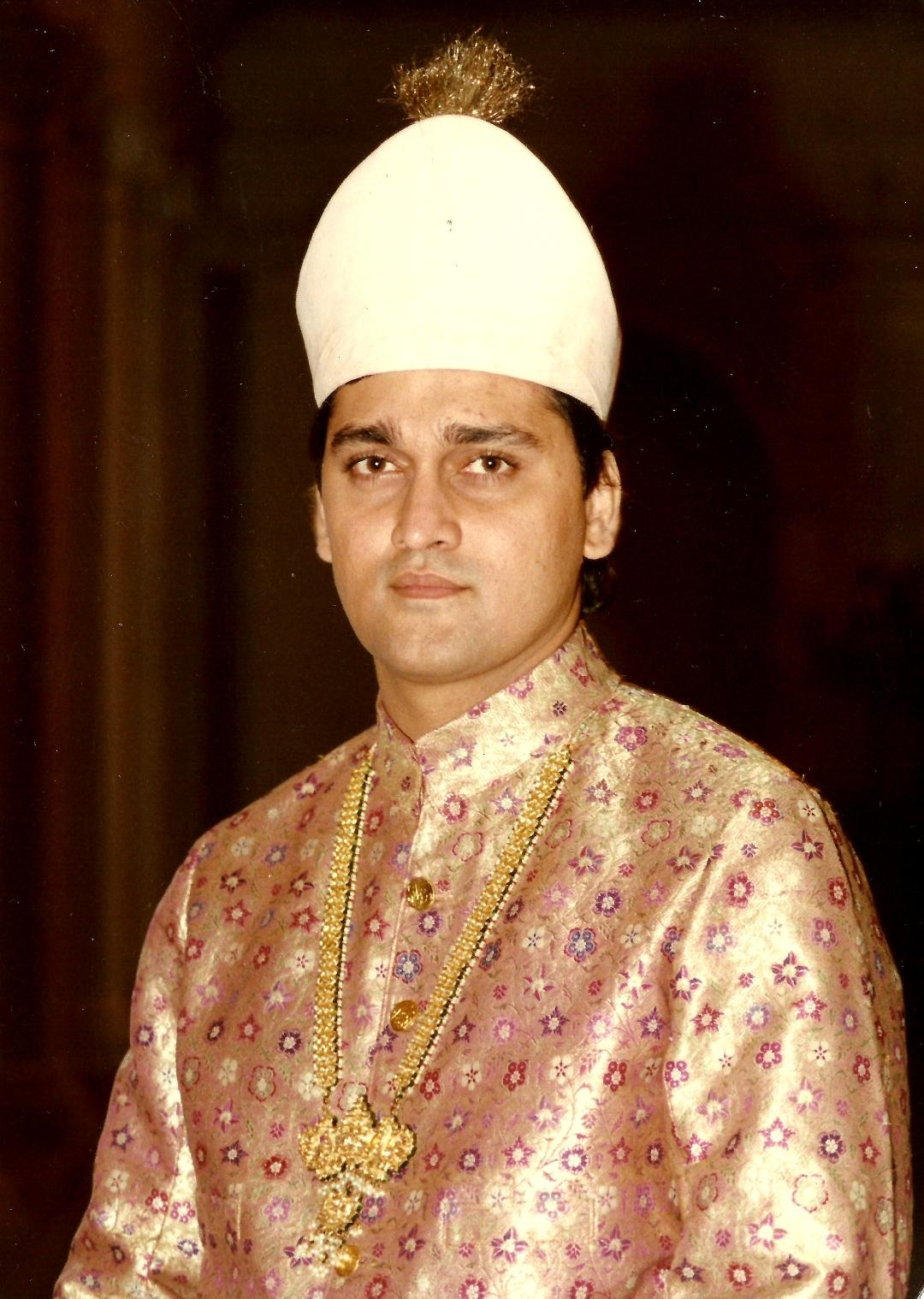
Scion of Paigah Mohammed Abul Faiz Khan wearing a sherwani of his great great grandfather H.E. Nawab Sir Vicar-ul-Umara Bahadur, the fifth Amir of Paigah
He says that the Dress and fashion during the era of the Nizams and the Paigahs included ‘angrakhas’, ‘neema’ and ‘jama’. During the last quarter of the 19th century the ‘achkan’, a fitted cape, and ‘angrakha’ developed with a few improvements into the sherwani which extended slightly below the knee and had four pockets, two upper and two on the sides, and seven buttons in front.
He said that the royals paid homage to the grandeur of their dynasty through their attire. Sherwanis were crafted from rich and regal fabrics like brocade, silk, and velvet which boasted of works like Karchobi, a kind of raised metallic thread embroidery, or Kimkhab a kind of brocade woven with silk and gold or silver threads sometimes set in precious stones too. Gold and silver metals were used in surface ornamentation. Even the weft yarns are said to be of gold and silver wire in himru, mashru and brocade fabrics.
These sherwanis reminiscent of historical figures like the 6th Nizam H.H. Nawab Mir Mahboob Ali Khan or the Paigahs were characterized by intricate embroidery and elaborate embellishments creating an aura of regal elegance. The ‘sherwani’ became very popular among all the public in Hyderabad during the rule of Nizam VI and Nizam VII during the first half of the 20th century. It used to be worn with ‘dastar’ (headgear). The Zari work the timeless elegance and regal grandeur of the noble including the Paigahs added a touch of luxury and opulence.
The colour palettes were inspired by the grandeur of the Nizam’s Palace or the Chowmohalla Palace the first official palace of the Nizam where darbars were held and dignitaries received and from where the administrative offices of the Nizam functioned, which included deep vibrant colours like rich maroon, royal blue and emerald green which symbolized grandeur and elegance then.
Faiz Khan says that the safa an important component of the royal’s attire added a touch of grandeur and lush. Intricately draped, it complemented the colour scheme of the ensemble and featured ornate broaches, echoing the meticulous elegance of the royal era then. Traditional pearls or jewelry including head broaches, often adorned with precious and semi-precious stones evoked the splendor celebrated by royalty and nobility.
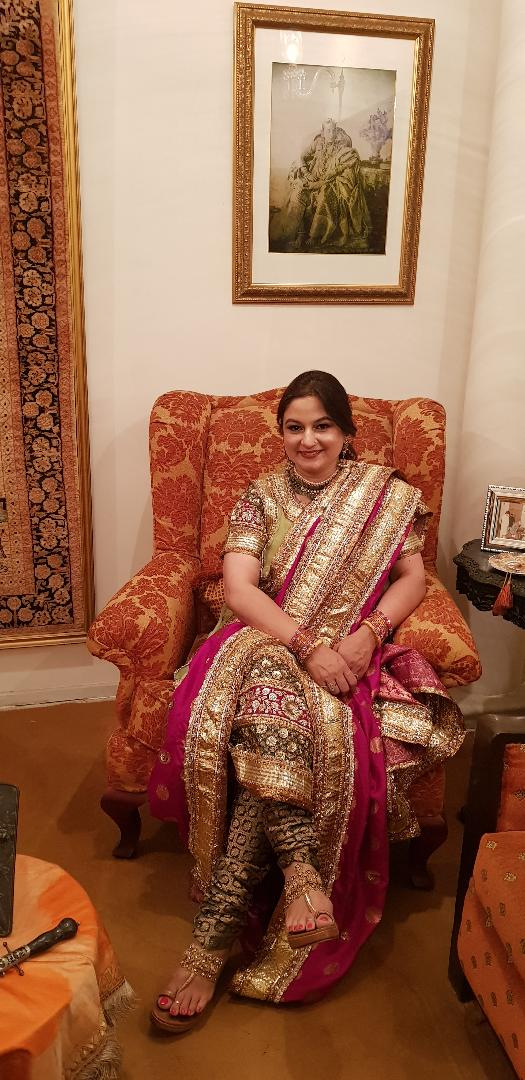
Nida Fatima Khan Granddaughter of Major General Nawab Khusru Jung Bahadur CIE married to Faiz Khan of Paigah is wearing a Chowhashya/ Khafa Dupatta and traditional Jewelry.
Footwear like Mojris or juthis showcased elaborate embroidery and designs These designs continue to embrace these elements by grooms honouring the regal legacy of the then royals and embodying the same style during their weddings even today.
The Jama‘angrakhas’, ‘neema’ the Fez caps and even the head gears known as Dastaar or the Rumi topi have been taken over by the Western attire for day-to-day dressing. Though Sherwani continues to be still popular and worn with a loose ankle-length pyjama or a churidar (legging-like) during festive occasions and Friday prayers sadly it is no longer the power dressing of the 19th century
The Paigah grooms inspired by the then-historical figures adorned themselves with elaborate Polki jewellery head ornament, bajuband, armlets all featuring precious gemstones, which accentuated their royal allure The vibrant colour palette exuded grandeur with bright ruby reds, deep blues, and rich greens transforming grooms into timeless symbols of regal elegance.
The Kimkhab choga the achkans woven in luxury was a different ball game for these men.
Although in possession of immense wealth, it was their refined taste that made some of this Indian royalty and nobility stand out in the pages of history. While the Nizam was the more familiar figure who immediately comes to mind, the Paigahs and their predecessors like Faiz were equally proficient. Faiz Khan adds that the royals were also instrumental in deliberately straying from conventional style norms and introducing it to the women of Indian society at a time when restrictive customs such as the pardah system existed. Here we talk of the cohesive picture of Princess Durru Shehvar, Princess Niloufer, H.E.Lady Vicar –Ul-Umara their iconic style, and how it garnered the attention of designers, legacy brands, and publications from all over the world.
He says that the contribution of the Nizams to textiles is especially noteworthy as he was passionate about good clothes jewellery and delicacies. Nizam Mir Mahboob Ali Khan to store his large collections of clothes built a 240 feet long wardrobe at Purani Haveli Hyderabad in the hallway on either side it had 133 built-in cupboards to accommodate his large collections of clothes shoes, headgear, hats, and accessories.
Today the legacy of the Nizam and the Paigah royals lives on the fashion choices of modern brides and grooms. Inspired by the timeless style of their ancestors, modern brides opt for gharara, sarisKhadaDupatta and sharara that pay homage to the intricate embroidery in zardozi gotta patti work.
The safa reminiscent of the ornate turbans complete their royal look. Traditional leather jootis often in coordinating colours, offer a touch of authenticity making the ensemble a bridge between the past and present.
source: http://www.awazthevoice.in / Awaz, The Voice / Home> Story / by Raja Chotrani / January 05th, 2025
Calm, caring and royal in her mannerisms. This is how those who knew Princess Saleha Sultan, the titular queen of Bhopal who passed away in Hyderabad and whose last rites were performed in the Madhya Pradesh city on Monday, described her.
Born in 1940, Sultan passed away on Sunday of a brain haemorrhage. Her mortal remains were taken to Bhopal on Monday where the funeral took place at the Saifia Masjid where her family members and ancestors are also buried.
She is survived by four sons Amer Bin Jung, Saad Bin Jung, Omer Bin Jung and Faiz Bin Jung. Her husband Paigah Nawab Bashir Yar Jung, whose father Nawab Sir Viqar-ul-Umra constructed the Falaknuma Palace, passed away in 2019.
Mohammed Safiullah, a historian said, “I had known her for at least 30 years. She was very calm, caring and carried herself really well. She made others feel comfortable around her and was full of grace.” Safiullah, who was informed of the tragic news by the Princess’ sons, said, “The last time I met her was on November 4, when her husband Bashir Yar Jung passed away. She was extremely heartbroken.”
Sultan and Jung were married in December 1957 at the Hyderabad House, New Delhi. The function was held under the patronage of the then Prime Minister Jawaharlal Nehru.
“As the eldest child of Nawab Ifteqar Ali Khan Pataudi and Begum Sajida Sultan of the princely State of Bhopal, she was the titular Begum of Bhopal. She was older to her brother Nawab Mansoor (Tiger) Ali Khan Pataudi, the cricket legend,” Safiullah said.
Although she was the eldest, she was never recognised as the head of the erstwhile Bhopal State, despite Bhopal being a matriarchal kingdom. After her mother Sajida Sultan’s death, the title of Nawab passed on to Tiger Patadui.
Sultan and her sons have been embroiled in a court case with Tiger’s son, Bollywood actor Saif Ali Khan to procure a share of the ancestral property in Bhopal. In contention is over 6,000 acre of property worth thousands of crores of rupees, including the Bhopal Jama Masjid that is estimated to be worth Rs 1,000 crore.
Another historian Vedakumar Manikonda expressing his condolences said, “For some time in early 90s, we were neighbours. We used to meet now and then.”
source: http://www.newindianexpress.com / The New Indian Express / Home> Hyderabad / by The New Indian Express Online Archive / January 21st, 2020
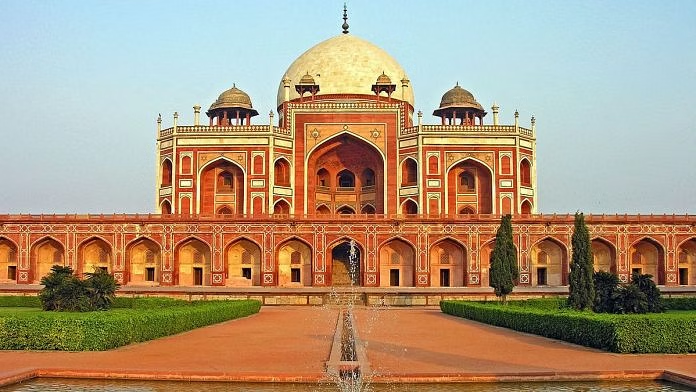
Humayun’s Tomb introduced India to the Persian style of a domed mausoleum set in the centre of a landscaped char-bagh garden.
Humayun’s Tomb, Delhi | Photo: Commons
Humayun’s first wife was a Persian from Khorasan and a daughter of Humayun’s maternal uncle. She was also called Haji Begum, probably because she had gone on the Haj to Mecca. During Humayun’s reign, she appears in history at the Battle of Chausa, where the harem was captured by Sher Khan. In all the chaos of battle, a boat carrying women capsized and her young daughter, Aqiqa Begum, was drowned. Bega Begum did not have any more children. Today she is remembered for the tomb of Humayun that she built in Delhi. After the death of her husband, when she decided to build the mausoleum, she was encouraged in her endeavour by her stepson Akbar, who was very fond of her.
Among all Humayun’s wives, Bega Begum lived a life of surprising independence. She went off to the Haj and came back with Arab craftsmen who worked at the tomb. This was much before Gulbadan Begum and Hamida Banu Begum went to Mecca during the reign of Akbar, their trip getting much more coverage in contemporary writing. Bega Begum did not join the harem in Agra but remained in Delhi, supervising the building work. An episode described by Gulbadan shows that she was a spirited woman who even spoke sharply to her husband when he did not visit her.
Among all Humayun’s wives, Bega Begum lived a life of surprising independence. She went off to the Haj and came back with Arab craftsmen who worked at the tomb. This was much before Gulbadan Begum and Hamida Banu Begum went to Mecca during the reign of Akbar, their trip getting much more coverage in contemporary writing. Bega Begum did not join the harem in Agra but remained in Delhi, supervising the building work. An episode described by Gulbadan shows that she was a spirited woman who even spoke sharply to her husband when he did not visit her.
Then Humayun replied, ‘It is a necessity laid on me to make them happy. Nevertheless, I am ashamed before them because I see them so rarely… I am an opium-eater. If there should be any delay in my comings and goings, do not be angry with me.’ However, Bega Begum was not reassured and said, ‘Your Majesty has carried matters to this point! What remedy have we? You are emperor. The excuse looked worse than the fault.’ Gulbadan ends her tale saying, ‘He made it up with her also.’
The contemporary historian Badauni writes that Akbar and Bega Begum were very close and he describes her as a ‘second mother to Akbar’. Once when the boy Akbar had a toothache, Bega Begum brought some medicine but Hamida was reluctant to give it to him. This was understandable since, in a harem that was often full of politics and jealousy, the mothers feared that their children could be poisoned. Abul Fazl quotes Akbar as saying, ‘As she knew what the state of feeling was, she [Bega Begum] in her love to me swallowed some of it without there being any order to that effect, and then rubbed the medicine on my teeth.’
Bega Begum would often travel to Agra to meet Akbar and she spent her allowance doing charity. The Jesuit Antoine de Monserrate wrote, with reluctant approval, of her good works, ‘Throughout her widowhood she devoted herself to prayer and to alms-giving. Indeed, she maintained five hundred poor people by her alms. Had she only been a Christian, hers would have been the life of a heroine.’
Bega Begum was the first of the Mughal women to become a builder, and many would follow to build mausoleums, mosques, madrasas, seminaries, bazaars and gardens. Humayun’s Tomb introduced India to the Persian style of a domed mausoleum set in the centre of a landscaped char-bagh garden, which would reach its peak with the Taj Mahal. Built near the dargah (mausoleum) of the Sufi saint Sheikh Nizamuddin Auliya, the mausoleum complex became the graveyard for many members of the dynasty. Bega Begum is buried in the mausoleum near her husband, and somewhere nearby is the grave of one of the most unfortunate princes of the dynasty – Dara Shukoh.
___________________________
This excerpt from Mahal: Power and Pageantry in the Mughal Harem by Subhadra Sen Gupta has been published with permission from Hachette India. Hardback Rs 599.
_______________
source: http://www.theprint.in / The Print / Home> Page Turner> Book Excerpts / by Subhadra Sen Gupta / November 30th, 2019
A new biography looks into Akbar’s life to draw some inspiration on how to manage the boardroom. The third Mughal emperor was always thinking on his feet, one step ahead of friend and foe; but he also knew that force had to be tempered with tolerance, and confidence with caution.
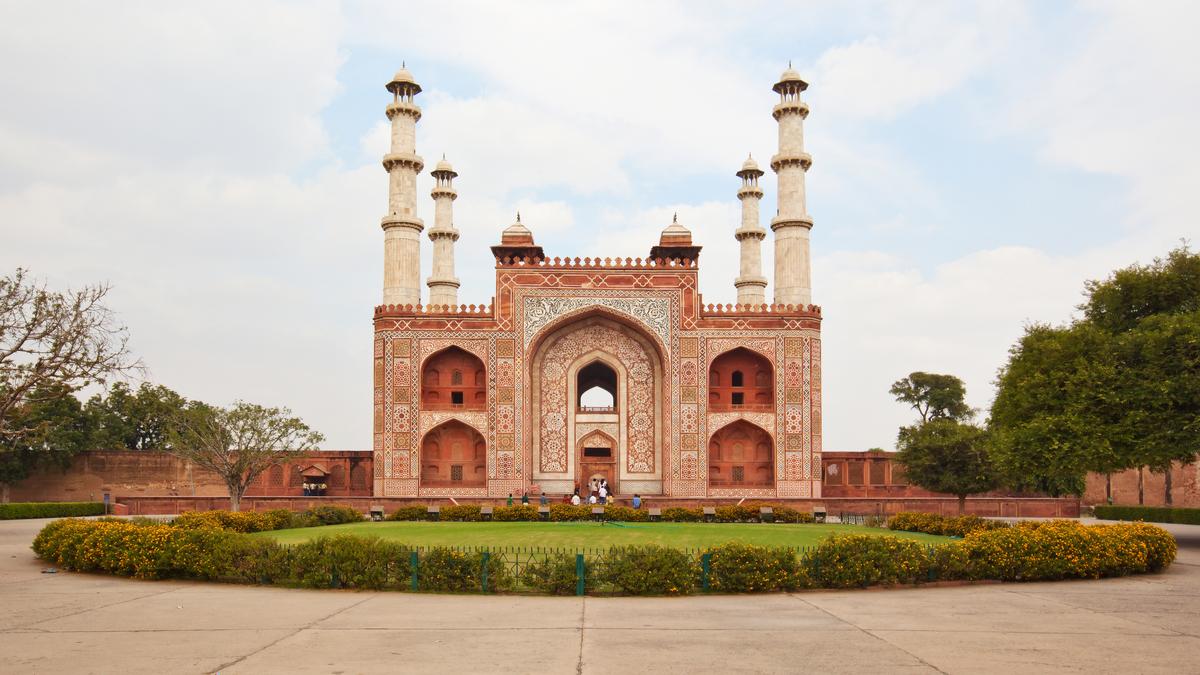
Akbar’s Tomb in Sikandra, Agra | Photo Credit: cinoby
Even as elements in the right-wing have made attempts to nibble at the great Jalaluddin Akbar, historians and authors have taken it upon themselves to project the third Mughal emperor clothed in nothing but facts of history.
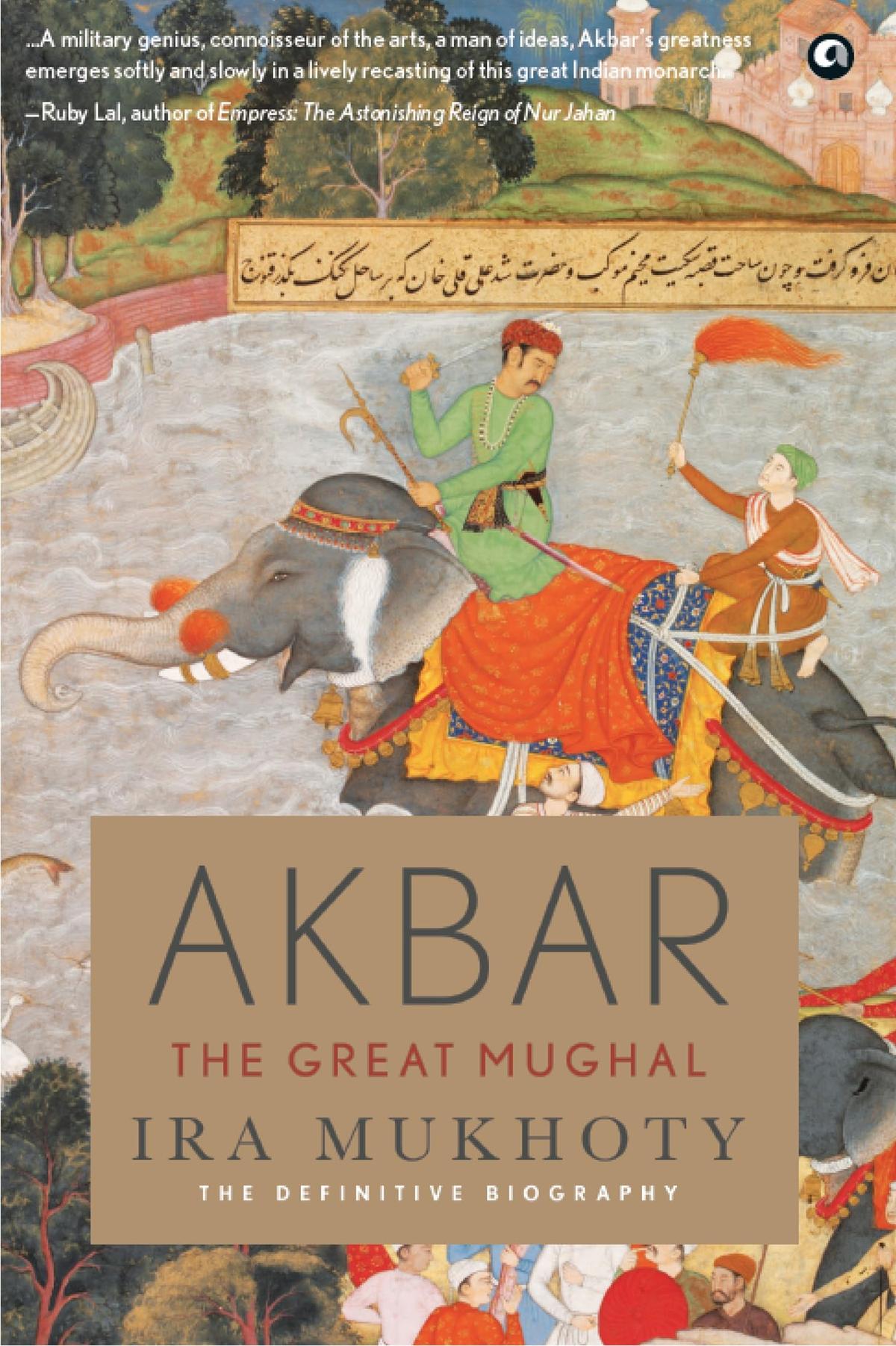
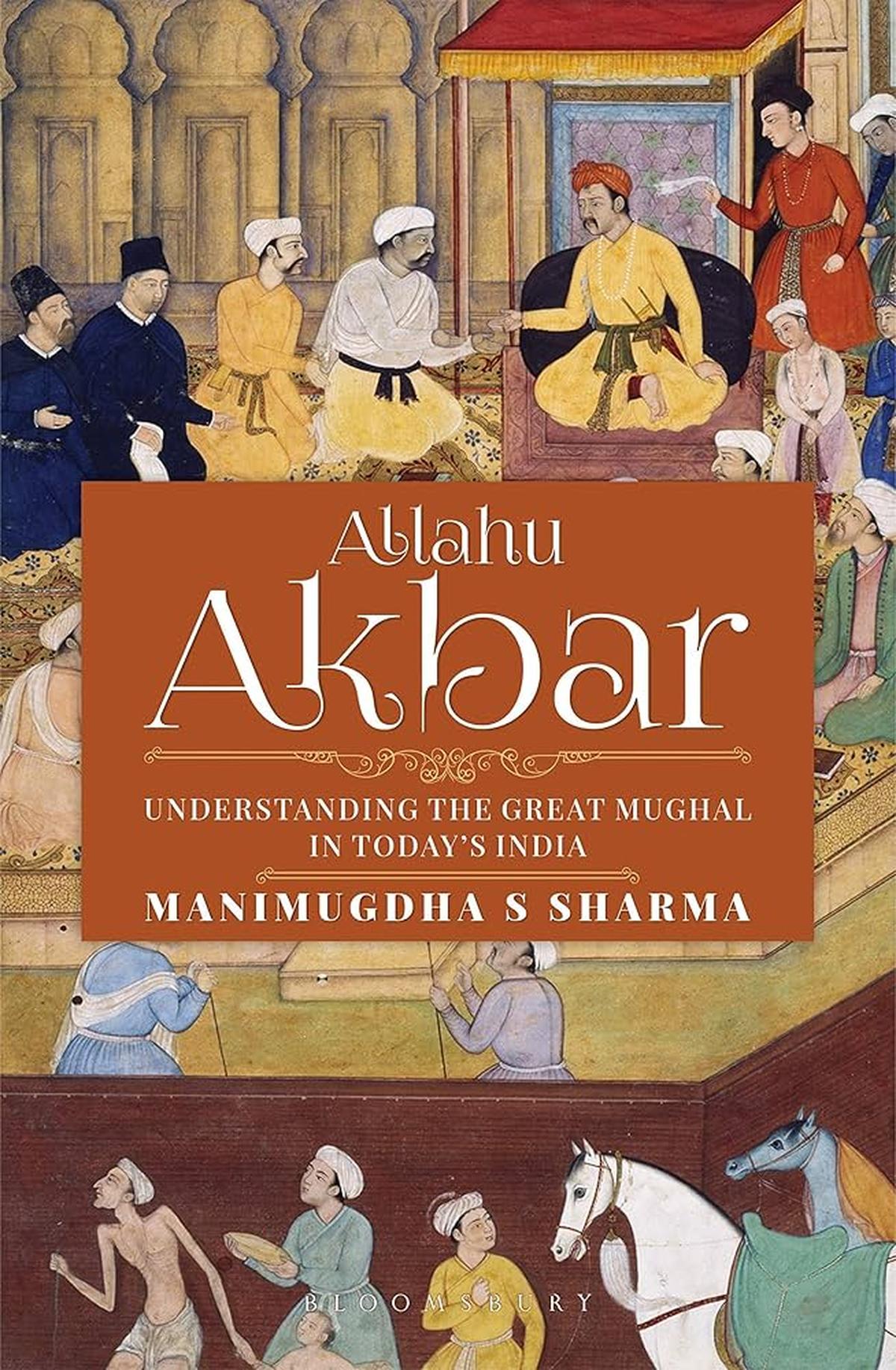
Around the time of COVID-19, Ira Mukhoty came out with her exhaustive biography, Akbar The Great Mughal: The Definitive Biography (Aleph). It came on the heels of Manimugdha S. Sharma’s Allahu Akbar: Understanding the Great Mughal in Today’s India (Bloomsbury) where the author, as the title suggests, made an attempt to see the Mughal monarch in the light of modern-day developments.
The books show why Akbar is considered an Indian icon and a king with compassion and empathy. Instead of spending his childhood as a royal prince, practising calligraphy and honing his skills with the sword, Akbar lived those years, as Mukhoty writes, “in the company of his beloved animals and their keepers…He raced pigeons, ran alongside camels and dogs, and hunted cheetahs, lions, tiger, and deer. And Akbar tested his physical strength and courage against wild elephants, learning to ride and to tame them.”
Akbar had grown up practically illiterate but would eventually be “known for his reverence for learning, penmanship, books…and would patronise some of the most extraordinary works of writing, translation and illustration ever undertaken in the country,” Mukhoty points out.
This quest for knowing the unknown led Akbar to build Ibadat Khana, an assembly of scholars of different religions. Akbar’s congregation of men of spiritual accomplishment was the work of a truly liberal mind. At a time when the Safavids were persecuting non-Shias in Iran and Europe had no space for non-Christians, Akbar invited them all. He abolished the religious tax, jiziya, for non-Muslims and did away with the pilgrimage tax on Hindus and was known to prevent Sati. As Sharma quotes Abul Fazl in Allahu Akbar, “The Shahenshah in his wisdom and tolerance remitted all these taxes, which amounted to crores. He looked upon such grasping of property as blameable and issued orders forbidding the levy thereof.”
In simpler words, it meant, as Sharma writes, “The state wouldn’t come in between an individual and his faith.”
Beyond religion
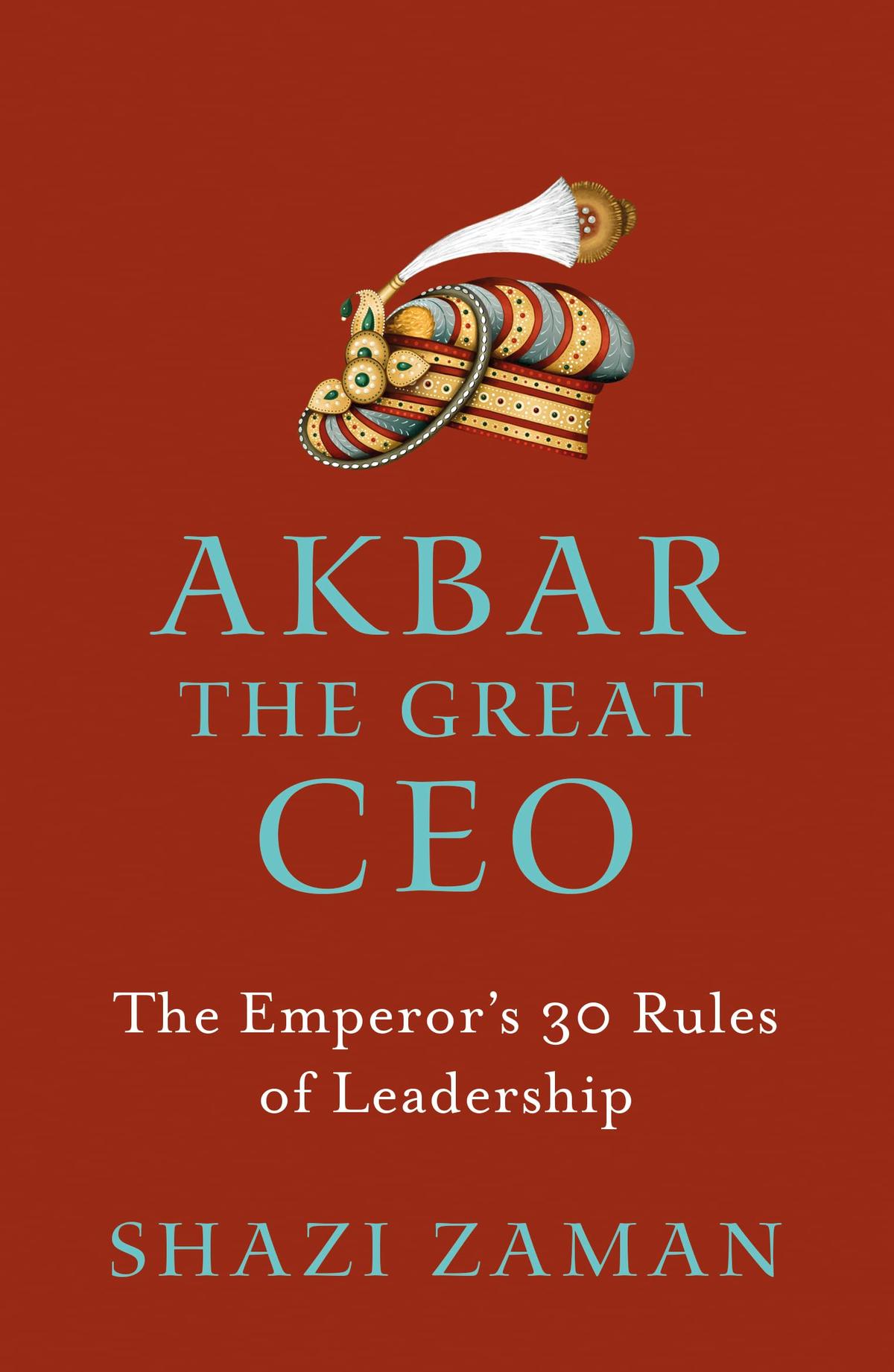
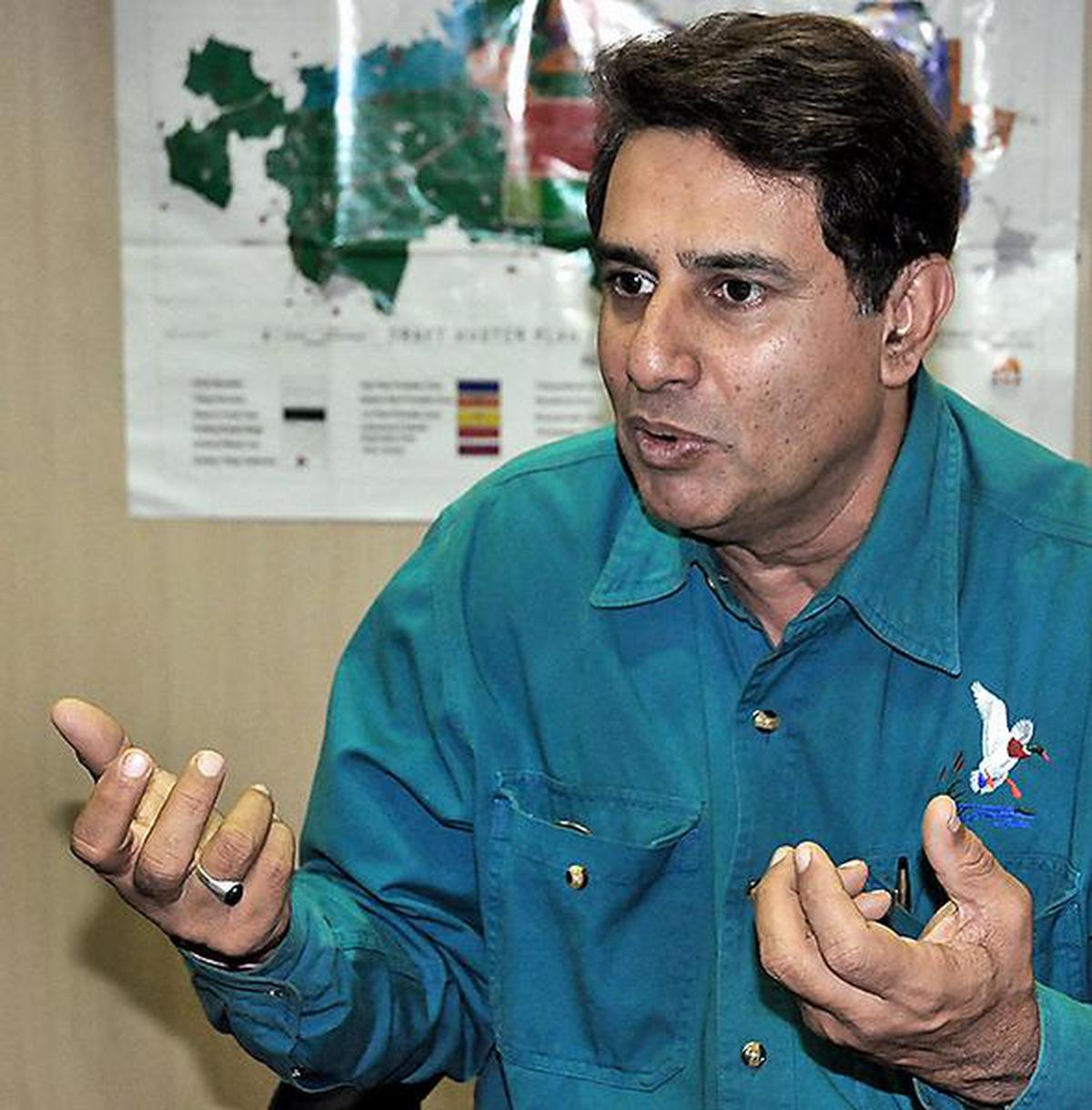
Yet Akbar’s relevance goes beyond the sphere of religion as noted journalist and author Shazi Zaman discusses in his latest, Akbar The Great CEO: The Emperor’s 30 Rules of Leadership. Published by Speaking Tiger, the book has a contemporary, and non-historic feel to it. In its innovative approach lies its appeal. Zaman presents Akbar as a practitioner of some dictates which would do a management guru proud. Interestingly, the book opens with the words of a Jesuit priest stationed at Akbar’s court. The priest wrote in awe, “He was a prince beloved of all, firm with the great, kind to those of low estate, and just to all men, high or low, neighbour or stranger, Christian, Saracen or Gentile; so that every man believed that the King was on his side.” The priest’s words were borne by the fact that Akbar, as Zaman writes, “perfected the art of ruling with a light touch even though he had the means to be brutal.”
The surprise factor
So what were the 30 rules of Akbar? Though he ruled in an age when the Emperor was often larger than life, Akbar believed in subtlety. Importantly, as his experience with the Afghan king Daud Khan Karrani proved, Akbar was not just fast in his thinking, he was unpredictable too. When he would be least expected to show up in a battle, he would take the enemy by surprise, vanquish his forces, and bring him to his knees. “When the Rubicon was to be crossed was a call that he [Akbar] took in a manner so unpredictable that his opponents could never gain an advantage by guessing it,” writes Zaman. “The Emperor’s audacity was well documented visually as well… In one painting, he is seen holding a cheetah by its ear, and in another painting, he is seen mounted on a mast elephant and chasing another across a shaky bridge built on boats.”
Zaman mentions another incident which underscores Akbar’s acuity. When a slave attacked him, Akbar knew who was behind it but chose to remain quiet.
As Zaman writes, “Even the truth has to await its moment.” Does it remind you of office boardroom meetings? Maybe. But remember this was the strategy of the Mughal emperor who was merely 21 at the time of the attack. He knew the truth, but also knew how to use it to his advantage later in life.
Little wonder then that one of Akbar’s favourite books which he also recommended to his officers was Akhlaq-i-Nasiri, a 13th century text on etiquette and way of life, which said, “The king should keep his secrets concealed, so that he can change his mind without sounding contradictory…The need to keep secrets has to be combined with the need to consult intelligent people.” Akbar did it all.
Be it his relationship with Maham Angaand Bairam Khan, or later the Rajputs, Akbar was always smart and wise.
Zaman’s book progresses like an equation in a science book as he goes on to reveal many facets of Akbar’s personality.
Cultivated image
One such aspect was the way he looked, and the way he presented himself. “Akbar’s image was cultivated, recorded and disseminated with a lot of thought. There was a message in how he dressed and looked and what he chose to be doing in the picture. Each portrait portrays a facet of his personality. It never was a picture for the sake of a picture,” writes Zaman.
Written with the brush of an artist, the book is a must-read for anyone looking for life lessons and critical values, particularly in the boardroom. The ‘illiterate’ emperor was indeed a wise man, who never “went to extremes” in any direction.
source: http://www.thehindu.com / The Hindu / Home> Books / by Zia Us Salam / December 25th, 2025
Nawab Shafath Ali Khan trains guns to save endangered species
Nawab Shafath Ali Khan Photo: K. Ramesh Babu
No arrogance, no laid back attitude or flaunting his privileged birth. This new age nawab is a quick draw. He can handle physical and mental strain; evidenced by the fact that he can sit motionless for hours at a stretch atop a 20 ft high machan in thick jungle with danger lurking close by.
Nawab Shafath Ali Khan, India’s celebrated hunter refuses to conform to the typical nawabi lifestyle. He doesn’t live in the lap of luxury, instead he loves to wallow in the lap of nature. He displays an unusual obsession for wildlife, conservation and guns.
At his villa in Hyderabad, stuffed trunks, elephant leg footstools and a bison leg pen-stand greet you. Then you are suddenly jolted when a trumpet rings from his mobile. His daily fare at Nilgiri Hills, Masinagudi village to be precise, where he usually stays, include a sighting of spotted deer, sambar, the piercing call of lapwings, chatter of macaques and the occasional roar of a tiger on the prowl. Sure, he is at ease with the sounds, sights and life in the jungles of south India where he has spent most of his 58 years.
Hunting runs into his genes. His grandfather, Nawab Sultan Ali Khan Bahadur, was an honorary elephant hunter for British India while his father, Nawab Arshad Ali Khan, was a target shooter, doyen of horse racing and secretary of Bangalore Turf Club. “I have inherited the love of wildlife and knowledge of flora and fauna from my ancestors,” says Shafath Ali.
At an age when most children love to play with toys, he played with weapons. Those days the nobility was exempted from the Arms Act, and there were 50 odd weapons at his house. No wonder he got a trophy for rifle shooting from the Governor of Madras in 1962 when he was just five years. At 10 he shot a spotted deer in Masinagudi. Since then he has been active in competitive rifle shooting. “Those days game licences were given and hunting blocks allotted. But there was strict code which hunters had to follow,” says Shafath Ali, fresh from the successful tranquillising of a man-eater tigress in Brahmapuri division of Maharashtra.
The only authorised tranquillising expert and culling officer in India, Shafath Ali is always at the beck and call of the forest departments of Bihar, Jharkhand, Madhya Pradesh, Himachal Pradesh, Karnataka and Telangana. If he is not tackling man-eating leopards, rogue elephants, stray tigers and sloth bear, he is training the frontline staff of the forest departments in the use of tranquillising dart gun on stressed tigers and leopards.
The dangerous missions he undertakes are a test of endurance. To work in close proximity of a man eater is perhaps the most dangerous sport. But for the last four decades it has been a way of life for Shafath Ali. “Tears of gratitude that I see in the eyes of poor farmers and forest dwellers give me energy and courage,” he says.
But he couldn’t have handled these death-defying feats without the support of his family. His wife, Begum Shaheen, stands by him with patience and understanding while son, Asghar Ali Khan, is ready to step into his shoes. The duo keep the fire burning at Safari Land Resorts, the family’s chain of restaurants at Ooty even as Shafath Ali is busy answering the call of the wild.
The sharp shooter often finds wildlife activists training guns at him for his trigger-happy ways. “Culling is a tool of conservation,” he explains. The Wildlife Tranqui Force set up by Hitesh Malhotra, head of Forest Force, Andhra Pradesh, of which he is a secretary, is intended to improve wildlife management through tranquillising and safe rescue of endangered animals.
Scientific management of wildlife population, he says, calls for evolving a strategy to deal with excessive wildlife. This is the only way to check the escalating man-animal conflict. It’s not whether animals will survive, it’s whether man has the will to save them. Save it to cherish or leave it to perish.
source: http://www.thehindu.com / The Hindu / Home> News> Cities> Hyderabad> Interview / by J S Ifthekhar / July 27th, 2017
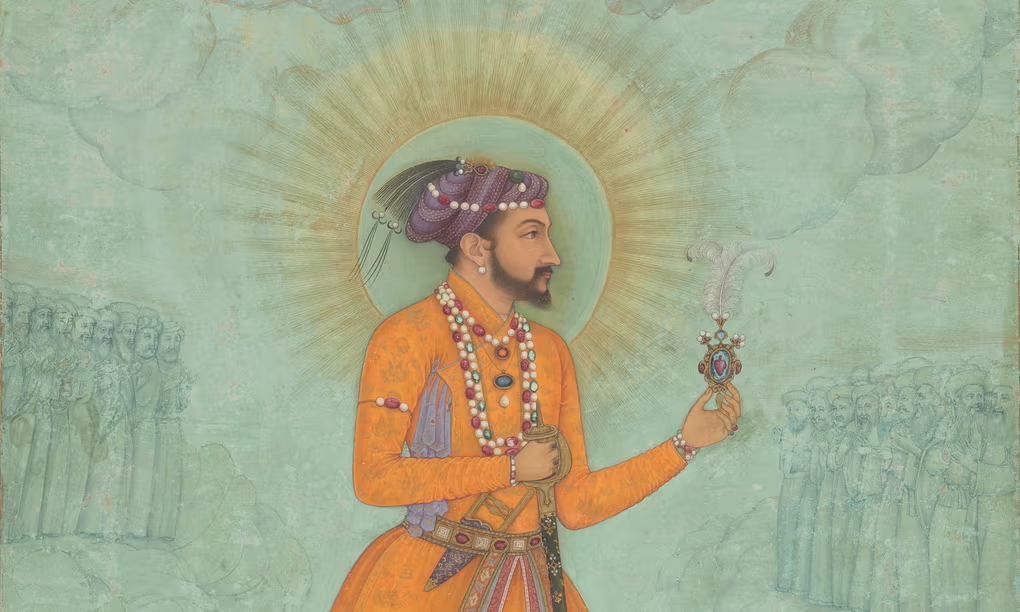
Shah Jahan, the fifth Mughal emperor, who built the Taj Mahal to commemorate his favourite wife. Photograph: The Trustees of the Chester Beatty Library, Dublin
V&A, London Romance, bloodshed and religious curiosity is distilled in these lovely artefacts from the mighty military reign with a love of beauty and culture
This exhibition wafts you to the paradise that Shah Jahan, fifth of the Muslim emperors of much of modern India and Pakistan, wanted to create on Earth. A floor-covering decorated with red poppies sets the scene for this idyll of calmness. A rippled stone panel with myriad water spouts had me dreaming of fruit trees and pavilions while I was cooled by a stone jali screen that once filtered air through one of his buildings. These lovely objects help to fill in for his masterpiece, which for obvious reasons can’t be here: the Taj Mahal.
It is shown on a big screen above the portable delights, twinkling white in the hazy Agra sky. Shah Jahan famously built it as a mausoleum for his favourite wife, Mumtaz Mahal, who died in childbirth in 1631; his tomb is there beside hers. It may be familiar but this piece of architectural heaven captivatingly distils the extraordinary civilisation that a warlike dynasty from Central Asia bequeathed to the world.
The original founder of Mughal power led his armies from Kabul into northern India. When this first empire collapsed it was resurrected by Akbar, first of the exhibition’s “great” Mughal rulers, who combined military might with a love of culture and beauty that his successors would share.
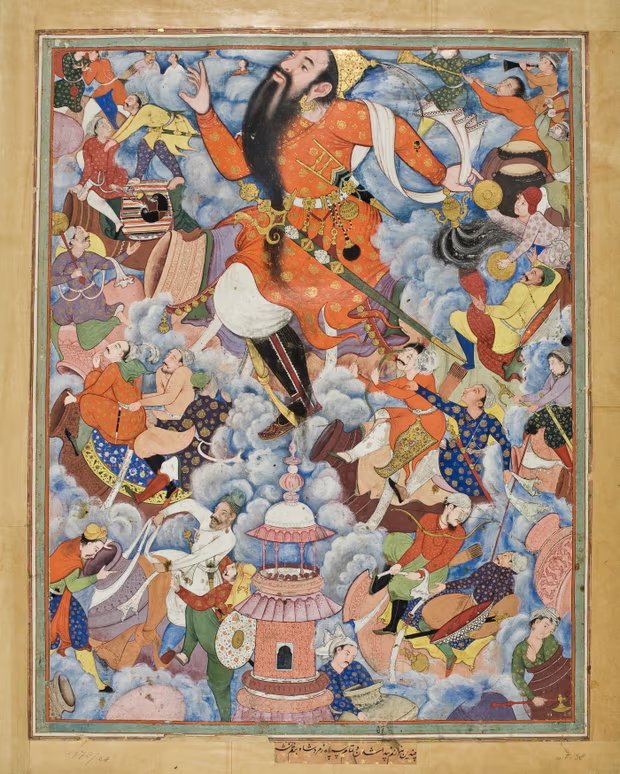
The giant Zumurrud Shah flees with his army, from the Hamzanama, circa 1562-1577. Photograph: MAK/Georg Mayer
Akbar was illiterate but that didn’t stop him employing Hindu and Muslim artists to create a library of illuminated manuscripts. He had readers to tell him what the words said; anyway you can follow the epics he favoured from the ravishing illustrations. In a scene from one of his favourite story cycles, the Hamzanama, a giant with a long beard and bright red coat is chased away through the clouds by Hamza’s army.
The court painting style started by Akbar combines closely observed reality with transporting fantasy. A princess of Kabul lowers her hair for a lover to climb up against a brilliantly realistic garden where ducks swim in a rectangular pool, while above rises a dreamlike mountain landscape and a palace floating in the sky.
In the reign of Akbar’s successor, Jahangir, who came to the throne a couple of years after James I was crowned in England, a natural historical and scientific curiosity sharpens the paintings. In about 1612, a North American turkey cock reached the court and the renowned artist Mansur painted it. The bird – with its orange head, long drooping beak and fan tail – seems to pose as patiently for its portrait as Jahangir himself does in a painting of him studying a globe.
The Great Mughals were interested not just in globes but the globe. They embraced religious complexity and did not expect the Hindu population to convert to Islam. In fact, these curious rulers were attracted to Hindu mythology and mystics. In a painting entitled A Muslim Pilgrim Learns a Lesson in Piety from a Brahman, the pilgrim walks through a rolling north Indian landscape where he encounters a Hindu mystic lying in the road in true spiritual humility. The Mughals were also attracted to the mystic Islamic Sufi movement. That is represented here by a Sufi dervish’s drinking horn and Sufi-inscribed tiles from a now-vanished mosque in Lahore.
Their art absorbed influences from Persia to Renaissance Europe. Portuguese merchants are depicted visiting the Mughal court and, more mysteriously, speaking with angels as the court artists try to make sense of their strange Christian religion.
The exchange went both ways. A Mughal round shield, covered in lustrous mother of pearl patterns and pictures, has been lent by the Bargello Museum in Florence. This dazzling luxury object entered the collection of the Medici family in the 1590s.
This shield never saw battle, plainly, but the Mughals didn’t create their gorgeous world without bloodshed. Many weapons here are opulent and lethal: curved daggers with jewel-encrusted hilts and scabbards, “punch daggers” with floral decoration.
Art itself could be a fantasy of killing. There’s a portrait of Jahangir standing on a globe, shooting an arrow at close range at the severed head of his enemy Malik Ambar. This never happened, but the painting may have eased the emperor’s desire for revenge against this formerly enslaved Ethiopian who rose to be regent of a sultanate and a thorn in Jahangir’s flesh.
When the battles are won and the day’s hunting is over, you drink wine from a jade cup poured from a slender-necked ewer and walk in the gardens to be soothed by the pitter patter of fountains. Where is paradise? A Mughal court poet offered an answer you might agree with by the end of this show: “It is here, it is here, it is here.”
His fort at Kurnool was turned into an ordnance factory
Ghulam Rasool Khan, the Nawab of Kurnool in Andhra Pradesh, who created terror among the officials of the East India Company, came to power in 1823.
Since his childhood, Ghulam Rasool Khan never cared foreign rulers. After coming into power, he took every care to protect his state from the British. He was sure that he had to fight against the British, and was prepared for the same. He befriended Gohar Ali Khan alias Mubariz-ud-Doula, a prince of Nizam state. He turned his fort at Kurnool into an ordnance factory.
The jealous cousins of Nawab Ghulam Rasool, who wished to capture power, colluded with the English and hatched conspiracies against him. They informed General Fraser, who was the British Resident, about the preparedness of Ghulam Rasool for war on 23 August 1839.
Alarmed at this, the East India Company appointed Edward Armstrong to probe into the matter and report it immediately. Edward wrote a letter to General Fraser stating that ‘the armoury of the Nawab of Kurnool is enormous. His preparedness for war is hard to describe. He turned the gardens and the royal palaces into ordnance factories.’ This information sent shivers down the spine of General Fraser, who sent the East India Company forces immediately under the command of Colonel A .B. Dyce to capture the fort of Kurnool and arrest Nawab Ghulam Rasool Khan.
East India Company troops attacked and rounded the Kurnool fort on 12 October, 1839. After six days of fierce fighting, the enemy was able to detain Ghulam Rasool Khan, on 18 October, 1839 at Joharapuram, a village near Kurnool.
Later on, they took him to Tiruchinapalli and imprisoned Rasool Khan in Tiruchinapalli Jail. The British rulers wished to eliminate the Nawab of Kurnool. So they bribed his personal servant into serving poisoned food to Nawab, due to which Nawab Ghulam Rasool Khan died on 12 July, 1840.
The Company charged the servant of murder and sentenced him to death. The British rulers tried their level best to hide this conspiracy, but history revealed the fact in course of time.
Ghulam Rasool Khan is still remembered by the people of Rayalaseema region of Andhra pradesh, where they still eulogize him singing the ballad titled ‘Kandanavolu Nawabu Katha’ (Story of Kurnool Nawab).
Syed Naseer Ahamad is a Telugu writer and journalist who has written several books on the role of Muslims in the struggle for the freedom of India. Many of his books have been translated into other languages. He can be contacted at naseerahamedsyed@gmail.com and cellphone number 91-9440241727.
source: http://www.siasat.com / The Siasat Daily / Home> Opinion / by Sued Naseer Ahamed / September 04th, 2022
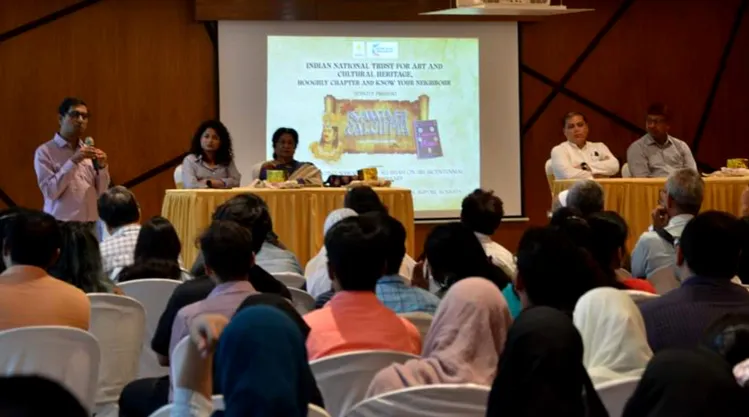
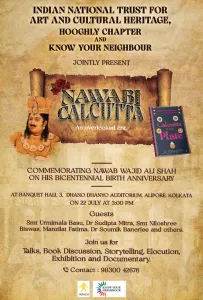
Nawabi Calcutta: An overlooked era, organised by Know Your Neighbour and INTACH, highlights how Thumri, Kathak and Urdu blossomed under King of Oudh’s patronage.
Speaker Sabir Ahamed during the bicentenary celebration of Nawab Wajid Ali Shah | Picture: Know Your Neighbour
Kolkata:
We all remember the story of Wajid Ali Shah, the ruler of Oudh, being exiled to Kolkata by the East India Company for being a poor administrator. But how many of us know that the ruler had travelled to the colonial Kolkata with around 6000 attendants in 1856, in hope of travelling to London to place his case before Queen Victoria concerning the unfair annexation of his kingdom? How many of us are aware of the fact that it was only in 1857, when the first revolt for independence broke out that the recuperating Shah was kept under house arrest?
But the most intriguing aspect about the Shah’s stay in Kolkata was his ability to not lose hope, despite being robbed of his throne and his journey of recreating mini-Lucknow (Metiabruz) along the bank of river Hooghly. And little by little bringing the Lucknowi style to Bengal.
How the Shah took on to his new life, patronised art and rebuilt a mini-empire of his miles away the banks of Gomti was what Nawabi Calcutta: An overlooked era attempted to recall.
“There is more to Wajid Ali Shah and his ‘Chota Lucknow’. We shouldn’t just remember him for bringing biryani to Kolkata and giving it a spin by introducing potato to it,” said Sabir Ahamed, of Know Your Neighbour (KYN), during his inaugural speech.
The remains of structures built by Wajid Ali Shah, have often been overlooked by Kolkatans. Rare images of old Metiabruz and structures built by the last king of Oudh were screened during the programme. Ninety-nine per cent of these structures built by the Wajid Ali Shah, no longer exist, said Shaikh Sohail, who conducts heritage tours in Metiabruz. He gave a call to all to come and visit the remains and know the history of the Shah’s ‘Chota Lucknow.”
The invitation card of the event
Remembering the last king of Oudh, Sudipta Mitra, author of Pearl by the River ( a book that documents the life of Wajid Ali Shah) chose to highlight his love for rare animals. A connoisseur of wild animals, the Shah even created a mini zoo, which home some rare animals including an open snake house much ahead of Kolkata having a zoo of its own.
“His love to collect unique or rare wild animals for his personal zoo was so famed that zoologist Edward Blyth once wrote to his friend Charles Darwin about the King of Oudh and his love for animals. He wrote that till the Shah is alive, animal trade would flourish in India,” said Mitra.
He then went on to add, “Once Oudh was annexed, about 18 tigers from the Shah’s personal collection were brought by Blyth for Rs 20 each. These tigers were put on display for the public at the present age Teratti Bazar. And later when the Shah made Metiabruz his home, he brought three tigers from his pre-owned collection for his new personal zoo at a much higher price.”
In a bid to feel at home, the pining Shah, even established the famed Sibtainabad Imbara, where he now rests, much like his father Amjad Ali Shah, who rests at Hazratganj’s Sibtainabad Imbara.
Debunking the poor administrator theory was Dr Soumik Bhattacharjee. While addressing the audience, Dr Bhattacharjee said, “The East India Company (EIC) created a narrative to justify their annexation of Oudh. The Shah was a lover of art, and that’s not a crime. He promoted thumri, kathak and a lot of artists during his reign. He also introduced a number of administrative reforms, which were good for Oudh. But the ECI brought in laws that made it difficult for the king to do his work in a judicious way. The king, failing to understand the implications of the new laws, fell prey to ECI’s trap.”
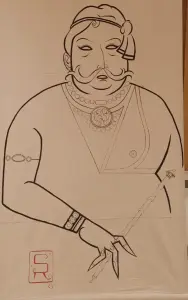
A portrait of Nawab Wajid Ali Shah at the event venue| Picture: Soumyadeep Roy
“While Prem Chand was almost reprimanding in his play Shatranj Ke Khiladi, Satyajit Ray was more understanding towards the king of Oudh. The king’s decision to not revolt against the British and approach Queen Victoria regarding the unfair annexation should be seen as his fondness for non-violence and not weakness,” he summed up.
Taking up from where Dr Bhattacharjee left, was foodpreneur and great great granddaughter of the Shah, Manzilat Fatima. “It’s sad that not many know about the history and reality of Wajid Ali Shah. My father, Dr Kaukab Quder Meerza, wrote a book on him in Urdu, which has been translated into English by sister Talat Fatima.” She added that they are also working on a project to highlight the revolutionary work of Begum Hazrat Mahal.
On being asked if the Indian historians have been a little harsh on the king of Oudh, she said, “It’s sad that the historians despite being Indians chose to highlight the narrative set by the British and East India Company. But it’s heartening to see so many remember Wajid Ali Shah with great fondness. I am humbled by the number of events that are being organised to mark his bicentenary. As his descendants, we will try doing our bit to keep his legacy alive.
While, Mohammad Reyaz, Assistant Professor, Aliah University, highlighted the central focus of the Nawab’s migration – rebuilding a new city, which was demolished after his death and the legacy that he created in the field of art. “The Nawab of Oudh was beyond bringing biryani to Kolkata,” he said.
The event organised by INTACH (Indian National Trust for Art and Cultural Heritage) and Know Your Neighbour, also hosted an art exhibition – Dastan-e-Akhtar by visual artist Soumyadeep Roy, who chose to pay tribute to the king through his paintings.
Also present at the event was Sarod maestro Irfan Md Khan, whose ancestor had travelled to Kolkata with Wajid Ali Shah. He summed up by saying, “The Shah was a patron of art. He patronised and promoted kathak, thumri and sarod to this city.”
source: http://www.enewsroom.in / eNewsRoom India / Home> Bengal> Inclusive India / by Shabina Akhtar / July 26th, 2023