Tag Archives: Muslim Authors of India

Zeenath Sajida, a forgotten Deccan icon, revisited through careful translation

Hyderabad, TELANGANA :

What sets Zeenath Sajida’s creative repertoire apart is its reach, stretching well beyond the domestic concerns and romantic themes one might stereotypically associate with a female writer in mid-twentieth-century Hyderabad.
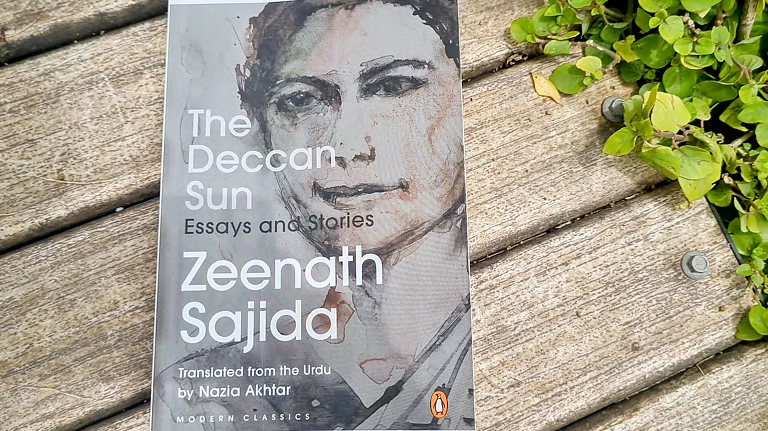
Image of Zeenath Sajida’s book, translated by Nazia Akhtar

Can humorous essays and fictional stories by a single writer paint a holistically authentic portrait of the Deccan? Particularly when filtered through an urban, middle-class, academic lens?

And what happens when that prose is resurrected for an English-reading audience? Translation demands fluency across traditions, sensitivity to historical currents, and an intuitive grasp of possibilities.

The Deccan Sun, a selection of Zeenath Sajida’s Urdu writings, represents exactly this kind of sustained care. Translated and curated by Professor Nazia Akhtar, this collection brings together nine satirical essays and five short stories that offer bundles of pleasure and provocation. 


Hyderabad’s Zeenath apa

A prolific Urdu Professor at Osmania University and a literary icon shaped by the leftist wave that turned many youngsters of princely Hyderabad toward rebellion, the mere mention of Zeenath Sajida still evokes a smile among a fading generation of the city’s progressives.

She produced works of considerable intellectual ambition, including A History of Telugu Literature, written in 1960.

But what sets her creative repertoire apart is its reach, stretching well beyond the domestic concerns and romantic themes one might stereotypically associate with a female writer in mid-twentieth-century Hyderabad. Her questions span the practical and the metaphysical: from work-life balance to memory and ageing. This breadth, alongside her engagement with gender, establishes Sajida as a crystallising force within Deccan literature.

Sadly, Sajida’s writings have suffered critical neglect.

Until now, only a single essay of hers had found life in English—thanks to Nazia Akhtar’s earlier offering, Bibi’s Room. The book also contained tantalising glimpses of Sajida’s inimitable biographical sketch of Makhdoom Mohiuddin, the celebrated poet she exalts and irreverently mocks, even branding him a lapoot (scoundrel). Originally delivered at a gathering in Hyderabad’s Urdu Hall, the event was jokingly dubbed Jashn-e-Makhdoom: part tribute, part roast of a comrade. The sketch hinted at the easy cosmopolitanism that once threaded through the city’s cultural circles.

But those were just glimpses.

The Deccan Sun finally delivers, showcasing Sajida’s full creative range. More importantly, the collection corrects reductive narratives that have long confined Hyderabadi women’s stories to tales of exploitation. It provides crucial cultural clues and gives interior lives the breathing space that more documentary modes often flatten or omit altogether.


Ox at an oil press

Sajida’s central tension seems to revolve around competing hungers: the quiet solitude for reading and writing versus the public acknowledgement of her labour. This struggle animates the essay I Got Myself a Job, where she likens the drudgery of a stagnant workplace to “an ox circling in an oilpress”, grimly awaiting holidays that arrive only upon the death of eminent people. This rage at invisibility, whether in households or intellectual circles, surfaces through observations about poets jealous of Makhdoom’s fame. It’s a pain that resonates universally, yet cuts especially deep for women navigating careers within constrictive social structures.

The satirical method at play follows a deceptively simple pattern. First, open with bland, widely held assertions and then excavate them through unflinching personal experience until readers question her true position. Is she earnest or sarcastic? In If I Were a Man, the writer begins by wondering how delightful male privilege might be. Then she chips away at heroic masculinity, and in the process, exposes revolutionaries for what they truly are. 

And that is aimless poseurs marching under the banner of self-respect. The game becomes clear: there’s zero intention of being a man. Her worldview remains stubbornly intact and cheerful as ever.

No one is spared in the collection’s funniest piece, From Storeroom to Museum, be it a famous king, his moustache, historians who invent their own history, or doctors “in whose name graveyards thrive”. 

Even the qazis and the rigid interpretations of Islamic law they uphold come under fire. Writing as a Muslim woman in post-Razakar Hyderabad, when her community faced suspicion and strain, turning satire inward and choosing stark honesty over protective silence was no small risk.

Naturally, such wit and honesty carry complications well beyond fatwas.

In Building a House,  Sajida wryly catches herself making classist remarks—about servants using her soap when she’s away or taking advantage of her generosity. She knows their innocence is something she ought to celebrate. Still, resisting those barbs proves difficult because their exploitation stings!

Though the translator suggests a self-deprecating tone, the humour feels more defiant than apologetic. Comparing stories with essays reveals Sajida’s evolution. The stories, chosen from Jal Tarang (published in 1947 when she was just 24!), infantilise the titular characters’ desires without retribution, while the essays own those same longings with fierce pride. They embrace her job, gender, and sartorial choices, laughing in the face of absurdity.

My Hens embodies this mature confidence with perfect clarity. Against family objections, the narrator acquires chickens and endures subsequent chaos. These birds become emblems of unruly desire, pushing back against blanket resistance. 

She recoils in disgust when some are slaughtered. Nonetheless, the ending is satisfying as she’s already anticipating her next trip to the market. Nothing deters her from wanting. The searing rage and humour intertwine to yield a stance that is utterly assured.


Chasing fireflies

The short stories reveal a younger Sajida, one who is still finding her artistic footing. Where the essays crackle with precision, the stories sometimes drown in ornamental excess, mirroring preoccupations of mid-1900s Urdu readers. The translator’s admission about reducing repetitions confirms the original’s verbosity. Even so, young Sajida possessed remarkable instincts for imagery. In The Stranger, memories become “moments flitting like fireflies on a dark night” before melodrama takes over, chasing those fireflies to a dead end. 

Formally, Bibi stands apart, approaching the analytical brilliance of Chekhov’s The Darling—both protagonists transform recurring domestic episodes. Here, Sajida demonstrates her architectural sense, building tension through careful structural pacing. Each section shifts the emotional register while maintaining the same configuration. What begins as amorous banter gradually sours into genuine bitterness, yet paradoxically, the acts of care deepen. The story rewards multiple readings, revealing omissions and callbacks that initially escape one’s notice. 


Does loneliness lick or feed on us?

Translations inevitably create friction. Most readers prize smooth prose that overlooks the translator’s labour, but Nazia’s occasional bumps through deliberate references (Hatim TaiAlif Laila) gently remind us that we are entering a world rooted in another language.

The friction becomes sharper when comparing languages head-on. Professor Shagufta Shaheen’s lively Urdu reading of the story What Time Is It? shows how even a thoughtful rendering of a dramatic line—“loneliness feeds on them like termites”—dilutes its original menace: “tanhai unhe deemak ki tarah chaat rahi hai”. Though it lands smoothly, feed can’t quite match the threat of that slow, intimate licking (chaat). Likewise, scoundrel misses the mischievous warmth of the Dakhni lapoot. English’s imperfect lens will always create such distortions. Yet receiving anything from the previously inaccessible feels miraculous.

The translator didn’t just convert Urdu into English; she collated specific pieces from Sajida’s larger corpus, provided context, secured publication, and built literary networks across years, believing in its relevance. Such cultural stewardship enables conversations that couldn’t have existed otherwise.

Nazia amplifies the Deccan sun’s raging flame like oil feeding a lamp, letting us moths finally gather around it in ecstatic circles.

Surya Bulusu, a Researcher and Software Engineer at Avanti Fellows, is working on open-source tech for government school systems. He lives in Mumbai, but has spent several years in Hyderabad. His write-ups can be accessed on his blog.

Views expressed are the author’s own.

source: http://www.thenewsminute.com / The News Minute / Home> Telangana / by Surya Bulusu / July 18th, 2025
Dr. Tarana’s book on forgotten Rampur foods released

Rampur, UTTAR PRADESH :

New Delhi :

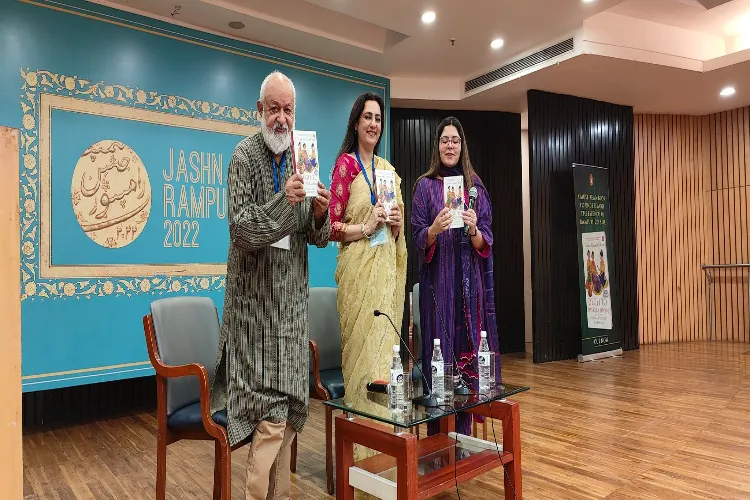
Away from the hustle and bustle of the national capital Delhi, the food lovers gathered in Delhi’s India International Center to discuss the food – delicacies, genres and history – all day. It was for the release of Dr. Tarana Hasan Khan’s book ‘Deg to Dastarkhwan: Stories and Recipes from Rampur.

In this era of pizza, burger, and fast foods, we seems to be forgetting traditions of the Shahi, Mughlai and old delicious food.

Dr. Tarana Hasan Khan is one of the few to write on Dastarkhwan – the Indian cusine. She is also cultural historian.

Dr. Tarana Hasan Khan and her book

Her other book is: The Begum and the Dastan.

Dr. Tarana says It took her three years to cover the forgotten recipes of Rampur for the book. There is a chapter on rice and spices in this book.

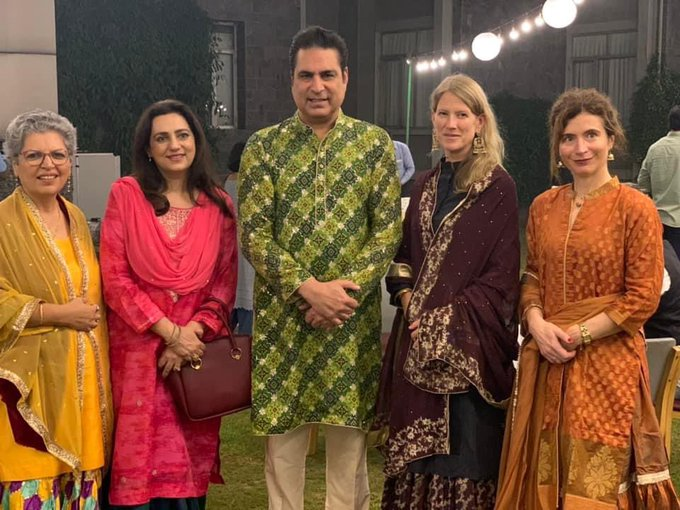
Famous food writer Pushpant Pant also participated in the book launch ceremony. The program started with welcome address by Swati Pal, Principal of Janki Devi Memorial College.

She also discussed the problems faced in writing the book on the ‘forgotten foods of Rampur’ were mentioned. Yusuf Saeed and Naseema Naqvi had a long conversation on this subject. This was followed by a discussion on the history of the foods between Dr. Tarana and Pushpant Pant.

Dr. Tarana specially thanked Pushpesh Pant for attending the program and joining the discussion on delicious food. He has written about Pushpent Pant by posting on Twitter:

This book has been published by Penguin.

source: http://www.awazthevoice.in / Awaz, The Voice / Home / by Aasha Khosa / October 31st, 2022

Eradicating books from our lives will never be possible: Abul Bashar

Murshidabad, WEST BENGAL :

The award-winning Bengali author talks about his books, development of minority communities, Kolkata Book Fair, social media, and more.

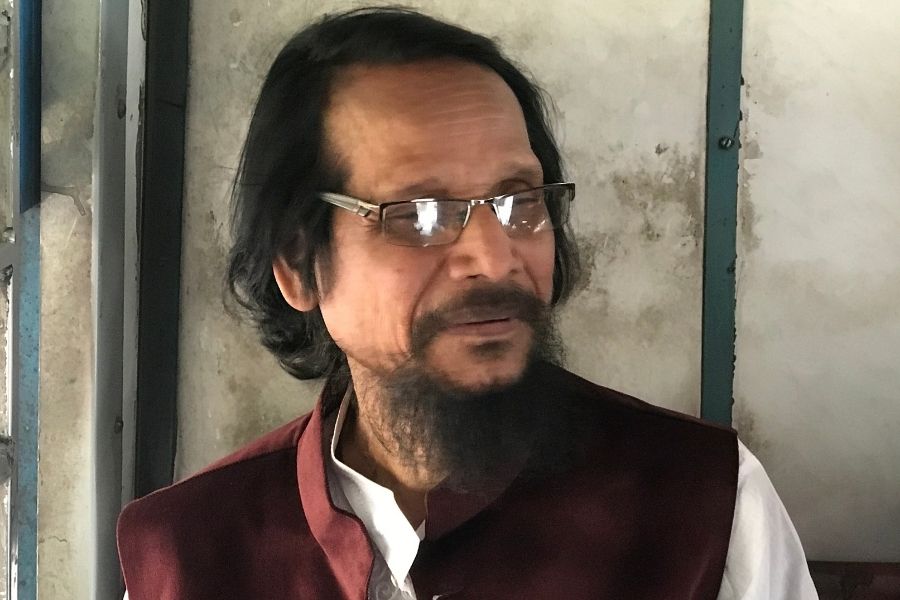
Abul Bashar — the author of ‘Agnibalaka’ and several other popular titles — is one of the prominent voices documenting the lives of minority communities in Bengal / Wikimedia Commons

Born in Murshidabad at a time when the zilla’s literacy rate was 12.9 per cent, it was an uphill battle for Abul Bashar to not just educate himself but also to live his dream of becoming an author.

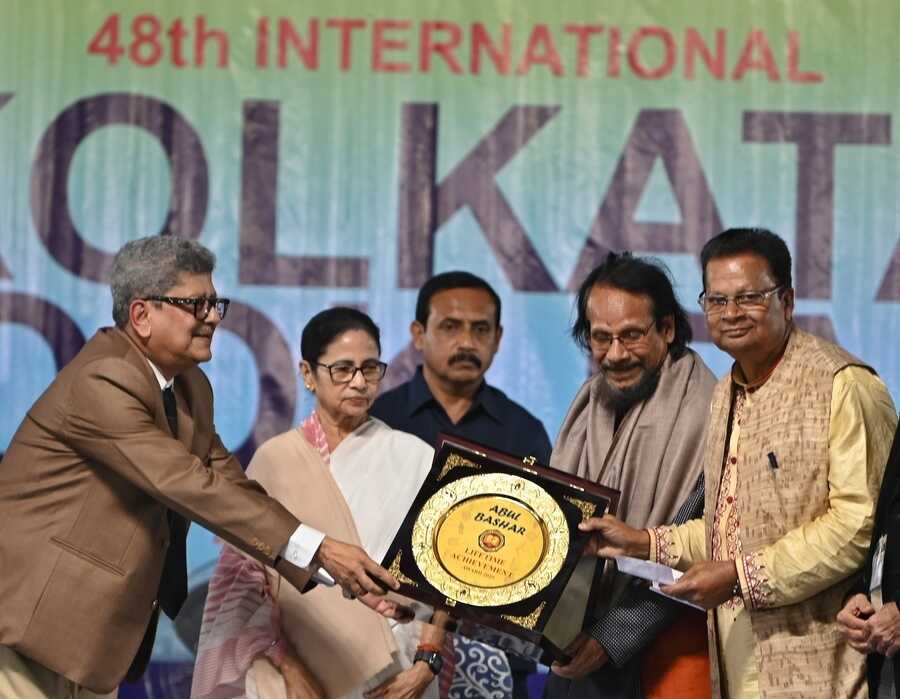
With 40 books to his name, including popular titles such as AgnibalakaMarusvarga, Jol, Mati, Aguner Upakkhayan, and Dharmer Grahon, Bashar has documented the lives and issues of minority communities and socio-religious matters through his works. A recipient of top honours such as the Ananda Puraskar and Banga Bhushan, he was awarded the Guild Lifetime Literary Award in 2025 at the 48th International Kolkata Book Fair.

My Kolkata met Bashar at the boi mela for a conversation, discussing India’s evolution, the status of the Bengali Muslims, his career as an author, and more. Edited excerpts follow.

My Kolkata: India celebrated its 76th Republic Day this year. You were born in 1951. As an author who has been documenting the growth of society in his works, how do you see India’s evolution?

Abul Bashar: One thing that has been catching my attention is that the culture that comprises both Hindus and Muslims is in a state of dialectics and adjustment with the ‘Indian culture’. We have imbibed the virtues of Indian society, but there are a few aspects of Bengali society that do not marry well with the Indian society. This concerns me, because this is not how it was earlier. The incidents around the Babri Masjid and the Ram Mandir have changed the political diaspora of India.

It is now a global situation and not just confined to India. It is prevalent in the subcontinent that religious minorities are under attack. Civilisation is under threat, but this is not how it is supposed to be. The Indian Constitution speaks about equality towards minority communities, their representation in the power structure of the society, and a homogeneity of culture. These were the ideals of Rabindranath Tagore and Mahatma Gandhi. The lack of homogeneity in the culture is worrying me. Of course, the extent varies from place to place, but there are a few incidents that happen that make me feel imperiled.

In this country, the constitutional rights and duties of people from all walks of life are directly and intrinsically involved with the idea of democracy. India is a pluralist country where diverse religious identities and cultures cohabit in an interesting milieu, but this fabric is facing a push back.

You have written extensively on Bengali Muslims. What do you think of their current socio-religious status?

More than the religious identity, the Muslim community continues to be backward in terms of financial independence, and I give more importance to financial independence. One of the primary tenets of India is the growth of any backward community — be it among Hindus, Muslims, or any other community. The Constitution aims towards that.

The financial backwardness of the Muslim community has affected the education of modernism. It is difficult for a financially backward community to become modern. The State, thus, has to fulfill its responsibility towards removing this roadblock so that a symbiosis between community and modernism takes place.

I have not only written about the Muslim community, but also about the Hindu community. My novel, Maruswarga, can be termed — ekjon Bangali lekhoker Ihudi upanyash (a Bengali writer’s Jewish novel). My work is extensively based on various mythologies and the folk culture of Bengal, focusing on the baul-fakirs. There is a unique amalgamation of Buddhism and Islam in the bauls, which was evident through the life of Lalon Shah. My thoughts revolve around these aspects, and I want comprehensive development of the Muslim society through cultural amalgamation.

Through my books, I have addressed the religious superstitions and other roadblocks that can cause hindrance to the development of society.

Abul Bashar was conferred the Guild Lifetime Achievement Award by chief minister of West Bengal, Mamata Banerjee, on January 28 at the inauguration of the 48th International Kolkata Book Fair / My Kolkata

Do you think awards and accolades you have received have made it easier for your voice to reach society?

No, absolutely not. In my initial days as an author, I found that the readerbase of my genre of writing in West Bengal was very constricted because I belonged from a backward society. I have had a readerbase in Bangladesh since the inception of my career. Here [in West Bengal], it has taken time, but a community of people who read my kind of writings have developed. My thought process, and my novels that are based on mythology have found an academic discourse, and a doctoral candidate from Murshidabad, did his PhD on my work at Jadavpur University.

What surprised me was that a member of the society that created barriers for me and refused to accept my words did a doctoral thesis on the mythical treatment in my literature as an academic discourse. Society has evolved, and the environment of the present times is removing roadblocks, making way for an educated middle-income strata that is progressive and free thinking.

From Agnibalaka to Bhor Poati Tara — how do you see your evolution as an author?

It is a journey that I made, I would say. I have been influenced by several thoughts at different points in my life. I was an activist of Leftist politics that was different from today’s times. Leftist politics was known as the politics of sacrifice. Agnibalaka’s protagonists, if you notice, are characters who do not conform to societal norms. They are free thinkers and are characters who have imbibed Marxism in order to elevate their lives. They are the voices of dissent against stigmas and stereotypes of society.

Agnibalaka is a political novel in which dialectical materialism among various stratas of the society as well as the dialectics in interpersonal relationships between two political parties is shown. The conflict between the social strata during the 19-month long Emergency period in India, and how Marxism could be brought into praxis — Agnibalaka is an experimentation on that.

However, I do not share the same thoughts today, and by this I mean that it has been removed from my life in some ways. I have not removed it from my life, but the ideology is gradually vanishing on a global scale. It is possible that my experiments or observations are incorrect, but in today’s time, this is how I see it.

When the world starts facing a situation like today in reference to Marxism, existentialism takes its course, and becomes a replacement and anti thesis for Marxism. Everyone is in a state of endangerment, and the very thought that society that was created for its residents, is now in oblivion. Social norms were made for the development of people, but development is not entirely dependent on norms. An excessive emphasis on following social norms has given rise to conflict between man and society. This was the reason behind the two World Wars. This has also given birth to existentialist literature, as well as poets like Jibanananda Das and Michael Madhusudan Dutta.

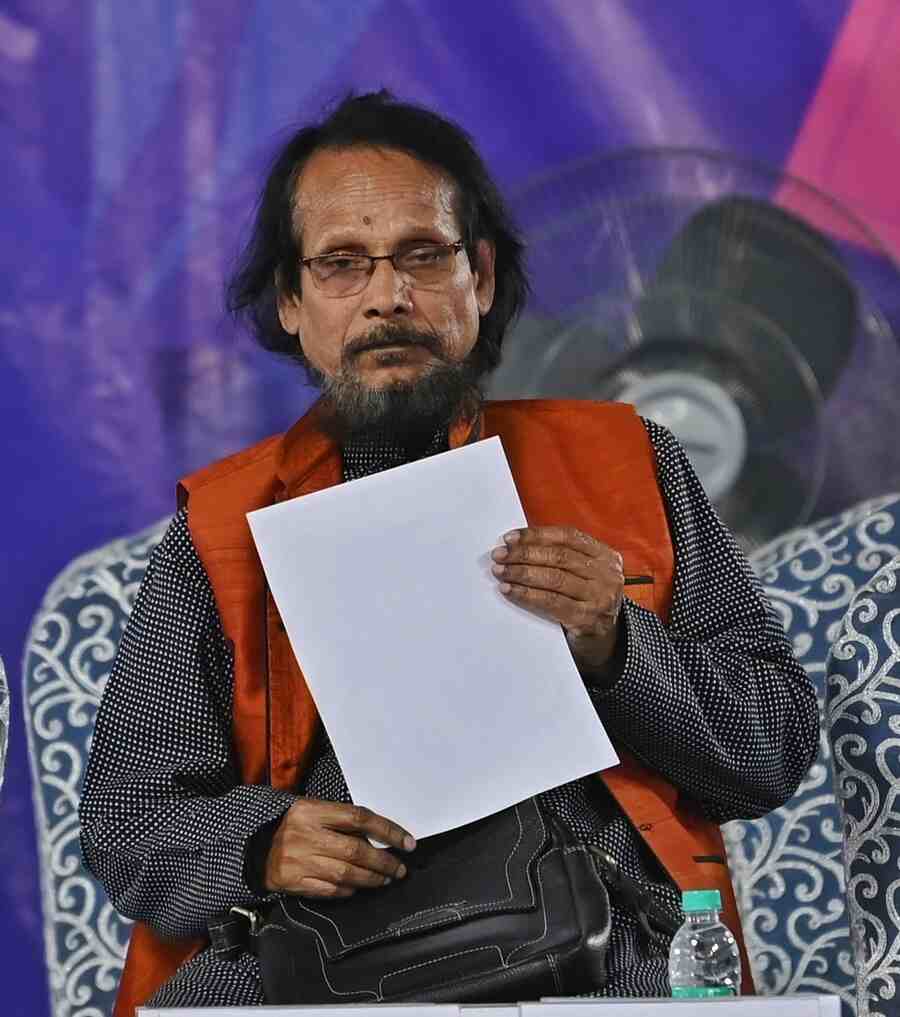
Abul Bashar at the Kolkata Book Fair, 2025 / My Kolkata

The Kolkata International Book Fair is one of the largest book fairs in the world. In a day and age when social media has diminished attention spans, how do you see the importance of book fairs?

Social media is not a replacement for books. There is no conflict between gadgets that we use on a regular basis versus books. Gadgets like phones are essential to attain information and gain knowledge, but literature is not just information. When we speak of literature, we usually refer to the written. But what about oral literature, which is a significant part of Bengali literature? The works of Lalon Shah, for instance, are originally songs and are kabya sahitya (poetry). Another example is Rabindrasangeet — a youngster, who is engrossed in his or her phone, is also a listener of Rabindranath Tagore’s music.

There is a trough and crest when it comes to readership, but eradicating books from our lives will never be possible — just like classical music, songs like Kaa Karu Sajni, or verses of Kabir. We have to increase our habit of reading because that will increase our creativity and strengthen our culture as well as inter-personal relationships. There is evolution in the publishing industry with the digitisation of books, which has increased the readerbase. And because of book fairs, there is a boost in the number of bibliophiles.

What is your next work?

I intend to go back to my zilla (Murshidabad) to work on a piece that would complete an unfinished novel.

source: http://www.telegraphindia.com / The Telegraph Online / Home> My Kolkata / by Pooja Mitra / February 02nd, 2025

Author Nuzhat Khan’s latest novel on love and loss is set against the backdrop of Uttarakhand’s forest fire

UTTARAKHAND / NEW DELHI:

Author Nuzhat Khan weaves a story of love and loss against the backdrop of Uttarakhand’s forest fire catastrophe in her latest novel.

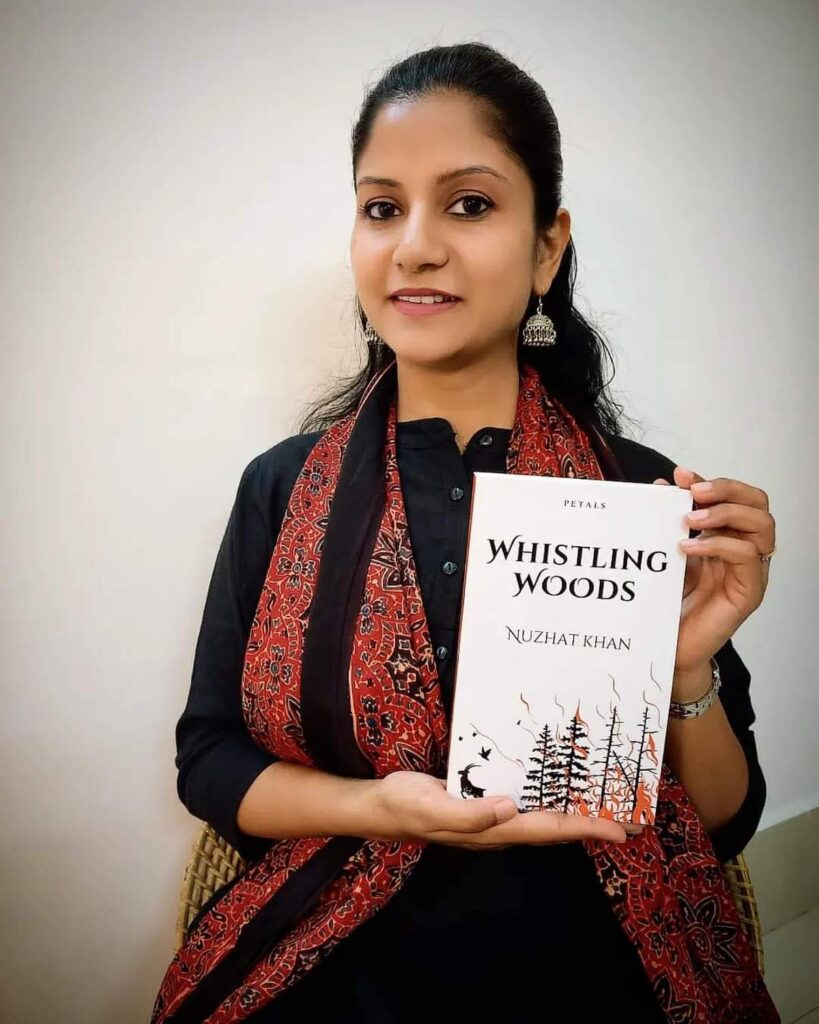
Author Nuzhat Khan | Photo Credit: Special Arrangement

Author Nuzhat Khan is among the growing tribe of writers confronting the world’s most pressing issue — climate emergency and the unfolding weather catastrophe — through a genre of fiction set in natural ecosystems. In her latest novel Whistling Woods (Petals Publishers), she highlights the impact of forest fire on people’s livelihood in Uttarakhand along with the story of two strangers — Akshay and Kaveri — who embark on a journey of self-discovery to the hills.

Nuzhat says the book is her way of doing her bit for Nature and the environment. “Growing up in Almora hill station amidst the snow-capped Himalayan ranges of Uttarakhand, I was blown away by the stunning landscape. This is the case with anyone who belongs to the hills. It pained me to watch forest fires ravage the serene hills.” She decided to act by writing a light-hearted story around the issue to reach out to more people. “I thought presenting plain facts and figures would be drab on topics like, what’s fuelling forest fires that continue to scorch hectares of green cover? I have tried to propose a solution, although it may not be the perfect one,” she says.

Her style of storytelling, both evocative and driven by research, helps readers get a grip of the issue while enjoying the budding romance between the lead characters. “I have attempted to capture a mix of human emotions, complexity of relationships, and the innocence of love. The setting helped me run parallels between urban and rural lives. For people in villages, even access to clean drinking water can be challenging ” explains Nuzhat adding that the book has been in the making for five years which also involved several trips to institutes like Avani Bio-Energy plant in Pithoragarh, the Naula Foundation, an NGO that creates awareness on the problems of dying aquifiers (naulas) in the hills of Uttarakhand.

“My interactions with the locals and forest department officials was an eye-opener. They are constantly working to mitigate the problem. Organisations like the Himalayan Institute For Environment, Ecology & Development have developed fire reporting apps that can alert people on forest fires across various locations.”

She points out that the ashram described in the book that works towards empowering girl children was inspired by the Lakshmi Ashram run by a couple in Uttarakhand. “Some of the characters are not entirely fictional,” she hints.

The book also touches upon excessive tourism in the hills. “Several unplanned constructions in the form of resorts have come up usurping the forest cover and triggering landslides. The region is also prone to earthquakes.” She wants people to sit up and take note of Uttarakhand. “Everyone wants to live in the hills. I want to tell them it is beautiful, but everyday life can be challenging.”

source: http://www.thehindu.com / The Hindu / Home> Books / by K Jeshi / December 26th, 2023

Sabahat Afreen curated a women’s world sans fear and restrictions in her stories

Siddharthnagar District / Lucknow, UTTAR PRADESH:

Author Sabahat Afreen

Sabahat Afreen’s life will make you believe in the adage: where there is a will there is a way. Being born into an educated and prosperous family, Sabahat realized early in her life that her family was not open to women coming out of the four walls of the house, bracing against all odds to create their identity. She was raised seeing all women in her family in purdah.

However, somewhere in her heart, Sabahat Afreen was like a Secret Superstar of the Hindi movie by that name. Afreen was raised in a small village in Siddharthnagar district of Uttar Pradesh by her advocate father and a homemaker mother.

Sabahat Afreen started living in purdah in 10th class and after passing her 12th standard, She was not supposed to move out of the house alone. This resulted in her not attending college and opting for home study and writing examinations as a private student for her graduation years.

She was completing her master’s degree when she got married. Her husband’s family was politically connected and prosperous. She could have easily lived in comfort; Sabahat did not like to dress up like a doll wearing jewelery and expensive sarees and lounging around all day.

She said, “My mother was fond of reading and writing. She had an impact on me too. I used to write poems and stories in my childhood. Mom and Dad always encouraged me. It is a different matter that my works were never sent for publication as they didn’t believe in getting a picture of their daughter printed in the newspaper.”

Sabahat Afreen with her book

She also realized the environment in her in-laws’ house was less conservative. “My father-in-law knew that I write, so he used to gift me a diary and pen; my husband also supported me.” She told Awaz-the Voice.

After marriage, she opened a secret account on Facebook and did not use her pictures for the DP. “I started writing stories on Facebook, my posts went viral. Someone suggested that I should send my stories to Neelesh Misra, (Editor, Gaon Connection, lyricist, and storyteller). His storytelling was popular. I emailed my story to him and he liked it. From that point, I was in his circle.”

Like Insia Malik (Played by Zaira Wasim) of Aamir Khan’s 2017 film Secret Superstar, she revealed her talent to the world by hiding her identity. Soon Sabahat Afrin was writing audio series, stories, and books for magazines and many apps across the country. She moved her two little daughters out of the closed environs of the village to Lucknow.

As it happens in such cases, most of the people who had opposed her once now praise and respect her. Her family is proud of her.

Recently her first story collection Mujhe Jugnuon Ke Desh Jaana Hai (I Want to Go to the Land of Fireflies)(Rujhan Publications, Rajasthan) was released. In it, Sabahat imagines in this country of fireflies women are also enjoying the same freedom as men, the doors of their hearts cannot be guarded, they too have the freedom to remarry after divorce, and they have the right to decide if they want to return to their husband’s house after feeling unwanted there.

Sabahat Afreen with friends

Her stories are set in the backdrop of Muslim culture, but she manages to show that when it comes to the status and rights of women, it’s the same every year. Sabahat wants to free the fireflies from the clenched fists of Afreen women.Her first remuneration of Rs 30,000 as a writer was encouraging for Sabahat. She felt that being financially strong should be the priority of a woman. Now she shares her pictures on social media and with her stories.

Sabahat has written amazing stories that she must have picked up from around her and kept in the secret chamber of her heart to let them metamorphose into another form. Her stories look familiar to readers; after reading each one of her stories, the reader feels that he has seen these incidents.

Sabahat has adapted one such incident into a captivating story. The story Khoobsurat auratein (Beautiful Women) starts with this sentence – “even good looks are like a punishment, wherever she went people’s eyes were fixed on her.’ The heroine of the story, Alia, is very beautiful.”

Sabahat Afreen with her daughters

Women are at the center of all Sabahat’s stories. The joys and sorrows of a woman, her dreams, her desire to fulfill them and social restrictions are the key elements in her stories. Sabahat is seen breaking these restrictions and traditions. Women in her stories are silent protesters except for Alia from her story Beautiful Women. However, they encounter opposition and in some cases, it’s also effective.

Sabahat becomes emotional while narrating her stories. She wishes to create a world for women where they have the freedom to fulfill their wishes and make their dreams come true. Her stories reflect her progressive thoughts.

Sabahat says that she never went to the market alone and yet when people knew about her through her stories, she felt confident to move to a big city with her daughters. “I reached Lucknow and rented out an apartment and enrolled my daughters in a good school. Today my daughters are studying, and life has become a bit easier for all three of us.”

source: http://www.awazthevoice.in / Awaz, The Voice / Home> Story / by Onika Maheshwari, New Delhi / January 03rd, 2024

HT reviewer Lamat R Hasan picks her favourite reads of 2021

NEW DELHI:

Saleem Kidwai’s translations of Qurratulain Hyder’s novels bring out the author’s command over the Urdu idiom.

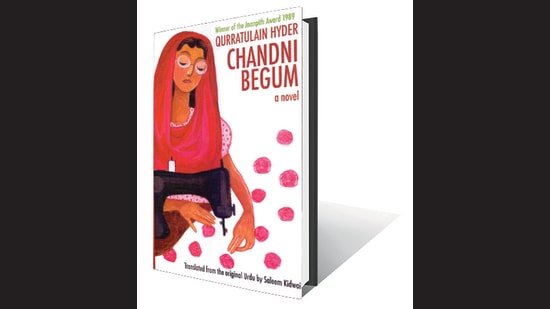
Qurratulain Hyder’s last novel, Chandni Begum, almost predicted an increasingly intolerant India. (HT Team)

Saleem Kidwai died earlier this year. Apart from being a translator par excellence he was a medieval historian, and queer rights activist, best known for co-authoring Same-Sex Love in India: Readings from Literature and History.

Urdu phrase in Chandni Begum – Allah maaf kare as “Allah, forgive my sins”. I thought the phrase had lost its zing and frankly told him that the dramatic, half-mocking Allah maaf kare should have been retained like Aye bahu, a lament that is difficult to express in English.

We discussed the possible alternatives, Kidwai graciously half-defending the phrase, and then he revealed that he was translating Hyder’s Safina e Gham e Dil (Ship of Sorrows). Both books are my absolute favourites, and I re-read them after his untimely demise.

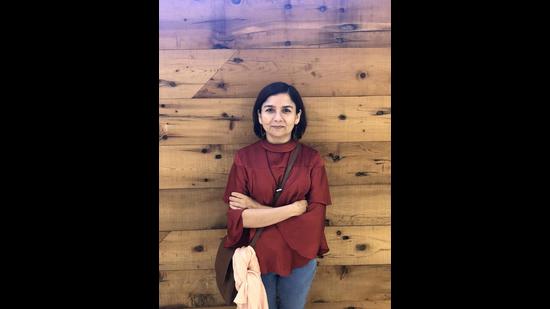
Lamat R Hasan (Courtesy the reviewer)

Chandni Begum, 1989

The novel centres around the lives of two aristocratic families living on a controversial estate with a mosque and a temple in its compound. The story moves at a fierce pace, shuffling between the past and the present, from the Partition of India to the Mandir-Masjid dispute in Ayodhya, amplifying the complexities of life, trying to find coherence in the class-caste chaos.

She wrote this tale of love and loss a few years before Babri Masjid was razed to the ground, almost predicting the future course of events, of an India that would become increasingly intolerant. This was Hyder’s last novel.

Ship of Sorrows, 1952

Only when I was holding “Ship of Sorrows”, Hyder’s part memoir, part fictional work in hand, did I learn that Kidwai had decided to abandon the project midway.

Unlike other Partition stories written from the perspective of average men and women who witnessed its horrors, this novel is a coming-of-age story, without a conventional storyline, of a privileged set of six friends from Awadh. The author herself debuts as Anne Hyder and fictionalises her experience during the communal riots in Dehradun.

Kidwai praises Hyder’s command over the Urdu idiom, with its Persian and Arabic inflections, and her equal ease with English and western idioms. Her fiction is not easy to read and she was impatient with critics who tried to evaluate the impact of modernism and of particularly Virginia Woolf, on her work. Kidwai was indeed overwhelmed by her genius, but after two years of hard work he successfully anchored his ship.

In Kidwai’s memory next up on my reading list is his biography of the legendary singer Malika Pukhraj. Song Sung True (Kali for Women, 2005) was first published in translation in India. The original Bezubaani Zubaan Na Ho Jaey was recently published in Pakistan.

Lamat R Hasan is an independent journalist. She lives in New Delhi.

source: http://www.hindustantimes.com / Hindustan Times / Home> Books / by Lamat R Hasan / December 17th, 2021

A powerful and thought-provoking play relevant to our times

NEW DELHI:

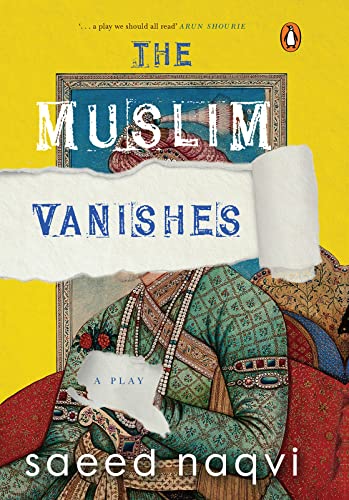
The Muslim Vanishes: A Play in Three Acts Saeed Naqvi Penguin, 2022

The Muslim Vanishes: A Play in Three Acts

Saeed Naqvi / Penguin, 2022

Reviewed by Arshad Shaikh

The Muslim Vanishes by Saeed Naqvi is a thought-provoking play and a timely fable about the dangers of communalism and the importance of empathy.

The play is set in a dystopian future where 200 million Muslims have suddenly disappeared from India, along with their cultural heritage. The remaining population is left to grapple with the consequences of this mass vanishing and to try to understand what happened and why.

The play is told from the perspective of a diverse cast of characters, including a TV news anchor, a Hindu nationalist leader, a Muslim woman, and a Dalit activist. Each character has their unique perspective on the events that have taken place, and their struggles to come to terms with them.

Naqvi’s writing is sharp and insightful, and he uses the play to explore a range of complex issues, including the nature of national identity, the role of religion in society, and the dangers of prejudice and discrimination.

The play is also a powerful plea for empathy, tolerance, and understanding. It challenges us to confront the realities of communalism and intolerance in our world.

The Muslim Vanishes is a must-read for anyone who is interested in contemporary Indian politics and society, or who is concerned about the rise of communalism and intolerance around the world. The play will stay with you long after you finish reading it.

The play is a creative way of exploring the key themes that India is currently grappling with and trying to come to terms with. The play is a powerful critique of communalism, which is a form of ideology that divides people along religious lines.

Naqvi shows how communalism can lead to violence, hatred, and even genocide. The play also makes a case for empathy, tolerance, and understanding. Naqvi challenges us to see the world from the perspective of others, even those who are different from us. He shows how empathy and tolerance can help us to build bridges and to create a more just and inclusive society.

Naqvi explores the complex nature of national identity. He asks us to question what it means to be Indian, and who owns India. He shows how national identity can be manipulated to exclude and marginalize certain groups of people.

The Muslim Vanishes is a powerful and thought-provoking play that is relevant to our times. It is highly recommended to add it to your bookshelf.

source: http://www.radianceweekly.com / Radiance Viewsweekly / Home> Book Review / by Arshad Shaikh / September 26th, 2023

JMI Professor gets prestigious ‘Parvez Shahidi Award’ of West Bengal Urdu Academy

NEW DELHI:

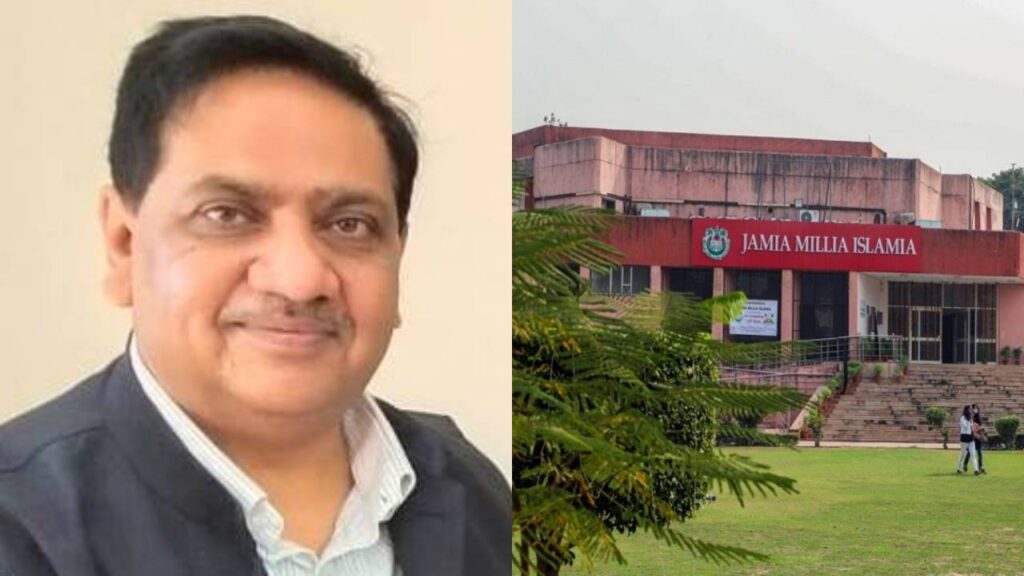
Professor Shehzad Anjum, Department of Urdu, Jamia Millia Islamia (JMI) is a renowned critic, researcher and the senior most Professor of the department.

Parvez Shahidi Award:

Professor Shehzad Anjum, Department of Urdu, Jamia Millia Islamia (JMI) has been conferred the prestigious ‘Parvez Shahidi Award’ of the West Bengal Urdu Academy for his great work in Urdu language. He is a renowned critic, researcher and the senior most Professor of the department.

JMI Vice Chancellor Professor Najma Akhtar, faculty members and students congratulated Professor Anjum for their great achievement.

Professor Anjum is one of the few prominent writers of the present era whose writings are thought-provoking.

Some of his published books are Urdu Ke Ghair Muslim Shaura-o-Udaba, Ahad Saz Shaksiyat: Sir Syed Ahmed Khan, Deedawar Naqqad: Gopi Chand Narang, Azadi Ke Baad Urdu Shairi, Azhar Inayati: Ek Sukhanwar Shayar, Ehtisham Hussain Ki Takhliqi Nigarishat, Tanqeedi Jehaat, Urdu Aur Hindustan Ki Mushtarka Tahzeebi Virasat, Rabindranath Tagore: Fikr-o-Fan, have been published.

He successfully completed the “Tagore Research and Translation Scheme” started by the Ministry of Culture, Government of India as the Coordinator, Department of Urdu, JMI. It is a historic, exemplary and proud achievement in the field of Urdu literature.

Professor Anjum also authored several monographs including Muhammad Ali Johar, Syed Ehtisham Hussain and Syed Muhammad Hasnain for Sahitya Academy, Delhi, Altaf Hussain Hali for Urdu Academy, Delhi, West Bengal Urdu Academy, Mirza Ghalib for Kolkata and Urdu Directorate. The Kalam Hydari monograph for Patna is particularly noteworthy. Several books translated by him have also been published. He also wrote a literary column on non-Muslim Urdu poets and writers for the daily ‘Inqlab’, Delhi, for about two and a half years.

source: http://www.shiksha.com / Shiksha / Home> News> College / by Anum Ansari, Asst Mgr Content, New Delhi / September 09th, 2022

Omar Khalidi’s Personal Library Finds A Home At MANUU, Hyderabad

Hyderabad, TELANGANA / Boston (Massachusetts), U.S.A.:

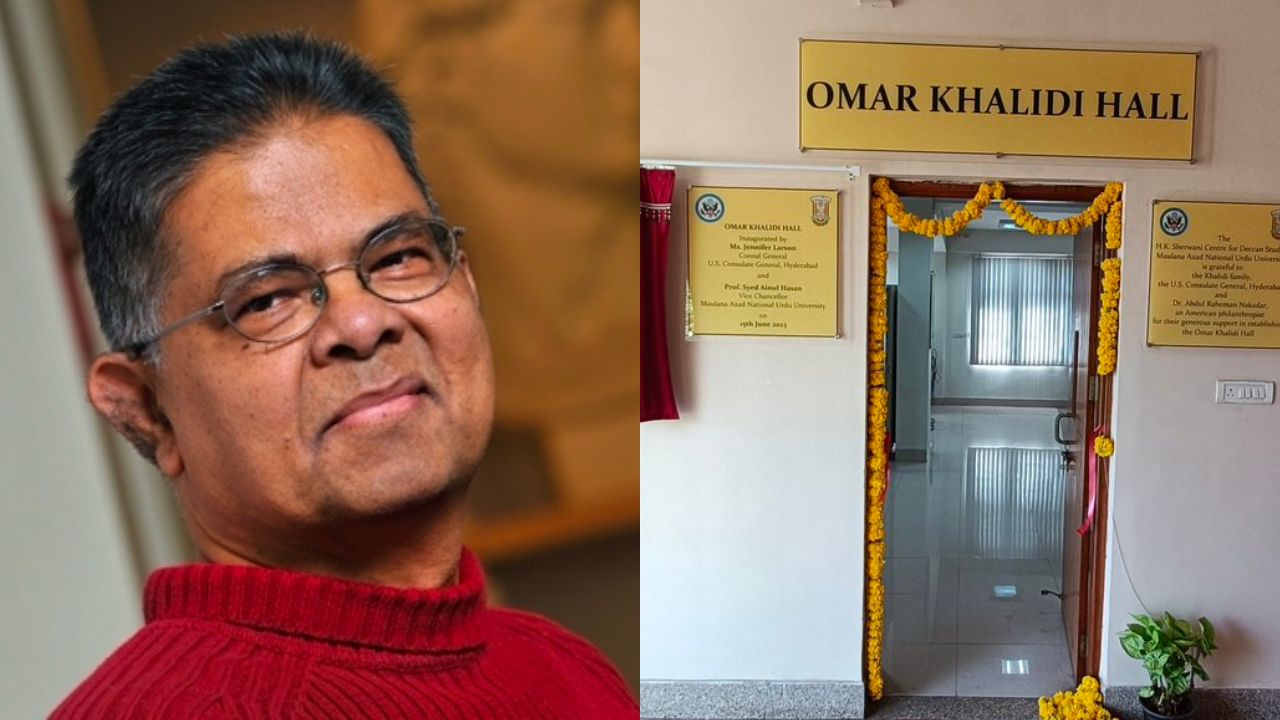
Photo: twitter.com/swachhhyd/

Omar Khalidi Hall, named after the late renowned Hyderabadi scholar, was inaugurated at Maulana Azad National Urdu University (MANUU) on Thursday. The hall, which now houses Khalidi’s personal library comprising scores of rare books, marks a significant milestone for the university.

The collaborative efforts of Khalidi’s daughter Aliya Khalidi, his wife Nigar Sultana Khalidi, historian Prof Salma Farooqui leading MANUU’s H.K. Sherwani Centre for Deccan Studies, the United States Consulate General in Hyderabad, and admirers of the Hyderabad scholar based in the USA made it possible to bring his personal library back to his hometown of Hyderabad.

Khalidi’s library is an impressive collection with over 1,000 Urdu, English, Persian, French, German, and French titles. It covers a wide range of subjects including the history, culture, and administration of the Deccan, Hyderabad State, Golconda, religion, Sufis and Sufism, heritage, and numerous journals. Notably, the collection includes rare books such as L’Inde Anglaise, published in 1845, The Hindu reported.

Khalidi’s strong connection with his hometown led him to compile an exhaustive list of books on Hyderabad’s history, culture, and archaeology. Many of these books were either unknown or had faded from public memory due to the passage of time.

Apart from his personal library, Khalidi was also renowned for his authored works. His book Khaki and Ethnic Violence in India explored the complexities of religious composition within the armed forces and police, as well as the Muslim community. L.K. Advani had verbally attacked Khalidi for the book and reportedly acknowledged that the book provided “inspiration to the Sachar Committee to seek a communal census in the Armed forces.”

Among his other important works were Muslims in Indian Economy and Hyderabad: After the Fall, a collection of essays edited by Khalidi.

Khalidi, who worked at the Massachusetts Institute of Technology as part of the Aga Khan Programme for Islamic Architecture, passed away on November 29, 2010, leaving behind a significant intellectual legacy.

The inauguration of Omar Khalidi Hall at MANUU on Thursday not only celebrates the life and work of this distinguished scholar but also provides a valuable resource for students and researchers. The inclusion of Khalidi’s personal library in the hall will serve as a source of inspiration, enabling a deeper understanding of Hyderabad’s history, culture, and heritage.

source: http://www.thecognate.com / The Cognate / Home> Culture / by The Cognate News Desk / June 16th, 2023

JNU Sociologist Imtiaz Ahmad Passes Away

Lucknow, UTTAR PRADESH / NEW DELHI:

Ahmad’s book, Caste and Social Stratification Among Muslims in India, is celebrated as pioneering work in the field. 

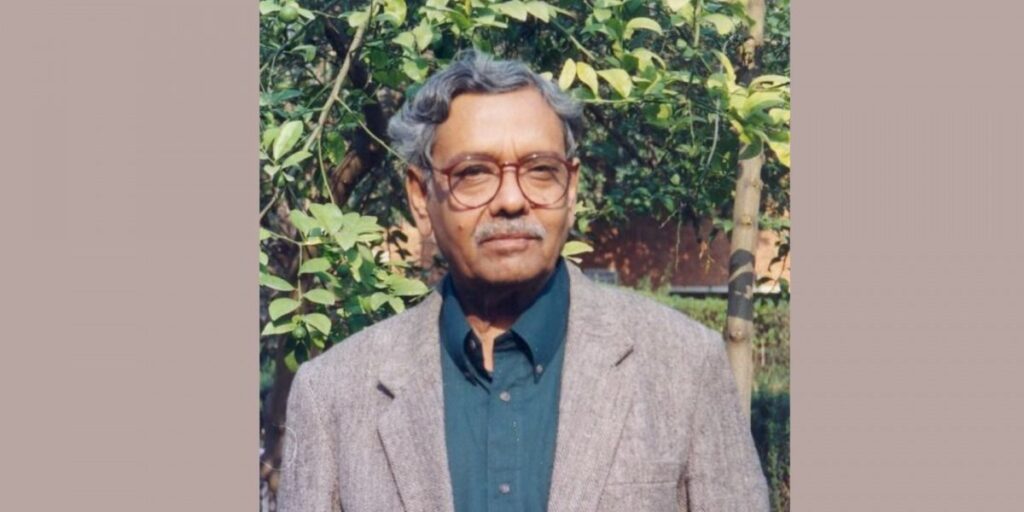
Imtiaz Ahmad (1940-2023). Photo: Twitter/@syedurahman

New Delhi: 

Imtiaz Ahmad, renowned scholar who taught political sociology at the Jawaharlal Nehru University in India, has died. He was 83.

Ahmad’s book, Caste and Social Stratification Among Muslims in India, is celebrated as pioneering work in the field.

Ahmad got his BA and MA degrees from the Lucknow University in 1958 and 1960 respectively. He started as a senior research analyst at the Institute of Economic Growth at the Delhi University in 1964 and two years later, became a lecturer in sociology in the same university.


After three years as visiting professor of anthropology at the University of Missouri in the US, Ahmad joined JNU as associate professor in political sociology in 1972. He became a professor in the department in 1983 and taught there for three decades.

Among his numerous publications are those which throw light on Muslim empowerment, minority rights, the role of education among Muslims, how Islamic ideologies mesh with social realities, how Muslim women are studied in India and communalism.

Ahmad also wrote critically on the Gujarat riots of 2002 in particular and communal politics in general. His work has been lauded as having shed light on the composite culture of India.

source: http://www.thewire.in / The Wire / Home> Education> Society / by The Wire Staff / June 19th, 2023