Tag Archives: Muslim Freedom Fighter of India

Maulvi Liaquat Ali Qadri (1817–1892): A Stalwart of India’s Freedom Struggle

Mehndauri Village (Chail Pargana, Allahabad District), UTTAR PRADESH :
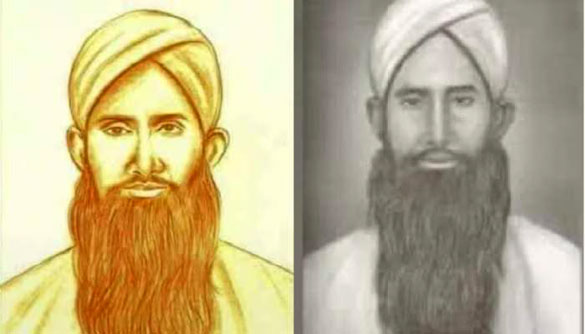
Maulvi Liaquat Ali Qadri, a religious scholar, led the 1857 Allahabad rebellion, uniting communities against British oppression. Declaring jihad, he fought for India’s freedom, faced exile, and died in Kala Pani in 1892, leaving a lasting legacy.

Main Points:

1.    Maulvi Liaquat Ali Qadri (1817–1892), born in Allahabad, was a revered religious scholar and freedom fighter.

2.    He led the 1857 rebellion in Allahabad, uniting Hindus and Muslims against British rule.

3.    Declared jihad, organized public gatherings, and hoisted Bahadur Shah Zafar’s flag.

4.    Fought British oppression, faced exile, and continued guerrilla warfare.

5.    Sentenced to life in Kala Pani; died in 1892.

———-

Maulvi Liaquat Ali Qadri was born on October 15, 1817, in the village of Mehndauri, Chail Pargana, Allahabad district, to Syed Meer Ali and Aamna Bibi. He was a revered religious figure of his time, embodying the spirit of both spiritual and national liberation. During that era, Islamic scholars viewed the country’s independence and religious freedom as inseparable causes. This conviction led a significant number of religious scholars to participate in the Indian Rebellion of 1857, many of whom attained martyrdom in their fight for freedom.

Maulvi Liaquat Ali was a simple man deeply connected to the struggles of the common people in his region. He was acutely aware of the hardships faced by the masses under British colonial rule. Alongside his profound religious knowledge, he harbored an intense passion for liberating his country from the shackles of foreign oppression. Leading a life of piety and integrity, he consistently advised others to uphold honesty, empathy, and mutual support in times of distress. He considered it the duty of every Indian to strive for the nation’s independence.

The Rebellion in Allahabad

Following widespread looting and arson, Allahabad fell under the control of the rebel Indian forces. Maulvi Liaquat Ali, accompanied by a large number of his followers, threw himself into the struggle against British rule. Seizing the opportunity, he declared jihad against the British, galvanizing thousands to join the fight. Under his leadership, the people of Allahabad (now Prayagraj) united to drive the British out of the city. Maulvi Liaquat Ali delivered a powerful message of unity to both Hindus and Muslims from a public platform in Allahabad. In his sermon, he emphasized, “We are all one. Together, we must confront the foreigners.” With this spirit of unity, he proclaimed the establishment of an independent government in the region and hoisted the flag of Bahadur Shah Zafar, the last Mughal emperor.

The British were not only plundering India’s wealth but also subjecting its people to relentless oppression. Beyond economic exploitation, Christian missionaries, backed by colonial authorities, were attacking India’s religious traditions and sacred texts. They propagated Christianity while attempting to demean Hindu and Muslim scriptures.

Unable to tolerate these affronts, Maulvi Liaquat Ali organized a massive public gathering on June 7, 1857, at Khusro Bagh in Allahabad. The event drew a large number of patriotic Hindus and Muslims. In a fiery speech, he condemned the British for their atrocities, including looting, arson, and desecration of holy texts. Declaring that such oppressors could not be tolerated, he called for jihad against the “sinners.” His impassioned address stirred the hearts of the audience, who were already exasperated by the British’s sacrilegious actions.

Under his leadership, a week-long uprising against the British began on June 9, 1857. Rebels set fire to British bungalows, inflicted casualties, and damaged government property. The widespread unrest created panic among the colonial authorities. However, the British retaliated with heavy shelling and arson, driven by a desire for vengeance. Entire settlements were razed, forcing residents to flee their homes. Maulvi Liaquat Ali, too, was compelled to leave Allahabad and sought refuge in Kanpur.

A Champion of Communal Harmony

Maulvi Liaquat Ali was a firm advocate of Hindu-Muslim unity and cooperation, despite his opposition to Christian missionaries, whose actions, fuelled by colonial arrogance, insulted Indian religions and scriptures. He was among the few leaders who demonstrated through their revolutionary actions that they were fully aware of the socio-political realities of their time. The British, he believed, were not only exploiting India’s resources but also undermining its social fabric. He tirelessly worked to counter their divisive tactics, raising his voice for the dignity of women, religious communities, and the upper classes, earning widespread admiration for his efforts.

Despite his religious persona, Maulvi Liaquat Ali was always ready to take risks for the sake of his country and faith. He never feared for his life or shied away from potential losses. His revolutionary activities were driven by a singular goal: to free India from British rule and rid the sacred land of their oppressive presence. When a Muslim shrine, Bakhtiar Bakhtiyar, and the Telegraph Band were seized by the British, Muslim youths fought to protect them, resulting in losses on both sides. Clashes between Indian rebels and British forces continued across various regions, making it increasingly difficult for the British to maintain their grip on India.

A Lifelong Struggle for Freedom

Maulvi Liaquat Ali swore to dedicate his life to the cause of India’s independence. After leaving Allahabad, he moved to Muzaffarnagar, a stronghold of the freedom struggle, where he joined other revolutionaries. His authority was such that no orders were issued without his approval. Whenever British forces attempted to suppress the rebellion, Maulvi Liaquat Ali, alongside another freedom fighter, Azimullah, embarked on a perilous journey on foot toward Gujarat. Despite facing numerous hardships along the way, they reached their destination and launched guerrilla warfare against the British. For years, their tactics kept the colonial administration on edge.

According to Rakesh Verma, technical assistant at the Regional Archives, “Administrative records written in Urdu titled Naksha Bagiyan Kotwali Allahabad, listing police constables who forcibly took their salaries for May and June 1857 and participated in the revolt, including Hanuman Prasad, Imdad Ali, Ashraf Ali, etc. were hung by Major Henry Court on July 14, 1857,” (From the HT)

The British resorted to various conspiracies to capture him, but Maulvi Liaquat Ali’s stature among freedom fighters only grew. He continued to plan large- and small-scale operations against the British, opening new fronts in the fight for independence.

Imprisonment and Legacy

Ultimately, the Allahabad court sentenced Maulvi Liaquat Ali to life imprisonment in the Andaman Islands, infamously known as “Kala Pani.” Enduring the harsh conditions of imprisonment, this brave son of India passed away on May 17, 1892, bidding farewell to his beloved homeland and the world.

Maulvi Liaquat Ali Qadri’s sacrifices for India’s freedom struggle remain an enduring legacy. His contributions must be remembered and celebrated as an inspiration for future generations, reflecting the indomitable spirit of a man who fought tirelessly for his country’s liberation.

References:

https://www.hindustantimes.com/cities/others/maulvi-liaquat-ali-to-mass-killings-hanging-of-cops-1857-revolt-in-allahabad-101749063190844.html

Bhatnagar, A. P. (2009). Maulvi Liaqat Ali: Icon of 1857 uprising at Allahabad. Shubhi Publications.

https://timesofindia.indiatimes.com/india/unsung-heroes-of-the-freedom-struggle-maulvi-liaqat-ali/articleshow/93492245.cms

Khan, K. M. (2019). Jang-e Azadi aur Musalman. Pharos Media.

https://www.qaumiawaz.com/social/maulvi-liaquat-ali-the-pioneer-of-the-war-of-independence-special-offer-on-the-occasion-of-the-anniversary-shahid-siddiqui-ali

source: http://www.newageislam.com / New Age Islam / Home> Islamic Personalities / by Sahil Rizvi / August 05th, 2025

Portrait of a journalist as a national icon

Mumbai, MAHARASHTRA :

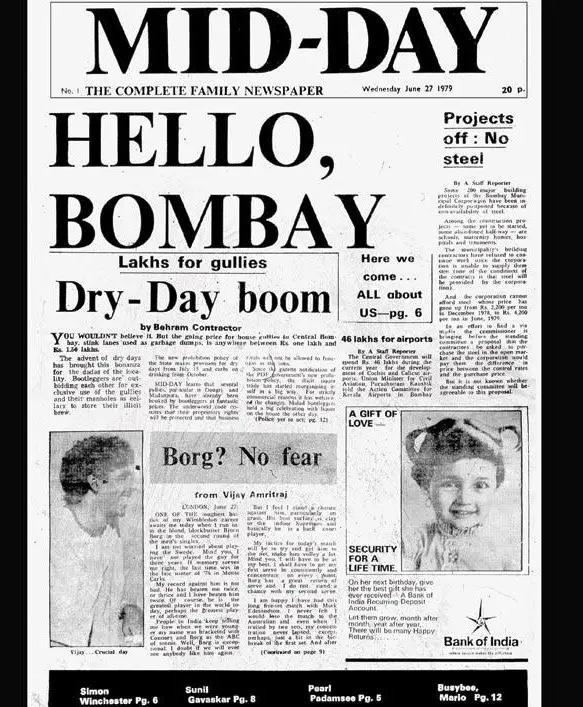
Inquilab and Mid-Day founder Abdul Hamid Ansari is an inspiration not just for journalists but millions of youngsters … A special report by Siraj Ali Quadri.

Indian journalist and Muslim nationalist Abdul Hamid Ansari founded Inquilab, an Urdu daily in Mumbai in l937. The newspaper soon became a landmark in Urdu journalism which caught the attention of Muhammad Ali Jinnah, the founder of Pakistan. But when Jinnah asked Ansari to come to Karachi to publish the newspaper in the new country, Ansari said that he would prefer to live in India like the many million Muslims who would rather stay in the country than join Jinnah. Those who joined Jinnah undoubtedly left everything behind. Some flourished while others got established. But that’s another story, which has never ended since l947.

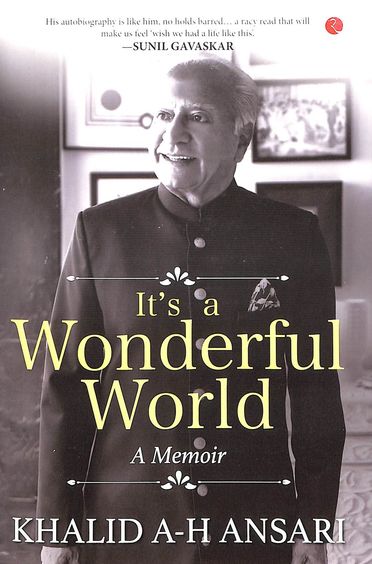
Today’s story is about the veteran journalist, publisher and businessman Khalid A.H. Ansari, son of Abdul Hameed. After passing out from St. Xavier’s in Mumbai, Khalid did his master’s at Stanford University in the US.

Khalid returned to Mumbai to establish Sportsweek, a weekly sports magazine, which became a huge success soon after its launch. The magazine’s immediate success can be attributed to the fact that its founder was himself an excellent sportsman and did a great job with the magazine, in addition to his father’s paper Inquilab.

Meanwhile, the idea came to launch India’s first daily tabloid, Mid-Day, which he modelled in many ways after the English tabloids from Fleet Street. During the planning phase of their new venture, he spent hours discussing it with staff and mulled over its format to ensure success, especially since there were already two eveningers in Mumbai, one by The Times of India and the other by the Indian Express. Both suffered from a lack of innovation to attract large numbers of readers. So when Mid-Day appeared with a new face and content, the two old ones just collapsed. Although the ToI eveninger protested the pace of time for a while, it eventually perished as it had already become obsolete.

Mid-Day became a resounding success, with many comparing it to the British Daily Mirror and Daily Mail. However, being an Indian tabloid, it was much quieter and a whole lot more civilized, without the British fondness for nudity and sex, and nonsensical stories of stupidity.

Khalid was helped by his wife, Rukaya. She was very active on the administrative side and contributed to the editorial content and layout, which helped the paper sustain itself in the demanding market of Mumbai. She knew what was going on in the office and in the newspaper that was fast becoming India’s flagship eveninger.

Meanwhile, Khalid accepted an offer to become editor-in-chief of the Dubai-based Khaleej Times, and handed over the paper to his son, Tariq. After a few years in Dubai, Khalid returned to Mumbai and launched Mid-Day in Bangalore and Delhi and a regional Gujarati version for millions of Gujaratis in the country.

He has been involved in various programmes with the Indian government during conferences in Delhi and New York, launching and editing newspapers, and was awarded the Padma Shri in 2001 while continuing to play and write about his old passion, cricket.

Writing about his eveninger, Khalid says, “Mid-Day is a light-hearted, easy-to-read, entertaining, and ‘naughty’ paper that now has a new purpose which is to make work fun. Gives young professionals an entertaining newsbreak. The focus is on young, urban, mobile professionals across India and the company is leaving no stone unturned to engage with them. Today’s workplace’s fast-paced work style and crazy deadlines are full of stress and pressure. Mid-Day as a brand believes in spreading the message of reducing stress and making work fun.”

“What’s on, a host of addictive, fun sections like Hit List Crosswords, Horoscopes, and Fun at Work ensure that the newspaper remains a welcome diversion for young professionals,” he adds.

Khalid’s Sportsweek later was shut down with the television boom making it hard to garner advertisements and interest. Khalid has also published his memoir (It’s A Wonderful World) and continues to inspire a stream of journalists apart from various generations to keep the boat afloat and touch new heights.

 (The Author is Journalist & associated with Dainik Bhaskar)

source: http://www.asianlite.com / Asian Lite / Home / by Siraj Ali Quadri / October 10th, 2022

Zohra Ansari, the Freedom Fighter Who Taught Urdu to Mahatma Gandhi and Sold Her House to Fund Congress

Yusufpur (GhazipurDistrict), UTTAR PRADESH / NEW DELHI / London, U. K :

Begum Zohra Ansari sold away ‘Dar-us-Salam’ to raise party funds and worked for the victory of the candidates of the Indian National Congress and for the defeat of the candidates of the Muslim League, who wanted partition.

Begum Zohra Ansari, an activist of the Indian National Movement whom Mahatma Gandhi addressed as “Vasthad Bi, was born in Delhi. She was the adopted daughter of freedom fighters, Dr. Mukhtar Ahmed Ansari and Begum Shamsunnisa Ansari.

Besides playing an important role in the National Movement, her parents provided hospitality to leaders and a cadre of the Indian National Movement and scholars and people of repute in different walks of life in their residence ‘Dar-us-Salam’.  It was very spacious like a royal palace.

While Begum Shamshunnisa Ansari was busy in these responsibilities, Zohra helped her. Thus she had an opportunity to see from close-quarters leaders such as Mahatma Gandhi, Pandit Motilal Nehru, and the Ali Brothers and to serve them. Right from childhood she evinced interest in literature, history, and social sciences. She also gained proficiency in Urdu, Arabic, Persian, and Hindi.

Zohra Ansari and Mahatma Gandhi

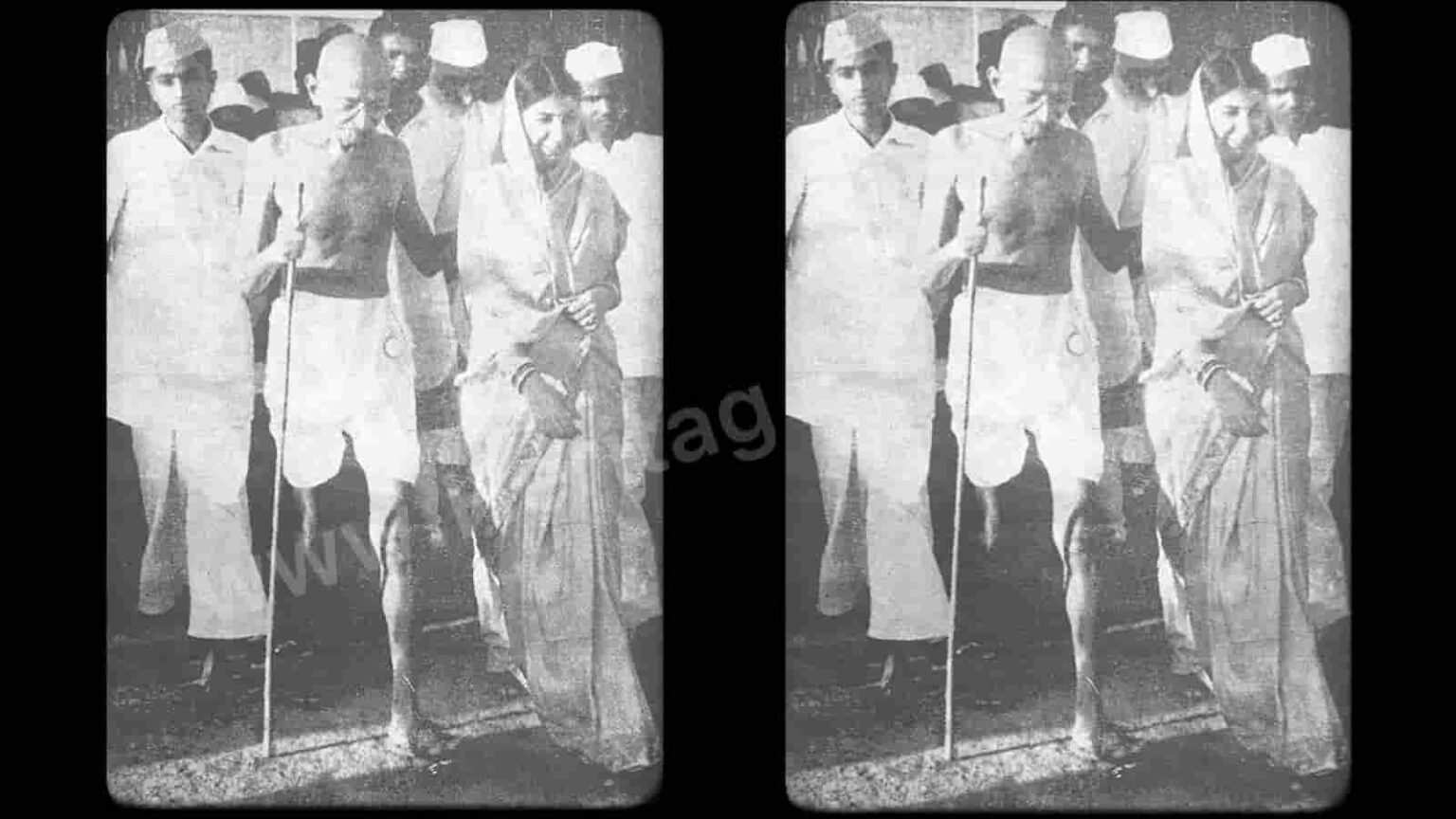
Zohra Ansari rendered her services in Wardha Ashram for a long time. Mahatma Gandhi came to know about her command over Urdu and started learning the language from her. He used to address her in his letters as ‘Vastad Bi’ and ‘Beti.

Zohra Ansari and Mahatma Gandhi used to have regular correspondence on various issues. In his letter dated 22 December 1932 to Dr Ansari, Gandhiji remarked that he used to look forward to Zohra’s letter every week. When Zohra expressed her desire to go to jail as a part of the National Movement, like her parents, Gandhiji asked her to wait and promised to allow her to go to jail.

Begum Zohra Ansari married Dr Shaukatulla Shah Ansari (1908-1972) who was her relative and leader of the Indian National Movement. Begum Zohra Ansari lost her father in 1936 and mother in 1938. She took an active part in the Freedom Struggle along with her husband. Both wife and husband opposed the partition of India.

She sold away ‘Dar-us-Salam’ to raise party funds and worked for the victory of the candidates of the Indian National Congress and for the defeat of the candidates of the Muslim League, who wanted partition. Post Independence, Begum Zohra Ansari led a simple life and passed away on 28 July 1988 in England.

source: http://www.heritagetimes.in / Heritage Times / Home / by Syed Naseer Ahamed / December 12th, 2023

Exhibition in Bhopal on life & work of freedom fighter Khan Shakir Ali Khan

Bhopal, MADHYA PRADESH :

Bhopal: 

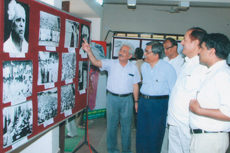
On the occasion of International Day an exhibition on the life and works of Khan Shakir Ali Khan, the great freedom fighter of Bhopal popularly known as Sher-e-Bhopal, was inaugurated in the premises of the regional office of the National Archives of India here on Wednesday.

R. K. Shrivastava, the Administrative Officer Indira Gandhi Rashtriya Manav Sangarahalaya, inaugurated the exhibition by cutting the traditional red-ribbon.

Shahnawaz Khan, nephew of late Shakir Ali, senior journalist Shailendra Shelly along with NAI’s Archivists V. K. Juneja, who is office in-charge NAI regional office, and Muzaffar-e-Islam were present on the occasion. The exhibition is divided into five phases with documents, letters, photographs etc.

Shrivastava speaking on the occasion said that late Shakir Sahab demanded respect from one and all alike for his selfless service towards society. He said Shakir Sahab was symbol of communal harmony as both Hindus and Muslims respected and loved him for his untiring efforts towards poor people especially the labour class.

Shahnawaz Khan revealed that the title of Sher-e-Bhopal was not granted to his uncle Shakir Ali by any government or Nawab of Bhopal but by the common man for his selfless efforts to better their lot.

He was a big hurdle for the communal forces who wanted to engineer Muslim-Hindu riots for their vested interests. When some people wanted to demolish a Jain Mandir in Chowk area of Bhopal he stood at the door of the temple saying demolition could only take place before his dead body and those who had converged for the job had to retreat.

He complimented National Archives for organising such an exhibition to honour the mass leader of his time. He said he was happy to hand over the documents and photographs of his uncle which has been put to very good use.

Shailendra Shelly while paying glowing tributes to the personality of Shakir Ali lamented that Bhopal Municipal Corporation which had announced an award in the name of the great leader about a decade back never implemented it. He said BMC could still honour implement its own announcement. The veteran leader was the voice of the labour class

Juneja conducted the proceedings while Muzaffar-e-Islam proposed vote of thanks. The week long exhibition will close down on May 24. It will remain daily open for public from 10.30 am to 5.30 am in NAI regional office near Polytechnic square.

Khan Shakir Ali Khan (1904-1978) is a person who was more famous by his title Sher-e-Bhopal than his name. He was really a leader of the masses. Throughout in his life he rendered his services to the people, the down-trodden and the poor. He was a true servant of the society. He served both the society and polity of Bhopal. During the time of Nawab, he organized the Labourers of mills and factories under different organizations and Unions and fought for their rights.

To raise their voice many organs and newspapers were published. The most famous was Subh-i-Watan. Unfortunately all such papers were banned. It was not possible for the Government of the day to tolerate such a selfless leader and leave him free to criticize the Government or to fight with the Government on petty issues of rights and liberty of the labourers or to represent such a section of society which has been kept deprived by the destiny himself. The Government thought it right to keep such a mass leader behind the bars most of the time. He was publicly humiliated and even handcuffed like an ordinary man or a thief. He was such a strong man that he did not stop his mission and day by day became stronger and stronger .

Khan Shakir Ali Khan was also a man behind the formation of Praja Mandal besides other at least 15 Unions of Mill and factory labourers. Shakir Ali Khan considered these Unions the real source of strength and inspiration. At one times he was alone on the question of merger of Bhopal with the Union Territory. It was his movement which compelled Nawab Hamidullah Khan, the last ruler of Bhopal state, to hold meetings with the Central Leaders and conclude terms for the merger of Bhopal with the Union Territory. First it was an interim arrangement under which the erstwhile Bhopal state was considered as Part C State for five years and finally it became part of Madhya Pradesh. He is also remembered for his leading role in making Bhopal, the capital of M.P. State. How was he popular that can be judged as he remained a member of Legislative Assembly for consecutive four terms.

On the occasion of International Museum Day, the National Archives of India remembered this great leader by exhibiting his photographs, letters and his own writings.

(pervezbari@eth.net)

source: http://www.ummid.com / Ummid.com / Home> Life & Style / by Pervez Bari /May 20th, 2011