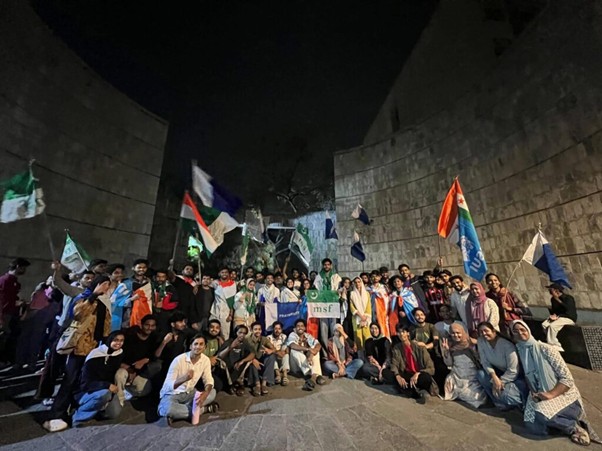
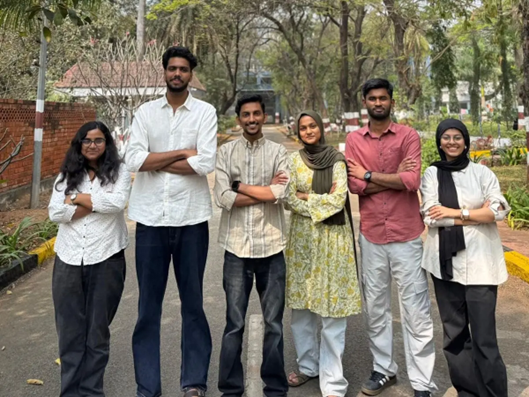
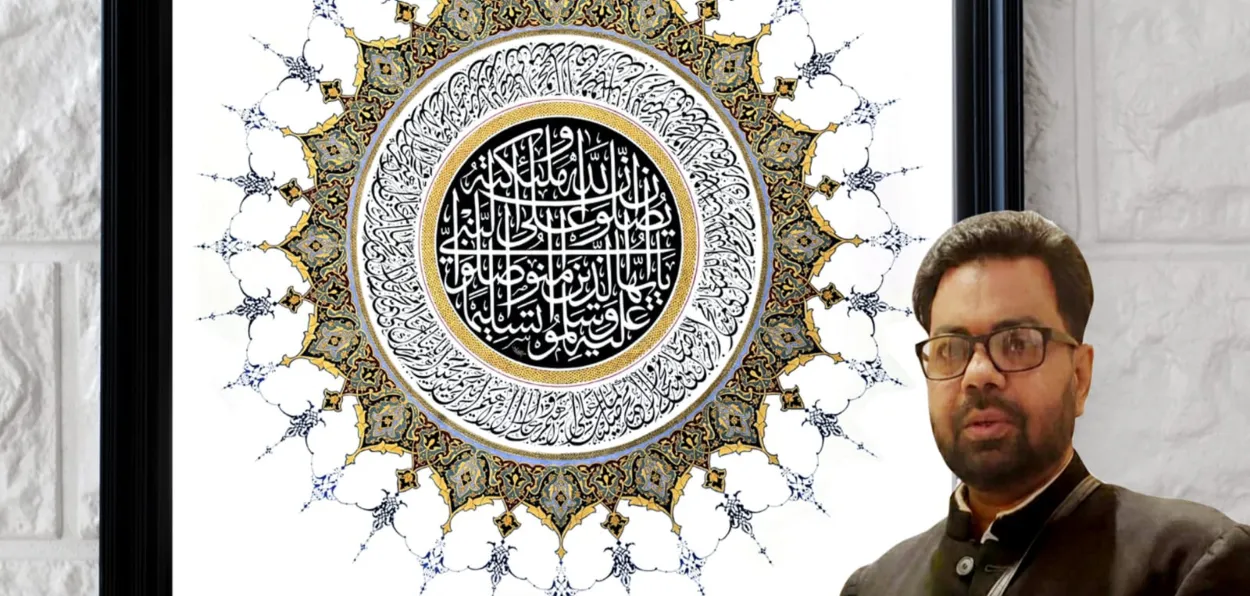
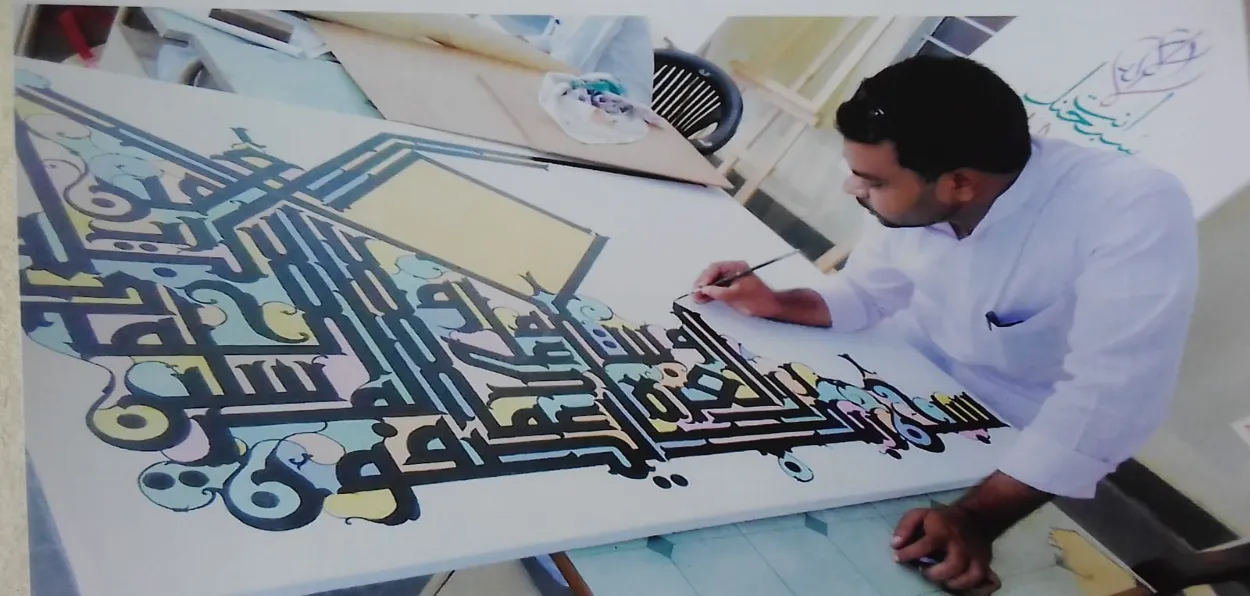
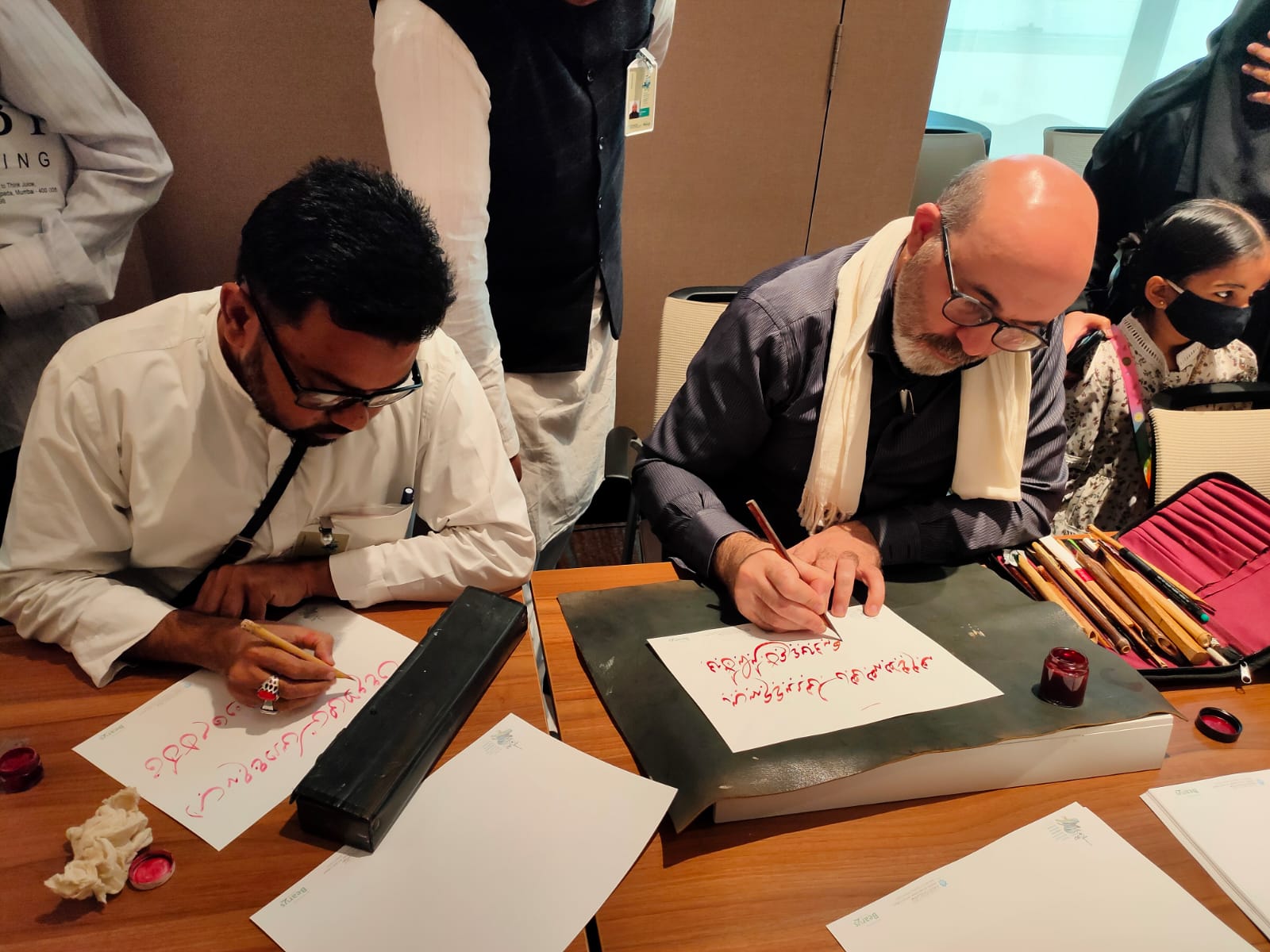
The Awaaz Alliance—comprising the Fraternity Movement, Muslim Students Federation (MSF), and the National Students’ Union of India (NSUI)—has won all Central Panel posts in the English and Foreign Languages University (EFLU) Students’ Union elections, defeating the right-wing student group Akhil Bharatiya Vidyarthi Parishad (ABVP).
Harshad Shibin NK a PhD student from the Fraternity Movement has been elected as the new Students’ Union president.
Irfan Shajudheen from MSF a student of BA (digital communication) won the post of general secretary, while NSUI’s Sonu Raj 2year BA (English) student was elected vice-president. Other winners include MSF’s Haleemathu SS Adiya studying BA Arabic (Joint Secretary), Fraternity Movement’s Ayisha Neha (Cultural Secretary), and NSUI’s Udita Purkait (Sports Secretary).
ABVP finished second in all seats, while the Left student group Students’ Federation of India (SFI) emerged a distant third across all positions.
“This historic victory demonstrates the growing unity of democratic student forces committed to safeguarding campus diversity, social justice, and students’ rights. The mandate clearly rejects the politics of hatred and polarisation and affirms the students’ aspiration for an inclusive, egalitarian, and vibrant campus culture,” the Fraternity Movement said in a statement.
The newly elected panel members said they are committed to working tirelessly for academic welfare, gender justice, minority rights and democratisation of campuses.
source: http://www.radiancenews.com / Radiance News / Home> Latest News> Report / by Radiance News Bureau / February 07th, 2026
Indian ultra-distance runner Sufiya Sufi, 38, from Ajmer, Rajasthan, has officially received her Guinness World Record certificate for completing the formidable Manali–Leh high-altitude run in 98 hours and 27 minutes, a feat no woman in the world has accomplished before.
The record, formally approved by Guinness World Records in 2023, spans nearly 480 kilometres across some of the most treacherous terrain in the Himalayas. The route crosses five high mountain passes, involves a cumulative elevation gain of over 8,500 metres, and exposes runners to freezing temperatures and dangerously low oxygen levels. The challenge is widely regarded as one of the toughest endurance runs on the planet.
Although the achievement was validated in 2023, the physical certificate reached Sufi only in early 2026, following prolonged delays related to international delivery logistics and customs clearance. Once the certificate arrived, her accomplishment drew renewed admiration from the global running community, sponsors, and the wider public. Supporters celebrated the milestone as another defining moment in an already extraordinary athletic journey.
Sufiya Sufi on Manali-Leh run
Sufiya Sufi’s record-setting run on the Manali–Leh route represents a remarkable benchmark in endurance sports. The challenge begins in Manali, a Himalayan hill town in Himachal Pradesh, and winds its way through rugged, unforgiving landscapes before culminating in Leh, Ladakh. Along the way, runners cross legendary high-altitude passes such as Rohtang Pass and Tanglang La, where temperatures often plunge well below zero and oxygen levels drop dramatically.
At such extreme altitudes, even the most experienced athletes struggle to breathe, recover, and maintain pace. Completing this journey on foot in under 100 hours is considered exceptional. By finishing in 98 hours and 27 minutes, Sufi not only met the challenge but surpassed it, becoming the fastest woman ever* to traverse this Himalayan stretch on foot.
Despite the physical run being completed and officially recognised in 2023, the nearly two-year delay in receiving the certificate became a story in itself. Sufi later spoke about the delay publicly, addressing it with humour and gratitude rather than frustration.
In a post on the social media platform *X*, she described her accomplishment as the fastest-ever run from Manali to Leh across all five high passes. She also expressed heartfelt thanks to her sponsors, support crew, and well-wishers who stood by her throughout months of preparation and recovery. Members of the running community and followers on social media responded with admiration, highlighting the sheer brutality of the terrain and the mental toughness required to succeed.
Day 03 done with 03 KM.
01 to 100 Km Running Challenge.
No Speed, No pace, Just showing up everyday with 01 Km stronger mindset.
Daily effort. Daily discipline. Daily belief. This is how 1% turns into something unimaginable. pic.twitter.com/mYSxRTZJIu
Sufiya Sufi’s journey is as compelling as the record itself. Born in *1987 in Ajmer, she spent nearly 10 years working in the aviation industry. Running initially entered her life as a way to stay fit and break free from the monotony of a demanding job. Over time, what began as a fitness routine evolved into a deep passion for endurance sports, eventually redefining her professional and personal identity.
Her rise as an ultra-runner has been marked by a series of achievements. In 2018, she earned her first Guinness World Record for running the most marathons by a woman in a single calendar year*. This milestone established her as a serious force in long-distance running.
She went on to complete the Kashmir to Kanyakumari run, covering approximately 4,000 kilometres in 87 days, another Guinness-certified feat. Shortly thereafter, she conquered the Golden Quadrilateral, a 6,002-kilometre route linking India’s major highways, in just 110 days, securing yet another world record.
Sufiya Sufi’s journey is as compelling as the record itself. Born in *1987 in Ajmer, she spent nearly 10 years working in the aviation industry. Running initially entered her life as a way to stay fit and break free from the monotony of a demanding job. Over time, what began as a fitness routine evolved into a deep passion for endurance sports, eventually redefining her professional and personal identity.
Her rise as an ultra-runner has been marked by a series of achievements. In 2018, she earned her first Guinness World Record for running the most marathons by a woman in a single calendar year*. This milestone established her as a serious force in long-distance running.
She went on to complete the Kashmir to Kanyakumari run, covering approximately 4,000 kilometres in 87 days, another Guinness-certified feat. Shortly thereafter, she conquered the Golden Quadrilateral, a 6,002-kilometre route linking India’s major highways, in just 110 days, securing yet another world record.
Each of these runs required not only exceptional physical endurance but also rigorous mental conditioning, logistical planning, and resilience. Sufi has often credited her family for their unwavering support, especially her partner, who frequently serves as part of her on-ground support crew.
She has spoken about the challenges of acclimatising to high altitudes, training in extreme conditions, and preparing her body for prolonged exposure to thin air and severe cold.
Sufi’s expanding list of accomplishments has drawn the attention of corporate partners as well. In October 2024, Hindustan Zinc Limited appointed her as a brand ambassador, reflecting growing corporate confidence in her ability to inspire communities and promote fitness as a sustainable lifestyle choice.
Looking beyond national records, Sufi has set her sights on even larger international goals. According to previous interviews and public statements, she plans to undertake a “Run Around the Globe” expedition, covering tens of thousands of kilometres across multiple continents. She envisions the project not merely as an athletic challenge, but as a global mission promoting *Humanity, Oneness, Peace, and Equality, collectively referred to as HOPE.
Sufiya Sufi’s journey stands as a powerful testament to human resilience, courage, and the transformative power of unwavering determination. Her transition from a stable career in aviation to pushing the limits of endurance in the harshest Himalayan conditions reflects a profound belief in personal growth and self-discovery.
In a world often dominated by narratives of division and despair, her story offers a rare and uplifting reminder of what is possible through perseverance, discipline, and purpose. Her achievements celebrate not only athletic excellence, but also the boundless potential of the human spirit.
source: http://www.awazthevoice.in / Awaz, The Voice / Home> Stories / by Aasha Khosa / February 03rd, 2026
The Malegaon Secular Front of ISLAM Party and the Samajwadi Party, secured the mayor and deputy mayor posts in the civic body, while AIMIM and BJP stayed away from voting
Malegaon :
Malegaon in Maharashtra has entered a new phase in local politics after the mayor and deputy mayor elections brought a clear win for the ISLAM Party–Samajwadi Party alliance, known as the Malegaon Secular Front. Sheikh Nasreen Khalid was elected mayor, while Shan-e-Hind Nihal Ahmed was chosen as deputy mayor on Saturday.
The election took place in the 84-member Malegaon Municipal Corporation, where 43 votes were needed to secure a majority. With the backing of the Congress, the Malegaon Secular Front reached the required number and took control of the civic body.
Sheikh Nasreen Khalid received 43 votes in the mayoral election. These included 35 councillors from the ISLAM Party, five from the Samajwadi Party, and three from the Congress. Her nearest rival, Shiv Sena candidate Lata Ghodke from the Eknath Shinde group, managed to secure only 18 votes.
All India Majlis Ittehad-ul Muslimeen’s (AIMIM) 21 councillors and the BJP’s two councillors stayed away from the voting process. The BJP, which is part of the ruling alliance at the Centre and in Maharashtra, did not vote in support of the Shiv Sena candidate, dealing a setback to the Shinde faction in Malegaon.
Speaking after her election, Mayor Sheikh Nasreen Khalid said, “This victory belongs to the people of Malegaon. We will work for justice, development, and equal respect for every section of society.”
In the deputy mayor election, Samajwadi Party councillor Shan-e-Hind Nihal Ahmed defeated Shiv Sena’s Advocate Nilesh Kakade by the same margin. Nihal Ahmed secured 43 votes, while Kakade received 18. AIMIM again stayed away, and the BJP did not take part in the vote.
After her win, Deputy Mayor Nihal Ahmed said, “Malegaon has shown faith in secular values. Our duty is to serve the city honestly and listen to the voice of the common people.”
The municipal elections were held on 15 January. Results showed the ISLAM Party emerging as the single largest party with 35 seats. AIMIM won 21 seats, Shiv Sena secured 18, the Samajwadi Party five, Congress three, and the BJP two.
The ISLAM Party was founded by former Congress MLA Sheikh Asif Sheikh Rashid on 20 October 2024. In its first civic election, the party succeeded in winning the mayor’s post, marking a strong start in local politics.
District Collector Ayush Prasad conducted the election as the presiding officer. He said, “The mayor and deputy mayor elections were completed in a peaceful and orderly manner.”
For many residents, the result reflects the political strength and unity of Malegaon’s Muslim-majority population and reinforces their role in shaping the city’s democratic future through the ballot box.
source: http://www.clarionindia.net / Clarion India / Home> Editor’s Pick> India> Indian Muslims / by Team Clarion / February 08th, 2026
Belonging to a conservative Muslim family, it was hard for Fatima Ahmed to break the shackles but she made sure to follow her dreams and do all that she ever wanted. From travelling the world to living like a “gypsy” and creating her very own niche in the world of art, Ahmed has lived her life on her terms. Read about this feisty and inspiring artist.
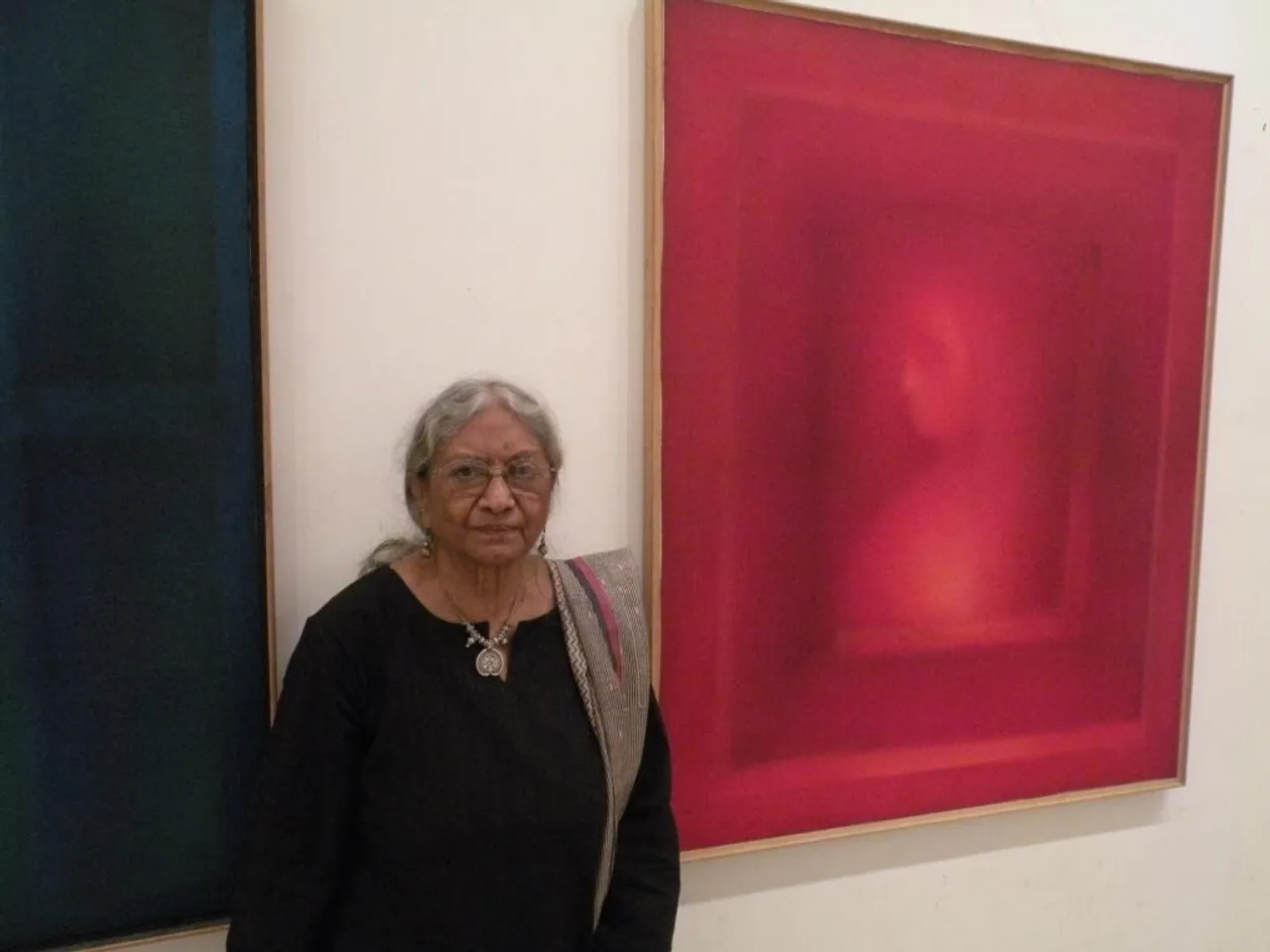
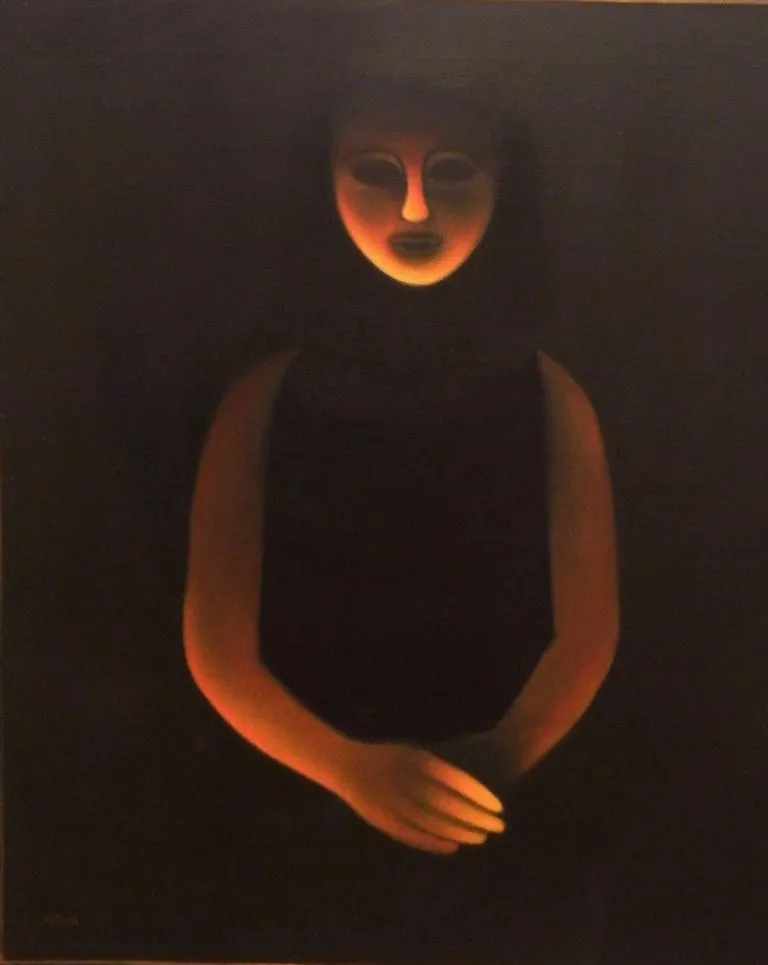
Legendary rebel artist and writer Fatima Ahmed, who is nearing 80, is a picture of contrasts. While she is fun-loving and full of life, her paintings are still and silent. (Credit: Surekha Kadapa- Bose\WFS)
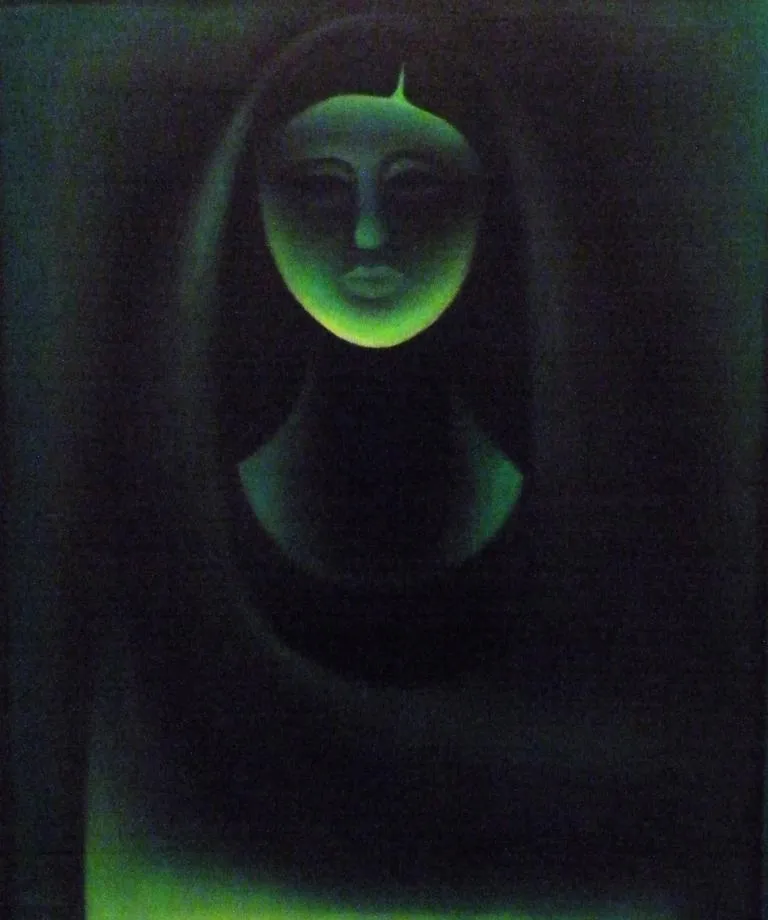
‘If only silence could speak’ goes the adage. Well, here silence does speak – and how! Soft, hazy, elusive images of women gaze steadily from the confines of their canvas making the much-mesmerised onlooker feel as though they would simply vanish if s/he so much as blinked. The women in red, pink, beige oil paints look ethereal, delicate and yet they convey power, strength – much like the woman who has created them.
“Space and light are very important to any work of art, especially paintings,” explains legendary rebel artist and writer Fatima Ahmed, whose latest oil canvases were on display in Mumbai recently. She continues, “In life, there has to be some mystery. Everything shouldn’t be very obvious and spoken out loud. In my works I don’t like clutter, loud colours or screaming. I like my paintings to be as subtle as a whisper.”
“Let me start by saying I simply love to eat the crisp crust of a samosa,” she says, with twinkle in her eyes, before adding, “Now as far as the silence in my work is concerned, throughout my life I have been more of an observer. I was a recluse during my childhood as I didn’t have anyone to share my thoughts and feelings with. I was a rebel for everyone around me and way back in the middle of last century it wasn’t a good sign.”
Coming from a conservative Muslim family in Hyderabad, Ahmed never really fit in because she was a free spirit who believed in equality. Her father was a Collector under Nizam Osman Ali Khan, Asif Jah VII, the last Nizam of Hyderabad.
In her joint family, daughters were married off in their early teens within the extended family. Moreover, as the Ahmed family was very highly placed within the Nizam’s palace, its members, too, were treated as royalty, which was never acceptable to her.
“I just couldn’t tolerate treating those employed in our household as slaves. Besides, women in that era didn’t have any say in any sphere of life and were forced to blindly follow all the dictates of men without questioning them. I certainly wasn’t going to do that,” she says emphatically, her voice betraying the anger she still feels towards the strict patriarchal rules they were made to adhere to in that period.
The women in red, pink, beige oil paints look ethereal, delicate and yet they convey power, strength. (Credit: Surekha Kadapa-Bose\WFS)
So Ahmed grew up with vivid visions of freeing everyone who was treated as a lesser human being. “Quite unknowingly, I was influenced by socialism,” she remarks. And at that age she had also made up her mind that she would rather die than marry one of her cousins. According to her, the one good thing her father did was to enrol her in the Government Mahaboobia Girls School, the foremost learning institution at that time. “Our teachers taught us out of syllabus and gave us the freedom to think. I didn’t like Hyderabad then but I loved my school,” says the artist, who is nearing 80.
It was there that she developed a deep love for drawing, painting and the classical Indian dance form Kathak, all of which she learnt without the approval of the family elders. The dance classes came to an end as soon as her father came to know.
“Unfortunately, my mother had a stroke at the time. And though I did have a large family of sisters, brothers, cousins and aunts, I could never really converse with any of them or share my true feelings,” she elaborates.
After school, as Ahmed refused marriage outright, she was grudgingly allowed to join college. But there again she met with another hurdle. She wasn’t interested in any of the usual subjects of science and wanted to join College of Fine Arts, which, of course, wasn’t permitted. So she found a way to get in. Mischievously she narrates, “I forged my father’s signature on the application form but the principal detected my lie and quizzed me. When he understood that I was really interested in the arts and saw a painting I had done of a litter of puppies, he relented.”
The demise of her parents made her leave home and Hyderabad for good. “I certainly didn’t want to stay back and be bossed around by my brothers and other family members,” she says about her escape to Bombay in early 1960s.
Admitting that the Hyderabad of today has changed considerably, the ageing artist nonetheless doesn’t think there is much difference still in the way girls from poor Muslim families are treated, “While girls from well-to-do homes get an education, are fashionable, go abroad, mingle with the rest of the world, this is not true of the low income Muslim families. They still live in a very male dominated society and this is not only restricted to Hyderabad or India but all over the world.”
Her arrival in Bombay and the “gypsy lifestyle” she led for the next two decades saw her engage closely with the world of art and writing. “I really didn’t exploit the kind of opportunities that came my way. I just took life one day at a time by living it on my own terms,” recalls Ahmed especially referring to her two-year stint in London where she painted, went through a financial crisis and then discovered spiritualism.
Fatima Ahmed, whose latest works were part of a recent exhibition, ‘If only silence could speak’, likes her paintings to be as subtle as a whisper. (Credit: Surekha Kadapa- Bose\WFS)
Despite those struggles, great success has come to her. She has held innumerable exhibitions in Mumbai, Delhi, Chennai, Hyderabad, Bhopal, London, Mauritius, Dubai, Hong Kong, Russia and South Africa, among many other places. Her works have been auctioned by Christies and are part of several private collections and state galleries, including the National Gallery of Modern Art (NGMA) in Delhi, Birla Art Akademi, Kolkata, the Stuttgart State Library and Masanori Fukuoka Museum in Japan.
What or who has influenced her art over the years? Initially, Ahmed says she was influenced by Gauguin, Cezanne, Van Gogh and Modigliani. But she consciously stayed away from those influences, as she felt “there was no fun in copying others”, and developed her own style.
Once she got back from London to Mumbai she caught up with many of her journalist friends. One of them was late Khushwant Singh, with whom she argued, fought and enjoyed interacting. It was he who encouraged her to get into writing. She started by translating works of Ismat Chugtai, Saadat Hassan Manto, Kaifi Azmi and other Urdu literary greats into English. This paved the way for to her write the semi-autobiographical, ‘In Haleema’s Words’. It was on one of her reporting assignments that she visited the Rajneesh Ashram in Pune, which has become her permanent home now.
Personally, Ahmed may be less of a rebel these days but her works more than make up – though still and silent they exude the quiet strength of women.
Written by Surekha Kadapa-Bose for Women’s Feature Service (WFS) and republished here in arrangement with WFS.
source: http://www.thebetterindia.com / The Better India / Home> Art / by Surekha Kadapa-Bose / December 14th, 2014
Jubuni Village (Rampurhat subdivision of Birbhum District), WEST BENGAL :
Feroza Begum
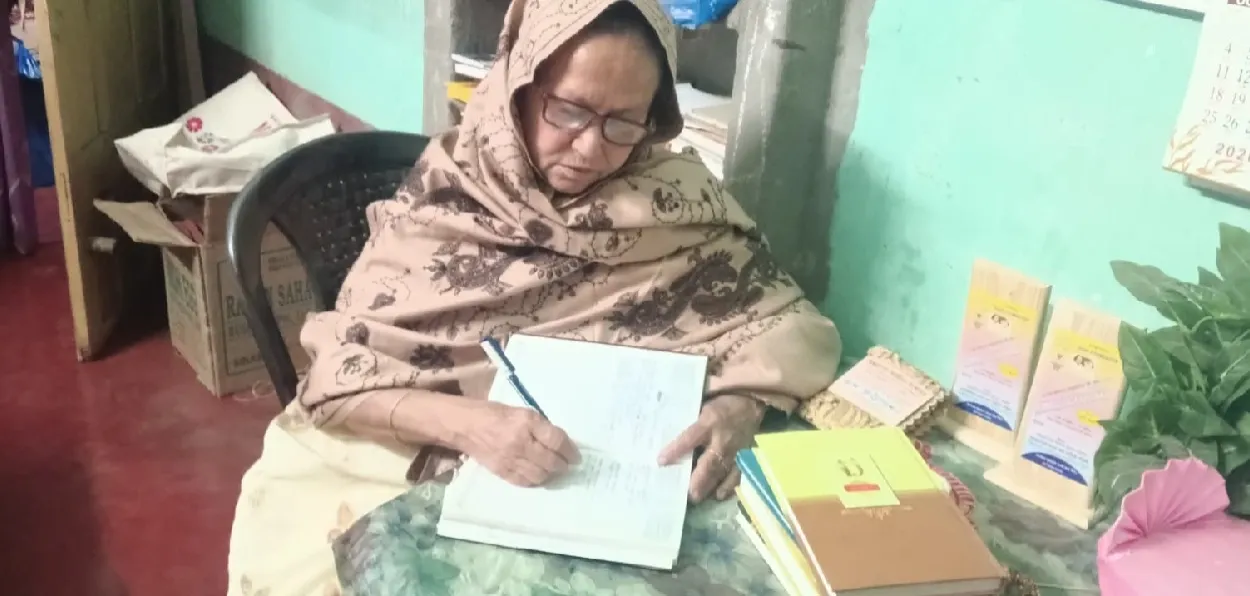
Firoza Begum’s language of protest against the harsh realities of rural India, gender inequality, and family adversity is a strong statement. The poet and writer in her, though, has emerged from a phase of struggle.
She was born into a respectable family in Jubuni village of Rampurhat subdivision of Birbhum district, West Bengal. Her parents, Abdul Hakim Mallick and Arestun Bibi, faced poverty, disease, and social uncertainty, due to which her childhood was difficult.
The struggle for survival of her family and relatives during the terrible smallpox epidemic influenced and triggered a humanitarian spirit in her.
In her childhood, when women’s education was neglected in rural society, she completed her schooling. She broke many social barriers. The discrimination and neglect she faced while in school ignited the spirit of rebellion in her, which, in due course, made the language of her writing sharp, protestant and sensitive.
Feroza Begum with an award
In 1974, she married Nurul Haque Mallick, a science-minded teacher. With her husband’s liberal attitude and inspiration, she managed to balance both her family life and pursuit of literature. She made sure her four daughters got educated and financially independent, self-reliant. Although her husband’s death in 2016 left a deep void in her life, she did not stop pursuing literature.
Since 1992, Firoza Begum has been regularly writing poems, songs and essays. Her writings have been published in various literary magazines of Murshidabad, Rampurhat and Kolkata, Pragati, Trinayani, Kalam, Bhabbana, Sangbad Darpan, Roddur, Arpan, etc.
Besides, she is also a regular participant in the radio and television programs and has received recognition beyond her hometown and community.
The poetry collection “Nayantara” published in 2010) and “Aparajita” published in 2014) clearly reflect the struggle of women, the adversities of life, and the human spirit.
She proofread and published the book, despite illness and limitations, and it reflected her perseverance.
Firoza Begum has received several honours and awards in recognition of her contribution to literary endeavours.
The reception by the Bhabna O Anubhavber Dana newspaper of Rampurhat, the Rokeya Award from the Roddur newspaper, certificates from various radio stations in Kolkata and Baharampur, the Ambedkar Shilpi Ratna Award from New Barrackpore, and the recent “Best Bengali” award from the Asha Foundation are important recognitions of her literary and humanitarian activities.
The life of poet Firoza Begum is not just the autobiography of a writer, it is a courageous document of a struggling woman. Her pen still bears witness to the fact that even in the deep darkness of adversity, education, humanity and literature are capable of illuminating the path of humanity.
source: http://www.awazthevoice.in / Awaz, The Voice / Home> Stories / by Dev Kishore Chakraborty / February 03rd, 2026
Congress leader retains Prabhag 19 seat, credits public trust, service record and cross-community support
Mira-Bhayandar, Thane :
Congress leader Rubina Feroze has returned to the Mira-Bhayandar Municipal Corporation in Thane district of Maharashtra for a second consecutive term, winning from Prabhag No. 19 and leading all four candidates of her panel to victory. Her win stands out in an election largely dominated by the BJP, which saw several smaller parties wiped out.
Rubina, who first won the ward in 2017, secured a fresh mandate from the same constituency. Prabhag 19 has a mixed population of Marathi and Gujarati speakers, with Hindus, Muslims, Christians and Jains living together. Muslims form a small minority in the ward, yet the results reflected broad support cutting across community lines.
Speaking to Urdu daily Inquilab, Feroze said repeated attempts were made to polarise Mira-Bhayandar on religious and linguistic lines. “Over the last three years, there was a clear effort to push the city towards communal tension. Even the Marathi language was dragged into politics last year,” she said.
“Many parties tried to win votes by invoking religion and identity,” she added. “But in ward number 19, that kind of politics did not work. People judged me by my work and by the stand taken by the Congress.”
Overall, the Congress improved its performance in the civic polls, winning 13 corporator seats compared to 12 in the previous election, helping the party avoid a poor showing in the city. Shiv Sena (Shinde faction), backed by state minister Pratap Sir Naik, was restricted to just two seats.
Describing her victory as a responsibility rather than a personal achievement, Rubina Feroze said, “I thank the people of my ward for trusting me again. I will work harder in the new term and address every issue faced by residents.”
During her previous term, she focused on welfare initiatives and local issues, including helping women access government schemes, organising self-defence classes, holding a job fair for unemployed youth, and conducting career guidance programmes for students. She also assisted cancer patients in securing financial aid from the Municipal Corporation.
Residents cited her accessibility as a key factor behind her re-election. “She listens to people and follows up on issues. That is why people from every community voted for her,” a local voter said.
The result is being widely seen as a signal that development-oriented politics and social harmony continue to resonate with voters, even amid a charged political climate.
source: http://www.clarionindia.net / Clarion India / Home> Editor’s Pick> India / by Team Clarion / January 23rd, 2026
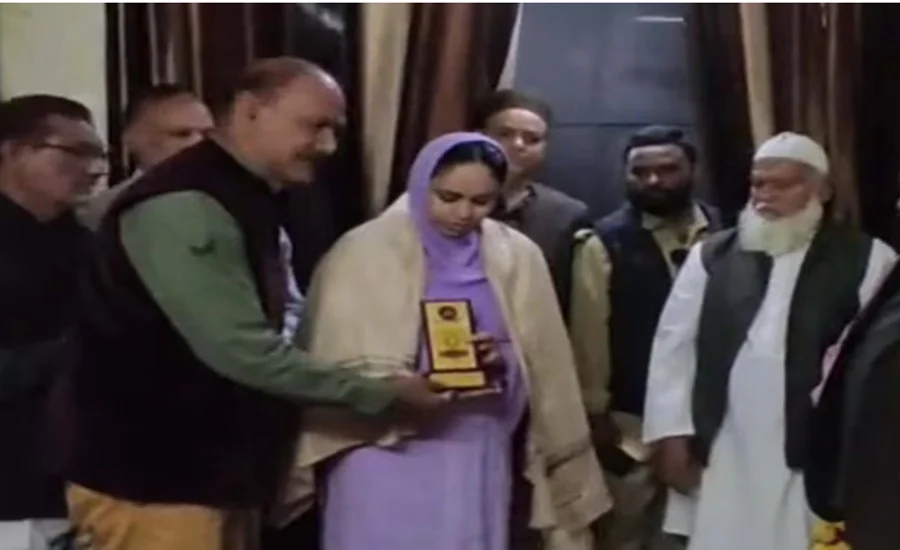
Ilin Fatima, a young Muslim from Ajmer, has made history by becoming the city’s first female Chartered Accountant (CA), marking a milestone for her family and the local Muslim community. Her achievement reflects a blend of strong upbringing, determination, and a steadfast commitment to education.
Fatima was welcomed with widespread enthusiasm by the Muslim Welfare and Education Committee of Ajmer in Rajasthan, where she was felicitated for her dedication and resilience. Community members gathered to celebrate, expressing pride not only in her personal success but also in what it signifies for Muslim families across Ajmer and the state.
Her father, Abdul Hameed Khan, spoke about the significance of this accomplishment with deep gratitude to Allah. “I have three daughters, and I ensured they were educated according to Shariah law,” he said. “My daughters have succeeded in both religious and worldly knowledge. I urge every parent to prioritise education for their children. Even if you have to eat half a loaf of bread, make sure your children receive quality education.”
He referred to a Hadith (sayings of Prophet Muhammad) and emphasised the value of knowledge: “Acquire knowledge even if one has to go to China. Education is essential, and people often overlook its importance. My daughter’s success is a reminder of the power and necessity of learning.”
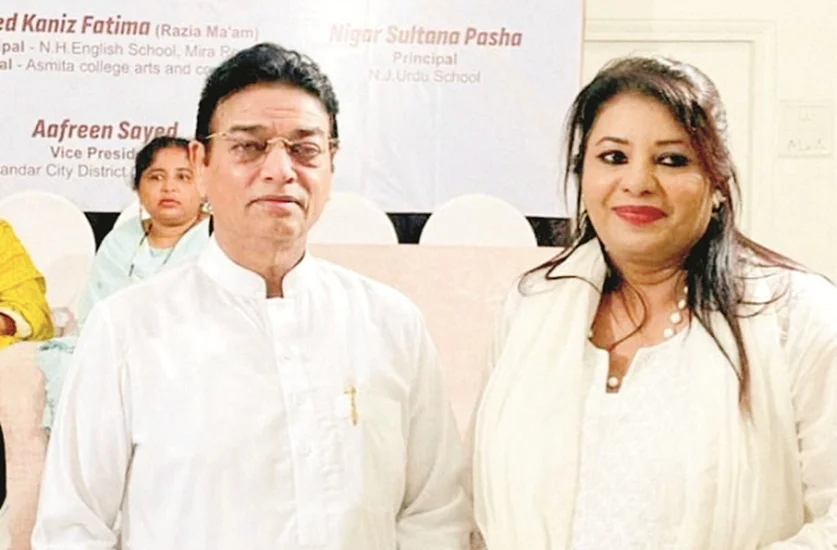
The community’s response has been overwhelming. Leaders and members of various organisations, including Syed Rab Nawaz Jafri, UD Khan, Dr Syed Mansoor Ali, Haji Nafees Ahmed, Advocate Manzoor Ali, Hasan Mohammad, Akram Siddiqui, Farid Hussain, and Aqeel Ahmed of the Ajmer Muslim Welfare and Education Committee have all praised Fatima’s dedication and accomplishment.
A committee spokesperson remarked, “Ilin Fatima’s achievement serves as an inspiration not only to her family but to the entire city. Her commitment to education demonstrates that the progress of daughters is vital for the development of society. When girls are educated, communities prosper, and real success is achieved.”
Ilin Fatima’s historic success is likely to encourage more Muslim families to prioritise education for their daughters, breaking barriers and inspiring future generations. Her journey is a testament to perseverance, faith, and the unwavering support of a family that values both religious and worldly knowledge.
“Her hard work shows that with determination, guidance, and faith, anything is possible,” the committee official added. “She has set an example for all young Muslim girls in Ajmer and beyond.”
As Ilin Fatima steps into her professional career, her story stands as a beacon of hope and a reminder of the transformative power of education within the Muslim community in India.
source: http://www.clarionindia.net / Clarion India / Home> Editor’s Pick> India> Indian Muslim / by Mohammad Bin Ismail / November 10th, 2025
KUWAIT / Raigarh District (MAHARASHTRA) / New Jersey (U.S.A) :
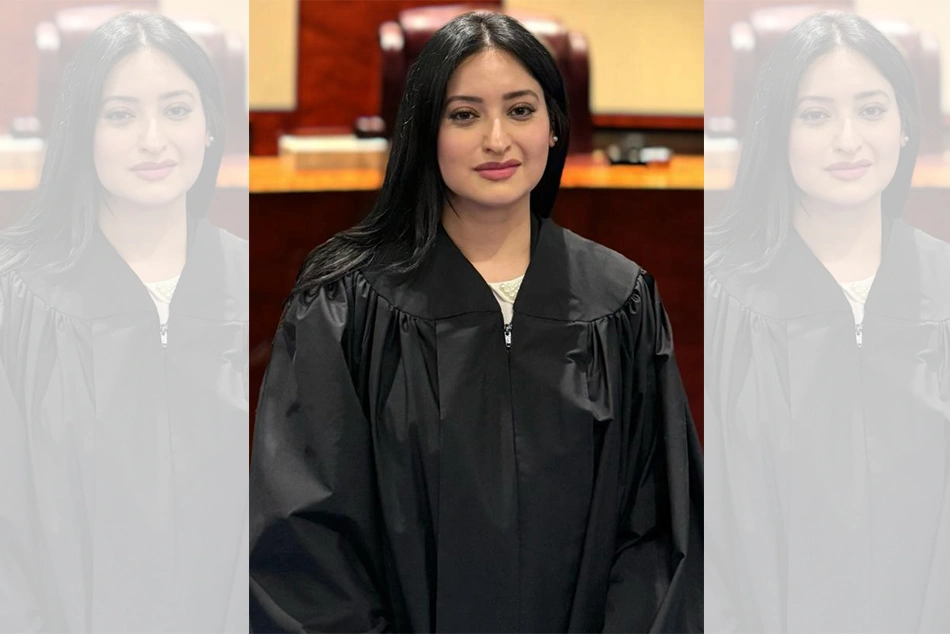
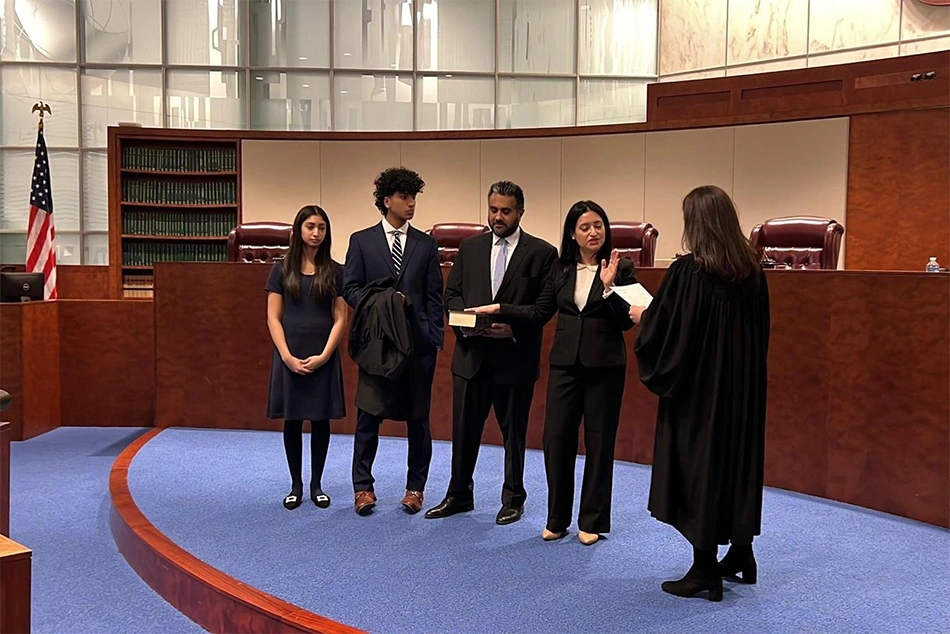
Kokan’s daughter Lubna Qazi Chaudhry took the oath as Administrative Law Judge in New Jersey with her hand placed on The Holy Quran, pledging to uphold constitutional responsibilities.
Mumbai:
Lubna Qazi, a lawyer originally from Maharashtra’s Raigad district, has created history by taking oath as an Administrative Law Judge (ALJ) in the US state of New Jersey, becoming the first Muslim woman to be appointed to this position in the state. The appointment is being widely regarded as a significant milestone for minority representation in the American judiciary.
The oath-taking ceremony was held recently, where Associate Justice Rachel Wainer Apter of the New Jersey Supreme Court administered the oath. On the occasion, Lubna Qazi placed her hand on the Holy Quran and pledged to faithfully discharge her constitutional duties.
The position of Administrative Law Judge holds considerable importance within the American judicial system. ALJs preside over cases involving decisions of government agencies, administrative disputes and public grievances, delivering rulings based on established legal principles.
Lubna Qazi’s Life Journey
Lubna Qazi’s life journey spans multiple countries and cultures. She was born in Kuwait, where she spent her early childhood with her parents. In 1990, during a school vacation, she travelled to the United States. However, following the outbreak of the Gulf War, the family decided to settle there permanently.
Lubna later pursued her education in California, completed her graduation from the University of California, and earned her law degree from Western State University College of Law.
After marrying Ahsan Chaudhry in 2005, Lubna moved to New Jersey, where she served in various government legal positions for nearly two decades. Recognising her extensive legal experience and professional competence, the Governor of New Jersey nominated her for the post of Administrative Law Judge in 2025.
Lubna Qazi is also distinguished for her linguistic abilities. In addition to English, she is fluent in Urdu, Hindi and Konkani, and has working knowledge of Arabic. Committed to preserving cultural and linguistic heritage, she is personally teaching Urdu and Arabic to her two children at home.
Family Feels Honoured
Expressing his pride, Lubna’s father Inayatullah Qazi said that the entire family feels honoured by her achievement. He described the appointment not merely as a position, but the result of years of hard work, sacrifice and prayers.
Speaking to the correspondent, Inayatullah Qazi said that his family hails from Tala taluka of Raigad district in the Konkan region. He completed his education up to Class VI at Jamia Millia Islamia School, Delhi, and his high school education at Anjuman Islam, Mumbai.
After obtaining a degree in Mechanical Engineering from Government College of Engineering, Aurangabad, in 1975, he moved to Kuwait for employment, beginning his career with an air-conditioning company. After working there for fifteen years, he migrated to the United States with a single suitcase following Iraq’s invasion of Kuwait after the Gulf War, as his children were already in the US at the time. He later ensured higher education for all four of his children.
Inayatullah Qazi said that the family’s roots are deeply embedded in Islamic tradition and that Urdu is spoken with pride at home. He added that Lubna completed recitation of the Holy Quran at the age of seven.
He further shared that around five to six generations ago, their ancestors were sent to the Konkan region as Qazis (judicial authorities) to administer justice without discrimination based on religion, caste or race. Although the profession discontinued a few generations ago, he expressed happiness that his daughter has now proudly revived the family’s judicial legacy.
Lubna Qazi is also the granddaughter of Dr Rehana Ahmed, a noted educationist and Executive Chairperson of the Girls’ Board of Anjuman Islam, Mumbai. Dr Ahmed expressed joy over Lubna’s achievement, stating that it serves as a shining example for young women across the community and will inspire girls to pursue higher education and professional careers. She is widely recognised for her dedicated efforts toward the promotion of girls’ education, particularly within the Muslim community.
Meanwhile, several social and legal organisations, including the Asian Pacific American Lawyers Association of New Jersey, have congratulated Lubna Qazi on her appointment. Observers believe that this development marks a significant step forward in strengthening Muslim and minority representation within the American judicial system.
source: http://www.ummid.com / Ummid.com / Home> United States / by Mohiyuddin Altamash / January 30th, 2026
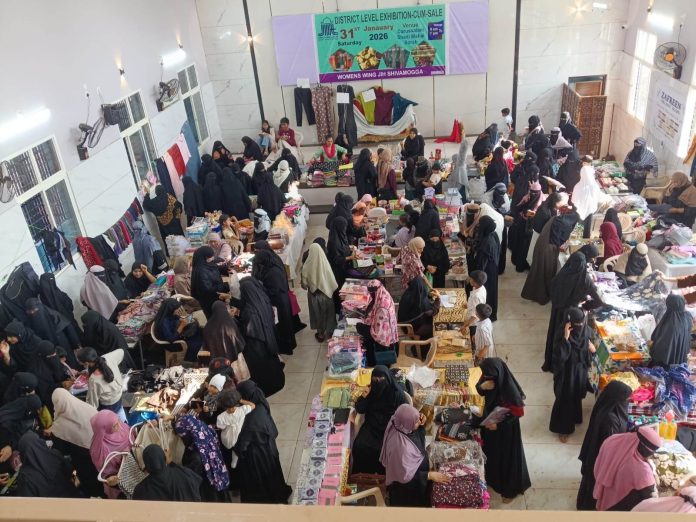
A one-day Exhibition-cum-Sale was organised by the Women’s Wing of Jamaat-e-Islami Hind, Shivamogga District. The exhibition was inaugurated by the State Secretary of the Women’s Wing, Jamaat-e-Islami Hind, Mohtarma Taskeela Khanum.
The objective of such programmes is to economically strengthen and empower women. In the context of rising inflation, unemployment, and poverty, it was emphasised that addressing these challenges is a shared responsibility, and that women must play an effective role alongside men in the nation’s economic development.
The organisers highlighted that such exhibitions provide women with practical business experience, opportunities to interact with people from diverse backgrounds, and support in developing entrepreneurial ideas. These platforms also enable women to engage in halal business practices within the limits of Shari’ah, while facilitating growth through networking and referrals.
Islam permits women to engage in business, including running enterprises from their homes, as reflected in Islamic history through the example of Khadijah bint Khuwaylid رضی الله عنها, a successful businesswoman. Islam also encourages honest and ethical business practices for both men and women.
Nearly 100 women from across the district set up stalls showcasing clothing, handbags, fancy items, abayas, home-made products, and more. A food court offering a wide variety of food items was another major attraction. Members, associates of Jamaat-e-Islami Hind, and women entrepreneurs from different parts of the district actively participated in the exhibition.
The women-exclusive exhibition attracted around 3000 women visitors, who actively shopped at the stalls. The event was described as highly encouraging, as it highlighted the talents, skills, and entrepreneurial potential of women.
Such exhibitions form part of the organisational plan of Jamaat-e-Islami Hind to promote women’s empowerment. Efforts will be made to strengthen the women entrepreneurs’ network.
Feedback received from participants reflected a high level of satisfaction, with many expressing a desire for similar programmes to be organised regularly. Participants particularly appreciated that the exhibition was organised by women, for women, and exclusively for women, creating a comfortable environment that enabled them to conduct business with confidence.
The organisers were widely appreciated, and participants expressed eagerness to remain connected and take part in future programmes. The total sales from all stalls amounted to approximately ₹3 lakh during the one-day exhibition.
The programme concluded on a positive note, reinforcing the importance of such initiatives in promoting women’s economic empowerment and community development.
[The writer of this report is Member Mashavrati Board Karnataka, and District Organiser of JIH Women’s Wing Shimoga]
source: http://www.radiancenews.com / Radiance News / Home> Entrepreneurship> Focus / by Naseema Begum / February 01st, 2026
Qari Mutiullah Wasifi, a calligrapher from Tonk, a city in Rajasthan, won the second prize in the International Islamic Calligraphy Competition, organised by the Islamic Art Society in New York, USA.
This recognition comes amid the rise of digital fonts and artificial designs globally.
Qari Mutiullah Wasifi competed with more than 4000 artists from around the world. On this occasion, Qari said his success at an international forum is not sudden. Over the past four years, India’s presence in this competition has been consistent, and the Wasifi family has made it to the top every time.
In 2022, Qari Mutiullah Wasifi received the first prize. A year later, his son Haris Wasifi secured second place. In 2024, Haris won the first prize.
This year, the first prize was bagged by Egypt, the second by India, the third by Pakistan, and the fourth by Turkey. The award includes a certificate, a memento, and a cash prize. However, for the Wasifi family, the real honour is the recognition that comes with representing India.
Qari Mutiullah Wasifi at work
Qari Mutiullah Wasifi’s journey didn’t begin at an art college. His first school was his own home. His late father, Qari Salimullah Wasif Furqani, was a renowned calligrapher, reciter of the Quran, and a scholar. He had a command of Arabic, Persian, and Urdu.
His calligraphy of the Quran was his speciality. As a child, Mutiullah watched his father sit for hours, writing. The sharpness of the pen, the curves of the letters, and the measured amount of ink used were not mere play for him, but a matter of discipline.
For formal education, he enrolled at the Maulana Abul Kalam Azad Arabic-Persian Research Institute (APRI) in Tonk. He completed a four-year diploma course, recognised by the National Council for Promotion of Urdu Language (NCPUL), Delhi. This is the same institution that has made Tonk a centre for Arabic and Persian studies.
Tonk is generally known for its madrasas, books, and Islamic education. But this city has also witnessed a well-established tradition of calligraphy. During the Nawab era, calligraphers from Iran and Central Asia taught locals the art.
Institutions like Maulana Abul Kalam Azad Arabic Persian Research Institute (APRI) have preserved this legacy. This institution has trained many calligraphers who have made a name for themselves in India and abroad. Qari Mutiullah Wasifi is an important link in this chain.
Wasifi told Awaz-the Voice that for him, calligraphy is not just a means of decoration, but a part of worship. To date, he has handwritten 27 copies of the Holy Quran. Some of these Qurans are written in extremely fine script, while others are adorned with gold and silver.
Qari Mutiullah Wasifi with a competitor
He has also undertaken unique projects, such as writing the entire Quran on a single large sheet of paper. This work requires years of practice and patience. The placement of each letter is crucial, and even a single mistake can ruin the entire work.
One of Qari Mutiullah Wasifi’s lesser-known yet important contributions is related to the preservation of manuscripts — completing the half-done copies of the Holy Quran and rare books in Arabic, Persian, and Urdu. So far, he has completed approximately 500 incomplete Qurans and hundreds of old books.
He has undertaken projects for private collectors, libraries, and research institutions. This effort breathes new life into books that might otherwise have been lost to oblivion.
Wasifi’s art is not limited to paper. He has done calligraphy on cloth, leather, wood, metal, grains of rice, lentils, marble, hair, and even inside bottles. This art is not only a test of manual dexterity but also of concentration and balance.
Tomorrow is the last day to enjoy the discount on incredible workshops by the Global Centre of Islamic Art during Islamic Art Week! 🌟 Access a variety of workshops on calligraphy and Islamic art in general by many talented artists… pic.twitter.com/XAg735bUeT
Wasifi participated in the international calligraphy competition organised by the Islamic institution “Irtika” in Istanbul, Turkey, in 2022. This institution organises a prestigious global calligraphy competition every two years, in which renowned calligraphers from around the world participate.
In 2023, he also participated in the international calligraphy competition organised by Fujairah Company in Dubai (UAE). This competition is known for its distinguished jury and global participation.
Wasifi says that if workshops, exhibitions, and competitions are considered together, his participation in national and international events, both within and outside India, totals approximately 30.
Wasifi thinks it’s not his achievement, but a means of showcasing the Indian calligraphy tradition at the international level.
According to him, such platforms provide artists with opportunities to learn, test themselves, and connect with calligraphers from around the world. He has also received several honours at the national level.
He has also participated in international exhibitions and workshops in places like Bengaluru, Udaipur, Aligarh, Diggi Palace in Jaipur, and the Lalit Kala Akademi in Delhi.
In the Wasifi family, this art has been passed down from one generation to the next. Qari’s eldest son, Haris Wasifi, is an internationally acclaimed calligrapher. The second son, Abbas Wasifi, is a Hafiz and Qari (one who has memorised the entire Quran and recites it with proper pronunciation) and is pursuing his education at Nadwatul Ulama, Lucknow.
The daughter, Sidra Wasifi, is an Alima (a female religious scholar) and teaches calligraphy to young girls. This family is not only preserving art but also discipline and heritage.
Qari Mutiullah Wasifi has established ‘Bazm-e-Wasif‘ in memory of his father. His dream is to create a special library and museum of calligraphy in Tonk, where his and his father’s manuscripts can be safely preserved. He says that despite the lack of resources, his resolve remains unwavering. His goal is to ensure that this calligraphic heritage of Tonk reaches future generations.
source: http://www.awazthevoice.in / Awaz, The Voice / Home> Stories / by Farhan Israeli, Tonk (Rajasthan) / January 29th, 2026