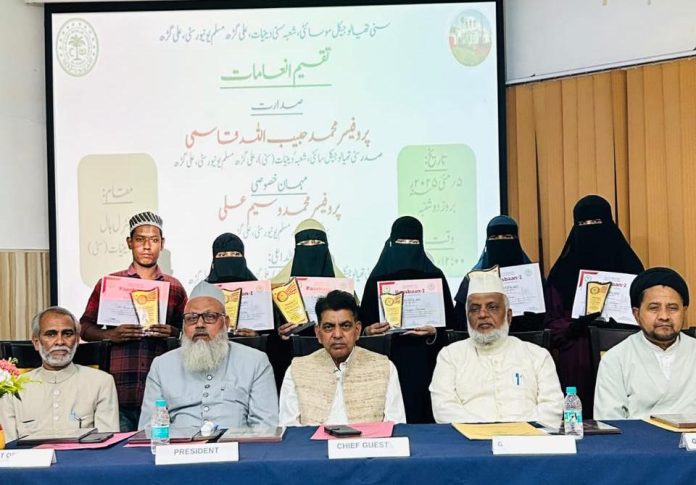
Prof M Waseem Ali, Prof Saud Alam Qasmi, Prof. Syed Tayyab Raza Naqvi, Prof. Mohammad Habibullah and Prof Mohd Rashid with the prize winners at Theology Department of AMU
Aligarh:
The Sunni Theological Society of the Department of Sunni Theology, Aligarh Muslim University (AMU), organised a prize distribution ceremony to honour the winners of a writing competition held on the theme, “The Legal and Historical Status of Waqf and the Formation of a Peaceful Society in the Light of Islamic Teachings.”
Professor Mohammad Wasim Ali, Proctor of AMU and the Chief Guest, commended the choice of a socially and religiously significant topic. He noted that while such themes deserve broader academic engagement, the Faculty of Theology has set a precedent for others to follow.
Presiding over the event, Professor Mohammad Habibullah Qasmi, Dean of the Faculty and Head of the Department, lauded the efforts of the Society and emphasised the importance of organising such programmes to showcase students’ academic and intellectual potential.
Guest of Honour, Professor Mohammad Saud Alam Qasmi encouraged students to take their dual expertise in modern and religious education beyond the university. “Your responsibilities are greater, and you must rise to meet them at the national academic stage,” he advised.
Professor Mohammad Rashid urged students not to be discouraged by competition outcomes, reminding them that many more opportunities lie ahead. Professor Tayyab Raza Naqvi, former Head of the Department of Shia Theology, also congratulated the Society for its timely theme selection.
Dr. Nadeem Ashraf, faculty member of the department, delivered the welcome address.
The programme was conducted by Zahid Ali, Vice President of the Sunni Theological Society. Dr. Raihan Akhtar Qasmi delivered the vote of thanks.
The event drew a large audience, including faculty, students, and staff from various departments.
source: http://www.radiancenews.com / Radiance News / Home> Latest News> Report / by Radiance News Bureau / May 08th, 2025
“My father died of cancer when I was in the 9th grade. My family was in deep grief and faced a mountain of difficulties. My mother worked as a household help to ensure my younger brother continued his studies.
“My conditions inspired me as I took difficulties as an opportunity. I expressed myself through my paintings, which were appreciated.
Today, my paintings and portraits are appreciated in America, Europe, and Gulf countries,” Adnan Ansari, a student pursuing an M.Com degree from Aligarh Muslim University, told Awaz- Voice over the phone.
Adnan had been fond of drawing since his school days, and to support his family, he took up his hobby as a profession. After his father passed away, his mother had to take care of the family all by herself. During the COVID-induced lockdown, I worked on my drawing skills at home using a pencil and paper.
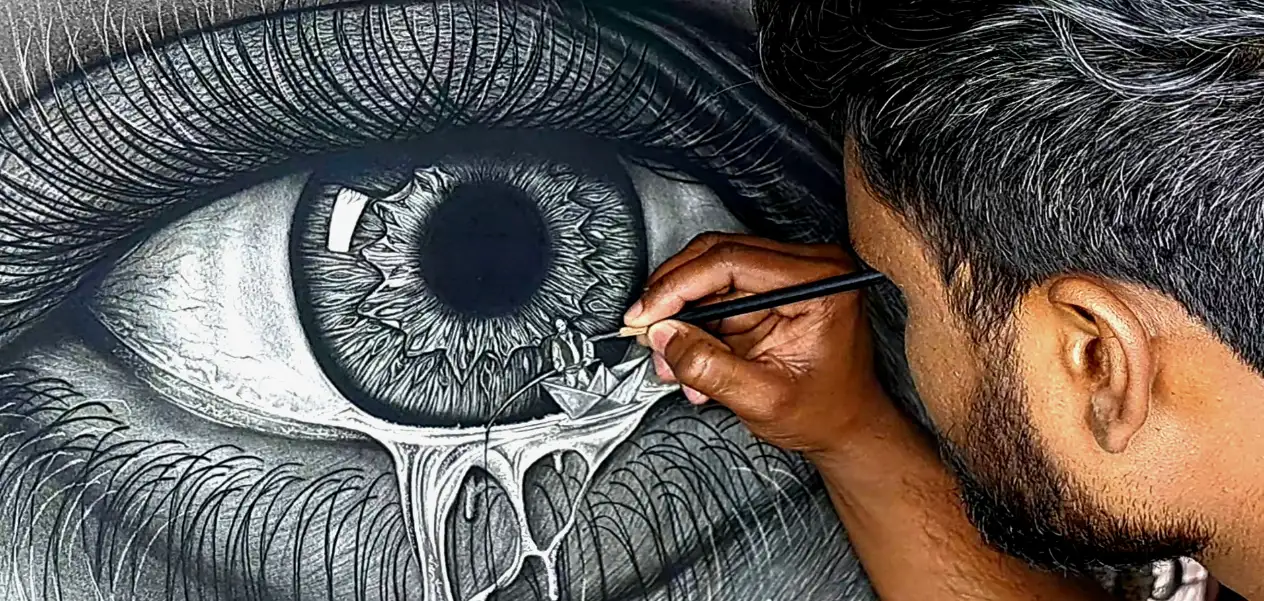
Adnan Ansari at work
After this, Adnan created his Instagram page and uploaded his paintings on it. He received appreciation for his art. “Appreciation for one’s work is fine, but I cannot fill stomachs or run the family,” he said.
Soon after, Adnan completed his schooling at Aligarh Public School, one of his juniors placed an order over the phone for his portrait.
“That was my first earning. I received Rs 200 as remuneration. I never looked back. I was encouraged to make better paintings as I realised that I would start earning. My hard work and dedication have paid off, and today I am at a stage where my paintings are in demand even abroad.”
Today his Instagram page is doing well. “My followers are increasing, and I upload all my works for sale on it.”
He receives all his orders through Instagram. “I currently have orders for paintings from America, UK, Canada, and Saudi Arabia,” said Adnan. So far, his most expensive painting has been for Rs 40,000.
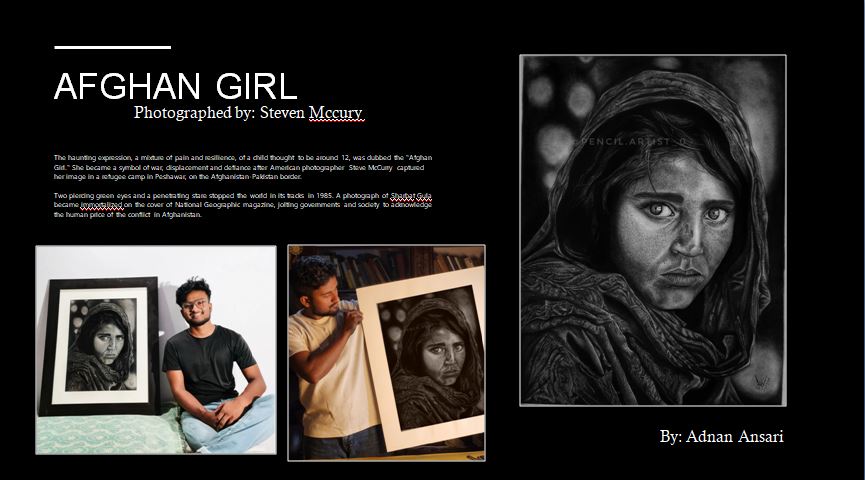
Adnan Ansari with some of his works
Adnan said that he has been trying to understand life from his perspective and process his feelings on canvas. That process makes him serve people through his art. His paintings reflect the maturity of his imagination.
According to him, copying something and making it exactly like it is not the definition of art.
Adnan said that he could make a painting of any kind, even from the oldest torn photographs. “For example, if you give me a colour or black and white photograph, I will make it exactly like the original, which will make you feel that this one is better, no matter how old the photograph is, if there is even 10 to 15 percent imagination in it, then I can make it.”
Adnan told Awaz-The Voice that his mother, Rashida Begum, is not educated and has a small income through doing small household work, which is not enough for the family. His younger brother Bilal Ansari is in school.
Adnan Ansari’s art
Adnan Ansari told Awaz-The Voice that he was thankful to former Aligarh MP Jamal Khwaja for providing him with a place to live. “We do not have a house and a Jamal Khwaja for whom my mother works, has kindly given a portion of his bungalow for my family to live.”
Adnan told Awaz-The Voice that I am currently doing post-graduation from Aligarh Muslim University. Along with this, I am improving my art through social media. However, my work is more understood and liked abroad. But I hope that one day I will get a big honor at the national and international level, and I am working hard for that.
Adnan said, “I started with pencil and sheet, so till now whatever paintings I have made, I have used only charcoal pencil, charcoal powder, eraser, cutter scale, knife. Now that I have money, I am also using canvas, light, computer, camera.”
Adnan said that the youth should bring out the talent hidden within them and try to move forward using whatever facilities are available to them. It is not necessary to have big things to make it big, one should bring out the hidden talent and work hard honestly. One day, success is inevitable.
Adnan Ansari’s works
Adnan said, “I mostly like to make a painting which has a story behind it. I keep looking at the paintings of some international-level artists and photographers to get inspired to do my work.”
Adnan Ansari is also a state-level under-19 football champion; he also edits videos on a freelance basis. Adnan wants to build his studio where he can showcase his art and video editing skills and create digital artwork.
Adnan Ansari says that first he prepares a digital layout and sends it to his clients. He does all this through Touchbook software. After approval, he draws it on canvas with a pencil.
Adnan says the price he prices his paintings as per his assessment of the hard work that has gone into each one. “I earn enough to run my household. I am now buying modern tools for my work. I see myself as a big artist of India in the next 5 years.”
Adnan has received many awards for his art. His works were also on display at the National Art Exhibition, where he received a lot of appreciation. Adnan also actively participates in youth fests and other competitions.
source: http://www.awazthevoice.in / Awaz, The Voice / Home> Stories / by Onika Maheshwari, New Delhi / April 09th, 2025
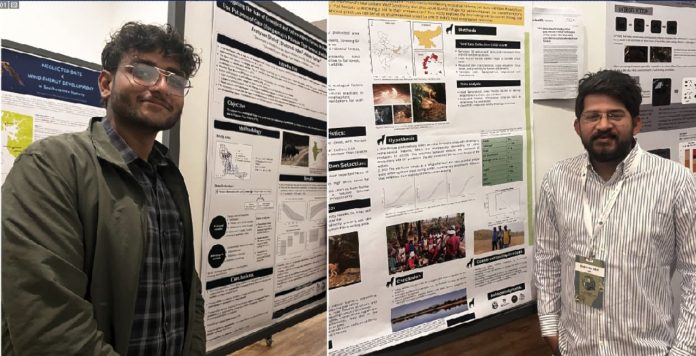
Two AMU research scholars, Arshyaan Shahid and Shahzada Iqbal, brought laurels to India by presenting their innovative research at the 9th European Congress on Mammalogy held in Patras, Greece
Aligarh:
Two research scholars from the Department of Wildlife Sciences, Aligarh Muslim University (AMU), Arshyaan Shahid and Shahzada Iqbal, brought laurels to India by presenting their innovative research at the 9th European Congress on Mammalogy held in Patras, Greece. Guided by Prof. Orus Ilyas, the students were the sole representatives from India and the broader subcontinent at this premier international event, which convenes once every four years and draws the world’s leading mammalogists.
The European Congress on Mammalogy is a renowned platform for sharing advancements in mammalian science, conservation strategies, and ecological research.
Among hundreds of global participants, Shahzada Iqbal presented two posters on wolf conservation in Central India, addressing ecological challenges and species threats. Arshyaan Shahid presented a poster on the behavioural ecology of the Gaur (Indian bison) and also delivered an oral presentation on human-elephant interactions in Jharkhand’s Palamau Tiger Reserve.
Their research received commendation from international experts, who appreciated their scientific rigor and conservation-oriented approach.
“It was an incredible opportunity to share our work with leading mammalogists,” said Shahzada Iqbal. Arshyaan Shahid remarked, “The insights and feedback we gained were invaluable. Representing India on such a platform was truly an honour.”
Prof. Orus Ilyas lauded the students’ accomplishments, noting, “Their success at EUROTHERIUM reflects the research excellence at AMU and signals India’s growing presence in global wildlife science.”
source: http://www.radiancenews.com / Radiance News / Home> Focus> Markers of Excellence> Research / by Radiance News Bureau / April 15th, 2025
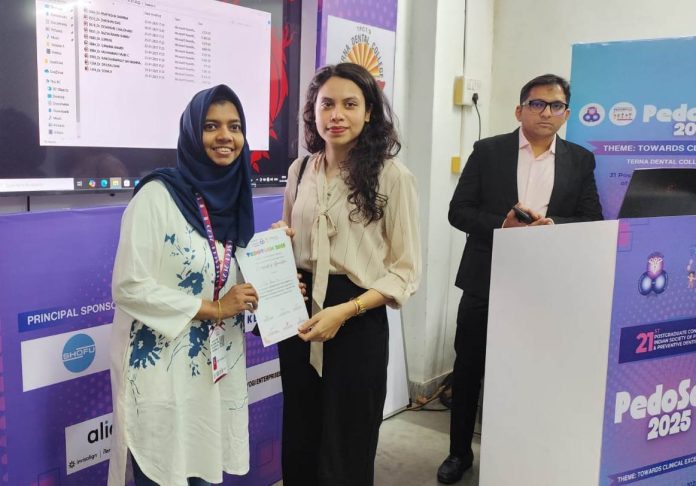
Dr. Fasna K receiving the best paper award at Mumbai
Aligarh:
Dr. Fasna K, a Junior Resident-III in the Department of Pediatric and Preventive Dentistry, Dr. Z.A. Dental College, Aligarh Muslim University got the Best Paper Award at the 21st National Postgraduate Convention of the Indian Society of Pedodontics and Preventive Dentistry (PedoSoch 2025), held in Mumbai, recently.
Her Guide, Prof Saima Yunus Khan, Chairperson of the department congratulated Dr. Fasna on the achievement.
source: http://www.radiancenews.com / Radiance News / Home> Pride of the Nation> Awards> Latest News / by Radiance News Bureau / February 05th, 2025
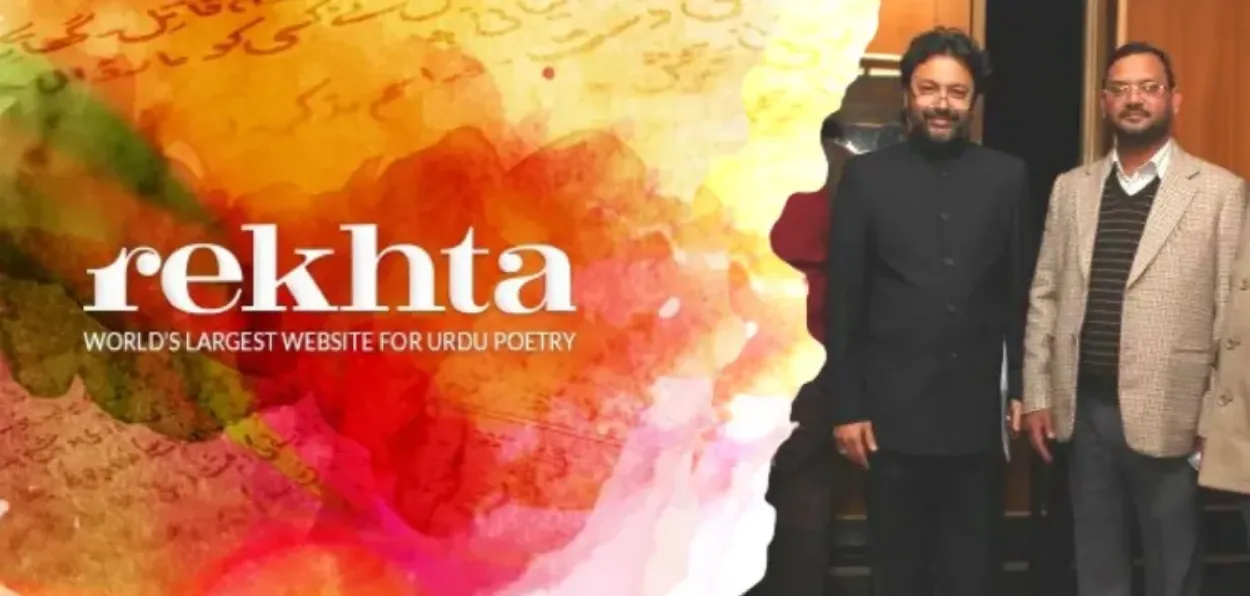
Founder of the Rekhta Foundation Sanjeev Saraf (left) with Dr Umair Manzar
“Umair Manzar was the first to join me in my journey of Rekhta,” said Sanjeev Saraf, the founder of the Rekhta Foundation. He said this before a smaller audience at the launch of the first Jashn-e-Rekhta, the festival of literature and performing arts in 2012.
The festival has become a major annual cultural event in Delhi, and the Rekhta Foundation portal is a key resource for Urdu language and literature and a peg for the online and offline community of Urdu literature lovers.
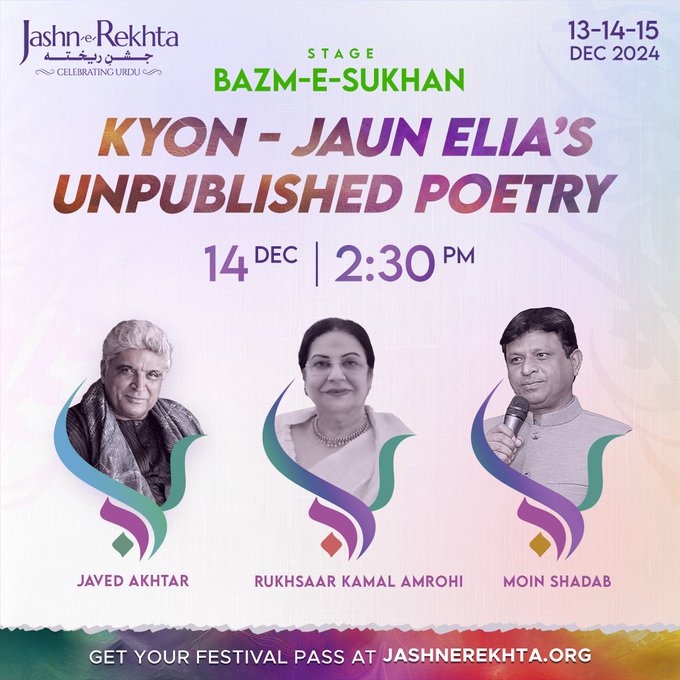
This year the three-day Jashn-e-Rekhta is being held in Delhi from December 13.
Saraf said Umair was his first Urdu teacher. He was the one who proposed the name Rekhta for the website and became the first member of the online community of Urdu aficionados on Rekhta Foundation.
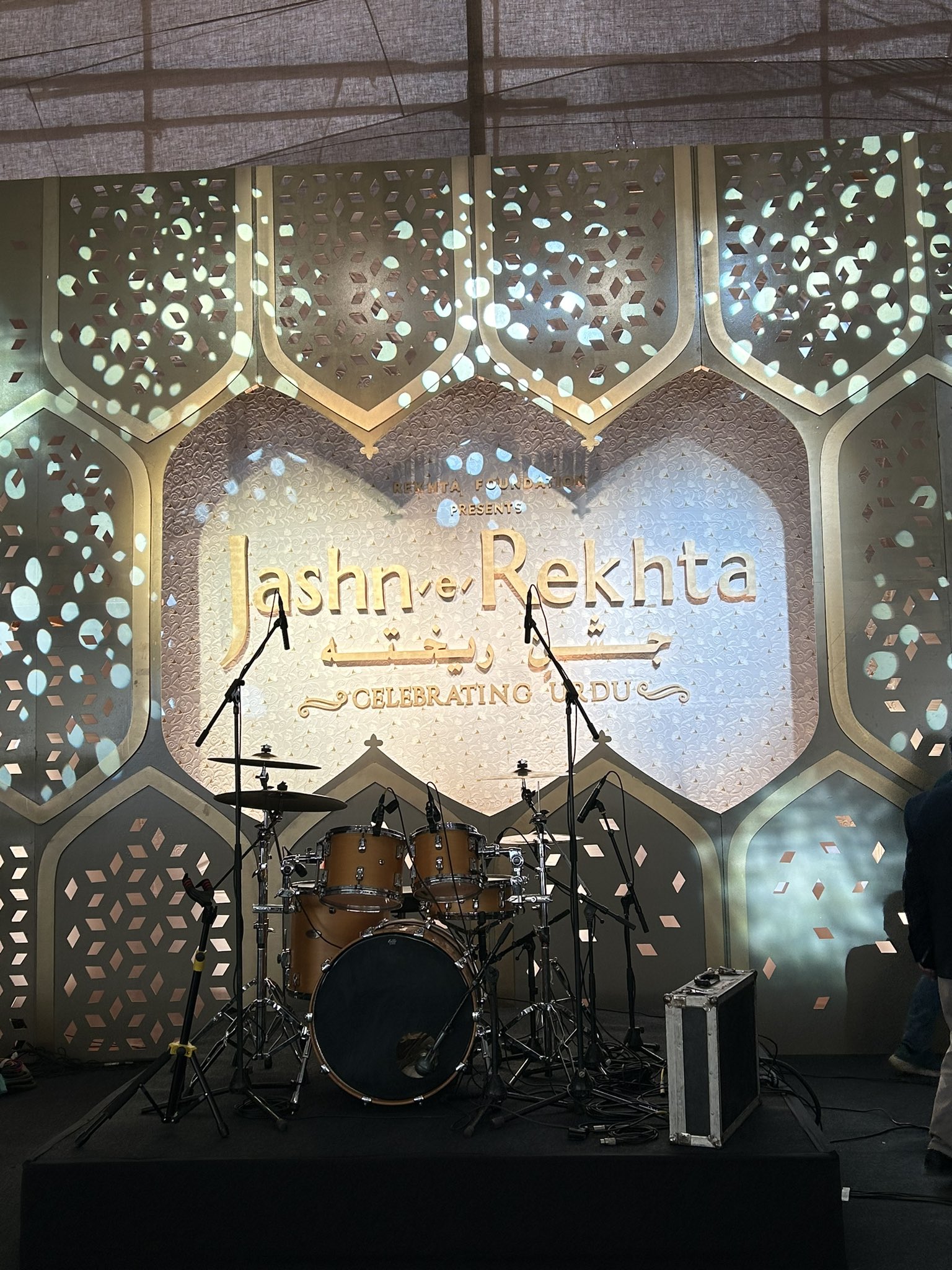
Stage for artists to perform in Jashn-e-Rekhta
Today, Dr. Umair Manzar is an Assistant Professor in the Urdu Department of Maulana Azad National Urdu University, Lucknow Campus When Awaz-the Voice contacted him, he was surprised at his name being mentioned by Safar.
Awaz-The Voice contacted Umair Mazhar on the phone. He came across as a simple and humble person not too keen to take credit for his key role in setting up Rekhta.
After initial reluctance, Umair Manzar agreed to share his interaction with Sanjeev Saraf.
Manzar’s version of the initial days of Rekhta threw up many more characters in this journey. He says many other people also played their part in helping Sanjeev Saraf concretize what was his passion for the language.
Umair Manzar said that he met Saraf during the 2010 spring.”Summer had not started.”
One day Vice Chancellor Jamia Millia Islamia Najeeb Jung called Urdu’s Head of Department Professor Khalid Mahmood and asked him to send a tutor to a particular person to teach Urdu. At that time, Umair was teaching at the university. His HOD gave him a piece of paper with a name and a telephone number scribbled on it and asked him to contact him.
“The name was Sanjeev Saraf. I called that number, we fixed a time for the tuition class.”
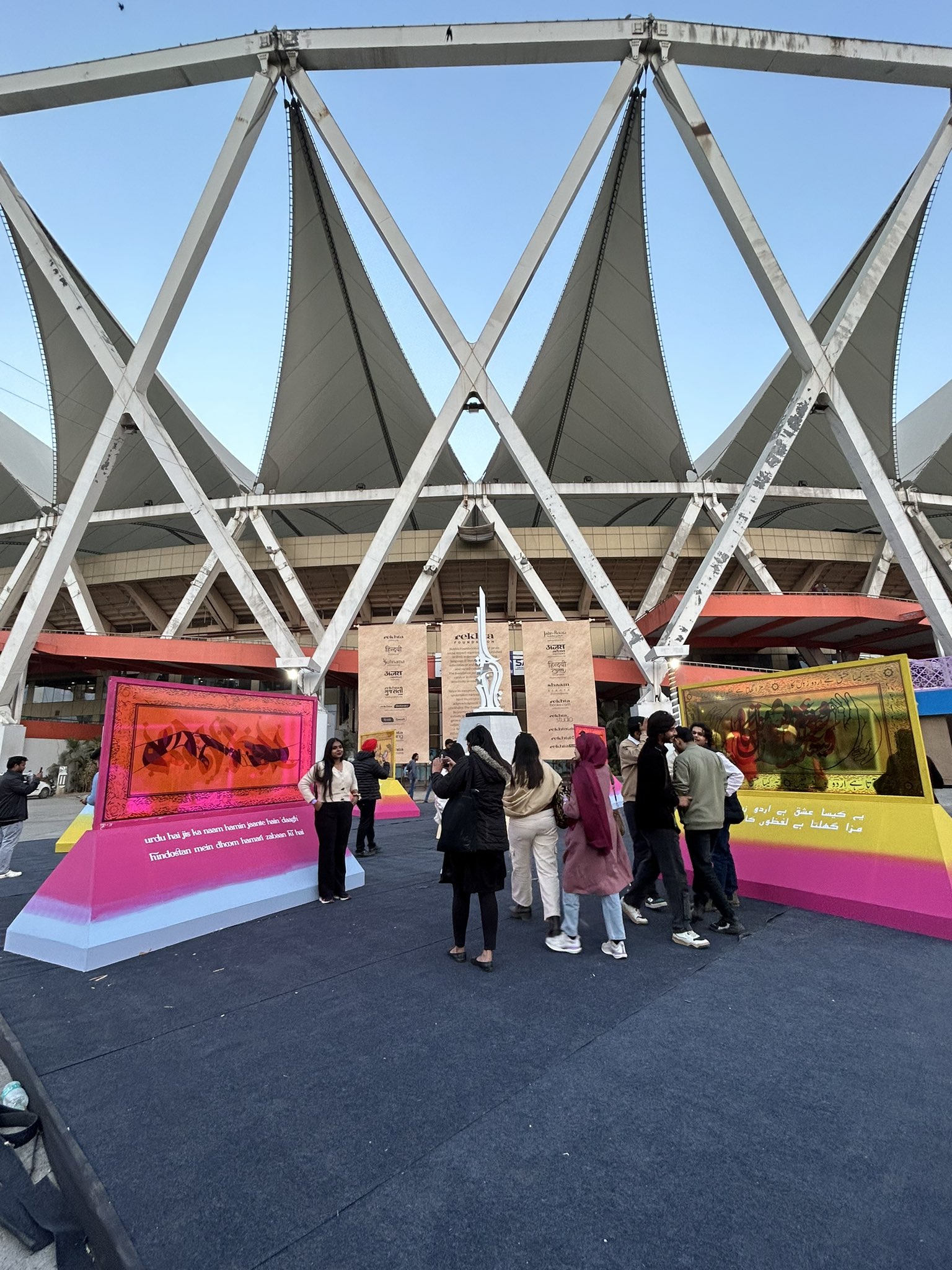
Jashn-e-Rekhta festival
“The first time I met him at his home. I had no idea who he was. Yet I found him a serious person; there was a certain calm in his way of speaking.”
“I liked him instantly as he spoke candidly. After a few meetings, he told me that he was very fond of Urdu and wanted to learn it.
“He especially wanted to understand poetry. In a few meetings, I realized that apart from learning the language, he was also interested in creating an Urdu website. He has nursed a dream of starting an Urdu website for many years,” Manzar said
Sanjeev Saraf seemed to be learning the language out of love for it. He also thought Urdu could become a bridge among diverse people of India who loved the language.
He thought the website of this idea could increase their love for Urdu. Thousands of people want to learn the language because of its poetry. However, there is no one to help them. Sanjeev Saraf had faced this problem and therefore empathized with others. He had the resources, including time to learn Urdu. However, everyone could not do it.
Manzar told Awaz that he soon realized Sanjeev Saraf wanted to do something beyond learning Urdu.
After a few days, he said, “Every person needs a teacher; my website can fulfill the needs of all such people.”
Manzar said, “This got me thinking seriously about this issue. By now I was visiting the Noida office of Mr Saraf. One day he said that we can start Urdu work in a part of that office.”
Umair Manzar also did not realize that he had become a part of the initiative to establish a website that would help Urdu lovers all over the world and bind them in a community.”
He also realized that he was dealing with a passionate lover of Urdu and not a mere learner.
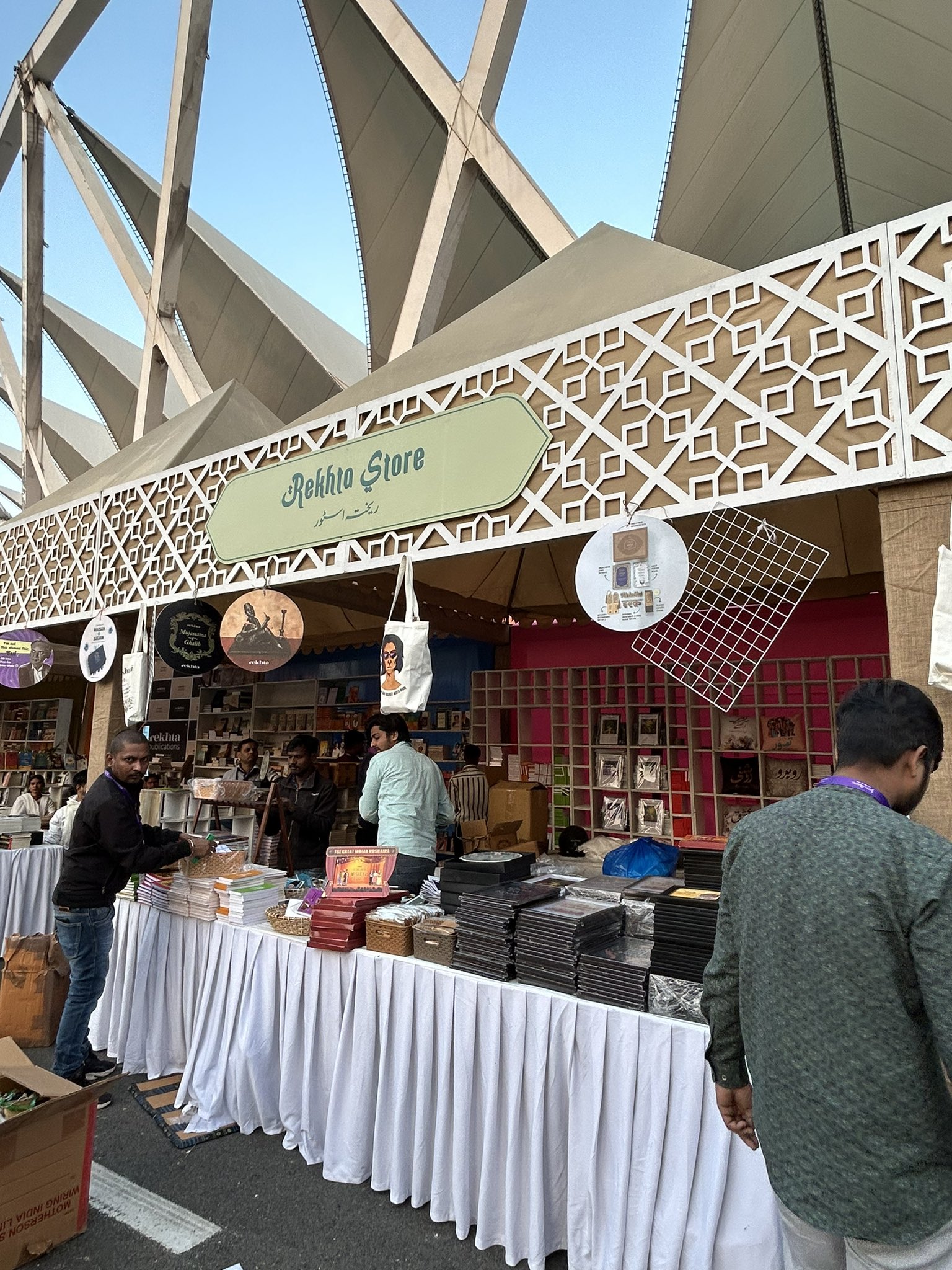
A bookshop in Jashn-e-rekhta
One day Safar spoke formally to him. We decided to discuss it in detail.
And finally one day Sanjeev Saraf asked him to start work on the website,
The first name for the website he suggested was Kavita. This was already bought by someone. The same was the case with many other titles. “I also felt if we had to buy the already registered name for the website, the prices were ridiculously high.”
He suggested ‘Rekhta’ to Sanjeev Saraf. ”He asked me its meaning. When I explained it to him he was happy. Soon we registered rekhta.org as the domain name. I remember he liked the harmony of the words. He was sitting with us during the entire process of registration online.”
Thereafter the work on the website started and many targets were achieved before the scheduled time. This was the journey of paper preparation for the Rekhta Foundation.”
Umair Manzar says he had met Sanjeev Saraf with the sole purpose of teaching him the language but he got involved in his mission.
When asked about the preparations after naming, Umair Manzar said, “After the name was decided, work on the website started. In the summer of 2011, I officially launched the website. The first step was to choose poems of classical poets and the unanimous choice was Mirza Ghalib.”
The selection of contemporary poets started from Jamia Millia Islamia and other libraries. Their compositions were recorded. Saraf hired composers and they worked out of the Noida office. It started slowly and then it gained momentum.”
Umair Manzar said, he also contacted Professor Ahmed Mahfooz and Professor Abdul Rashid for their suggestions and advice.”I also arranged a meeting of both gentlemen with Sanjeev Saraf and this meeting lasted for several hours.”
Saraf expressed his intentions and ambitions; the professors also gave their input and suggestions. “Sanjeev Saraf noted every suggestion and tip the two learned professors offered.”
Prof. Rashid suggested that the way to preserve old books was to scan them and upload them on the website.
Umair Manzar says,” One day when I went to the office, Sanjeev Saraf announced the (scanning) machine had arrived. “Now you people bring the books. The scanning process will begin.”
This was a challenge to all of us. Initially, we tried to upload only selected and important books on the website. Later this also opened a new possibility.
A poster of Jashn-e-Rekhta
Umair Manzar says that initially, people like Rehman Farooqi, Prof. Shamim Hanafi, and Prof. Walwasa ignored the website as another wannabe.
Probably the first column about Rekhta was written by Professor Vasa, Vice President of the Urdu Academy. He also gave Rekhta an award for the promotion of Urdu.
Umair Manzar joined Maulana Abul Kalam Azad Urdu University as an assistant in the early days of Rekhta.
Initially, the Rekhta Foundation was recruited only on the recommendation of a group of like-minded people like Professor Ahmed Mahfooz, Professor Abdul Rashid, and Umair Manzar.
Abdul Rashid, who is from Delhi, had done his research on dictionaries. This year the Ghalib Institute is giving him its prestigious literary and research award. Professor Ahmed Mahfooz is the HOD Urdu Department of Jamia Milia Islamia. He is an expert on poetry.
Professor Abdul Rashid and Dr. Amir Manzar are among the people who have been actively associated with the Rekhta Foundation since its inception.
Dr. Umair Manzar and Prof. Abdul Rashid were included in this team to scan books from Raja Mahmoodabad library and make them part of e-books.
Similarly, access to some private libraries and some important books was very active. Along with them, Professor Abdul Rashid and Dr. Umair Manzar have played a role.
source: http://www.awazthevoice.in / Awaz, The Voice / Home> Stories / by Mansooruddin Faridi, New Delhi / December 12th, 2024
Zillur Rahman, a professor, poet and hakim, has established a museum-cum-library in Aligarh to preserve books and artefacts that tell the story of Delhi of yore.
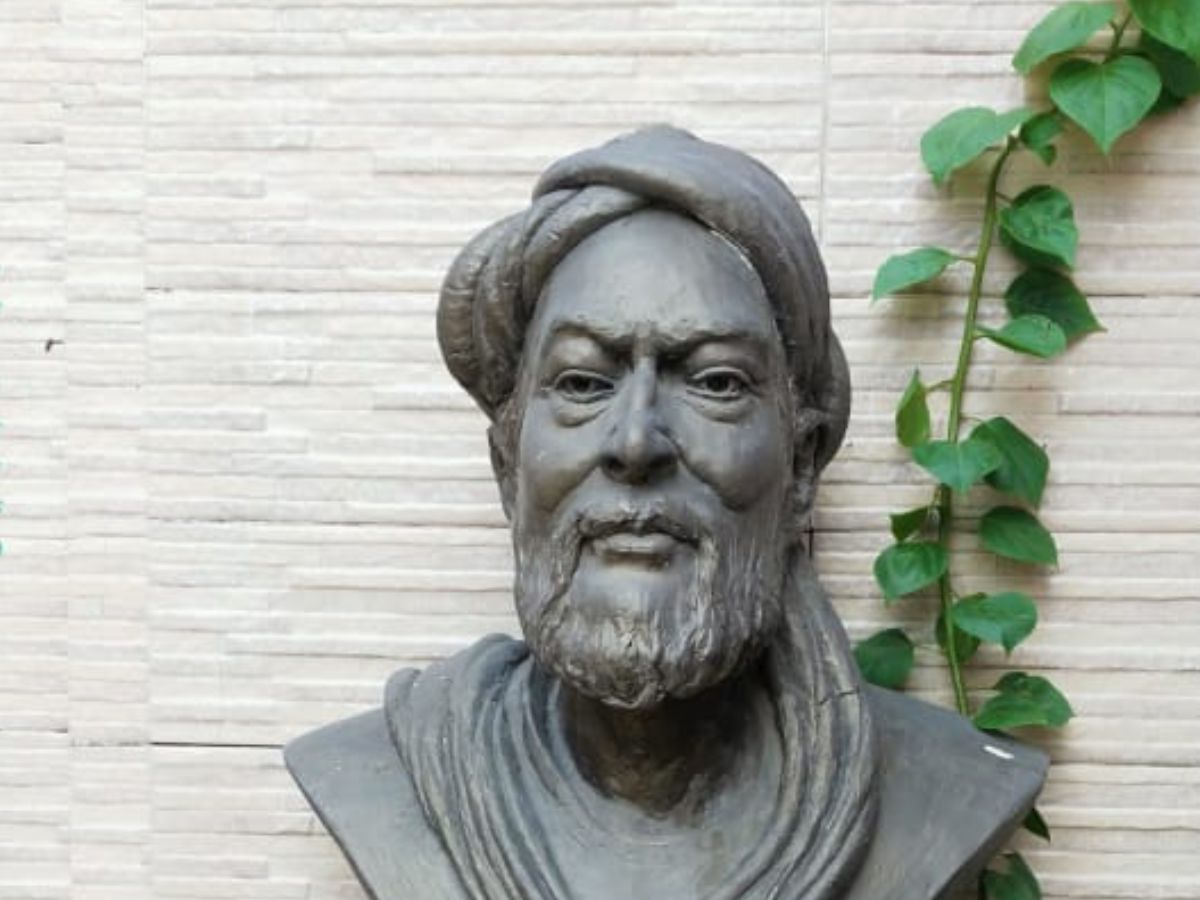
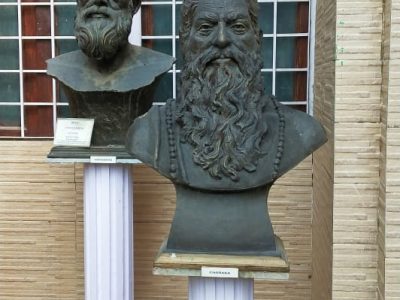
PIONEER: A bust of Ibn Sina, a physician and philosopher, who lived over a thousand years ago, at the Ibn Sina Academy in Aligarh
Nestled in the heart of the city of Aligarh, Uttar Pradesh, is Ibn Sina Academy of Medieval Medicine and Sciences, named after famous scholar of philosophy and medicine Abu Ali Ibn Sina (980 -1037), who lived over a thousand years ago.
Located at Tijara House, the non-profit, non-government and non-political academy was established in the year 2000 by Professor Syed Hakim Zillur Rahman, an academic and a litterateur from Aligarh.
A one of its kind museum and library, it was aimed at encouraging and promoting researches and studies in medieval sciences, especially Ibn-Sina’s, as well as arts, culture, poetry among other subjects.
Notably, Ministry of Ayush, Government of India gave accreditation to the academy in 2004 and promoted it as a Centre of Excellence in 2008. The professor had a mammoth personal library that he had established in 1960s. After Ibn Sina Academy was born, the library became a part of it.
The specialty of this museum lies in its varied collection that includes sofas, crockery, jewels, armours, stamps, mirrors, outfits of princesses, queens and kings as well as turbans worn during battles by historical legends.
The Zillur Rahman Library houses 32,000 rare books and magazines, 1,100 manuscripts apart from paintings, sketches, citations, artefacts and much more.
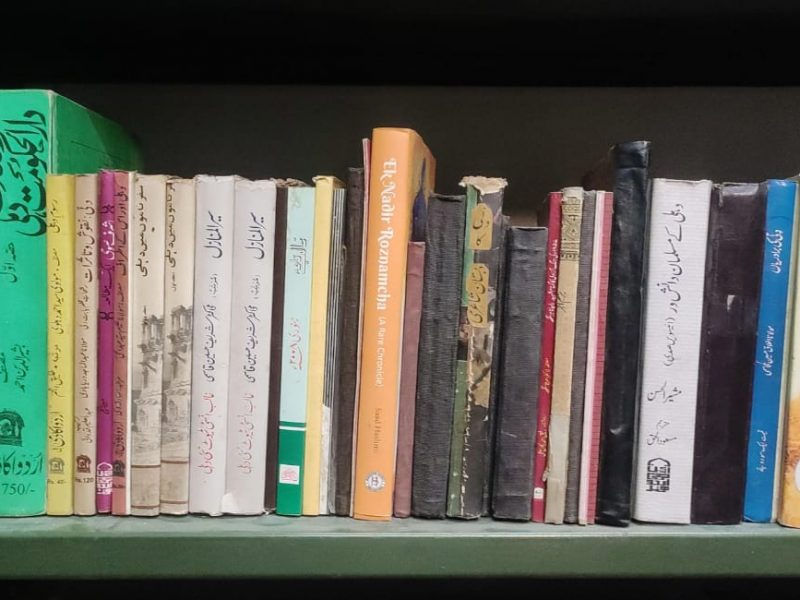
RARE: A collection of books on Delhi
The Delhi connection
There are 7,500 books on Delhi of yore in the library, including on poet Iqbal, dictionaries as old as 150 years, authentic diwaan on Ameer Khusrau, books dating back to 1893, on and by the last Mughal emperor Bahadur Shah Zafar, British Raj–Victorian Era with pictures in lithographs and more.
But considering Delhi is dry without the ‘zikr’ (mention) of the poetic legacy of Asadullah Khan ‘Ghalib’, the library has dedicated a special space for the poet: “Ghalib Study Centre”.
A galaxy in itself, this part has 1,350 rare books in Urdu, Persian, English and Hindi on Ghalib apart from several special issues in different magazines (called risala in Urdu) which are now available only in this museum.
For instance, an important old publication called Sooraj (meaning sun) had special Ghalib edition.
One of the books has illustrations of most of the ghazals he had penned, while in his own Deewan (collection of his authentic shayri) there, Ghalib’s original ghazals had no pictures or illustrations.
MASTERPIECE: The translation of the book written by Hakim Zillur Rahman
One of the most important collections here is a book by renowned author Shakeel ur Rahman called Mirza Ghalib aur Mughaliyaat, which has illustrations from Muraqqa-i-Chughtai, an illustrated selection of Ghalib’s work by AR Chughtai, a renowned artist of early last century. The illustrations are based on an important topic or issue that the poet raised in his couplet (sher).
Rare books with names like Jihad-e-Ghalib, Ghalib Satrung, Soz-e-Ghalib, his letters in Persian and many more ornate the archive.
Additionally, a book called Naqsh-e-Rung from Pakistan which was brought to India by scholar Urdu litterateur and poet professor (late) Shamsur Rehman Farooqui enriches the book shelves.
Tehqeeq-nama Ghalib, Ghalib’s ghazal in Persian called Ghazaliayat-e-Farsi, Ghalib, few rare and special issues of magazines like Shama, Nuqoosh, Hunoon, Taar-e-Nau, film magazines, Al-Ilm, Shayar, Kaarvaan with special edition on Ghalib are the other charms.
A rare pocket-sized edition on Ghalib is a popular one.
Travels to Delhi
Another section on Delhi consists of travels and trips done in Delhi by the authors, travellers and poets of old times. Rare books like Safarnama Dehli and Sair-ul-Manazir provide an inside view of Delhi in the 18th century.
LEGEND: Bust of a renowned Indian physician Charaka at the academy in a section dedicated to physicians and medicinal plants
Also, over 200 rare books on Delhi’s poets (shayars) in Urdu and important personalities form another gallery here. For instance, there is Aslam Parvez’s award-winning book on Bahadur Shah Zafar, and his another one called Meri Dilli. There is also a book on Hamare Zamane Ki Dehli, Charagh-e-Dilli, Dilli Wale by famous author Salauddin, Aalam mein intekhab-e-Delhi among others.
Rare and significant books on personalities include those on Hakim Ajmal Khan, Sir Ross Masood, former India President Zakir Hussain, Sir Syed Ahmad Khan, Raja Mahendra Pratap and many more.
An entire unit is also devoted to all the journals that came out of Delhi during the War for Independence “and those from late 17th century to beginning of 19th century. The Delhi College was established in 1824, with it, all these journals rose to a great height. These form an enticing collection in the museum,” apprises Aftab Najmi, the coordinator and convener at Ibn Sina Academy.
On enquiring why such a large collection in Urdu finds space here, Professor Rahman adds, “Our own language and culture is much better described only in Urdu and Persian. So, it was very important to have a different section on Urdu to give a peep into what Delhi was in olden times.”
However, countless notable oldest books in English and Hindi on Delhi also enrich the collection on the Capital.
A legacy himself
Professor Zillur Rahman has 56 books to his credit. The subjects are related to Tib (Unani medicine) and Urdu literature. His books on medical sciences with oldest references (100 to 200 years old) are immensely popular. He is also a poet and an ardent admirer of Urdu poets of yore. He has also edited Diwan-e-Ghalib and many books on Urdu shayri. So far, 11 books have been written on him by students from different parts of India and globe in Arabic, Urdu and English. There are two academies, in Meerut and Bhopal, named in his honour. A part of the library has books on Zillur Rahman’s own family and their contribution to academics, medicine, poetry and culture.
For the next generation
On why he decided to make such a rare museum and library under one roof, Rahman says, “I was just a teacher at AMU. I had no money like businessmen to construct roads and hospitals so I decided to build this museum and library to help those who want to study but have neither books nor a place for the same. I want the current generation to know that books on all our glorious histories and personalities were penned in Urdu before 1947.
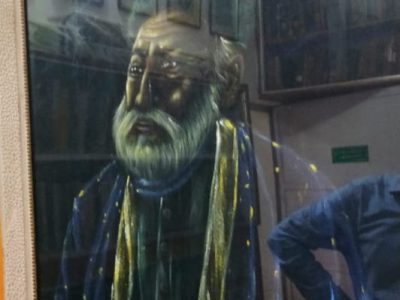
ICONIC: A portrait of Mirza Ghalib at the library, which boasts of rare works on the Delhi-based poet
“So, our generation has to know Urdu to understand their buzurgs (elders) and what charismatic works they had done. Our current generation, which doesn’t know Urdu, is like a blackboard. Anyone can write anything on it and it doesn’t impact them because they are so ignorant of legacies of their own language.”
Professor Rahman has travelled abroad 44 times. He visited Greece, including its capital Athens, Samarkand and Bukhara in Uzbekistan, Spain, Turkey, Germany and other countries.
“I went to Iran 11 times to gather books and study how it has preserved its arts and culture, literature, medicine and environment,” he says adding that children of every country know their mother tongue and can read and write in it.
“India’s children, especially the new Muslim community, is ignorant of its own legacy in Urdu.”
The Ibn Sina Academy has a tremendous collection of Islamic sciences and Islamic medicines. The professor has procured them from across the globe.
“Some are bought, some gifted and some requested and begged for. Hamaare 3,200 hazaar kitaabon mein, Ghalib ka collection jo hamaare paas hai vo duniya mein kisi ke paas nahi hai (No one in the world has the rare collection on Ghalib that we have among our 32,000 books). Even Delhi’s own Ghalib Institute and Ghalib Academy visit us and take photocopies of the rare material they require. We have made our academy work on Delhi’s poets, littérateurs, historical buildings and monuments,” he adds.
Most books, he adds, are from Iran, Samarkand and Bukhara.
“The richest in education, philosophy, medicine and culture is Uzbekistan but it could not present it to the world, the way Iran did.”
Why Delhi in Aligarh?
Why Delhi forms a special section at his library, has its reasons.
“Delhi was always the capital of India, be it during the Mughal, British eras or post-Independence period. So, it has always been not only a melting pot of cultures but also an abode for the best of poets, authors and travellers. The number of academics, authors, sufis, litterateurs, shayars (poets), lovers of arts and music and academic institutions that Delhi had, no other capital in the world has it till date,” he reasons with pride.
To know Delhi better, he suggests books penned by the renowned Dehlvi family.
For instance, there is Dilli jo aik shahar thaa by Shahid Ahmad Dehlvi, who was born in Delhi in 1902.
He wrote extensively on vanishing culture of Delhi which was a symbol of Indo-Muslim culture ruined by violence and blood of the War of Independence. Post Independence, he went to Pakistan and died in 1967.
Waqyaat-e-Darool Hukoomat in three volumes by Bashiruddin Ahmad Dehlvi published from Urdu Academy, Delhi in 1990, and books on 1857 revolution are also there in the academy.
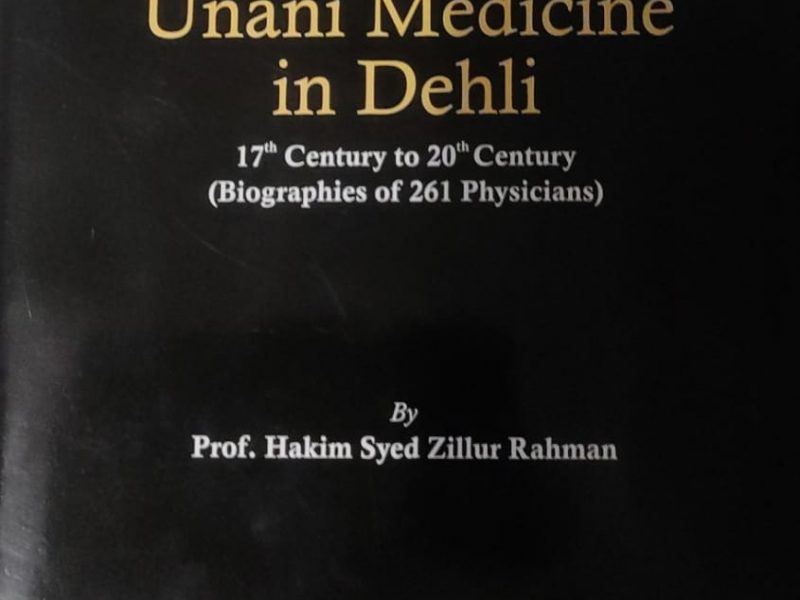
Delhi just got richer by another book by Zillur Rahman — Dilli aur Tibbi Unani which has just come out in Urdu. It is translated in English by Toronto-based Zakaria Virk, titled ‘History of Unani Medicine in Delhi – 17th Century to 20th Century – Biographies of 261 physicians’.
source: http://www.thepatriot.in / The Patriot / Home> Delhi NCR / by Rana Siddiqui Zaman, Delhi NCR / November 15th, 2023
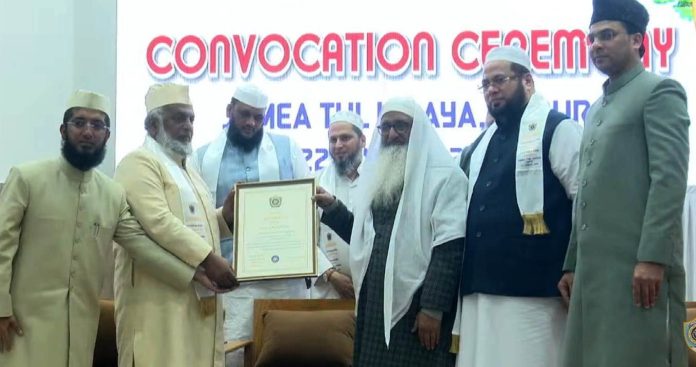
The Islamic scholar and former Dean, Faculty of Theology, Aligarh Muslim University (AMU), Professor M Saud Alam Qasmi, has been conferred with the Lifetime Achievement Award by Jamitul Hidayah, Jaipur.
While conferring the award, the Rector of Jamia, Maulana Fazlur Raheem Mujaddidi, praised Professor Qasmi as a distinguished scholar and lauded his books as a “treasury of India.” He urged young scholars to draw inspiration from Professor Qasmi’s academic legacy.
Editor of Tahzeebul Akhlaq, Professor Qasmi has authored 40 books and 400 articles in English, Urdu, and Arabic.
A celebrated orator, he has held several prestigious roles at AMU and is associated with numerous academic institutions and editorial boards.
source: http://www.radiancenews.com / Radiance News / Home> Pride of the Nation> Awards>Latest News / by Radiance News Bureau / January 28th, 2025
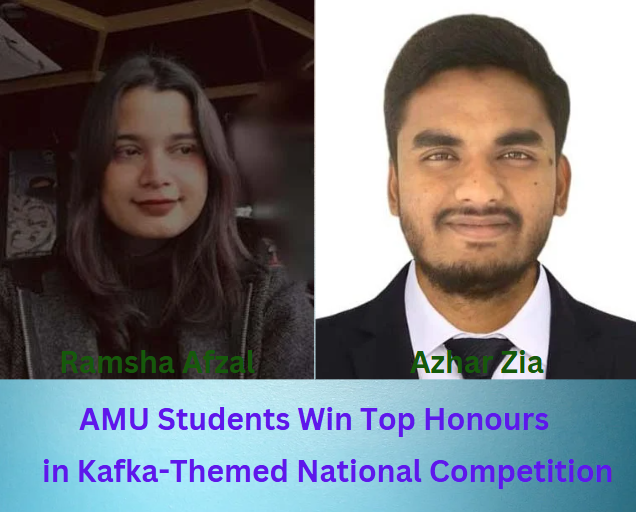
Students from the Department of Foreign Languages at Aligarh Muslim University (AMU) secured top prizes in a national competition organised by the Department of German, University of Mumbai, under the theme “100 Years of Kafka.”
Ramsha Afzal, a Master’s student in German Studies, won first place in the Comic Strip category for her creative take on Kafka’s novella Die Verwandlung (The Metamorphosis), highlighting themes of alienation and transformation. Azhar Zia, a final-year undergraduate, clinched first prize in the Short Films category for his cinematic interpretation of Kafka’s narrative Gibs auf! (Give it Up!), reflecting a nuanced grasp of existential themes.
Professor Muhammad Azhar, Chairman of the Department, commended the students, stating, “These achievements showcase the academic excellence and creativity nurtured at AMU, reaffirming the importance of foreign language studies.”
Assistant Professor Syed Salman Abbas applauded the winners, emphasising their engagement with German literature and culture.
source: http://www.radiancenews.com / Radiance News / Home> Education> Latest News / by Radiance News Bureau / January 23rd, 2025
Mr Farhan Khan, an alumnus of Aligarh Muslim University has been awarded the prestigious Global Talent Visa (Tier 1) by the United Kingdom under the endorsement of Arts Council, England.
This coveted recognition honours the exceptional talent and leadership quality of individuals in their respective fields, and this award to Khan establishes him as a global icon in the field of fine art photography.
Khan’s inspiring academic journey began at the Syedna Tahir Saifuddin (STS) School, followed by his XII from Saiyyid Hamid Senior Secondary School, AMU, and his formative years at AMU cultivated in him a strong sense of discipline, creativity and excellence, which paved the way for his future success.
After graduating from Jamia Millia Islamia (JMI), in Architecture (B.Arch.), he developed a passion for photography and completed a Postgraduate Diploma in Still Photography and Visual Communication from JMI with a gold medal. Later, he developed advanced skills in photography and visual storytelling, with his works being featured in prominent exhibitions.
Khan earned a Master of Arts in Photography: Image and Electronic Arts from the prestigious Goldsmiths, University of London, with Merit and gradually excelled in photography and designing by working out at diverse photography projects across architecture, real estate, interiors, food, and product photography.
He is currently employed as a Photography Specialist and Brand Ambassador at Fujifilm House of Photography, London, where he drives innovation, delivers high-quality results, and engages in client training.
His work has been exhibited globally, including notable exhibitions like Nexus & Now (2022): Degree Show at Goldsmiths, London; International Art Exhibition 3D Gallery (2020): Berlin, Germany; Postcards to Gandhi (2020): A narrative on climate change, JMI, New Delhi and Freedom to Live (2019): Photo series at Modoo Gallery, Brazil.
His evocative art has garnered numerous accolades, including a Top 5 Shortlist for the Historic Photographer of the Year Award (2020) and the First Prize in the National Photography Competition on Urban Eco-Systems (2018). His works have also been featured in esteemed publications like The Week Junior UK, Outlook India, and Outlook Traveller.
Khan’s passion extends beyond photography to teaching and mentorship. He has conducted 44+ beginner photography workshops in London and delivered lectures on innovative topics such as surrealism and graphic design in photography. His interactive and student-focused pedagogical approach empowers young artists to thrive in creative fields.
source: http://www.radiancenews.com / Radiance News / Home> Art & Culture> Latest News / by Radiance News Bureau / January 12th, 2025
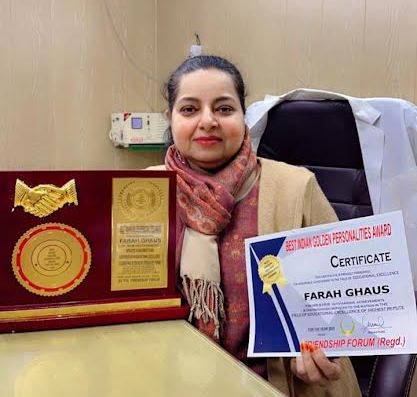
Prof Farah Ghaus, Department of Anatomy, J.N. Medical College, Aligarh Muslim University with the Best Indian Golden Personalities Award, 2025
Aligarh:
Prof Farah Ghaus, Department of Anatomy, J.N. Medical College, Aligarh Muslim University has been honoured with the Best Indian Golden Personalities Award, 2025 by the Friendship Forum of India, New Delhi.
Prof Ghaus has been chosen for the award for her commitment to advancing educational excellence in India and empowerment through education, and for her relentless pursuit of innovation, creativity and quality of work on the educational landscape.
The award recognises her pivotal role in shaping the future of thousands of students through her deep commitment to educational reforms, mentorship, and for fostering a culture of lifelong learning.
source: http://www.radiancenews.com / Radiance News / Home> Pride of the Nation> Awards / by Radiance News Bureau / January 12th, 2025