Showcasing the brilliance and legacy of the Aligarh Muslim University (AMU) Faculty of Law, Akbar Siddiqui has secured the top position in the Delhi Higher Judicial Services Examination.
Aligarh Muslim University:
Showcasing the brilliance and legacy of the Aligarh Muslim University (AMU) Faculty of Law, Akbar Siddiqui has secured the top position in the Delhi Higher Judicial Services Examination.
The result of the Delhi Higher Judicial Services Examination 2024, along with the merit list, was announced on August 20, 2025.
“A Distinguished Lawyer”
An alumnus of AMU 2007 batch, Akbar Siddiqui, is Advocate-on-Record, Supreme Court of India. He is celebrated for his distinguished practice before the Supreme Court of India.
Siddiqui’s role in the landmark Satender Kumar Antil case, which significantly shaped the jurisprudence on bail, is also noteworthy.
His achievement yet again cements the Faculty of Law, Aligarh Muslim University as a cradle of some of the finest legal minds in the country.
“A Matter of Great Pride”
AMU Vice-Chancellor, Prof. Naima Khatoon, has congratulated Akbar Siddiqui on this remarkable feat.
“Siddiqui’s accomplishment is a matter of great pride for AMU and its Faculty of Law. His journey from Aligarh to the Supreme Court and now to the higher judiciary is an inspiring example of academic rigor, professional excellence, and perseverance. We wish him continued success in serving the cause of justice.”
Akbar Siddiqui has obtained a total of 712 marks out of the total 1,000 marks to secure the first position in the merit list.
Siddiqui’s success adds another illustrious chapter to AMU’s rich tradition of producing leaders in the legal fraternity, inspiring future generations of aspiring jurists.
source: http://www.ummid.com / Ummid.com / Home> Education & Career / by ummid.com news network / August 22nd, 2025
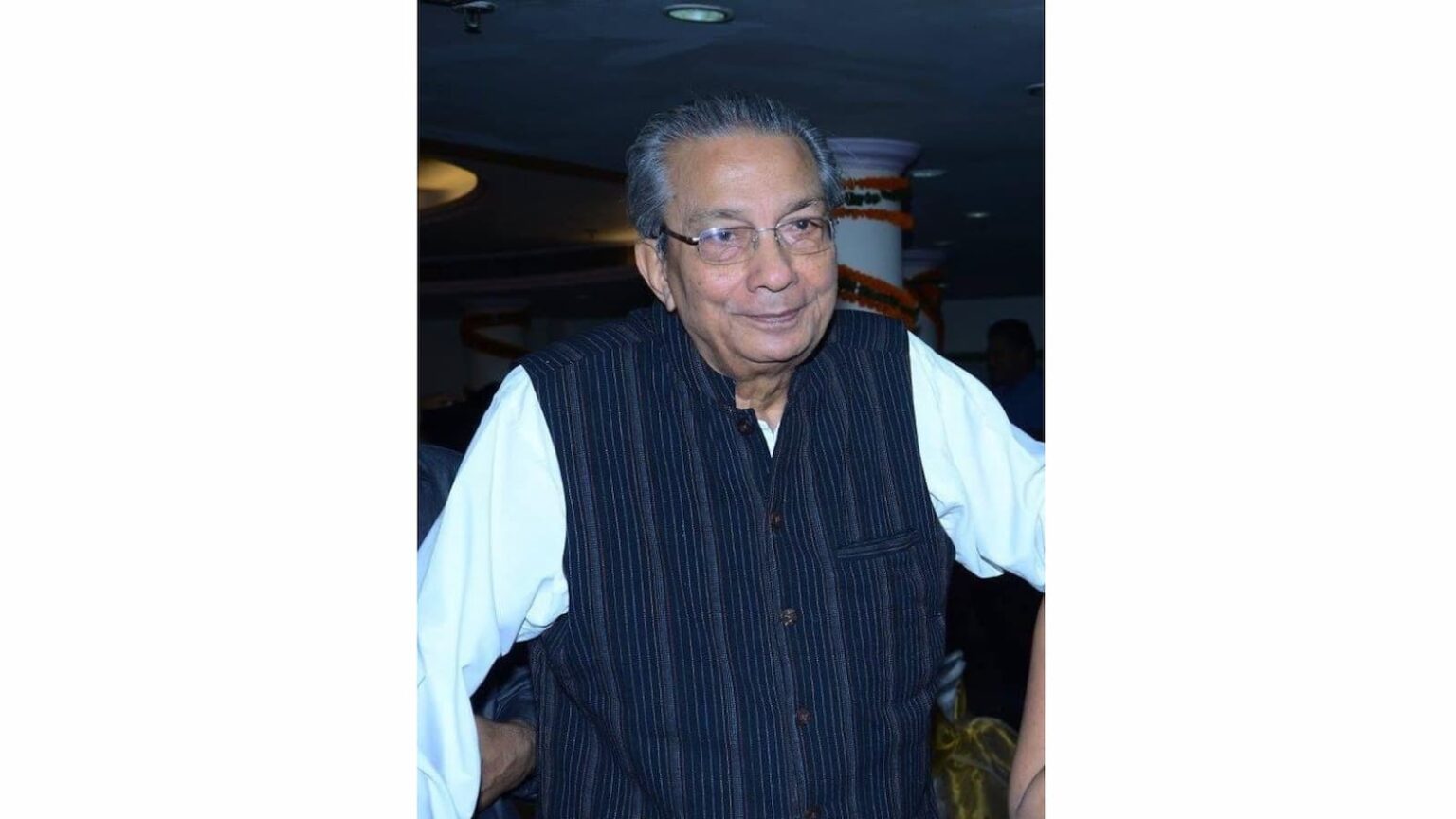
Ather Siddiqi was a researcher of eminence in his field and his research has been nationally and internationally recognised in the scientific world.
Professor Ather H. Siddiqi was born on December 29, 1931, in Saharanpur, Uttar Pradesh. He attained his early education at the Govt. High School, Saharanpur and obtained the degrees of B.Sc. (1950) and M.Sc. (1953) from A.M.U. Topping the university in Science and Zoology, he received two gold medals. He did his PhD in 1956 under the supervision of Professor Babar Mirza from Aligarh Muslim University.
Ather Siddiqi joined the Department of Zoology as a lecturer in 1953. After three years, he joined Purdue University, USA and completed another doctorate in 1958. He became a reader in 1961 and was appointed as a professor in 1977. Prof. Siddiqi also taught at universities in Nigeria and Libya and returned to India in 1980. He served as the Chairman of the Department of Zoology (1985-88) and as the President of the Indian Society for Parasitology. He also served as the Dean of the Faculty of Life Science in 1988-89, finally retiring from his services in 1994.
His scientific work on helminth taxonomy was published by the New York Academy of Sciences in the form of an exhaustive monograph. Despite that, he received his basic training in classical zoology in the early sixties. Later on, he switched to experimental work in parasitology. Ather Siddiqi was a researcher of eminence in his field and his research is nationally and internationally recognised in the scientific world.
Siddiqi’s Immersion in Urdu Writing
Apart from research articles, his popular writing in Urdu started in the 1980s. His first article in Urdu appeared on the life and scientific contribution of his mentor Professor Babar Mirza in the Quarterly “Fikr-o-Nazar” (January 1987). He published two articles in the early years of “Tehzib-ul-Akhlaq”, Aligarh: ‘Ilm-ul-Hayatiat ke Isatiza se Khitab’ (December 1987), ‘Mohammad Babar Mirza-Apnay Chaman ka Aik Deedawar’ (August 1989).
After his retirement in 1994, he devoted himself completely to Urdu writing. His lengthy article, ‘Mashriq say bezar na Maghrib say Hazar Kar’ narrateing the scientific and cultural activities of European countries was serialised in January 2005-June 2006 issues of “Tehzib-ul-Akhlaq”.
Similarly, his Urdu travelogue ‘Saat Haftay Inglistan Main’ (Seven Weeks in England) was published in the June and July 2006 issues of “Tehzib-ul-Akhlaq”. It carried interesting information regarding the scientific and cultural development of England.
His article based on his visit to Spain ‘Undlus Ka Shandaar Mazi’ (The Bright Past of Spain) discussed the scientific and cultural development of medieval Spain.
Ather Siddiqi along with Syed Zillur Rahman, contributed a chapter, ‘Aligarh Muslim University: Development and Progress of Science Teaching and Research, 1877-1947’ in Science and Modern India: An Institutional History, c. 1784-1947 (ed. Uma Das Gupta), Centre for Studies in Civilisation published in 1999.
A Glimpse into his Published Works
He is regularly contributing a literary column ‘Hairat Sarai Ke Kahania’ to “Tehzib-ul-Akhlaq” which consists of the translation of interesting short stories taken from the internet.
Recently, his popular science articles ‘Parasitism: Aik Dilchasp Tareeq Zindagi’ (Parasitism is an Interesting Way of Life) and ‘Yek khuliya Tufailiati Beenariyan’ (Unicell parasitic diseases) appeared in the February 2022 and February 2023 issue, respectively, of the Urdu monthly ‘Aajkal’, Delhi.
After retirement, Ather Siddiqi devoted himself to Urdu writing and authored, translated and edited dozens of books. The names of some of his books are: ‘Kiya aur meri Hayat Kiya’, ‘Lizzat Aabla Pai’, ‘Nishat Aabla Pai’, ‘Hairat Sarai ke Kahaniyan’ (Vol. 1, 2, 3, 4). In 2022, he published “Rah wa Rasam Aashnai”, his last book. He also rendered Retd IAS officer Musa Raza’s book, “Land of Regrets: Kashmir”, in Urdu as “Kashmir Sarzamin Pashemani”.
Ather Siddiqi was one of the best teachers, an internationally acclaimed Zoologist, and a passionate Urdu writer. And above all, he was a wonderful human being. He passed away on 8th November, 2023, in Delhi at the age of 92 years due to old age illness.
References:
Tehzib-ul-Akhlaq, Aligarh (various issues) Science and Modern India: An Institutional History, c. 1784-1947 (ed. Uma Das Gupta), Centre for Studies in Civilisation, New Delhi, 1999.
source: http://www.heritagetimes.in / Heritage Times / Home / by Dr Asad Faisal Farooqui
Yusufpur (GhazipurDistrict), UTTAR PRADESH / NEW DELHI / London, U. K :
Begum Zohra Ansari sold away ‘Dar-us-Salam’ to raise party funds and worked for the victory of the candidates of the Indian National Congress and for the defeat of the candidates of the Muslim League, who wanted partition.
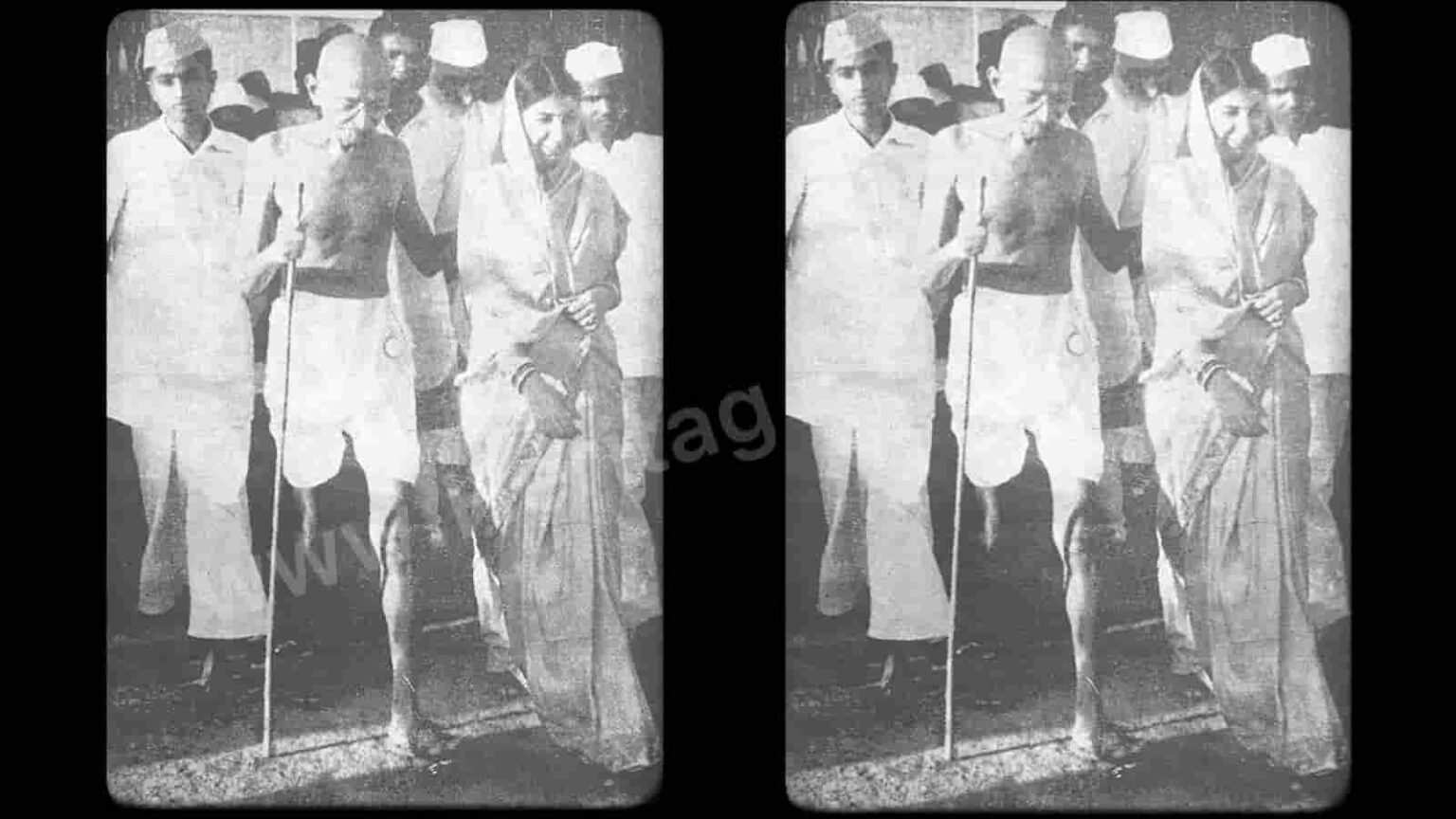
Begum Zohra Ansari, an activist of the Indian National Movement whom Mahatma Gandhi addressed as “Vasthad Bi, was born in Delhi. She was the adopted daughter of freedom fighters, Dr. Mukhtar Ahmed Ansari and Begum Shamsunnisa Ansari.
Besides playing an important role in the National Movement, her parents provided hospitality to leaders and a cadre of the Indian National Movement and scholars and people of repute in different walks of life in their residence ‘Dar-us-Salam’. It was very spacious like a royal palace.
While Begum Shamshunnisa Ansari was busy in these responsibilities, Zohra helped her. Thus she had an opportunity to see from close-quarters leaders such as Mahatma Gandhi, Pandit Motilal Nehru, and the Ali Brothers and to serve them. Right from childhood she evinced interest in literature, history, and social sciences. She also gained proficiency in Urdu, Arabic, Persian, and Hindi.
Zohra Ansari and Mahatma Gandhi
Zohra Ansari rendered her services in Wardha Ashram for a long time. Mahatma Gandhi came to know about her command over Urdu and started learning the language from her. He used to address her in his letters as ‘Vastad Bi’ and ‘Beti.
Zohra Ansari and Mahatma Gandhi used to have regular correspondence on various issues. In his letter dated 22 December 1932 to Dr Ansari, Gandhiji remarked that he used to look forward to Zohra’s letter every week. When Zohra expressed her desire to go to jail as a part of the National Movement, like her parents, Gandhiji asked her to wait and promised to allow her to go to jail.
Begum Zohra Ansari married Dr Shaukatulla Shah Ansari (1908-1972) who was her relative and leader of the Indian National Movement. Begum Zohra Ansari lost her father in 1936 and mother in 1938. She took an active part in the Freedom Struggle along with her husband. Both wife and husband opposed the partition of India.
She sold away ‘Dar-us-Salam’ to raise party funds and worked for the victory of the candidates of the Indian National Congress and for the defeat of the candidates of the Muslim League, who wanted partition. Post Independence, Begum Zohra Ansari led a simple life and passed away on 28 July 1988 in England.
source: http://www.heritagetimes.in / Heritage Times / Home / by Syed Naseer Ahamed / December 12th, 2023
Through its dedication, sensitivity, and comprehensive approach, CTAG empowers individuals from socio-economically weaker backgrounds to pursue their dreams and aspirations.
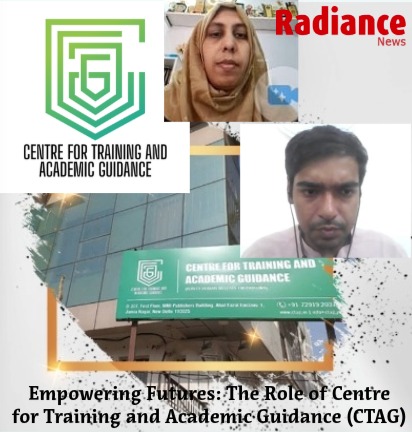
In the pursuit of a brighter future for all, particularly those from socio-economically weaker backgrounds, initiatives like the Centre for Training and Academic Guidance (CTAG) play a pivotal role. CTAG, a non-profit organization under the auspices of the Human Welfare Foundation, is dedicated to providing career counseling and guidance to students hailing from such backgrounds.
In this exclusive interview, Ayesha Sultana, Assistant Editor of Radiance and an educator and academician by profession, engages in a conversation with Faizy Rahman, a dynamic individual with a diverse educational background, holding a BTECH in Mechanical Engineering from DTU and an MA in Psychology from DU. Currently serving as the Centre In-Charge of CTAG, Mr. Rahman brings a unique blend of technical expertise and psychological insight to his role. With her keen interest in initiatives aimed at empowering individuals from diverse backgrounds, Ayesha delves into CTAG’s mission and impact through her insightful questions.
Q: Could you provide an overview of CTAG’s mission and objectives?
A: CTAG’s mission is to provide career counseling and guidance to students from socio-economically weaker sections of society. We aim to empower individuals with the knowledge and tools to make informed career decisions, thereby opening doors to brighter futures.
Q: What inspired the establishment of CTAG, and how does it aim to make a difference in the lives of its beneficiaries?
A: CTAG was established to address the barriers faced by students from disadvantaged backgrounds in accessing career guidance. By providing personalized guidance and support, we strive to empower our beneficiaries to pursue fulfilling career paths aligned with their interests and aptitudes.
Q: Can you elaborate on the services and programs offered by CTAG to achieve its objectives?
A: Certainly. CTAG offers a range of services including psychometric assessments, individual counseling sessions, group workshops, career awareness workshops, and scholarship support. Additionally, we provide training programs for teachers and counseling professionals to enhance their skills in guiding students effectively.
Q: How does CTAG ensure its guidance and assessments are culturally sensitive, particularly in states across North India?
A: Cultural sensitivity is integral to our approach at CTAG. We tailor our assessments and guidance to suit the cultural backgrounds of our students, ensuring that our services are relevant and effective. By understanding and respecting cultural nuances, we aim to build trust and rapport with our beneficiaries.
Q: What initiatives does CTAG undertake to engage with the community and raise awareness about career guidance?
A: CTAG actively engages with communities through outreach programs, workshops, and seminars to raise awareness about the importance of career guidance. We collaborate with local organizations, schools, and colleges to reach a wider audience and provide valuable insights into career options and opportunities.
Q: As CTAG expands its reach, what are some future goals and aspirations for the organization?
A: Our future goals include expanding our reach to underserved communities across India and enhancing the quality and accessibility of our services. We aim to leverage technology and innovation to reach more individuals and provide them with the guidance and support they need to pursue their aspirations.
Q: How does CTAG measure its impact and success in empowering individuals from socio-economically weaker backgrounds?
A: CTAG evaluates its impact through various metrics including the number of beneficiaries served, feedback from beneficiaries and their success stories, partnerships formed with educational institutions and community organizations, and post-counselling tracking of students. We continuously assess and refine our programs to ensure they effectively meet the needs of our beneficiaries.
Q: What kind of help do you provide after career guidance for placements?
A: We offer an Employability Enhancement Program which includes assistance on how to face an interview and writing CVs.
Q: What else does CTAG offer besides career guidance?
A: CTAG also provides training for teachers and mentors, as well as one-day career guidance counselor workshops. Additionally, we offer a Career Guide Training Program for individuals interested in becoming professional career counselors. We also conduct a 5-day program for comprehensive guidance, annually.
Q: How can individuals access all the information provided by CTAG?
A: We have a career library and an updated website which provide information on various courses, admissions, university notifications, etc.
Individuals can access information through our website, www.ctag.in and/or contact us via WhatsApp at 72919 20374.
In a world where opportunities are often scarce, organizations like CTAG serve as beacons of hope, guiding individuals towards brighter futures. Through its dedication, sensitivity, and comprehensive approach, CTAG empowers individuals from socio-economically weaker backgrounds to pursue their dreams and aspirations. As it continues to expand its reach and impact, CTAG remains committed to shaping careers and transforming lives for the better.
source: http://www.radiancenews.com / Radiance News / Home> Face to Face / by Ayesha Sultana, Radiance News Bureau / May 05th, 2024