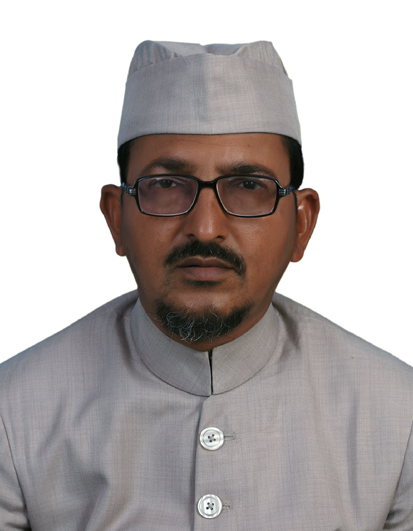
Prof Towqueer Alam, Department of Sunni Theology, Aligarh Muslim University has been appointed Editor of Fikr-o-Nazar, a quarterly literary and scholarly magazine published by the university, for a period of one year or until further orders, with immediate effect.
Prof. Falahi joined the Department of Sunni Theology as a lecturer in 1993 and became a professor in 2010. He has published about 35 books in Urdu, Arabic, English and Hindi, and more than 200 research papers in the journals of national and international repute.
He visited Mercer University, Atlanta USA in April 2016 as a Visiting Professor and travelled to UK, Iran, Kuwait, and USA to present lectures at international conferences.
The research areas of his interest are Quraniyat, Arabic Literature and Comparative Study of Religions.
source: http://www.radiancenews.com / Radiance News / Home> Latest News / by Radiance News Bureau / March 05th, 2024
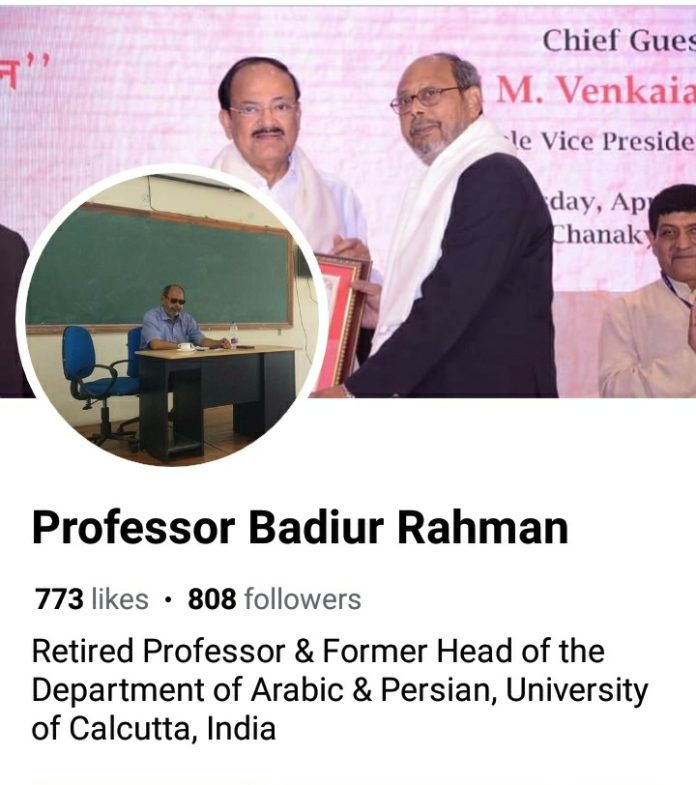
Professor Badiur Rahman, former Head of the Department of Arabic and Persian, University of Calcutta, a well-known educationist, celebrated writer, accomplished journalist, prominent Islamic scholar and a beloved teacher passed away in Kolkata on September 19, 2023.
He was scion of an illustrious and religious family of district Hooghly of West Bengal. His father Abdur Rahman was also an MBBS and associated with Tablighi Jamat.
He got his basic education at Darul Uloom Pandua, Hooghly, West Bengal. Thereafter, he did Alim in 1967 and Fazil in 1969 respectively from Madrasa Alia, Calcutta. He derived considerable benefits from a galaxy of eminent Islamic scholars over there. Especially, he achieved immense academic gains from noted Islamic scholars like Maulana Abu Mahfuz Karim Masumi and Maulana Rahatullah Azhari. After that, he did his B.A. (Hons) in 1974 and M.A. in 1976 respectively from University of Calcutta. He also did L.L.B and Ph.D therefrom.
Professor Badiur Rahman was an institution in himself. He was a familiar figure among the intellectual circles throughout India. Due to his extraordinary knowledge and being a paragon of morality, he carved a niche in the temple of fame. He had a say at the University of Calcutta. Despite being an Islamic scholar, he considerably impressed all faculty members, including VCs of University of Calcutta. Because of his profound knowledge of different languages, noble qualities and sublime norms everyone held him in high esteem.
Visiting Professor of Alia University, Kolkata, Dr. Rahman was also on the Senate and Syndicate of Calcutta University and Ph.D. Communities, Calcutta University and Alia University. He was also Ex-Chairman of PG Board of Studies in Arabic, Calcutta University, and U.G.B.O.S in Arabic, Kalyani University.
My acquaintance with Professor Badiur Rahman I think it was during the summer of 2009 when I first met him. The meet was actually regarding my Ph.D admission at University of Calcutta. Dr. Masihur Rahman, now professor at Alia University, Kolkata introduced me to him. Since then till his last breath, I remained in touch with him. I am fortunate enough to have done my Ph.D. under his supervision and guidance. He always treated me like his brother. Whenever I met him, I gained immense inspiration from him. Despite being a celebrated scholar, he was devoid of arrogance.
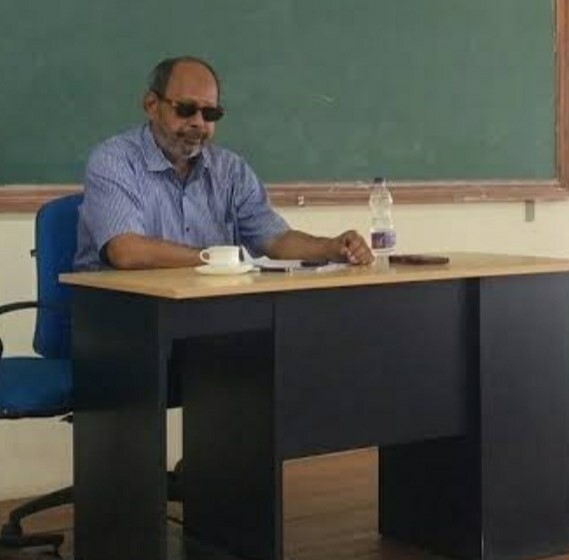
As a Teacher Professor Badiur Rahman started his teaching career as a lecturer at the University of Calcutta in 1983 and retired in 2016. Even after his retirement, he kept on teaching as a visiting faculty in the University of Calcutta and Alia University, Kolkata. He always proved himself as a selfless and dedicated teacher. He was an embodiment of all sublime qualities and virtues necessary for a good teacher. His method of teaching was unprecedented. It was his sword which he wielded so effectively that very few persons could match him. During lectures he pointed out such subtle points as students could not help without being impressed with him. He left an indelible mark in the domain of the teaching profession.
Undoubtedly, he was a beloved teacher. He was fondly described as B.R. Sir by his students. Scores of students quenched their thirst for knowledge from him. His talk was very touching. He met everyone cheerfully. His deep knowledge of comparative studies made him popular among his contemporaries. His learning was varied and profound. His personality was many-sided and balanced.
Right from the beginning, he was laborious and punctual. He was a man of transparent heart. No doubt, his extraordinary scholarship and erudition brought him wide reputation and fame. His main mission was to spread education. He left a galaxy of pupils behind him who impart education and work in various fields in and out of India. In fact, it is an everlasting tribute to him.
Dr. Badiur Rahman and Dr. Taha Husayn Dr. Rahman was an ardent admirer of Dr. Taha Husayn. He had vast knowledge about Dr. Taha. He did not only study all his books but he digested them. He also wrote a book titled, “Essays On Dr. Taha Husayn” published by Mazhar Education and Welfare Society, Malda.
Maulana Alauddin Nadwi, Head of the Department of Arabic, Darul Uloom Nadwatul Ulama, Lucknow wrote in the Preface of the said book, “To a great extent Dr. Badiur Rahman tried to introduce Dr. Taha Husayn in the Introduction to his book. The author regards Dr. Taha as a born critic. He presented Taha’s thoughts in a lucid way. To clear his viewpoints, he propounded various references from Dr. Taha’s books. Besides, he holds Taha as a moderate critic to the core.”
He had also done several research works on the first Nobel Laurate in the Arabic language Dr. Naguib Mahfouz.
Dr. Badiur Rahman and Rabindra Nath Tagore
Like Dr. Taha, Dr. Rahman was also a fan of Rabindranath Tagore. He wrote various articles and short stories on Tagore’s life and works in Arabic. And thus he introduced him in the Arabic World.
It should be noted that Dr. Rahman participated in different national and international seminars and exhibited his scholarly caliber there.
Because of his outstanding and remarkable services to the Arabic language and literature, he was conferred the President Award in 2018.
As a Writer Dr. Rahman was a prolific writer. He wrote several books on different subjects. Some of his major publications are:
History of Arabic Literature (Pre-Islamic Period)
Textbook for B.A. Arabic (Hons.) Calcutta University
Textbook for B.A. General, Calcutta University
Essays On Dr. Taha Husayn
Besides, he had 31 research articles in Arabic, English, Urdu and Bengali published in different literary journals. He had earned distinction in Belles Letters, short stories, poetry in English, Arabic and Bengali. He had long experience of research guidance in Arabic. He had examined about 26 theses and 15 M.Phil dissertations of various universitas of India and abroad.
Truly speaking, the comprehensive knowledge and intellectual brilliance of Dr. Rahman had been acknowledged by his contemporaries.
Describing his yeomen services, Professor Mohammad Noman Khan, former Head of the Department of Arabic Delhi University stated that the passing away of Dr. Badiur Rahman was a personal loss to him. He played a leading role in spreading the Arabic language in West Bengal. He gave new impetus to the students of W.B.
Professor Sanaullah Nadwi, Head of the Department of Arabic said, “Dr. Badiur Rahman was a highly qualified person and he was an emblem of morality. Everyone who observed him very closely would testify it. He also described his outstanding contribution in the field of education.
Similarly, Professor Ashfaq Ahmad Nadwi Head of the Department of Arabic Banaras Hindu University stated that Almighty Allah bestowed upon him different qualities. His personality was a marvellous amalgamation of teacher, writer and guide par excellence. Besides, he was a righteous, God-fearing and pious personality.
Dr. Rahman’s death caused a great vacuum. His myriad contributions to promotion and propagation of the Arabic language and literature will always be remembered. He is survived by his wife.
Thousands of his admirers thronged to attend the last rite of the departed soul. He was buried at Ghobra-1 Graveyard, of Park Circus Kolkata. May Allah adorn his grave with luminosity and refulgence and grant peace to his soul. Aameen!
[The writer is Faculty Member, Darul Uloom Nadwatul Ulama, Lucknow]
source: http://www.radiancenews.com / Radiance News / Home> Latest News / by Dr. Obaidur Rahman Nadwi / Radiance News Bureau / September 24th, 2023
Since 2014, MS Education Academy has been dedicated to assisting visually impaired students.
Hyderabad:
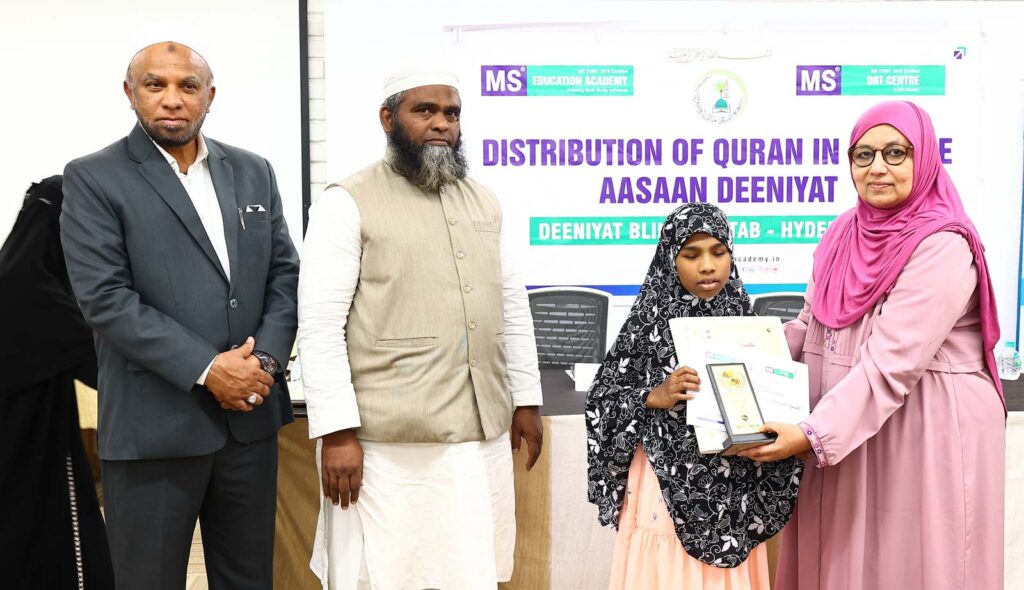
In a remarkable initiative aimed at empowering visually impaired Muslim students, MS Education Academy has launched a pioneering project to provide comprehensive Islamic education in Braille format.
Since 2014, MS Education Academy has been dedicated to assisting visually impaired students, initially by distributing Braille versions of the Quran.
Recognizing the growing need for Islamic literature in Braille, the academy embarked on a mission to develop a tailored curriculum accessible to visually impaired students.
Over the years, MS Education Academy has meticulously developed Islamic literature in Braille, tailored to the spoken Urdu language prevalent among Muslims in Telangana.
Comprehensive Deeniyat course
A team of experts was assembled to compile a comprehensive Deeniyat course specifically designed for the visually impaired. This initiative has resulted in the creation of a series of Braille books titled “Asaan Deeniyat”
The first instalment of this groundbreaking endeavour, “Asaan Deeniyat Part 1,” has been successfully implemented with the organization of offline classes in Old city of Hyderabad in 2019.
To further extend their reach and cater to students beyond Hyderabad, MS Education Academy launched an online course titled ‘Deeniyat Visually Impaired Maktab.’ This online platform provides flexibility for students residing outside of Hyderabad or those preferring to learn from the comfort of their homes.
Impact of online initiative
The impact of this initiative has been profound, with 250 visually impaired students having already enrolled in the course and demonstrated remarkable progress in grasping the material. Remarkably, students have been able to complete Part 1 of the course in just six months, underscoring the efficacy of the Braille curriculum developed by MS Education Academy.
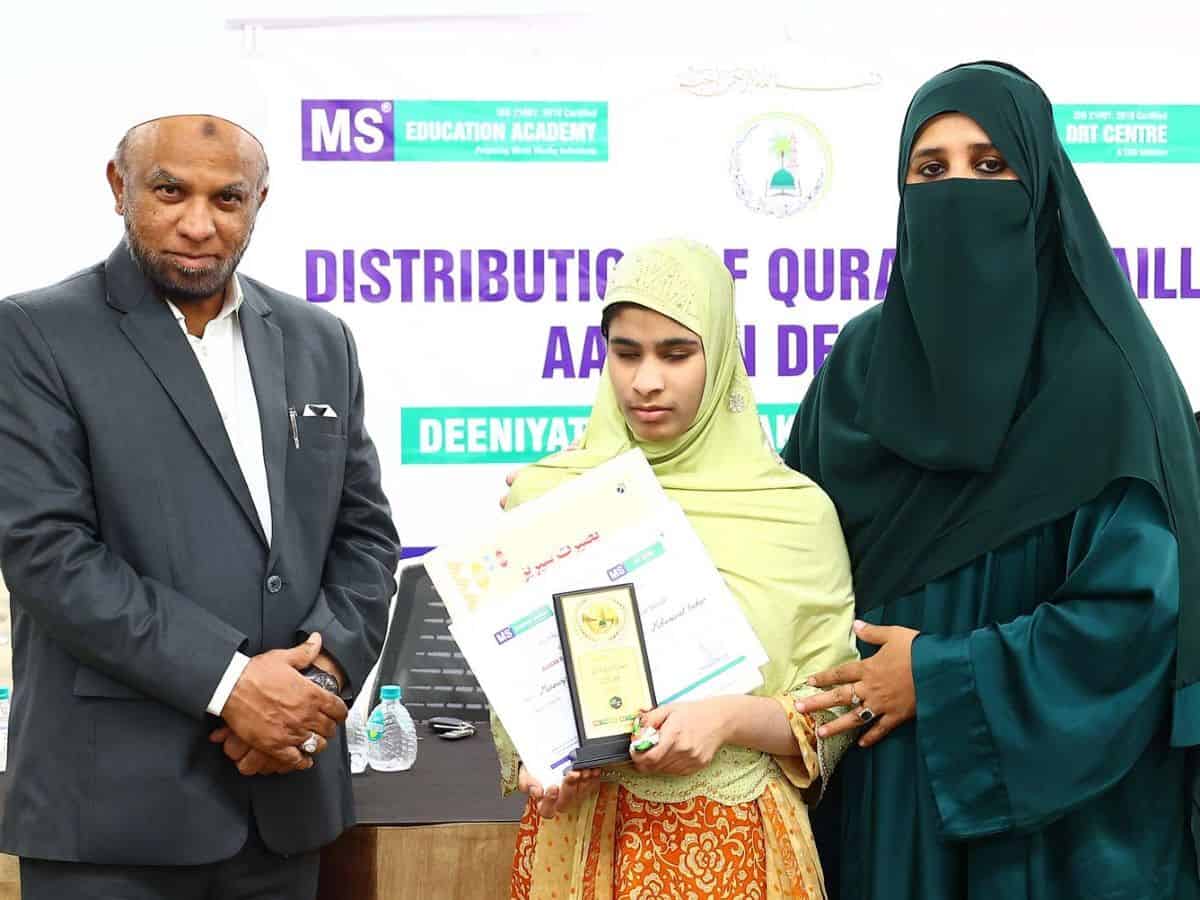
In recognition of their achievements, MS Education Academy organized a special event at its corporate Office to celebrate the completion of Part 1 of the course.
Certificates of completion were awarded to students, marking a significant milestone in their educational journey. Additionally, students were provided with copies of “Asaan Deeniyat Part 2” alongside Braille copies of the Quran, further enriching their educational resources.
MS Education Academy’s commitment to inclusive education and empowerment continues to inspire, serving as a beacon of hope for visually impaired Muslim students seeking access to quality Islamic education. Through their innovative approach, MS Education Academy is not only breaking barriers but also fostering a more inclusive and equitable society for all.
source: http://www.siasat.com / The Siasat Daily / Home / by Sameer Khan / February 23rd, 2024
The first national flag hoisted in Demow after independence, 73 years ago has still been preserved well by the family of freedom fighter Commander Mohd. Maulobi Mohd. Hussain.
source: http://www.sentinelassam.com / The Sentinel / Home / by Sentinel Digital Desk / August 14th, 2019
For a cop toughened by years of dealing with criminals, writing soft stories may seem an oxymoron of sorts. But for Moinul Islam Mandal, Deputy Inspector General (DIG), Dergaon Police Training College, there is no antithesis as his writings stem from the core belief that the “Truth will always prevail” and the perception that all religions are in harmony.
Having authored 18 essays that were compiled in a book, Aapun Jibonor Ortho Bisari (Finding the meaning of life). Mandal said that his essays are experiences and ideas that he garnered during his career as a policeman.
“These experiences molded my thought processes. The ideas germinated during my time as a policeman,” he said.
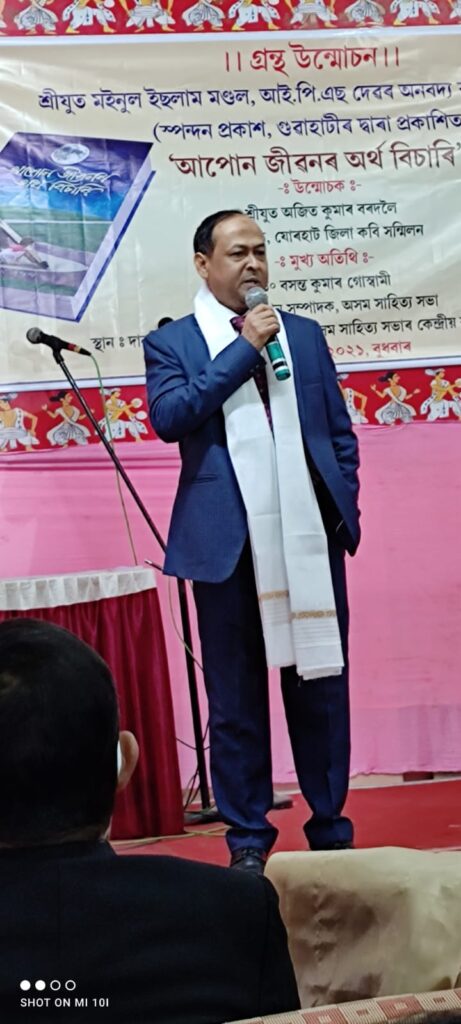
Moinul Islam Mandal during a book release function
Mandal said that most of his essays are based on the premise that the truth would always prevail –and he had attempted to offer both a scientific and philosophical reason behind this in his essays.
Citing an example he said that he had drawn a parallel of the human being with a computer. – “the organs are the hardware, what is imprinted in the brain is the software and our soul is the driver.”
His first essay was on the coronavirus, written during the lockdowns after the pandemic was declared in 2020 and there was plenty of time to write at the Dergaon PTC.
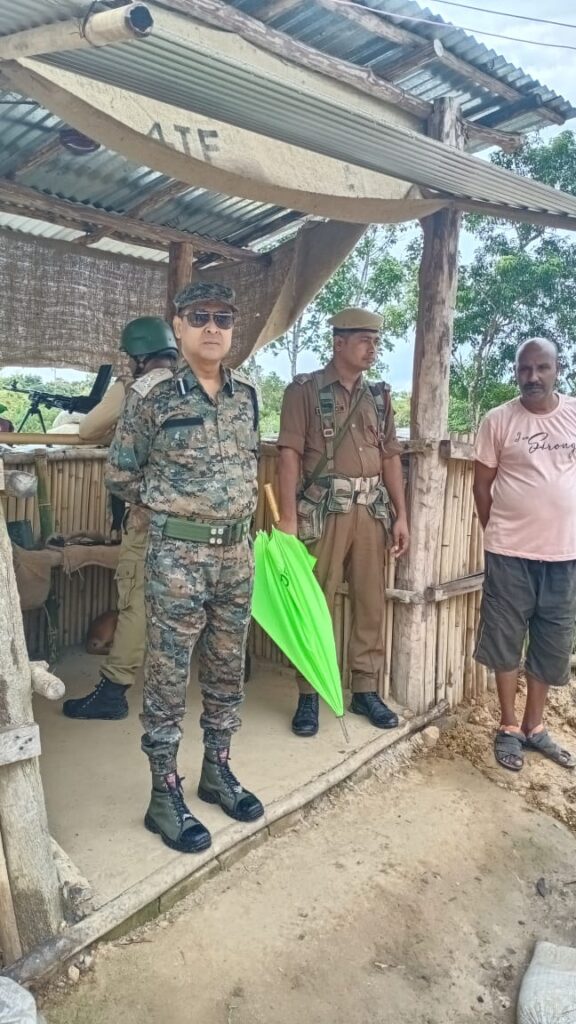
DIG Moinul Islam Mandal during a security operation
Mandal defines the Coronavirus in relation to nature and humans.
“It is about how the universe is run by natural law and that humans are also ruled by this same law. It also depicts how religion cannot be a separate entity from nature but is only an extended part of nature,” he said. This essay received a lot of feedback after it was published in the Asomiya Pratidin, an Assamese language newspaper.
“It encouraged me to write more and he wrote 17 more essays which were published in the newspaper,” Mandal said. And thus from a man who used to dabble in poetry, Mandal evolved into writing in-depth on soul-stirring topics.
Mandal said that he compiled the essays in a book after former IPS officer Pallab Bhattacharyya called him from Delhi to tell him how much he liked one of the essays, The Afghan Snow… “I thought that over time, these essays would get lost, so I decided to preserve them in a book,” he said.
Explaining the title of the book, he said, “I had my perception of what life is. Likewise, everyone has his or her definition of life, and there are similarities of the thought process, a universality which everyone can relate to that I try to bring out in my writings, ” he said. Six of his essays in the book deal with the oneness of Hinduism and Islam.
Former deputy commissioner Ajit Kumar Bordoloi who released the book along with former Asam Sahitya Sabha president Dr Basanta Goswami said that these essays explore the relationship of religion with man, the Hindu Muslim divide, and the 19th essay in the book, Mussalman ne Muslim Manaxikota, needs the courage to write.
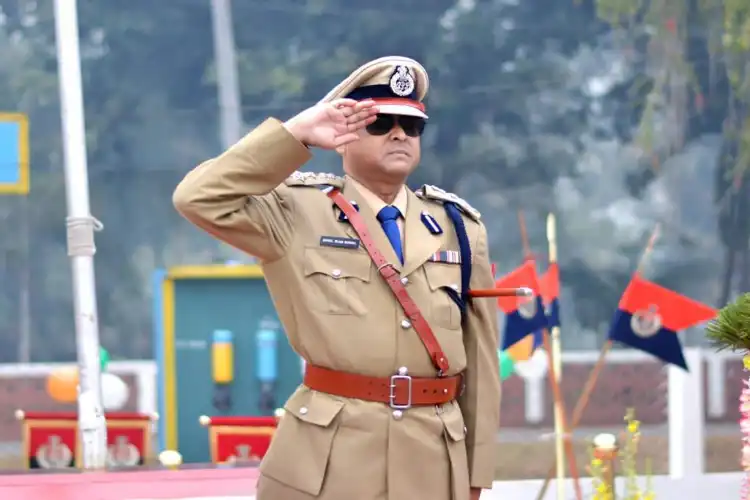
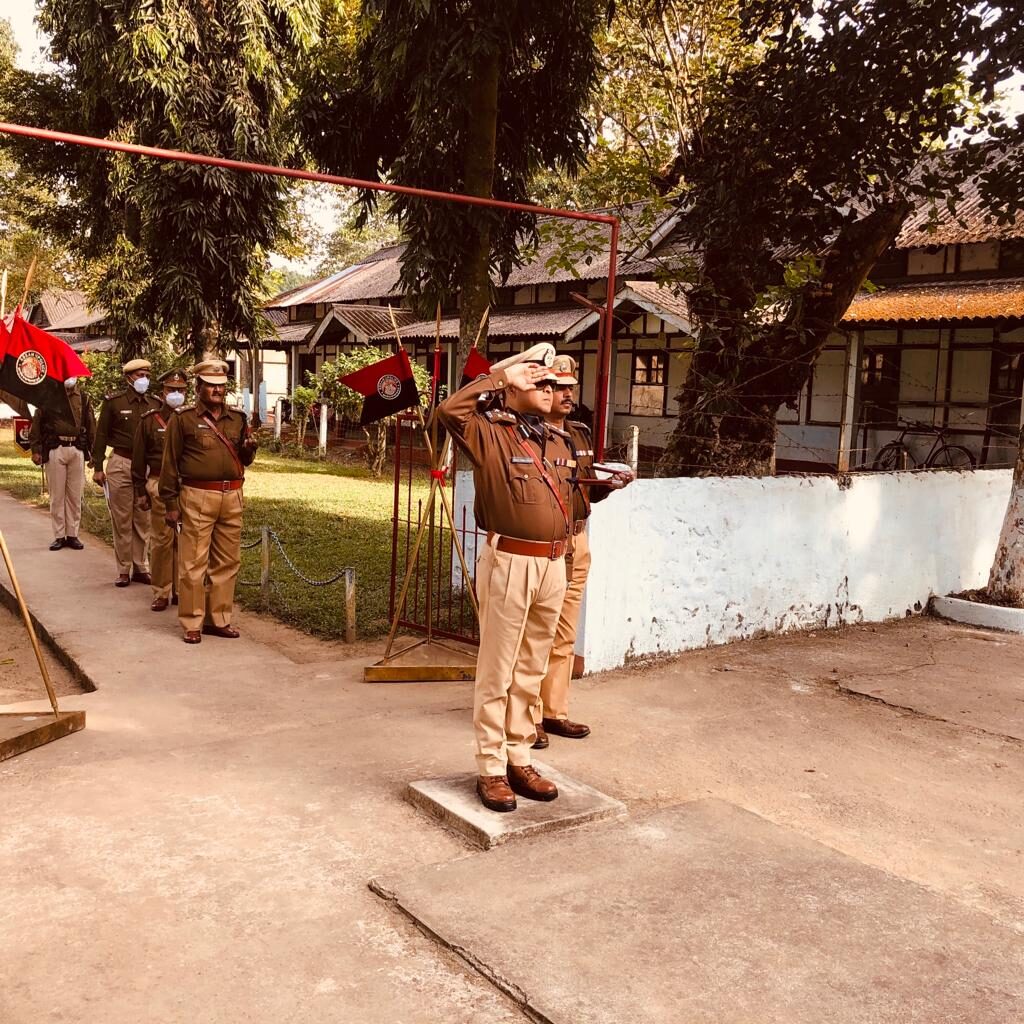
DIG Moinul Islam Mandal saluting the National Flag
“People are now so involved in the religious rituals and this has polluted religion to such an extent that humanity which forms the basis of all religions has been suppressed to near extinction,” he said.
There is nothing different between Hindus and Muslims. With my knowledge of Islam and on the reading of the Gita I did not find anything that was against humanity. We are all humane and equal human beings. It is only after we divide ourselves into castes, religions, or languages that we become polluted,” he added.
Tracing his journey as a writer, he said that it all began during his college days in the Assam Agricultural University when he used to write poems and put them up on the wall of his hostel room. The other students encouraged me to write in the college magazine.
source: http://www.awazthevoice.in / Awaz, The Voice / Home> Stories / by Smita Bhattacharyya, Jorhat / February 2022
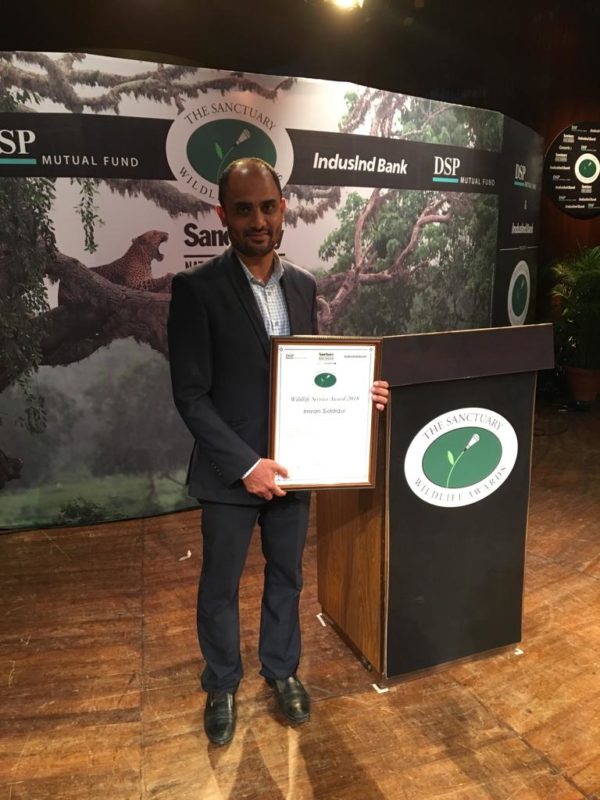
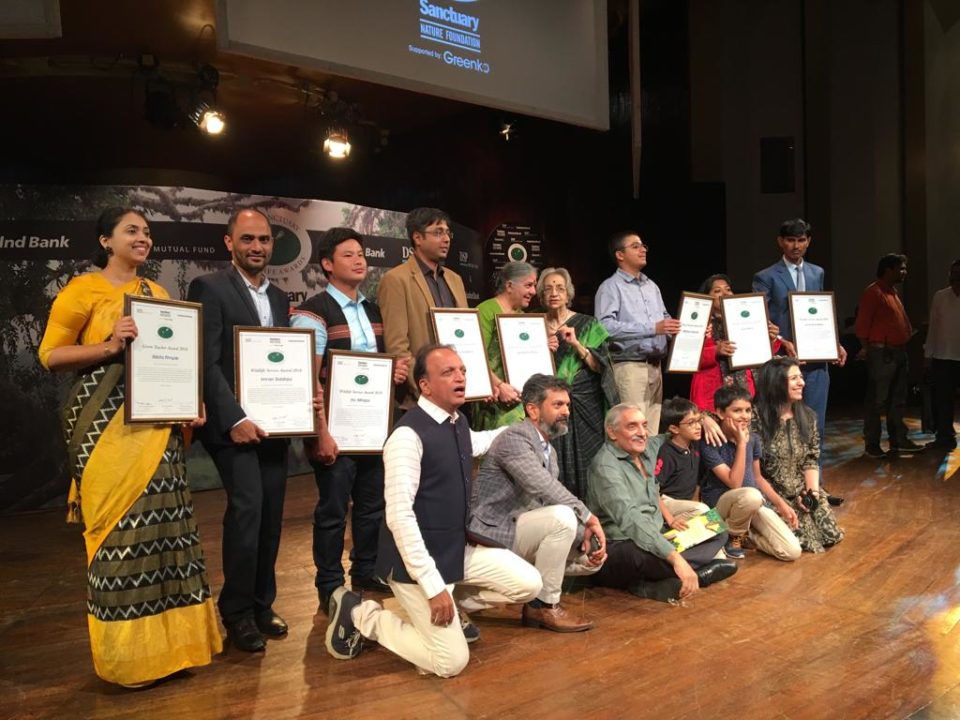
Imran Siddiqui of the Wildlife Conservation Society – India has been honoured with the prestigious Sanctuary Wildlife Service Award 2018.
Imran Siddiqui has come a long way from raising and selling poultry to fund his wildlife obsession.
He is now on the Telangana State Board for Wildlife and works as an external expert for tiger monitoring in Andhra Pradesh and Telangana. He is also the Assistant Director for Conservation Science at WCS-India, and the co-founder of the Hyderabad Tiger Conservation Society (HyTiCoS).
As his life and work reveal, Imran has no respect for man-made boundaries, much like the wildlife he’s so obsessed with. Traversing the rugged landscapes of Kawal, Amrabad and Nagarjunsagar-Srisailam Tiger Reserves and the Gundlabramheswaram Sanctuary, he works in tandem with state forest departments and local communities. His work covers 10,000 sq km of wilderness in Telangana and Andhra Pradesh, with his crew comprising over 35 field staff, 300 volunteers and hundreds of supporters.
Taking a cue from the success of WCS-India in Karnataka and extending it to the neighbouring states of Andhra Pradesh and Telangana, he leads scientific surveys on prey analysis and occupancy surveys on mammals.
He also helps in management planning, engages in snare removal drives, initiates voluntary relocation programmes for forest dwellers, facilitates capacity building workshops for the forest department and influences policy through public interest litigations, high-level committees, community engagement, strong advocacy and creating political will on wildlife.
His efforts have resulted in the speedy disbursal of compensation, besides the initiation of relocation of landless tribals who live within the two tiger reserves of Kawal and Amrabad.
Imran is also largely credited for the declaration of the Kawal Tiger Reserve (where he conducted the fieldwork for his Masters dissertation). For this he had to lobby relentlessly at the political level as well as work tirelessly on the ground to counter misinformation spread by vested interests, and finally win the support of local communities.
A tenacious man on the field and a convincing man in the boardroom, Imran Siddiqui is in no small way responsible for the revival of tigers in this vast but obscure landscape.
The Sanctuary Wildlife Service Award 2018 is a testimony of his untiring efforts to save wildlife and wild places.
source: http://www.india.wcs.org / WCS – Wildlife Conservation Society / Home>News> Current Articles>Archive / by WCS India / December 07th, 2018
Shareef Chacha who received Padma Shri award from President
A few days ago, when President Ram Nath Kovind presented Padma Awards, the Social Media went abuzz with claims that the Narendra Modi-led Bharatiya Janata Party (BJP) government has transformed an earlier elite award into a people’s award. Awardees like Tulsi Gowda, Mohammad Sharif, Bhuri Bai, and others represent those who had worked at the grass-root level. Earlier the award was mostly given to a select band of people who had access to corridors of power in Lutyen’s Delhi; many deserving Indians were ignored.
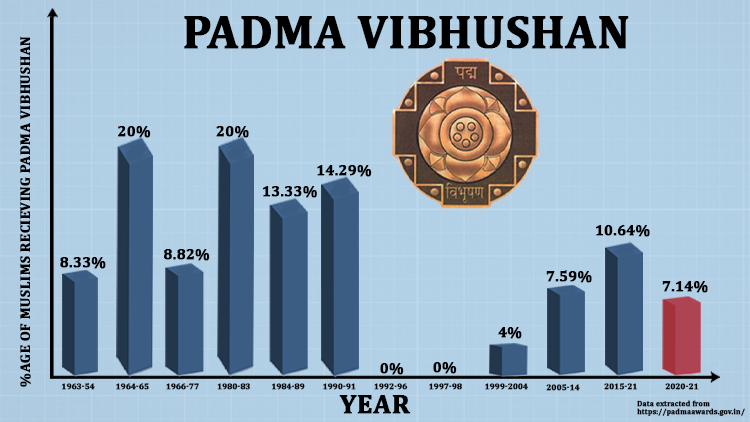
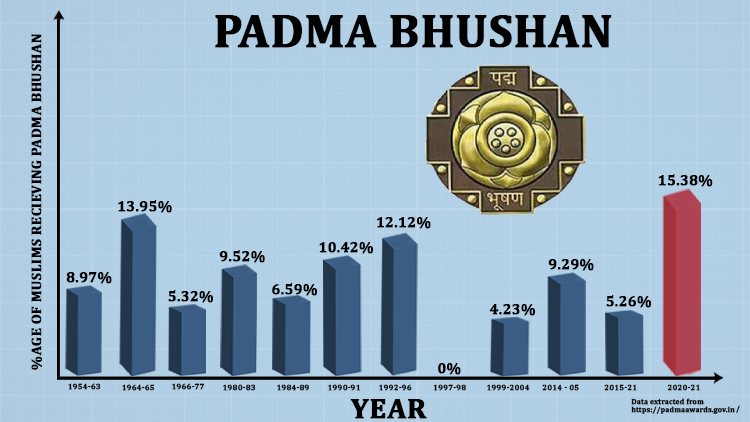
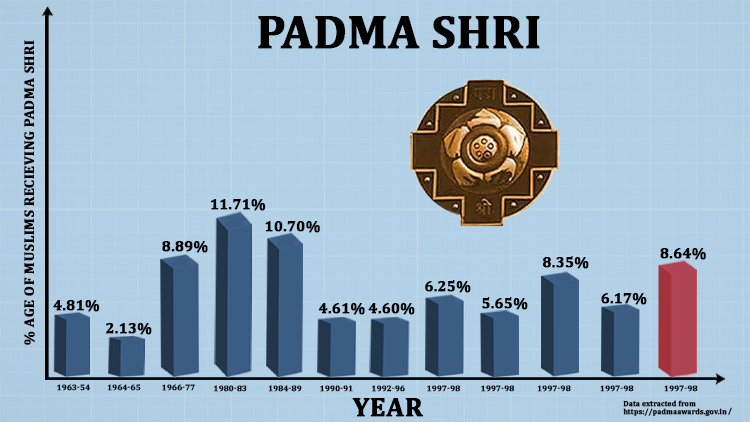
The optics of Padma awards and the chatter around it made me look into the veracity of these claims. As an Indian Muslim, my primary interest was to understand that how Muslims are represented at the Padma Awards over the year and if there was a change in the attitude of the givers of the awards. The first Padma Awards were presented in 1954. So far, 4,827 persons have been conferred the awards. Muslims are under-represented in these awards. With a population share of around 14%, only 7.5% of the awardees were Muslims, including some foreigners. However, the list of awardees for the years 2020 and 2021 that were conferred on recently, Muslims had all the time higher share. The two lists had 24 of the 260 Padma Awardees who are Muslims, 9.23%.
Padma Vibhushan
Coming to Padma Awards, the second-highest civilian honour after Bharat Ratna, that and is awarded for exceptional and distinguished services, I worked with figures of Muslims over the years since 1954. So far 321 people have been bestowed upon Padma Vibhushan. If we look at different regimes, it’s interesting to note that Muslims fared worse during the PV Narasimha Rao-led Congress government and Janata Dal governments of 1997 – 98. During these six years, out of a total of 14 Padma Vibhushan, no Muslim name figured in the list of the prestigious awardees. Interestingly, only 2 Muslims receive the award in 9 years of Jawaharlal Nehru’s premiership. One of them was Zakir Husain, who was later awarded a Bharat Ratna as well. Indira Gandhi oversaw 14 Padma award ceremonies during her two spells as Prime Minister and in this period, 7 Muslims were among a total of 73 honoured. Ten years of Manmohan Singh-led UPA government witnessed 6 Muslims receiving the award, while 5 Muslims received it in seven years of the Narendra Modi-led BJP government. Considering a category of PMs who completed a full term, 13.33% of Padma Vibhushan were awarded to Muslims during the Rajiv Gandhi era followed by Narendra Modi, in whose times 10.64% of the awards went to Muslims.
Padma Bhushan
Padma Bhushan is awarded for distinguished service of higher order. To date, 1281, including 95 Muslims, people have received this award. This is at 7.42%, not commiserating with their population. Like Padma Vidhushan, no Muslim was awarded Padma Bhushan in 1997 and 1998. During Nehru’s time (1954-63) 14 Muslims of the total 156 received the award. The Muslim show was very dismal in the first five years of the present regime with one award for the community. However, in the last two editions, we saw 4 Muslims being awarded Padma Bhushan. Of 26 awardees in the two years, 15.38% were Muslims.
Padma Shri
Padma Shri, awarded for distinguished service has since been conferred on 3,225 Persons. In the first 9 editions, only 9 Muslims were among 187 recipients. A period from 1966 to 1983, saw increased representation when 62 (out of 775), awardees were Muslims (9.29%). In the next five years, 23 more Muslims were awarded and it rose to 10.70%. In the 90s, Muslims representation dipped below 5% as fewer Muslims received Padma Shri. In the last two editions, 8.64% of the recipients were Muslims, a very positive surge that creates optimism.
The figures represent only a larger picture. A closer look reveals that a changed nomination policy for Padma Awards is at work. In 2017, the government opened the nominations for the common Indians as against the system of ministers and members of the government forwarding the names and a committee headed by the PM finalising the list of awardees. The government’s social media campaigns encouraged the people to nominate genuinely deserving and unsung heroes. Earlier, the system encouraged the well-connected people with links to the corridors of power to be nominated and get awarded.
In the new policy, people working at the grassroots are being nominated by the common man. As a result, we see people like Ali Manikfan, Abdul Ghafur Khatri, Mohammad Sharif, and Shahabuddin Rathod receiving the Padma awards. Apart from the fact that there is a positive surge in Muslim representation in these awards, the awards have grown to be more inclusive. Muslims from lower castes, backward regions, and non-elite backgrounds are being honoured. Larger participation of communities and people living at the margins, on social media has ensured that people working among them, and from them, are recognized.
(Saquib Salim is a Writer and a Historian)
source: http://www.awazthevoice.in / Awaz, The Voice / Home> Stories / by Saquib Salim / February 2022
Calligraphy. Aware of this word? Or heard it somewhere? It is an art, now a rare art almost on the brink of extinction. It is an art of writing a decorative language that begins from right to left for instance, Urdu Arabic, Persian, Pashto, Kashmiri and Sindhi.
The art, ‘kitabat’ as it is commonly known, owes its origin to a period before the Mughal reign in India. At that time, a town called ‘Bayana’ in Rajasthan had an entire mohalla, ‘Katibaan’ (meaning calligraphers who write books only), whose residents’ vocation was calligraphy. The art saw its golden times during the Mughal era.
Emperors Babar, Jahangir, Darashikoh, Alamgir, Aurangzeb and the last Emperor-in-exile Bahadur Shah Zafar were not only experts in calligraphy but they also ordered that it was a must-learn art, an order that was first carried out in their own homes.
It is also said that Aurangzeb brought home the bacon by writing the Quran in calligraphy. Once, when his aging wife requested him to keep a maid for her, as she was unable to do the household chores alone, the emperor was believed to have replied, “How do you expect me to hire a maid for you with such a low income?”
For the people hailing from the upper strata, learning this art or ‘funne khattati’ was considered a proud privilege. They would use the language primarily for writing beautiful, artistic letters to their near and dear ones and also for incorporating this skill in various other forms of art.
Once, Muradabad was also considered a hub for calligraphic works for it had various printing houses for the purpose.
The art was used later to write books of literature and religion by various calligraphers, so also epitaphs and engraved writings on the monuments all over the world. On the three gates of the wonder of the world, the Taj Mahal, Surah Yaseen (a surah, which is considered as the heart of the Quran) is inscribed in splendid calligraphy. Similarly, in all monuments, which are a remarkable example of Mughal architecture, calligraphy in the form of writings on its various facets can be witnessed till today. These calligraphers were invited from different parts of the world. Most of them find their names mentioned at the end of their creation in all these structures.
Earlier, several pens or ‘kalam’ of 7–8 inches with different width, made up of wood and ‘sarkanda’ (cow dung) were used to write artistically. Its ink too was home-made. Kanpur was considered to be the hub for such ink-making, where it was a small scale industry. As the art saw new developments, so did its pens. Now, America and China are the main pen nib makers and Germany has replaced the wood pen with steel one.
The art started witnessing its decline in early 90s, when it was learnt that China and Pakistan had created a software that would replace the art to merely a mechanical work and render many jobless. The threat has come true in many aspects. Sadly enough despite having a glorious history, this legendary art is dying a slow death.
Seventy-nine-year-old Syed Manzoor Uddin is a renowned name in the field, who has to his credit around 600 books written on history, literature, prose, poetry and religion in Urdu, Arabic, Persian, Sindhi, Pashto and Kashmiri and who has countless works done and distributed in Bahrain, Sharjah, Dubai, Pakistan, Iran and Turkey. He says, “In the days of yore, a ‘khushnavees’ (calligrapher) would be awarded even a palace by the kings and queens for their work in the field. Now, those who want some work to be done in calligraphic style, refuse to pay even Rs 25 for such an arduous work.”
Syed Manzoor has written coronation/invitation, (sahra) for the Shah of Iran, rare letters of the world’s who’s who, addresses of ex-prime ministers of India, and poems for the showman Raj Kapoor’s elder daughter on her wedding and several such works. He has now stopped practising this art. He owes the reason to his age and the invasion of computer that has almost destroyed this art. “I have served the artistry for more than five decades. The hopeless times have done a great injustice to this rare writing form. Now, I don’t feel like working,” he reasons.
With the onset of computers, the art has suffered a setback mainly because the computers do not have softwares that could parallel the manual skill. Moreover, the graphic designers mainly do not have a good command of Urdu. Hence, the work they do on the computer is full of grammatical mistakes, Syed Manzoor observes.
Unfortunately, for such an art, there is no recognition in the form of any award. Most awards instituted by one or the other organisations, have now been withdrawn.
Take for example, the Information and Broadcasting Unit of Press Trust of India had a National Award for printers and designers that included calligraphers also. But the practice saw its last year in 1988.
Similarly, Ghalib Institute also had an award for the same and 15 years back this award was also withdrawn.
The Urdu Academy, however, still gives an award in this category that carries a citation and Rs 11,000. This year it is awarding, Mohd Yusuf, a calligrapher of repute though his work does not diversify in other languages as of Syed Manzoor.
An ailing and aged Mohd. Yusuf, who did India proud through many of his works, is now living in penury with his several family members in a small room, enough only for two men in old Delhi. While many calligraphers, for whom it was the only source of earning sometime back, now sit on pavements in the vicinity of Jama Masjid and get just a measly amount for their labour of love.
The art of calligraphy has mainly suffered because of lack of promoters. “Only in last November, the Ministry of Human Resource and Development had organised an Urdu Kitab Mela at Lal Qila ground. It turned out to be a major fiasco for this form of art. Even the rent for the ground, Rs 3,000, could not be recovered in the 11-day fete. Only two persons turned up all these days. And they too thought that a sum of Rs 25 was high for getting their names written in a calligraphic style. Even someone from the famous Rajshri Production bargained for a rare pen, used in the art and managed to buy it for just Rs 3,” recalls Syed Salahuddin, the disciple and son of Syed Manzoor.
Here, slogans were shouted against Mr Hamidullah Bhatt of Qaumi Council, who was blamed for not doing enough publicity for an art though he received a package for it. The condition of dying art was witnessed at the fete by Civil Aviation Minister Shahnawaz, Chief Minister Sheila Dikshit and HRD minister M M Joshi.
Salahuddin asks, “When a doctor can be awarded for operating upon the Prime Minister. There is an award for Hussain’s brush; even for a best citizen. Then why not for a calligrapher? Why not my father and guru, who burnt the midnight oil to prepare 600 books and countless other works for many ministries all over the world. Why can’t he be recognised for his contribution to the art?” Ironically, Salahuddin, who wants to carry forward this artistic legacy, finds no sponsors for it. He also tries hard to get an award for his aged father from the government.
Although a few organisations and individuals are doing some work in the domain, that is not sufficient. For example, Urdu Academy still provides a two-year course on calligraphy that includes computer calligraphy in its second year. While in the first year, the manual expertise in the Urdu language and design is taught so that they do not commit errors that today’s so-called computer calligraphers are committing. But, unfortunately the learners there come only from the aged and financially week backgrounds, who learn the art only to make fast bucks. In fact, the academy pays a scholarship of Rs 150 to teach this art!
“I see several grammatical and other mistakes in Urdu newspapers and names of roads, lanes, bazaars in Urdu are mostly wrong because the language is not known to those who get the work done on computers by inefficient people,” moans Syed Manzoor. However, he is happy about the Urdu software that has come in the market now as he is reminded of what Dr Zakir Husain’s said once, “The language that does not have its type face, dies its own slow death.”
A reputed calligrapher, Anees Siddiqui is known to be compiling a dictionary of calligraphers in India.
The art, however, still needs a helping hand. Will the recognition ever come to the dying art and its artists? Will the proud heritage of India be saved? Only time will tell.
source: http://www.tribuneindia.com / Tribune India / Home> Culture> Artscape / February 22nd, 2002
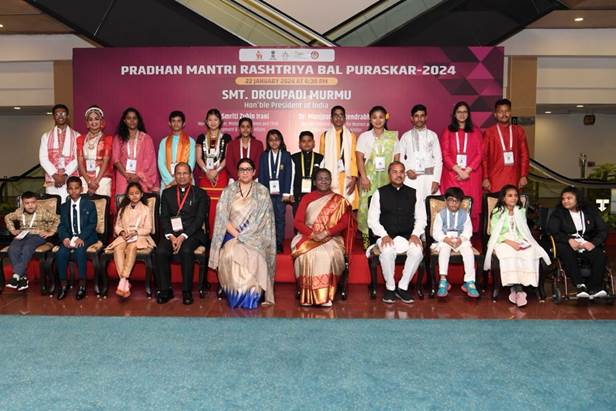
A nine-year-old mountaineer, a young AI scientist, a specially abled painter and a ‘Google boy’ were among the 19 children who were conferred with the Pradhan Mantri Rashtriya Bal Puraskar 2024 on Monday.
President Droupadi Murmu presented the national awards to them for their exceptional achievements.
Among the winners is Aaditya Vijay Brahmane, 12, from Maharashtra, who was awarded posthumously for his extraordinary act of courage. He sacrificed his life to rescue his cousins Harsh and Shlok from drowning in a river while playing.
Aryan Singh, 17, from Rajasthan is another remarkable recipient of the award. Singh ingeniously developed an Agrobot, an artificial intelligence-powered robot aimed at simplifying the lives of farmers by integrating cutting-edge technologies such as the Internet of Things (IoT).
In Chhattisgarh, Armaan Ubhrani, also known as the ‘Google boy’, has earned the award for his outstanding prowess in mathematics and science. At the tender age of six, Ubhrani has achieved numerous milestones, including becoming the youngest author of a book series and solving 100 multiplication sums, garnering recognition both nationally and internationally.
In the domain of art and culture, eight-year-old Anushka Pathak from Uttar Pradesh has established herself in ‘Katha Vachan’ (religious text narration). Following in her esteemed father’s footsteps, Pathak has captivated audiences across 22 states with her performances, becoming a recognised figure in the spiritual realm.
Arijeet Banerjee, 13, from West Bengal, a prodigy in playing the traditional Pakhawaj, has made an indelible mark on the cultural landscape. Having performed at prestigious events like the International Dhrupad Festival, Banerjee has received accolades such as the Bharat Ratna M S Subbulakshmi Fellowship and the Asia Book of Records.
Despite facing severe cerebral palsy, 13-year-old Hetvi Kantibhai Khimsuriya from Gujarat has displayed extraordinary artistic abilities, creating 250 works of free-hand painting, receiving numerous awards, and selflessly donating her monthly disability pension to support differently abled children.
Ishfaq Hamid, 12, from Jammu and Kashmir has become a maestro of Rabab and Matka, receiving accolades during various festivals and being honoured with the Bhai Mardana National Award in 2020.
Md Hussain, 16, from Bihar has excelled in handcrafted arts, winning accolades in state and national-level competitions, and even presenting his indigenous toys to Prime Minister Narendra Modi during the ‘Pariksha Pe Charcha’ programme.
Pendyala Laxmi Priya, 14, from Telangana is a Kuchipudi dancer, winning the Kala Utsav National Award 2023 in the classical dance category and holding titles like ‘Laasyapriya’.
In the realm of innovation, 16-year-old Suhani Chauhan from Delhi has developed ‘SO-APT’, a solar-powered agriculture vehicle, offering an impressive solution for sustainable farming.
Despite obstacles associated with Down syndrome, nine-year-old Avnish Tiwari from Madhya Pradesh trekked Mount Everest base camp at the age of seven and received the Shresth Divyang Bal Puraskar in 2022 for his exceptional social service.
Nine-year-old Garima from Haryana, a visually impaired girl, is dedicated to providing education to underprivileged children through her initiative called ‘Sakshar Pathshala’.
AWARDEES OF PRADHAN MANTRI RASHTRIYA BAL PURASKAR-2024
Sr. No.
Name
State
Category
1.
Aaditya Vijay Bramhane (posthumous)
Maharashtra
Bravery
2.
Anushka Pathak
Uttar Pradesh
Art & Culture
3.
Arijeet Banerjee
West Bengal
Art & Culture
4.
Armaan Ubhrani
Chattisgarh
Art & Culture
5.
Hetvi Kantibhai Khimsuriya
Gujarat
Art & Culture
6.
Ishfaq Hamid
Jammu & Kashmir
Art & Culture
7.
Md Hussain
Bihar
Art & Culture
8.
Pendyala Laxmi Priya
Telangana
Art & Culture
9.
Suhani Chauhan
Delhi
Innovation
10.
Aryan Singh
Rajasthan
Science & Technology
11.
Avnish Tiwari
Madhya Pradesh
Social Service
12.
Garima
Haryana
Social Service
13.
Jyotsna Aktar
Tripura
Social Service
14.
Saiyam Mazumder
Assam
Social Service
15.
Aaditya Yadav
Uttar Pradesh
Sports
16.
Charvi A
Karnataka
Sports
17.
Jesicca Neyi Saring
Arunachal Pradesh
Sports
18.
Linthoi Chanambam
Manipur
Sports
19.
R Surya Prasad
Andhra Pradesh
Sports
source: youtube.com / pib.gov.in
source: http://www.millenniumpost.in / Millennium Post / Home> Nation / by Team MP (headline edited) / edited with inclusion of full chart of awardees and you tube video and photograph source – pib.gov.in / January 22nd, 2024
Bangalore, Mangalore, KARNATAKA / New York, U.S.A :
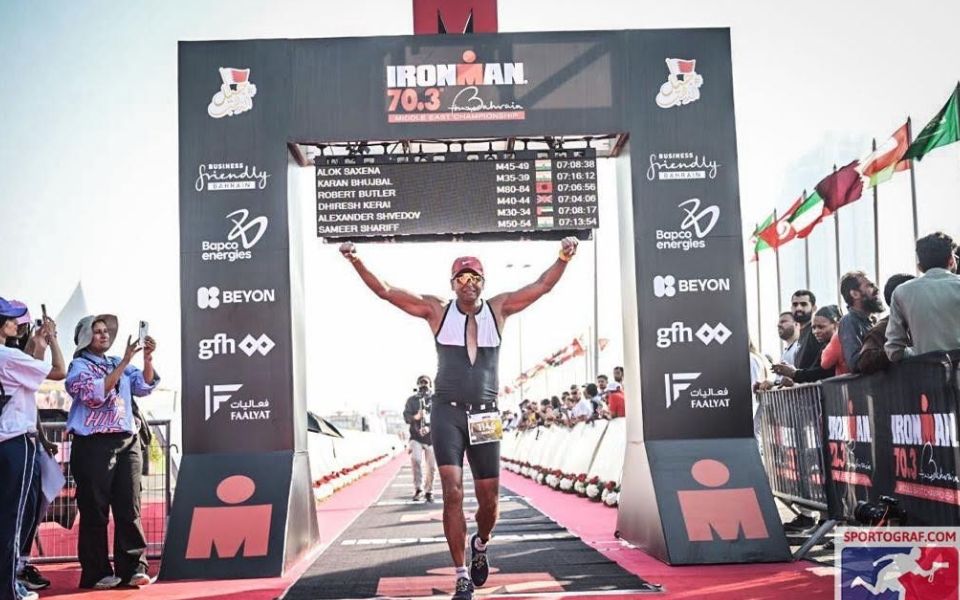
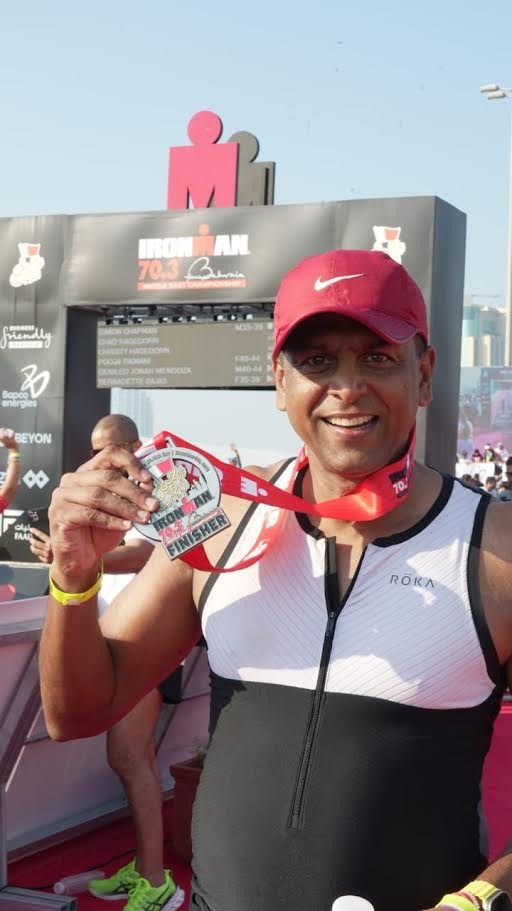
Sameer Shariff, the CEO of Impelsys, a prominent IT company with global offices, including one in Mangalore, successfully completed the IRONMAN 70.3 Bahrain triathlon on December 8, 2023. The challenging event, held at Reef Island, witnessed the participation of over 1500 individuals, with more than 1000 successfully completing it.
By accomplishing the IRONMAN 70.3 course, which comprises a 1.9 KM swim, 90 KM cycling, and a 21.1 KM run, Sameer Shariff joined an exclusive club of global business leaders who have conquered this grueling challenge. Beyond personal achievement, Shariff aims to inspire others to adopt a healthy and active lifestyle. He expressed, “Completing the IRONMAN triathlon pushed my endurance limits, and I believe it sets an example for others. We are making strides with the CEO Fitness Challenge for associates at Impelsys.”
Shariff’s achievement has motivated many colleagues at Impelsys to pursue their fitness goals. Sripad, heading cloud services, shared, “Sameer’s dedication motivated me to run a half marathon in 2023.” Prachi, a project manager, added, “After seeing Sameer’s preparations, I decided to participate in a half marathon. I completed my first half marathon on November 5, 2023, in Mangalore.”
These accomplishments mark the beginning of a broader wellness initiative envisioned by Sameer Shariff. In 2024, Impelsys aims to encourage more participants, extend the challenge to partner organizations and customers, and promote overall well-being. The ‘CEO Fitness Challenge’ is a voluntary program that has seen over a hundred associates engaging in specific health and fitness activities, collectively achieving impressive milestones.
source: http://www.english.varthabharati.in / Vartha Bharati / Home> Gulf / by Vartha Bharati / January 12th, 2024