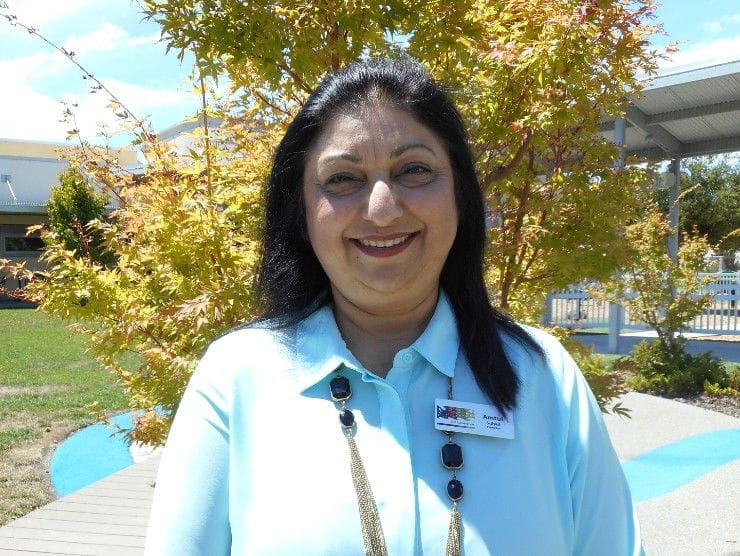
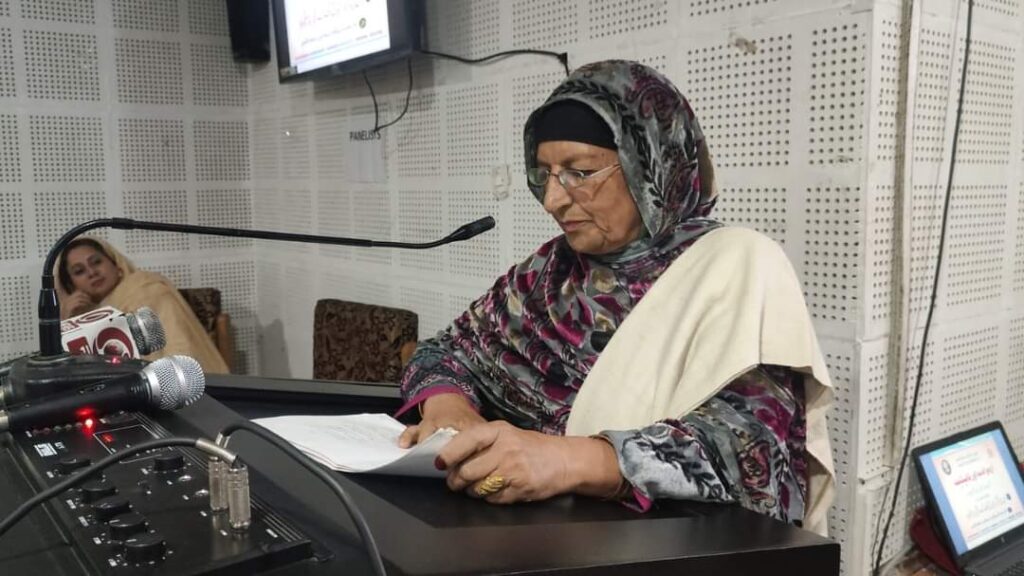
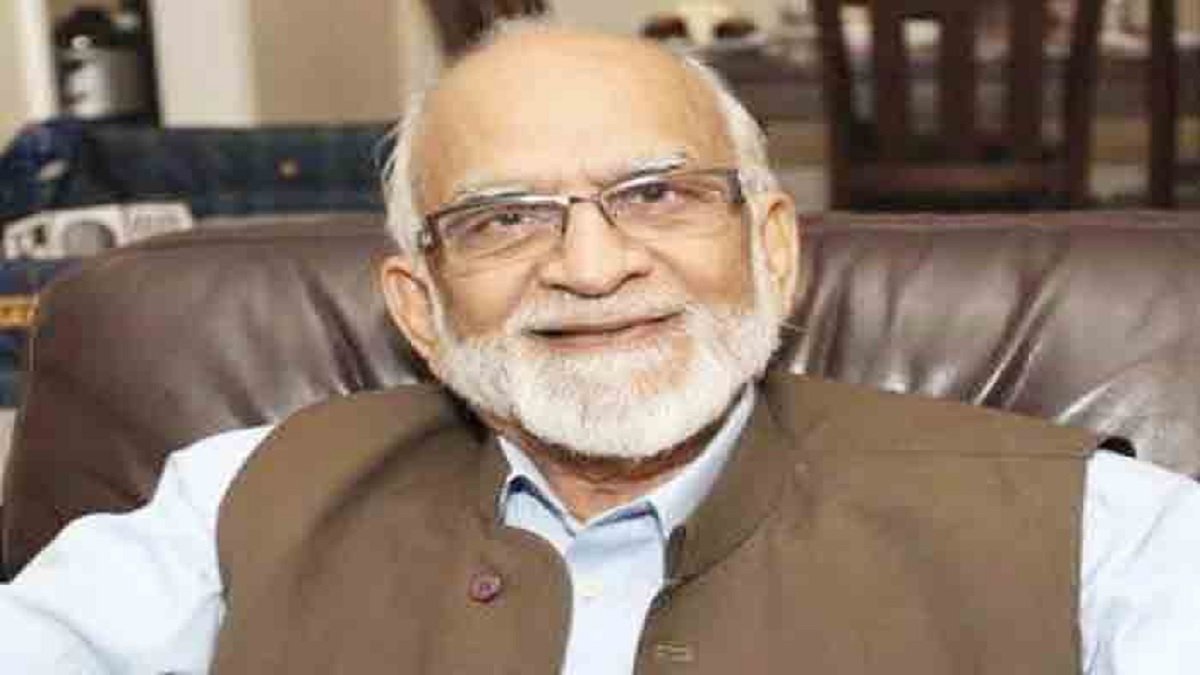
Amtul Suhail, Executive Director at 2nd Generation at Allerton in South San Francisco, CA, is one of one hundred Indian Muslim women across the globe to receive a nomination from Rising Beyond the Ceiling for her contributions and accomplishments in the field of early childhood education.
Rising Beyond the Ceiling is a non-profit organization focused on supporting and promoting Indian Muslim women and their leadership and contributions in their respective fields. Each year they spotlight one hundred Indian Muslim women who have made their mark in countries across the world. All the women have done their initial studies in India, but later moved to other countries where they received accolades and success in their professions.
“I am elated. This is a pure and pleasant surprise,” said Amtul. “I have been working for decades to make a difference in the community by helping one child, one family, one group and mission at a time. I never expected anything in return.”
Working the field of education since 1985, she migrated to the United States in 1990, leaving behind her family on a quest to pursue her dream of caring for and teaching children. Amtul joined Bright Horizons in 2013 and is currently the Executive Director at Bright Horizons Allerton where she oversees the center operations and its programs.
“My passion is children. Every single thing I do, I think “how would this impact a child?’’ This passion that drives me is because of my mother who always taught me what I call the ’golden rule‘ – when things go wrong, you do not go wrong,” said Amtul. “I lead with honesty, transparency, accountability and joy. My mom encouraged me to choose a career to work with children so I can make the difference for children and adults in the community where I work and live.”
Amtul has a Masters in Mass Communication from Aligarh Muslim University. She also volunteers her time and talent for her University Alumni Association of Northern California. She is a guiding force behind the alumni association’s mission and has been involved as a coach and student trainer.
Amtul adds: “My vision is to foster love and compassion for early childhood educators. When they decide to join the education field and under my supervision, they feel empowered, autonomous and committed. I truly believe that consistency and continuity of care is extremely important.”
To learn more about Rising Beyond the Ceiling, visit here.
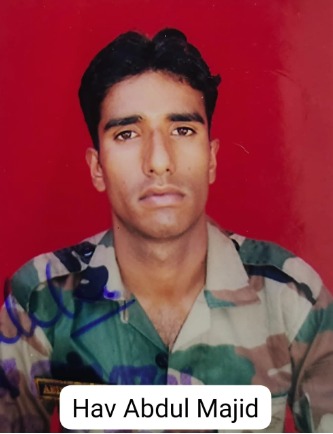
Havildar Majid Hussain, a local hero hailing from Poonch, exemplified the true spirit of a commando through his unwavering commitment to defending his homeland.
The Army said on Friday. “In the challenging terrain of Poonch and Rajauri, he stood as a formidable force against terror, displaying unparalleled courage and determination in the highest traditions of the Indian Army. His supreme sacrifice in the pursuit of peace resonates deeply with the hearts of the people in Poonch and Rajouri,” PRO Defence said in a statement issued here.
The GOC 25 Infantry Division, representing GOC-in-C, NC and GOC 16 Corps, expressed profound gratitude to Havildar Majid Hussain’s family. “In a heartfelt tribute to a local son who went above and beyond in the line of duty, the family of the Braveheart was visited by his seniors and colleagues bestowing the spirit of care for their fallen brother,” the statement said.
The awarding of the Kirti Chakra is a symbol of conspicuous bravery of Havildar Majid Hussain’s selfless sacrifice, the Army said, adding, “Poonch, Rajauri, and the entire population of UT of J&K, stand indebted to this courageous commando. His actions go beyond a single moment in time; they serve as a perpetual source of inspiration for future generations.”
The PRO Defence added, “As the Hero of Poonch, Havildar Majid Hussain’s legacy lives on, becoming an enduring beacon of selflessness and dedication. His story will continue to resonate in the hearts of those from his hometown and across the nation.
The gallantry award bestowed upon him is not just a medal; it is a symbol of honour, bravery, and a reminder of the sacrifices made in the relentless pursuit of peace and security.”
source: http://www.risingkashmir.com / Rising Kashmir / Home / by RK News / January 27th, 2024
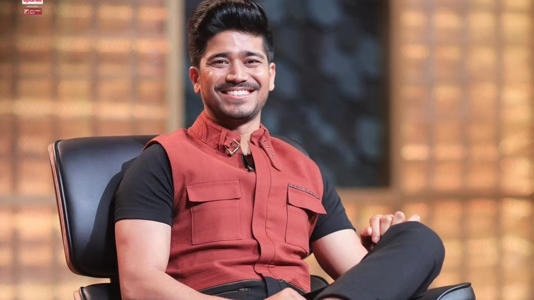
Inshorts CEO Azhar Iqubal speaks to IndiaToday.in about joining the latest season of ‘Shark Tank India.’
Azhar is seen as one of the 12 ‘sharks’ on the popular show.
Shark Tank India airs on SonyTV and SonyLIV.
The latest season of Shark Tank India will see Inshorts CEO Azhar Iqubal taking up charge as a ‘shark’. He would be one of the 12 leaders who would be picking up upcoming businesses to mentor. In a chat with IndiaToday.in, Iqubal shared how he had been inspired by many entrepreneurs while he was trying to build his career, and hopes to do the same with this show. He also said that fame was one of the primary reasons behind saying yes to ‘Shark Tank.’
Azhar Iqubal on joining Shark Tank India 3
“Shark Tank India takes entrepreneurship to masses. I have been inspired by many business people when I started out. I am a college dropout and if I can even give the confidence to someone to take that bet, it would be an achievement for me,” he shared.
Azhar Iqubal further added that he has followed the previous seasons, sometimes even on repeat: “I still remember the dialogues,” he added with a laugh. The entrepreneur also revealed that it was his ‘idea’ to take their business to Shark Tank India , and hence it was him who landed on the stage, instead of his co-founder.
When asked about his decision to drop out of IIT and start his business, Azhar Iqubal shared that his father was earning Rs 25k then. And he knew that even if he doesn’t complete college, he would get a job as a teacher for aspirants with double the salary: “I knew I had that backup so I could play that shot. I could lead a better lifestyle even if things didn’t work out. I decided to do business because I wanted to earn big. I realised that everyone rich in the country is an entrepreneur and I wanted the same for me.”
The previous ‘sharks’ have always spoken about how they became popular after the show. When asked if that was the reason he decided to be on the show, Azhar Iqubal laughed, “It was a big reason and I think every person wants that. Money, power, and fame is everything one wants, and enjoys. And if you are getting fame for something good, nothing better than that. I would be lying if I said it was not important.”
‘My mother shared that after being 10 years in Business …’
The business leader went on to recall a sweet moment where his mother told him how he has finally gained ‘recognition’ after so many years of being in business: “After the promos of the show dropped, people in my hometown started calling her. My mother shared that after 10 years of being an entrepreneur, people have finally recognised me and know that I have done something.”
Talking about himself, the businessman shared how he is a ‘number-driven’ man. Even when deciding to invest, Iqubal shared that he asks for numbers as he’s quite ‘objective’ and doesn’t take emotional decisions.
On a final note, the businessman shared that Shark Tank India 3 will see a great mix of old and new sharks, and hence, there would be a lot of changed dynamics: “Also, you would see a lot of pitchers from small towns on the show, which will be quite inspiring and entertaining for everyone,” Azhar Iqubal concluded.
Shark Tank India airs on SonyTV and SonyLIV.
source: http://www.indiatoday.in / India Today / Home> News> Televison> Reality TV / by Sana Farzeen, Mumbai / January 23rd, 2024
Hokkodgoli (Arambodi Village, Belthangady Taluk) Mangaluru, KARNATAKA:
Mangaluru:
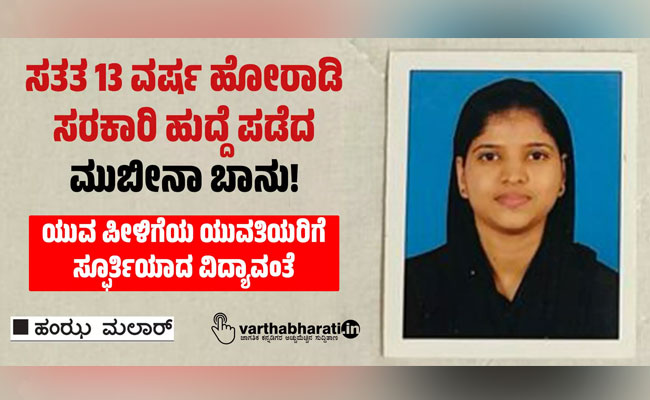
In a remarkable tale of perseverance and determination, Mubeena Banu, a Muslim woman from Hokkodigoli in Arambodi village, Belthangady taluk, has secured a government post after a 13-year-long legal battle.
Mubeena Banu, the tenth child of Muhammad H, a beedi contractor, and D. Zainaba, pursued her education in her village from 1st standard to 2nd PUC. She later completed her graduation from a private college in Moodbidri and earned her post-graduation (MA) from Mangalore University, Konaje. In 2008, with the aim of fulfilling her parents’ dream, she applied for the post of Supervisor in the Women and Child Welfare Department.
Despite her qualifications, she faced a setback when she was not selected for the post in 2010. Undeterred, Mubeena Banu investigated the reason for her exclusion and discovered a discrepancy in her marks. Her BA degree marks were recorded incorrectly as 71.79% instead of the actual 75.36%. Despite facing resistance from senior officers, Mubeena persisted in her efforts, seeking support from former MLAs Vasant Bangera and Ramanatha Rai.
Having relocated from Mittabailu to Melkar and working as a lecturer in a private educational institution, Mubeena approached Speaker UT Khader for assistance in her final attempt. She filed a complaint with the Lokayukta and approached the Karnataka Administrative Tribunal (KAT). Through persistent efforts, KAT ruled in favor of Mubeena Banu.
On January 10, 2024, the Women and Child Welfare Department issued an appointment order to Mubeena Banu for the position of Supervisor at the Office of Child Development Project Officer, Bantwal Taluk. Mubeena, who initially applied from Arambodi village, is now in Sajipa Muda village of Bantwal taluk with her husband, marking the culmination of her arduous journey.
Reflecting on her journey, Mubeena expressed gratitude to her late father, a social worker who emphasized education, and her mother for their unwavering support. She acknowledged the financial assistance from her parents and husband Ismail Khader during her numerous trips to Bangalore Vidhana Soudha and departmental offices. Mubeena also highlighted the crucial support from Lokayukta officer Amanullah, Speaker UT Khader, and his close assistant Libzat.
In her own words, Mubeena Banu said, “UT Khader always supported my persistence and struggled to get that government post, which I missed due to the mistake on the part of the officials. Maybe it can be said that after he intervened, the path of my struggle became easier.”
source: http://www.english.varthabharati.in / Vartha Bharati / Home> Karavali / by Vartha Bharati / January 22nd, 2024
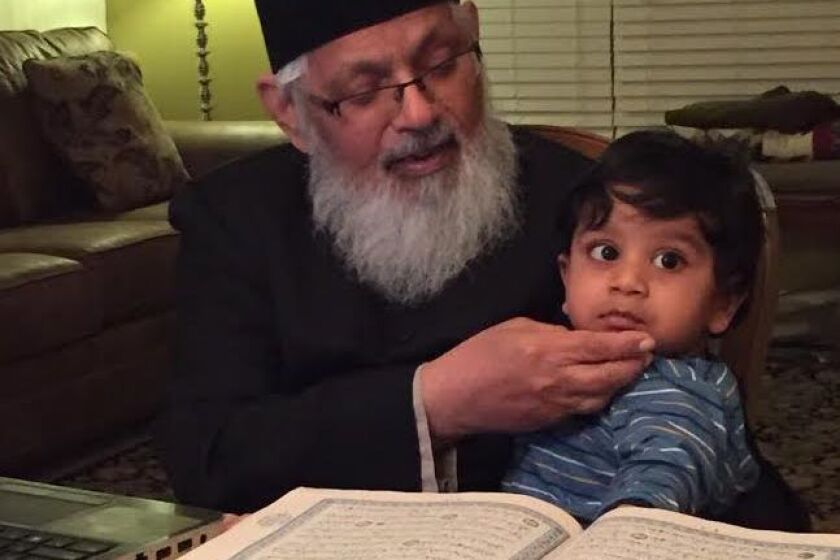
Irfan Ahmad Khan taught many people about the Quran, including his great-grandchild Sulayman Ahmed Ansari. | Provided photo
Irfan Ahmad Khan wrote books, taught college classes, gave lectures and counseled inmates after their release from jail to help people learn about the Quran.
One of the best-known Quranic scholars in Chicago’s South Asian Muslim community, he also worked to promote understanding among different religions through interfaith groups.
“My father’s aim was not for material gain or fame,” said his daughter Humera Hai. “Spiritual peace and harmony was his main aim.”
He would go hours out of his way to drive medicine to a sick person or to resolve disputes, Hai said.
Mr. Khan, 86, who had been having heart problems, died April 3 in Chicago, said his grandson Saeb Ahsan.
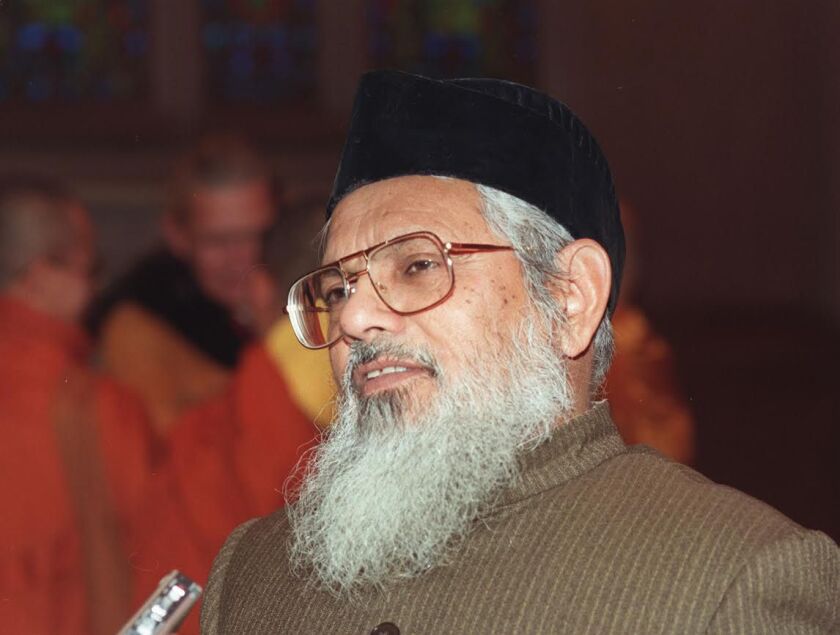
Irfan Ahmad Khan in 1996. | Sun-Times files
Mr. Khan, who lived in Markham, spoke and wrote in English, Urdu, Hindi and Arabic. He also could read and write in Farsi and Latin.
His books included “An Introduction to Understanding the Quran,” “An Exercise in Understanding the Quran” and “Reflections on the Quran.” He also edited a journal on Islamic thought.
He was born in 1931 in British India, in Saharanpur in the state of Uttar Pradesh. His father was a well-to-do merchant and landlord. He expected his son to take a role in the family businesses, but “He wanted to study,” said his daughter.
In 1952, he earned a degree in physical sciences from India’s Aligarh Muslim University and continued his Islamic studies in the city of Rampur. He taught at the Indian university from 1958 to 1973.
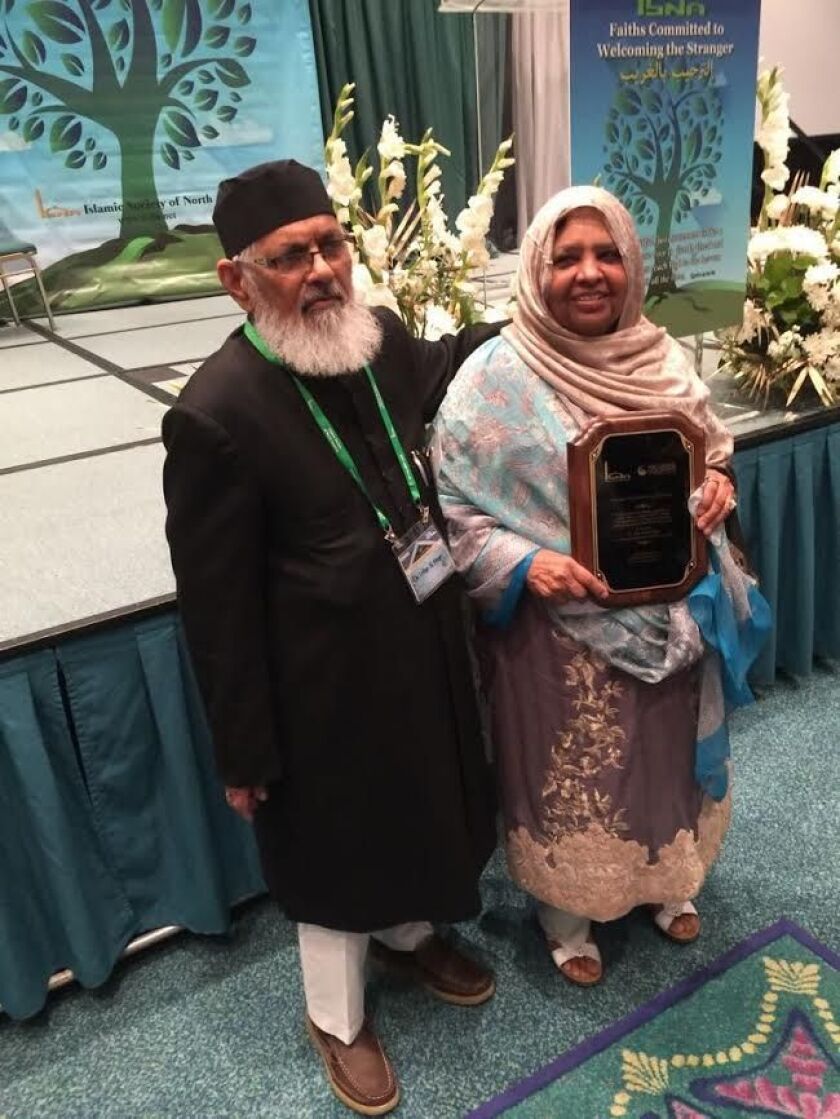
Irfan Ahmad Khan and his wife Shamim. | Provided photo
Mr. Khan married Shamim Akthar Khan in 1957.
“He was always so gentle, so kind,” his wife said.
In 1974, he arrived in Chicago to study at the University of Illinois at Chicago. His wife, who was raising their seven children in India, had to await immigration clearance and wasn’t able to join him full-time until 1981, Hai said. “Both of them struggled” with being apart, their daughter said.
Mr. Khan, who admired the philosophers Immanuel Kant and Rene Descartes, earned a master’s degree in philosophy from UIC in 1977 and a doctorate in philosophy in 1986, according to the university.
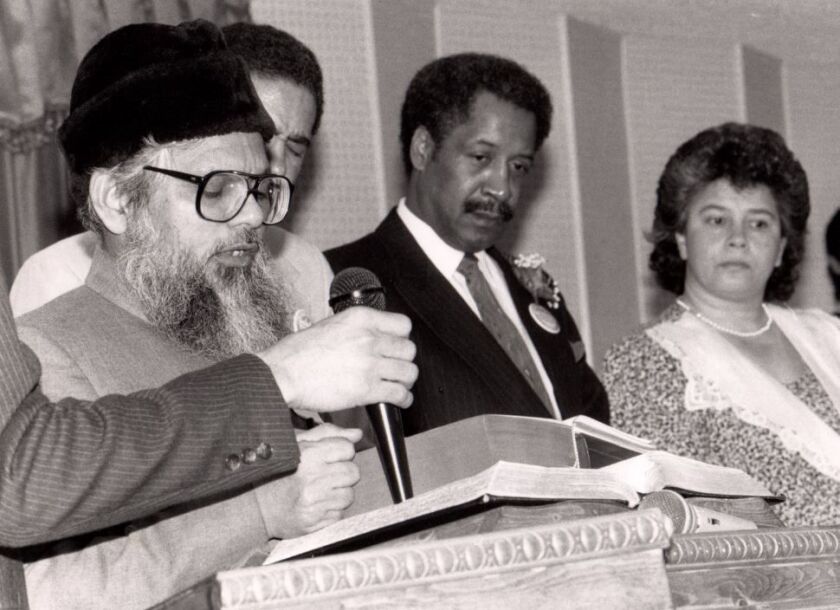
Irfan Ahmad Khan, with then-Mayor Eugene Sawyer in the background. | Provided photo
He taught Islamic philosophy at UIC and lectured at schools including the University of Chicago, the School of the Art Institute of Chicago and the University of Iowa, his family said.
He was founder and president of the World Council of Muslims for Interfaith Relations, an emeritus board member of the Parliament of the World’s Religions, founding president of the Interreligious Engagement Project for the 21st Century and director of the Association for Quranic Understanding.
“His message was that there was a commonality in many faiths — a commitment to justice and fairness,” said Abdullah Mitchell, a lawyer and friend who said Mr. Khan was known for his outreach to the African-American Muslim community.
His lectures were delivered with energy and humor, and he always was approachable, said another friend, Afaq Mujtaba.
Mujtaba said young people in the South Asian Muslim community referred to him as “Uncle,” a term of affection and respect.
When Mujtaba’s mother died, “The way he consoled me, I will remember for the rest of my life,” he said.
Mr. Khan made multiple pilgrimages to Mecca and traveled to educational and interfaith conferences in Asia, Africa, Australia and Europe.
Islamic scholar Irfan Ahmad Khan worked to build relationships with other religions and interfaith groups. | Provided photo
His grandson said Mr. Khan would tell him, “Develop your relationship with God” and “Keep your studies’ focus; don’t necessarily get married too early.”
He enjoyed Red Lobster, Reza’s Restaurant on Ontario Street and anything that tasted of mango, his grandson said. Every morning, he ate toast and drank strong English breakfast tea with milk and lots of sugar. He liked it in a china cup and saucer, the hotter the better.
Once, when a student brought him tea, he removed his topi — a traditional hat — and placed it atop the drink like a tea cozy to keep it warm. But Mr. Khan forgot where the tea was. So the student brought him a second cup. “He picked up his hat,” said his son Farhan, “and he found the other tea.”
Irfan Ahmad Khan. | Provided photo
He always made sure his sherwani — a formal, knee-length coat — was pressed and crisp.
Though he usually focused on philosophical questions and lectures, his family found it endearing when Mr. Khan would catch a glimpse of an Indian or Pakistani soap opera on TV and then comment, with serious deliberation, on the motivations of the characters.
“This person is not being honest,” he’d say. “They are trying to take advantage.”
He is also survived by daughters Nusba Parveen, Husna Ahmad, Bushra Islam and Saba Khan, son Salman, brothers Ehtasham, Afzal, Iqbal and Rehan, sisters Ayesha Jamal and Rehana Bilquis and 21 grandchildren and two great-grandchildren. Services have been held.
source: http://www.chicago.suntimes.com / Chicago Sun*Times / Home> Obituaries> News> Religion / by Maureen O’Donnell / April 14th, 2018
“The utmost service to the religion during these times is to educate our youth and upcoming generations with contemporary subjects while keeping their faith firmly established and their self-confidence high; so that, they excel in religion, are adorned with education, have appreciation of hard work and therefore are able to navigate and take confident decisions in their life.” ~Hazrat Maulana Mohammad Sayyid Wali Rahmani Sb.
Getting medical education and becoming a doctor to serve humanity is the dream of millions in the country. However every year only a few thousand fortunate students are able to realize their dream. Paying exorbitant fees of private medical colleges is not possible for everyone and seats are limited in government medical colleges. So the majority of students ended up losing hope in the absence of affordable resources and start considering other alternatives.
Admission in any government medical college is becoming tougher with every passing year with an increasing number of aspirants and limited medical seats. Its competitive exam (NEET) is one of the toughest exams in the country. It requires rigorous preparation.
In such a situation, Rahmani30 founder Hazrat Maulana Md Wali Rahmani Sahab started this program for meritorious students with a vision of providing free education for all and even sponsoring other expenses for those who can’t afford. Alhumdulillah, the vision of Hz. Ml. Md. Wali Rahmani sb ra has transformed into an educational movement, instilling hope & motivation in people who have remained deprived of such opportunities.
It is worth noting that 19 students (boys & girls) had participated in NEET-UG 2023 from Manipur state, in which all the students qualified NEET-UG 2023, while 11 students scored 500+ marks and got Government MBBS seats in Manipur viz. RIMS, JNIMS, CMC and SAHS which is a huge success. Also 7 students scored more than 400+ marks and got 2 BDS Government seats. Of course, this achievement is the guarantee of bright academic future of Rahmani30 students.
Parents, guardians and well-wishers of Rahmani30
RAHMANI30 – MERIT LIST OF NEET-UG 2023 OBC MEITEI-PANGAL
Sl. No. / State Rank / Roll Number / Name of candidate /Sex / Category NEET Score MBBS Seat @ NEET / Rank
We Manipur state (NE Region) are really fortunate to be part Rahmani Program of Excellence, RAHMANI30 UNIQUE Educational Movement.
For us, it is our proud moment for whole Ummah RAHMANI30 has done so much for entire community in the field of EDUCATION.
Marhoom Hazrat Maulana Mohammad Sayyid Wali Rahmani Sb left behind some pleasant memories as dedicated his life in the efforts for uplifting the community as a scholar, as an educationalist, and with ‘never say die’ spirit.
So far, RAHMANI30 has produced 10000+ students in Engineering (IIT), Medical (NEET), Commerce (CA/CS), Law (CLAT), Defence (NDA), and Institutes of National Importance (INI) and tremendous noble cause initiatives.
The Rahmani Program of Excellence (Rahmani30), along with its mentor organization, The Rahmani Foundation, is effectively turning the educational desperation of the minority community into hope and confidence, making its learning process more effective with each passing year.
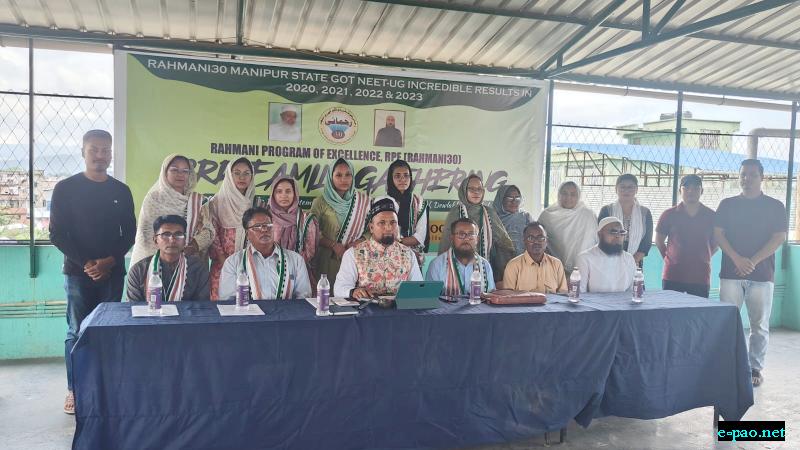
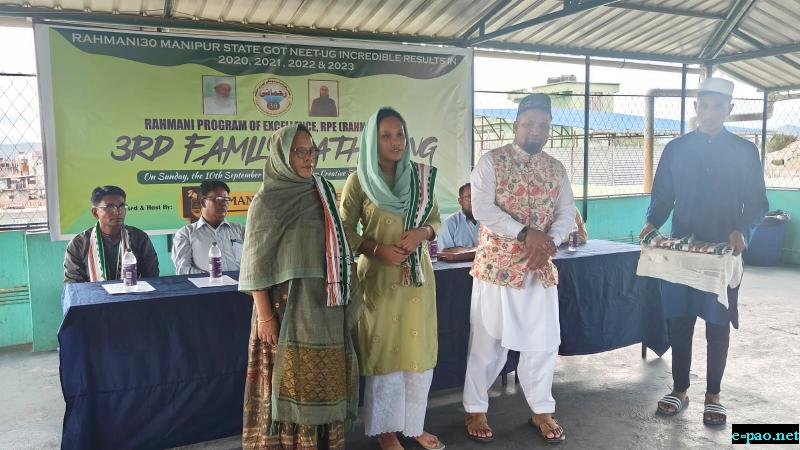
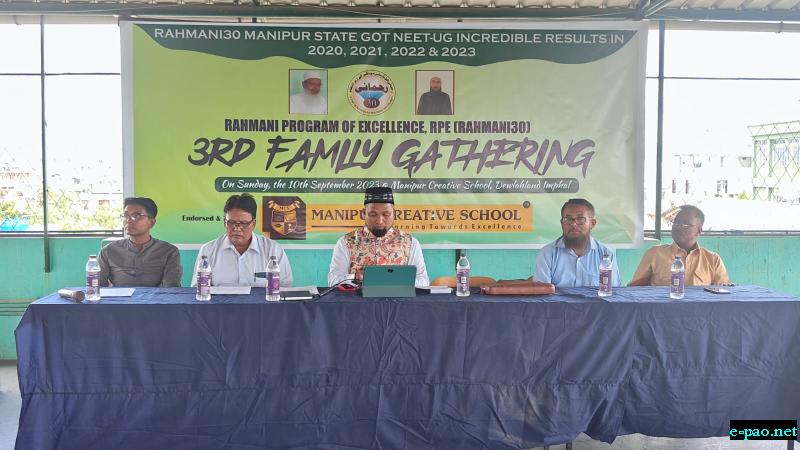
On this Family Gathering Occasion here at Manipur Creative School, Sermon Road, 5th Avenue, Dewlahland, Imphal East, Manipur 795001 on Sunday, the 10th September 2023, the parents, guardians and well-wishers of Rahmani30, congratulating and felicitating the successful students by Manipur State Coordinator Md Raees Ahamed Tampak, said in his speech that surely all the success and achievement are the results of hard work of team, students, and the prayers of all the stakeholders. So far, RAHMANI30 Manipur State produced 23 MBBS and 2 BDS Seats.
Md Raees Ahamed Tampak, Coordinator, Rahmani Program of Excellence, RAHMANI30, Manipur State said that this achievement is definitely achieved due to the tireless efforts of Mr. Fahad Rahmani (CEO Rahmani30), Ma’am Rafatur Rahmani (Team Lead, Maharashtra Girls program) and former DGP of Bihar, Janab. Abhyanand Sahab, by his efficient Academic leadership and guidance as well as the tireless hard work of the faculty, management and other staff. This has been possible only through identification of the target and recognition of the goal and mutual cooperation by the students and their parents.
“The Best way to predict your Future is to create it.” ~Abraham Lincoln
Parents, guardians and well-wishers of Rahmani30
Md Raees Ahamed Tampak / State Coordinator – Manipur State Rahmani Program of Excellence / (RPE – RAHMANI30)
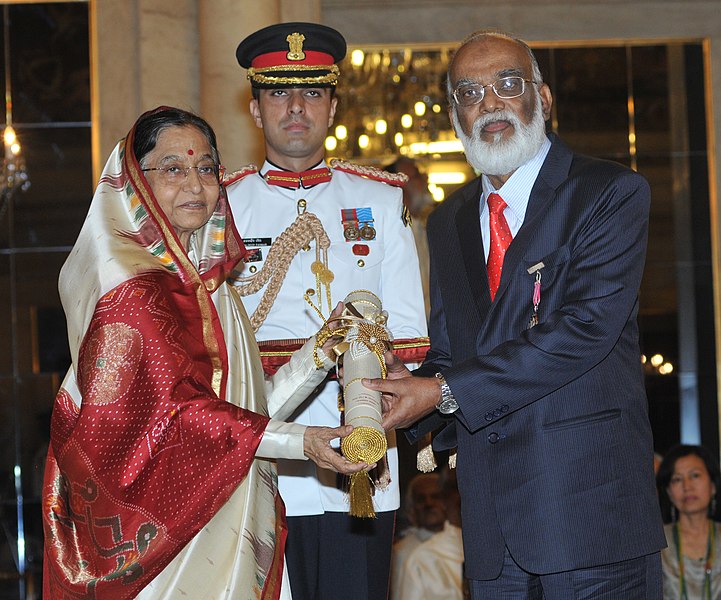
The President, Smt. Pratibha Devisingh Patil presenting the Padma Shri Award to Prof. (Dr.) M. Ahmed Ali, at an Investiture Ceremony II, at Rashtrapati Bhavan, in New Delhi on April 01, 2011./ pix: en.wikipedia.org
Dr. Ahmed Ali can perhaps scale Mount Everest to gain knowledge in surgery, and will come back to serve the poor and needy. That is the thirst he has, and the skill gained by his extra ordinary, photographic memory power.
After obtaining the highest degree in surgery such as M.Ch, he was awarded the prestigious Doctor of Science D.Sc.in surgery.
The Padma Shree Awardees, listed on January 31, 2011, Dr. Ahmed Ali, won the nation’s prestigious award.
A dedicated, and most devoted to his profession, he declined an opportunity, assigned in New York soon after post graduation in gastroenterology and proctology. Surgery is an art to him same as a gifted and a born artist plays with his brush and colors. There is no exaggeration that if it is said that his tournament is surgery.
He visits every month to his native town to impart free service, in addition he gives nutrient suppliments and other vitamins and other additives to less fortunates. He does this as a token of gratitude to the school he studied and for the people who mutually loved.
Born in Ambur in 1940, graduated from Madras Medical College, and after retiring from service, he is concentrating his profession in Mehtha Nursing Home,Chetpet in Chennai.
His only son Dr. Mansoor is a surgical specialist in liver, pancreas, and bile duct (Hepato Pancreato Bilary Specialist) working in Kings Hospital, London UK. Dr. Mansoor is as good as his father, and was the student of Dr. Rela, the world renowned liver specialist.
Ambur, a town in Vellore District in Tamil Nadu is famous for leather industry, as well the elite of the society Ambur Muslim Educational Society, and it is fully devoted in concentrating women’s education and the students performance is par excellent.
Mr. Mecca Rafeeque Ahmed, a renowned leather industrialist, from Ambur also awarded Padma Shree for his industrial achievements.
Dr. Ali was felicitated with standing ovation by different groups elites, but he stood humble and modest.
source: http://www.amityindias.blogspot.com / April 05th, 2011
Rana’s feat assumes significance in the wake of a rise in the number of drowning cases in the state.
Rana Fathima shows off her skills in the water
Kozhikode :
Rana Fathima, a five-year-old swimming prodigy hailing from Kodiyathoor panchayat, has been enchanting denizens on the internet with her skills in the water for some years now. Now, as a brand ambassador of ‘Neenthi vaa Makkale’, an initiative organised by Mukkam municipality to impart swimming lessons to students, she is a role model, inspiring youngsters in the panchayat to take up swimming.
Rana learned to swim in a small river in Thottumukham under the tutelage of her grandmother, Ramla Manaf. She is the daughter of journalist Rafeeque Thottumukham and Rifana.“It is important for children to learn how to swim. It’s equally important for parents to encourage their kids to come out of their cocoons. Mobile phones and television are adversely affecting the young generation. Children should stay close to nature,” Rafeeque said.
After her videos went viral, Rana was frequented by social media influencers, all eager to capture her story in greater detail. Rahul Gandhi, too, had paid her a visit on one of his trips to the state.
Rana’s feat assumes significance in the wake of a rise in the number of drowning cases in the state. “Most of the drowning cases happen during the vacation. People who take to the water bodies here do not heed our warnings. You might have prior experience in swimming, but the rivers here have strong currents. Even the native swimmers are scared to get down sometimes,” said Muralidharan C K, assistant station officer, Fire and Rescue Services, Mukkam.
In the past five years, around 41 people have died by drowning in the region. Most of them were youngsters aged 15-28.
source: http://www.newindianexpress.com / The New Indian Express / Home> Kerala / by Alka Mariya & Heera Hari / May 22nd, 2023
Rukhsana Jabeen (Second from right) at a poetic symposium
Rukhsana Jabeen is one of the very few female litterateurs in Jammu and Kashmir who carved a niche in the Subcontinent’s vast domain of Urdu poetry at the intersection of the 20th and the 21st century. An overarching and unceasing armed insurgency, that muted all expressions in art and literature in the Valley failed to silence her for 33 years.
After serving All India Radio for over 30 years, Jabeen retired as a Director at Radio Kashmir Srinagar in 2015. The participation of a Kashmiri woman in the annual All India Mushaira on the eve of Republic Day or Independence Day was fatally proscribed by terrorists. Jabeen did so without break.
“Whatever came to my mind, I wrote and expressed without thinking a bit about its consequences”, Jabeen revealed to Awaz- the Voice at her winter residence in Jammu.
Born in a family of the decedents of the revered saint and Kashmiri-Persian poet Syed Meerak Shah Kashani in the Khwaja Bazar neighbourhood of downtown Srinagar in 1955, Jabeen did Master’s in Urdu followed by MA and M Phil in the Persian language and literature at the University of Kashmir. In 1983, she joined AIR Srinagar as a program executive.
Rukhsana Jabeen at a poetic symposium
“I was not the first woman to enter the station for an all-India job”, Jabeen said “but in our family setting it was like breaking the glass ceiling. Getting selected for the job in a tough patriarchal competition was like a big success for me. Knowing well that I wouldn’t be permitted to apply for it, I kept it all discreetly concealed from my family”.
“I was also selected as a teacher in the State Education Department. As my father learned about my getting a job at the AIR, he insisted I should join as a teacher. I agreed with him that the AIR officers could be transferred to any Indian State, but I lied that female officers were not posted outside their home States. Thereupon my family relented, and I joined as a program executive”, Jabeen said.
In 1994, Jabeen established AIR’s Poonch station close to the Line of Control in Jammu where she served for three years. In 1999, she was promoted to Assistant Station Director (ASD).
Unlike many of her tribe, Jabeen’s tryst with creative literature began late during her university days. A prominent Urdu poet and literary critic and the head of the Urdu Department, Prof. Hamidi Kashmiri, encouraged Jabeen to write prose and poetry in Urdu. “I was thrilled when Hamidi Sahab refined my first Ghazal and got it published in the annual edition of his department’s magazine ‘Baazyaft’. Under his tutelage, I learned about modern sensibility and the post-modernist literary trends”, Jabeen recalled.
Rukhsana Jabeen recording a radio programme
She narrated how affectionately some celebrated litterateurs like Hamidi at the University of Kashmir and Zubair Rizvi at Radio Kashmir Srinagar gave her select books and literary magazines to hone her talent and faculties as a creative writer.
“One day, incredulously I found five of my poems published together, alongside my profile, in Kumar Pashi’s journal ‘Satoor’. Later, Zubair Sahab disclosed that he had got the same published in the prestigious Urdu magazine. It was an incredible encouragement and my recognition as a poet. Thereafter, a number of my poems were published in the top representative journals like ‘Alfaaz’, ‘Shayir’, ‘Mafaheem’ and ‘Asri Agahi’. Hamidi Sahab and Zubair Sahab steered me to the extensive studies of Shaharyar, Rajinder Manchanda Bani, Nasir Kazmi, and Mohammad Alvi. I am still deeply under the influence of Mohammad Alvi and a few others”, Jabeen added.
Kishwar Naheed, Parveen Shakir, and Fahmida Riaz inspired Jabeen into some new experiments. She was initially also influenced by female Urdu litterateurs like Rafia Shabnam Abidi, Aziz Bano Darab Wafa, and Sajida Zaidi and later shared the stage with them at AIR and all-India poetry symposiums. For over three decades, Jabeen was a regular guest poet at Delhi’s Red Fort and other literary rendezvous, integrating a Sub-continental network of the intelligentsia and defying a hostile ambiance at home.
For several years, Jabeen translated poetry from 22 Indian languages into Kashmiri as a project of the Sahitya Akademi. She participated in many such all-India poetry symposiums at Varanasi and other Indian cities. She remained closely linked to top-notch Urdu poets like Shaharyar, Bashir Badr, Nida Fazli, Makhmoor Saeedi, Ali Sardar Jafri, Kaifi Azmi, Qateel Shifai, Ahmad Faraz besides literary critics like Shamsur Rahman Faruqi, Naiyer Masud and Malikzada Manzoor Ahmad.
“Many of them organized Mushairas in my honour at their homes. It was a unique recognition and hospitality as never before has anyone from Kashmir been entertained to such honours”, Jabeen said. “I invited many of these doyens of Urdu literature to our programmes at Radio Kashmir”.
Ghazal in Urdu and Kashmiri is Jabeen’s forte even as she also tried her pen at the popular genre of ‘Nazam’. “But I no love lost for blank verse and free verse. I believe those who can’t write in Urdu’s traditional meters have little right to write in free verse. Besides, I have seen how many of the aspirants, particularly females, get free verse written by others and read the same as their poetry. They perform such poor poetry at stage. Contrarily, nobody gives out a Ghazal. A Ghazal and Nazam writer is often an authentic poet”, Jabeen said.
In addition to volumes of the translation of short stories from different languages into Kashmiri and a translation of the collection of Hafiz Shirazi, which she accomplished with Dr. Syed Raza of Budgam, Jabeen has three of her collections—two in Urdu and one in Kashmiri—ready to publish.
“But I’m unbelievably indolent. I never get after awards and accolades. I can’t fulfill those formalities. Every year, I decided to publish these three volumes of my poetry but my laziness spoils my endeavour.”
source: http://www.awazthevoice.in / Awaz, The Voice / Home> Story / by Ahmed Ali Fayyaz, Jammu / January 14th, 2024
MILLIONS of people around the world benefit from interest-free baking. But, not many know that the scholar who made it possible within the context of the modern economic system left for his final abode on November 11 in San Jose, some 8,000 miles away from a small village in Northern India where he was born in Gorakhpur in 1931.
Dr. Muhammad Nejatullah Siddiqi left a legacy that will continue to help countless access interest-free loans to achieve their dreams. Nejat means salvation. Dr. Nejatullah’s work proved salvation to people who could not advance their financial growth in the highly competitive world due to a lack of capital. Who would have thought that growing up in colonial India, Dr. Nejat would surpass the peak of academic excellence and achieve professorship in two of the world’s most prestigious universities, the Muslim University of Aligarh and Kind Abdul Aziz University, Saudi Arabia. Indeed, education in British India was reluctant to open the door for an aspiring Muslim student to help develop the Islamic Development Bank, which has financed thousands of development projects worldwide.
But he did it with dedication, commitment, and desire to translate concepts into concrete programs to benefit people. He labored hard to author 63 significant books, hundreds of articles, and thousands of lectures worldwide while pioneering economics based on divine principles of justice and equity.
His most widely read book is “Banking without interest,” published in more than 30 editions between 1973 and 2022. His other works in English include Recent Theories of Profit: A Critical Examination (1971); Economic Enterprise in Islam (1972); Muslim Economic Thinking (1981); Banking Without Interest (1983); Issues in Islamic banking: selected papers (1983); Partnership and profit-sharing in Islamic law (1985); Insurance in an Islamic Economy (1985); Teaching Economics in Islamic Perspective (1996); Role of State in Islamic Economy (1996); Dialogue in Islamic Economics (2002) and Islam’s View on Property (1969). He received two major awards for his work: King Faisal International Prize for service to Islamic Studies and Shah Waliullah Award for his contribution to Islamic Economics.
Describing the future of Islamic Economics, he wrote in 2013 that the changing world would call for five strategic changes in approach: Family rather than the market as the starting point in economic analysis; Cooperation playing a more significant role in the economy, complementing competition; Debts playing a subsidiary rather than the dominant role in financial markets; Interest and interest-bearing instruments playing no part in money creation and monetary management; and, lastly, Maqasid based thinking supplanting analogical reasoning in Islamic economic jurisprudence. In what follows, I’d like to discuss these points to help you get in touch with these challenging propositions.
He wrote about his involvement in Islamic economics.
“I have been involved in Islamic economics most of my life. At school, however, I studied science subjects but switched to economics, Arabic, and English literature for my BA degree at Aligarh Muslim University (AMU), which I joined in 1949. My reading habit influenced my decision. I was devoted to al-Hilal and al-Balagh magazines, published under Maulana Abul Kalam Azad (1888–1958), poet, critic, thinker, and one of the great leaders of the Independence Movement. I also read al-Tableegh and was influenced by the Deobandi scholar Maulana Ashraf Ali Thanawi (1863–1943), the author of the famous book on belief and correct conduct (for women), Heavenly Ornaments. And as most young people of my age and time, I studied the works of Maulana Abul Ala Maududi (1903–1979). Two of Maududi’s pieces deeply impacted me: lectures at Nadwatul Ulama, Lucknow, and a scheme he proposed to Aligarh Muslim University, both in the mid-1940s, later published in a collection titled Taleemat. Under the influence of these ulama – religious scholars – I abandoned science and the engineering career I had planned. Instead, I wanted to learn Arabic, gain direct access to Islamic sources, and discover how modern life and Islamic teachings interacted. I stuck to this mission, even though I had to take several detours stretching over six years – to Sanwi Darsgah e Jamaat e Islami, Rampur, and Madrasatul Islah in Saraimir before I arrived eventually at Aligarh to earn a Ph.D. in economics.
The years spent in Rampur and Saraimir were full of lively interaction with Ulama. We spent most of our time discussing the Qur’an, the traditions of the Prophet, commentaries on the Qur’an, fiqh (jurisprudence), and usul-e-fiqh, or principles of jurisprudence. That this happened in the company of young men my age, fired by the same zeal, was an added advantage. We had each chosen a subject – political science, philosophy, economics – that we thought would enhance our understanding of modern life. We combined modern secular and old-religious learning to produce something that would right what was wrong with the world. We received a warm welcome from Zakir Hussain (1897–1969), the former President of India, then Vice-Chancellor of Aligarh Muslim University; Mohammad Aaqil Saheb, Professor of Economics at Jamia Milliyah Islamia, Delhi; and by eminent teachers at Osmania University in Hyderabad.
Our mission was to introduce Islamic ideas to economics. These were at three levels:
A background provided by Islam’s worldview places economic matters in a holistic framework.
A set of goals for individual behavior and monetary policy,
Norms and values, resulting in appropriate institutions.
Maududi argued that this exercise performed in critical social sciences would pave the way for progress toward an ‘Islamic society. I was fully sold on the idea. We were also influenced by the extraordinary times through which Islam and Muslims were passing worldwide. Islam was ‘re-emerging’ after three centuries of colonization which was preceded by another three centuries of stagnation and intellectual atrophy. The great depression had just exposed capitalism’s darker side, and Russian-sponsored socialism was enlisting sympathizers. We thought Islam had a chance if only a convincing case could be made.
Dr. Nejatullah Siddiqi devoted an entire book to the Objectives of Shariah (Maqasid Shariah). He did not agree with those writers who insisted on the five categories of objectives mentioned by al-Ghazali, claiming that many other purposes come under them in one way or another. He suggested more goals to be added beside and beyond the five mentioned above, such as honor and dignity of humankind, fundamental freedom, justice and equity, poverty alleviation, sustenance for all, social equality, bridging the gap between the rich and the poor, peace and security, preservation of system, and cooperation at the world level. He supports his stand by various verses of the Qur’an and the sayings of the Prophet, especially in dealing with the non-Muslims.”
Dr. Siddiqi surveyed the history of the idea of Shariah objectives. To him, the concept of Shariah objectives has existed from the very beginning of Islamic history. But it was al-Juwayni (d. 478/1085) who first used the term, from whom his disciple al-Ghazali (d. 505/1111) took it and divided it into five categories: Protection of religion, life, reason, progeny, and property. Ibn Taymiyah (d. 728H/1328) introduced the protection of dignity in place of progeny. He also argued that objectives should not be limited to the protection from haram (forbidden) but should include securing benefits. Thus, the number would be unrestricted to five objectives. Ibn al-Qayyim followed the suit of his teacher, Ibn Taymiyah, and included justice among the objectives. He examined the opinions of al-Shatibi (d. 790/1389), Shah Wali Allah al- Dihlawi (d. 1172/1763), and a quick survey of the contemporary literature.
At 91, when he breathed his last in this mortal world surrounded by his life-long partner, three sons, and two daughters, Dr. Nejat had already achieved what only a few chosen ones achieved. He ensured perpetual reward from his creator for his contributions to bringing millions into the fold of economic growth. As a result, marginalized people who lagged because of the lack of capital are in the process of building a stable financial life. Dr. Nejatullah turned concepts of divine justice and equity into practical reality. When he started his work on Islamic banking, there was hardly an institution applying religious principles; now, there are over 500 Islamic banks and thousands of other non-interest-bearing financial institutions. His legacy is there to stay and benefit people worldwide. His work has turned him into a legend, and the future generation would rightly call him the father of modern Islamic banking. His nephew, Dr. Ahmadullah Siddiq, Professor of Media Studies in Illinois, said, “It is not a loss of a family, but a loss of a generation that always looked at uncle Nejatullah as a shining source of inspiration.”
Academic honours
Awarded King Faisal International Prize for Islamic Studies, 1982.
American Finance House Award, 1993
Ph.D. in Economics from Aligarh Muslim University, India, 1966.
Arabic and Islamic learning from Rampur, India, 1954.
Work experience
Professor of Economics, King Abdulaziz University, Jeddah, Saudi Arabia, from October 1978 to the present.
Professor of Islamic Studies, Aligarh Muslim University, India, from 1977 to 1978. (On leave from AMU from 1978 to 1983)
Reader (Associate Professor) in Economics, Aligarh Muslim University, India, from 1975 to 1976.
Lecturer (Assistant Professor) in Economics, Aligarh Muslim University, India, from 1961 to 1974.
Supervised several Ph.D. dissertations at Aligarh University, Ummul Qura University, Makkah, Imam Saud University, Riyadh, and Sokoto University, Nigeria.
Editorial and Advisory positions
Member, Editorial Board, Journal of King Abdulaziz University: Islamic Economics, Jeddah from 1983 to present.
Member International Board, Review of Islamic Economics, International Association of Islamic Economics, Leicester, U.K. from 1991 to present.
Member, Advisory Board, Islamic Economic Studies, Islamic Research, and Training Institute, Islamic Development Bank, Jeddah.
Member, Board of Trustees, AAOIFI (Accounting and Auditing Organization for Islamic Financial Institutions, Bahrain) 1999 –
Member, Editorial Board, IQTISAD Journal of Islamic Economics, Yogyakarta, Indonesia, 1999
Member, Advisory Editorial Board, The American Journal of Islamic Social Sciences, AMSS & IIIT, U.S.A. from 1985 to 1991.
Member, Advisory Board of the Journal, Humonomics, Toronto, Canada from 1985 to Present.
Member, Advisory Board, MASS, Journal of Islamic Sciences, Aligarh, India, from 1985 to 1997.
Editor, Islamic Thought, Aligarh, 1954-1959.
List of published books
English
1. Economics, an Islamic Approach, The Islamic Foundation, Leicester, U.K. 1999
2. Teaching Economics in Islamic Perspective, Centre for Research in Islamic Economics, KAAU, Jeddah, 1996
3. Role of the State in the Economy, The Islamic Foundation, Leicester, U.K, 1996
4. Insurance in an Islamic Economy, The Islamic Foundation, Leicester, U.K. 1985
5. Partnership and Profit-Sharing in Islamic Law. The Islamic Foundation, Leicester, U.K. 1985
6. Banking Without Interest, The Islamic Foundation, Leicester, U.K. 1983
7. Issues in Islamic Banking. The Islamic Foundation, Leicester, U.K. 1983
8. Muslim Economic Thinking. The Islamic Foundation, Leicester, U.K. 1981
9. Contemporary Literature on Islamic Economics, The Islamic Foundation, Leicester, U.K. 1978
10. Economic Enterprise in Islam, Markazi Maktaba Islami, Delhi, India. 1972
11. Some Aspects of the Islamic Economy, Markazi Maktaba Islami, Delhi, India. 1972
12. Muslim Personal Law (Edited), Markazi Maktaba Islami, Delhi, India. 1972
13. Recent Theories of Profit: A Critical Examination. Asia Publishing House, Bombay, India. 1971
N.B: Some of these books have also been published in Arabic, Persian, Turkish, Indonesian, Malay, Hindi, and Bengali languages.
Urdu
1. Tahreek Islami Asr Hazir Men (Contemporary Islamic Movement). 1995 Markazi Maktaba Islami, Delhi, India.
2. Quran awr Science (Excerpts from Syed Qutb’s Tafsir with a detailed Introduction). 1978 Markazi Maktaba Islami, Delhi, India.
3. Nash’at Saniyah Ki Rah (Towards Islamic Renaissance) 1974 Markazi Maktaba Islami, Delhi, India.
4. Insurance Islami Ma’ishat Men (Insurance in Islamic Economy). 1974 Markazi Maktaba Islami, Delhi, India.
5. Ghair Sudi Bank Kari (Interest Free Banking) 1969 Markazi Maktaba Islami, Delhi, India.
6. Shirkat awr Mudarabat Ke Shar’i Usul (Sharia Principles of Partnership and Profit-Sharing). 1969 Markazi Maktaba Islami, Delhi, India.
7. Islam Ka Nazarriyah Milkiyat (2 Vols.) (Islam’s Theory of Property). 1969 Islamic Publications, Lahore, Pakistan.
8. Islam Ka Nizam-e-Mahasil (Translation of Abu Yusuf’s Kitab al Kharaj).1966 Islamic Publications, Lahore, Pakistan.
9. Islam Men `Adl-e-Ijtimat’i (Translation of Syed Qutb’s al `Adalah al Ijtimaiyah fi’l Islam). 1963 Islamic Publications, Lahore, Pakistan.
10. Islami Adab (edited) (Islami Literature) 1960 Markazi Maktaba Islami, Delhi, India.
_______
Dr Aslam Abdullah is an Indian American writer and activist.
source: http://www.clarionindia.net / Clarion India / Home> Features> Indian Muslim / by Dr. Aslam Abdullah / November 14th, 2022