Tag Archives: Positive News of Muslim Women of Uttar Pradesh

Farah Usmani’s campaign to break stereotype of Indian Muslim women

Aligarh, UTTAR PRADESH / New York, U.S.A. :

Dr. Farah Usmani

In 2007, Farah Usmani was working at the United Nations headquarters in New York when she made a pivotal decision that sparked a movement aimed at empowering women worldwide through financial independence.

Dr. Usmani, a physician from Uttar Pradesh, relocated to the city six years ago for work. During her search for a rental apartment, she discovered that New York’s rental prices were soaring and becoming unaffordable. After doing some quick calculations, she opted for a low-interest mortgage from the UN Federal Credit Union to purchase an apartment. She ended up buying a two-bedroom apartment in Manhattan, with a monthly mortgage payment that was only slightly higher than the rent she would have paid.

“This slightly higher expenditure (along with a down payment) would enable me to own an asset, and not fritter away my money on rent. It was such a wise decision. Today, 15 years later, I am on track to be a mortgage-free homeowner,” Usmani shared with the Morning Star newspaper. This experience inspired her to launch a campaign aimed at educating women around the globe about the importance of financial freedom and empowering themselves through financial independence.

Today Dr. Farah Usmani is an international health, gender and development expert based in New York.
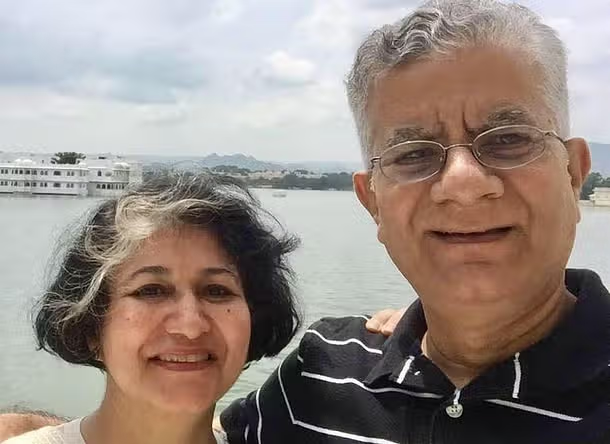
Dr. Farah Usmani with her husband Javed Usmani

Dr. Usmani is also the first Muslim woman from India to work with the United Nations International Civil Service at Director Level. She is the recipient of the 2021 Mahatma Award for Social Impact for her work with women, girls, and minorities.

She has 25 years of experience working with the United Nations International Civil Service with UNFPA, focusing on women and girls and their reproductive health and rights.

Carrying forward her mission to empower women, Dr. Usmani is the Global Vice President of SAFAR Foundation,(Supporting Action for Advancement and Rights), a philanthropic organization focused on uplifting marginalized women and girls.

Tap HERE to watch the video.

She is the Founder of “Rising Beyond The Ceiling”, a global initiative supported by SAFAR to shine a spotlight on Muslim women of India and contribute towards changing their stereotypical narrative.

The organization has published its first volume on Muslim women from Uttar Pradesh and is working on the rest of the Indian states.

Farah has received several awards and recognitions including the British Council and the Joint-Japan World Bank Merit Fellowships. 
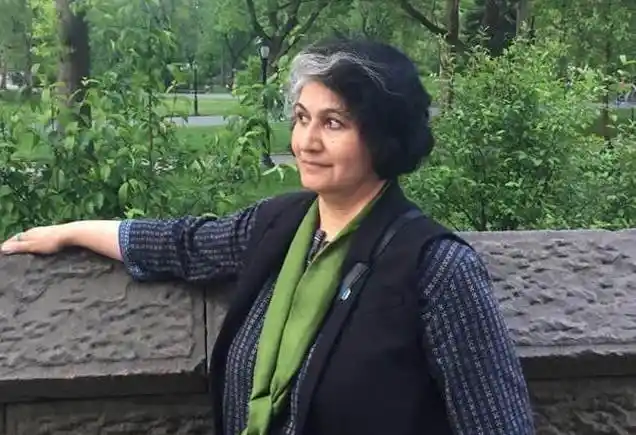
Dr. Farah Usmani

At the UNFPA (United Nations Population Fund), Dr. Usmani played a pivotal role in policy, planning, technical leadership, and health services across more than 50 countries, working on the rights of women and girls. She became the first Indian Muslim woman to reach the Director level in the UN’s International Civil Service in New York.

She noticed that Muslim women were often boxed into stereotypical roles on every platform. Farah made it her mission to break that mold.

“Why are our stories limited to the veil and the home?”

Inspired by this question, Dr. Farah Usmani launched Rising Beyond the Ceiling a global initiative that highlights the achievements of Indian Muslim women, brings their hidden stories to light, and challenges societal stereotypes.
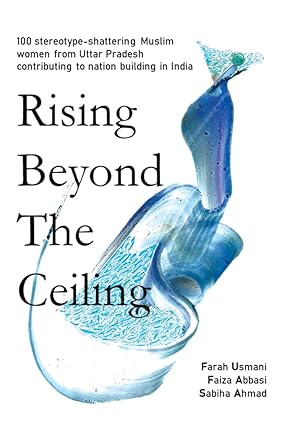
This initiative didn’t stay confined to books or speeches it became a movement. A beacon of hope for every woman in a small town who dreams of a bigger world.

Dr. Usmani believes that money is not just a necessity it is power. She says, “Instead of being afraid of money, we need to befriend it.” Her husband taught her: money that doesn’t generate returns slowly vanishes. And that’s where her journey into financial literacy began.She started investing in tax-free savings, fixed deposits, and NRE (Non-Resident External) deposits. Today, her daughter Saba is also a real estate investor in Manhattan. This is not just a financial legacy it is an intellectual one, building a story of empowerment across generations.

Dr. Usmani has received numerous accolades, including Merit Fellowships from the World Bank and the British Council, and the Mahatma Award in 2021. She has worked globally for the rights of women, minorities, and marginalized girls.

She also serves as the Global Vice President of SAFAR Supporting Action for Advancement and Rights a philanthropic organization focused on uplifting marginalized women and girls.Breaking many gender barriers at different stages in her life, she has the distinction of being the first woman student to top the merit list in the pre-medical examination of the Aligarh Muslim University, where she completed her medical training.

She is the recipient of the 2021 Mahatma Award for Social Impact for her work with women, girls, and minorities.

Farah Usmani comes from a middle-class Muslim Family in Aligarh, Uttar Pradesh.

She holds a Master’s in Health Policy, Planning & Financing given by the London School of Economics & London School of Hygiene & Tropical Medicine & a M.D. in Obstetrics & Gynecology from Jawaharlal Nehru Medical College, Aligarh India. She has certifications in leadership and organizational management from Cornell University, Cranfield School of Management, Stanford University & the American Management Association, New York.

Farah is married to Jawed Usmani, an Indian civil servant, who rose to the position of Chief secretary of the Uttar Pradesh government. They have two children Faraz Usmani and Sabah Usmani.

Dr. Usmani says, “The coins our mothers and grandmothers hid in their mattresses were not just savings they were their attempt at independence.
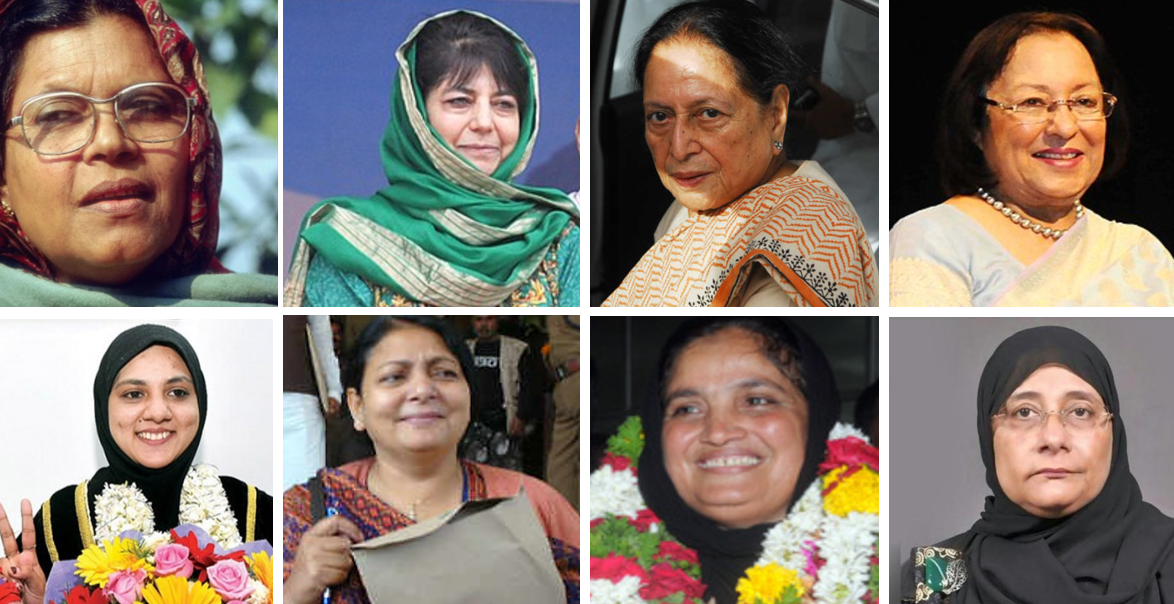
Indian Muslim Women who feature in the list of Rising Beyond the Ceiling 

The “The time has come for women to see money not as shame, but as strength.”

Her mindset, her struggles, her smile they are a source of inspiration for every woman who dreams of flying in an open sky, not a cage.

Dr. Farah Usmani’s story reads like a novel with trials, a determined heroine, a journey of transformation, and a path toward the light.

It teaches us that with courage, even the walls of a house can become the rooftop of the world’s tallest building.

Because when a woman shapes her identity by herself, she doesn’t just create a path for herself but for every generation that follows.

source: http://www.awazthevoice.in / Awaz, The Voice / Home> Stories> The Changemakers / by Onika Maheshwari, New Delhi / June 02nd, 2025

Umaima Bano of UP’s Sitapur Shines in Jamia Results with 96.4% in Class X

Sadaravan Village (Sitapur District), UTTAR PRADESH :

Girls outperform boys in Jamia Millia Islamia’s internal examinations, and Umaima’s performance has emerged as a shining example

New Delhi :

Reflecting dedication and discipline, Umaima Bano, a student from a small village in Sitapur, Uttar Pradesh, has made her mark in the results declared by Jamia Millia Islamia. Scoring 96.4 per cent in the Class 10 board examinations, Umaima becomes one of the top 10 rank holders this year.

The Class 12 and 10 results were released on 14 and 15 May, respectively. This year, girls have notably outperformed boys in Jamia’s internal examinations, and Umaima’s performance has emerged as a shining example.

Umaima hails from Sadaravan, a remote village in Sitapur district. Her father, Kamal Ahmed, is the principal of a private intercollege, and her achievement has brought pride not only to her family but also to her entire village.

Despite her modest background, Umaima demonstrated excellence across all subjects. According to the official marksheet, she scored 97% in Hindi, 98% in English, 99% in Mathematics, 93% in Science, 95% in Social Science, 96% in Urdu, and 95% in Islamiyat.

Her performance reflects a well-rounded grasp of both academic and language-based subjects. Speaking to local media, her father expressed pride in her efforts:

“Umaima has always been a disciplined and hardworking child. We had faith in her, but her achievement has exceeded our expectations,” Kamal Ahmed said.

Umaima’s academic journey has been marked by determination. She completed her primary education from New Vision Public Inter College in Muhammadabad, Uttar Pradesh. She then appeared for Jamia Millia Islamia’s national-level entrance test, securing an impressive 45th rank.

This feat earned her a place in the prestigious university, where she now lives in a student hostel to pursue her studies with greater focus.

“I want to become an IAS officer and serve my country,” Umaima shared when asked about her future goals. “My parents’ sacrifices inspire me every day to work harder.”

The news of Umaima’s success spread quickly across her village, where neighbours and well-wishers gathered to congratulate the family. Local teachers and community leaders praised her for being a role model for rural students.

“Umaima’s success has shown that even students from small villages can reach great heights with sincerity and support,” said Feroz Khan, a teacher from her former school.

Jamia officials also acknowledged the importance of recognising merit from all backgrounds.

“At Jamia Millia Islamia, we are committed to nurturing talent from every corner of the country. Umaima’s story is a testament to the power of equal opportunity and hard work,” said an official from the university’s examination board.

This year’s results have also highlighted the consistent rise of girl students at Jamia. University records indicate that in both Class 10 and 12 results, girls have performed better than boys in average marks and top positions.

With her academic brilliance and strong moral foundation, Umaima Bano has not only brought laurels to her family and community but has also become a symbol of hope and empowerment for girls in rural India.

As celebrations continue in Sitapur, many hope that Umaima’s journey will inspire others to dream big, work hard, and break through social and geographic barriers.

source: http://www.clarionindia.com / Clarion India / Home> Editor’s Pick> Indian Muslims / by Mohammad Bin Ismail / May 18th, 2025

AMU Student Wins Best Paper Prize at Jesus and Mary College, DU

Aligarh, UTTAR PRADESH :

Amna Asim receiving the best paper award at Jesus and Mary College, DU

Aligarh:

Amna Asim, a first-year MA History student at the Centre of Advanced Study, Department of History, Aligarh Muslim University, won the Best Paper Prize at the release event of Maazinama Volume IV, held at Jesus and Mary College, University of Delhi.

Her research paper, titled “Memory and Resistance: Tracing India’s Counter-Monumental Legacy through Jallianwala Bagh,” was also published in Maazinama Volume IV, the annual academic journal of the Department of History, Jesus and Mary College. The paper explores the concept of counter-monuments as powerful symbols of collective memory and resistance, with a focused analysis of Jallianwala Bagh’s historical and cultural legacy.

Judges Dr. Devika Mittal and Dr. Bipasha Rosy Lakra appreciated her research and the methodology employed.

Prof. Hassan Imam, Chairperson and Coordinator of the Centre of Advanced Study, Department of History, AMU, congratulated Amna Asim on her achievement and praised her for earning this scholarly recognition.

source: http://www.radiancenews.com / Radiance News / Home> Pride of the Nation> Awards / by Radiance News Bureau / May 16th, 2025

Prof. Zakia Siddiqi Honoured with Dr. B R Ambedkar International Award

Aligarh, UTTAR PRADESH :

Prof. Zakia Siddiqi Honoured with Dr. B R Ambedkar International Award

Aligarh:

Prof. Zakia Ather Siddiqi, a celebrated educationist and former Principal of Women’s College, Aligarh Muslim University (AMU), has been conferred with the Dr. B R Ambedkar International Award (Certificate of Excellence) by the Tirupati Balaji Educational Foundation, honouring her lifelong service to education and social upliftment.

Renowned for her unwavering commitment to women’s empowerment through education, Prof. Siddiqi transformed academic standards and inspired generations of female students. As the OSD of Aligarh Public School, she introduced dynamic pedagogical reforms and steered the institution to national recognition.

Under her leadership, the Aligarh Public School secured the prestigious Digital India Competition Award four times – in 2017, 2018, 2023, and 2024 – reflecting her vision of merging education with technological advancement.

Even after retirement, her dedication remains undiminished. This award not only celebrates her legacy but also serves as a beacon of inspiration for educators and students alike.

source: http://www.radiancenews.com / Radiance News / Home> Pride of the Nation> Awards> Latest News / by Radiance News Bureau / May 09th, 2025

Insightful lecture on women in Islam at Jamia

NEW DELHI :

The Sarojini Naidu Centre for Women’s Studies in collaboration with the Dr Zakir Hussain Institute of Islamic Studies, Jamia Millia Islamia, hosted a special extension Lecture titled, “Unpacking the Myths: Separating Fact from Fiction about Women in Islam” on April 24, 2025, at Mir Anis Hall of Jamia Millia Islamia.

The lecture was delivered by noted British Islamic Scholar Dr Shiekh Mohammad Akram Nadwi. Formerly the Dean of Cambridge Islamic College and currently the Principal of the Al-Salam Institute and famous for his multi volume book Al-Muhaddithat, which documents female scholars in Islamic history, he is a leading authority on Islamic jurisprudence and Hadith, inspiring global audiences with his teachings.

The event opened with a soulful recitation of the Holy Quran, followed by a warm welcome from the honorary director of SNCWS Prof Nishat Zaidi.

The introduction of the speaker was given by Prof. Habibullah Khan, Honorary Director of the Dr Zakir Hussain Institute of Islamic Studies. Prof Habibullah praised Dr Nadwi’s globally recognised contributions to Islamic scholarship, particularly his work on gender and Hadith.

Dr Nadwi’s lecture captivated the large audience present in the hall as the urging open dialogue to dismantle stereotypes about women in Islam.

Referencing his monumental 40-volume work, Al-Muhaddi that: the Women Scholars of Islam that chronicles the contributions of female Islamic scholars.

The speaker presented a compelling case for re-evaluating historical narratives, generalisations, myths and patriarchal notions through rigorous scholarship and proper understanding of Islam. His call for mutual respect and understanding across cultures sparked vibrant discussions among attendees, reinforcing the lecture’s relevance in today’s diverse world.

The lecture was followed by the presidential remarks by the Vice-Chancellor, Prof. MazharAsif, who emphasised Jamia’s commitment to inclusive discourse and highlighted the pivotal role of women in shaping Muslim society.

He urged audience to practice equality of women in their lives and shape a society that respects women.

Among the attendees were Prof Mohammad Muslim Khan (Dean, Faculty of Social Sciences), Prof Iqtidar Khan (Dean, Faculty of Humanities and Languages),Prof Kausar Mazhari , faculties and staff of SNCWS and Dr Zakir Hussain Institute of Islamic studies besides teachers, researchers and students from across the faculties of the Social Sciences, Humanities and Languages and from various Centers of the University.

Dr Tarannum Siddiqui of the Sarojini Naidu Centre for Women’s Studies convened and moderated the program. Dedicated volunteers, including Vaibhav, Zoyba, Gargi Mishra, Shubhangi, RaiyahQamar, and Fatima Zohra from MA Gender Studies of SNCWS ensured a seamless experience.

“Dr Nadwi’s lecture is a clarion call to challenge misconceptions and embrace informed dialogue,” said Prof Nishat Zaidi while thanking the speaker. She further said: “His scholarship inspires us to bridge tradition and modernity in pursuit of equity and understanding.”

The session concluded with pertinent Q&A session in which students satisfied their curiosities by asking relevant questions to the speaker.

A formal vote of thanks was presented by Gargi Mishra, student of MA Gender studies. Students and particularly girls who attended the talk were well impressed to know about the historical contributions of women in shaping society and their contributions in nation building.

source: http://www.theokhlatimes.com / The Okhla Times / Home> JMI-EDU / by theokhlatimes / April 29th, 2025

Rampur Royals were patrons of art, literature and cuisine

Rampur, UTTAR PRADESH :

The Rampur Nawabi family with former Prime Minister Dr. Manmohan Singh

In December 2021, I came across a report in a newspaper that said, “After almost 50 years of legal battle, the Rampur District Court has ruled in the Rampur Nawab family’s property dispute. The property will now be divided among 16 legal heirs. Raza Ali Khan, the last Nawab of Rampur, died in 1966. After a long legal battle, the court has announced the division of his property worth Rs 2,664 crore.”

The Nawab family of Rampur with its glorious history is still important played in Rampur and its surrounding districts. While the family ruled the state for a long time, its members joined the institutions of independent India like Parliament and legislative Assembly. Former Members of Parliament Mickey Mian and Noor Begum belong to the family. Many members of this Royal family have played an important role not only in politics but also in promoting the culture, patronizing poets, writers, musicians, and other creative artists.

Khandaan

The Nawabi family of Rampur State

Before the independence, India was dotted with small states and one of them happened to be the state of Rampur, located in today’s state of Uttar Pradesh. It was founded by Nawab Ali Mohammad Khan, a Pushtun leader on 7 October 1774. There have been 11 Nawabs in the state including Nawab Faizullah Khan, Nawab Hafiz Rehmat Khan Barish, Nawab Muhammad Ali Khan, Nawab Ghulam Muhammad Khan, Nawab Ahmad Ali Khan, Nawab Muhammad Saeed Khan, Nawab Yusuf Ali Khan, Nawab Club Ali Khan. Nawab Muhammad Mushtaq Ali Khan, Nawab Hamid Ali Khan.

Raza Ali Khan was the last Nawab of Rampur. Rampur was one of the important States of the British in India as its rulers were plaint and supported the Raj even during the 1857 revolt. It was a 15 cannons gun salute State and its rulers owned a lot of wealth.

Before the independence, the Nawabs of Rampur used to have their own railway station with two special coaches always in readiness in the service of the Royal family. Whenever the Nawab family had to travel by train to Delhi, Lucknow, or elsewhere, they would board their coach and that was added to the passenger train. During the tenure of the ninth Nawab, Hamid Ali Khan the railway line was laid in the district. At that time, he had built a separate railway station for his use. It was close to the main railway station.

The Royal Coach full of Luxuries and modern appliance

Interestingly the two railway coaches that have immense historic and antique value today are among the assets sought to be distributed among the progeny of the Raza Ali Khan. These were originally valued at Rs. 117.42 million. However, due to almost no maintenance, the price was halved.

Interestingly, these coaches had so many modern conveniences that even the heads of the state today can’t dream of. The coaches were equipped with 33mm and 16mm cinema projectors, cameras, imported radio transistors, and tape recorders. These provided all the luxuries like Bedding, chair, carburetor pillow, seat, silverware, glass, whiskey, beer bottles, English crockery, large cigarette and cigar box, silver footstep, eagle, silver canteen set, silver hooka, silver bed, sword, and various kinds of guns, etc.

The Nawab family’s properties include 1073 acres of land, mansions, palaces like Khas Bagh, Kothi Benazir, Lakhi Bagh, Kanda, and Nawab Railway Station, and immovable assets like arms, jewelry, etc. The valuables include silverware like six silver beds, 20 silver pandans, six khasdans, and 20 cigar boxes, and four hookas. Former Member of Parliament Begum Nurbano says that when she came to Khas Bagh in 1956 as a bride she slept on a silver bed. Khas Bagh was India’s first air-conditioned palace.

Khas Bagh Palace was the first air-conditioned palace in India.

Khas Bagh Palace, Rampur

The state of Rampur was not only a political state but also a great patron of education, art, and culture. Nawab Yusuf Ali Khan was a friend of knowledge and also gave scholarships to scholars and students. He made Mirza Ghalib his consultant on literary matters and he became a student of Ghalib. He used to send a reasonable amount of money to Mirza as a stipend. In addition, hundreds of poets, including Mirzadagh Dehlavi, were patronized by the Nawabs of Rampur.

The Library

The Nawab of Rampur was a friend of knowledge. The symbol of his friendliness of knowledge is Raza Library which was once the largest library in India and it is still very important today. Thousands of rare books and manuscripts in Urdu, Persian and Turkish languages ​​are available here.

The Nawab of Rampur was also an epicurean. He had a whole army of cooks and chefs. These chefs would spend the whole day preparing high-quality food and experimenting with new flavors. Elders were invited to the Nawabi Dastkhwan. After the dissolution of the state, it became difficult for the Nawab to continue the Dasthar Khan.

The Nawabs of Rampur patronized traditional music at their court. Mehboob Khan was one of the greatest thinkers of the royal court of Rampur state. This tradition was followed by his sons Inayat Hussain Khan and Inayat’s brother-in-law Haider Khan and Mushtaq Hussain. It was here that the Rampur-Sahswan family of Indian classical music was born. Sahswan is in the present Badaun district.

One of the Palaces of rampur Nawab family

After independence, the Nawab family took an active part in politics and Major Nawab Syed Zulfiqar Ali Khan Bahadur was the first from the family to be elected to the Lok Sabha. He was known as Mickey Mian. He was the second son of Nawab Sir Syed Raza Ali Khan Bahadur. In 1984 and 1989, he was elected to the Rampur Lok Sabha seat on a Congress ticket. It is also interesting to note that Mickey Mian represented Rampur in Lok Sabha for a long time but never spoke in the House.

After Mickey Mian, his wife Begum Noor Bano served as Member of Parliament in the 11th and 13th Lok Sabha. She was elected from Rampur on a Congress party ticket. Begum Noor Bano alias Mehtab Zamani Begum was born to Nawab Aminuddin Ahmed Khan who was the last ruling Nawab of Loharo (Bhiwani-Haryana). She was educated at Maharani Gayatri Devi Girls Public School, Jaipur.

She joined the All India Congress Committee in 1992 and was elected to the Lok Sabha in 1996. In the next election, she lost to BJP’s Mukhtar Abbas Naqvi. An aficionado of music and dance, Noor Banu is the patron of the Devi Foundation and the Rampur family. Bano is interested in historical and cultural Persian and Arabic books and research on environment and forest protection. She enjoys reading, painting, gardening, and music and is a member of several sports clubs across the country.

Micky Mian and Noor Bano with their children

Micky Mian and Begum Noor Bano have three children. One of them is Nawabzada Syed Muhammad Kazim Ali Khan Bahadur. He was elected MLA several times and is also a Congress candidate in the current Assembly elections. His son Nawabzada Syed Haider Ali Khan Bahadur is also contesting the Assembly elections 2022.

In the current elections in Uttar Pradesh, the reputation and honour of the Royal family is also at stake. Samajwadi Party veteran Azam Khan, who has been elected an MLA from Rampur city nine times is contesting from inside the jail against his traditional rival from the Royal family Mohammad Kazim Ali Khan. Kazim Khan popularly known by his nickname of Navid Miyan is contesting as a candidate of Congress Party and is hoping to defeat the ‘tainted’ Azam Khan.

Besides, Azam Khan’s son Abdullah Azam is contesting from the Suar constituency where he is pitted against Naveed Mian’s son Hamza Mian.

The Nawab of Rampur

Azam Khan has dominated the politics of Rampur for 42 years. He has also held ministerial positions in the Samajwadi government four times. He has also been Leader of the Opposition and Member of Rajya Sabha. On the other hand, the Nawab family has also a great influence on Rampur. Naveed Mian Sawar has been MLA four times from the Tanda seat. Once he was also elected to Legislative Assembly from Bilaspur and was a minister too.

His father Nawab Zulfiqar Ali Khan alias Miki Mian has been a Member of Parliament five times and his mother Begum Noor Bano has been a Member of Parliament twice. Both the Congress and the SP have given tickets to the members of the Rampur Royal family. This time, Congress has given tickets to former MLA Naveed Mian as well as his son Haider Ali Khan alias Hamza Mian.

source: http://www.awazthevoice.in / Awaz, The Voice / Home> Stories / by Ghaus Siwani / February 04th, 2022

Hina Saifi, a Climate Change Champion, Unearthing Hope from Village Dweller to Climate Visionary

Sisola Village (Meerut District), UTTAR PRADESH :

Hina Saifi’s remarkable journey from rural roots to Climate Change Champion is an inspiring example of empowering change.

Hina Saifi pioneering Global Change Advocate reshaping rural realities

A youthful dreamer and a climate change activist named Hina Saifi has lit the route to long-term reform in the heart of Uttar Pradesh. She was born and reared in Sisola, a humble village in Meerut district. Her journey from a low-income family to a trailblazing advocate for climate education and action exemplifies the spirit of leadership that crosses borders. Hina Saifi’s United Nations association in the campaign known as #WeTheChangeNOW led her to be part and face of the campaign among the list of 17 climate change leaders.

Early Life and Education

  • Hina Saifi, Meerut’s resident, hails from Sisola, where education for girls is a formidable challenge.
  • Hina, the young climate leader, is currently pursuing MBA from the Bharti Institute of Technology, Meerut. She has reached this stage in life with her true dedication and willingness to break the stereotypical barriers of her village and change the existing mindsets.
  • Considering the situation of Sisola, an underdeveloped village in Uttar Pradesh, Hina couldn’t even imagine pursuing her studies post-8th grade, over a decade ago.
  • Managing to achieve complete school education, along with higher studies, Hina has showcased her limitless power and outshined on a national level for Women Climate Crusaders among 16 other women.
  • Hina Saifi, Women Climate Collective’s crucial member, has made a remarkable turn in her life. Her trajectory seemed predestined by the harsh realities of her village, where education was a luxury and the pursuit of higher learning was rare.
  • However, against all odds, Hina’s mother recognized the value of education and facilitated her journey to knowledge.
  • At such a young age, her thoughts align with personal as well as environmental growth and sustainability, which sets her apart from today’s youth.

“Poverty is rampant in my underdeveloped village, and child labor is common here. I, too, was advised to stop studying after I finished the eighth standard. However, I stuck to my decision to study further. To support myself through school and to help my family, I also worked part-time in a football factory”.

         —– Hina Saifi

Hina Saifi: Championing Climate Education

  • 22-year-old Hina Saifi’s journey into climate advocacy began with a realization that education was the cornerstone of addressing the multifaceted challenges troubling her village.
  • Armed with this insight, she set out on a quest to motivate children to attend school, thereby causing a small wave of awareness.
  • Partnering with local NGOs and the ‘Women Climate Collective’ (WCC), she found her voice in discussions about climate change, clean energy, and sustainability.
  • She was the first one from her village to move to Lucknow and be part of the Climate Agenda Initiative 2018.
  • Proud to be a member of Women Climate Collective, she supports the notion that addressing the climate crisis and fighting climate change is a collective responsibility of the people and not just that of the government alone.
  • Hina has also achieved an international recognition by her association with #WetheChangeNOW campaign by United Nations(UN) in India. The campaign showcases the climate based solutions devised by 17 young Indians that are innovative, sustainable and equitable, further focusing on strengthening engagements with governments and society.

The Hina Saifi Chronicles of Grassroots Change

  • Hina’s endeavors extended beyond education, culminating in the ‘Suraj Se Samriddhi’ campaign, launched by herself that spotlights solar power’s potential and advocates for cleaner energy solutions.
  • Her grassroots approach, encompassing workshops, speeches, and dialogues, has led to tangible change: cleaner streets, waste-free water bodies, and enhanced greenery. She acknowledges the intrinsic link between education and climate, recognizing their mutual capacity for transformation.
  • Hina’s belief in micro-behaviors as agents of monumental transformation underscores her leadership philosophy. By engaging with the village Pradhan and initiating innovative projects, she showcases the potential of individual actions to revolutionize communities.
  • Her involvement in the ‘100% Uttar Pradesh’ initiative reflects her dedication to the larger cause, emphasizing that collective progress stems from local commitment.

Hina Saifi: Empowering Change Through Climate Advocacy

Hina Saifi’s journey, stemming from her village’s challenges, inspires hope for a greener future. As a catalyst for change, her efforts stimulate broader dialogues concerning the representation of women’s voices in climate advocacy. Through platforms like the Women Climate Collective, her voice resonates beyond geographical boundaries, exemplifying the power of unity in tackling global challenges. From her humble origins in Sisola to her pivotal role within the Collective, Hina embodies the leadership needed for a brighter tomorrow. Her story showcases how determination and knowledge can bring about significant change.

source: http://www.leaderbiography.com / Leader Biography / Home> Featured> Featured Women / by Rahul Iyer

AMU’s University Women’s Polytechnic Students Shine at National Project Competition, Win First Prize at MITAOE, Pune

Aligarh, UTTAR PRADESH :

University Women’s Polytechnic Students Shine at National Project Competition, Win First Prize at MITAOE, Pune

Aligarh:

Students from the University Women’s Polytechnic, Aligarh Muslim University (AMU), made a mark at the 8th National Level Poster Presentation and Project Competition, TechnoPHILIA’25, held recently at MIT Academy of Engineering, Pune.

Competing against participants from over 25 institutions across India, the AMU team, “LISA VocalTech,” clinched the first prize in the Diploma Category, along with a cash award for their innovative project titled “LISA: A Voice-Controlled Lift.”

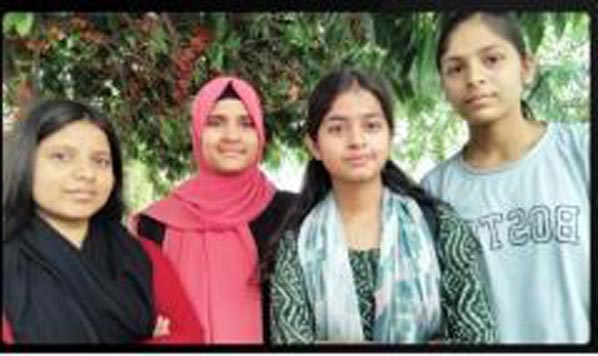
The team comprised final-year Diploma in Electronics and Communication Engineering students –  Shalini Kumari, Kashish Khushi, Nargis Khatoon, and Shailly Bhardwaj – who developed the project under the mentorship of Mr. Mohd Kashif. Their creation, a voice-activated lift system, is designed to improve accessibility for the elderly, visually impaired, and physically disabled, earning praise from judges for its practical utility and inventive design.

This achievement highlights AMU’s commitment to academic excellence and its encouragement of student participation in national-level technical events.

source: http://www.radiancenews.com / Radiance News / Home> Education> Focus / by Radiance News Bureau / April 09th, 2025

AMU Junior Resident Doctor Bags Best Paper Award at National Event in Mumbai

Aligarh, UTTAR PRADESH :

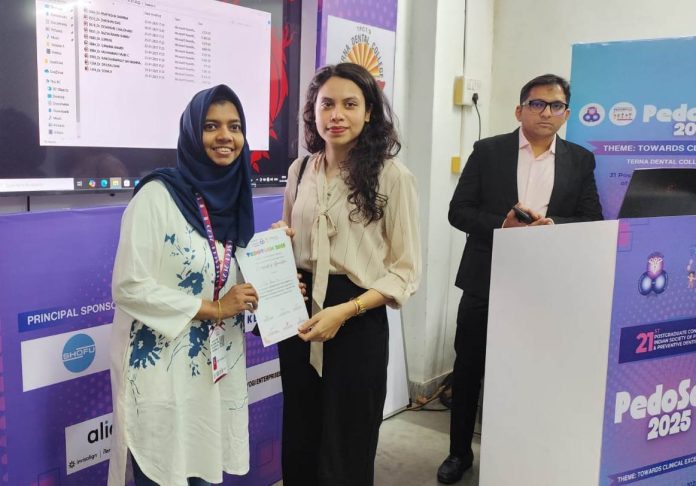
Dr. Fasna K receiving the best paper award at Mumbai

Aligarh:

Dr. Fasna K, a Junior Resident-III in the Department of Pediatric and Preventive Dentistry, Dr. Z.A. Dental College, Aligarh Muslim University got the Best Paper Award at the 21st National Postgraduate Convention of the Indian Society of Pedodontics and Preventive Dentistry (PedoSoch 2025), held in Mumbai, recently.

Her Guide, Prof Saima Yunus Khan, Chairperson of the department congratulated Dr. Fasna on the achievement.

source: http://www.radiancenews.com / Radiance News / Home> Pride of the Nation> Awards> Latest News / by Radiance News Bureau / February 05th, 2025

AMU Students Win Top Honours in Kafka-Themed National Competition

Aligarh, UTTAR PRADESH :

Aligarh:

Students from the Department of Foreign Languages at Aligarh Muslim University (AMU) secured top prizes in a national competition organised by the Department of German, University of Mumbai, under the theme “100 Years of Kafka.”

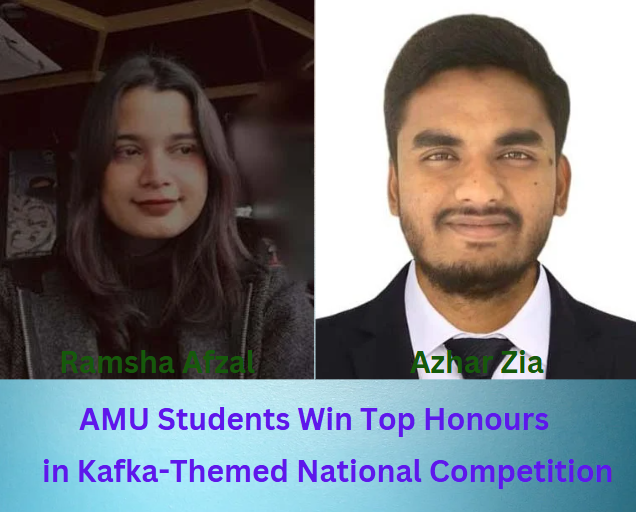
Ramsha Afzal, a Master’s student in German Studies, won first place in the Comic Strip category for her creative take on Kafka’s novella Die Verwandlung (The Metamorphosis), highlighting themes of alienation and transformation. Azhar Zia, a final-year undergraduate, clinched first prize in the Short Films category for his cinematic interpretation of Kafka’s narrative Gibs auf! (Give it Up!), reflecting a nuanced grasp of existential themes.

Professor Muhammad Azhar, Chairman of the Department, commended the students, stating, “These achievements showcase the academic excellence and creativity nurtured at AMU, reaffirming the importance of foreign language studies.”

Assistant Professor Syed Salman Abbas applauded the winners, emphasising their engagement with German literature and culture.

source: http://www.radiancenews.com / Radiance News / Home> Education> Latest News / by Radiance News Bureau / January 23rd, 2025