Dr. Syed Ahmed Khan, National President of Urdu Development Organisation, felicitating Shariya Fatima Sherwani on securing 100% marks in Urdu in the CBSE Class 10 exams
New Delhi:
Dr. Syed Ahmed Khan, National President of Urdu Development Organisation (UDO), personally visited the home of Shariya Fatima Sherwani, daughter of renowned journalist Sadiq Sherwani, to congratulate her and encourage her on achieving exceptional results in the CBSE Class 10 exams.
It is noteworthy that Shariya Fatima Sherwani secured 100% marks in Urdu, not only setting a new record but also serving as a strong rebuttal to those who hold negative views about the Urdu language.
Similarly, Omar Habib, son of Dr. Habibullah – CMO Unani at the Department of AYUSH, Government of Delhi, posted in Tihar Jail – achieved a remarkable 96% score.
In addition, Samiq Raza, son of senior journalist Syed Izharul Hasan, scored 88.4% in Class 12 at Delhi Air Force School.
The Urdu Development Organisation expressed happiness over the achievements of these students, extended its congratulations, and announced its decision to further encourage more successful and talented students from the community on World Urdu Day, on November 9.
source: http://www.radiancenews.com / Radiance News / Home> Latest News> Markers of Excellence / by Radiance News Bureau / May 15th, 2025
Nuzha Fathima Sarfaraz, a student of G.M. Vidyaniketan Public School in Brahmavar, Udupi, has achieved an outstanding 95% in the CBSE Class 10 board examinations, the results of which were declared on May 13, reported the Varta Bharati.
Daughter of Sarfaraz T.S. and Farzana Sarfaraz, and granddaughter of the late T.S. Ismail Saheb and Sabeera Ismail of Kodi Bengre, Nuzha’s accomplishment has earned her praise and admiration from teachers, family, and peers alike. Her dedication, focus, and perseverance have been widely appreciated as the foundation of her academic success.
Her performance stands as an inspiration for fellow students in the region, showcasing the possibilities that hard work and determination can bring.
source: http://www.radiancenews.com / Radiance News / Home> Latest News> Markers of Excellence / by Radiance News Bureau / May 15th, 2025
Prof. Zakia Siddiqi Honoured with Dr. B R Ambedkar International Award
Aligarh:
Prof. Zakia Ather Siddiqi, a celebrated educationist and former Principal of Women’s College, Aligarh Muslim University (AMU), has been conferred with the Dr. B R Ambedkar International Award (Certificate of Excellence) by the Tirupati Balaji Educational Foundation, honouring her lifelong service to education and social upliftment.
Renowned for her unwavering commitment to women’s empowerment through education, Prof. Siddiqi transformed academic standards and inspired generations of female students. As the OSD of Aligarh Public School, she introduced dynamic pedagogical reforms and steered the institution to national recognition.
Under her leadership, the Aligarh Public School secured the prestigious Digital India Competition Award four times – in 2017, 2018, 2023, and 2024 – reflecting her vision of merging education with technological advancement.
Even after retirement, her dedication remains undiminished. This award not only celebrates her legacy but also serves as a beacon of inspiration for educators and students alike.
source: http://www.radiancenews.com / Radiance News / Home> Pride of the Nation> Awards> Latest News / by Radiance News Bureau / May 09th, 2025
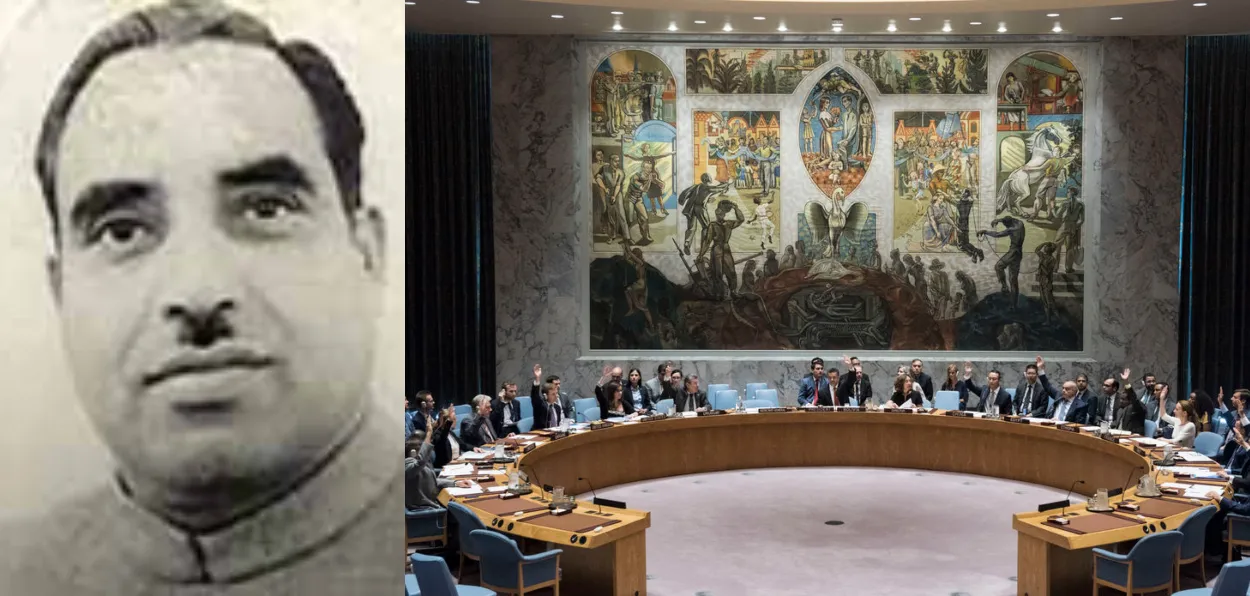
Syed Mir Qasim, former Chief minister of J&K and UN Security Council in session (file)
Since its formation in 1947, Pakistan has tried to portray India as a Hindu country where Muslims are second-class citizens. Each time Pakistan launched an armed attack against India, it was to ‘help’ the Indian Muslims. Not given to learning lessons, Pakistan looked the other way when the Indian Muslims countered its narrative.
In the 1965 war, Pakistan attacked India “to help Muslims in general and Kashmiri Muslims in particular,’ and the propaganda was counter by two Indian Muslims.
Syed Mir Qasim, a Congress leader who later became the chief minister of J&K, represented India at the UN General Assembly during the 1965 war. He declared, “Perhaps I should mention that I belong to the majority community of Muslims in my home State of Kashmir; in our country, unlike Pakistan, we do not believe that religious distinctions should impinge upon political life. I have played a small part in the political life of our State from the days of princely rule. It is for these reasons that it is my duty, on behalf of our delegation, to set the record straight on the various statements made by the Foreign Minister of Pakistan.”
Indian Army Officers in front of a captured Pakistani tank in the 1965 war
Qasim told the Assembly that a Plebiscite in Kashmir was out of the question. He categorically told the world that the Pakistani claim that Kashmir was acceded to India because of a pact signed by the ruler was wrong. India accepted the accession only after the National Conference, the most popular political organisation in Kashmir, asked the Indian leadership to do so. The Indian leadership was convinced that the ordinary Kashmiris wanted to be part of India. He further told the Assembly that much before the Indian Army reached Kashmir in 1947, it was the local Kashmiri Muslim militia that had resisted the invasion.
On the issue of the Plebiscite, Qasim said, “Referring to my statement that there was no binding commitment on the part of India to hold a plebiscite in Jammu and Kashmir, the representative of Pakistan said: “What an extraordinary statement to come and make to this Assembly?” Was this an extraordinary statement? Let us examine the facts. I can do no better than to quote our late Prime Minister, Jawaharlal Nehru, whom the representative of Pakistan does not wish to forget. When proposals for a plebiscite were submitted to the Government of India by the United Nations Commission, the late Prime Minister made it clear that he was accepting the proposal only on certain conditions.”
He added, “Need I remind the representatives that apart from ratifying the accession to India, apart from supporting the political party which stands for irrevocable association and complete integration with India, apart from reaffirming their wishes at periodic elections, the people of Jammu and Kashmir have twice within eighteen years given their answer in blood to Pakistan. Thus, there is no justification for any further ascertainment of the wishes of the people. The Government of India has made its position clear on this point, and I hereby reiterate it. There will be no plebiscite.”
A Muslim representing India at the General Assembly to call out the lies of Pakistan frustrated the Pakistani representative at the Assembly. He said, “Finally, the representative of India and I find this is a peculiar weakness in Muslims who come to represent or plead India’s case at the bar of international opinion – finds himself, and I sympathize with him, in the position of having to be more Catholic than the Pope.”
Qasim gave a befitting reply when he said, “We Muslims of India are quite used to these cheap jibes. We understand the reason, or rather the frustration behind such insulting remarks, not only from the representatives of Pakistan who speak at the United Nations, but also, more so, from the founders and leaders of Pakistan. The frustrations are there because the founders and leaders of Pakistan failed in their efforts to persuade the great nationalist Muslim leaders of India to accept their favourite theory that religion determines nationality.”
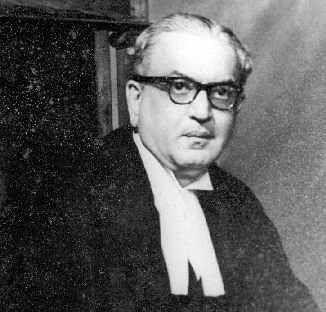
Another Muslim, Mohammedali Currim Chagla, represented India at the Security Council to counter Pakistan’s claim. He told the Security Council (SC), “Pakistan has pretended to show a great solicitude for the Muslims living in India, and the Foreign Minister of Pakistan has stated that hundreds of thousands of Indian Muslims have been pushed out into East Pakistan. When Pakistan talks of the Muslim minority, it gives one the impression that we are dealing with a few thousand or a few hundred of thousands of people in a large country tucked away in some far corner and surrounded by a large mass of Hindu population.
“Now let me inform the Council that Muslims are not a minority in the ordinary sense of the term. They constitute 50 million of the population of India. India is the third largest Muslim State in the world, the first being Indonesia and the second being Pakistan. They are sons of the soil, they are Indian by race, and they enjoy all the rights of citizenship. Every office is open to them, and in fact, many of them hold the highest offices in the land.
“Our civilization is a synthesis of many diverse cultures, and the Muslim contribution is one of the most significant. Ours is a secular State and an egalitarian society where everyone enjoys equal rights and equal opportunities, and equal protection of the law. We have no official religion. Hindus, Muslims, Christians, Buddhists, Sikhs, Parsis, and others have full freedom of worship, and fundamental rights under the Constitution are guaranteed to every citizen. We have no first-class and second-class citizenship.”
Chagla also told the world that India has every right to use its armed forces against Pakistan’s aggression and should redraw the LoC to control infiltration from the other side of the border.
In 2025, when India is again under attack from Pakistan and their propaganda machinery is spreading lies that Indian Muslims are not loyal to their country, they should turn the pages of history to know that these were the Indian Muslims who countered their propaganda during the 1965 war.
source: http://www.awazthevoice.in / Awaz, The Voice / Home> Stories / by Saquib Salim / May 08th, 2025
Dr Wasim ur Rehman UPSC Indian Civil Services, AIR 281 ranking
Dr. Wasim ur Rehman cleared the UPSC Civil Services Examination 2024, without coaching and preparing for this difficult examination for Indian Civil Services while serving as a doctor in a hospital. He scored 281st All-India Rank.
“I used to study for 6 to 7 hours daily. It was not easy. I studied after performing 7-8 hours of duty in the hospital. But I think this experience improved my time management. I mostly studied from online content,” Dr Wasim told Awaz-the Voice.
Dr. Wasim was successful in his fourth attempt. He said in his previous appearances, though he sat in the examination, that he was clear that his performance was below the mark, and he hadn’t done enough to make it. “However, I didn’t give up. Each failure made me stronger. My family has always been my strength. Whenever I would get tired, the encouragement of my parents and siblings would push me forward.”
Dr. Waseem ur Rehman is a resident of Katra block of Muzaffarpur district of Bihar. He was born into an educated and middle-class family. His father Haji Saud Azam Rahmani retired as Block Agriculture Officer in the government and mother Jahan Ara Khatoon, retired as headmistress of a government school.
The family environment was conducive to education and excellence. Waseem was inspired to work hard and was goal-oriented from the beginning.
Wasim did her early schooling at Muzaffarpur. Later, he joined a school affiliated with the Aligarh Muslim University (AMU) till the 12th class.
He studied MBBS from Vardhman Mahavir Medical College (VMMC) and Safdarjung Hospital, New Delhi.
Dr. Wasim’s success lay in the fact that he prepared for UPSC without joining a traditional coaching institute. Although he chose Anthropology as an optional subject and joined an online coaching course, he largely remained focused on self-study and digital resources.
Dr. Wasim achieved this success in his fourth attempt.
According to Dr. Wasim, during the UPSC interview, he was asked questions about the famous litchi of his home district, Muzaffarpur. He impressed the interview board with his medical and administrative knowledge and understanding of the local socio-economic context.
Wasim sees his success as a path to serving society and the nation.
For the youth of India, Dr Wasim has a message, “Work hard and honestly; take advice from your elders; move forward in the right direction with dedication and patience. Every goal is difficult, but not impossible. If you keep trying, one day success will happen”.
Dr Wasim has two brothers: a businessman in Muzaffarpur, and the other is studying in a law college in Patna. One of his sisters is a government school teacher, and the other a homemaker.
source: http://www.awazthevoice.in / Awaz, The Voice / Home> Stories / by Mohammad Akram, New Delhi / May 16th, 2025
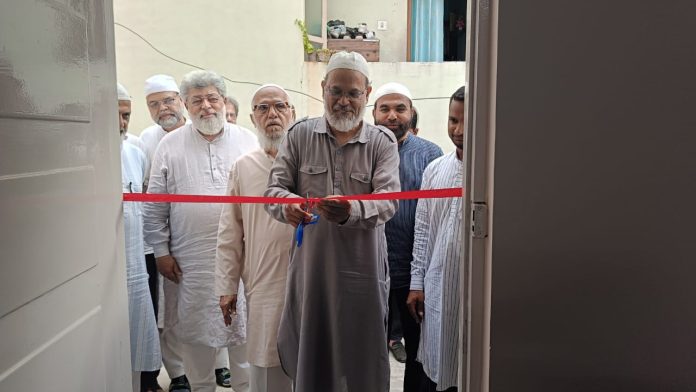
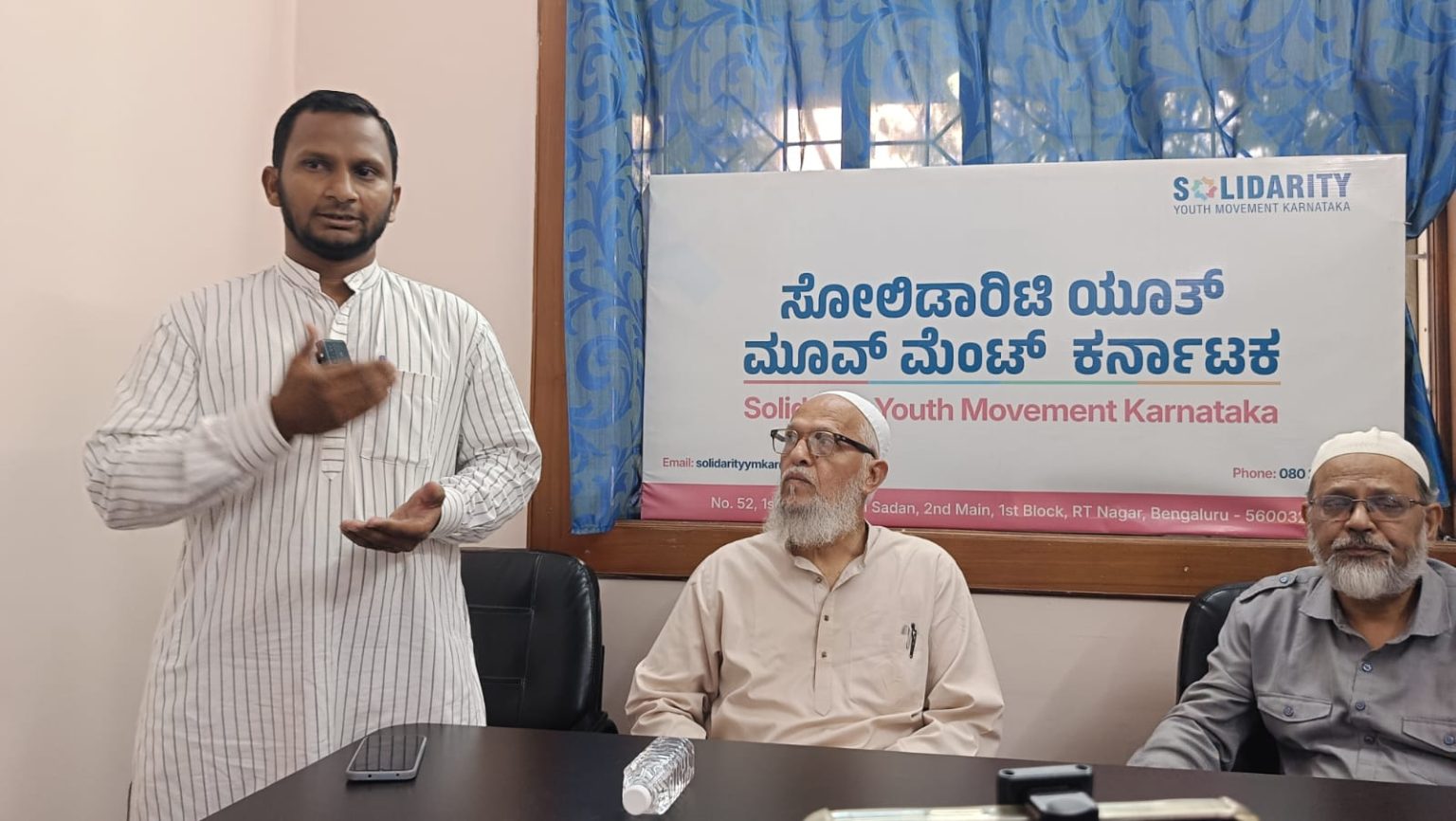
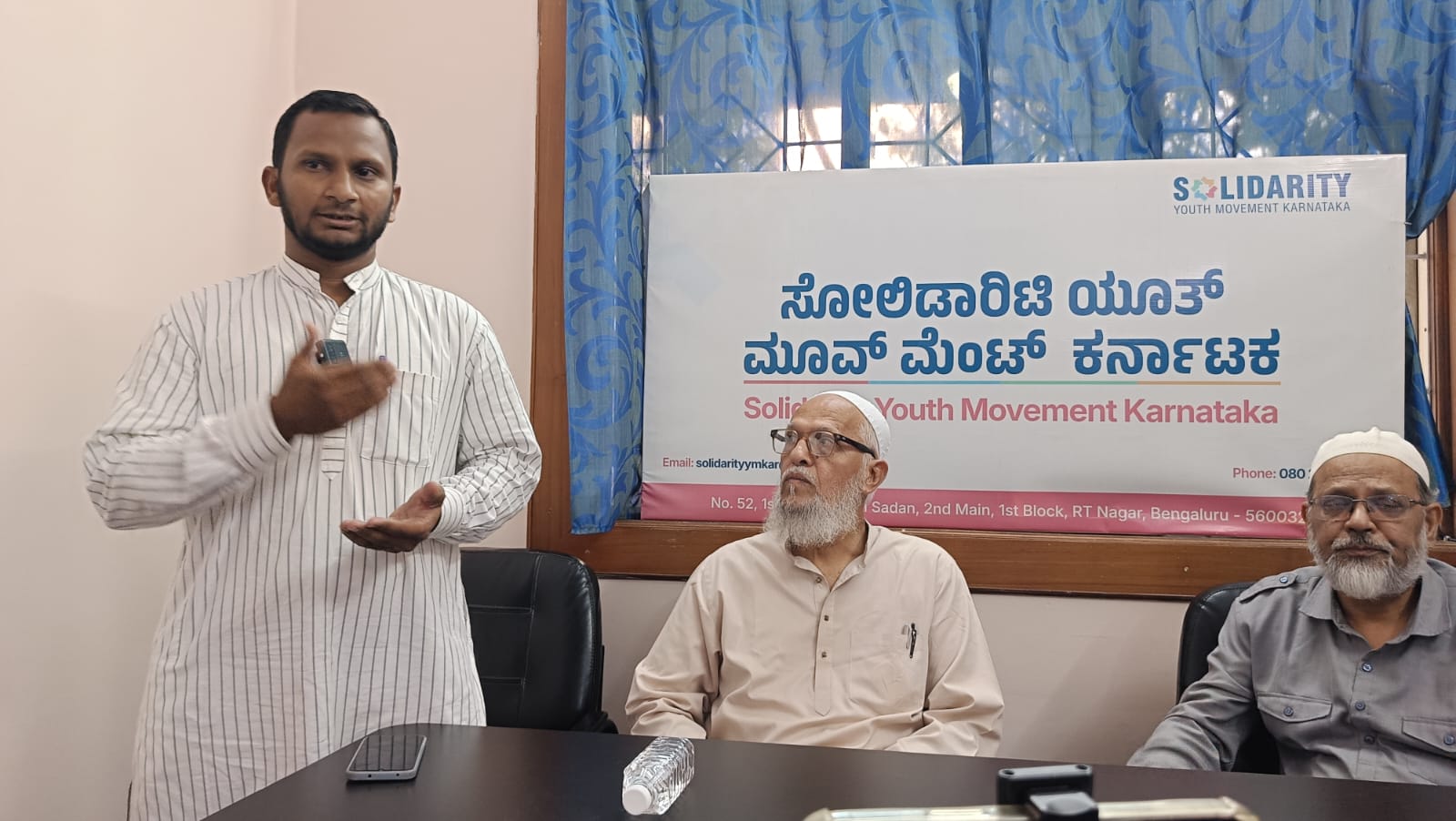
In a bold stride towards structured youth empowerment, the Solidarity Youth Movement Karnataka marked a significant milestone with the inauguration of its new state office in Bengaluru.
The formal opening ceremony was led by Dr. Mohammed Saad Belgami, Ameer-e-Halqa of Jamaat-e-Islami Hind, Karnataka, coinciding with the annual state Shura session.
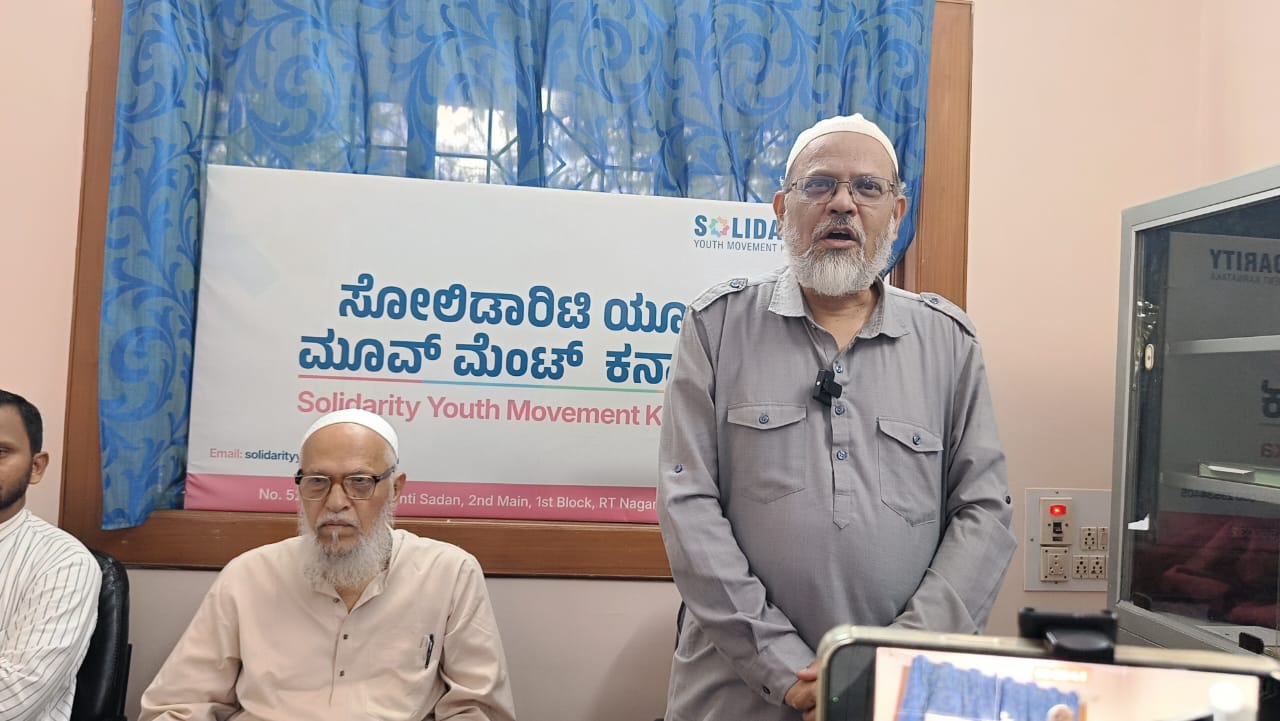
Far from being a mere administrative facility, the new office symbolises the growing institutional presence and ideological clarity of a movement that has evolved from grassroots activism to state-wide influence. Speaking at the event, Dr. Naseem, State President of Solidarity Youth Movement, described the organisation not just as a protest platform, but as “a transformative force for grooming morally conscious and socially responsible youth leaders.”
From a Youth Wing to a Mass Movement What began in 2008 as the “Youth Wing of JIH Karnataka” with just 250 members, formally transitioned into the Solidarity Youth Movement in 2016. Today, it boasts an expansive network across 27 districts with over 80 local units and a membership exceeding 7,000 – out of which more than 900 are actively engaged as trained “Activists.”
According to Dr. Naseem, this journey reflects the urgent need to channel the dynamism of youth towards constructive and long-term social reform. “We envision a generation of youth who are ethically upright and capable of leading society toward peace, progress, and justice,” he said. He emphasised the movement’s focus on skill development, employability training, and intellectual empowerment, aligning with both the constitutional ethos of India and the legacy of Islamic civilizational values.
Leadership Speaks Addressing the gathering, Dr. Saad Belgami remarked, “From its inception, the Islamic movement has placed youth at the centre of its mission. Solidarity Youth Movement is a natural extension of this vision – shaping minds and building character.” He added that the 2022 Youth Convention acted as a catalyst, significantly expanding the movement’s outreach and operational capacity across Karnataka.
The event was also graced by former state presidents of JIH, Mr. Iqbal Mulla and Mr. Atherulla Shariff, along with other senior functionaries from various wings of the organisation.
A Nerve Centre for Change With the establishment of this new state office, Solidarity Youth Movement is poised to further institutionalise its efforts in leadership training, civic engagement, and ideological grounding. The office is envisioned as a nerve centre for nurturing grassroots leadership, mentoring youth activists, and coordinating state-wide programs aimed at social justice and pluralistic harmony.
“This will be more than brick and mortar. It will be a lighthouse for Karnataka’s aspiring youth leadership,” said Dr. Naseem. “And a strategic base for long-term nation-building efforts,” he added with conviction.
As the curtain drew on the inaugural ceremony, the message was loud and clear: Solidarity Youth Movement is not just responding to the times – it is shaping them. And this new office stands as a testament to that mission. A platform today, a movement tomorrow. Indeed, a future-defining institution in the making.
source: http://www.radiancenews.com / Radiance News / Home> Latest News / by Mohammed Talha Siddi Bapa / May 12th, 2025
Prof. Nizamuddin Khan, a retired faculty member from the Department of Geography, Aligarh Muslim University
Aligarh:
Prof. Nizamuddin Khan, a retired faculty member from the Department of Geography, Aligarh Muslim University, has been conferred with the Best Presentation Award at the International Conference on Asian and Pacific Studies (ICOAAPS-25), held in Abu Dhabi, UAE.
Prof. Khan presented a research paper titled “Impact of Urbanisation on Dairy Farming and Sustainable Rural Development in Peri-Urban Area in India: A Case Study of Aligarh City”.
His work was lauded for its scholarly depth and relevance to contemporary urban-rural dynamics in developing regions.
Organised by the Association for Scientific and Academic Research (ASAR) with support from Google Scholar, the conference attracted researchers and academicians from around the world, providing a platform to exchange ideas and findings on pressing regional issues.
source: http://www.radiancenews.com / Radiance News / Home> Pride of the Nation> Awards / by Radiance News Bureau / May 09th, 2025
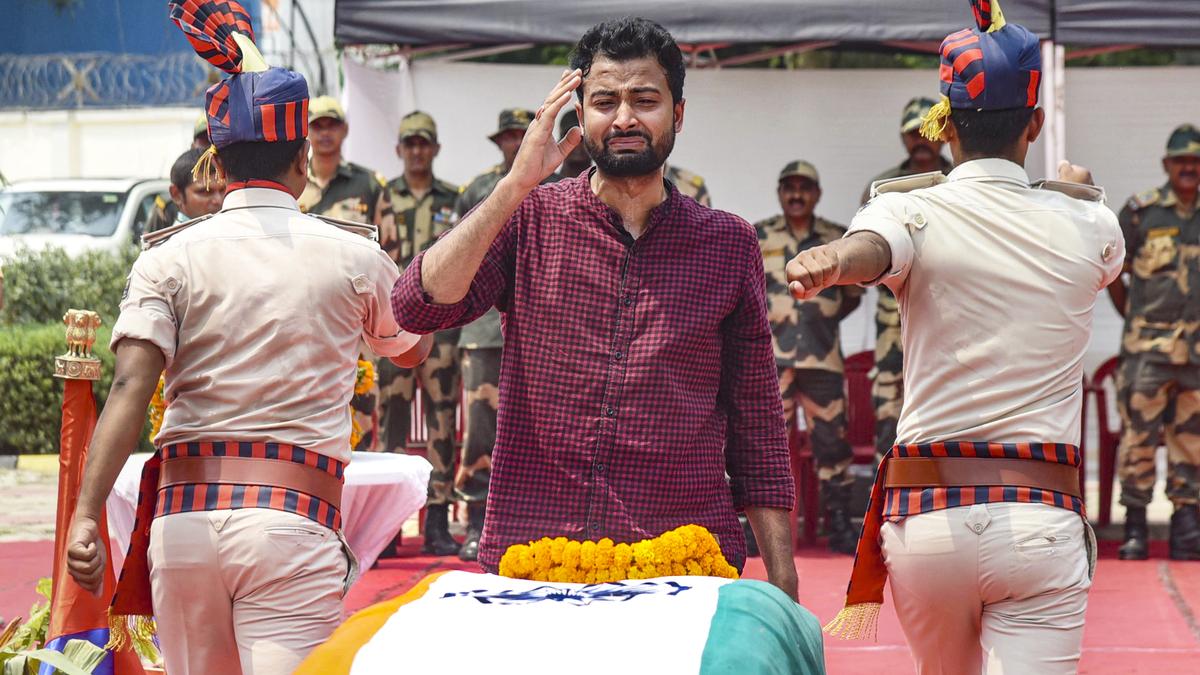
Imtiaz’s last rites were performed in the presence of a large crowd who shouted slogans in solidarity. Tearful, his son Imran Raza says his father sacrificed his life for the country and that he is proud of him.
Imran Raza pays tribute to his father, BSF Sub-Inspector Mohammad Imtiaz, in Patna on May 12, 2025. Imtiaz lost his life in the line of duty in J&K’s Jammu district. | Photo Credit: PTI
Mortal remains of Border Security Force (BSF) Sub-Inspector Mohammad Imtiaz from Chhapra, who was martyred in Operation Sindoor in the R S Pura section of Jammu border, reached Patna on Monday (May 12, 2025).
He was given a guard of honour by the security personnel, and a wreath-laying ceremony was held at Patna airport. Mr. Imtiaz’s son Imran Raza was also present at the airport to receive his body.
Several politicians, including Leader of the Opposition in the Bihar Legislative Assembly Tejashwi Yadav and Shravan Kumar, a Minister in the Cabinet of Chief Minister Nitish Kumar, were present to pay tributes to the martyred Sub-Inspector.
Speaking to the media at the airport, with tears in his eyes, Mr. Raza said, “I am really proud of my father who did not give up till his last breath and sacrificed his life for the country. Last time papa called me at 5:30 a.m. (May 10) saying that terrorists had attacked and his right leg was damaged. I told my father not to lose hope as I was coming to meet him.”
He said, “I boarded the flight for Delhi but when I reached there, I was informed that there was no flight for Jammu. Then I travelled by train. Till 3 p.m., the situation was under control and he was out of danger. I received a call from one assistant commandant at 6 p.m. who informed me that my father was no more. I could not get the chance to even speak to my father in his final moments.”
Mr. Raza broke down while speaking to the media and said that his father last visited the village to celebrate Eid with his family and resumed duty 18 days ago.
‘Army’s befitting reply’1
Mr. Yadav, in his address to the Press, said that the country and Bihar took pride in Mr. Imtiaz’s sacrifice and martyrdom.
“It is because of such brave martyrs that we are all safe today. The nation will always remember their sacrifice. We all should be proud of the Indian army and soldiers the way they gave the befitting reply to Pakistan. This is not for the first time the Indian army has boldly replied to Pakistan, It has happened before as well,” Mr. Yadav said.
Accompanied by RJD Rajya Sabha member Sanjay Yadav, the former Deputy Chief Minister asserted that the Sub-Inspector’s sacrifice also proved that there is unity in diversity in the country.
“Martyr Imtiazji was from Chhapra and we all are proud of him. He has made a big sacrifice as well as given a message that there is unity in diversity in our country. There are different languages, states, religion and caste, but when it comes to the matter of our country, everyone gets united against the enemy, be it Pakistan or terrorists, to win the battle,” Mr. Yadav said.
Minister Shravan said that through Operation Sindoor, the Indian government had ended terrorism and the army had played an important role.
“Mohammad Imtiaz has sacrificed his life while saving the entire nation. Along with Chief Minister Nitish Kumar, the people of the entire country are with his family in this hour of grief,” Mr. Shravan said.
Bharatiya Janata Party (BJP) state president Dilip Jaiswal was also present to pay the floral tributes to the Sub-Inspector.
Later, his body was taken to his native village Narayanpur in Chhapra, where last rites were performed in the presence of a large crowd. People shouted slogans in support while holding the national flag.
source: http://www.thehindu.com / The Hindu / Home> News> India / by Amit Bhelarii, Patna / May 12th, 2025
Ohida Khandekar’s Dream Your Museum, an installation and film about her uncle’s collection won the V&A’s Jameel Prize for contemporary art and design inspired by Islamic traditions.
Selim Khandakar with his grand-niece and the trunks housing his collection. | Photo Credit: Anand Kumar Ekboty
Selim Khandakar, 71, has always dreamt of making a museum in his village for the 12,000-plus objects he has collected over 50 years. A small portion of that collection has now reached one of the best museums in the world — the Victoria & Albert Museum (V&A) in London — thanks to his artist niece, Ohida Khandakar.
Ohida, 31, has turned her uncle’s lifelong obsession into an installation and film — Dream Your Museum — which won the V&A’s prestigious Jameel Prize for contemporary art and design inspired by Islamic traditions. The work is not just a tribute to what seems to be her uncle’s calling; it also challenges colonial museum structures and asks whether ordinary, personal objects deserve a place in museums. Can museums be flexible and inclusive spaces, showcasing the narratives of minority communities and customs? Are private collections the exclusive privilege of the rich?
The installation and film, ‘Dream Your Museum’, at the Victoria & Albert Museum (V&A) in London.
Selim worked as a doctor’s compounder in Kolkata and started collecting random objects from the year 1970. A stamp exhibition piqued his interest first, prompting him to start collecting them. He also came across an exhibition of vintage objects from Mallik Bari, one of Kolkata’s heritage homes. “It was a record of what objects were used in the ancient times and how lives were led,” Selim tells me over a Zoom call from his home in Kelepara, a village near Hooghly, West Bengal. “It inspired me to start collecting whatever felt like a record of the common person’s life and times. From bus tickets to stamps to refills of pens, I wouldn’t throw anything away.”
An assortment of rare and mundane items makes up Selim’s collection. Old clocks, inscribed ceramics, vintage records and music players, letters dating back to Partition, perfume bottles, crystal rocks, hand fans, stamps, handbills, ink pots, cameras, train tickets, receipts, even matriculation answer sheets from the 70s!
Selim Khandakar surrounded by the objects he has collected over the years. | Photo Credit: Anand Kumar Ekboty
Gramophones to baby clothes
Much of Selim’s collection is housed in tin trunks and scattered across his home in Kelepara. It sometimes becomes a ‘travelling museum’ for people in the village to explore and interact with the objects as Selim takes them around. There is curiosity, awe, some ridicule, some laughter, and from those who understand history and record keeping, even encouragement.
Ohida’s film captures Selim walking through village fields with his trunk, stopping by the river to rinse some crystal stones, and holding them up to the sun. “Where did you find these, nanu?” asks Maria, his grand-niece, who appears in the film. “In the graveyard,” Selim replies.
Selim Khandakar walking through village fields with his trunk. | Photo Credit: Anand Kumar Ekboty
Ohida, who studied art at the Government College of Art & Craft, Kolkata, and Jamia Millia Islamia, New Delhi, says it is sometimes hard to understand what keeps her uncle going. Is it hoarding, as his exasperated family has often believed? She and Selim don’t think so. Instead, he thinks his collection, much like Dream Your Museum, is about storytelling. “Collecting is my way of showing people from my village a glimpse of things from around the world,” Selim notes. “Like rare coins dating back to the Mughal period or vintage perfume bottles from around the world. Often people here do not get a chance to go to cities to see such things. That’s what has always kept me going.”
Selim Khandakar’s house that was destroyed after a cyclone.. | Photo Credit: Anand Kumar Ekboty
Once displayed in his modest mud house, now destroyed after a cyclone, Selim’s possessions came close to being discarded by his family until Ohida decided to document it digitally. She reacquainted herself with both her uncle and his collection when stuck at home during the pandemic. To her artist’s eye, it is a compelling one, given its range — from gramophones to baby clothes from the 80s. “It even has a bunch of fingernails [Selim’s own] in a box. It reminds me of Marcel Duchamp’s Dadaist Fountain exhibit [1917], where he displayed an upside-down urinal. Such objects challenge conventional notions of what belongs in a museum. These items, including a broken plate passed down through generations, show the power of storytelling through objects.”
Selim laughs when asked about the fingernails. “I had once visited an exhibition where I saw art made with fingernails and thought I would do the same with mine. It made me curious, so I kept them.”
What makes a museum?
Curiosity has been the driving force behind Selim’s obsession and this is what Ohida celebrates in her work. Maria accompanies Selim throughout the film, asking him curious questions about the objects in his collection, an attempt to peek into his mind. Ohida started filming Dream Your Museum as an entry for the 2022 Berlin Biennale, where it was received well, eventually landing her the V&A award.
Filmmaker Ohida Khandakar
Growing up in Kelepara, Ohida hadn’t stepped inside a museum until she came to study art in Kolkata. “I had achieved my dream of studying art and moving beyond a village where many women still had no voice and were married off early. It made me wonder — was there a limit to our dreams? Was there a limit to the dreams of my uncle, a rural, aged Muslim man?”
With the funds from the award, Ohida is now hoping to create a museum for her uncle’s collection and a cultural space in the village. “We need accessible museums that work as alternative spaces for the narratives of rural minority communities; as safe spaces for women without opportunities; to engage those who might not typically visit traditional museums due to a lack of knowledge, distance or financial constraints.”
In Dream Your Museum, her camera gently films Selim among his collections in his crumbling ancestral home. He expresses frustration at having no permanent place even after 50 years to showcase his prized collection. “I’ll now make a museum on the moon,” he declares.
The writer is a freelance journalist and the co-author of ‘Rethink Ageing’ (2022).
source: http://www.thehindu.com / The Hindu / Home> Entertainment> Art / by Reshmi Chakraborty / April 20th, 2025
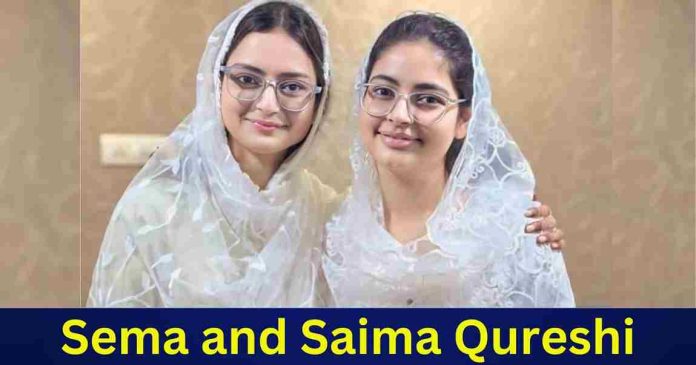
In a shining example of determination, hard work, and the power of education, sisters Sema Qureshi and Saima Qureshi, daughters of Abdul Nabi Qureshi, have successfully completed their MBBS degrees and officially earned the title of doctors. Their achievement marks a moment of immense pride for their family and community, highlighting the importance of female empowerment through education, reported the NewsofKashmir.
Raised in a home where education and moral values were deeply cherished, both sisters had aspired to become doctors from a young age. Their father, Jenab Abdul Nabi Qureshi, a strong proponent of academic excellence, provided unwavering support throughout their journey. “My daughters have made not just me, but our entire family proud. They are proof that with hard work and faith, anything is possible,” he said.
Their accomplishment comes at a time when encouraging girls to pursue professional education is critical, especially in regions where access and opportunities remain limited. Sema and Saima’s story stands as an inspiring example for young girls who dream of careers in demanding fields like medicine.
Expressing gratitude for the support they received, the sisters said in a joint statement, “This success belongs to our parents and teachers as much as it belongs to us. We hope to serve the people with sincerity and compassion in our medical careers.”
With their degrees now in hand, the duo is set to begin internships in local hospitals and is also exploring options for further specialization, particularly in healthcare services for underprivileged communities.
Their journey is not just one of academic success—it is a powerful reminder of the role that family encouragement, community support, and access to education play in shaping the future of young women in Kashmir and across the country.
source: http://www.radiancenews.com / Radiance News / Home> Focus> Markers of Excellence / by Radiance News Bureau / May 08th, 2025