All posts by mpositiveone@gmail.com

Ikram Hussain’s brass carvings fascinated PM Modi

Moradabad, UTTAR PRADESH :
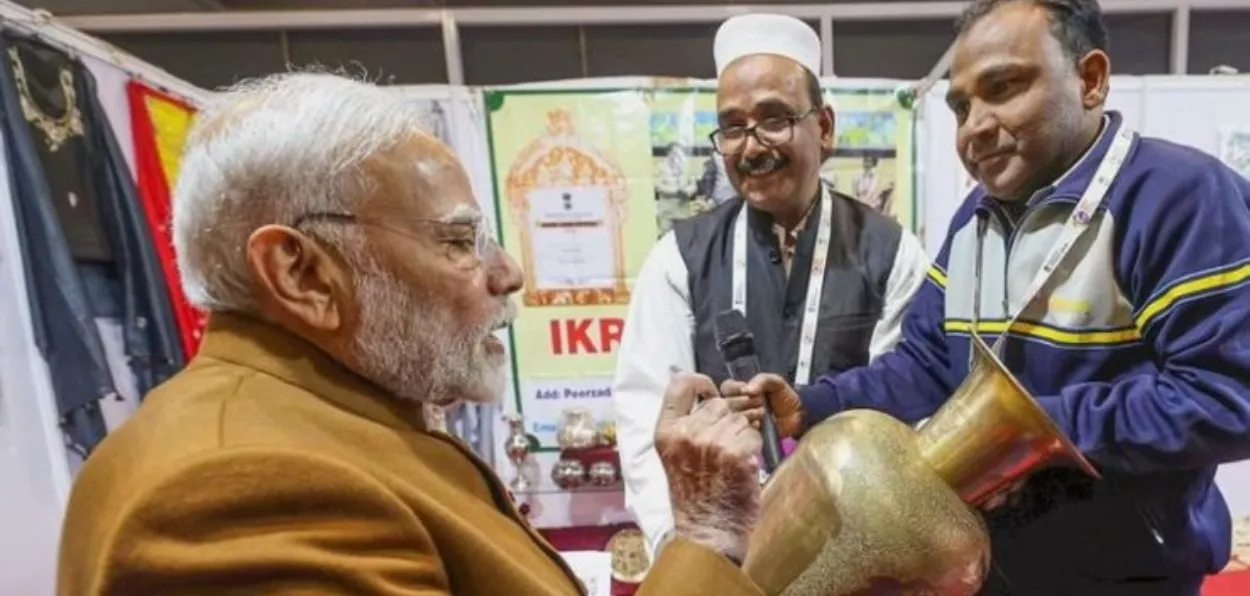
Ikram Hussain (wearing a cap) with Prime Minister Narendra Modi at Bharat Mandapam, New Delhi

Ikram Hussain was 15 years old when the manager of the Eidgah Gurdwara in Moradabad, UP, asked him to engrave his mother’s name on an aluminium plate. The young boy had never gone to school but had picked up the skill of metal carving from his father. The young boy felt embarrassed and told the manager that he must write the name for him since he was illiterate.

He engraved the name beautifully onto the plate and received Rs 10 for this work. This amount gave him confidence, and he decided to pursue his work seriously.
Today, Ikram Hussain, 61, from Moradabad, Uttar Pradesh, is a national award winner. None other than Prime Minister Narendra Modi praised him for his art.

One of the glorious moments of his life was when Prime Minister Narendra Modi was impressed and moved by his beautiful carvings at the The 12th Grameen Bharat Mahotsav  at Bharat Mandapam, New Delhi last year.

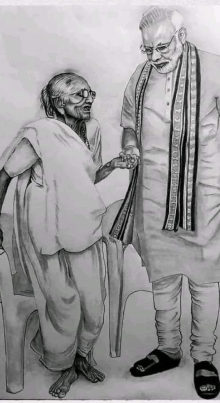
Ikram was carving a piece depicting Prime Minister with his late mother on a 3-feet brass jar. Prime Minister intently watched his carvings and patted him for his work and dedication. He displayed this work at the festival.

Moradabad, known as the “Brass City,” is renowned for its exquisite brass artefacts. Ikram Hussain says he could not study due to financial constraints at home. However, he never lost hope.
At a young age, he began assisting his grandfather and father in their brass engraving work. His father, Haji Abdul Hamid, and his uncle, Razak Medal winner Haji Ghulam Nabi, were well-known brass engravers in Moradabad. Ikram started learning this art at the tender age of seven.

Even today, his eyes well up with tears when asked why he couldn’t complete his studies. He explains that his family’s financial situation was extremely precarious. To help support the family, he had to leave school and start working.

The family worked day and night, yet they could barely earn five to seven rupees a week. Even that amount was hard to come by those days. Despite this, Ikram never let his circumstances become a weakness.

While working, he meticulously learned the intricacies of engraving. His hard work and dedication resulted in him gradually mastering the art of working with brass to the point where he could accurately engrave the likeness of any person’s face.

His engravings display emotion, depth, and lifelike detail. This is why his art has equally impressed people from all communities—Hindus, Muslims, Sikhs, and Christians alike.

His hard work paid off, and in 2004, he received an award from the Uttar Pradesh government for his outstanding carving skills. He also received a cash prize of 5,000 rupees.

At that time, five thousand rupees was a considerable sum of money. Ikram recounts that when he went to deposit the check at the bank, the bank manager even offered him tea. This recognition was like a dream come true for him. There was an atmosphere of joy in his family, and his morale was boosted manifold.

Today, Ikram Hussain is recipient of honours and awards from various parts of the country.

He runs his company, which he started with a bank loan. This craftsman, who once earned just five rupees a week, is now providing jobs and training to many.

Ikram Hussain’s story is not just a success story of a craftsman, but an example of struggle, perseverance, and self-confidence. He proved that with determination and hard work, a lack of formal education cannot be an obstacle to success.

The master craftsman is recognised throughout the country for his art and social message. The demand for his brass products is high, and his business is worth millions.

The Bihar government has hired him to train the artisans. He trained more than 400 artisans at the Upendra Maharathi Shilp Anudan Sansthan.

Ikram Hussain inherited his passion for this art form, as his father also trained people in the same craft. His exceptional carvings have earned him a place in the Guinness Book of World Records.
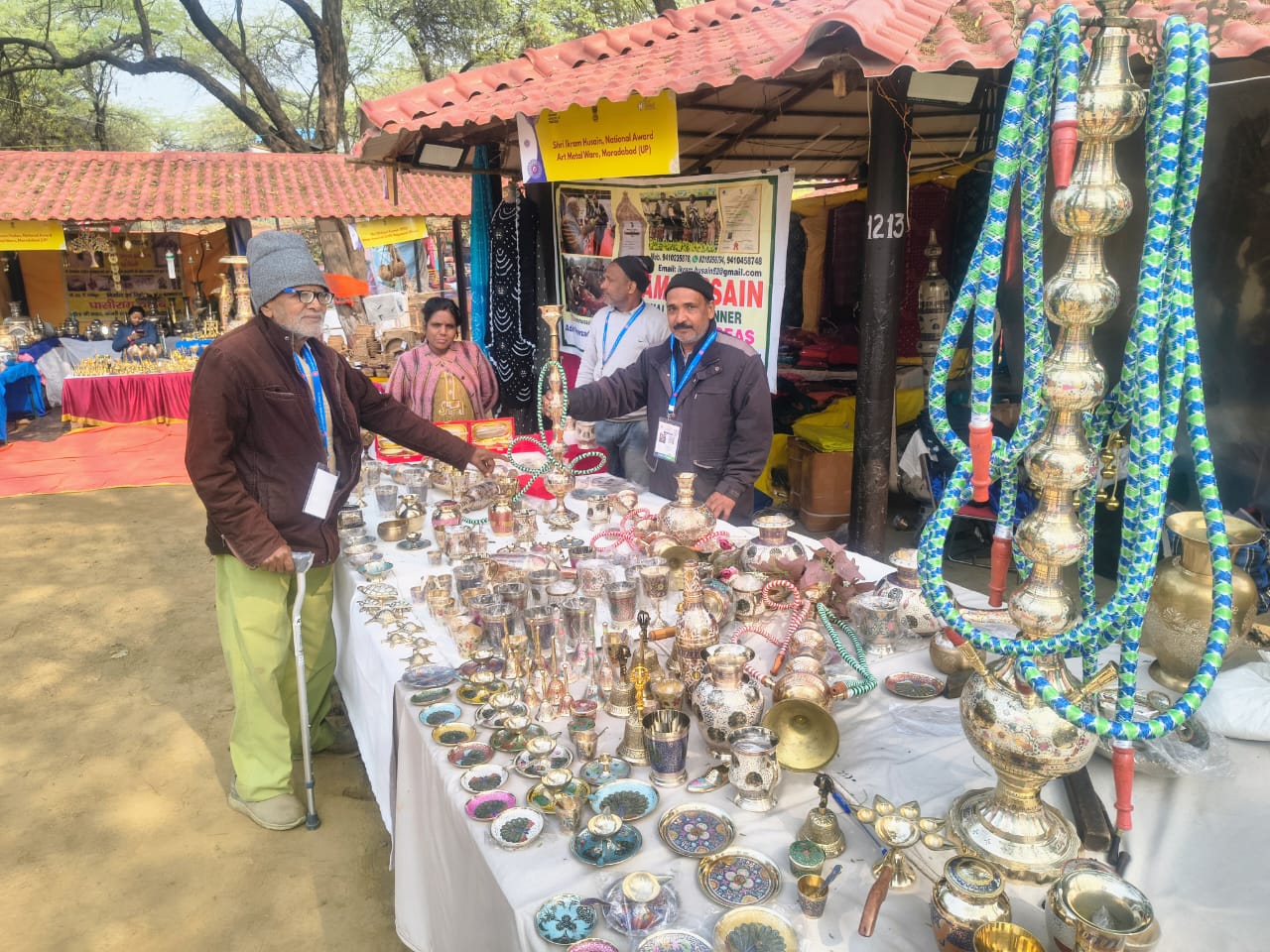
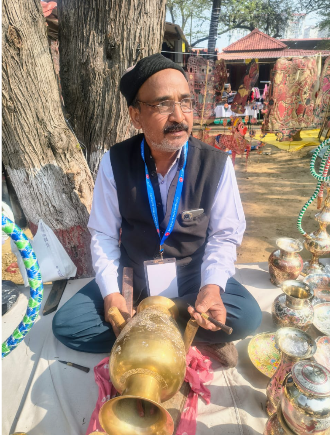
Ikram Hussain at his stall at the Surajkund Festival

Craftsman Ikram Hussain has conveyed a message of communal harmony by engraving symbols of Hindu, Muslim, Sikh, and Christian religions on his brass products.

He was honoured with a National Award in 2022 for his art and for promoting brotherhood in society.

Ikram Hussain believes that all religions are part of the same family and that we should rise above caste and creed to strengthen love and brotherhood. “We are all flowers of the same branch, only our colours are different. We should promote love and brotherhood, not hatred.”

His carving of the Ram Temple on a vase and his work on a 40-inch vase at the Golden Temple can be seen up close at the Lucknow Museum.

He has received numerous awards, including the State Award Second from Uttar Pradesh, the Bhim Rao Ambedkar Award, the Dr Ram Manohar Lohia State Award, the National Award Second from Union Minister Piyush Goyal, two honours from the Assam government, and an honour from the Prime Minister.

Overall, he has received 20 national and international awards. His work and contributions have also earned him a place in the Guinness Book of World Records.

source: http://www.awazthevoice.in / Awaz, The Voice / Home> Stories / by Dayaram Vashisth / February 05th, 2026
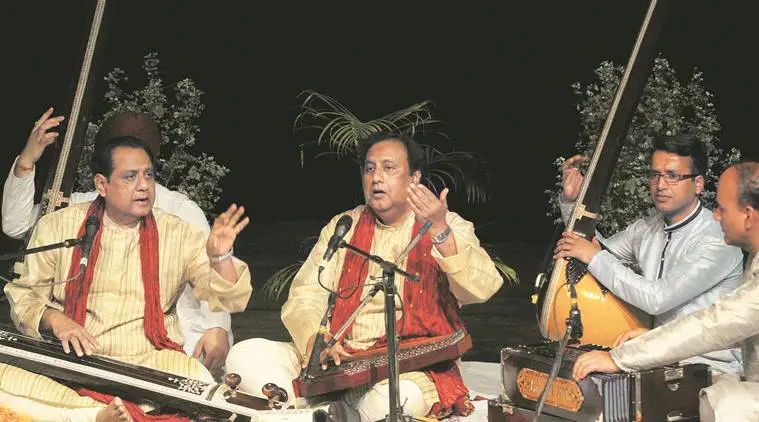
Sangeet sabha pays homage to Ustad Munawar Ali Khan

Kolkata, WEST BENGAL :

Tragically, Munawar Ali Khan Sahib died at the peak of his career, at the age of 59 in Kolkata in 1989.

Artistes perform at Tagore Theatre in Sector 18, Chandigarh, on Saturday. Express

Triveni Sangeet Sabha paid a homage to late Ustad Munawar Ali Khan of Kasur Patiala Gharana on Sunday evening at Tagore Theatre. An audio-visual presentation on Ustad Munawar Ali by Niharika Popli was projected. This was followed by vocal recitals by Ustad sahib’s son Raza Ali Khan and his two nephews Ustad Mazar AlI and Awaad Ali Khan. Chandigarh-based Primila Puri, his disciple, also sang.

Ustad Munawar Ali Khan was born in 1930 in Lahore. He was the son of the legendry maestro Padmabhushan Ustad Bade Ghulam Ali Khan and trained under his father and his uncle Ustad Barkat Ali Khan. Munawar Ali Khan had a full-throated, powerful voice with open aakar, which adapted itself to different styles of bandishes like khayal, thumri, dadra and after his father’s death in 1968, he became a worthy representative and the ‘Khalifa’ of the Kasur Patiala Gharana. He created many khyals, thumris, geets and ghazals and sang brilliantly difficult ragas of his gharana and also created a new raga named Malini Basant.

Tragically, Munawar Ali Khan Sahib died at the peak of his career, at the age of 59 in Kolkata in 1989. The Kasur Patiala legacy is now carried on by his son Raza Ali Khan and his nephews Jawaad Ali Khan, Mazhar Ali Khan and Naqi Ali Khan.

source: http://www.indianexpress.com / The Indian Express / Home> News> Cities> Chandigarh / by Express News Service / March 18th, 2018

Muslim bodies reach out to Tripura villagers rendered homeless

TRIPURA :

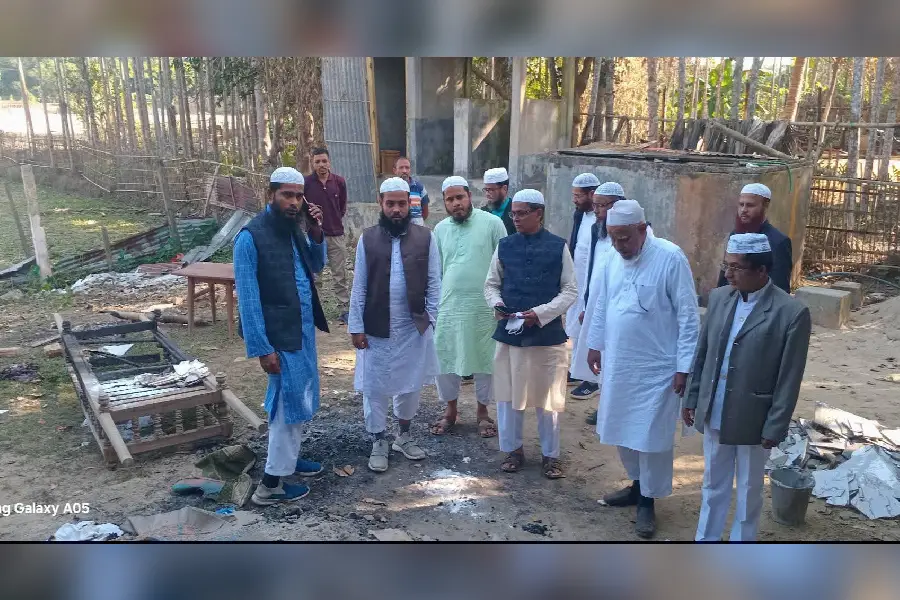
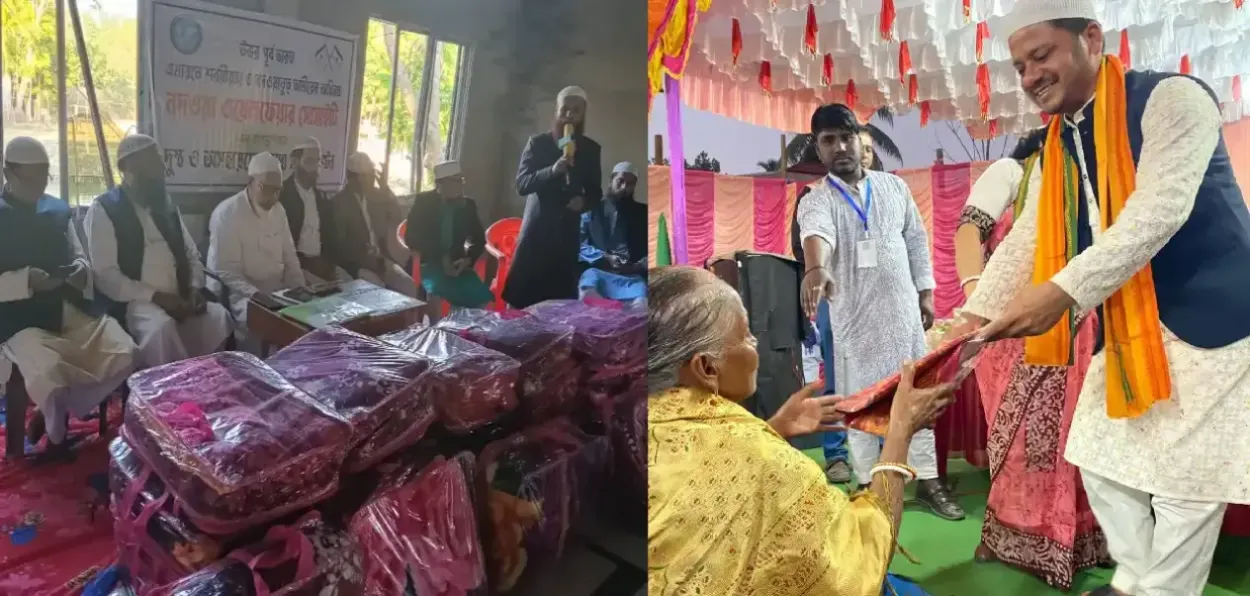
Muslim leaders with relief material

Ahead of the holy month of Ramazan, an inspiring example of humanity, compassion, and community solidarity has emerged from the northeastern Indian state of Tripura.

The Northeast India Emirate Sharia and Nadwatut Tameer jointly launched an initiative to assist distressed Muslim families affected by the recent violence in the Shimultali area of ​​Kumarghat Phatikra in northern Tripura.

This humanitarian effort involved the distribution of blankets and other essential household items to the needy families and also provided one-time financial assistance to enable them to live with dignity during the sacred month.

On January 10, a mosque in the Shimultali area of ​​Kumarghat Phatikara, and houses of Muslims around it were damaged. As such, the locals belong to the lower-income group.

This incident left many families suddenly homeless and helpless, ahead of the fasting month.

Although the state government provided one-time compensation to the affected families, at least five families in the area remained in dire straits due to their limited resources. The Northeast India Emirates Sharia and Nadwatut Tamir provided relief to such families.

The delegation leader at the venue of arson

A delegation led by the organisation’s central general secretary, Maulana Ataur Rahman Mazharbhuiyan, visited the affected homes and met with the families. It was ensured that the assistance provided was not merely symbolic but in line with actual needs.

Each affected family received cash assistance starting at a minimum of Rs 5,000. They also received blankets and other essential items.

On this occasion, the organisation’s leadership appealed to affected Muslim citizens to remain patient and reassured them that they were not alone.

They urged them to trust the state and national governments, protect their rights through constitutional means, and refrain from any provocation.

Speakers particularly emphasised that maintaining an atmosphere of social harmony and brotherhood is the need of the hour, so that such incidents are not repeated in the future.

The Tripura government’s Waqf Board has taken a significant step ahead of Ramazan. The Tripura Waqf Board has allocated Rs 3.8 lakh for the restoration of the damaged mosque in Shimultali.

Board Chairman and former MLA Mafswar Ali emphasised that the Waqf Board was working to preserve, maintain, and rebuild minority Waqf properties.

The delegation included Central Office Secretary Maulana Nayeem Uddin Choudhury, Tripura State Nadwa Secretary Abul Kalam, Kailashahar District Emirate Sharia and Nadwatut Tamir General Secretary Maulana Syed Ahmed, District Qazi Maulana Yusuf Ali, prominent Nadwa activist and advocate Kamal M. Masdar, and several other dignitaries.

source: http://www.awazthevoice.in / Awaz, The Voice / Home> Stories / by Nurul Haque, Agartala / January 31st, 2026

Maharashtra Polls: Rubina Feroze Wins Mira-Bhayandar Ward Again, Defying BJP Wave

Mira-Bhayandar (Thane), MAHARASHTRA :

Congress leader retains Prabhag 19 seat, credits public trust, service record and cross-community support

Mira-Bhayandar, Thane :

Congress leader Rubina Feroze has returned to the Mira-Bhayandar Municipal Corporation in Thane district of Maharashtra for a second consecutive term, winning from Prabhag No. 19 and leading all four candidates of her panel to victory. Her win stands out in an election largely dominated by the BJP, which saw several smaller parties wiped out.

Rubina, who first won the ward in 2017, secured a fresh mandate from the same constituency. Prabhag 19 has a mixed population of Marathi and Gujarati speakers, with Hindus, Muslims, Christians and Jains living together. Muslims form a small minority in the ward, yet the results reflected broad support cutting across community lines.

Speaking to Urdu daily Inquilab, Feroze said repeated attempts were made to polarise Mira-Bhayandar on religious and linguistic lines. “Over the last three years, there was a clear effort to push the city towards communal tension. Even the Marathi language was dragged into politics last year,” she said.

“Many parties tried to win votes by invoking religion and identity,” she added. “But in ward number 19, that kind of politics did not work. People judged me by my work and by the stand taken by the Congress.”

Overall, the Congress improved its performance in the civic polls, winning 13 corporator seats compared to 12 in the previous election, helping the party avoid a poor showing in the city. Shiv Sena (Shinde faction), backed by state minister Pratap Sir Naik, was restricted to just two seats.

Describing her victory as a responsibility rather than a personal achievement, Rubina Feroze said, “I thank the people of my ward for trusting me again. I will work harder in the new term and address every issue faced by residents.”

During her previous term, she focused on welfare initiatives and local issues, including helping women access government schemes, organising self-defence classes, holding a job fair for unemployed youth, and conducting career guidance programmes for students. She also assisted cancer patients in securing financial aid from the Municipal Corporation.

Residents cited her accessibility as a key factor behind her re-election. “She listens to people and follows up on issues. That is why people from every community voted for her,” a local voter said.

The result is being widely seen as a signal that development-oriented politics and social harmony continue to resonate with voters, even amid a charged political climate.

source: http://www.clarionindia.net / Clarion India / Home> Editor’s Pick> India / by Team Clarion / January 23rd, 2026

Assam imam uses mosque loudspeaker to save passengers trapped underwater

Sribhumi District, ASSAM :

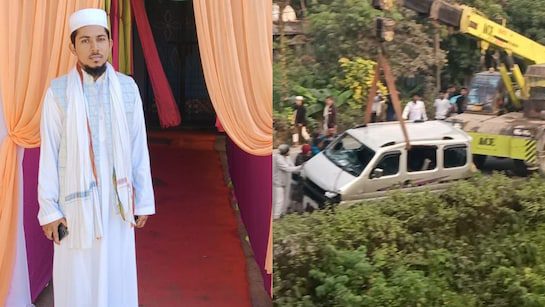
A mosque imam in Assam used the mosque loudspeaker at dawn to raise an alarm that ultimately saved seven lives after a vehicle plunged into a pond.

The incident occurred early Tuesday in Sribhumi district when a car lost control on the National Highway, skidded off the road and crashed into a waterbody.

The passengers, most of whom were asleep, found themselves trapped as the vehicle began sinking with its windows shut.

Upon hearing the sudden crash, Maulana Abdul Basit, Imam of Jama Masjid and a teacher at Mirabari Madrasa, immediately turned to the mosque’s microphone to alert the community.

He called on residents to rush for help, a local resident told NDTV.

The appeal sparked a swift response. Villagers hurried to the site and launched a rescue effort, eventually pulling all seven passengers out of the submerged vehicle.

“I noticed the car’s lights glowing under the water and realised we had to act without delay,” Basit said, The Observer Post reported.

He added that his actions were driven purely by humanity: “We did not think about religion. Saving lives was all that mattered.”

source: http://www.maktoobmedia.com / Maktoob Media / Home> India / by Maktoob Staff / December 03rd, 2025.

Zahoor Lone-led Team India wins bronze in world snow sculpting championship

JAMMU & KASHMIR / INDIA :

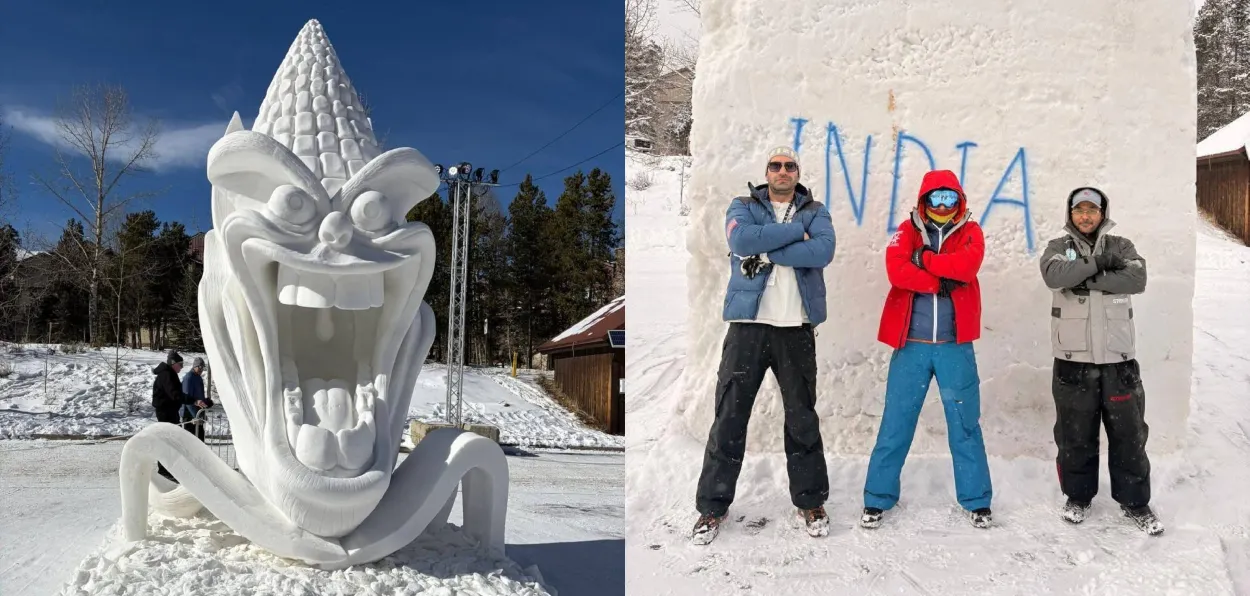
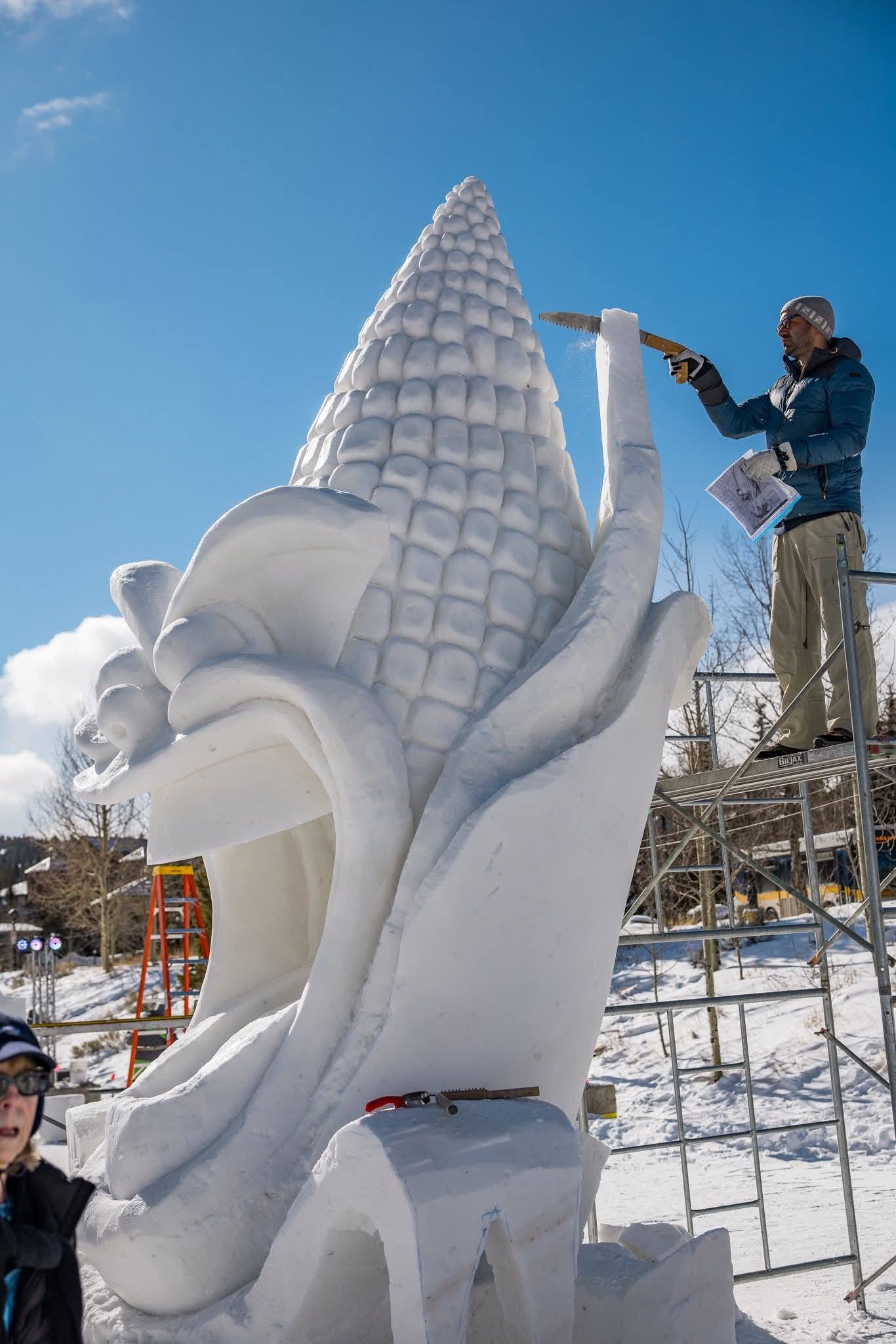
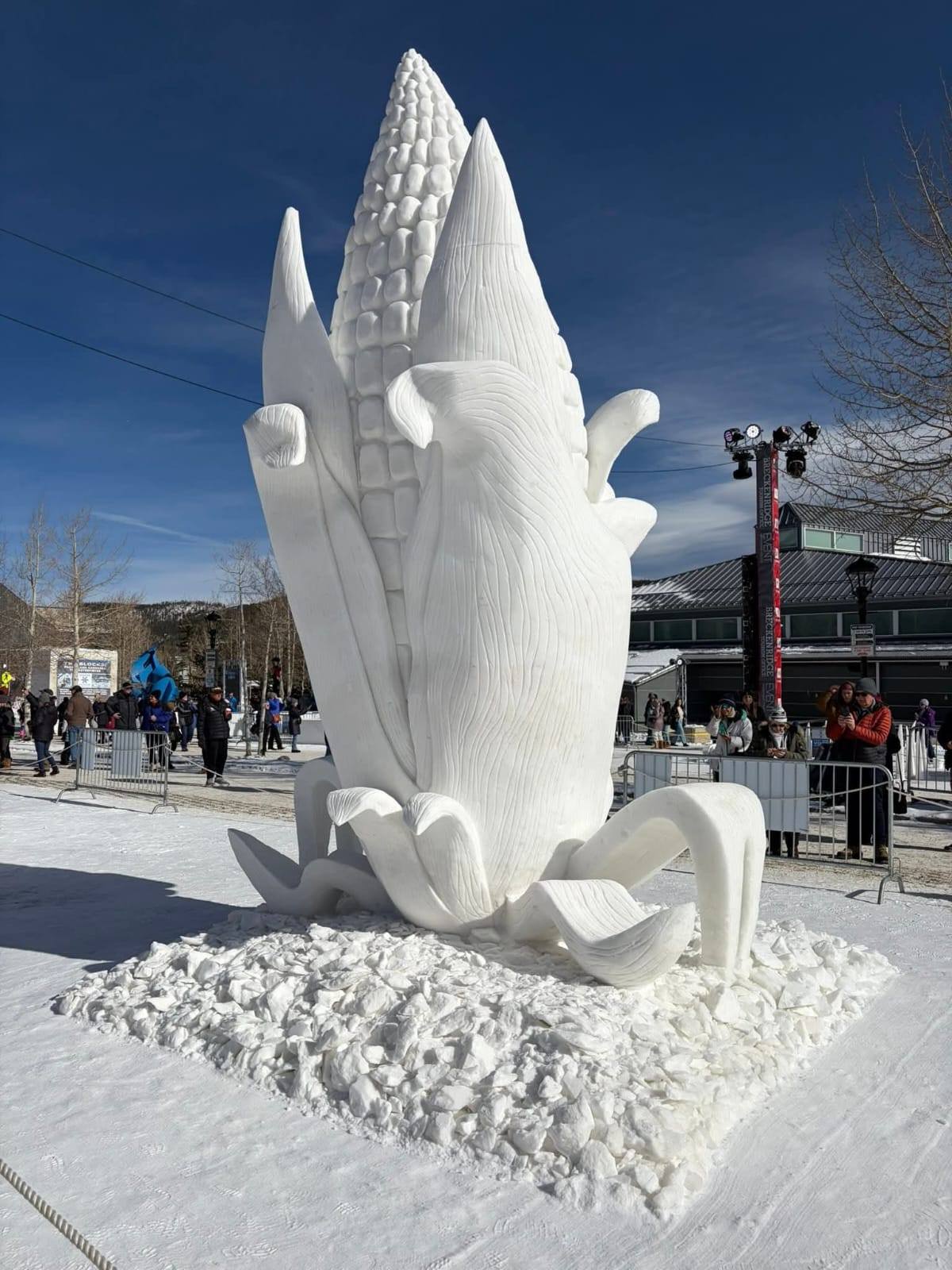
Team India -Zahoor Ahmed Lone, Suhail Mohammad Khan, Mridul Upadhyay with their snow sculpture

New Delhi :

For a second time, Team India has won a bronze medal and the People’s Choice Award in the international snow sculpture championship held in Colorado, USA.

The Indian team was led by the Kashmir-born Zahoor Ahmed Lone and comprised Suhail Mohammad Khan, Mridul Upadhyay, and Matt Seeley (USA).

While Lone belongs to Singhpora Pattan, Baramulla, Khan is a specially-abled person and also belongs to Kashmir.

The organisers of the International Snow Sculpture Championship shared this visual of the competition on their website:

Breaking psychological barriers about India being a “hot country” and unfit for snow sports or arts, young Indians from “snow states” and others are gradually leaving their mark on snow art. Snow art has been associated with affluent First World Western European, Scandinavian & North American countries.

Team India’s 16 ft tall piece, “Corn: The Ultimate Domesticator — Who is truly in control?”, reimagines human history with humour and depth.

It’s inspired by Yuval Noah Harari’s Sapiens. The artists explored the idea that while humans believe they domesticated corn, perhaps corn—or crops—have been domesticating us, shaping our agriculture, diets, and landscapes for centuries.

The venue of the International Sculpting Championship

The sculpture invited audiences to reflect on the relationship between nature and humanity, sparking both curiosity and laughter among visitors and judges alike

The four-member Indian team, led by Suhail Mohammad Khan, worked tirelessly for four days in freezing temperatures ranging from -25°C to -35°C.

This marks Team Snow India becoming the first South Asian country to participate and win, a second time, an international medal in snow sculpting.

“Winning both the jury’s and the people’s awards is truly special. Every flake of snow here tells a story—of teamwork, passion, and India’s creative spirit,” said Mridul Upadhyay from Team Snow India, told the media.

Zahoor Ahmad Lone said that despite the challenging weather conditions and time constraints, Team India’s sculpture impressed the judges and spectators alike with its elegance and precision.  The 5-judge panel took more than 6 hours to evaluate 12 snow sculptures.

India ranked third, while Korea secured first and Mongolia second, amongst teams like the US, Finland, Canada, Argentina, and Turkey.

This achievement marks a significant milestone for Indian snow sculpting, showcasing the country’s talent and creativity globally.

The competition, held in Breckenridge, Colorado, featured 12 teams from around the world, including the US, Germany, Mexico, Finland, Canada, Mongolia, South Korea, Argentina, and Turkey.

Teams from Argentina, Germany, Finland, India, Italy, Lithuania, Malta, Mongolia, the Republic of Korea, Ukraine, USA – Breckenridge, and USA – Vermont participated in the championship.

The first prize – a gold – was won by Team Republic of Korea for their work “Beauty Beyond Difference: Harmony of Coexistence”.

Team Magnolia won a Silver for “Lassoing Time”

source: http://www.awazthevoice.in / Awaz, The Voice / Home> Stories / by Aasha Khosa / February 01st, 2026

Ilin Fatima Creates History as Ajmer’s First Female Muslim Chartered Accountant

Ajmer, RAJASTHAN :

New Delhi / Ajmer :

Ilin Fatima, a young Muslim from Ajmer, has made history by becoming the city’s first female Chartered Accountant (CA), marking a milestone for her family and the local Muslim community. Her achievement reflects a blend of strong upbringing, determination, and a steadfast commitment to education.

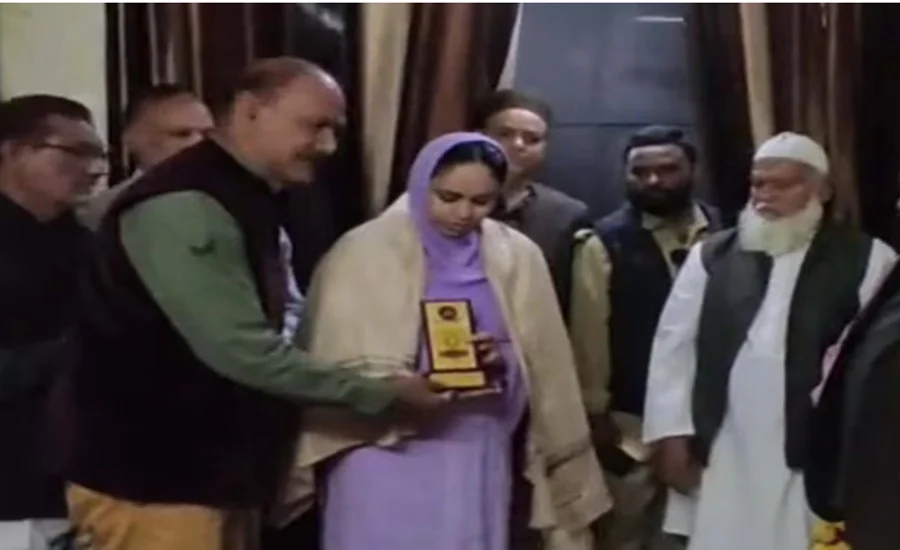
Fatima was welcomed with widespread enthusiasm by the Muslim Welfare and Education Committee of Ajmer in Rajasthan, where she was felicitated for her dedication and resilience. Community members gathered to celebrate, expressing pride not only in her personal success but also in what it signifies for Muslim families across Ajmer and the state.

Her father, Abdul Hameed Khan, spoke about the significance of this accomplishment with deep gratitude to Allah. “I have three daughters, and I ensured they were educated according to Shariah law,” he said. “My daughters have succeeded in both religious and worldly knowledge. I urge every parent to prioritise education for their children. Even if you have to eat half a loaf of bread, make sure your children receive quality education.”

He referred to a Hadith (sayings of Prophet Muhammad) and emphasised the value of knowledge: “Acquire knowledge even if one has to go to China. Education is essential, and people often overlook its importance. My daughter’s success is a reminder of the power and necessity of learning.”

The community’s response has been overwhelming. Leaders and members of various organisations, including Syed Rab Nawaz Jafri, UD Khan, Dr Syed Mansoor Ali, Haji Nafees Ahmed, Advocate Manzoor Ali, Hasan Mohammad, Akram Siddiqui, Farid Hussain, and Aqeel Ahmed of the Ajmer Muslim Welfare and Education Committee have all praised Fatima’s dedication and accomplishment.

A committee spokesperson remarked, “Ilin Fatima’s achievement serves as an inspiration not only to her family but to the entire city. Her commitment to education demonstrates that the progress of daughters is vital for the development of society. When girls are educated, communities prosper, and real success is achieved.”

Ilin Fatima’s historic success is likely to encourage more Muslim families to prioritise education for their daughters, breaking barriers and inspiring future generations. Her journey is a testament to perseverance, faith, and the unwavering support of a family that values both religious and worldly knowledge.

“Her hard work shows that with determination, guidance, and faith, anything is possible,” the committee official added. “She has set an example for all young Muslim girls in Ajmer and beyond.”

As Ilin Fatima steps into her professional career, her story stands as a beacon of hope and a reminder of the transformative power of education within the Muslim community in India.

source: http://www.clarionindia.net / Clarion India / Home> Editor’s Pick> India> Indian Muslim / by Mohammad Bin Ismail / November 10th, 2025

Remembered in files, erased in life: Jharkhand’s forgotten martyrs of 1857

JHARKHAND :

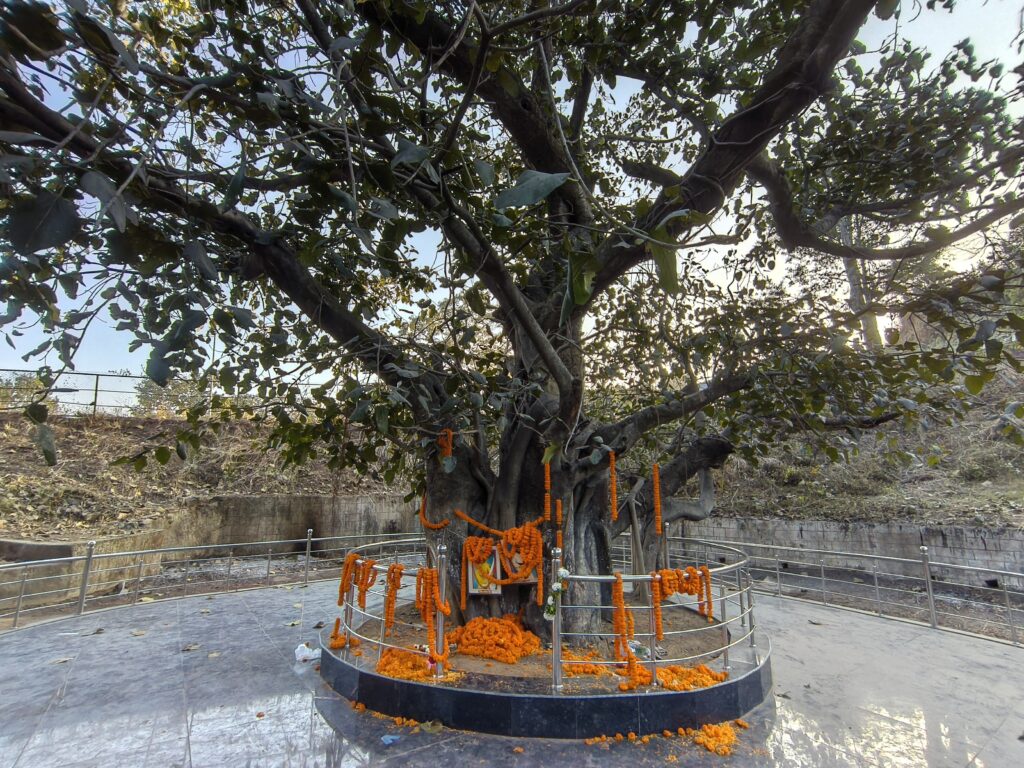
The Banyan tree on which the execution took place. Photo: Ghulam Ahmad Raza

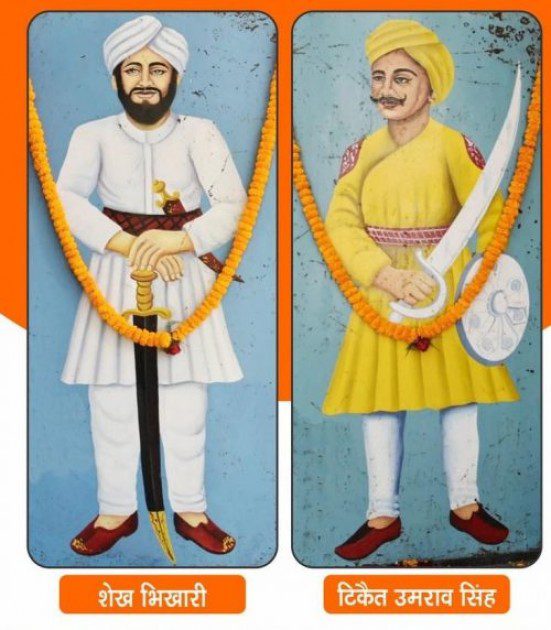
During the 1857 revolt against British rule, Jharkhand too witnessed armed resistance. The rebellion had spread across regions including Ranchi, Hazaribagh, Ramgarh, Palamu and Singhbhum. In the dense forested border areas of Ranchi and Hazaribagh, the rebel forces were led by Shaheed Sheikh Bhikhari Ansari and Tikait Umrao Singh. From the dense jungles of the Chuttu Palu valley, their army fought British troops and prevented Ranchi from falling under colonial control. Both leaders were captured by the British forces on January 6, 1858 and were publicly executed by hanging on January 8, 1858, in the same Chuttu Palu valley.

The banyan tree on which they were hanged still stands today. The Jharkhand government has developed the surrounding area as a martyr memorial with the stated aim of preserving history and keeping alive the legacy of the region’s sites of resistance. Yet even today, many residents of the Chuttu Palu village where the memorial stands remain unaware of who these martyrs were.

Fifty-eight-year-old Nirmal Kumar, who works as a stone breaker near the memorial, often rests inside the premises during breaks. He says he has been coming here since childhood. Despite this, he is unaware of the historical significance of the site and does not recognise the names of Sheikh Bhikhari Ansari or Tikait Umrao Singh.

“I only know that blankets are distributed here every year on January 8,” he said. On the martyrdom anniversary, social workers and officials visit the site to pay tribute and distribute essentials among the poor.

Sanjay Munda, a resident of Chuttu Palu village, said that even today, most villagers do not know about the martyrs or the memorial’s history. “Members of the surrounding Scheduled Tribe (ST)  and Scheduled Caste (SC) communities refer to the site in the local language as Fasiyahi Bar (tree where the hanging took place). Most people do not know about the 1857 revolt or the sacrifice of Sheikh Bhikhari and Tikait Umrao Singh,” he told Maktoob.

Despite the lack of awareness, locals often bow their heads in respect when passing the site.

The memory of these two revolutionaries who laid down their lives fighting British rule is slowly fading. Their history has largely been reduced to government files and digital web pages. On martyrdom days, ministers, officials and locals pay tributes, but beyond symbolic gestures, little is done. While the Jharkhand government has taken some steps to acknowledge them, no substantial initiative has been taken by the central government to formally recognise or honour their contributions.

Dr Muzaffar Hussain, researcher and author of Jharkhand ki Muslim Vibhutiyaan, says Muslim, SC and Adivasi martyrs have not received the recognition they deserve. “Jharkhand has produced many revolutionaries who sacrificed their lives for India’s freedom, but recognition has been limited largely to Birsa Munda only,” he said.

He points out that the 1857 revolt took place nearly 40 years before Birsa Munda’s Ulgulan (revolt). “Names like Nadir Ali, Imam Ali, Jatra Tana Bhagat, Sidhu–Kanhu, Phulo–Jhano, Nilambar–Pitambar, Sohbat Miyan, Chandan Miyan, Jaggu Miyan and Najahat Hussain are a part of Jharkhand’s resistance history during the 1857 revolt, yet they remain largely forgotten.”

Hussain argues that the Jharkhand government must project its revolutionaries on a larger scale for the central government to take meaningful steps. “Even platforms like Google and Wikipedia carry very limited information about them,” he said.

He suggests state-funded research, naming welfare schemes and government buildings after revolutionaries and honouring their descendants are ways to restore their place in public memory.

Ruchi Kujur, an activist working on SC and ST rights and a member of the Jharkhand State Commission for Protection of Child Rights, said every state has its own history, and Jharkhand is rich with stories of courage and resistance. “The list of Adivasi and SC heroes is long,” she said.

“People need to be made aware of their ancestors’ sacrifices. When these revolutionaries are honoured, it inspires the younger generation to work for society and the nation.”

Situated amid a valley rich in natural beauty, the martyr memorial complex (Shaheed Sthal) has been developed with basic amenities. Yet, several factors discourage people from visiting the site, further deepening the lack of public awareness about the martyrs. Surrounded by dense forests and hills, the memorial lies in an isolated location, with no human habitation within a radius of nearly five kilometres. This isolation is a major reason why people hesitate to visit the site, either alone or with their families.

The premise includes resting sheds, benches and toilet facilities. However, due to poor maintenance, thick shrubs have grown across the complex. Lights installed in the area and doors of the toilets have reportedly been stolen. Although the police conduct patrols from time to time, the absence of adequate security continues to deter visitors.

Ghulam Ahmad Raza is a Jharkhand-based freelance journalist with over four years of experienceHe has worked as a City Reporter with Pratah Awaz and as a Sub Editor with Prabhat MantraHis reporting focuses on marginalised communities, forgotten histories and grassroots political narratives.

source: http://www.maktoobmedia.com / Maktoob Media / Home> East India / by Ghulam Ahmad Raza / January 29th, 2026

Mohammed Haris’ journey to Indian skies began from a ticketing office in Kerala

Kozhikode (formerly Calicut) KERALA :

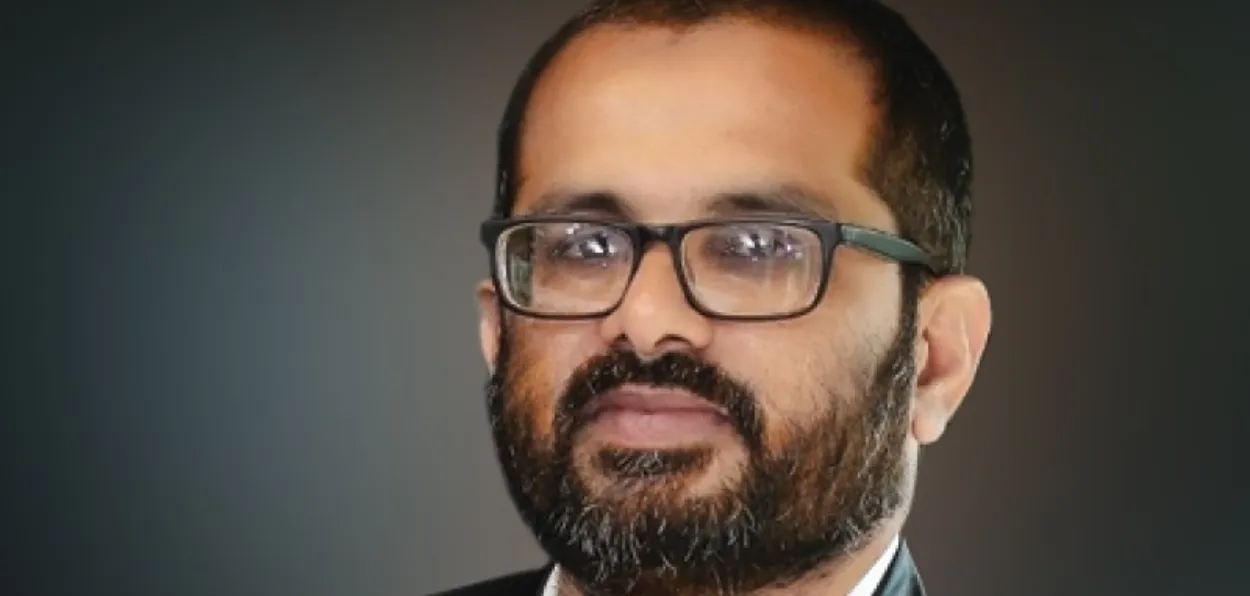
Mohammed Haris T,. Chairman and Owner of alHind Air

New Delhi :

From a small ticketing office in Calicut, Kerala to entering India’s aviation space, T. Mohammed Haris is taking on one of the most competitive markets as his Al Hind Air is all set to enter the Indian aviation sector, building a full-scale airline empire.

AlHindAir and FlyExpress are set to take to the skies, after receiving their No Objection Certificates from the Civil Aviation Ministry.

Al Hind Air is being promoted by Kerala-based Alhind Group, which was established three decades ago in Calicut. The promoter of Al Hind Air is Mohammed Haris T. 

Mohammed Haris is the promoter of Alhind Group of Companies. His experience in the travel and tourism industry is extensive. Haris also holds the position of founder General Secretary of the Indian Hajj Umrah Association. Born in Calicut, he completed his education with a Bachelor’s degree in Arts (BA History and Economics) and a degree in Pharmacology.

AlHind Air

Alhind Group offers a wide array of travel-related services, making it a one-stop shop for all travel needs. Its global footprint has expanded significantly over the years. With offices and partners in several countries, including the UAE, Saudi Arabia, Qatar, Oman, Bangladesh and Kuwait, the company has managed to serve a diverse clientele from different parts of the world.

Part of the Alhind Group of Companies, Alhindair is preparing to make its debut in the aviation industry as a regional commuter airline, with operations scheduled to commence later this year. “The airline will begin its journey with a fleet of ATR 72- 600 model aircraft, initially focusing on providing efficient and reliable domestic air travel,” it said.

Alhind Group was established in 1990 and has emerged as a prominent leader in the travel and tour management industry in Asia.

Over the years, the group has built a strong reputation and has a presence in diverse fields such as transportation, software, Umrah travel, mobile application development, education, etc.

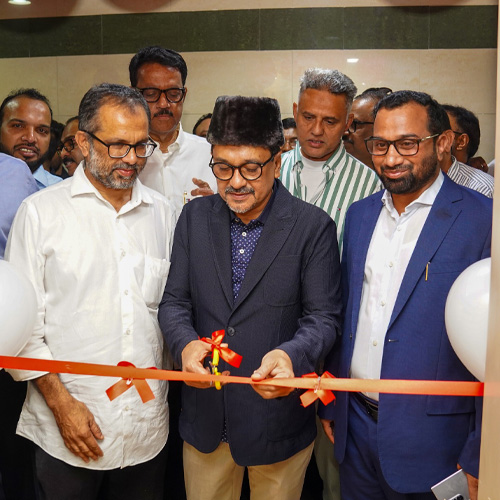
T.Mohammad Haris (Left) and others at an public function

Alhind’s global footprint has expanded significantly over the years. With offices and partners in several countries, including the United Arab Emirates, Saudi Arabia, Qatar, Oman, Bangladesh and Kuwait, the company has managed to serve a diverse clientele from different parts of the world.

This global presence ensures that Alhind is well-equipped to cater to the needs of international travellers, whether for leisure or business purposes. In a rapidly evolving industry, Alhind has shown its adaptability by embracing technology and innovation. 

Its website claims that “In a rapidly evolving industry, Alhind has shown its adaptability by embracing technology and innovation. Alhind has invested in user-friendly websites and mobile apps, allowing customers to book their travel services conveniently. Additionally, they have integrated various online booking tools and platforms to ensure a seamless booking process. This forward-thinking approach has enabled Alhind to stay competitive and relevant in the digital age.”

source: http://www.awazthevoice.in / Awaz, The Voice / Home> Stories / by Aasha Khosa / December 28th, 2025

Meet Lubna Qazi Who Takes Oath as Administrative Law Judge in New Jersey

KUWAIT / Raigarh District (MAHARASHTRA) / New Jersey (U.S.A) :

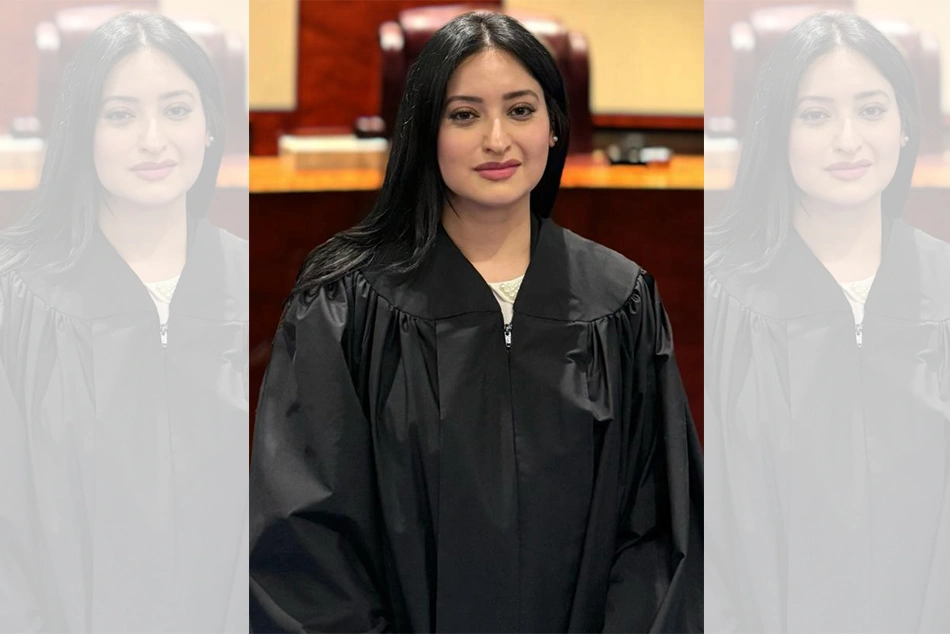
Kokan’s daughter Lubna Qazi Chaudhry took the oath as Administrative Law Judge in New Jersey with her hand placed on The Holy Quran, pledging to uphold constitutional responsibilities.

Mumbai: 

Lubna Qazi, a lawyer originally from Maharashtra’s Raigad district, has created history by taking oath as an Administrative Law Judge (ALJ) in the US state of New Jersey, becoming the first Muslim woman to be appointed to this position in the state. The appointment is being widely regarded as a significant milestone for minority representation in the American judiciary.

The oath-taking ceremony was held recently, where Associate Justice Rachel Wainer Apter of the New Jersey Supreme Court administered the oath. On the occasion, Lubna Qazi placed her hand on the Holy Quran and pledged to faithfully discharge her constitutional duties.

The position of Administrative Law Judge holds considerable importance within the American judicial system. ALJs preside over cases involving decisions of government agencies, administrative disputes and public grievances, delivering rulings based on established legal principles.

Lubna Qazi’s Life Journey

Lubna Qazi’s life journey spans multiple countries and cultures. She was born in Kuwait, where she spent her early childhood with her parents. In 1990, during a school vacation, she travelled to the United States. However, following the outbreak of the Gulf War, the family decided to settle there permanently.

Lubna later pursued her education in California, completed her graduation from the University of California, and earned her law degree from Western State University College of Law.

After marrying Ahsan Chaudhry in 2005, Lubna moved to New Jersey, where she served in various government legal positions for nearly two decades. Recognising her extensive legal experience and professional competence, the Governor of New Jersey nominated her for the post of Administrative Law Judge in 2025.

Lubna Qazi is also distinguished for her linguistic abilities. In addition to English, she is fluent in Urdu, Hindi and Konkani, and has working knowledge of Arabic. Committed to preserving cultural and linguistic heritage, she is personally teaching Urdu and Arabic to her two children at home.

Family Feels Honoured

Expressing his pride, Lubna’s father Inayatullah Qazi said that the entire family feels honoured by her achievement. He described the appointment not merely as a position, but the result of years of hard work, sacrifice and prayers.

Speaking to the correspondent, Inayatullah Qazi said that his family hails from Tala taluka of Raigad district in the Konkan region. He completed his education up to Class VI at Jamia Millia Islamia School, Delhi, and his high school education at Anjuman Islam, Mumbai.

After obtaining a degree in Mechanical Engineering from Government College of Engineering, Aurangabad, in 1975, he moved to Kuwait for employment, beginning his career with an air-conditioning company. After working there for fifteen years, he migrated to the United States with a single suitcase following Iraq’s invasion of Kuwait after the Gulf War, as his children were already in the US at the time. He later ensured higher education for all four of his children.

Inayatullah Qazi said that the family’s roots are deeply embedded in Islamic tradition and that Urdu is spoken with pride at home. He added that Lubna completed recitation of the Holy Quran at the age of seven.

He further shared that around five to six generations ago, their ancestors were sent to the Konkan region as Qazis (judicial authorities) to administer justice without discrimination based on religion, caste or race. Although the profession discontinued a few generations ago, he expressed happiness that his daughter has now proudly revived the family’s judicial legacy.

Lubna Qazi is also the granddaughter of Dr Rehana Ahmed, a noted educationist and Executive Chairperson of the Girls’ Board of Anjuman Islam, Mumbai. Dr Ahmed expressed joy over Lubna’s achievement, stating that it serves as a shining example for young women across the community and will inspire girls to pursue higher education and professional careers. She is widely recognised for her dedicated efforts toward the promotion of girls’ education, particularly within the Muslim community.

Meanwhile, several social and legal organisations, including the Asian Pacific American Lawyers Association of New Jersey, have congratulated Lubna Qazi on her appointment. Observers believe that this development marks a significant step forward in strengthening Muslim and minority representation within the American judicial system.

source: http://www.ummid.com / Ummid.com / Home> United States / by Mohiyuddin Altamash / January 30th, 2026