Category Archives: Books (incl.Biographies – w.e.f.01 jan 2018 )

Dr. Tarana’s book on forgotten Rampur foods released

Rampur, UTTAR PRADESH :

New Delhi :

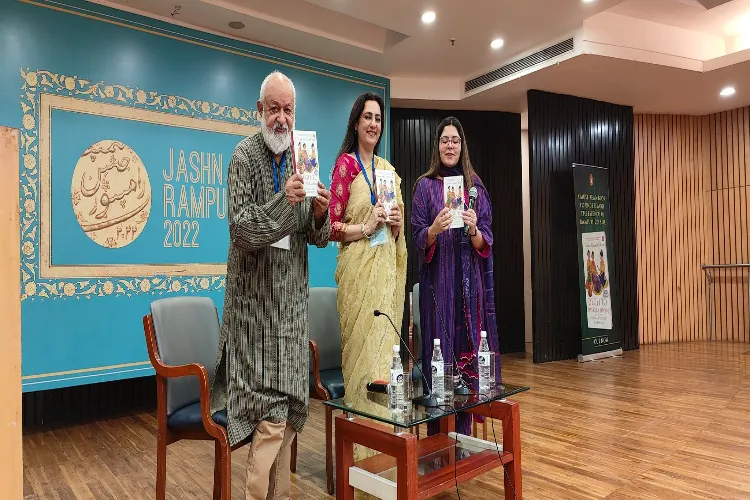
Away from the hustle and bustle of the national capital Delhi, the food lovers gathered in Delhi’s India International Center to discuss the food – delicacies, genres and history – all day. It was for the release of Dr. Tarana Hasan Khan’s book ‘Deg to Dastarkhwan: Stories and Recipes from Rampur.

In this era of pizza, burger, and fast foods, we seems to be forgetting traditions of the Shahi, Mughlai and old delicious food.

Dr. Tarana Hasan Khan is one of the few to write on Dastarkhwan – the Indian cusine. She is also cultural historian.

Dr. Tarana Hasan Khan and her book

Her other book is: The Begum and the Dastan.

Dr. Tarana says It took her three years to cover the forgotten recipes of Rampur for the book. There is a chapter on rice and spices in this book.

Famous food writer Pushpant Pant also participated in the book launch ceremony. The program started with welcome address by Swati Pal, Principal of Janki Devi Memorial College.

She also discussed the problems faced in writing the book on the ‘forgotten foods of Rampur’ were mentioned. Yusuf Saeed and Naseema Naqvi had a long conversation on this subject. This was followed by a discussion on the history of the foods between Dr. Tarana and Pushpant Pant.

Dr. Tarana specially thanked Pushpesh Pant for attending the program and joining the discussion on delicious food. He has written about Pushpent Pant by posting on Twitter:

This book has been published by Penguin.

source: http://www.awazthevoice.in / Awaz, The Voice / Home / by Aasha Khosa / October 31st, 2022

 Maulana Abdul Majid Daryabadi 

Dariyabad (Barabanki), UTTAR PRADESH / NEW DELHI :

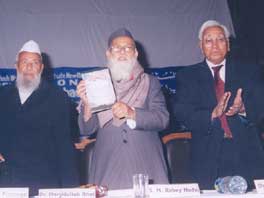
Maulana Rabey Nadwi releasing a book on Daryabadi; to his right stands Maulana Anzar Shah Kashmiri and to his left is Haryana governor, Akhlaqur Rahman Qidwai

New Delhi:

Delhi’s Shah Waliullah Institute and National Council for the Promotion of Urdu Language (NCPUL) jointly organised a national seminar on the life and services of Maulana Abdul Majid Daryabadi, a famous writer and mufassir of the Qur’an, on 15 January at Rajinder Bhawan, New Delhi.

Haryana governor, Dr Akhlaqur Rahman Qidwai presided over the seminar. Prominent among those who attended were Maulana Syed Rabey Hasani Nadwi, Maulana Anzar Shah Kashmiri, Maulana Wali Rahmani, Dr Hamidullah Bhat and Mohsina Qidwai.

Maulana Nadwi in his speech said that Maulana Daryabadi was a philosopher, researcher, man of letters, critic, and a man of high moral values who worked for the betterment of the nation. Maulana Daryabadi was the editor of Sidq-e Jadeed. India has been the cradle of different cultures and civilisations. We should move forward on the principles laid down by Maulana Abdul Majid, that is unity in diversity, which has been an important feature of our country. Maulana Daryabadi rendered unmatched services to the country, community and religion and we should benefit from his views and lofty ideals, he added.

Dr Akhlaqur Rahman Qidwai praised the services of Shah Waliullah Institute. He said that Maulana Daryabadi’s philosophy was relevant even today. He hoped that both the country and the community would continue to benefited from his views and writings.

The participants presented 17 scholarly papers on different aspects of the life and services of Maulana Daryabadi. Maulana Mohammad Wali Rahmani, Khwaja Hasan Sani Nizami, Dr Hashim Qidwai, Prof. Yaqubur Rahman and Prof. Siddiqur Rahman Qidwai presented papers among others.

Dr Hashim Qidwai, Mohsina Qidwai and Habiba Qidwai talked about their close relationship and shared moments with Maulana Daryabadi and narrated some incidents of his great life.

Dr Hamidullah Bhatt and Khawaja Hasan Sani Nizami assured their cooperation to the Shah Waliullah Institute in any project undertaken on Maulana Daryabadi. 

Scholars who presented papers felt that though they had covered many aspects of Maulana Daryabadi’s life, yet there were many other aspects of his life that needed to be studied.

Two books, one written by Maulana Ataur Rahman Qasmi in Urdu, Imam Shah Waliullah and his Philosophy and Ideology and the other, Muslim Personal Law and Uniform Civil Code authored by (late) Maulana Minnatullah Rahmani, were released at the seminar. Shah Waliullah Institute organised an exhibition of books published by it.  «

source: http://www.milligazette.com / The Milli Gazette / Home> 1-15th February 2005

Dr Anwar Siddiqui Honoured with Influential Ayurvedacharya Award

Nagpur, MAHARASHTRA :

Nagpur:

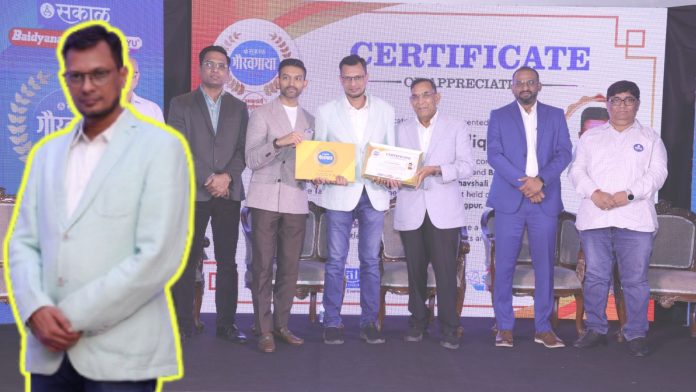
Dr Anwar Siddiqui, head of Panchakarma at Shri KR Pandav Ayurveda College and founder of Kerala Ayurveda & Panchakarma, received the Influential Ayurvedacharya Award from Sakal and Baidyanath. The award recognized his contributions to Ayurvedic medicine and social service.

The event was attended by Union minister Nitin Gadkari, Baidyanath’s managing director Suresh Sharma, and 45 leading Ayurveda doctors from across India. Dr Siddiqui, a BAMS and MD in Panchakarma from Poddar Government Ayurveda College in Mumbai, also holds a Master’s degree in Sanskrit. He has authored the book Ayurvedic Detoxification in Obesity, published in Germany.

With more than two decades of practice, Dr Siddiqui has gained recognition for treating chronic illnesses through Panchakarma therapy. During the Covid-19 pandemic, he helped set up a free hospital in Pachpaoli, strengthening his reputation for service to both healthcare and the community. Dr Siddiqui is a prominent leader associated with Jamaat-e-Islami Hind and a member of its Maharashtra State Advisory Council.

source: http://www.radiancenews.com / Radiance News / Home> Latest News> Report / by Radiance News Bureau / August 24th, 2025

Book Launch Sparks Debate on Muslim Representation, Education, and Healthcare

Kolkata, WEST BENGAL :

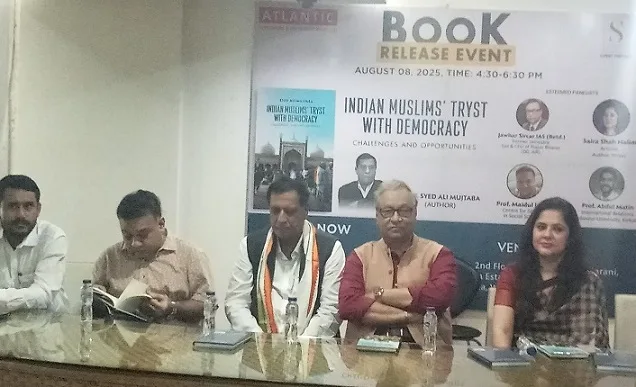
At the launch of the book Indian Muslims’ Tryst with Democracy: Challenges and Opportunities at ICCR Library, Kolkata, academics and public figures underlined that meaningful improvements in government schools and hospitals could significantly uplift India’s Muslim community, especially its poorest segments.

Professor Abdul Matin of Jadavpur University stressed that socio-economic realities leave many Muslims dependent on failing public services. “We keep saying Muslims lag in education — but how do we fix it? When families earn only ₹8,000–₹10,000 a month, they cannot afford private schools. They rely on government schools, which have deteriorated so much that students rarely move up in life,” he said.

Matin pointed out that this crisis is not limited to rural Bengal but also affects Muslim-majority urban areas such as Metiabruz, Khidirpur, Topsia, Park Circus, and Raja Bazar. Once-active Kolkata Municipal Corporation schools, he noted, have shut down, worsening access. The state’s public education system, weakened by years of political interference, has hit all low-income communities hard — with Muslims among the worst affected.

He also painted a bleak picture of healthcare: “In rural Bengal, people travel overnight and queue from midnight for a doctor’s appointment. We must revive mohalla-level schools and clinics.”

Jawhar Sircar, former Rajya Sabha MP and bureaucrat, urged the community to prioritise education over religious symbolism and to resist being reduced to a political vote bank. He encouraged Muslims to join democratic, secular movements fighting to restore India’s plural ethos. On the caste census, Sircar advised patience, saying its 2026 release could be a “game changer” for the community.

Political activist and CPM leader Saira Shah Halim spoke bluntly about systemic discrimination, citing examples from both Delhi and Kolkata. On housing bias, she noted: “People say Muslims are ghettoised — but do they have a choice?” She also criticised the absence of certain MPs, including secular leaders, during critical parliamentary debates on Muslim concerns such as the CAA and the abrogation of Article 370.

From a historical and political perspective, Prof Maidul Islam of the Centre for Studies in Social Sciences, Calcutta, traced a steady decline in Muslim political representation — in the Lok Sabha since 1980 and in the Bengal Assembly since 2011. He alleged that parties deliberately withhold tickets from Muslim candidates, echoing warnings made decades ago by B.R. Ambedkar. The lack of progressive leadership, he argued, further limits the community’s advancement.

The book itself — Indian Muslims’ Tryst with Democracy — offers a detailed examination of these socio-political dynamics, combining historical insight with policy recommendations. Described by speakers as “a guide for collective action,” it lays out both the challenges and the concrete opportunities available for India’s Muslims to achieve equitable development.

 You can order a copy from Atlantic Publishers & Distributors Pvt. Ltd 7/22, Ansari Road, Darya Ganj, New Delhi – 110002. Email-  aparna@atlanticbooks.com – Phone: 011-40775252 Website: www.atlanticbooks.com

source: http://www.theindianawaaz.com / The Indian Awaaz / Home> Quami Awaaz / August 13th, 2025

Obituary: Maulana Muhammad Salim Qasmi, an ocean of knowledge

Deoband, UTTAR PRADESH :

With scarcity of good ulama, the passing away of Maulana Muhammad Salim Qasmi, rector of Al-Jamia Al-Islamia Darul Uloom Waqf, Deoband, has sent a sense of gloom across India.

People have written obituaries describing his death as the loss of the last chain in the golden series of Khanwada-e-Qasmiyat, a metaphor used to describe the great legacy whose history got prominence with establishment of Darul Uloom in Deoband in 1867 against the backdrop of persistent British onslaught on Indians on the one hand and its ugly design to kill ulama in large numbers on the other hand, to mitigate the impact of resistance against the Colonial power.

Maulana Salim Qasmi was a witness to the British cruelty on Indians and the Indian ulama during the eventful years if Independence. He had lived those times as a young student of India’s most prominent madrasa that had been a great centre of anti-British movements like the Silk Letter Movement.

Being the great-grandson of Maulana Muhammad Qasim Nanautwi, Salim Qasmi knew well the role he had to play to live up to the reputation and expectations both of his family and its followers and admirers spread over countries and continents. He rightly did so. His demise thus has rightly been described as the end of that golden chain. However, as there are others from the same family trying to carry forward both the academic and social and historical legacy, will they be able to do justice with that, only time will tell.

Muhammad Salim was born on 8 January, 1926 at Deoband and received primary education from many teachers. He completed his studies in 1948 from Darul Uloom Deoband where his teachers included great luminaries like Maulana Hussain Ahmad Madani, Maulana Aizaz Ali, Allama Ibrahim Balyawi, Maulana Syed Fakhrul Hasan Moradabadi.

He is said to be the last surviving disciple of Maulana Ashraf Ali Thanwi from whom he studied Mizan, an important book of Arabic grammar. Soon after passing out, he was appointed a teacher there. However, later, due to a serious conflict and crisis then in Darul Uloom, he along with some other colleagues, decided to stay away from it and established Darul Uloom Waqf which he nurtured till his last breath. Besides looking after its administrative affairs as a rector, he also taught Bukhari Sharif, the well-known book of hadith. Earlier, he had taught Muslim Sharif, another important book of hadith.

Some of the key positions he held at the time of his death are as follows:

Chief Rector, Al-Jamia Al-Islamia Darul Uloom Waqf, Deoband,

Vice-President, All India Muslim Personal Law Board,

Member, Aligarh Muslim University Court,

Member of Advisory Board and Managing Committee, Darul Uloom Nadwatul Ulama,

Member of Advisory Board, Mazahir Uloom Waqf, Saharanpur,

Permanent Member of the Fiqh Council, Al-Azhar,Cairo,

President, All India Muslim Majlis-e-Mushawarat (before two fractions of it finally united),

Patron, Kul Hind Rabta-e-Masajid,

Patron, Islamic Fiqh Academy, India.

About his written contribution to the domain of knowledge, the website of Darul Uloom Waqf Deoband mentions that besides being:

… one of the top speakers of ulama, his articles and writings are also much admired. Some of the books are worthy to be mentioned here like (1) Mabaadi al-Tarbiyat al-Islami (Arabic), (2) Jaiza Tarjama Quran Karim, (3) Taajdar-e-Arz-e-Haram ka Paigham, (4) Mardaan-e-Ghaazi, (5) Ek Azeem Tarikhi Khidmat, (6) Safar Nama-e-Burma.

(7) The book Khutbat-e-Khatibul Islam (a collection of his speeches) has been published in 5 volumes. Moreover, there are many articles and scripts awaiting publication.

Formally, Maulana received bai’at (a reformative and self-actualization method historically in vogue for quite long as an Islamic tradition in certain schools of thought) at the hand of Maulana Shah Abdul Qadir Raipuri. However, he received much of the training from his glorious father, Qari Muhammad Tayyib (d. 17 July, 1983)

A remarkable trait of his personality was to maintain the dignity of a true aalim (religious scholar) by not partaking in sectarian lines as is the wont of some Ulama. He was therefore respected among all sections of Muslims and his views were very well received. Maulana Salim did not create the binary division of education between religious and modern. He believed that ‘the source of all streams of knowledge is one’.

In recognition of his services to the domain of knowledge and ideas Maulana Salim was honoured with many awards, some of which are as follows:

Nishan-e-Imtiyaz (Mark of Distinction) from the Government of Egypt for being a distinguished aalim of the Indian Sub-Continent,

Imam Muhammad Qasim Nanotwi Award,

Shah Waliullah Award.

Prominent leaders and ulama from different countries have expressed grief over the demise of Maulana Salim Qasmi. In her telephonic message, External Affairs Minister Sushma Swaraj said that Maulana Salim’s love for education was amazing. Outside the country he worked as an exemplary ambassador of education. Congress President Rahul Gandhi said Maulana Salim Qasmi illuminated the world through education and he would touch people through simplicity. Samajwadi Party chief, Mulayam Singh Yadav said that Maulana never asked anything for himself. He was a crown prince of education whose absence would be felt long.

Former Justice of Pakistan’s Shariah Court, Mufti Taqi Usmani described Maulana Salim Qasmi as an ocean of knowledge. His death is a huge loss to the Islamic world. The simplicity with which he lived is rare, he said adding, “His service in the field of education is a golden chapter”.

Member of Parliament and AIUDF President Maulana Badruddin Ajmal Qasmi termed the demise of Maulana Salim Qasmi as ‘end of an era’ whose enumerable services are worth to be written in golden words. Senior leaders Ahmad Patel, Ghulam Nabi Azad, Syed Shahnawaz Hussain and others also sent their condolence messages.

Maulana Syed Rabey Hasani Nadwi, President of All India Muslim Personal Law Board, who had closely worked with Maulana Salim Qasmi and had also been his classmate at Darul Uloom Deoaband, wrote an article in which he stated that Maulana Salim Sahab had acquired many of the qualities of his father Qari Tayyib Sahab and his great grandfather Maulana Qasim Nanautwi. He worked in a similar way from whom different sections of ummah benefitted. His death therefore has caused concerns about the void in the ummah and in religious circles.

Maulana Arshad Madani described Maulana Salim Qasmi’s death as a loss which does not seem to be filled in near future. “Whenever there is a crisis he would be remembered’ he said. The responsibility to protect the institution that he established falls on all of us.

Prof Humayun Murad said that Maulana knew well how to avoid confrontation and find peaceful and constructive ways. Darul Uloom Waqf Deoband is its living example.

Maulana Muhammad Sayeedi, nazim, Mazahir Uloom Waqf said, “In the passing away of Maulana Salim Qasmi, Mazahir Uloom has been deprived of one of its true guide and patron”. He was its member since 1988. Mufti Muzaffar Husain would trust him a lot and his suggestions were highly helpful.

As against the commonly held opinion of ulama who do not tire of speaking about the division of knowledge between religious and modern or worldly, Maulana Salim Qasmi, in June 2013, had in a public programme, very categorically said that all the available forms of knowledge are from Allah. There is nothing as religious and worldly knowledge.

Maulana Qasmi said that the division of knowledge (between religious and worldly) is a political creation because all streams of knowledge flow from God. He then asked heads of madrasas to invite people of other faiths to their madrasas and exchange views and, share their problems with them also.

As I write this obituary, his soft-spoken words remind me of the sincerity with which he would draw the attention of the people to real issues and to the approaches that need to be adopted to find their solution.

Maulana Salim Qasmi was among the important personalities who had set up the Darul Uloom Waqf. His colleagues Maulana Muhammad Nayeem Deobandi died a little over a decade ago on 23 August, 2007, Shaikhul Hadith Maulana Syed Anzar Shah Kashmiri died 10 years ago on 26 April, 2008, Mufti Khursheed Alam died on 7 February, 2012, while Maulana Salim’s younger brother Maulana Muhammad Aslam Qasmi, an outstanding orator, died about five months ago on 13 November, 2017. Finally, this great son of the great Khanwada-e-Qasmiyat passed away on 14 April, 2018. He is survived by four sons and two daughters.

May the Almighty grant him an exalted place in Jannah!

The author is a PhD Fellow at the Academy of International Studies, Jamia Millia Islamia and is also doing an online program “Contending Modernities” of the University of Notre Dame, USA.

source: http://www.twocircles.net / TwoCircles.net / Home> Articles> Indian Muslim> Lead Story / by Manzar Imam for TwoCircles.net / April 28th, 2018
Maulana Abdul Waheed Siddiqui Mujahide-Azadi aur Meyma’re-Sahafat

DELHI :

The alternative historiography and discovery of real heroes of the society is always important in any age or any society.

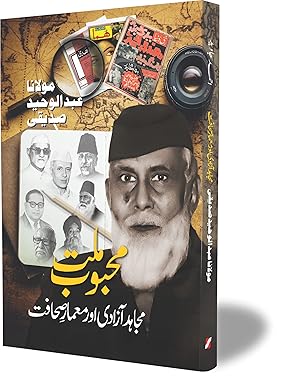
The compilation and publication of “Maulana Abdul Waheed Siddiqui: Mujahide-Azadi Aur Meyma’re-Sahafat” is the result of this realisation.

The book and authors have tried to explore his personality and achievements in the broader context of history and developments of his times.

The contents of the book are documentary in nature.

The commentaries of Maulana Imdad Sabri are the personal observations and experiences of an eminent scholar and historian of Urdu journalism.

Similarly, the articles by Maulana Anzar Shah Kashmiri of Daryl Ulum Deoband, Mr. Parwana Rudaulavi , a senior journalist, Maulana S M Wali Rahmani, Dr. Khalique Anjum, Mr. G D Chandan, Mr. Shariful Hasan Naqvi, Sardar Rachpal Singh, Maulana A M Siddiqui Rahi, Ms. Surayya Siddiqui and Mr. Shahid Siddiqui are observations and experiences of those who saw and experienced him closely. These are also opinions of eminent critics and experts of language, literature, journalism, politics and history.

History and biographies open the windows of experiences and observations to human beings, and gives them the ability to discover themselves, understand their surroundings, see the impact of situations and events, look inside them and build future paths. History is the name of the waves and splashes of water in the river of time from which people emerge and nations are formed.

Maulana Abdul Waheed Siddiqui, the journalist and freedom fighter is a milestone, a bridge and a delicate and difficult chapter of modern Indian history, which holds many lessons, for present and future generations.

Maulana was a visionary, a man with deep roots in Muslim culture and religious ethos but with a very modern and enlightened outlook.

He laid the foundations of free press in post independence India. He gave the confidence to Indian Muslims to stand up and fight for their rights under the Constitution and not.

source: http://www.amazon.in

Dr M G Anwar Batcha Celebrates 50 Years of Literary Service

Coimbatore, TAMIL NADU :

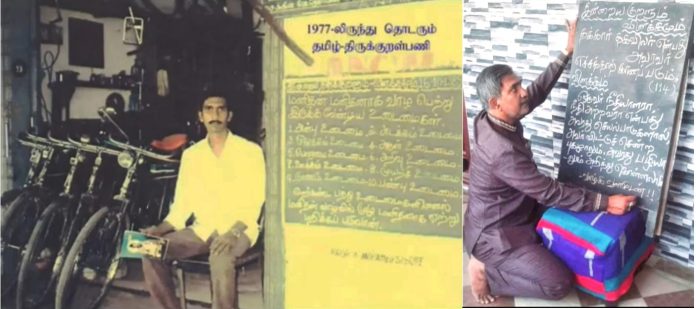
THEN AND NOW: Dr M G Anwar Batcha started writing a Thirukkural couplet with its meaning everyday since 1977 on a black board kept at a cycle shop at Coimbatore Gandhi Park. Post retirement, he continues his mission of popularising and promoting Thirukkural among the public.

So goes the inspiring quote of Missile Man of India Dr APJ Abdul Kalam – “Every small step taken with determination leads to great achievements.” Taking a cue from this, a former Tamil teacher Dr M G Anwar Batcha, known as Kural Yogi in the literary circle, celebrated 50 years of his literary journey penning books, writing a couplet with its meaning everyday on a board kept at a cycle shop at Gandhi Park in the heart of Coimbatore city since 1977.

It’s always fascinating to rewind the golden days of teaching, speaking at literary meetings and what not. As a faculty with 25-year service at Chokkampudur SBOA Matriculation Higher Secondary School in Coimbatore city, Thirukkural Batcha, a resident of Kuniyamuthur, took a trip down the memory lane to share his experience about Thirukkural, which is close to his heart.

It may be noted that a special story was featured on him in 2010 in The New Indian Express when S Kamalakannan was a senior photographer and during a routine round across the city found him writing a couplet on a black board. Worth mentioning that he makes it a point to sensitise people through his books and speeches at a plethora of events both inland and abroad. Words cannot express the amount of happiness he has in doing this literary service for over 50 years or so.

In all smiles, he said, “Life is indeed a journey filled with ups and downs, and how we navigate these fluctuations defines our resilience and character.” And that’s what Saint Thiruvalluvar had said in his 1330 couplets. Elaborating on it further, he remarked, “This ancient Tamil text is a profound testament to the intellectual and cultural achievements of Tamil civilization. Beyond its philosophical depth, the Thirukkural holds immense historical significance as a cornerstone of Tamil literature and a universal guide for human conduct. Shedding more light on it, he said Thirukkural’s focus on equality is evident in its rejection of caste discrimination, a radical stance in an era when hierarchical structures were prevalent.

Crossing a 50-year milestone,  Anwar Batcha no doubt is creating a silent revolution. All credit goes to his mentors Pulavar Rasiannan and Pulavar Arumugam, while studying at City Municipal High School at Variety Hall Road, who groomed him and brought the best out of him to be what he is now. In a step further, they motivated him to enhance his skills in Tamil.

To his credit, Anwar Batcha has awards including Tamil Nadu Government honour, Kural Neri Chelvar, Thirukkural Thoothar, Thirukkural Vendar and Thirukkural Thondar. And he penned a book on Thirukkural with English translation besides a book titled Valluvar Manimozhigal and Valluvaridam Kettathum Kidaithathum. Batcha is quite proficient in Urdu, Hindi, Malayalam and Telugu.

Retired, but not tired to actively involve in literary organisations like Thirukkural Aaivu Kazhagam, Ulaga Kalai Tamil Mandram, Coimbatore World Thirukkural Centre and organiser of Kovai Islamiya Tamil Sangam, Anwar Batcha did his doctorate on ‘Samuga Nokkil Thirukkuralum, Thirukkuranum’. US-based writer of inspirational maxims William Arthur Ward rightly categorised teachers thus: The mediocre teacher tells. The good teacher explains. The superior teacher demonstrates. The great teacher inspires. True to his words, Dr Anwar Batcha has inspired scores of his students who have made their ‘guru’ proud.

[The author is former Indian Express and Deccan Chronicle chief]

source: http://www.radiancenews.com / Radiance News / Home> Latest News / by M Rafi Ahmed / by Radiance News Bureau / August 16th, 2025

10 inspirational stories of visionaries from Kerala

KERALA :

Kannur

Among the change makers from Kerala are pioneers and achievers in various fields of life. They have either been trying to bring about changes in society or the fields of business. They have used music, literature, and sometimes love to bring humanity closer, to spread joy and peace.

The list includes social activists, singers, spiritual mentors, lawyers, teachers, and even IAS officers.

Ayisha Abdul Basith

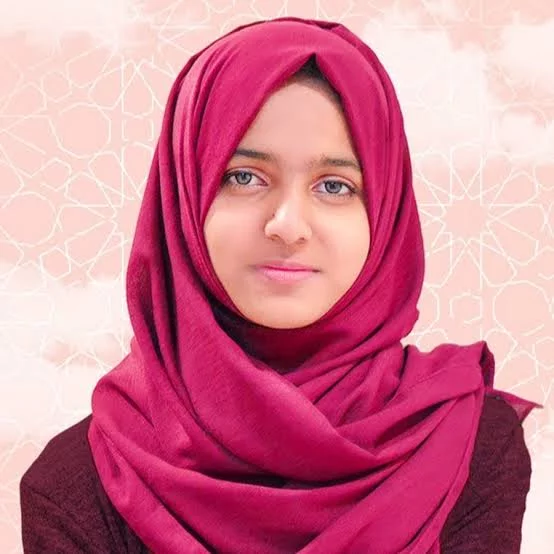
Ayisha sings Naat or Islamic devotional songs, and at the age of 20, she has enthralled listeners in over 80 countries. Born in Kerala, Ayisha has migrated to Abu Dhabi, where she is pursuing spiritual music as a way to universal peace and joy, as she puts it.

Safna Nazruddin

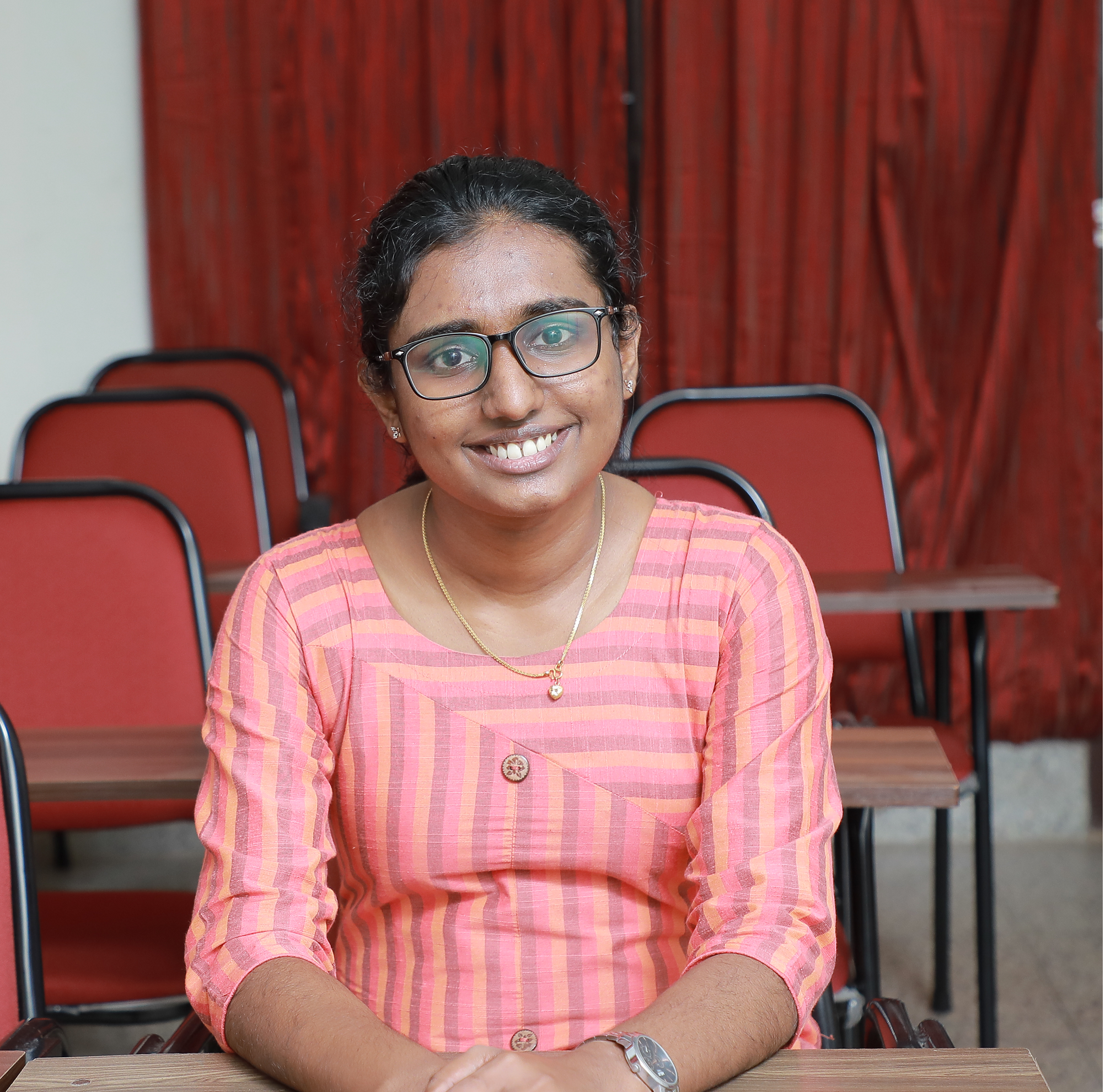
She dreamt of becoming someone who could help the disadvantaged sections of society. Safna Nazruddin thought being an IAS officer would help her achieve that goal.

And she took her dream so seriously that at the age of 23, she became Kerala’s youngest Muslim IAS officer.

PC Musthafa

He wanted to pull his family out of their poverty. Growing up in rural Wayanad, watching his father toil in the fields as a farm labourer, he wanted to change his parents’ lives for the better.

When he completed his studies at IIM, he started small with his cousins in a 500 square feet room, selling 100 packets of idli batter to 30 shops in Bangalore.

Today, he is the king of idli batter supplying in more than 10 countries outside India and reigning over a 4000 crore business.

VP Suhara

VP Suhara has been fighting for changes in the Muslim personal law and is one of the petitioners appealing for equality of gender in the matter of succession rights.

She says she is not very optimistic, but she is not ready to give up her fight.

Kadeeja Mumtaz

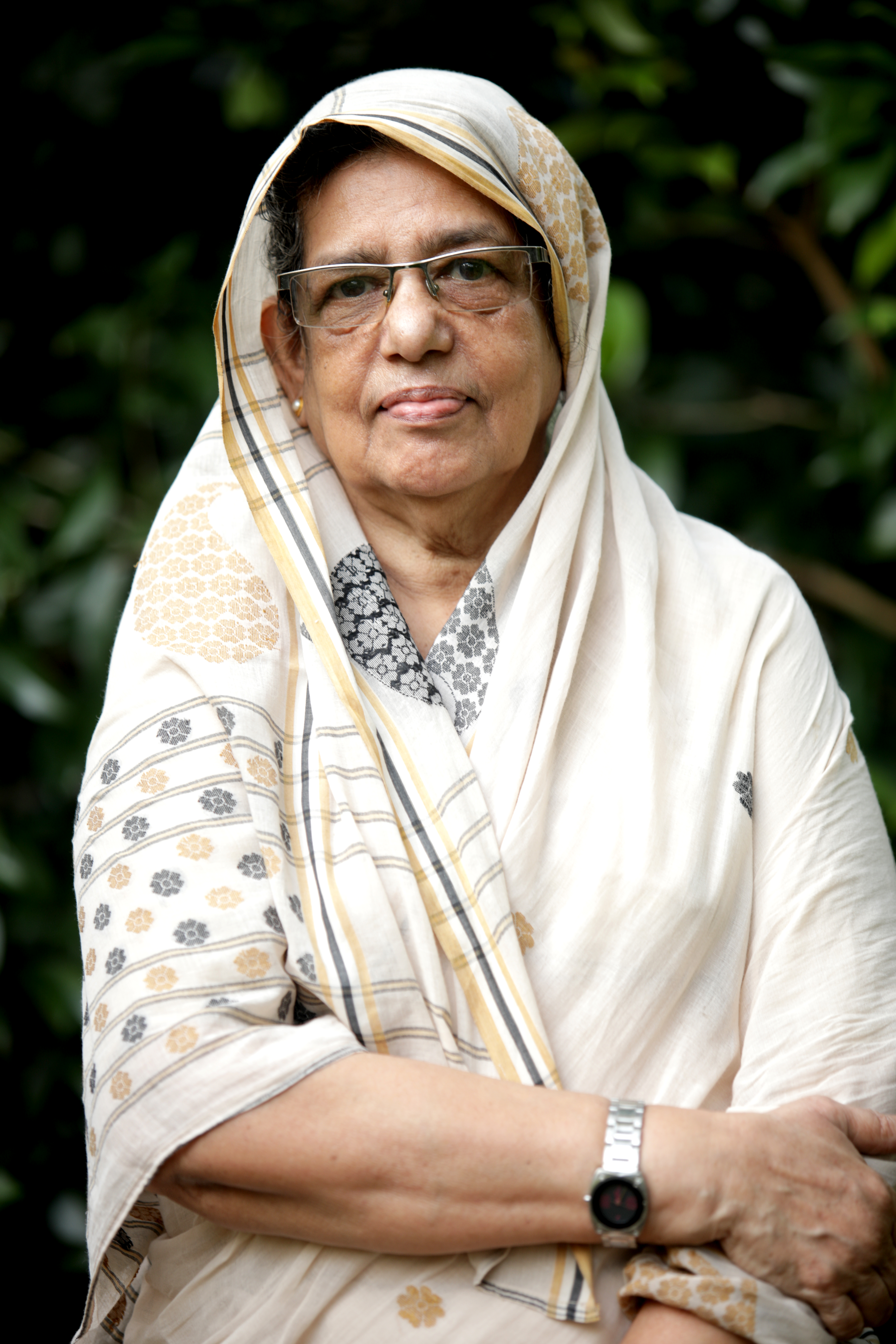
Kadeeja is a novelist who won the Sahitya Academy award for her novel. But today she has taken to activism on a full-time basis, and her main preoccupation is with bringing different religious communities together to improve mutual understanding and communication.

Advocate Sukkur

Advocate Sukkur did the unthinkable when he remarried his legally wedded wife just to make a point to all his fellow Muslims.

He wanted to tell them that they can overcome the barriers to succession rights of their daughters by remarrying their spouses under the Special Marriages Act.

Noor Jaleela

Noor means light, and the luminous smile on Noor Jaleela’s face echoes her name. She was born without her four limbs. But her smile does not betray any such disability. She has been a model for courage and creativity in the worst circumstances.

She has been an influencer and also an artist, and a singer.

Padma Shri Mumtaz Ali

Mystic and spiritual mentor Padmashri Mumtaz Ali, or Sri M as his followers call him, hails from Thiruvananthapuram and heads a spiritual group called Satsang Foundation. His spiritual pursuits and his work among the people as a symbol of the oneness of humanity and the divine have made him transcend all man-made boundaries and divisions.

He has become an example of universal oneness and love as his life’s work and teachings appeal to people of different nationalities and religions. He asks them to continue following their religion while practising meditation and other spiritual pursuits to realise themselves.

 Hadiya Hakeem

Can a football mean anything other than a game? Well, Hadiya Hakeem has turned a football into a statement for the empowerment of women.

She is a freestyle football performer born in Kozhikode who has overcome all possible barriers of gender, nationality, and religion through her talents and her hard work in excelling in a unique kind of performance.

Onampally Faisy

Progressive scholar and Sanskrit enthusiast Onampally Faisy has tried to transcend boundaries by promoting interfaith education in his madrassa. A well-known scholar from Thrissur in Kerala, he has been working towards building bridges of understanding and communication between Muslims and other communities in Kerala.

Since he believes in becoming the change he wants, he started teaching holy texts of other religions in his madrassas in order to remove the veil of ignorance and bring communities closer.

source: http://www.awazthevoice.in / Awaz, The Voice / Home> The Changemakers / by Sreelatha Manon / August 17th, 2025

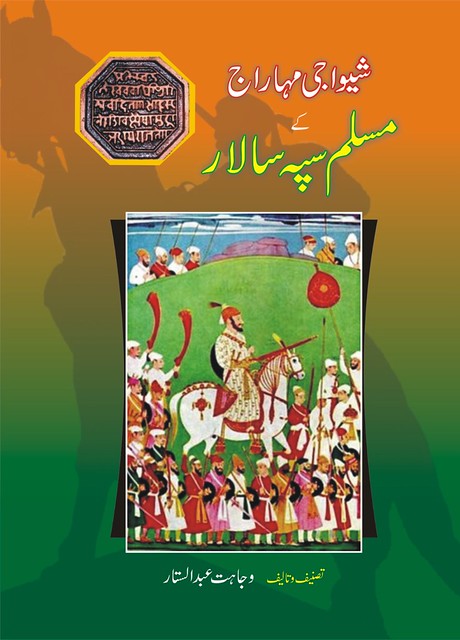
Book on Muslim Generals of Maratha warrior Shivaji tries to underline his secular image

MAHARASHTRA :

Solapur, Maharashtra: 

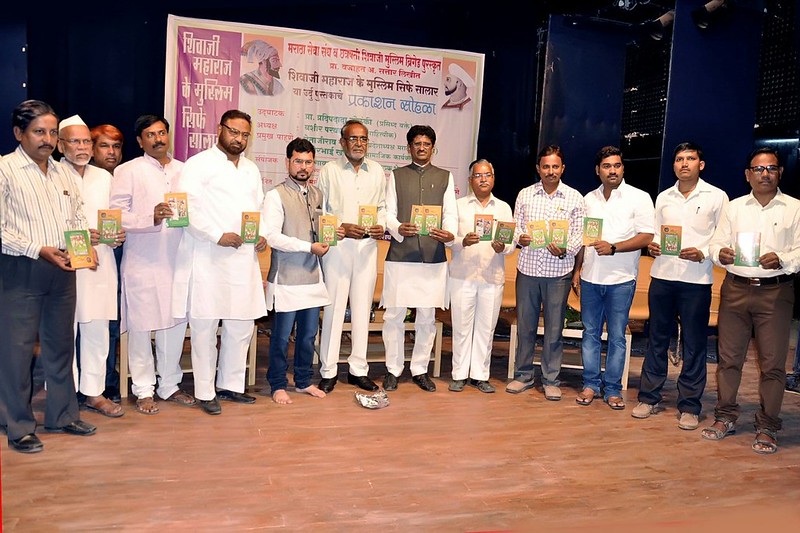
In an effort to portray Maratha warrior Shivaji as a secular king, a forty-page book has been released under the name “Shivaji’s Muslim Generals” by a school teacher here implying all communities to again unite under the syncretic traditions known as Ganga-Jamuni tehzeeb.

Wajahat Abdul Sattar, 42, Social Association Urdu High School teacher from Solapur authored the book on Muslim commanders in the army of Maratha warrior Shivaji and attempted to bring his secular mindset known.

The book focusing mainly on the contribution of Muslims in the army of Shivaji and his trust on Muslims to appoint them on the highest posts may act as a hindrance for such communal organization if the book attracts large number of readers.

Talking with TwoCircles.net Abdul Sattar told, “There were many Muslim generals who were trusted soldiers but I have tried to briefly profile lives of 13 Muslim warriors who were serving in Shivaji Maharaj’s army.”

He took one year in compiling the book and referred many other books on Shivaji written by various authors – Advocate Syed Gaziuddin, Suresh Patil, Purindare and Pansare.

Explaining the main motive behind writing of such a book, he told,” There is a dire need to make public secular life of Shivaji as communal forces and political parties are using religious emotions of Hindus to disturb social harmony in India especially in Maharashtra state. Through this book people will not fall prey to such instigation by anti-social elements.”

“Right wing people prompt Hindus by telling them that Shivaji was anti-Muslim and that he fought many battles against Mughals especially Adil Shah and Aurangzeb. This book tries to clear this misconception by explaining that the motive behind such battles was always ‘political’ and never ‘religious’”, he added.

The book is released in Urdu language but Maratha organization has expressed full resolve in translating the book in other languages.

It was released on Tuesday evening in a program organized here at Chatrapati Bhavan that was presided over by Pradeep Solanki, President Maharashtra Unit of Sambhaji Brigade.

The program was also attended by Ram Gaekwad, President Maratha Seva Sangh and Farooq Shaikh, Chatrapati Shivaji Muslim Brigade of Solapur chapter.

Over the past few decades, RSS, Shivsena, VHP, Bajarang Dal and other right wing organizations are consistently using Shivaji’s popular name to attract the Hindu people towards them. They try to portray him as a strong Hindu King who was opposed to Islam and thereby try to Saffronize his image to polarize them against the Muslims.

Initial 10,000 copies of the book are published in Urdu language and Maratha Seva Sangh has announced it will publish book in many other languages so as to propagate the secular aspect of Shivaji.

The book claims that Shivaji and his fore fathers respected Muslim saint. Shivaji always respected Muslim saints Yakut Baba, a Sufi Muslim saint was one of the king’s spiritual guides whereas his grandfather used to regularly visit Saint Shah Shareef in Ahmednagar.

The role of some of the Muslim generals – Siddhi Hilal, Darya Sarang, Daulat Khan, Ibrahim Khan, Kazi Hyder, Siddi Ibrahim, Siddi Wahwah, Noorkhan Baig, Shyama Khan, Hussankhan Miyani, Siddi Mistri, Sultan Khan, Dawood Khan and Madari Mehetar is narrated in the book.

source: http://www.twocircles.net / TwoCircles.net / Home> India News> Indian Muslim> Literature> Top Stories / by A Mirsab, TwoCircles.net / August 21st, 2015

How a research centre in Solapur is trying to remind Indians of their common, secular history

Solapur, MAHARASHTRA :

In recent times, the country’s past has become an extremely polarising point for its citizens. Many people have been brainwashed to believe that the advent of Islam in India and the subsequent period of Muslim rule across major parts of India was a period of dark ages.

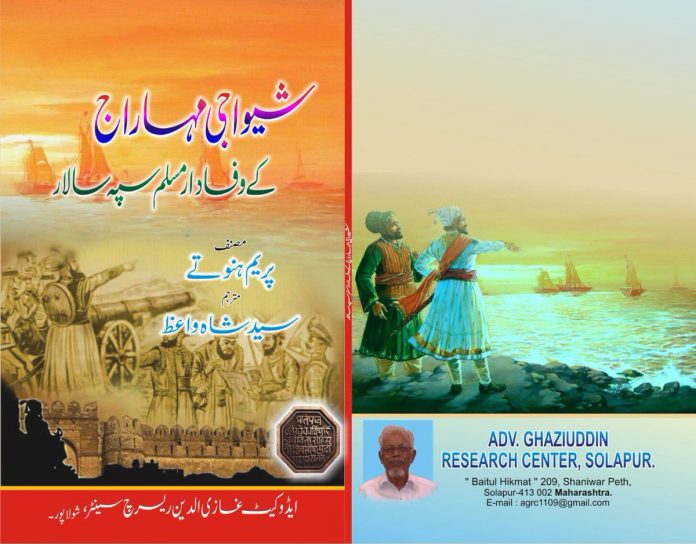
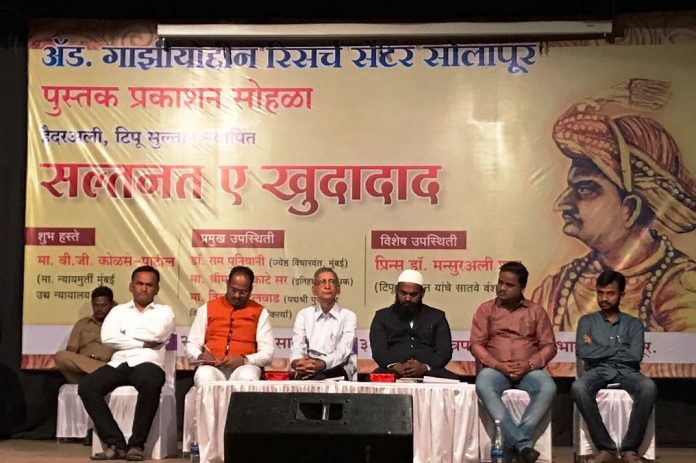
However, it is also no secret that many scholars have convincingly argued otherwise, and now a Solapur-based Research Centre is doing the same. Named after pioneering activist Advocate Sayed Shah Gaziuddin, the centre is publishing books in Marathi and Urdu languages to help people understand and value the secular fabric of the nation.

The inspiration for this works comes from the life and works of Advocate Sayed Shah Gaziuddin, who strongly believed in social binding and communal harmony and always wanted Muslims to be aware of the social conditions of India.

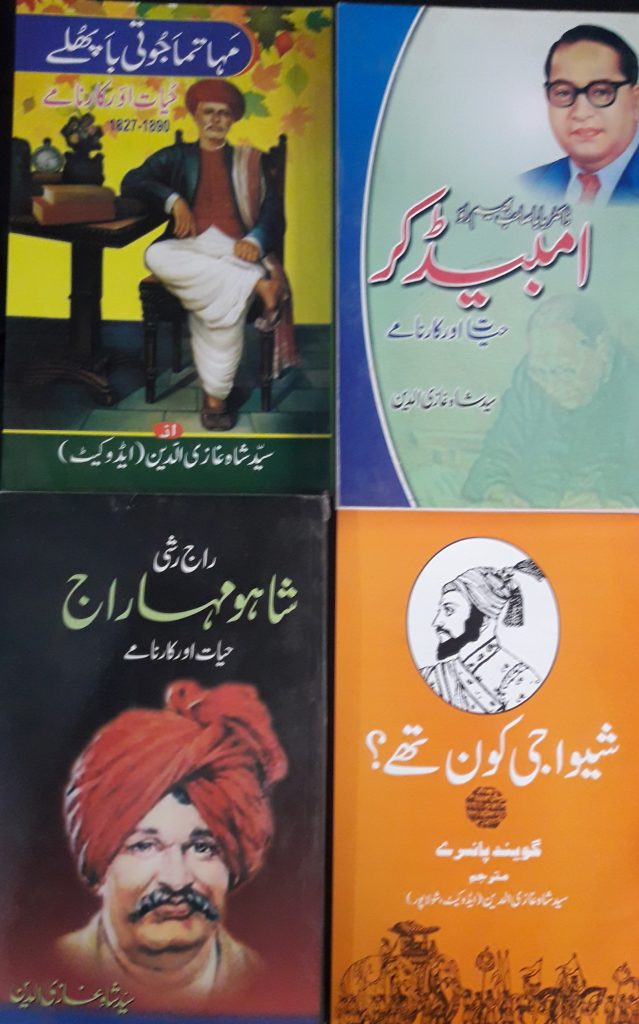
Through his Urdu books, he introduced life and work of many social reformers, including Jyoti Ba Phule, Shahu Maharaj, Dr. B.r Ambedkar and Chhatrapati Shivaji. Dr. Ambedkar Hayat aur Karname ( Life and work of Dr Ambedkar) and Urdu translation of Govind Pansare’s Marathi Book “Shivaji Kon Hota” ( Who was Shivaji) are masterpieces of his literary work.

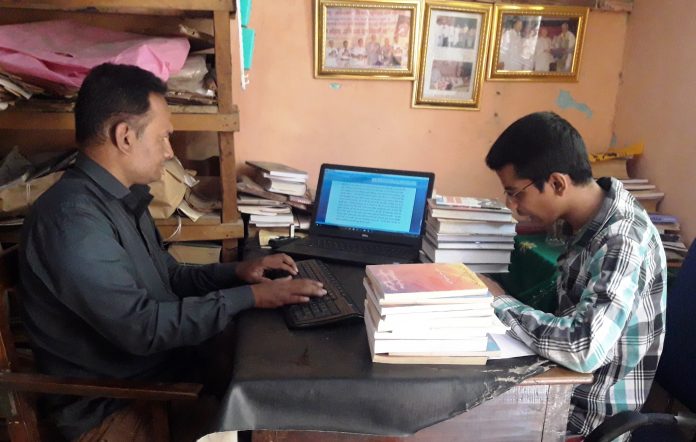
After Adv. Gaziuddin passed away in January 2014 at the age of 79, some of his like-minded friends decided to establish a research centre to continue his vision and mission. In January 2015, the centre came into existence and started extending its literary services. Taking a cue from the works of Gaziuddin, his friends also started working on similar projects.

Sarfaraz Ahmed’s Marathi book on Tipu Sultan became popular in a very short time, with the book selling over 10,000 copies in a year. The fourth edition of the book is now ready to hit the market. Apart from a book on Tipu Sultan, Ahmed has also written Marathi books on Haider Ali, scholars of Medieval India.

Also, Prem Hanvate’s “ Shivranche Muslim Sainik” ( Muslim soldiers of Shivaji ) was translated into Urdu by Sayed Wayez, the English book of Sayed Dawood “The Administration of the Deccan during Aurangzeb” has been translated into Urdu by Sayed Ismail.

In total, ten books have been published till now and work on some more books are in full swing, with ten young people also volunteering with the centre.

Talking about the centre, Vice president of the centre Ram Gaikwad said, “Late Adv. Gaziuddin was a dedicated progressive activist he has done a superlative job of bringing out the real history of social reformers of the majority community. His History research helps us in spreading brotherhood among Marathas and Muslims.

For the last ten years, I am also a part of his historical research panel and fortunately got an opportunity to continue this social work under his name.”

According to founder member and young historian Sarfaraz Ahmed identity of each and every community is based on its iconic personalities and social character is based on its history. “We carry out publication work by collecting donations from members. All the members from across Maharashtra are volunteers and they are all the under 30.

I must thank Sayed Ismail (Osmanabad) Sahil Shaikh (Sangli) Asif Mujawar (Latur), Kaleem Azeem (Pune) Prof. Mujeeb Kazi (Ambajogai) our President Samiullah Sheikh, Secretary Adv. Mahboob Kotimbre, Vice President Ram Gaikwad, Sayed Shah Wayez and our advisors B.G Kolse Patil, Shrimant Kokate, Sayed Iftikhar and M.I sheikh for their contributions.”

source: http://www.twocircles.net / TwoCircles.net / Home> Indian Muslim> Lead Story / by Imran Inamdar, TwoCircles.net / August 13th, 2018