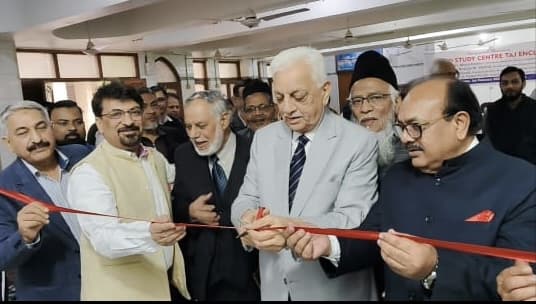
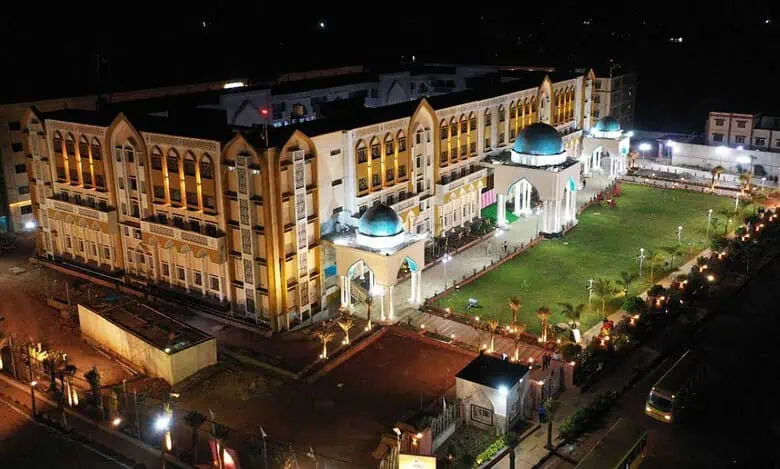
A Mosque Study Center was inaugurated in Taj Enclave, Northeast Delhi, with the support of the Shaheen Group. The center aims to provide both religious education and academic coaching for medical, engineering, and competitive exams.
During the event, Faisal Falahi, Director of Shaheen Academy Delhi, introduced the Shaheen Group, highlighting that approximately 35,000 students are currently enrolled in its institutions, where they receive not only general education but also specialized coaching for NEET and engineering entrance exams. He emphasized that the new study center aligns with this vision.
Advocate Feroz Ahmed, President of All India Muslim Majlis-e-Mushawarat, underscored the importance of education, citing former President Dr. APJ Abdul Kalam as an inspiration for students from underprivileged backgrounds. He stressed the need for initiatives like those led by Dr. Abdul Qadeer in the current educational landscape.
Mufti Adil Jamal Nadvi emphasized the necessity of combining religious and worldly education, while former Secretary of the Maulana Azad Foundation, Rizwan-ur-Rahman, highlighted the importance of counseling to help school dropouts return to education.
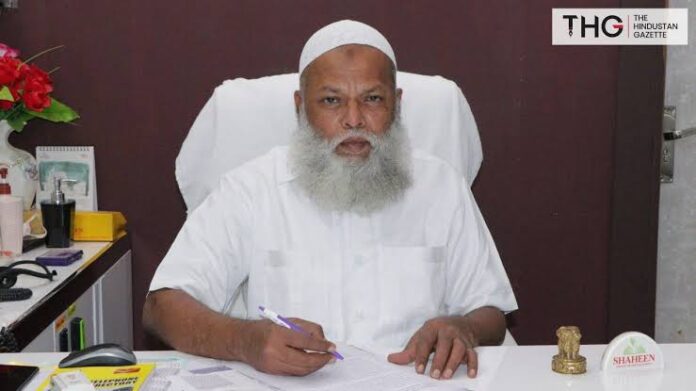
Dr. Khwaja Shahid, President of the All India Educational Movement (AIEM), shared his long-standing association with Shaheen Group and its founder, Dr. Qadeer. He referred to such study centers as “academic ICUs” for students struggling with education. The center was jointly inaugurated by Dr. Shahid and Advocate Feroz Ahmed.
Before the inauguration, AIEM General Secretary and former President of the Taj Society, Abdul Rashid, expressed gratitude to Shaheen Group and Dr. Qadeer for their support in establishing the center. The event was presided over by Faisal Faridi, President of Taj Society, and conducted by Nasir Aziz. The vote of thanks was delivered by the society’s secretary, Javed Hasan Khan.
The ceremony witnessed the presence of several distinguished guests, including Supreme Court Advocate-on-Record Aslam Ahmed, former DSP Mohammad Akhtar, Ilyas Saifi, Dr. Idris Qureshi (President, Mushawarat Delhi), and a large number of attendees.
source: http://www.radiancenews.com / Radiance News / Home> Focus> Latest News / by Radiance News Bureau / February 03rd, 2025
Zillur Rahman, a professor, poet and hakim, has established a museum-cum-library in Aligarh to preserve books and artefacts that tell the story of Delhi of yore.
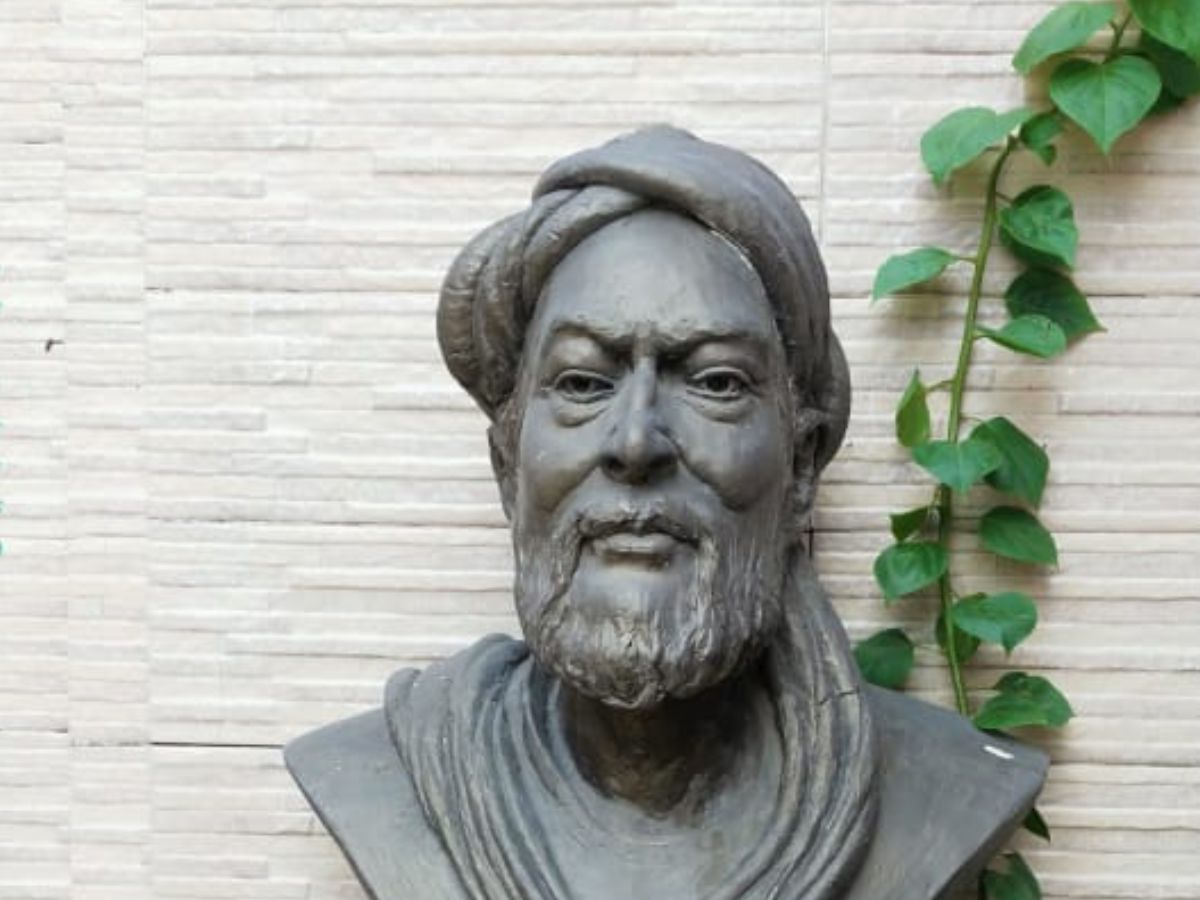
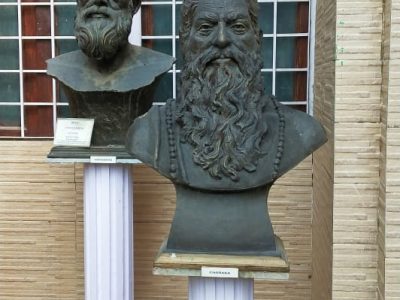
PIONEER: A bust of Ibn Sina, a physician and philosopher, who lived over a thousand years ago, at the Ibn Sina Academy in Aligarh
Nestled in the heart of the city of Aligarh, Uttar Pradesh, is Ibn Sina Academy of Medieval Medicine and Sciences, named after famous scholar of philosophy and medicine Abu Ali Ibn Sina (980 -1037), who lived over a thousand years ago.
Located at Tijara House, the non-profit, non-government and non-political academy was established in the year 2000 by Professor Syed Hakim Zillur Rahman, an academic and a litterateur from Aligarh.
A one of its kind museum and library, it was aimed at encouraging and promoting researches and studies in medieval sciences, especially Ibn-Sina’s, as well as arts, culture, poetry among other subjects.
Notably, Ministry of Ayush, Government of India gave accreditation to the academy in 2004 and promoted it as a Centre of Excellence in 2008. The professor had a mammoth personal library that he had established in 1960s. After Ibn Sina Academy was born, the library became a part of it.
The specialty of this museum lies in its varied collection that includes sofas, crockery, jewels, armours, stamps, mirrors, outfits of princesses, queens and kings as well as turbans worn during battles by historical legends.
The Zillur Rahman Library houses 32,000 rare books and magazines, 1,100 manuscripts apart from paintings, sketches, citations, artefacts and much more.
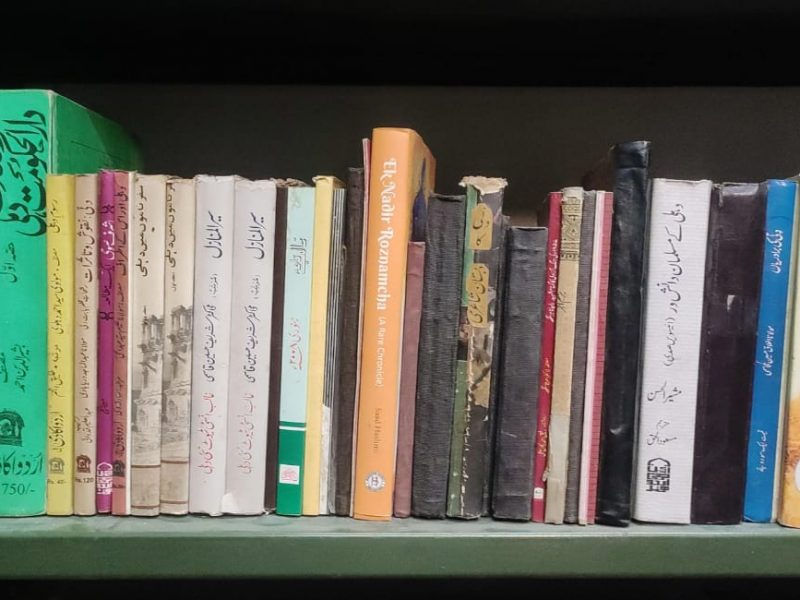
RARE: A collection of books on Delhi
The Delhi connection
There are 7,500 books on Delhi of yore in the library, including on poet Iqbal, dictionaries as old as 150 years, authentic diwaan on Ameer Khusrau, books dating back to 1893, on and by the last Mughal emperor Bahadur Shah Zafar, British Raj–Victorian Era with pictures in lithographs and more.
But considering Delhi is dry without the ‘zikr’ (mention) of the poetic legacy of Asadullah Khan ‘Ghalib’, the library has dedicated a special space for the poet: “Ghalib Study Centre”.
A galaxy in itself, this part has 1,350 rare books in Urdu, Persian, English and Hindi on Ghalib apart from several special issues in different magazines (called risala in Urdu) which are now available only in this museum.
For instance, an important old publication called Sooraj (meaning sun) had special Ghalib edition.
One of the books has illustrations of most of the ghazals he had penned, while in his own Deewan (collection of his authentic shayri) there, Ghalib’s original ghazals had no pictures or illustrations.
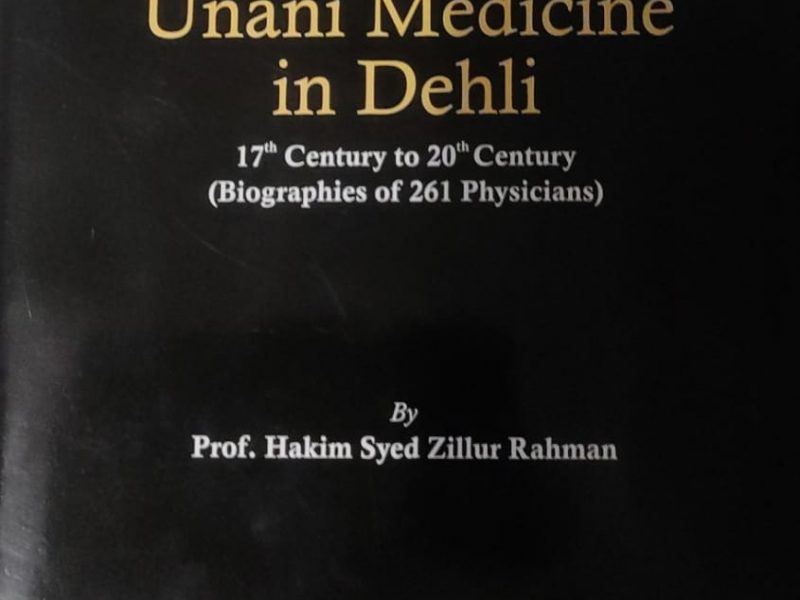
MASTERPIECE: The translation of the book written by Hakim Zillur Rahman
One of the most important collections here is a book by renowned author Shakeel ur Rahman called Mirza Ghalib aur Mughaliyaat, which has illustrations from Muraqqa-i-Chughtai, an illustrated selection of Ghalib’s work by AR Chughtai, a renowned artist of early last century. The illustrations are based on an important topic or issue that the poet raised in his couplet (sher).
Rare books with names like Jihad-e-Ghalib, Ghalib Satrung, Soz-e-Ghalib, his letters in Persian and many more ornate the archive.
Additionally, a book called Naqsh-e-Rung from Pakistan which was brought to India by scholar Urdu litterateur and poet professor (late) Shamsur Rehman Farooqui enriches the book shelves.
Tehqeeq-nama Ghalib, Ghalib’s ghazal in Persian called Ghazaliayat-e-Farsi, Ghalib, few rare and special issues of magazines like Shama, Nuqoosh, Hunoon, Taar-e-Nau, film magazines, Al-Ilm, Shayar, Kaarvaan with special edition on Ghalib are the other charms.
A rare pocket-sized edition on Ghalib is a popular one.
Travels to Delhi
Another section on Delhi consists of travels and trips done in Delhi by the authors, travellers and poets of old times. Rare books like Safarnama Dehli and Sair-ul-Manazir provide an inside view of Delhi in the 18th century.
LEGEND: Bust of a renowned Indian physician Charaka at the academy in a section dedicated to physicians and medicinal plants
Also, over 200 rare books on Delhi’s poets (shayars) in Urdu and important personalities form another gallery here. For instance, there is Aslam Parvez’s award-winning book on Bahadur Shah Zafar, and his another one called Meri Dilli. There is also a book on Hamare Zamane Ki Dehli, Charagh-e-Dilli, Dilli Wale by famous author Salauddin, Aalam mein intekhab-e-Delhi among others.
Rare and significant books on personalities include those on Hakim Ajmal Khan, Sir Ross Masood, former India President Zakir Hussain, Sir Syed Ahmad Khan, Raja Mahendra Pratap and many more.
An entire unit is also devoted to all the journals that came out of Delhi during the War for Independence “and those from late 17th century to beginning of 19th century. The Delhi College was established in 1824, with it, all these journals rose to a great height. These form an enticing collection in the museum,” apprises Aftab Najmi, the coordinator and convener at Ibn Sina Academy.
On enquiring why such a large collection in Urdu finds space here, Professor Rahman adds, “Our own language and culture is much better described only in Urdu and Persian. So, it was very important to have a different section on Urdu to give a peep into what Delhi was in olden times.”
However, countless notable oldest books in English and Hindi on Delhi also enrich the collection on the Capital.
A legacy himself
Professor Zillur Rahman has 56 books to his credit. The subjects are related to Tib (Unani medicine) and Urdu literature. His books on medical sciences with oldest references (100 to 200 years old) are immensely popular. He is also a poet and an ardent admirer of Urdu poets of yore. He has also edited Diwan-e-Ghalib and many books on Urdu shayri. So far, 11 books have been written on him by students from different parts of India and globe in Arabic, Urdu and English. There are two academies, in Meerut and Bhopal, named in his honour. A part of the library has books on Zillur Rahman’s own family and their contribution to academics, medicine, poetry and culture.
For the next generation
On why he decided to make such a rare museum and library under one roof, Rahman says, “I was just a teacher at AMU. I had no money like businessmen to construct roads and hospitals so I decided to build this museum and library to help those who want to study but have neither books nor a place for the same. I want the current generation to know that books on all our glorious histories and personalities were penned in Urdu before 1947.
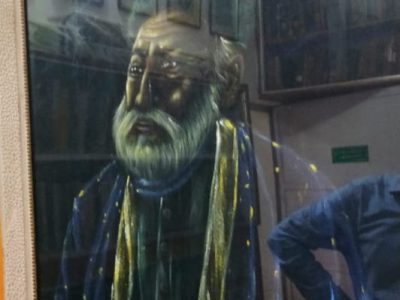
ICONIC: A portrait of Mirza Ghalib at the library, which boasts of rare works on the Delhi-based poet
“So, our generation has to know Urdu to understand their buzurgs (elders) and what charismatic works they had done. Our current generation, which doesn’t know Urdu, is like a blackboard. Anyone can write anything on it and it doesn’t impact them because they are so ignorant of legacies of their own language.”
Professor Rahman has travelled abroad 44 times. He visited Greece, including its capital Athens, Samarkand and Bukhara in Uzbekistan, Spain, Turkey, Germany and other countries.
“I went to Iran 11 times to gather books and study how it has preserved its arts and culture, literature, medicine and environment,” he says adding that children of every country know their mother tongue and can read and write in it.
“India’s children, especially the new Muslim community, is ignorant of its own legacy in Urdu.”
The Ibn Sina Academy has a tremendous collection of Islamic sciences and Islamic medicines. The professor has procured them from across the globe.
“Some are bought, some gifted and some requested and begged for. Hamaare 3,200 hazaar kitaabon mein, Ghalib ka collection jo hamaare paas hai vo duniya mein kisi ke paas nahi hai (No one in the world has the rare collection on Ghalib that we have among our 32,000 books). Even Delhi’s own Ghalib Institute and Ghalib Academy visit us and take photocopies of the rare material they require. We have made our academy work on Delhi’s poets, littérateurs, historical buildings and monuments,” he adds.
Most books, he adds, are from Iran, Samarkand and Bukhara.
“The richest in education, philosophy, medicine and culture is Uzbekistan but it could not present it to the world, the way Iran did.”
Why Delhi in Aligarh?
Why Delhi forms a special section at his library, has its reasons.
“Delhi was always the capital of India, be it during the Mughal, British eras or post-Independence period. So, it has always been not only a melting pot of cultures but also an abode for the best of poets, authors and travellers. The number of academics, authors, sufis, litterateurs, shayars (poets), lovers of arts and music and academic institutions that Delhi had, no other capital in the world has it till date,” he reasons with pride.
To know Delhi better, he suggests books penned by the renowned Dehlvi family.
For instance, there is Dilli jo aik shahar thaa by Shahid Ahmad Dehlvi, who was born in Delhi in 1902.
He wrote extensively on vanishing culture of Delhi which was a symbol of Indo-Muslim culture ruined by violence and blood of the War of Independence. Post Independence, he went to Pakistan and died in 1967.
Waqyaat-e-Darool Hukoomat in three volumes by Bashiruddin Ahmad Dehlvi published from Urdu Academy, Delhi in 1990, and books on 1857 revolution are also there in the academy.
Delhi just got richer by another book by Zillur Rahman — Dilli aur Tibbi Unani which has just come out in Urdu. It is translated in English by Toronto-based Zakaria Virk, titled ‘History of Unani Medicine in Delhi – 17th Century to 20th Century – Biographies of 261 physicians’.
source: http://www.thepatriot.in / The Patriot / Home> Delhi NCR / by Rana Siddiqui Zaman, Delhi NCR / November 15th, 2023
Muslim Mirror’s list of 100 Indian Muslim achievers features four notable personalities from Karnataka, recognized for their contributions to education, business, journalism, and community development.
Bidar’s Abdul Qadeer – Educator and Visionary Leader Abdul Qadeer, a renowned educationist and founder of the Shaheen Group of Institutions in Bidar, has dedicated his life to empowering marginalized communities through education.
Under his leadership, Shaheen Institutions have grown into a network providing quality education, emphasizing academic excellence and holistic development. His commitment to integrating modern and traditional education has enabled numerous students to excel in competitive examinations and achieve higher educational aspirations.
Mangaluru’s Dr. Abdullah Kunhi – Entrepreneur and Educationist Dr. Yenepoya Abdullah Kunhi, the founder of Yenepoya University in Mangalore, has transformed education and healthcare in Karnataka.
Known for his vision and humanitarian spirit, Dr. Kunhi established Yenepoya University as a multidisciplinary institution offering innovative programs across various fields.
He also expanded healthcare access through advanced medical facilities and initiated programs to uplift marginalized communities, including scholarships and community health initiatives.
Azim Hashim Premji – Business Tycoon and Philanthropist Azim Premji, former chairman of Wipro Limited, revolutionized India’s IT industry and emerged as one of the country’s most influential business leaders.
A recipient of the Padma Bhushan and Padma Vibhushan, Premji is also one of the world’s leading philanthropists. Through the Azim Premji Foundation, he has donated over $21 billion, primarily to improve education and healthcare in India, leaving an indelible mark on society.
Mohammed Zubair – Journalist and Fact-Checker Mohammed Zubair, co-founder of the fact-checking website Alt News, is a pivotal figure in combating misinformation in India.
Transitioning from an engineering background to journalism, Zubair has exposed numerous instances of fake news and disinformation, fostering accountability and promoting responsible journalism. Despite facing harassment and legal challenges, his dedication to truth and transparency remains unwavering.
Irfan Razack – Real Estate Mogul and Community Advocate Irfan Razack, Chairman and Managing Director of Prestige Group, is one of India’s leading real estate entrepreneurs.
Based in Bengaluru, he has played a pivotal role in shaping India’s real estate landscape, making Prestige Group one of the most prominent property developers in the country.
Razack is also the co-founder of Inventure Academy in Bengaluru and has held esteemed positions, including Honorary Secretary of the Al-Ameen Educational Society and Chairman of CREDAI.
His community contributions through the Kutchi Memon Jamat and philanthropic initiatives have earned him numerous awards, including the Real Estate Excellence Award (2008) and Entrepreneur Extraordinaire Award (2010).
According to the 2024 Forbes list of India’s 100 richest tycoons, Irfan Razack and his siblings are ranked 49th, with a net worth of $6 billion.
These five distinguished individuals from Karnataka exemplify excellence, resilience, and a commitment to societal progress, earning them well-deserved recognition on this prestigious list.
source: http://www.thehindustangazette.com / The Hindustan Gazette / Home> News> Education / by The Hindustan Gazette / January 06th, 2024
Hamed Aziz Safwi of Kolkata seeks to change the lives of many in Uluberia, an industrial town in Howrah, West Bengal and beyond through his coaching institute where he provides all support to those willing to sit in the competitive examinations for admission in professional courses, but can’t afford the expensive fee.
Two years ago, Safwi established the Haider Aziz Safwi Career Development Centre, on the death anniversary of his father Haider Aziz Safwi, bureaucrat turned political who served as MLA for nearly 7.5 years.
“In 2011, my father contested the Assembly Election and started his strong bond with the community. As an MLA, he interacted with people daily, and I used to accompany him since I was 11 years old.
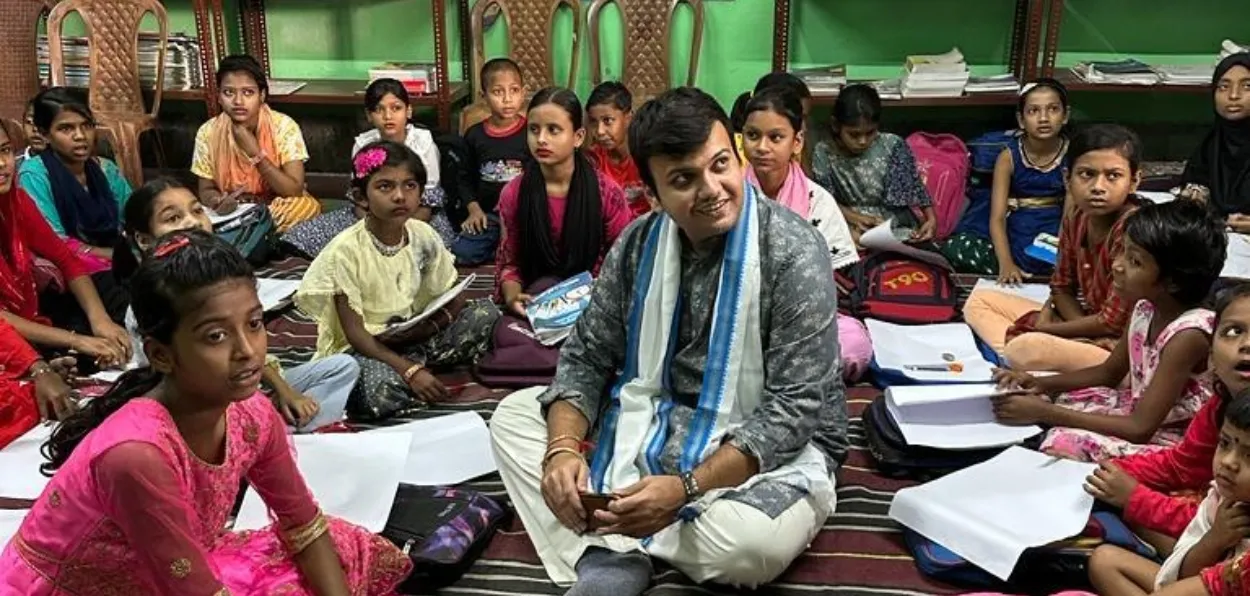
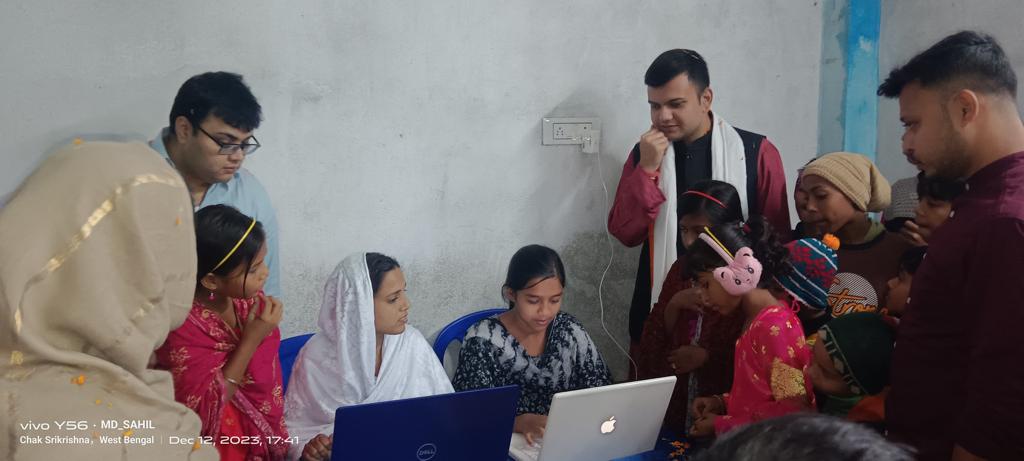
Hamed Aziz Safwi with students
“When re-elected in 2016, he became a revered figure, with a park and statue now bearing his name.” He passed away in 2018 and is remembered fondly by people.
Safwi, an economics graduate from St. Xavier University, Kolkata says that he is happy that today, the center (in his father’s name) can serve 600 students, while the e-Shiksha Centre caters to 80, and another section 40 students.
The center is located within the premises of the Taj Mahal Library in Uluberia—a location dear to his father. The Library is a subsidiary of the Taj Mahal Gram Vikas Kendra.
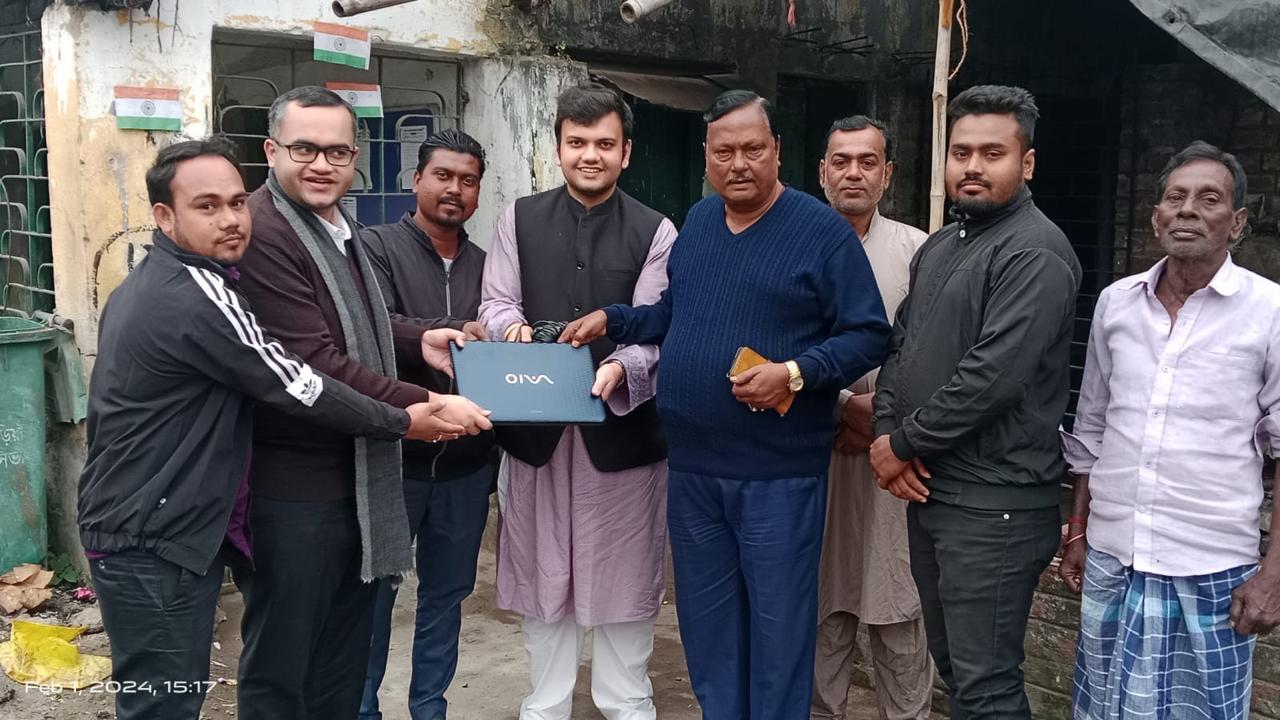
Hamed Aziz Safwi gifting laptops to students
The library, initially founded with the help of friends and locals, provides expensive books and resources free of cost to students preparing for exams like IIT-JEE, NEET, CAT, etc. This initiative is useful for locals for whom such resources can be prohibitively expensive.
Uluberia has a sizeable Muslim population and a majority of them can ill afford expensive coaching for prestigious examinations for professional colleges and hence the youth don’t even dare to dream big.
Hamed Safwi set up his e-Shiksha Centre (digital learning center) to give students access to laptops, the internet, and virtual coaching, enabling them to pursue their education.
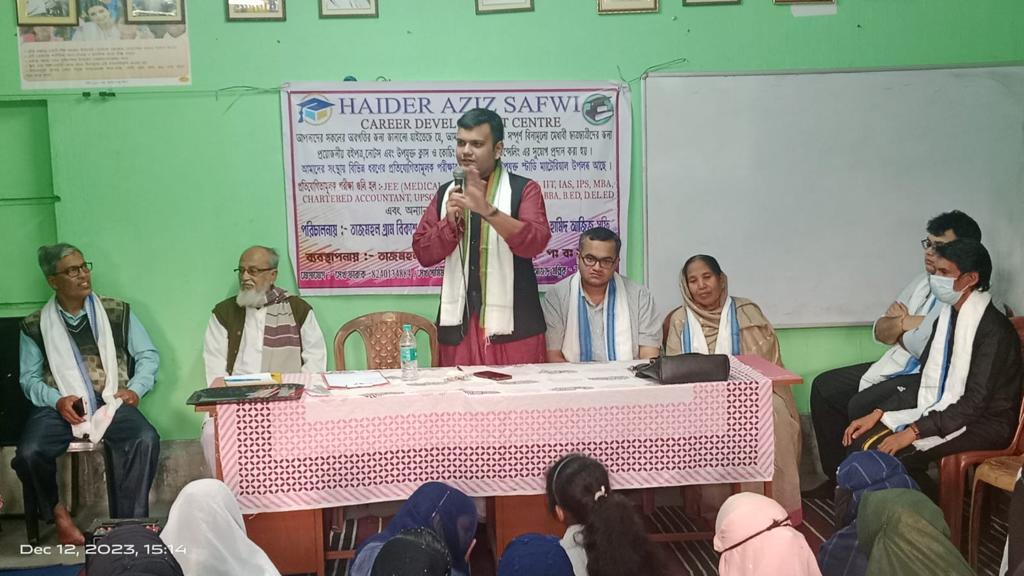
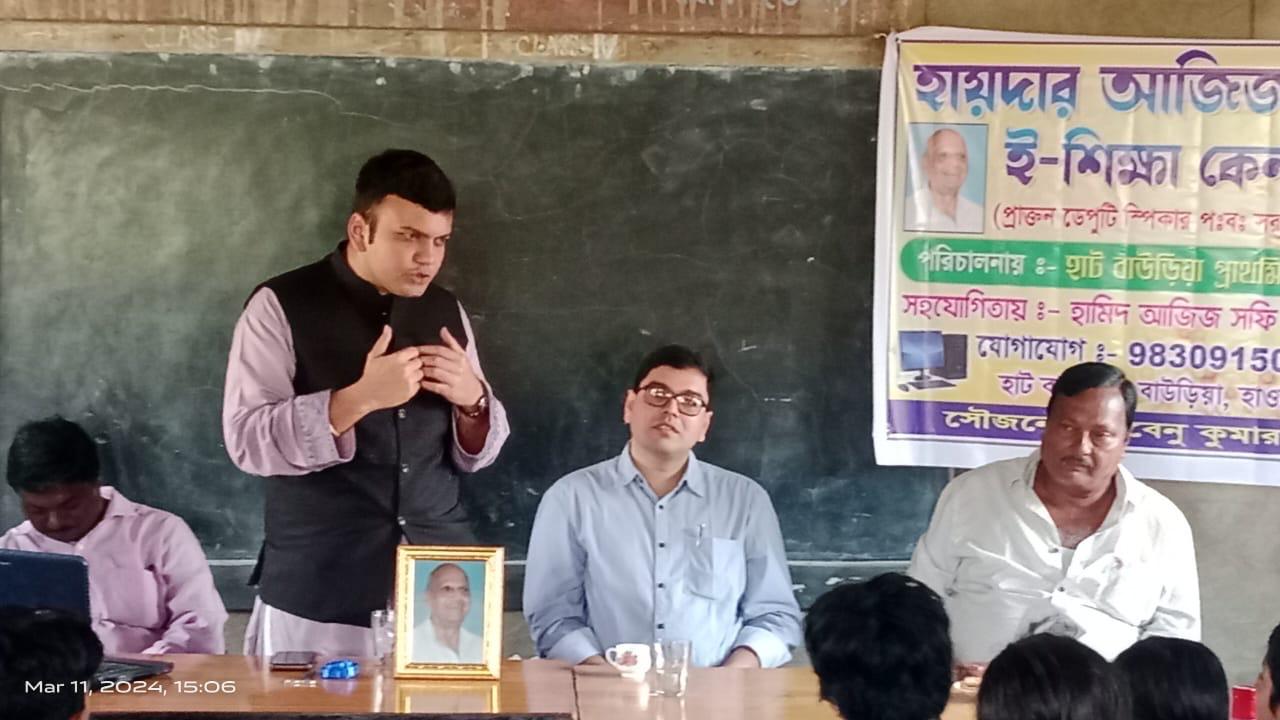
Hamed Aziz Safwi speaking at a function
Safwi said, “Access to books was the first step and to truly enhance the learning opportunities for the youth of Uluberia I introduced the e-Shiksha Centre, or digital learning center for better access to the digital world.”
Last year, he opened two digital literacy centers to bridge the digital divide in the community. These centers offer online classes and assistance, especially form-filling, particularly for those who struggle with technology. He felt the need for such a platform during and after the COVID-19 pandemic.
One center runs in collaboration with local club members and another in with the Hart Memorial Primary School.
Safwi said, “Locals are encouraged to come and learn, using the space to fill out forms or attend classes in their spare time. The community has been instrumental in these efforts, donating books, old laptops, and even stools to help fund and sustain these initiatives. The initiative is being run on Zero Cash policy here, we focus on providing resources rather than cash and are mostly funded by me.”
Hamed Aziz Safwi
“The e-Shiksha Centre provides essential resources to students who face financial hardships. It offers services to a maximum of 30 students per day, many of whom come from distant areas. For these students, the center serves as a crucial lifeline, offering take-home resources and digital access they otherwise couldn’t afford. Additionally, the center remains open from 10 am till 4 pm,” said local coordinator S K Faruk.
With support from Prof. Souvik Mukherjee of St. Xavier’s University, Hamed Safwi is determined to expand his reach to as many students as possible. “Together, we are working on plans to serve the educational needs of the community, ensuring that every student has the opportunity to access quality resources and support for their academic growth,” he said.
Nargis Parvin from Raghudebbati Mufty Para, Howrah, who works as a field facilitator at Nari o Shishu Kalyan Kendra on the Right to Food project the story is different.
She says, “Whenever I have free time, I visit the Haider Aziz Safwi Career Development Centre to read detective books by Satyajit Ray. These stories help shape my perspective on life.”
source: http://www.awazthevoice.in / Awaz, The Voice / Home> Story / by Hena Ahmed, Kolkata / September 11th, 2024
The Indian group intends to expand further in Saudi Arabia, with schools and other educational institutions, into cities like Jeddah, Al Khobar, and Madinah.
(Photo: Shaheen Group)
Jeddah:
Following the footsteps of leading educational institutions from Europe and the United States, India’s Shaheen Group is now preparing to enter the Saudi market. Saudi Arabia’s ambition to become a global education hub, aligned with Crown Prince Mohammed Bin Salman’s Vision 2030, is rapidly gaining momentum as several prominent academic institutions establish campuses in the Kingdom.
Shaheen Group, based in Karnataka, has achieved impressive results in medical and engineering entrance exams across southern India, known for its strong educational standards.
The group has long been a preferred choice for many NRI students from Saudi Arabia and the Gulf, who study in India to bypass domicile norms and improve their chances of securing spots in professional courses such as medicine and engineering. However, the Shaheen Group’s move to Saudi Arabia aims to address this issue by bringing quality education directly to the Kingdom.
India group expands with new school in Riyadh, Saudi Arabia
The Indian group of educational institutions plans to open a new school in Riyadh, Saudi Arabia, offering classes from Kindergarten through to Class 12, alongside integrated coaching for competitive exams such as NEET, JEE, and the CA Foundation.
Chairman of Shaheen Group of Institutions, Dr Abdul Qadeer, announced the ambitious project, likely to begin operations in March 2025, pending the completion of building and accreditation processes. The school will be located in either Malaz or Sulemaniya.
Additionally, the Indian group intends to expand further in Saudi Arabia, with schools and other educational institutions, into cities like Jeddah, Al Khobar, and Madinah.
At an academic event in Riyadh, Dr Abdul Qadeer highlighted that a large number of NRI students from Gulf Cooperation Council (GCC) countries enrol in Shaheen Group institutions across Karnataka, Telangana, and other regions of India.
Dr Abdul Qadeer also revealed the new leadership team in Saudi Arabia. Syed Wayez Ahmed has taken on the role of managing director for the group in Saudi Arabia and the Middle East.
Mohammed Zaki will take on the role of vice president of operations for Saudi Arabia, while Fahad Saleh Al Jurais will serve as the HR and administrative director and Sarah Mohammed Al Sharief will be the director of the Riyadh school.
source: http://www.siasat.com / The Siasat Daily / Home> News> Middle East / by Irfan Mohammed / November 03rd, 2024
The Karnataka Government on Wednesday named Dr. Thumbay Moideen, son of prominent community leader late B. Ahmed Haji Mohiudeen, among the recipients of this year’s Karnataka State Rajyotsava Award. A prominent alumnus of St. Aloysius College, Mangaluru, Dr. Moideen has earned widespread recognition in the UAE and beyond for his contributions to higher education and healthcare.
Dr. Moideen founded the THUMBAY Group in 1997, a diversified international conglomerate that has since expanded into health education, healthcare services, and medical research. In 1998, he became the first Indian invited by the rulers of Ajman to establish a medical college in the UAE. This institution has now grown into a university with its own network of hospitals, clinics, medical centers, and pharmacies throughout the country.
Dr. Moideen has been featured in respected publications, including Forbes Middle East and Arabian Business. His achievements have also been recognized with an Honorary Fellowship from the International Medical Sciences Academy (IMSA) and an honorary doctorate from Amity University.
The Karnataka Rajyotsava Award, also known as the Rajyotsava Prashasti, is the second highest civilian honor in Karnataka, India. The award is given annually to recognize citizens of Karnataka and others who have contributed to the state in various fields: Arts, Education, Industry, Literature, Science, Sports, Medicine, Social Service, and Public Affairs.
The award is presented on November 1, the day of the state’s establishment, which is celebrated as Kannada Rajyotsava.
source: http://www.english.varthabharati.in / Vartha Bharati / Home> Karnataka / by Vartha Bharati / October 30th, 2024
Dr. Afreen Mubeen Sheikh, a native of Mangaluru has made her hometown proud when she recently won the SHE Award in Dubai for her dedicated service to her profession and for contributing to the cause of women empowerment in UAE.
Dr Afreen is an alumnus of K S Hegde Medical Academy where she pursued her MBBS. She later did her Diploma in Obstetrics and Gynaecology from the Royal College of Physicians of Ireland.
Dr Afreen is a mentor and coach for foreign medical graduates seeking medical licensure in the UAE. She is a women’s health consultant in Mamahood, Dubai. Her expertise and guidance have empowered countless mothers to make informed decisions about their health and well-being. She has also successfully founded a women’s modest fashion brand by name ’Hayaa by Afreen’ in Dubai and also has a popular blog page by name ’The Whitecoat Mama’ on Instagram.
She uses the platform to raise awareness about women’s health and Gulf medical exams. She’s not only a respected medical professional and social media influencer but also a brand ambassador for several renowned brands in the UAE. Dr Afreen’s inspiring journey and her achievements were featured in a popular Dubai magazine ’Xpatzhub’ in October.
Dr Afreen is married to Dr Mohammad Mubeen who is a Paediatric Intensivist.
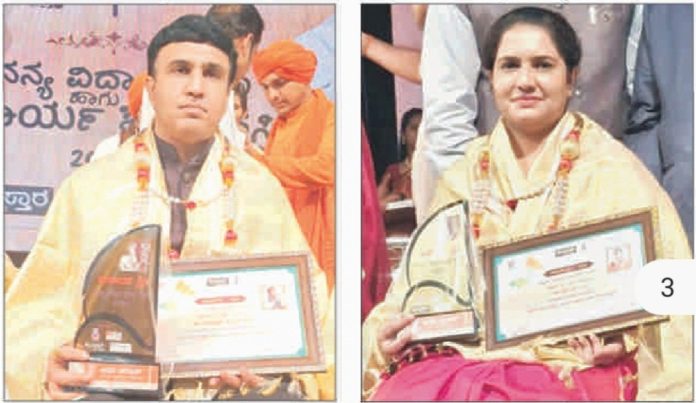
Under the auspices of Media Study Centre and with the cooperation of Vistara TV and Basaveshwara Parishad, Dr. Mohammed Farooq Pasha, Asst. Prof. Department of Commerce and Management Kengeri and Dr. Fazilath Uzma from Microbiology and Food Technology Department of Bangalore University were awarded with Acharya Shri 2024 in recognition of their services in their respective fields.
Deputy Commissioner of Police (Traffic) Bengaluru South Shiv Prakash Devraju, renowned cardiologist Mahantesh R Chantimath, President of Basava Parishad Uma Devi, former MP Prof. I.G. Sanadi and others were present on the occasion.
Dr. Farooq has authored more 50 books for pre-university and degree courses in Commerce. Dr. Fazilath is a senior research fellow at Bangalore University and has written 11 books on the subject.
source: http://www.radiancenews.com / Radiance News / Home> Pride of the Nation> Awards> Latest News / by Mohammed Atherulla Shariff, (headline edited) , Radiance News Bureau / October 28th, 2024
“If we only remember Sir Syed over a plate of biryani once a year, we miss the essence of his mission. AMU was created to serve the community, and it’s our duty as graduates to stay true to that vision.”
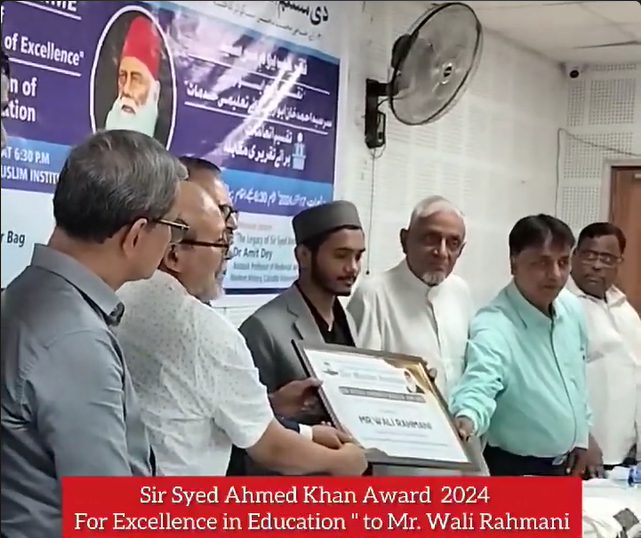
The Aligarh Muslim University (AMU) recently celebrated the 207th birth anniversary of its founder, Sir Syed Ahmad Khan, a visionary leader known for his contributions to education and social reform. On this occasion, Wali Rahmani, a prominent speaker and recipient of Sir Syed Ahmad Khan Award 2024 for Excellence in Education, delivered a compelling message urging the audience to deeply understand the compatibility between science and faith.
During his address, Rahmani challenged the common notion that science and religion are separate, emphasising that the Quran encompasses scientific principles. “To say that one hand holds science and the other the Quran implies that the Quran lacks scientific understanding, which is a misconception,” he stated.
“The Quran isn’t void of science; it contains scientific wisdom. When we speak of education, we must start in the name of Allah. Education divorced from His name isn’t complete.”
Reflecting on Sir Syed Ahmad Khan’s legacy, Rahmani highlighted how Sir Syed dedicated his life to the cause of education, building AMU to serve the community. He noted that Sir Syed’s vision extended beyond the establishment of a university; it was about empowering the community through knowledge and service.
“It is essential to remember why leaders like Sir Syed did the work they did,” he remarked, adding, “If we merely commemorate his work without continuing it, we aren’t doing justice to his legacy.”
Rahmani emphasised the need to go beyond token celebrations, stating, “If we only remember Sir Syed over a plate of biryani once a year, we miss the essence of his mission. AMU was created to serve the community, and it’s our duty as graduates to stay true to that vision.”
Expressing his gratitude, Rahmani acknowledged the honour of receiving an award in Sir Syed’s name, though he humbly expressed his doubts about deserving it.
“It’s an honour for my work to be recognised, but I also feel a sense of responsibility,” he shared. “While I cannot force anyone to become like Sir Syed, I can call them towards the truth, towards what is right.”
Rahmani’s words resonated with the audience, reinforcing the values and mission that Sir Syed Ahmad Khan championed – education, community service, and a harmonious integration of science and faith.
source: http://www.radiancenews.com / Radiance News / Home> Pride of the Nation> Awards> Education> Focus / by Radiance News Bureau / October 26th, 2024
‘Between Nation and Community’ cites primary and secondary sources and oral testimonies to understand what India thinks of the two universities.
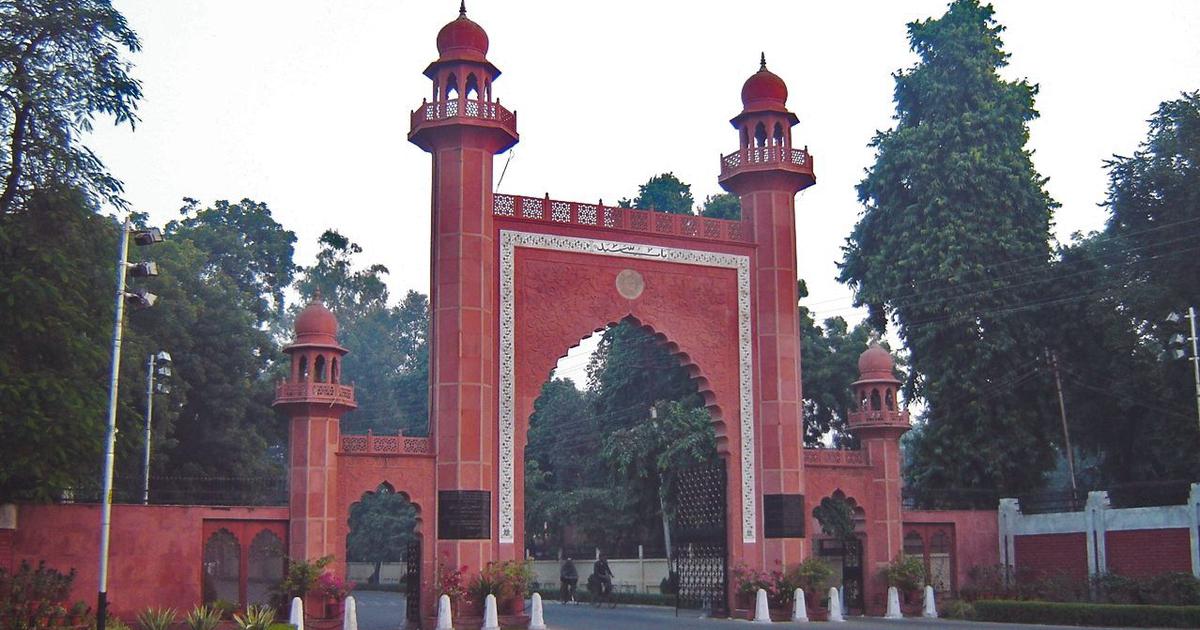
Bab-e-Sayyad, the entrance to Aligarh Muslim University. | Hhkhan / CC BY-SA 3.0
By sheer serendipity, I happened to begin reading Laurence Gautier’s Between Nation and ‘Community’immediately after TCA Raghavan’s Circles of Freedom, which locates the life and career of the barrister-politician Asaf Ali in the national freedom struggle and probes the challenges of being a moderate Muslim or a nationalist Muslim within the Indian National Congress. Coming close on the heels of Raghavan’s book, I was struck by the opening line of Gautier’s Introduction: “Can a Muslim university be an Indian university?” Clearly, the doubts and apprehensions, the mistrust and suspicion that afflict Indian Muslims similarly afflict Muslim institutions, including universities that Gautier is at pains to clarify at the very outset were “established by Muslim individuals or organisations, primarily – though not exclusively – for Muslim students.”
Between Nation and ‘Community’: Muslim Universities and Indian Politics after Partition, Laurence Gautier, Cambridge University Press.
Having worked briefly at both Aligarh Muslim University (AMU) and Jamia Millia Islamia (JMI) – a few short months at Aligarh and a few years at Jamia – I can say that there is a Muslimness, an unmistakably Muslim character to both: the time table changes during the month of Ramzan, a long break for the Juma namaz, the presence of several mosques on campus, the opening of academic/formal events with recitations from the Holy Quran, and increasingly the presence of ever more hijab-clad women (this was pointed out by mother who studied at AMU in the 1950s and noted that there were very few women in hijab let alone the full burqa in her time). The question, however, is: Does any of this diminish or detract or take away from the Indianness of these universities or, for that matter, from those who study or work here? That would lead us to the larger question: What is Indianness?
We come back to the question posed by Gautier in her very first line when she goes on to cite Gyanendra Pandey, who has compared Hindu nationalists and nationalist Muslims. Hindus are seen as nationalists by default whereas Muslims are often put to an agni pariksha to prove their nationalist credentials. As Gautier puts it: “Indian Muslims are taken to be primarily Muslims, whatever their political stance might be. Unlike Hindus, their commitment to the nation cannot be taken for granted; it has to be proven, for their Muslimness casts doubt on their Indianness.”
Incidents like Batla House in the Jamia neighbourhood or the anti-CAA protests at both JMI and AMU bolster the argument that these universities are nurseries of disaffected anti-nationalists and prompting a politician to famously declare: “Desh ke gaddaron ko…Goli maaro saalon ko.”
Aligarh Muslim University and Jamia Millia Islamia
While there is much to read and reflect on in this richly detailed book that brings together, seamlessly, many primary and secondary sources and oral testimonies, a few things need to be flagged. One is the obvious differences between AMU and JMI, by now both Central Universities though the two have entirely different histories. The reasons and the circumstances behind their establishment and their distinct “historical character” have cast a long shadow on their growth and development. AMU was set up to provide secular, western education to the Muslim qaum in a campus modelled on the colleges at Oxford and Cambridge, and to “develop a strong bond with the colonial authorities in order to preserve their access to power”.
JMI on the other hand clearly had different ideas right from its inception: “Hers was a voice of rebellion, one that highlighted the dissonances within the supposedly unified Muslim community.” A splinter group of ardent nationalists, led by Maulana Mohamed Ali, broke away from the MAO College to set up a new kind of educational institution devoted to the service of the nation. In the heady days of the Khilafat Movement and the high noon of Hindu-Muslim unity, Gandhi pledged instant support to this new venture, famously declaring to go begging bowl in hand, if need be, to support this nationalistic enterprise.
It’s interesting to note the different treatments meted out to the two universities immediately after independence, and their vastly different public perception. While AMU was given Central University status in 1951, one among three central universities, Jamia – that had once been famously called the “lusty of the freedom movement” – struggled financially. It seems as though it quite suited the Congress government of the day and Nehru in particular – who had close personal ties with several of Jamia’s teachers and was a frequent visitor – to view the Jamia as a quaint space where visitors such as the Shah of Iran would be shepherded to view its projects and schemes.
Even the cover photograph on Gautier’s book written with immense empathy though it is, perhaps unintentionally, reinforces this quaintness with gamine-faced boys dressed like grown-ups in shervani and Gandhi caps against a building designed by the German architect Karl Heinz. There are other photographs in the Jamia archives showing several eminent people earnestly poring over rough-and-ready hand-made charts and diagrams. Overall, the picture that emerges is that it suited everyone to have this quaint, charming, idealistic venture in one’s backyard as long as it showed no great ambitions to grow into anything bigger or grander.
The Jamia too, I suspect, chose to live in a shell of its own making, hiding its light under a bushel, making a virtue of frugality and simplicity and service. It seemed content to allow the world to view it as a curiosity, a whimsical other-worldly place, a retreat from the mainstream; for some, it was even a recalcitrant child bent upon being odd and different from others, especially its older sibling, the AMU. For far too long, the serious students and the professional scholars stayed away from the Jamia choosing to go to AMU instead.
The differences
The Jamia biradari – a word constantly used by Prof Mushirul Hasan, the most faithful chronicler of Jamia’s history – was a close-knit community. Being small, much smaller than the sprawling AMU campus, Jamia fostered from its earliest days a sense of fellowship among its students and teachers. We get a sense of that in the oral testimonies and memoirs of its teachers and students frequently referred to by Gautier: the annual Jamia Mela, the idea of selfless service (be-laus khidmat) reinforced by teachers often voluntarily taking cuts in their salaries, the emphasis on community service and shram daan, the sense of community living, the devotion of not just staff but their families to the “idea” of Jamia, all of which was fostered by the compactness of the campus. Also, Jamia was more democratic in its functioning than AMU, again possibly due to its size. In this, it drew inspiration from early Islamic society. There are instances of school functions starting punctually on the dot when the chief guest, Vice Chancellor Dr Zakir Hussain, happened to be running late.
Then there was the presence of female students from its earliest days – in classes, in reading rooms, even on stage – with the earliest students being daughters and sisters of Jamia teachers and workers. However, as Gautier points out, this was “primarily out of practical considerations, not out of ideological principles” and Mujeeb, a long-serving Vice Chancellor, recognised it as a valuable project only in hindsight. Whatever the reason, Jamia offered new opportunities for women in its feeder schools, Balak Mata centres, teacher training courses, and adult literacy classes.
The presence of women on campus seen as a threat in AMU with Islamist groups gaining ascendancy, was much less so in JMI in the 1970s and 80s when debates on “proper” and “improper” mingling of the sexes began to gain ground between the “conservatives” and “progressives” and questions about the presence of women, especially in cultural programmes, began to be raised. While present in JMI, too, these voices were muted and not as strident as in AMU.
Then, there is the rather obvious difference of location and how that has impacted the development of the two universities: Jamia’s location in Delhi compared to AMU’s approx 180 km away. While in the early years, AMU was far more cosmopolitan than the mosquito-infested neck of the woods beside the Yamuna that was home to Jamia, from the 1980s a perceptible change became visible. The establishment of a working women’s hostel in 1982 by AJ Kidwai was possible in Jamia primarily due to its location, followed by the MCRC. We see that change accentuated in recent years in the changing profile of both staff and students with Jamiabeing more open to change and AMU becoming more closed, more insular, more inward-looking.
source: http://www.scroll.in / Scroll.in / Home> Book Review / by Rakshanda Jalil / September 29th, 2024