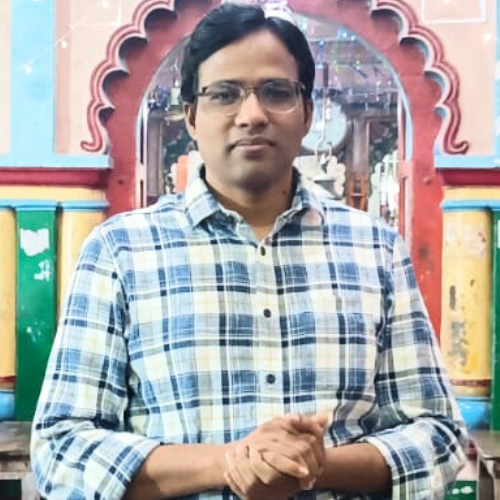
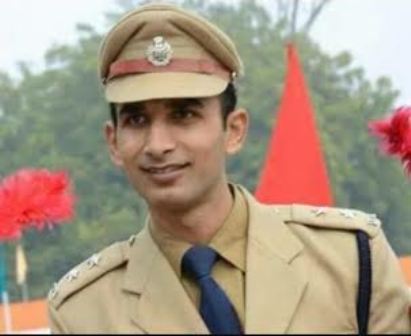
Showcasing the brilliance and legacy of the Aligarh Muslim University (AMU) Faculty of Law, Akbar Siddiqui has secured the top position in the Delhi Higher Judicial Services Examination.
Aligarh Muslim University:
Showcasing the brilliance and legacy of the Aligarh Muslim University (AMU) Faculty of Law, Akbar Siddiqui has secured the top position in the Delhi Higher Judicial Services Examination.
The result of the Delhi Higher Judicial Services Examination 2024, along with the merit list, was announced on August 20, 2025.
“A Distinguished Lawyer”
An alumnus of AMU 2007 batch, Akbar Siddiqui, is Advocate-on-Record, Supreme Court of India. He is celebrated for his distinguished practice before the Supreme Court of India.
Siddiqui’s role in the landmark Satender Kumar Antil case, which significantly shaped the jurisprudence on bail, is also noteworthy.
His achievement yet again cements the Faculty of Law, Aligarh Muslim University as a cradle of some of the finest legal minds in the country.
“A Matter of Great Pride”
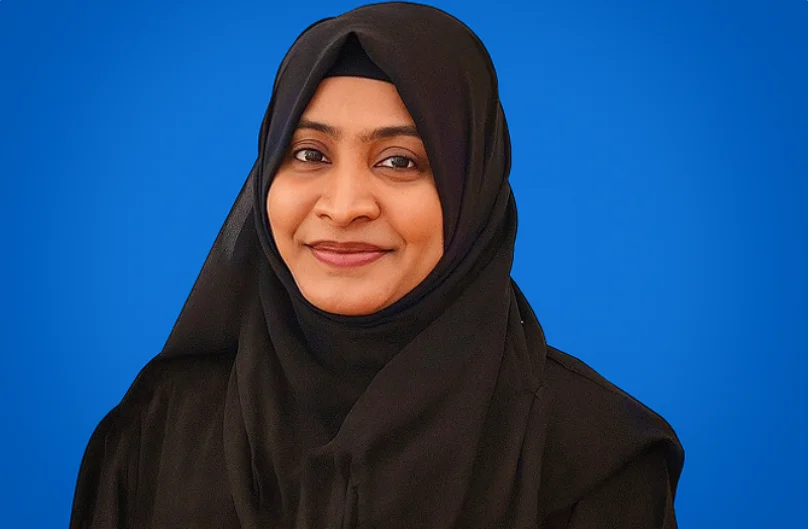
AMU Vice-Chancellor, Prof. Naima Khatoon, has congratulated Akbar Siddiqui on this remarkable feat.
“Siddiqui’s accomplishment is a matter of great pride for AMU and its Faculty of Law. His journey from Aligarh to the Supreme Court and now to the higher judiciary is an inspiring example of academic rigor, professional excellence, and perseverance. We wish him continued success in serving the cause of justice.”
Akbar Siddiqui has obtained a total of 712 marks out of the total 1,000 marks to secure the first position in the merit list.
Siddiqui’s success adds another illustrious chapter to AMU’s rich tradition of producing leaders in the legal fraternity, inspiring future generations of aspiring jurists.
source: http://www.ummid.com / Ummid.com / Home> Education & Career / by ummid.com news network / August 22nd, 2025
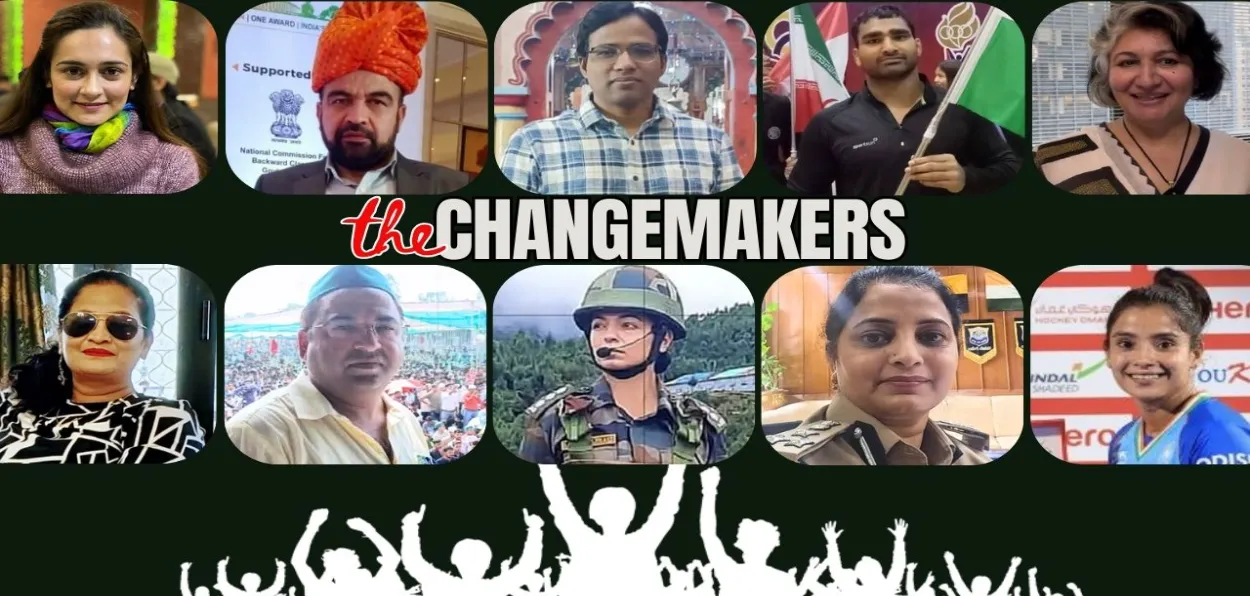
While media spotlight often shines on celebrities and politicians, the real engine of India’s progress runs on the resolve of countless unsung heroes who, away from limelight, quietly transform society.
From national defense to grassroots education, sports, science, and civil service, these individuals from Uttar Pradesh show how courage, compassion, and conviction can drive extraordinary change. Here are 10 such trailblazers whose stories deserve to be heard:
Captain Sariya Abbasi: A Woman in Uniform on the Frontlines
Hailing from a small city of Gorakhpur, Uttar Pradesh, Captain Sayria Abbasi broke every convention to join the Indian Army. A graduate in Genetic Engineering and with plenty of job offers and career opportunities from big companies was not enough for her to pursue in life. The call of service for the motherland was too strong to be sacrificed.
The world noticed her as a soldier deployed at the Line of Actual Control (LAC), India-China temporary border, manning an Air Gun. Today, Sariya leads drone-killer teams and operates L-70 anti-aircraft guns on the border. Her journey from an academic achiever to a defender of the nation’s borders is not just about military precision; it’s about shattering glass ceilings and reshaping how India imagines women in uniform.
Dr. Faiyaz Ahmad Fyzie: Voice for the Voiceless Pasmanda Community
Dr. Faiyaz Ahmad Fyzie, an AYUSH physician, is more than a healer—he is a public intellectual, columnist, translator, and relentless advocate for the Pasmanda (socially backward) Muslim community. Raised in modest conditions, his rise to national recognition is built on fearless writing and tireless grassroots work.
When even the Prime Minister refers to Pasmanda voices, Fyzie’s years of advocacy resonate. His pen continues to empower those whose struggles were long silenced. His work is a call to conscience—and a roadmap for inclusive discourse.
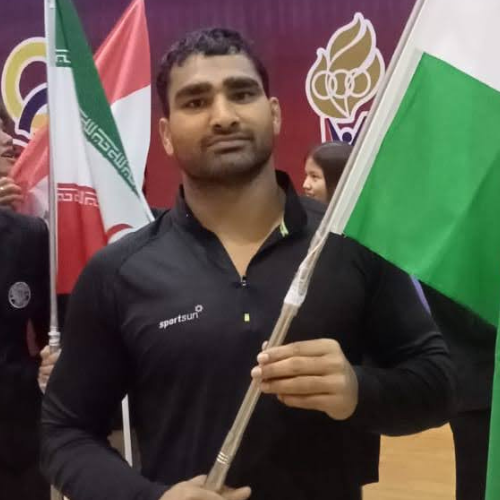
Mohammad Luqman Ali: Wrestling His Way to Glory and Degree
Wrestler Mohammad Luqman Ali, a student of Social Work at Jamia Millia Islamia, is balancing body and brain. Born in Amroha’s tiny village of Mohraka Patti, his father worked on the railways, and his mother gave him religious grounding. Despite limited resources, Luqman’s grit has earned him recognition in India’s wrestling circles.
From the mat to the classroom, his dual commitment shows that excellence doesn’t require compromise. It requires discipline, heart—and a family’s belief in you.
Rubina Rashid Ali: Reviving Mughal-Era Art with a Modern Mission
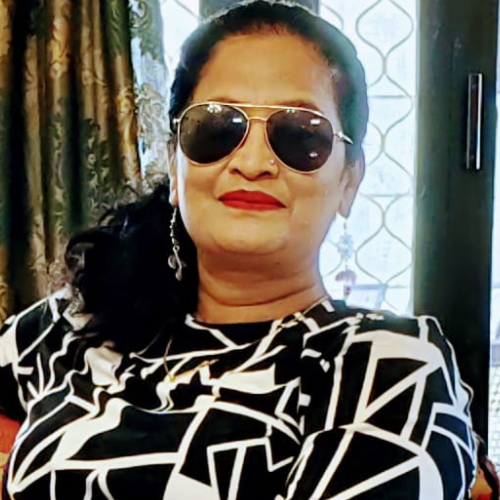
In a sun-drenched corner of Aligarh, Rubina Rashid Ali has quietly built a movement. Her work in floral appliqué embroidery, a legacy of Mughal art, now supports dozens of women in Aligarh and Rampur. What was once an undervalued craft monopolized by middlemen has been transformed by Rubina into a vehicle for women’s economic empowerment.
Her home resonates not only with the sound of needles and threads but also with the hum of independence. “Real artists were reduced to laborers,” she says. Today, she ensures their hands are not just working — but also earning.
Babban Mian: A Gaushala Keeper Inspired by His Mother’s Love
At Madhu Sudan Gaushalla in Bulandshahr, Babban Mian tends to cows not out of ritual, but reverence — inspired by his late mother Hamidunnisa Begum. “She loved cows like her own children,” he recalls. After she passed away in 2015, Babban vowed to preserve her legacy.
Despite being a Muslim in a Hindu-dominated tradition, he runs a government-recognized shelter rooted in compassion, not controversy. For him, animal welfare is a universal value — not a communal issue. His work quietly redefines what shared culture and interfaith harmony look like.
Khushboo Mirza: From Amroha to the Moon with ISRO
Khushboo Mirza, scientist at ISRO and part of the Chandrayaan-1 and Chandrayaan-2 missions, is a stellar example of perseverance. After her father’s death when she was just seven, her mother raised three children alone, running a petrol pump and defying social norms.
Khushboo earned a Gold Medal in Electronics Engineering from AMU and was the youngest member of the Chandrayaan-1 checkout team. A practicing Muslim and a symbol of India’s scientific aspirations, she turned down corporate offers to reach for the stars—and took a whole generation of girls with her.
Zaheer Farooqui: A People’s Leader with a Vision for Purkazi
In western UP’s Purkazi, Zaheer Farooqui is rewriting what local leadership means. As Nagar Panchayat Chairperson, he donated land worth ₹1.5 crore for the area’s first Intermediate College and modernized local schools into PM Shri-certified institutions.
His initiatives go beyond classrooms. From India’s first double-storey government-run cow shelter to a gym for Muslim women, and one of the most sophisticated rural CCTV networks in the region — Farooqui’s governance is a blend of tradition and tech, equity and empowerment. His Tiranga Yatra revives local history, reminding citizens that patriotism is inclusive and action-oriented.
Dr. Farah Usmani: From AMU to Global Health Leadership
On a cold morning in New York, Dr. Farah Usmani stood outside an apartment, a folder in hand, her eyes bright with resolve. The daughter of Uttar Pradesh, she is today a formidable presence in global health policy.
n M.D. in Obstetrics & Gynecology from AMU, Farah sought impact beyond hospital walls. Armed with a Master’s in Health Policy from LSE and the London School of Hygiene & Tropical Medicine, she’s led transformative health initiatives around the world. Her journey is one of intellect guided by idealism — a doctor who chose not just to heal individuals but to reform systems.
Anjum Ara: Bridging Communities Through Compassionate Policing
Hailing from Azamgarh’s Kamharia village, Anjum Ara, a 2012-batch IPS officer, has redefined the image of policing with a human touch. A computer engineer by training, her journey from Integral University to Senior Superintendent of Police in Shimla has been marked by integrity and reform. Known for her work in cybercrime and her community-focused policing model, Anjum is also a fierce advocate for girls’ education.
Together with her husband, IAS officer Yunus Khan, Anjum adopted the cause of Khushdeep, the daughter of a martyred soldier, pledging to support her upbringing. This act of empathy mirrors her professional ethos, proactive, principled, and deeply people-centered.
Mumtaz Khan: From Vegetable Stall to World Hockey Stage
From the bustling alleys of Lucknow’s Cantt area to the turf fields of South Africa, Mumtaz Khan’s journey is pure grit. Once helping her father at a vegetable stall, a single race at school changed her life when Coach Neelam Siddiqui noticed her speed. That moment set her on a course to become a leading forward in India’s Junior Women’s Hockey Team.
Her standout performance at the 2018 Youth Olympics, where she scored 10 goals, earned her national acclaim. Yet, Mumtaz remains rooted, balancing hope and humility as she eyes the Olympics. She is proof that dreams born in dusty streets can blaze across international arenas.
These ten changemakers hail from Uttar Pradesh, from narrow village lanes to bustling metros, from battlefields to laboratories. But they are united by one thing: quiet, relentless courage. In their lives, we find the India that persists, uplifts, and transforms—not with headlines, but with hard work.
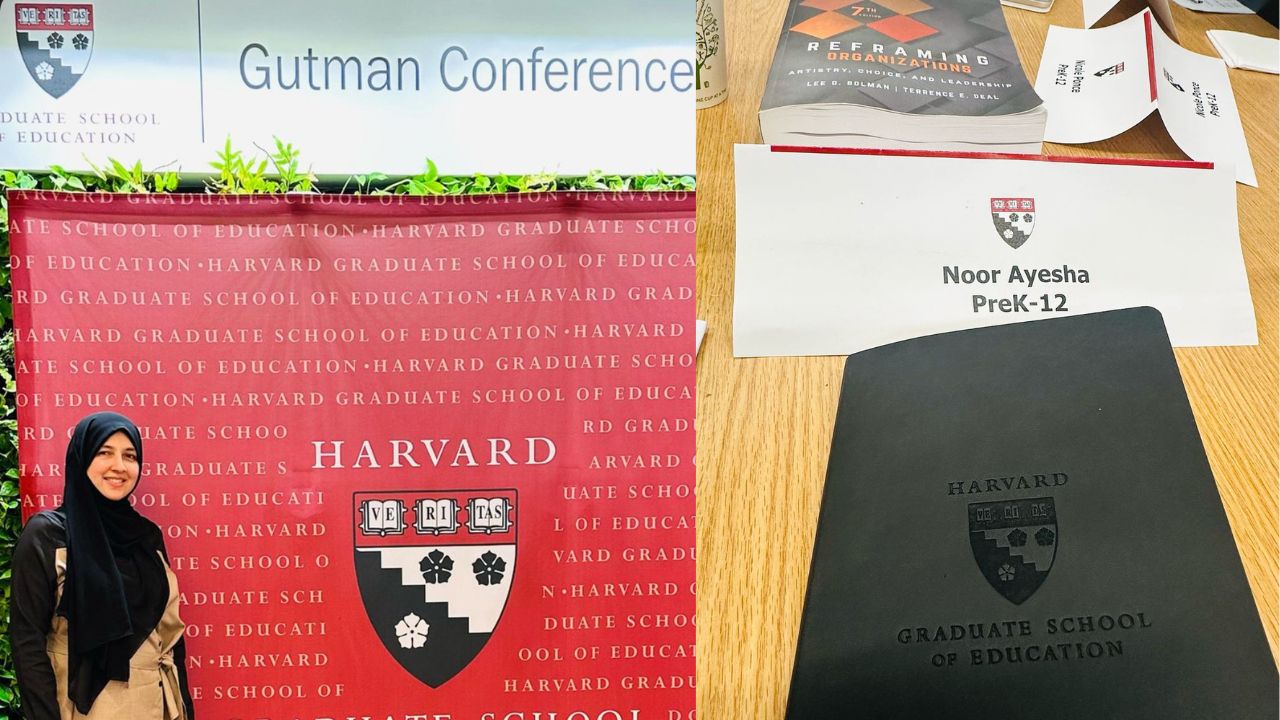
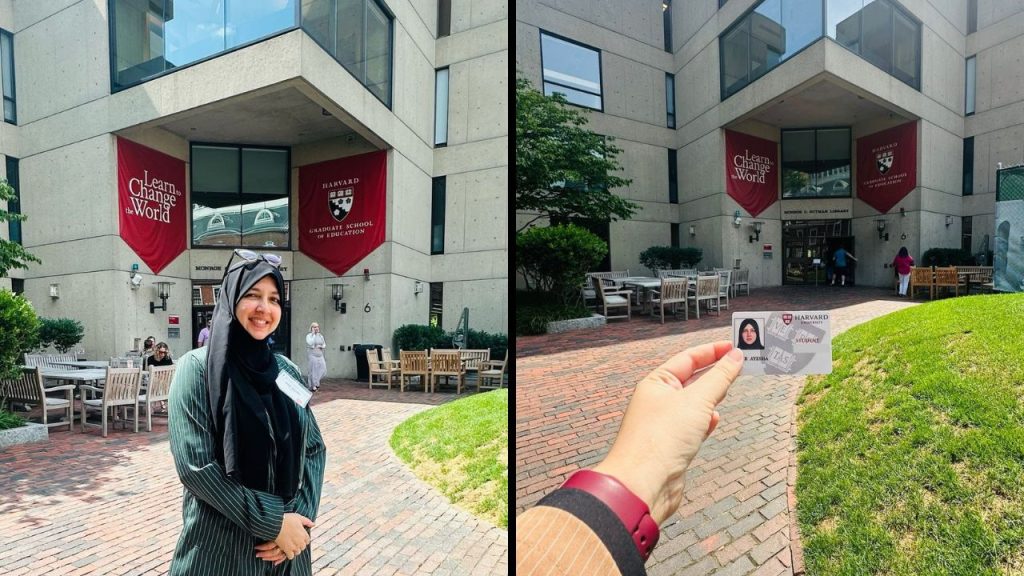
Bangalore’s own Noor Ayesha, an award-winning educator and visionary school leader, has been admitted to Harvard University for advanced postgraduate studies in Education Leadership. She joins the globally renowned Harvard Graduate School of Education to further her lifelong mission of transforming education through value-based learning and holistic child development.
Founder, Vice-Chairperson, and Managing Director of the Iqra Group of Schools in Bangalore, Karnataka, India, which includes Iqra International School, Iqra Juniors, and Iqra British Academy. For over a decade, her schools have redefined education by blending academic excellence with character formation, nurturing young minds to become not only successful learners but also compassionate, ethical citizens.
Her admission to Harvard marks a historic milestone, not just for her but for the entire region, as it highlights the global recognition of her impactful work in education. Noor’s leadership journey continues to inspire educators, parents, and youth, especially young women leaders striving to create change through education.
Quoting the famous line from the Spider-Man movie, Noor often reminds her team: “With great power comes great responsibility,” and she adds her powerful extension: “With great responsibility comes even greater accountability.” She believes educators carry the moral responsibility of shaping future generations and must be held accountable for the world they help create.
“As educators, we hold the power to shape the future,” says Noor. “My goal is to establish value-based schools across the world that nurture responsible, purpose-driven individuals who will lead with integrity and compassion.”
Her selection by Harvard is a proud moment for Bangalore, and a testament to the power of purpose-driven leadership in education.
source: http://www.thecognate.com / The Cognate / Home> Education / by The Cognate News Desk / August 11th, 2025
The certificate Aiyesha Ahmad Khan received from CIPS, University of Delhi
New Delhi:
Aiyesha Ahmad Khan, hailing from Patna and a student of Miranda House (English Hons.) won a prize in the essay writing competition on the topic ‘Unravelling the Partition of India: Multidimensional Perspectives’ which was organised by the Centre for Independence and Partition Studies (CIPS), University of Delhi. It was open to all UG/PG students and Research Scholars of the University of Delhi. There were more than 500 participants in this competition. Aiyesha was declared third in the competition and awarded with a certificate and a cash prize. The prize distribution ceremony was organised on August 14.
The essays were assessed on the parameters of Relevance to the Theme, Originality and Creativity, Depth of Content and Quality of Research, Organization and Clarity of Expression, Language, Grammar and Overall Presentation, each carrying equal weightage (20%). The word limit for the essay was between 2000 to 2500 words. The use of AI-generated content was not allowed and it was considered a disqualification. The essays were invited in both English and Hindi.
The Centre for Independence and Partition Studies (CIPS) at the University was set up in the year 2023 under Ordinance XX of the University Rules. It is perceived to be a distinguished institution dedicated to the comprehensive exploration of the multifaceted narratives surrounding the Partition and Independence of the Indian subcontinent. Its mission is to delve into the intricate complexities of this pivotal period, shedding light on the diverse perspectives, voices, experiences and anecdotes that have shaped the collective consciousness of our nation post 1947.
source: http://www.radiancenews.com / Radiance News / Home> Pride of the Nation> Awards> Latest News / by Radiance News Bureau / August 16th, 2025
It was a moment of joy and ecstasy for 18 years old Arshiya Choudhari of Solapur when she was announced second topper in Maharashtra state conducted Common Entrance Test MHT-CET 2016 for admissions to Medical courses and can now choose college of her choice for MBBS admission.
The Maharashtra Common Entrance Test (MH CET) exam was held on May 5, 2016 for which results were declared on Wednesday.
A student of A D Joshi College, Arshiya scored 199 marks out of 200 and declared second topper. She has also topped HSC exams in the state this year by scoring 97.85% (636 out of 650 marks).
The feat is very special for Arshiya because she herself prepared for the exam by dedicating 6-7 hours daily for study at home after HSC exams. “I did not join any private classes but relied upon self study at home. I am happy that I could score this much and prove people that private coaching is not always required if you have dedication”, Arshiya told TwoCircles.net.
She is now aiming to complete MBBS course and then she will decide about specialization or masters.
“I want to pursue MBBS from KEM College in Mumbai. After completing degree I will decide whether to go for administrative services or masters”, She added.
However, in any case she wants to connect with the people and serve them. “I am very eager to serve people. I see there are very few Muslim woman doctors and therefore I decided to become a doctor”, she told when asked why she chose to become a doctor.
Speaking with TwoCircles.net Yunus Choudhary, father of Arshiya expressed delight and said she is free to take admission into the college of her choice.
Yunus, who is a Jr. Engineer in water supply department in Solapur told, “I was confident that she will clear CET with excellent marks as she is a hard working girl. I will not restrict her from joining any college for MBBS”.
Nusrat, mother of Arshiya is a practicing doctor and wish to see her daughter serving the community by becoming a doctor. “I want Arshiya to become a successful doctor”, she told.
The Maharashtra Common Entrance Test (MH CET) is an entrance examination conducted by the Directorate of Medical Education and Research with an intention to provide admissions into various graduation courses for Engineering and Medicine streams.
The medical entrance examination has been in news since May 4 when a Supreme Court order made it mandatory for medical aspirants to take the National Eligibility-cum-Entrance Test (NEET). However, following several protests from parents and state education ministers, the President passed an ordinance that reversed the Supreme Court verdict partially.
Therefore for Maharashtra, admissions to medical and dental colleges will be done through the MHT-CET scores for this year.
source: http://www.twocircles.net / TwoCircles.net / Home> India News> Indian Muslim> Women> Youth / by A Mirsab, TwoCircles.net / June 04th, 2016
In 2012 Salman Taj Patil cracked the UPSC exam in first attempt and became the first Muslim IPS officer from Solapur. In this candid conversation with Imran Inamdar the 31 year old talks of issues concerning the Muslim community, of the state of education among Muslims and of his own preparation for UPSC a few years ago.
How did you manage to achieve this feat?
I immersed myself into the preparation completely. There was only one aim in my mind and that was to crack UPSC. My parents provided very good emotional support and my father Mr. Jafar Taj always encouraged me saying that ‘you are too energetic and brilliant, you can easily crack UPSC, just focus on your studies and be consistent.’
Who is your role model and Why?
Being a Muslim obviously Prophet Mohammed (PBUH) is my role model. He has showed us the complete way of life. My parents are also firm pillars of support for me. They are always there to guide me.
How to study to appear for UPSC exam?
The preparation starts at school level. Reading news papers, taking part in extracurricular activities, essay writing, debate competition play a key role. One needs to be updated about all current events. Critical analysis is also very important and it improves and polishes writing skill. Practice makes a man perfect. Nobody comes to the world with all the knowledge and skills. Effort, positive atmosphere, focus and support of near and dear ones matters most.
Why are Muslim youths far behind in cracking UPSC exam?
This is very important question. In my opinion our educational infrastructure and negative mentality are fully responsible for this. It has been hammered that qualifying this exam is very difficult or nearly impossible for minority community youth. This type of thinking is damaging and we should come out from this depressing thinking. It is a very fair competition. Achievement is a result of hard work only. It’s time to change our direction of thinking. When we focus and work hard Allah also helps us.
How do you feel serving as an IPS officer?
It’s a wonderful experience. In fact working as a police officer is a great social work itself where one gets an opportunity to help the oppressed, put criminal behind bars and provide safety and security to women and children. For this service we are getting salary from the government and will surely get Ajar (reward) from Allah too.
Sachar committee reports reveal tremendous decline of Muslims in India inallwalks of life. What are the reasons behind it?
We are ourselves responsible for this backwardness. We don’t follow the path of Prophet Mohammed (PBUH) and teachings of Quran which shows the complete way of life. We don’t read, and think over it. ‘Iqra’ which means read was the very first Quranic word to be revealed. How many of us follow the same? Education should be on our top priority specially girls’ education.
During studies what did you do to relieve stress?
I used to study for about 10 to 12 hours a day. That was hectic so I played cricket with friends and took a walk in the park to get myself mentally fresh again. And horse riding is also my hobby.
source: http://www.muslimmirror.com / Muslim Mirror / Home> Exclusive Reports> Indian Muslim> Interviews / by admin / June 26th, 2016
The Muslim girl from a modest middle-class family in the village’s Waja Mohalla tops Mumbai University with 87% in LLB
New Delhi :
In a proud moment for the Muslim community of Sopara, the ancient port and trade centre of Maharashtra, Benji Mehwish Abdul Rehman has etched her name in the annals of history as the first Muslim woman lawyer from the village. Her remarkable achievement includes topping Mumbai University with an outstanding 87% in the LLB examination is a testament to her relentless hard work and dedication.
Mehwish’s journey is not just about academic success but also about breaking social barriers. Coming from a modest middle-class family — her father, Abdul Rehman, works as an electrician — Mehwish’s path was filled with financial challenges. Yet, these hardships never dimmed her spirit or determination to succeed.
“I belong to the middle class. My father is an electrician, and I was aware of this from the beginning, so I always focused on studying hard. To make a unique identity in the society by working hard, that was my motto,” Mehwish told Clarion India over the phone. She recalled how financial struggles made her educational journey tough, but the unwavering support from her family helped her overcome every obstacle. During this time, many problems came up, but with the help of my family, I faced these problems with a smile. In this journey, my grandfather, grandmother and parents always stood by me like a rock. I secured the first position in every class.”
Her academic record speaks for itself: after passing her SSC in 2015 from Anjuman Khairul Islam Urdu High School, with 84%, she continued to shine with 80% in HSC from RB Harris Junior College and 84% in BCom from AE Kalsekar College in 2021. Clearing the bar examination from Viva College, Virar, with 87% (CGPA 9.2), she secured first position in both Mumbai University and Viva College.
Mehwish’s success carries extra significance as it comes from a community often overlooked and sidelined in mainstream narratives. Sopara, a village with deep historical roots, now celebrates this milestone that challenges the stereotypes around Muslim women and their place in education and professional fields.
Mehwish’s grandfather, Benji Rizwan Muhammad, a respected social activist in the region, played a vital role in guiding and encouraging her career choice. “The decision of which field to choose after graduation was difficult for me because all the courses were very expensive. In such a situation, by the grace of Allah Almighty, my grandfather guided me and encouraged me to become a lawyer,” she said.
She also credits the financial help from the Waja Mohalla Juma Masjid Trust and the Sidha Educational, Social and Cultural Organisation. “If these two trusts had not supported me financially by providing scholarships, this success would have been difficult,” she said gratefully.
Abdul Rehman, Mehwish’s father, expressed his pride: “My daughter is committed to discipline in her studies. We always encouraged her and provided her with whatever we could.” The support from the family, often the backbone for Muslim girls pursuing education, is a reminder that strong family encouragement can overcome societal pressures and economic difficulties.
Local social worker Zubair Ahmed Butke praised Mehwish’s achievement. “Mehwish has increased the glory of Sopara village and our Waja Mohalla by passing the bar exam. She is a role model for our community and shows that with hard work and determination, Muslim girls can reach great heights,” he said.
Mehwish now plans to practice law at Vasai Court and is preparing for her LLM. She also aspires to practice in the Bombay High Court, showing ambition that goes beyond personal success, reflecting a commitment to serve and uplift her community through the legal system.
Her story comes at a time when Indian Muslims, especially women, face various challenges related to education, economic opportunities, and social acceptance. Mehwish’s success is a beacon of hope, breaking through the barriers set by a society where many still hold biases and misunderstandings about Muslims, particularly Muslim women.
Her rise is a clear rebuttal to those who underestimate Indian Muslims or limit their potential by social or religious stereotypes. This achievement demands recognition and respect for the many silent struggles Muslim families endure in supporting their daughters’ education and professional dreams.
Community leaders and activists hope Mehwish’s story will inspire more families in Sopara and beyond to invest in girls’ education and help dismantle the barriers that have held back many Muslim girls. It also raises a call for greater institutional support to provide scholarships and opportunities to deserving students from minority communities.
Mehwish’s journey highlights a broader issue: while India prides itself on secularism and equal opportunity, the lived reality for many Muslims is often marked by discrimination and neglect. Success stories like hers push against this narrative and remind the nation of the rich talent and determination within Muslim communities waiting to be nurtured.
In contrast, some sections of the Hindu majority, especially in surrounding areas, have often failed to create an environment conducive to the educational and professional growth of Muslims. Many Muslim students face discrimination and a lack of resources, making achievements like Mehwish’s even more remarkable.
In conclusion, Mehwish’s story is not just her personal victory but a triumph for the entire Indian Muslim community. It sends a strong message that Muslim girls from modest backgrounds can break social barriers, excel academically, and contribute meaningfully to society when given support and opportunity.
Her rise deserves to be celebrated widely — as a beacon of hope and a clear example that when families and community come together to support girls’ education, the results can be extraordinary.
source: http://www.clarionindia.net / Clarion India / Home>Editor’s Pick> Indian Muslims> Women / by Mohammad bin Ismail / July 14th, 2025
Umar Sheikh’s determination and the school’s support have been vital to his academic achievements
New Delhi :
The Maharashtra State Examination Council’s recent 5th and 8th class scholarship exams witnessed remarkable achievements from students across the state. Among them, 954 students from the Brihanmumbai Municipal Corporation (BMC) schools secured places on the district merit list, with Muslim student Muhammad Umar Sheikh standing out as the top scorer in the 8th class scholarship exam with an impressive 72.79% marks.
This achievement is particularly significant given the exam’s difficulty and the fierce competition from students all over Maharashtra. The 8th class scholarship exam was held on February 9, drawing hundreds of participants. In the 5th class category, Ridhi Kamlesh Mishra from Vakola BMC Hindi Medium school topped with 79.19% marks.
Muhammad Umar Sheikh, a student of Deonar Colony MPS School No. 4 and currently in the ninth grade, secured 236 out of 300 marks, making him the highest scorer in all BMC schools for the 8th grade. This year, out of the 954 successful candidates, 536 were from the 5th grade and 418 from the 8th grade. This is a sharp increase compared to last year’s 405 students who cleared the exams.
Speaking to the media, Muhammad Umar’s father, Muhammad Saleem, shared the challenges their family has faced. “My son has been topping his class in mathematics and science since the beginning. He loves these subjects and has been very focused,” said Saleem. He added that Umar had also topped the 5th class scholarship exam.
Saleem narrated the difficulties faced by the family during the COVID pandemic. “Before COVID, my two children studied at DY Patil School in Nerul, Navi Mumbai. However, due to the loss of income during the pandemic, I could not pay their school fees, and the school stopped their studies. The school even refused to give their transfer certificates because of unpaid fees,” he explained.
With limited options, Saleem moved his family to Govindi in 2021 and struggled to find admission for his children. “It was not easy, but with persistence, I managed to get them admitted to a school here,” he said. Despite the hardships, Saleem is proud of his children’s resilience and achievements. “They are intelligent, and their performance at the new school has been excellent,” he remarked.
When asked about his son’s ambitions, Saleem said, “Umar wants to become a scientist. He has been saying this since the first grade, and with the way he is studying, I believe he will achieve it.”
The school’s principal and staff have expressed great pride in Muhammad Umar’s success. Principal Menal Chaudhary, along with teachers Uday, Ravi, Balu, Prateek, Nitin, and Smithia Madam, congratulated Umar and praised his dedication and hard work. “His success is a source of pride for the entire school,” they said.
This story highlights not only the academic excellence of Indian Muslim students in Mumbai’s government schools but also the obstacles faced by economically weaker families. It also reflects the support provided by committed teachers and principals who encourage students to reach their full potential.
Muhammad Umar Sheikh’s story serves as an inspiration for many young students facing financial hardships, demonstrating that determination and support can lead to success. His achievement, along with the rise in the number of successful students from BMC schools, reflects a positive change in the educational opportunities for Indian Muslim children, who often face social and economic challenges.
In a city known for its diversity, such stories emphasise the need to acknowledge and support the talents and ambitions of minority communities. This achievement sends a message to all that education is the key to overcoming barriers and achieving dreams, regardless of one’s background.
source: http://www.clarionindia.net / Clarion India / Home> Indian Muslims / by Clarion India / July 14th, 2025
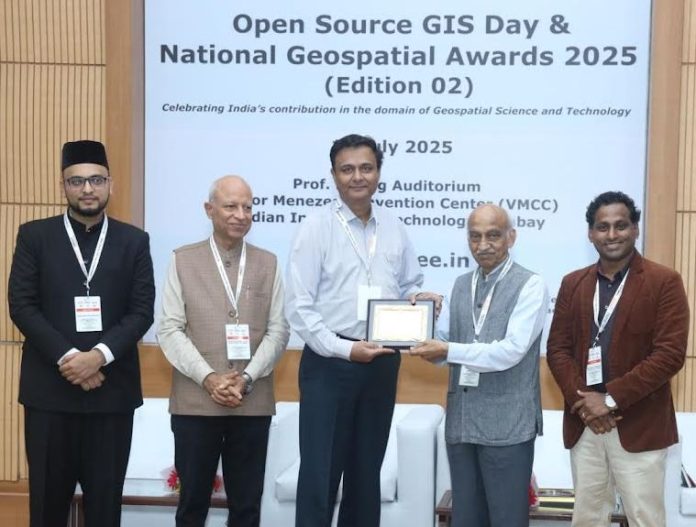
Prof Shahab Fazal of the Department of Geography, Aligarh Muslim University (AMU), has been conferred the prestigious National Geospatial Faculty Fellow Award at the Indian Institute of Technology (IIT) Bombay.
The award was presented in recognition of Prof Fazal’s significant contribution to advancing geospatial education through his textbooks and Massive Open Online Courses (MOOCs) on remote sensing and Geographic Information Systems (GIS). His work has played a vital role in popularising geospatial technologies and making them accessible to students across the country.
Padma Shri Prof Kiran Kumar, Former Chairman of the Indian Space Research Organisation (ISRO), presented the award during a special ceremony held at the Prof B. Nag Main Auditorium of IIT Bombay.
The award ceremony was a key highlight of the Open Source GIS Day Celebrations, organised by the FOSSEE GIS project of IIT Bombay. This initiative falls under the National Mission on Education through ICT (NMEICT), Ministry of Education, Government of India.
source: http://www.radiancenews.com / Radiance News / Home> Pride of the Nation> Awards> Latest News / by Radiance News Bureau / July 18th, 2025
Coping with financial issues, Muhammad Kashif Ghulam Rabbani aced the tough CA exam in his first attempt, becoming an inspiration for many youths in Dhule and beyond
Dhule :
A young man from a humble background has brought pride to his city and community by becoming the first Muslim Chartered Accountant (CA) in the Maharashtra city of Dhule. Muhammad Kashif Ghulam Rabbani, son of a tailor, has successfully passed the final CA examination, considered one of the toughest professional exams in the country.
Kashif’s journey to success was not easy. Coming from a financially struggling family, his father, Ghulam Rabbani, worked tirelessly as a tailor to ensure that his son’s education continued uninterrupted.
“Despite the tough circumstances, Kashif’s father did not let poverty stop his son from chasing his dreams,” said Advocate Sheikh Zubair. “He supported Kashif in every way, and today the result is in front of us.”
Kashif began his education at Muhammadiya Boys Urdu School in Dhule. He completed his 12th Science at SSVPS College and then studied BCom for a year at Jay Hind College. But later, he left traditional studies and shifted his focus entirely to preparing for the CA exam.
Under the guidance of CA Ijaz Sir at Anam & Associates in Pune, Kashif started his onward journey. He did his internship at the ‘Association of Indian Chartered Accountant Firm’ and later studied for the final exam at the Asim Khan Study Centre in Dhule.
Speaking to the media, Kashif shared, “Most children choose fields like engineering, teaching, or law. But when I looked around in our society, I saw a lack of chartered accountants. I decided to step into this field to fill that gap.”
He added, “I worked hard and stayed focused. I had only one goal—to become a CA. I’m happy I passed in my first attempt.”
Kashif’s achievement is not only a personal victory but also a proud moment for the entire city. His success has been widely celebrated by community leaders and educators, who see it as a message of hope for many underprivileged students.
“This is not just a personal success story,” said Advocate Zubair. “It is a message to all youth—especially those who give up studies due to financial problems—that with strong willpower, nothing is impossible.”
Muhammad Kashif’s success has brought honour to his family, school, and city. He now stands as a role model for others who want to achieve big dreams.
With this achievement, Kashif has proved that passion, hard work, and determination can break all barriers.
source: http://www.clarionindia.net / Clarion India / Home> Editor’s Pick> India> Indian Muslim / by Team Clarion / July 10th, 2025