Category Archives: Freedom Fighters (under research project)

Evaluating Indian Kings: Tipu Sultan Stood Against the British with Valour and Courage

Mysuru, KARNATAKA :

The half-baked propaganda of communal forces against the Tiger of Mysore is trying to divide communities
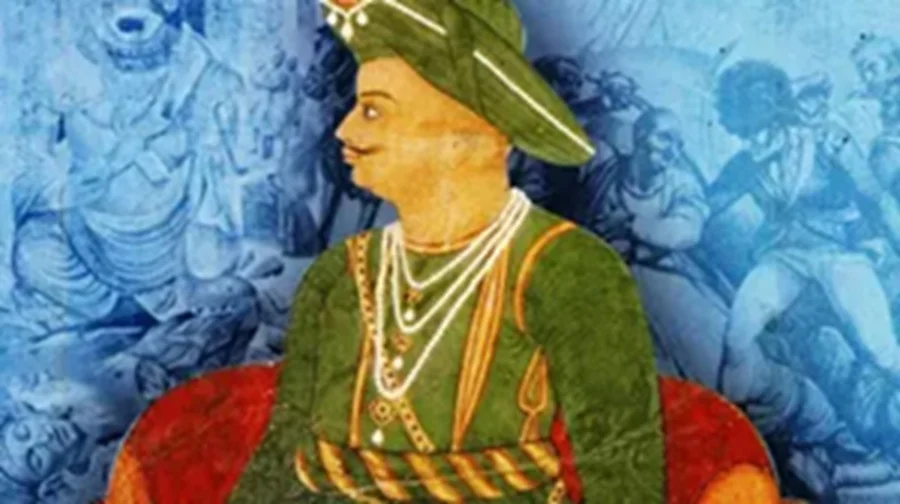
THE Tiger of Mysore (Sher-e-Mysore) Tipu Sultan often finds space in sections of the media, especially in Karnataka. There have been occasions of State-sponsored celebrations of his birth anniversary and the Bharatiya Janata Party (BJP) regularly creates obstacles to these celebrations, resulting in unnecessary ruckus. This time around, Tipu Sultan is in the news from Malegaon in Maharashtra.

The newly elected deputy mayor of Malegaon Shan-e-Hind Nihal Ahmad, put up the portrait of Tipu Sultan in her office, upsetting the Shinde group’s Shiv Sainiks and the BJP. These forces got the portrait removed with the intervention of the authorities. Some protests were also held.

Maharashtra Pradesh Congress Committee President Harshvardhan Sapkal got incensed and defended Tipu Sultan, claiming that the contribution of Tipu Sultan to Mysore is equivalent to that of Chhatrapati Shivaji Maharaj in Maharashtra.

But, Chief Minister Devendra Fadnavis did not like the idea of comparing Tipu Sultan and Shivaji Maharaj, as it was an insult to the latter. Following this absurd comment, the Congress office was pelted with stones by BJP workers and nearly seven people were injured in the ensuing mayhem.

The objection of the BJP to the statement from the Congress leader is that Tipu was a “mass murderer of Hindus” and he tried to convert Hindus to Islam. There are many other charges put against Tipu by Hindutva elements. Most of these try to project Tipu as anti-Hindu and a cruel king. This is far from the truth.

Lots of these myths are part of the communal narrative, accentuated by the British narratives, which are harsher against Tipu in particular. This is because he was one of the few rulers who fought against the British. Tipu had asked Nizam and the Peshwas to oppose the armies of the East India Company. He foresaw the dangers of British power entrenching in India.

Tipu’s administration was a mixed one, with many top officers being Hindus. Purnaiah served him as the Mir Miran (head of a department) and was crucial to his administration. Krishna Rao was his treasurer. Shamaiya Iyengar held a high-ranking ministerial position and Narsimha Iyengar held a position in the postal department. Tipu Sultan reportedly provided grants to the Sringeri Shankaracharya, including for the rebuilding of the temple and the installation of the Hindu goddess Sharada. He granted land and endowments to various temples throughout his kingdom. During his reign, the 10-day Dussehra celebrations were an integral part of the social life of Mysore.

In 1791, Maratha forces led by Raghunath Rao Patwardhan attacked and plundered the historic Sringeri Sharada Peetham, causing the Shankaracharya to flee. Upon learning of this, Tipu Sultan expressed deep anger, stating that those who committed such acts would face consequences, and promptly sent funds, gifts, and letters to restore the temple and reconsecrate the idol. The raid was part of the Third Anglo-Mysore War, during which Maratha forces caused significant destruction to the temple complex, including killing or wounding people and looting property.

Tipu Sultan, who frequently interacted with the Sringeri Jagadguru and addressed him with high respect, immediately ordered the Mysore administration to assist in the restoration, demonstrating his patronage of certain Hindu institutions. Evidence of this restoration is found in several letters in Kannada, preserved in the Sringeri monastery records, where Tipu requested the Jagadguru to pray for the prosperity of his kingdom.

Tipu Sultan was a staunch opponent of the British. There is an accusation against him that he persecuted some Hindu and Christian communities. The reason for this persecution, however, was purely political, not religious. About these persecutions, historian Kate Brittlebank says that “This was not a religious policy but one of chastisement”. The communities targeted by him were seen as disloyal to the State.

The communities Tipu targeted did not belong only to the Hindu stream. He also acted against some Muslim communities, like the Mahdavis. The reason was that these communities were supporting the British and were employed as horsemen in the East India Company’s armies. Another historian, Susan Bayly, says that Tipu Sultan’s attack on Hindus and Christians outside his state is to be seen on political grounds, as at the same time he had developed close relations with these communities within Mysore.

Sarfaraz Shaikh, in his book Sultan-E-Khudad has reproduced the ‘Manifesto of Tipu Sultan’ in which he declares that he would not discriminate on religious grounds and would protect his empire until his last breath. He had a great interest in rocket technology. This finds appreciative mention in Dr APJ Abdul Kalam’s book, Wings of Fire.

It is interesting to note that in the Rashtriya Swayamsevak Sangh’s series for children on Indian history, they had published a book on Tipu in the 1970s. BJP’s Yeddyurappa had adorned Tipu’s headgear to solicit votes in the 2010 elections in Karnataka. Then President, Ramnath Kovind, sent a eulogising message on the occasion of Tipu Jayanti (2017). He has an RSS background. He praised Tipu by saying that “Tipu Sultan died a heroic death fighting the British. He was also a pioneer in the development and use of Mysore rockets in warfare.”  Tipu – along with Rani Laxmi Bai – are also depicted as freedom fighters through drawings in Part XVI (page 144) of the original, hand-written and illustrated copy of the Indian Constitution.

Due to his policies, Tipu was popular among the people of Mysore. There are many folk songs, sung in villages, praising him. It is for this reason that one of our greatest playwrights, Girish Karnad, said that had Tipu been a Hindu, he would have the same status that Shivaji Maharaj has in Maharashtra. This is very close to what Sapkal stated, nothing extra.

This whole incident of opposing the portrait of Tipu in the Deputy Mayors’ office is one more instance of communal forces latching on to divisive politics. Kings should not be seen just by their religion; their policies towards people of different religions and people’s welfare should be the major criterion for evaluating them. Tipu stands very tall in this scale of religious tolerance. The half-baked propaganda of the communal forces is trying to divide communities.

A major tribute to Tipu was paid by Subhash Chandra Bose. He adopted Tipu’s ‘springing tiger’ as the insignia of Azad Hind Fauj, which fought against the British. The major contribution of Tipu was to forewarn the Indian rulers about the advancing threat of the East India Company, the British. It was for this that he bravely fought against the British and laid down his life in the fourth Anglo-Mysore War. The communal forces who are out to demonise Tipu belong to the ideology that did not even lift a little finger against the British rule.

source: http://www.clarionindia.net / Clarion India / Home> Opinion / by Prof Ram Punyani / February 18th, 2026
Remembered in files, erased in life: Jharkhand’s forgotten martyrs of 1857

JHARKHAND :

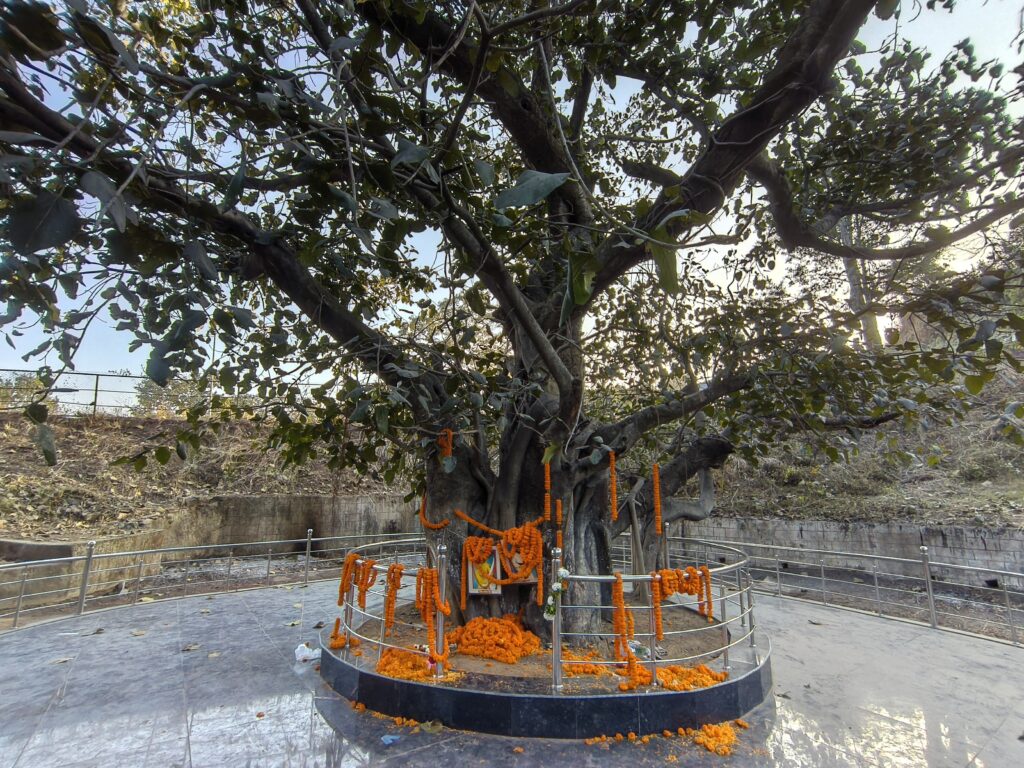
The Banyan tree on which the execution took place. Photo: Ghulam Ahmad Raza

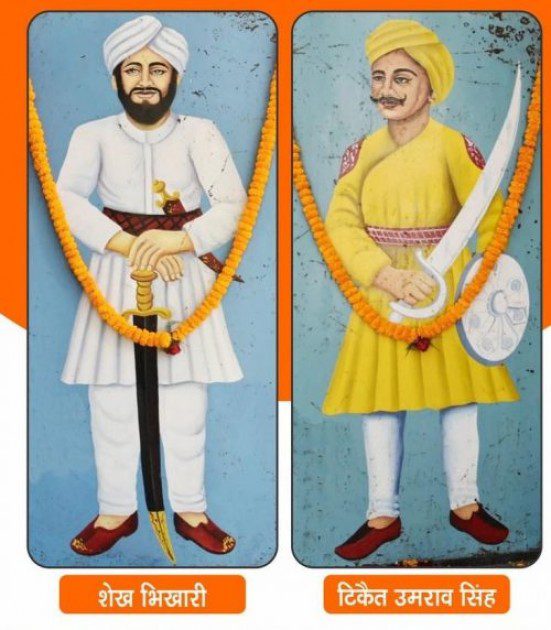
During the 1857 revolt against British rule, Jharkhand too witnessed armed resistance. The rebellion had spread across regions including Ranchi, Hazaribagh, Ramgarh, Palamu and Singhbhum. In the dense forested border areas of Ranchi and Hazaribagh, the rebel forces were led by Shaheed Sheikh Bhikhari Ansari and Tikait Umrao Singh. From the dense jungles of the Chuttu Palu valley, their army fought British troops and prevented Ranchi from falling under colonial control. Both leaders were captured by the British forces on January 6, 1858 and were publicly executed by hanging on January 8, 1858, in the same Chuttu Palu valley.

The banyan tree on which they were hanged still stands today. The Jharkhand government has developed the surrounding area as a martyr memorial with the stated aim of preserving history and keeping alive the legacy of the region’s sites of resistance. Yet even today, many residents of the Chuttu Palu village where the memorial stands remain unaware of who these martyrs were.

Fifty-eight-year-old Nirmal Kumar, who works as a stone breaker near the memorial, often rests inside the premises during breaks. He says he has been coming here since childhood. Despite this, he is unaware of the historical significance of the site and does not recognise the names of Sheikh Bhikhari Ansari or Tikait Umrao Singh.

“I only know that blankets are distributed here every year on January 8,” he said. On the martyrdom anniversary, social workers and officials visit the site to pay tribute and distribute essentials among the poor.

Sanjay Munda, a resident of Chuttu Palu village, said that even today, most villagers do not know about the martyrs or the memorial’s history. “Members of the surrounding Scheduled Tribe (ST)  and Scheduled Caste (SC) communities refer to the site in the local language as Fasiyahi Bar (tree where the hanging took place). Most people do not know about the 1857 revolt or the sacrifice of Sheikh Bhikhari and Tikait Umrao Singh,” he told Maktoob.

Despite the lack of awareness, locals often bow their heads in respect when passing the site.

The memory of these two revolutionaries who laid down their lives fighting British rule is slowly fading. Their history has largely been reduced to government files and digital web pages. On martyrdom days, ministers, officials and locals pay tributes, but beyond symbolic gestures, little is done. While the Jharkhand government has taken some steps to acknowledge them, no substantial initiative has been taken by the central government to formally recognise or honour their contributions.

Dr Muzaffar Hussain, researcher and author of Jharkhand ki Muslim Vibhutiyaan, says Muslim, SC and Adivasi martyrs have not received the recognition they deserve. “Jharkhand has produced many revolutionaries who sacrificed their lives for India’s freedom, but recognition has been limited largely to Birsa Munda only,” he said.

He points out that the 1857 revolt took place nearly 40 years before Birsa Munda’s Ulgulan (revolt). “Names like Nadir Ali, Imam Ali, Jatra Tana Bhagat, Sidhu–Kanhu, Phulo–Jhano, Nilambar–Pitambar, Sohbat Miyan, Chandan Miyan, Jaggu Miyan and Najahat Hussain are a part of Jharkhand’s resistance history during the 1857 revolt, yet they remain largely forgotten.”

Hussain argues that the Jharkhand government must project its revolutionaries on a larger scale for the central government to take meaningful steps. “Even platforms like Google and Wikipedia carry very limited information about them,” he said.

He suggests state-funded research, naming welfare schemes and government buildings after revolutionaries and honouring their descendants are ways to restore their place in public memory.

Ruchi Kujur, an activist working on SC and ST rights and a member of the Jharkhand State Commission for Protection of Child Rights, said every state has its own history, and Jharkhand is rich with stories of courage and resistance. “The list of Adivasi and SC heroes is long,” she said.

“People need to be made aware of their ancestors’ sacrifices. When these revolutionaries are honoured, it inspires the younger generation to work for society and the nation.”

Situated amid a valley rich in natural beauty, the martyr memorial complex (Shaheed Sthal) has been developed with basic amenities. Yet, several factors discourage people from visiting the site, further deepening the lack of public awareness about the martyrs. Surrounded by dense forests and hills, the memorial lies in an isolated location, with no human habitation within a radius of nearly five kilometres. This isolation is a major reason why people hesitate to visit the site, either alone or with their families.

The premise includes resting sheds, benches and toilet facilities. However, due to poor maintenance, thick shrubs have grown across the complex. Lights installed in the area and doors of the toilets have reportedly been stolen. Although the police conduct patrols from time to time, the absence of adequate security continues to deter visitors.

Ghulam Ahmad Raza is a Jharkhand-based freelance journalist with over four years of experienceHe has worked as a City Reporter with Pratah Awaz and as a Sub Editor with Prabhat MantraHis reporting focuses on marginalised communities, forgotten histories and grassroots political narratives.

source: http://www.maktoobmedia.com / Maktoob Media / Home> East India / by Ghulam Ahmad Raza / January 29th, 2026

Havaldar Jhantu Ali Shaikh Honoured With Sena Medal for Supreme Sacrific

WEST BENGAL :

New Delhi:

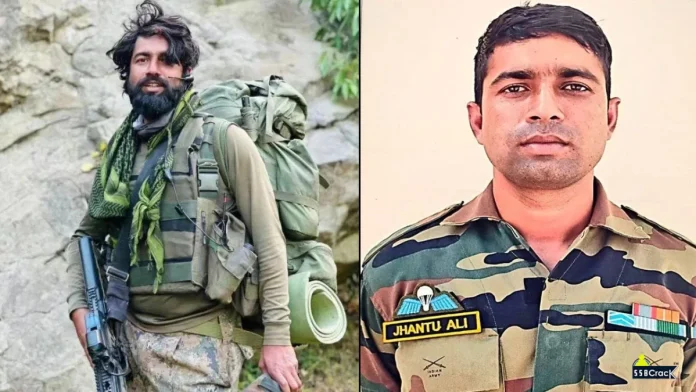
The Indian Army has posthumously awarded the Sena Medal to Havaldar Jhantu Ali Shaikh of the elite 6 Para Special Forces, recognising his exceptional courage and sacrifice during a counter terrorism operation in Jammu and Kashmir. The gallantry award was announced on the occasion of Republic Day 2026.

Havaldar Shaikh, a resident of West Bengal, laid down his life during a fierce encounter with terrorists in the Udhampur district on April 24, 2025. He served with the 6 Para Special Forces, one of the Army’s most demanding combat units. During the operation, he faced heavy fire and suffered grave injuries. He continued the mission despite his condition and ensured pressure on the terrorists until his final moments.

Army officials said his conduct reflected discipline, courage, and devotion to duty. His actions helped protect fellow soldiers and upheld the operational objective. The Sena Medal recognises acts of bravery and exceptional service. His name features among 70 gallantry award recipients announced this year, highlighting the continued sacrifices of armed forces personnel.

The White Knight Corps paid tribute to Havaldar Shaikh and acknowledged his role in counter insurgency efforts in the region. Fellow soldiers described him as committed and fearless, with a strong sense of responsibility toward his unit and the nation.

Havaldar Jhantu Ali Shaikh’s sacrifice holds deep meaning for the country. His story reflects service guided by faith, duty, and courage. His legacy stands as a reminder of the price paid by soldiers who protect national security and civilian lives, even at the cost of their own.

source: http://www.radiancenews.com / Radiance News / Home> Latest News> Report / by Radiance News Bureau / January 27th, 2026

Historian revisits Maulana Azad: A secular nationalist and nation-builder

Mecca, (Ottoman-SAUDI ARABIA / Kolkata, WEST BENGAL / DELHI :

Abul Kalam Ghulam Muhiyuddin (November 11, 1888-February 22, 1958), better known as Maulana Azad, was a writer-activist-statesman.

Historian S Irfan Habib speaks on Maulana Azad on his birth anniversary at an event organised by the Maulana Azad College alumni association in Calcutta on Tuesday / The Telegraph

Historian S. Irfan Habib, while delivering his Maulana Abul Kalam Azad memorial lecture titled “Revisiting Maulana Azad in Contemporary India” on Tuesday, rued how in today’s India, anytime he posts anything on social media on the freedom fighter, 80 per cent of the comments comprise hateful abuse.

“Full of abuse… 80 per cent of the comments. And from people who have no idea of who he was, what he stood for, and what he did for India,” said Habib, whose lecture on the Maulana on the icon’s 137th birth anniversary was organised by the Maulana Azad College alumni association to mark the college’s centennial.

Abul Kalam Ghulam Muhiyuddin (November 11, 1888-February 22, 1958), better known as Maulana Azad, was a writer-activist-statesman.

One of Mahatma Gandhi’s most trusted lieutenants and the youngest president of the Indian National Congress, he made crucial contributions to the freedom movement. He was also Independent India’s first education minister.

“I will speak about those issues relevant for today’s India. What he did for education, how he defined nationalism — today all those who have no idea of what nationalism is are nationalists — and how he defined Islam…. Islam too is in danger when we see what we believers have done to our own faith,” said Habib, former Maulana Azad Chair at the National University of Educational Planning and Administration, New Delhi.

Maulana Azad’s family moved from Mecca to Calcutta when he was two. He spent several decades of his life in this city, his residence on 5 Ashraf Mistry Lane of Ballygunge now a museum.

November 11 is celebrated as National Education Day to recognise his contribution in establishing the education foundations of India — from the Indian Institutes of Technology, the University Grants Commission, the All India Council for Technical Education, the Council of Scientific and Industrial Research, the Indian Institute of Science, and the Sahitya Akademi, the Sangeet Natak Akademi and the Lalit Kala Akademi, besides the Indian Council for Cultural Relations.

“Patriotism, nationalism and humanism, the difference between them Maulana tried to look at. In this (the belief in the culmination in humanism) he was very close to Gurudev Rabindranath Tagore, and he actually writes about it, that he believes in the idea of nationalism which was pitched by the idea of Tagore’s humanism and universalism,” said Habib.

“True relationship is only one, where the entire earth is one’s native land. This is necessary is today’s India, where we indulge in othering among own citizens, in the name of religion, caste, language, all sorts of issues, all sorts of divisive tools we use to divide Indians, while Maulana says mankind is one family and all humans are brothers, this is the idea of humanity of nationalism which Maulana left behind,” he added.

Habib underscored how the Maulana began as a pan-Islamist, speaking against the subjugation of Muslim nations by imperialist powers — a sentiment expressed strongly in his papers Al-Hilal and Al-Balagh, and it was because of his role as a fiercely upright journalist that the British Raj viewed him as one of the most dangerous persons in India.

Habib stated that after the Maulana was released from exile in Ranchi in 1920, he was torn between reading and writing in seclusion, or public life and the freedom struggle. It was soon after coming out of exile that the Maulana met Gandhi on January 18, 1920, for the first time.

“The meeting seemed to have had a profound impact on both… and they remained inseparable for the rest of his (Gandhi’s) life,” he said.

According to Habib, the Maulana fought on multiple fronts, not only against the British, but also Hindu and Muslim communalists.

“Maulana stressed on indivisible or composite nationalism, where he went back to early Islamic history, when the Prophet (Muhammad) created the first Muslim nation in Medina by aligning with the Yehudis (Jews). He saw no reason why Muslims could not join hands with Hindus and others in nation-forming…. He was appalled with communalists busy with sectarian campaigns when the need was to fight the British as a composite nationalist group,” Habib said.

“Maulana stood for a united India and remained steadfast in this resolve till the end. We are amid polarising politics where religion has become a distinct marker of identity…. The majoritarian nationalism being flaunted today runs contrary to the idea of composite nationalism espoused by Maulana all his life,” he added. “Maulana found the demand for Pakistan absurd as he was conscious of the fact that religion cannot be a binding factor for a nation.”

source: http://www.telegraphindia.com / The Telegraph Online / Home> West Bengal / by Meghdeep Bhattacharyya / November 12h, 2025

In the run-up to Independence, a little-known resistance in the Malabar region

KERALA :

A new book sheds light on the ‘Malabar Revolt’ in a region which had a history of Muslims and Hindus collaboratively persevering in their resistance against colonial forces. Other books explore its links to the Khilafat movement and why it is more than a peasant uprising.

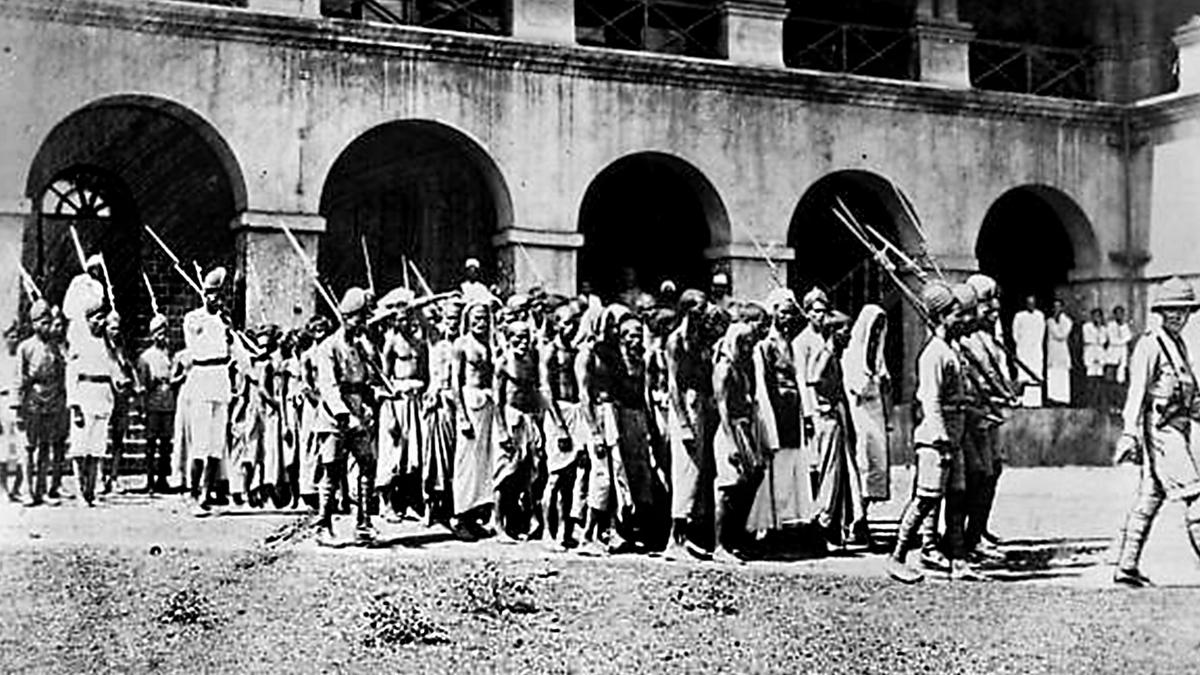
Moplah prisoners go on trial in Calicut | Photo Credit: Getty Images

Growing up in Delhi, one had only a limited idea about the resistance movement in the Malabar region. The popular history books tended to treat it at best as a little outpost of the freedom movement. Noted historian Bipan Chandra in India’s Struggle for Independence (Penguin) dubbed it as a peasant movement.

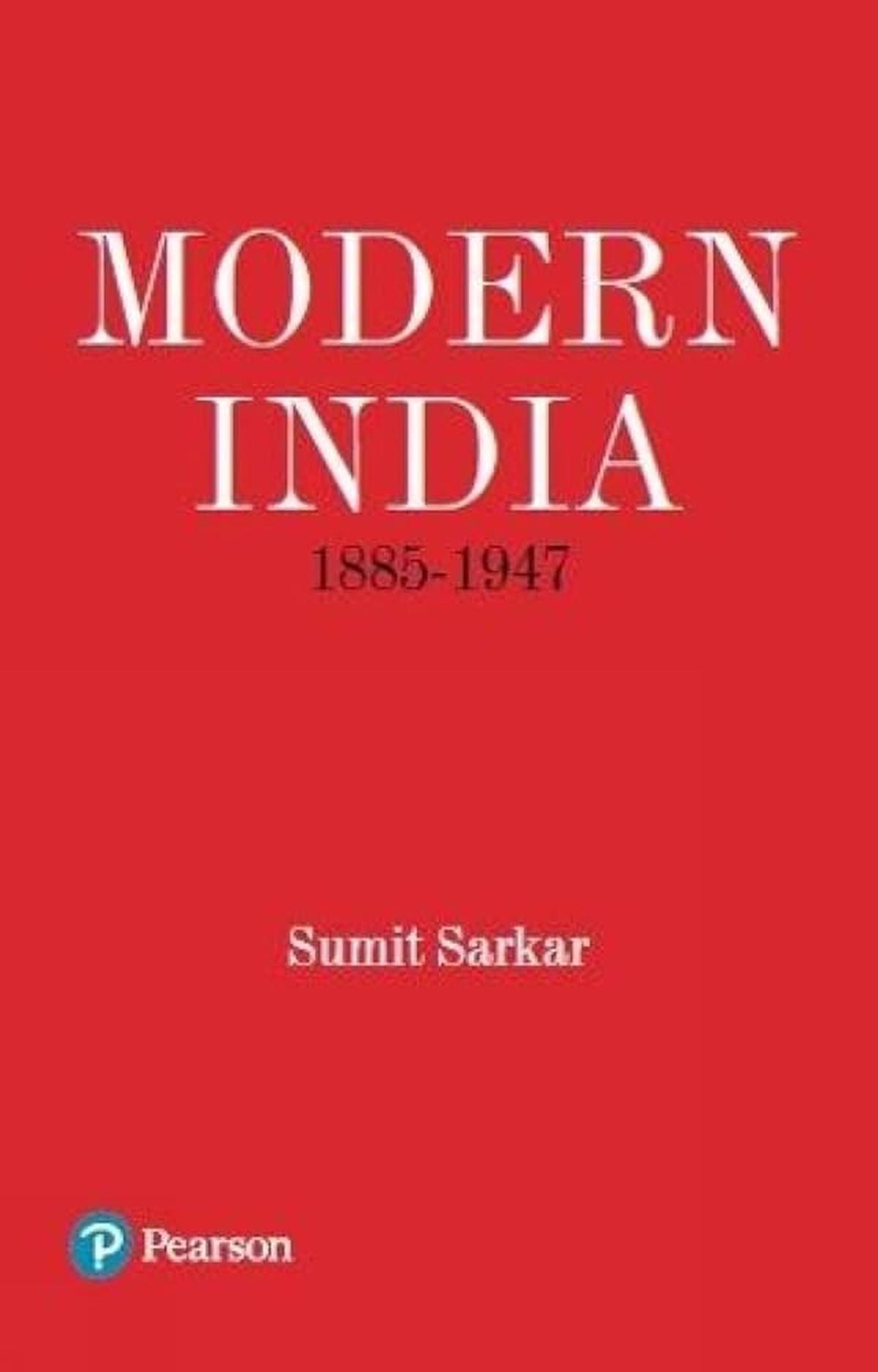
“In August 1921, peasant discontent erupted in the Malabar district of Kerala. Here, Mappila tenants rebelled. Their grievances related to lack of any security of tenure, renewal fees, high rents…the impetus for resistance had first come from the Malabar District Congress Conference at Manjeri in April 1920,” Chandra writes. Sumit Sarkar too, confined himself to calling it an “anti-landlord revolt” in his book, Modern India (1885-1947), published by Pearson. There have been noises about the association with the Khilafat movement in academic circles, though. Just as there are historians who see it merely from a communal prism. A holistic picture had failed to emerge.

Enlightening exploration

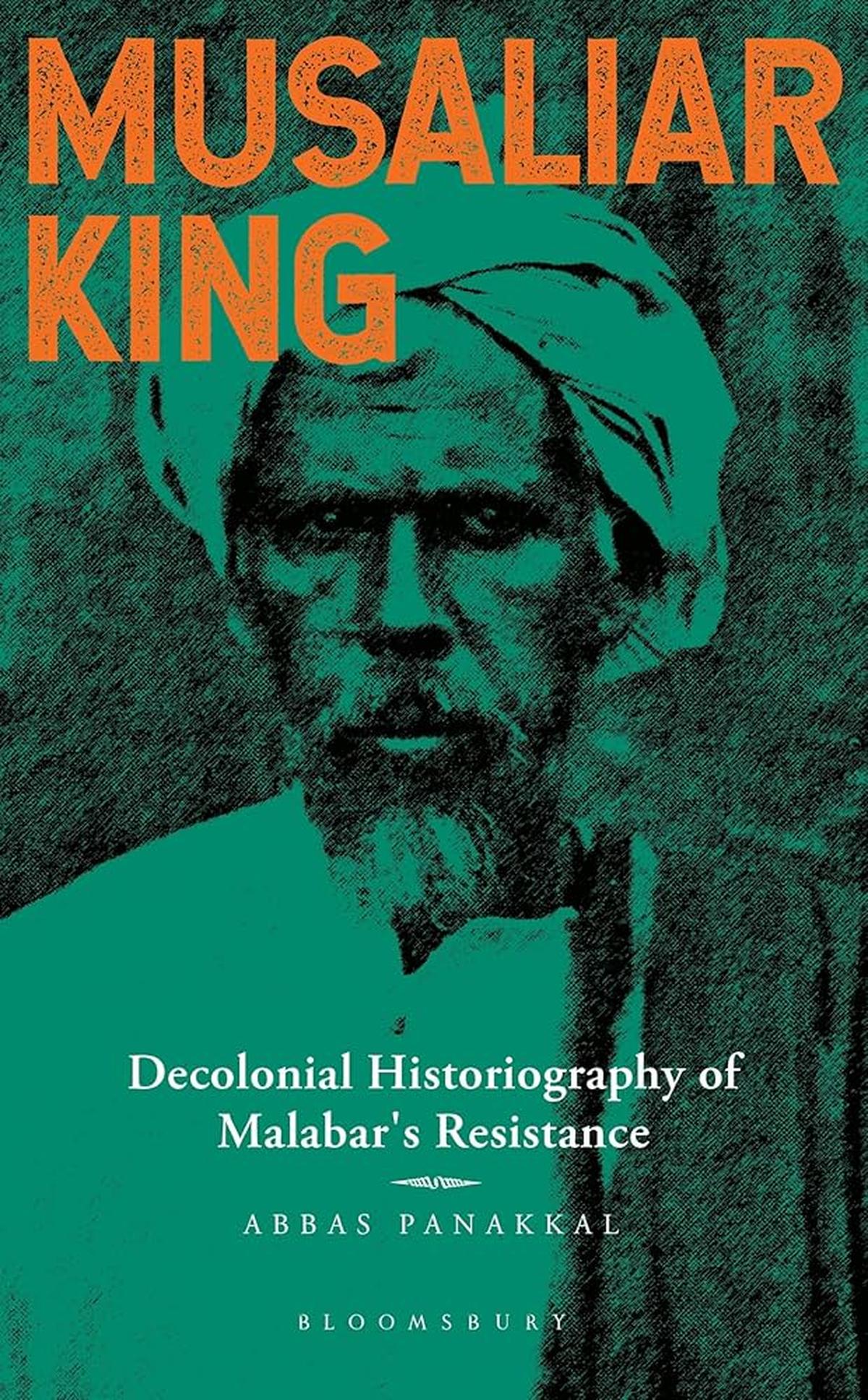
Some belated but well-deserved attention on the resistance movement has come courtesy Abbas Panakkal’s Musaliar King: Decolonial Historiography of Malabar’s Resistance (Bloomsbury). Starting off as an exploratory exercise on the 75th anniversary of the movement, Panakkal’s venture transforms into an enlightening journey.

Early in the book, the author writes, “The socio-geographical landscape of our community underwent profound transformations in the wake of the cataclysmic events of 1921-22. This epoch witnessed a staggering loss of lives, the forced displacement of families… The old mosque of Tirurangadi emerged as a veritable repository of memories and narratives, a historical bastion of ideological resistance against the British colonial apparatus.” Fittingly, it was on the commemoration of the 75th anniversary of the 1921 resistance that Panakkal started his exploration, speaking to the family members of those directly involved.

Among them was Muhammed Ali Musaliar, grandson of Ali Musaliar, a luminary of the 1921 struggle. The British referred to Ali Musaliar as a king; the locals regarded him as a community and spiritual leader, calling him Musaliar Uppapa. Indeed, if Musaliar was a ‘king’, Malabar was his ‘kingdom’.

Incidentally, the term Malabar is derived from the vernacular Mala, signifying hill, and the affix originating from the Arabic word barr, which means the source of all goodness. The region had a long tradition of anti-colonial resistance dating back to the 16th century. “Muslims and Hindus collaboratively persevered in their resistance against colonial forces,” writes Panakkal.

This strong anti-colonial stance had unforeseen consequences. The British, with not a little help from some Indian officials, sought to undermine the movement. Among them was C. Gopalan Nair, Malabar district deputy collector, who “unabashedly deployed his literary prowess in favour of the British cause”. Observes Panakkal: “The usage of terms such as Malabar Revolt and Moplah Rebellion to delineate these struggles is emblematic of this issue. Revolt itself is a term crafted by colonial administration, characterising violent actions against a recognised government or ruler.”

‘Peaceful coexistence’

There were others, though, whose hearts beat for the locals, luminaries who either linked the resistance to the Khilafat movement or, in isolation, read it as an agrarian struggle. Among them were Saumyendranath Tagore, who regarded it as “an organic and spontaneous ‘uprising’ of the Malabar peasantry against British imperial rule” and E.M.S. Namboodiripad, who too “didn’t discount the role played by agrarian discontent”. There was a common thread: the oppression and exploitation meted out by colonial officials and landlords was no less severe upon the Hindu peasants as they were on their Muslim counterparts. Writes Panakkal, “The Malabar narrative heralded a rare phenomenon: the harmonious convergence of Hindus and Muslims. This coalition was underpinned by a shared objective — to oust the oppressor — and a collective aspiration for a peaceful coexistence in the region.”

It is something with which even R.N. Hitchcock, police superintendent of Malabar, agreed. As written by N.P. Chekkutty in Mappila and Comrades: A Century of Communist-Muslim Relations (Other Books). “Hitchcock also reveals that Hindus were involved in the rebellion, at least in some parts of the affected areas. ‘The Hindus took an active part only in the extreme south-eastern area of the Valluvanad taluk and in small numbers for a concise time. They were then responsible for much property damage’.” In his persuasively argued book, with much of the focus on the post-resistance time in the late 1930s and 40s, Chekkutty also talks of the rebels not harming any substantial section of the local population before going on to document the failure of the Congress to retain local Muslim support after the resistance movement. It was a vacuum which both the Communist Party of India and the All India Muslim League attempted to fill.

The Khilafat angle

Interestingly, against this background of common cause transcending the confines of faith came the pan-Islamist Khilafat movement. Things became even more ironic as Malabar’s historical tapestry of anti-colonial resistance “had been woven with threads of unity binding Muslims and non-Muslims in a shared ‘jihad’ to safeguard the throne of the Hindu king, the Zamorin of Calicut,” as analysed by Panakkal. Khilafat, Non-Cooperation, Mappila, with seemingly disparate social elements, all fused to bring about a strong anti-colonial movement.

Indeed, here both the communities enjoyed a rare camaraderie, and there was a happy collective involvement even in religiously significant events like the nercha and utsavam. During the latter, Muslim families returned with bags full of jaggery candies, much like Ali Musaliar used to do for Amina, his daughter. Sums up Panakkal: “The experience of Muslims and Islam in South India is different from the experience in North India, and this is not trivial.”

source: http://www.thehindu.com / The Hindu / Home> Books> Bibliography / by Ziya Us Salam / September 18th, 2025

Maulana Mohammad Ismail Sambhali: Scholar, Freedom Fighter and Politician

Sambhal (Moradabad District) , UTTAR PRADESH :

One of the oldest places in Uttar Pradesh is Sambhal in District Moradabad, has a long list of people in its history who confronted with British and posed great resistance with their historic acts of gallantry. Abdul Qaiyyum, Lala Prem Pal, Qari Abdul Haq, Maqsood Turki, Chaudhary Riyasat Ali, Lala Chandulal, Lala Roop Kishor, Maulvi Noorul Hasan, Sheikh Abdul Raheem, Chetan Swaroop, Radhey Lal Poddar, Munshi Moinuddin, Ml. Sultan Ahmad,Maulvi Abdul Waheed are prominent among such people.

The exact date of birth of Maulana Ismail Sambhli is not known however, he might have taken birth in 1899 at Mohallah Deepa Sarai. He belonged to the Sarwar Waley family of Turk community. His father, Munshi Kifayatullah was considered among the educated people of the area and was famous with the nickname ‘Munshiji’. His grandfather’s name was Sarwar Husain who was a native to village Mundha in J. P. Nagar. Later he shifted to Sambhal. His family surname, Sarwar Waley was due to his grandfather’s name.

He received primary education at Madrasatul Mohammadia, Deepa Sarai and was admitted to class VI to continue further education in English against his mother’s wish. She wanted him to get Arabic education and finally her will prevailed. Meanwhile, his father passed away and he was sent to his elder brother at Bahawalpur where he had the honour to receive education from Maulana Farooq Ahmad, Sheikhul Hadees and Head, Jamia Usmania.

Maulana Farooq Ahmad was the disciple of Shaikhul Hind Maulana Mahmoodul Hasan and relative of Maulana Mansoor Ansari who was put on exile on the pretext of abetting and participating in the freedom movement. He was extremely unhappy with British and a staunch supporter of freedom struggle. It was his company that helped instill a sense of nationalism in the heart of Maulana Ismail Sambhli and inspired him to participate in the freedom struggle.

After completing education at Bahawalpur, Maulana Ismail Sambhli returned back to his native place, Sambhal and continued with his education at Madrasa Sirajul Uloom. In the meantime the barbaric incident of Jalianwala Bagh took place that put the whole of India on fire. A protest strike was observed in Sambhal as well and a mass gathering of all communities was organized at the gardens of Gul Chhatar. Maulana Ismail Sambhli delivered a very inspiring lecture at the mass convention. Maulana was the youngest among all orators yet his oration impressed the public most and thus his national and political life began. Maulana gained popularity as Raees-ul Muqarrareen (master orator).

When the British defeated Turkey, the resulting loss and the sense of defeat made the Muslims furious. On November 22, 1919 the Khilafat Committee was founded and the Jamiatul Ulema-e-Hind took birth in Delhi. The Khilafat Movement was pronounced through out the country. Just months after the sad demise of Sheikhul Hind Maulana Mahmoodul Hasan, Maulana Ismail Sambhli took admission in Darul Uloom Deoband where his nationalist ideas and concepts received firmness. He started partaking in the nationalist activities with much vigour and zeal and despite him being a student he was arrested on February 22, 1921 for his radical ideas and inflammatory speeches. After two – three days his case was heard at Moradabad Jail and he was sentenced to two years’ rigorous imprisonment. Then the political detainees were generally subject to extreme brutalities. Maulana and his companions borne all types of atrocities. They were put under penal servitude, were imprisoned in small cages and were compelled to sleep handcuffed. Precisely, they were put to all types of brutalities but did not tender apology. Finally, he was released after the term of his punishment was over. Back to home he concentrated on completing his education. After completing courses at Darul Uloom Deoband he joined Jamia Qasmia Madrasa Shahi, Moradabad as a teacher in later 1924. The country’s condition had changed by the time, Khilafat had come to an end, there were communal disturbances through out the country and Congress had suspended its Civil Disobedience Movement. Mahatma Gandhi was imprisoned for six years. People were feeling let down but Maulana Sambhali kept moving ahead with full confidence.

In 1930 when Congress proclaimed for complete freedom. On March 13 Mahatma Gandhi commenced his famous Dandi march in violation of the laws of salt. A Civil Disobedience Movement was also commenced.

The Britishers put the nationalist people to extreme brutalities. They were mercilessly beaten, shot by guns and imprisoned. The Jamiatul Ulema sense the need of the hour and vowed to support Congress in its Civil Disobedience Movement. It established a Daira-e-Harabia (Circle of War). Mufti Kifayatullah, Maulana Ahmad Saeed, Maulana Husain Ahmad and Maulana Mubarak Husain Sambhli were arrested one by one. Maulana Mohammad Ismail Sambhli was the seventh in this order to be arrested and was sentenced to six months’ rigorous imprisonment.

When the time came for Provincial Assembly elections, the Muslim League Parliamentary Board came to existence. On behalf of Maulana Ahmad Saeed, Nazim of Jamiatul Ulema Mohammad Ali Jinnah was given the right to nominate members to the parliamentary board. Mr. Jinnah nominated 22 members from 56 out of which 20 were of Jamiatul Ulema and two of Ahrar. The Provincial Boards were under the control of Central Board. Maulana Ismail Sambhli was admitted to UP Board. He was also declared candidate from Sambhal of Moradabad and Tehsil Bilari constituencies. Those days the land lords, nawabs, kings and English title holders enjoyed great immunity and British supported people were considered prominent in the society. The nationalists participated in the election to defeat the pro-British candidates.

In 1939, the war in Europe started and the Indian government without taking the members in confidence sent the Indian army to war. The Congress opposed the move and boycotted the Assembly. It convened its session at Ramgarh on March 20-21, 1940 under the president ship of Maulana Abul Kalam Azad. The Civil Disobedience Movement was pronounced in the session and finally in the last of 1940 the non-violent civil disobedience movement commenced. A programme was chalked out for individual speeches. Maulana Ismail Sambhli was arrested in Moradabad during the movement and was sentenced for nine months’ imprisonment. In August 1942, Congress gave the famous ‘Leave India’ slogan. Mahatma Gandhi was arrested and sent to Sabarmati Jail. There were arrests every where in the country. Maulana Ismail Sambhli was again arrested in Sambhal and was put under house arrest at Moradabad Jail for indefinite period. Later he was released after one year.

In 1946, when elections were declared, the tussle between Congress and Muslim League was at its peak. Maulana Sambhli was elected, remained MLA till 1952.

Maulana Ismail Sambhli did not participate in the 1952 elections and stationed at Delhi as the Nazim-e-Ala of Jamiatul Ulema. He served Jamiat for four years and remained busy in social and political affairs. In 1957 he resigned from Jamiat and returned to Sambhal.

In 1962, he was appointed as Sheikhul Hadees at Madrasa Imdadia, Moradabad and served there for about three years.. In 1974, he shunned the idea of service and returned back to Sambhal and engaged himself in the literary work only to complete the half hatched books. “Maqalat-e-Tasawwuf”, “Akhbarul Tanzeel” (the Quranic prophesies) and “Taquleed-e-Aimma” are some important books authored by him.

Meanwhile he went to Mawana, Meerut and taught Quran’s translation for eight months. In his last age, he spent a few Ramadhan months in Bombay delivering lectures on the translation and analysis of Quran every night after Taraweeh. He fell sick in the last Ramadhan of his life yet, and after returning to Sambhal he breathed his last on 23rd November 1975 after one and half months’ prolonged illness. (deoband.net)

source: http://www.milligazette.com / The Milli Gazette / Home> News> Family & Kids / by Mohammad Najeeb Qasmi / May 22nd, 2016

Anees Fatima, Bihar’s First Muslim Woman MLA and a Social Reformer

Patna, BIHAR :

Remembering the fearless freedom fighter, who led thousands of women in civil protests, championed Urdu and education, and defied social evils

Patna :

In the midst of the ongoing Bihar Assembly election campaigns, the state pauses to honour a remarkable figure in its history: Anees Fatima, Bihar’s first Muslim woman MLA, a freedom fighter, teacher, and social reformer whose courage and vision continue to inspire generations.

Born in Patna in 1901, Anees Fatima’s early years were marked by a sharp mind and fearless disposition, qualities that distinguished her in a time when women’s education and participation in public life were extremely limited. She completed her primary education at the Badshah Nawaz Rizvi School, also known as Madrasa Islamia, setting the stage for a life devoted to public service and national freedom.

“From childhood, she was determined not to remain silent,” said historian Dr Meena Sharma. “Her courage and intellect made her stand out, and she carried these traits into the freedom struggle, inspiring countless others.”

Anees Fatima’s commitment to India’s freedom movement was evident from her active participation in the Non-Cooperation Movement launched by Mahatma Gandhi in 1920. She fearlessly led protests against liquor shops in Patna, an audacious move for a woman at the time. During the 1930 Civil Disobedience Movement, she and fellow activist Gauri Das led a procession of more than 3,000 women in Patna. When fined ₹201 by the British government for her activism, she refused to pay.

She had to go to jail for her boldness but she neither accepted defeat in front of the British nor did she weaken in front of the cruelty of the British.

Her remarkable leadership earned her national recognition, with the Indian National Congress including her in the delegation sent to England to protest the Montagu-Chelmsford Reforms.

In 1937, Anees Fatima made history as Bihar’s first woman MLA, contesting and winning the election as an independent candidate. Her oratory skills were so compelling that she was awarded the title of “Lady Imam.” She was also an active member of Anjuman Tehreek-e-Urdu, campaigning for Urdu to be recognised as Bihar’s second language.

“Her election was more than a political victory,” said educationist Prof Arif Khan. “It was a statement that women, and especially Muslim women, could lead and shape society.”

Beyond politics, she dedicated her post-independence years to promoting education in Bihar, remaining associated with the Khuda Baksh Oriental Public Library, and advocating against social evils like child marriage and strict purdah practices.

Anees Fatima’s life reflects a deep commitment to service, courage, and women’s empowerment. Married to Sir Syed Ali Imam, she helped lay the foundations for what is considered “Jadid Bihar,” or New Bihar, through her tireless efforts in education, social reform, and public service.

“Anees Fatima showed that courage and dedication know no gender,” remarked local activist Fatima Rizvi. “She not only fought for the nation’s independence but also for the rights of girls and women in society. Her legacy continues to guide us.”

As Bihar celebrates its electoral processes, remembering pioneers like Anees Fatima offers a reminder that true leadership is measured not by position but by service, bravery, and commitment to equality and justice.

source: http://www.clarionindia.net / Clarion India / Home> Editor’s Pick> India> Indian Muslim / by Team Clarion / October 16th, 2025

Abbas Ansari Carries on His Family’s Political Legacy in Mau with Aplomb

Mau, UTTAR PRADESH :

Mau /New Delhi :

In a significant development in Uttar Pradesh politics, MLA Abbas Ansari has regained his legislative seat following the Allahabad High Court’s stay on his conviction in a hate speech case. The ruling has brought temporary stability to the Mau constituency, ending months of uncertainty surrounding the young leader, whose political journey has both been eventful and turbulent.

The High Court stayed the sentence handed down by the MP-MLA special court which had convicted Ansari for making hate speech. Following the court’s decision, the Uttar Pradesh Assembly secretariat reinstated his membership, averting a potential by-election in the constituency. Political analysts observed that this development sent a clear message about judicial fairness and the resilience of regional political dynasties.

Speaking on his reinstatement, Abbas Ansari expressed relief and gratitude, stating, “I am grateful to the judiciary for its fair judgment. My focus remains on serving the people of Mau and continuing my family’s legacy of public service.” The decision not only reinforced his political position but also stabilised the local political landscape, which had been in flux since his initial disqualification.

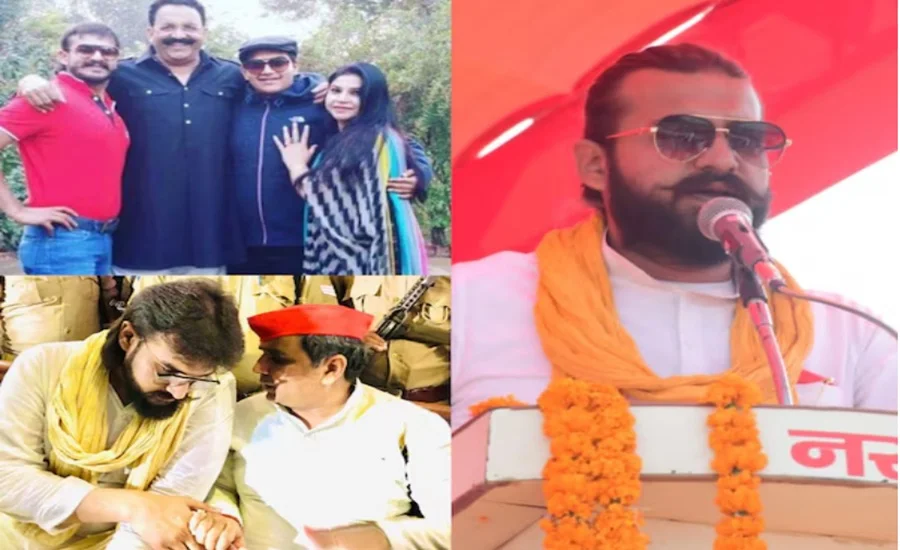
Abbas Ansari’s entry into politics is deeply rooted in his family’s longstanding political and social influence in eastern Uttar Pradesh. Born on 12 February 1992, he is the eldest son of the late Mukhtar Ansari, a five-time MLA from Mau whose influence extended across both the Muslim community and the broader electorate. Mukhtar Ansari’s death on 28 March 2024 in Banda due to a heart attack attack left a political vacuum, which Abbas Ansari has stepped in to fill.

Abbas’s grandfather, Dr Mukhtar Ahmad Ansari, was a prominent figure in India’s freedom struggle and held leadership positions in both the Indian National Congress and the All India Muslim League. Dr Ansari also made significant contributions to Muslim education and was among the founding members of Delhi’s Jamia Millia Islamia University.

The political engagement of Abbas Ansari’s extended family further underscores the depth of his inherited influence. His uncles, Afzal Ansari and Sibgatullah Ansari, remain active in regional politics, with the former representing Ghazipur as a Member of Parliament for the Samajwadi Party and Sibgatullah having served twice as an MLA after a career as a teacher. Even Abbas’s great-grandfather, Subhanullah Ansari, held leadership roles in municipal governance. This multigenerational involvement has cemented the family’s influence in the political and social fabric of eastern Uttar Pradesh.

Before entering the political arena, Abbas Ansari distinguished himself as a national-level shooting champion. He specialised in skeet and shotgun shooting and won his first gold medal at a national championship in 2011. Over the years, he became a three-time national champion and represented India at international competitions, including the Shooting World Cups held in Germany and Finland. His dedication to sport, discipline, and achievement in competitive shooting reflect qualities that he later channelled into his political career.

Abbas completed his schooling at GD Goenka World School in Gurugram in 2011 and subsequently earned a degree in Business Management. In 2016, he decided to leave his sports career behind to enter politics, joining the Bahujan Samaj Party (BSP). His sports background helped him build an image of a young, energetic, and disciplined leader, appealing especially to the youth in eastern Uttar Pradesh.

Abbas Ansari’s first political challenge came in the 2017 Uttar Pradesh Assembly elections when he contested from Ghosi on a BSP ticket at the age of 25. Despite losing to BJP’s Fagu Chauhan, the experience provided him with insights into electoral strategy and grassroots politics. In 2022, Abbas shifted to the Suheldev Bharatiya Samaj Party (SBSP), an ally of the Samajwadi Party, and contested from Mau, a constituency traditionally held by his father. He campaigned vigorously, emphasising continuity, public service, and development. “The legacy of my father is a responsibility I carry with pride,” he remarked during the campaign.

The electorate responded positively. Abbas Ansari won the Mau Sadar seat by a margin of 38,116 votes over BJP’s Ashok Singh, officially stepping into the political shoes of his father. At the time of filing his election affidavit, he declared assets worth approximately ₹9.2 crore and stated he had no loans. Although he faced 13 criminal cases, including some linked to family controversies, his sports-oriented image and engagement with youth voters helped him establish credibility across communities.

Abbas Ansari’s political career has been marked by legal turbulence, similar to the experiences of his father. In November 2022, soon after his electoral victory, the Enforcement Directorate (ED) arrested him on charges of money laundering linked to family businesses. He was denied bail and remained incarcerated until 2024, serving time in Chitrakoot and later Kasganj jails. Reports emerged that even while imprisoned, he managed certain business dealings using his wife Nikhat Ansari’s phone and remained in communication with associates.

In May 2025, a special MP-MLA court sentenced him to two years for a hate speech made in March 2022, which led to his immediate disqualification under the Representation of the People Act. This development created uncertainty in Mau, with speculation about by-elections. However, in March 2025, the Supreme Court granted him interim bail in a separate case under the Uttar Pradesh Gangsters and Anti-Social Activities (Prevention) Act, 1986, allowing him temporary relief.

Compounding these challenges, Abbas’s mother, Afshan Ansari, faced multiple criminal cases, prompting authorities to freeze millions in family bank accounts. Afshan remains at large, with a police reward of ₹50,000 announced for her arrest. Despite these challenges, Abbas Ansari maintained a focus on his legislative responsibilities and public image.

The most recent and pivotal development came on 20 August 2025 when the Allahabad High Court dismissed the hate speech conviction and stayed the sentence. This allowed Abbas Ansari to resume his duties as MLA from Mau Sadar. On Monday (8 September), the Uttar Pradesh Assembly secretariat officially restored his membership, effectively halting discussions of a by-election and stabilising the political situation.

Political analyst Shamsher Ali commented, “Abbas Ansari’s reinstatement reflects both judicial fairness and the significant support he continues to enjoy in his constituency. It also demonstrates the resilience of political dynasties in eastern Uttar Pradesh.”

Abbas Ansari’s declared net worth has attracted public and media attention, especially after his reinstatement. According to his 2022 election affidavit, Abbas and his wife Nikhat possess substantial movable and immovable assets. His movable assets included cash, vehicles, jewellery, and firearms valued at over ₹1.12 crore combined. Specifically, Abbas held ₹1,75,000 in cash, a vehicle worth ₹28.89 lakh, gold and diamond jewellery worth ₹12.5 lakh, and firearms valued at ₹43 lakh. His wife Nikhat had ₹75,000 in cash and jewellery valued at ₹19.7 lakh.

In addition, Abbas owns five plots and houses across Mau, Ghazipur, and Lucknow, with a total declared value of ₹8.05 crore. Notably, he had no bank loans at the time of declaration, making the total worth of his declared assets free of debt. Abbas has consistently emphasised transparency in public life, stating, “I have always declared my assets honestly. The people of Mau have the right to know about their representative’s background.”

Beyond politics, Abbas Ansari and his family have been active in social welfare initiatives, especially focusing on education, health, and community development in eastern Uttar Pradesh. Local resident Ayesha Siddiqui said, “The Ansari family has always supported our community. Even amid controversies, Abbas has worked quietly to help families in need, particularly with education and healthcare.” The Ansari family’s social contributions, particularly for Muslim communities, have strengthened their connection with constituents beyond electoral politics.

Despite a career marked by legal and political challenges, Abbas Ansari’s future in Mau politics appears promising. With his legislative membership restored, he can now focus on constituency development, youth engagement, and addressing social welfare issues. Abbas stated, “My priority is the development of Mau. I want to focus on education, infrastructure, and opportunities for youth. Politics is challenging, but I am committed to serving my people with honesty and dedication.”

From national shooting champion to young legislator navigating complex legal, social, and political challenges, Abbas Ansari’s journey illustrates both the opportunities and obstacles faced by political heirs in India. His reinstatement also provides reassurance to Mau voters and the wider Muslim community, who continue to see him as a committed and capable leader.

Abbas Ansari’s story is one of resilience, inherited responsibility, and personal achievement. With a declared net worth of over ₹9 crore, a storied political lineage, and ongoing engagement in public service, he remains a significant figure in eastern Uttar Pradesh politics. The Allahabad High Court’s decision has stabilised his career, allowing him to pursue both legislative work and social initiatives without immediate legal uncertainty. Local observers remarked, “Abbas Ansari’s reinstatement is not just a personal victory; it is a moment of reassurance for Mau’s voters and the larger Muslim community in the region, who see in him a leader committed to their welfare.” Moving forward, his ability to balance political, legal, and social responsibilities will determine the consolidation of his father’s legacy and his long-term impact on the region.

source: http://www.clarionindia.net / Clarion India / Home> Editor’s Pick> Politics / by Mohammad Bin Ismail / September 10th, 2025

Silk Letter Movement: Name of all 59 charged by the British for waging war against the Crown

INDIA :

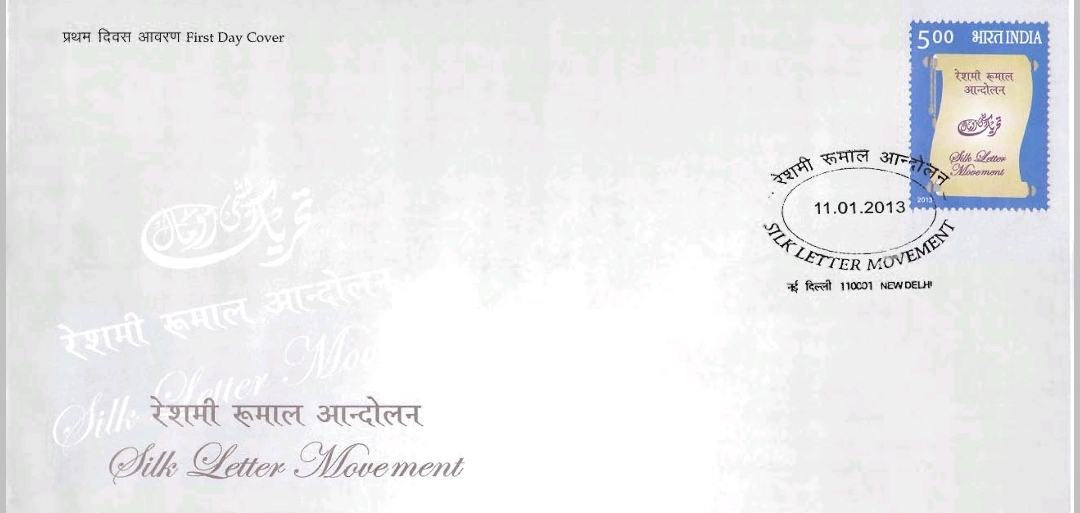
During the First World War, Maulana Mahmood Hasan, and other Islamic scholars planned an armed attack on British India from the Afghanistan frontier. The ambitious plan did not succeed because of the changed geo-political scenario (defeat of Turkey and Germany) and the British getting hold of three silk letters, which gave away the whole planning. After this, 59 people were charged for waging the war against the crown. I am sharing the names of these 59 forgotten heroes of the Indian freedom struggle.

During the First World War, Maulana Mahmood Hasan, and other Islamic scholars planned an armed attack on British India from the Afghanistan frontier.  The ambitious plan did not succeed because of the changed geo-political scenario (defeat of Turkey and Germany) and the British getting hold of three silk letters, which gave away the whole planning.

After this, 59 people were charged for waging the war against the crown. I am sharing the names of these 59 forgotten heroes of the Indian freedom struggle.

Silk Letter Movement : A freedom struggle woven in silk

  1. Abdul Aziz Molvi, son of Haya Gul from Itman Zai, Peshawar
  2.  Abdul Bari B.A., son of Ghulam Jilani from Lyallpur
  3. Abdul Hai Khwaja, son of Khwaja Abdur Rahman from Gurdaspur 
  4. Abdul Haq Shaikh alias Jeewan Das from Shahpur district. He was an official witness.
  5. Abdul Haq Molvi from Rifah-e-Aam Press Lahore. 
  6. Abdul Majeed Khan, son of a Risaldar Manager from the 15th Cavalry Battalion of the army.
  7.  Abdullah Molvi, son of Nihal Khan from Sukkur district. He was an official witness.
  8. Abdul Qadir B.A., son of Ahmad Deen from Lyallpur. 
  9. Abdur Rahim Sindhi Shaikh, son of Lala Bhagwan Das from Hyderabad, Sindh
  10. Abdur Rahim Molvi, son of Rahim Bakhsh, Masjid Cheenian Wali, Lahore.
  11. Abdur Rashid, a migrant student of Mardan and Lahore.
  12. Abdur Razzaq Ansari Hakim, son of Abdur Rahman of Delhi.
  13. Abdul Waahid, son of Siddiq Ahmad from Tanda, United Provinces.
  14. Abul Kalam Azad Molvi, nickname Mohiuddin, son of Maulana Khairuddin from Calcutta
  15. Abu Muhammad Ahmad Molvi alias Molvi Ahmad, son of Ghulam Hussain from Lahore and Chakwal
  16. Ahmad Ali Molvi, son of Habibullah, from Gujranwala district. He was an official witness.
  17. Ahmad Miyan Molvi, son of Abdullah Ansari from Ambetha, district Saharanpur (United Provinces). He was an official witness.
  18. Allah Nawaz Khan, son of Khan Bahadur Rab Nawaz Khan honorary magistrate of Multan, Punjab
  19. Anees Ahmad, B.A. Molvi, son of Idrees Ahmad, assistant secretary at Anglo-Oriental College Aligarh , United Provinces.
  20. Ozair Gul Molvi, son of Shaheed Gul of Durgayee, Northwest Frontier. 
  21. Barkatullah Molvi Muhammad of Bhopal and Japan
  22. Fatah Muhammad Sindhi from Rok, Sindh
  23. Fazlul Hasan Molvi alias Hasrat Mohani from Aligarh .
  24. Fazl Elahi Molvi, son of Meeran Bakhsh from Haripur, thana Wazirabad, district Gujranwala, Punjab.
  25. Fazl Mahmood Molvi, son of Molvi Noor Muhammad from Charsadda, Northwest Frontier.
  26. Fazl Rabbi Molvi from Peshawar.
  27. Fazl Wahid Molvi, son of Faiz Ahmad, alias Haji Turangzai, from Northwest Frontier.
  28. Habibullah Ghazi, the son of Ruhullah from Kakori, district Lucknow, United Province.
  29. Hadi Hasan Syed, from Khan Jahanpur, district Muzaffar Nagar, United Province.
  30. Hamdullah Molvi, son of Haji Sirajuddin from Panipat. 
  31. Hussain Ahmad Madani Molvi, son of Molvi Habibullah from Faizabad and Medina .
  32. Ibrahim Sindhi, M.A. Shaikh, son of Abdullah from Karachi.
  33. Kala Singh, a migrant from Ludhiana (Punjab) 
  34. Khan Muhammad Khan Haji from Peshawar. (died)
  35. Khushi Muhammad, son of Jan Muhammad from Talauli, district Jalandhar, Punjab.
  36. Mahendra Pratap Kunwar, son of late Raja Ghanshiam Singh from Mursan, United Province.
  37. Mahmood Hasan Maulana, former head-teacher at Deoband Madrasa, United Province.
  38. Matloobur Rahman Molvi of Deoband, an employee of the Agricultural Department, UP Govt.
  39. Mohiuddin alias Barkat Ali Molvi from Kasur. 
  40. Mohiuddin Khan Molvi from Moradabad. (Qazi of Bhopal)
  41. Muhammad Abdullah B.A., son of Shaikh Abdul Qadir, Secretary Mianwali District Board.
  42. Muhammad Ali B.A. son of Abdul Qadir from Kasur.
  43. Muhammad Ali Sindhi, the son of Habibullah from Gujranwala.
  44. Muhammad Aslam Attar from Peshawar.
  45. Muhammad Hasan B.A. from Lahore whose father was an employee in the Paisa newspaper.
  46. Muhammad Hashim Molvi Syed from Kora, Jahanabad, Fatahpur. 
  47. Muhammad Masood Molvi, son of Mazhar Hussain from Deoband, United Province. (Official witness)
  48. Muhammad Miyan Molvi, son of Molvi Abdullah Ansari from Ambetha, district Saharanpur, United Province.
  49. Muhammad Mubeen Molvi, son of Muhammad Momin from Deoband. (Official witness)
  50. Muhammad Murtuza Molvi Syed, son of Bunyad Ali from Bijnor, United Province. (Official witness)
  51. Noorul Hasan Syed from Ratheri, district Muzaffar Nagar U.P.
  52. Obaidullah Molvi alias Buta Singh from Sialkot, Punjab.
  53. Sadruddin alias Dr. Abdul Karim Barlasi, son of Amir Ali of Banaras. 
  54. Saifur Rahman Molvi, son of Ghulam Khan from Peshawar district, Northwest Frontier.
  55. Shah Bakhsh Haji, son of Imam Bakhsh Ansari from Hyderabad, Sindh. 
  56. Shah Nawaz Khan, son of Khan Bahadur Rab Nawaz Khan, honorary magistrate, Multan, Punjab.
  57. Shujaullah, son of Habibullah from Lahore.
  58. Wali Muhammad Molvi from Futuheewala, district Lahore.
  59. Zahoor Muhammad Molvi from Roorkee, son of Inayatullah of Saharanpur.

source: http://www.heritagetimes.in / Heritage Times / Home / by Mahino Fatima / August 04th, 2024

Begum Qudsia Aizaz Rasul: The Only Muslim Woman In India’s Constituent Assembly | #IndianWomenInHistory

Lucknow, UTTAR PRADESH :

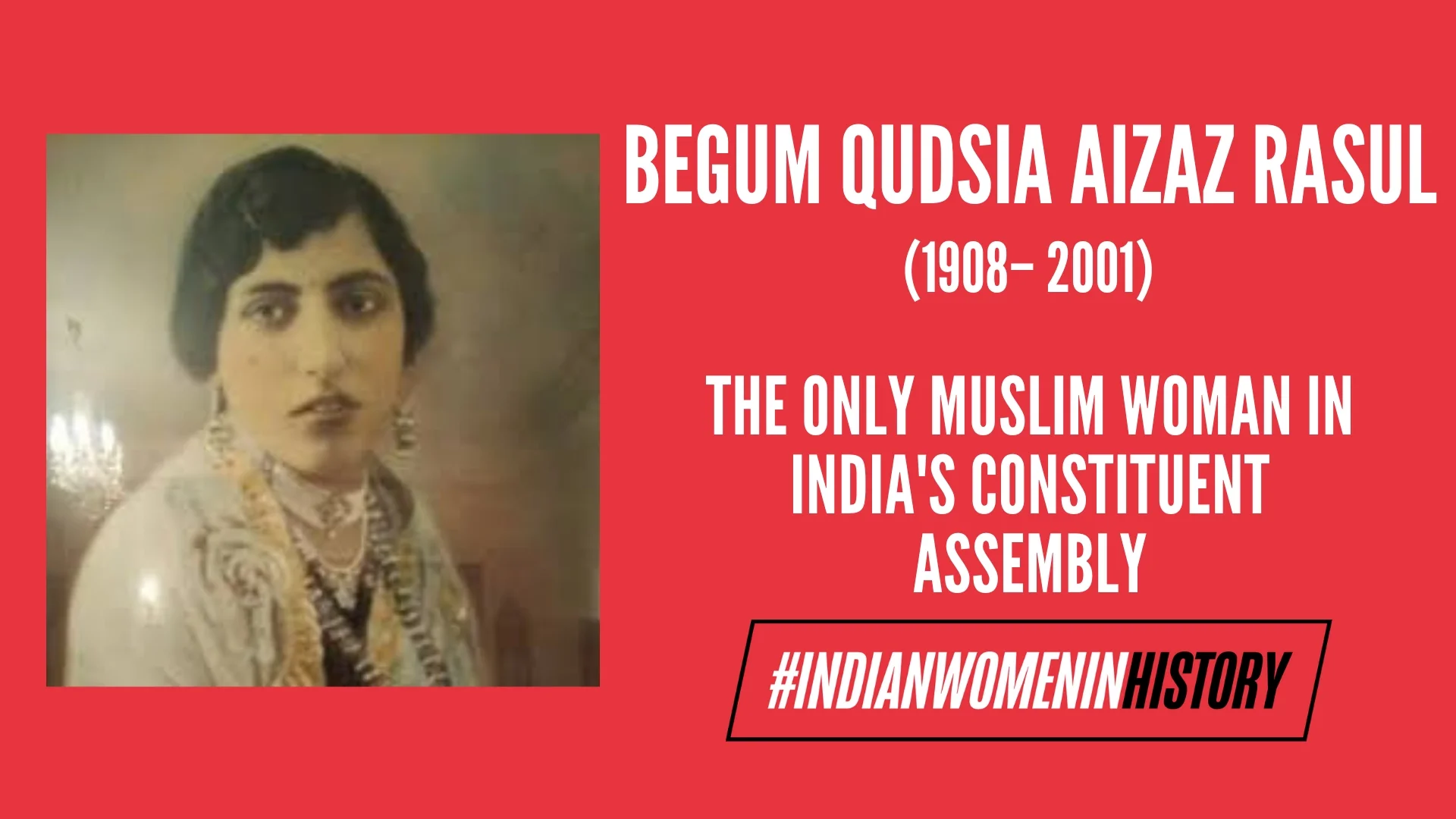
Begum Qudsia Aizaz Rasul was one of the 28 Muslim League members to join the Constituent Assembly of undivided India, and she was the only Muslim woman to be a part of the assembly.

Begum Qudsia Aizaz Rasul was born to the royal family of Malerkotla (situated in erstwhile united Punjab) on 4th April,  1908. Her father was Nawab Zulfiqar Ali Khan. Qudsia had a progressive upbringing and was encouraged from a very early age to lead a modern life, as opposed to several stringent restrictions imposed upon other contemporary Muslim women, such as that of the purdah.

She got married at quite an early age to Nawaab Aizaz Rasul from the erstwhile province of Awadh. Her husband held the position of a taluqdar,  or a landowner. Qudsia had political exposure both before and after marriage, and her formal political participation took place after she got married.

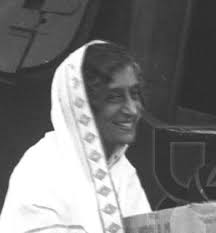
Image Source: Wikivividly

Political Career

Qudsia, along with her husband, joined the Muslim League in mid-1930s, soon after the passing of the Government of India Act in 1935. This was also her official entry into electoral politics, as she contested in the elections of 1937 from the U.P. legislative assembly, where she successfully held her seat till 1952. Aizaz was one of the very few female candidates to have contested and won from a non-reserved constituency during the pre-independent times.

She was the first Indian woman to achieve such feats, and this was truly commendable and noteworthy at a time when most formal political positions were almost implicitly reserved for men.

As an MLA, she also held several important posts, such as the Leader of Opposition (1950 to 1952) and the Deputy President of the Council (1937 to 1940). She was the first Indian woman to achieve such feats, and this was truly commendable and noteworthy at a time when most formal political positions were almost implicitly reserved for men. Moreover, to rise to prominence at a politically significant province such as the U.P. indeed made Qudsia Aizaz Rasul a trailblazer.

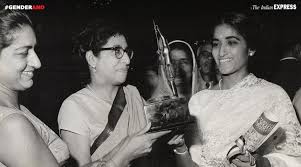
Image Source: Indian Express

She is well known for her progressive, anti-feudal stances, such as the abolition of the zamindari system. Qudsia was a strong advocate for the abolition of communal electorates as well, as she believed it divided the society more than it united – which was counterproductive for the Indian electoral candidates at a time when there was an urgent need of a united Indian front to oppose the colonial rulers. She went on to create a strong and convincing case for the abolition of electoral reservations for religious minorities during her tenure as a member of the Constituent Assembly.

Qudsia was one of the 28 Muslim League members to join the Constituent Assembly of undivided India, and she was the only Muslim woman to be a part of the assembly. Her contributions in the assembly debates remain monumental till date and have been recorded in many official sources.

Her contributions in the assembly debates remain monumental till date, and have been recorded in many official sources.

After the dissolution of the League, she joined the Indian National Congress, and served as a member of the Rajya Sabha from 1952 to 1958. Later, she became a member of the legislative assembly of Uttar Pradesh from 1969 to 1989.

Other Achievements

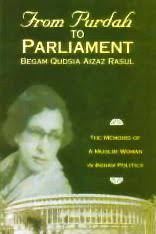
Begum Qudsia Aizaz Rasul is also well known for her autobiography, titled From Purdah to Parliament: A Muslim Woman in Indian Politics. It provides excellent insights into the intersectional aspects of organised politics as it functions in our country. Other than this, she also wrote a travelogue titled Three Weeks in Japan.

Besides her literary prowess, Qudsia had also served as the President of the Indian Women Hockey Federation for over fifteen years, and went on to become the President of the Asian Women’s Hockey Federation.

Begum Qudsia Aizaz Rasul was awarded the Padma Bhushan in 2000 for immense, invaluable contributions to the field of social work.

References

1. From Purdah to Parliament: Begum Aizaz Rasul (A Review) by Radhika Bordia
2. Begum Aizaz Rasul: The only Muslim woman to oppose minority reservations in the Constituent Assembly by Christina George

source: http://www.feminisminindia.com / Feminism in India – FII / Home / by Ekata Lahiri / February 15th, 2019