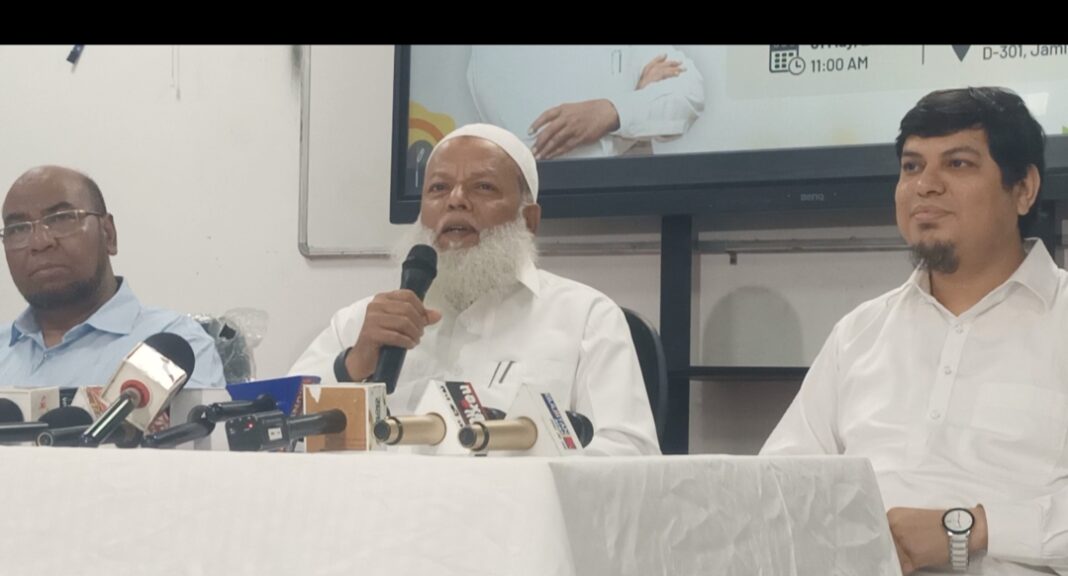
Chairman of Shaheen Group of Institutions Dr Abdul Qadeer (Centre) speaking to mediapersons at Shaheen Grouop’s office in Delhi on Friday(May 1, 2026).
New Delhi :
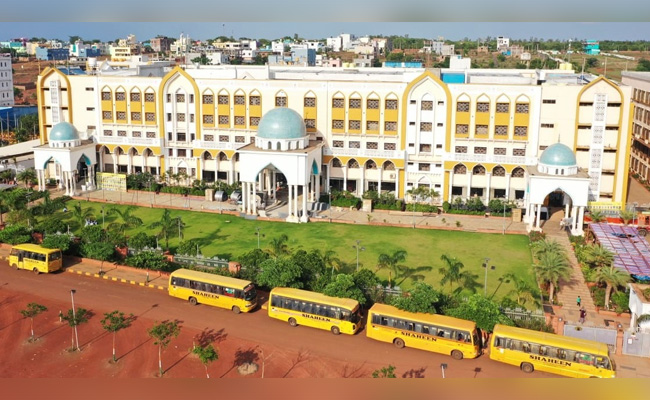
Dr Abdul Qadeer, founder and chairman of Shaheen Group of Institutions, on Friday announced a series of academic initiatives aimed at promoting inclusive, affordable, and future-oriented education for students from diverse social and economic backgrounds.
Addressing media persons at the Delhi branch of the institution, he said the organisation remains committed to combining academic excellence with social transformation and global educational opportunities.
He formally introduced its flagship programmes covering mainstream education, professional coaching, international schooling, and overseas medical education.
Dr. Qadeer highlighted the role of education in empowering underprivileged communities and integrating students into the mainstream educational system. He said the institution’s programmes are designed to provide personalised learning, mentorship, and structured academic support to help students compete at national and international levels.
One of the major initiatives discussed during the press conference was the “Madrasa Plus” programme. The programme seeks to integrate Madrasa students into formal education through a specialised teaching model featuring a 1:6 teacher-student ratio. According to the institution, the programme has achieved nearly 80 percent success in Class X examinations. It is currently being implemented in more than 100 Madrasas in collaboration with the Government of Karnataka. Officials said the initiative has enabled thousands of students to continue their education within the mainstream system while preserving their religious and cultural identity.
The institution also introduced its “5-Year Integrated Graduation Programme”, which combines higher secondary education with undergraduate studies and Islamic learning. Under the programme, students can pursue undergraduate courses such as BA, BCom, and BCA alongside Alimiyath studies. The programme also includes Hifz support, structured residential facilities, and personalised mentoring aimed at ensuring balanced academic and personal development.
Another major academic initiative announced was the “Pre Plus Two”, a three-year pre-NEET and JEE foundation programme designed for students who have either passed or failed Class X examinations. The programme begins with an Academic Intensive Care Unit (AICU), which focuses on strengthening students’ fundamentals in Mathematics, Science, and Languages through personalised instruction. This is followed by a comprehensive NCERT-based curriculum integrated with NEET and JEE coaching, continuous testing, and mentoring support.
Dr. Qadeer said the programme is intended to help students rebuild confidence and prepare systematically for competitive examinations. He added that many students from disadvantaged educational backgrounds often require individual attention and conceptual clarity, which the programme seeks to provide.
The institution also highlighted its “MBBS Abroad Programme”, aimed at students aspiring to pursue medical education overseas at affordable costs. Under the programme, students can study medicine in countries such as Kyrgyzstan and Tajikistan at an estimated cost of around Rs 28.8 lakh. The institution stated that the programme provides hostel accommodation, food, hospital facilities within the same campus, separate residential arrangements for boys and girls, and complete academic guidance to ensure a secure and supportive environment for students studying abroad.
Another key announcement was related to the Shaheen Australian International School, which offers education through the globally recognised WACE curriculum. The school focuses on inquiry-based learning, critical thinking, and student-centric teaching methods. According to the institution, the school aims to prepare students for international academic and professional opportunities through globally aligned educational practices and value-based learning.
Dr. Qadeer also spoke about the expansion of the institution in the national capital through Shaheen Academy Delhi. He said the Delhi centre will focus particularly on NEET preparation and will follow Shaheen’s established academic model based on discipline, conceptual understanding, and continuous mentorship.
He added that the academy aims to support students from diverse backgrounds and provide them with structured guidance, holistic development, and opportunities to excel in competitive examinations. The expansion, he said, is part of the institution’s broader mission to make quality education accessible across different parts of the country.
The press conference concluded with an interaction between the management and media representatives, during which officials reiterated the institution’s commitment to educational inclusion, skill development, and creating opportunities for socially and economically marginalised students.
source: http://www.indiatomorrow.net / India Tomorrow / Home> Education / by India Tomorrow / May 01st, 2026
Shaheen Group of Institutions has announced free education for students across Karnataka who have secured 95 per cent and above marks in the SSLC examinations.
The announcement was made by Dr. Abdul Qadeer, Chairman of the institution, as part of an initiative aimed at encouraging academic excellence and supporting deserving students.
According to the institution, eligible students from across the state will be provided free education for both First Year and Second Year PUC at Shaheen institutions.
The initiative is expected to benefit a large number of meritorious students by helping them continue higher education without financial burden.
In addition, Dr. Abdul Qadeer announced special scholarships for Kannada medium students and those studying in government schools, recognising their efforts and encouraging them to pursue further studies.
Speaking on the occasion, he said the initiative reflects Shaheen’s continued commitment to inclusive education and merit-based support, ensuring that talented students from all backgrounds receive opportunities to progress.
source: http://www.english.varthabharati.in / Vartha Bharati / Home> Karnataka / by Vartha Bharati / April 25th, 2026
A person of immense courage, resilience, simplicity and sacrifice, this communist leader is a beacon in the movement for women’s rights in India.
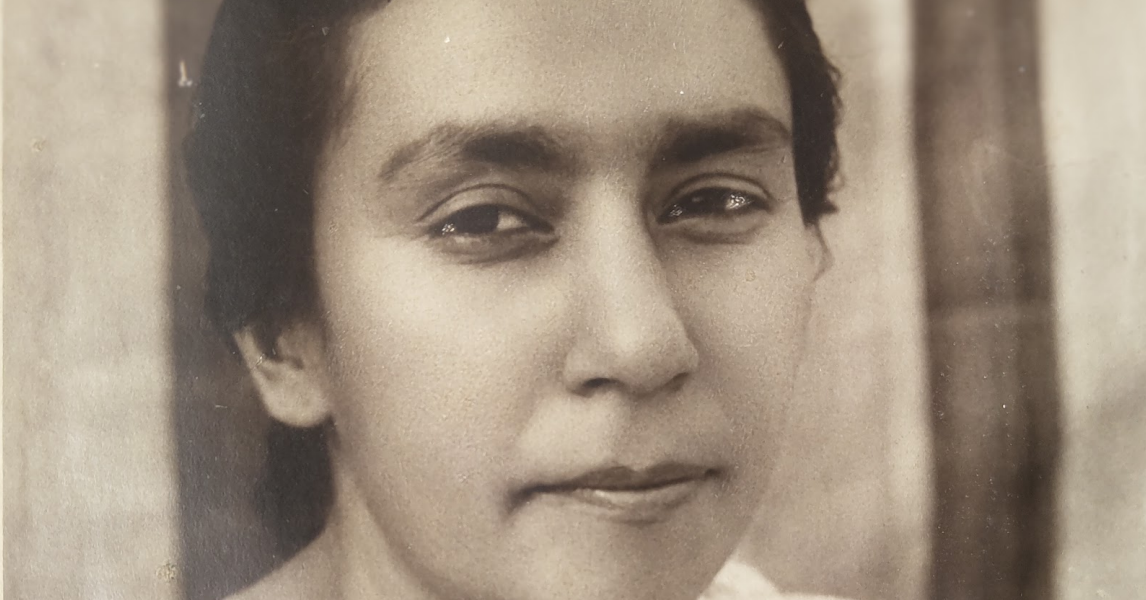
Hajrah Begum. Photo: By arrangement.
I sometimes feel that when future generations remember all of you, will they ever think of Alys (Faiz Ahmad Faiz’ wife) or me. We have always walked with you, although you were a step ahead of us. Sometimes you would look back to perhaps make sure that we were still there, following behind you. And we would reassuringly smile back although our hearts would cry out in pain.
– Excerpt from a letter by Razia Sajjad Zaheer, wife of Sajjad Zaheer, to Faiz Ahmad Faiz in June 1951 when Faiz and Zaheer had been imprisoned in the Rawalpindi conspiracy case.
In the opening pages of her novel, Aakhir e Shab ke Humsafar, the writer Qurratulain Hyder depicts a scene in a crumbling old house in the early 1940s in the old city of Dhaka where the protagonist (a young Bengali Muslim woman, Deepali) and her Christian friend (Rosie Banerjee) are welcomed by a young man called Mahmood ul Haque. In the conversation that follows, Rosie (a reverend’s daughter), is shown as possessing progressive ideals yet holds biases regarding Muslims; she thought of them as fanatics, toadies of the British and womanisers, not always in that order. So, while speaking to the mostly young Muslim men in this gathering Rosie is surprised to notice that many among them had Left leaning political views.
A back and forth ensues while Rosie’s hosts share a list of names of Muslim revolutionaries and radicals in India and elsewhere, like the Indian student Mirza Abbas who had been taught how to make bombs by the Russians, and of the great Indian revolutionary who died penniless in the US, Maulana Barkatullah. The Muhajareen, which included people like Shaukat Usmani, Fazal Ilahi Qurban and Ferozzuddin Mansoor, who had traveled to the Soviet Union in the early 1920s to study at the University of Eastern Toilers, were mentioned. Finally, Dada Amir Haider’s (the seaman/lashkar who became the member of the communist party in the US) name was added.
Hyder may have emphasised this history to situate herself as a Muslim in post-colonial India – in a post Nehruvian era – and to re-remember why Indian Muslims also had a right to be proud of their nationalist pasts; hidden and obscure histories of those Muslims who were part of India’s freedom movement and who followed radical nationalist politics. I present a glimpse from a more complex and important piece of writing to suggest that even in Hyder’s sympathetic treatment of the Muslim Left (at least in the earlier part of the novel) she forgets to mention radical Muslim women like Hajrah Begum, Razia Sajjad Zaheer and Rashid Jahan in her recounting of names. It may be possible that these women (and many more) had not become part of the national imagination by the early 1940s, the period in which the novel is situated. By the end of the novel, we also see Haider providing an implicit critique of the Left, where class positions may have trumped radical politics.
To be sure, Dr. Rashid Jahan has lately received much attention in print (Rakshanda Jalil 2014), and Razia Sajjad Zaheer’s daughter (Noor Zaheer) has recently published her mother’s biography (Alys Faiz and Tahera Mazhar Ali should be added to this list). In contrast, Hajrah Begum, the protagonist of this essay, a pioneer of the women’s movement in late colonial India and the first South Asian woman to become the member of the Communist Party of Great Britain (CPGB), has received negligible attention by historians and archivists alike. My preliminary effort here is to remember a person of utmost conviction and generosity of spirit as she navigated decades of politics in the communist movement in colonial and post-colonial India. To write about her, I delved into multiple forms of archives; the interviews she gave, her writings, the writings and experiences of her contemporaries, oral history with family members, memoirs, scraps of evidence available in “discarded” letters and more.
Hajrah Mumtazullah Khan was born in 1910 to Mumtazullah Khan and Natiqa Begum, in Sahranpur, (western Uttar Pradesh) where Mumtazullah Khan was then a tehsildar. She was second of six siblings, the eldest being Zakaullah Khan (the famous Pakistani architect, Kamil Khan Mumtaz’ father). There was another son Ikramullah Khan, between her and her sister, Zohra Sehgal (the famous performer and actor), and then Uzra Butt (another famous actor and performer), Amina Begum (founded Happy Dale School in Karachi) and Sabra Begum. The family traced its lineage to the Rohilla Pathans who had settled during the 18th century in Western UP in the areas of Najibabad, Moradabad Bedayun, Bareilly, Saharanpur and Rampur. Both parents, who were first cousins, were closely related to the ruling nawabs of Rampur.
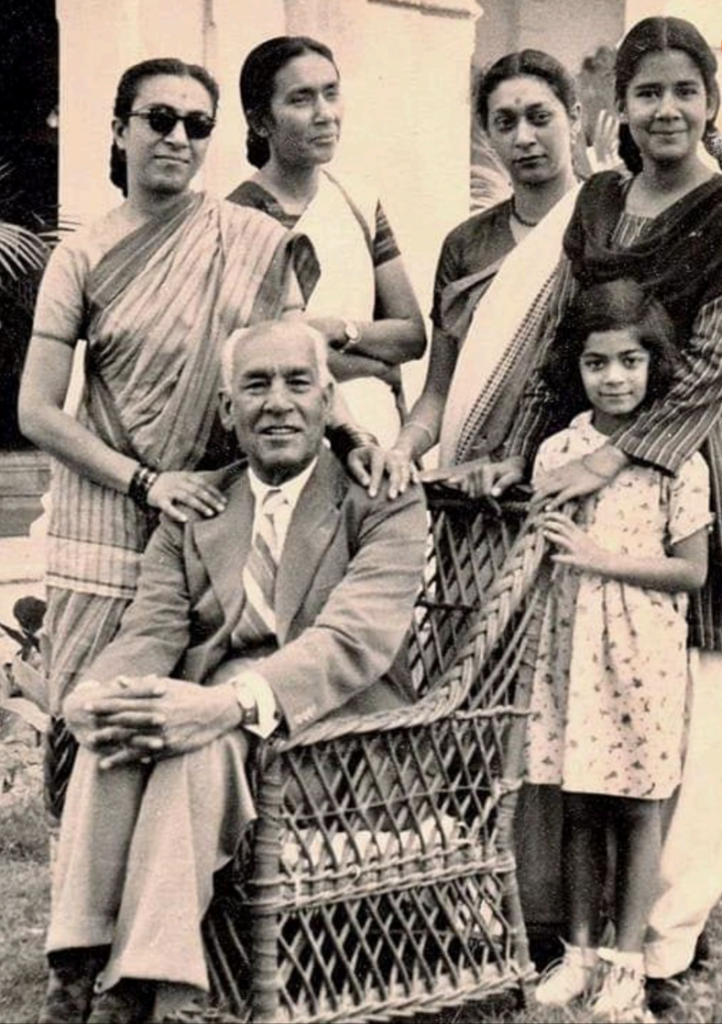
Hajrah Begum with her father, sisters and niece. Photo: By arrangement with her family.
Hajrah begum at the age of 10 was sent to the Queen Mary College in Lahore, where she was followed by her younger sisters. This was a segregated school for girls from elite households and although Mumtazullah Khan, their father, was a senior government servant the sisters may have been admitted due to their relations with the princely state of Rampur. While the girls were in school, their mother passed away. Until she completed her matriculation at the age of 17, the school’s close political atmosphere was partially balanced by her interaction with her elder brother Zakaullah Khan who was at Aligarh by the mid 1920s and would talk to young Hajrah during school holidays about how she should not stand up when ‘God Save the King’ was sung at her school as the British were not their real masters. A confusing time for Hajrah indeed, as at school, the Prince of Wales was portrayed as the most charming person in the world, while at home the brother was speaking about freedom from the British. In college and in his work life, Zakaullah Khan (who received an engineering degree from UK) was not perceived as politically active, but for a purdah observing Hajrah Begum, he was a godsend, bringing into her life ideas about a future freedom and struggles, the anti-colonial struggle, the struggle for economic and social justice. In contrast, while at school with a strict and segregated English medium education, the little that came from the outside was what the day scholars would share, songs related to the stage of the nationalist movement in the 1920s.
Charkha kaato to beda paar hai
Charkha swadeshi talwar hai.
Boli amma Mohammad Ali ki
Jaan beta Khilafat main de do.
In her interview (from the early 1990s) archived at the Nehru Memorial Library, Hajrah Begum speaks about her brother and K M Ashraf (who deserves a major biography of his own), who were close friends from Aligarh days and had gone to study together to UK in the late 1920s, as major influences in her emerging understanding of anti-British Nationalism, if not her eventual tilt toward communism.
Soon after she passed her matriculation exams, Hajrah Begum was married to her paternal aunt’s son, Abdul Jamil Khan who was a DSP in the police service. In her interviews she suggests that she resented that she was not asked about whether she wanted to get married or not and this feeling persisted throughout the very short marriage of three to four years. Being unhappy in her marriage (she could not adjust to the spousal life of an officer in the elite police service), she started spending time in Meerut where her father was now posted as a magistrate. This was the time (1929-1933) when the Meerut conspiracy case was ongoing against Indian trade unionists and three Englishmen for organising an Indian railway strike. At the culmination of the trial, 27 trade union leaders were convicted under a lawsuit based on the charge that in 1921, the leftist trade unionists, S.A. Dange, Shaukat Usmani and Muzaffar Ahmad with the help of several others had conspired to establish a branch of the Communist International in India.
In Meerut, her father’s house was frequented by people like Mahmud uz Zafar (of Angarey fame. He was her maternal uncle’s son and a future member of the Communist Party of India. He later married Rashid Jahan) who would discuss the case with her brother, Zakaullah Khan. It is during this period in the early 1930s that she told her husband that she wanted to end the marriage as she had become more interested in the people who were being tried in the conspiracy case and their cause. She did not see herself in a world where she would be entertaining wives of high British officials.
Her brother Zakaullah Khan also understood the situation and suggested that if she wanted to opt out of the marriage, then she needed to be economically independent. After her separation, rather than stay with her father, she went to live with her brother in Aligarh where K.M. Ashraf was a frequent visitor and would offer her books to read, like the Intelligent Woman’s Guide to Socialism and Capitalism by Bernard Shaw. Both, her brother and Ashraf, persuaded her to get advance training as a montessori teacher from England. She sold some of her jewellery and with partial financial support from her family, left for the UK with her son.
Her arrival in London in 1933 meant a lot of adjustments, including the care of little Sami (later, Lt. General Sami Khan, a much-decorated officer in the Indian Army) who was about a year-and-a-half-old at that time. While in London, she met with Sajjad Zaheer (a family friend, one of the founders of the Progressive Writers Movement and the future secretary general of the Communist Party of Pakistan), then a student and the leader of the underground group of left oriented students in London, Cambridge and Oxford. Through Sajjad Zaheer she reconnected with K.M. Ashraf, who had returned to the UK to complete his PhD. Others in the group were Shaukat Omar (the father of the late Pakistani journalist, Kaleem Omar, also the eldest son of Zafar Omar of the Indian Police Service and the writer of the Urdu detective novels, Neeli Chattri) and Z.A. Ahmad (later the secretary general of Communist Party of India of UP and member of the Upper House of the Indian parliament).
Hajrah Begum was the only woman member of this small group of Indian students. There were weekly study groups and conversations along with attempts to bring out newsletters to influence the Indian student population then residing in UK. Hajrah Begum, young and inexperienced at the time, was initially a quiet participant during these meetings. This changed when she visited the Soviet Union after answering an ad in the journal, DailyWorker. Her two weeks in the Soviet Union in the mid-1930s gave her first-hand knowledge of the transformations that the country was going through. According to her, it was not a paradise, but she was impressed by the spirit of the people who were not colonised, like India. People were striving to attain a modicum of economic and social emancipation. On her return, she became more confident in participating in group discussions and people started deferring to her in terms of her views and experience. Around this time, according to Z.A. Ahmad’s memoirs, Hajrah Begum along with Sajjad Zaheer and Ahmad were inducted as members of the Communist Party of Great Britain (CPGB). This was of course kept as a secret as the Communist Party in India was banned and there was strict surveillance of communist party members and supporters.
There is an incident that is worth sharing from her presence in London. In her interviews Hajrah Begum mentions how on May 1, 1934, she attended a worker’s event in Hyde Park, while there she was photographed with a red flag in her hand, and the image was published in the international Kodak magazine. The magazine captioned her photo as how South Asian women were being radicalised. The magazine also circulated in India and when it was seen by relatives and by her father there was much apprehension about what she was doing in Britain – studying or taking part in subversive politics.
During her time in London, she met Ben Bradlee, who was one of the defendants in the Meerut conspiracy case and a member of the CPGB and Shapurji Saklatwala (the famous Indian communist leader who was related to the Tata family and had given up his wealth to pursue communist politics in Britain). She also traveled to Brussels with Sajjad Zaheer as part of the delegation of students to the conference on the struggle against war and fascism. Ishaat Habibullah (father of the writer Muneeza Shamsie and grandfather of the novelist Kamila Shamsie) was the leader of this group. In the conference, the Indian student’s delegation took the position that there should be a broad front to fight not only against the approaching war and fascism in Europe, but also against imperialism and colonialism. This position was rejected by the conference, dominated by European attendees. As a protest, the Indian group walked out of the final sessions.
In 1935, the Seventh International Congress of the Communist International in the Soviet Union among other issues decided that the anti-colonial policy for communist parties and movements was to work with national anti-imperial forces against the rising threat of imperialism and fascism. Within the Indian context, the Indian National Congress was considered a bourgeois and nationalist party, the directive to Indian communists was to work in a broad front; a unity of all progressive forces in which the communist would collaborate and work with all who were anti-imperialist while retaining their distinct identity and work among workers and peasants.
With this understanding which was conveyed to the group by the then secretary general of CPGB, Harry Pollit, most members of the student group returned to India after completing their studies. A few months after reaching India, Sajjad Zaheer called a meeting of the “London Group”, and each one was asked about how they would like to proceed in their anti-imperialist politics. On her return, Hajrah Begum had taken a job in Karamat Hussain Girls College’s junior section in Lucknow. According to Z.A. Ahmad’s memoir, Sajjad Zaheer had started to practice law in Lucknow and was committed to the still underground communist party, K.M. Ashraf had started teaching, but was committed to the party’s directive, Mahmuduzzafar (Hajrah Begum’s cousin) was teaching at Islamia College in Amritsar, and he opted to be a party whole timer. Z.A. Ahmad left his job as the principal of a college in Hyderabad (Sindh) and decided to work for the party. Other members like Shaukat Omar, who was working for the Saigol Tea Company, for personal reasons did not want to leave his position but was willing to contribute to the party fund and provide other support. After this meeting, Hajrah Begum like her cousin Mahmud uz Zafar also became a whole timer. Hajrah Begum was recruited to work in the party office in Lucknow (typing, preparing notes, and documentation) under the directed supervision of the party’s secretary general, P.C. Joshi, whose identity was not known to her.
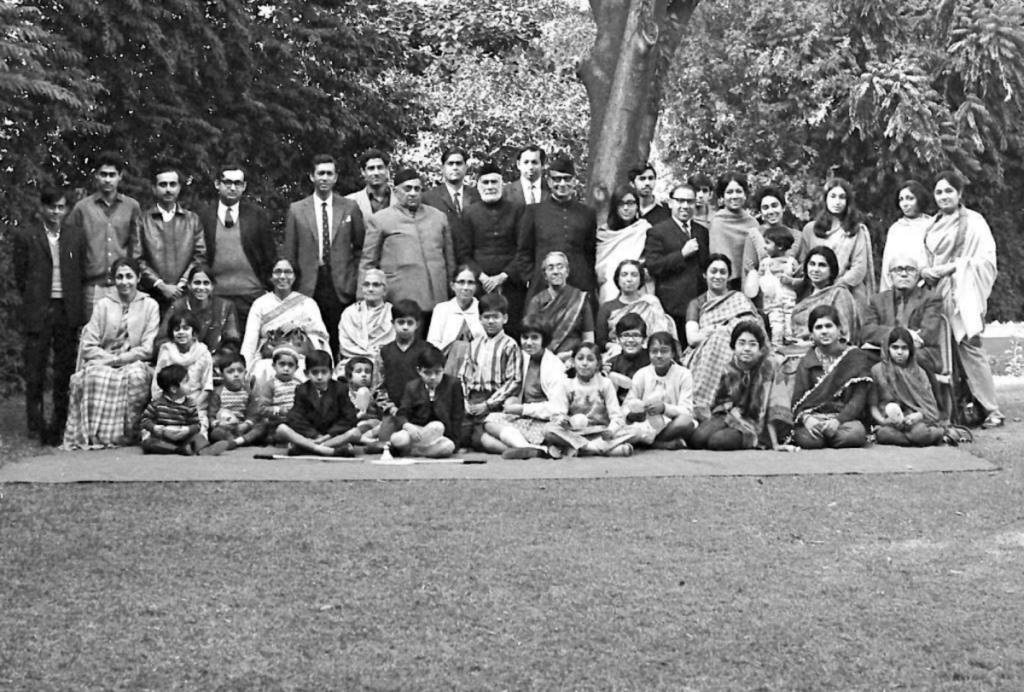
The entire extended clan in India around the late 1970s in Z.A. Ahmad’s official residence in Delhi. He was member of the Rajya Sabha in those days. Photo: Radha Khan.
Hajrah Begum and Z.A. Ahmad had known each other in London and eventually returned on the same ship from Britain with her son Sami. A growing understanding and common political commitments eventually led to their marriage on May 20, 1936. The marriage was solemnised by K.M. Ashraf (who had completed his PhD in Islamic history) and took place in Sajjad Zaheer’s home in Lucknow. The famous poet, Raghupati Sai Firagh Gorakhpuri was one of the witnesses. Soon the couple moved to Allahabad, as Ashraf and Z.A. Ahmad, along with other progressives like Rammanohar Lohia were given positions in Nehru’s kitchen cabinet when he was the president of the All-India Congress Committee. This was in keeping with the political line that members of the communist party (underground as it was) should work with anti-colonial forces. While Hajrah Begum continued her work with the underground communist party, she along with Rashid Jehan was also involved in organising the first All India Conference of the Progressive Writers’ Movement (Lucknow, 1936) where the famous writer Munshi Prem Chand gave the presidential address.
In Allahabad, she was part of a core group of young leaders who were working with the Congress Socialist Party (which was not banned), along with Z.A. Ahmed, K.M. Ashraf and Rammanohar Lohia; all of whom except Lohia were also members of the underground CPI. In this respect she had become one of the few early female members of the CPI. In Allahabad, she became active in organising railway coolies and press workers. By the late 1930s, she was working with the biri union, hawkers’ union, shop workers union, tin workers union and in eastern Uttar Pradesh (Azamgarh), and used this experience to organise tannery and textile workers in Kanpur. She was one of the first women from the communist party to work among farmers. She narrates in her interviews how she would walk miles in rural areas, travel the lowest class on trains, and sleep in mud huts on the floor with a single sheet. She always wore khadi (handloom) saris and lived and experienced the life of the people she was politically linked to, the underclass of towns and villages of British India. Speaking about women working on looms in villages of eastern UP (belonging to the Muslim julaha or weaver caste), she mentions how these women made the best saris, they were the bread earners of the family. Yet, like any other woman, the workers had to cook, take care of the children, attend to the demands of their husbands and in-laws and suffer all kinds of social oppression. It is these women she would organise for domestic rights, for better compensation of their products and for linking them with other women workers (industrial and rural) across the province.
In 1940, she became the organising secretary of the All-India Women’s Conference (AIWC), an organisation founded by educated and elite women committed to educational reform for women and children and to struggle for women’s rights. This was due to Hajrah Begum’s commitment to the cause of equal rights for men and women, rights for women in marriage and divorce, and equal compensation for women, especially in the industrial sector. In public forums, she raised issues related to the vagaries of housework and demanded the provision for creches in workspaces, along with maternity benefits for women workers. It is during this time that a debate also ensued within the now legal Communist Party (the ban on the party was lifted in 1942) on forming a women’s organisation. Although CPI’s all-male leadership would argue for women’s rights, they did not see a need for a separate group or women’s organisation. Even when senior leaders (like E.M.S. Nambroodripad, later the first elected chief minister of Kerala on a CPI ticket) circulated a paper within the party, advocating for women organisations and for the provision of lavatories and baths in rural areas, it was sarcastically referred as the “latrine document”. In contrast, Hajrah Begum in her writings in CPI outlets like People’sWar (QuamiJang) would argue for an all-India organisation for women that necessarily may not be a communist women’s organisation, but consist of women from the working classes, the peasantry, the lower middle classes, the teachers and ordinary people.
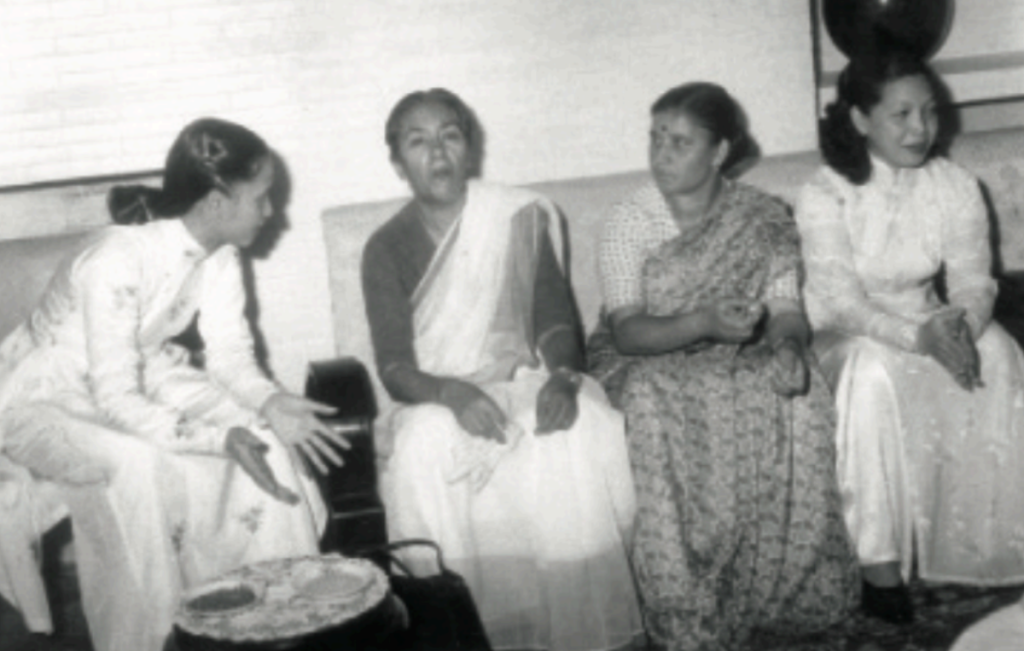
Hajrah Begum with Chinese delegates. Photo: Public domain.
Such an organisation was formed during the Bengal famine in the shape of the Mahila Atma Rakhsha Samiti (MARS) in Bengal. She travelled to Bengal during this time and reported first hand on the relief work done by the MARS, incorporating all classes of women, housewives, aunts, unmarried girls, the Calcutta elite and the peasant women from Barisal and Noakhali (both districts in East Bengal). While their men were at war, these women were committed to provide relief work and join the anti-colonial struggle. The famine and ensuing death and destruction in Bengal in the mid 1940s had opened the question of social justice and equality for all these women and they were ready to participate in their patriotic duty for justice and rights. This was not a unique case, Hajrah Begum had also witnessed and supported similar organisations, such as the Punjab Women’s Defence League based in Lahore which had similar aims as that of MARS.
It is during this time that she also edited the Urdu-Hindi Language organ of AIWC, Roshni. It is inspiring to read the fresh tone of editorials even almost 80 years after its publication. During the Partition violence, her editorials in Roshni were in solidarity with the plight of women, especially in Punjab. Her writings also made people aware of the need to unite against those who were dividing the people of the land. She emphasised that despite the violence and the division of the country, our commitment to the service for women will be the same and that we will continue to struggle against oppression of women on either side of the border.
After the division of British India, she and her husband did not migrate to Pakistan. It was a very difficult period for her as many close friends and family members (along with her elder brother whom she was very close to) did. Comrades like Syed Sajjad Zaheer were sent by the Party to Pakistan (he then returned in the 1950s after the decision on the Rawalpindi conspiracy case). K.M. Ashraf also came to Pakistan in 1948 and then left for the UK. But Z.A. Ahmad and Hajrah Begum continued to work with the CPI. Ahmad became the secretary general of the UP CPI and later represented the Party in the Indian parliament from the 1950s onwards for many years. Hajrah Begum herself continued to work within the Party and in the mid-fifties she ran for a position in the central committee of CPI. She eventually served as a member of the Central Control Commission of the Party; it was the top committee that deliberated on all complaints of anti-party behaviour. As a member of the Party, she was a participant at the World Peace Conference in Vienna in 1952 and became one of the founders of the National Federation of Indian Women (the women’s wing of CPI, as finally the Party had come around to the idea) and served as its general secretary from 1954 to 1962. Post-Independence in the 1950s and 60s she had several international travels representing the Party and continued to struggle against inflation and for women’s right to work.
§
The life of a revolutionary couple is never easy. Throughout the late 1930s and the 1940s (even after Independence) both Hajrah Begum and Z.A. Ahmad were either organising peasants and workers, doing Party work or were being persecuted by the authorities. Their daughter Salima Raza (radio artist, theatre director, performer, writer, who lives in Mumbai) was born in 1939. In her interviews with me, she narrated how, till they moved to Delhi, in the mid 1950s, when her father became a parliamentarian, the family could only afford a one-room (not one bedroom) apartment. The storage room would at times serve as a kitchen. Further, due to her parent’s political activity she hardly lived in her own home until she completed her matriculation in the mid 1950s, studying in at least 14 schools and staying with dozens of family members, family friends and strangers. In the early 1940s she lived in Lahore with her paternal grandparents. This was a time when Z.A. Ahmad was imprisoned in the Deoli Camp and Hajrah Begum was working on other political fronts.
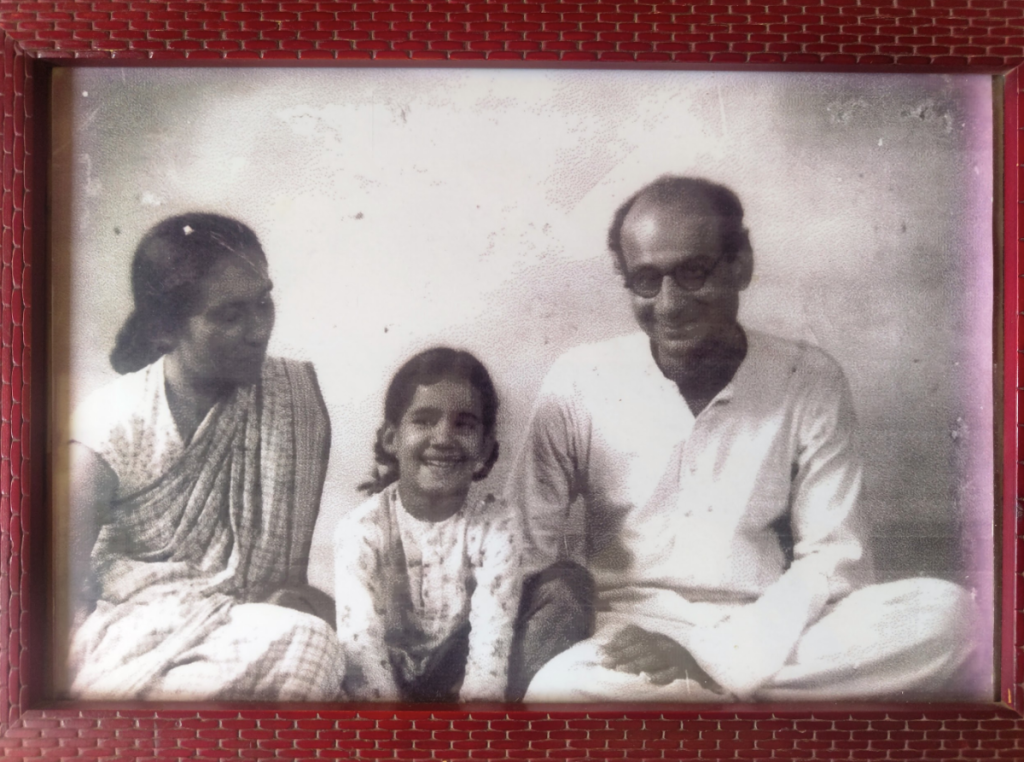
Hajrah, Salima and Ahmad. Photo: By arrangement with her family.
Salima Raza shared a story of when Hajrah Begum was arrested in 1949 (Nehru had decided to crack down on all communist activities) – she was a young girl of 10. Z.A. Ahmad was also underground and due to the radical leftward shift in CPI politics (under the influence of the then secretary general B.T. Ranadive) he had been suspended from party membership. One morning, Hajrah Begum, while living in Lucknow, asked her daughter to serve tea to the gentleman who was waiting for her to change. Soon Hajrah Begum emerged, gave the child Rs 5 and instructed the cycle rickshaw driver standing outside to take her daughter to Yashpal’s house (the famous Hindi writer). She instructed Salima Raza not to cry when she saw her mother leave in the parked car and told her that she should keep on raising the slogan “inquilab zindabad”. Hajrah Begum then got into a car that was waiting for her. She was in jail for the next five months and her daughter lived with family friends. Salima Raza remembers tears running down her cheeks, yet she continued to raise the slogan as long as she could see her mother’s car.
Despite hardships and the absences, there remained a deep bond of affection and care within the family and between Hajrah Begum and Z.A. Ahmad. In the late 1940s, when Ahmad was suspended from the party and was living underground in Lucknow, a friend arranged for the couple to meet. When they met, Hajrah Begum (who was still under the Party discipline) told Ahmad that the Party leader, Ranadive had ordered her to divorce Ahmad as he was not considered a true communist, but a revisionist. When Ahmad asked what Hajrah Begum had decided to do, she answered, “Marrying you was my own decision, the Party did not dictate me to marry you, and it cannot force me to divorce you either.” Ahmad writes in his memoirs how today this seems like a trivial issue, but in those days, it was unthinkable to not follow the Party directive.
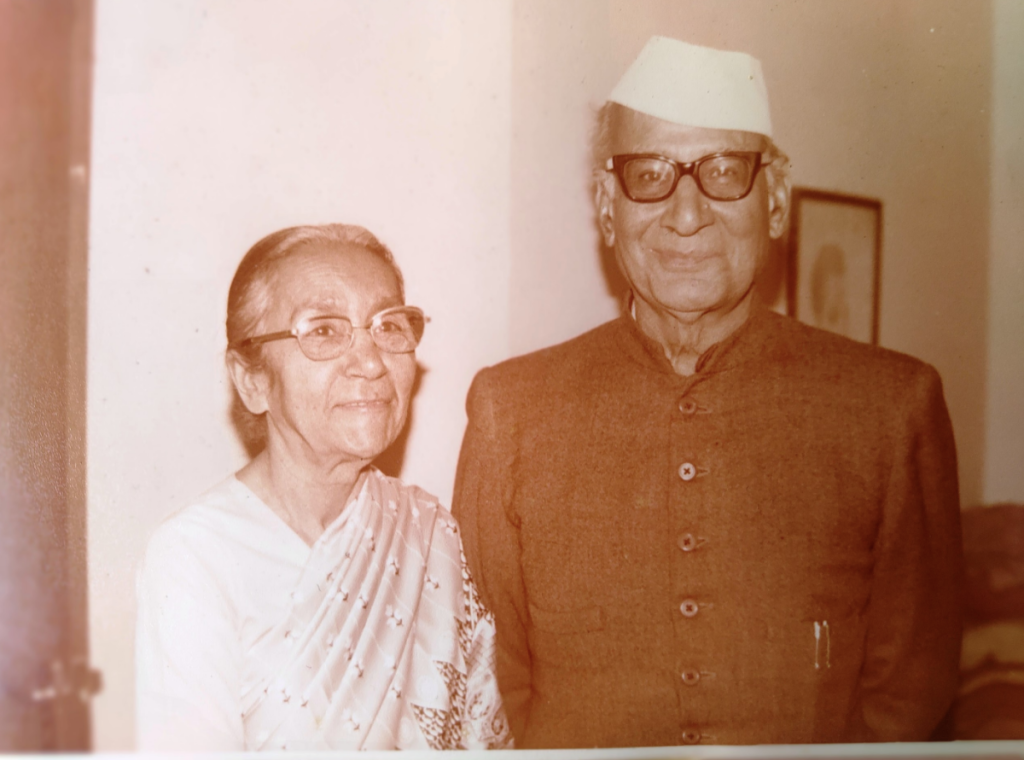
Hajrah and Ahmad. Photo: By arrangement with her family.
This long-lasting relationship of political commitment, care and companionship ended with Ahmad’s passing in 1999. Salima Raza, while talking to me, mentioned an anecdote about her mother that exemplifies her deep affection for her husband. Once after the death of her father, Salima Raza asked her mother (who was slowly losing her memory), what her name was. She answered, “Hajrah Begum.”
Salima Raza said, “But your name is Hajrah Begum Ahmad.
“No my name is Hajra Begum,” the answer came back.
“Where is Dr. Ahmad?” her daughter asked. The reply was, “He may have gone to the parliament, or perhaps he may have gone to a meeting.”
Her daughter persisted, “But there is no meeting. People say that he has passed away, but what do you say?”
Hajrah Begum replied, “No, this has not happened, if it was so, he would have told me… If nothing else, he would have sent me a post card.”
Hajrah Begum, a person of immense courage, resilience, simplicity and sacrifice, passed away on January 20, 2003, after a prolonged period of illness. These few lines from a longer poem, My Nani Amma, by her grandson Aamer Raza, captures her beautifully.
But how many nanis risked their lives for freedom and justice
And walked till the blood ran all over their feet?
How many nanis defied all tradition
With utmost respect for all those around them.
How many nanis have lived their lives with absolute belief in the correctness of their convictions, yet never indoctrinated their children?
And how many nanis have done really cool stuff, like conquering the British Empire,
And leading women’s movements.
Not many, I imagine. I wouldn’t have known of those things,
For you wouldn’t give the game away
All I knew was that I was lucky to have you.
Kamran Asdar Ali teaches anthropology at the University of Texas, Austin.
Note: An earlier version of the piece had misidentified Abdul Jamil Khan. The error has been corrected.
source: http://www.thewire.in / The Wire / Home> English> Analysis> History / by Kamran Asdar Ali / August 16th, 2025
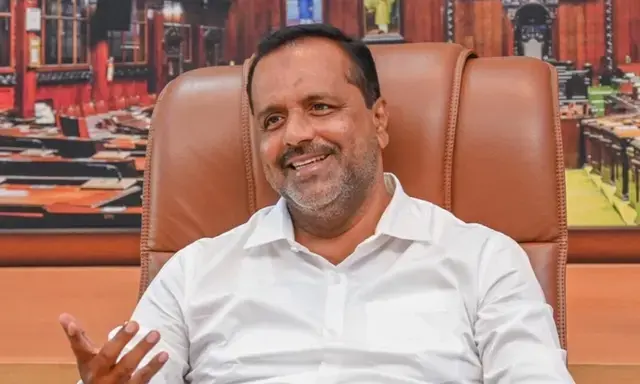
Rs 1 crore to be provided for Beary community hall in Kodagu: Speaker U T Khader
Madikeri:
Karnataka Legislative Assembly Speaker U T Khader said that Rs 1 crore will be allocated for the construction of a Beary community hall in Kodagu district, and directed officials to identify suitable land for the project.
He was speaking after inaugurating the first Kodagu District Beary Literary Conference organised by the Karnataka Beary Sahitya Academy in association with the Kodagu Bearys Welfare Trust.
The event was presided over by B A Shamshuddin. Khader said the grant of Rs 1 crore would be facilitated with the support of local MLA Mantar Gowda and Virajpet MLA as well as Chief Minister’s legal advisor A S Ponnanna.
Highlighting the cultural importance of the community, he said Beary culture, literature and traditions have a distinct history and called for efforts to preserve and promote them.
He said the literary conference would help encourage discussions, strengthen the Beary language, and guide the community towards development. It would also help educate youth about Beary literature, culture and history, and provide a platform for exchange of ideas.
Khader also stressed the importance of learning and respecting all languages, stating that in a globally connected world, multilingualism promotes harmony.
Speaking on the occasion, MLA Mantar Gowda assured that funds would be released once land is identified for the construction of the community hall.
source: http://www.msn.com / MSN / Home / by Newspoint / April 2026
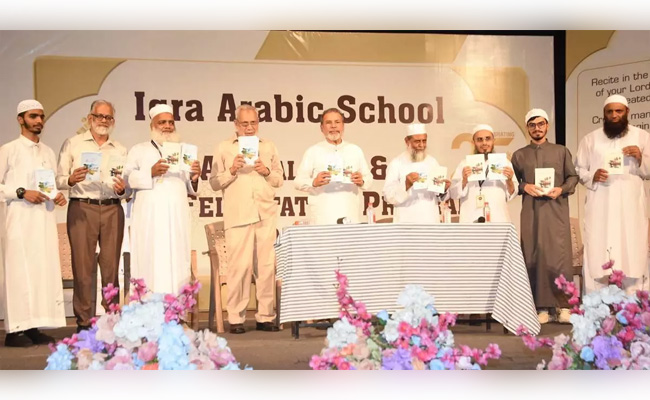
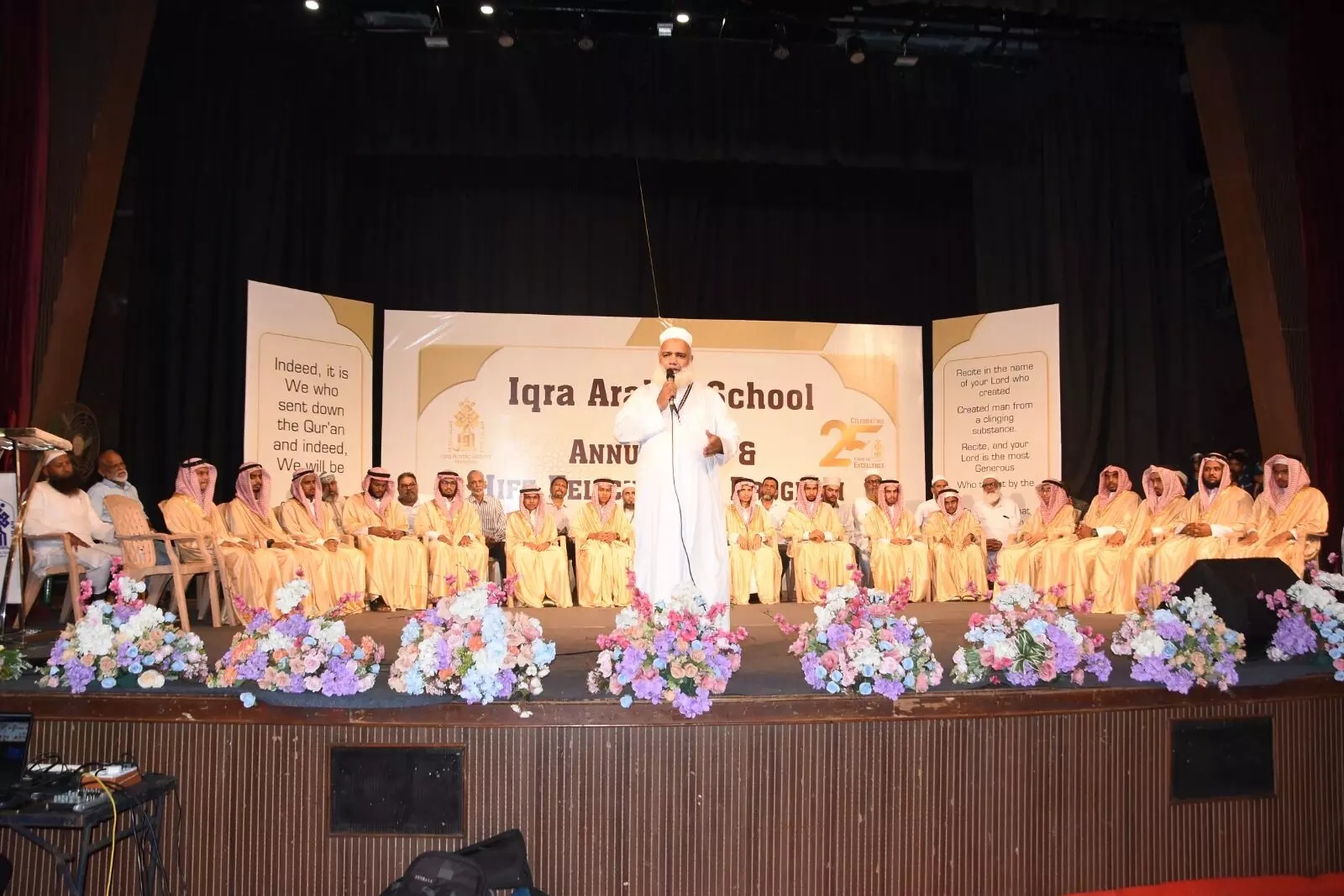
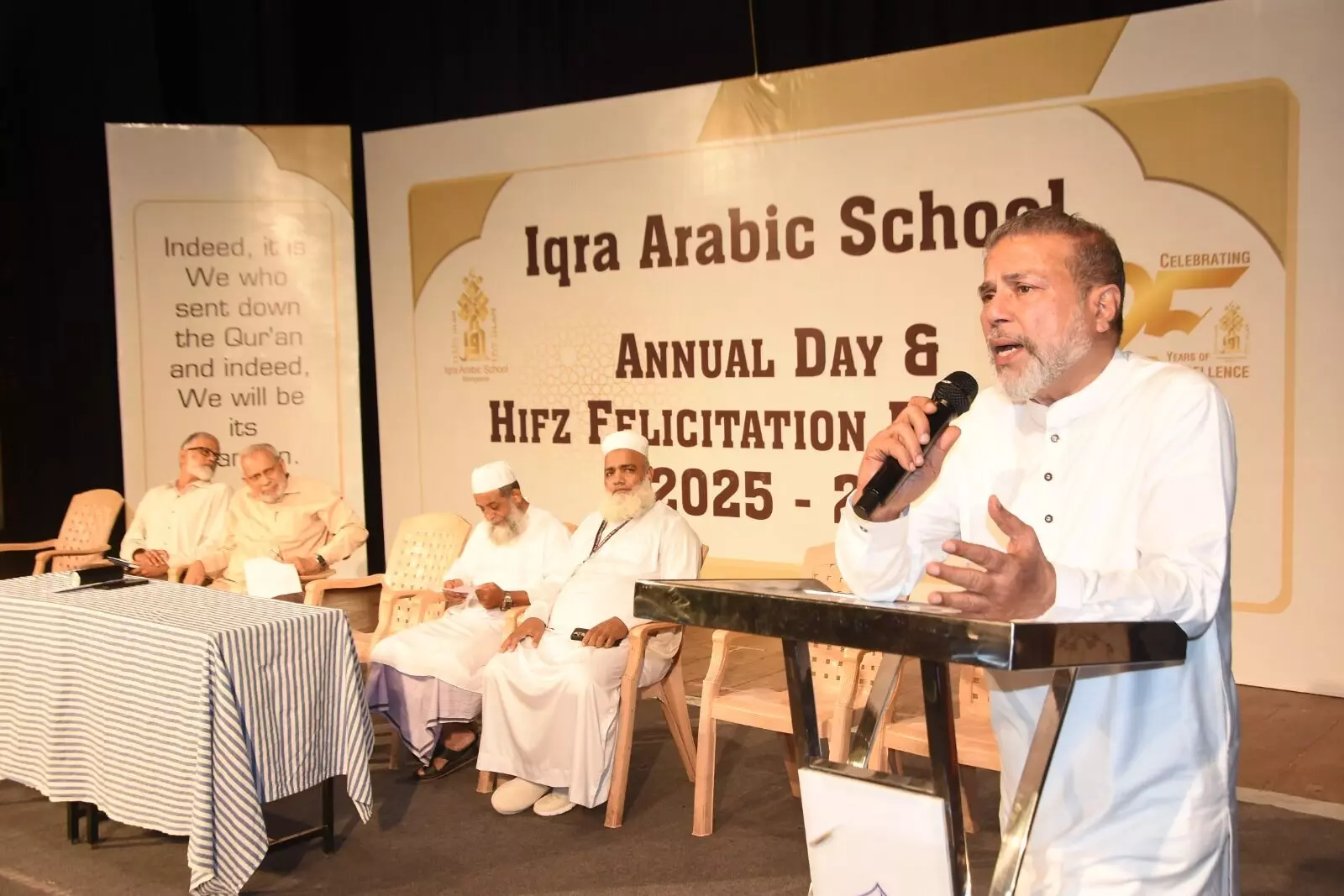
“The aim of Iqra is to create leaders for the community,” said Syed Mohamed Beary while presiding over the Annual Day 2026 and Hifz felicitation programme of Iqra Arabic School, highlighting the institution’s focus on leadership and long-term community development.
Presiding over the event, Syed Mohamed Beary, Chairman of the Moulana Abul Hasan Ali Nadwi Educational and Charitable Trust, Mangaluru, spoke at length about the journey of the institution since its launch in 2000. He recalled the early days of the school and said it was started with a clear vision to serve the community through education rooted in values. He expressed pride in how the institution has grown over the years, both in strength and in its role within the community.
He said Iqra Arabic School was not built only to provide basic education, but to nurture individuals who can take responsibility and guide society. According to him, the institution has consistently worked towards shaping students into capable leaders who can face present-day challenges while staying connected to their roots. He stressed that the focus has always been on building character along with knowledge.
The programme was compered by Moulana Farhan Nadwi, who introduced the vision of the institution and said the school strives to prepare leaders and scholars who can respond to modern challenges faced by the community.
Chief guest Moulana Maqbool Kobatte, Principal, Jamia Islamia Bhatkal, congratulated the students and their parents for completing the memorisation of the Qur’an. He said these Huffaz are part of Allah’s promise of preserving the Qur’an until the Day of Judgement. He described the Qur’an as a guide for life and said while recitation is important, it is equally necessary to practise its teachings. He also noted that in the race for worldly success, people are moving away from values such as humanity, brotherhood and unity.
Taha Mateen, Chairman and Managing Director of ACURA Speciality Hospital, said the community should not forget its Islamic roots and history. He recited lines of poetry by Iqbal: “Kabhi ae nawjawaan Muslim tadabbur bhi kiya tu ne, wo kya gardu tha tu jiska hai ek toota hua taara.” He stressed the need to understand the Qur’an and recognise its importance, and urged students to continue learning across different fields without stopping at any stage. He congratulated the students, parents and the management.
Dr. C P Habeeb Rahman, Chairman and Managing Director of Unity Health Complex, Mangaluru said there is a need for introspection within the Muslim community to understand what has gone wrong and why it has fallen behind despite contributing to global civilisation. He also spoke about the lack of leadership within the community.
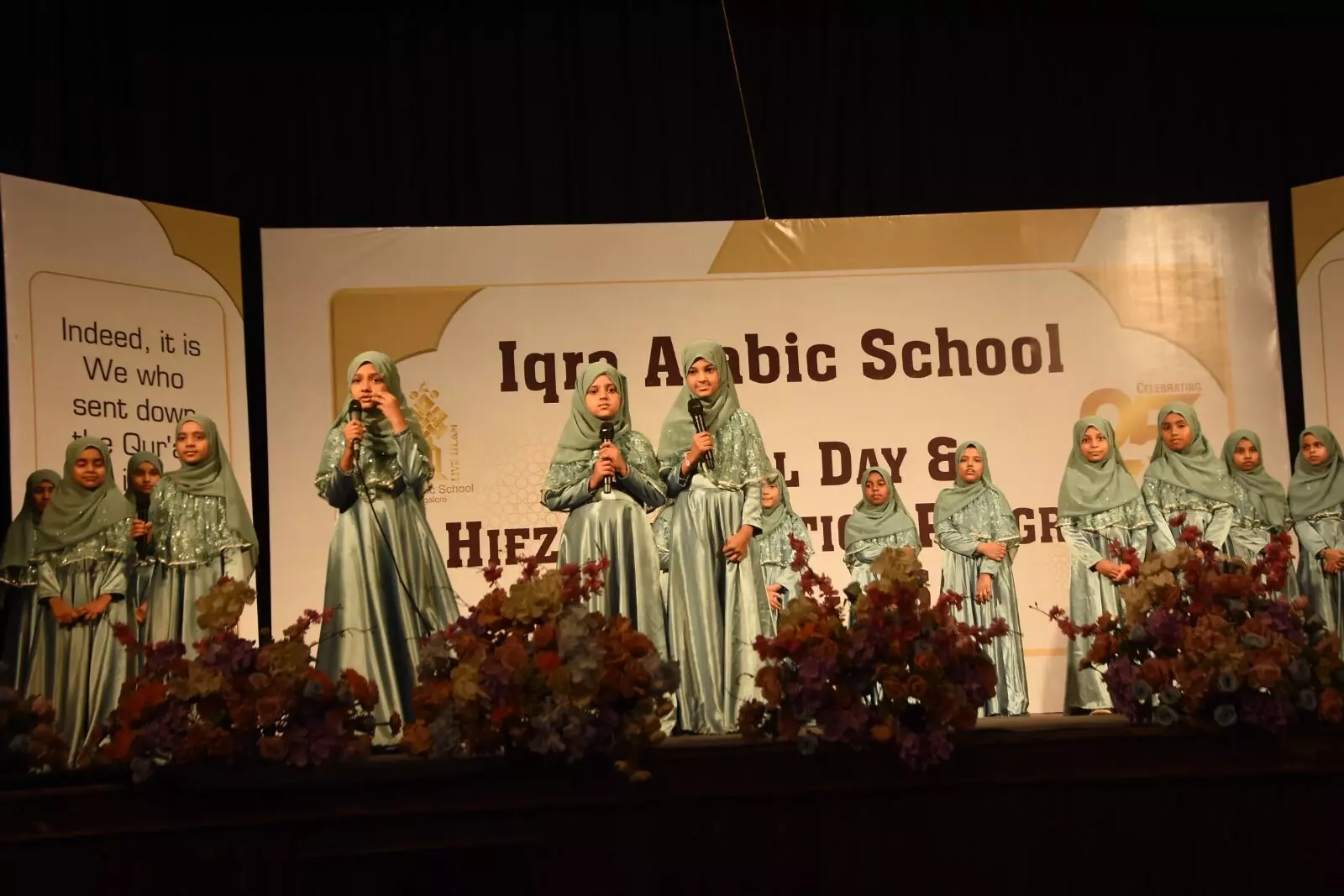
Students presented cultural programmes based on Islamic teachings during the event. Two of the books authored by the students of the institution were also released during the event.
A total of 18 students who completed Hifz this year were felicitated and presented with mementos by the guests. The programme concluded with a vote of thanks by Moulana Salim Khalifa, the principal of the institution.
source: http://www.english.varthabharati.in / Vartha Bharati / Home> Karavali / by Vartha Bharati / April 21st, 2026
Professor (Dr.) Ahmad Sajjad, a distinguished author, critic, and intellectual who devoted his entire life to the service of knowledge and the Islamic movement, breathed his last at his native place Ranchi, Jharkhand on Sunday, April 26, 2026. He had been unwell for several years. He was 87.
Born in Nalanda, Bihar on12 October 1939, he completed his M.A. in Urdu from Patna University and was teaching at Ranchi College, Ranchi. Later he served as Head of the Department of Urdu, Ranchi University.
Professor Ahmad Sajjad was also a member of Jamaat-e-Islami Hind and served on its Markazi Shura.
He was a great Islamic scholar and Urdu literary figure. His Urdu books include Jadeed Nazriyat ki Khuli Nakami aur Islam ka Roshan Mustaqbil (1990), Hindustan ka Jadeed Taleemi Inquilab aur Muslim Aqliyat (2000), Ekiswin Sadi ka Challenge aur Milli Taleemi Agenda (2014), Tanqeed-o-Tehreek (1979), Tameeri Adabi Tahreek (1994), Tanqeed-o-Tanqeeh (2015), Kya Barre-e-Sagheer ki Urdu Abadi Azab-e-Musalsal ka Shikar Hai (2014), Meer Ghulaam Ali Ishrat Barelvi (1978), and Banda-e-Momin ka Hath ya Tareekh All India Momin Conference (2011).
Besides, he compiled many books, including Bunyadi Masail aur Unka Hal (1973). He was also Editor-in-Chief of Urdu literary magazine, Fankar, published from Hyderabad. All of his works earned recognition in the circles of Urdu literature and Islamic thought. His writings reflect truthfulness, intellectual clarity, and deep movement-oriented insight.
For a long time, he remained at the forefront of community and welfare work in Ranchi and was always among the leading ranks in collective social efforts. In the construction of Idris Hostel and the establishment of Millat Academy, he was in many ways the driving force. For Idris Hostel, he travelled across India with medical students to raise support and mobilise efforts. These two collective projects in Ranchi stand as lasting testimony to his leadership and dedication.
When he was elected President of Idara Adab-e-Islami Hind in 1982, he devoted all his energy, and his heartfelt commitment to the organisation. His tenure remains one of its brightest chapters, especially in terms of organisational tours, literary activities, and mushairas, where he left a remarkable mark. He had also held several discussions with the late Syed Asad Gilani on building an international front for Islamic literature.
Professor Sajjad was a sincere, active, dynamic, compassionate, and visionary personality. One of his greatest qualities was that wherever he lived, he remained fully engaged with his surroundings – constantly striving, questioning, and confronting challenges. Courage, bravery, and speaking the truth were his defining traits. He was straightforward and passionate in expressing his views. His opinions, particularly on the issue of elections, were widely discussed. Whatever work he took part in, he did so wholeheartedly. There was neither hypocrisy nor unnecessary compromise in his character.
His demise is an irreparable loss not only for the Islamic movement but also for Urdu literature and Islamic thought. He was a scholar and man of letters whose writings will continue to serve as a guiding light for future generations.
source: http://www.radiancenews.com / Radiance News / Home> Latest News>Obituary / by Radiance News Bureau / April 23rd, 2026
Shahzada Husain Burhanuddin, the youngest son of His Holiness Syedna Mufaddal Saifuddin.
Mumbai :
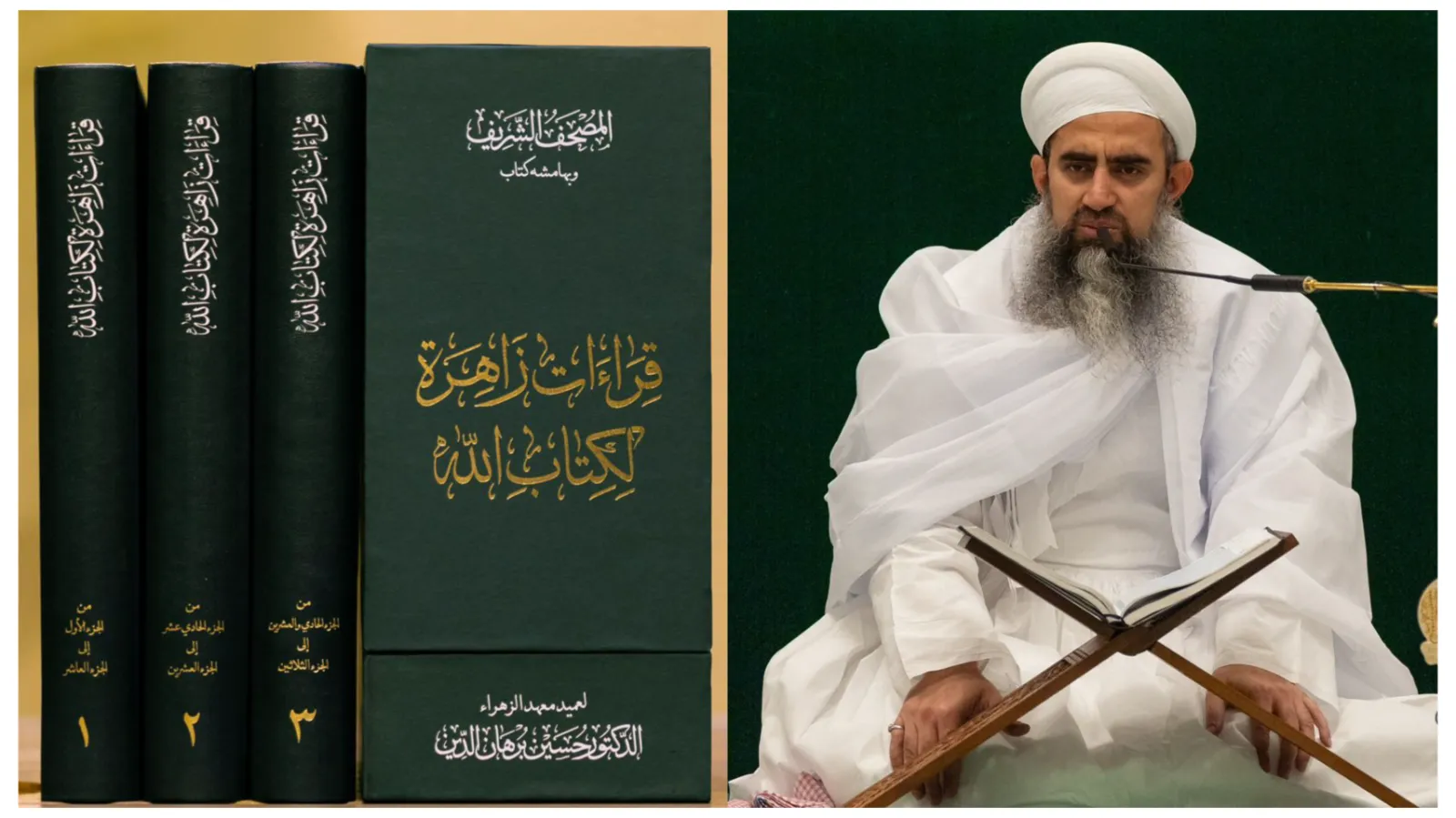
The Dawoodi Bohra community has launched a new online initiative aimed at expanding access to the sacred sciences of the Quran. The newly launched Sawt al-Quran al-Karim YouTube channel presents the recitation of the entire Quran in the voice of Shahzada Husain Burhanuddin, the youngest son of His Holiness Syedna Mufaddal Saifuddin. This project forms part of the work of Mahad al-Zahra, an institution dedicated to the study, memorisation and recitation of al-Quran al-Karim.
The channel presents the complete Quran according to the Khalaf ‘an Hamza narration, one of the ten canonical traditions of Quranic recitation preserved through continuous scholarly transmission over centuries. Known for its demanding precision and distinctive phonetic characteristics, this narration remains less widely available in full digital recordings. Its publication online offers students of the Quran a rare opportunity to study and listen to this recitational tradition in its entirety.
Mahad al-Zahra leads the Dawoodi Bohra community’s efforts in Quranic education. The institute was established in 1976 by the late Syedna Mohammed Burhanuddin to cultivate excellence in the memorisation and recitation of the Quran. Since 1998, Shahzada Husain Burhanuddin has guided the institution’s development, overseeing programmes that train students in the disciplines of tilawah (recitation) and hifz (memorisation) while maintaining rigorous scholarly standards.
In his role as provost of Aljamea-tus-Saifiyah, the community’s premier educational institute, Shahzada Husain Burhanuddin personally supervises examinations for huffaz (plural of hafiz, are individuals who have memorized the entire Quran), ensuring accuracy and mastery in Quranic memorisation. A distinguished qari himself, he also holds honorary membership in the Naqabat Qurra al-Quran al-Karim in Cairo, regarded as one of the world’s most respected guilds of Quran reciters.
His scholarship in the field of Quranic recitation includes the three-volume work Qiraat Zahira li Kitab Allah, which presents the principles of Quranic readings through structured tables and visual guides. Each page of the publication includes QR codes that connect readers directly to his recitation of the Qiraat ‘Ashr (the ten recognised schools of Quranic recitation, each preserving a unique phonetic tradition from a renowned reciter), allowing students to hear the precise rendering of the recitation rules they study. The work has received certification from Al-Azhar University, widely recognised as a leading authority in the teaching and transmission of Quranic sciences.
The launch of the Sawt al-Quran al-Karim channel reflects the vision of His Holiness Syedna Mufaddal Saifuddin to strengthen engagement with the Quran across generations. He has consistently encouraged families within the community to nurture the study of the Quran at home, expressing the hope that every household will include at least one hafiz and that the community will cultivate 100,000 huffaz worldwide.
By presenting authentic recitation through digital platforms, the initiative extends access to students and listeners across continents. Families, scholars and learners can now listen to and study these recitations regardless of location, strengthening their connection with the Quran in daily life.
Murtaza Jafar, a senior member of Mahad al-Zahra, described the initiative as an important step in sharing Quranic knowledge with a wider audience.
“The launch of this channel marks an important moment in our efforts to preserve and share the sacred sciences of the Quran. By publishing the complete Quran in the Khalaf ‘an Hamza narration, we are providing students and listeners around the world with access to a recitational tradition that requires great care and precision.”
He added that the project will continue to expand.
“We plan to add further recordings representing other recognised narrations of Quranic recitation. Work has already begun on recordings in the transmissions of Hafs ‘an Asim, Warsh ‘an Nafi and al-Susi ‘an Abi Amr. Our hope is that these resources will support students of the Quran for generations to come.”
The Sawt al-Quran al-Karim YouTube channel is now available online and offers listeners direct access to the complete recitation.
* On the list are 14 Muslim zoologists and scientists
* To date, India has identified 102,718 animal species
* Work is underway to discover new species in ecosystems
* 15 million living species still to be discovered
THE Kolkata-headquartered Zoological Survey of India (ZSI), whose scientists and field staff are engaged in exploring, naming, describing, classifying, and documenting animals from all over the world’s most populous country, has a miserably low number of Muslims – 23 – on its rolls that has a total of 591 officers, administration and field staffers, according to Mohammed Abdul Mannan’s new book, At the Bottom of the Ladder: State Of The Indian Muslims – https://www.amazon.in/dp/B0GF1Q9R25. The book quantifies Muslim presence in 150 key organisations, including Union ministries, departments, and organisations.
The Muslim scientists and zoologists at the ZSI are – Sarfraz Ul Islam Kazmi, Shaikh Rehnuma Sultana, Mohammed Hafiz, Imran Alam, Shabnam Nizamuddin Ansari, Jalil Ahmed, Mohammed Rasmanjani Ali, Anjum Nasreen Rizvi, Rifat Hussain Raina, Jafer Palat, Mohammed Ethtesham Ul Hassan, Ruqiya Bano, and K Bakh Mollah. There are seven Field Assistants from the largest minority community.
Among 82 ZSI scientists are two Muslims – Dr M E Hassan, a Scientist ‘E’ at the Gangetic Plains Regional Centre in Patna, and S R Sultana, Assistant Zoologist at the Freshwater Biology Regional Centre in Hyderabad. Among 98 officials at 15 Regional Centres, eight are Muslims, including two NRCs in Dehradun – Dr. Anjum Nasreen Rizvi, a scientist in Nematology, Helminthology and Molecular Systematics, and Dr S I Kazmi, a scientist in Hymenoptera. The Western Regional Centre in Pune’s four staff members include Dr Muhamed Jafer Palot, a scientist in animal taxonomy with a special interest in birds, reptiles, and butterflies. Dr Anjum Rizvi is the Managing Editor of the Journal of Indian Zoology.
The 108-year-old organisation has been working to understand and investigate the faunal diversity for scientific use and equitable sharing of the benefits of animal resources of the country. Formed in July 1916, it conducts surveys, exploration, and research that lead to the advancement of zoological knowledge. ZSI originated from the establishment of the Zoological Section of the Indian Museum at Calcutta in 1875.
It gradually expanded in terms of its manpower and research programme. Today, India is among the 17 mega-diversity countries of the world, with four biodiversity hotspots, including the Western Ghats/Sri Lanka, Indo-Burma, and the Himalayas. Currently, there are about 1.7 million living species described from all over the world, and another 15 million species are waiting to be discovered. To date, India has been able to describe 102,718 species of animals, and work continues to discover and explain new species, especially from the lower invertebrate groups occurring in various ecosystems. Also, the status of the higher group of animals is studied before their habitats disappeared on the planet Earth.
The country’s custodian of the animal resources has broadened its work in line with the Articles of the UN Convention on Biological Diversity (UNCBD), a multilateral treaty focused on conserving biodiversity, promoting its sustainable use, and ensuring the fair and equitable sharing of benefits from genetic resources. As many as 157 countries signed it, like the United Nations Framework Convention on Climate Change (UNFCCC) and the United Nations Convention to Combat Desertification (UNCCD), at the UN Conference on Environment and Development in Rio de Janeiro in 1992. The CBD now has 196 countries as signatories, including India.
To take the agenda further up, India also enacted the Biological Diversity Act in 2002 to implement the provisions of CBD, which covers biodiversity at all levels: ecosystems, species, and genetic resources. To support the implementation of its objectives, two internationally binding agreements were adopted within the framework of the CBD. The Cartagena Protocol, adopted in 2000 and entered into force three years later, regulates the transboundary movement of living modified organisms (LMOs).
The Nagoya Protocol, adopted in 2010 in Japan and entered into force four years later, establishes a legally-binding framework for access to genetic resources and the fair and equitable sharing of the benefits arising from their use. Experts say considerably less is done to assess the degree and value of biodiversity without knowing the species involved. The ecosystem’s health also cannot be monitored without recognizing the presence of the individual organisms crucial for the indication of ecological processes.
The ZSI has made extensive surveys across the country, and a large number of specimens have been collected. Of these collections, only about 65 percent have been taxonomically studied. These include the major groups of vertebrates. The organization provides information and vital data for the in-situ conservation of various species in different ecosystems, both within and outside the protected areas. The ZSI provides regular services with regard to permissible limits of legal trading of faunal resources or derivatives thereof, monitoring services on population status of commercially important species, and providing inputs for underutilised, culturable species, both from terrestrial and aquatic systems.
A part of the Union Ministry of Environment, Forest and Climate Change, it also undertakes Environmental Impact Assessment (EIA) with special reference to ecology and wildlife. Zoological surveys worldwide are crucial for understanding and managing biodiversity. These surveys involve various methods to collect data on animal populations, behaviour, and habitats, including field observations, monitoring programs, and advanced techniques like DNA analysis and satellite tracking.
There are about 1.7 million living species described from all over the world and another 15 million species are waiting to be discovered. Based on the largest dataset to date, the global Living Planet Index (LPI) shows an average 73 percent decline in monitored wildlife populations between 1970 and 2020. It reports that there has been a large average decline across more than 34,000 animal populations. In 2024, ZSI set up a pilot project to use eDNA (environmental DNA) to study and monitor wildlife.
Data analysis of the 2010-2020 decade reveals that a total of 4,112 species — 2,800 new species and 1,312 new records in 2020, India added 557 new species to its fauna, which included 407 new species and 150 new records, according to a document by the ZSI. The number of faunal species in India has climbed to 1,02,718 species with the discovery of the new species. There is no definitive, universally agreed-upon number for the total number of animal species in the world.
Estimates range from three million to 100 million. However, the most common estimates fall between seven and 10 million. About 1.5 million animal species have been formally described and named by scientists. The ZSI publishes the Red Data Book on Indian Animals, which was first published in 1983 and is similar to the Red Data Book published by the International Union for Conservation of Nature (IUCN), the world’s largest and most diverse environmental network known for producing authoritative reports, standards, and tools for conservation.
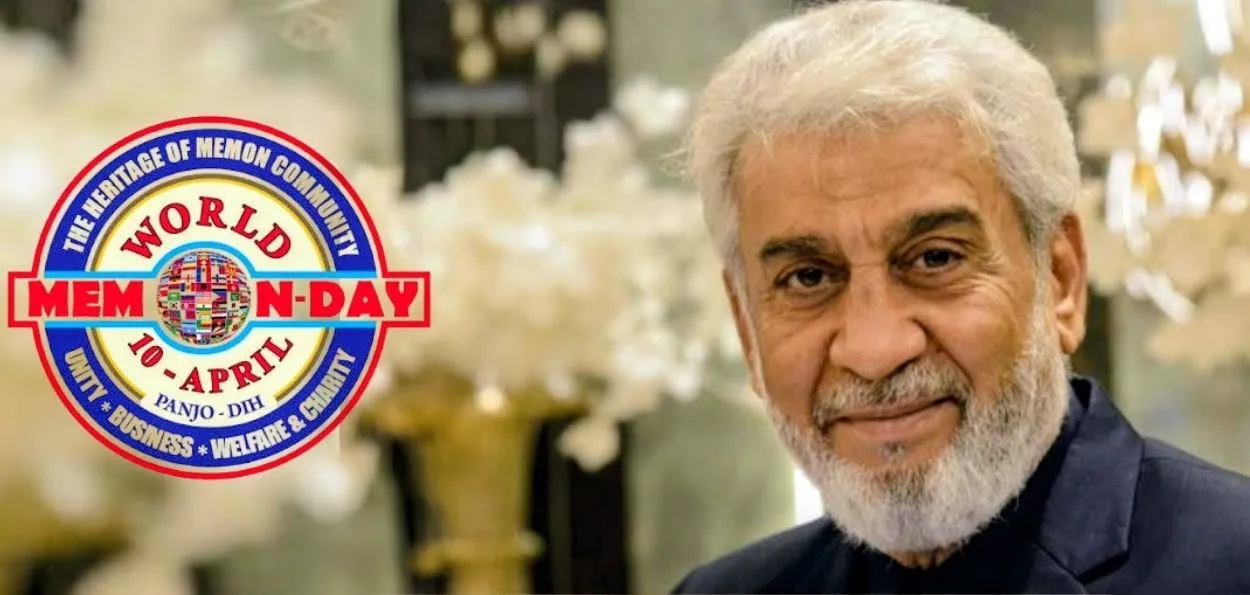
The Memon community—numbering around four million globally—is widely regarded as a globalised group known for its business acumen, prosperity, patriotism, and pro-development outlook.
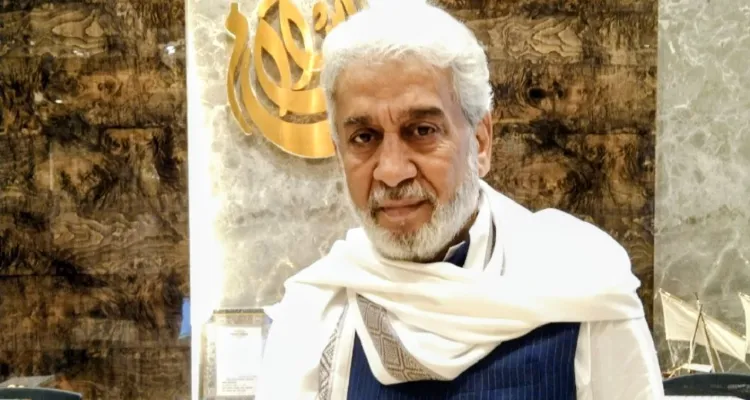
These observations were shared by prominent Memon leader Yusuf Abrahani on the occasion of World Memon Day.
The Memons are a close-knit, predominantly Sunni Muslim business community. They trace their origins to Gujarat in India and Sindh in Pakistan. Historically known as maritime traders, they are largely concentrated in Mumbai and Karachi, where they have flourished as entrepreneurs in sectors such as import-export, shipping, and textiles.
The community’s roots go back to the 15th century, when members of the Lohana community in Sindh embraced Islam under the guidance of Syed Yusufuddin Gilani.
Known for their peaceful temperament and adaptability, Memons have built a reputation not only for prosperity but also for their strong commitment to social service.
Yusuf Abrahani, a former Member of the Legislative Assembly and president of the Islam Gymkhana, remains actively engaged in Mumbai’s political, business, and social spheres.
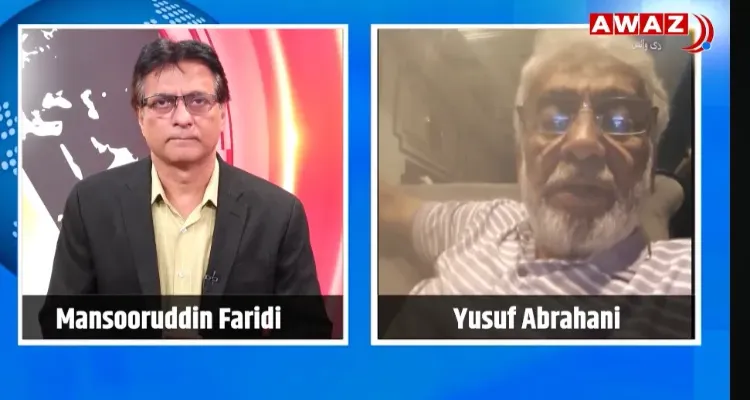
In a special interview with Mansooruddin Faridi, Editor of Awaz-the Voice Urdu, Abrahani noted that the Memon community is spread across the world, with members having migrated from Gujarat to various countries.
Describing the community’s ethos, he said, “Allah has blessed Memons immensely—with wealth, a generous spirit, and grace. Wherever a Memon settles, the first priority is to establish a madrasa, mosque, community hall, and medical dispensary. This tradition continues even today.”
Drawing from his six decades of experience, he added that Memons have established numerous institutions in Mumbai, including hospitals, mosques, madrasas, and charitable facilities.
World Memon Day is observed on April 10, and is marked by extensive charitable activities. Community members visit hospitals, organise welfare programmes for the poor and marginalised—including widows, the visually and physically challenged—and distribute essential supplies.
Abrahani noted that this culture of service has gained further momentum under the leadership of Iqbal Memon. Similar programmes are also organised in countries such as the United Kingdom, the United States, Australia, Canada, and New Zealand.
Despite their relatively small population, Memons have achieved notable success in education and economic development. Alongside India, significant Memon populations reside in countries like Canada, the United Kingdom, the United States, and Sri Lanka.
Honesty and integrity remain the hallmarks of the community, with a strong emphasis on imparting religious and ethical values to younger generations.
source: http://www.awazthevoice.in / Awaz, The Voice / Home> Stories / posted by Aasha Khosa / April 10th, 2026
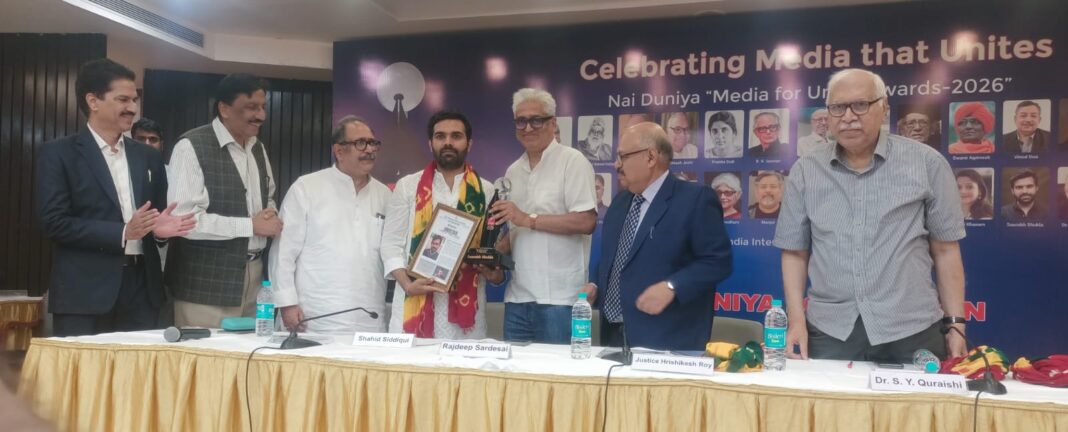
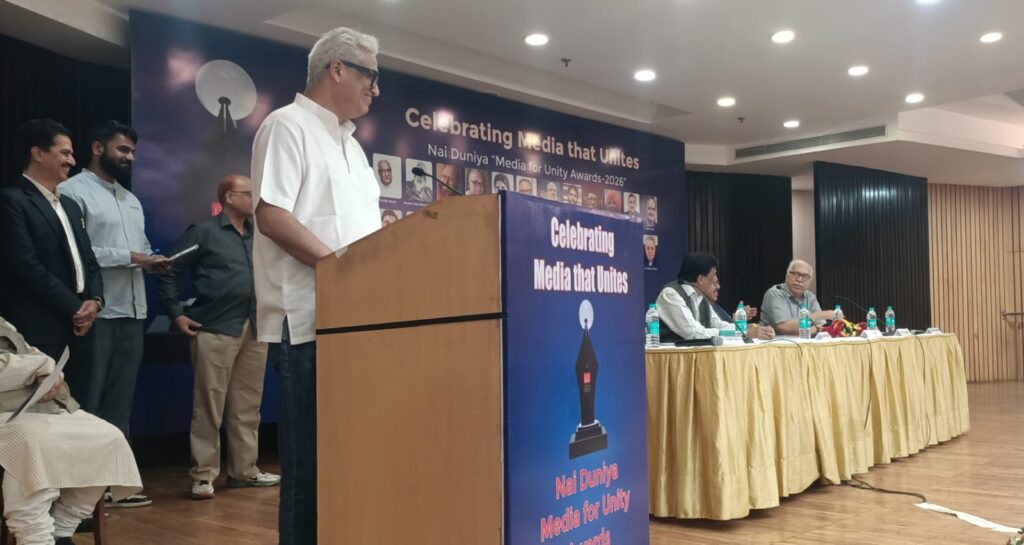
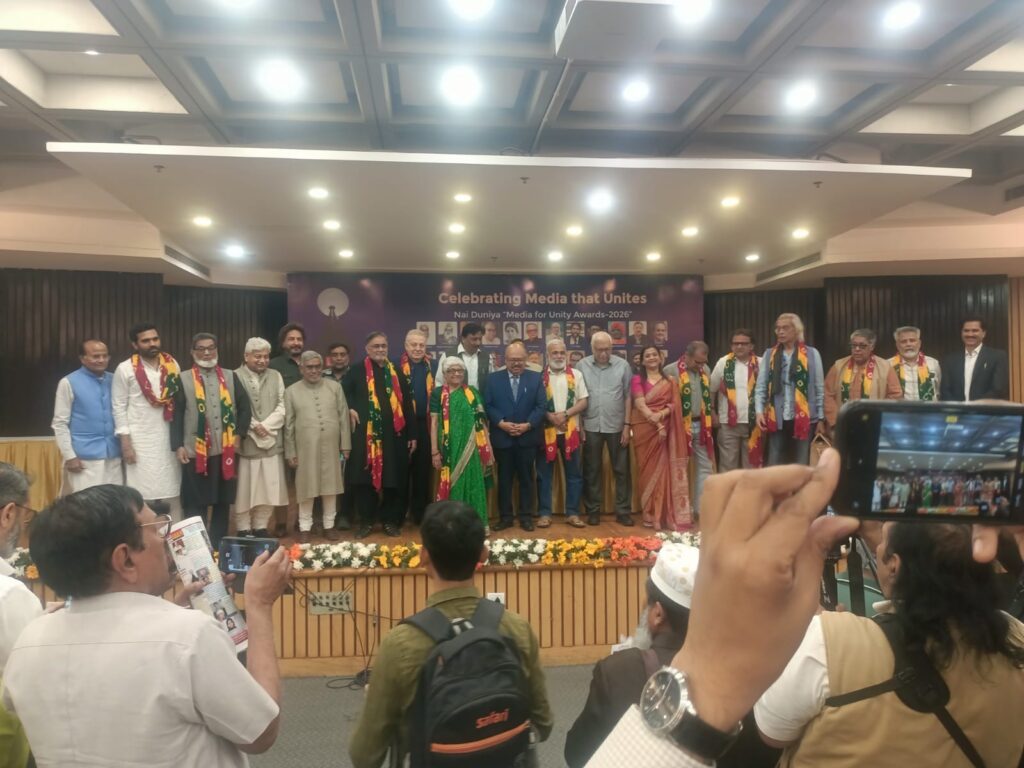
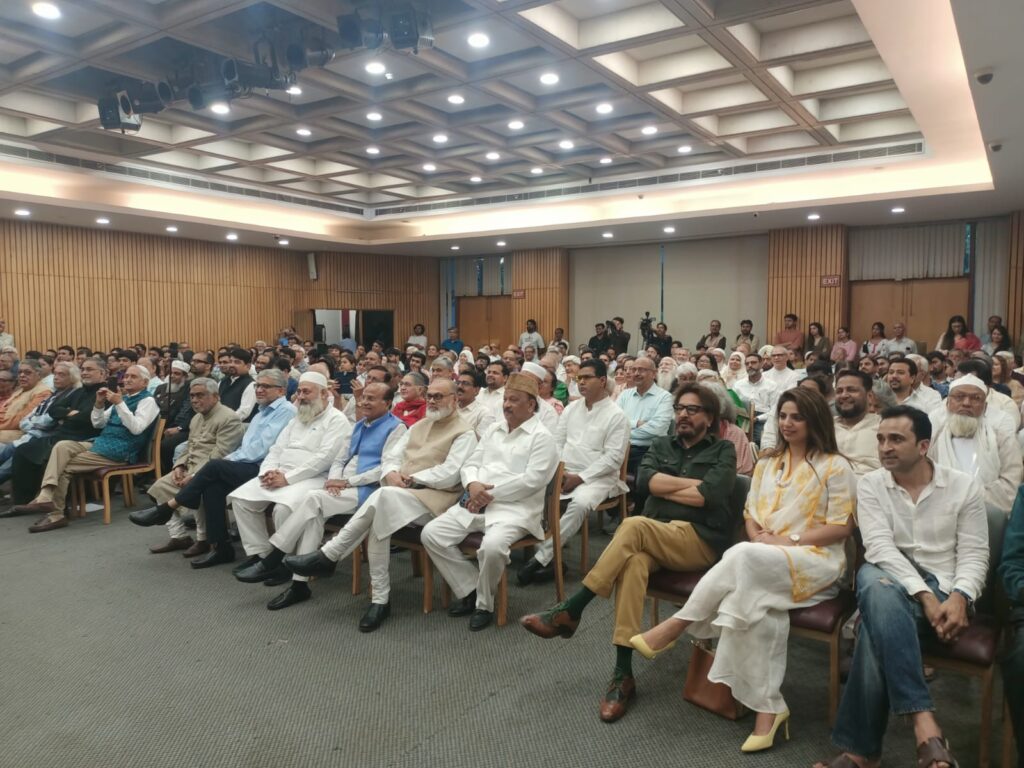
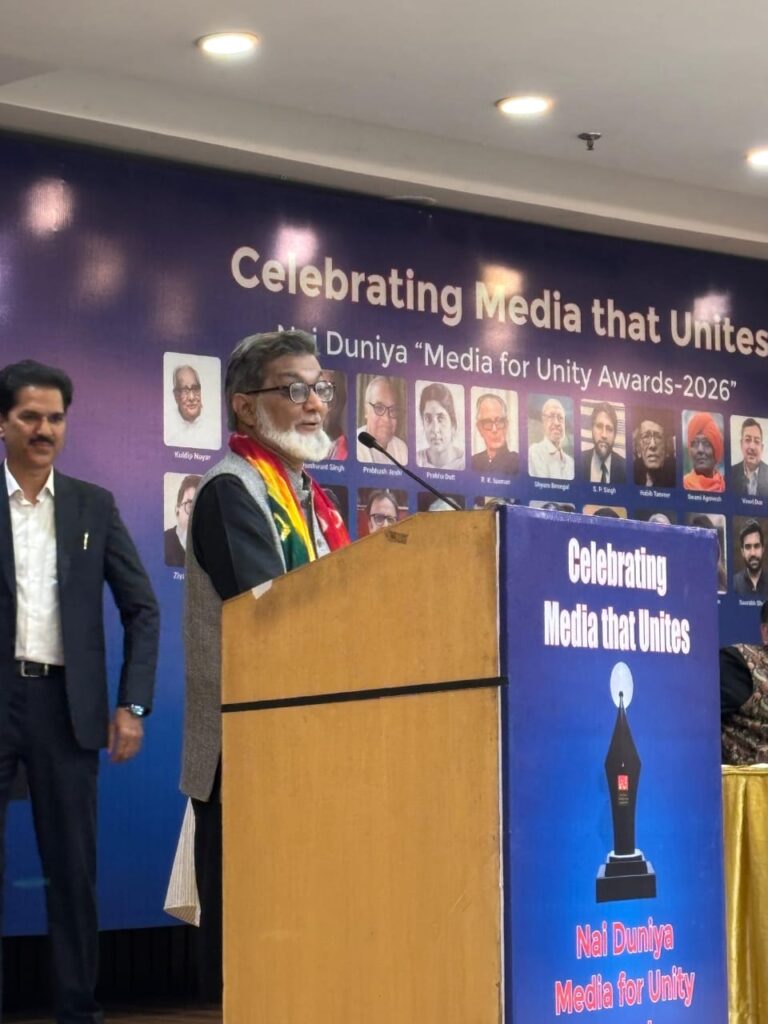
The Nai Duniya Foundation honoured leading journalists, authors, writers and filmmakers at the Media for Unity Awards 2026, held at the India International Centre on Saturday evening. The event celebrated individuals who have demonstrated courage in “speaking truth to power” during what many speakers described as challenging times for Indian media and democracy.
Senior journalist Rajdeep Sardesai, consulting editor and anchor of India Today Television, reflected on the evolving role of journalism amid what he termed a period of “darkness.” He emphasized that even small efforts, “a spark or a candle”, can help keep truth alive. Recalling his early career, Sardesai spoke about the discipline and dedication he learned from legendary cartoonist R. K. Laxman, whose name is correctly spelled as R. K. Laxman. He noted that Laxman’s insistence on constant improvement shaped his approach to journalism.
Senior journalist Rajdeep Sardesai speaking at the Nai Duniya “Media for Unity Awards 2026” at the India International Centre in New Delhi on April 18, 2026.
Drawing parallels between past and present, Sardesai remarked that many political realities remain unchanged, pointing to Laxman’s decades-old cartoons that continue to resonate with contemporary audiences. With over three decades of experience, he expressed concern that some voices which once illuminated public discourse are now contributing to its decline. Addressing criticism surrounding “Godi media,” Sardesai maintained that perseverance and faith in eventual change remain essential.
He also highlighted India’s resilience, stressing that no individual or authority is permanent. Sharing an anecdote about a hardworking woman named Elizabeth from Kerala, he underscored the strength of ordinary citizens who sustain the nation through their efforts. Concluding on an optimistic note, Sardesai praised India’s diversity and encouraged young journalists to continue their pursuit of truth despite adversity.
Senior Congress leader Shashi Tharoor, emphasized the media’s vital role in preserving democracy and national unity. He described the current era as a paradox, marked by unprecedented connectivity alongside deep social fragmentation, and argued that the media serves as the “soul of democracy.”
Reflecting on his upbringing as the son of a journalist, Tharoor spoke about the traditional trust placed in media as a reliable source of truth, a trust he believes is now under strain. He warned against the growing trend of sensationalism in television and social media, where debates often devolve into confrontational spectacles rather than meaningful discussions. Such practices, he cautioned, risk reducing complex issues to simplistic binaries and eroding public trust.
Using his well-known “thali” metaphor, Tharoor highlighted India’s pluralistic identity and stressed that the media must provide a fair platform representing all voices. He reiterated that a free and impartial press is essential to democracy, acting as a watchdog that holds power accountable. He concluded by urging journalists to reclaim their core mission, to inform without inflaming and to unite rather than divide, while praising the awardees for embodying these ideals.
Justice Hrishikesh Roy, who was the chief guest, spoke about the emotional resonance of the awardees’ remarks, stating that such voices are crucial in today’s India. He commended the Nai Duniya Foundation for inspiring individuals and acknowledged the contributions of Shahid Siddiqui, Zubair, and Atul Tiwari in organizing the event. Referring to figures like R. K. Laxman and other speakers, he noted that their words left a deep impact on the audience.
Senior journalist Zia-us-Salam speaking at the Nai Duniya “Media for Unity Awards 2026” at the India International Centre in New Delhi on April 18, 2026.
Justice Roy also highlighted the fairness of the selection process, praising the jury led by S. Y. Quraishi for making thoughtful choices that left little room for dissatisfaction. He concluded with a message of optimism, urging attendees to remain hopeful and appreciative of such initiatives.
Former Chief Election Commissioner S. Y. Quraishi reflected on his long association with the media, recalling his early career in public relations. While acknowledging journalism’s strengths, he expressed concern about its current state in India, particularly the country’s low ranking in global press freedom indices. Although he noted slight improvements recently, he argued that the media has often failed to question those in power, instead focusing disproportionately on the opposition.
Quraishi lamented what he described as a shift from the media’s role as the “fourth estate” to a “fifth column.” Despite this, he expressed hope in journalists like Rajdeep Sardesai and others who continue to uphold democratic values, as well as citizens committed to defending secularism and pluralism. He concluded by appreciating the jury’s careful selection of awardees and thanking the organizers.
Senior journalist Neerja Chowdhury, after receiving the lifetime achievement award, reflected on her early career and the influence of pioneering journalist Prabha Dutt. She recalled Dutt’s fearless reporting, including her coverage of the 1978 Sanjay and Geeta Chopra case, war reporting, and her landmark Supreme Court petition advocating press freedom.
Chowdhury emphasized that today’s journalists face more complex challenges in a polarized society shaped by religious, regional, and political divisions. She stressed that the media must not act as government propaganda but instead hold power accountable and reflect diverse perspectives. Highlighting the importance of dissent, she argued that diversity is essential for creativity and progress. She concluded by reaffirming her commitment to journalism and nation-building.
Senior journalist Saurabh Shukla spoke about the difficulties faced by independent reporters, including arrests, legal harassment, and limited access to timely justice. He pointed out that many journalists struggle to secure bail due to financial and legal constraints and called for the establishment of fast-track tribunals to address such cases promptly.
Shukla also raised concerns about social media trials, surveillance, and professional blacklisting, which he said further complicate the work of journalists. Reflecting on his departure from NDTV, he emphasized the importance of maintaining independence in journalism. He additionally highlighted systemic bias, alleging that Muslim journalists are disproportionately targeted, while noting that his own identity has sometimes shielded him from similar scrutiny.
Despite these challenges, Shukla reaffirmed his commitment to ground reporting and amplifying marginalized voices. The event concluded with a shared sense of concern and hope, as speakers collectively underscored the enduring importance of independent journalism in strengthening democracy and fostering unity in India.
Ziya Us Salam, Associate Editor of The Hindu, Fazil Hussain Parvez, Editor of Gawah, Prof. Purushottam Agarwal, Writer, Vivek Shukla, Journalist, Neerja Chowdhury, Journalist, Manjul, Cartoonist, Sudhir Mishra, Filmmaker, Sandeep Chaudhary, Senior Journalist and Anchor of ABP News, Arvind Gaur, Theatre Director, Rani Khanam, Artistic Director Aamad and Choreographer, Saurabh Shukla, Journalist and Co-founder of The Red Mike and Dr. Waiel Awaad, Senior Journalist and Middle East Analyst were given the Nai Duniya Media for Unity Awards 2026.
1. Kuldip Nayyar Award for English journalism, Ziya-us-Salam, Associate Editor, The Hindu
2. Khushwant Singh Award for the most inspiring book, ‘Mazbooti ka naam Mahatma Gandhi’, by Prof. Purshottam Aggarwal
3. Prabha Dutt Lifetime Achievement Award Neerja Chowdhry
4. Maulana Abdul Waheed Siddiqui Award for Urdu Journalism Fazil Hussain Pervaiz, Editor Gawah
5. Prabhash Joshi Award for Hindi Journalism Vivek Shukla
6. S P Singh Award for Electronic Media Sandeep Chowdhry
7. Swami Agnivesh Award for Social Causes Rani Khanam
8. Shyam Benegal Award for Visual Media Sudhir Mishra
9. Habib Tanvir Award for Theatre Arvind Gaud
10. Vinod Dua Digital Media Award Saurabh Shukla
11. RK Laxman Award for Satire Alok Nirantar
12. Mark Tully Award for a Foreign Correspondent Dr Waeil Awwad
source: http://www.indiatomorrow.net / India Tomorrow / Home> Human Rights > Communalism / by Mohd Naushad Khan / April 19th, 2026